





Large dogs often come with an assumption that more size means more maintenance. That idea feels true at first, especially when people think about grooming, shedding, and daily care.
But not every large dog fits that pattern. Some carry their size without bringing along the extra work that most owners expect. The difference is not always obvious from appearance alone, which is why it often gets overlooked. Many people only realize it after dealing with the effort of maintaining a heavier coat.
There is a specific group of large dogs that manage to stay low-maintenance while still offering everything people look for in a bigger companion. Once you understand what sets them apart, the choice becomes much clearer. It shifts from guesswork to something more intentional.
In the following sections, you will find a closer look at these dogs and what makes their upkeep far easier to handle.
Key Takeaways
A big dog often comes with the idea of endless shedding and complicated grooming schedules.
Mastiff and Great Dane carry massive frames, yet their short coats keep daily care surprisingly simple and manageable.
Doberman Pinscher and Cane Corso bring strong working energy with routines that stay focused on brushing rather than complicated maintenance.
Keep reading to see how these seven large breeds stay easy to live with while still bringing power and presence into a home.
Large Dog Breeds With Short Coats and Easy Upkeep
1. Mastiff
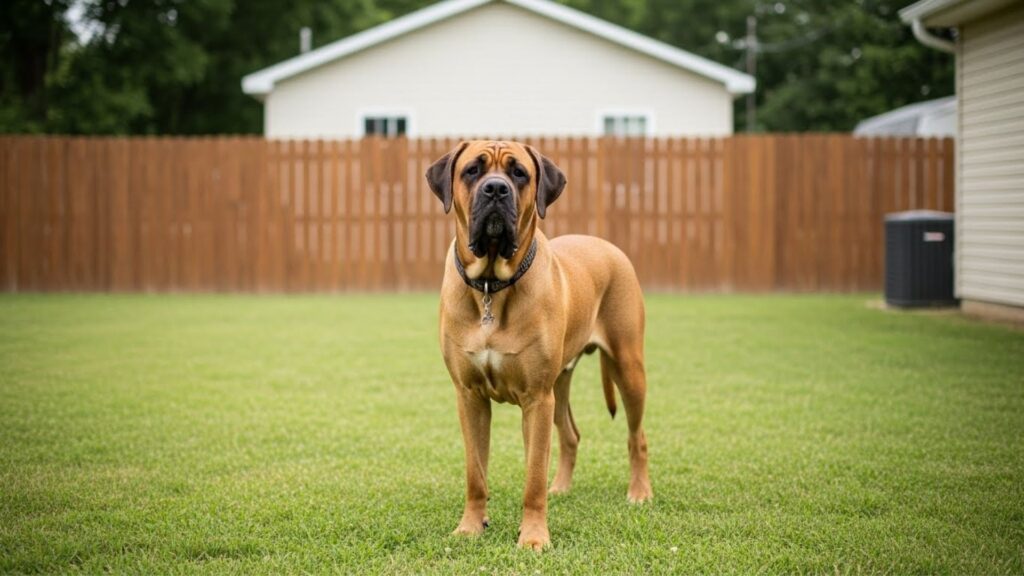
Mastiffs carry a colossal frame with heavy bone and thick muscle, built across centuries of selective guarding roles. Their broad head and deep body create a visual weight that dominates space before any action begins. The short double coat lies close, giving a practical surface for less care.
Grooming and upkeep in routine form
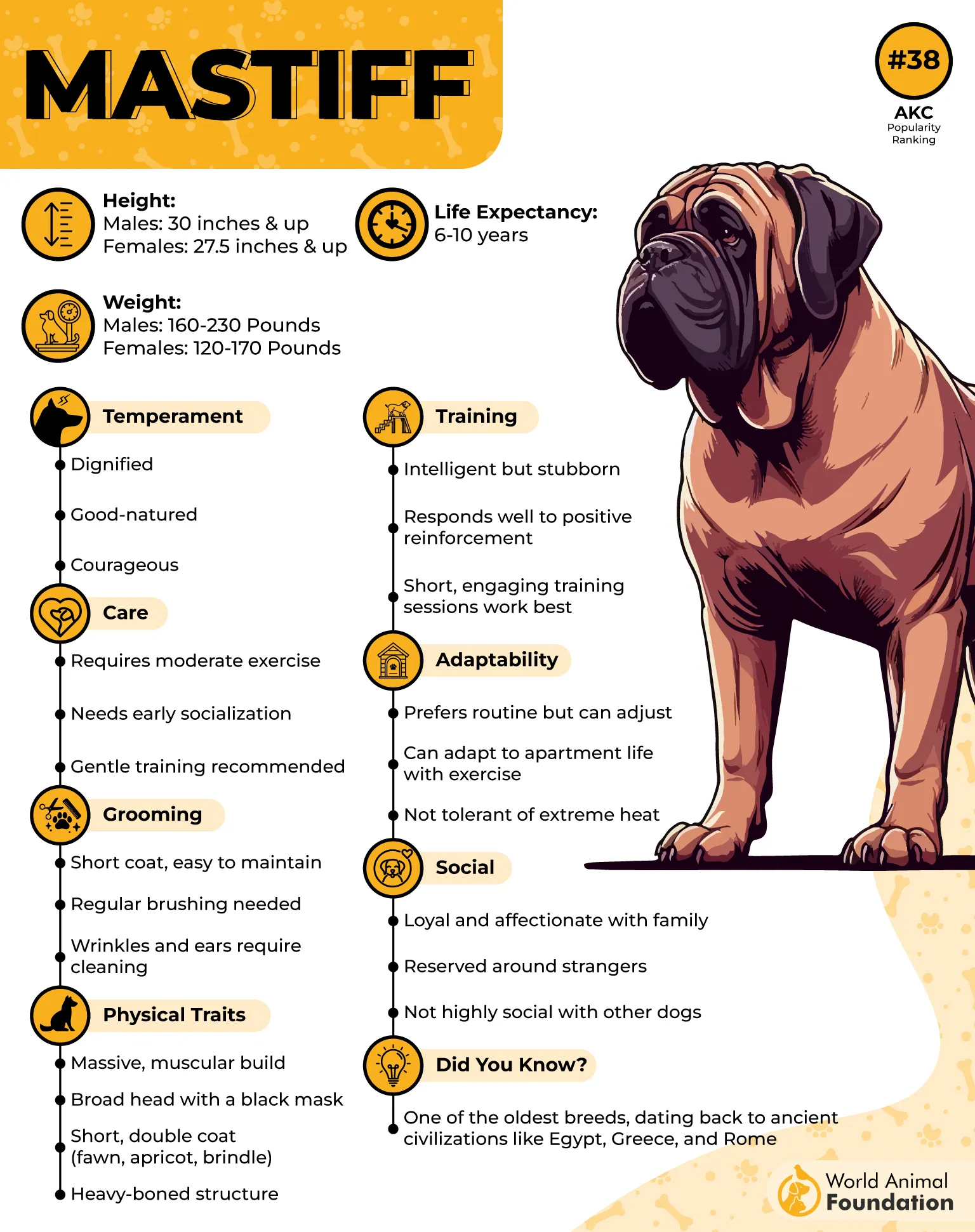
Mastiff’s short coat simplifies daily upkeep, needing only light brushing at regular intervals to remove loose hair. Seasonal shedding periods require more focused attention with a firm comb to clear undercoat buildup.
Care habits extend beyond coat maintenance:
Ears and facial wrinkles need regular cleaning
Nails require consistent trimming to avoid strain
Coat stays manageable with minimal grooming effort
Temperament inside familiar spaces
This low-maintenance dog has a calm, steady temperament around family, often settling into quiet companionship rather than constant activity, as per the AKC.
Its interaction style feels measured, with patience shaping its responses in everyday environments. This balance gives it a grounded presence within the home.
2. Great Dane
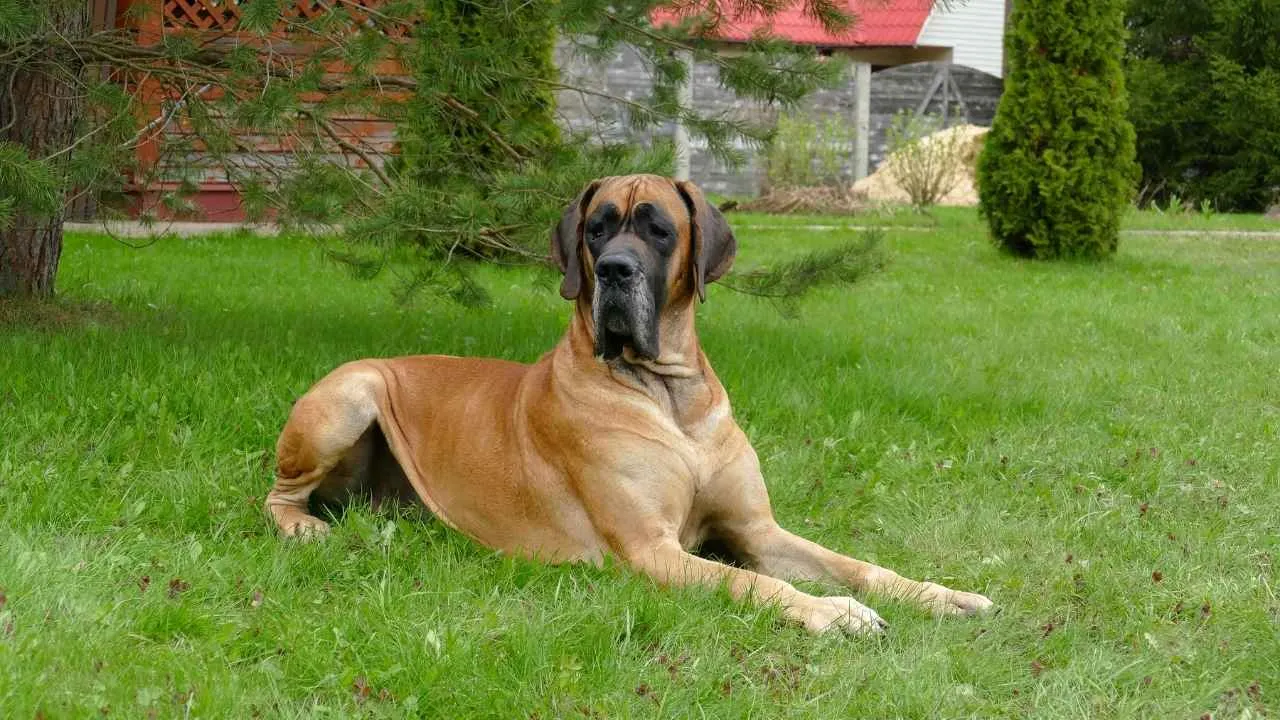
Great Danes display a large, imposing frame that rises over most dogs, paired with a smooth stride that feels balanced rather than heavy.
Their size creates a presence that naturally dominates space without constant movement. Despite this scale, their expression stays composed and steady indoors.
Coat care tied to seasonal rhythm
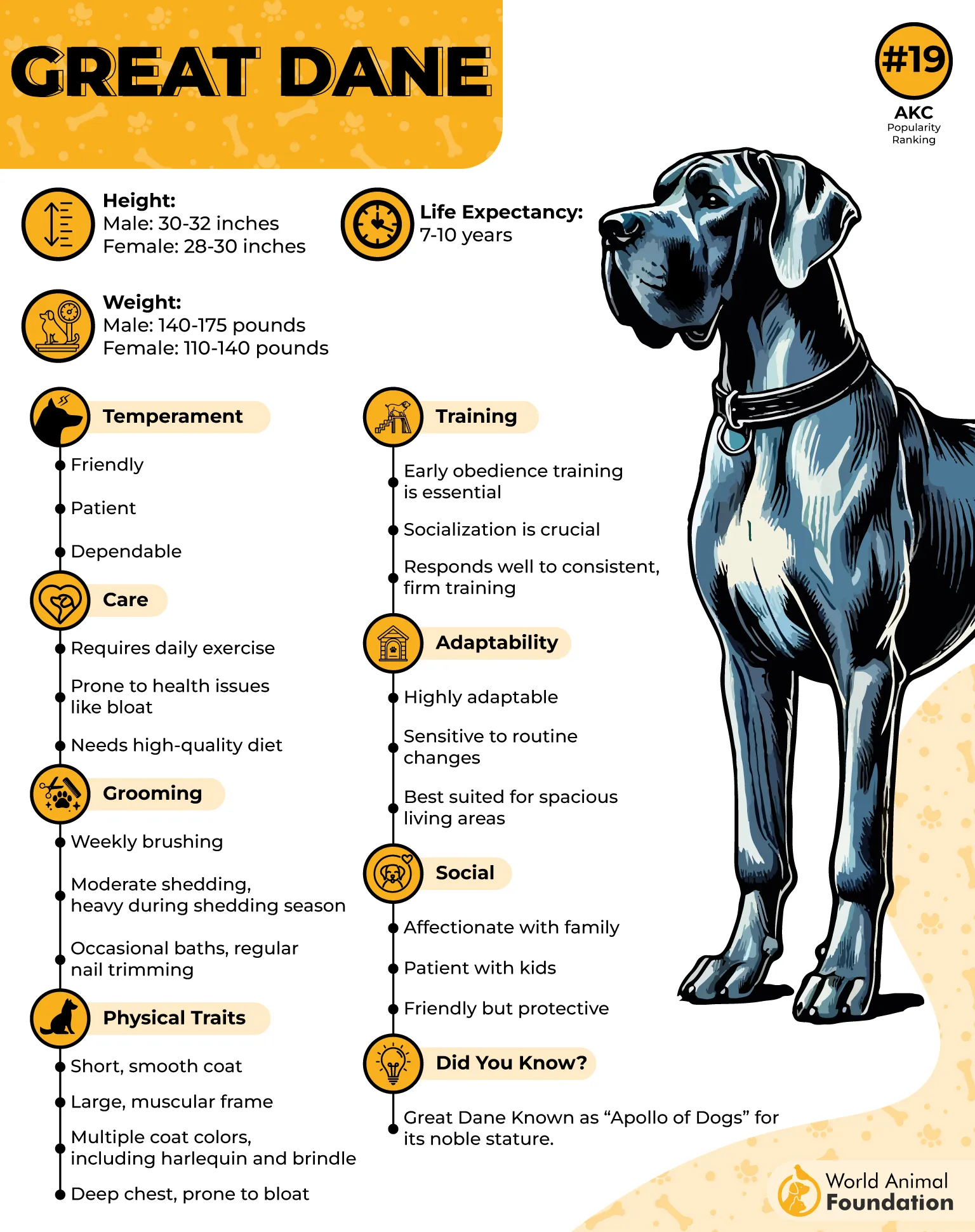
This gentle giant wears a short, smooth coat that remains manageable most of the year, though shedding increases during specific seasons, as Pawlicy Advisor noted. Care routines stay simple but become more frequent when coat loss peaks.
This grooming pattern becomes clearer through practical needs:
Light weekly brushing reduces loose hair
Shedding spikes during seasonal coat changes
Bathing is needed only when visibly soiled
Home behavior and interaction style
They have a gentle and affectionate nature to approach people, often forming easy connections across age groups, including children. Its temperament inside the home leans toward patience rather than restlessness, making shared spaces feel calm despite its size.
3. Doberman Pinscher
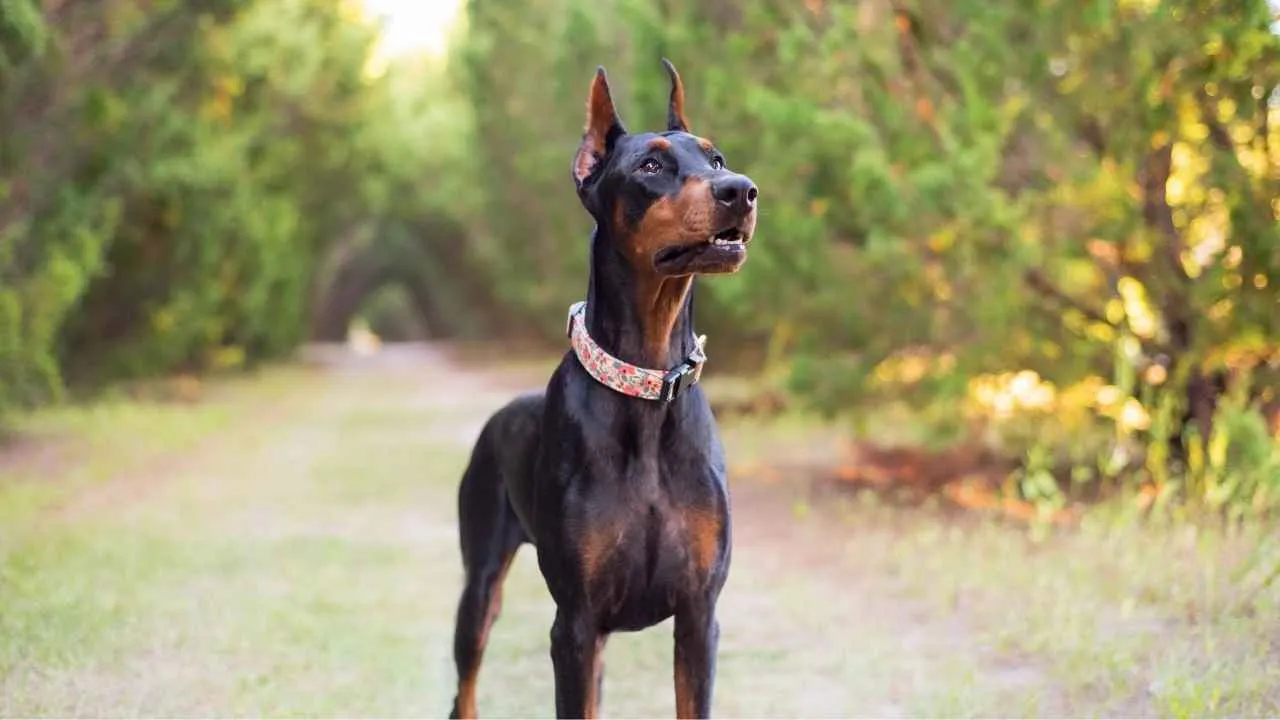
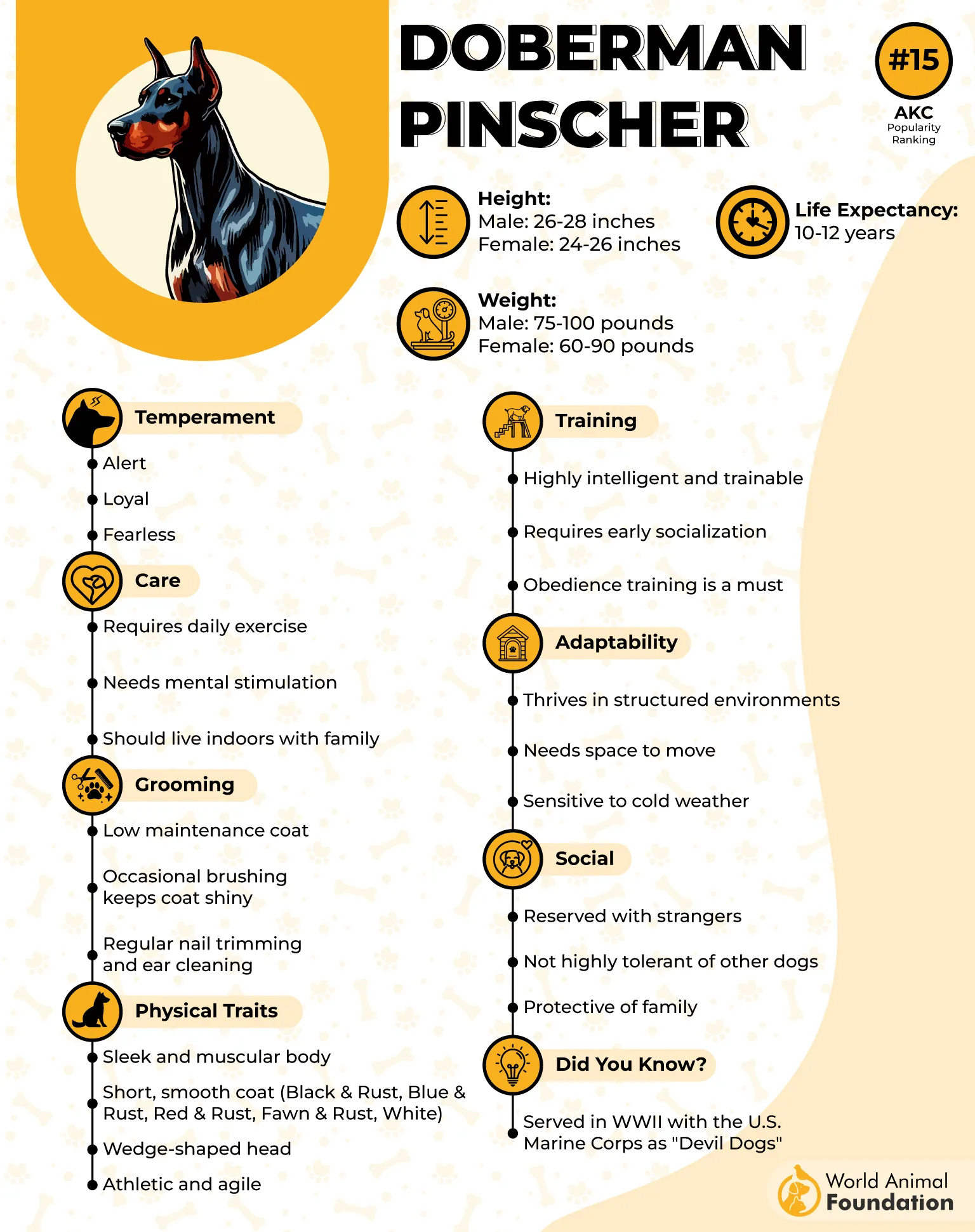
The Doberman Pinscher carries a lean but solid frame paired with a smooth, close-lying coat that gives a clean, streamlined look. Its structure reflects strength without heaviness, built for quick, efficient action. The overall appearance signals alert readiness through form rather than exaggeration.
Grooming routine and care habits
This guard dog needs minimal coat upkeep, relying mostly on light brushing to keep the surface clean and glossy. Bathing is occasional, while nails and ears require steady attention to keep the condition balanced.
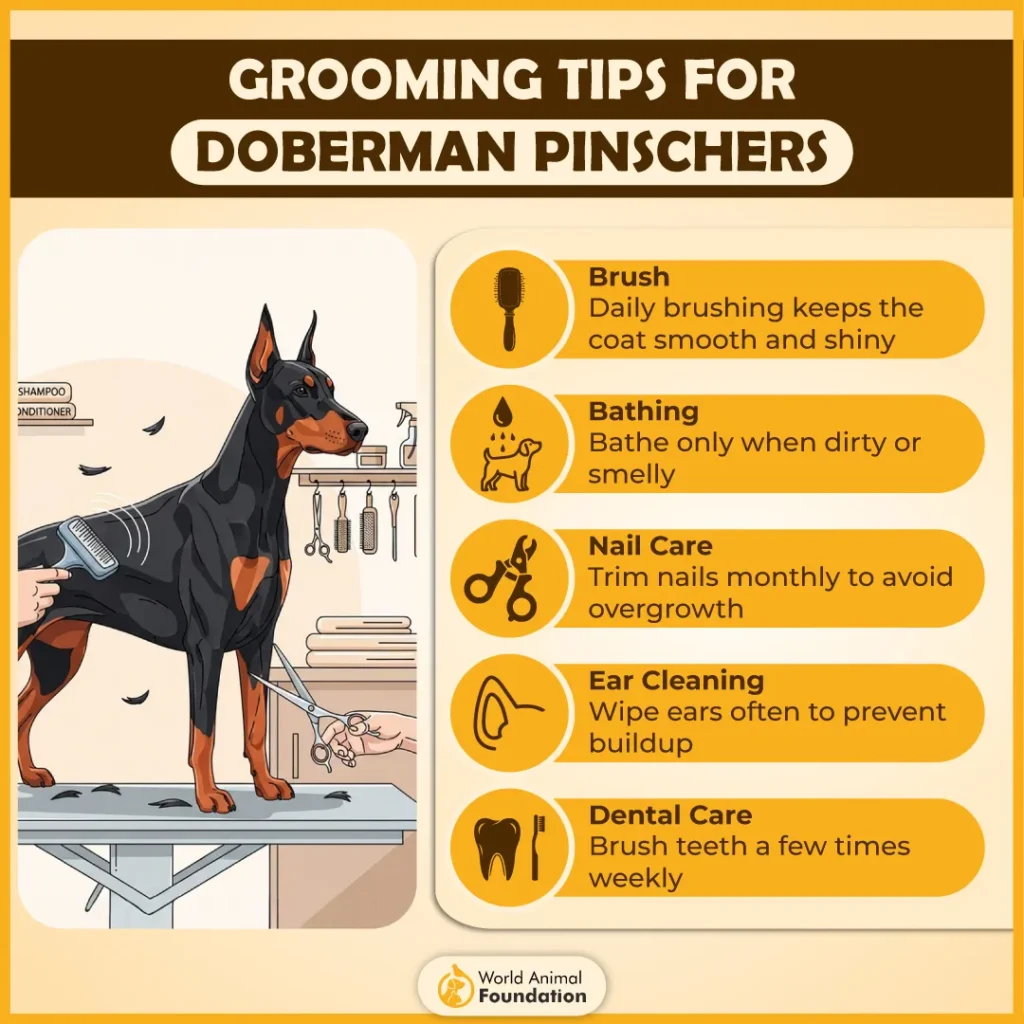
Care routine focuses on small but consistent steps:
Light daily brushing with short bristles or mitt
Monthly nail trimming for comfort and balance
Regular ear cleaning to avoid buildup
Energy expressed through activity
Dobbie is an athletic dog that channels energy into long walks, open running space, and structured physical outlets, as stated by PetMD.
Without consistent activity, that drive can feel contained rather than expressed. Dog sports like agility or tracking align closely with its physical and mental pace.
4. Cane Corso
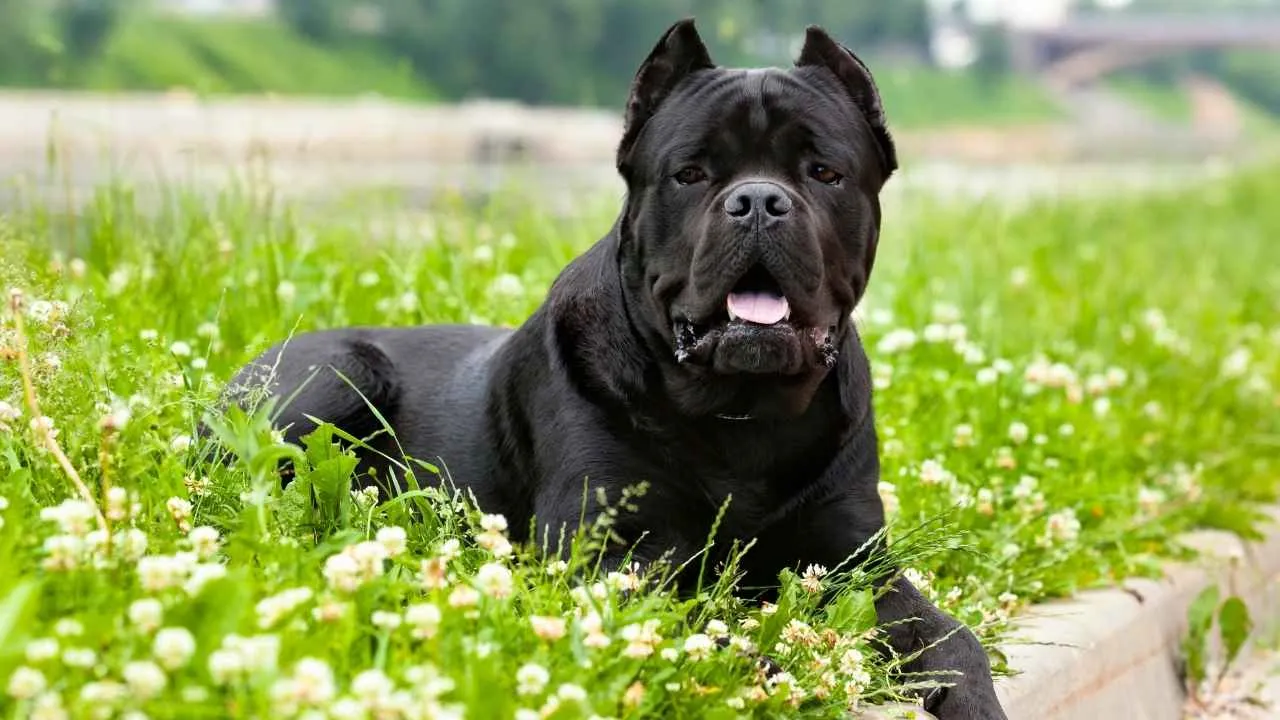
The Cane Corso reflects ancient Roman working dogs, carrying a powerful frame with a broad head and dense muscle under a short, stiff coat.
Its presence is reinforced through a calm yet alert expression that reacts before action begins. The structure gives it a controlled, grounded stance in any setting.
Expression of working intelligence
This short-haired dog breed responds with measured awareness, combining intelligence and confidence when assessing surroundings or unfamiliar situations. Its behavior reflects a dog bred for protective work, often relying on presence rather than unnecessary movement.
This structure becomes clearer in these elements:
Short double-layered coat with seasonal shedding pattern
Requires consistent brushing to manage loose hair
Benefits from regular conditioning through long walks or runs
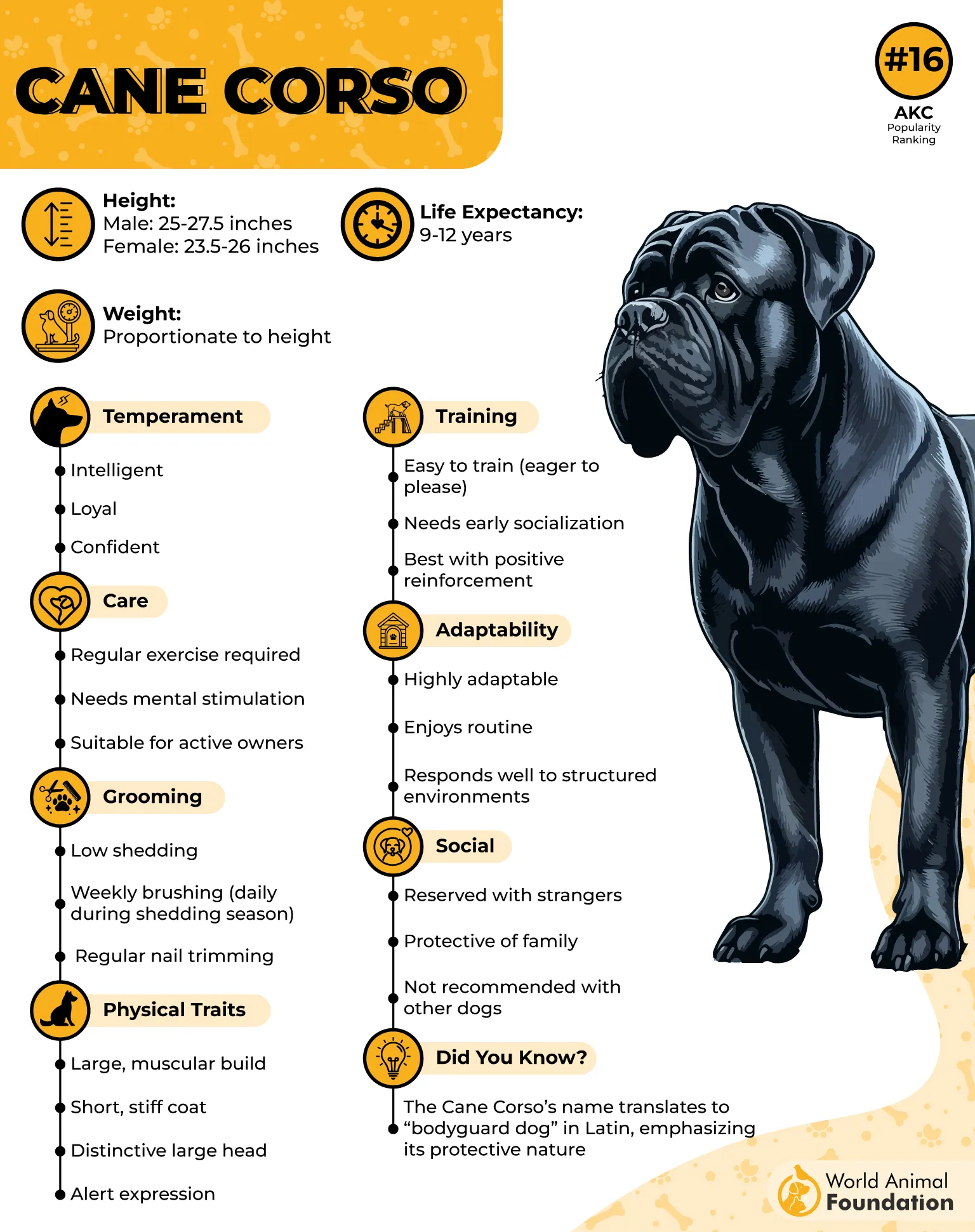
Activity linked to strength maintenance
The Cane Corso depends on structured physical engagement to maintain balance in both body and behavior, often handling distance walks, hikes, or runs with steady endurance. Its muscular build requires consistent exertion rather than occasional bursts. This routine supports its overall working condition.
5. Rottweiler
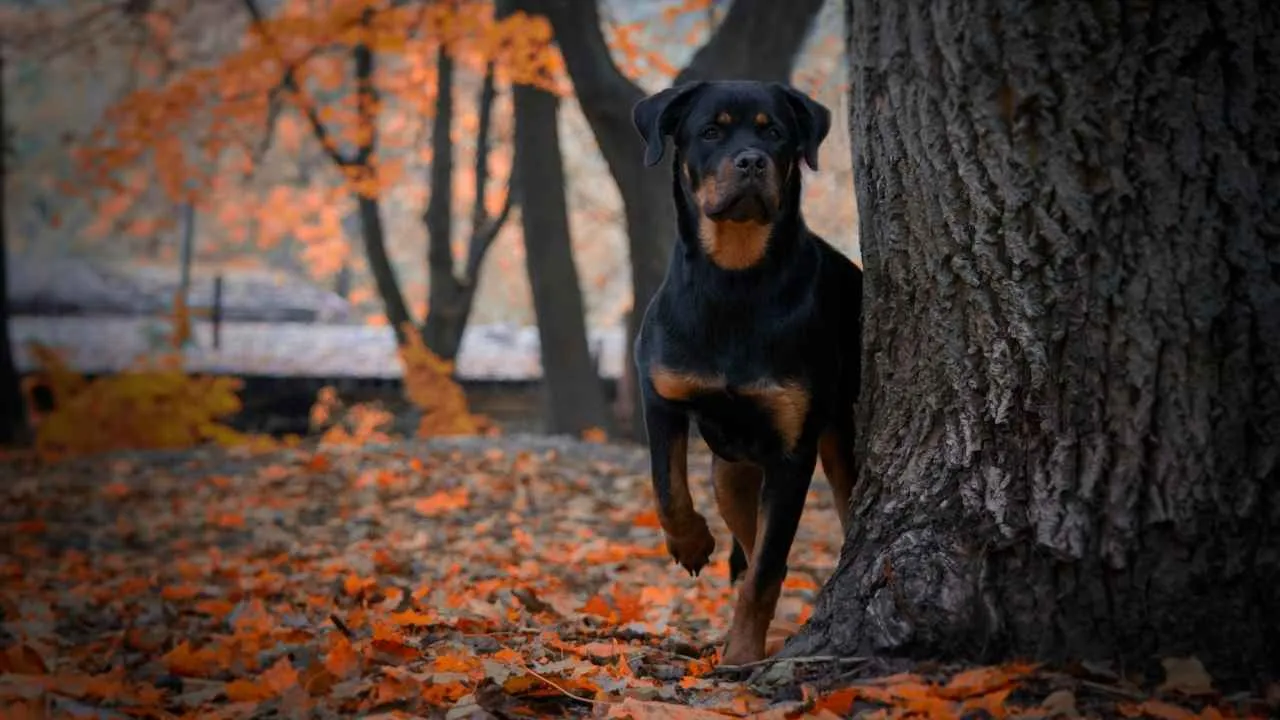
The Rottweiler features a solid, muscular frame and a short black coat with rust markings, giving it a striking presence even when still.
Its movement is driven by thick hindquarters that support a steady, effortless stride across open space. The overall structure reflects a body made for controlled strength rather than speed bursts.
Social response guided by structure
Rotties interact with unfamiliar situations through caution first, often assessing surroundings before engaging. Within familiar spaces, its behavior shifts into a calmer rhythm, especially around people it trusts and other dogs it grows up with, as per Greencross Vets.
This contrast becomes clearer through key behavioral points:
Observes new environments before reacting
Adjusts behavior based on familiarity level
Responds better when routines are consistent
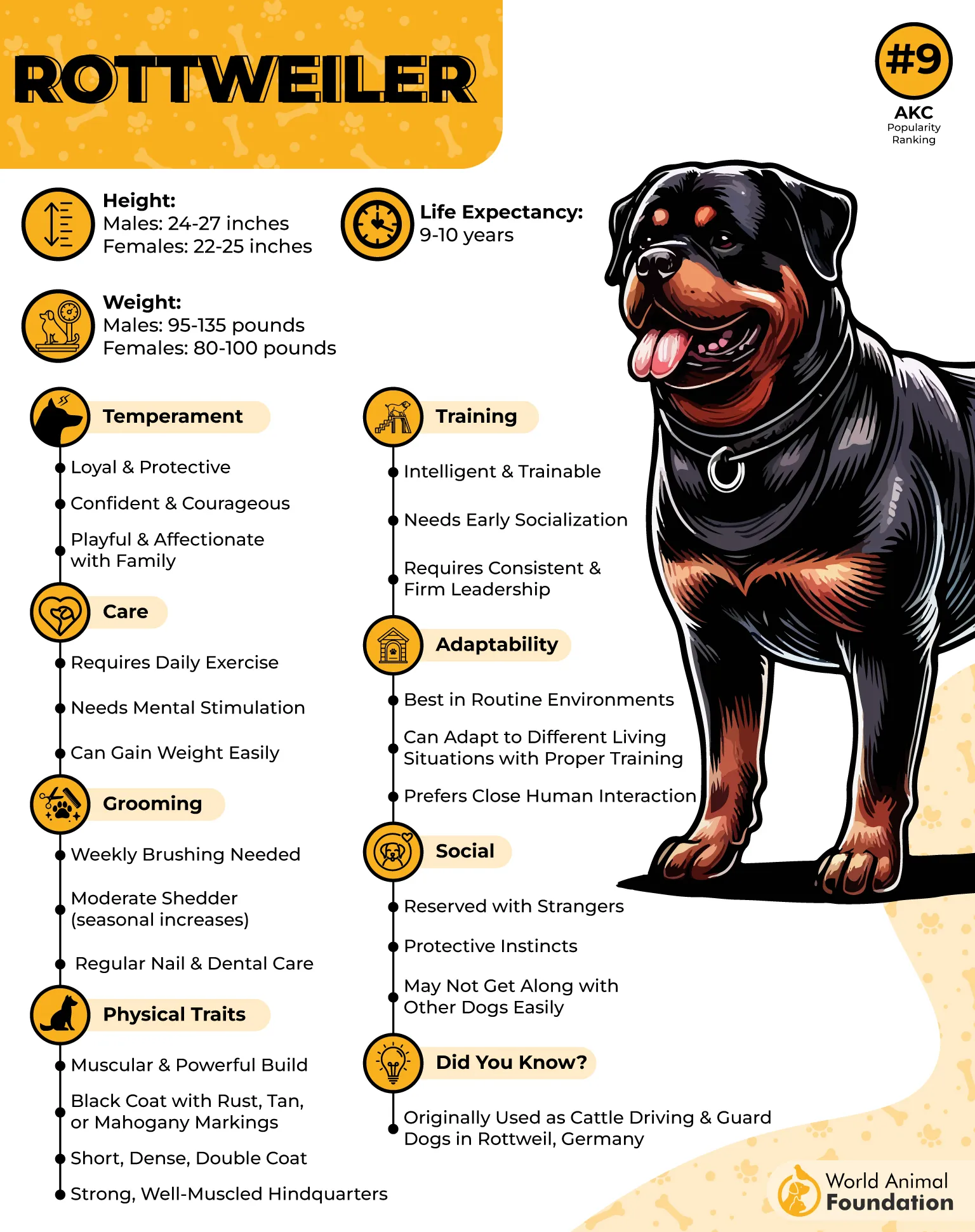
Care routine and coat maintenance
Rottweiler’s short, coarse coat lies flat and needs steady attention rather than heavy upkeep, making grooming needs manageable compared to longer-coated breeds.
Regular brushing helps control seasonal shedding that increases during spring and fall. Routine care also includes nail trimming and dental upkeep to maintain overall balance.
6. Rhodesian Ridgeback
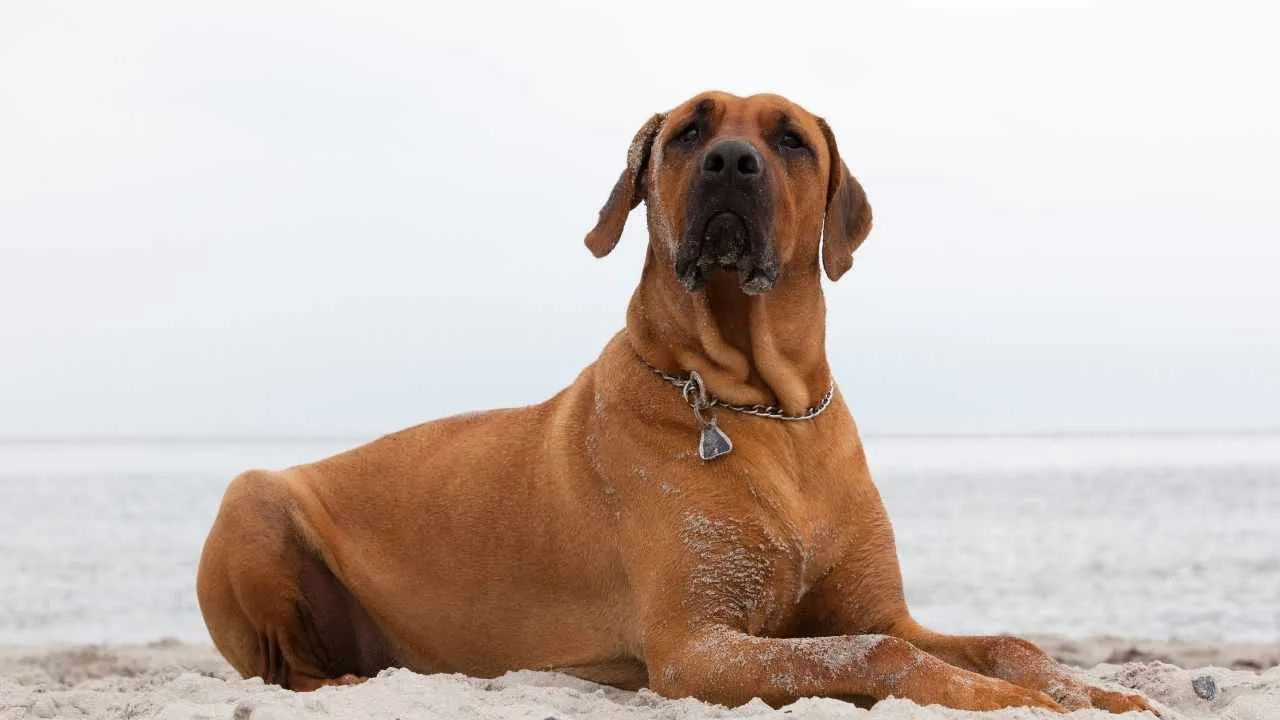
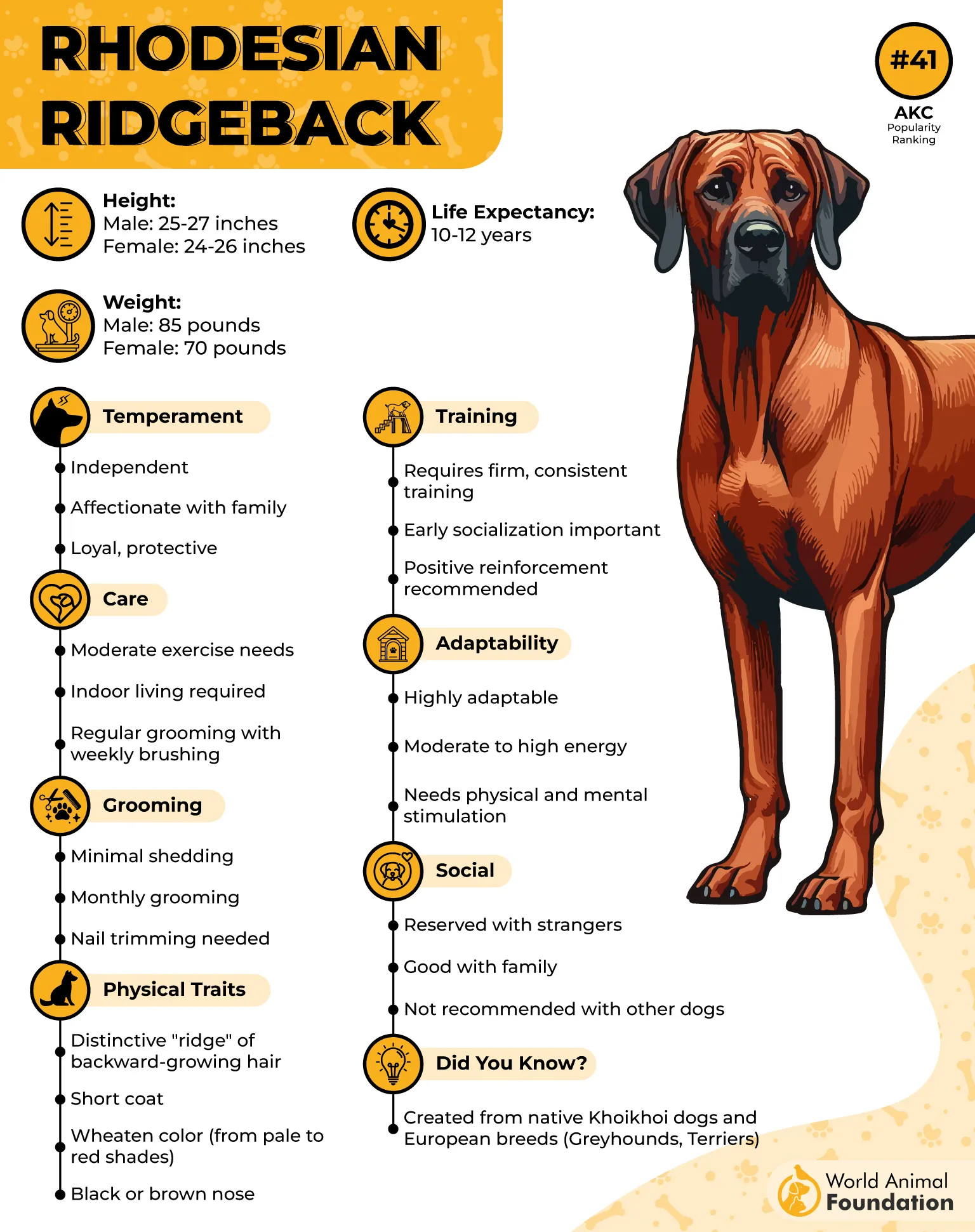
The Rhodesian Ridgeback is recognized by the ridge of backward-growing hair along its back, a defining feature shaped through selective line breeding in southern Africa.
Its body combines strength and athletic build suited for endurance over long distances. This structure reflects a dog built for sustained field performance.
Working instinct with controlled independence
The Ridgeback approaches tasks with a self-directed mindset, often relying on judgment rather than constant instruction. Its early role involved tracking and cornering large game without engaging in direct attack behavior.
This working pattern appears in clear functional traits:
Tracks over long distances with steady focus
Responds with restraint rather than impulsive action
Adjusts pace based on terrain and scent cues
Low-maintenance coat with active requirements
Ridgebacks have a short coat that needs only light upkeep, with occasional brushing to manage loose hair and maintain a clean surface. Despite this easy grooming routine, the breed relies on regular physical activity to release built-up energy. Long walks and active sessions fit naturally into its rhythm.
7. Boerboel
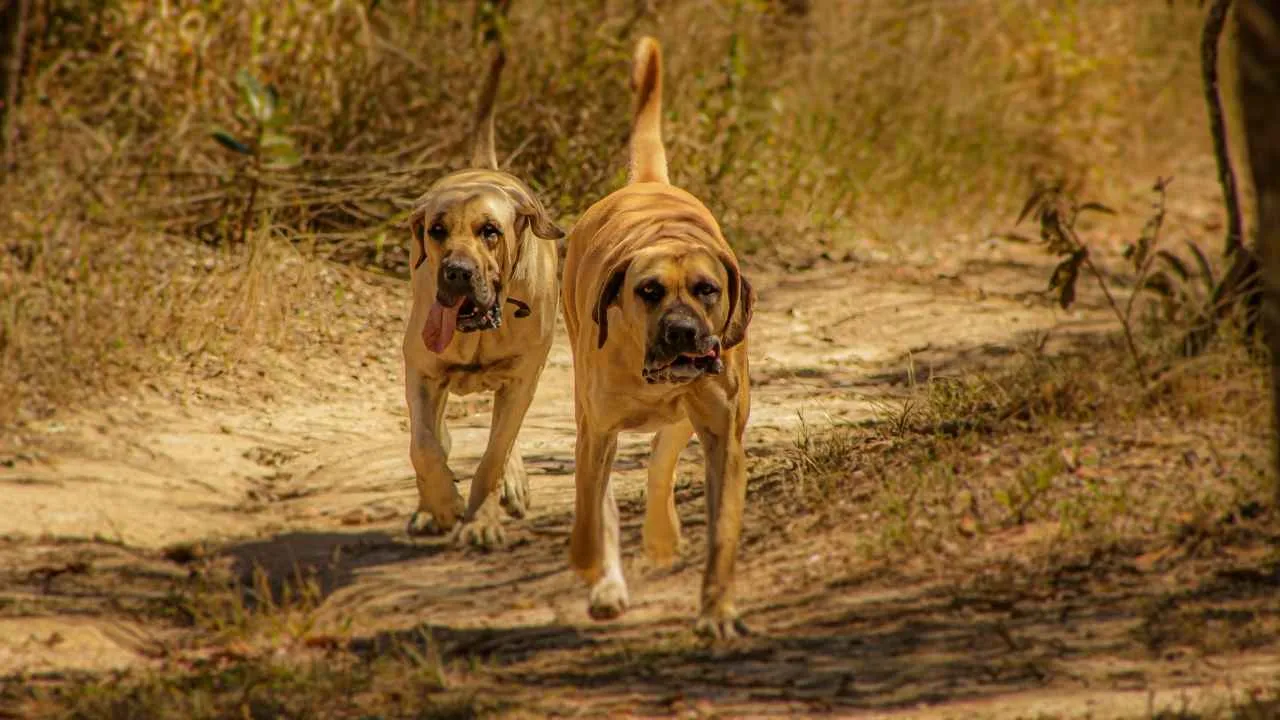
The Boerboel reflects a heavy, muscular build with a broad head and strong jaws, formed for guarding remote homesteads in demanding environments.
Its structure gives a grounded presence that connects directly to strength rather than speed. The overall frame supports control in close-range protective situations.
Behavior linked to vigilance
The Boerboel reacts to surroundings with measured confidence, stepping in when something feels out of place around home or family. Its intelligence combines with a direct, no-delay response style during unfamiliar encounters.
This protective pattern appears through clear actions:
Positions itself near perceived boundaries
Responds quickly to unusual movement
Uses controlled force rather than random aggression
Short coat and upkeep rhythm
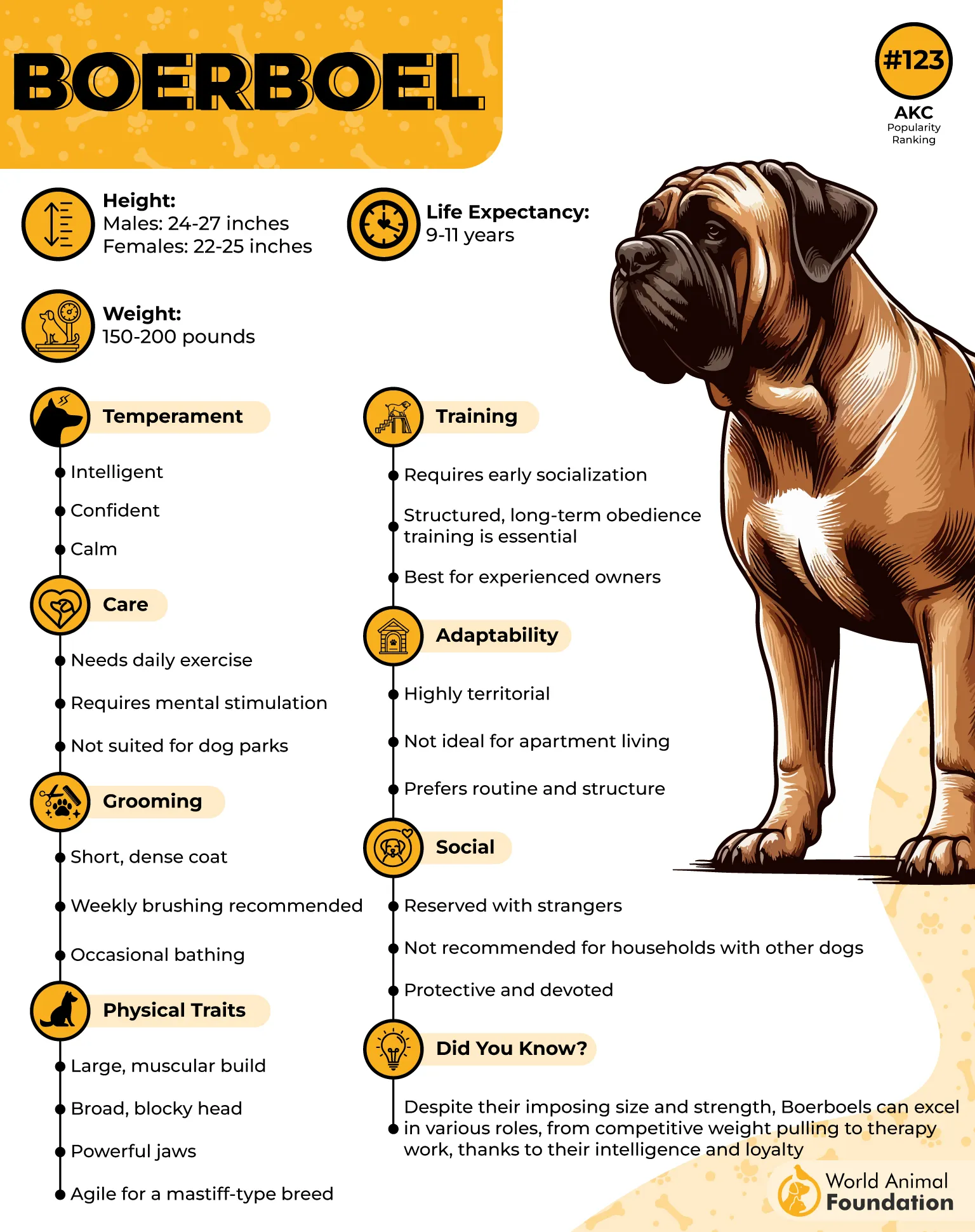
Boerboel carries a short, dense coat that sheds moderately, requiring only simple weekly brushing to manage loose hair. Grooming remains straightforward with basic tools like a rubber mitt or soft brush. This keeps maintenance light without affecting its working condition.
Conclusion
Large dogs do not always bring the level of upkeep people expect at first glance. These breeds show that size can exist alongside simplicity, especially when coat type reduces the need for constant grooming. Many need only occasional brushing and very little grooming, unlike small dogs that often require frequent grooming or a professional groomer.
Over time, this ease becomes more noticeable. Brushing feels routine instead of demanding, and overall care fits naturally into the day. In the end, low-maintenance dog breeds offer a balance where presence remains strong while upkeep stays controlled, making life with a large companion feel practical and steady.
