




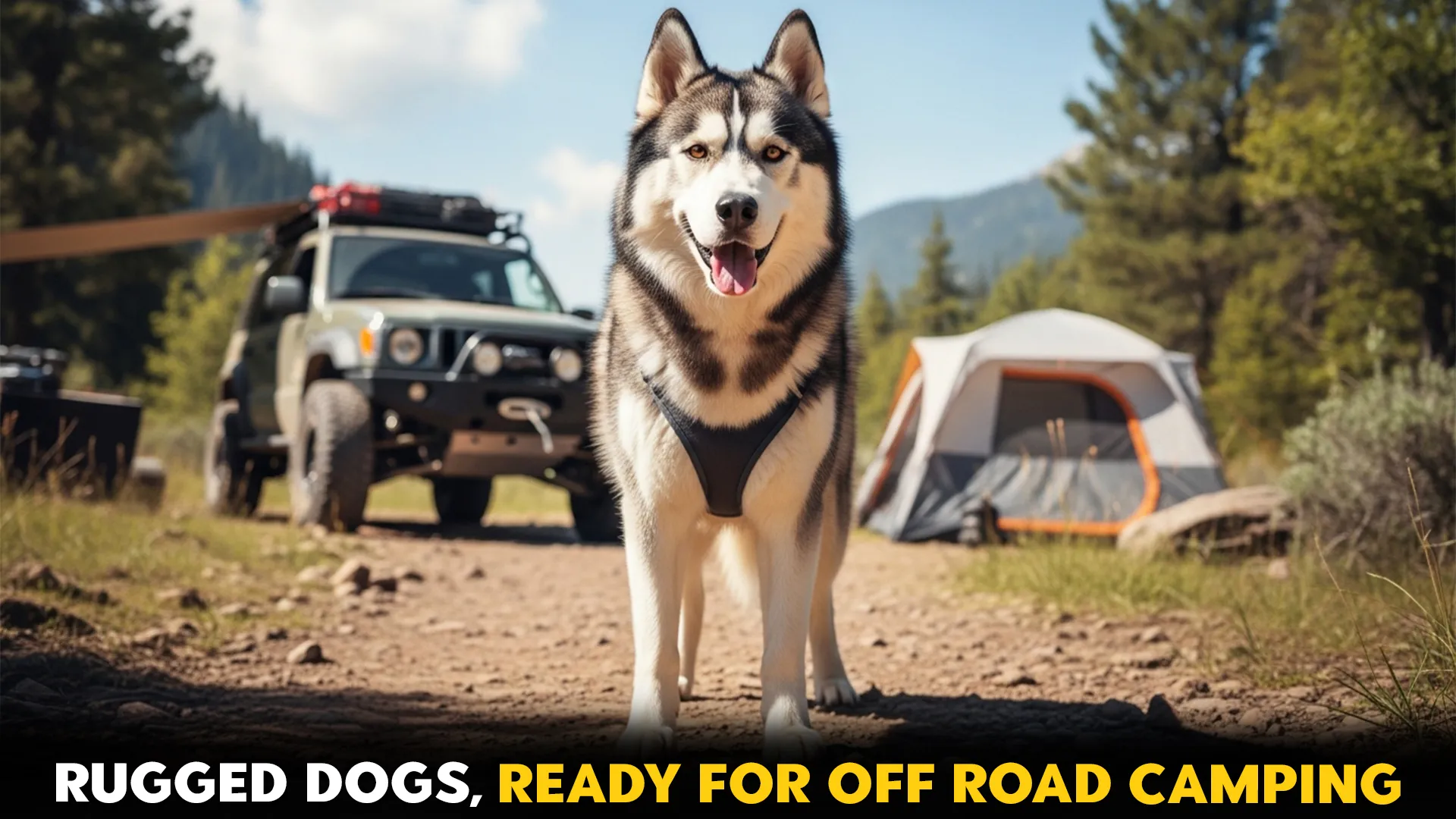
Most dogs are great pets. But only a few are genuinely built for the kind of camping where the trails disappear after mile three, the temperature drops overnight without warning, and the “campsite” is wherever you drop your pack.
A good camping dog does not need to be good at finding prey, protecting the owner, or watching over the surroundings when you are sleeping in your tent. It needs to be a mix of both and a companion who provides you with a constant source of entertainment.
According to the American Kennel Club, there are over 200 recognized breeds in the U.S., yet only a small group of them have the physical build, mental stamina, and weather tolerance to be true backcountry partners. These seven breeds are not just active dogs. They were purpose-bred for rugged terrain. Here is what actually makes each one trail-worthy.
Rugged Dog Breeds That Love Off‑Road Camping Trips
1. Siberian Husky
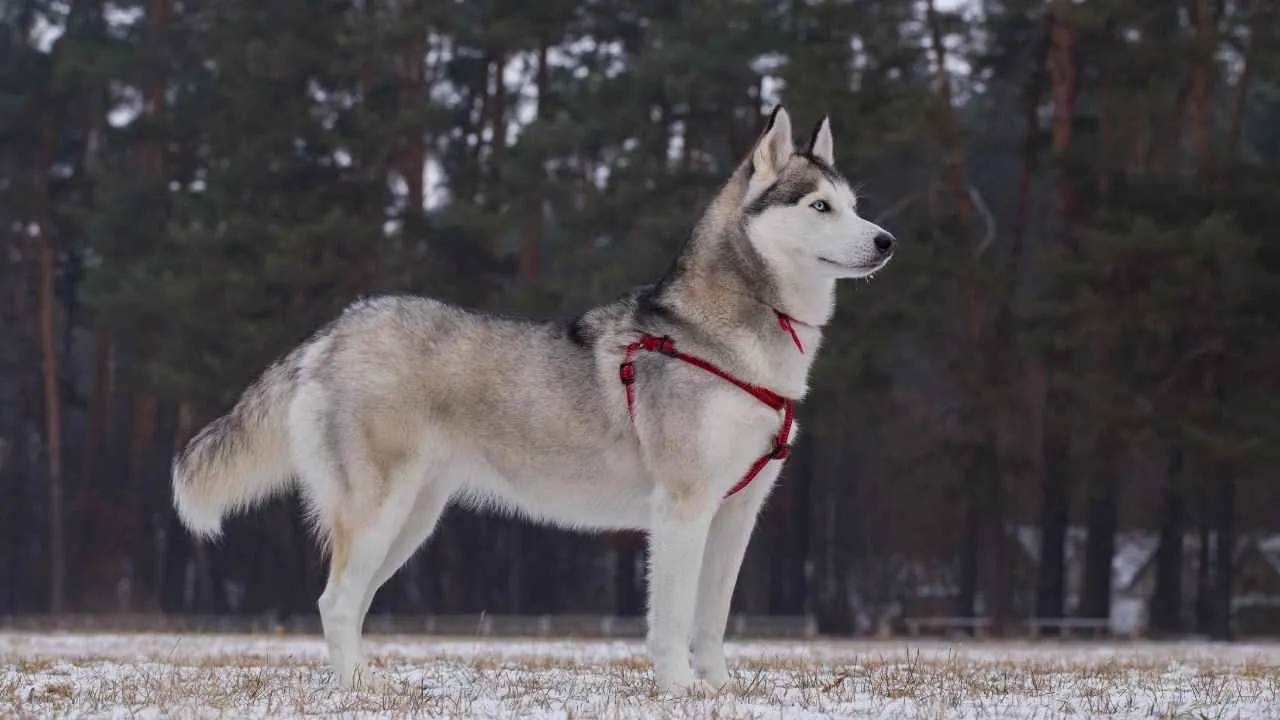
Originally bred to pull light loads at moderate speed over long trails (up to 160 km a day), the Siberian Husky was developed in Northeastern Siberia by the Chukchi people, some 3,000 years ago. This charismatic breed is perfect for intense cold weather because of its dense and thick double coat that traps warm air, providing insulation.
Even if your Siberian Husky is sleeping outside the tent in temperatures of -60 degrees, it can protect itself by wrapping its long tail around its body, curled in a sleeping position.
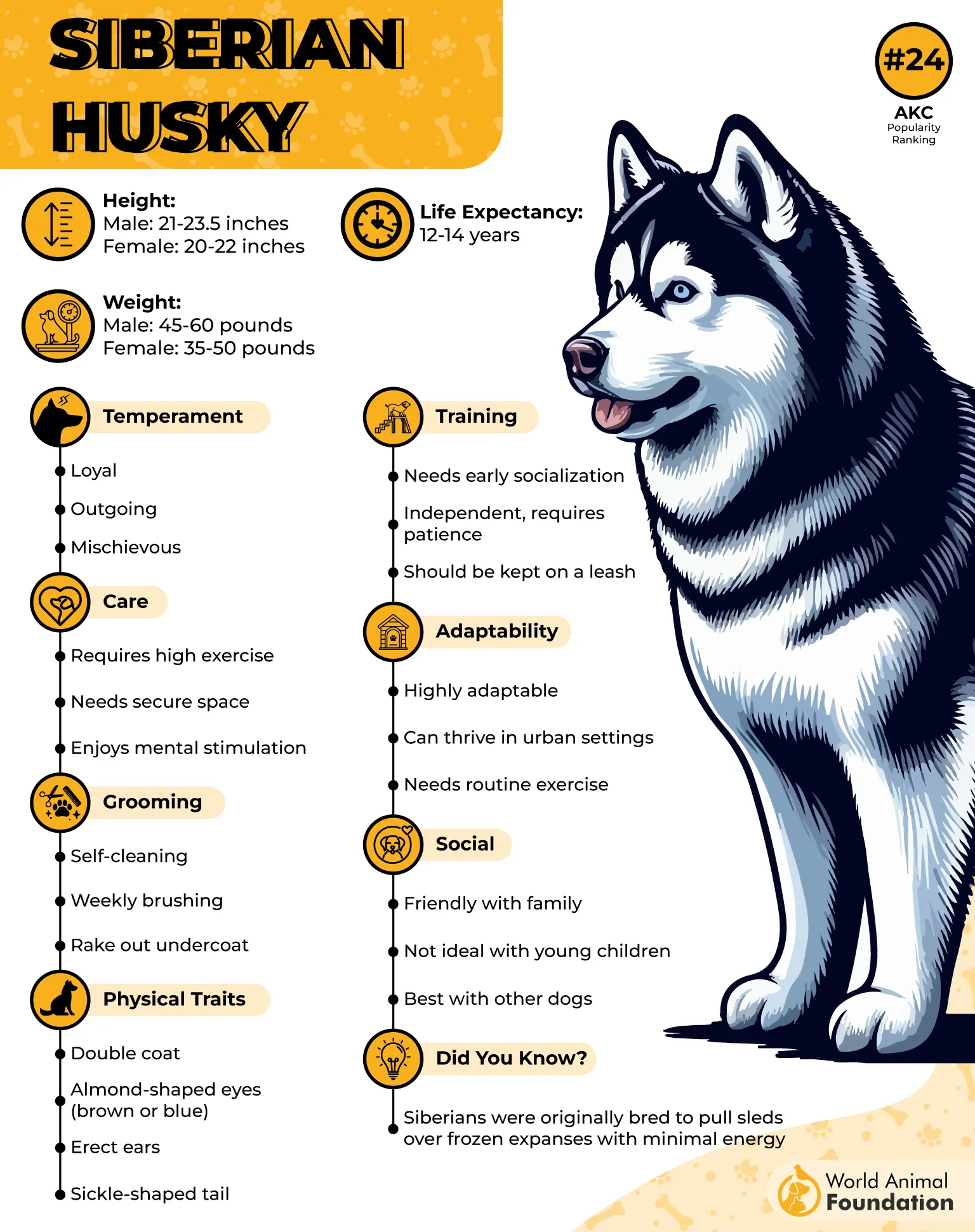
A study revealed that dogs like Siberian Huskies can turn into a fat-burning mode (converting food into heat and energy) during hard physical activity or intense exercise. They have zero dog odor, and more have a cat-like behavior; thus, you can keep them inside your tent as well.
They have hair between their toes and thick pads in their paws, making them walk over ice and swim, preventing frostbite and ice build-up. They can easily adapt to a new environment and are protective and playful in nature; hence, they are great companions for family camping.
2. Australian Cattle Dog
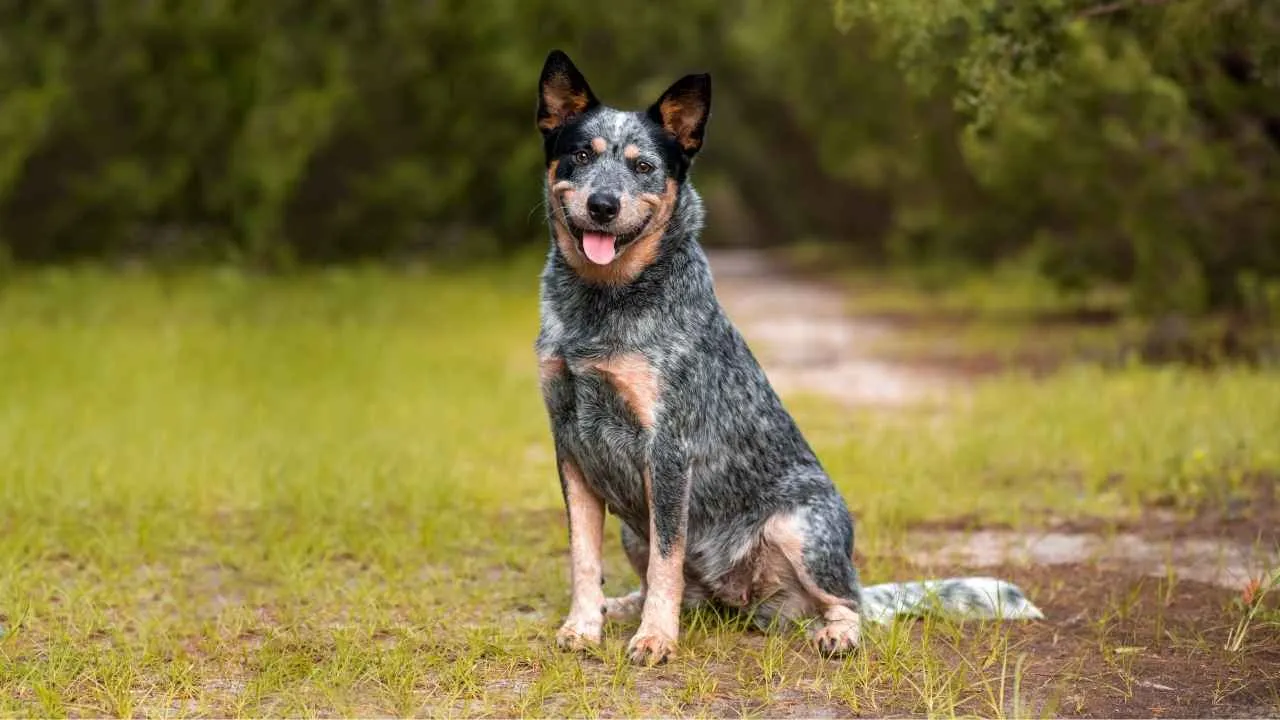
Australian ranchers needed a dog that could drive massive herds of cattle across hundreds of miles in the mid-1800s. They developed the Australian Cattle Dogs. AKA Blue Healers because of their blue-speckled coat and herding style.
Ranked among the top most intelligent breeds in the world, the ACD tracks movement, reads terrain shifts, and stays alert to cues you probably ignore, according to Britannica.
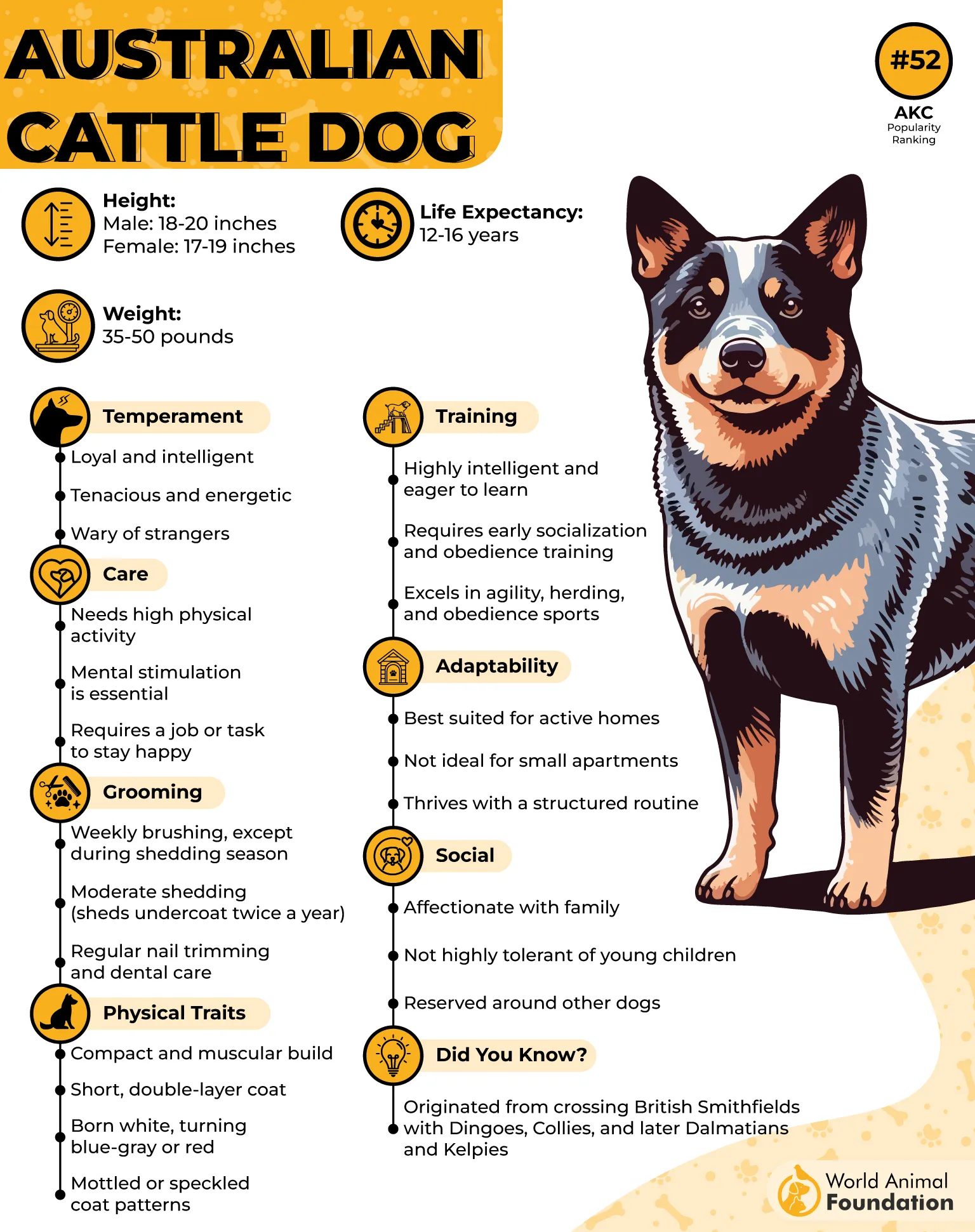
Weighing around 30-35 lbs, this high-energy dog is an independent thinker and is capable of managing dangerous livestock and making quick decisions without the owner’s involvement. High intelligence means they are quick learners and navigate through the woods, remembering the path completely.
They have a high prey drive, and this makes them so focused that they may even continue to work even after getting injured. Thus, proper training and early socialization are compulsory. This furry friend has a weather-resistant coat that provides insulation in winter and in summer. They have a thick coat around the neck and under the belly, protecting vitals from injuries while running through the bushes.
3. Rhodesian Ridgeback
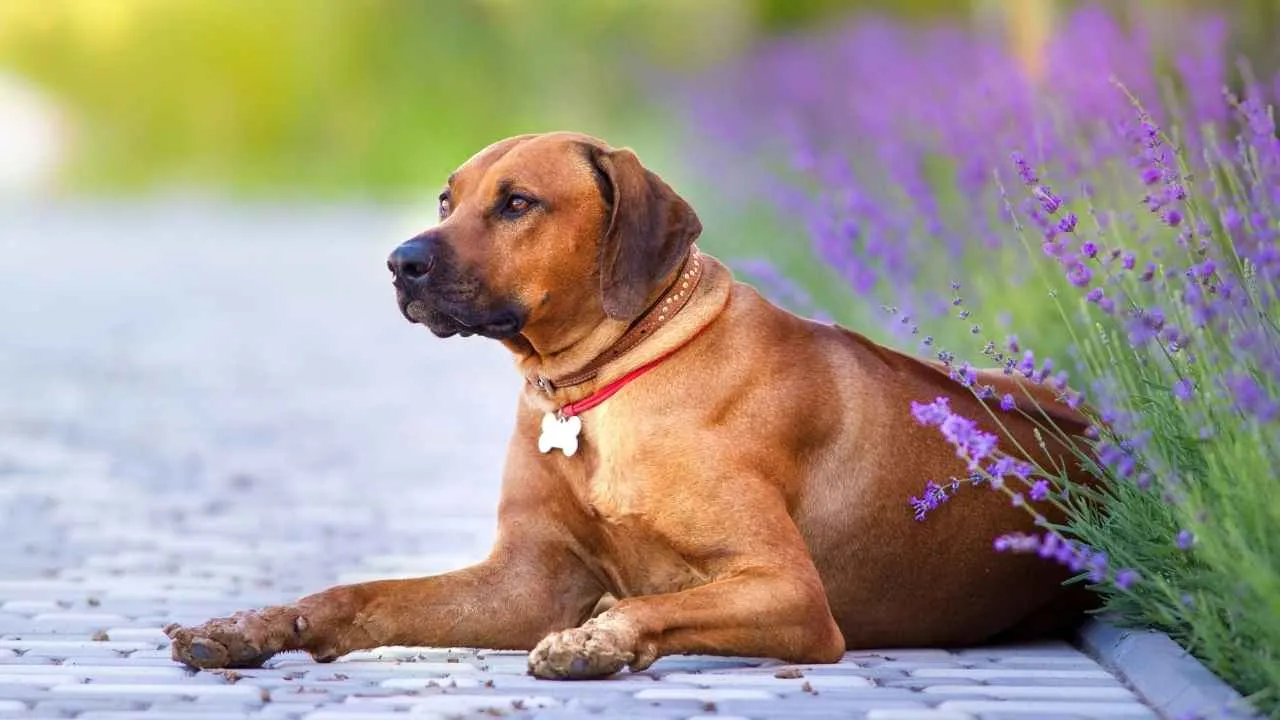
Originally bred in South Africa by the Khoikhoi people, these great partners were used to track and bay lions. These dogs can run in 90 degrees Fahrenheit across dry, rocky savanna terrain without water breaks that other dogs would demand after every 20 minutes. Their lean muscle-to-body-fat ratio and short coat keep them from overheating.
They do not bark unnecessarily and bark only to inform the owner about a threat. They make strong bonds with the family, making them a great guard dog and a perfect companion for family camping.
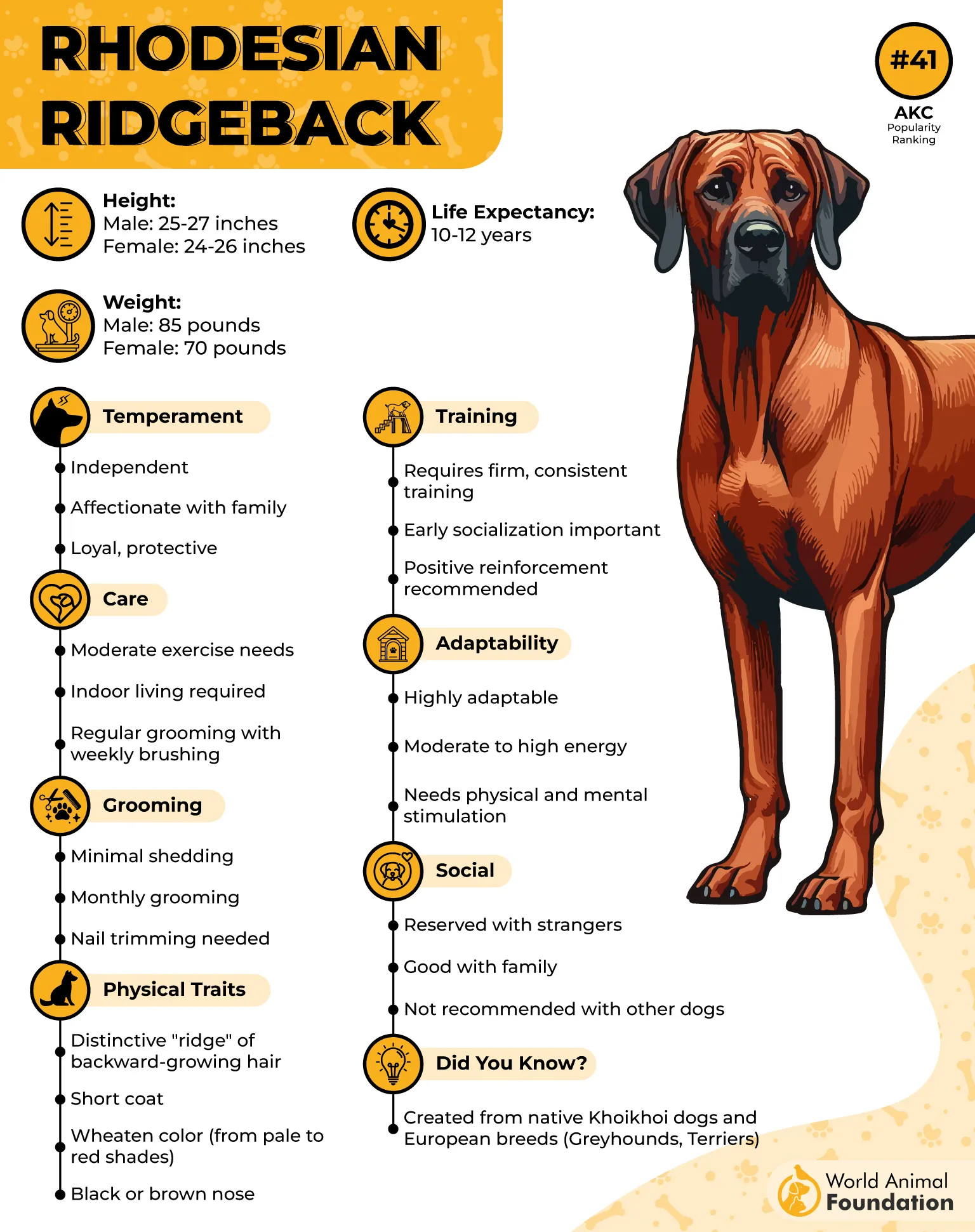
This breed has an incredible sense of smell and is widely used in police work, military jobs, and SAR operations for man-trailing, bomb detection, and navigation.
Because of their high intelligence and curious nature, they love to run and explore woods. So, you need to keep an eye on them to prevent any misconduct.
4. German Shorthaired Pointer
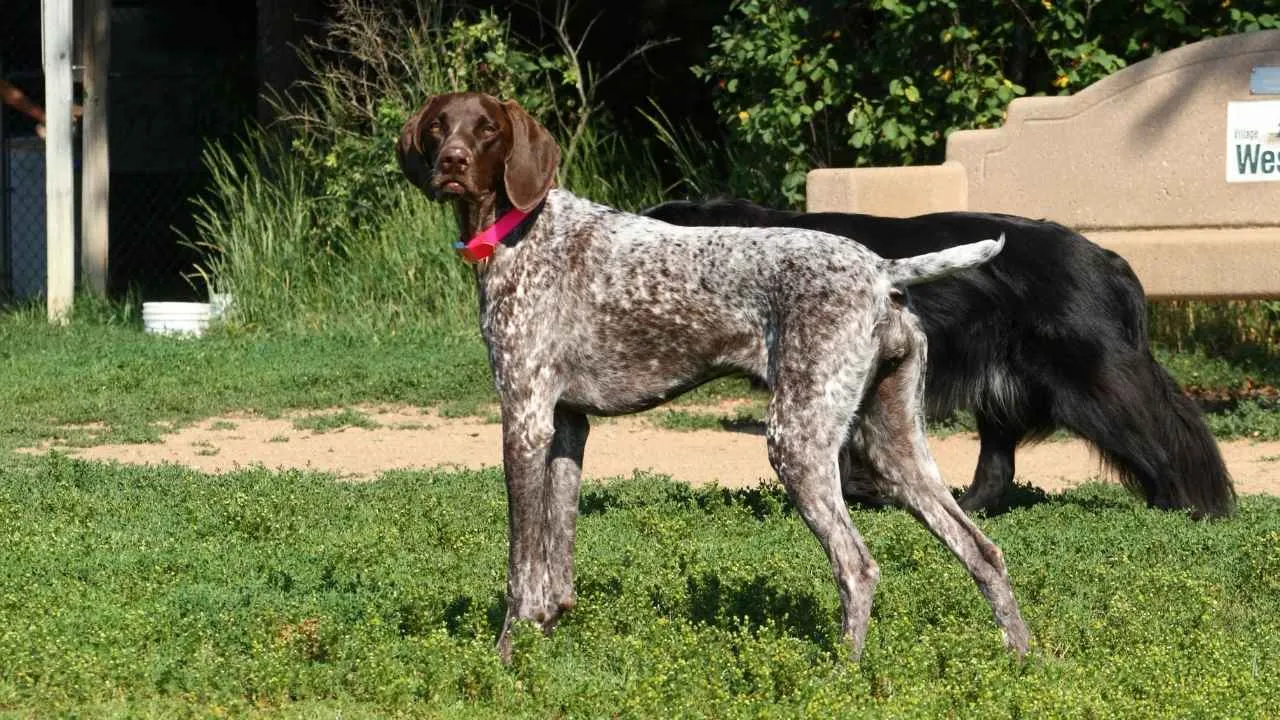
After crossing Bloodhounds, Spanish Pointers, and various German hunting dogs for over a decade in the 19-th century, the breeders came up with a dog breed that could work in every type of terrain: the German Shorthaired Pointer. With their webbed feet and endurance, they are excellent swimmers and can swim across rivers and streams.
This highly intelligent dog can work tirelessly for consecutive 4-6 hours without performance decline. Because of their velcro nature and with the right training, they can be off-leashed since they tend to stay closer to the owner.
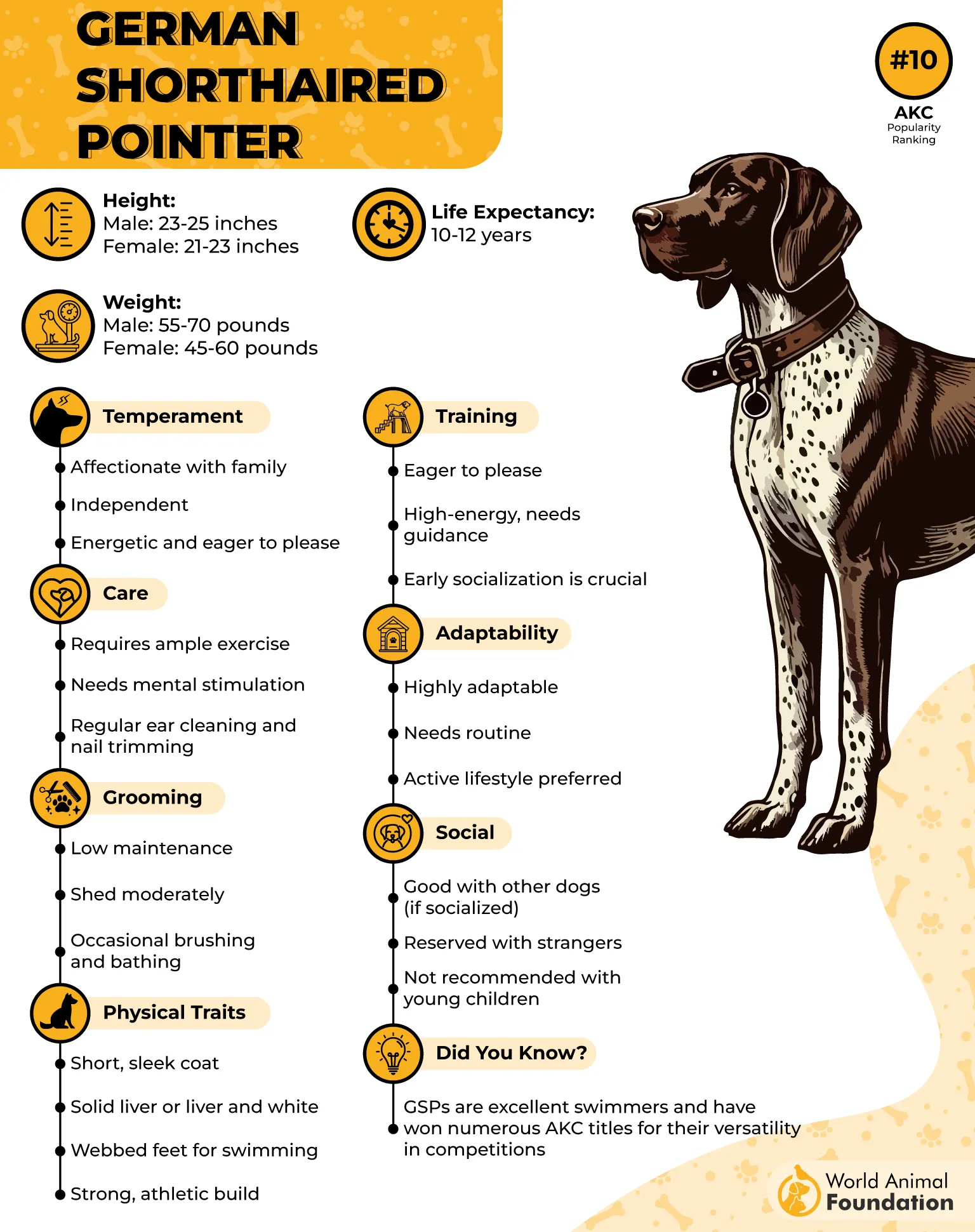
This multi-purpose dog is specifically designed to retrieve, point, and hunt, so you don’t have to carry 3 different breeds for your camping. They have a constant need for a job while at a campsite; thus, mental stimulation is required to prevent boredom.
They use their keen senses to identify wildlife such as wild boars and lions long before humans can. They bark loudly to inform about the threat. Having a short and water-resistant coat means it does not gather mud, burr, or debris. This makes regular cleaning easier. Their exceptional nose is one of the strongest in all breeds; it can find objects hiding in the deep snow and can smell anything from 50 yards.
5. Alaskan Malamute
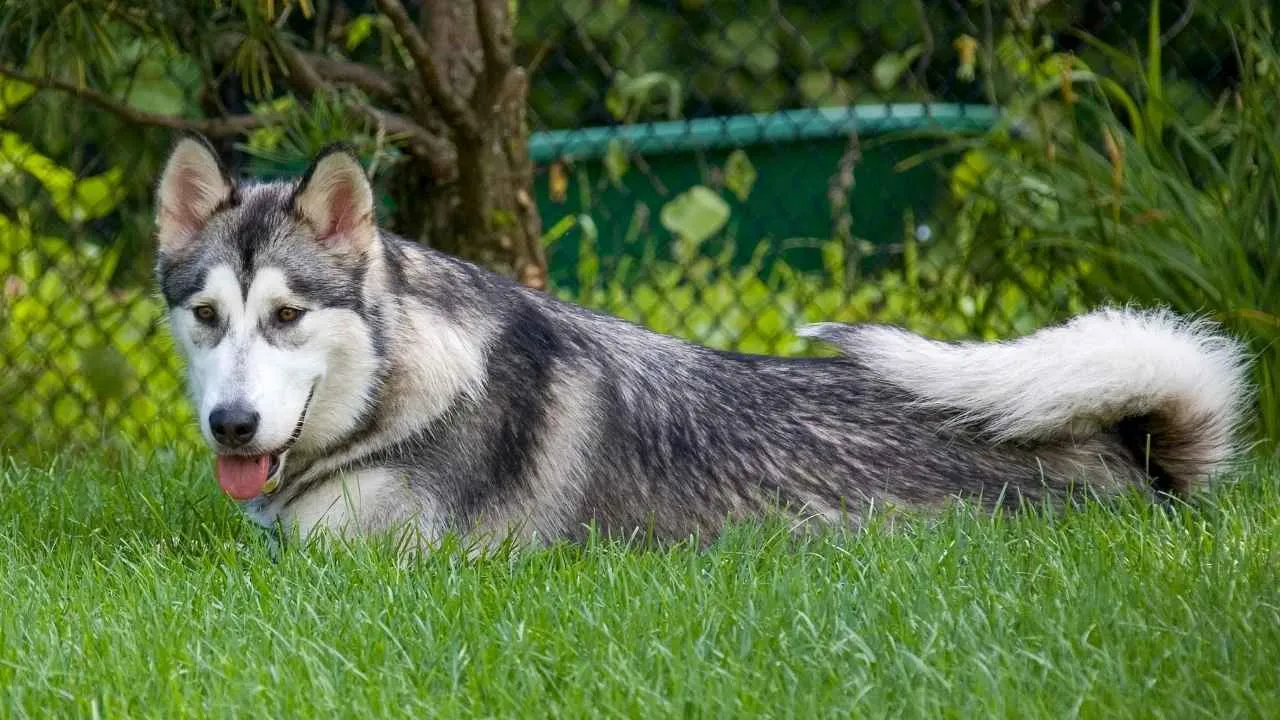
One of the oldest arctic sled breeds in North America, they were bred originally by the Mahlemut Inuit people of Alaska to haul heavy freight across sea ice and mountain passes. Unlike Huskies, which were built for speed over long distances, the Alaskan Malamutes were built for raw power and load carrying (pulling sleds).
As per AMCA, a healthy, trail-conditioned Malamute can carry up to 30% of its own body weight in a properly fitted saddle pack. Being curious and energetic, they love to go on outdoor adventures, especially in rough terrains.
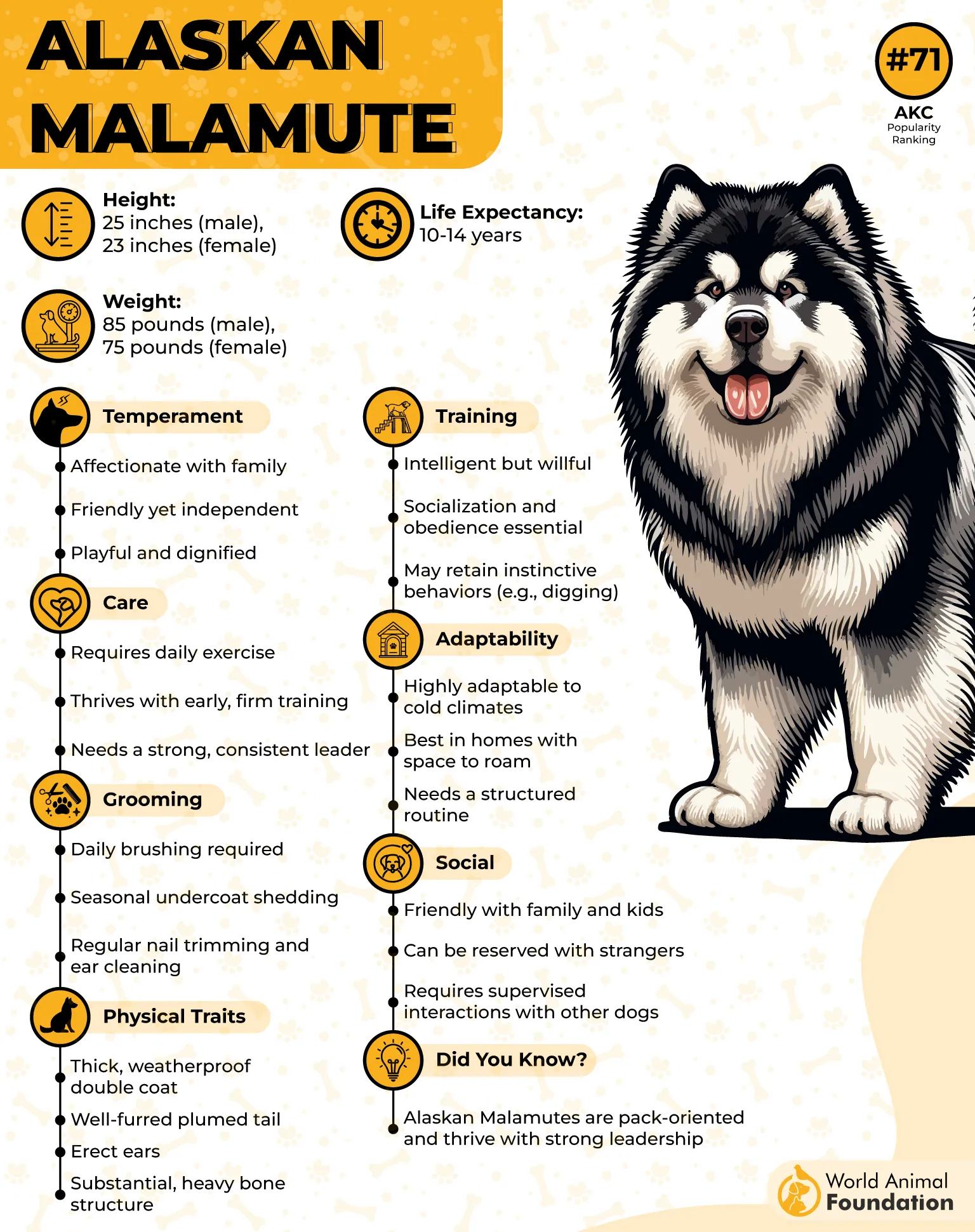
The cushioned paws are designed to walk on the snow and icy streams, and the fur between the toes and around the pads protects the feet from abrasion and frostbite.
They have high exercise needs (1.5-2 hours a day). The Alaskan Malamutes usually prefer endurance-based workouts, such as running, hiking, pulling heavy loads, and carting. Though they form strong bonds with the family, they are independent.
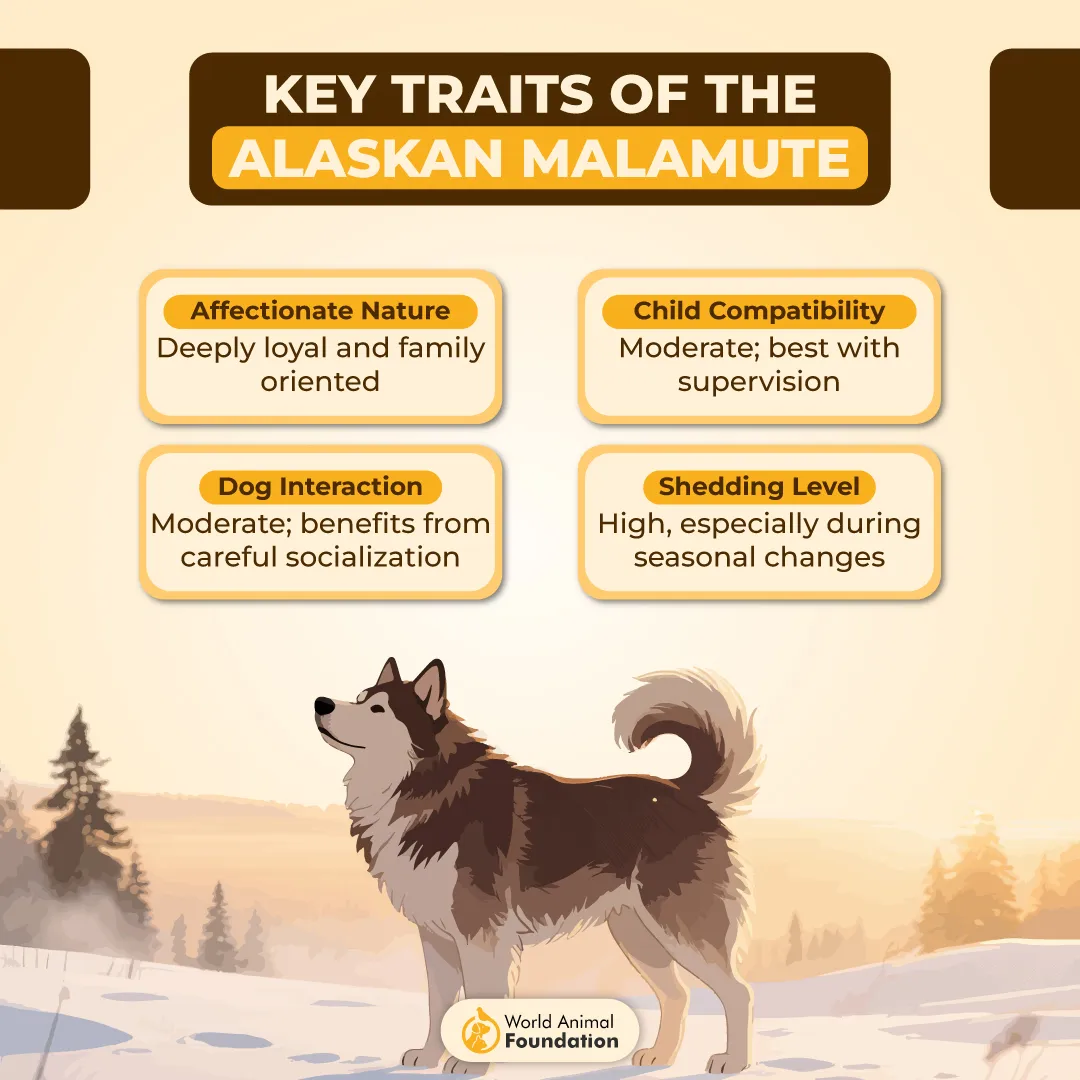
So, they reason before instantly obeying the commands. Their olfactory receptors are 1,000,000 more sensitive than humans’. And their black noses change to light pink during the winter.
6. Vizsla
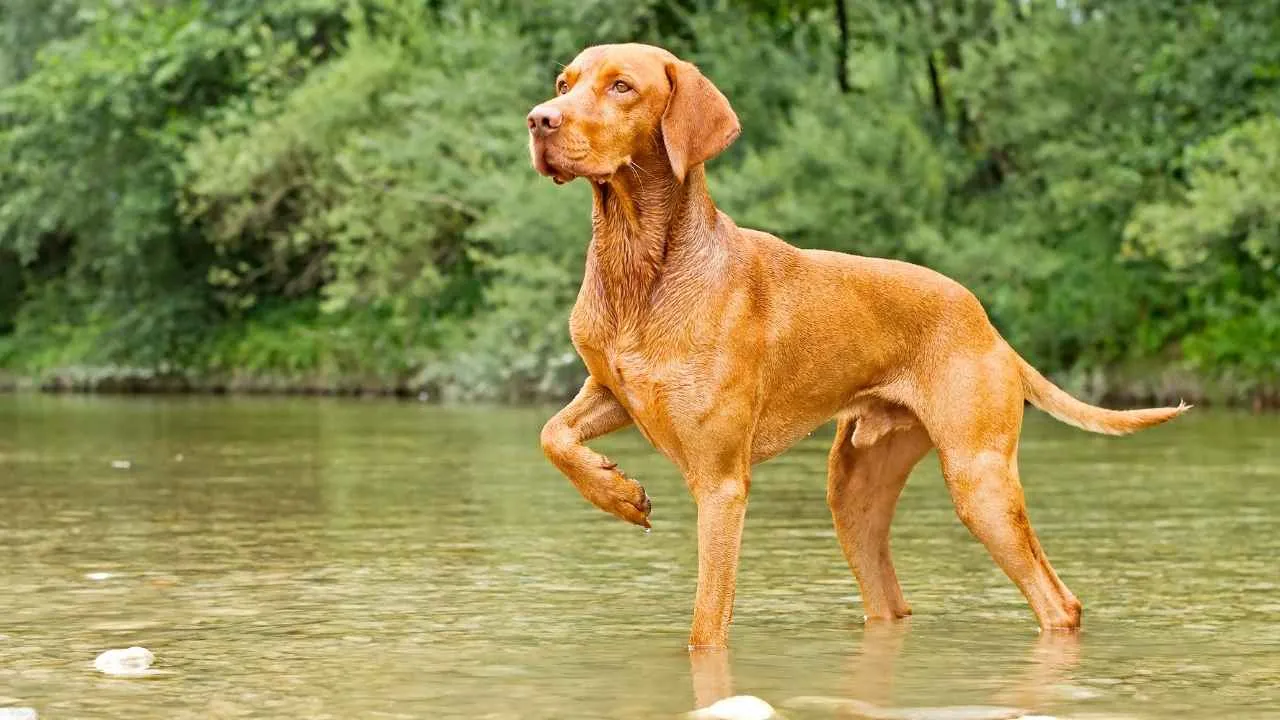
Hungary’s oldest sporting breed, and arguably the most slept-on trail dog among American outdoor enthusiasts, the Vizsla was developed as a falcon hunting and upland bird dog. This dog tends to work silently, covering long treks and staying closer to the handler.
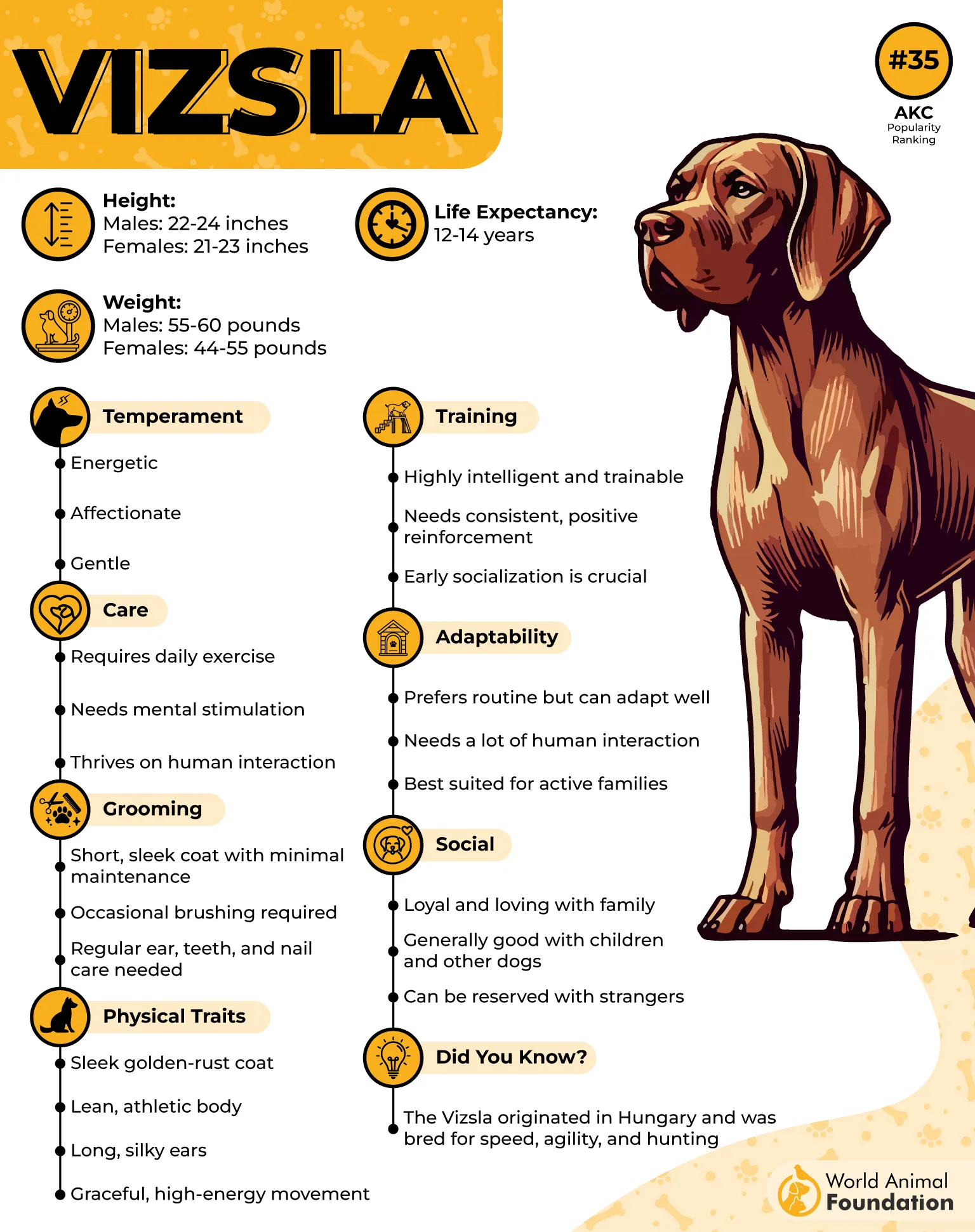
This breed is attuned to human emotions and reads the handler’s energy with precision. They mirror this observed energy level, focused work on intense days and less work on lighter days. They also try to comfort the owner in stressful situations. Left alone for too long, they will develop separation anxiety.
Being a natural watchdog, they alertly sniff out any changes in the environment. They have an affectionate nature and are eager to please, making them highly trainable. Weighing around 45-60 pounds, the Vizsla is muscular and strong and not overly large. It can be carried on the plane, cruise, and train.
7. German Shepherd
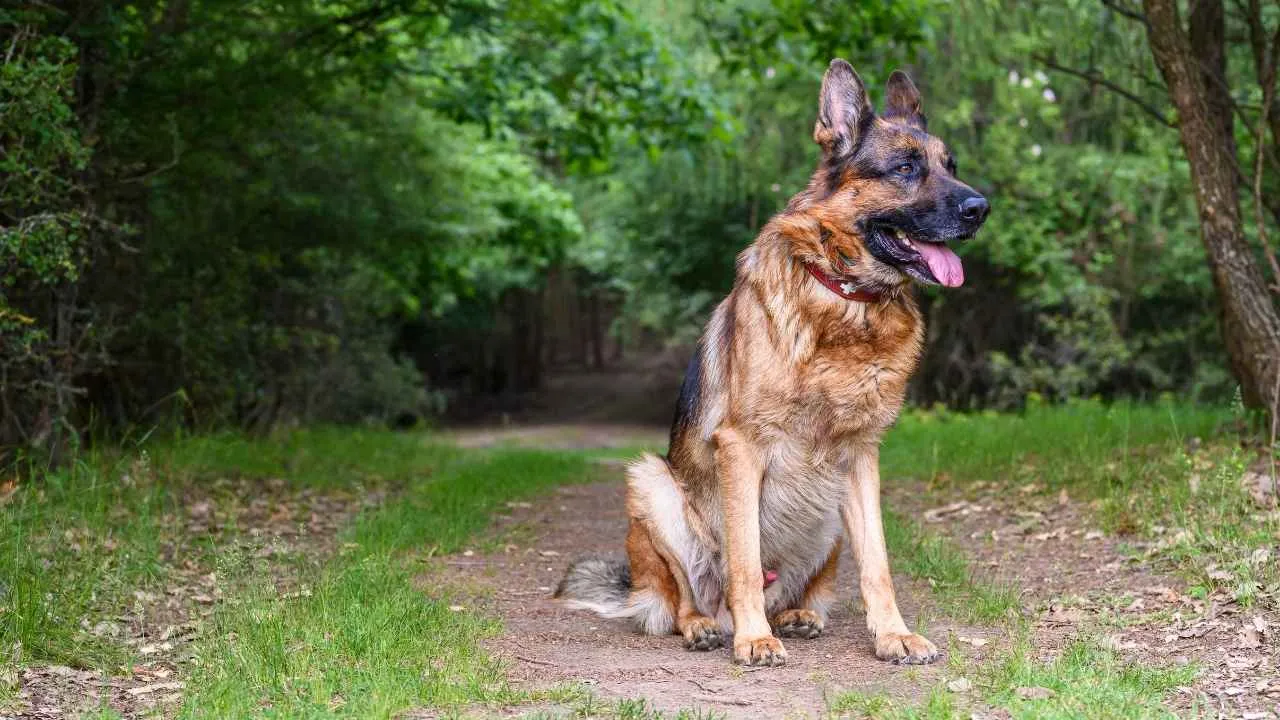
Captain Max von Stephanitz developed GSD in the 1890s as a working breed. Even after 130 years, the German Shepherd is still the top choice for K9, disaster response operations, police, and military work. The hind leg angulation provides explosive uphill power, the deep chest supports high cardiovascular output, and the thick coat provides insulation in all seasons.
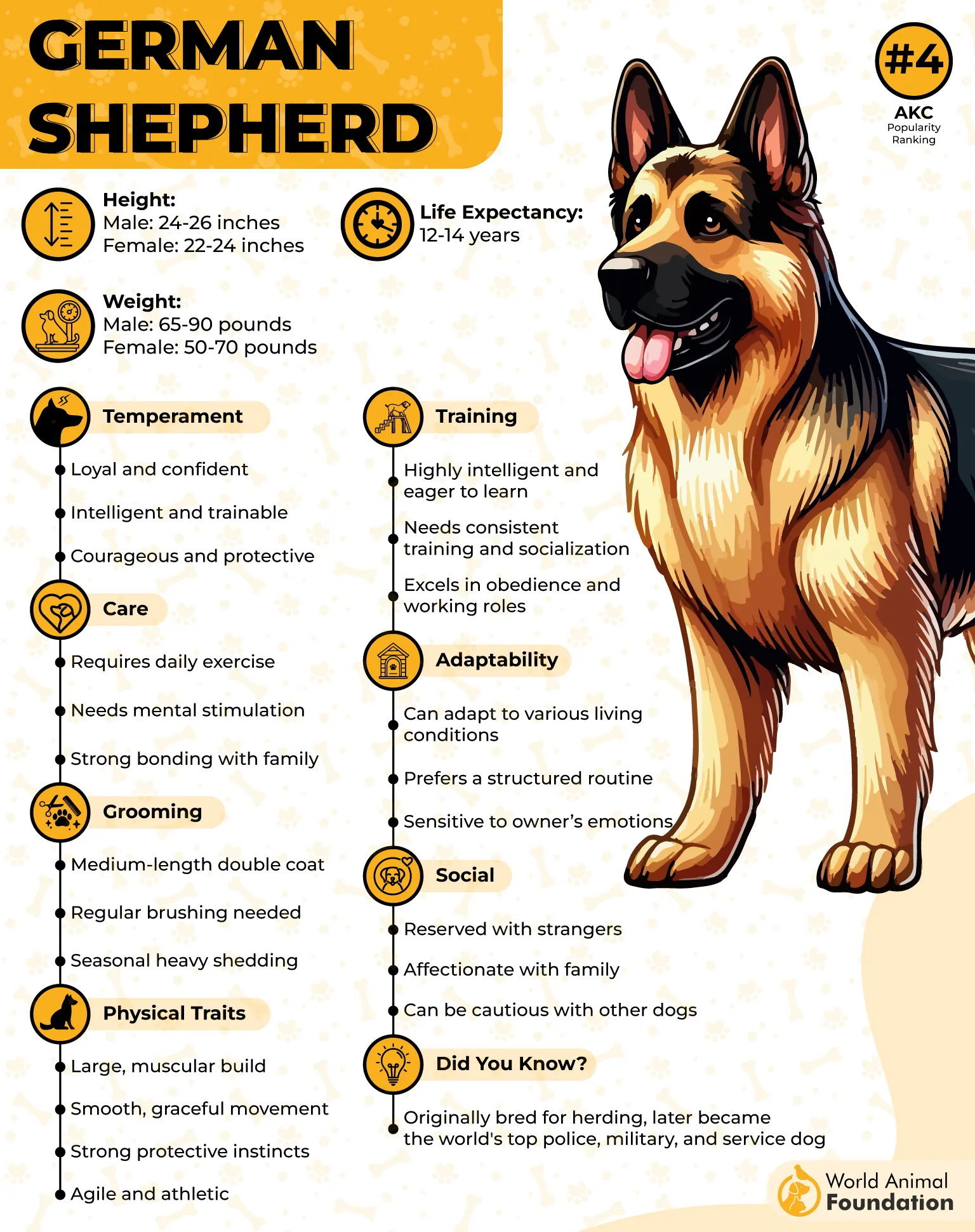
Being an excellent protection dog, they observe their surroundings, and if they sense any threat, they bark and try to intimidate the intruder physically. If that does not work, they use their strong bite (238-300 PSI) to break the bones of the intruder. Their “pack mentality” enables them to stay active and closer to the family.
Because of their stubborn nature, they need to be trained properly through positive reinforcement, especially between 6 and 18 months of age. They are experts at reading the mood and body language of the owner and act accordingly. Wikipedia reports that the German Shepherd has the tendency to cope with extreme traumatic events easily.
Conclusion
Every breed on this list earned its place through generations of actual work in the wilderness, not a marking department’s decision. The Husky and Malamute own the cold. The Ridgeback and Cattle Dog own the heat. The GSP and Vizsla own the distance. And the German Shepherd owns the judgment call when things get complicated.
The right dog does not just come along for the ride. They make the trip harder to cut short, easier to endure, and genuinely better in ways that are difficult to explain until you have experienced it. Pick the breed that matches your terrain, your fitness level, and your camping style, then train them properly, condition them gradually, and let them do what they were built to do.
