




There are dog breeds that most people have never seen, never heard of, and would not recognize even if they were standing right in front of them.
These are not new breeds or experimental ones. They have existed for years, sometimes centuries, yet their populations remain extremely small across the world. What keeps them so rare is not always obvious. It is not just about demand or popularity.
There are deeper reasons tied to geography, breeding limitations, and how certain breeds quietly fall out of public attention over time. The surprising part is that many of these dogs have appearances and characteristics that could easily stand out if given the chance.
Understanding why these breeds are so rare reveals a side of the dog world most people never explore, which is exactly what unfolds in this article.
Key Takeaways
Some dog breeds are so rare that even experienced dog lovers go their entire lives without encountering them once.
Skye Terrier and Cesky Terrier show how geography and limited breeding quietly shape rare dogs that most people never come across.
Finnish Spitz and Norwegian Lundehund take rarity even further with traits built for very specific work that no longer exists in the same way.
As you move through all ten breeds, you start to see how history, purpose, and chance decide which dogs stay hidden from the world.
Breathtaking Dog Breeds With Tiny Populations Worldwide
1. Skye Terrier
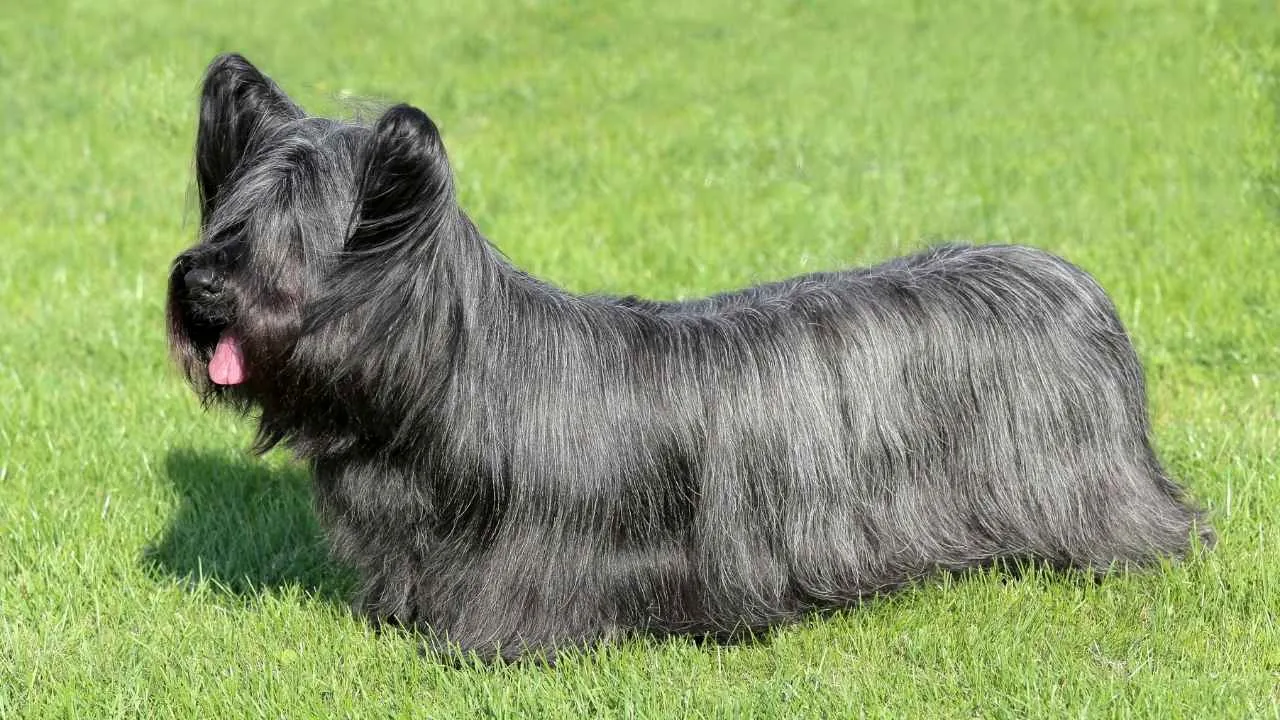
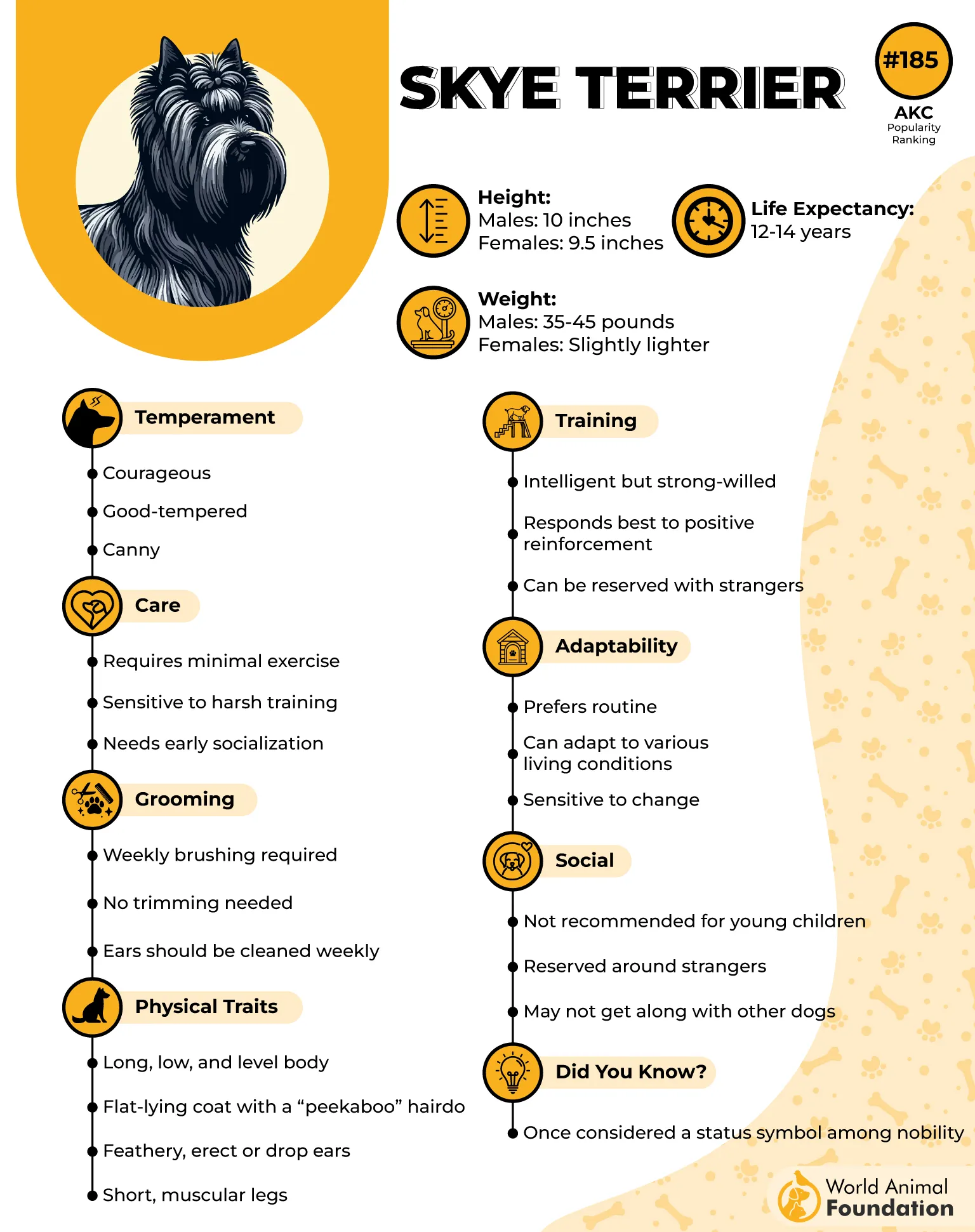
Skye Terrier holds a quiet place among rare breeds, ranked 185th out of 200 by the AKC, making it an uncommon sight even among enthusiasts.
Its name comes from the Isle of Skye in Scotland, tying it closely to a specific geographic identity. This limited presence adds to its appeal among those seeking something less familiar.
Coat and physical character
These little dogs draw attention through a long, flowing coat that drapes across their bodies, faces, and ears, shaping their overall appearance. Beneath this look is a dog built for activity, not just appearance, with steady energy throughout the day.
A closer look reveals how form and function align:
Long coat covering the body, face, and ears
Built for active daily engagement
Grooming can be adjusted for easier upkeep
Energy balanced with control
They maintain a steady level of activity, requiring around an hour of daily exercise without becoming restless indoors, as noted by the AKC. Its behavior reflects a middle ground, staying engaged without tipping into constant motion. This balance allows it to participate in different activities without losing control.
2. Dandie Dinmont Terrier
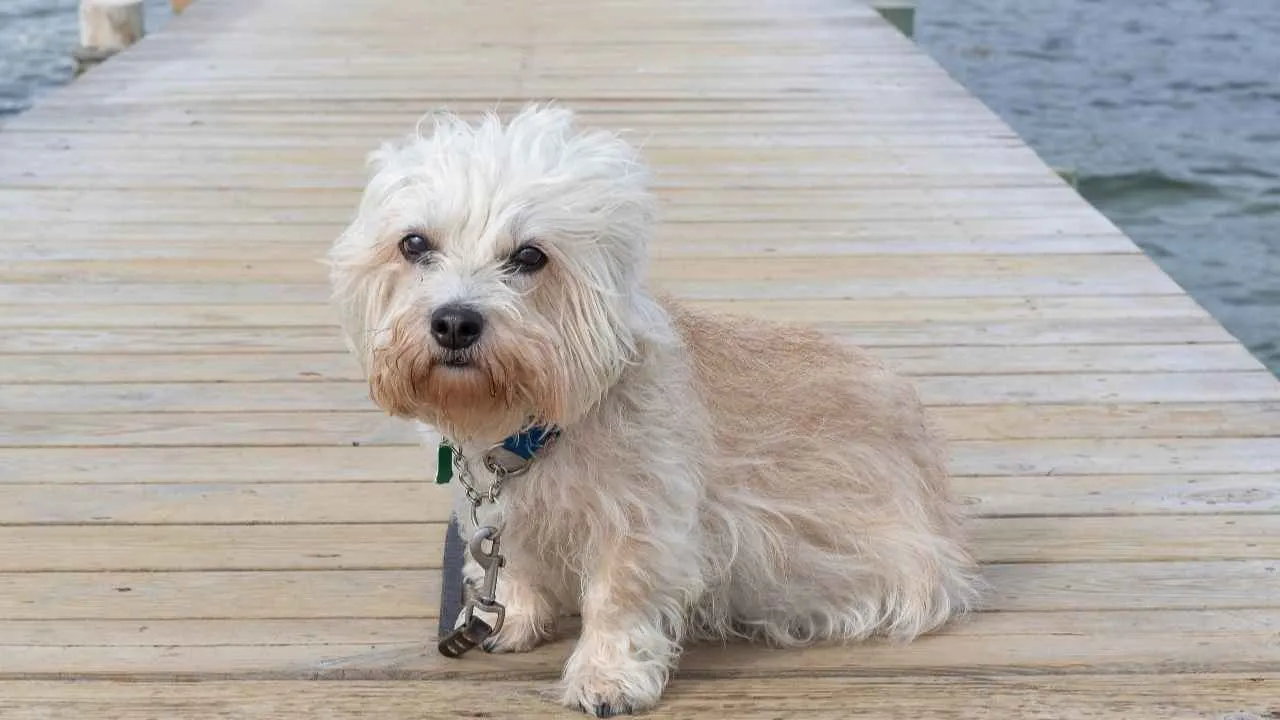
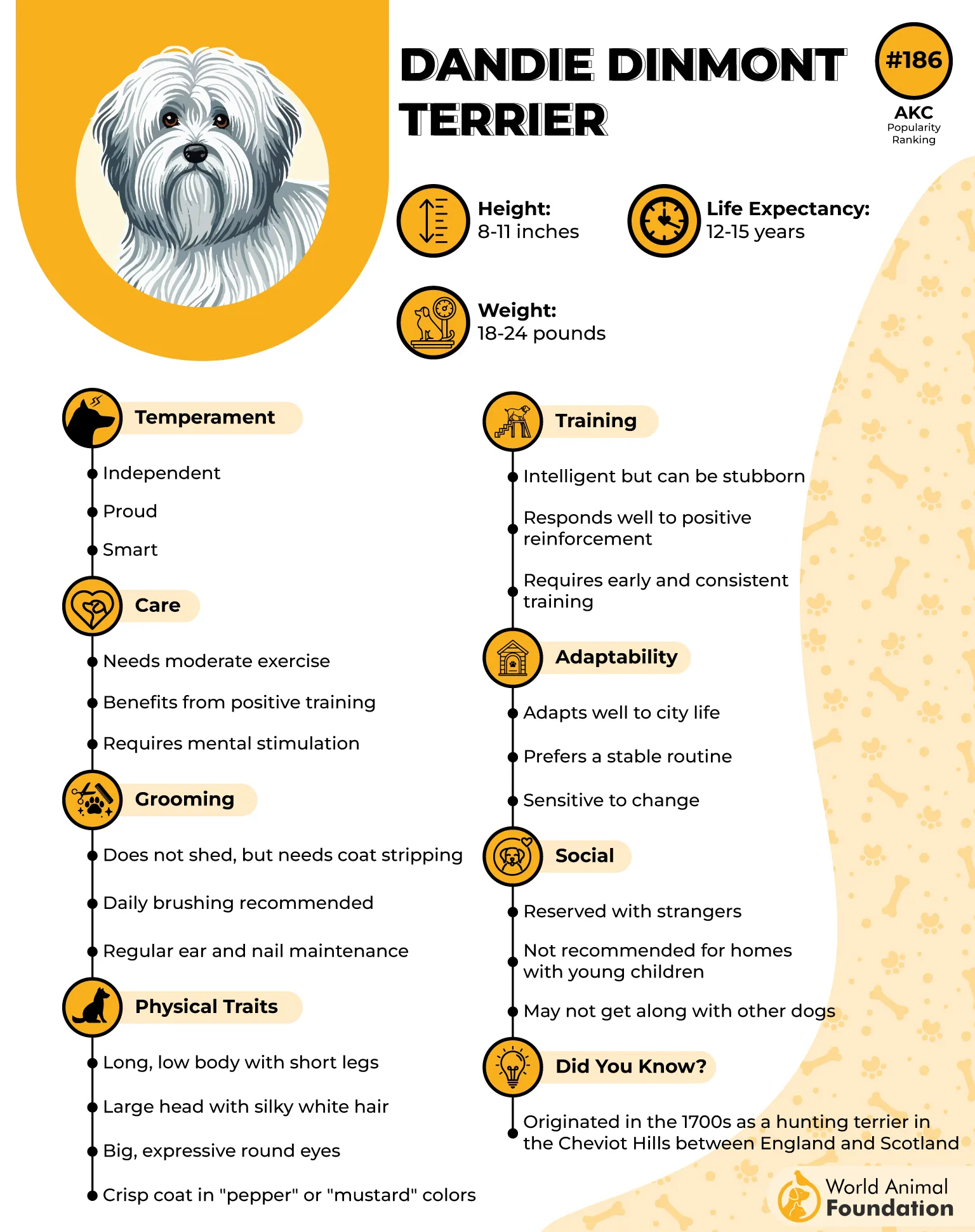
Dandie Dinmont Terrier presents a long, low body paired with a large head crowned in soft, silky hair. Its hanging ears taper toward a point, framing bright, round eyes that hold strong expression. The coat appears in pepper and mustard shades, adding to its unmistakable look.
Structure shaped for purpose
This small dog breed was built for tough farm work, combining a tiny frame with surprising durability in rough conditions. Its proportions reflect a working terrier designed for persistence rather than speed.
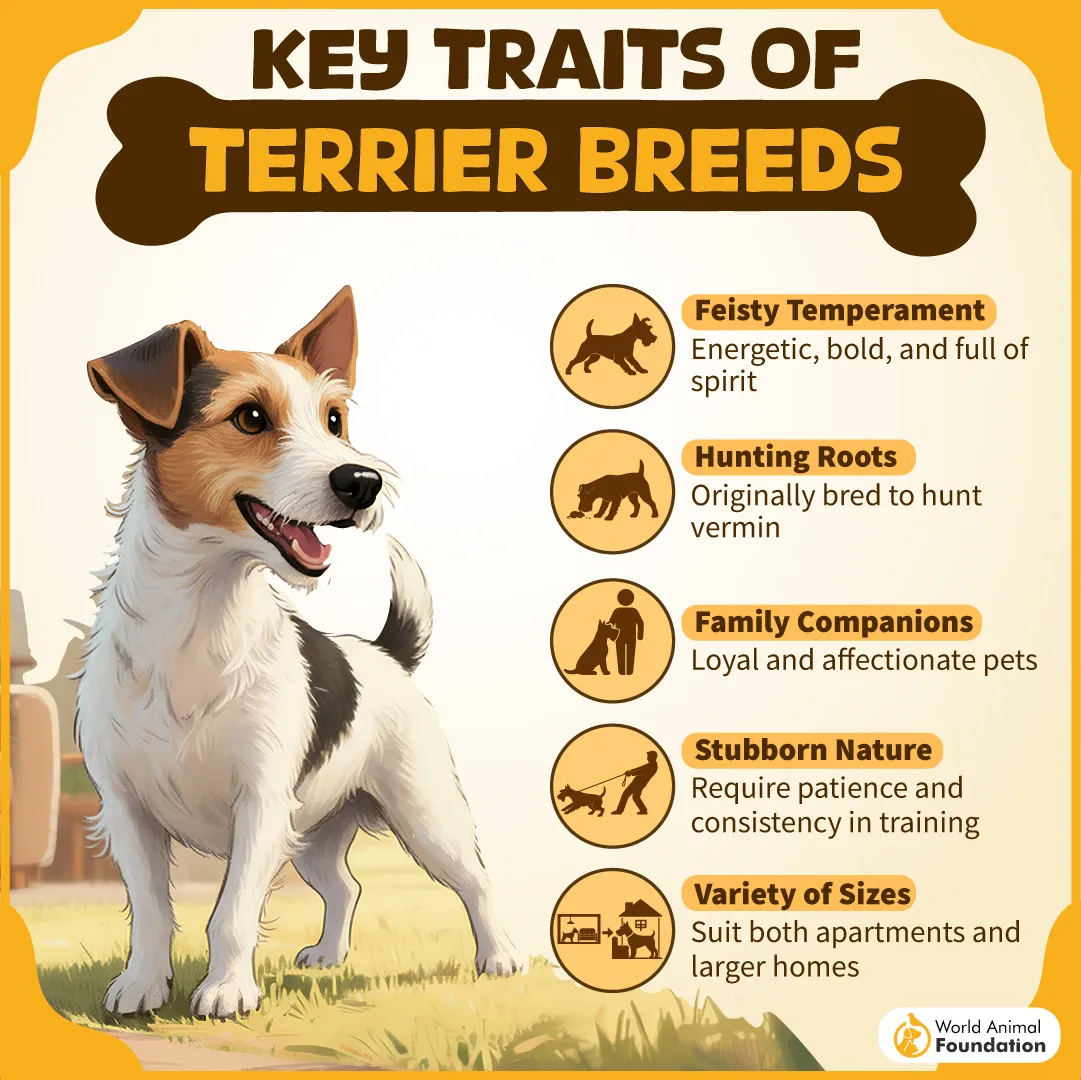
That design becomes clearer in key physical traits:
Long torso set low to the ground
Short legs supporting steady movement
Dense coat in pepper or mustard tones
Limited presence and breeding numbers
They remain a rare breed, with small litter sizes often ranging between three and five puppies. A decline in active breeders has made availability increasingly limited in recent years. This scarcity places it among less commonly seen companion breeds.
3. Finnish Spitz
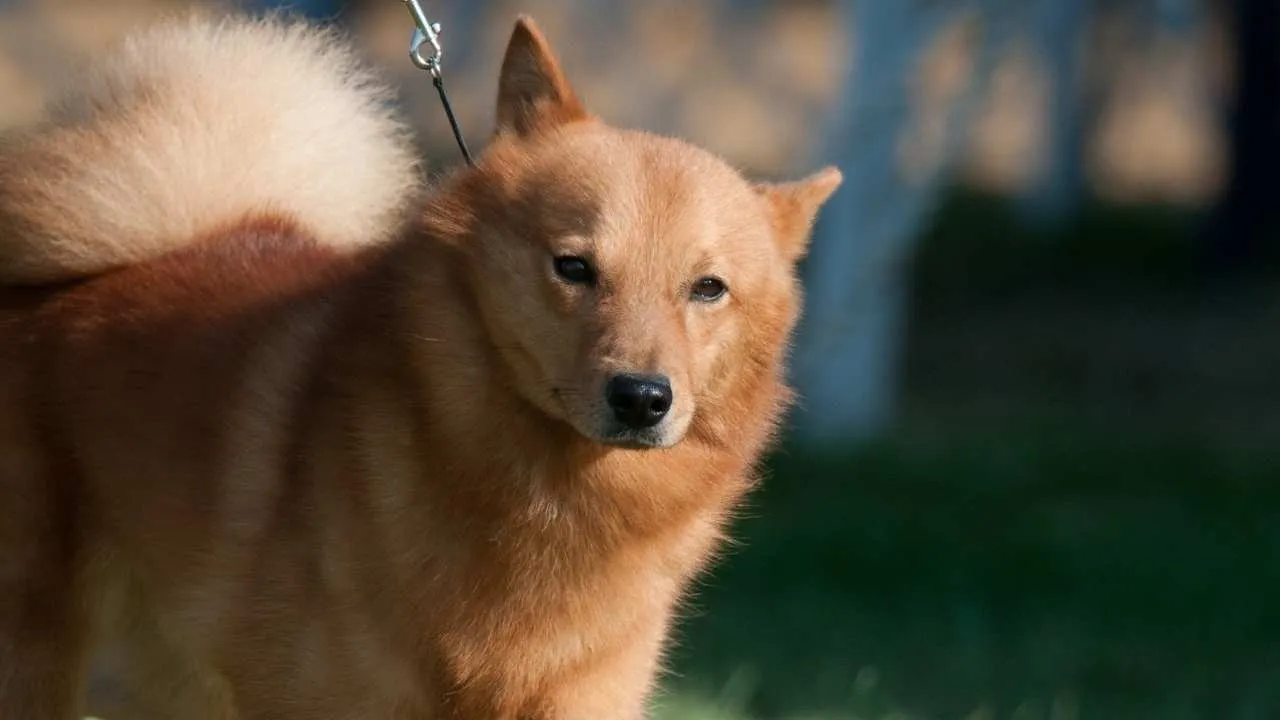
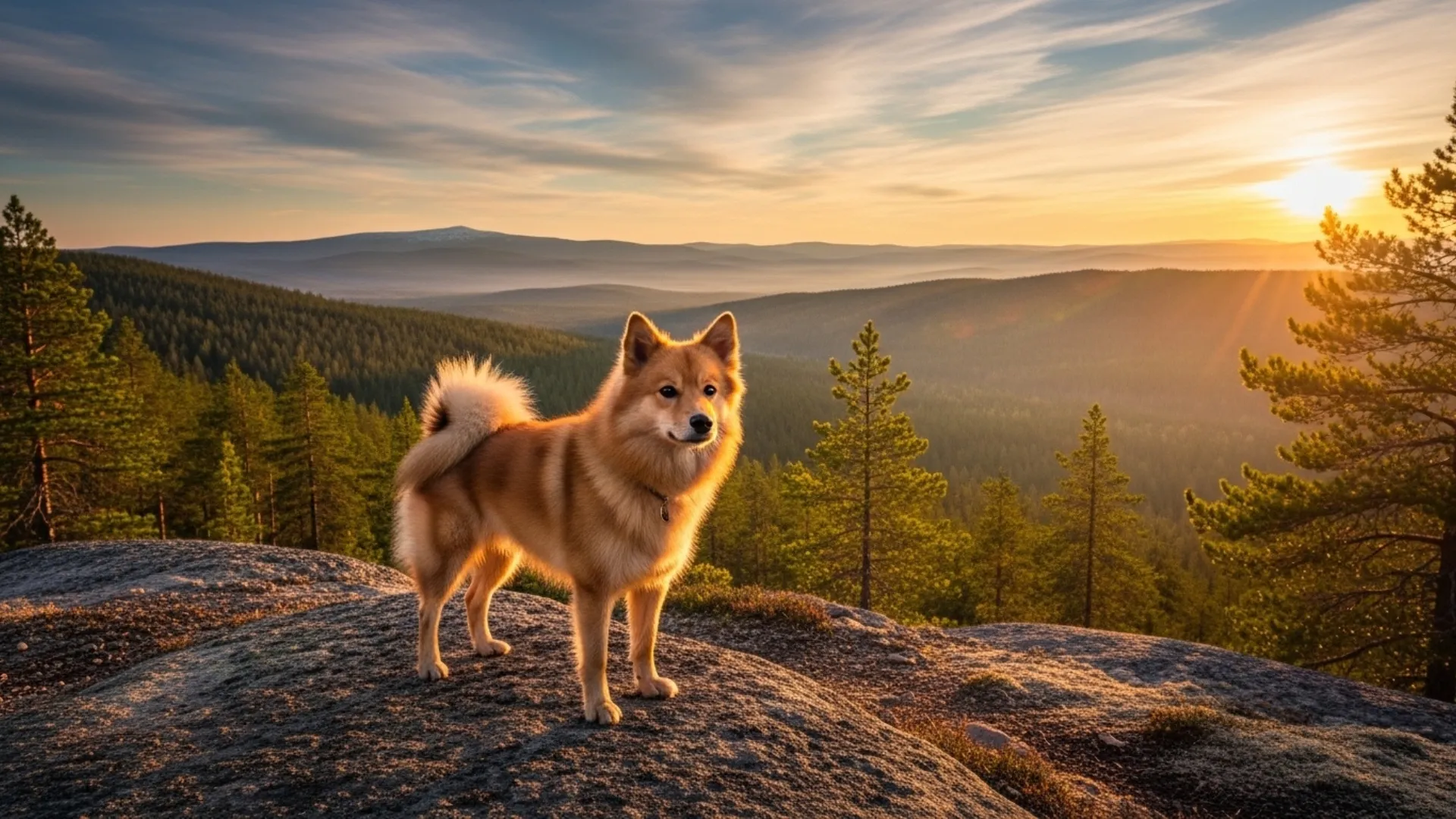
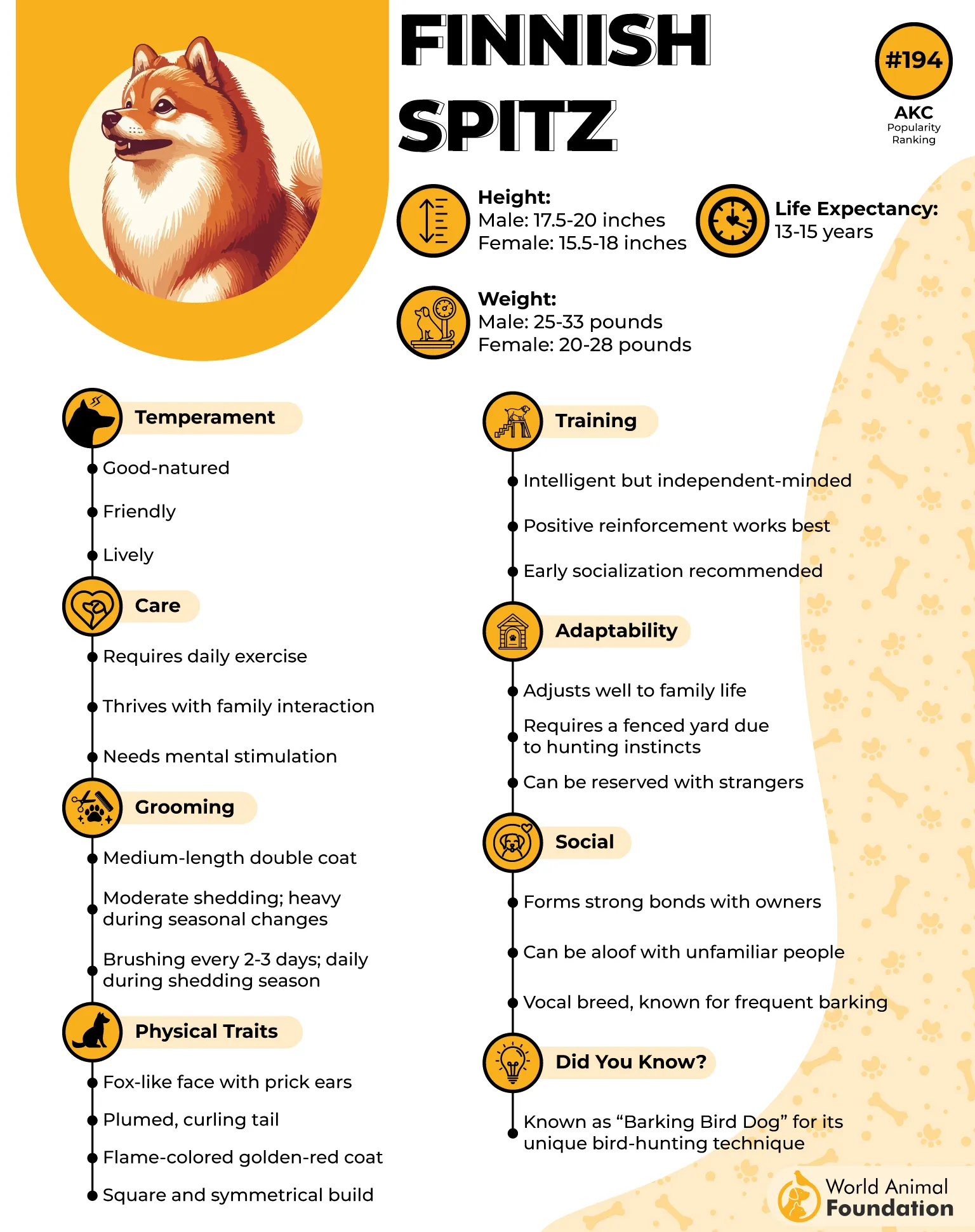
Finnish Spitz presents a fox-like face with upright ears and a plumed tail, paired with a golden-red coat that shifts in tone rather than staying flat.
Its nickname, the “Barking Bird Dog,” reflects a rare hunting style built around sound instead of pursuit. This vocal signaling became central to how it worked in dense woodland.
Hunting style built on sound
They were originally bred to locate game and indicate its position through repeated barking rather than physical chase. It holds attention on the target while guiding the hunter through sound alone.
This approach becomes clearer through distinct traits:
Uses controlled barking to mark game location
Maintains focus without breaking position
Works independently across wooded terrain
Recognition through rarity and presence
This breed remains uncommon in North America, making sightings less frequent compared to other dogs in similar groups. Its glowing coat and brisk, confident gait give it a striking presence during movement and in show settings. This rarity adds to its appeal among those familiar with the breed.
4. Cesky Terrier
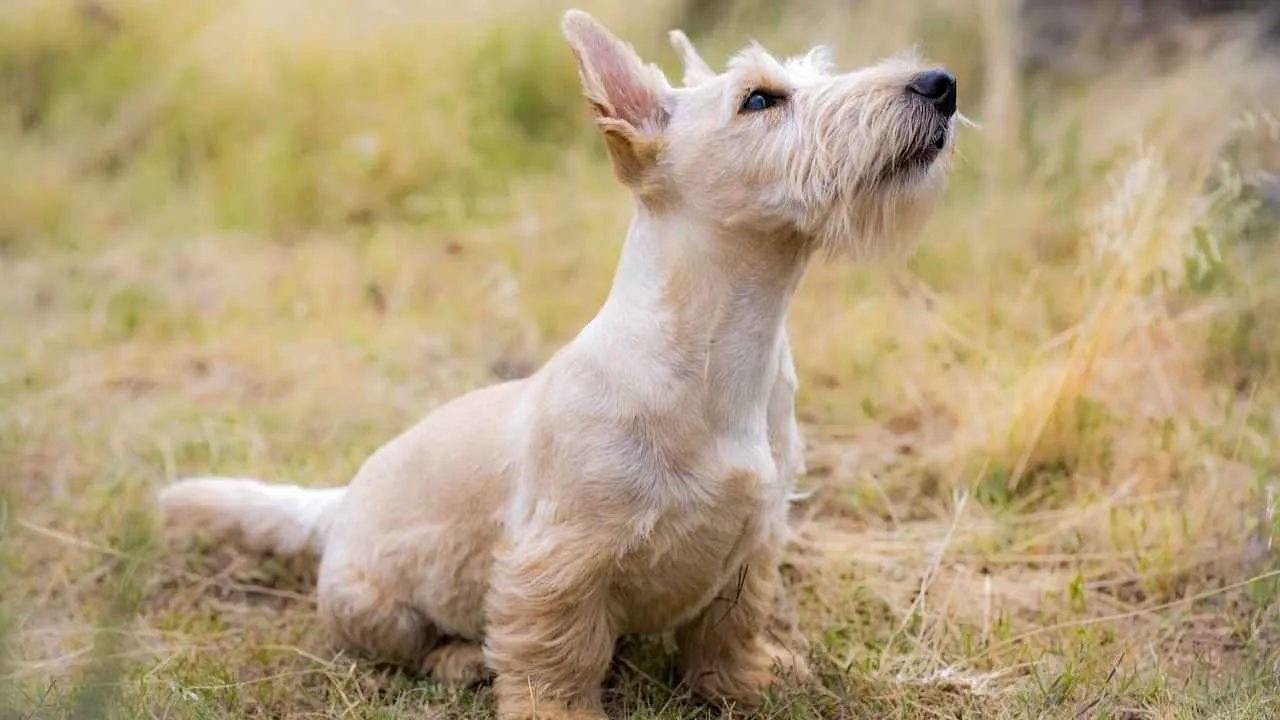
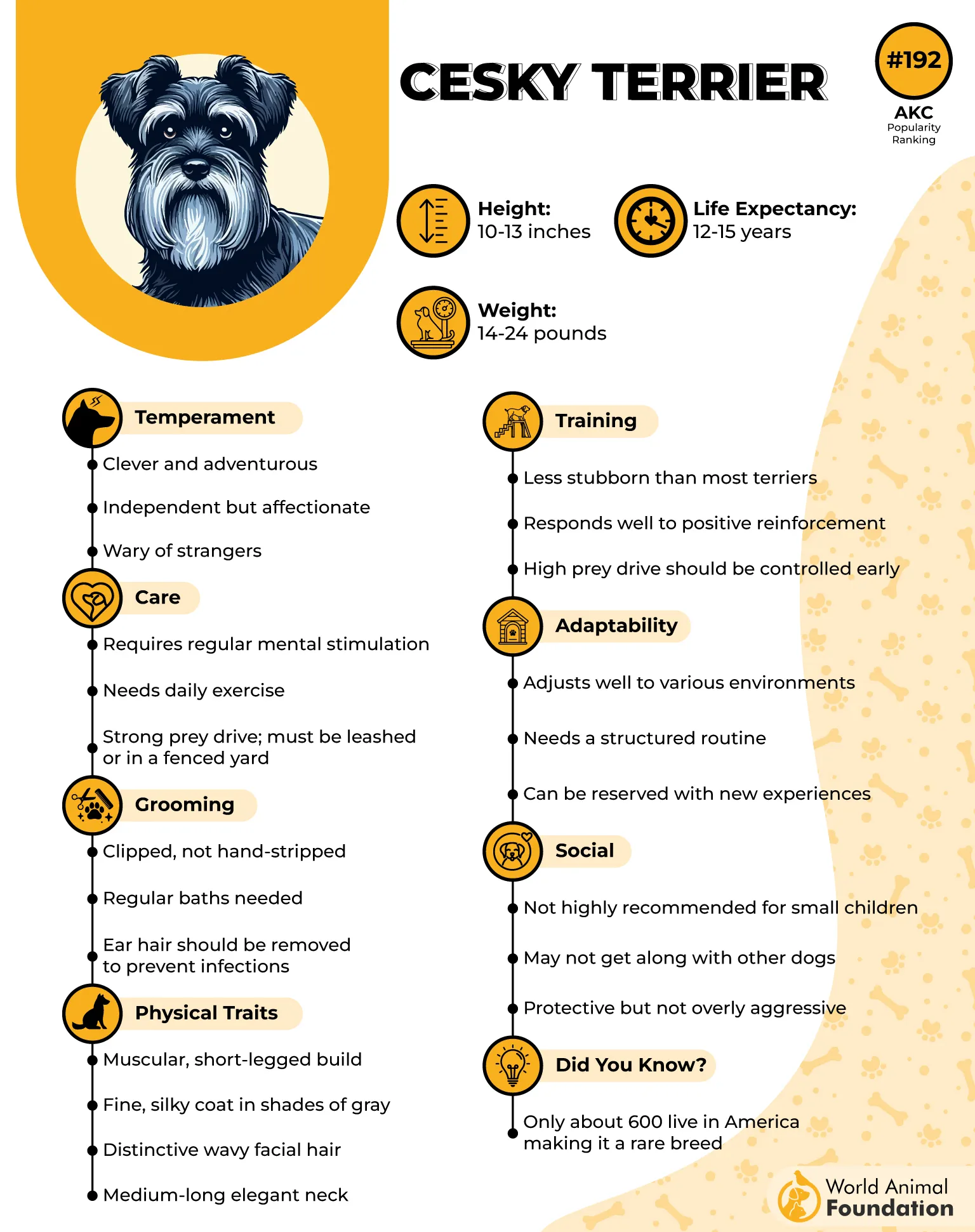
Cesky Terrier holds a unique place as the national dog of the Czech Republic, with only around 600 recorded in the United States. This low population places it among the rarest working terriers available. Its limited presence adds to its distinct identity among more common breeds.
Built for controlled hunting work
These terriers combine a muscular, short-legged frame with a longer neck that supports steady ground-level tracking. Its appearance reflects a working terrier shaped for hunting without excessive intensity.
That structure connects directly to its working traits:
Short legs suited for earth-level pursuit
Muscular build supporting steady movement
Facial furnishings aiding ground focus
Temperament shaped by balance
As a companion dog, they show a calmer and more manageable disposition compared to typical high-strung terriers, while still holding strong prey instincts.
Its behavior around family remains steady, with a noticeable protective awareness toward familiar people. This creates a mix of control and alertness within the home.
5. Polish Lowland Sheepdog
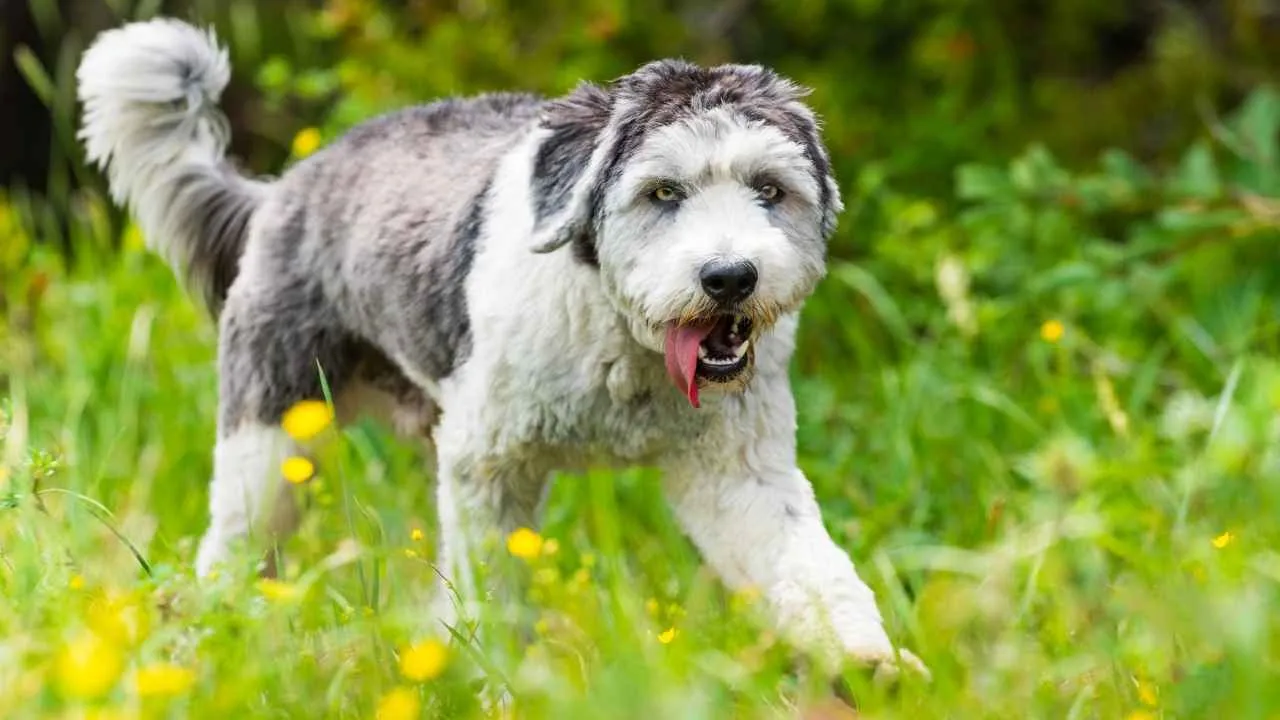
Polish Lowland Sheepdog is defined by its dense, long coat that forms a mop-like outline across its body. This layered coat protects it from rough terrain and shifting weather conditions in open grazing areas. The appearance reflects function, shaped for outdoor herding work rather than display.
Herding instinct and response style
They work with awareness and decision-making, using intelligence and intuition to manage livestock movement. Its loyalty keeps it closely connected to its assigned group during work.
That working approach becomes clearer through these traits:
Uses intuition to guide herd direction
Stays attentive to changes in movement
Maintains steady control without rushing
Rarity and adaptability beyond fields
PONS are rare and uncommon, ranking 142nd out of 155 in AKC popularity, making encounters relatively rare, as VCA noted. Its affectionate side allows it to adjust beyond farm work when placed in the right environment. This balance reflects a breed shaped by work yet capable of close companionship.
6. Russian Toy
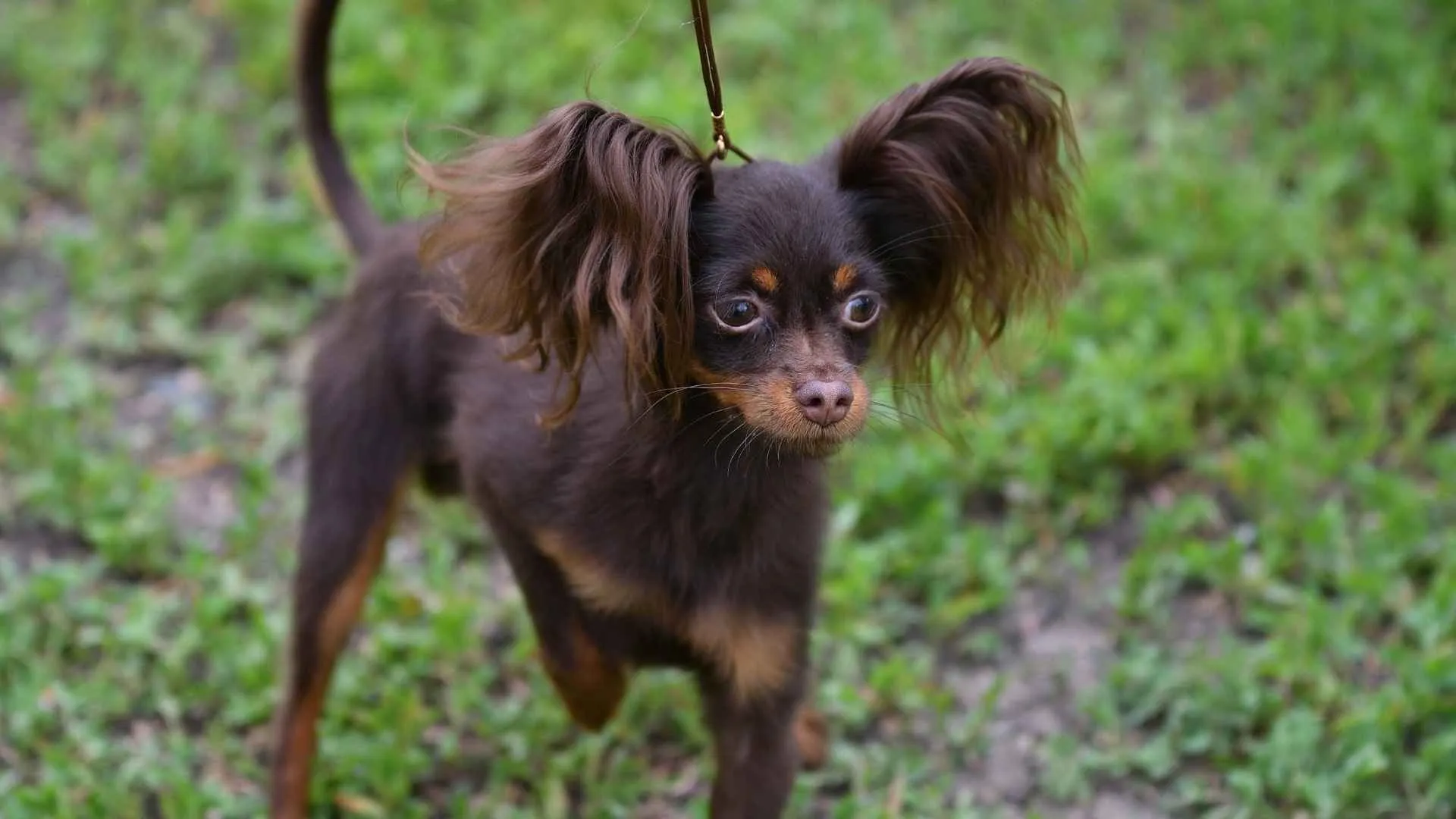
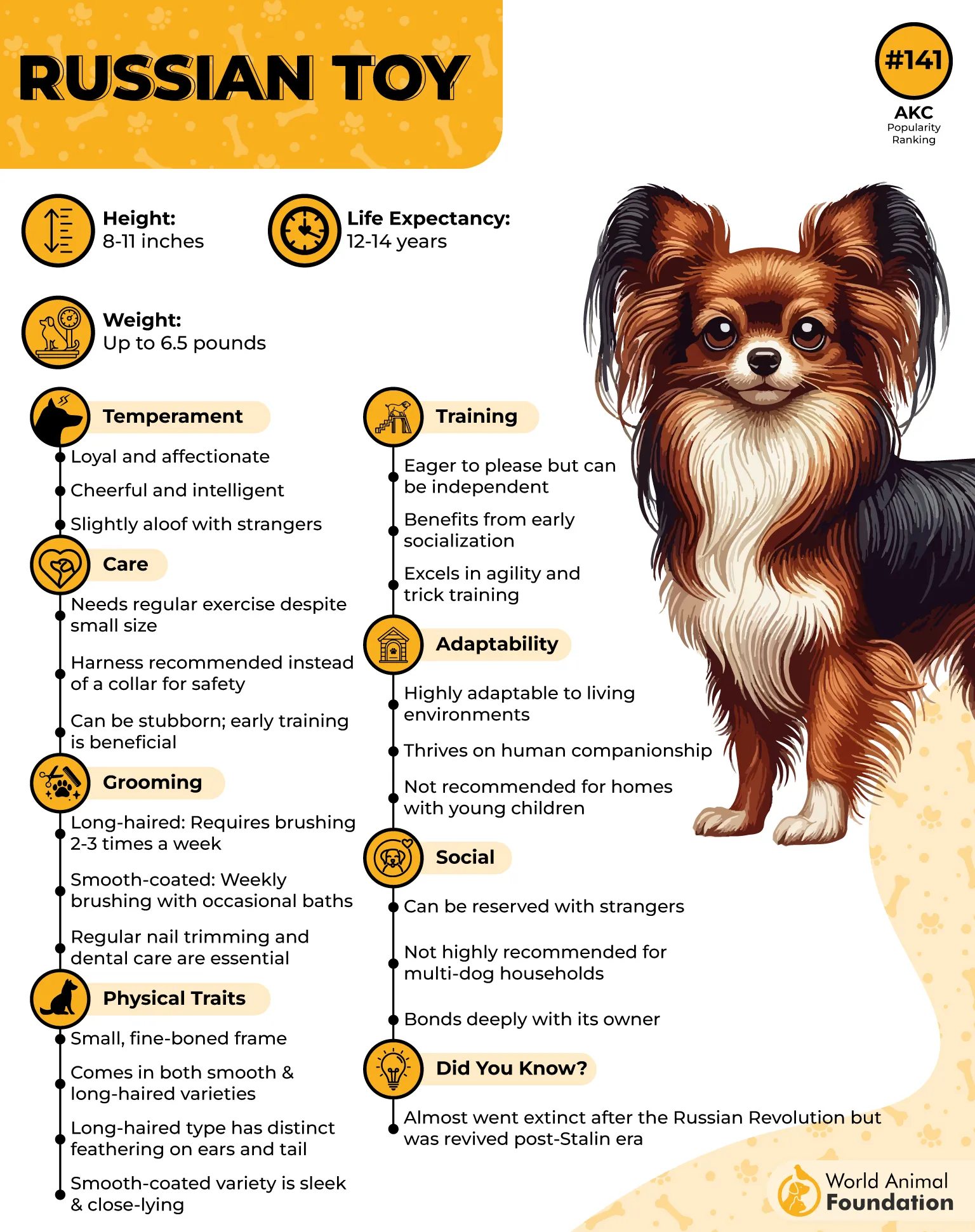
Russian Toy exists in extremely limited numbers, with only around 775 recorded in the United States, placing it among the rarest companion breeds.
Its refined frame, long legs, and fine bone structure reflect a dog shaped within elite circles. The overall appearance feels delicate yet intentionally structured.
Lively behavior in a small frame
This lap dog stays active and expressive, often switching between bursts of playful energy and moments of close physical attachment. Its personality reflects both movement and stillness within the same day.
That contrast appears clearly in daily habits:
Dashes after toys with quick, energetic bursts
Settles comfortably into the lap for long periods
Signals clearly when attention is lacking
Social behavior and emotional response
This small breed has a playful and affectionate nature and forms a strong bond with familiar people, often staying closely connected throughout the day.
Its reaction to unfamiliar individuals remains reserved without turning defensive. The breed’s emotional sensitivity becomes noticeable when interaction levels drop.
7. Lowchen
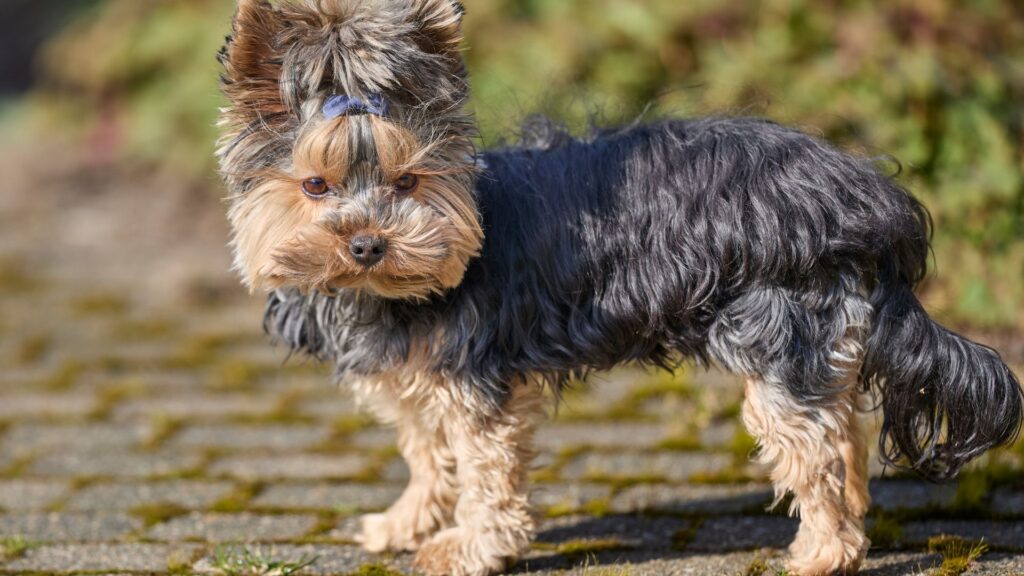
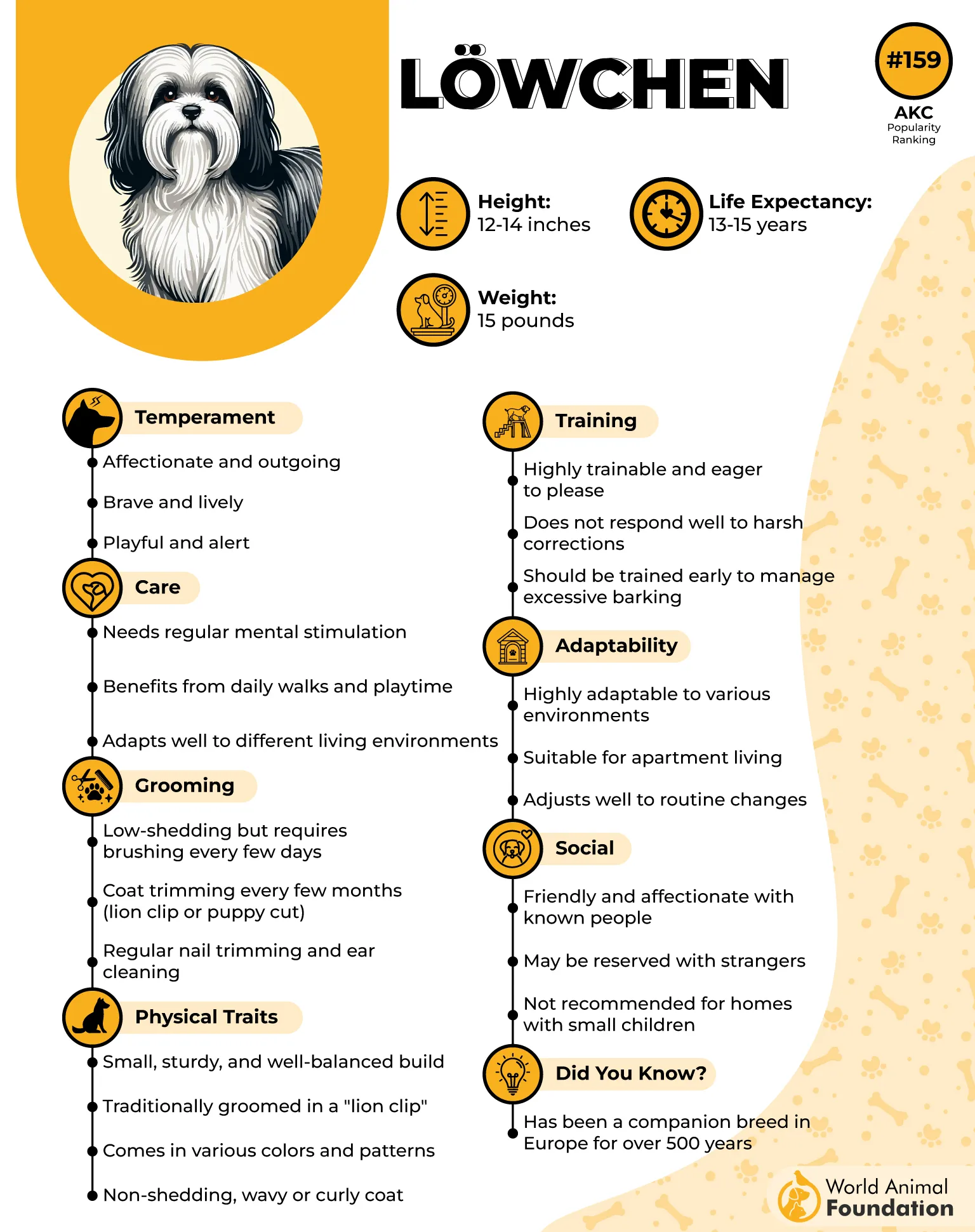
Lowchen presents itself with a distinctive lion-style trim, matching its name, which translates to “little lion.” Its presence was connected to Renaissance households, where it stayed close to daily life indoors. This association with close human spaces shaped a dog built around companionship rather than independence.
Alert behavior shaped by purpose
They were kept in living quarters, where they acted as an early signal for an unfamiliar presence, using their voice to draw attention. That alert instinct still appears in controlled ways when someone new enters its space.
That role becomes clear through these traits:
Barks to signal unfamiliar visitors
Settles quickly after the introduction
Maintains a reserved first response
Rarity shaped by survival circumstances
The number of this lion dog declined sharply during wartime periods when survival pressures led to the breed being left to fend for itself. This period reduced its population significantly, placing it among the rarest dog breeds today. Its limited presence adds to its distinct recognition worldwide.
8. Norwegian Lundehund
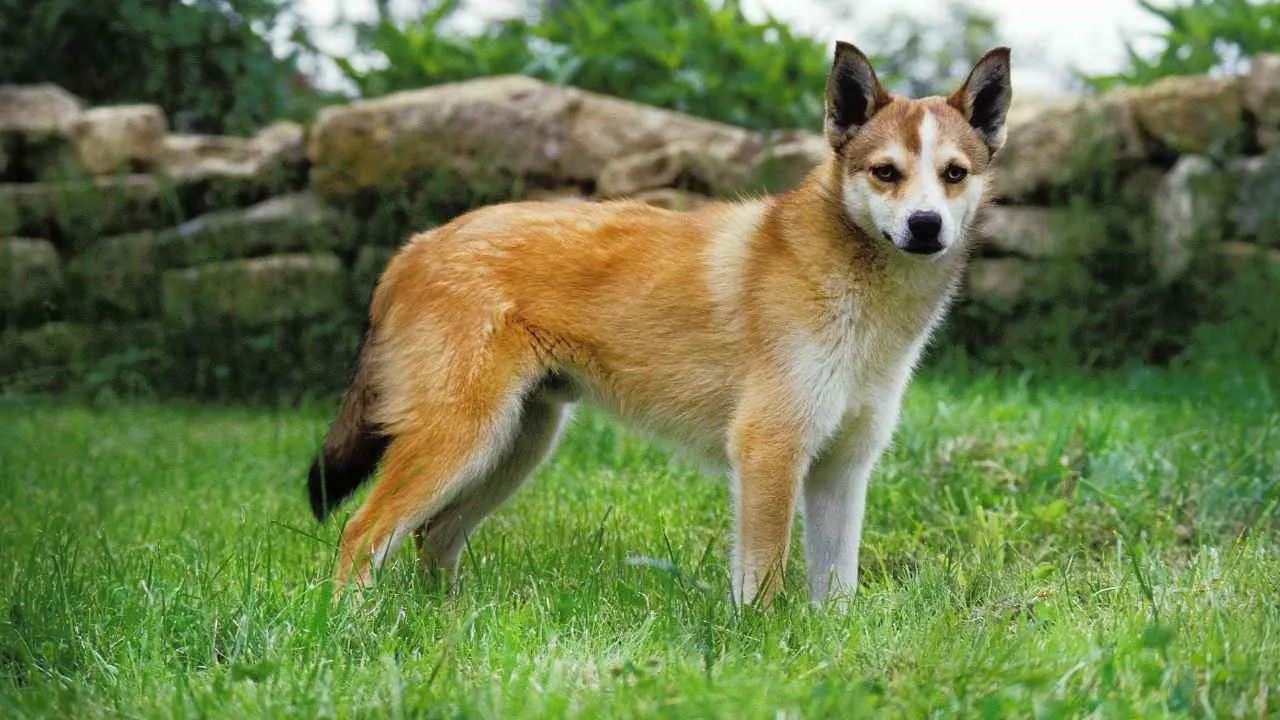
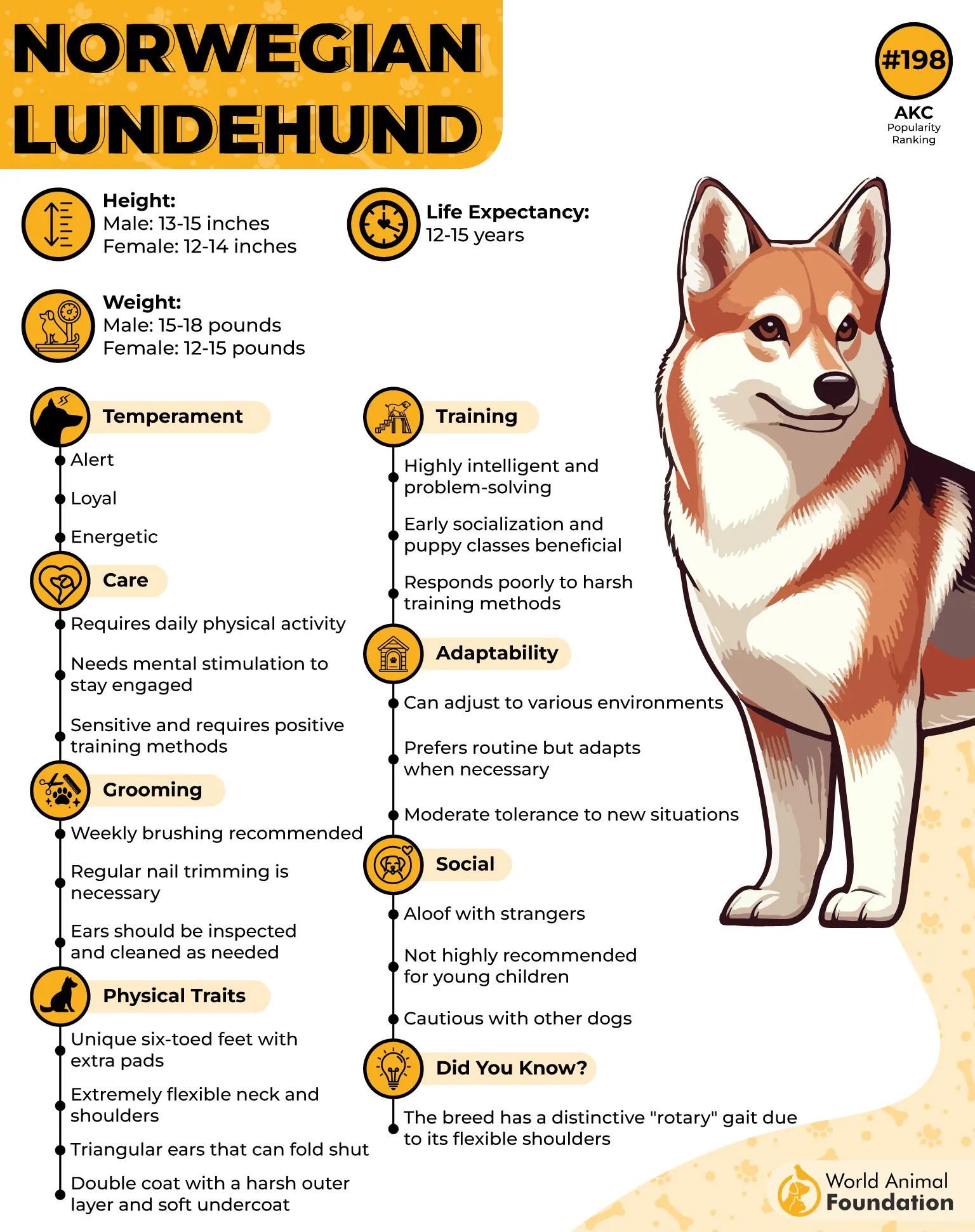
The Norwegian Lundehund breed originated from Norway’s island of Vaeroy, where it was shaped specifically for puffin hunting along cliffs.
Its entire structure reflects this narrow purpose, tied closely to seabird nesting terrain. This highly specialized role defines both its design and rarity today.
Structure unlike any other pet
This curious dog appears spitz-like at first glance, yet its body reveals features rarely seen in any breed. These physical traits allowed it to navigate tight crevices and unstable rock surfaces.
A closer look explains this uniqueness:
Six fully functional toes with extra paw pads
Neck flexibility allows the head to bend back fully
Shoulders extending outward for side-reaching movement
Rarity shaped by changing purpose
This medium-sized breed reflects how its original task has faded with puffins becoming protected. Its limited role reduced widespread breeding, leaving only small populations worldwide. This rarity connects directly to how specific its original function was.
9. Bolognese
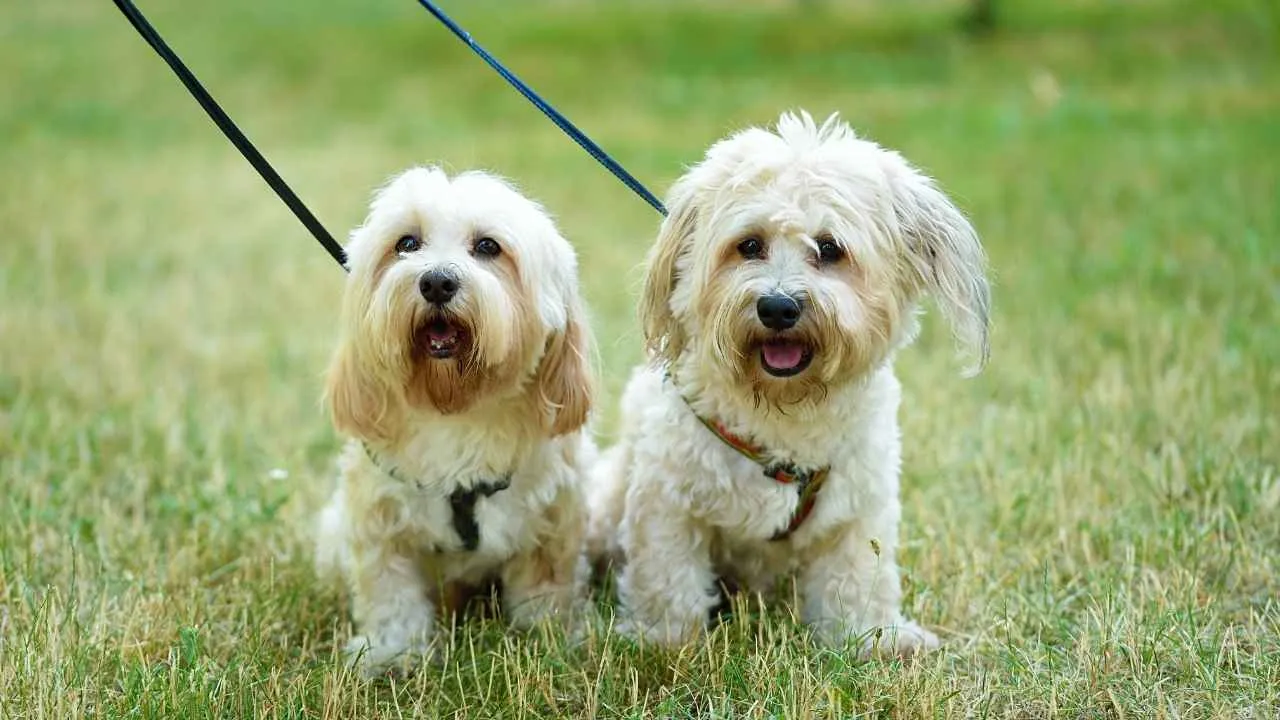
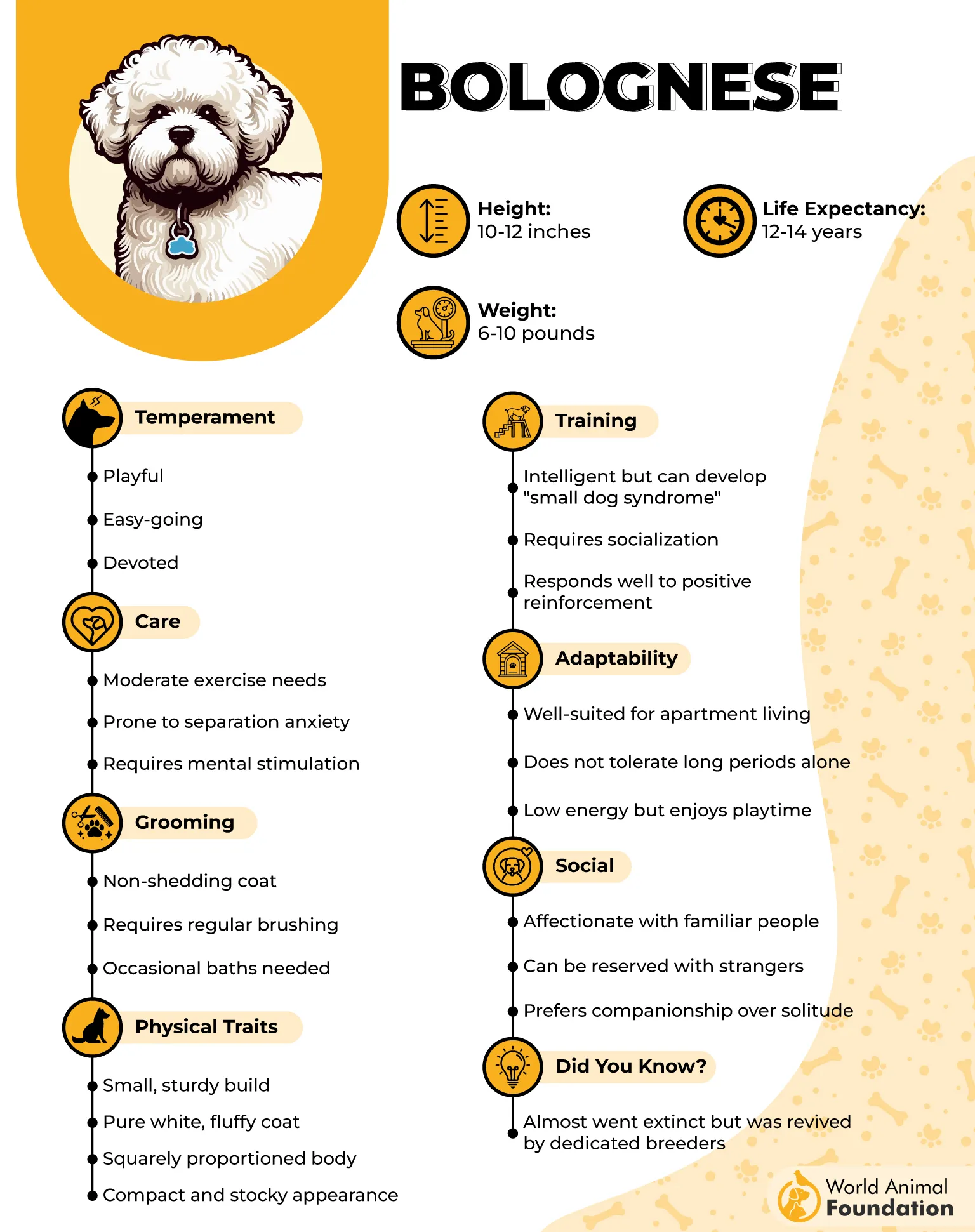
Bolognese remains one of the lesser-seen companion dogs, even within Italy, adding to its limited global presence. Its compact, square build and pure white coat create a composed appearance rather than a flashy one. This rarity connects closely with its long-standing role as a close human companion.
Temperament is shaped by people
This small companion dog keeps a calm and steady nature, staying engaged with people without constant activity or noise, as mentioned by Royal Canin. Its intelligence shows through small, observant reactions rather than high-energy behavior.
This personality becomes clearer through simple patterns:
Prefers staying close to familiar people
Responds with quiet, attentive behavior
Warms up gradually in new situations
Sensitivity to separation
They are affectionate companions and form a strong attachment to their household, often struggling when left alone for extended periods. This connection makes long absences difficult, especially in rigid daily schedules. Its behavior reflects a need for consistent human presence.
10. Azawakh
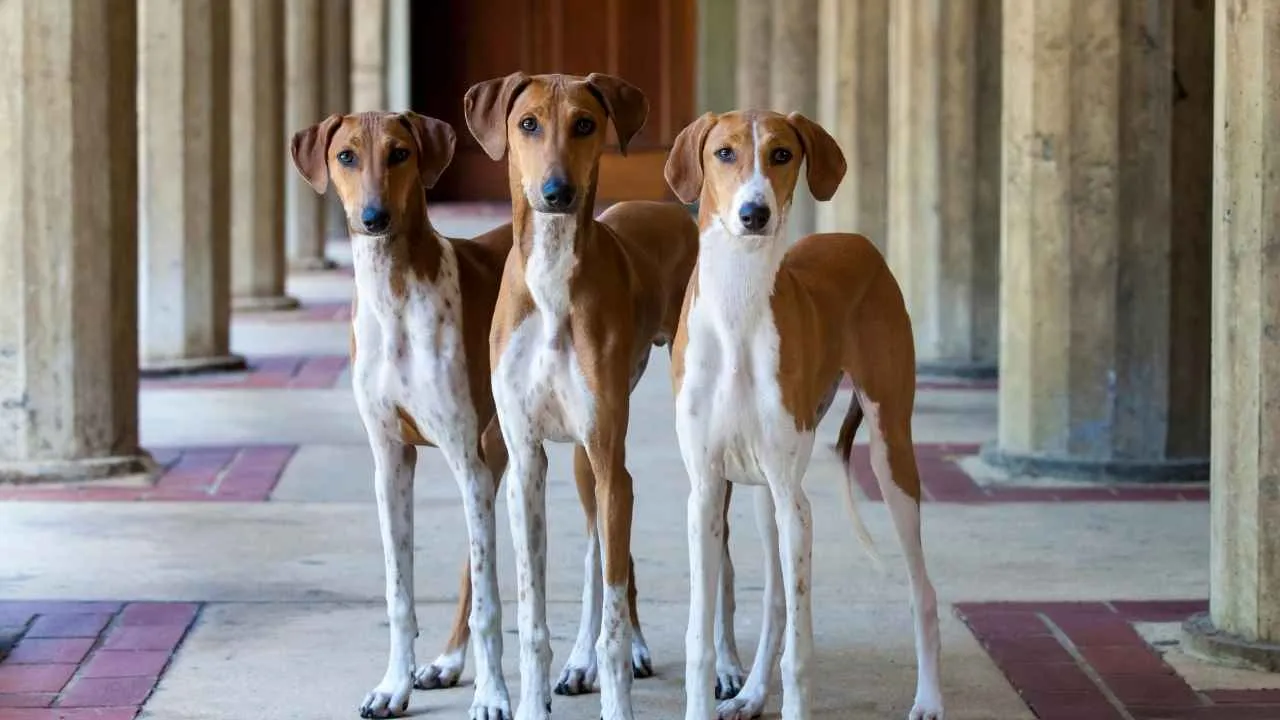
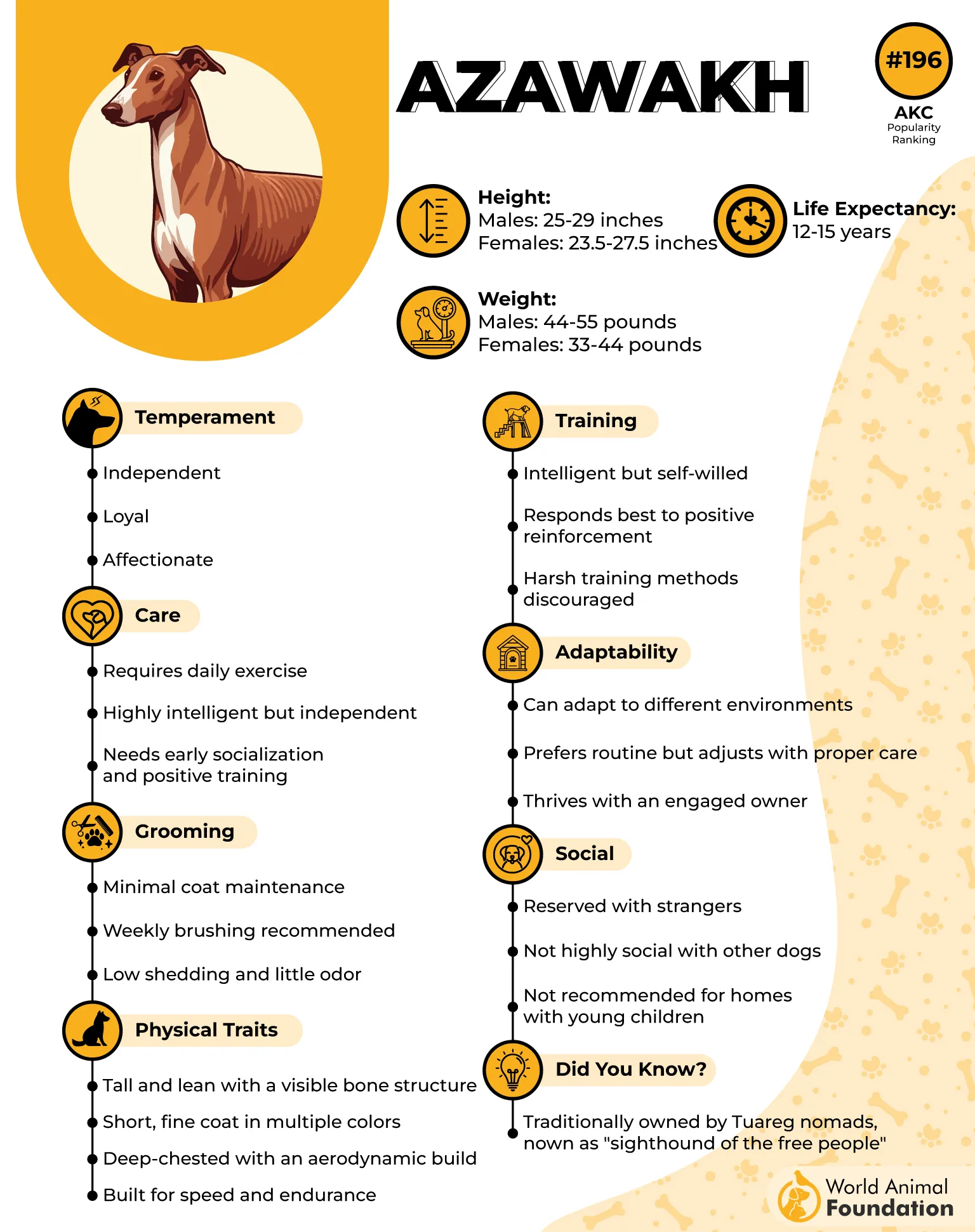
Azawakh is a rare West African sighthound, often listed among the top five rarest dog breeds worldwide. Its tall, lean frame reveals visible bone structure and muscle, shaped for speed across open desert terrain. The long, refined silhouette reflects efficiency rather than bulk.
Physical detailing shaped by survival conditions
The coat of this breed is so fine and short that body lines remain visible beneath it, supporting heat adaptation in desert regions. Its coloring varies widely, ranging from sand tones to black, brindle, and parti-color patterns without restriction.
Key structural details include:
Deep chest supporting sustained sprint ability
S-shaped body contour for aerodynamic movement
Long legs designed for rapid ground coverage
Role across the companion and working functions
This breed functions in multiple roles, including companionship, guarding, and lure coursing performance. Its awareness depends heavily on sight, using sharp visual focus rather than scent tracking. This makes its working style direct and speed-driven in open landscapes.
Conclusion
Rare dog breeds show how survival, purpose, and place influence traits that remain visible even today. The dogs in this list carry qualities shaped by specific roles, some built on independence, while others rely on close human connection, from a tiny dog to a highly trainable companion dog.
These patterns become easier to recognize with time and attention.
What begins as interest often shifts into understanding how each breed fits into a larger history. Their small populations are not just about numbers but about circumstances that limited their spread.
Some even reflect traits seen in playful dogs and great family pets. When seen this way, their rarity feels less distant and more like something that continues quietly with lasting significance.
