




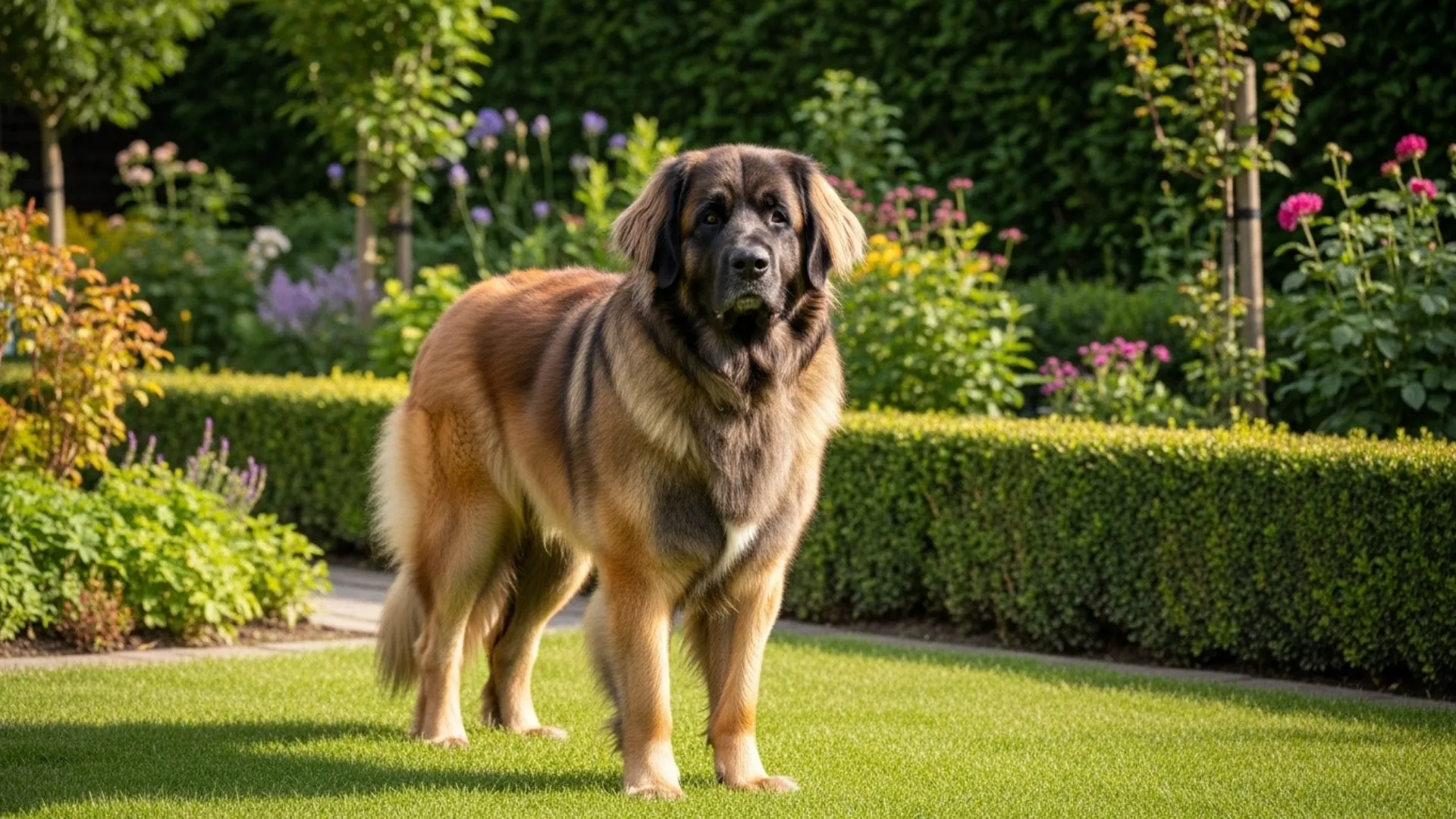
Living alone changes how you think about safety. It is not always about fear, but about awareness. Small sounds feel louder at night, unexpected knocks carry more weight, and even quiet spaces can feel uncertain at times. This is where the idea of a guard dog starts to make sense.
Not every dog fits that role, and choosing the wrong one can leave you with more responsibility than actual security. A dog that lacks awareness will not respond when needed, while one with uncontrolled behavior can become difficult to manage in daily life. The balance matters more than people expect.
You need a dog that stays alert, responds with purpose, and settles back into calm without constant tension. For single households, this combination becomes even more important because everything depends on how well that dog fits into your routine and your space.
Ahead, you will see some of the best guard dog breeds that naturally offer that balance, and what makes them reliable in real situations for a single person.
Key Takeaways
When a home is shared with no one else, even small routines start to feel different, and the idea of security becomes more personal.
Akita and German Shepherd stand out early on, not just for strength but for how calmly they observe and respond when something feels off.
Rottweiler and Cane Corso bring a steady kind of protection that relies more on awareness and control than constant reaction or noise.
As you move through the full list, you start to see which guard dogs naturally fit single households in a way that feels practical and reassuring
Amazing Guard Dog Breeds For Single Households to Choose
1. Akita
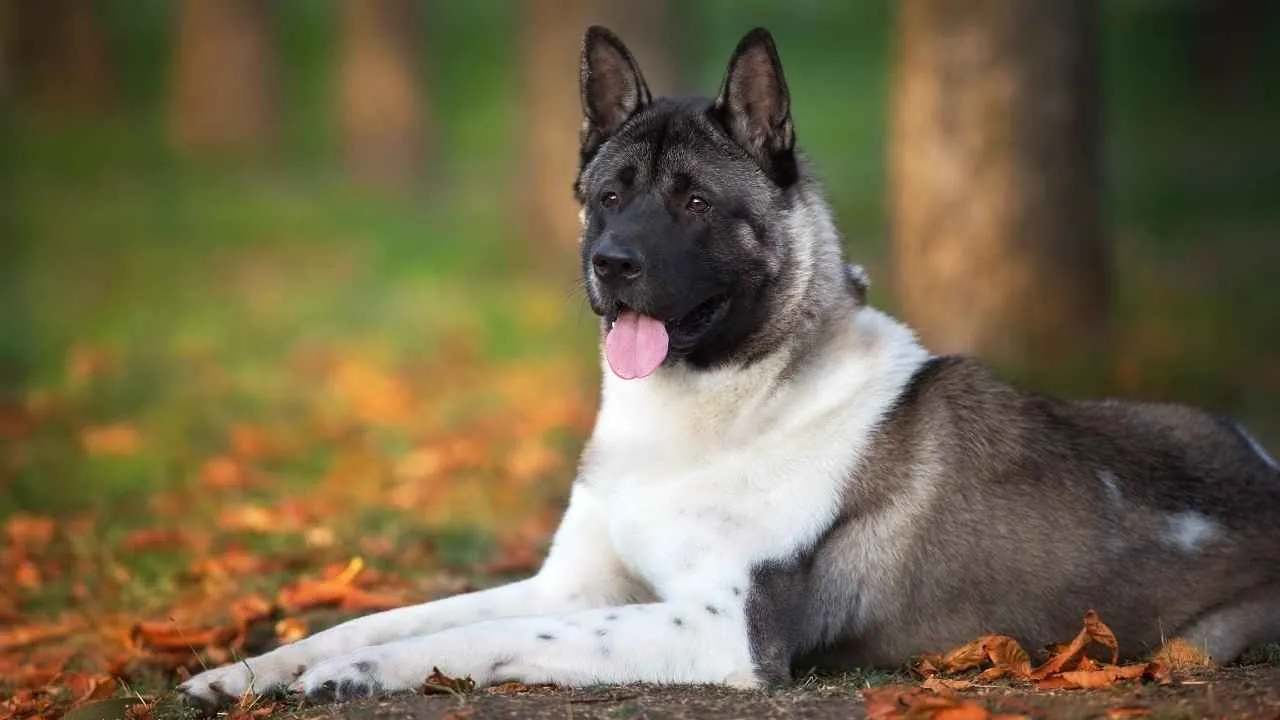
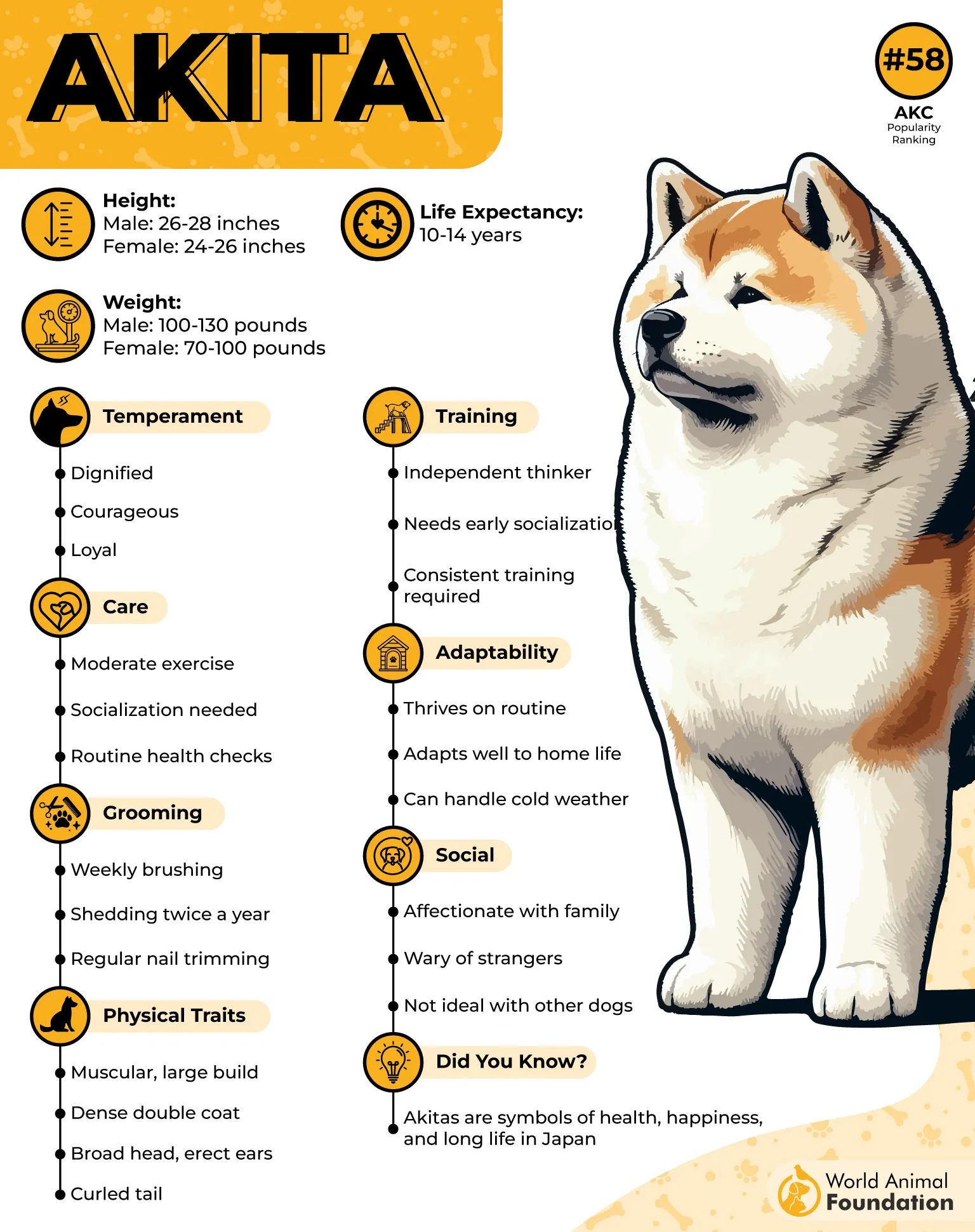
Akita holds a respected place in Japan as a symbol of protection, health, and long life, shaping how it is viewed within the home. Its dignified demeanor reflects a dog that remains composed while staying closely bonded to its people. This connection forms the base of its protective role.
Structure that reinforces awareness
This protection dog shows its strength through a heavy-boned frame, broad head, and tightly curled tail that balances its stance. The erect ears and focused eyes create a constant sense of alertness in how it observes its surroundings, as noted by Britannica.
These physical elements define its presence clearly:
Broad head with strong facial structure
Curled tail balancing the body frame
Erect ears signaling constant awareness
Behavior shaped by selectiveness
Reserved toward unfamiliar people and other pets, they often choose distance over immediate interaction. Within its trusted circle, it shows a more relaxed and affectionate side, staying closely connected to family members with proper training and early socialization.
2. Tibetan Mastiff
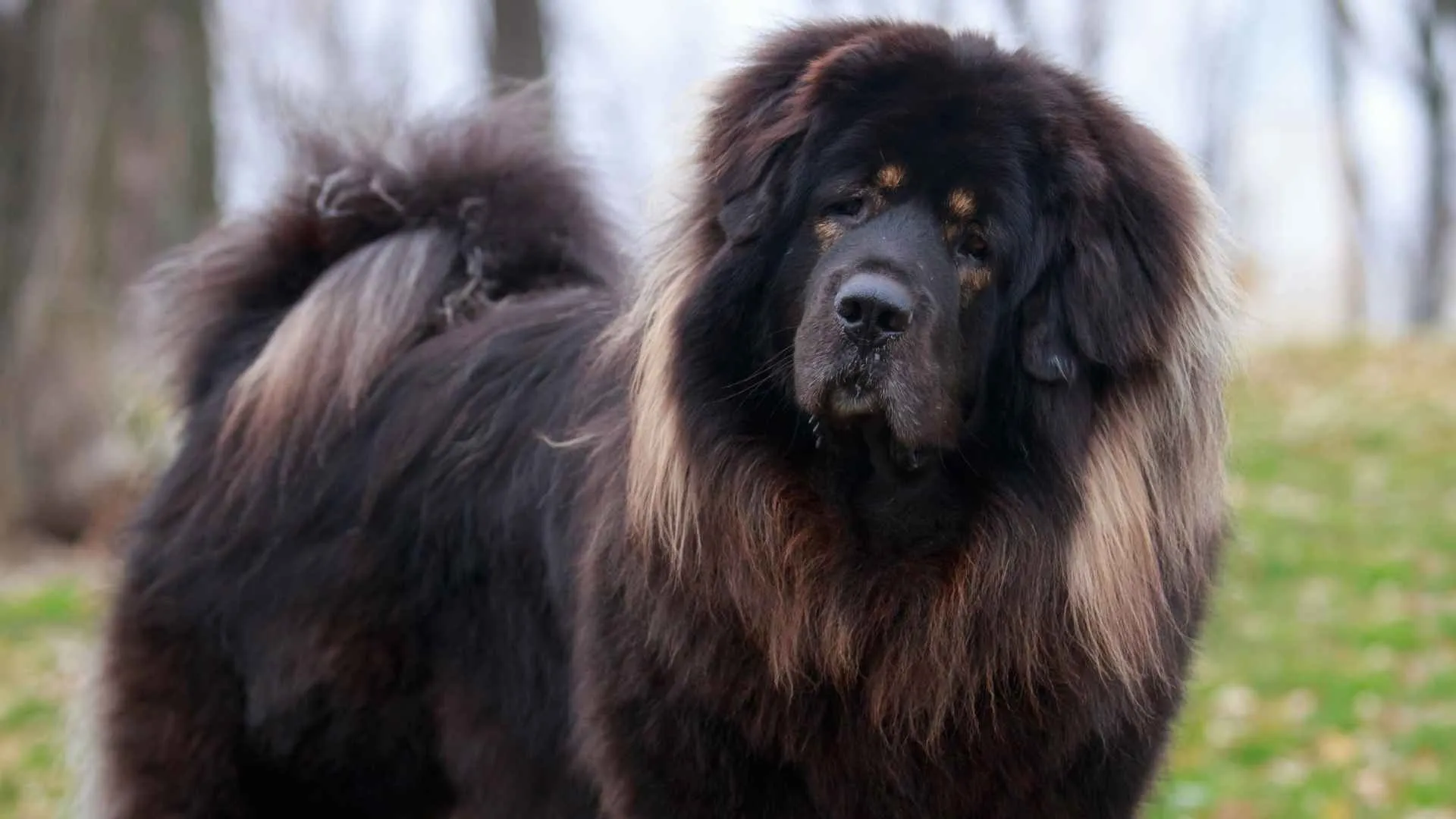
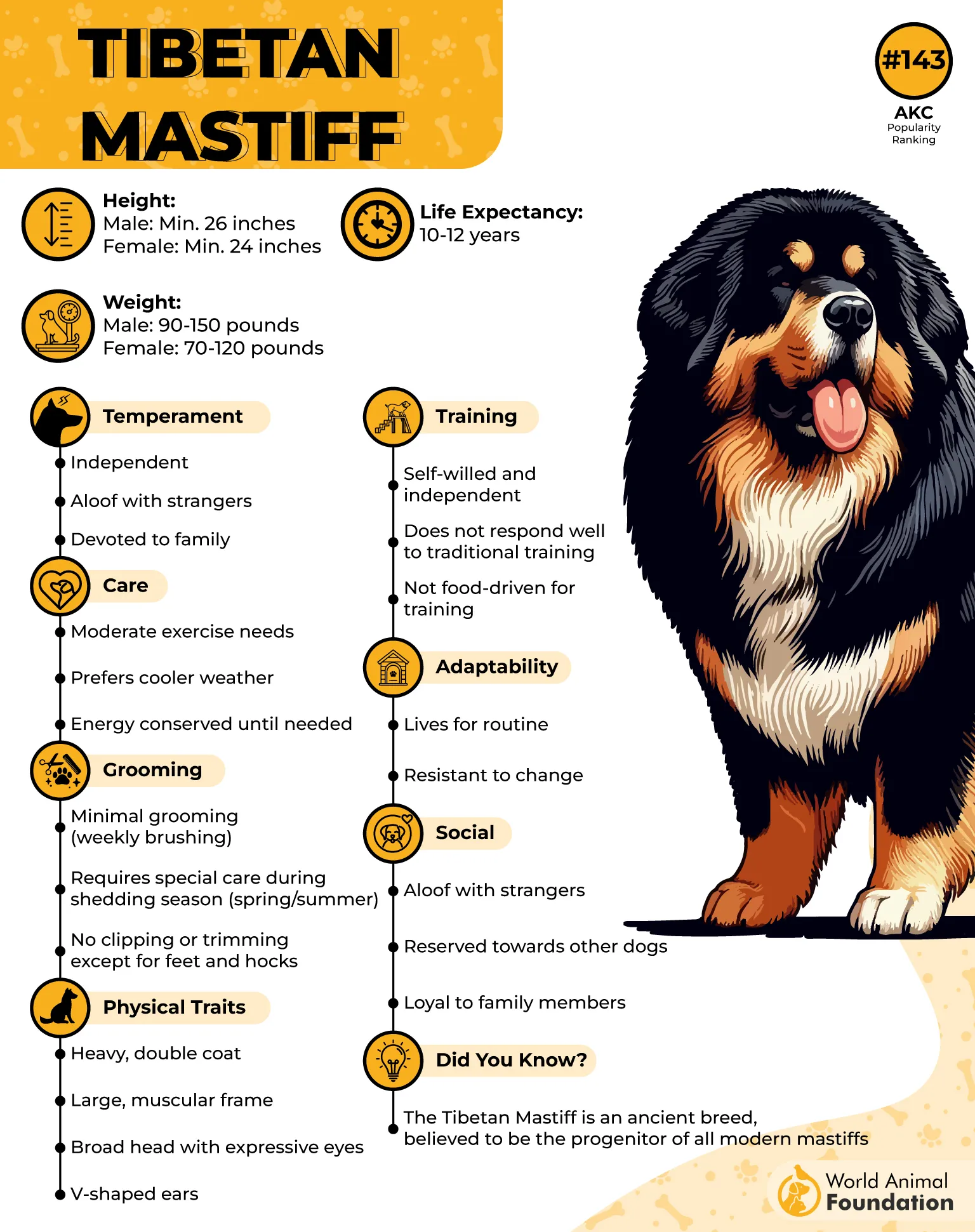
Tibetan Mastiff holds an imposing frame with a dense coat, broad head, and steady gaze that signals awareness without movement. Its expression reflects a calm, almost thoughtful observation of surroundings. This presence alone often influences how unfamiliar situations unfold.
Guarding shaped by territory
These mastiffs focus on their space, treating boundaries as a responsibility rather than reacting to every external change. Its approach to unfamiliar people remains distant, with attention directed more toward control than display.
That territorial mindset appears through clear patterns:
Maintains distance from unfamiliar individuals
Monitors surroundings without constant motion
Responds when boundaries feel challenged
Work instinct over structured activity
These protective dogs show a preference for self-directed tasks such as patrolling rather than participating in repetitive play routines. Its activity is tied to purpose, often linked with checking its environment instead of chasing objects. Moderate exercise fits naturally into this pattern.
3. German Shepherd
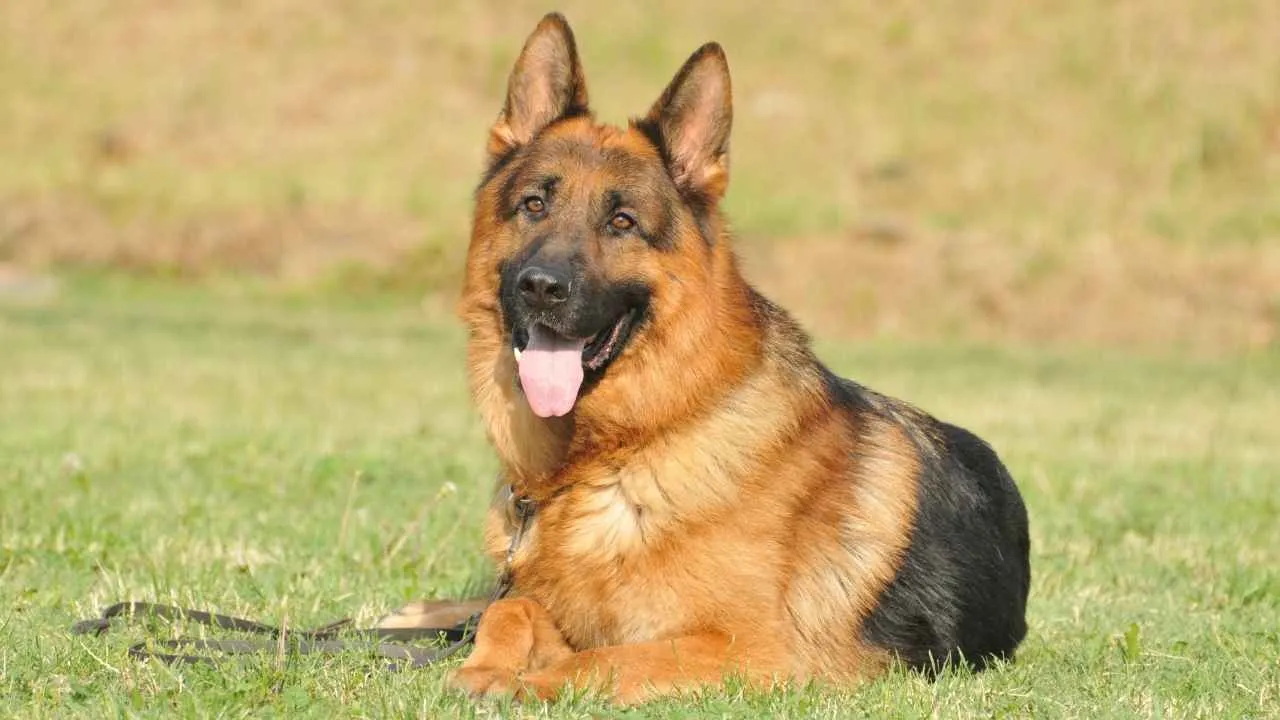
German Shepherd presents a balanced mix of agility and muscle, shaped for both quick response and sustained effort. Its structure supports coordinated movement rather than scattered bursts of energy. This physical control aligns closely with roles that demand both speed and stability.
Work roles that shape behavior
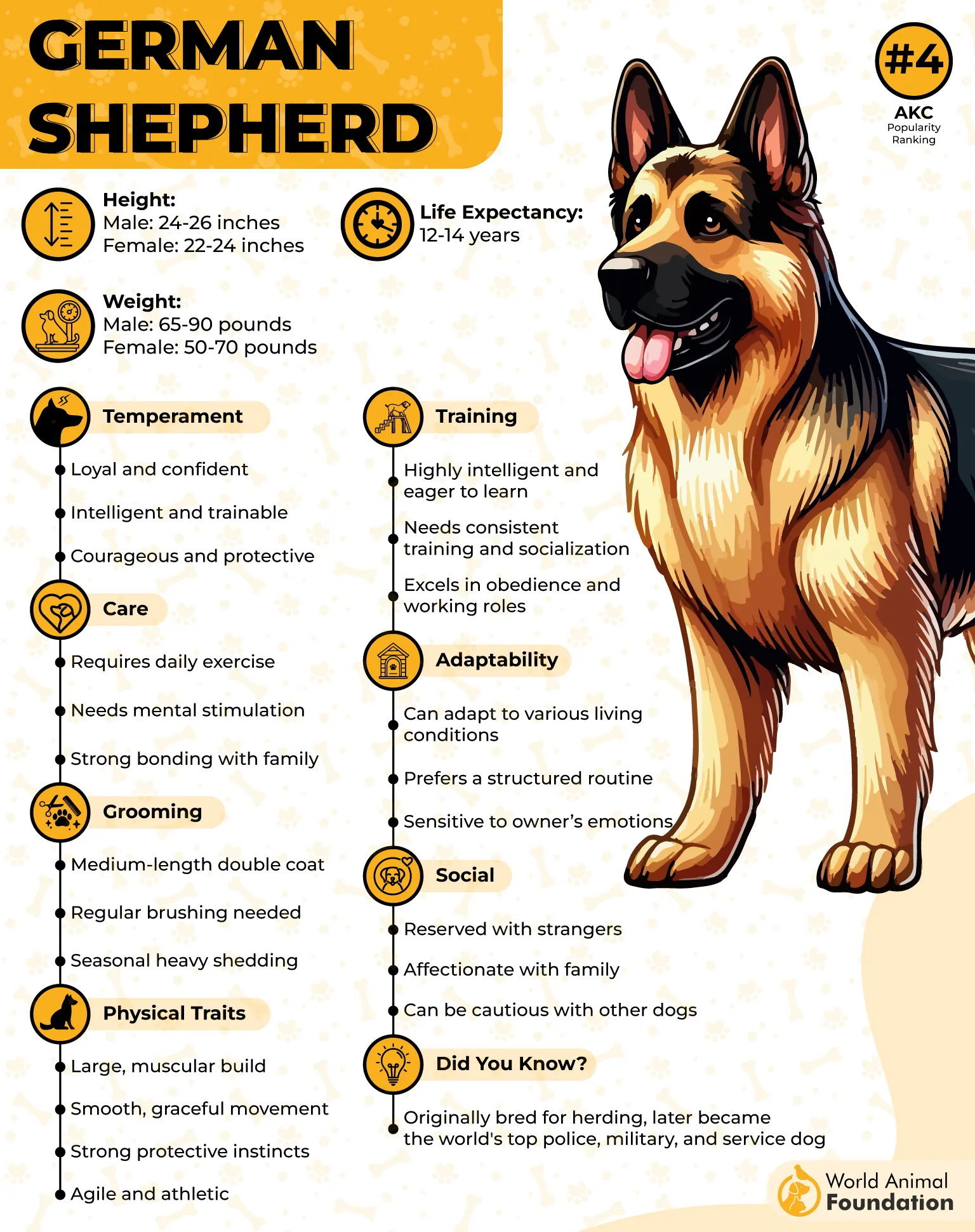
As a best guard dog, they operate best when given defined tasks, reflected in their use across patrol, search, and detection work, as noted by PetMD. Its intelligence connects directly with structured environments where direction guides action.
That working pattern becomes clear in daily function:
Performs in patrol and detection-based roles
Responds effectively in search and rescue tasks
Adapts quickly within trained routines
Energy that demands structure
These big dogs maintain high energy linked to their herding background, requiring regular outlets to prevent restlessness. Without structured activity, this drive can shift into unwanted behaviors caused by excess stimulation. Regular exercise and engagement help regulate this intensity.
4. Rottweiler
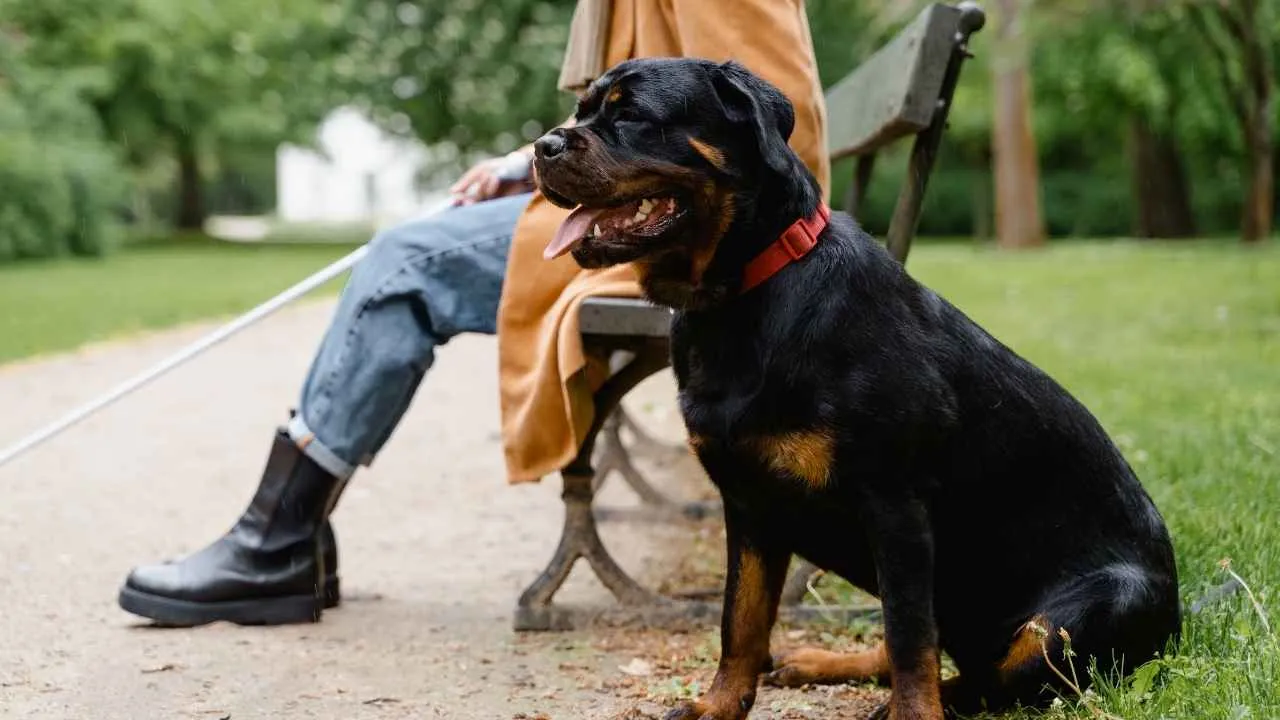
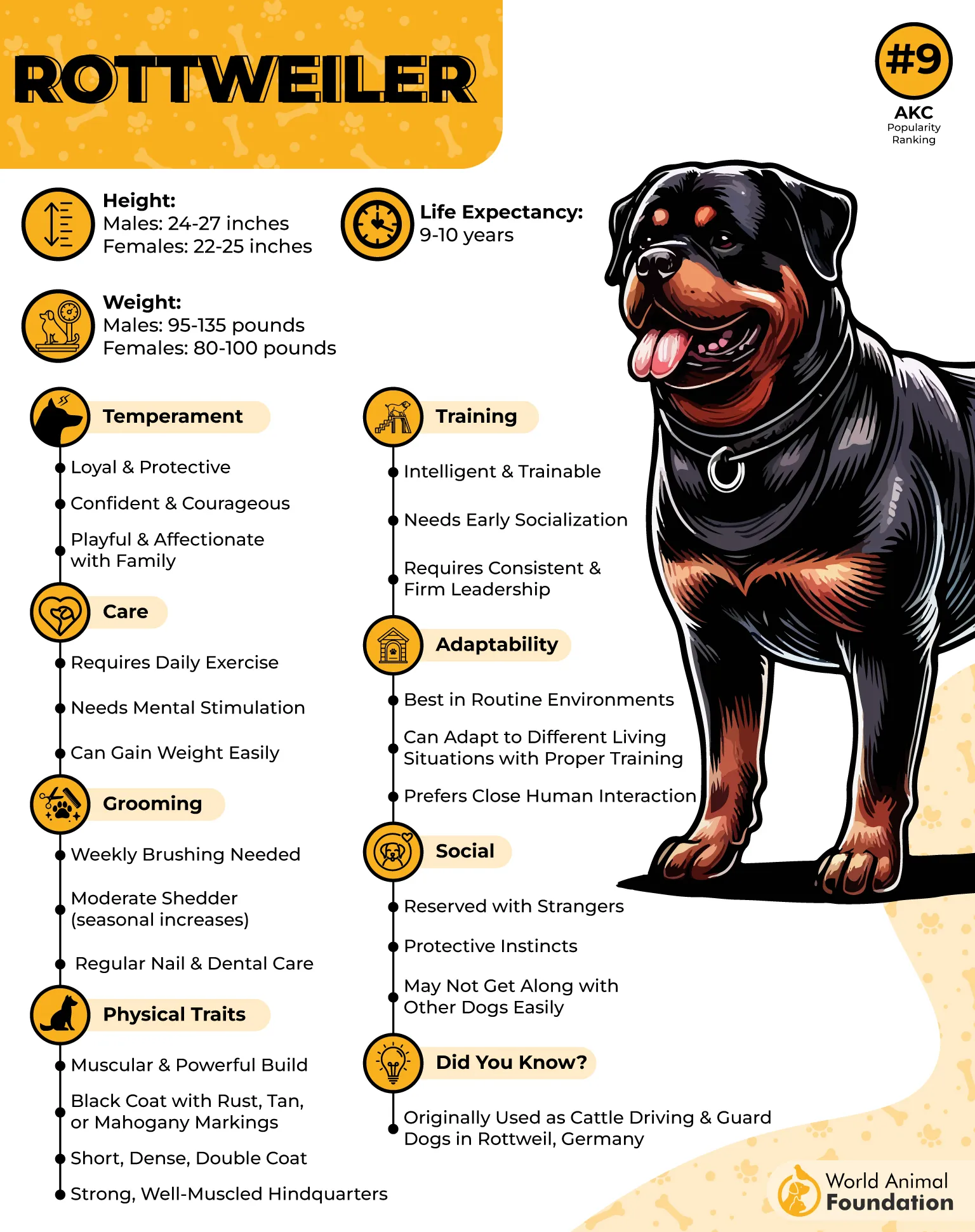
Rottweiler reflects its mastiff ancestry through a dense, muscular frame supported by powerful hindquarters. Its short black coat with rust markings adds to a solid, unmistakable presence. The overall structure shows a dog built for steady strength rather than sudden bursts.
Guarding attitude with quiet control
Rotties maintains a reserved, self-assured approach when facing unfamiliar people or situations. Its protective instinct stays measured, relying more on observation than constant reaction.
That controlled nature shows in specific traits:
Holds a steady stance when assessing surroundings
Uses selective barking in unfamiliar encounters
Maintains distance before engaging
Work-driven activity and movement
These energetic dogs engage naturally in structured tasks, from herding and tracking to obedience-based work, as per the AKC. Its athletic build supports trotting, walking, and even swimming alongside its handler. Daily activity keeps its strength balanced and prevents excess weight from building up.
5. Cane Corso
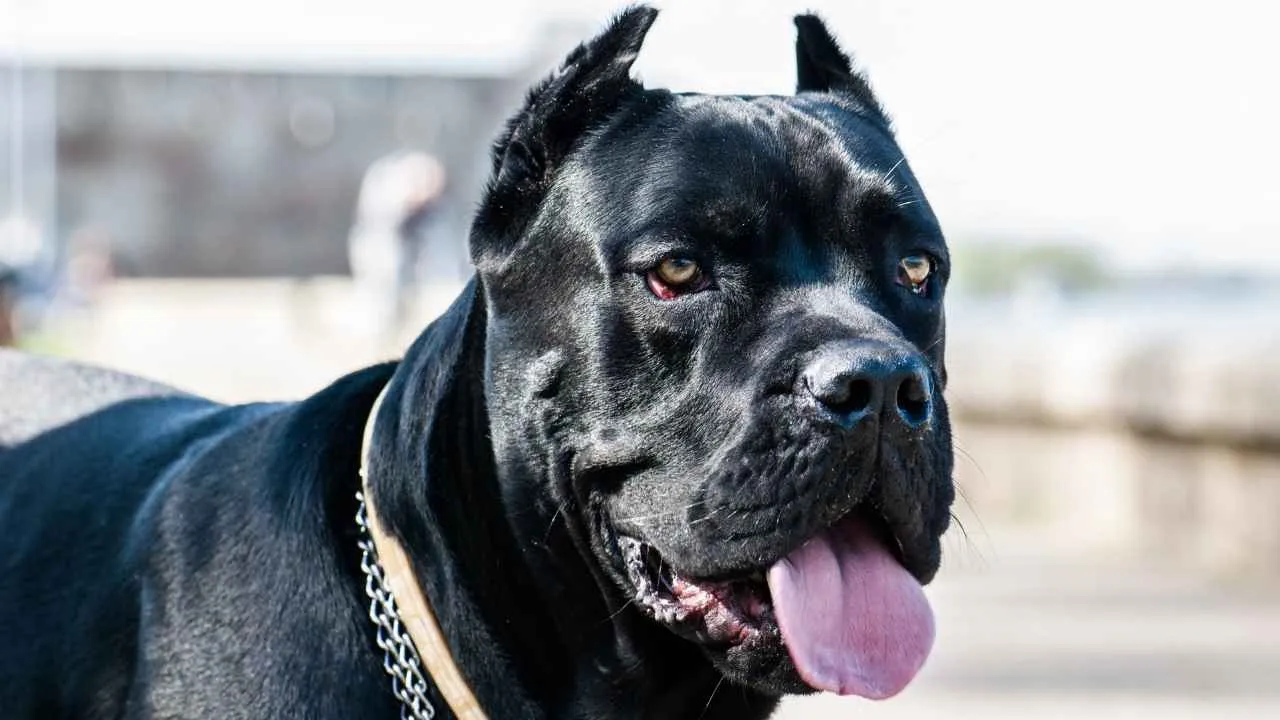
Cane Corso was originally bred from ancient Roman and Greek working dogs, where strength and control were essential for real tasks.
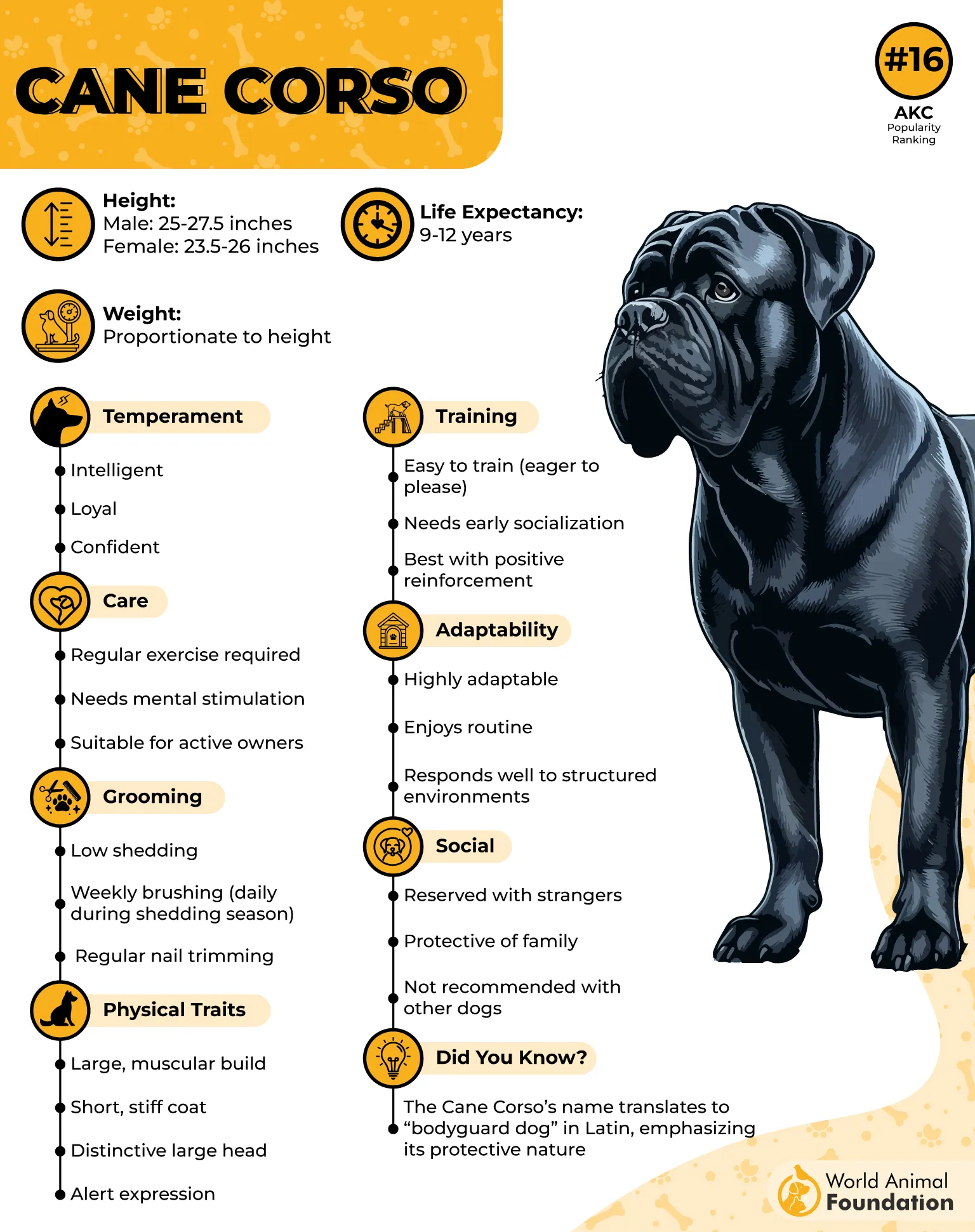
Its large head, muscular frame, and expressive face align with a breed built for purpose rather than display. The name itself points directly to its historical role as a courtyard guardian.
Working role beyond appearance
As excellent guard dogs, they functioned across multiple roles, from guarding property to assisting on farms and even serving in conflict settings. Its behavior connects closely with responsibility rather than random alertness.
That working background appears through clear traits:
Maintains awareness within the defined territory
Responds with intention rather than noise
Adapts to structured tasks with focus
Training influence on behavior
They respond best when introduced early to structured and consistent training and varied social settings. Its intelligence and willingness to learn improve with consistent, positive reinforcement from a young stage. Without that early direction, its independent streak can become more noticeable.
6. Leonberger
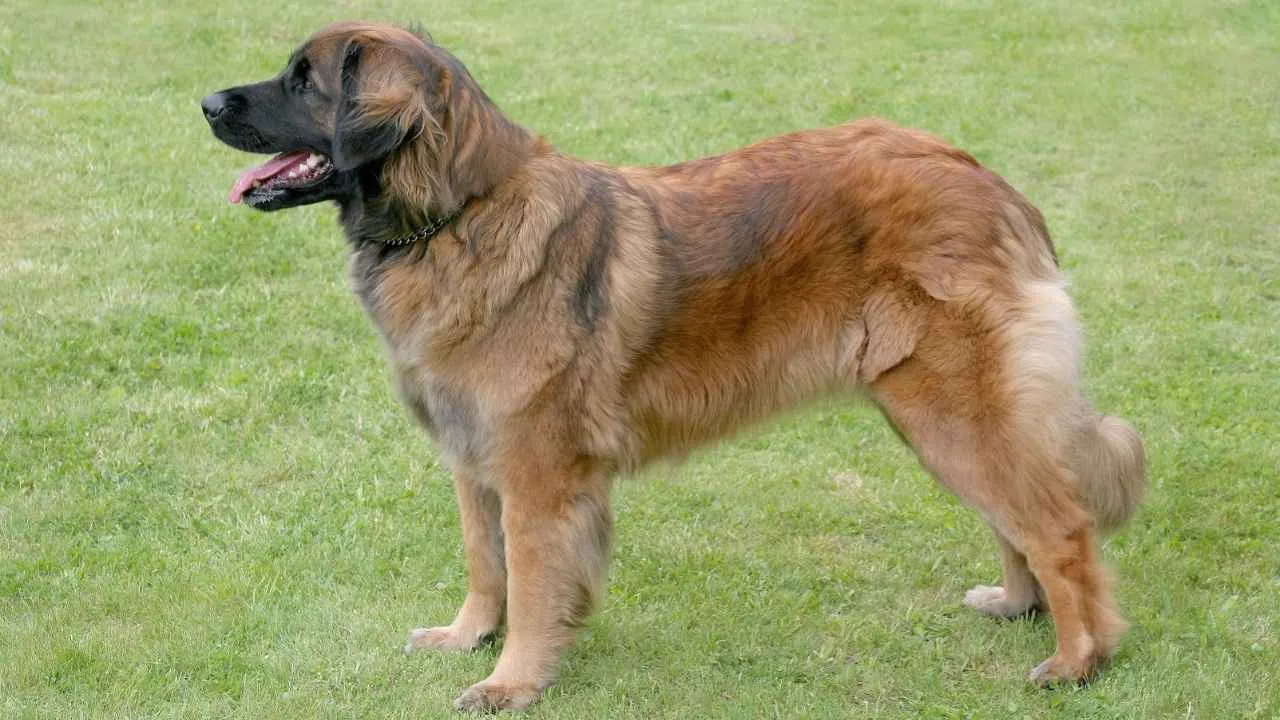
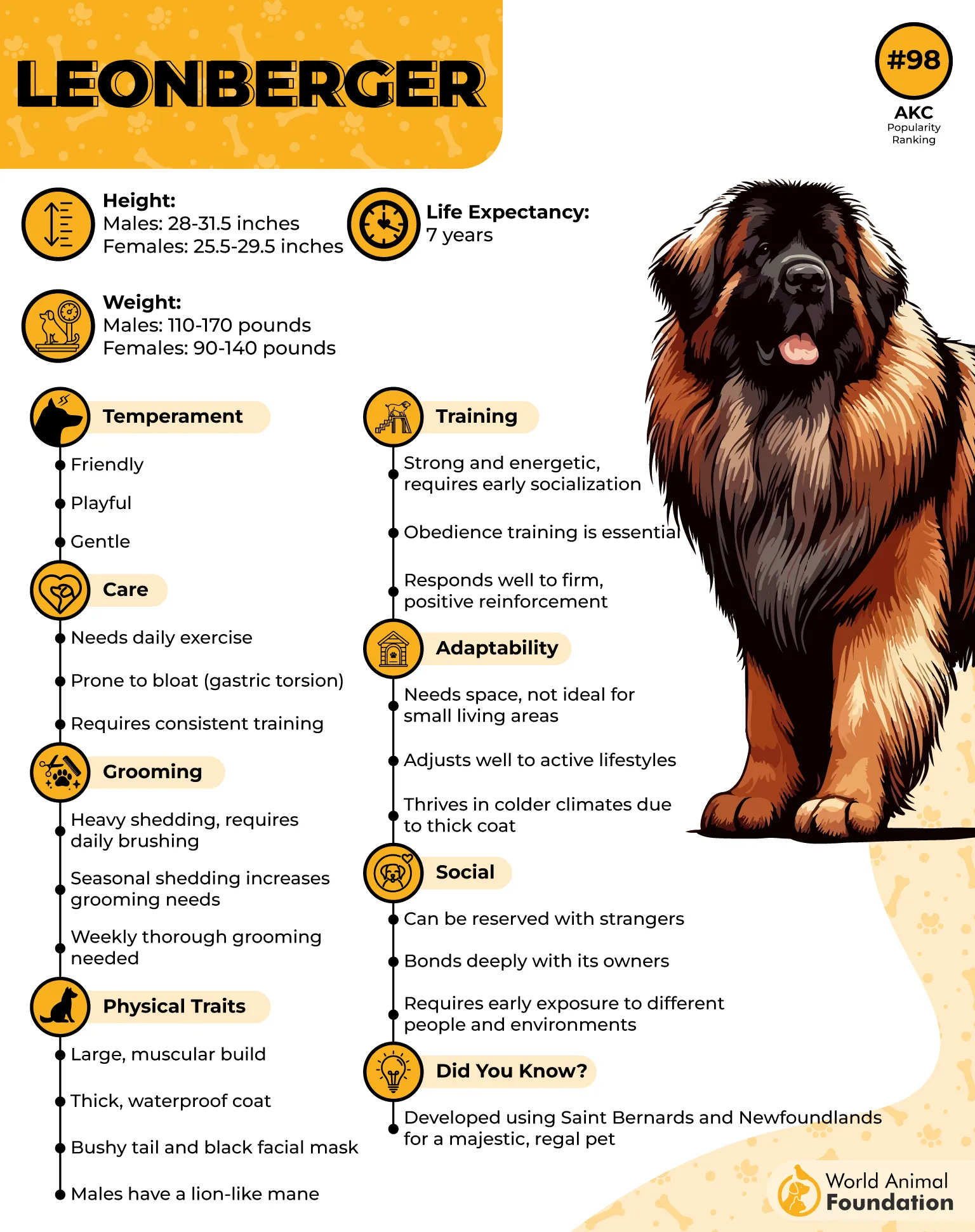
The Leonberger takes its name from Leonberg, Germany, where it became favored among European royalty for its striking appearance and composed nature.
Its large frame and long coat create a presence that feels both impressive and reassuring in a home setting. Alongside this, it also worked on farms, linking strength with everyday utility.
Behavior shaped by dual roles
They are naturally alert and balance their calm observation with readiness to act when needed, reflecting both companion and working roles. Its temperament remains steady, showing patience with children and ease around dog owners.
This balance appears through clear behavioral traits:
Maintains a calm, quiet indoor presence
Engages gently with children and family
Accepts other dogs and strangers with proper socialization
Strength expressed through purpose
These large dogs channel their physical ability into structured tasks such as pulling, swimming, or agility-based work. It prefers having a role to focus on rather than remaining inactive for long periods, which keeps its behavior steady within the home.
7. Boxer
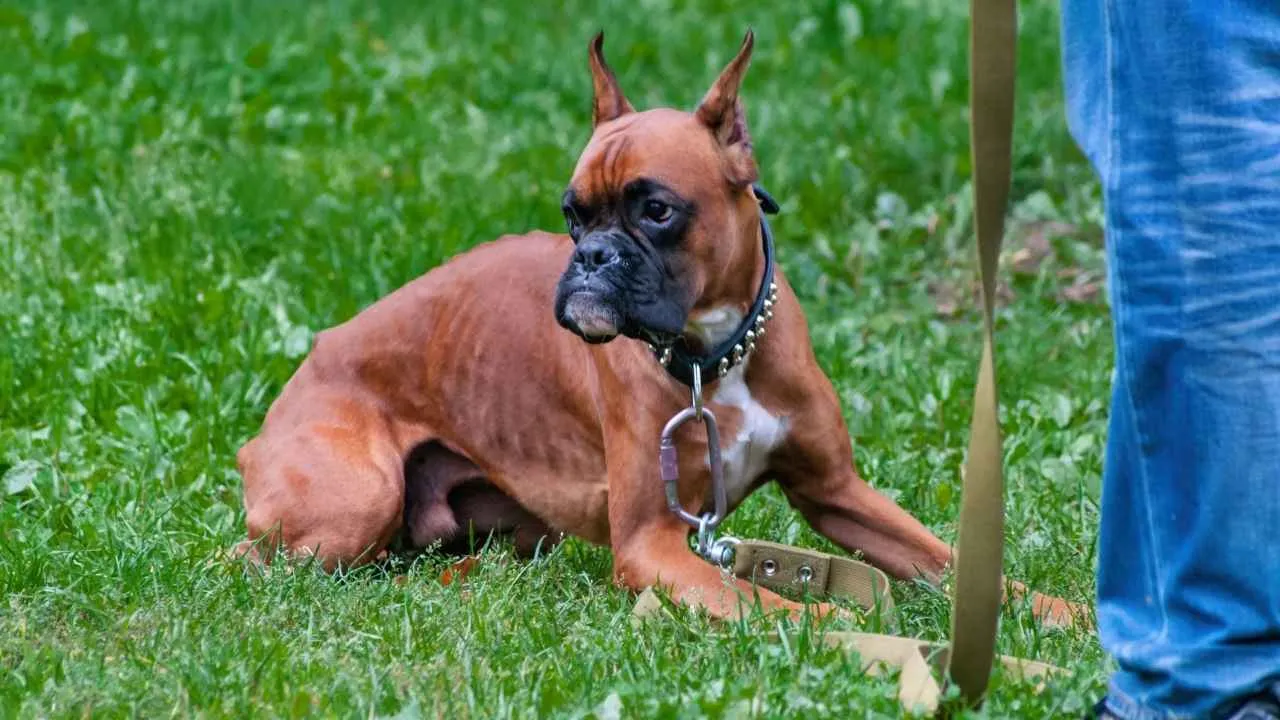
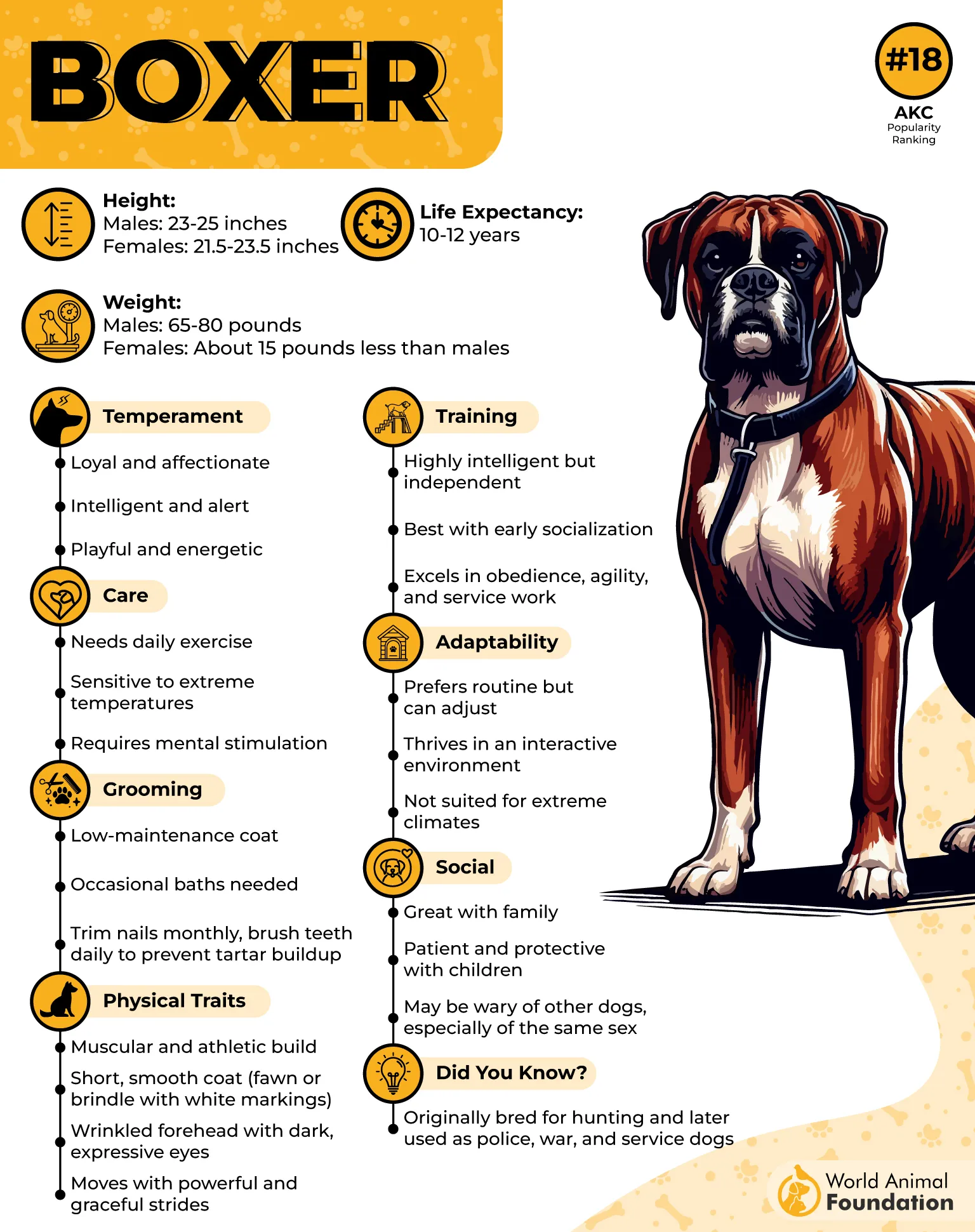
Boxer reflects a heritage linked to working and chasing roles, expressed through a compact, powerful frame built for forward drive. Its movement shows smooth coordination with visible energy behind every step. The overall structure supports both activity and a protective nature around the home.
Energy expressed through structured activity
They channel their high energy into constant engagement, often reacting with jumping, playfulness, and alert curiosity. Early exposure to people and animals plays a key role in shaping their behavior in social settings.
This activity pattern becomes clearer in the daily structure:
Maintains strong interaction with surroundings
Reacts quickly to movement and stimulation
Benefits from a controlled space during early training
Guarding response and learning pattern
These playful dogs approach unfamiliar situations with alert attention, stepping into a protective role when needed without hesitation. Its learning improves through consistent repetition and early social exposure, especially during the early puppy stages or at a young age.
Concusion
Selecting the best guardian, either a large or small guard dog breed, while living alone comes down to balance, not extremes. The breeds shared here highlight how protection works best when it stays controlled and purposeful.
Each dog carries a different style of awareness, shaped by its history and role, yet all offer a steady form of security.
The key is finding the right guard dog that aligns with your environment and daily rhythm. When that alignment is in place, the dog becomes more than a protector. It turns into a reliable presence that supports both safety and comfort.
Over time, this creates a living space that feels calm, secure, and easier to manage.
