




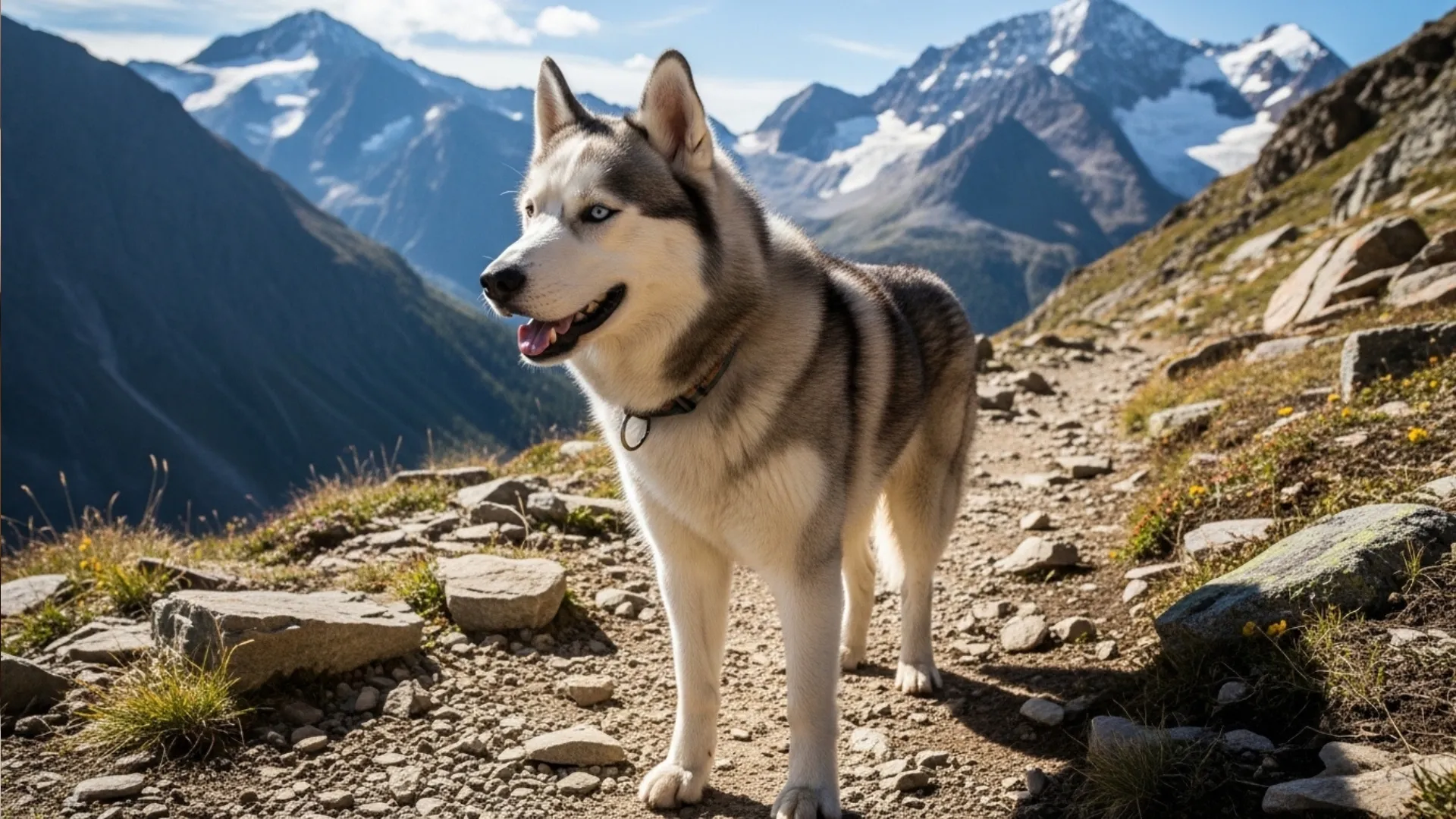
Mountain trails are not forgiving, and not every dog is built for that kind of terrain. Steep climbs, loose rocks, and long distances quickly reveal the difference between a dog that struggles and one that moves with ease.
Many people assume any active dog can handle rugged trails, but the reality feels very different once you are out there. Fatigue sets in faster, footing becomes uncertain, and what seemed manageable turns into constant effort. The environment demands more than energy alone.
It requires strength, balance, endurance, and a natural ability to handle changing conditions without hesitation. This is where certain dogs stand apart without forcing you to adjust every step of the way. They move confidently, keep pace naturally, and stay reliable even when the trail becomes unpredictable.
In the following sections, you will discover dogs that are truly built for mountain life.
Key Takeaways
Rocky mountain trails expose every weakness, yet a few dogs move through them with a natural rhythm that feels effortless and controlled.
Alaskan Malamute and Siberian Husky show how power and endurance come together, moving with steady control across frozen, rugged conditions.
Great Pyrenees, Rhodesian Ridgeback, and Weimaraner bring different strengths like independence, speed, and focus that help them stay reliable in open terrain.
As the list continues, each breed reveals a different way dogs have been shaped to handle mountains with confidence and purpose.
Top Rocky Mountain dog breeds that Thrive on Rugged Trails
1. Alaskan Malamute
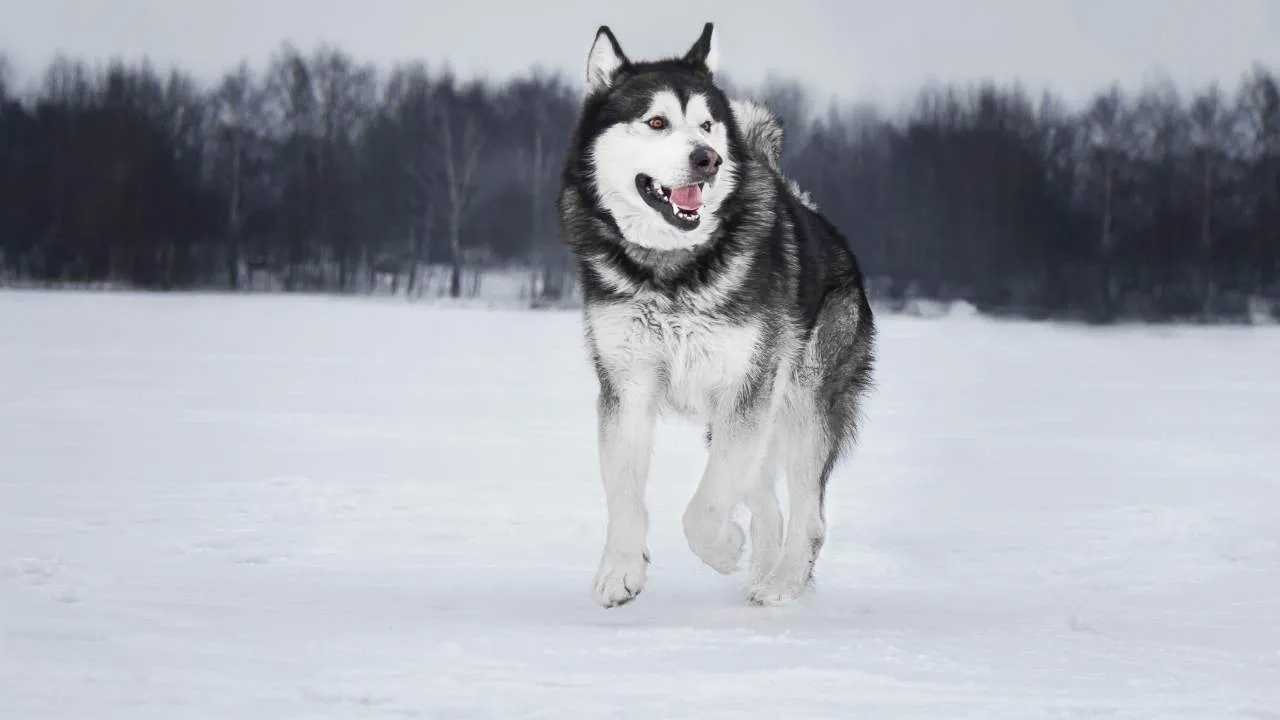
The Alaskan Malamute shows its purpose through a heavily built frame, deep chest, and powerful shoulders shaped for hauling weight across frozen ground. Its dense, weatherproof coat and plumed tail reflect constant exposure to harsh climates.
Structure that supports endurance
These malamutes move with controlled strength, using their solid bone and balanced frame to maintain steady traction over uneven ground. Its body alignment allows it to work in coordination rather than bursts of motion.
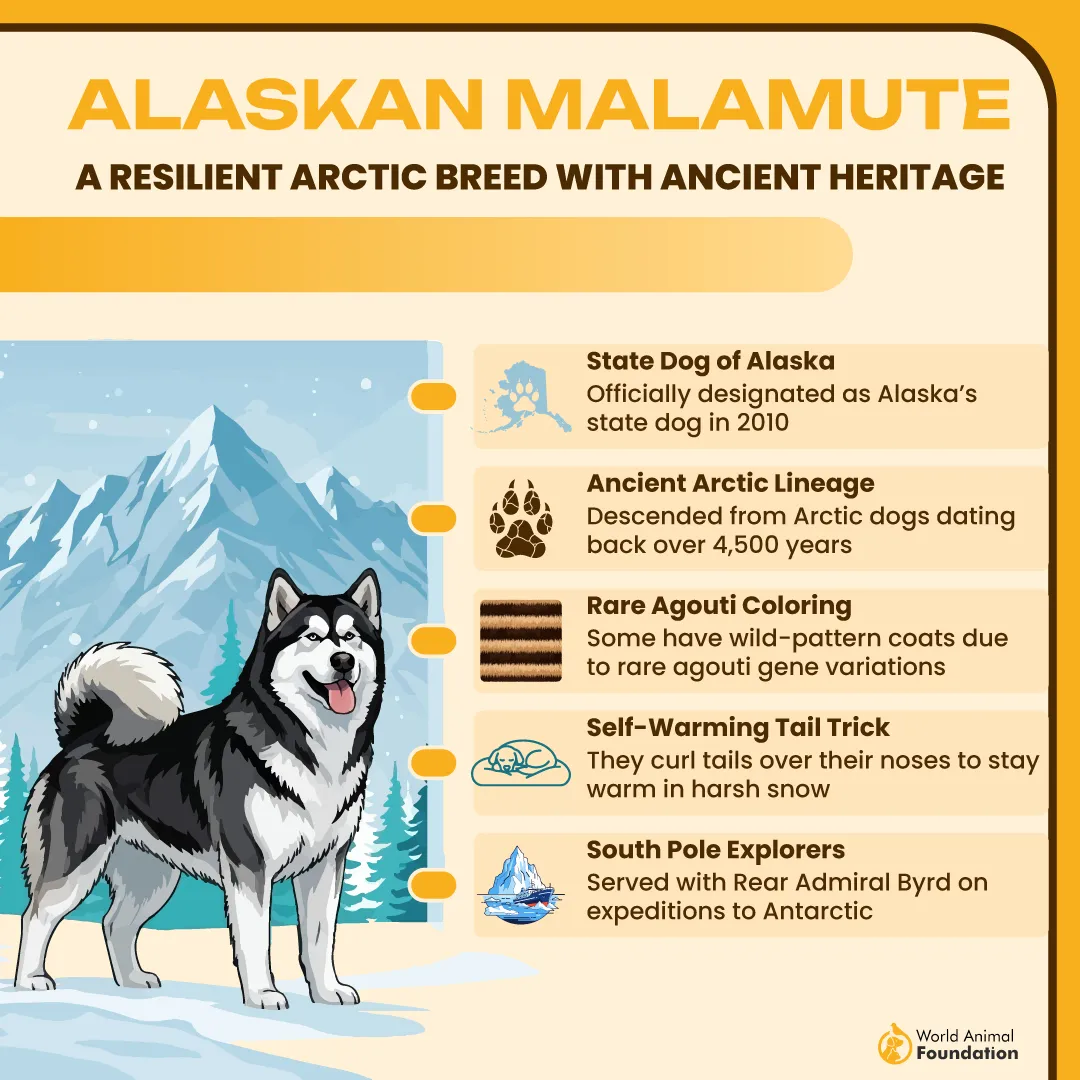
That physical design becomes clearer through:
Thick double coat built for severe cold weather
Strong shoulders supporting pulling tasks
Deep chest aiding long-duration effort
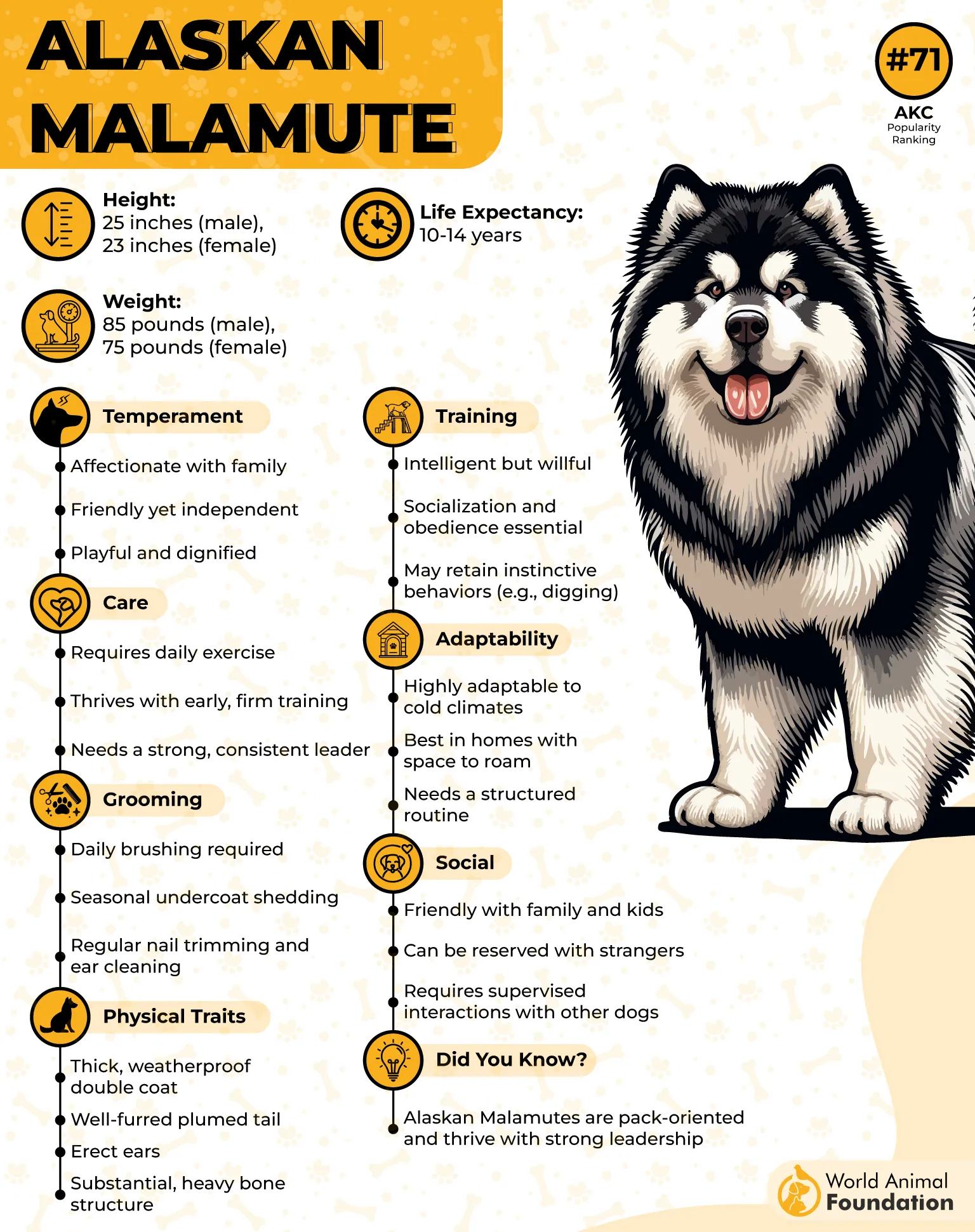
Pack-driven mindset in daily life
The Alaskan Malamute operates with a clear sense of hierarchy, responding to leadership within its social group, as WebMD writes. It recognizes structure quickly and adjusts its behavior based on who sets direction. This pack awareness influences how it interacts within a household setting.
2. Siberian Husky
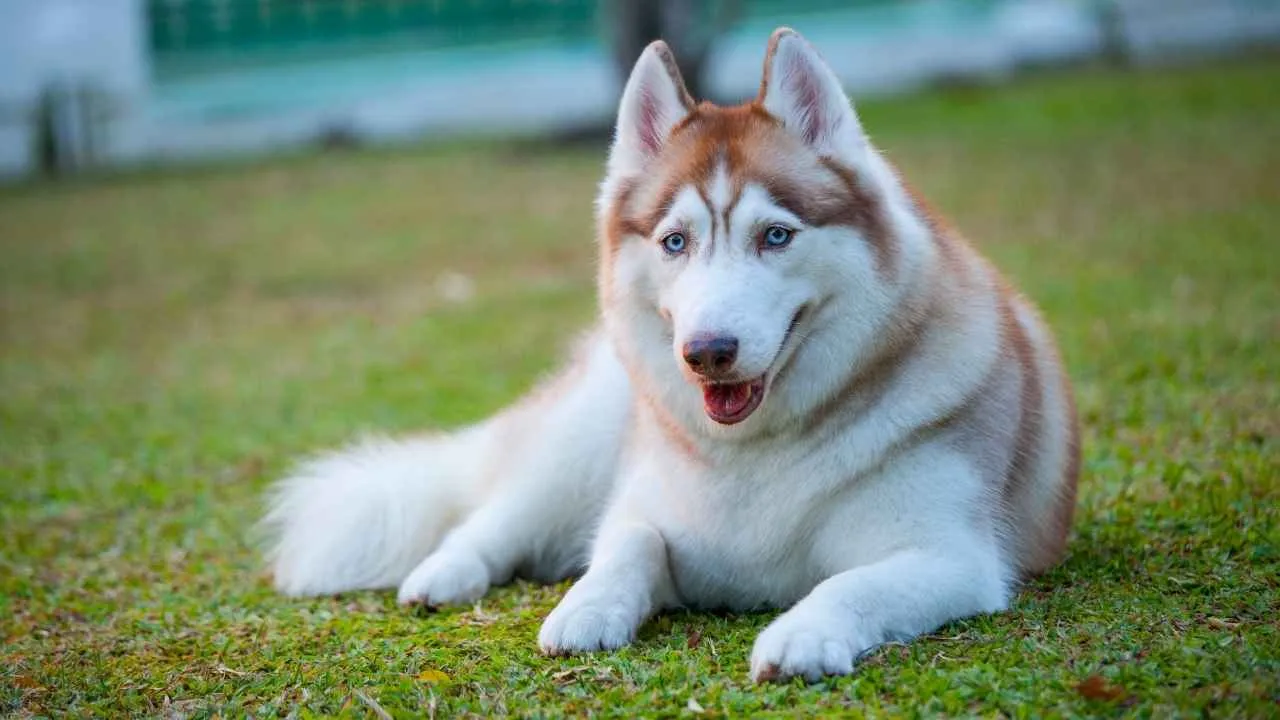
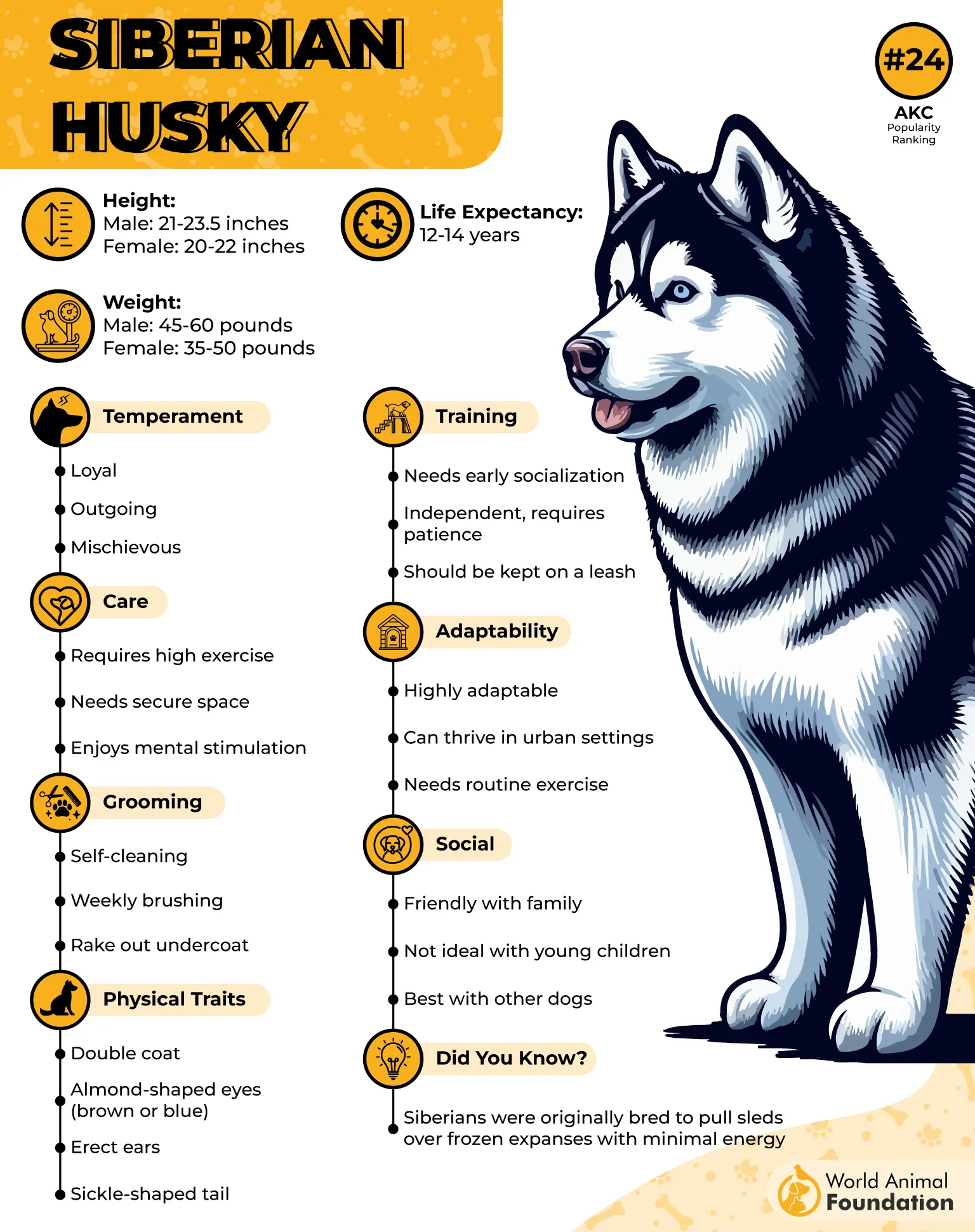
Siberian Husky moves with a light, efficient gait that reflects its role in pulling loads across long frozen stretches. Its compact frame and thick coat support sustained effort in cold conditions without excess bulk. The almond-shaped eyes, sometimes mixed in color, reflect alertness and calm expression.
Movement built on pack rhythm
Huskies work in coordination, responding naturally to group movement rather than acting alone during outdoor adventures. Its pace stays steady, built for covering distance rather than bursts of speed.
That working rhythm shows through:
Maintains alignment while moving in groups
Adjusts pace based on surrounding motion
Responds to direction within a team setting
Behavior tied to instinct and space
This breed shows a strong tendency to chase moving animals, requiring controlled environments during open movement, as Orvis claims. Its friendly nature extends easily to people and other dogs, making interaction less guarded. Also, clean habits and minimal odor add to its ease in shared spaces.
3. Great Pyrenees
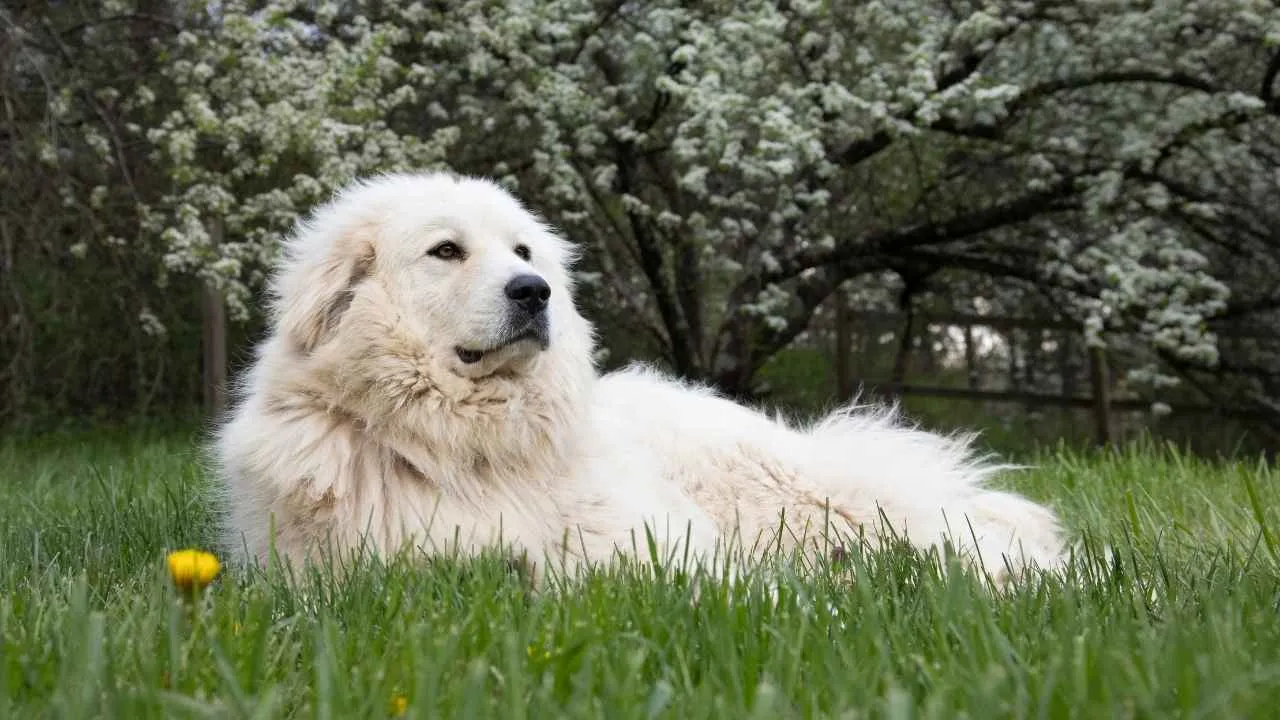
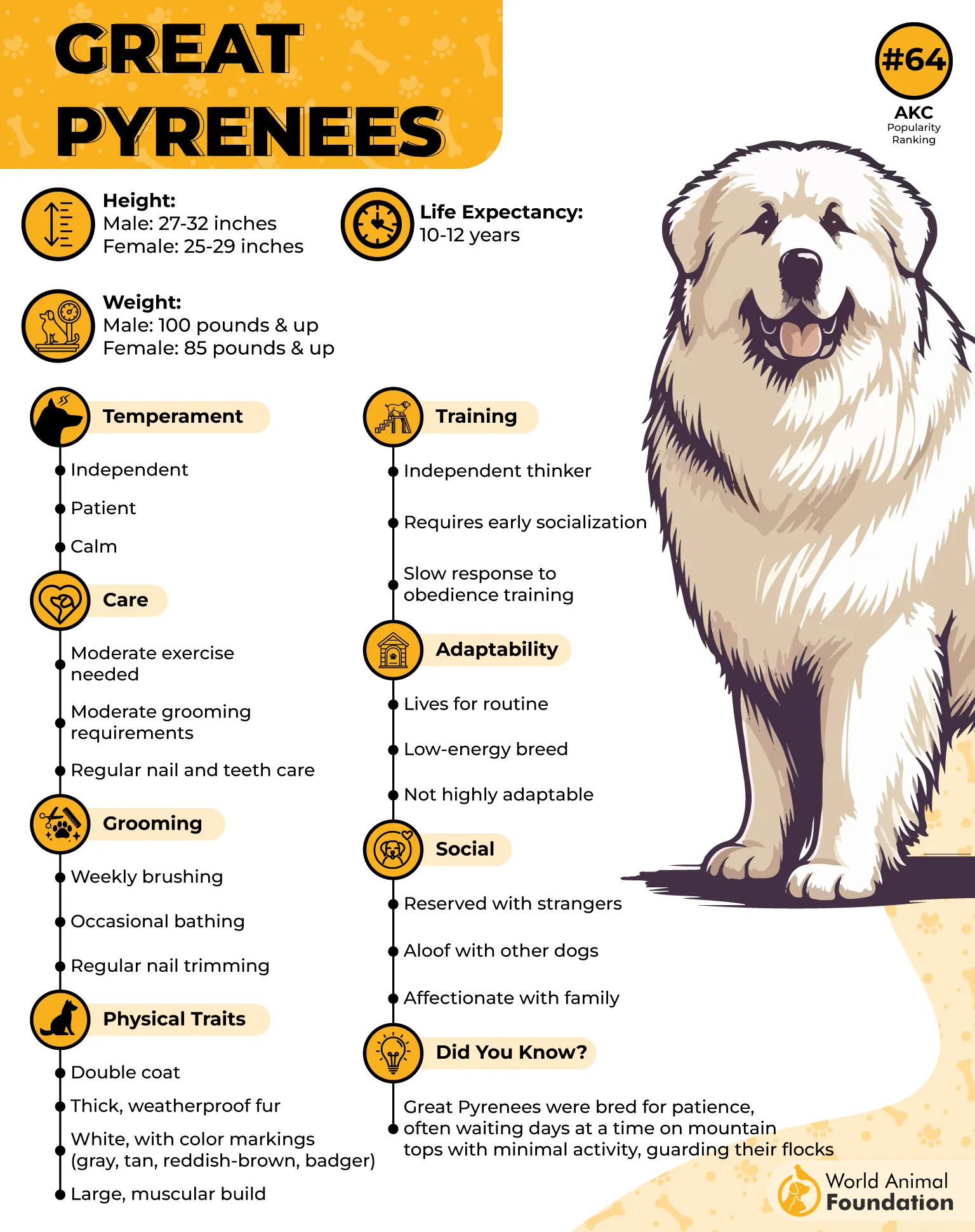
The Great Pyrenees comes from the mountain range between Spain and France, where it guarded livestock against predators like wolves and bears.
Its thick white coat blends directly into snowy terrain, allowing it to remain visually unnoticed. This physical adaptation is closely related to its working environment.
Independent guarding pattern
They were trusted to remain alone in valleys, managing livestock without constant human supervision. Its role required decision-making in isolation, responding only when a real threat appeared.
That independence shows through specific working traits:
Holds a position without human guidance
Engages only when predators approach
Maintains watch over extended periods
Strength paired with restraint
This hiking dog has the physical ability for speed and force, yet avoids unnecessary movement during routine guarding, as PetMD noted. Its behavior centers on conserving energy, reserving effort for critical moments rather than constant activity.
4. Rhodesian Ridgeback
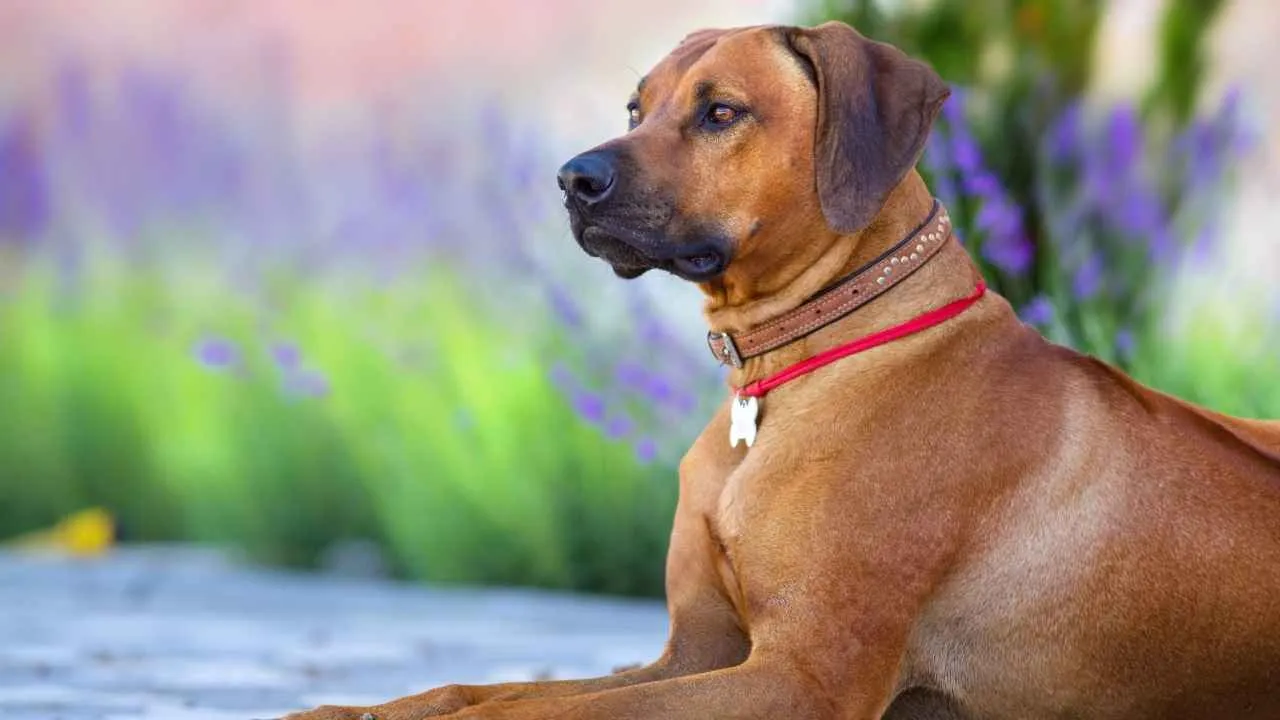
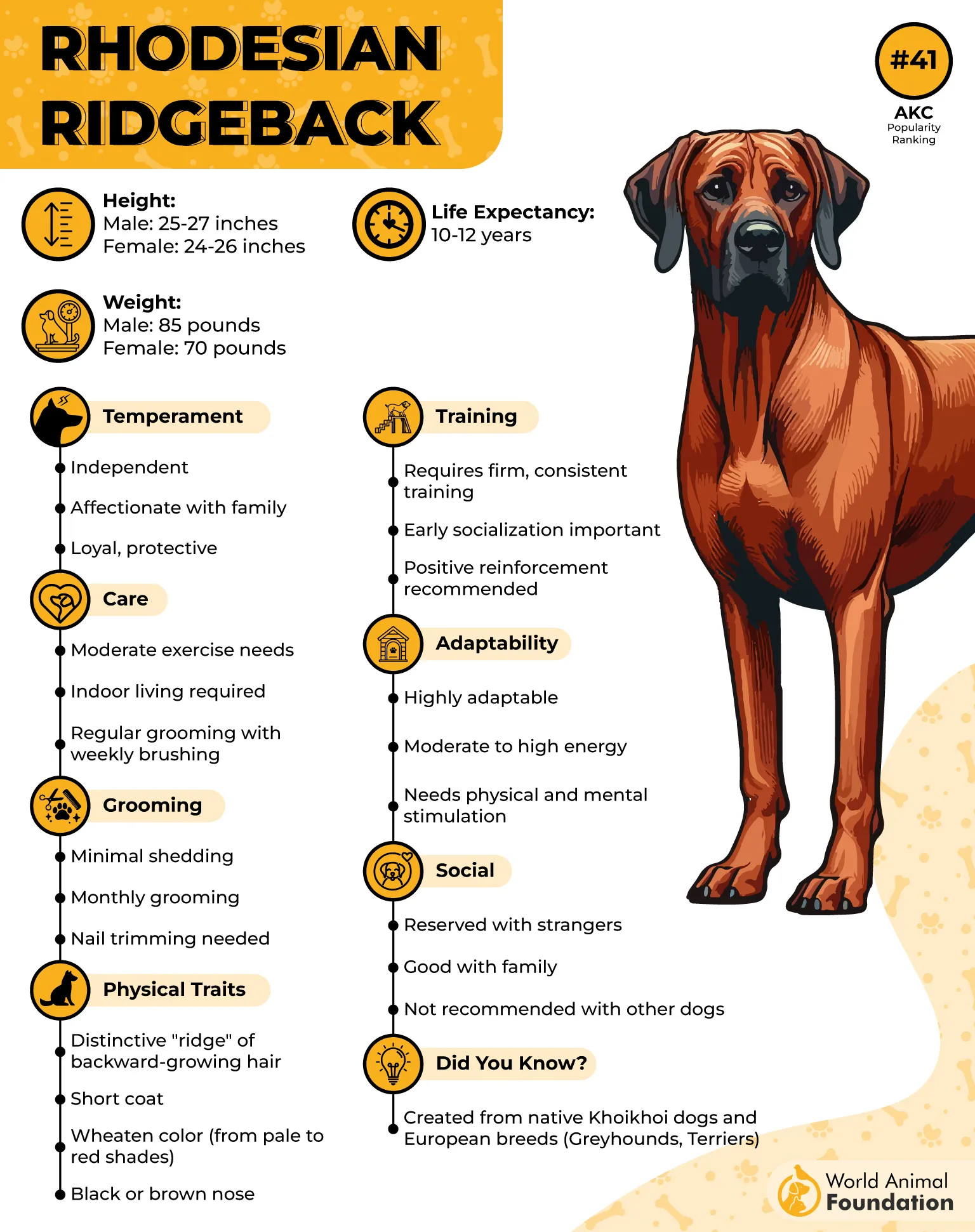
Rhodesian Ridgeback is recognized by the distinct line of backward-growing hair along its spine, a feature tied to its African hunting roots.
That visual marker reflects a breed shaped for tracking and holding large game without direct attack. Its presence combines control, awareness, and physical authority.
Built for endurance and speed
It moves with speed and strength, built for long chases across open land rather than short bursts. Its athletic frame supports sustained running and directional control during tracking tasks.
That structure becomes clearer through physical traits:
Strong, fast-moving body built for endurance
Balanced frame supporting directional shifts
Muscular build suited for long-distance pursuit
Active mind and body
They engage best through running, tracking, and structured outdoor activities that involve both movement and focus. It responds well when physical exercise is paired with mental challenges like agility or scent work. Its daily rhythm stays tied to motion and purposeful engagement.
5. Weimaraner
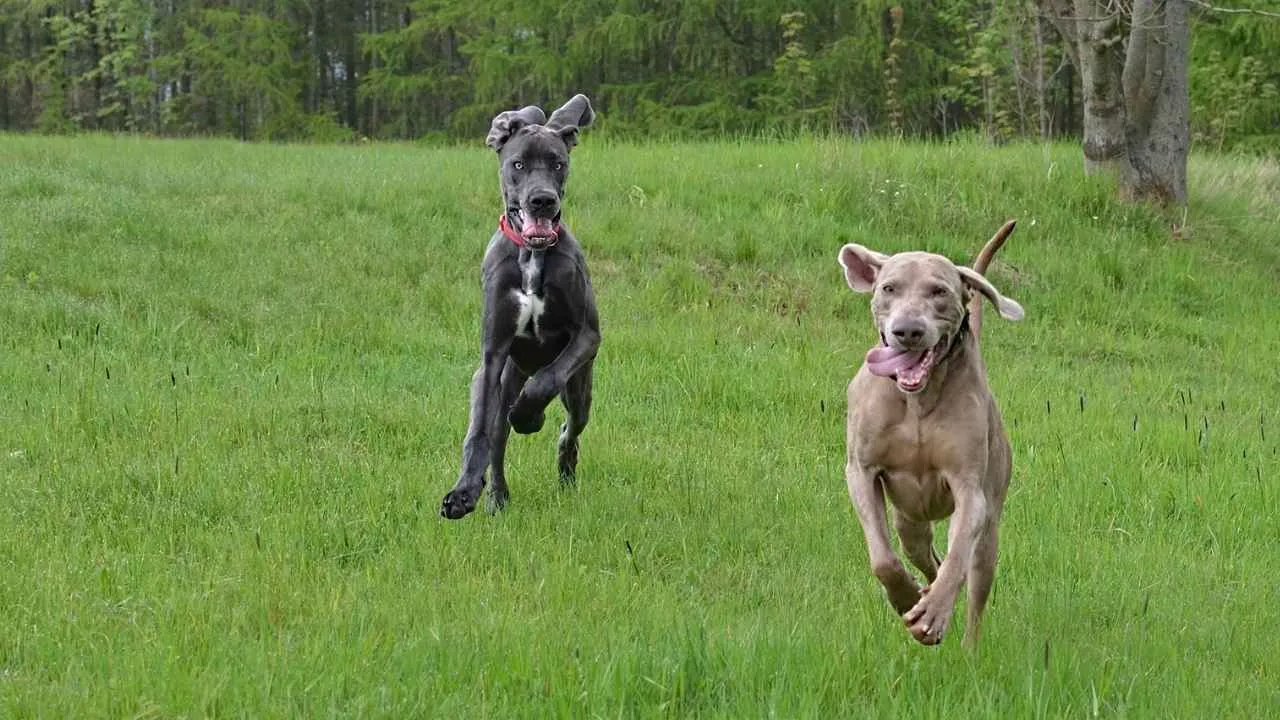
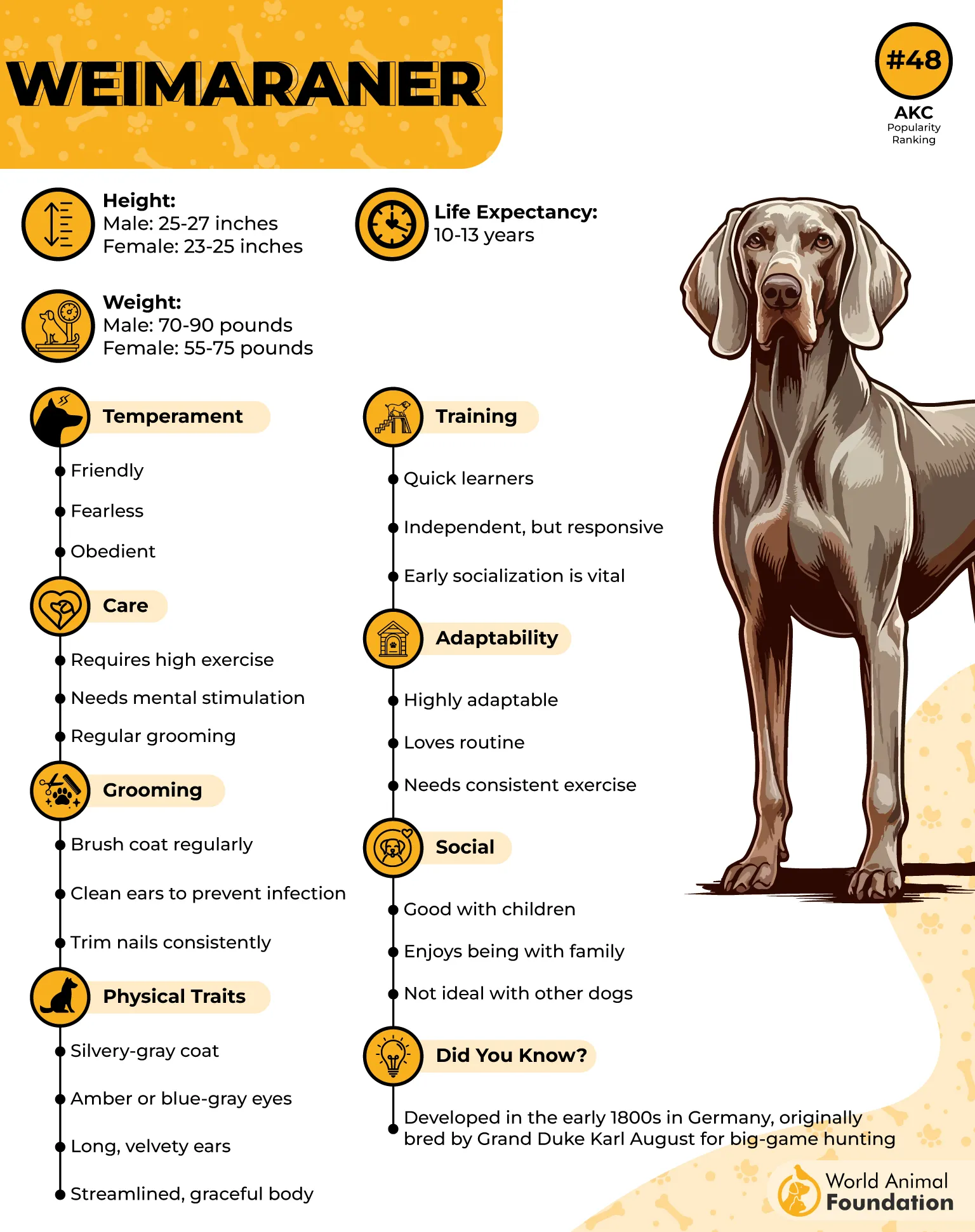
Weimaraner shows a streamlined build shaped for fast movement across open terrain, often recognized by its silvery-gray coat and balanced frame.
Its long ears and sharp expression reflect steady awareness during motion. The overall form supports continuous forward drive rather than static presence.
Movement tied to high engagement
This athletic dog responds strongly to physical activity, preferring extended runs where pace and distance stay consistent. Its connection with people remains active, often staying close during shared outdoor time.
This rhythm becomes clear through core traits:
Sustains long, uninterrupted runs with ease
Responds quickly to direction during activity
Maintains close coordination with handlers outdoors
Energy shaped through interaction
Weimaraner expresses its temperament through constant motion, often seeking space where it can move freely and explore its surroundings.
Walking alone does not fully satisfy its drive, as sustained running brings a clearer balance. Its energy level links closely to both physical and mental engagement.
6. Australian Cattle Dog
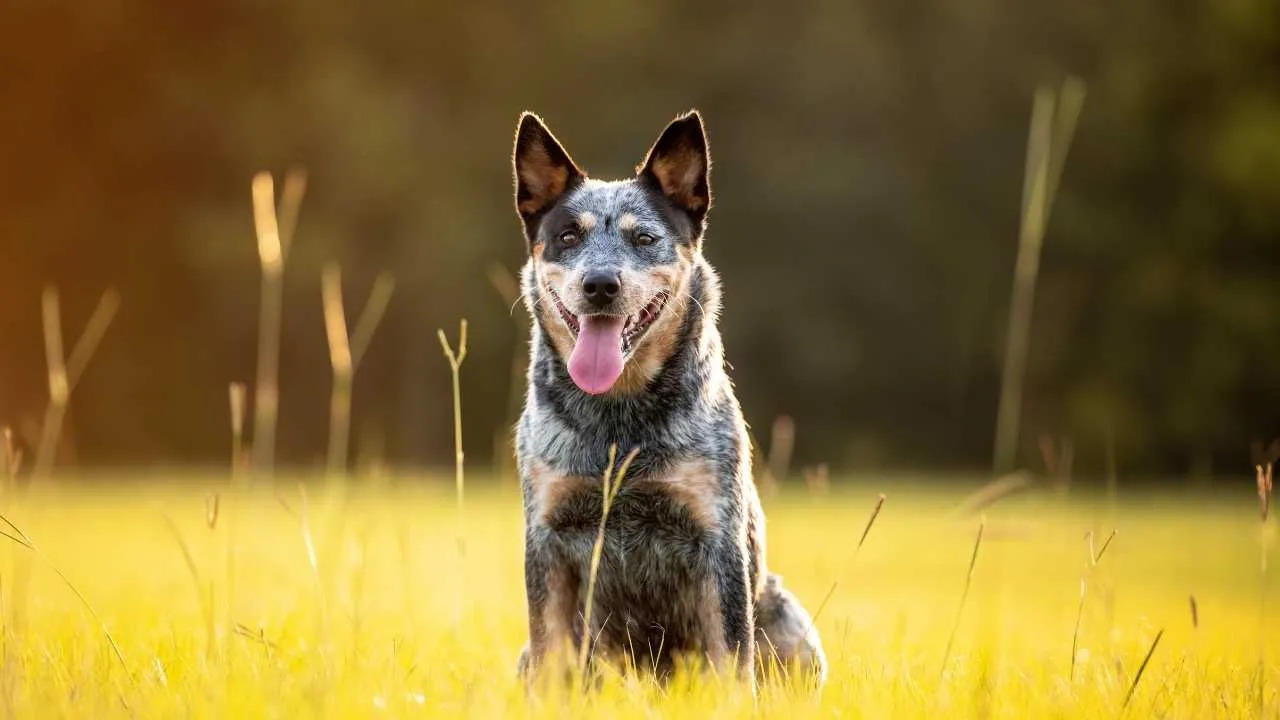
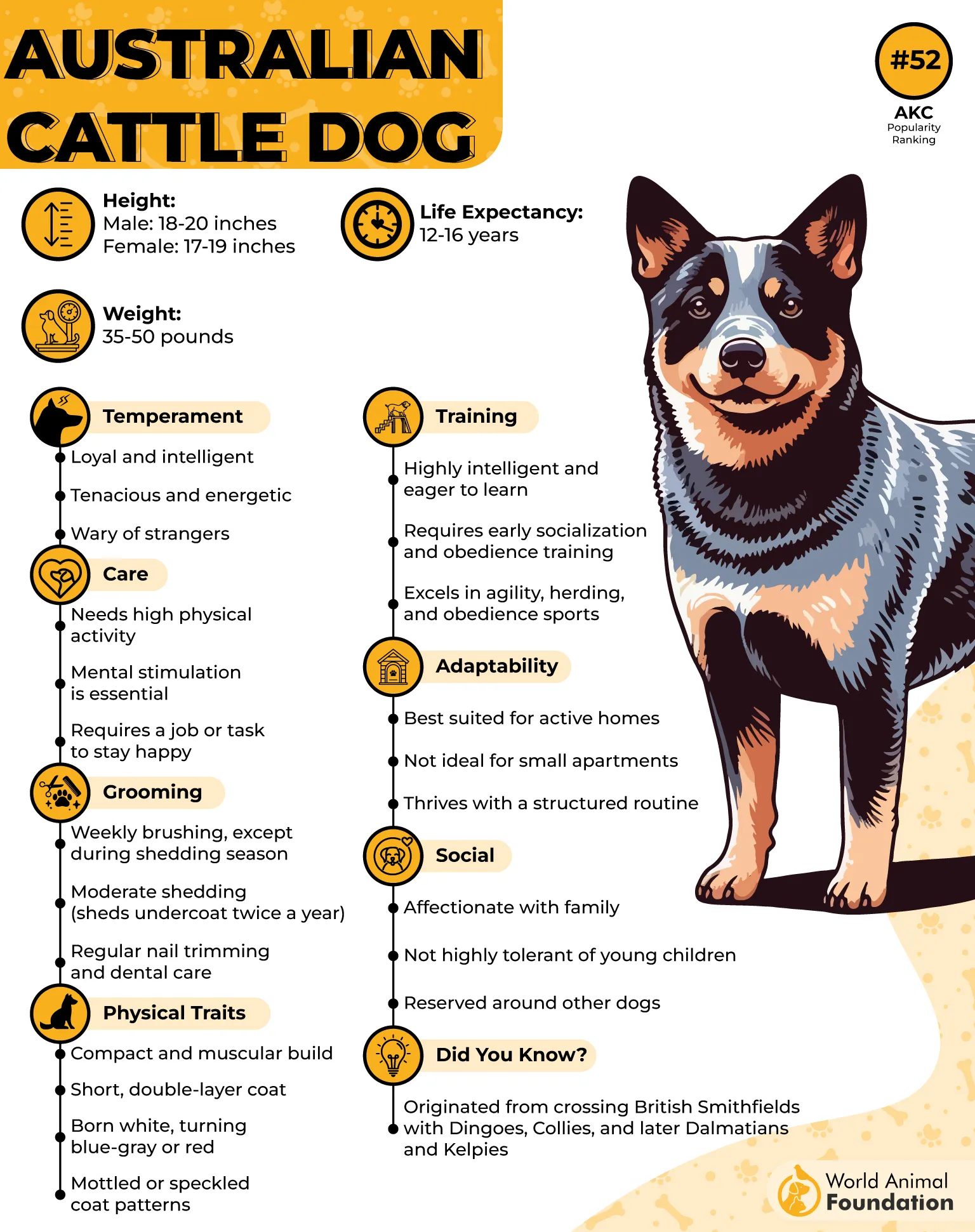
Australian Cattle Dog reflects its connection to Australia’s wild dog lineage, visible in its compact, muscular frame and alert posture. Its body is built for constant movement, balancing strength with quick directional shifts. This structure suits terrain that demands both control and speed.
Built for constant herding pressure
This herding dog handles demanding movement patterns tied to livestock control, often relying on sharp thinking during fast-paced work.
Their working profile is clear through these details:
Strong herding drive with sustained focus
Coat transitions into blue or red tones with speckling
High alertness during unfamiliar encounters
Work drive and social behavior
They respond best when involved in physical and mental exercise. Its loyalty builds through shared work, often showing strong attachment to familiar handlers while staying reserved with strangers. Early exposure to varied environments helps refine its decision-making during movement.
7. Bloodhound
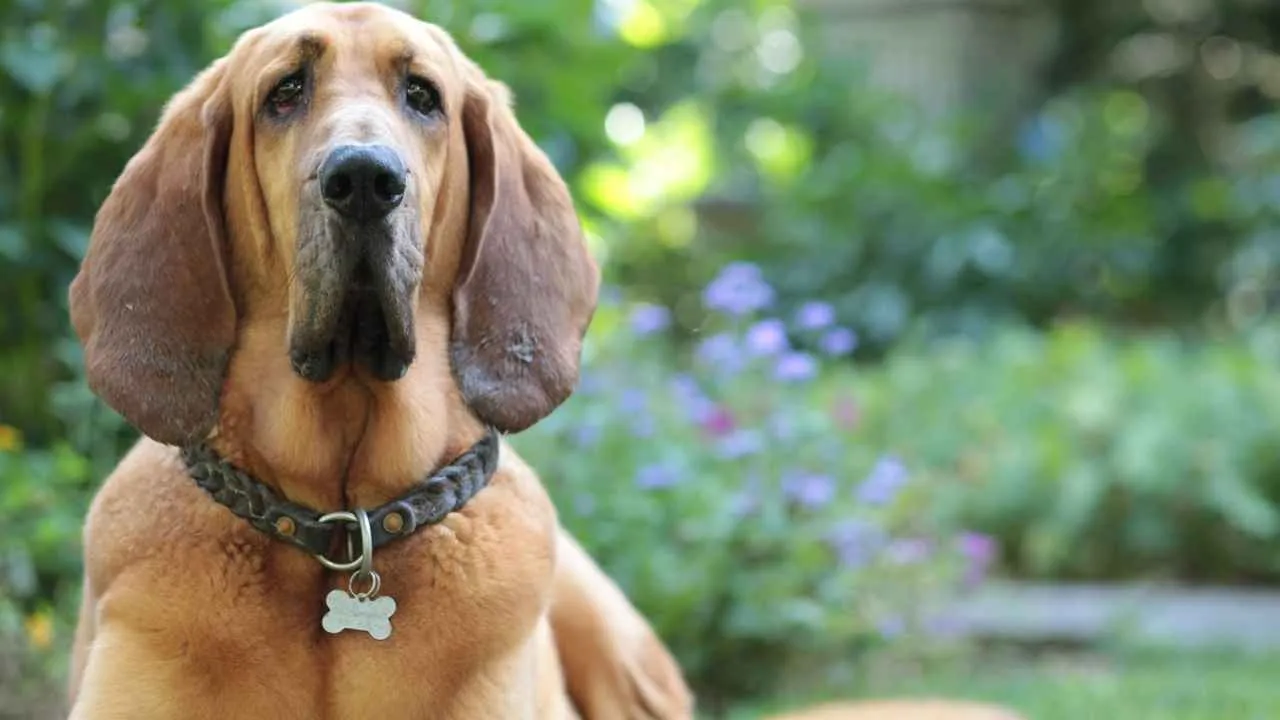
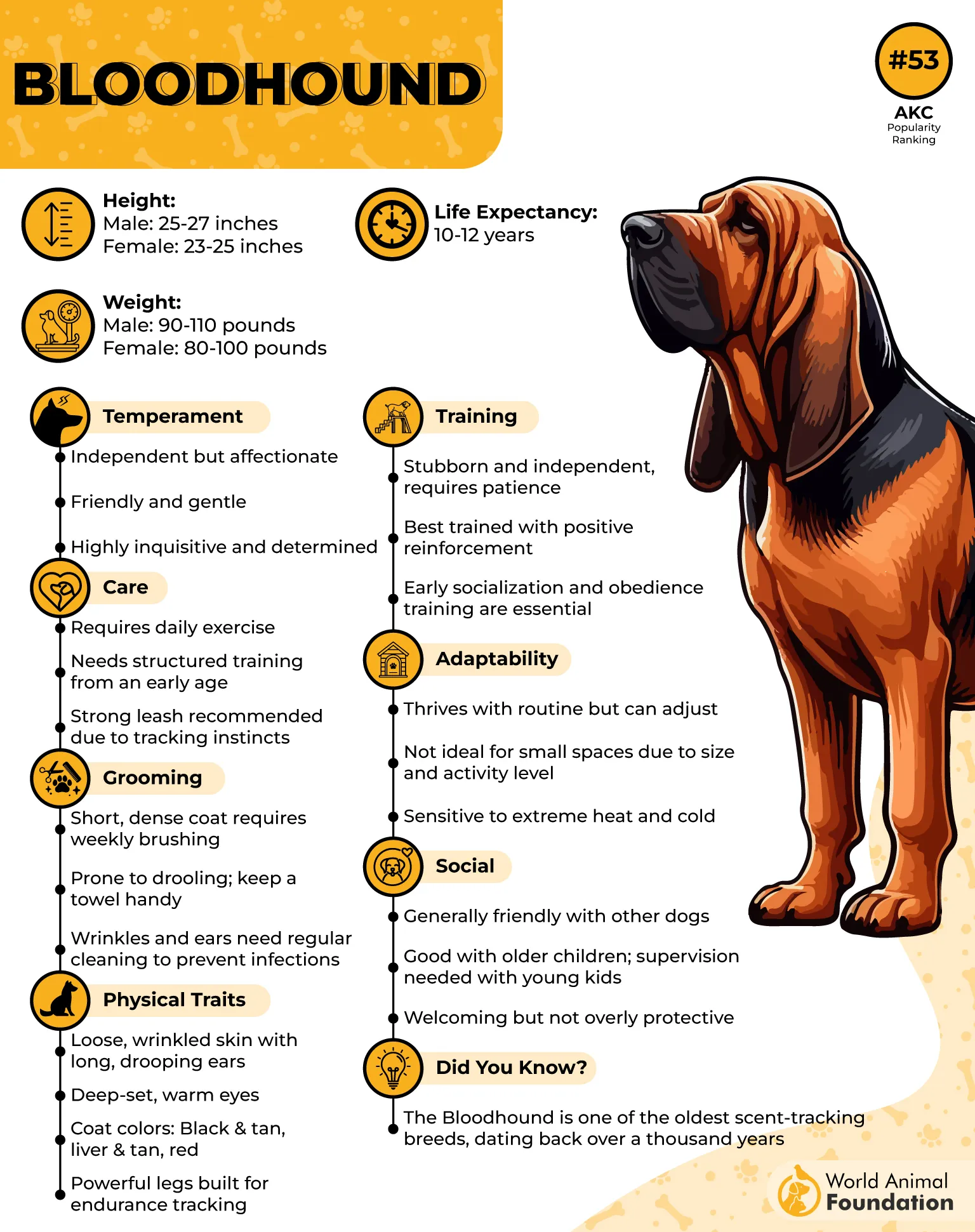
Bloodhound moves through terrain guided by scent rather than sight, often staying locked onto a trail for long distances. Its wrinkled face and loose skin help hold scent close during tracking. Long ears sweep the ground, reinforcing how it processes its environment.
Structure that supports tracking
Bloodhound relies on physical features that directly assist its scenting ability rather than speed or agility alone. Each part of its build contributes to how it follows a trail across challenging ground.
These elements work together in a clear system:
Loose skin helps retain scent particles
Long ears funnel scent toward the nose
Strong legs maintain a steady tracking pace
Lifestyle shaped by instinct
Bloodhound stays relaxed and social in everyday settings, often enjoying group environments with people or other dogs. Its natural tendencies include digging and exploring, especially in enclosed outdoor areas. Training requires patience, as sensitivity and independence influence how it responds.
8. Redbone Coonhound
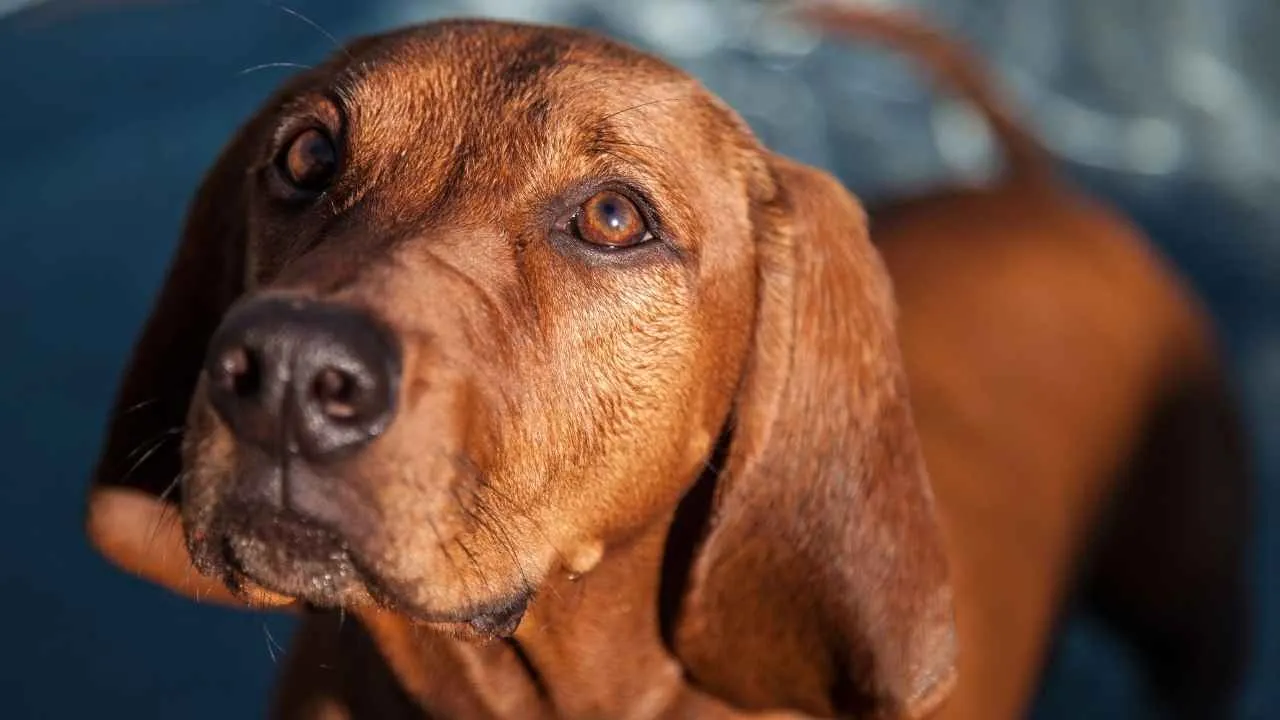
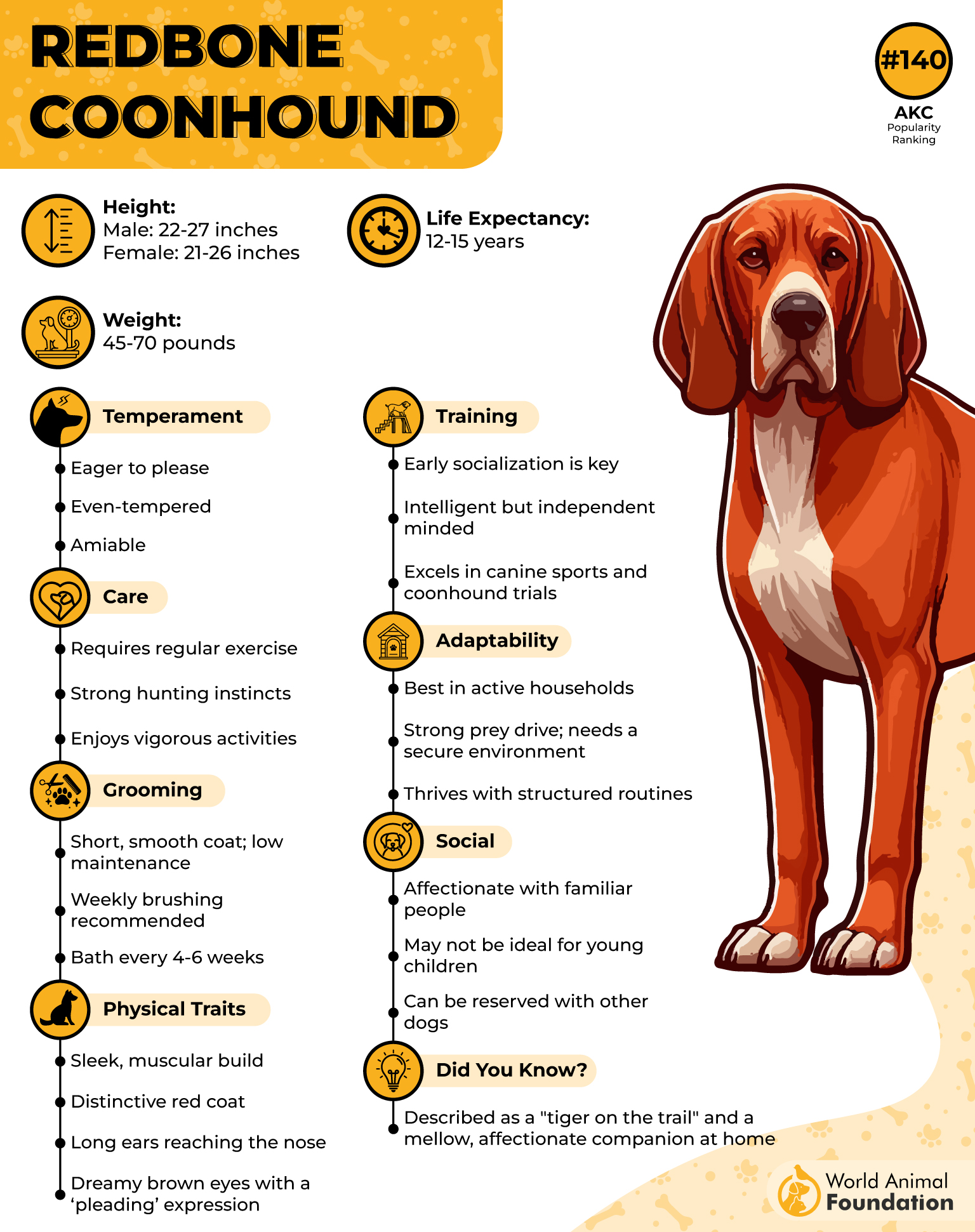
Redbone Coonhound moves with purpose across difficult landscapes, shaped by hunters who needed a dog for swamps and steep climbs. It was originally bred to follow trails over long distances without losing focus. This working background connects directly to movement across rocky terrain.
Movement guided by scent work
It follows scent trails with steady intent, adjusting pace depending on terrain and direction of the track. Its behavior stays centered on tracking rather than distraction, even in unfamiliar environments.
That working style appears in clear actions:
Tracks scent across uneven ground
Adjusts movement between climbs and flat paths
Stays engaged during long pursuits
Energy matched to open landscapes
This trail buddy shows a consistent need for motion, often seeking space to move freely and explore. Its preference leans toward outdoor excursions that involve distance rather than confined play. This rhythm fits naturally into an active lifestyle.
9. Black and Tan Coonhound
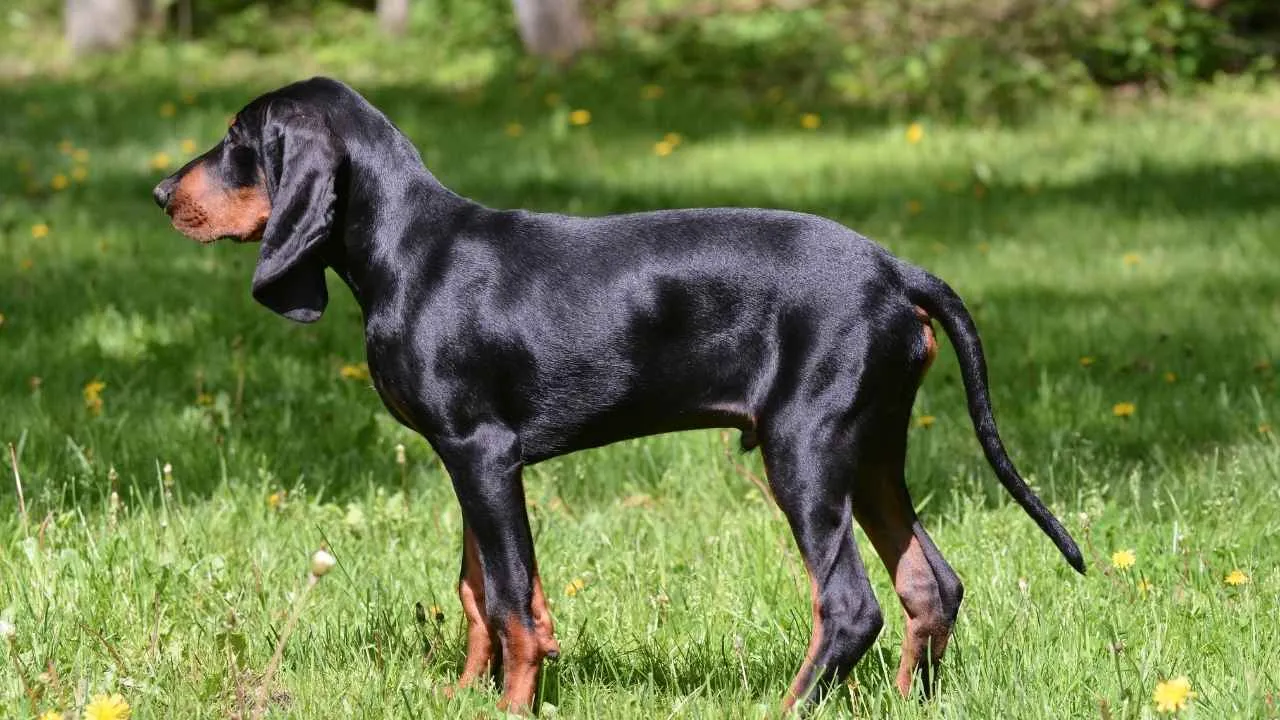
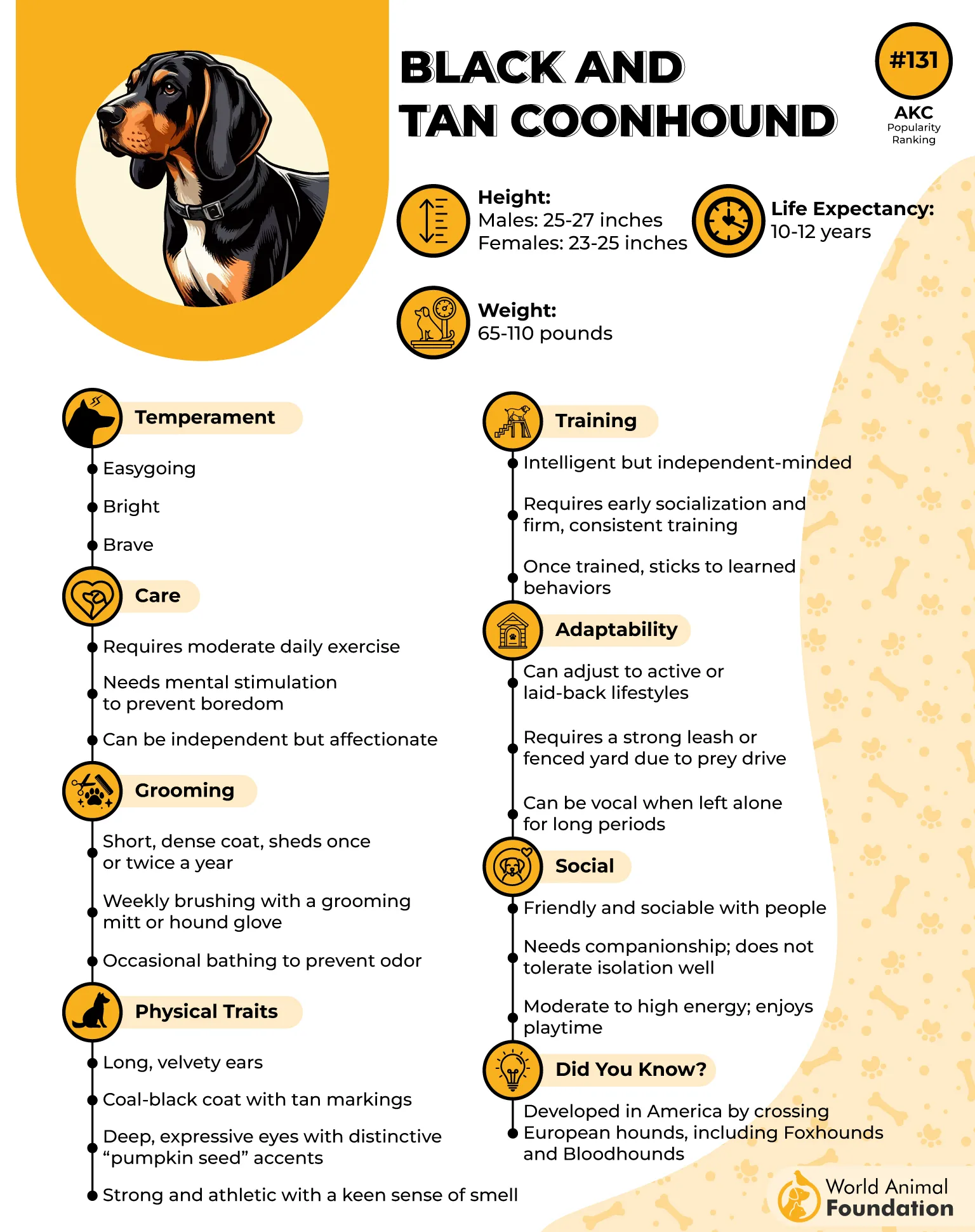
Black and Tan Coonhound works with its nose close to the ground, following scent trails with steady forward motion. Its Bloodhound influence shows in how it tracks continuously, yet at a faster pace across uneven terrain. This method allows it to stay locked onto a trail over long distances.
Tracking style in open terrain
This Coonhound shifts into a focused tracking mode outdoors, where scent becomes the primary guide rather than sight. Its hunting background in pursuing raccoons and larger game shapes how it navigates wide, natural spaces.
That tracking ability is seen through clear behaviors:
Maintains nose-to-ground movement for long stretches
Follows scent trails across changing terrain
Stays engaged with a trail without distraction
Vocal signals and awareness
They use distinct baying and howling to signal their position or response during tracking. These vocal patterns play a role in communication during hunts and remain part of their behavior today. Around unfamiliar people, it tends to stay reserved rather than immediately social.
10. American Foxhound
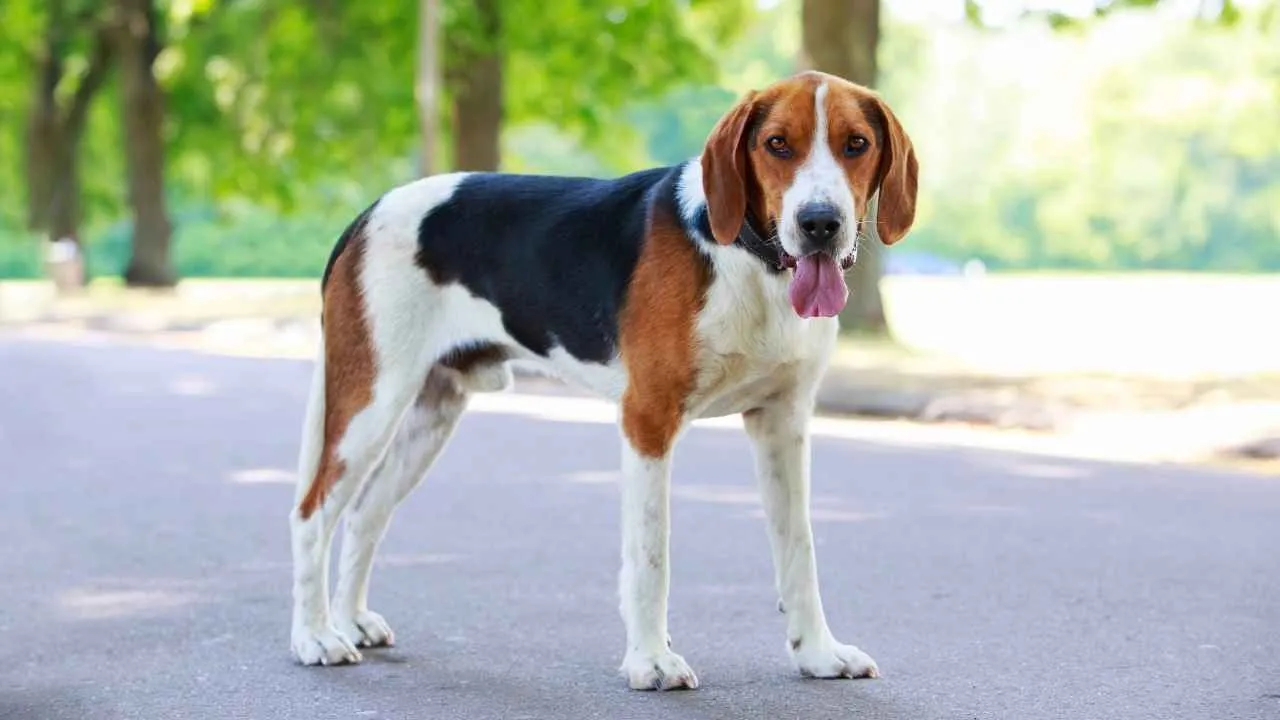
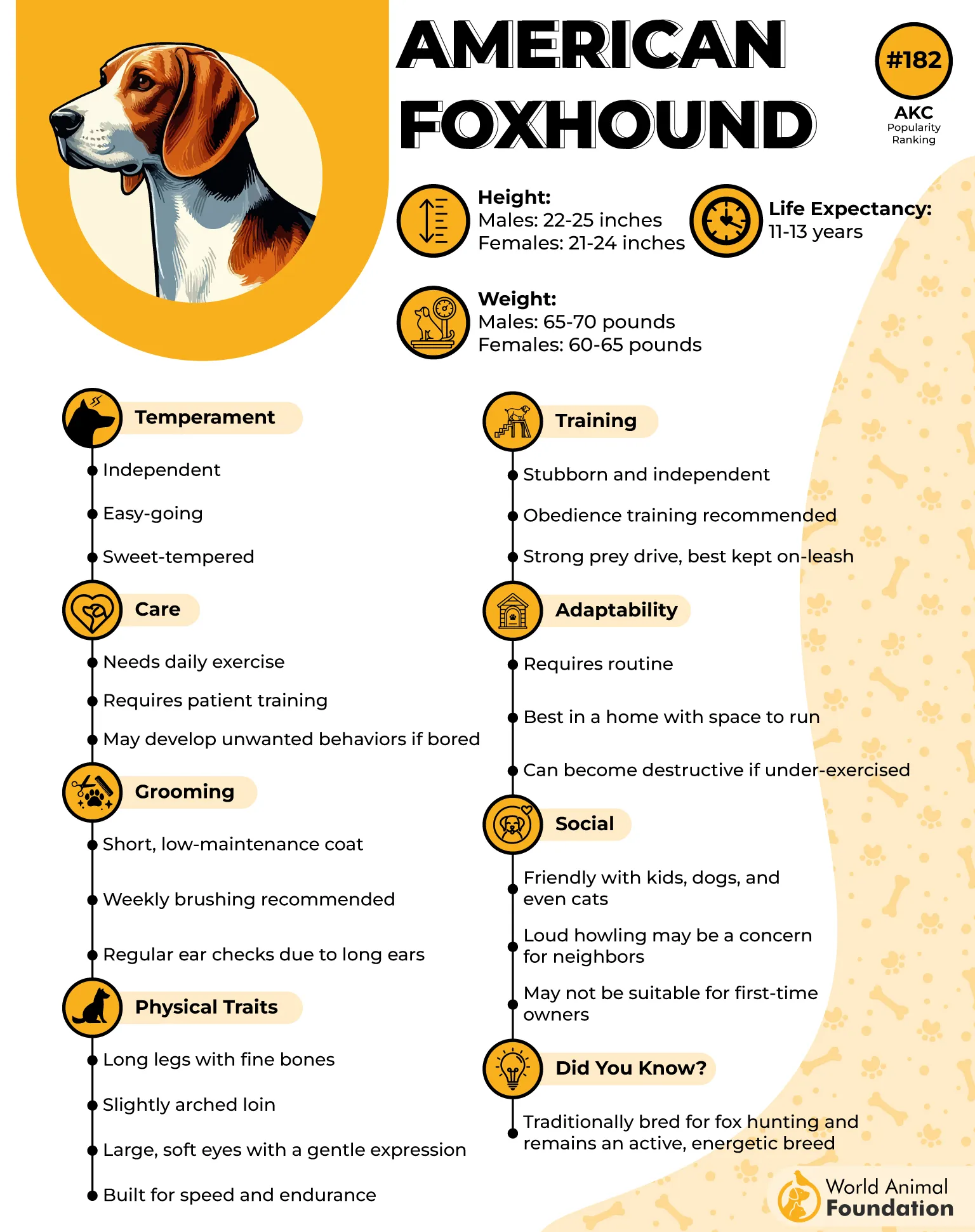
American Foxhound is recognized through its lean, muscular build shaped for long pursuit across open landscapes. Its history links to colonial-era fox hunting, where endurance and persistence defined its role in the field. The breed’s physical outline reflects steady stamina rather than short bursts of effort.
Structure tuned for outdoor tracking
They show a body designed for distance work, supported by a tough coat that handles varied terrain conditions. Long ears and a curved tail add to its identifiable form while in motion across open ground.
This design shows up clearly in physical details:
Medium, weather-resistant coat suited for rugged routes
Long ears that swing naturally during movement
Curved tail ending with a light brush of hair
Temperament built around pursuit focus
This foxhound follows scent with sustained attention, often locking into tracking behavior once a trail is identified. Its nature stays gentle in calm settings, yet shifts into focused determination during pursuit-based activity. This contrast defines how it interacts with both open space and structured environments.
Conclusion
Not every dog can handle the pressure of steep climbs and unpredictable ground, and the breeds covered here make that clear through their natural ability. Their movement, focus, and endurance reflect years of working in environments where balance and control matter every step of the way.
Some carry strength that supports long effort, while others rely on agility or tracking instinct to stay consistent. This difference shapes how they respond to real outdoor challenges.
The right choice depends on how demanding your adventures are. When that match is right, the trail feels less like a struggle and more like a shared rhythm.
