




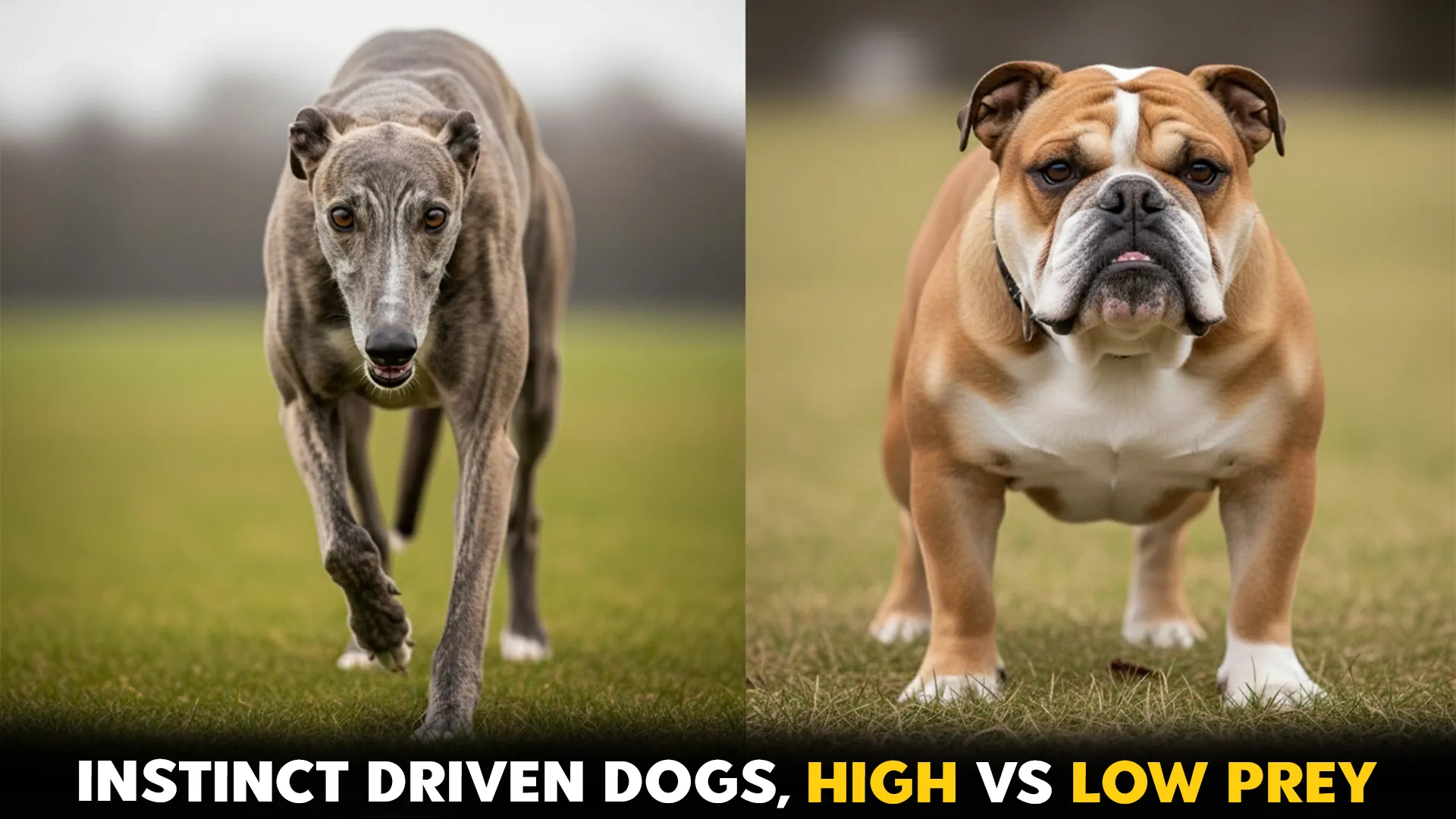
Prey drive is a natural instinct in dogs, rooted in their ancestry as hunters. It refers to the urge to chase, track, and capture moving objects, whether it’s a small animal or even a toy. While all dogs possess this instinct to some degree, the intensity varies widely depending on breed and genetic background.
Understanding the difference between high and low prey drive breeds is essential for any dog owner. Breeds developed for hunting or herding often display strong focus, energy, and determination when pursuing movement. Others have been bred for companionship, resulting in calmer temperaments and reduced chasing instincts, making them more adaptable to multi-pet households.
Instinct plays a major role in shaping behavior and training outcomes. Some traits are deeply ingrained and cannot be completely eliminated, only managed. Choosing the right dog means aligning these natural tendencies with your lifestyle, ensuring a safe, balanced, and rewarding relationship between you and your canine companion.
Dog Breeds Driven by Instinct: High and Low Prey Drive
1. Afghan Hound
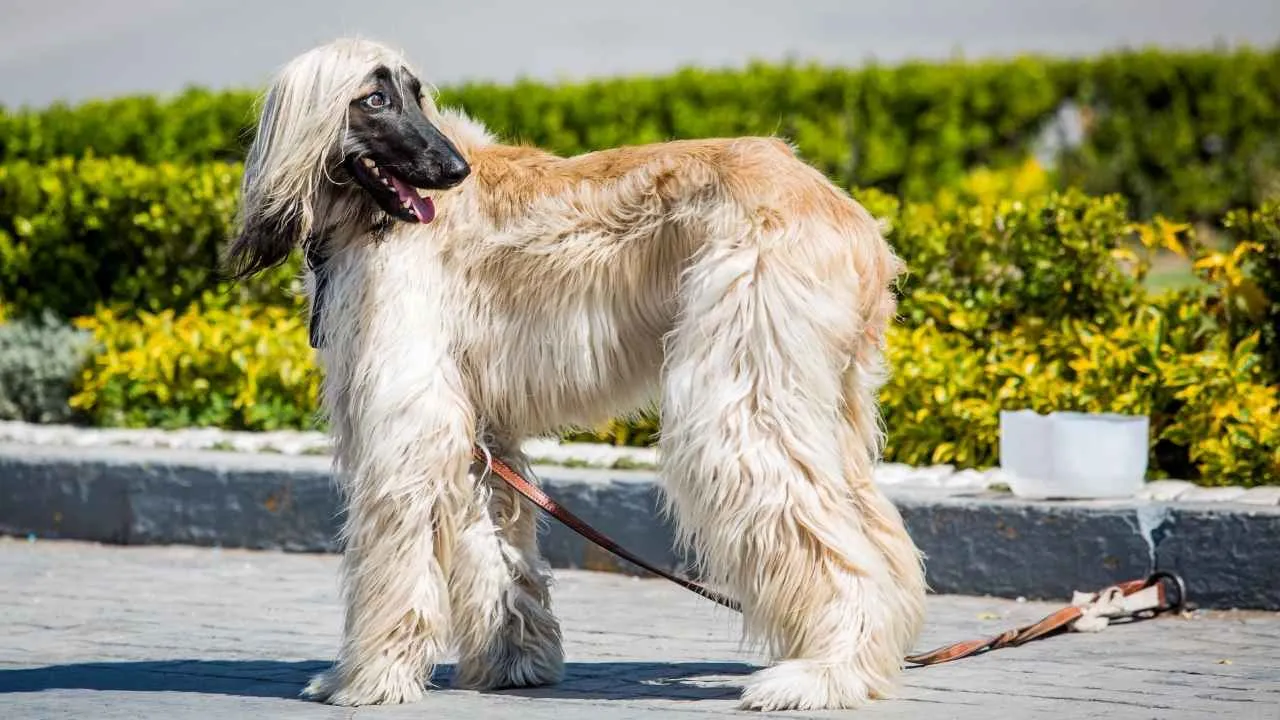
The Afghan Hound, also known as the Tazi, is a striking sighthound admired for its flowing silky coat and aristocratic presence. With its proud head carriage, curved tail, and distinctive topknot, it reflects both elegance and athletic heritage.
According to the American Kennel Club, the Afghan Hound is an independent yet sweet breed with strong chasing instincts, requiring ample exercise and secure, enclosed spaces to run safely.
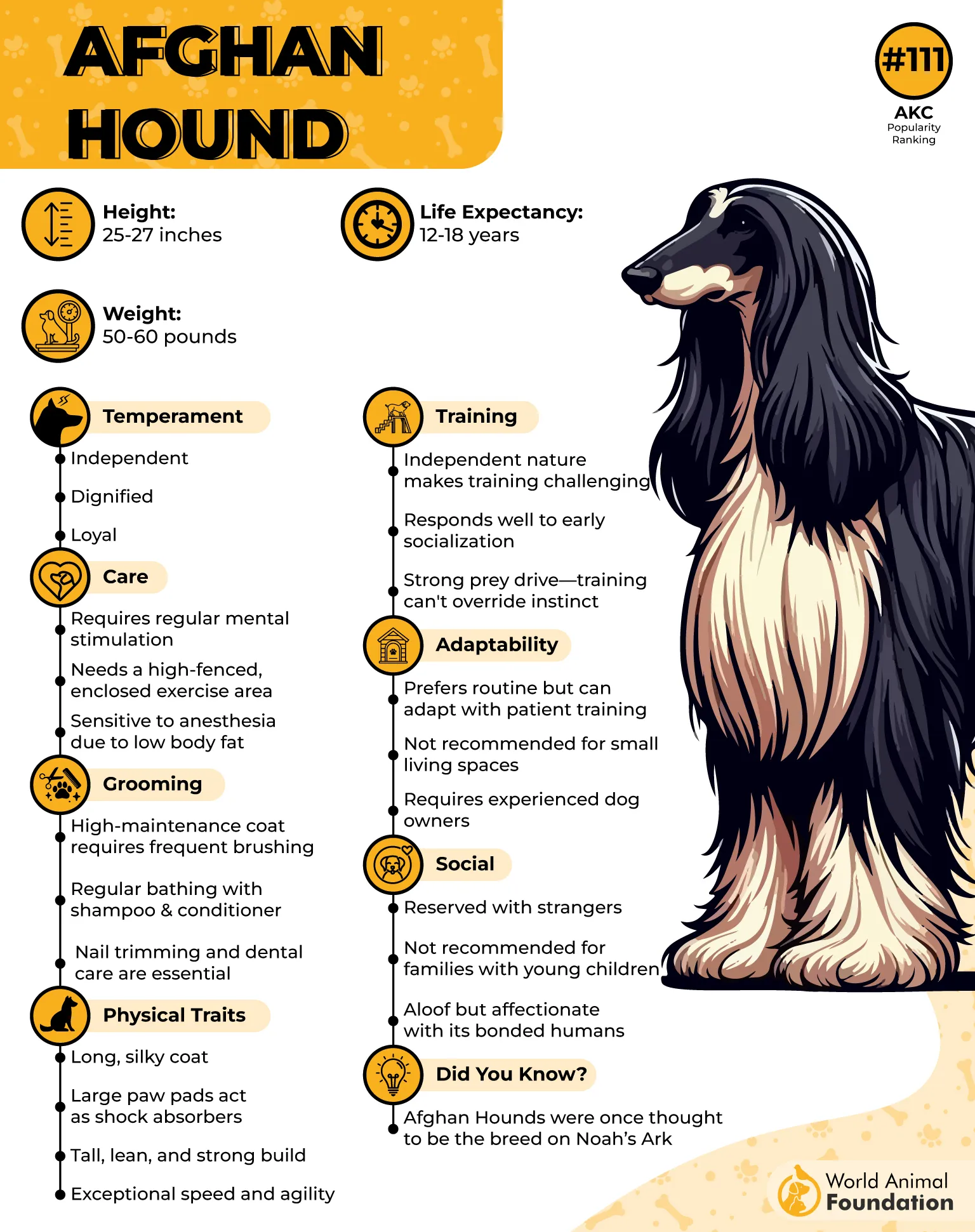
The High-Drive Hunter with Intense Focus
Bred to hunt by sight across rugged terrain, this high prey drive breed possesses a powerful instinct to chase anything that moves. Its sharp focus and swift reactions make it a natural pursuer, requiring controlled environments during outdoor activity.
Independence defines its working style; like many dogs, this high-energy breed often relies on its own judgment rather than constant direction. This strong-willed nature can make training a thoughtful process, especially when instincts take over.
Despite its aloof exterior, the Afghan Hound forms deep attachments to its family and thrives with consistent companionship. Regular exercise is essential to channel its energy and prevent restlessness.
Its combination of speed, agility, and alert vision highlights its origins as a skilled hunter in mountainous regions.
Fact: The Afghan Hound is considered one of the oldest purebred dogs, with roots tracing back to ancient mountain civilizations.
2. Greyhound
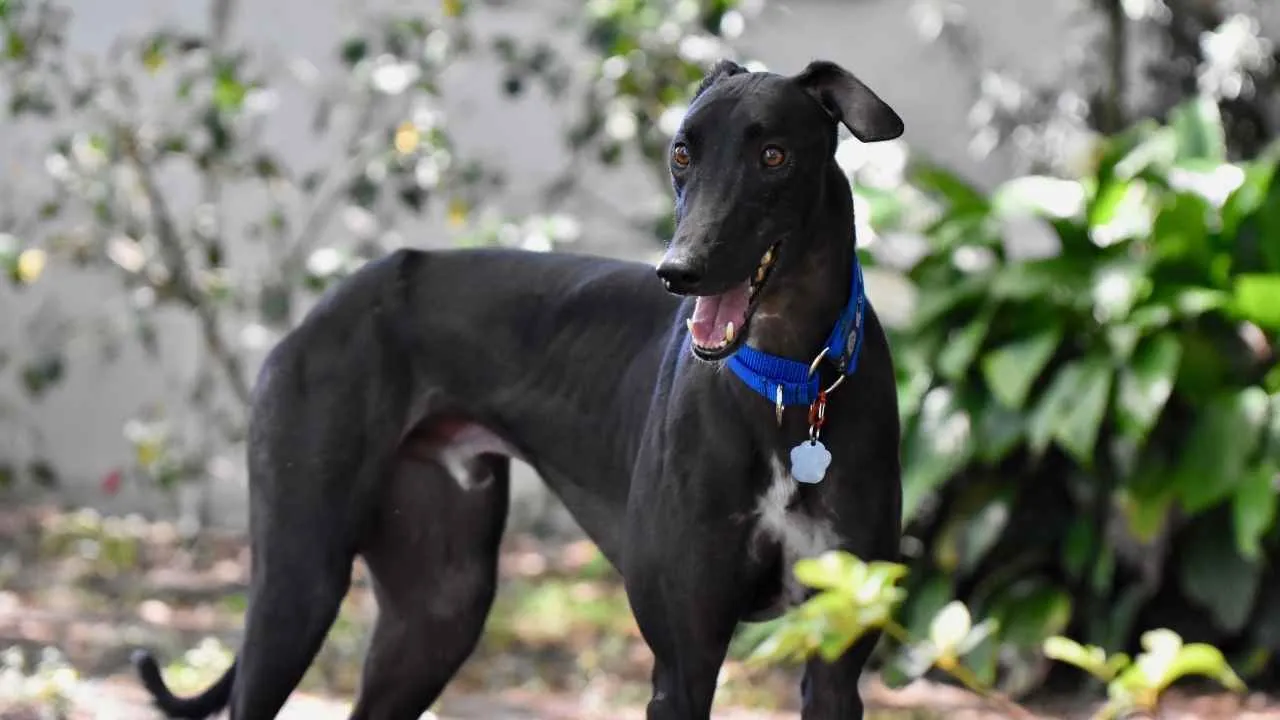
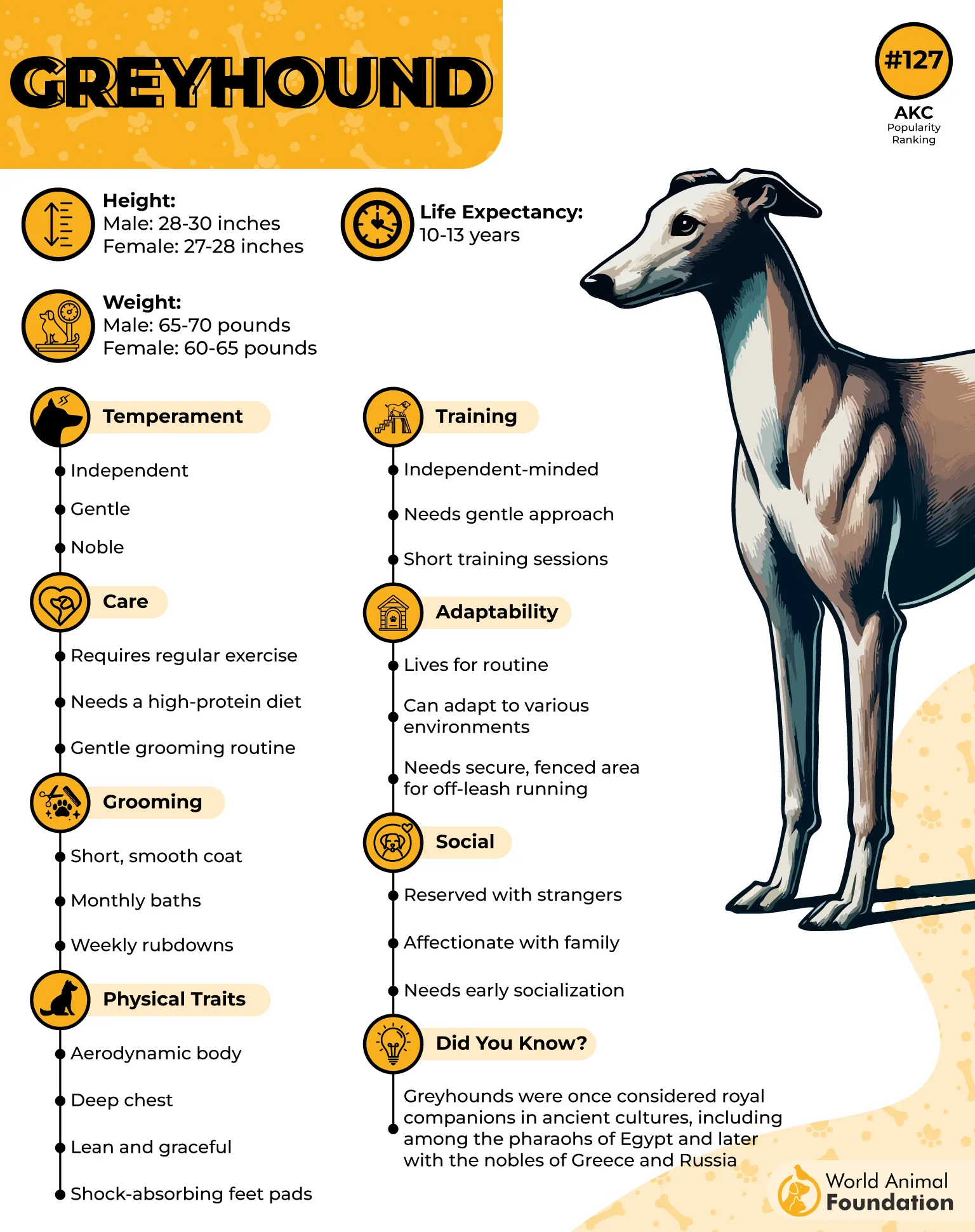
The Greyhound, sometimes referred to as the English Greyhound, is a sleek sighthound known for its streamlined body and unmatched speed. With a long, narrow head, deep chest, and powerful legs, it is built purely for rapid pursuit and graceful movement.
According to Petplan, the Greyhound is a gentle and non-aggressive breed with a sensitive nature, best suited to calm homes, enjoying short bursts of activity but typically relaxed and independent.
A Fast-Moving Chaser with Strong Instincts
Originally developed for chasing swift prey, this breed relies heavily on sharp eyesight to detect motion from a distance. Its instinct to pursue is immediate and intense, often triggered by even the slightest movement.
Unlike many other dogs, the Greyhound depends more on vision than scent, making it highly reactive to fast-moving animals. This strong prey focus can make walks challenging in areas filled with small wildlife or roaming pets.
Though incredibly fast outdoors, it is surprisingly calm and relaxed at home, showing a gentle and affectionate side. Regular bursts of exercise help satisfy its natural drive while maintaining its balanced temperament.
Its body structure, from flexible spine to cushioned feet, supports explosive speed and smooth tracking during a chase.
Fact: Greyhounds were specifically bred for speed, using their keen vision to chase fast-moving prey like rabbits and hares.
3. Belgian Malinois
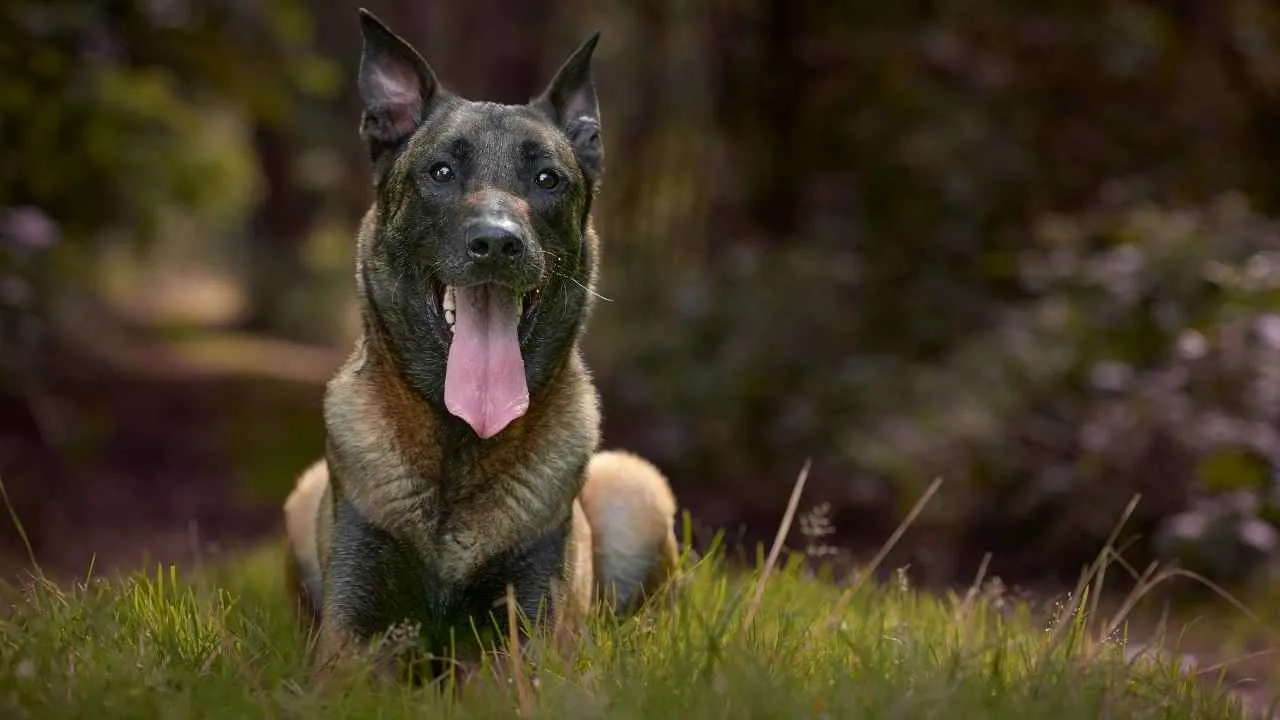
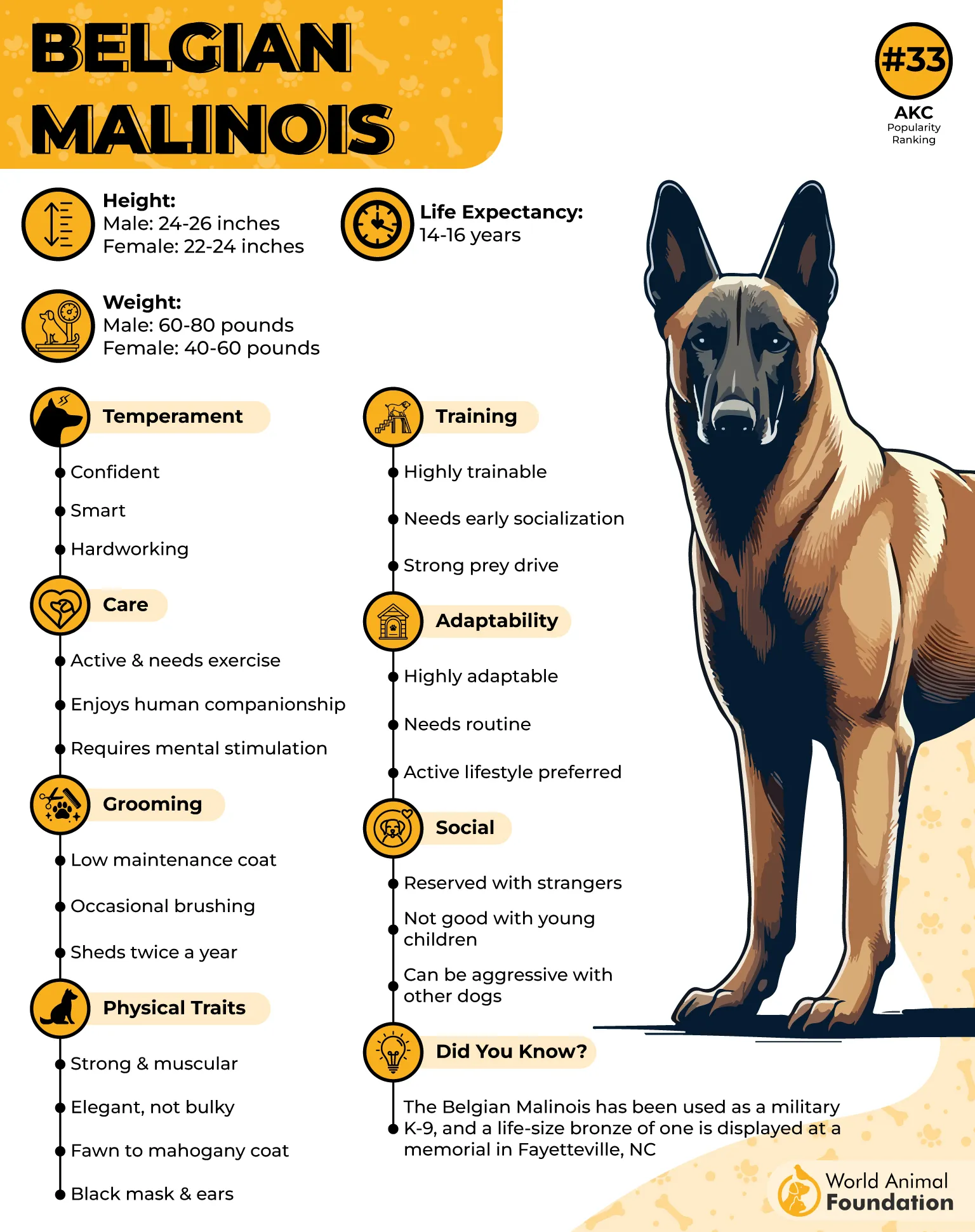
The Belgian Malinois, often simply called the Malinois, is a highly driven herding breed from Belgium known for its lean build and sharp expression. With erect ears, a black facial mask, and a short, dense coat, it closely resembles the German Shepherd but carries a lighter, more agile frame.
According to PetMD, the Belgian Malinois is an extremely loyal and devoted breed that forms strong bonds with its owner and thrives on constant companionship, requiring both physical activity and mental engagement.
The Alert Tracker That Reacts Quickly to Movement
Originally developed for herding and farm work, this breed has an exceptional ability to notice and respond to motion instantly. Its alert nature and quick reflexes make it highly effective in tracking and detection roles.
The Malinois channels its strong prey drive into purposeful tasks, excelling in activities like search work, obedience, and protection. Its instinct to pursue and engage is intense, requiring structured outlets to remain balanced.
Highly intelligent and eager to work, it thrives on constant mental challenges and physical activity. Without proper stimulation, its sharp instincts can turn into restless or destructive behavior.
Its deep loyalty and responsiveness to handlers enhance its ability to focus and react with precision in demanding environments.
Fact: The Belgian Malinois is widely used in police and military roles due to its intelligence, speed, and strong working drive.
4. Borzoi
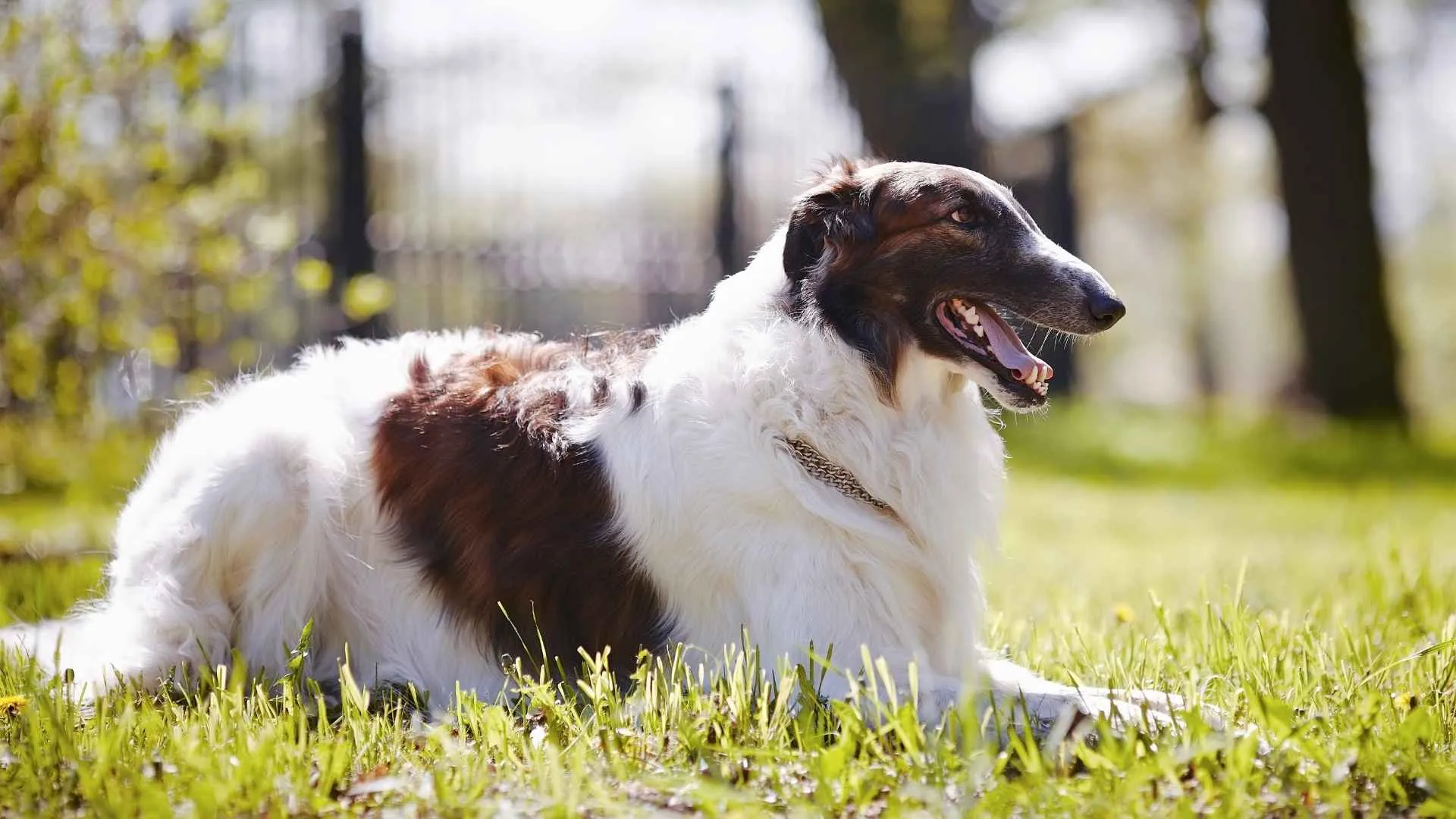
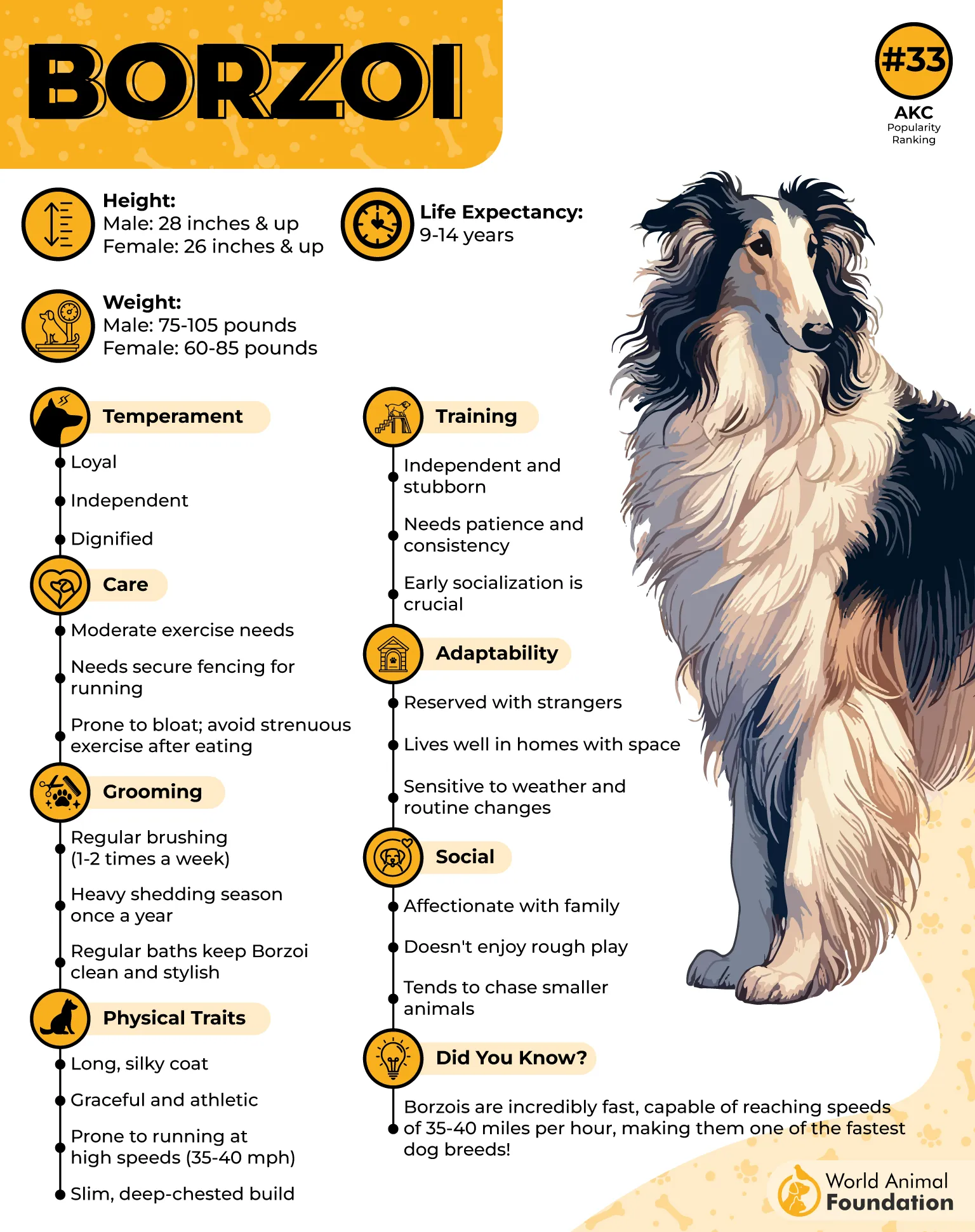
The Borzoi, also known as the Russian Wolfhound, is a graceful sighthound recognized for its long, silky coat and slender, aristocratic build. Originating in Russia, it was once favored by nobility and admired for its speed, elegance, and refined presence.
A Determined Pursuer Built for Active Tasks
Developed for chasing game across open landscapes, this breed relies on keen sight and swift movement to pursue targets. Its instinct to run and capture prey remains deeply rooted, especially when something small and fast catches its attention.
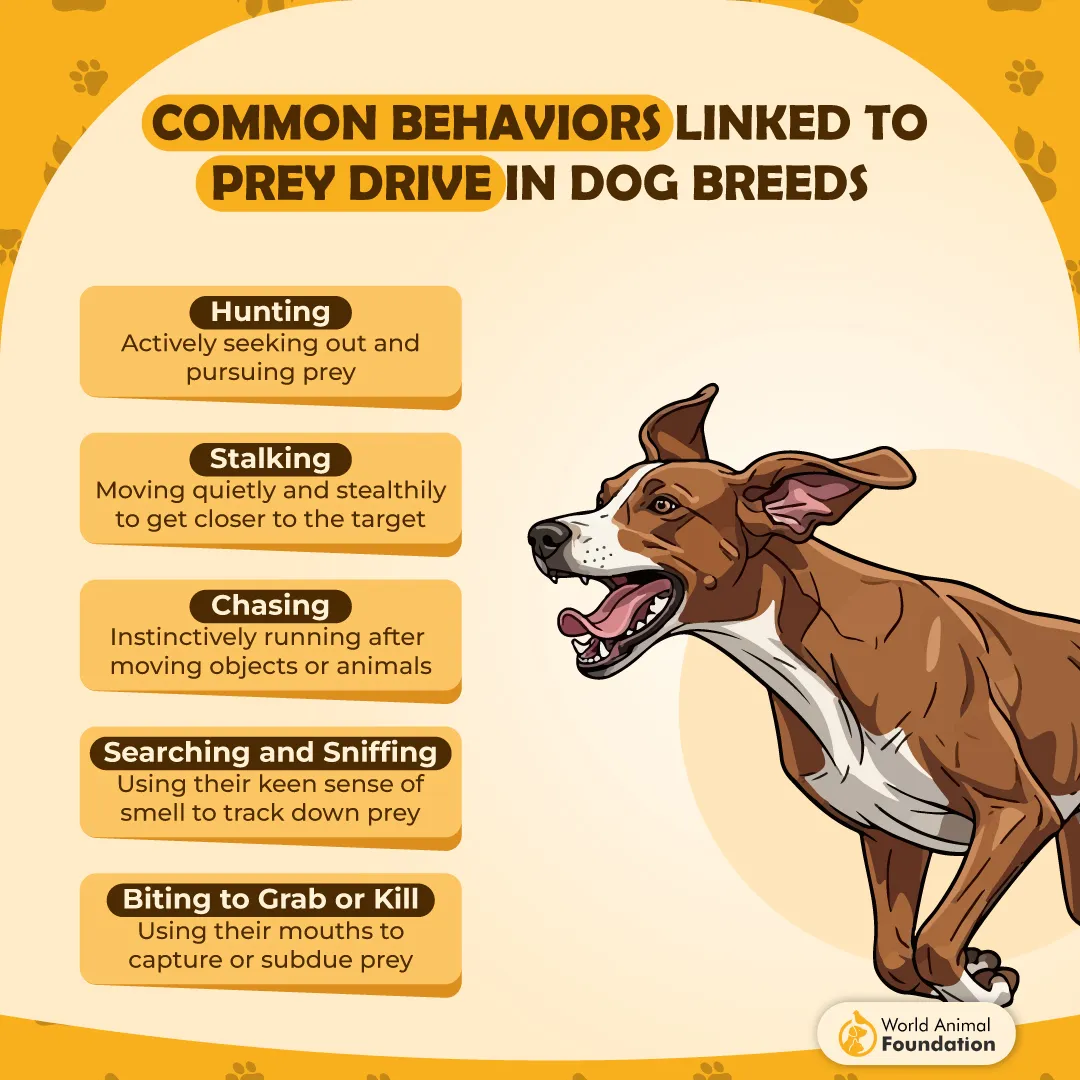
Though calm indoors, the Borzoi carries a strong independent streak when outdoors, often choosing to follow its own instincts. This determined nature requires secure spaces and mindful supervision during exercise.
It benefits from a balance of free running and structured activity, allowing it to express its natural drive without becoming restless. Structured training and early socialization help guide its chasing tendencies into manageable behavior.
Despite its hunting heritage, it remains gentle and affectionate with its family while staying reserved around unfamiliar people.
Fact: The Borzoi was historically used by Russian nobility to hunt wolves across vast open fields.
5. Border Collie
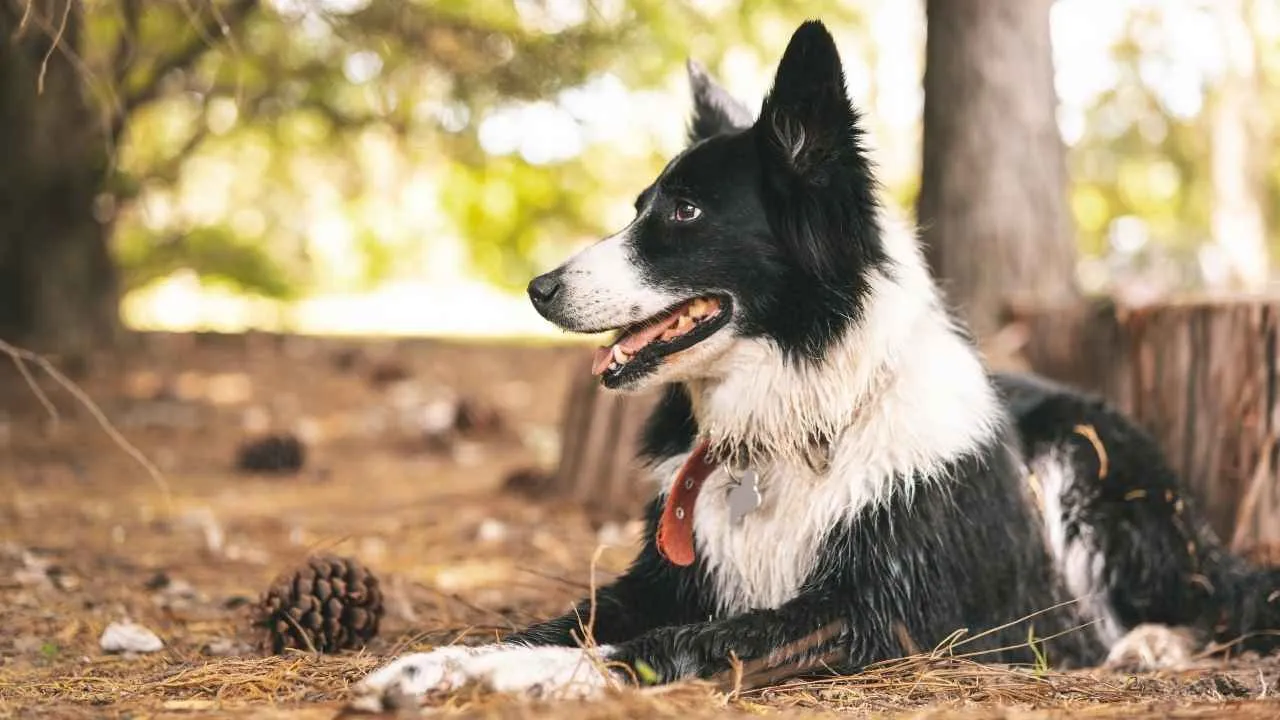
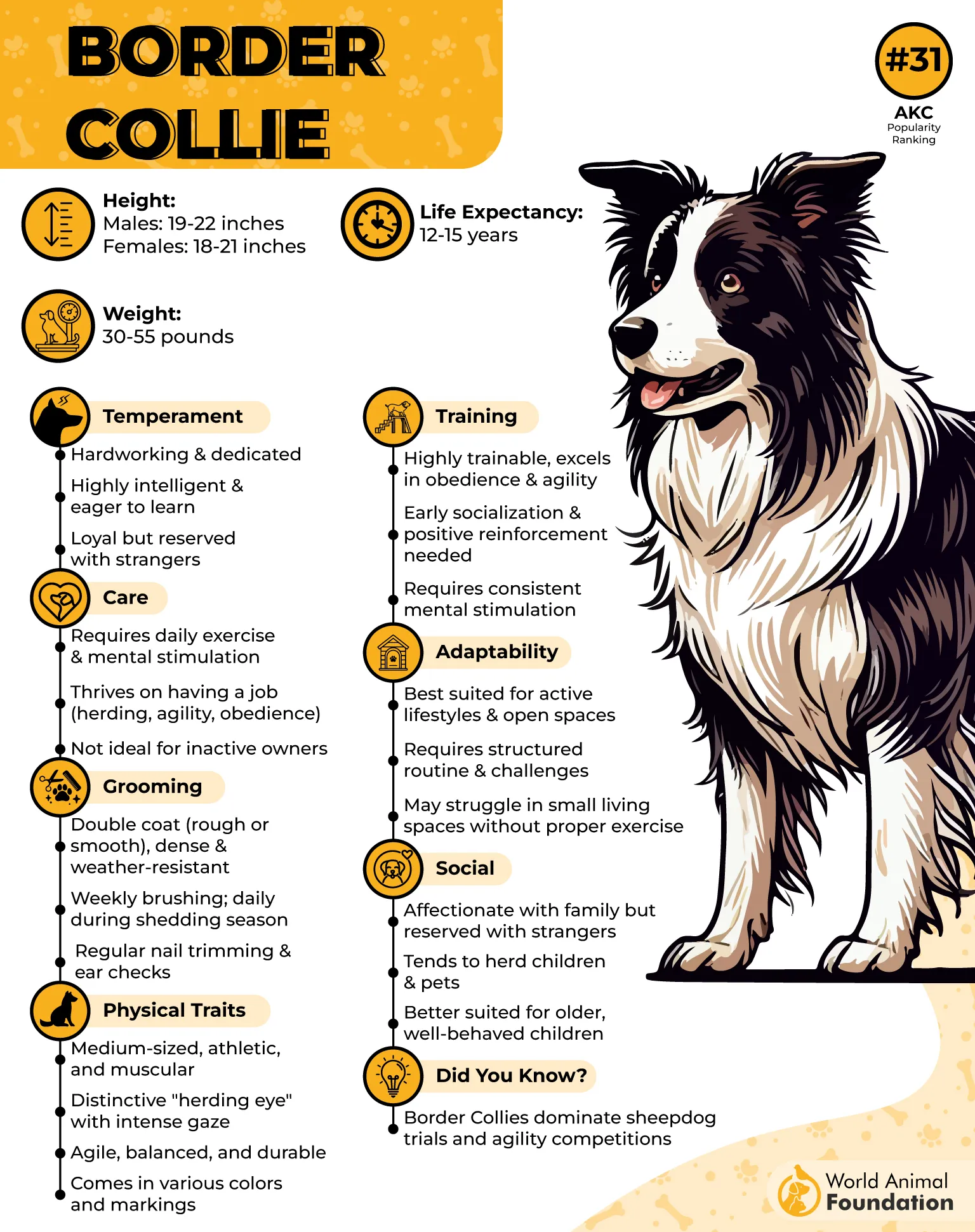
The Border Collie, often simply called Collie in working settings, is a highly intelligent herding breed known for its intense gaze and unmatched focus. With a lean athletic body and sharp expression, it was developed to control livestock across vast and rugged terrain.
The Balanced Dog with Moderate Prey Drive
Unlike traditional hunters, this breed channels its instinct into herding rather than capturing prey. Its natural drive is centered on controlling movement, using a fixed stare and strategic positioning to guide animals.
This focused behavior can extend to chasing small animals or even household members, as it instinctively tries to organize motion around it. While not aggressive, its urge to chase and manage movement can feel persistent without proper direction.
Highly energetic and mentally sharp, the Border Collie thrives on tasks that challenge both body and mind. Activities like agility, games, and problem-solving help prevent obsessive tendencies linked to its strong working instincts.
With consistent training and early guidance, it becomes a responsive and loyal companion while maintaining its natural drive.
Fact: The Border Collie uses an intense stare, often called the “eye,” to control livestock without needing physical contact.
6. Cavalier King Charles Spaniel
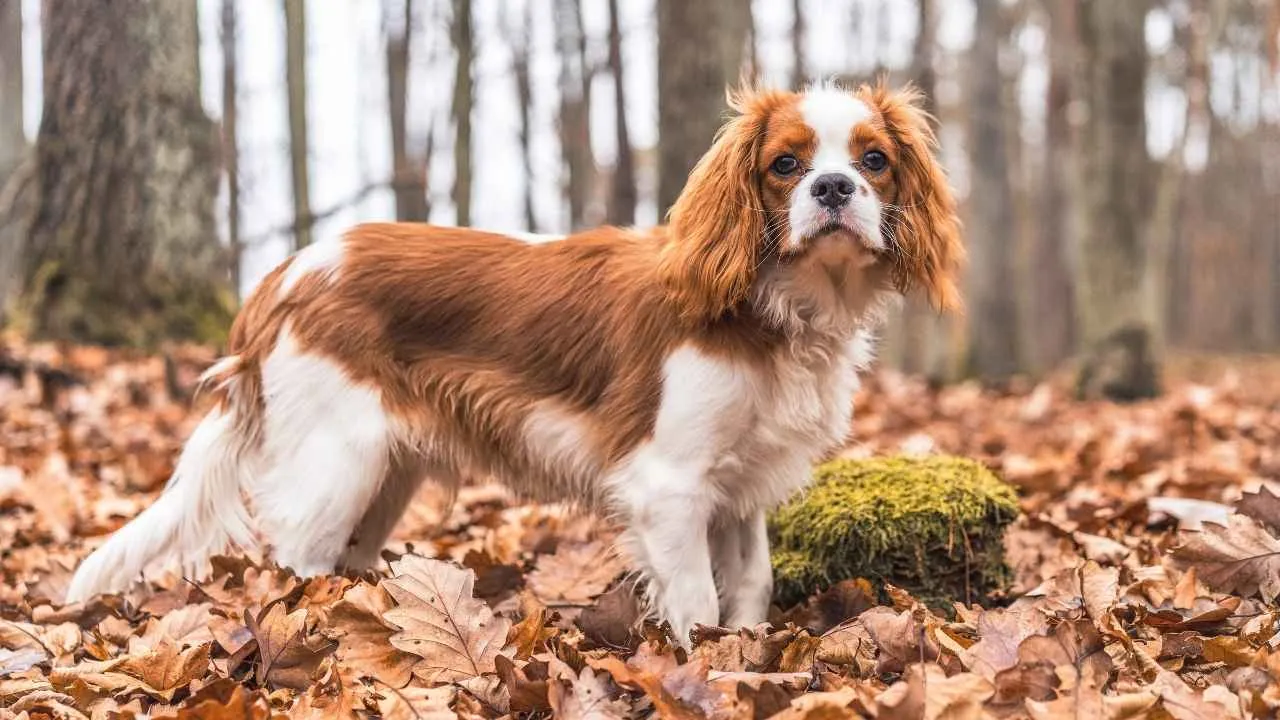
The Cavalier King Charles Spaniel, often simply called the Cavalier, is a charming toy spaniel recognized for its expressive eyes, silky coat, and feathered ears. Bred as a companion dog, it carries a gentle demeanor and thrives on close human connection.
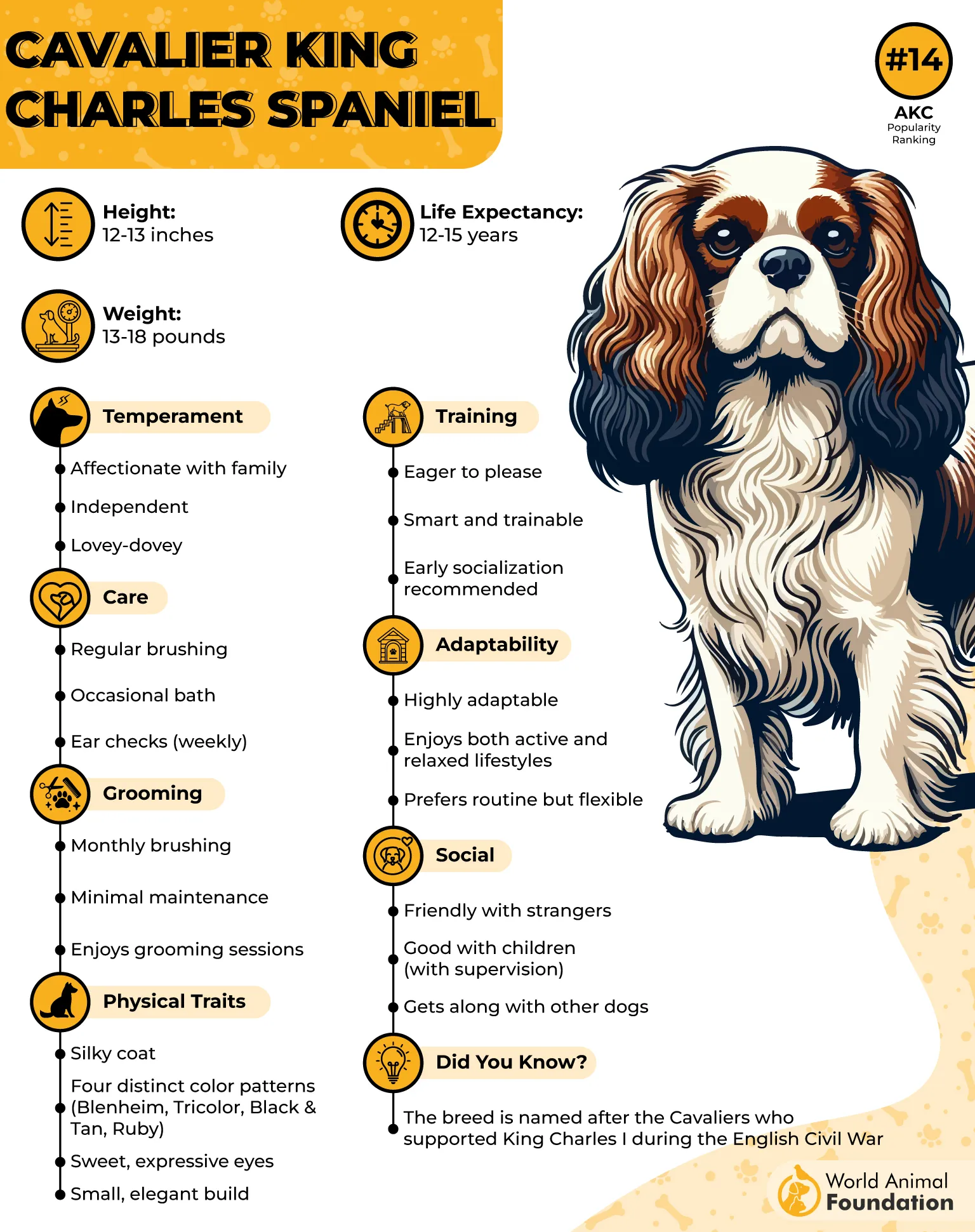
A Calm Companion with Controlled Instincts
Unlike high-drive hunters, this breed shows little interest in chasing prey, preferring comfort and companionship over pursuit. Its instinct is mild, often redirected toward staying close to its owner rather than reacting to movement.
Though it enjoys playful outdoor activity, its approach remains relaxed and balanced. It may notice small animals but rarely displays the intense fixation seen in more driven breeds.
Highly social and affectionate, the Cavalier focuses more on bonding than working tasks. Its easygoing nature allows it to coexist peacefully with other pets, including cats, without strong chasing urges.
With moderate exercise and plenty of attention, it maintains a happy and steady temperament, making it adaptable to both active outings and quiet indoor life.
Fact: The Cavalier King Charles Spaniel prefers companionship over chasing, often choosing a cozy lap instead of pursuing other animals.
7. Bulldog
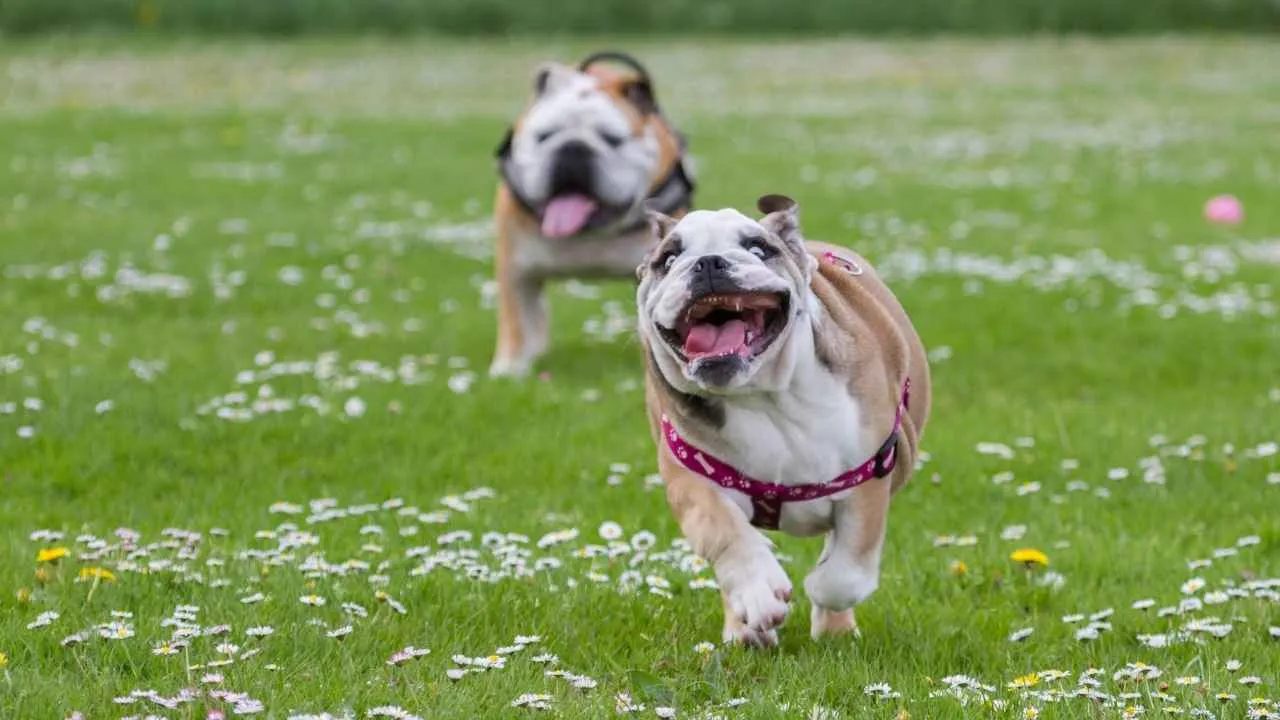
The Bulldog, often called the English Bulldog or British Bulldog, is a sturdy companion breed known for its wrinkled face, pushed-in nose, and muscular frame. Once bred for bull-baiting, it has evolved into a gentle and affectionate household pet.
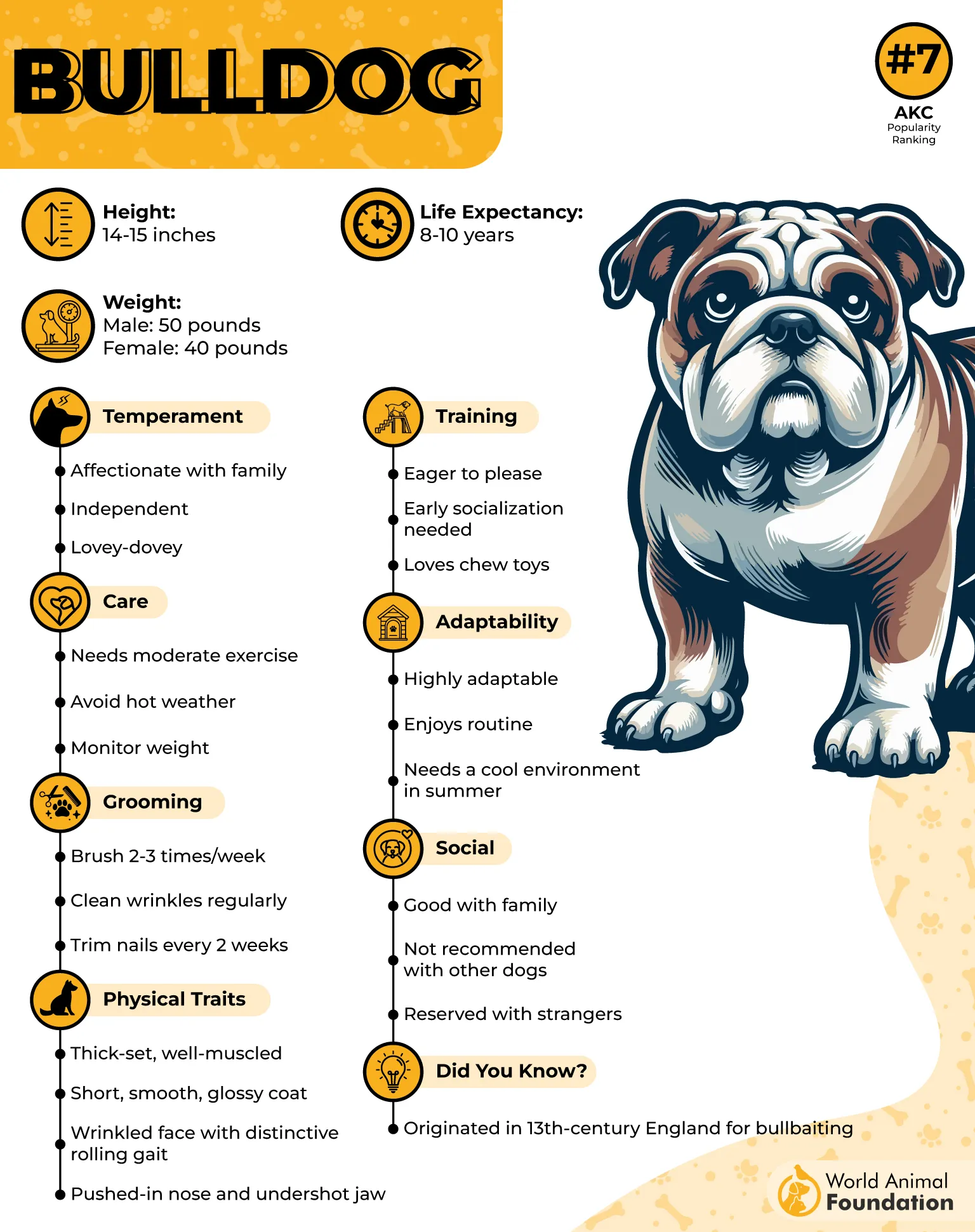
The Easygoing Dog with Low Prey Motivation
Unlike active hunters, this breed shows minimal interest in chasing moving targets, preferring a relaxed lifestyle. Its natural instincts lean more toward companionship than pursuit, making it less reactive to small animals.
Its calm and steady temperament allows it to remain composed in environments where other dogs might become overly stimulated. Even when curious, it rarely has the stamina or drive to engage in extended chasing behavior.
Bulldogs enjoy light activity but are not suited for intense exercise due to their short muzzle and breathing limitations. Gentle walks and short play sessions are enough to keep them content and healthy.
Deeply loyal and people-focused, they form strong bonds with their families while maintaining a laid-back attitude.
Fact: Bulldogs were originally bred for bull-baiting but later developed into calm and devoted companion dogs.
8. Pug
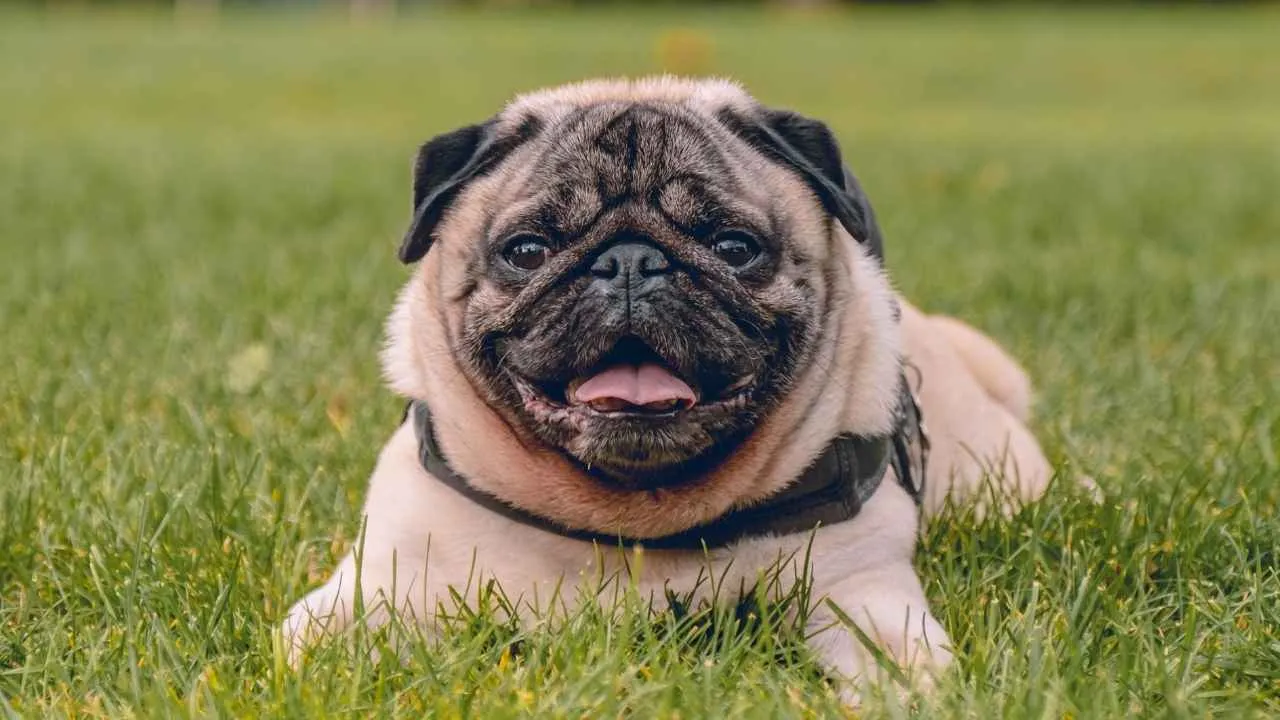
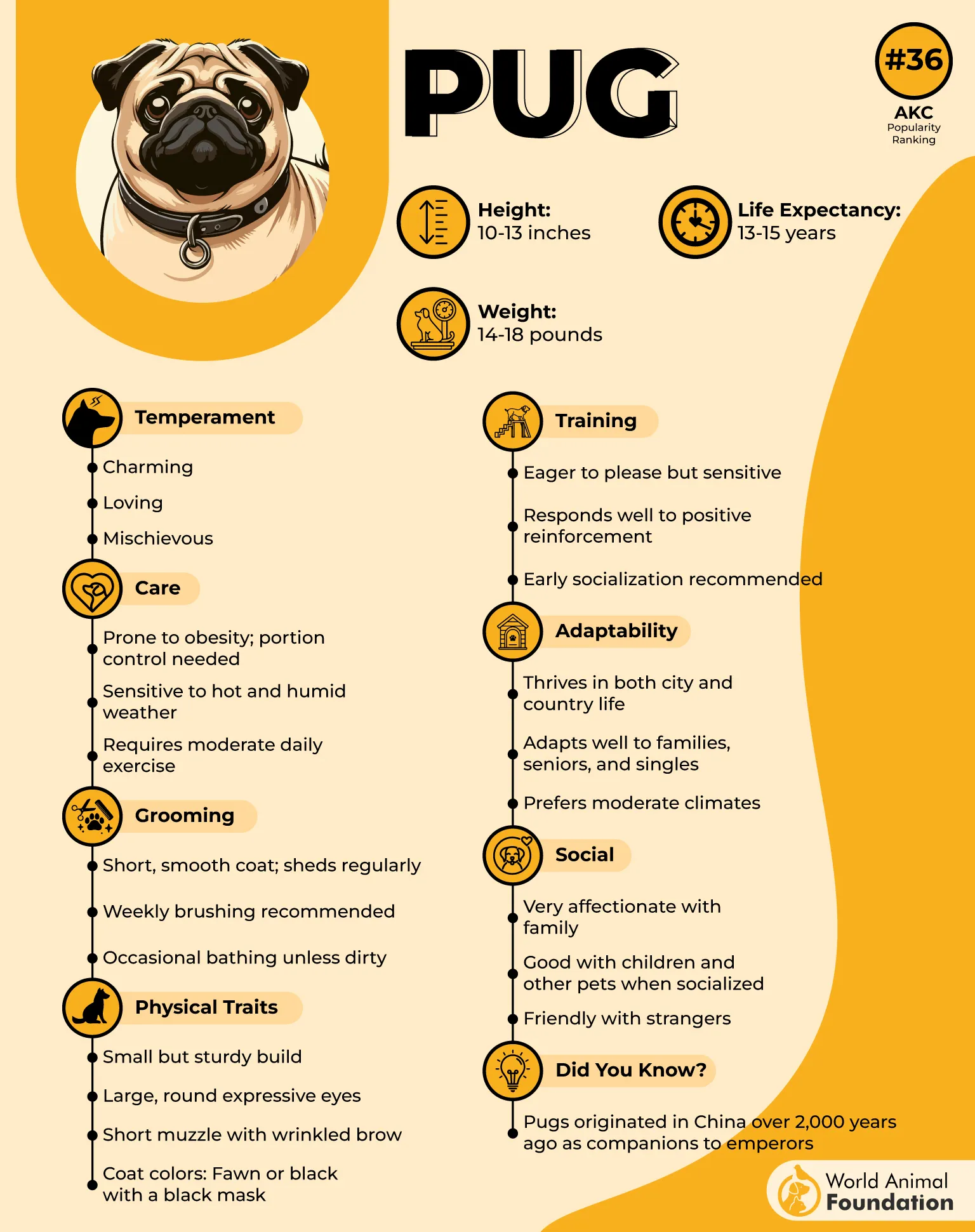
The Pug, sometimes referred to as the Chinese Pug, is a compact toy breed known for its wrinkled face, curled tail, and large expressive eyes. Originating in China and later adored in European royal courts, it is valued for its charming personality and sturdy small frame.
A Relaxed Breed That Prefers Observation Over Chase
Unlike more driven breeds, the Pug shows little desire to pursue fast-moving animals, often choosing to observe rather than react. Its instincts lean toward curiosity rather than active chasing, making it easygoing in most environments.
While playful and fond of light games, its interest in chasing is short-lived and lacks intensity. Even when engaged, it tends to approach movement with a relaxed attitude rather than focused pursuit.
Its brachycephalic structure limits stamina, encouraging gentle activity instead of vigorous exercise. This physical trait naturally reduces any strong prey-driven behavior.
Highly affectionate and people-oriented, the Pug prefers companionship and comfort over instinctive tasks. Its cheerful and sociable nature makes it more interested in bonding than hunting.
Fact: The Pug was introduced to Europe by Dutch traders and quickly became a favorite among royal courts for its affectionate and entertaining personality.
9. Maltese
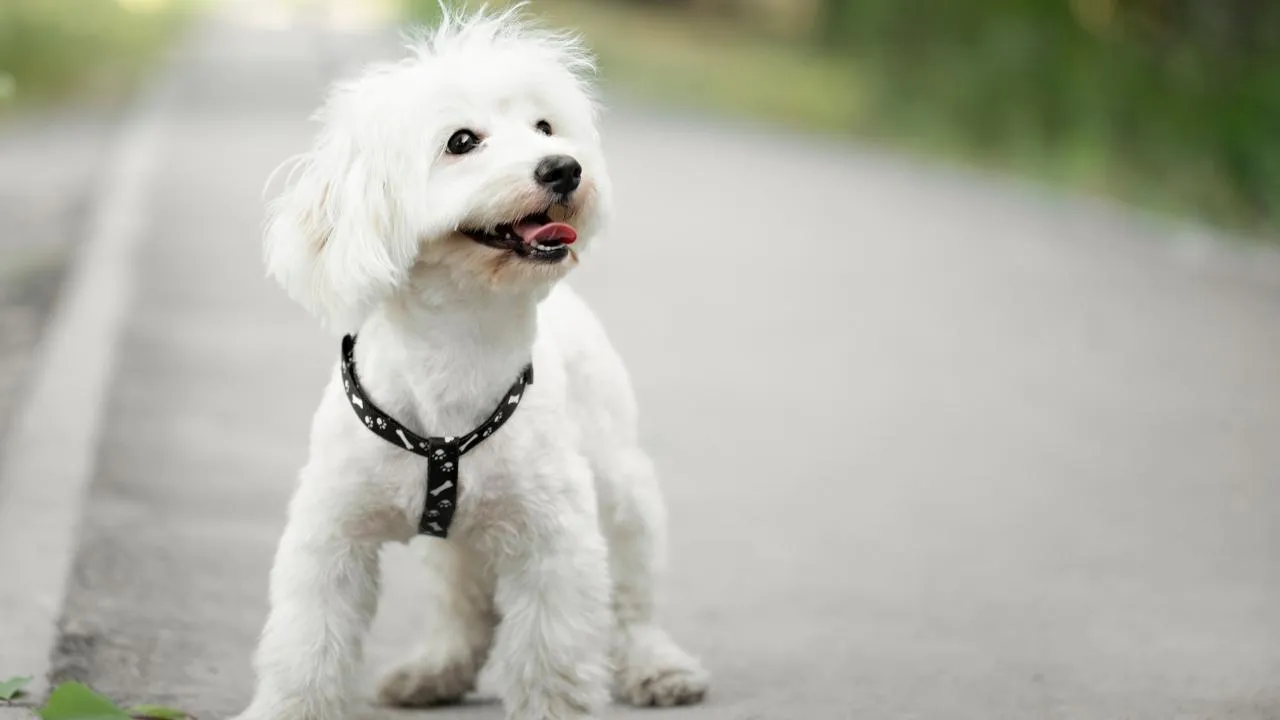
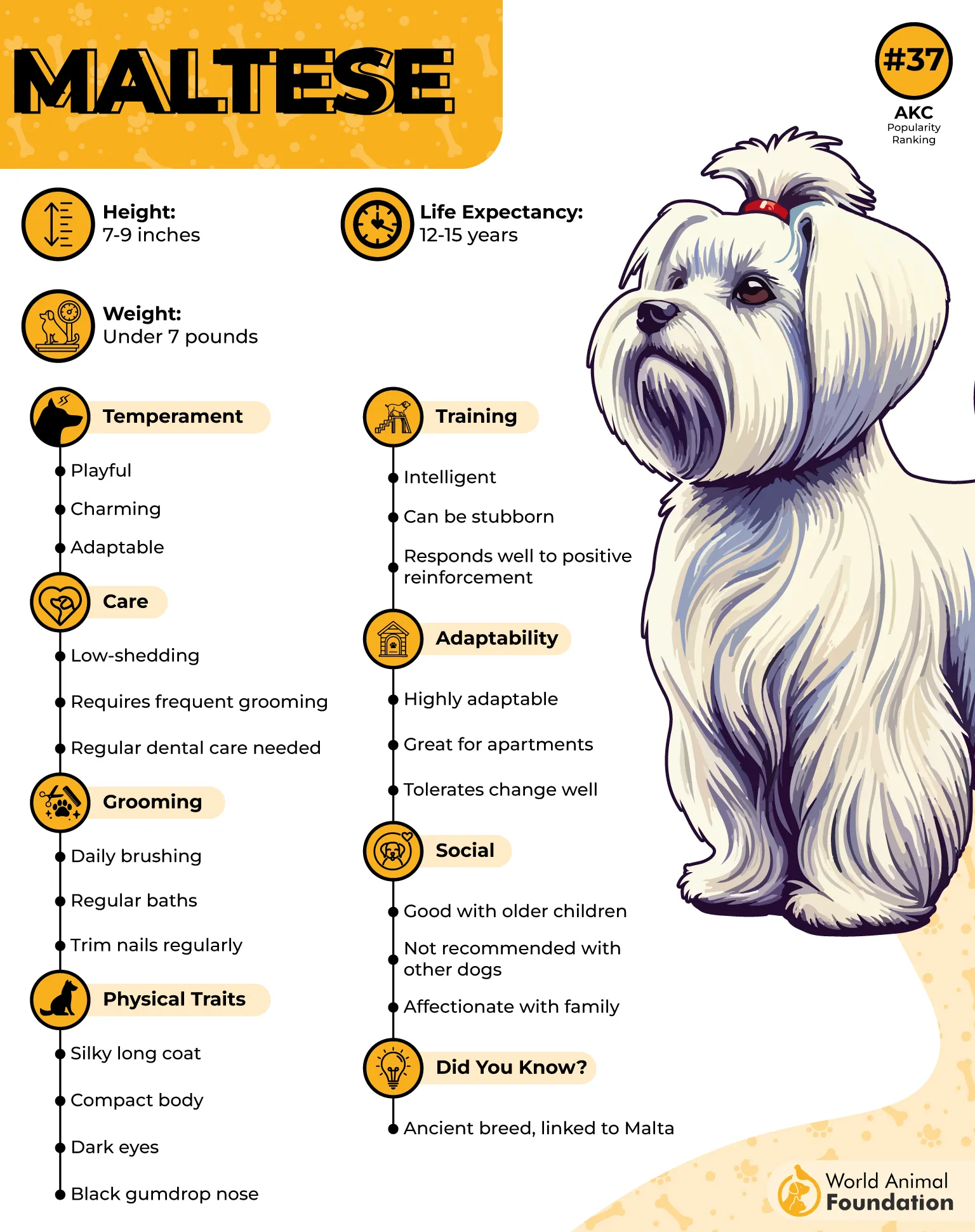
The Maltese, sometimes known as the Maltese Lion Dog, is a refined toy breed admired for its long, silky white coat and compact frame. Originating from the Mediterranean island of Malta, it has long been treasured as an elegant companion with a lively personality.
The Gentle Companion with Minimal Hunting Instincts
Unlike many small breeds, the Maltese shows very little interest in chasing or capturing prey. Its instincts are mild, often leaning toward curiosity rather than active pursuit, making it a peaceful presence around other animals.
Even when playful, its energy is directed more toward interaction with people than tracking movement. It may notice small creatures, but it rarely develops the focused drive needed to chase them.
Highly affectionate and social, this breed thrives on companionship and prefers being close to its owner over engaging in instinct-driven tasks. Its gentle nature allows it to coexist comfortably in multi-pet households.
With moderate activity needs and a love for attention, it remains content with simple play and short walks rather than intense exercise.
Fact: The Maltese is an ancient breed that has been cherished for companionship since early Mediterranean civilizations.
10. Pekingese

The Pekingese, sometimes called the Lion Dog, is an ancient toy breed prized for its flowing coat and regal presence. Originating in China, it was once cherished by royalty and remains known for its compact build and dignified expression.
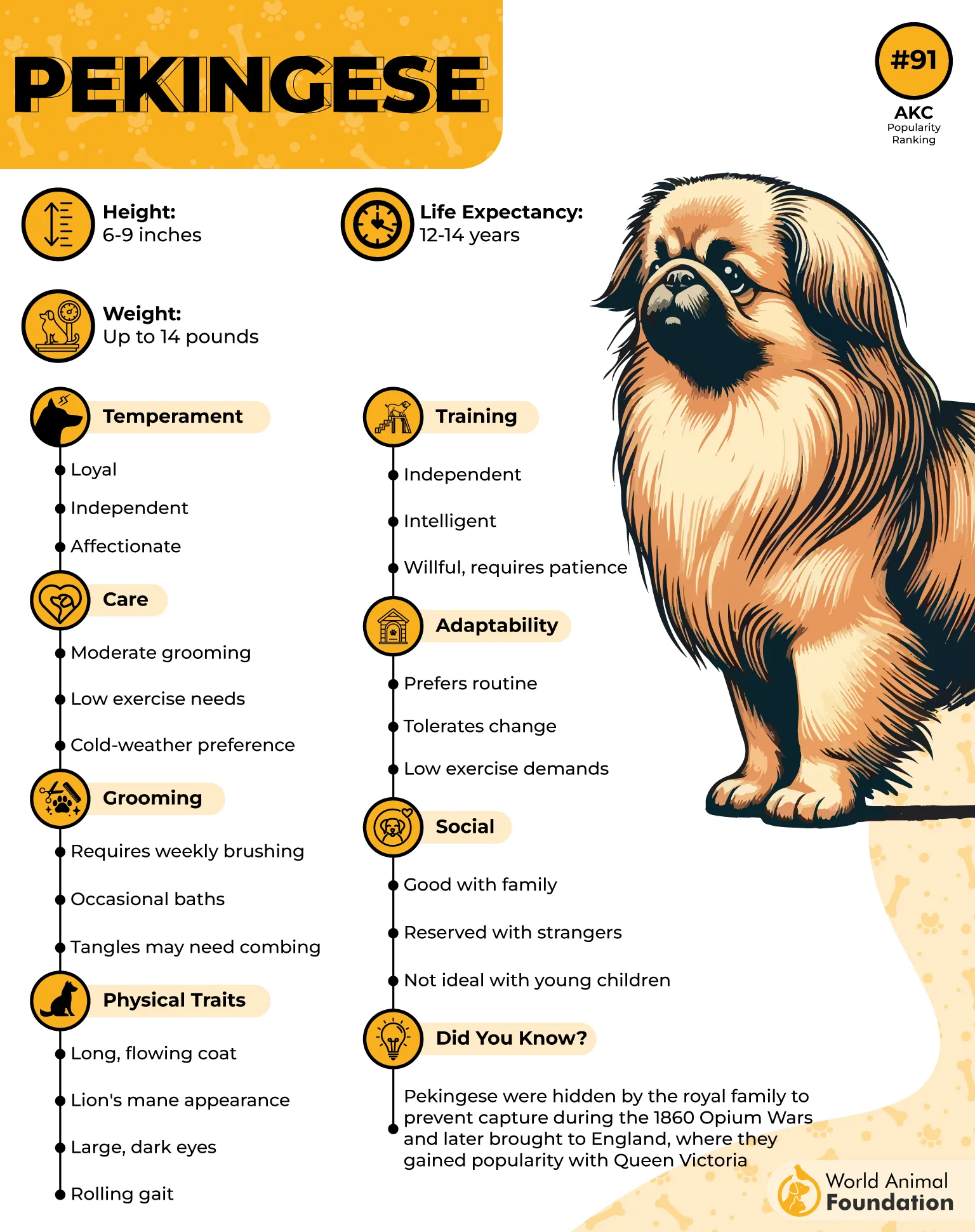
A Steady Dog That Responds Well to Training Over Instinct
Unlike highly driven breeds, the Pekingese shows limited interest in chasing or pursuing prey. Its instincts are subdued, with a greater focus on observation and guarding its surroundings rather than reacting to movement.
This breed tends to rely more on learned behavior than natural hunting drive, making consistent training especially important. With clear guidance, it becomes well-mannered and attentive without relying on instinctive reactions.
Its calm and confident personality allows it to remain composed in most situations, though it may bark to alert its family. This alertness replaces the need for strong prey motivation.
Preferring a relaxed lifestyle, the Pekingese enjoys gentle activity and close companionship over energetic pursuits. Its independent yet affectionate nature makes it more inclined toward loyalty than chase.
Fact: The Pekingese was historically revered by Chinese royalty and treated as a treasured companion within imperial courts.
Conclusion
Dog breeds driven by instinct reveal how deeply prey drive shapes behavior, energy levels, and training needs. Some breeds display strong chasing and hunting tendencies, while others are more relaxed and less reactive, making them easier to manage in everyday settings. Understanding this spectrum helps owners choose a dog that aligns with their lifestyle.
Managing a dog’s prey drive requires proper training, structure, and mental stimulation to keep dogs balanced and focused. High-drive breeds benefit from active outlets, while low-drive dogs thrive in calmer environments. By recognizing these natural instincts and working with them rather than against them, owners can build a more harmonious relationship and ensure their dog remains well-adjusted, responsive, and content.
