




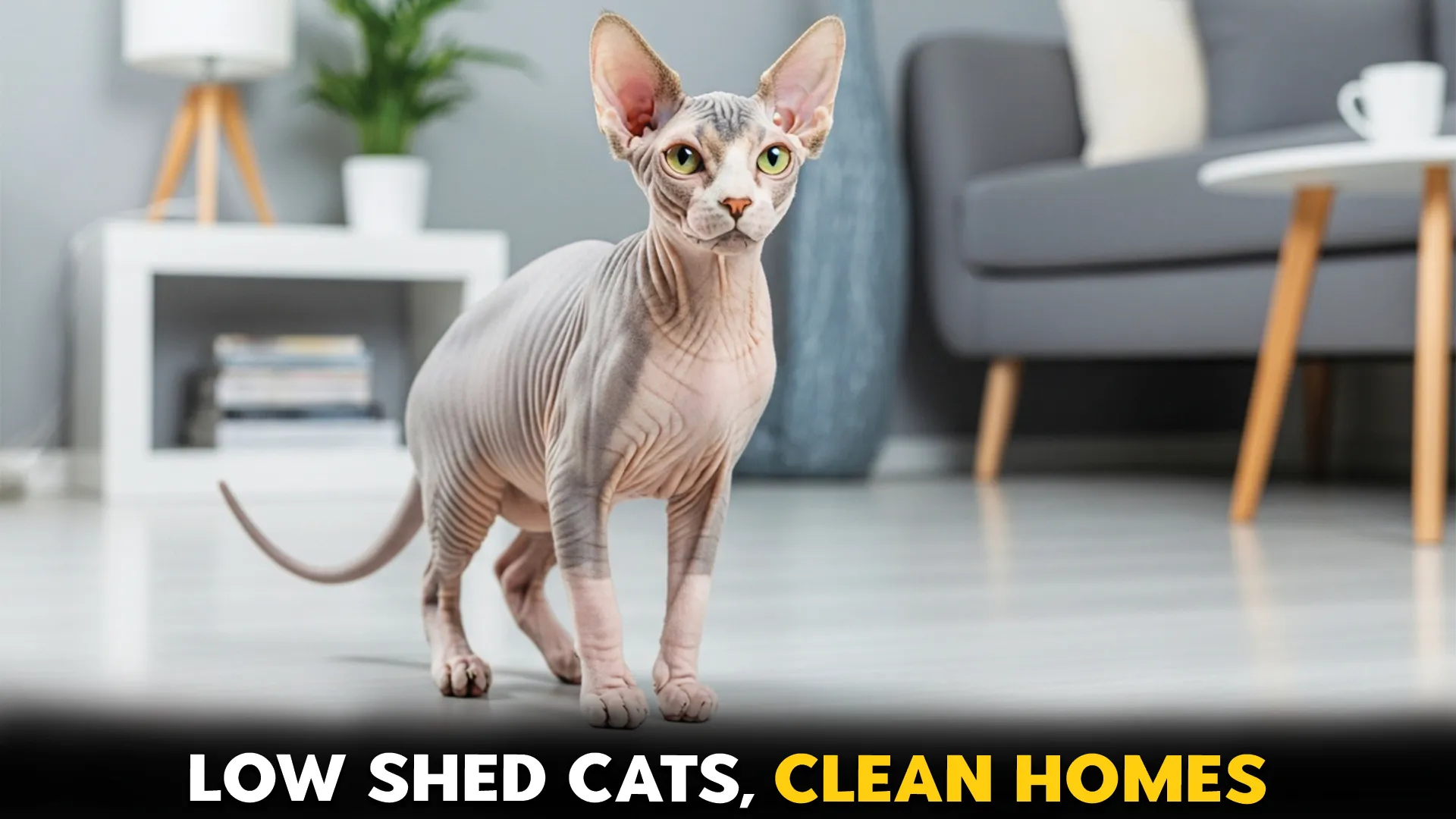
For many cat lovers, the dream of sharing life with a feline companion is often paired with a less pleasant reality—cat hair on furniture, clothes, and every sunlit surface. While no cat is completely non-shedding, some breeds release far less fur than others, making them a cleaner and more manageable choice for certain homes. Understanding shedding patterns can help you choose a cat that better fits your lifestyle.
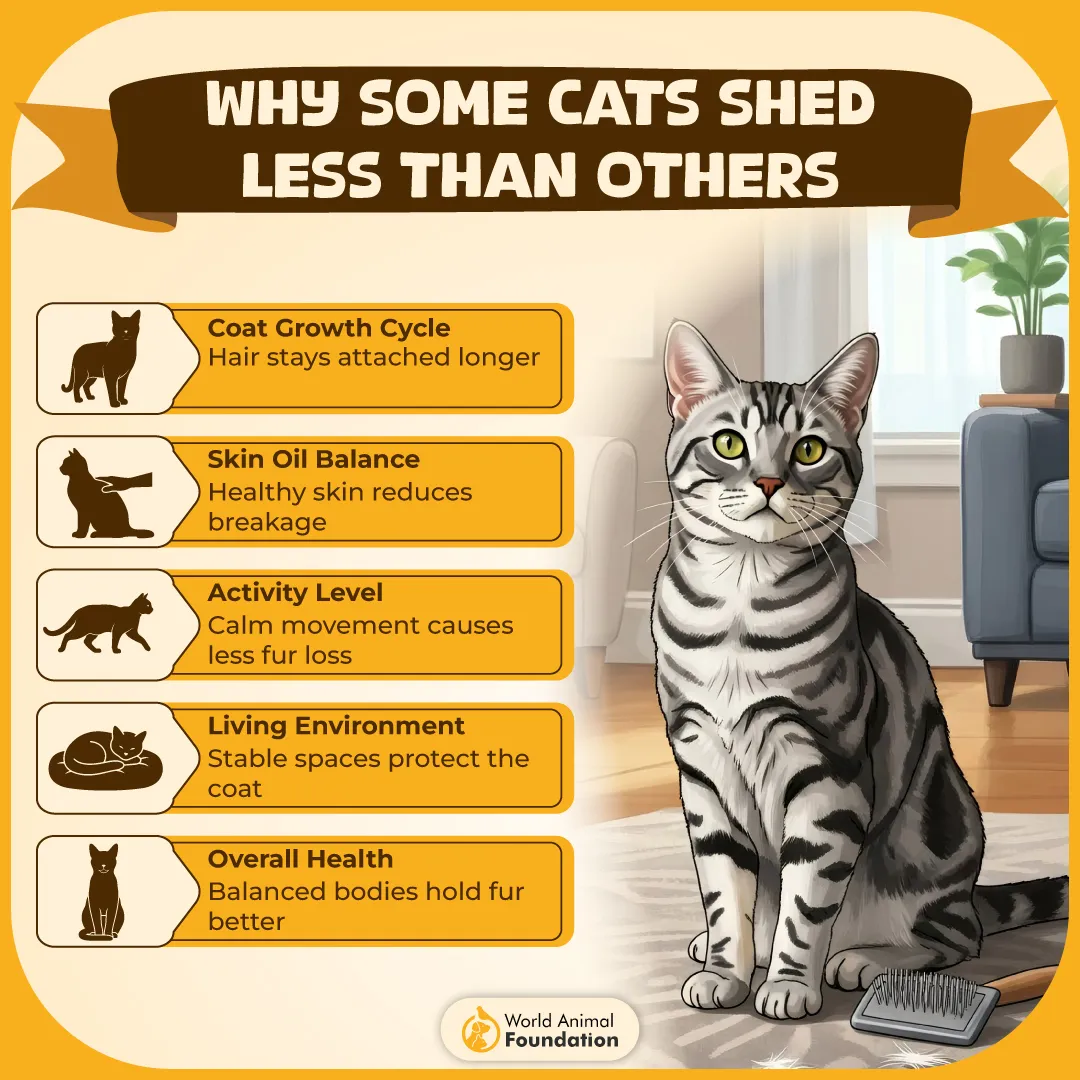
So why do some cats shed less than others? Coat type, hair length, and even grooming habits play a big role. Breeds with short, curly, or fine coats tend to hold onto loose fur instead of spreading it around your home. It’s also important to understand what “low-shedding” really means: these cats still lose hair, but at a much lower rate than heavy-shedding breeds.
Low-shedding doesn’t always equal hypoallergenic, but fewer loose hairs often mean fewer allergens drifting through the air. For people who prefer a tidier home—or have mild sensitivities—these cats can be a practical and rewarding choice.
Cat Breeds That Don’t Shed Much
1. Sphynx
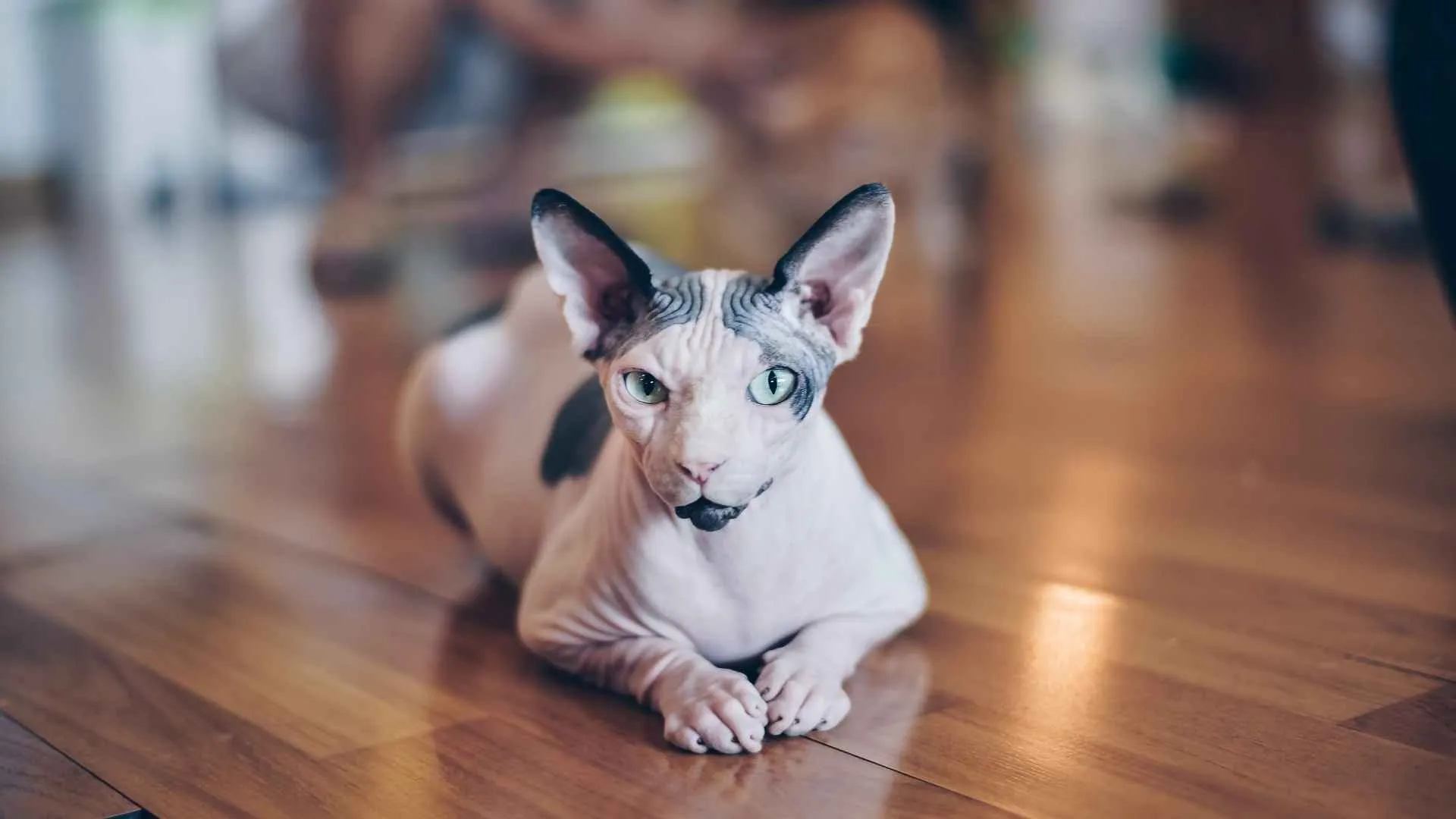
According to Britannica, the Sphynx cat is a breed of hairless domestic cat that originated from two spontaneous genetic mutations in short-haired cats.
The Sphynx, sometimes called the Canadian Hairless, is instantly recognizable for its nearly fur-free body and warm, suede-like skin. This breed exists thanks to a natural genetic mutation and is prized by owners seeking cats that don’t shed much.
Because the Sphynx lacks a traditional coat, it produces no loose fur around the home, making it a standout low-shedding option. Some individuals have a fine peach-fuzz layer, but it’s minimal and doesn’t accumulate on furniture or clothing like typical cat hair.
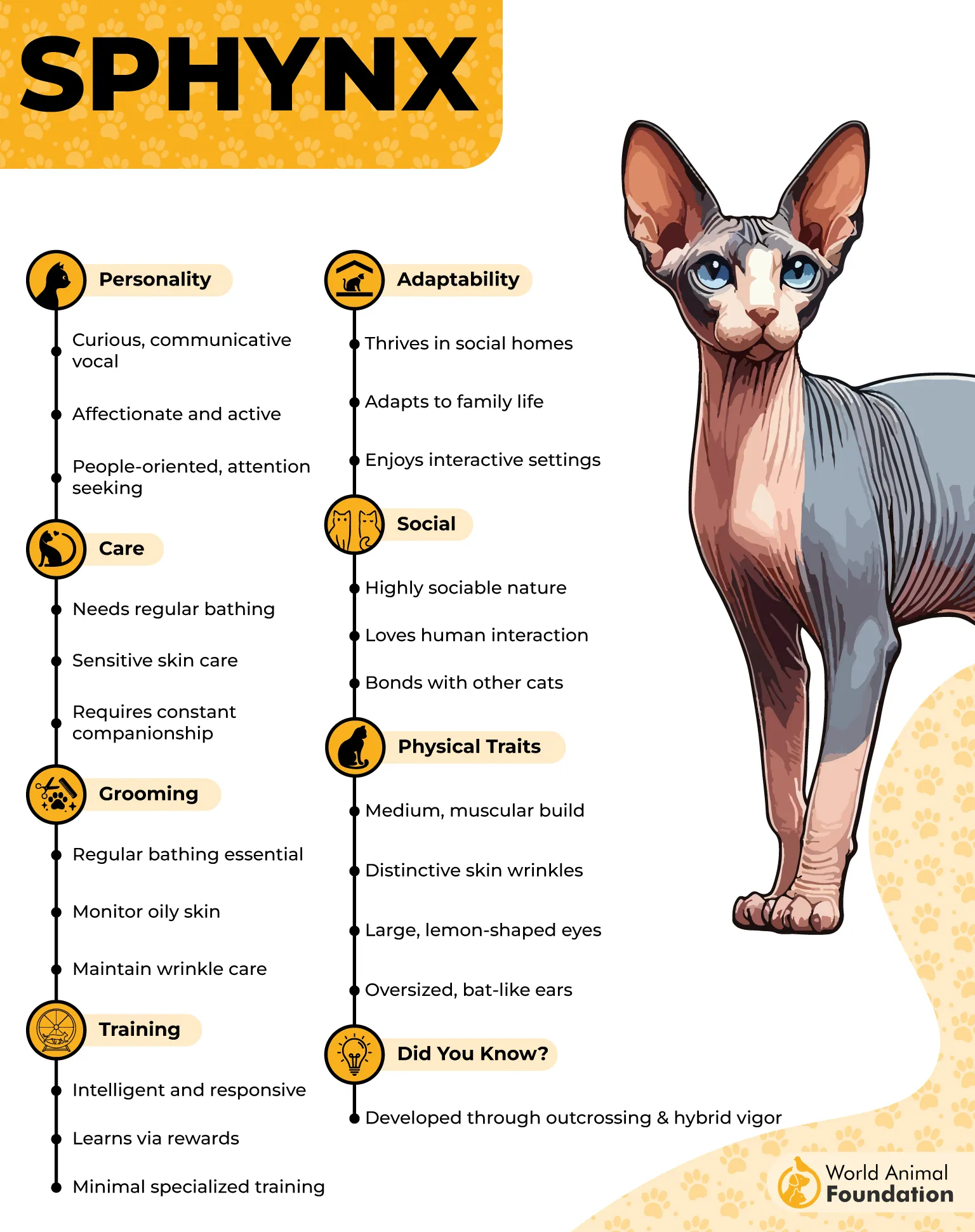
Instead of shedding, skin oils build up directly on their body, so regular wiping or bathing replaces brushing. This trade-off appeals to people who prefer less vacuuming while still enjoying a sleek, muscular, medium-sized cat with a broad chest and expressive features.
Beyond shedding, the Sphynx is famously social and affectionate, often described as “dog-like” in devotion. They thrive on human contact, enjoy warmth, and love to cuddle, making them ideal for indoor companionship where minimal fur is a priority.
Fact: Despite being hairless, many Sphynx cats have a soft peach-like fuzz and require weekly bathing because skin oils aren’t absorbed by fur.
2. Cornish Rex
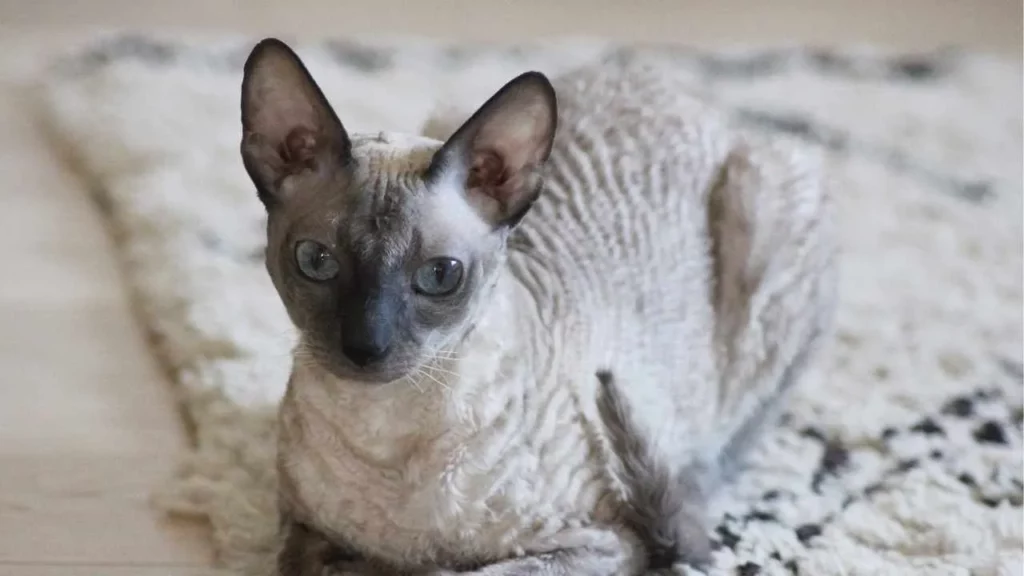
According to PetMD, the Cornish Rex is noted for its eye-catching appearance, characterized by a short, curly or wavy coat, angular facial structure, high cheekbones, and large ears that distinguish it from other cat breeds.
The Cornish Rex, sometimes simply called the Rex cat, is instantly recognizable for its ultra-fine, curly coat and slim, elegant frame. Originating in Cornwall, England, this breed is the result of a natural genetic mutation that created its signature rippled fur and lightweight build.
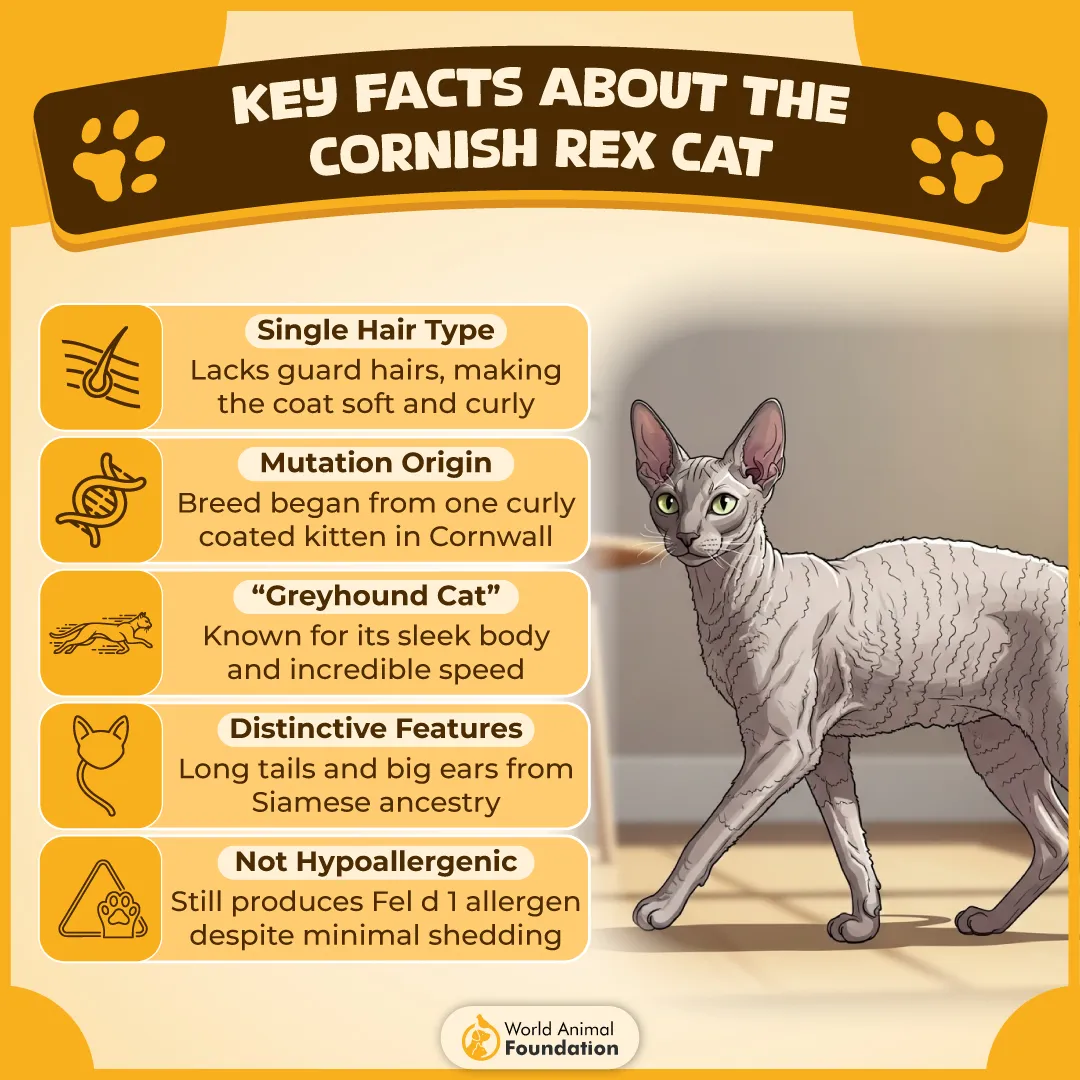
What makes the Cornish Rex ideal for a low-shedding list is its unique coat structure. Lacking guard hairs and having only a soft undercoat, it releases far less loose fur than most breeds. The short, wavy coat lies close to the body, meaning minimal hair ends up on furniture or clothing.
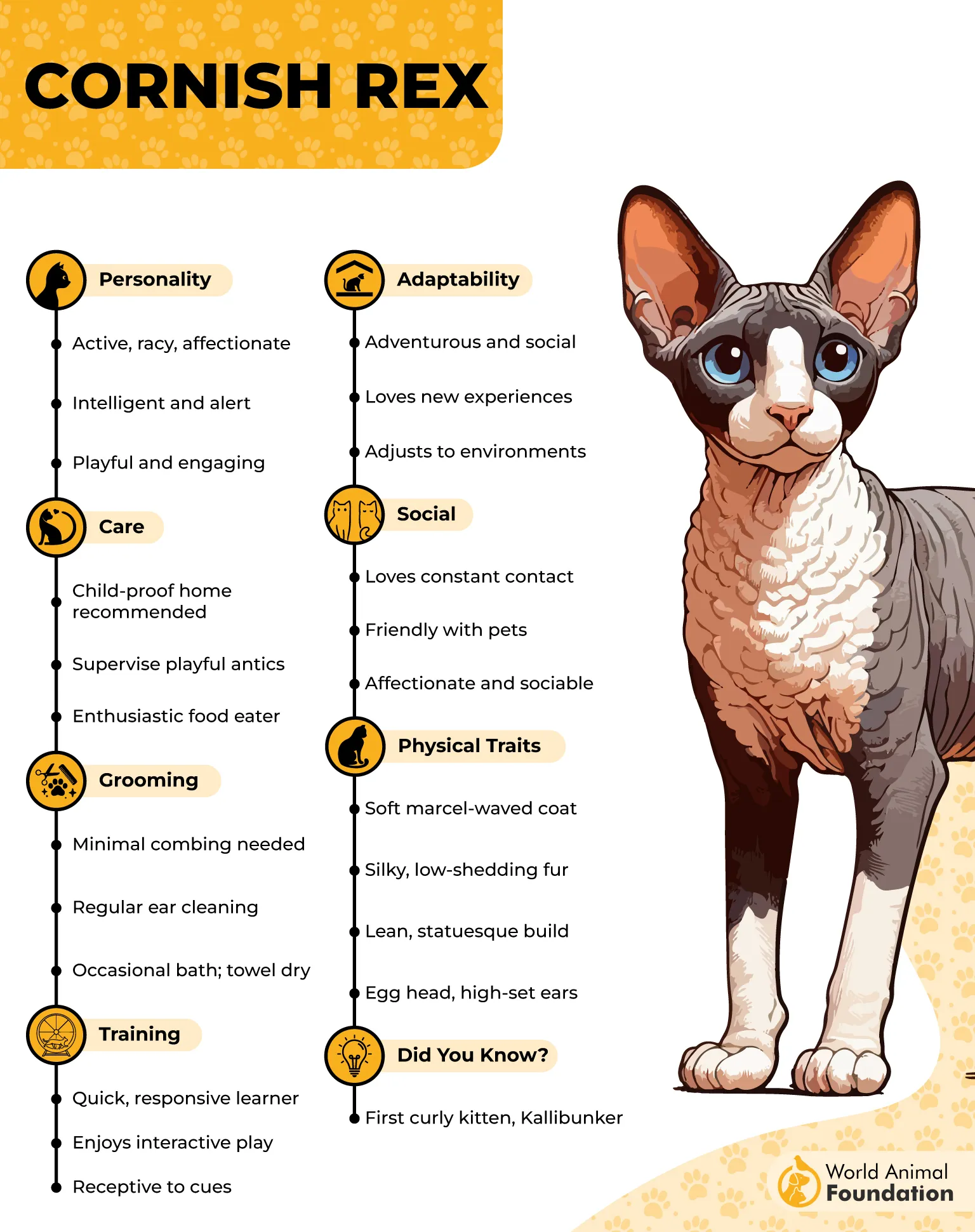
Beyond low shedding, this breed thrives on interaction. Cornish Rex cats are playful, curious, and deeply social, often following family members from room to room. Their high energy and love for games make them engaging companions, especially in homes with other pets or active owners.
Despite their delicate look, they are hardy and easy to maintain. Grooming needs are minimal, usually requiring only occasional hand grooming to preserve the coat’s texture.
Fun fact: the Cornish Rex originated in 1950 from a single curly-coated kitten named Kallibunker, the foundation of the entire breed.
3. Russian Blue
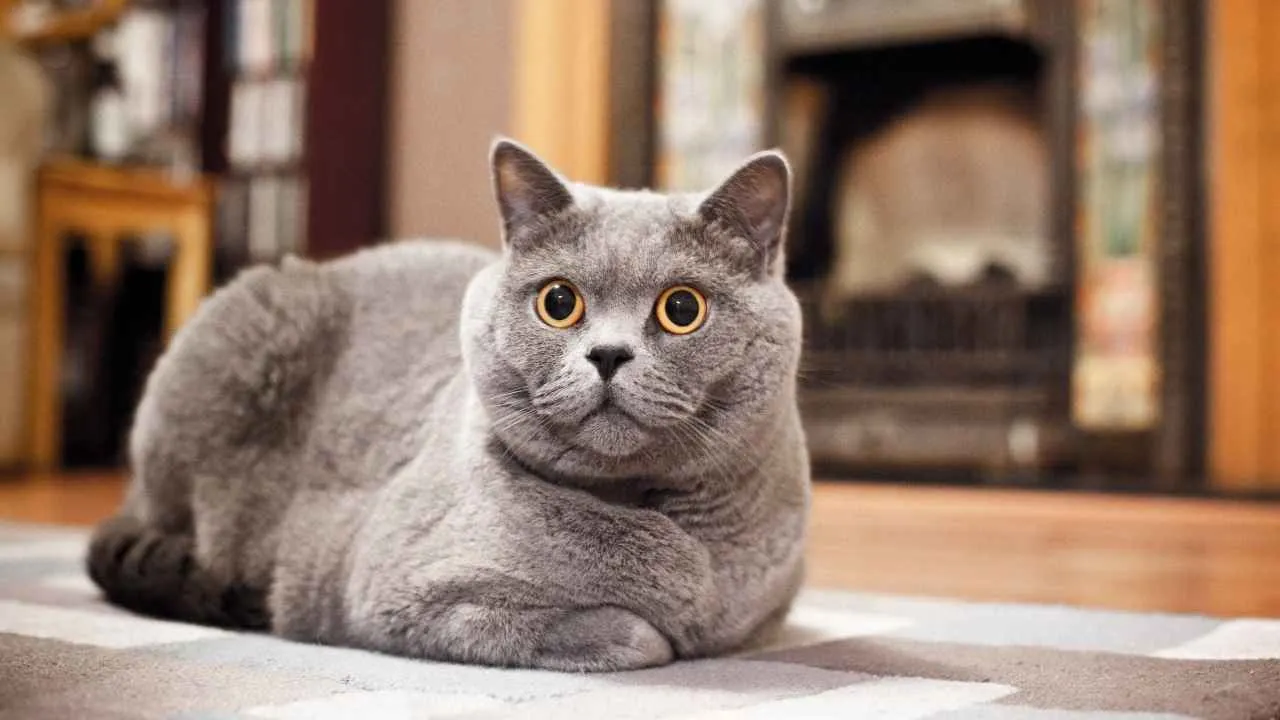
The Russian Blue, also known as the Archangel Blue, is a refined and elegant cat famous for its silvery-blue coat and vivid green eyes. This medium-sized breed has a graceful, muscular build and a naturally calm, observant demeanor that suits quiet homes well.
According to WebMD, Russian Blue cats are characterized as an intelligent and playful breed.
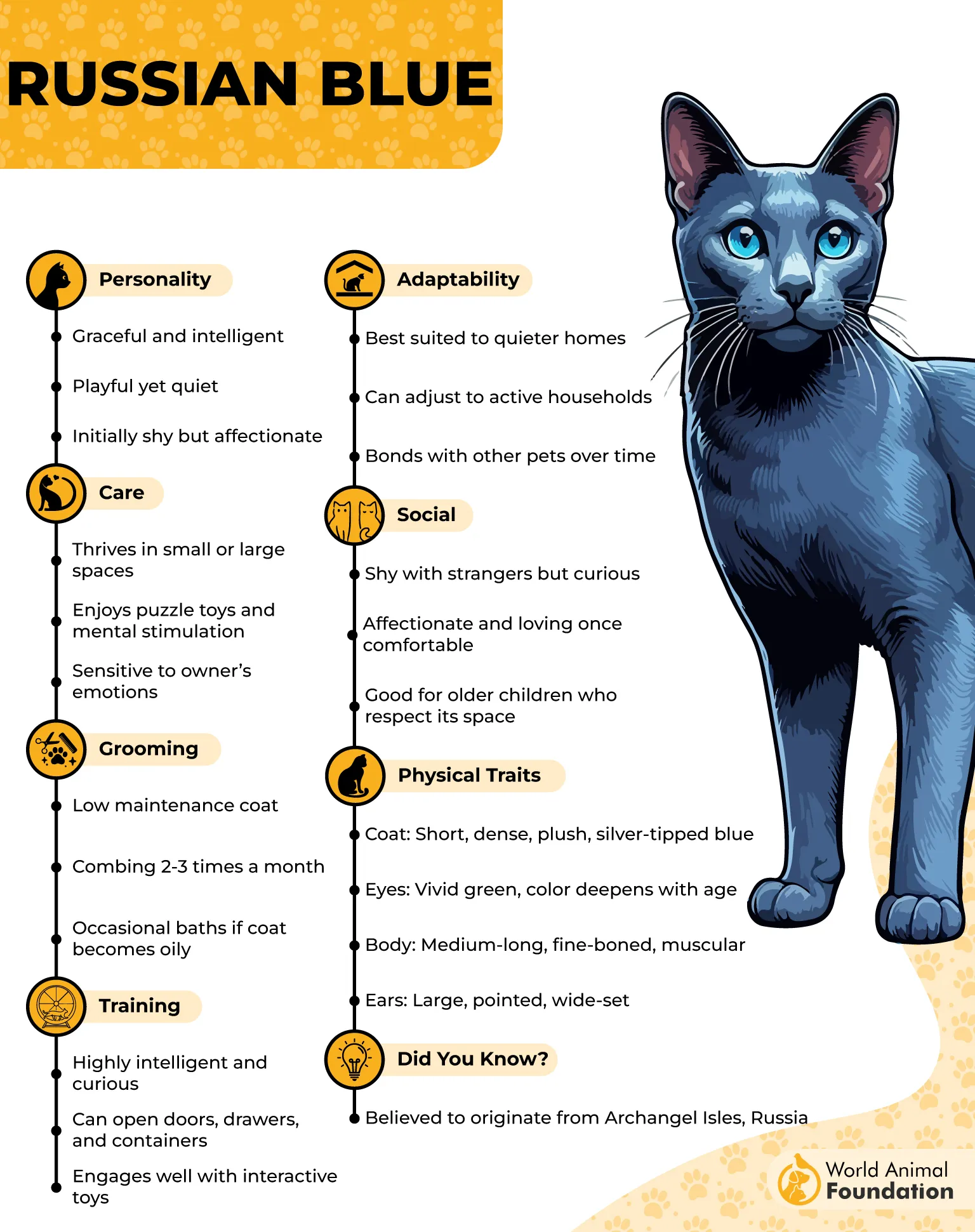
What truly sets the Russian Blue apart in low-shedding discussions is its dense double coat. While they do shed, loose hair tends to stay trapped within the plush fur rather than spreading around the house, making cleanup noticeably easier for owners.
Shedding typically happens only once or twice a year and lasts just a few weeks, which places this breed among the easiest to manage coat-wise. Minimal grooming is needed, and a simple weekly brushing is usually enough to keep their coat smooth and tidy.
Beneath the soft fur, Russian Blues are surprisingly strong and athletic, with long legs built for quick movement.
Fact: Russian Blues usually shed over a short two- to three-week period only once or twice a year, according to breed observations.
4. Devon Rex
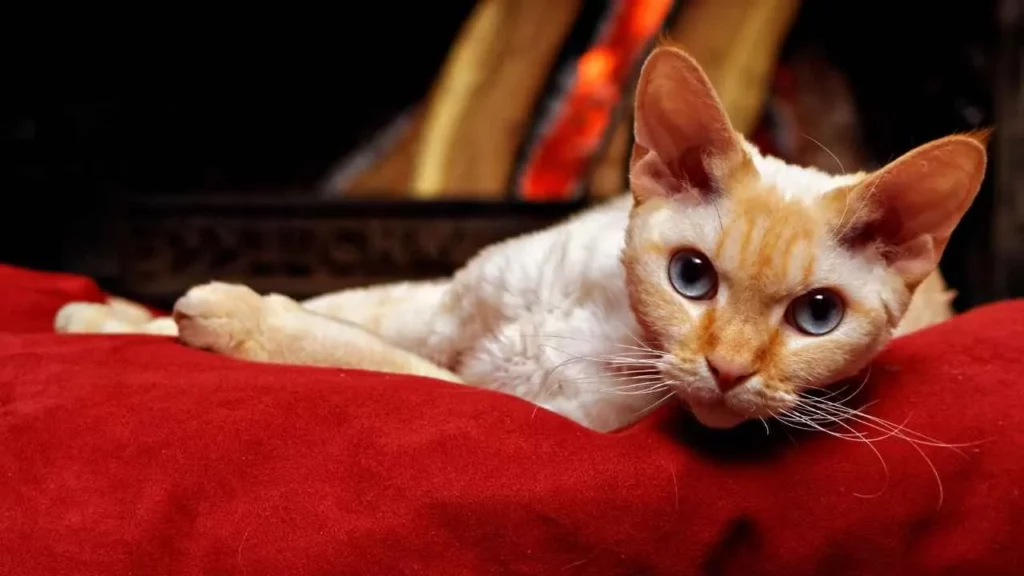
The Devon Rex, sometimes nicknamed the “pixie cat,” stands out for its oversized ears, short muzzle, and softly curled coat. This breed’s sparse, wavy fur gives it a whimsical look while naturally limiting how much hair ends up around the home.
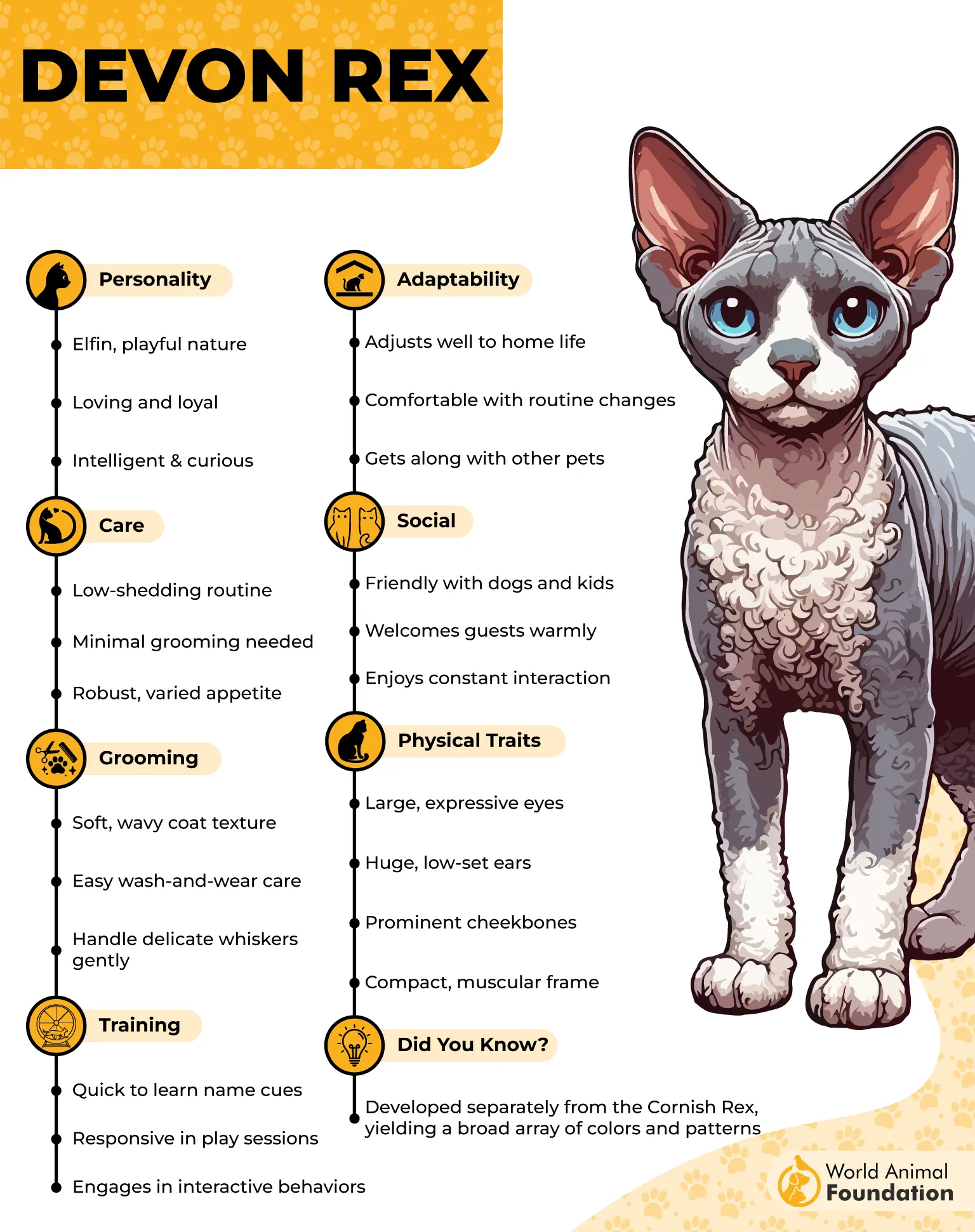
That unique coat structure is exactly why the Devon Rex is often chosen by people seeking cats that don’t shed much. With fewer guard hairs than most breeds, loose fur tends to stay put instead of spreading across furniture and clothing.
Beyond low shedding, Devon Rex cats are famously affectionate and thrive on human interaction. Their playful, dog-like loyalty keeps them close to their owners, often perched on shoulders or curled up under blankets rather than roaming off alone.
Despite their delicate appearance, they’re energetic climbers that enjoy vertical spaces and interactive play. Because their thin coats offer little protection, indoor living suits them best.
Fun fact: Devon Rex cats shed less due to their unusual fur structure, which lacks the typical layers found in most cats.
5. Siamese
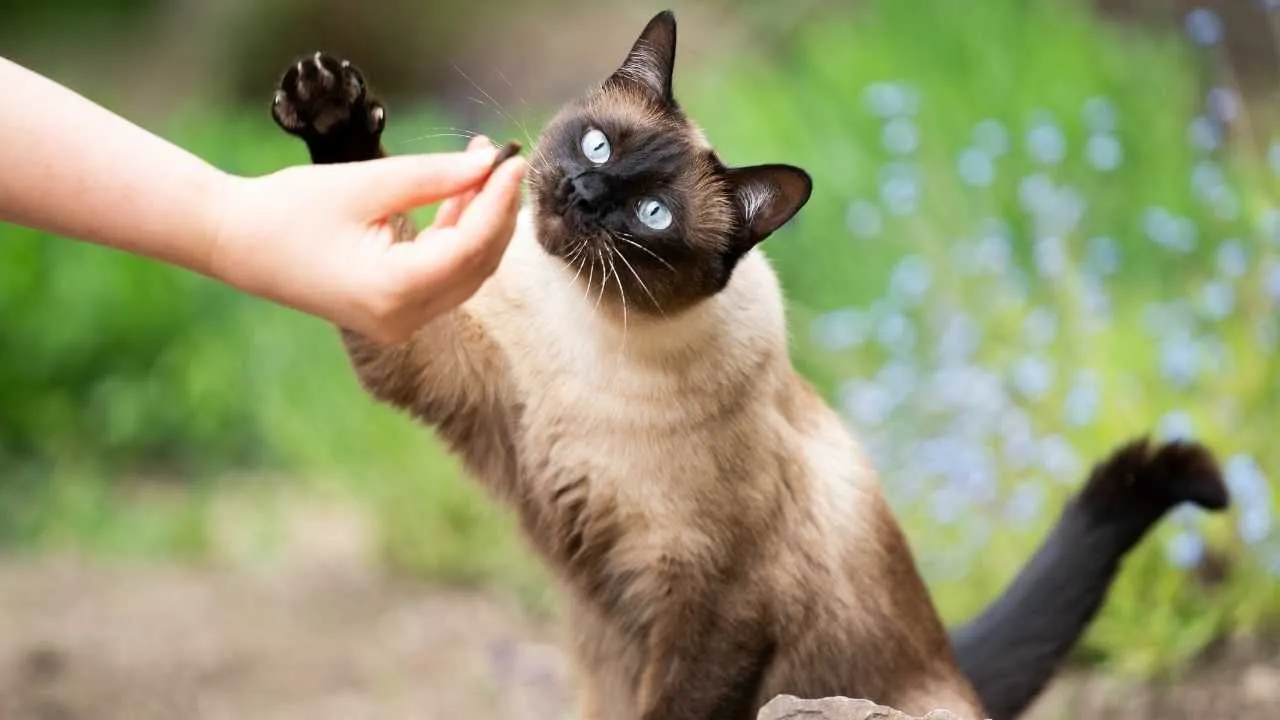
The Siamese, also known as the Thai cat or Wichien Maat, is a sleek, elegant breed instantly recognized by its pointed coloration and striking sapphire-blue eyes. With a slim frame and short, glossy coat, this breed is naturally tidy and well-suited to low-shedding households.
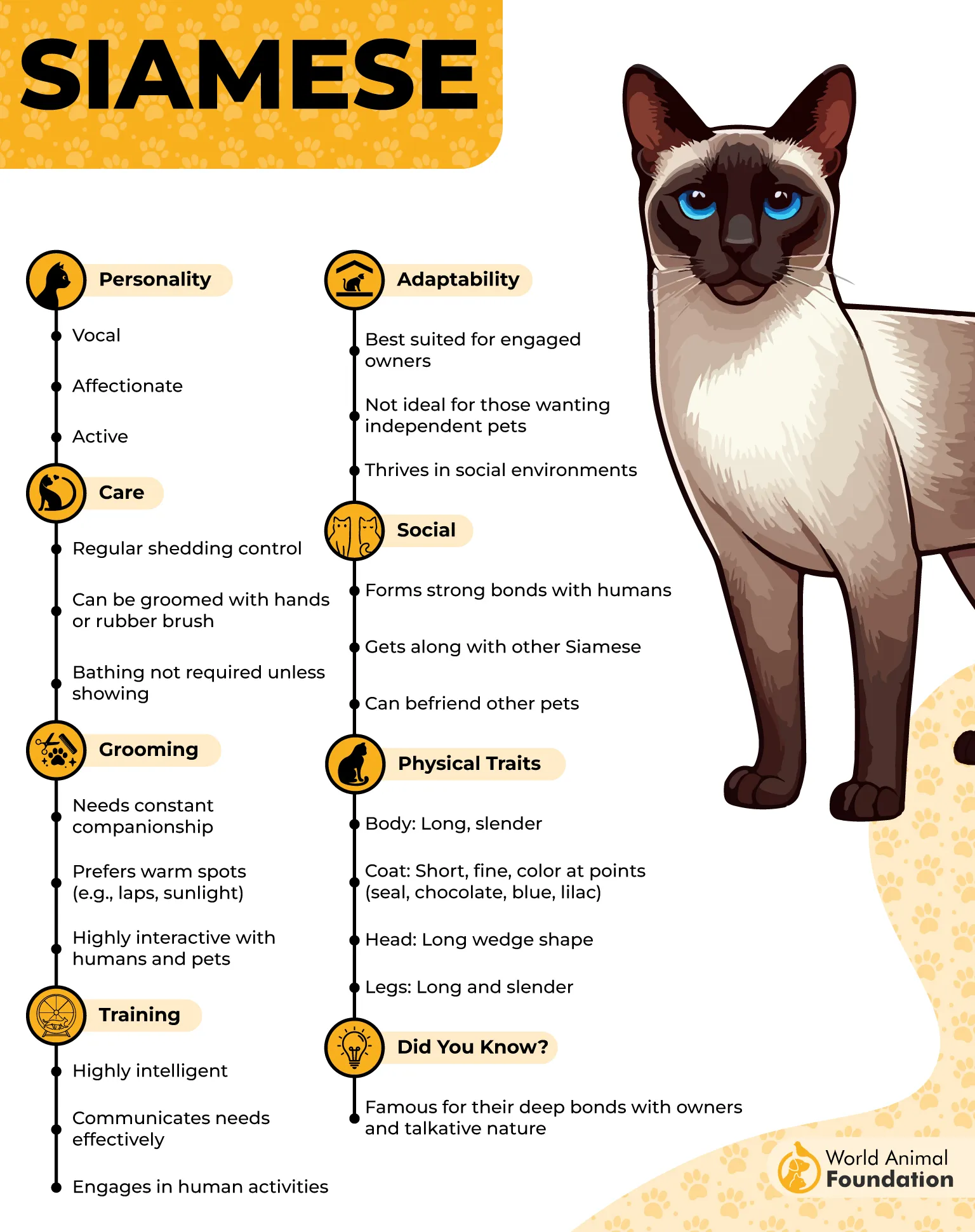
That fine coat lies close to the body, meaning loose hairs don’t easily spread around the home. Compared to fluffier breeds, Siamese cats shed very little and rarely leave fur on furniture or clothing, making them a smart choice for owners seeking a cleaner living space.
Grooming needs are refreshingly simple. A quick weekly pass with a fine-tooth comb removes dead hair and keeps shedding to a minimum. Unlike long-haired relatives such as the Balinese, Siamese coats don’t mat and don’t require frequent baths or intensive upkeep.
Beyond their coat, Siamese cats are social, vocal, and deeply attached to their people, often requesting attention during grooming time.
Fact: The Siamese’s short, fine coat sheds minimally and typically only needs weekly brushing to stay sleek.
6. Oriental Shorthair
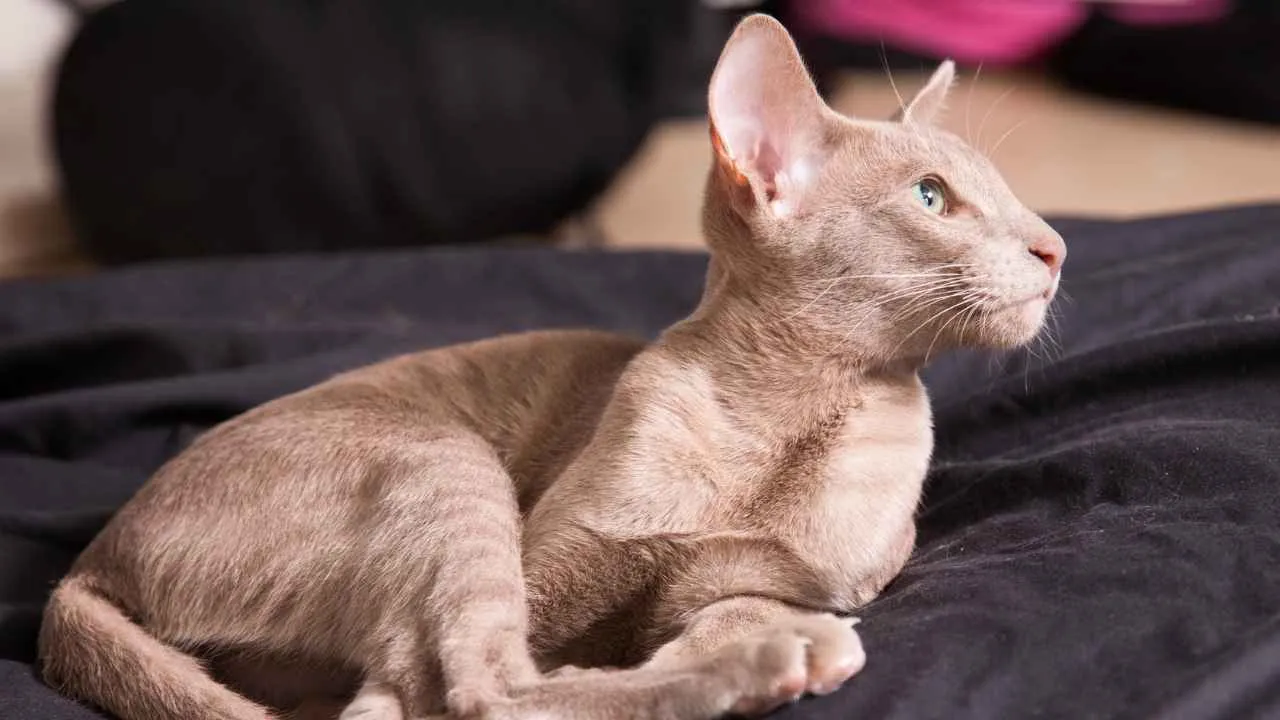
The Oriental Shorthair—also known as the Rainbow Cat, Ornamental, or Honking Cat—is a close relative of the Siamese, sharing the same long, lean body and sleek appearance. This breed is instantly recognizable by its oversized ears, angular features, and fine, short coat that lies flat against the skin.
That smooth, silky coat is a big reason Oriental Shorthairs are considered a low-shedding breed. With minimal loose fur and no dense undercoat, they release far less hair into the home, making grooming simple and quick with just an occasional brush.
Despite their minimal fur, these cats bring maximum personality. Orientals are intelligent, curious, and deeply people-oriented, often following their owners from room to room. They thrive on interaction and mental stimulation, preferring active play and companionship over being left alone.
Their energetic, vocal nature makes them entertaining household members, and their easy-care coat suits owners who want less cleanup without sacrificing charm.
Fun fact: Oriental Shorthairs are often considered “hypoallergenic” because they typically produce lower levels of the Fel d 1 protein linked to allergies.
7. Burmese

The Burmese, sometimes referred to as the American Burmese or European Burmese, is a compact, muscular cat with a glossy, satin-like coat that naturally sheds very little. Originating from cats brought to the U.S. from ancient Burma in the 1930s, this breed combines elegance with a tidy appearance that suits low-shedding households.
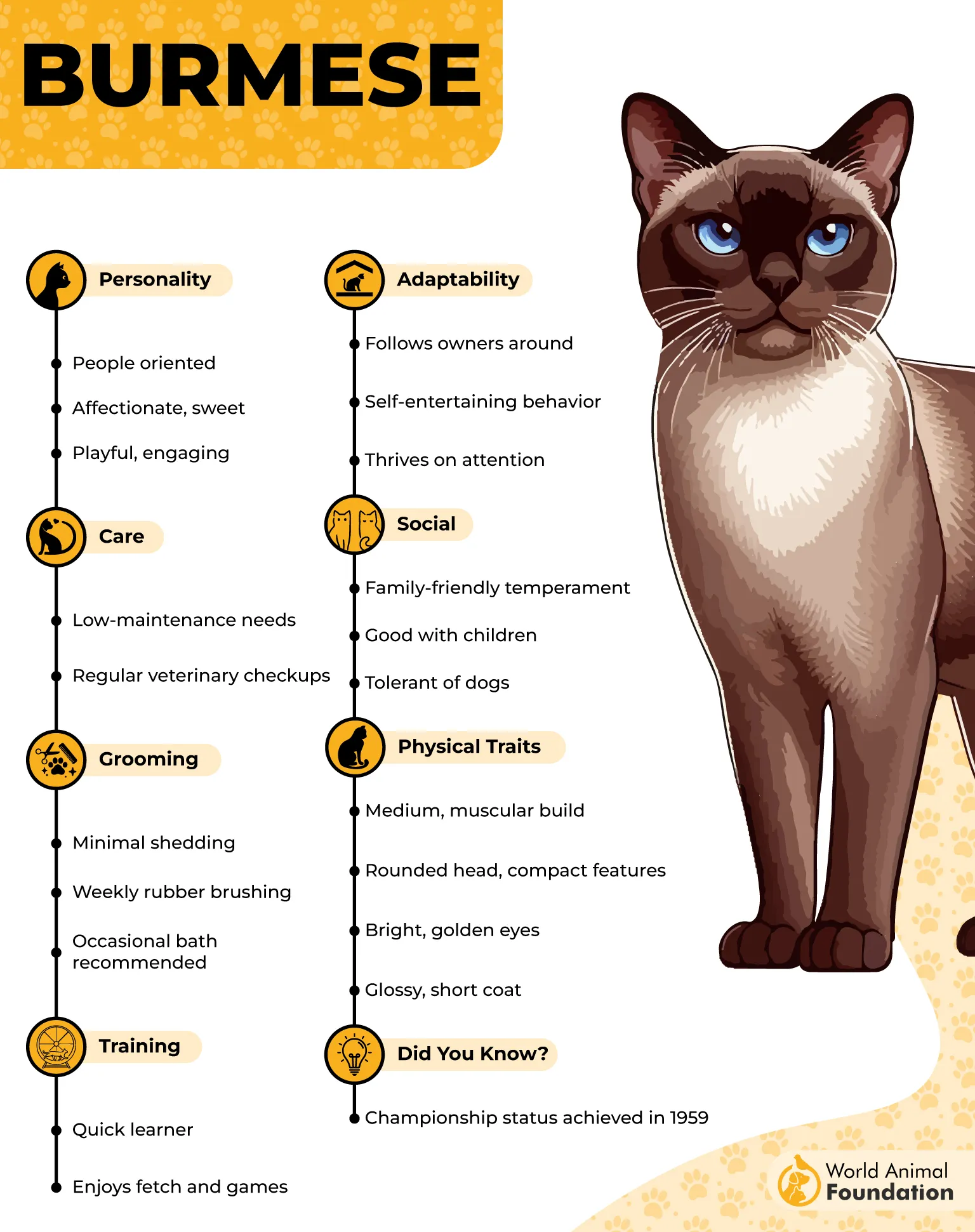
One reason Burmese cats fit perfectly into a list of cats that don’t shed much is their short, fine coat. With fewer loose hairs than many other breeds, they maintain a clean, polished look year-round and typically need only light weekly grooming to keep their coat sleek and shiny.
Beyond coat care, Burmese are affectionate, people-oriented companions who love being involved in daily life. Their dog-like loyalty, playful energy, and willingness to interact mean they’re often close to their humans rather than leaving fur scattered around the home.
Despite their soft appearance, Burmese cats are sturdier than they look and adapt well to family life, including homes with other pets.
Fun fact: According to the Cat Fanciers’ Association, Burmese are known for having low shedding while remaining highly affectionate and sociable.
Conclusion
Choosing cats that don’t shed much can make daily life noticeably easier, especially for pet parents who want less cat hair on furniture and clothing. While no cat is completely free of cat fur, low-shedding cats—often short-haired cats or certain hairless cat breeds—release far less loose hair and cat dander into the home. Because cats produce allergens mainly through their saliva and skin oils, reduced shedding can help limit how much allergen spreads through a cat’s coat, benefiting many allergy sufferers.
That said, individual cats still vary, even within the same breed. Some long-haired breeds may surprise owners with minimal shedding, while others with a dense coat may need occasional brushing, especially during a winter coat change. Whether you choose an adorable cat with a sleek coat or explore hairless breeds, understanding shedding helps reduce allergic reactions and keeps furry felines more comfortable for everyone.
