




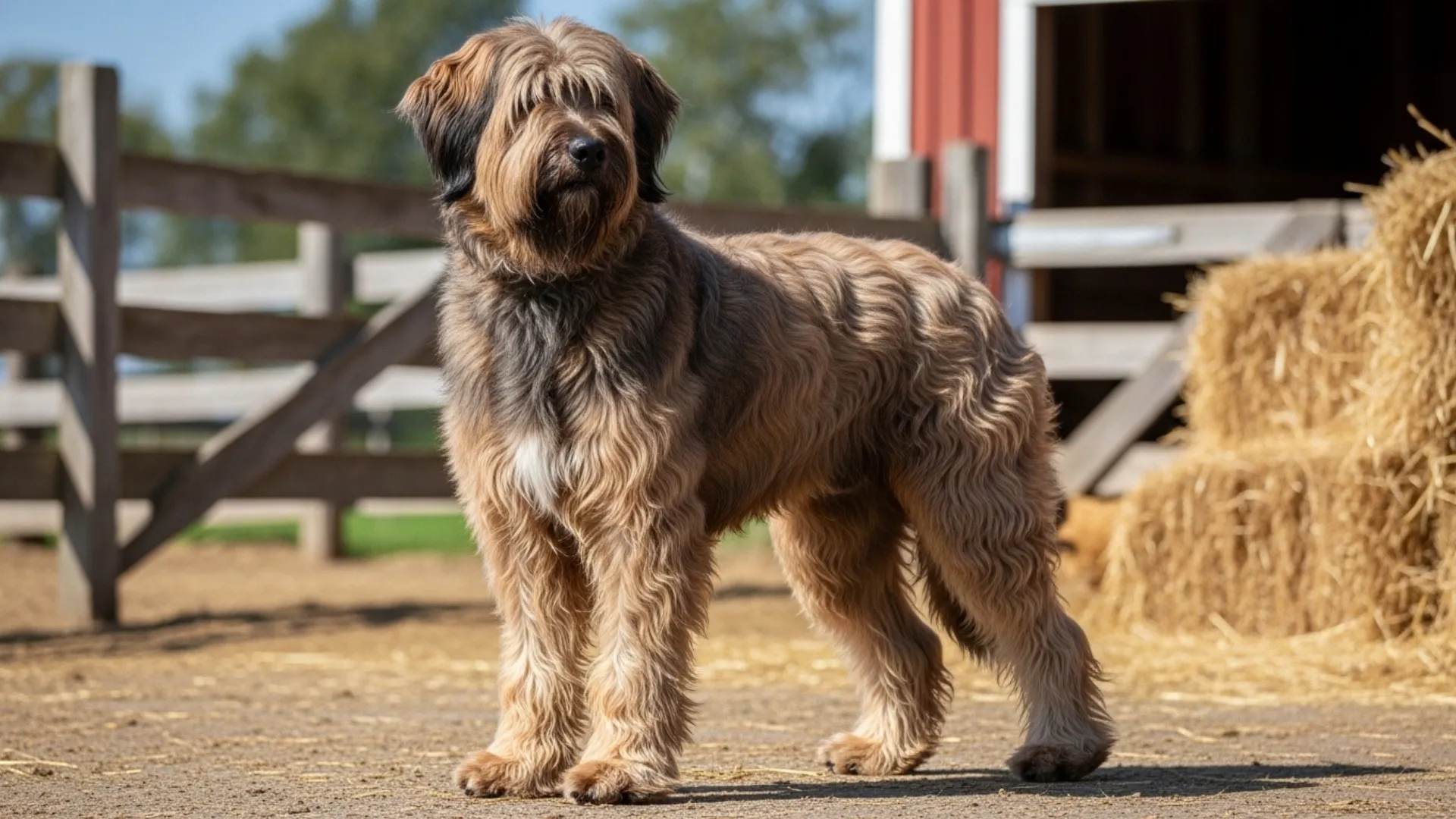
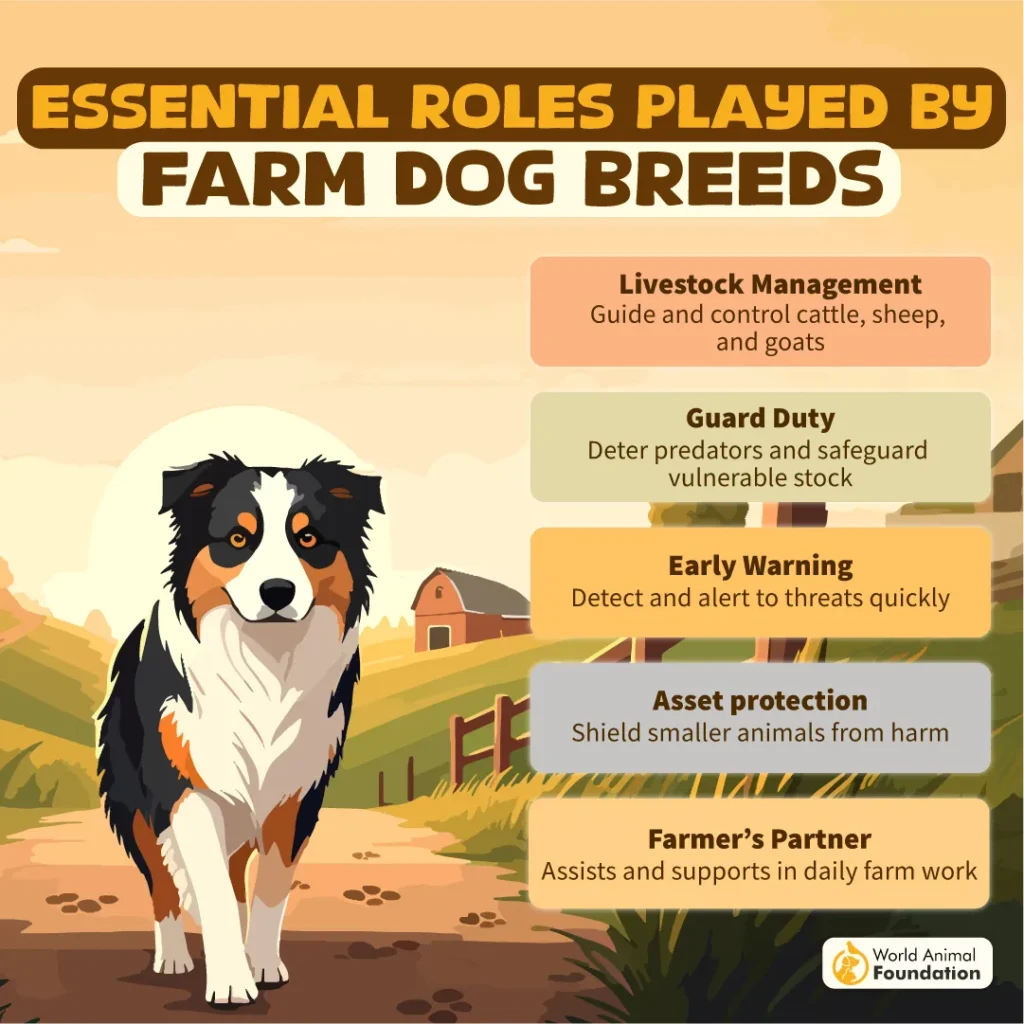
Having a fun-loving entertainer and a cuddly partner at home looks cute until a serious threat arrives, especially when you own farmland. Farm life is not easy at all. It is made peaceful by adding an essential piece to it, a farm dog breed.
We are not dealing with couch potatoes here. Farmers do not pick a dog that you would pick a throw pillow. They need a dog that wakes up ready to work, handles rough terrain without complaining, and still keeps the family safe at night. A dog that is built like a brick house but thinks it is a chess player.
As a legendary dog trainer, Cesar Millan once said, ‘Dogs do not rationalize, they feel.’ And the breeds on this list feel most alive when they are useful; herding cattle, patrolling property, or dragging gear across muddy fields.
These are the muscular breeds farmers genuinely swear by. Let’s meet them.
Strongest Muscular Dog Breeds Favored By Farmers
1. Briard
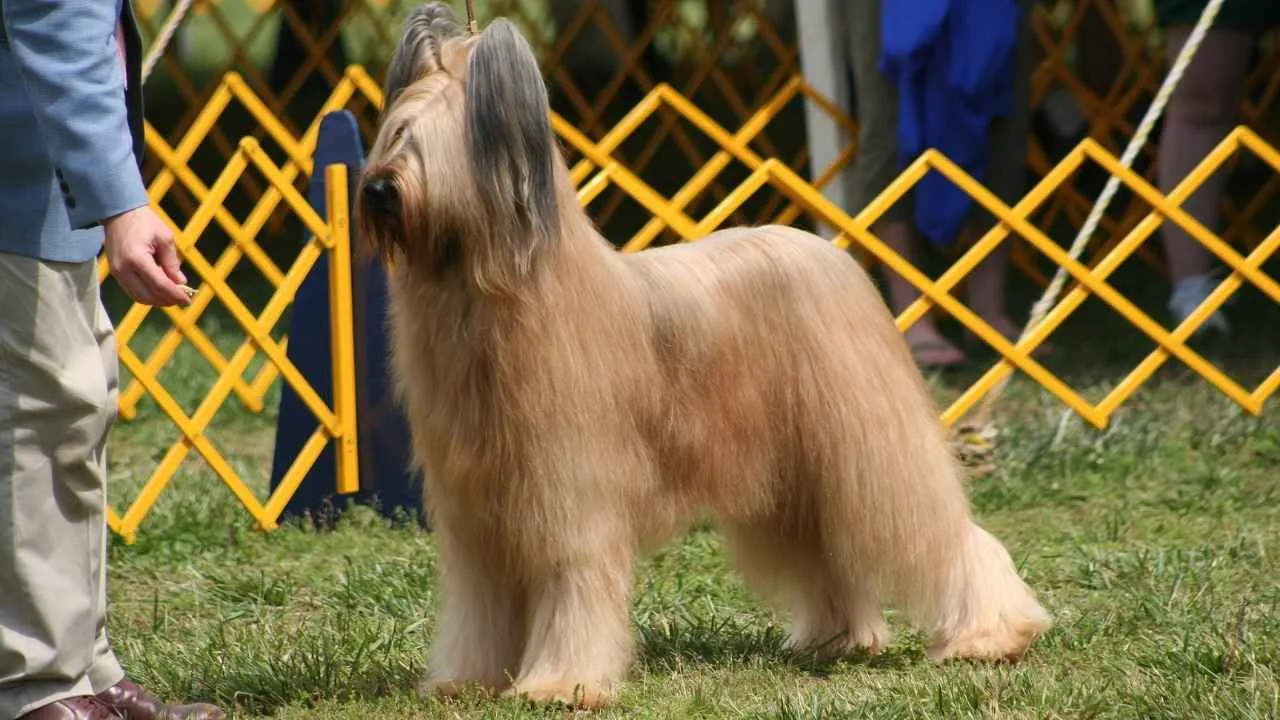
Don’t let that shaggy hairdo fool you. This medium-sized dog is a mix of intelligence, independent thinking, love, loyalty, and working dog instincts. They are known as Chien Berger de Brie (the sheepdog of Brie) because of their herding instincts first identified by the people of this region.
They are so loyal to the owner that once a dog of this breed witnessed the murder of its owner and followed the killer until the matter caught the attention of the king. The king then arranged the combat of this dog with the potential killer, and of course, the dog won, getting justice. This is how they are important to have if you want serious protection in rural settings.
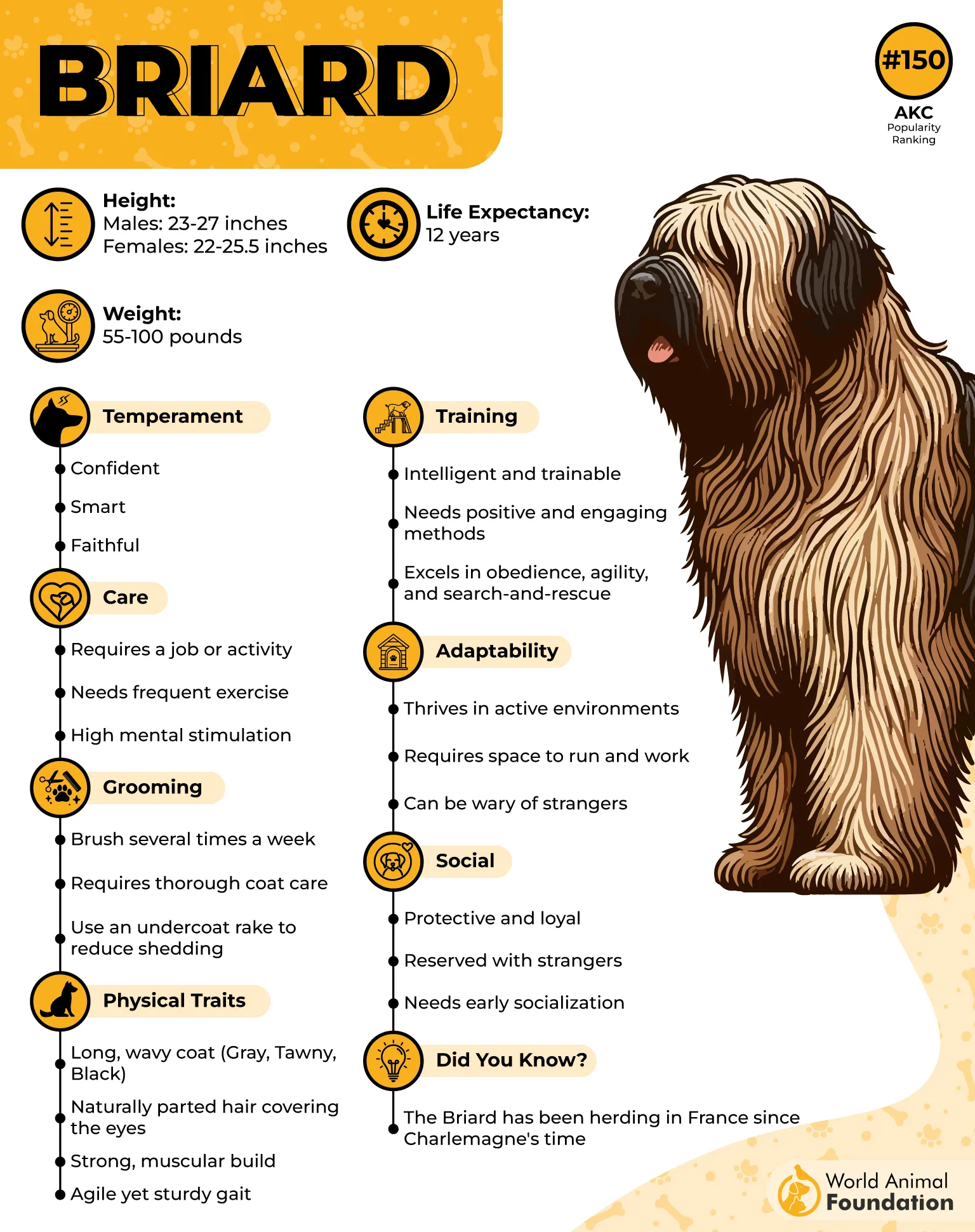
Double Declaw Advantage: Two declaws are present on each hind leg to work as extra toes. This distinctive feature allows them to firmly grip the ground or make sharp turns while herding.
Dual Purpose Working Dogs: Unlike many herding dogs, which only move the cattle, a Briard serves the purpose of guarding livestock since they were used as a war dog by the French Army during WWII.
2. Rottweiler
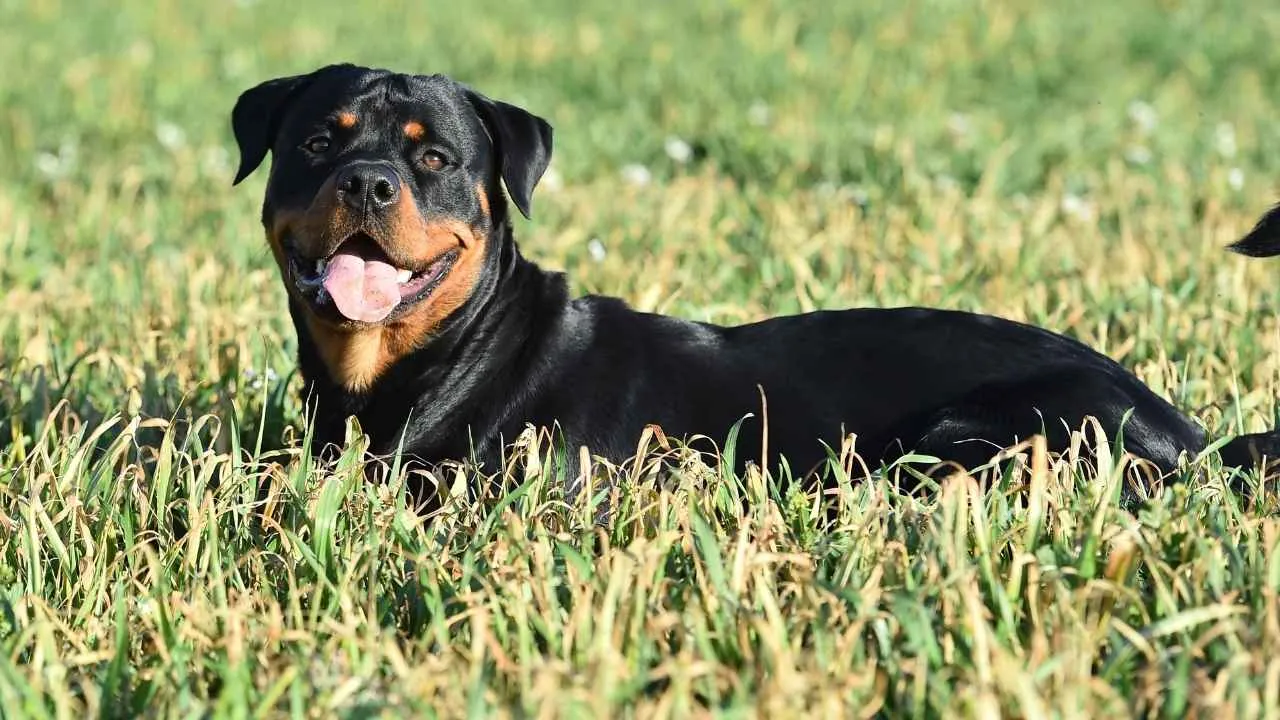
Stocky, powerful, and deliberate, farmers have trusted Rottweilers for centuries to guard farms and property. Originally developed in Ancient Rome from drover dogs to herd livestock and for farm work, the Rottweiler is real farm royalty, according to PetMD.
They are excellent watchdogs and have high intelligence. They observe the surroundings keenly and bark loudly when they sense a threat. Unlike other dogs, they physically push the cattle to herd only when needed. They form strong bonds, and that is a plus point of a livestock guardian.
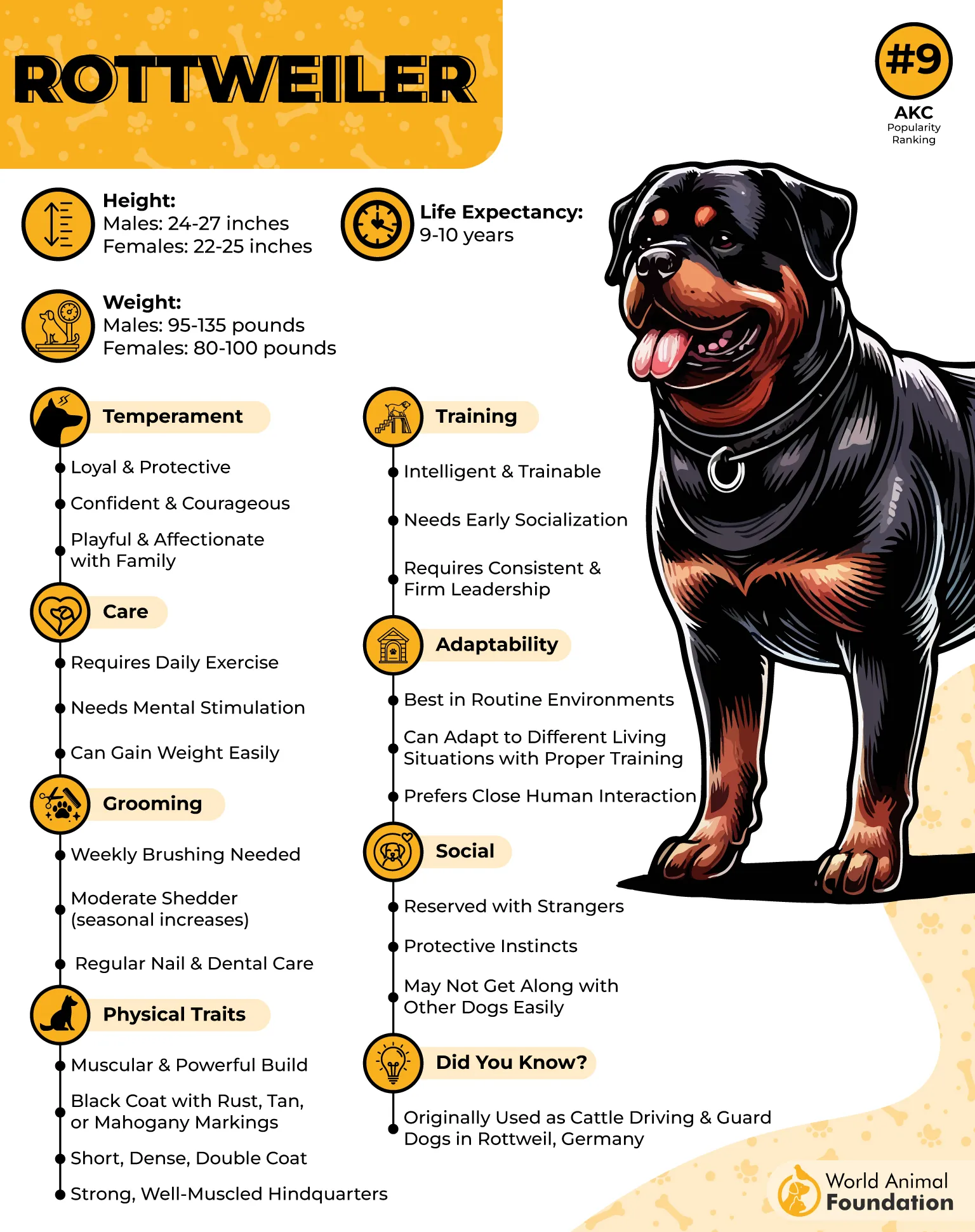
Calm Under Pressure: They have a measured, almost stoic response to threat. A wait-and-see approach helps these butcher dogs assess the situation first before doing anything.
Natural Intimidation: Their muscular ‘black dog perception’ is enough to deter the intruder. Despite that, their intense gaze, strong bite force (328 PSI), and confident temperament are big factors contributing to intimidation.
3. Polish Lowland Sheepdog
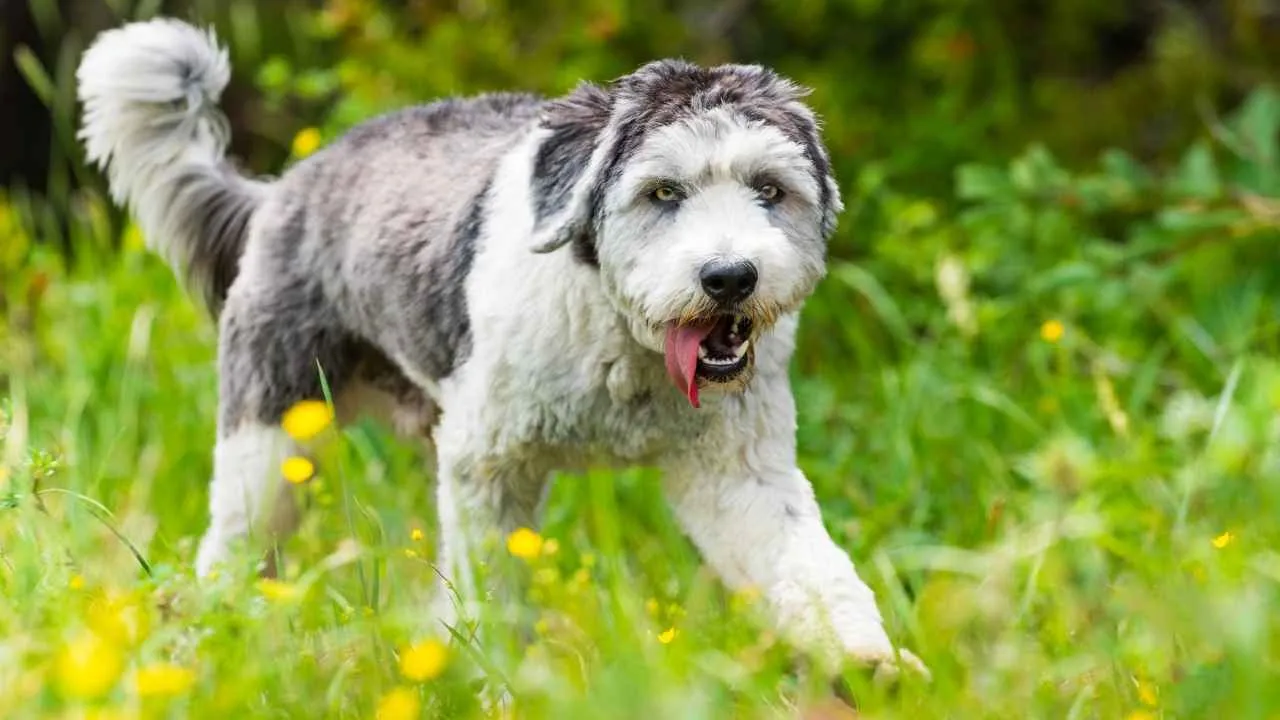
Also known as PON (Poslki Owczarek Nizinny), this dog has been herding and guarding Polish farmlands since the 13th century.
Almost extinct during WWII, this protective guardian was restored by Dr. Hryniewicz, who is known as the ‘father’ of the present-day Polish Lowland Sheepdog.
They use their head-on protective instincts by nipping at the cattle’s feet. Strong barking after sensing a threat, great intelligence, fearlessness, and a tendency to engage in physical combat with the intruder double their size are all part of their protection strategy.
Photographic Herding Memory: This makes them highly trainable and perfect for spatial navigation, herd management, and complex routines.
All Weather Durability: They have a thick and double coat that protects against harsh, cold climates in rugged terrains.
4. Bergamasco Sheepdog
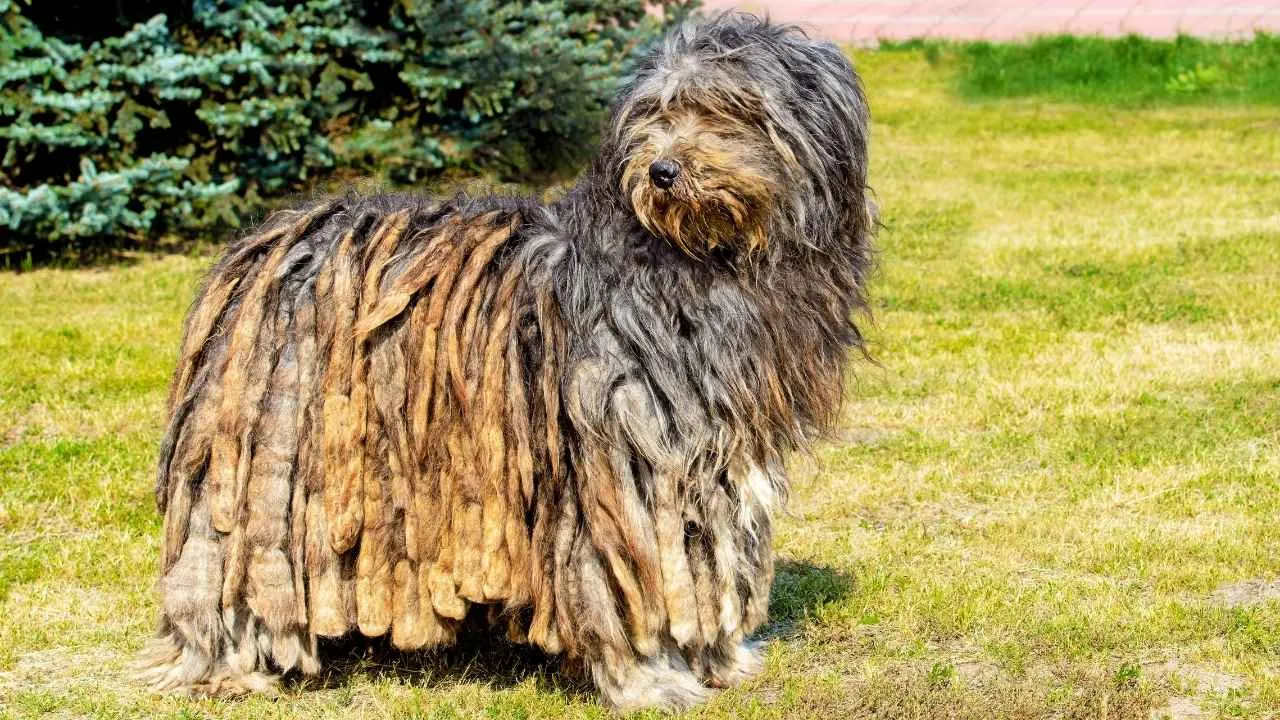
This dog looks like it walked off a Bob Marley album cover. Originally bred in the regions of Southern Switzerland and Northern Italy, this coated breed has flocks consisting of large, irregular mats.
According to the AKC, they are independent thinkers and prefer to herd independently from the shepherd since they consider themselves a partner and not a subordinate. Consistent training and mental stimulation are required to shape their behavior as needed.
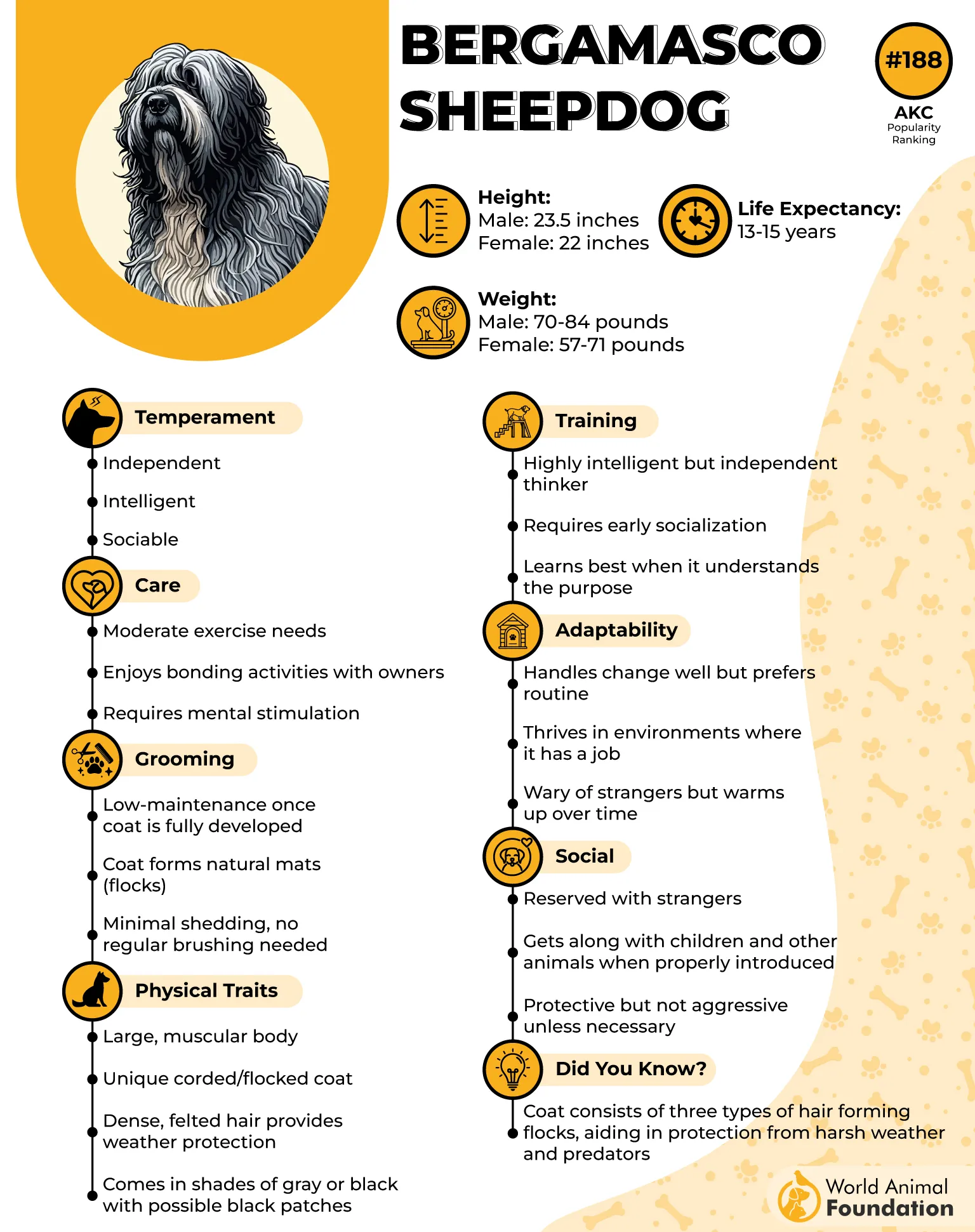
Gathering and Tending: They round up the stray livestock to ensure the safety of each cattle. They do not nip at the cattle for herding, but can be a body blocker to prevent them from going off the field.
Long Lived Working Stamina: These farm dogs can work for long distances and can herd livestock from dawn to dusk tirelessly. They live up to 13-15 years, providing enough time as a service dog and a herding breed.
5. Puli
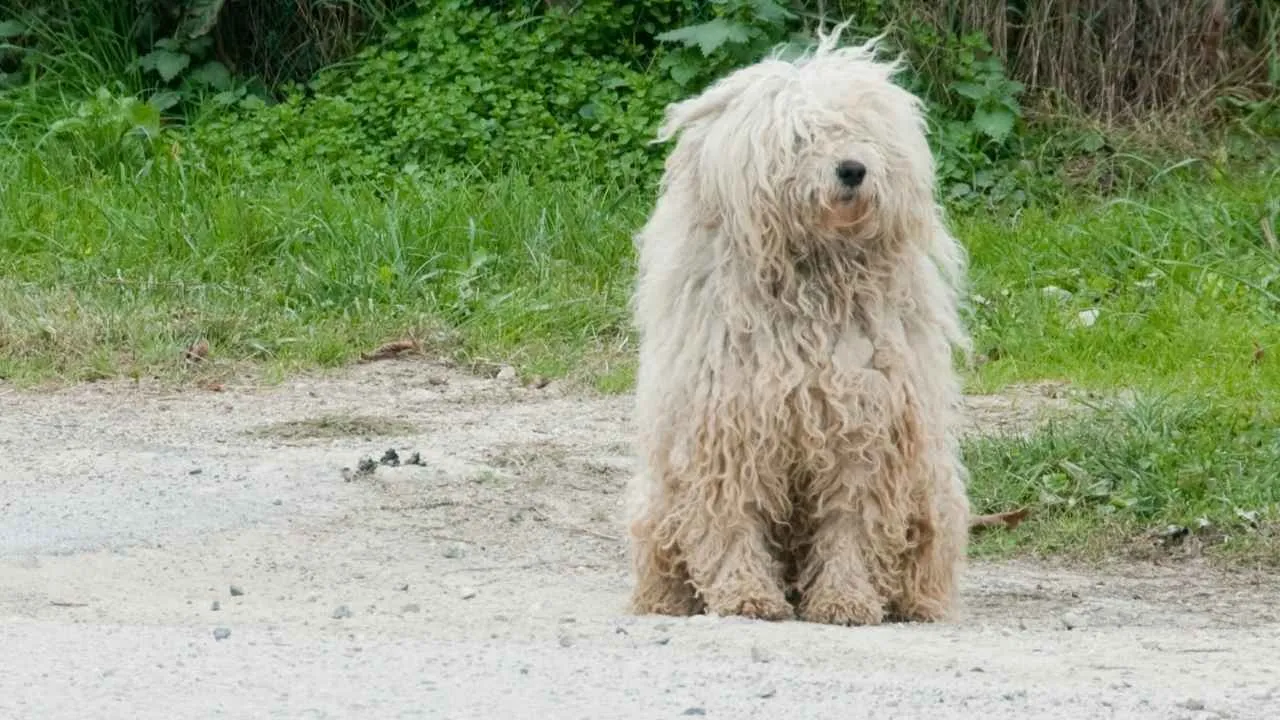
A Puli looks like someone let a mop become sentient, and then gave it a PhD in livestock management. They are highly valued by nomadic shepherds for their isolated nature, loose eyes, and hard work.
They are quite bouncy and stay closer to the livestock. The herd management strategy includes circling, barking, jumping, and sometimes leaning on the backs of cattle to herd sheep. They sometimes gather and drive livestock with their unique gait to herd and protect them.
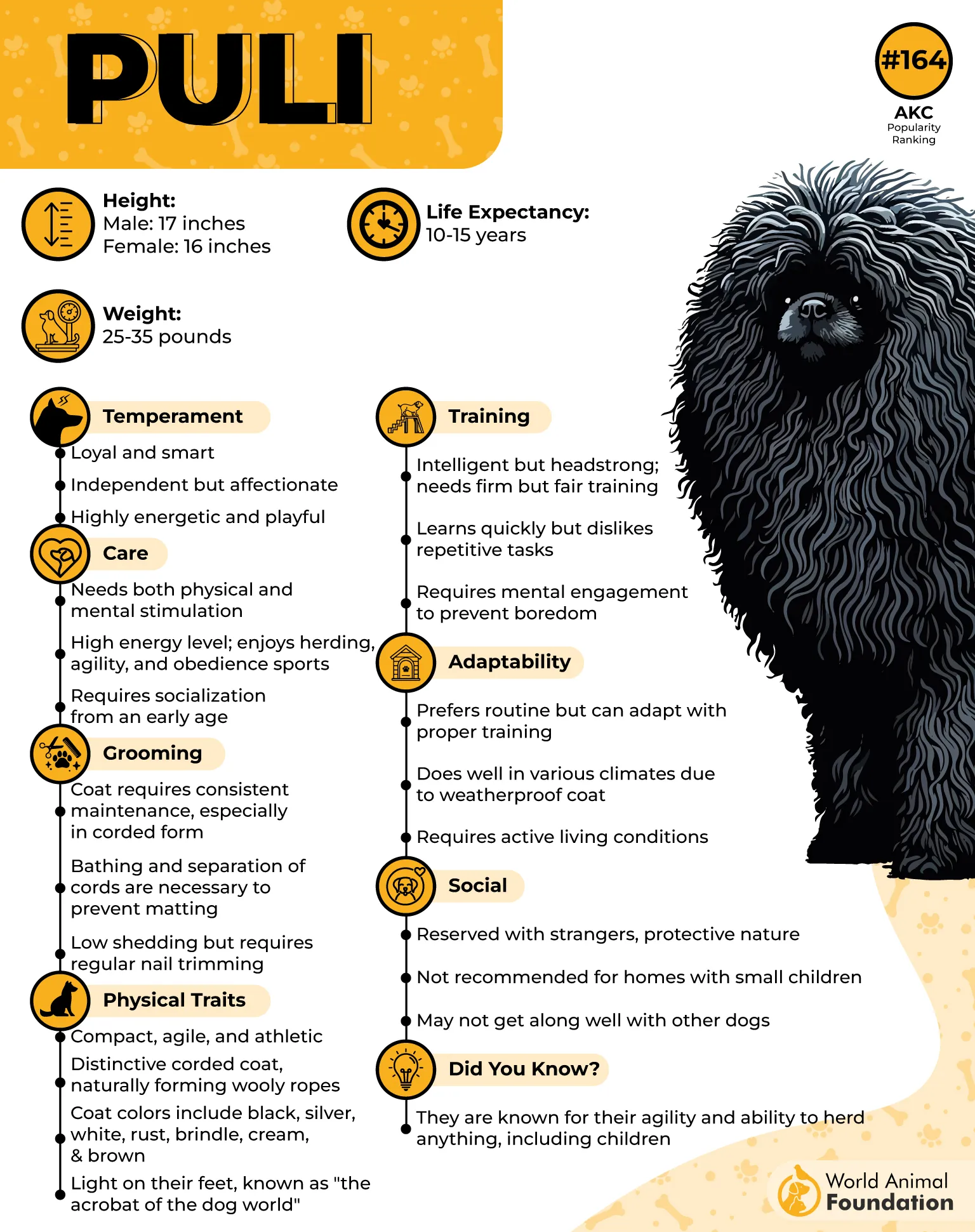
Acrobatic Speed: They have speed to approximately 3.3-4.1 YPS, which is surprisingly high compared to their big mass. They can sprint, leap, and pivot with almost cat-like agility. This speed gives this top dog breed an advantage in rough terrain.
High Drive: They are extremely energetic with strong herding instincts. Their dedicated work ethic, high-pitched bark, and weather-resistant thick coat make them one of the best herding breeds.
6. Belgian Malinois
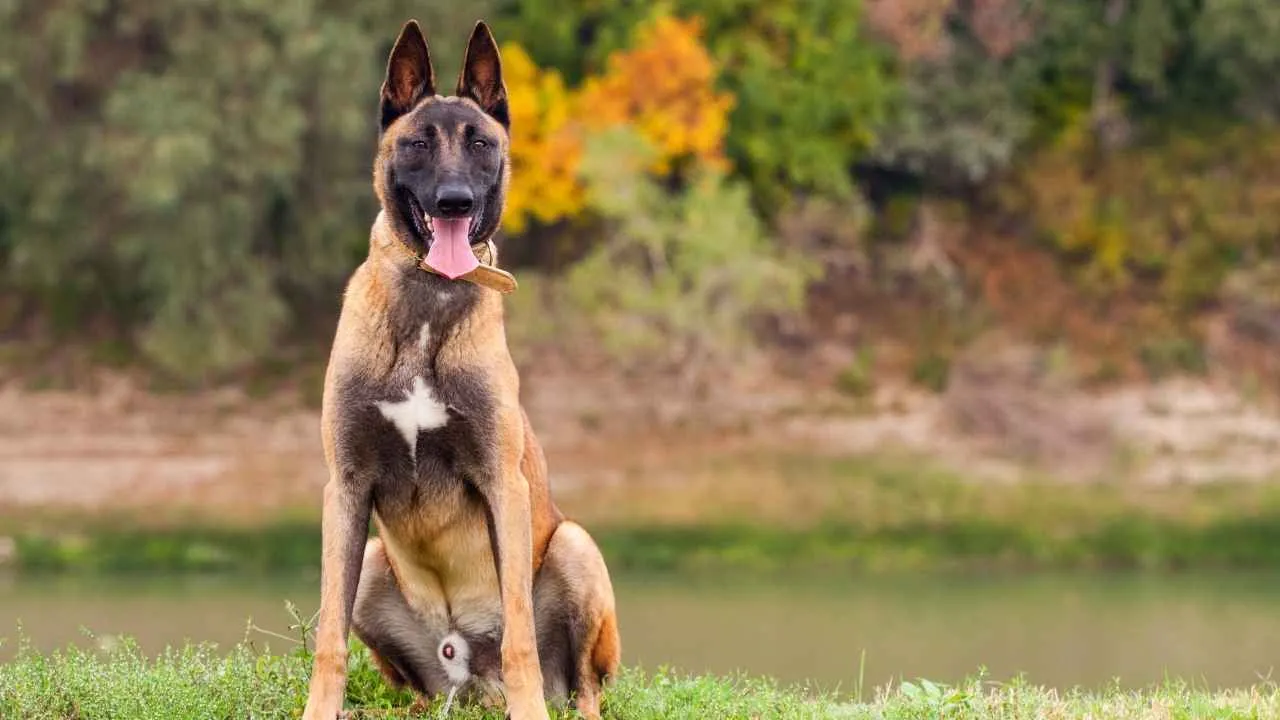
Intense, athletic, and relentlessly driven, the Belgian Malinois has become the go-to working breed for military and police services worldwide. In fact, most U.S. military working/rescue dog units now use them over any other breed.
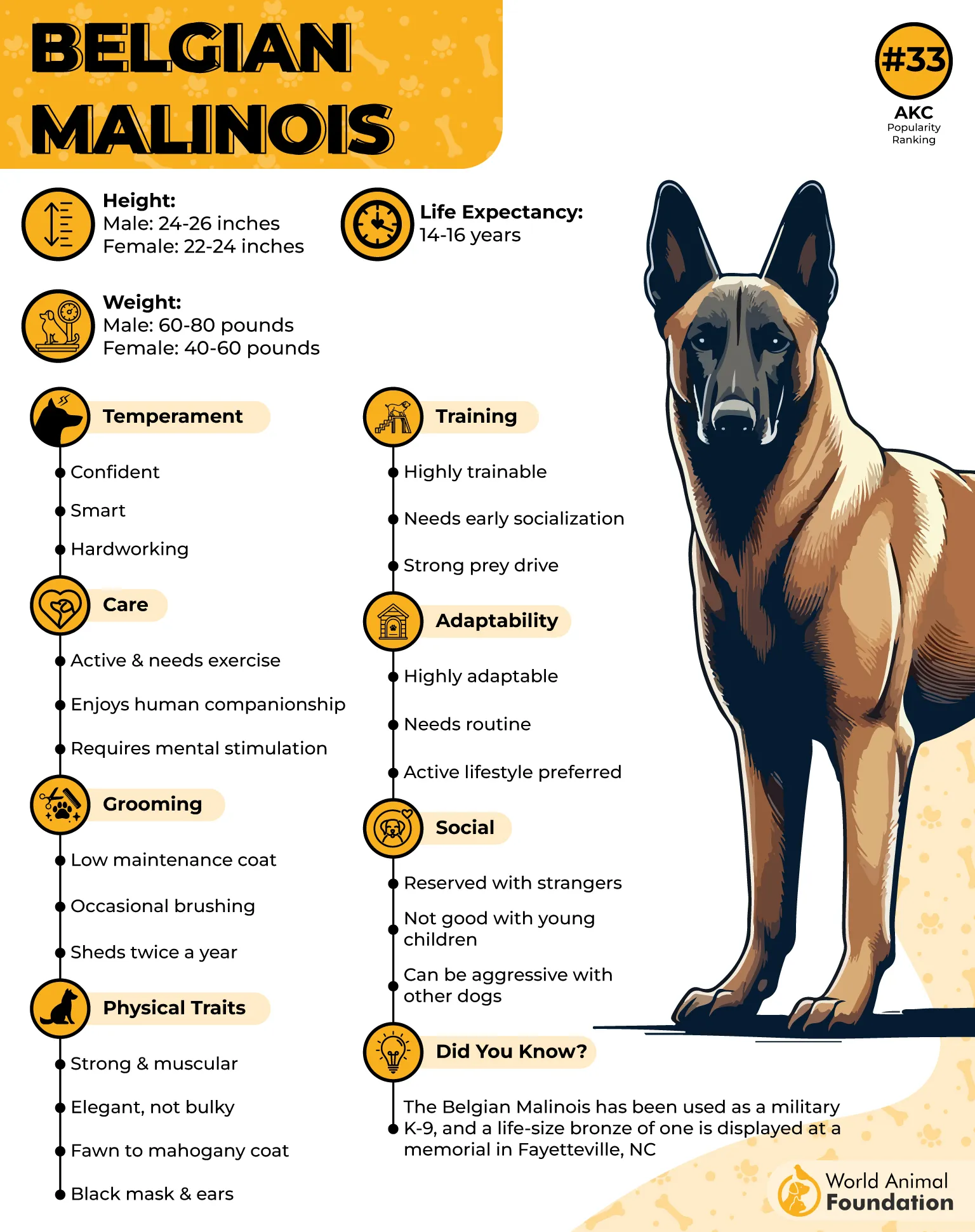
Having characteristics similar to the German Shepherd, this farm dog breed was bred primarily by the shepherds to protect flocks. Their territorial, eager to please nature, intelligence, and athletic build urge the breeders to adopt this medium-sized dog.
Best Camouflage: Because of their distinctive coat colors (deep black, red, earthy brown), they can disguise themselves within any color of environment.
Incredible Scent Detection: This dog, with their nose as a farm security systemdetectintruders tracking lost livestock, and identifying unusual activity by scent alone
7. German Shepherd
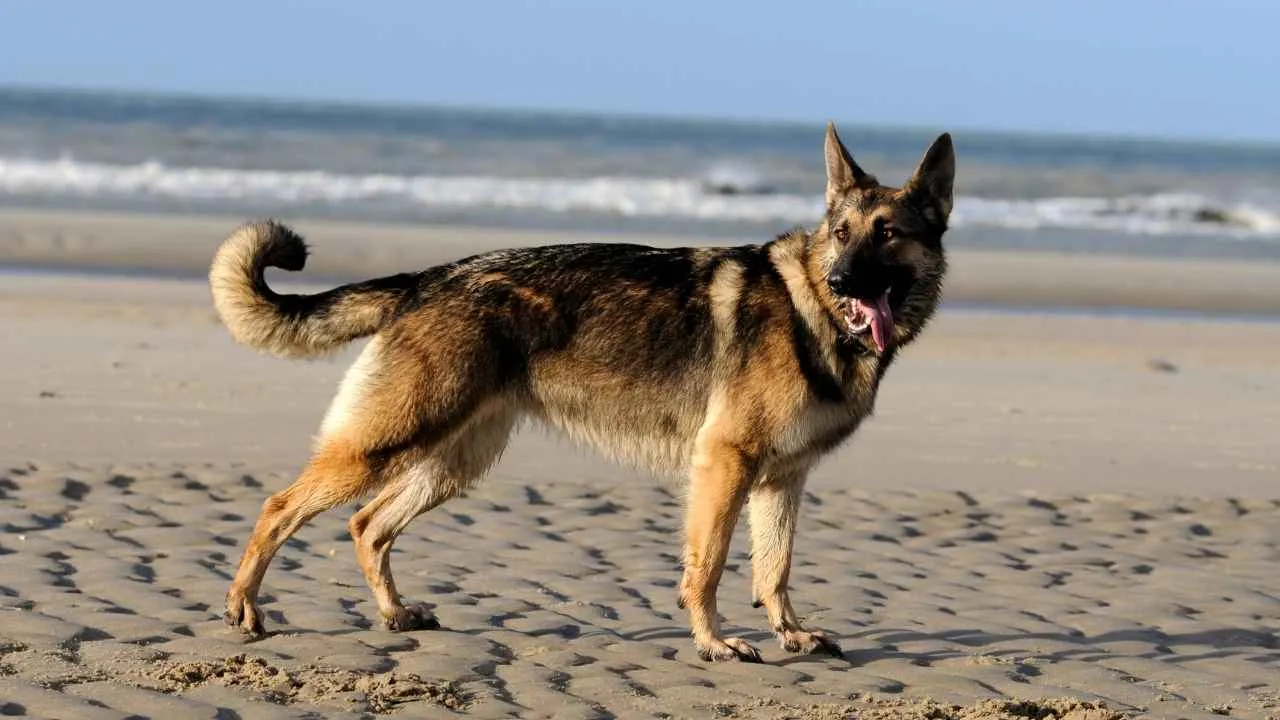
The German Shepherds, with their unique traits, are the gold standard of working breeds. Loyal, athletic canines and intelligent dogs, they helped humans in wars and still serve in the military, police, SAR and even therapy and assistance work.
The German Shepherd is known to be attached to one person; this popular dog is fiercely protective. Acting as a ‘tending dog’, they adopt the strategy of moving, guiding, and guarding livestock for herding cattle. Because of its strong protective instincts, it was used in both World Wars as a messenger, rescue dog, and mine detector.
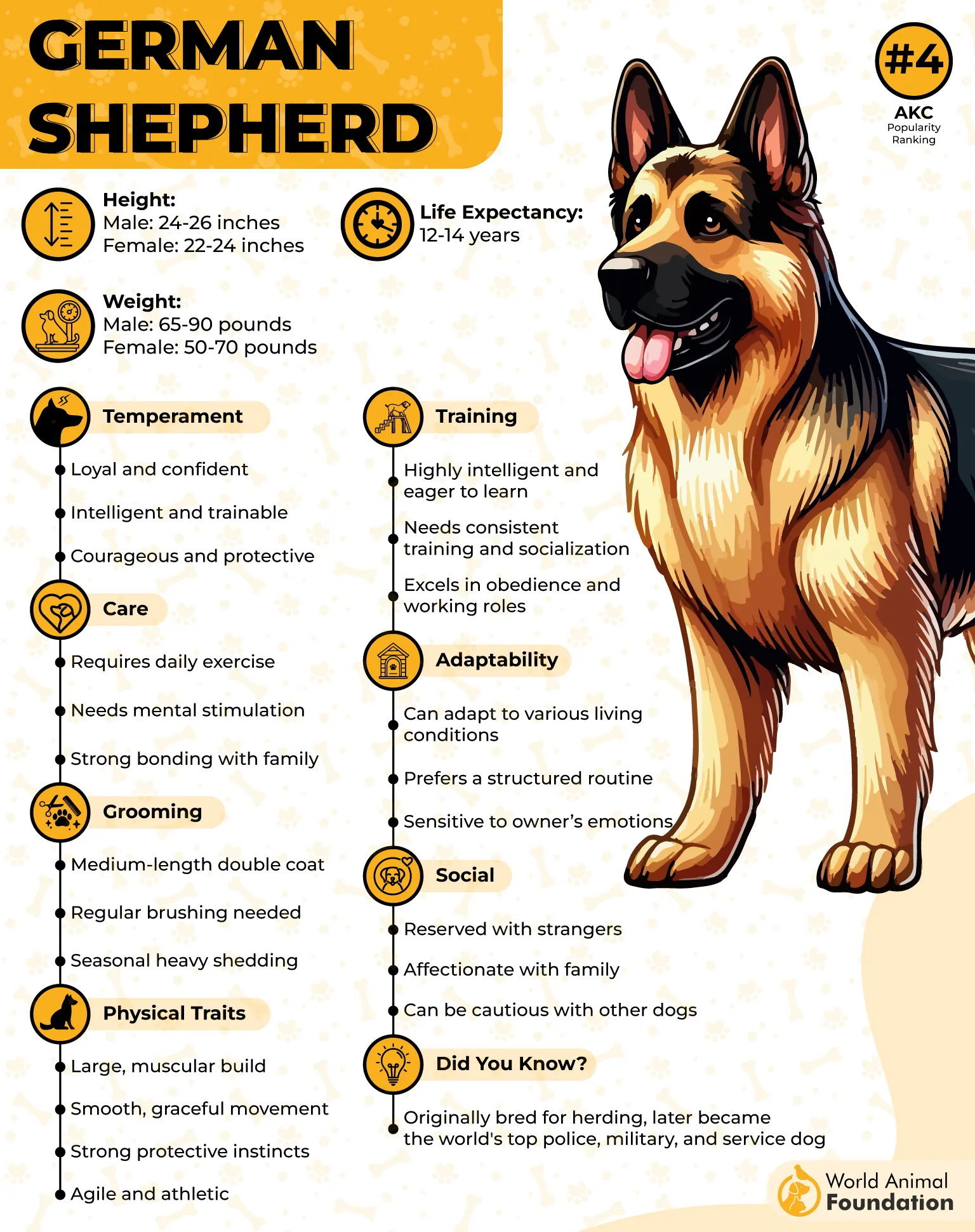
Instinctive Night Patrol: They naturally increase their alertness after dark. They will patrol perimeters, investigate sounds, and position themselves between the family and any perceived threat.
Physical Ability: With the bite force of 238-300 PSI, they are capable of breaking your bones. Their deep chest, strong hindquarters, and medium weight make them a working machine. A strong body means high daily exercise and regular grooming.
8. Bearded Collie
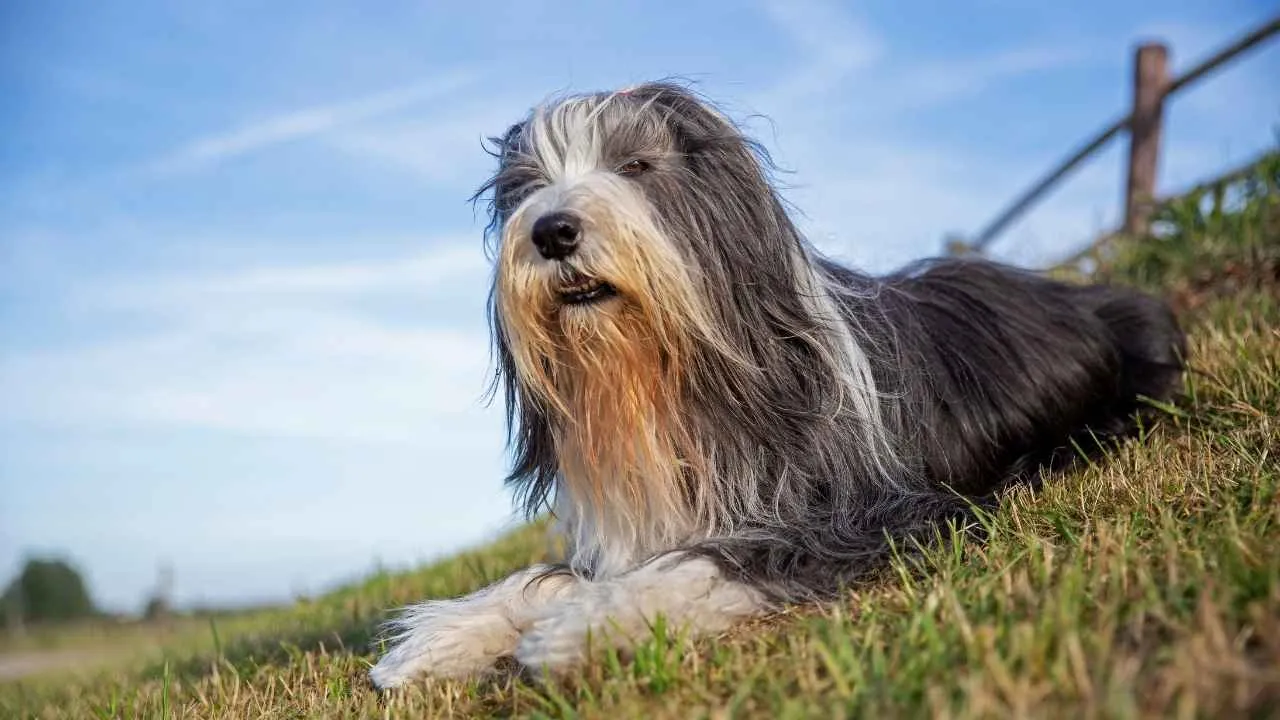
The Bearded Collie is what you get when you combine raw intelligence, medium muscle, and a seriously joyful attitude. Scottish farmers have trusted them for centuries, particularly for working in rough highland terrains.
Just like Puli, they also are ‘loose-eyed’. Instead, they jump high, bark loudly, and stay active to protect animals. Their dense and thick fur makes them weather-resistant and functional in any harsh environment. Because of their herding instincts, they may try to herd children at home. This problem behavior can be avoided with proper training.
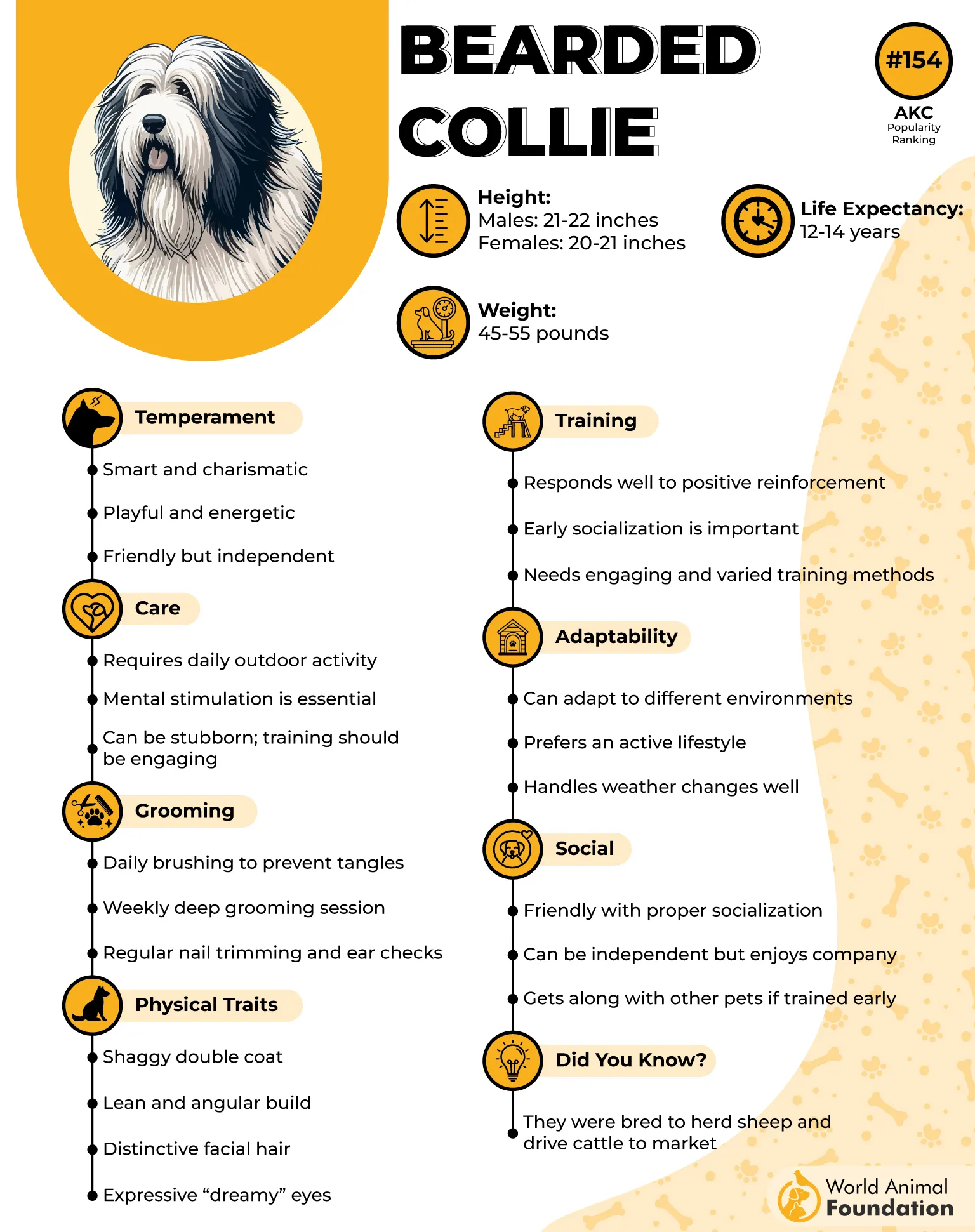
Gentle with Young Livestock: They treat lambs differently from large livestock. Their natural sensitivity prevents injury and reduces stress on newborn livestock.
Beardie Bounce: They are famous for jumping high into the air to spot their flock. This trait helps them work efficiently in dense terrain.
9. Doberman Pinscher
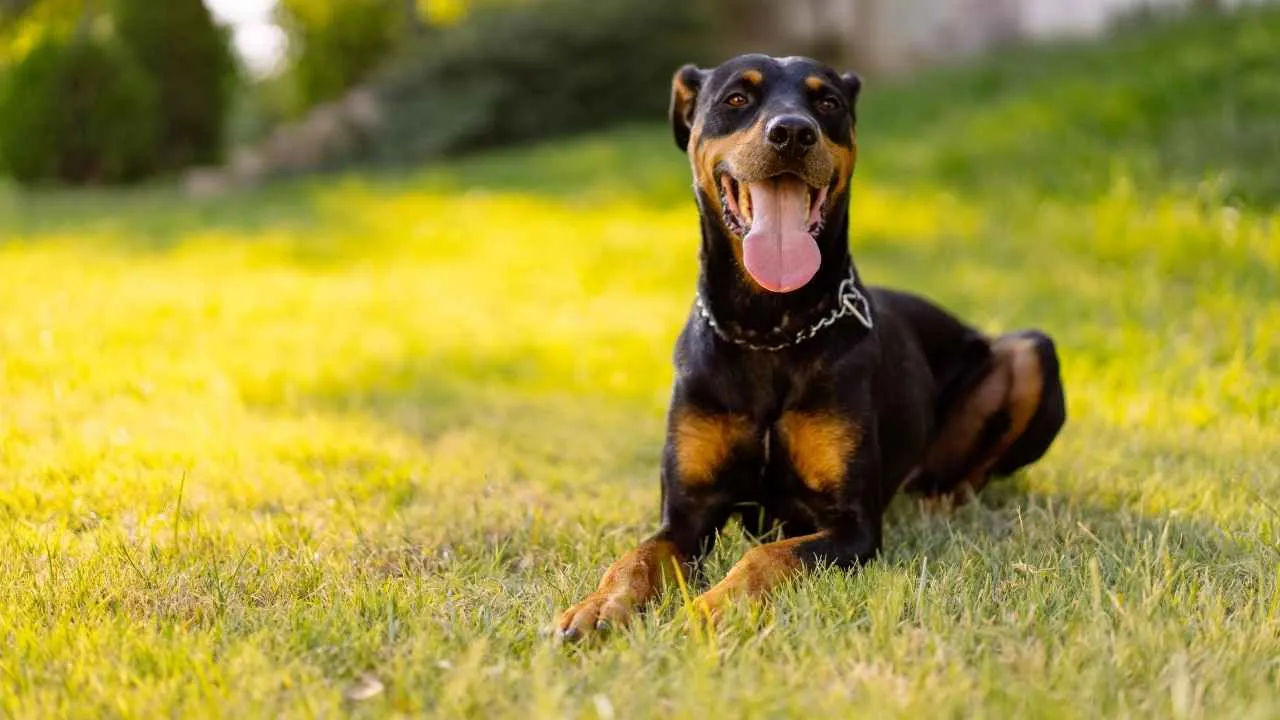
This cattle dog was developed by a tax collector, Karl Friedrich Louis Dobermann, in Germany to protect the tax money from thieves, as per Britannica. On farms, a Doberman’s presence means predators stay away, and strangers think twice.
They have high energy levels and are extremely loyal and intelligent dogs. Because of these traits, they can clearly read human body language and use their territorial protective instincts to deter the intruder and protect the dog owner.
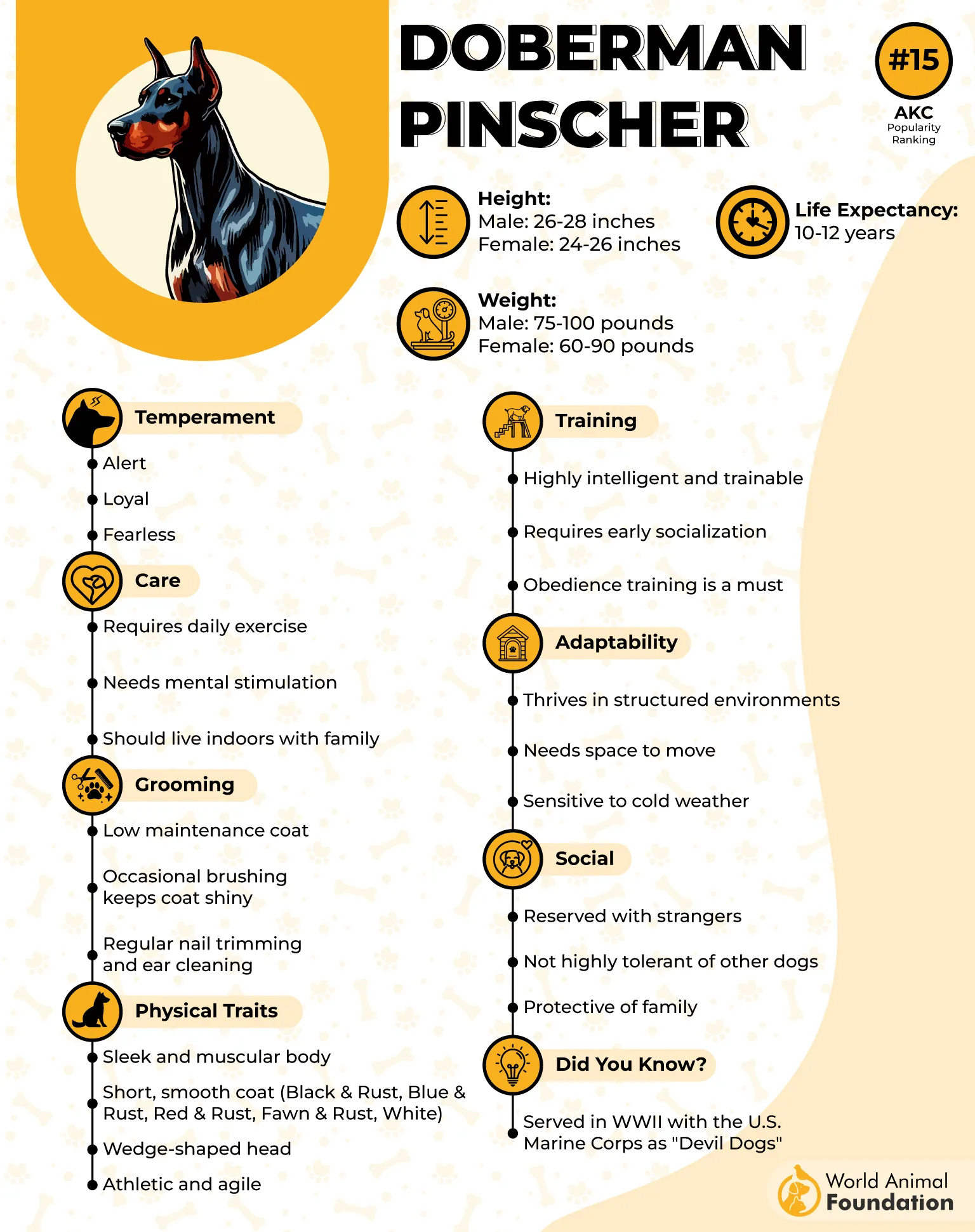
Fastest Reactors: Their aerodynamic build allows them to cover ground faster than any other guard breed (16.7-18.2 YPS). If something breaches the perimeter, the Doberman reaches the problem before the farmer even laces his boots.
Hypersensitivity to Abnormal Activity: They are both physically and emotionally sensitive. They become active when they sense any abnormality around, such as harsh handling or any suspicious presence.
Conclusion
Farm life is demanding, and the dog that shares its needs to be built for it, inside and out. Whether it is a mountain-hardened Bergamasco, the speed freak Malinois, or the emotionally intelligent German Shepherd, every breed brings something specific and powerful to the table.
These are not just muscular bodies; they are working partners with history, instincts, and a genuine drive to be useful. Pick the breed that fits your land, your lifestyle, and your working style. One of these dogs won’t just earn their keep; they will make the whole operation better.
