




Looking for a dog that can protect your home and still feel like family?
Many people want that perfect balance of safety and love. The truth is, some dogs are natural protectors, while others grow into the role with proper training and care. The best companions combine loyalty, intelligence, and strong protective instincts without losing their gentle side at home.
In fact, according to Wikipedia, the human–canine bond can strongly influence protective reactions. Dogs often sense stress in their owners and may step in to guard them because of that deep emotional connection.
That is why choosing from the 7 most protective dog breeds to safeguard your home is not just about strength. It is also about trust, training, and a healthy family environment.
With early socialization and positive reinforcement obedience training, these guard dogs can become both reliable guards and loving companions.
Now, let’s explore the breeds that truly stand out.
Protective Dog Breeds to Safeguard Your Home
1. Bullmastiff
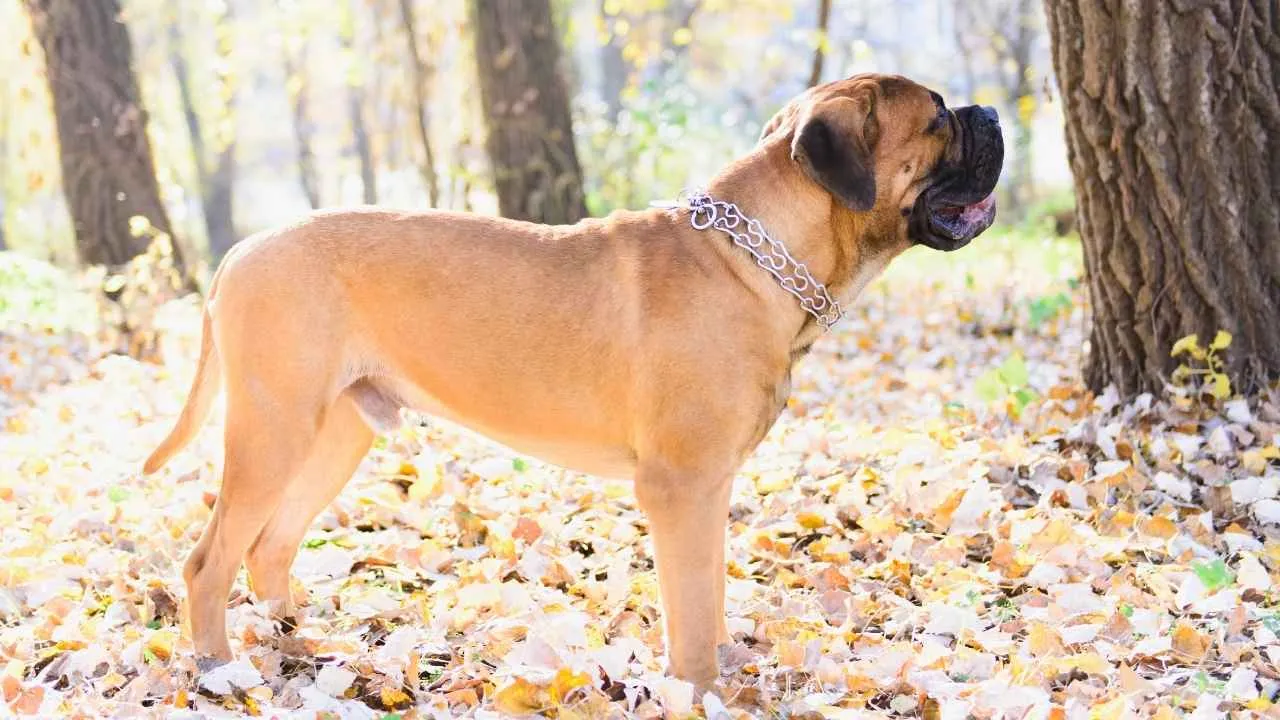
The Bullmastiff has a calm yet powerful presence that stands out. According to the American Kennel Club, this large dog was first developed in England around the 1860s. Breeders crossed Bulldogs with Mastiffs to create a strong and reliable protector.
Back then, they were called the “gamekeeper’s night dog” because they helped guard estates from intruders. Today, many consider them the best guard dog breed for families who want both safety and warmth.
The Bullmastiff is loyal, affectionate, and brave. This gentle giant forms deep bonds with its people and often stays close to loved ones. Many dog owners appreciate how this breed remains calm indoors yet alert when needed.
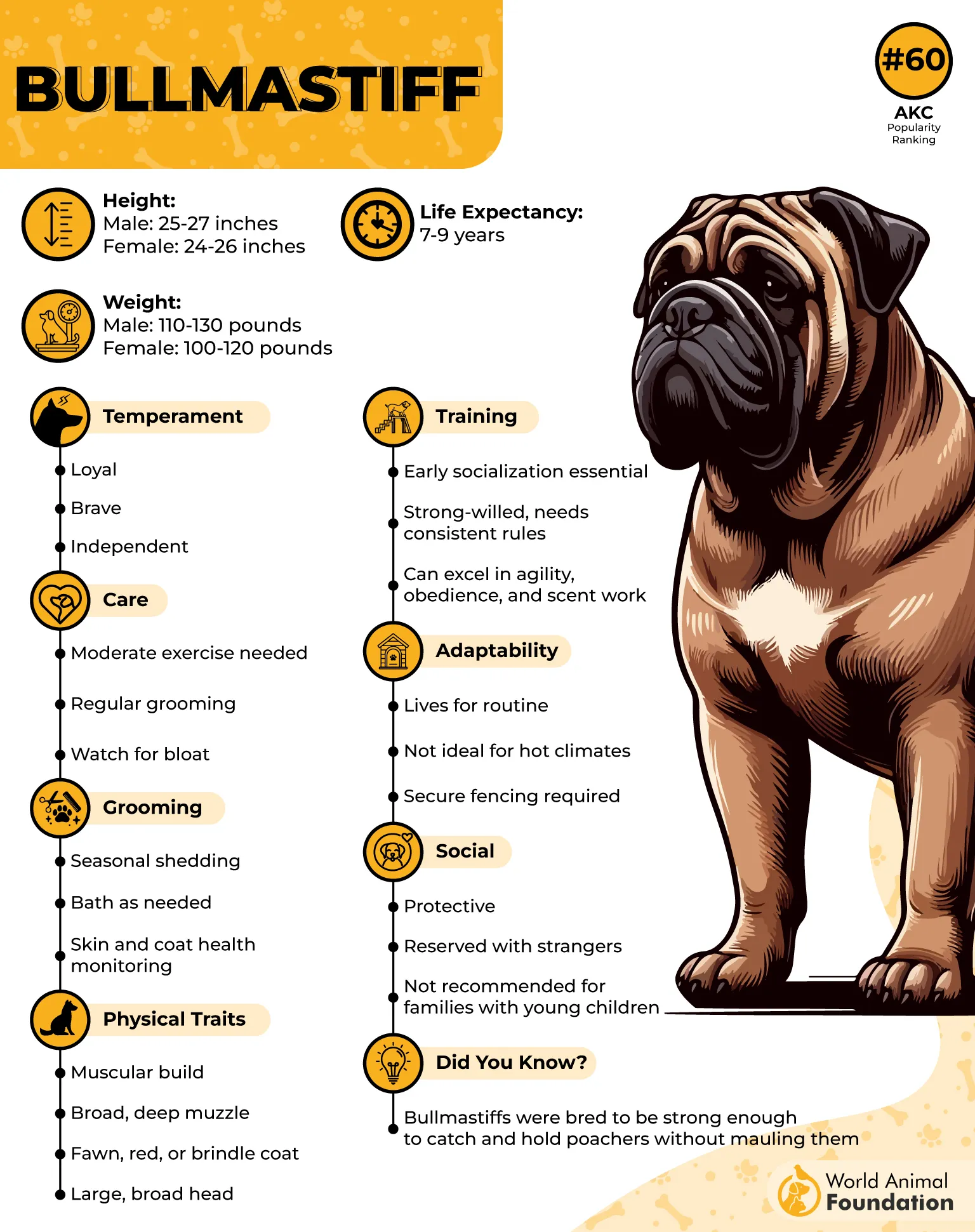
With proper obedience training, they become a great family pet, even in homes with small children. Still, their size and strength mean they can sometimes be clumsy dogs, especially in tight spaces.
Their guarding style is quiet but effective. Instead of barking nonstop, they observe first, then act if needed. Their intimidating look alone often stops trouble before it starts.
Key Traits of the Bullmastiff:
Strong protective instincts without unnecessary aggression
Naturally watchful and aware of surroundings
Deeply devoted to family members
Confident and steady in new situations
Works best with early guidance and clear rules
2. Akita
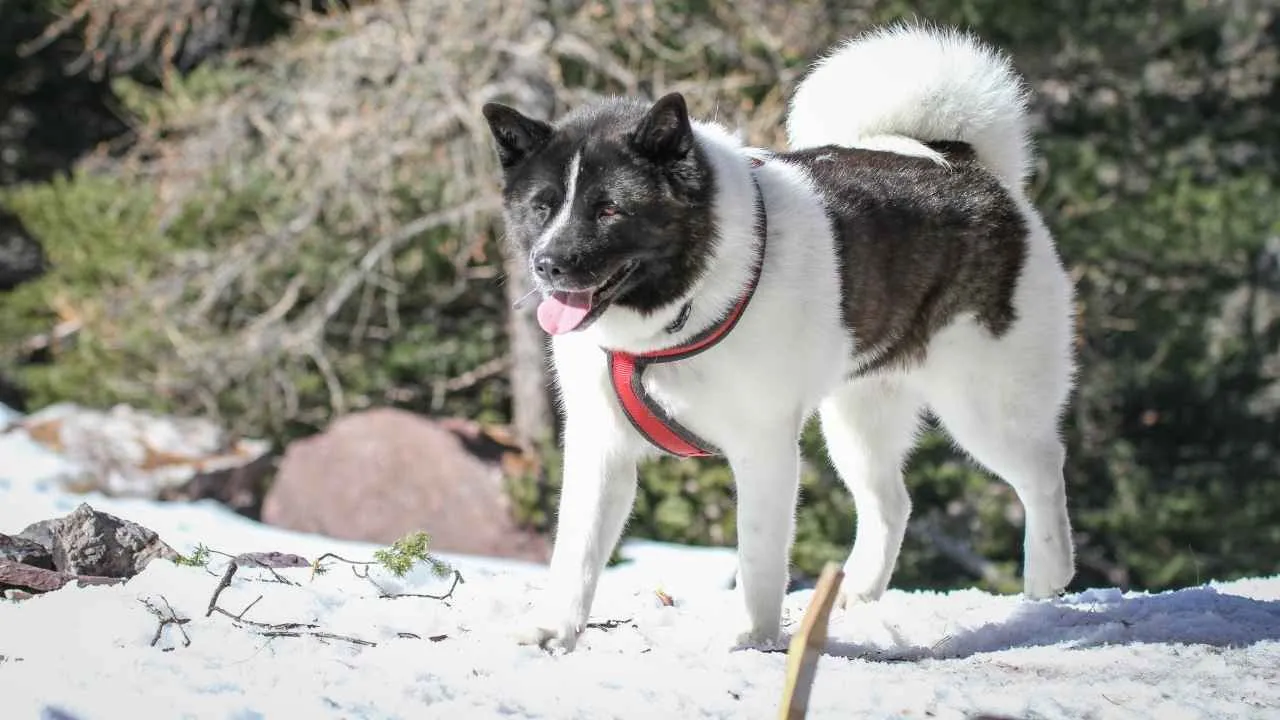
The Akita is a dignified and courageous dog with a rich history. This Japanese breed once worked as a hunting and guarding dog, protecting homes and tracking large game.
Today, it is known as an excellent guard dog with a strong sense of duty. In Japan, the Akita is even honored as a national treasure and a symbol of good health and protection.
In personality, the Akita is incredibly loyal and deeply devoted to its people. This breed thrives in a calm family environment where it can bond closely with loved ones. Many families see them as a loving family pet, but their nature means they are often naturally wary of strangers.
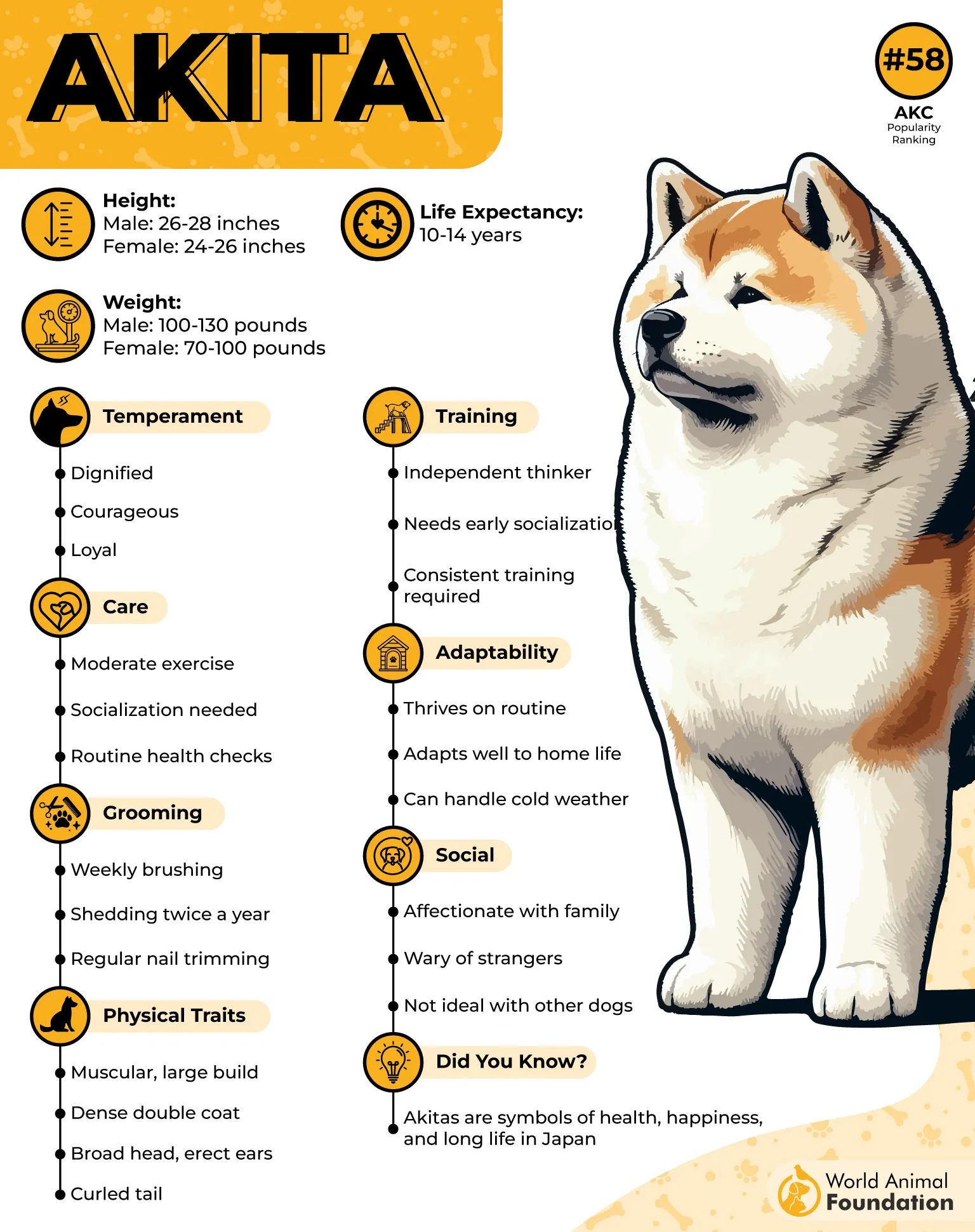
Because of this, proper socialization from early puppy days is very important. Without it, they may show dominance or tension around other dogs, especially of the same sex.
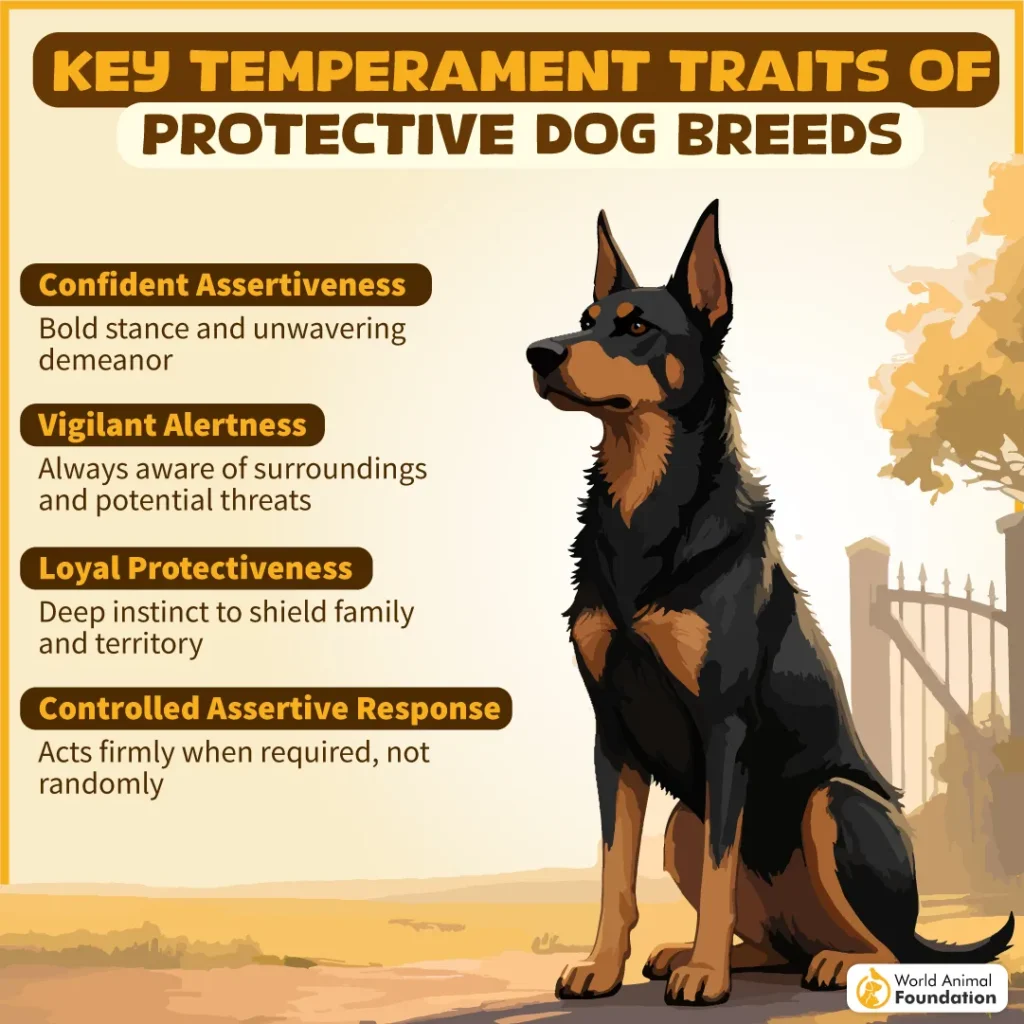
Their protective instincts are strong but controlled. They do not react without reason, yet they stay alert at all times.
According to PetMD, the famous story of Hachiko, an Akita who loyally waited 9 years for his owner at the train station, shows just how deep their loyalty runs, making them a powerful symbol of devotion in our family life.
Quick Care Tips for Akitas:
Needs regular grooming to maintain its thick coat
Benefits from daily mental stimulation activities
Prefers calm, structured routines at home
Does best with experienced owners who understand strong-willed breeds
3. German Shepherd
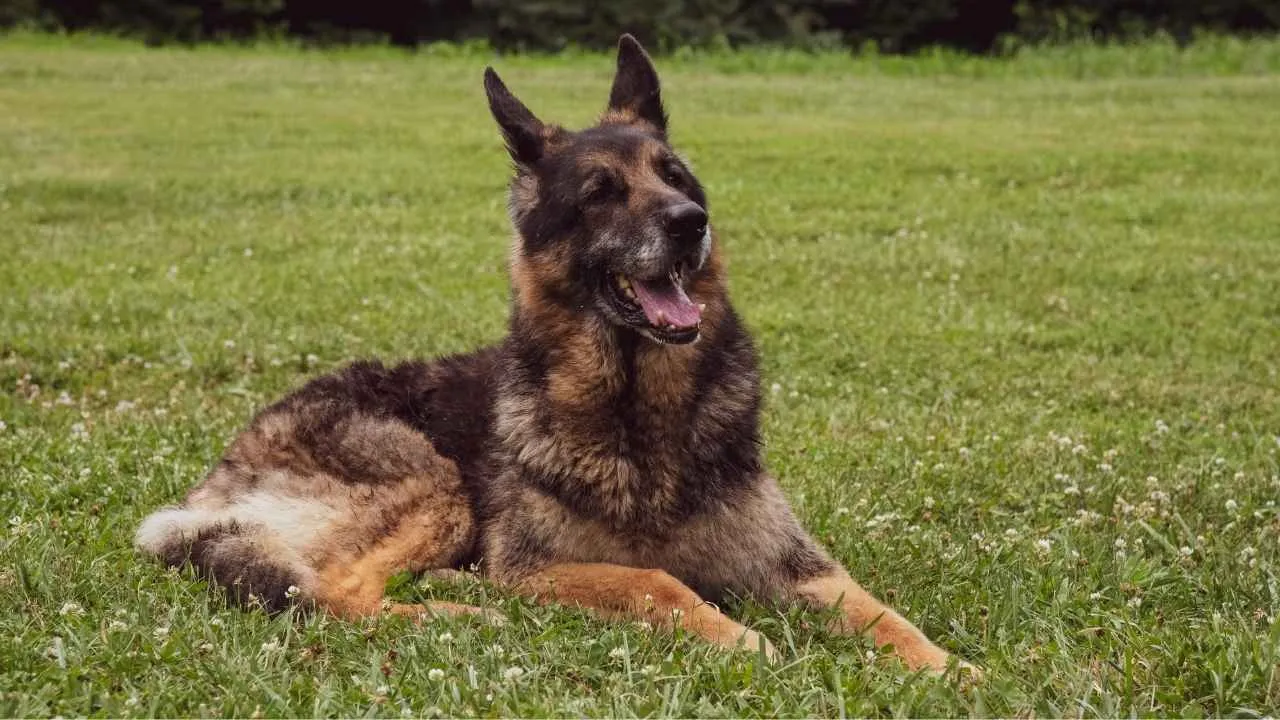
The German Shepherd stands out for its sharp mind and strong work ethic. This breed was developed in Germany from traditional herding and farm dogs.
According to Britannica, in 1899, Max von Stephanitz discovered a remarkable dog named Horand von Grafrath and began shaping what we now know as one of the smartest breeds. Today, German Shepherds are known for being highly intelligent, alert, and dependable.
Their versatility is unmatched. They work as service dogs, police dogs, and loyal companions. Many families trust them as the best guard dog breed because of their strong protective nature, loyalty, and reliability.
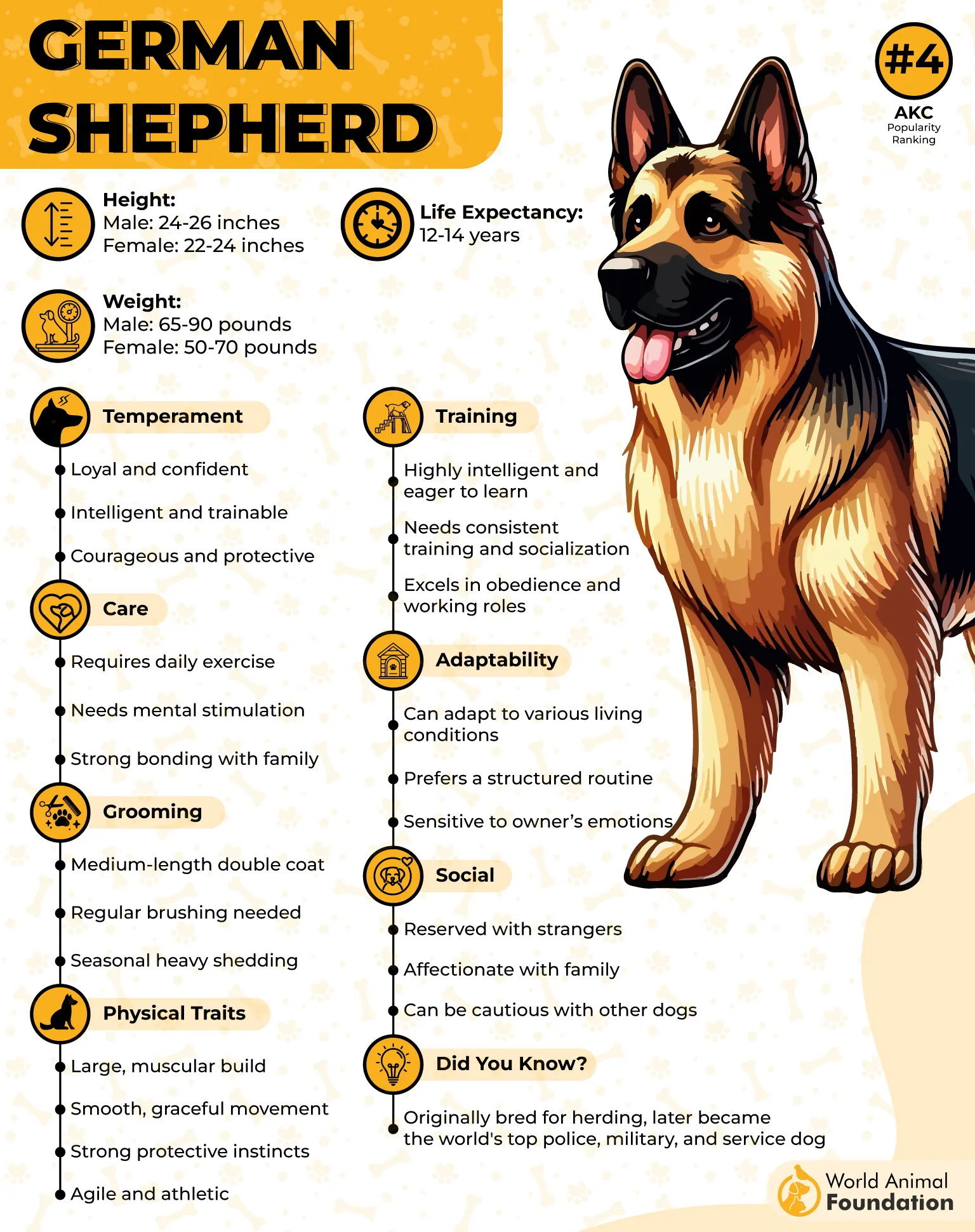
German Shepherds are athletic dogs that thrive when given tasks and challenges that keep their minds active. They have great attacking qualities. Training is key for this breed. Starting from a young age, they respond well to structure and guidance.
With regular exercise and daily walks, they stay balanced and focused. They can also learn to live peacefully with other pets when introduced early.
Training and Lifestyle Tips:
Needs consistent routines to stay mentally sharp
Enjoys learning new commands and problem-solving tasks
Benefits from structured play and obedience work
Builds strong bonds through active engagement with owners
4. Doberman Pinscher
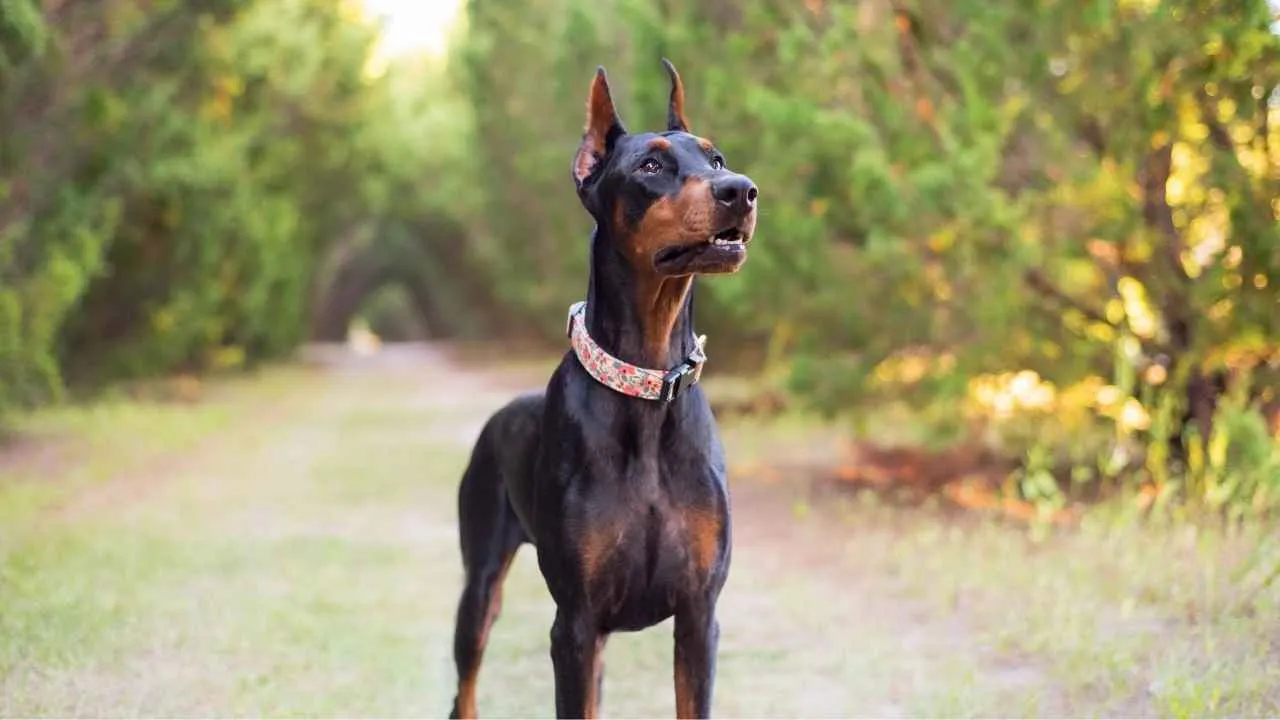
The Doberman Pinscher is a sleek and powerful dog breed known for speed and strength. Bred in Germany for protection, this natural guard dog has a sharp mind and a bold spirit. Their smooth coat and intimidating look often make intruders think twice before coming closer.
According to Purina, this breed is extremely intelligent and learns commands very fast. With positive reinforcement obedience training, a well-trained Doberman becomes focused, calm, and responsive.
They are also extremely loyal and form deep bonds with their owners. While they are fearless protectors, they also seek love and enjoy being close to their family.
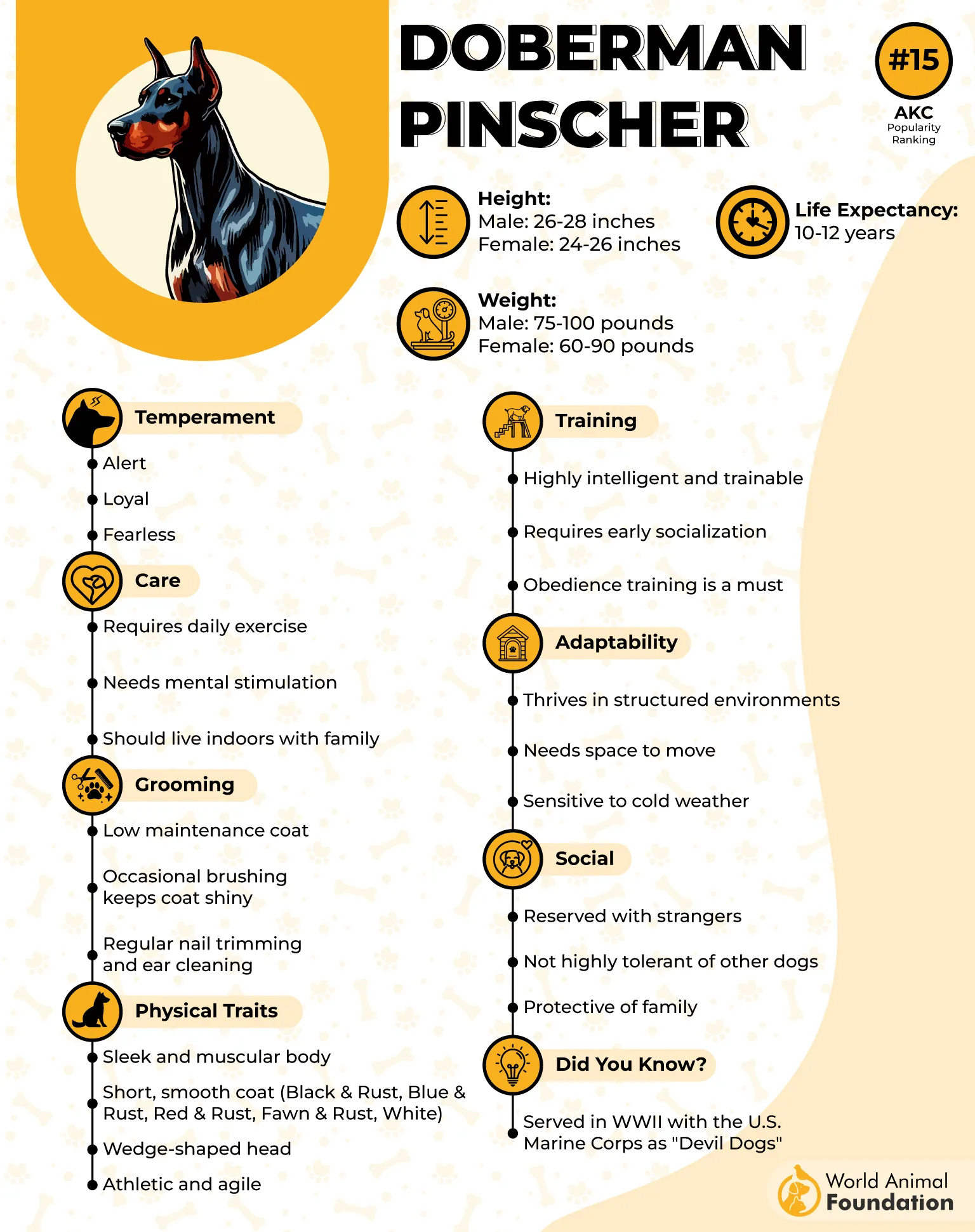
In a home setting, they can fit well into family life with early guidance. They are playful, alert, and always aware of their surroundings. Their strong build and quick reactions also make them one of the most reliable good attack dogs when trained properly.
Care and Activity Needs:
Needs regular exercise to stay fit and relaxed
Enjoys games that challenge both body and mind
Thrives in homes with active routines
Benefits from early social habits and structured training
5. Rottweiler
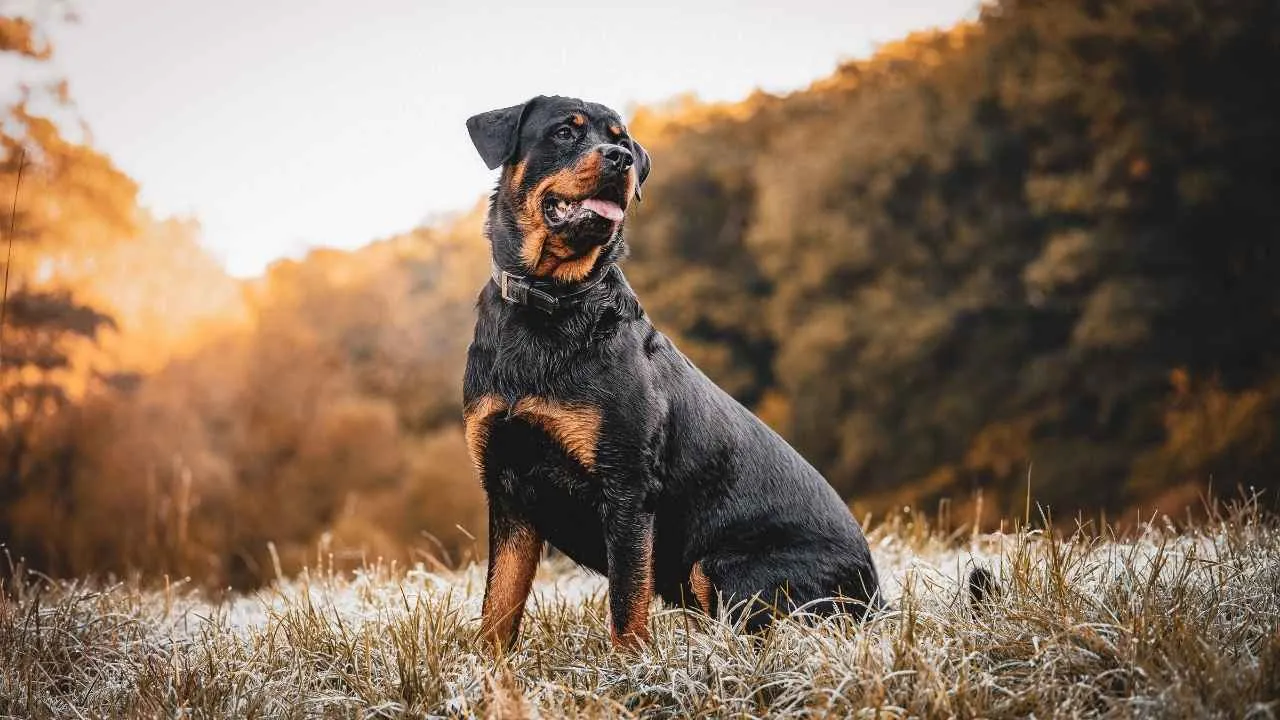
The Rottweiler is a powerful working breed named with deep roots in history. This dog traces back to the Roman Empire, where it helped herd cattle and guard camps.
Later, it earned the nickname “butcher’s dog,” as it protected meat and money for butchers. Today, it remains a great guard dog known for strength and confidence. The Rottweiler is deeply loyal and naturally protective of its family.
Despite its strong build, it can be a mild-mannered dog when properly trained. Many families trust them around small children, as long as they receive consistent training from an early stage. These dogs thrive in structured homes where rules are clear and firm.
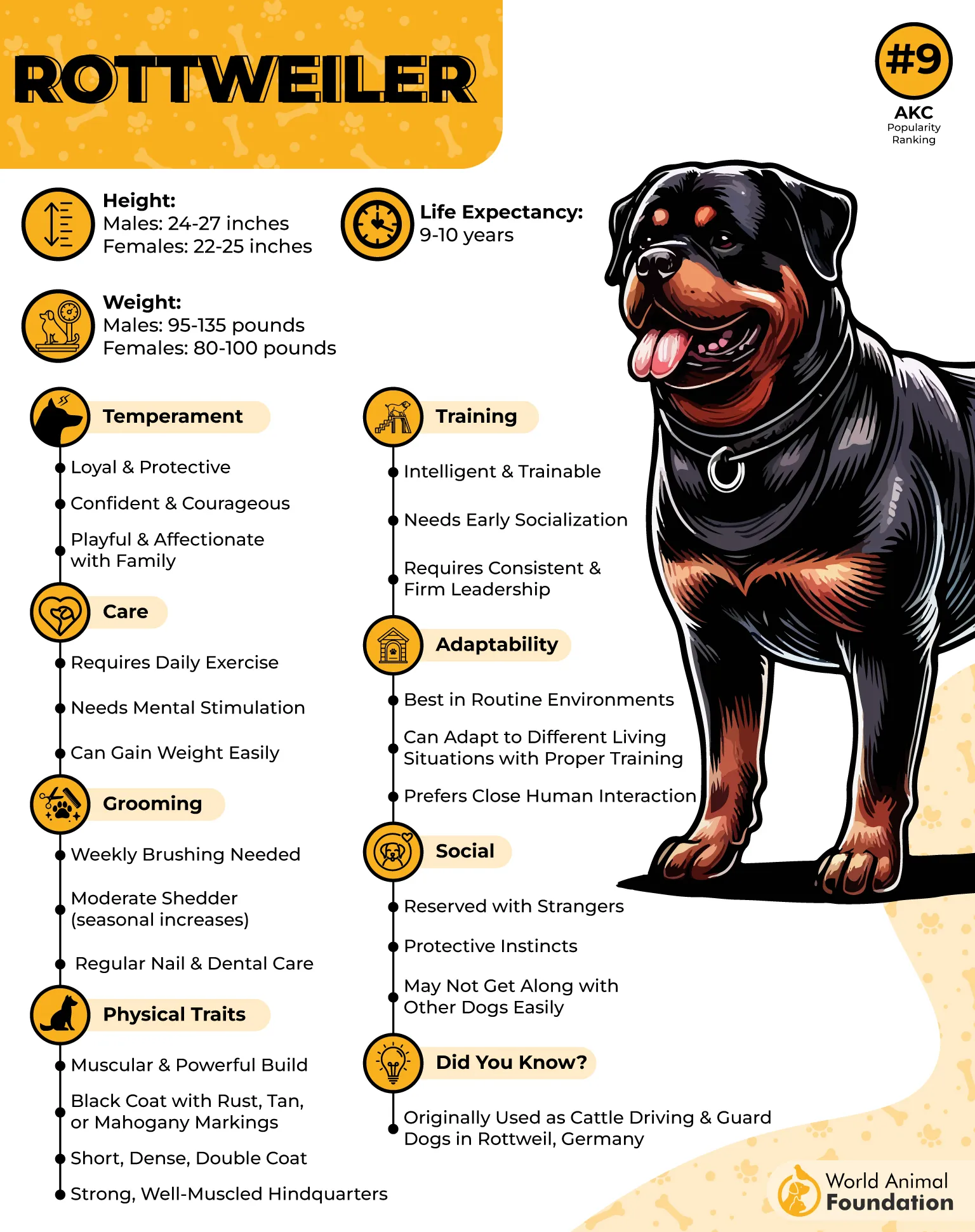
Social behavior depends on guidance. Without early care, a Rottweiler may show a violent streak, especially around other animals. That is why training and attention are key. Some owners may find this breed a bit harder to manage, but the reward is a calm and steady companion.
Care and Lifestyle Tips:
Needs to be groomed routinely for coat health
Benefits from daily activity and structured play
Builds trust through regular interaction and guidance
Responds best to firm and consistent leadership
6. Belgian Malinois
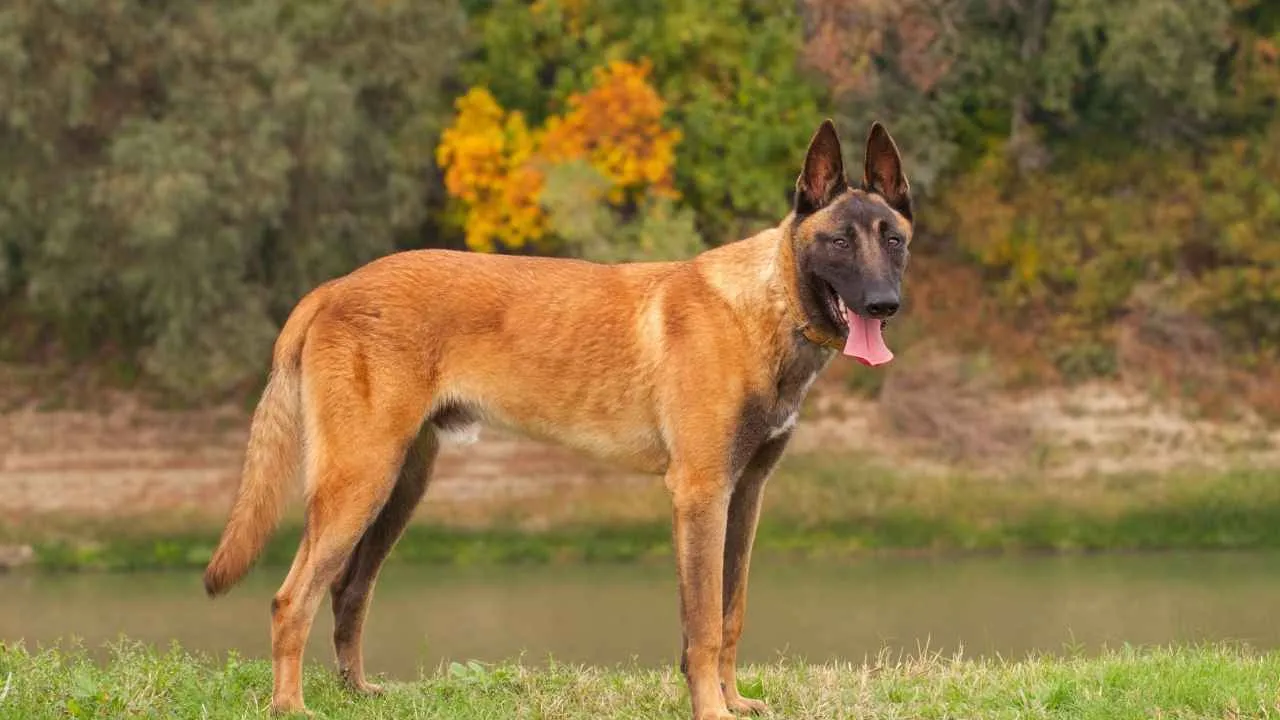
The Belgian Malinois is a hard-working and focused dog known for its drive. This breed is often seen in police and military roles because of its sharp mind and speed.
Many dogs’ parents rank it among the smartest breed choices for demanding tasks. It can handle herding, protection, tracking, and even search and rescue work with ease.
This dog has high energy and needs a purpose every day. According to Hill’s Pet, it does best with experienced owners who understand how to guide a working dog.
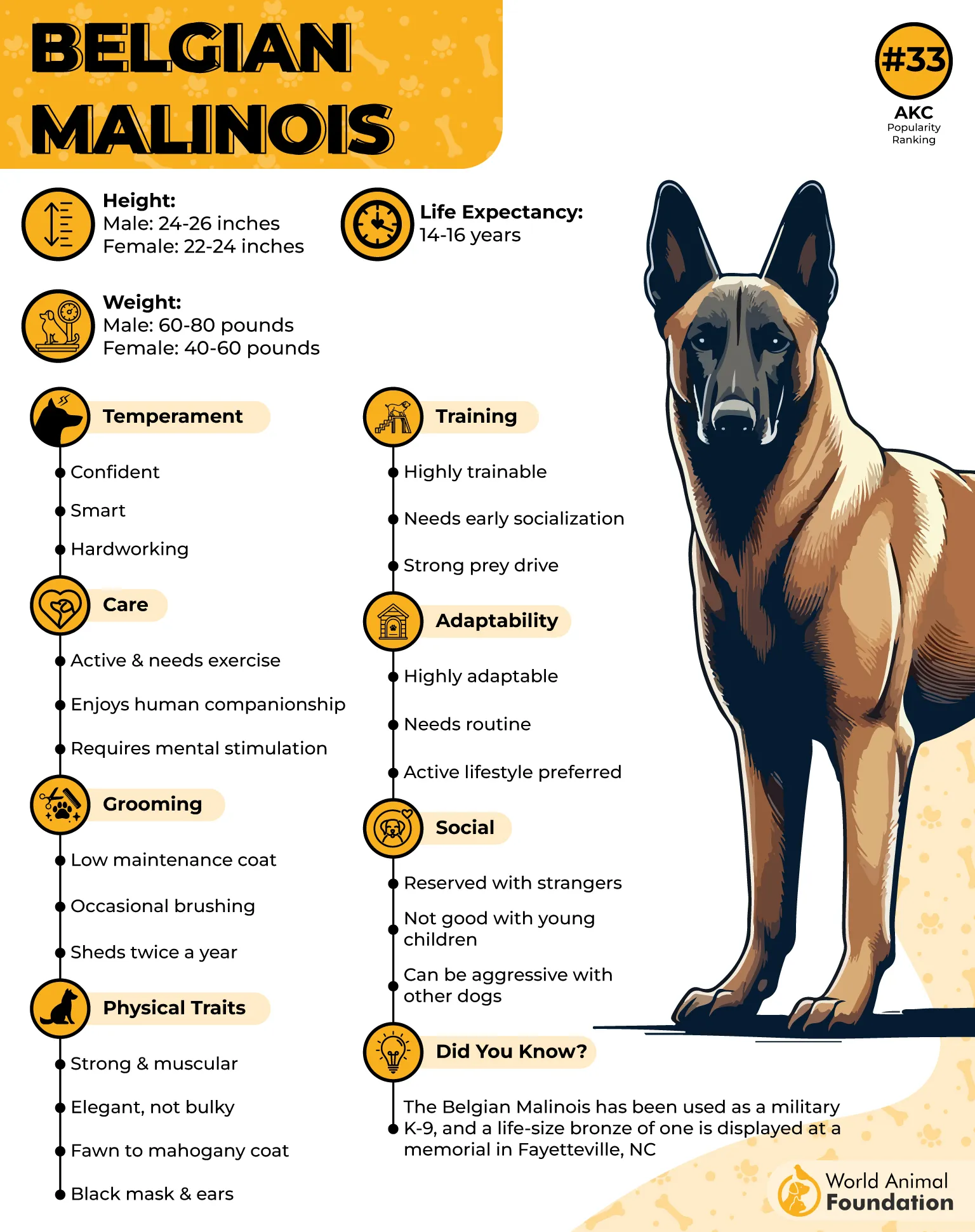
They require stern training and constant training to stay balanced and happy. When properly trained, they become reliable protectors with a strong sense of duty. Their alert nature and loud bark also make them excellent at warning families of danger.
In the right home, a Belgian Malinois can be a fun-loving companion. However, their energy means they may accidentally knock over things or even a puppy alongside them during play.
Care and Activity Tips:
Needs daily structured tasks to stay mentally sharp
Thrives on regular exercise and outdoor activity
Benefits from early guidance and social habits
Best suited for active homes, not like calm dog spaniels
7. Giant Schnauzer
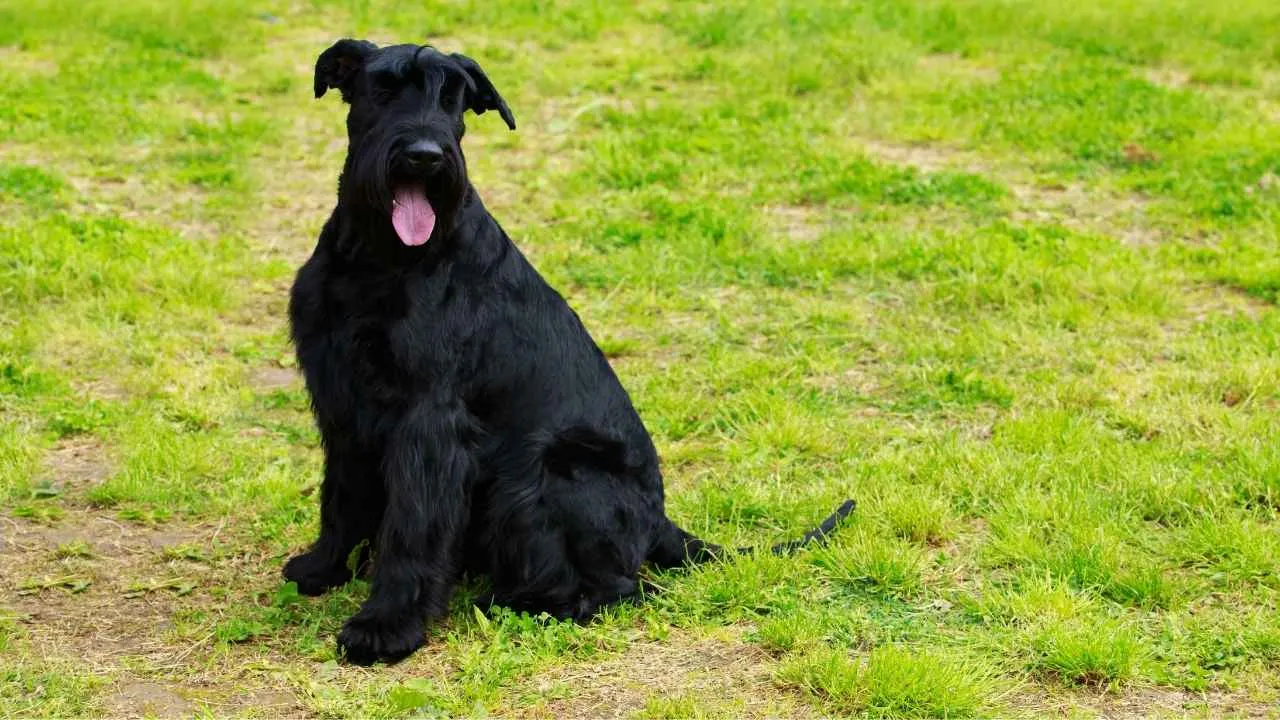
The Giant Schnauzer is a strong and striking large dog that stands out with confidence. Despite the name, it is not a true giant breed. It is simply the largest of the Schnauzers, bigger than the standard and miniature types.
This working breed name first gained attention outside Bavaria during World War I and World War II, where it served as a military dog. According to WebMD, this dog is intelligent, alert, and deeply devoted.
Many families see it as the best guard dog breed because of its sharp awareness and bold presence. It is also considered one of the best guard dog breeds for homes that need strong security. At the same time, it shows a kind nature with loved ones, making it a reliable family pet.
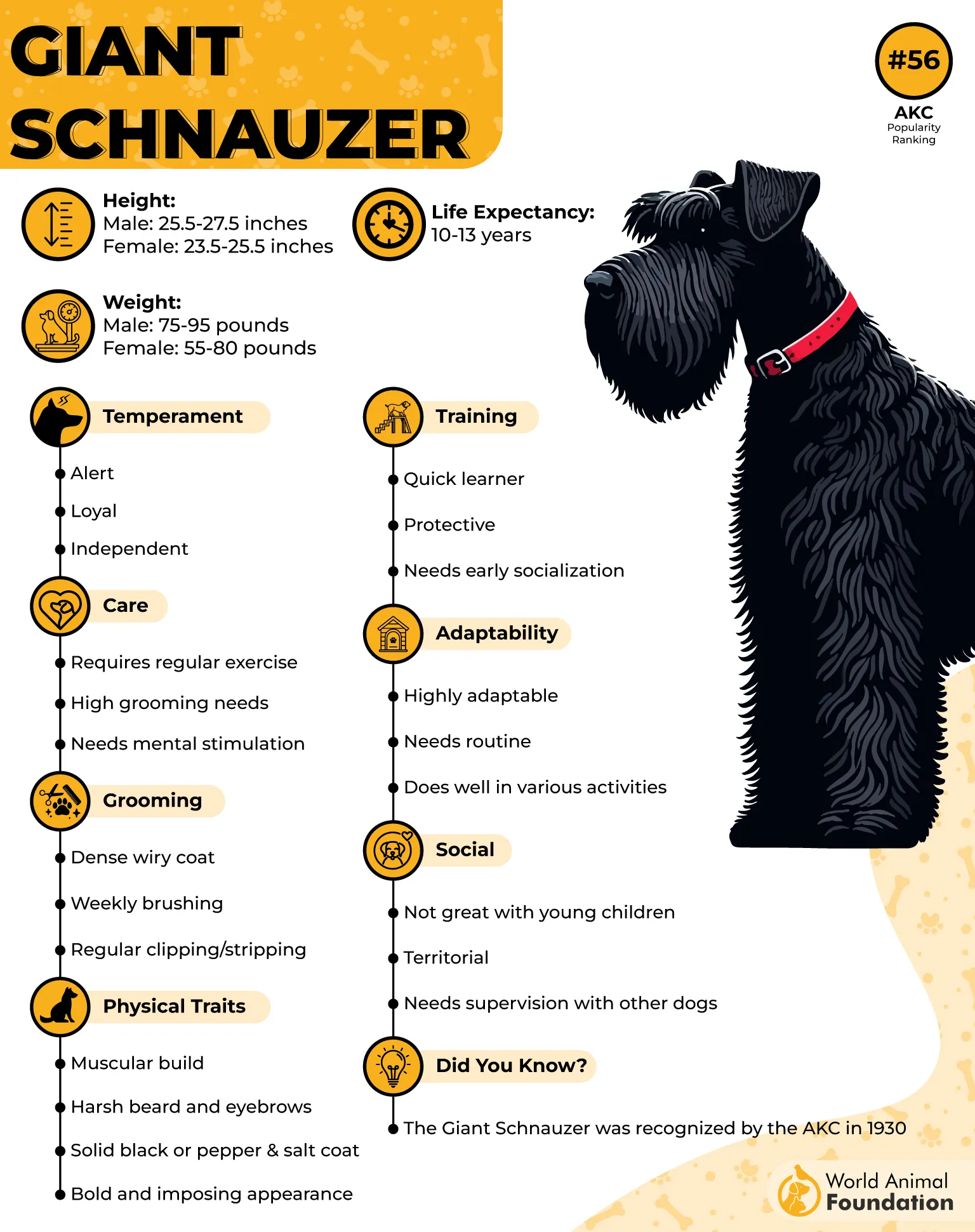
Training and care play a big role in shaping this dog. It needs consistent training and regular interaction to stay happy. Early learning may feel a bit challenging, but the results are worth it. With proper guidance, it becomes a perfect companion that protects and loves its family.
Care Essentials:
Needs to be groomed routinely to keep its coat healthy
Requires daily mental engagement and activity
Thrives when included in family routines
Benefits from structured tasks and social interaction
Conclusion
Choosing the right dog can bring both safety and joy into your life. Each of these breeds offers unique strengths, from quiet confidence to strong protective instincts. When raised with care, any of them can become an excellent guard dog while still being a loving companion at home.
The key is making sure your dog is well-trained and grows in a healthy environment. Training, social time, and daily activity all shape how a dog behaves. With the right effort, even a strong protector can show a calm and gentle side with family members.
It is also important to think about your lifestyle before choosing the right breed. Some dogs need more time, space, and energy than others, especially as they grow a bit older.
In the end, a well-raised dog offers more than protection. It brings loyalty, trust, and a deep bond that makes every home feel safe and complete.
