




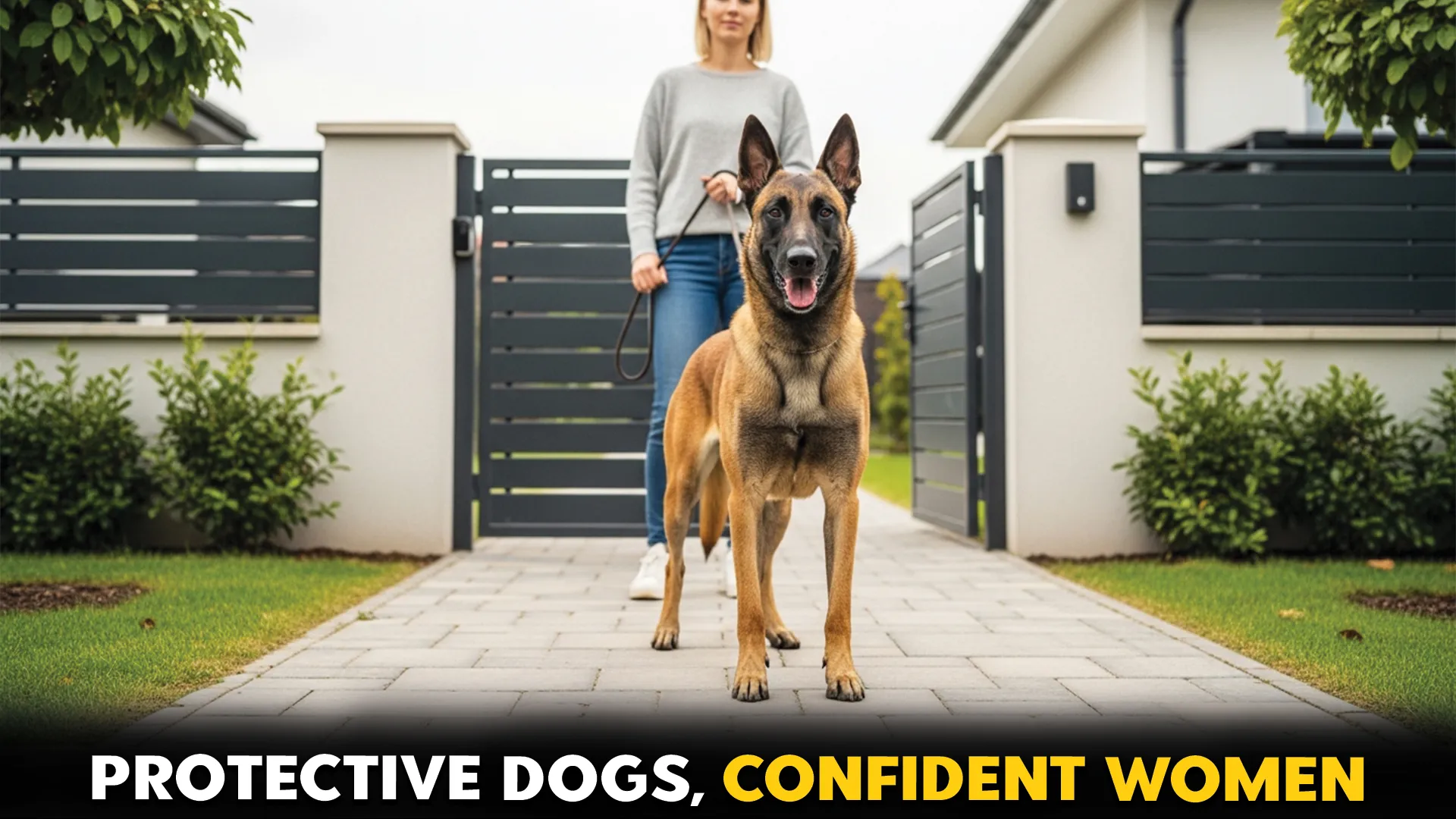
Living alone has its perks: full control of the TV remote, no unsolicited opinions about your leftovers, and zero compromise on the thermostat. But the fear of being attacked by someone never leaves you. It’s that tiny prickle of unease when the floorboards creak, or the shadows look a bit too long at midnight.
Sometimes, the best home security system isn’t a camera or a smart lock; it’s a wagging tail and a watchful eye. And when that dog happens to be 90 pounds of pure protection? That’s another level of comfort.
This guide breaks down the top guard dog breeds for women living alone, not just big and scary dogs, but smart, loyal, and actually protective companions. Whether you need a towering shadow for your morning jogs or a fearless little guardian for your apartment, we’ve found the best four-legged bodyguards to keep your sanctuary safe.
Top Guard Dog Breeds for Single Women – Safety First
1. Belgian Malinois
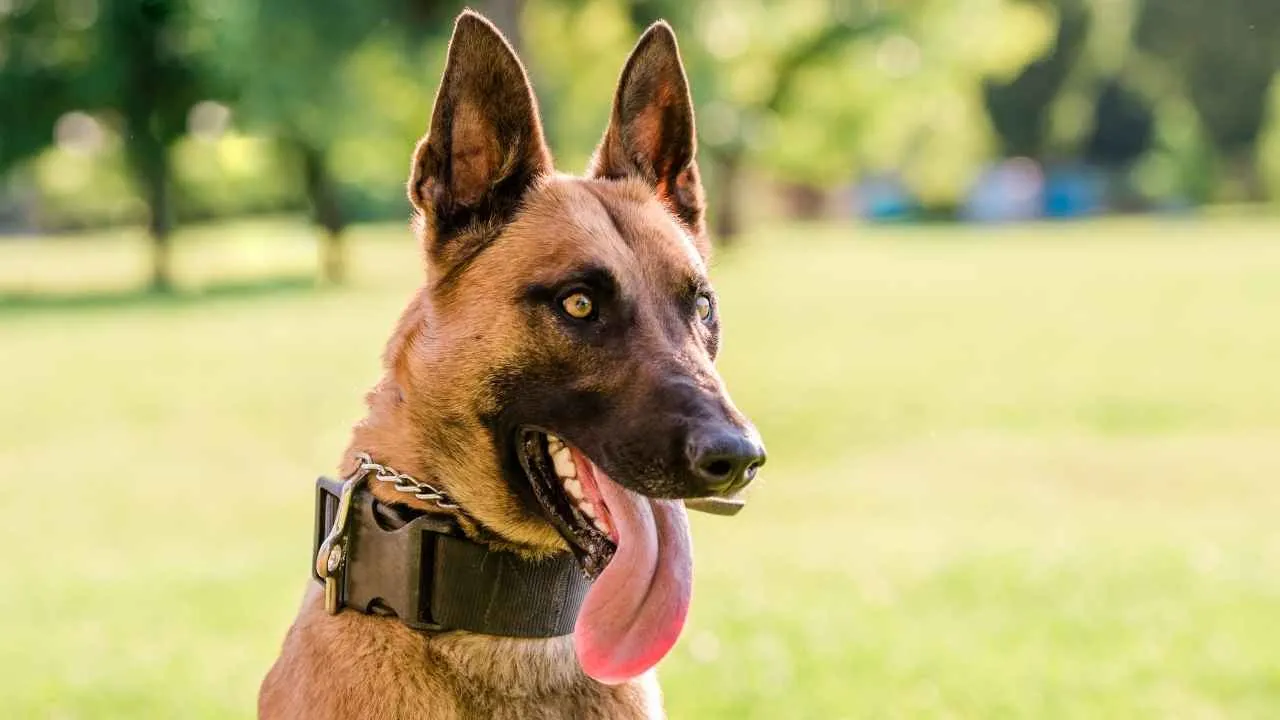
A Belgian Malinois thrives on purpose. It does not lounge, it monitors. It does not just bark, it observes. This protection dog is basically the overachiever of the dog world.
Orvis reports that Belgian Malinois have an intimidating presence and instead of moving in a straight line, they tend to run in a curved path because of their herding history. This curved path or the arc strategy creates a good space between the intruder and the owner, helps the dog to keenly observe the attacker, and increases the speed.
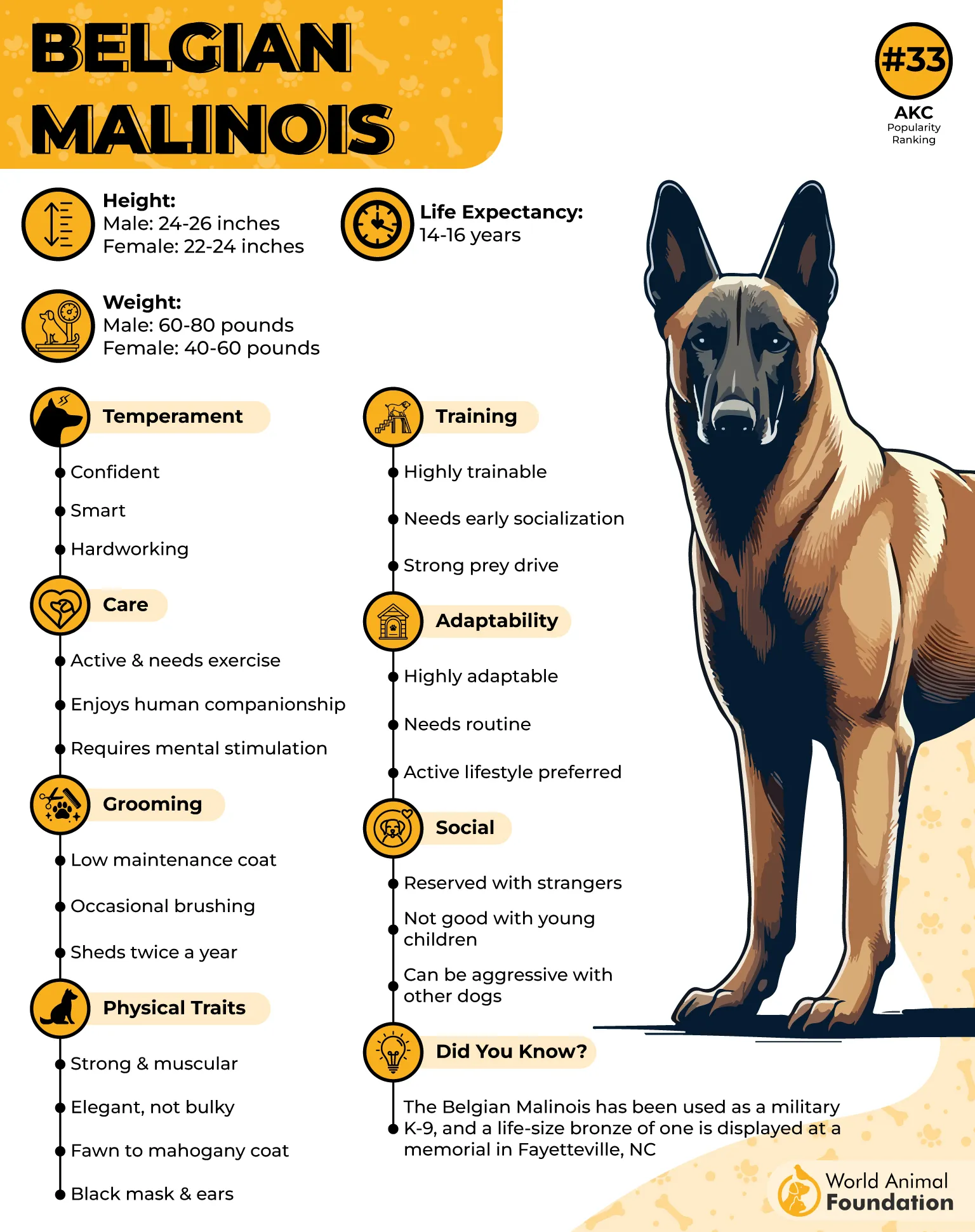
Exercise Needs: High intensity daily workouts (40 minutes on average): runs, agility, herding, scent work, dog sports, tracking, and mind games for mental and physical stimulation.
Temperament: Fearless, extremely intelligent, loyal, affectionate, high prey drive, form strong bonds with the owner, and are extremely energetic dogs
Protection Strategy: Sharp focus helps observe the expected intruder deeply. Circling to inspect the person. Barking and sometimes nipping as a warning. Holds object tightly.
Health Watchouts: Hip/elbow dysplasia, PRA, and cataracts.
2. Bullmastiff
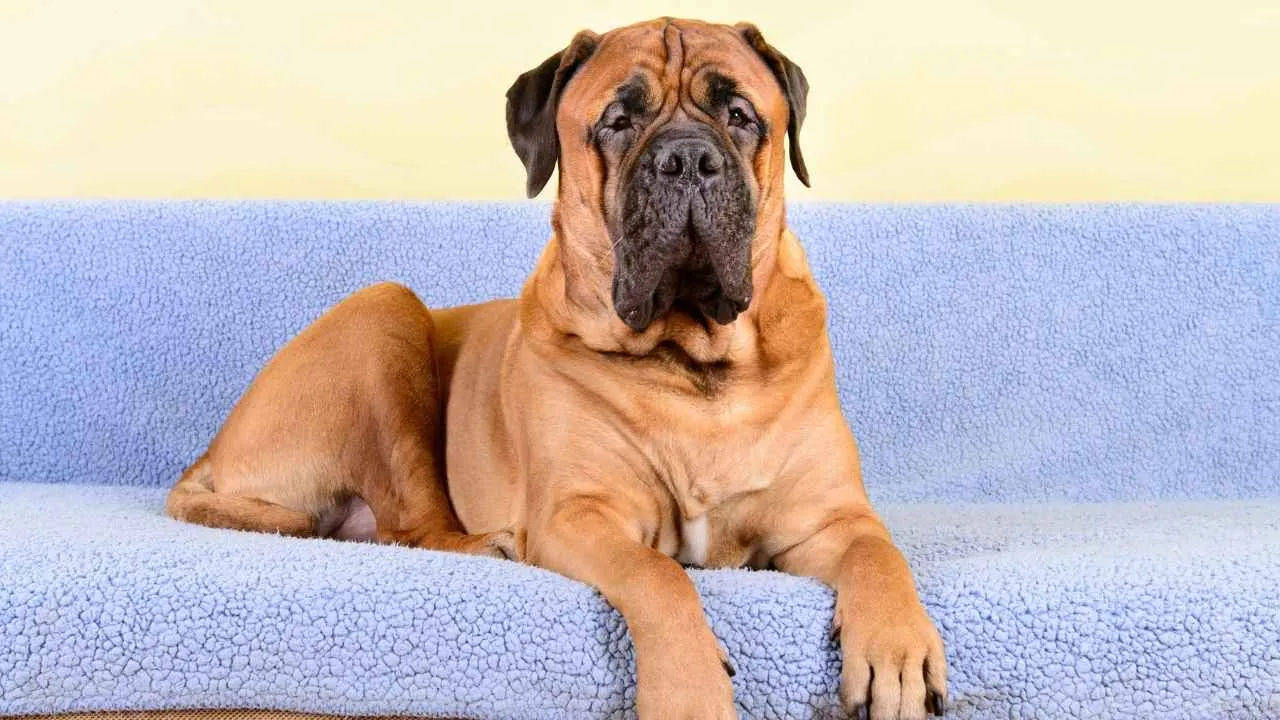
If you want a dog whose presence alone makes a would-be intruder rethink their life choices, the Bullmastiff delivers without you having to say a word.
Also known as ‘Gamekeeper’s night dog,’ this protection dog is the ultimate gentle giant. While their massive size is enough to scare off any intruder, they are actually massive softies with their favorite humans.
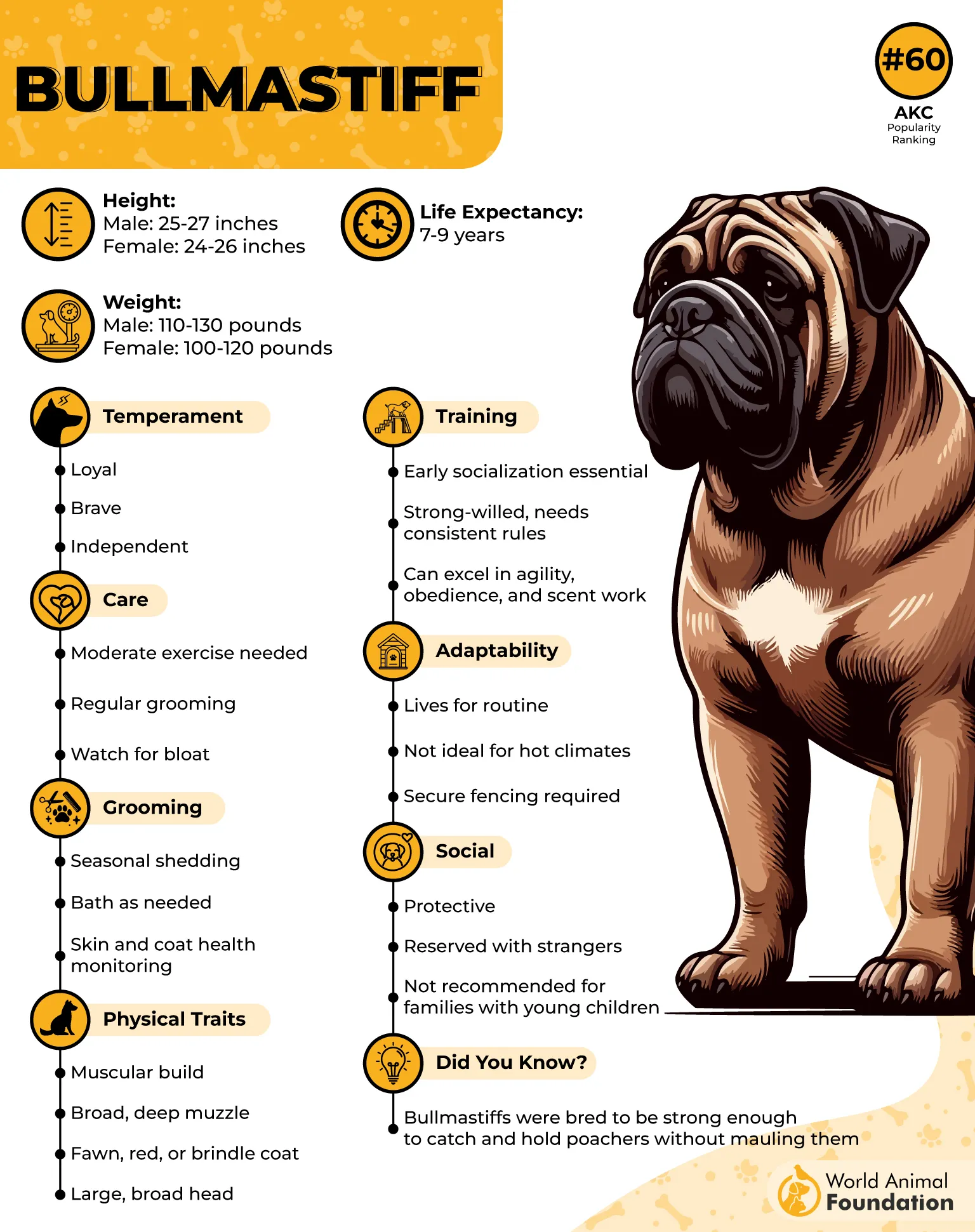
Originally bred as guardians, they are naturally protective and devoted to their families. They used to track down the poacher until the gamekeeper came. They might look intimidating, but at heart, they just want to be wherever you are.
Exercise Needs: Moderate exercise: daily walks and play sessions, avoid overexertion in heat.
Temperament: Calm, devoted, quiet, confident, extremely intelligent. They get uncomfortable around new people; hence, early socialization and proper training are crucial.
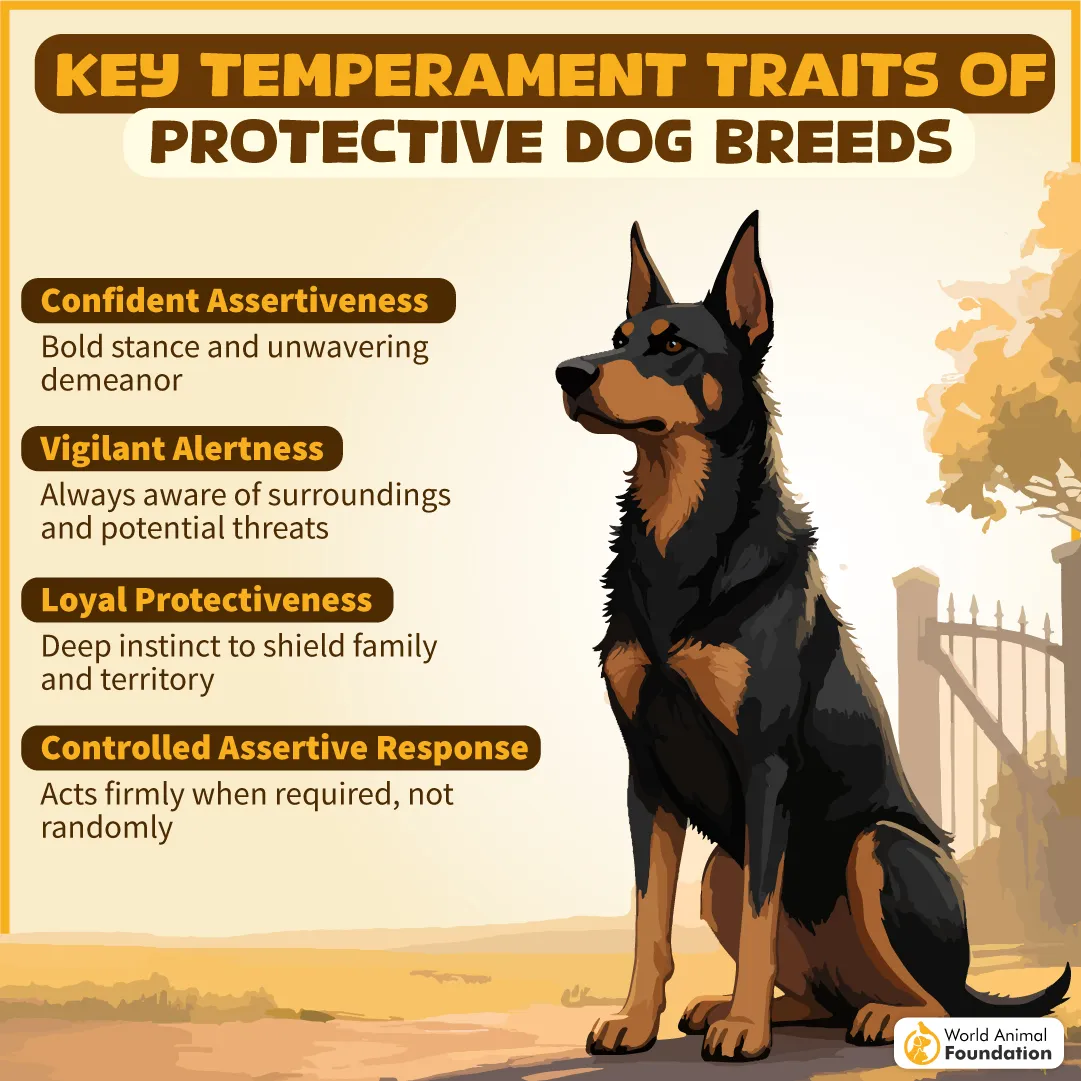
Protection Strategy: Petrol and keep an eye on source points, doors, and hallways. Lean and block without barking. Static posture, such as staring and a squared stance, to deter an intruder. Knock down the attacker when needed.
Health Watchouts: Hip/elbow dysplasia, bloat, skin fold infections, DCM, entropion, SAS, PRA, lymphoma, and heart issues.
3. Akita
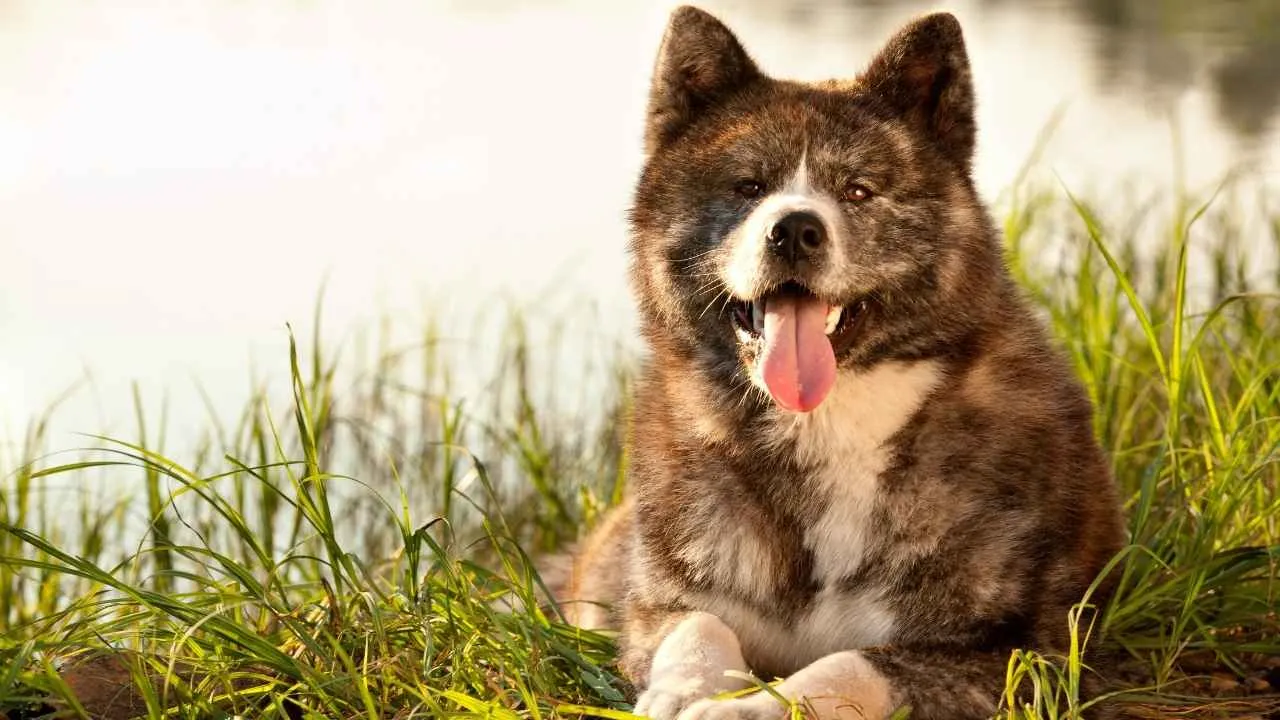
For a single woman, the Akita becomes your quiet shadow: always near, always watching, and always ready. They are considered a protective symbol in Japanese culture.
Due to their hunting history of animals like bears and boars, this protection dog still preys on small animals such as squirrels, rabbits, and rodents, etc. They are fast, vigilant, and constantly keep an eye on their surroundings.
If you are a cleanliness freak, Akita is a perfect breed for you since it has cat-like grooming instincts, and it prefers licking its coat and paws to remove any dust or debris
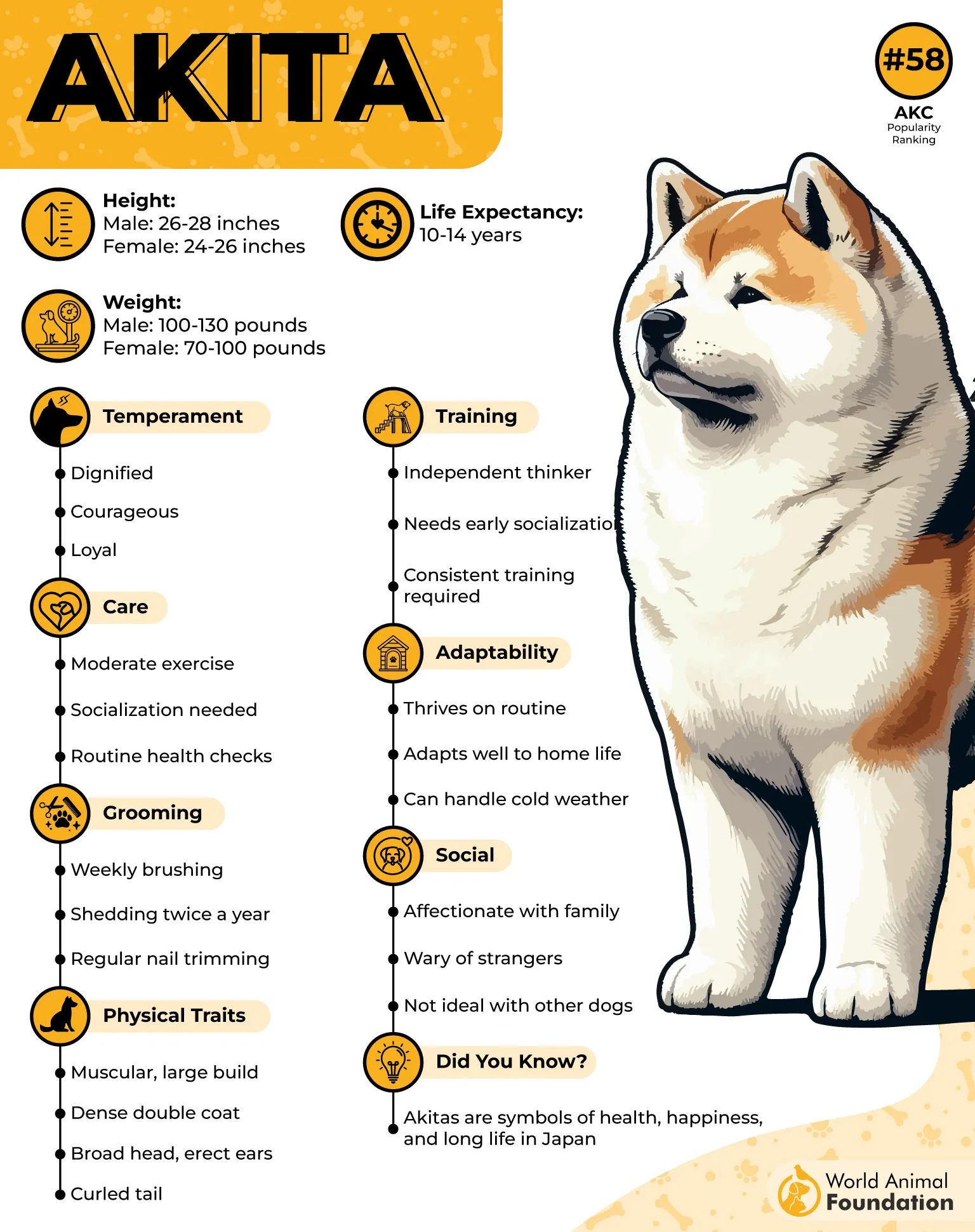
Exercise Needs: Moderate: Daily exercise and play. Enjoy outdoor activities but not excessively high-impact exercise. Bred to bear the harsh environment of Northern Japan, they thrive in both indoor and outdoor activities.
Temperament: Independent, dignified, deeply devoted to one owner, powerful, dominant, watchful, requires consistent training and early socialization, strong canine communication.
Protection Strategy: Quietly observe their surroundings. Bark to alert the owner. Keep themselves between the stranger and the owner for protection. Attack the potential threat when needed.
Health Watchouts: Hip dysplasia, hypothyroidism, immune disorders, eye problems, sebaceous adenitis, and PRA.
4. German Shepherd
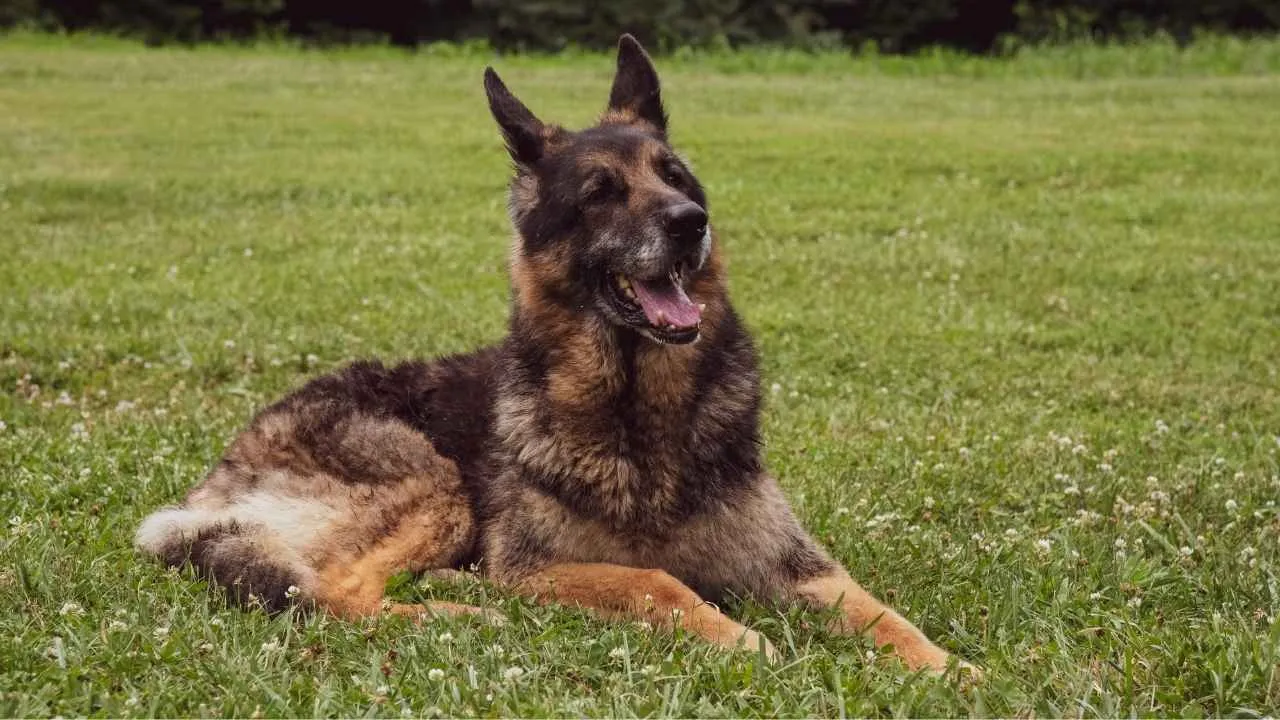
Ask any police officer, SAR worker, or guide dog trainer which breed tops their list, and the German Shepherd comes up every single time. It’s their strong protective instincts and loyalty to the owner that make them prominent in this list.
One of the unique features of German Shepherds is their ‘flying trot’. This makes them one of the fastest guard dog breeds. Unlike normal gait, where at least one foot is touching the ground, a German Shepherd almost becomes an airborne dog, trying to chase its prey. It also has a strong bite force and can recover from a traumatic experience easily.
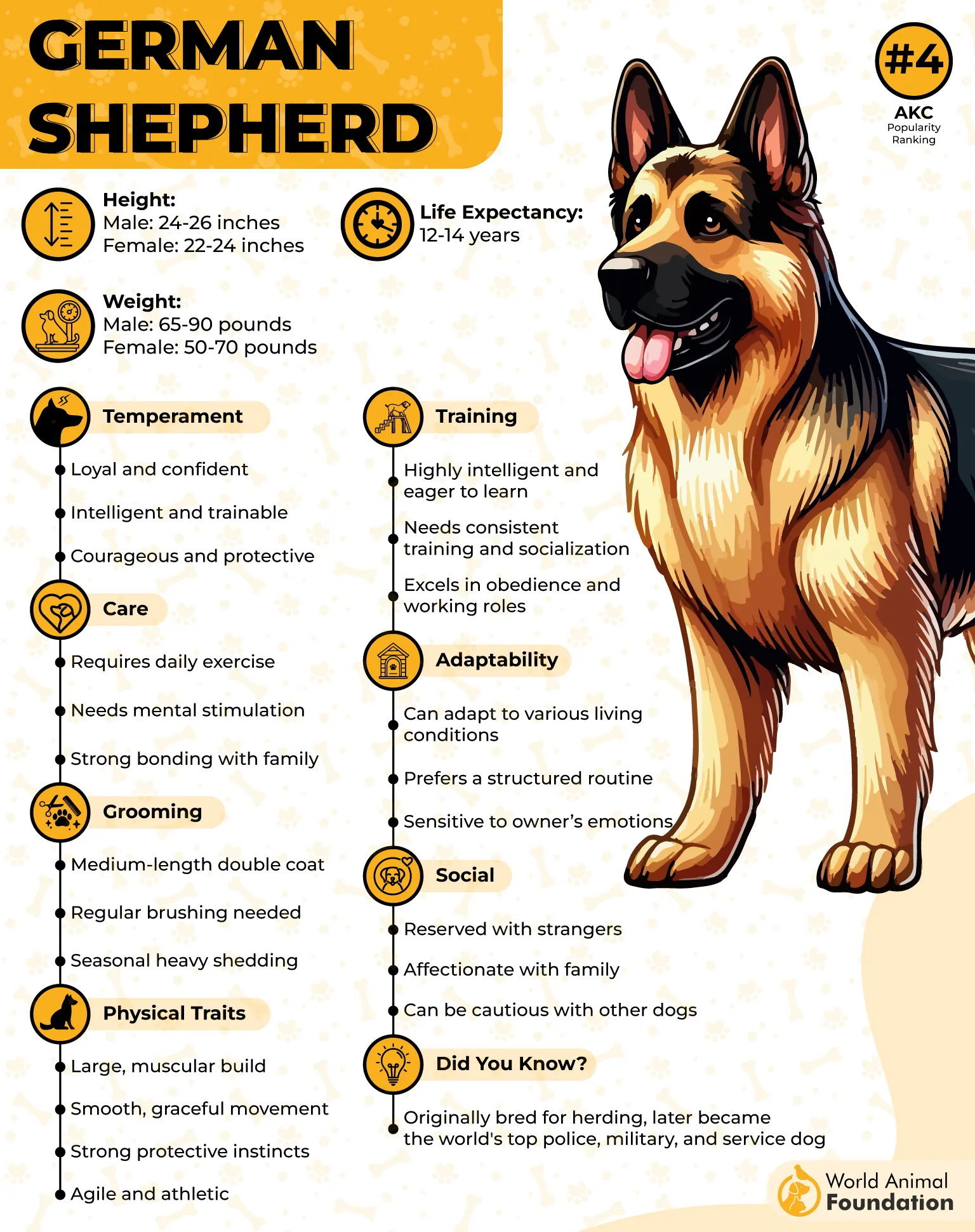
Exercise Needs: High: Two hours of mental and physical training daily. Agility, nose work, tracking, hunting, and dog sports are suggested.
Temperament: Alert, obedient, confident, affectionate, strong reactivity, problem-solving, and intelligent.
Protection Strategy: Reads a human’s body language. Circling and blocking to create a barrier and warn of the threat. Bark strongly and attack fiercely if needed.
Health Watchouts: Degenerative myelopathy, bloat, hip/elbow dysplasia, cancer, heart diseases, allergy EPI, and pannus.
5. Rottweiler
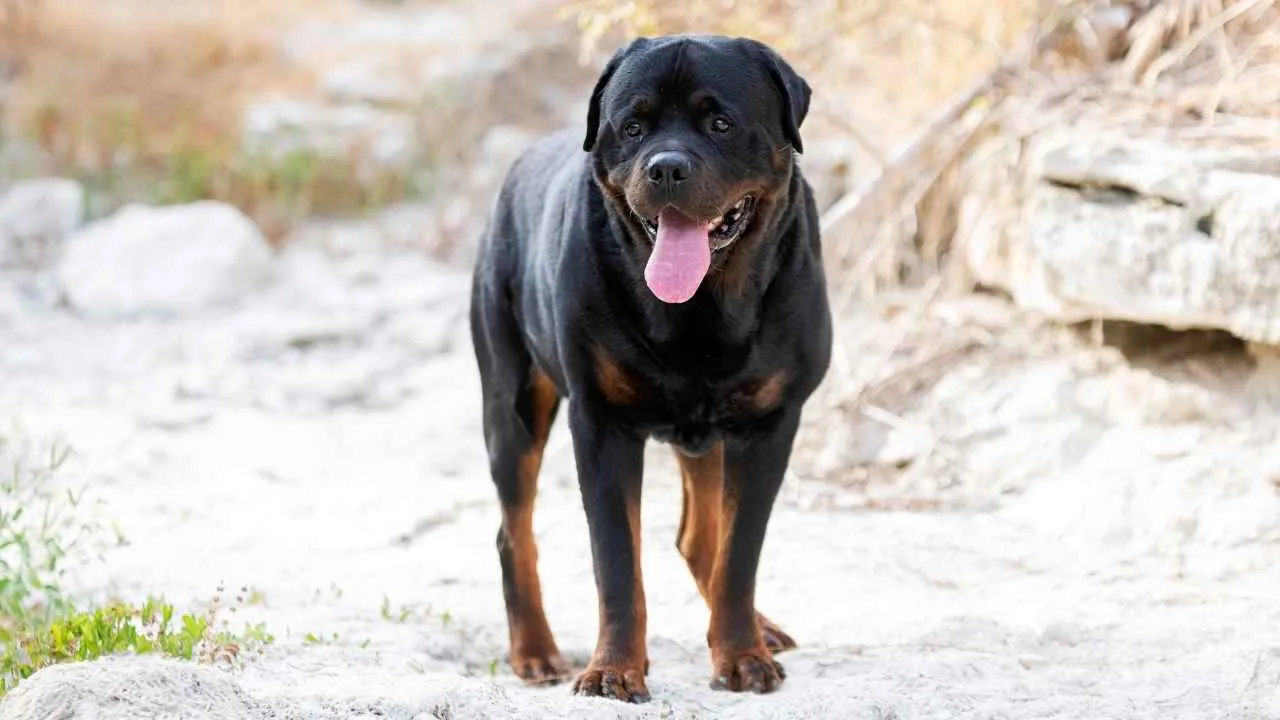
This breed has a slight PR issue. Pop culture has painted them as dangerous beasts. But a well-trained Rottweiler is one of the most affectionate, devoted, and protective dogs you can ever own.
Fiercely loyal and willing to risk their own life for their owner, this guard dog is extremely smart and can easily learn commands on the 5th try. However, they may forget to take commands in fights, so it is important to have early training for safety concerns.
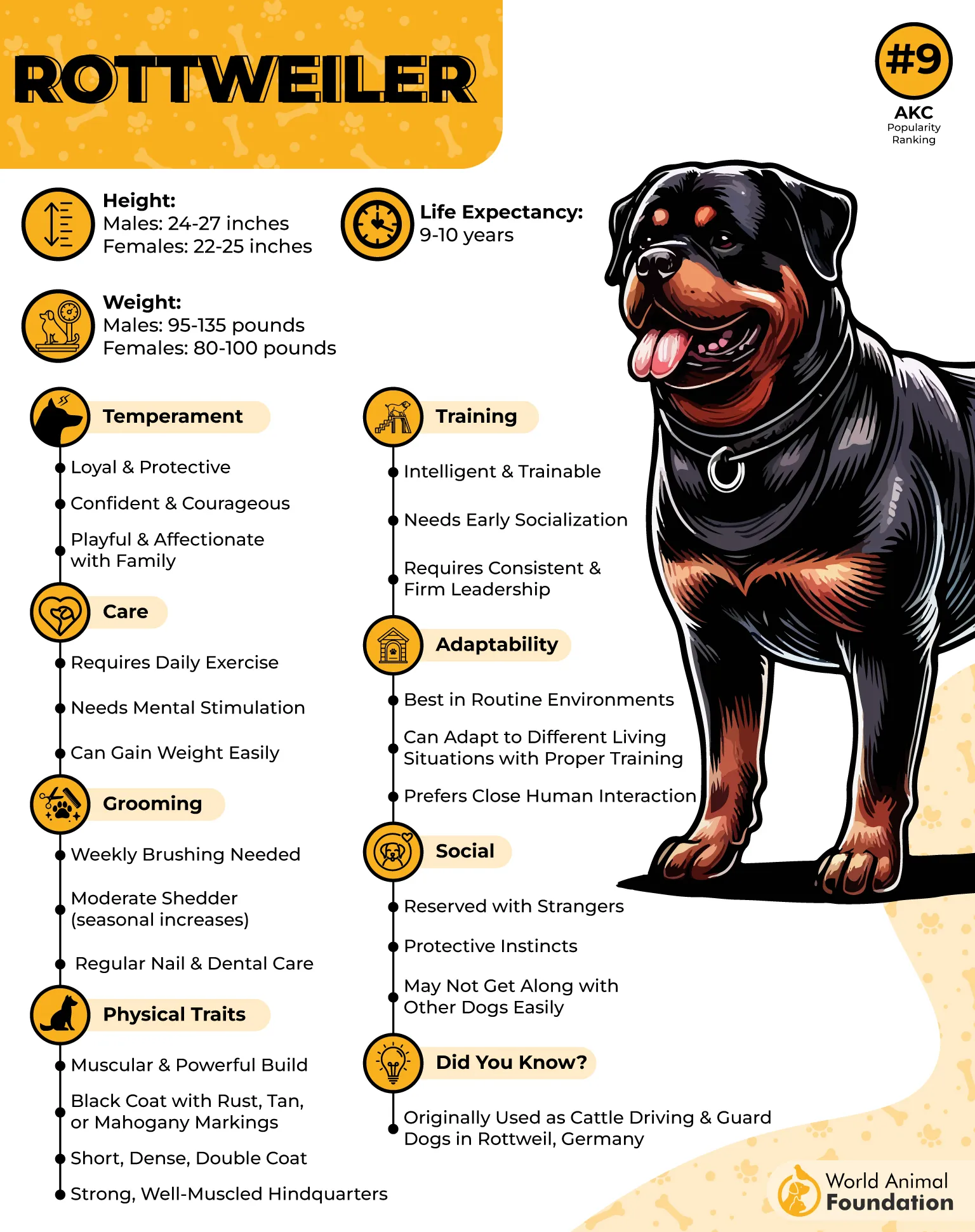
Exercise Needs: Moderate to high: daily walks, strength play, hiking, agility, obedience training, and structured mental stimulation are recommended.
Temperament: Confident, calm, loyal, and protective without being overly aggressive, powerful, with high pain tolerance, and strong bite mechanics.
Protection Strategy: Quietly monitor the suspected spots. Create a barrier between the owner and the attacker. Not a true barker, may bark deeply once or twice to warn. Take the charge and bite the attacker.
Health Watchouts: Hip/elbow dysplasia, heart diseases, obesity, cranial cruciate ligament rupture, osteosarcoma, entropion, and bloat.
6. Doberman Pinscher
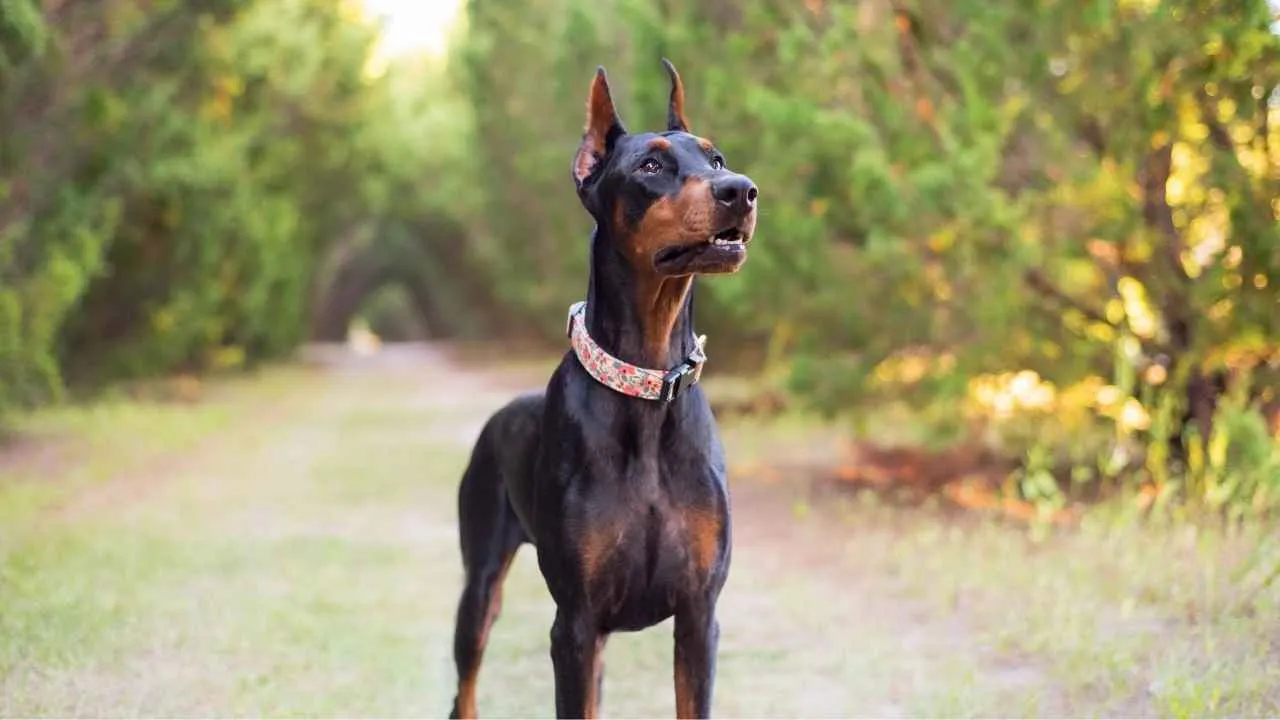
The Doberman was literally designed to be a guard dog. Tax collector Louis Dobermann created the breed in the 1890s for personal protection while making his rounds.
This gentle giant was a reliable protector during World War I and II and was used for sending messages, protection, scent work, and hunting. Dobermans are also used in police, SAR, and military departments for the same purposes.
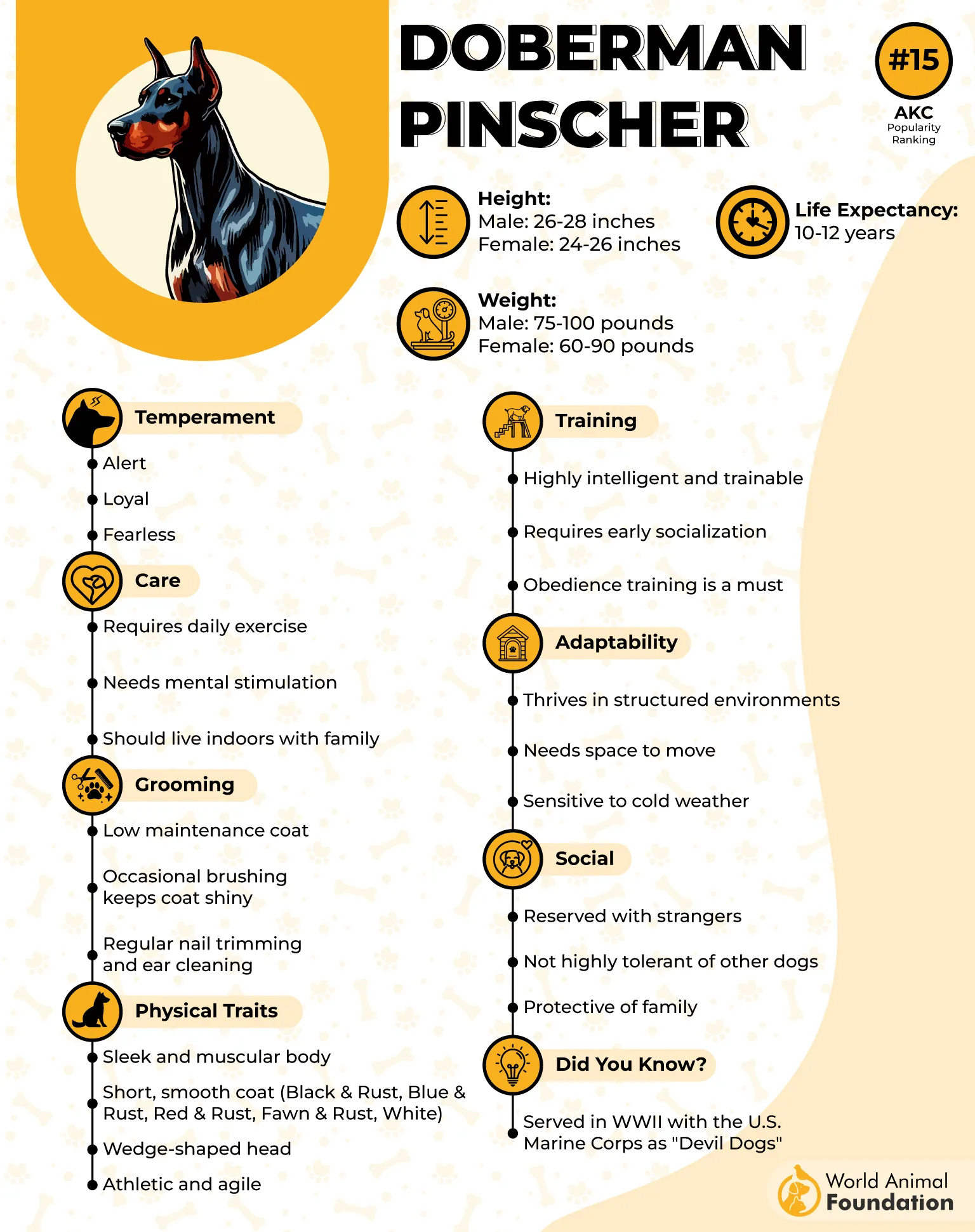
Exercise Needs: High: needs vigorous daily activity, running, and mental stimulation.
Temperament: Alert, energetic, provides emotional support, fiercely loyal, intelligent, curious, strong prey drive, and protective.
Protection Strategy: Read human body language. Recall the patterns and make decisions accordingly. Place themselves between the actual threat and the owner for safety concerns
Health Watchouts: Dilated cardiomyopathy, Von Willebrand disease, bloat, hypothyroidism, and hip dysplasia.
7. Boxer
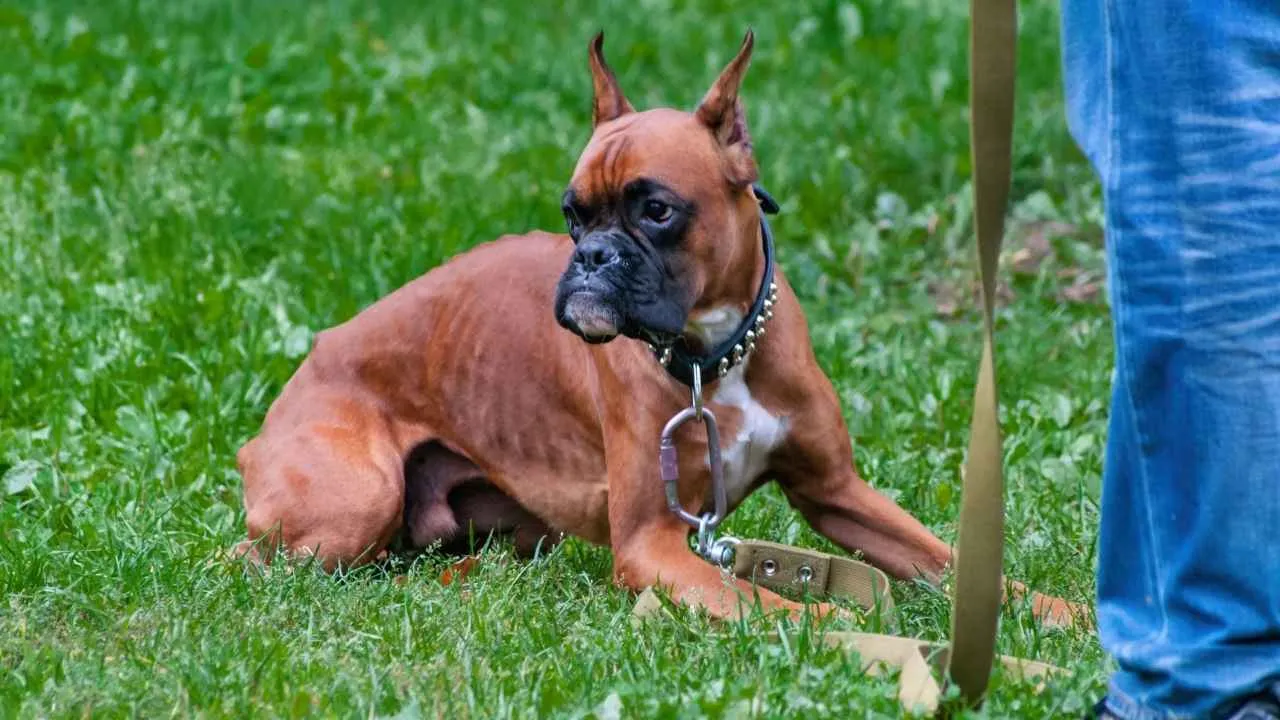
Boxers are class clowns of the guard dog kingdom: goofy, playful, and obsessed with their owners. But don’t let that wiggle-butt and silly face fool you. They are alert, brave, and have natural guarding instincts.
Originally bred in the Assyrian Empire some 2,500 years ago as a war dog. This guard dog was used to hunt big game, but due to political shifts and other reasons, they were crossbred and now turned into a playful lap dog who comes into action when it senses a serious threat
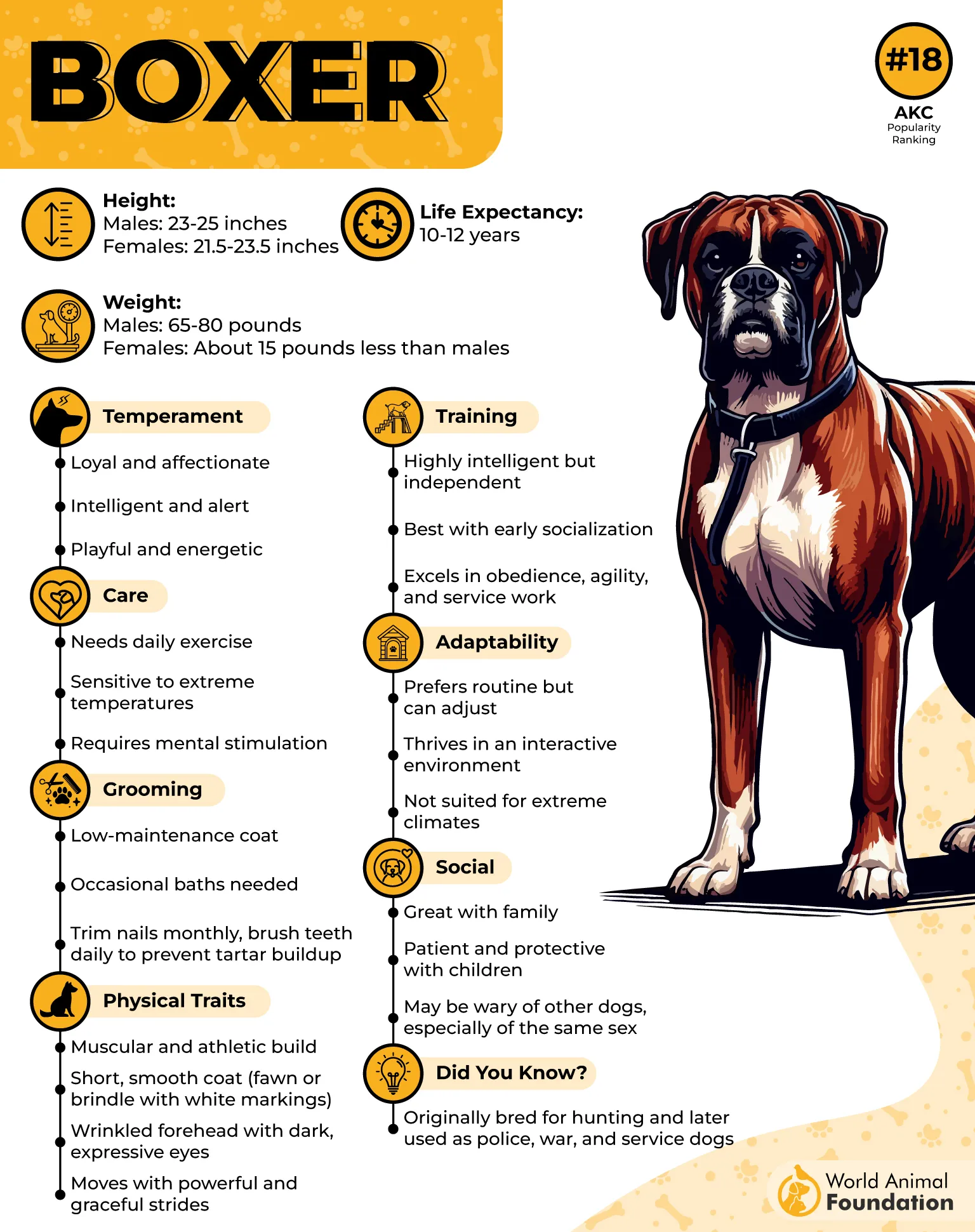
If you are a busy woman seeking a naturally protective dog with an active lifestyle and minimal grooming, this is the best guard dog for you.

Exercise Needs: High: daily runs, regular exercise, fetch, and interactive playtime to channel their boundless energy. Professional training is required to train them
Temperament: Playful, “kid-like” exuberance, bright, energetic, brave, highly trainable, people-focused, and an incredibly loyal companion.
Protection Strategy: Strong eye gazing and expressive sounds to warn of the threat. Attack with front paws as if they are in a boxing match.
Health Watchouts: Heart conditions, hip dysplasia, and brachycephalic issues.
Conclusion
Having a protective partner by your side becomes mandatory when you are living alone. The right guard dog is more than just a pet. Whether you prefer the elite athleticism of Belgian Malinois, the quiet power of Bullmastiff, or the lovable energy of a boxer, there is a breed on this list that fits exactly with your demands.
Each of these breeds brings something different to the table, but they all share one thing: a never-ending commitment to the person they love the most, YOU. The right dog won’t just protect your home; it will provide surety that you are safe, and there is no need for worry at all!
