




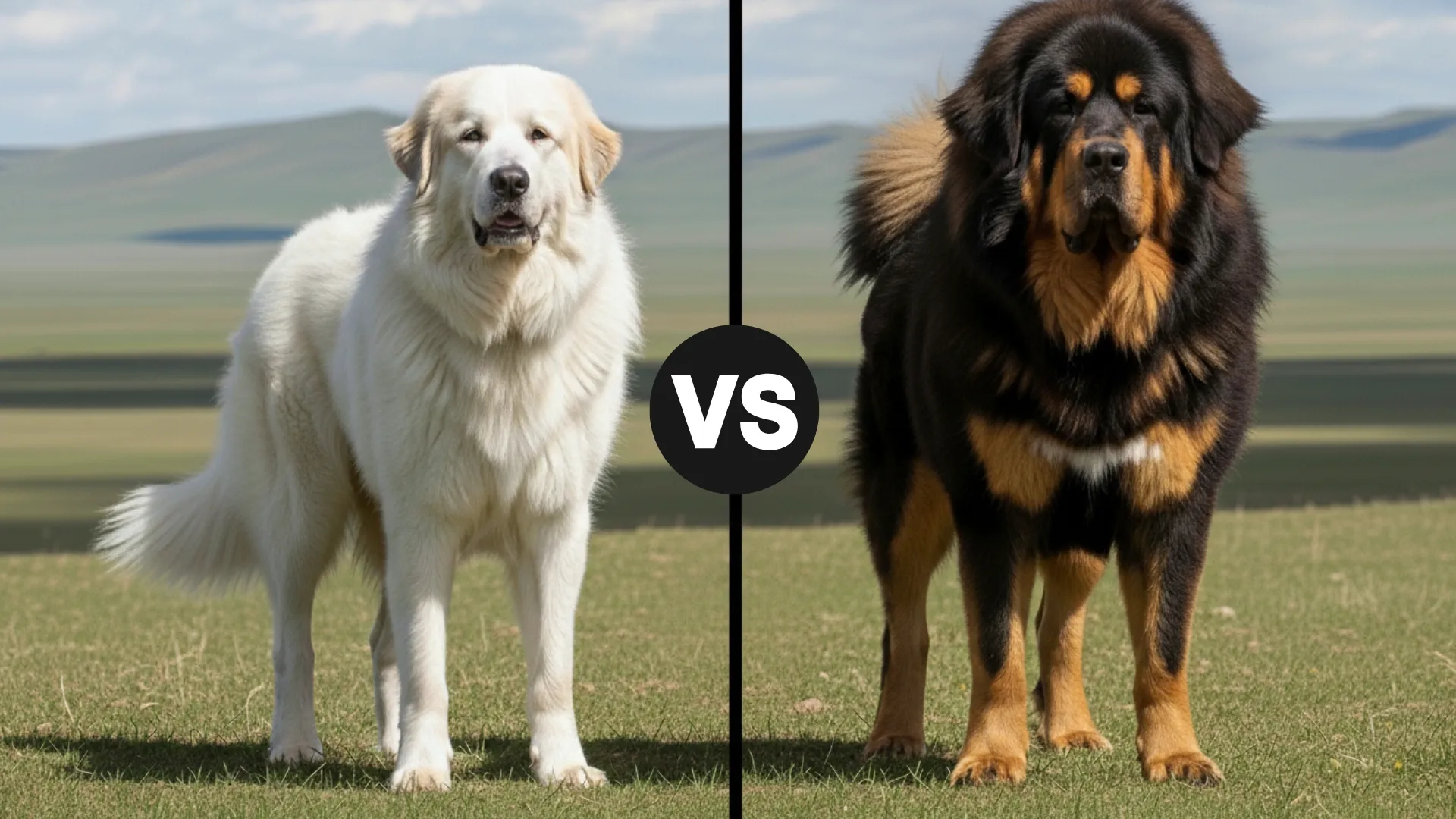
When it comes to livestock guardians and powerful family protectors, few breeds spark more interest than the Great Pyrenees and the Tibetan Mastiff.
Both are large, impressive dogs with a strong presence, a deep sense of loyalty, and a long history of watching over the people and animals in their care. At first glance, they may seem similar, but these two breeds can be very different in personality, daily care, and the way they respond to the world around them.
For pet owners trying to choose between them, the decision is not just about size or looks. It is about lifestyle, training style, grooming needs, and the kind of bond you want with your dog.
In this guide, we will break down the Great Pyrenees vs Tibetan Mastiff debate in a simple, practical way so you can see which guardian breed may be the better match for your home.
Great Pyrenees vs Tibetan Mastiff: The Ultimate Guardian Showdown
Size and Strength
The first thing most people notice in the Great Pyrenees vs. Tibetan Mastiff debate is how differently these two giant guardians carry their power.
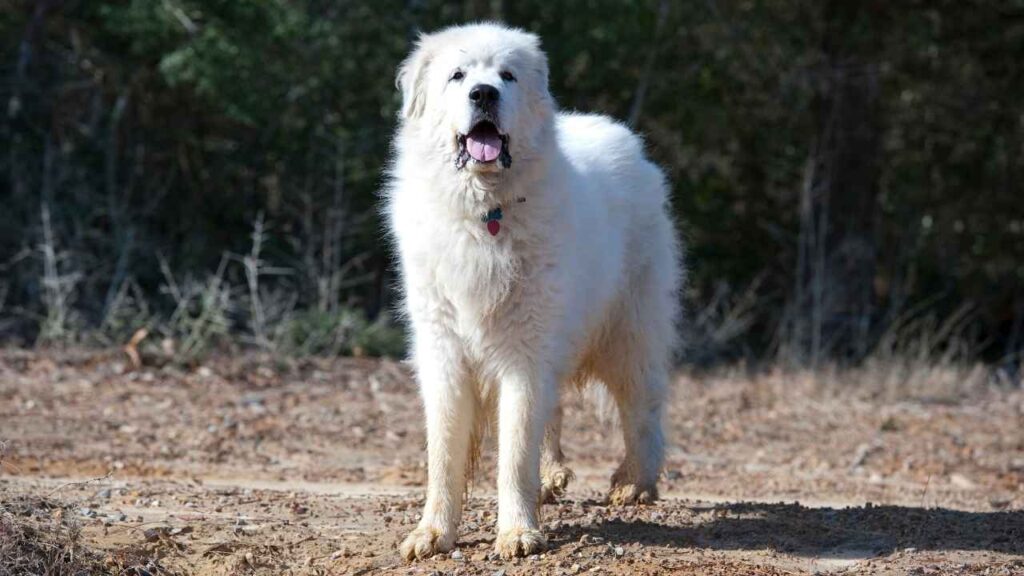
The Great Pyrenees is a very large working dog with a strong frame, broad chest, and solid bone, but it usually looks more balanced than bulky, as per Hill’s Pet.
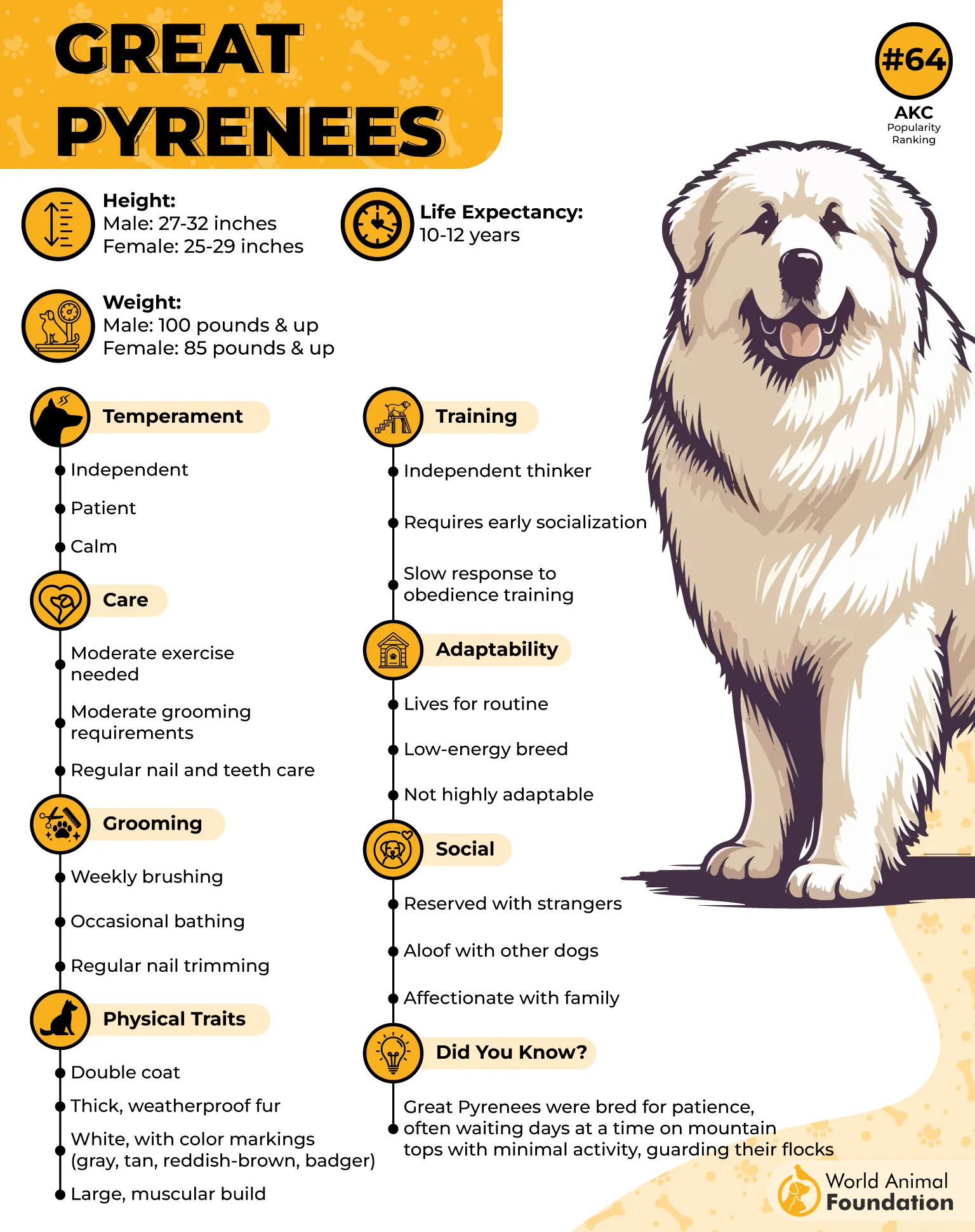
It was developed to move across rough land while guarding livestock, so its body reflects steady strength rather than pure mass. In many parts of the World, that practical build is one reason the breed is admired as both powerful and functional.
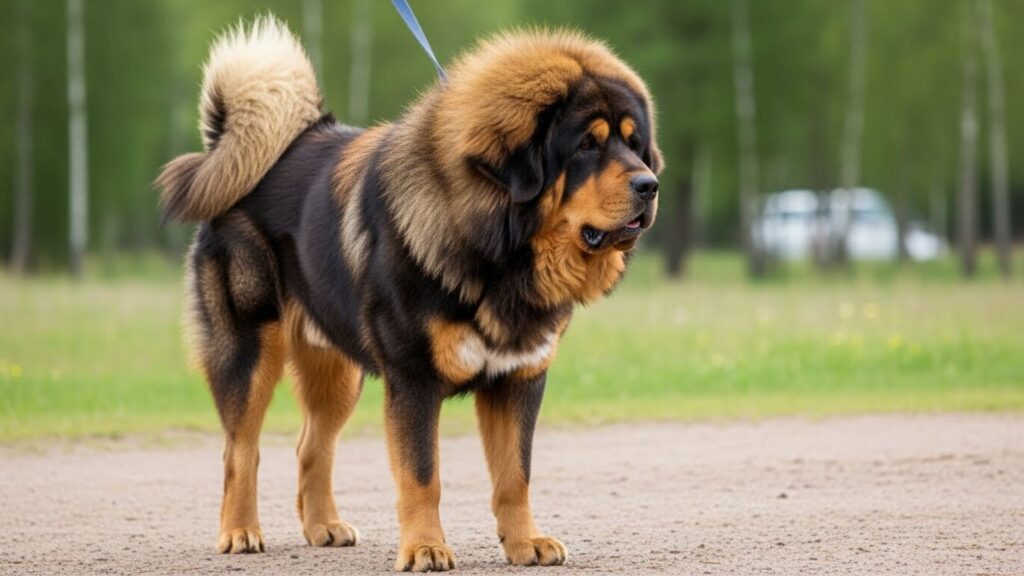
The Tibetan Mastiff is also a giant dog, but its appearance often feels much heavier and more dramatic. A Tibetan Mastiff usually has a thicker outline, a broader look through the body, and a more imposing front.
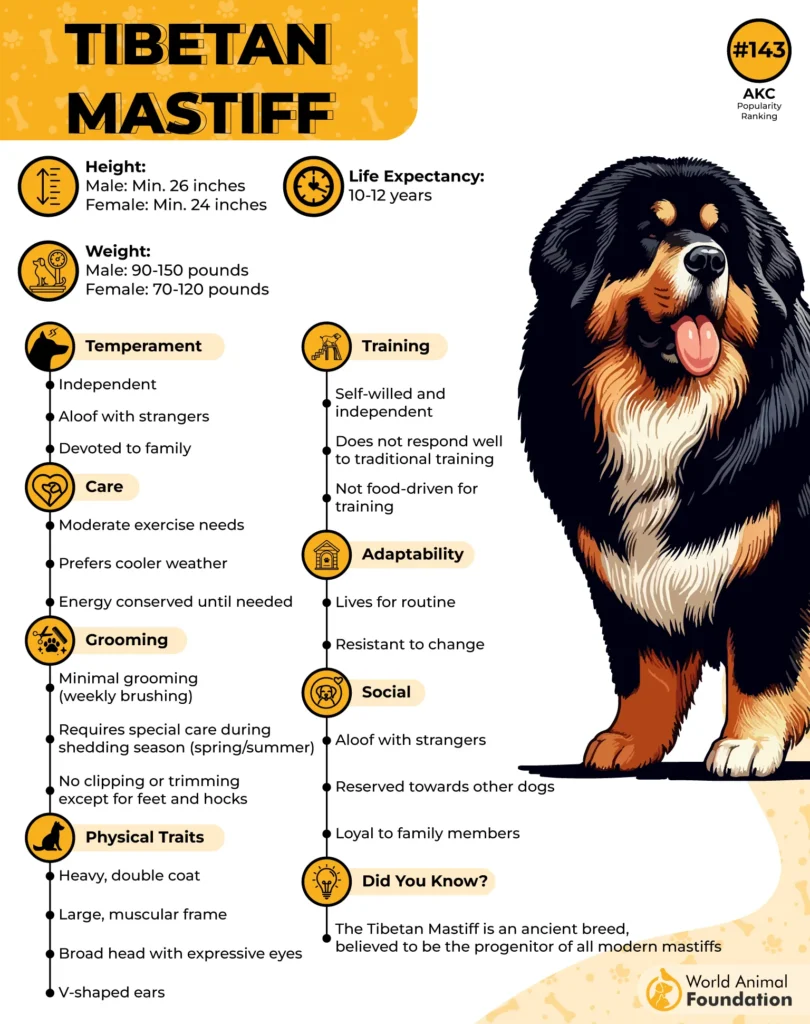
When people think about the Great Pyrenees, it is a more intimidating guardian; this breed often stands out right away. It tends to look like a dog that can hold its ground without taking many extra steps.
That is why Great Pyrenees vs Tibetan Mastiff in terms of size is not only about height or weight. The Great Pyrenees often gives the impression of athletic working strength, while the Tibetan Mastiff looks more massive and forceful.
In Pyrenees vs Mastiff comparisons, one seems built for steady patrol, and the other seems built to dominate space. The better fit comes down to whether they prefer a more active guardian look or a heavier, more commanding presence.
Temperament
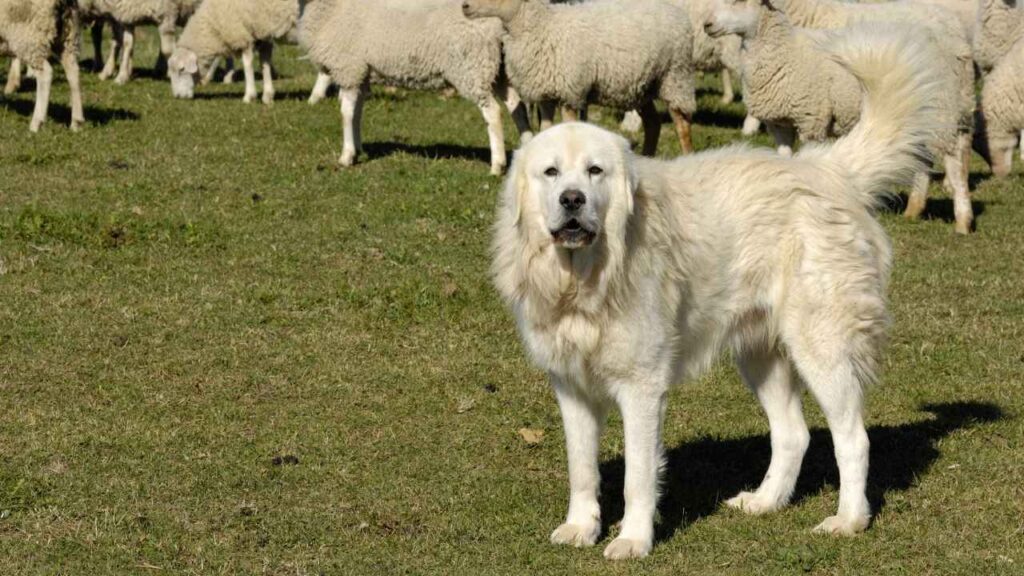
Temperament is where the Great Pyrenees and Tibetan Mastiff often begin to feel like very different companions. The Great Pyrenees is usually calm, patient, and steady, with a gentle side that can make daily life easier for many families.
It was bred to guard without being overly reactive, so it often shows a quieter form of confidence. In the World of large guardian dogs, that softer nature can be a big fit for people who want protection without a constantly intense atmosphere at home.
The Tibetan Mastiff is usually more reserved and more naturally suspicious. According to PetMD, the Tibetan Mastiff can be deeply loyal to its own people, but it often keeps strangers at a greater distance and does not warm up quickly.
In Great Pyrenees vs Tibetan Mastiff personality discussions, this is one of the clearest differences. While the Great Pyrenees often feels more open and composed, the Tibetan Mastiff tends to feel more serious and guarded from the start.
That difference affects everyday life more than many people expect. The Great Pyrenees often seems easygoing in family settings, even though it still has an independent mind. The Tibetan Mastiff may be calm, but its calmness is usually paired with stronger territorial awareness.
In Pyrenees vs Mastiff temperament, the real question is not which dog is nicer. It is determining which personality is the better fit for your home, visitors, routine, and comfort level.
Health
Health deserves careful attention in the Great Pyrenees vs. the Tibetan Mastiff because both are giant dogs, and giant dogs often carry extra physical demands throughout life.
The Great Pyrenees can face joint-related issues, including hip problems and kneecap concerns, along with some eye conditions and bloat.
These are not small matters, especially for owners who may underestimate the care giant dogs need. In the world of large guardians, long-term health planning is just as important as choosing the breed itself.
The Tibetan Mastiff also has major health concerns that owners need to take seriously. According to WebMD, a Tibetan Mastiff may be prone to hip and elbow dysplasia, and thyroid problems can also be part of the picture.
In the Great Pyrenees comparisons centered on health, neither breed should be seen as easy or low maintenance. Both require careful breeding choices, regular veterinary attention, and thoughtful management throughout life.
Life expectancy for the Great Pyrenees and Tibetan Mastiff is usually around 10 to 12 years, which is fairly typical for giant dogs. That means weight control, sound structure, and steady care matter from an early stage.
One major error people make is focusing only on appearance or guarding power while ignoring the physical responsibility that comes with these breeds.
In Pyrenees vs Mastiff health, the better fit often depends on whether an owner is ready for the commitment that giant-breed care brings. Responsible ownership makes the biggest difference in how well these dogs live and age.
Training
Training is one of the most important areas in the Great Pyrenees vs the Tibetan Mastiff because both breeds were developed to make decisions on their own.
The Great Pyrenees can absolutely learn household rules, boundaries, and polite behavior, but it usually responds best to calm, steady, consistent training. It is not a breed that thrives on harsh correction or endless drilling.
In the world of guardian dogs, this independent style is normal, but it can surprise people who expect quick, eager obedience. The Tibetan Mastiff is often even more challenging in training.
A Tibetan Mastiff is intelligent, but it is also stubborn, highly self-directed, and less interested in following commands just because a human gave them.
In Great Pyrenees vs. Tibetan Mastiff training, that difference matters a lot. While both breeds need structure, the Tibetan Mastiff usually pushes owners harder to prove that rules are real and worth respecting.
That does not mean the Great Pyrenees is simple. The Great Pyrenees also thinks independently and may choose its own timing rather than responding right away. Still, the overall feel is often less rigid than with the Tibetan Mastiff.
Early socialization is essential for both dogs, especially because guarding instincts can become difficult to manage if training is delayed. In Pyrenees vs Mastiff training, the biggest error is assuming size equals automatic control.
Owners who do best are usually the ones who stay patient, consistent, and realistic about what these dogs were bred to do.
Endurance
Endurance is a very useful point in the Great Pyrenees vs Tibetan Mastiff because both breeds come from mountain backgrounds, but they do not always use their strength in the same way.
The Great Pyrenees was developed to guard livestock over long periods in rough conditions, and its body reflects that purpose. It is not a flashy mover, yet it is well-suited for steady work, alertness, and long stretches of outdoor responsibility.
In many working settings around the World, that kind of reliable endurance is a big part of the breed’s appeal. The Tibetan Mastiff also has a history tied to harsh environments and cold conditions.
A Tibetan Mastiff is strong and durable, but its heavier body and dense coat can make prolonged active work more tiring, especially in warmer weather.

In Great Pyrenees vs Tibetan Mastiff comparisons, this is where the Great Pyrenees often gains an advantage. It usually looks and works like a dog built to keep going at a measured pace for a long time.
That does not mean the Tibetan Mastiff lacks stamina. It simply tends to express endurance differently, with more emphasis on presence and territory than on covering ground over wide areas.
The Great Pyrenees often feels more suited to steady movement and long guarding hours, while the Tibetan Mastiff may seem more comfortable conserving energy until its protective instincts are needed.
In Pyrenees vs Mastiff endurance, the Great Pyrenees often feels like the better fit for active outdoor guarding. That distinction matters for owners deciding how these dogs will actually live and work.
Calmness
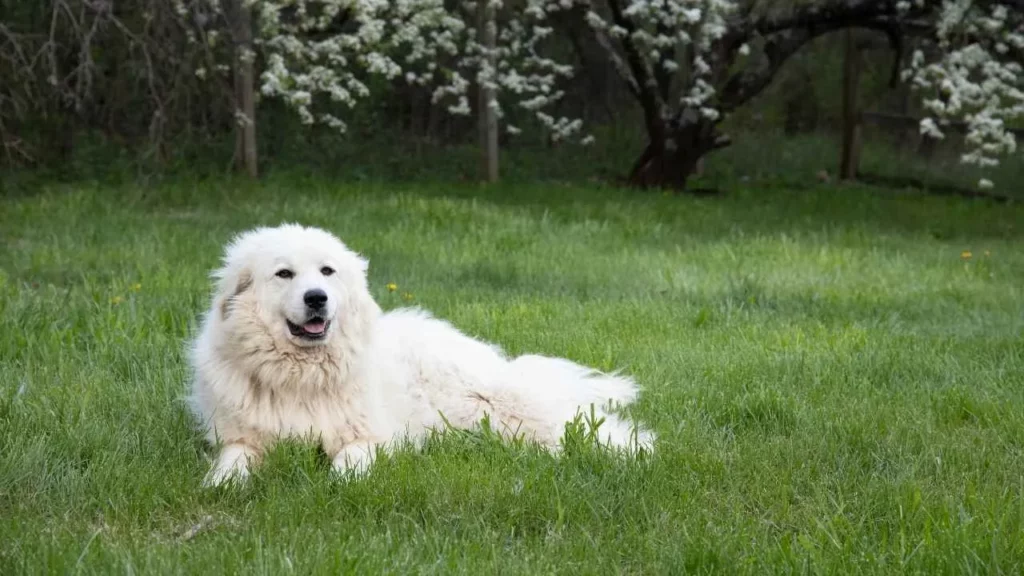
Calmness is one reason the Great Pyrenees often surprises people who expect every giant guardian to feel intense all the time. The Great Pyrenees is frequently described as laid-back, patient, and peaceful in the right home environment.
It has a quiet confidence that can make it easier to live day to day, even though it remains highly aware of what is happening around it. In the world of big protective dogs, that calmer indoor style is one of the breed’s strongest qualities.
The Tibetan Mastiff can also be calm, especially with family and in familiar surroundings. A Tibetan Mastiff often shows a deep sense of stillness and control when it feels secure.
But the important difference in the Great Pyrenees vs Tibetan Mastiff calmness is that the Tibetan Mastiff’s calm side is often closely tied to a stronger territorial edge. It may appear relaxed and then become serious very quickly if it senses a stranger or something it views as out of place.
The Great Pyrenees usually feels softer in its everyday calmness. The Tibetan Mastiff often feels more watchful, even when it is resting. That difference shapes the mood of a home in subtle but important ways.
In Pyrenees vs mastiff discussions, calmness is not just about whether the dog barks less or lies around more. It is about how relaxed the dog feels in ordinary life and how quickly its protective instincts come forward.
For many homes around the World, the Great Pyrenees is the better fit if a gentler household rhythm is the goal.
Protective and Guarding Instinct
Protective instinct is at the center of the Great Pyrenees vs Tibetan Mastiff because both breeds were developed to guard, but they do not always express that instinct in the same way.
The Great Pyrenees has a deep natural drive to protect and is known for being watchful, steady, and able to make decisions on its own.
It often uses size, bark, and presence to warn off danger rather than rushing into every situation. In the World of guardian dogs, that balanced style is a major reason many families find it such a practical fit.
The Tibetan Mastiff is usually the more intense and more imposing guardian. A Tibetan Mastiff is famous for being territorial, highly alert, and very wary of strangers.
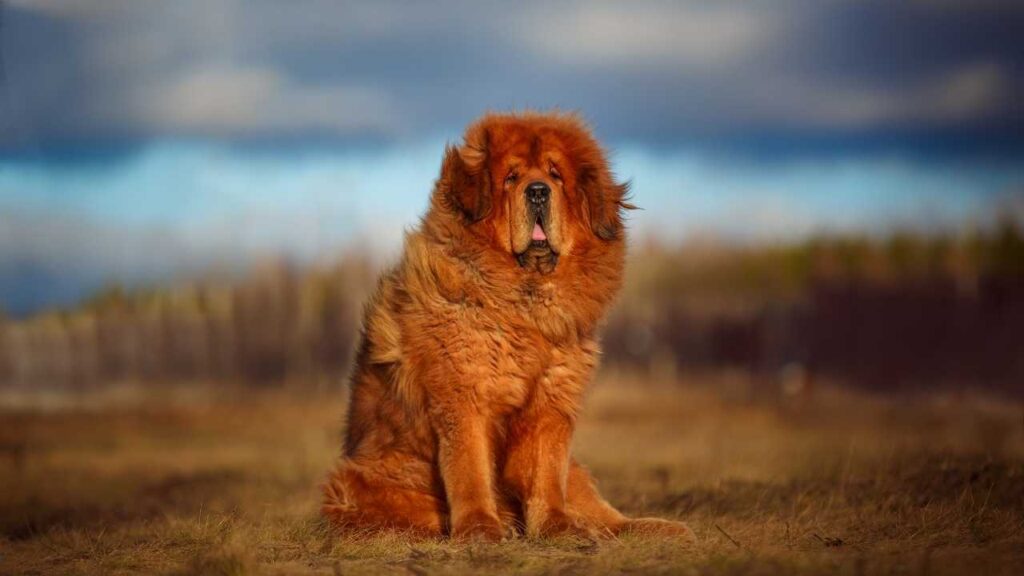
The Tibetan Mastiff often comes across as the more serious property guardian. It tends to project a stronger sense that certain spaces belong to it and should not be crossed casually.
The Great Pyrenees usually offers strong protection with a calmer family presence, while the Tibetan Mastiff often feels more defensive and more forceful about boundaries. That does not make one right and the other wrong. It simply means their guarding instincts play out differently in real life.
In Pyrenees vs Mastiff protection, the better fit depends on whether an owner wants a steadier, gentler guardian style or a more intense and visibly territorial one.
Both breeds are respected for their instincts, but they ask for owners who understand exactly what those instincts can look like at home.
Conclusion
The Great Pyrenees vs Tibetan Mastiff decision is really about matching the dog to your real life. The Great Pyrenees often feels calmer, gentler, and more suited to steady guarding with a softer family presence.
The Tibetan Mastiff usually comes across as heavier, more reserved, and more serious about territory. Both dogs are powerful, independent, and demanding in their own ways, so neither is a casual choice.
In the world of guardian dogs, each breed has a clear identity. If you want a giant protector with a more easygoing manner, the Great Pyrenees may be the better fit.
If you want a more imposing guardian with a stronger defensive edge, the Tibetan Mastiff may suit you better.
Great Pyrenees vs Tibetan Mastiff is not about picking the more famous dog. It is about choosing the one whose temperament, training needs, and guarding style truly fit your home.
