




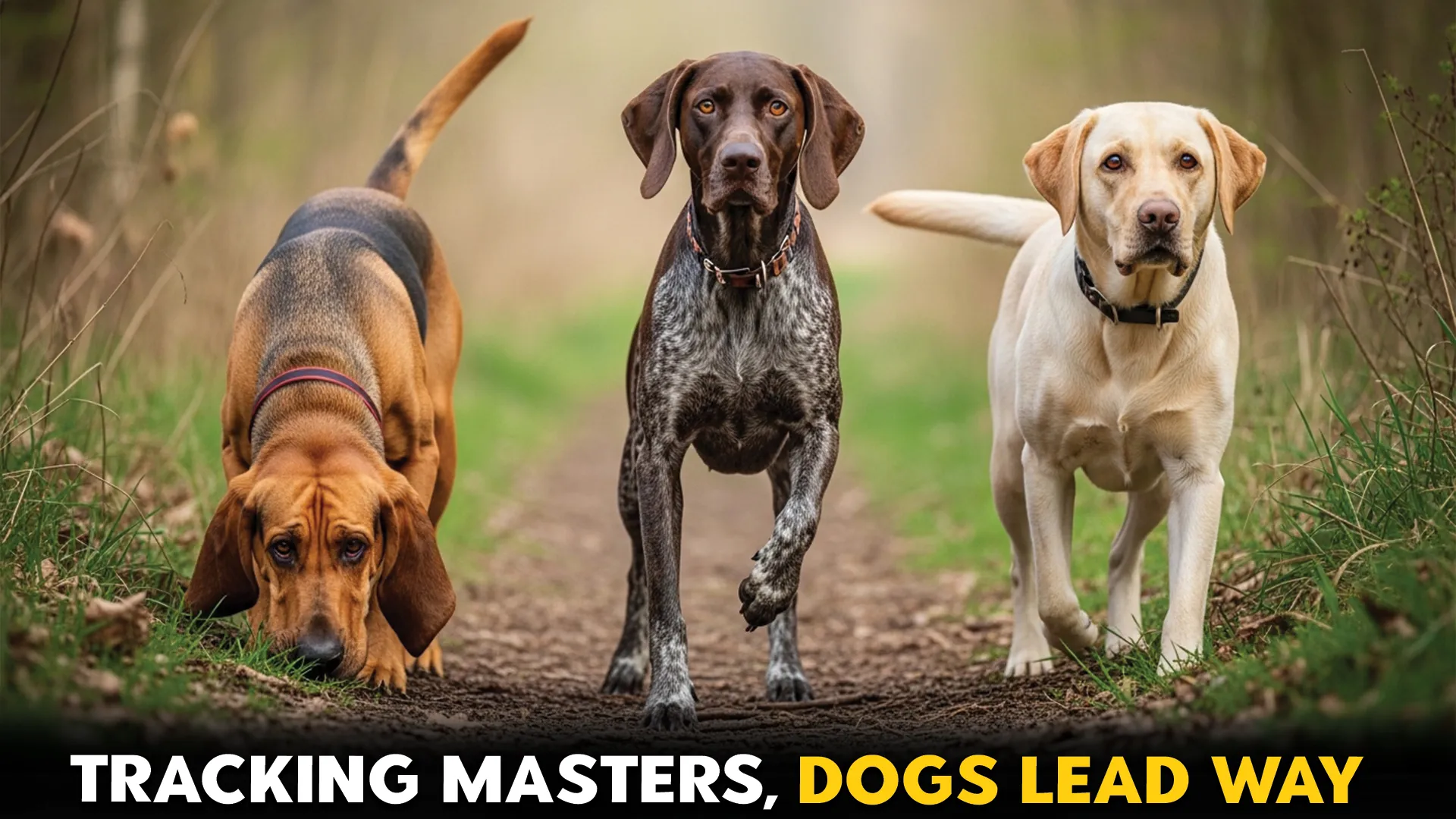
Dogs have worked alongside humans for centuries, especially in activities that rely on their remarkable sense of smell. When it comes to tracking and wildlife detection, certain breeds stand out for their ability to follow scent trails with incredible precision.
These dogs combine instincts with physical endurance, making them valuable partners in hunting, conservation, and search operations.
A dog’s nose is a powerful tool—far more sensitive than the human sense of smell. Many tracking breeds have physical traits that help them capture scent more effectively, such as long ears that sweep odors toward the nose or loose skin that helps trap scent particles.
These natural advantages allow them to follow trails across different terrains while maintaining focus on even faint scent clues.
However, natural ability alone is not enough to create an exceptional tracking dog. Successful scent trackers typically display strong prey drive, intelligence, stamina, and responsiveness to training.
With proper guidance and consistent practice, these breeds can refine their scenting instincts into highly skilled detection abilities, making them reliable partners in wildlife tracking and outdoor pursuits.
Best Dog Breeds for Tracking and Wildlife Detection
1. Bloodhound
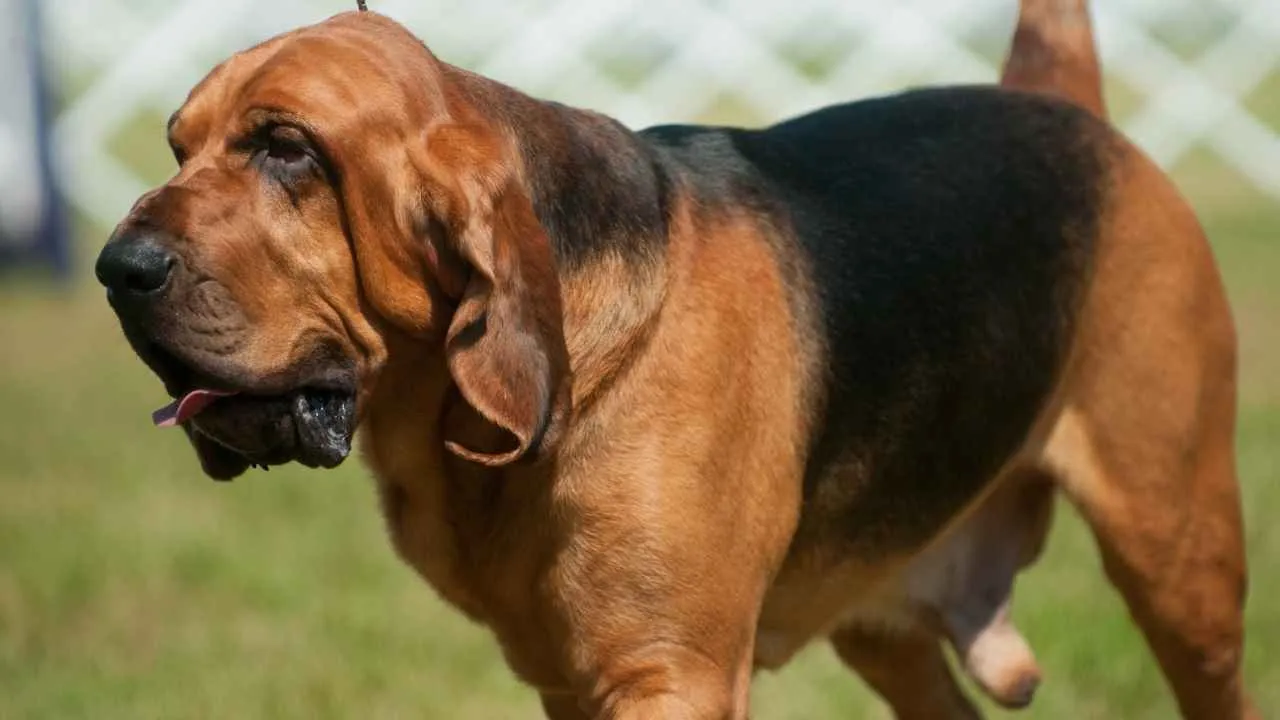
The Bloodhound, sometimes called the St. Hubert Hound, is a legendary scent hound famous for its powerful tracking abilities. Recognizable by its wrinkled skin, long drooping ears, and soulful expression, this breed has been valued for centuries for its unmatched sense of smell.
PetMD explains that today, Bloodhounds are often used as tracking dogs and excel in search and rescue work, and their scent trails can even be accepted as evidence in court.
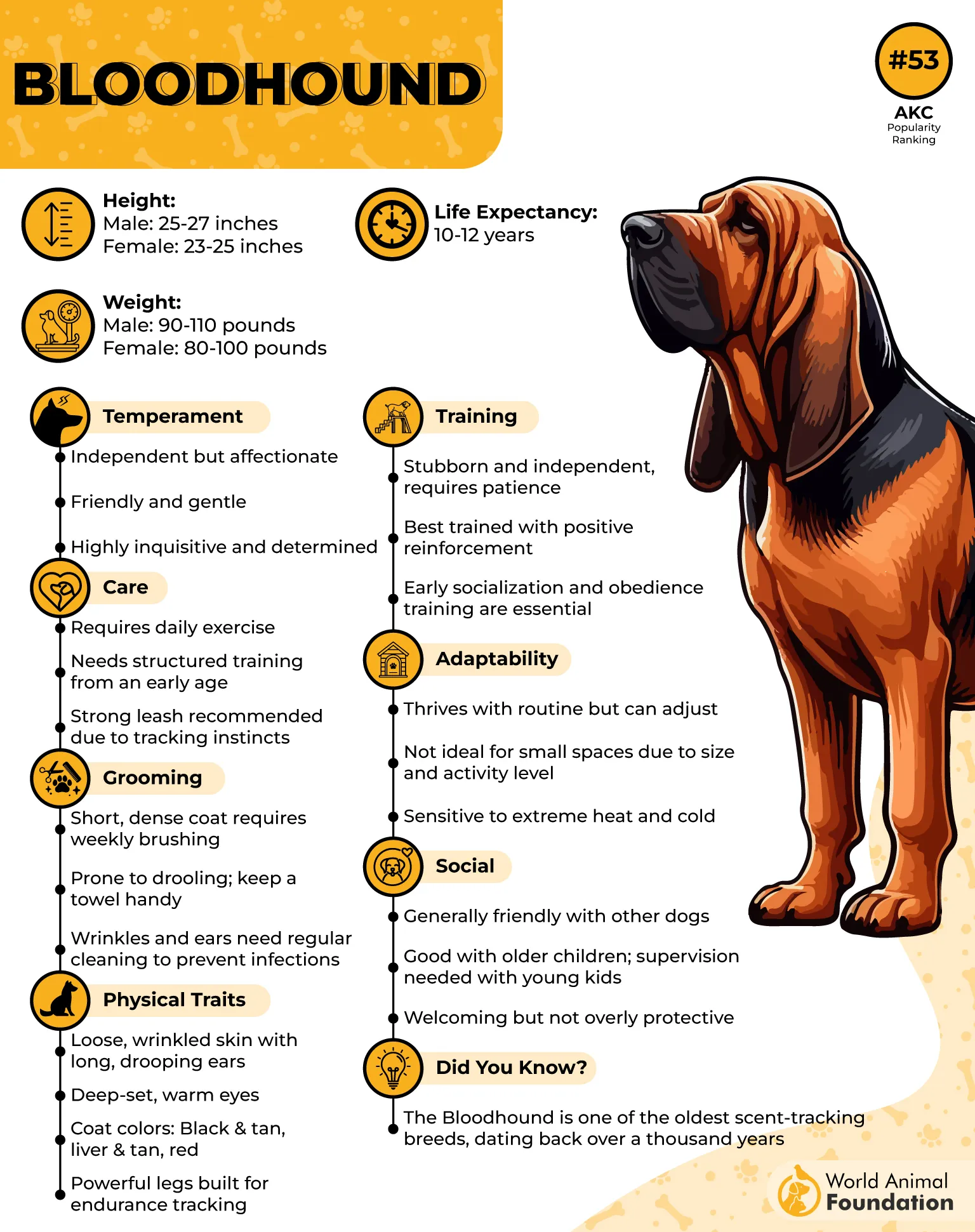
The Tireless Tracker with an Exceptional Nose
Bloodhounds are widely regarded as one of the best tracking dogs in the world. Their long ears and loose facial skin help capture scent particles and guide them toward the nose while they follow a trail.
This breed was historically used by medieval hunters to track game across long distances. Over time, their remarkable scenting skills also made them valuable in search-and-rescue operations and police work.
Bloodhounds possess incredible endurance and can follow a scent trail for hours without losing focus. Because of this strong tracking instinct, they require secure spaces or a leash to prevent them from wandering off after interesting smells.
Regular outdoor walks and scent-based activities help satisfy their curiosity and natural drive to track. Giving them opportunities to use their noses keeps them mentally stimulated and engaged.
FAQ: Why are Bloodhounds considered one of the best tracking dogs?
Bloodhounds possess an extraordinary sense of smell and strong endurance, allowing them to follow scent trails over long distances with impressive accuracy.
Fact: Bloodhound scent trails are so reliable that they have been accepted as evidence in court cases.
2. American Foxhound
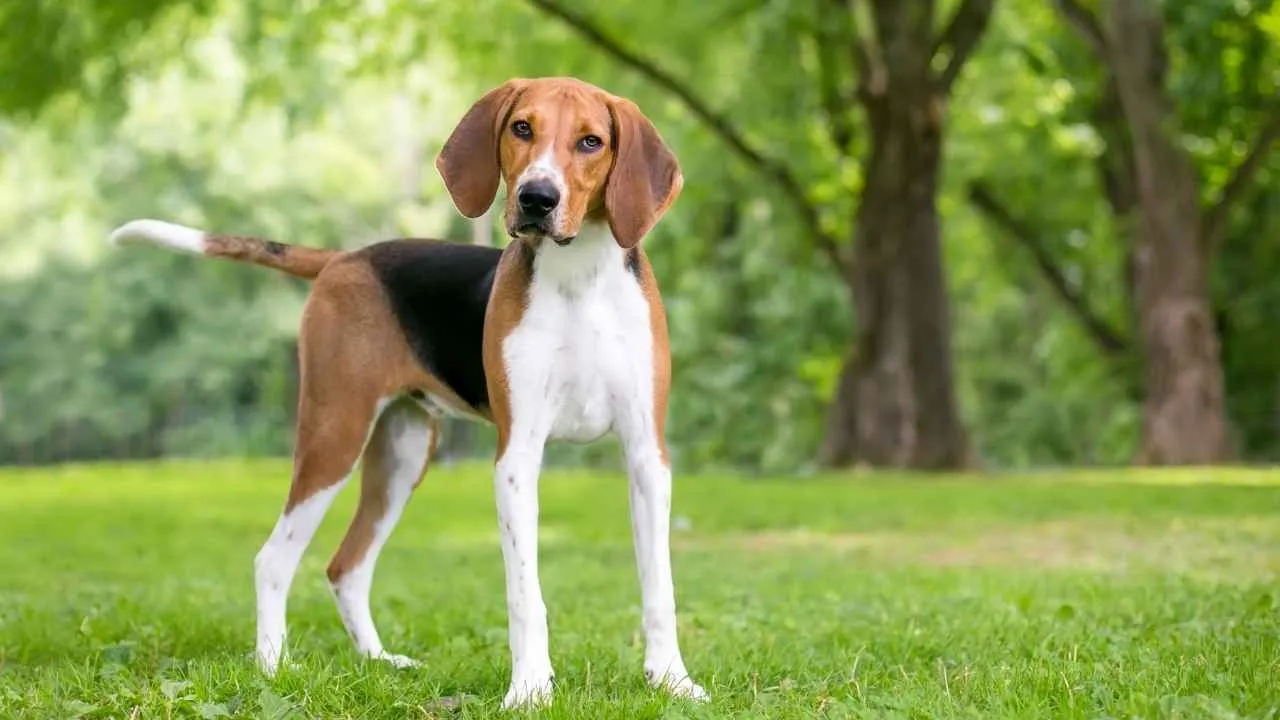
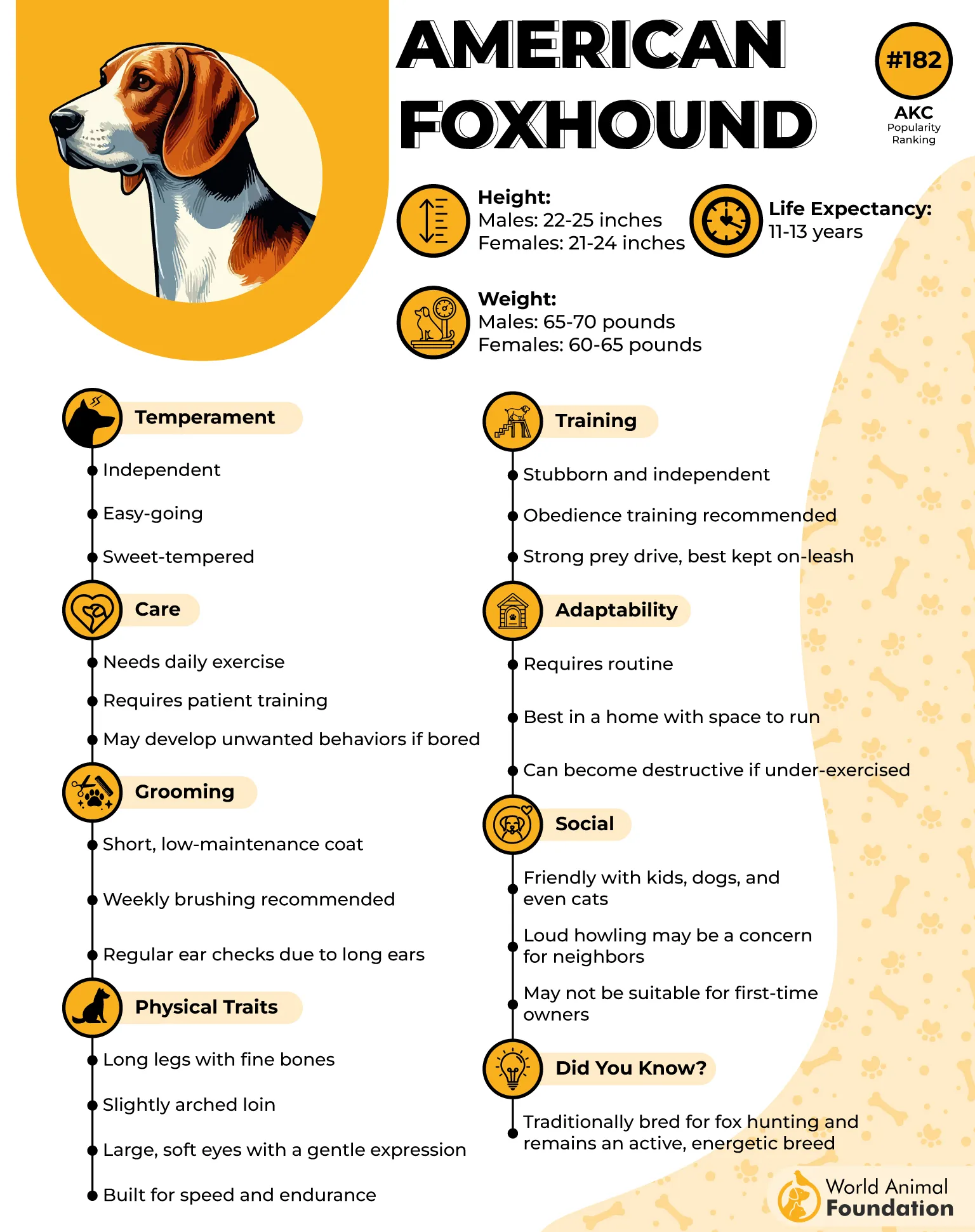
The American Foxhound, often simply called the Foxhound, is a classic American scent hound developed specifically for tracking foxes and similar game. With its long legs, athletic frame, and drooping ears, this breed was designed for stamina and scent detection across long distances.
A Determined Scent Specialist Built for Long Trails
American Foxhounds are renowned for their ability to follow scent trails for extended periods. Their endurance and powerful noses allow them to track wildlife across fields, forests, and rugged terrain without losing focus.
Historically, these dogs worked in packs alongside mounted hunters. Their light, agile build helped them keep pace with horses while maintaining a steady scent trail during long hunts.
Because they were bred for active work, Foxhounds thrive when given regular physical and mental stimulation. Activities such as long walks, scent games, or dog sports help channel their natural tracking instincts.
Despite their hardworking nature outdoors, they can be friendly and sociable companions at home. After exercise and activity, many Foxhounds are happy to relax with their families.
FAQ: What makes the American Foxhound effective at tracking wildlife over long distances?
Their strong scenting ability, long-legged build, and exceptional stamina allow them to follow trails steadily for hours.
Fact: These great family dogs were developed in the 1600s when European settlers crossbred hunting hounds to create faster, more agile scent trackers.
3. Bluetick Coonhound
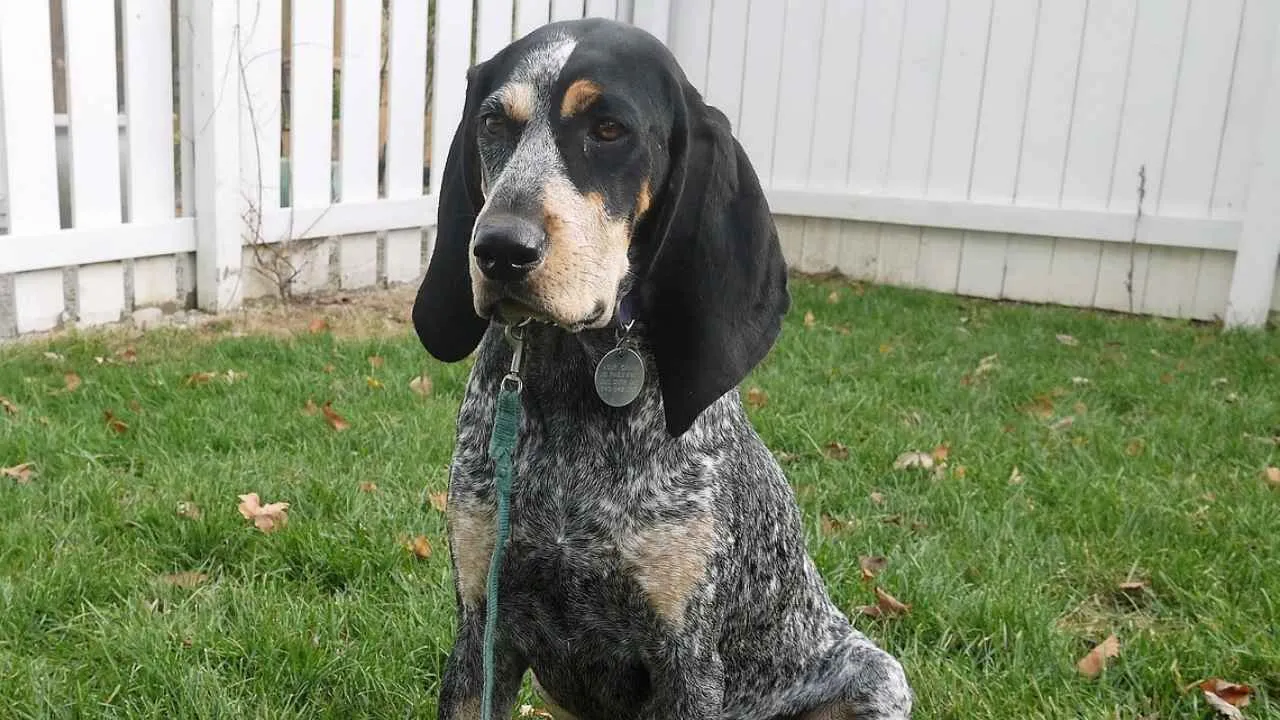
The Bluetick Coonhound, sometimes simply called the Bluetick, is a distinctive American scent hound recognized for its blue-black mottled coat and powerful tracking instincts.
Developed in the southeastern United States, this breed was created by crossing hunting hounds such as English Foxhounds, American Foxhounds, and the French Bleu de Gascogne.
According to WebMD, the Bluetick Coonhound’s personality can differ at home and while hunting. On the trail, they become ambitious and determined, often following a scent for hours or even days.
The Focused Hunter Skilled in Following Fresh Tracks
Bred to track animals like raccoons and other wildlife, they rely heavily on their powerful noses and determination.
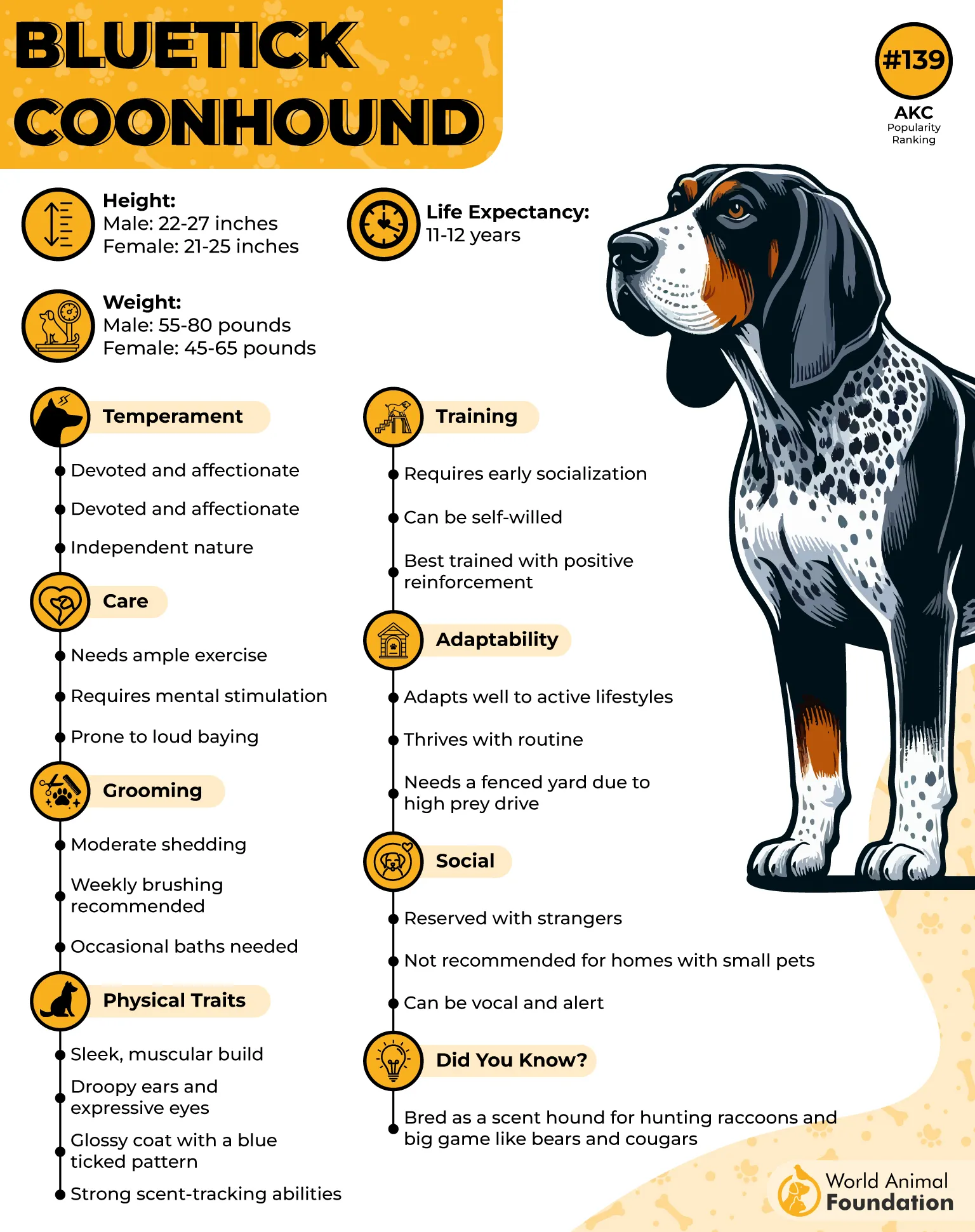
These dogs are natural hunters with a strong drive to investigate every interesting smell they encounter. Their ability to stay locked onto fresh tracks makes them reliable companions for wildlife detection and scent-based work.
Because of their curiosity and energy, Blueticks benefit from structured activities that challenge both body and mind. Sports such as tracking, scent work, agility, and obedience allow them to use their remarkable scenting ability productively.
Consistent training and guidance are important, as their attention can easily shift toward new scents in the environment. Positive reinforcement helps channel their strong instincts into disciplined tracking skills.
FAQ: Why are Bluetick Coonhounds effective at following fresh scent trails?
Their powerful sense of smell, persistence, and natural hunting instincts allow them to remain focused on fresh tracks during tracking work.
Fact: The Bluetick Coonhound was developed in the southeastern United States by crossing English and American Foxhounds with other scent-tracking breeds.
4. German Shorthaired Pointer
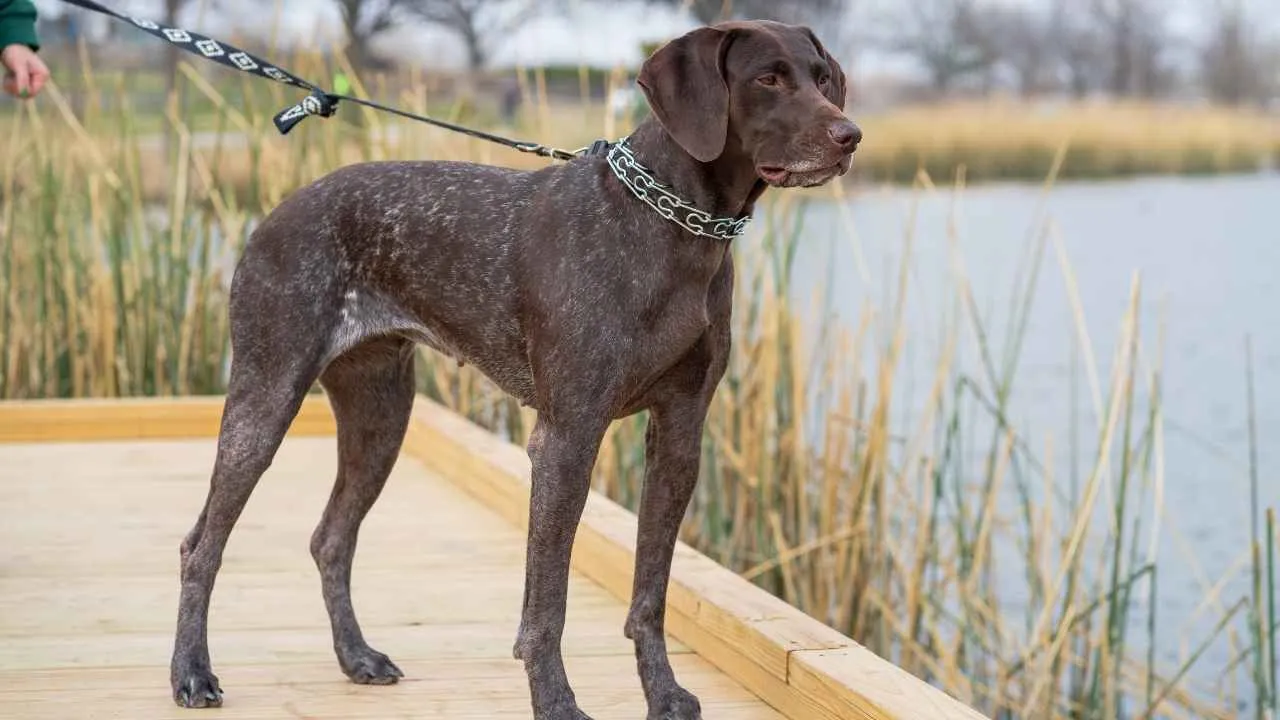
The German Shorthaired Pointer, often abbreviated as GSP, is a versatile hunting breed developed in Germany for tracking and retrieving game on both land and water. Recognized for its athletic build, keen senses, and friendly personality, this breed has become one of the most respected field dogs.
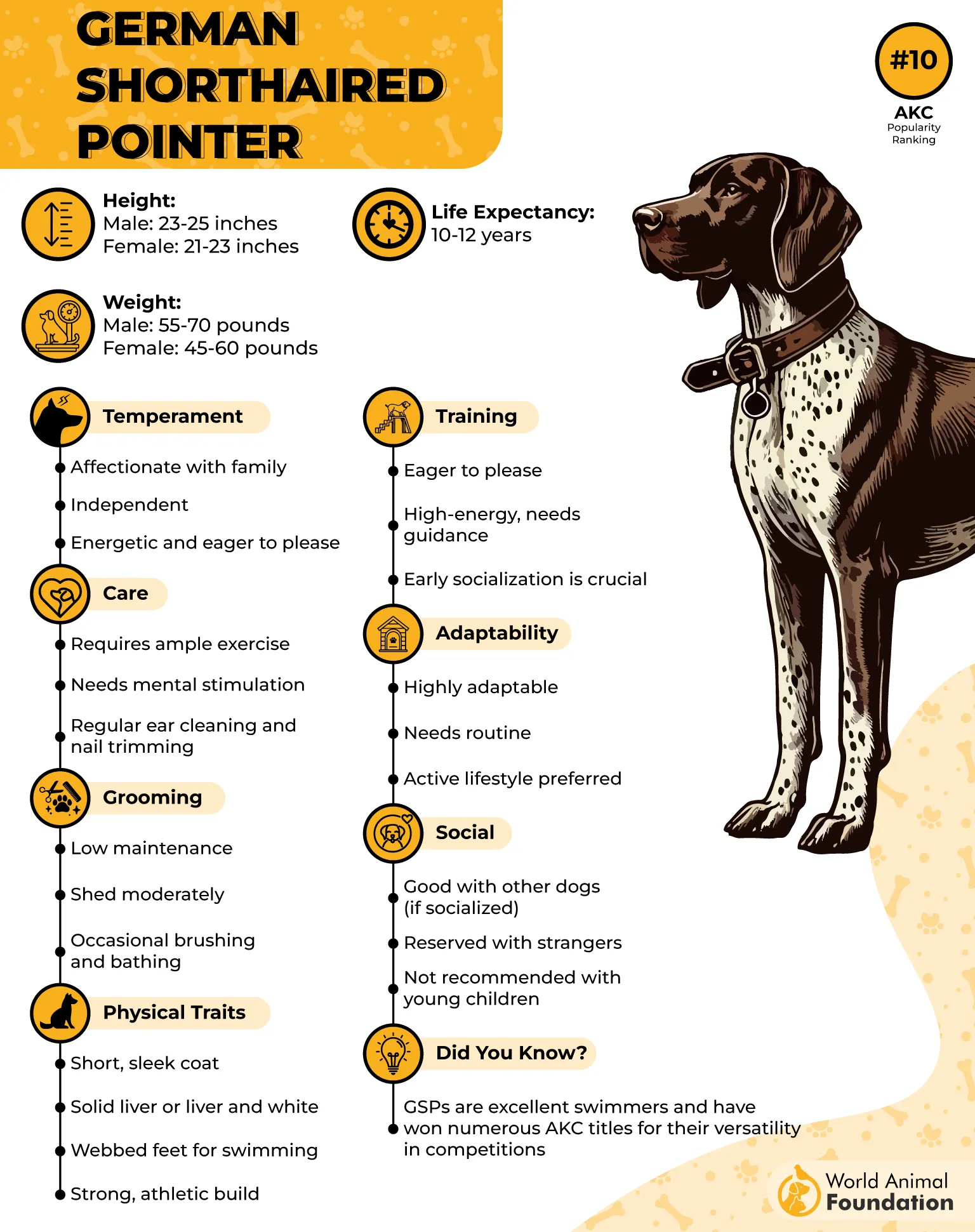
A Versatile Detection Dog with Strong Field Instincts
German Shorthaired Pointers are known for their remarkable adaptability in the field. These active dogs can track scent trails, point toward hidden game, and retrieve prey, making them effective partners for wildlife detection.
Their development in nineteenth-century Germany focused on creating a dog capable of handling multiple hunting tasks. By combining several tracking and bird-dog breeds, breeders produced a dog with both scenting ability and strong field awareness. They are perfect for upland bird hunting.
These hunting bird dogs are intelligent and highly trainable, which helps them excel in detection tasks. With the right guidance, they can quickly learn commands and apply their instincts to structured scent work.
These energetic dogs thrive in environments where they can stay active and engaged. Their curiosity and strong prey drive encourage them to explore their surroundings and locate hidden scents.
FAQ: Why are German Shorthaired Pointers considered versatile tracking dogs?
Because they can track, point, and retrieve game, their combined scenting ability and trainability make them highly adaptable detection dogs.
Fact: The modern German Shorthaired Pointer was refined in the nineteenth century by crossing Spanish Pointers, Bloodhounds, and English Pointers.
5. Chesapeake Bay Retriever
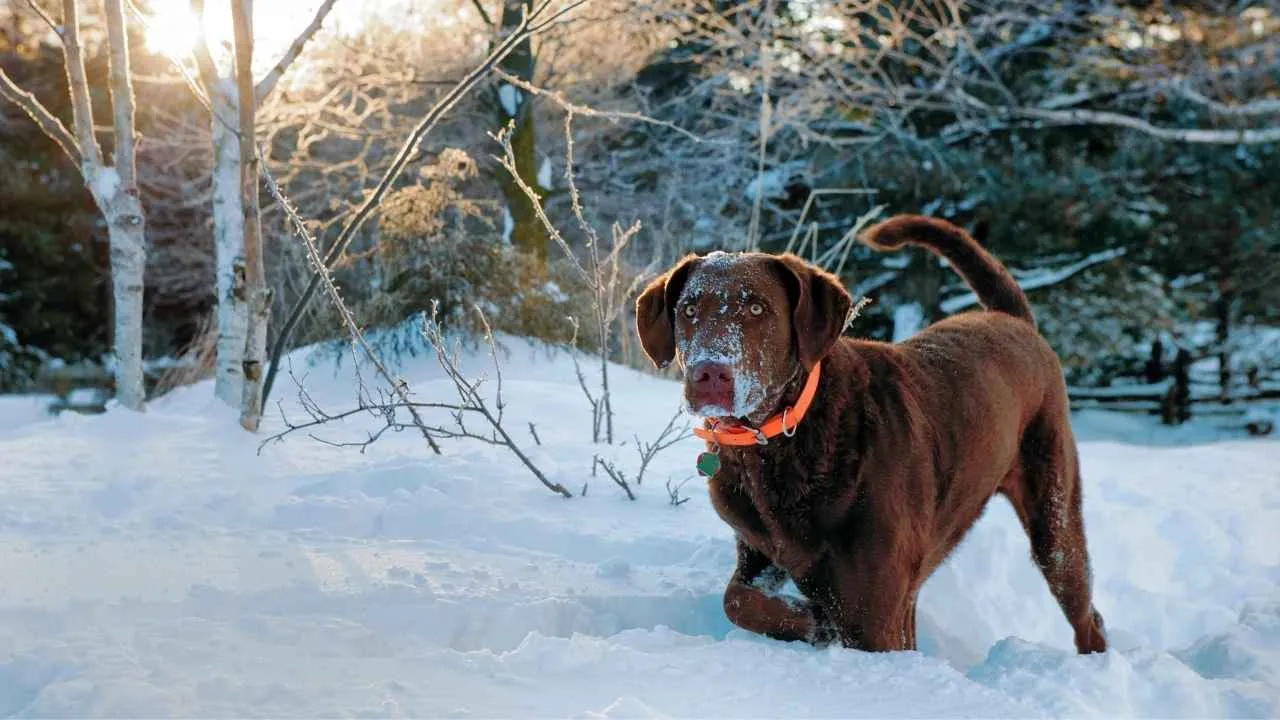
The Chesapeake Bay Retriever, commonly known as the Chesapeake, is a powerful American retriever developed along the shores of Maryland’s Chesapeake Bay. Recognized for its dense waterproof coat and determined spirit, this breed is respected for both its endurance and strong working ability.
Purina notes that this is a hardworking breed that thrives when given a job to do. They are not suited to a lazy lifestyle and need kind, consistent training to develop good behavior.
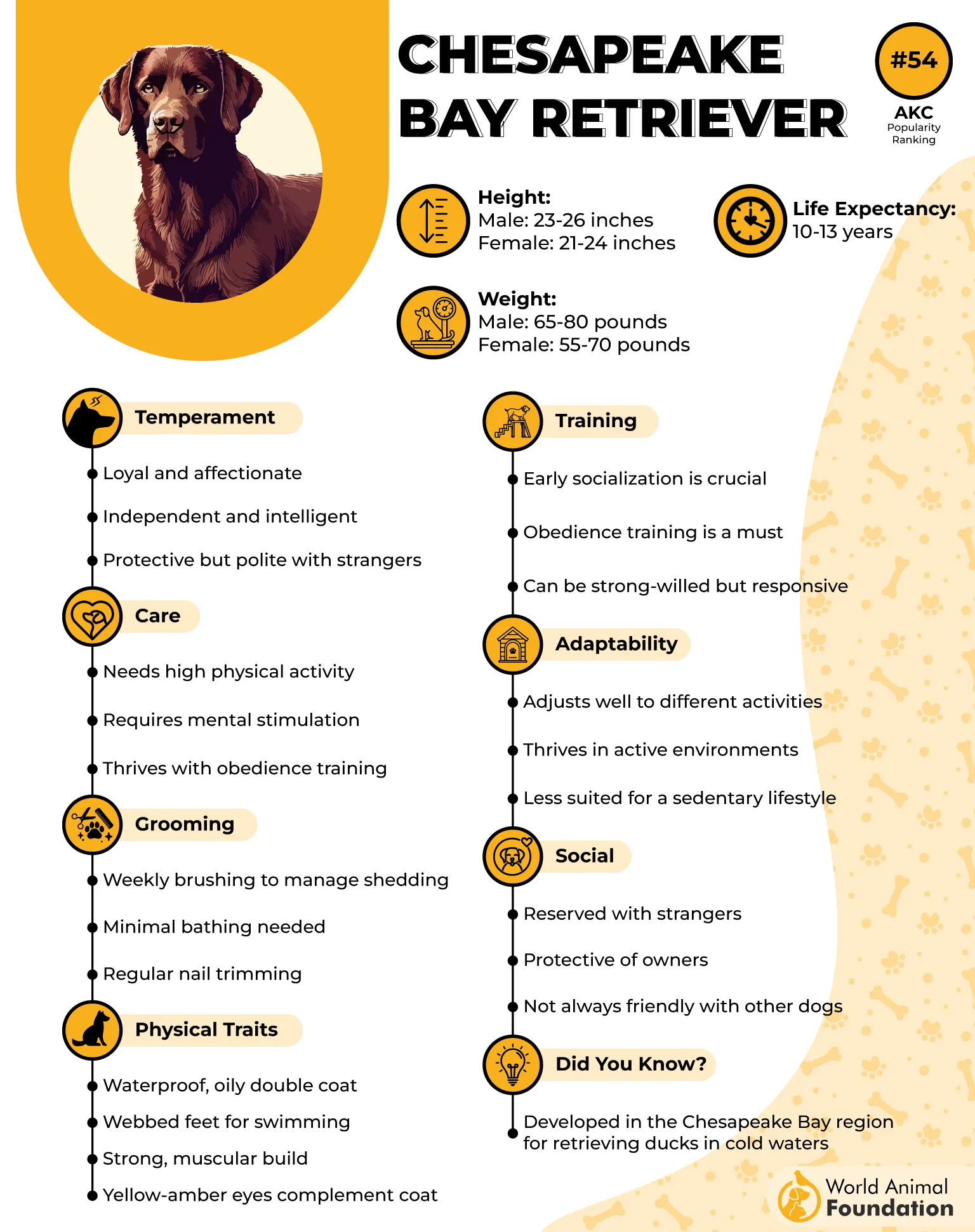
The Endurance Tracker Who Never Loses the Trail
Chesapeake Bay Retrievers are known for their stamina and persistence in demanding environments. Originally bred for retrieving waterfowl, they developed the strength and focus needed to follow scent trails across difficult terrain.
Their sturdy build and determined nature allow them to track scents over long distances without easily giving up. These qualities make them valuable companions for hunters and wildlife detection tasks.
The breed is also highly intelligent and capable of learning complex commands. With proper training, Chessies can channel their instincts into scent work, tracking activities, and other field tasks.
Because of their working heritage, these hunting dog breeds thrive when given regular exercise and meaningful tasks. Tracking games, field training, and outdoor exploration help keep them mentally and physically engaged.
FAQ: Why are Chesapeake Bay Retrievers effective at tracking over long distances?
Their stamina, intelligence, and determination allow them to maintain focus on a scent trail even across challenging terrain.
Fact: The Chesapeake Bay Retriever originated along Maryland’s Chesapeake Bay and was developed as a powerful waterfowl retriever with exceptional endurance.
6. Nova Scotia Duck Tolling Retriever
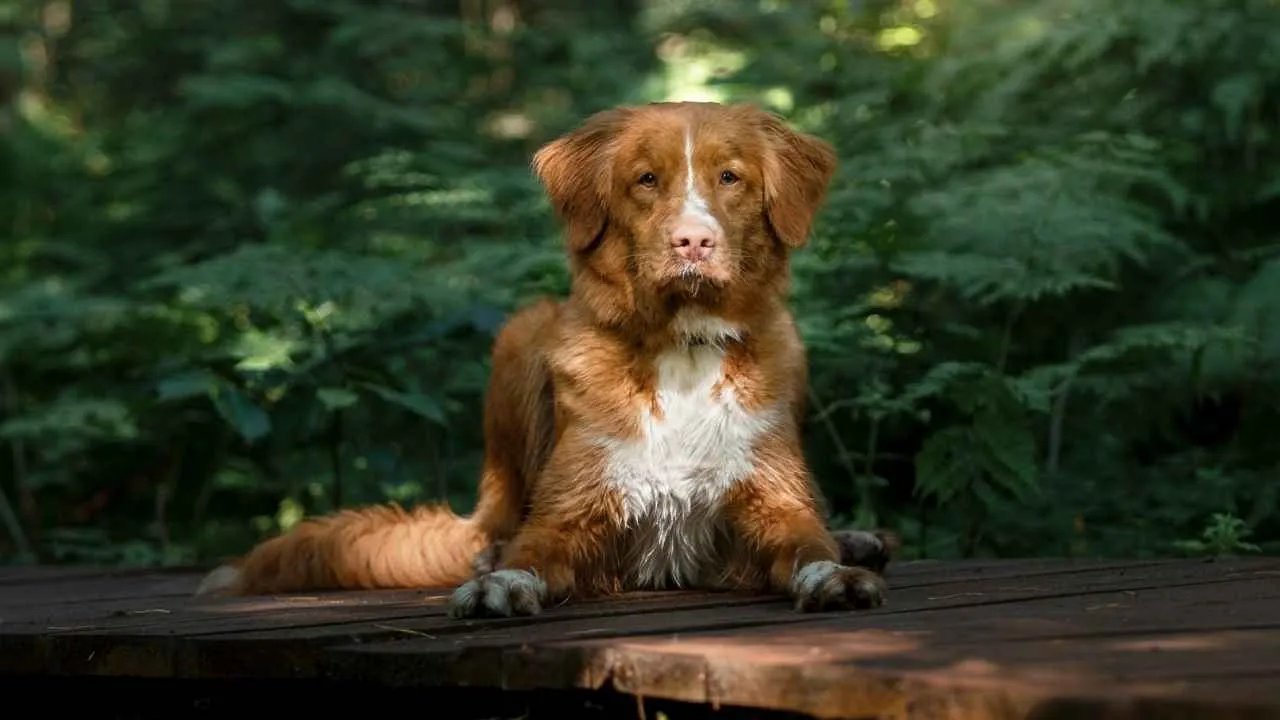
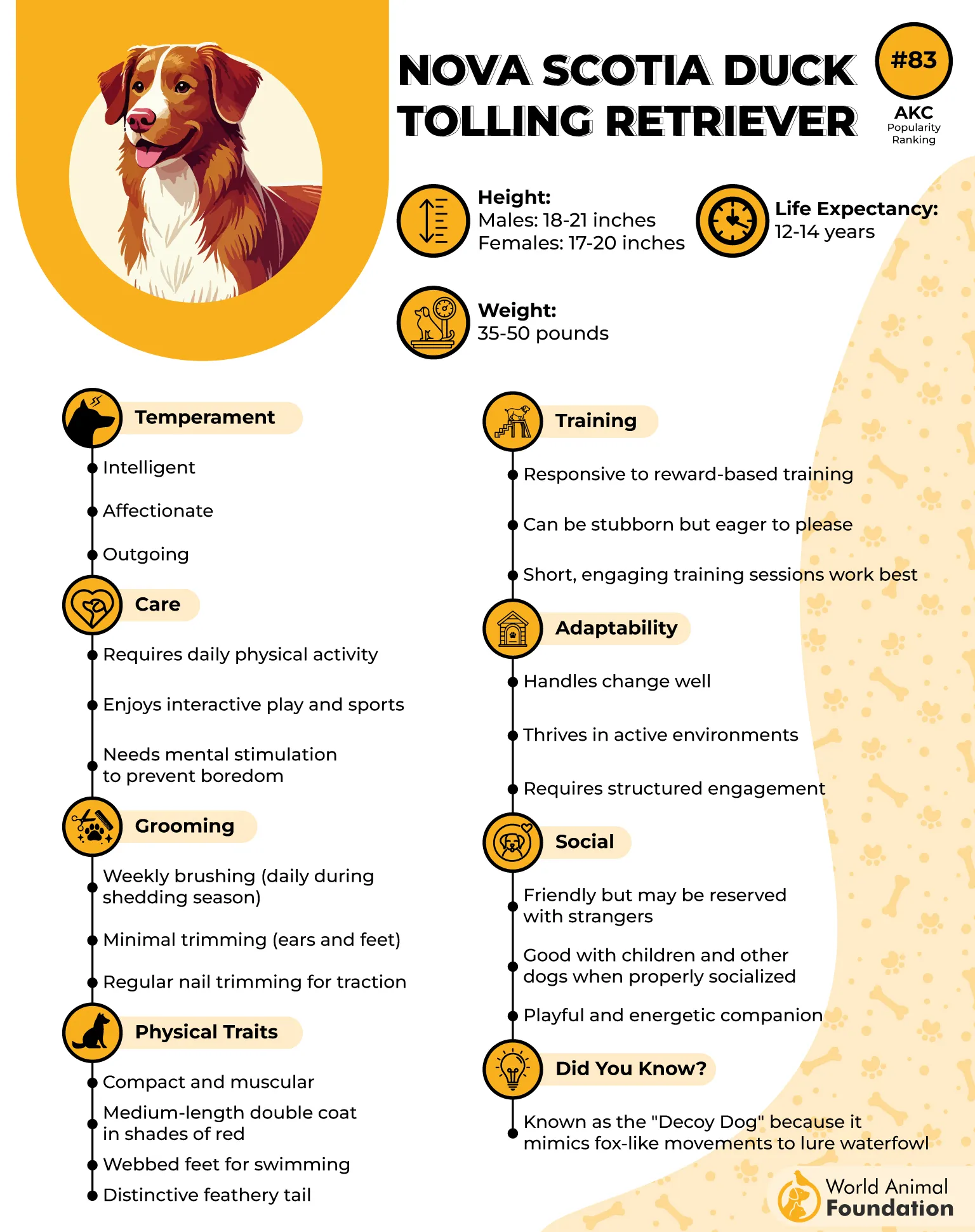
The Nova Scotia Duck Tolling Retriever, often called the Toller or “red-coated duck dog,” is a Canadian gun dog developed along the coasts of Nova Scotia. Known for its reddish coat with white markings and feathered tail, this breed is admired for its intelligence, agility, and keen scenting ability.
A Sharp-Nosed Explorer Ideal for Wildlife Detection
Originally bred to lure and retrieve ducks in cold coastal environments, the Toller developed strong instincts for locating and tracking wildlife. Its alert nature and sharp nose help it quickly detect movement or scent in the field.
This breed is highly intelligent and eager to learn, which makes it responsive to structured training. With guidance, Tollers can excel in scent work, hunting tasks, and wildlife detection activities.
Their curiosity and energetic personality encourage them to explore their surroundings. These traits allow them to follow scent trails and investigate unfamiliar environments with enthusiasm.
Because of their working heritage, Tollers thrive in homes that provide both physical activity and mental challenges. Outdoor tasks and scent-based games keep their natural detection abilities active and refined.
FAQ: Why are Nova Scotia Duck Tolling Retrievers effective at wildlife detection?
Their intelligence, curiosity, and strong scenting instincts allow them to locate and track wildlife efficiently.
Fact: The Nova Scotia Duck Tolling Retriever originated in Canada and was bred to lure and retrieve ducks along coastal hunting grounds.
7. Weimaraner
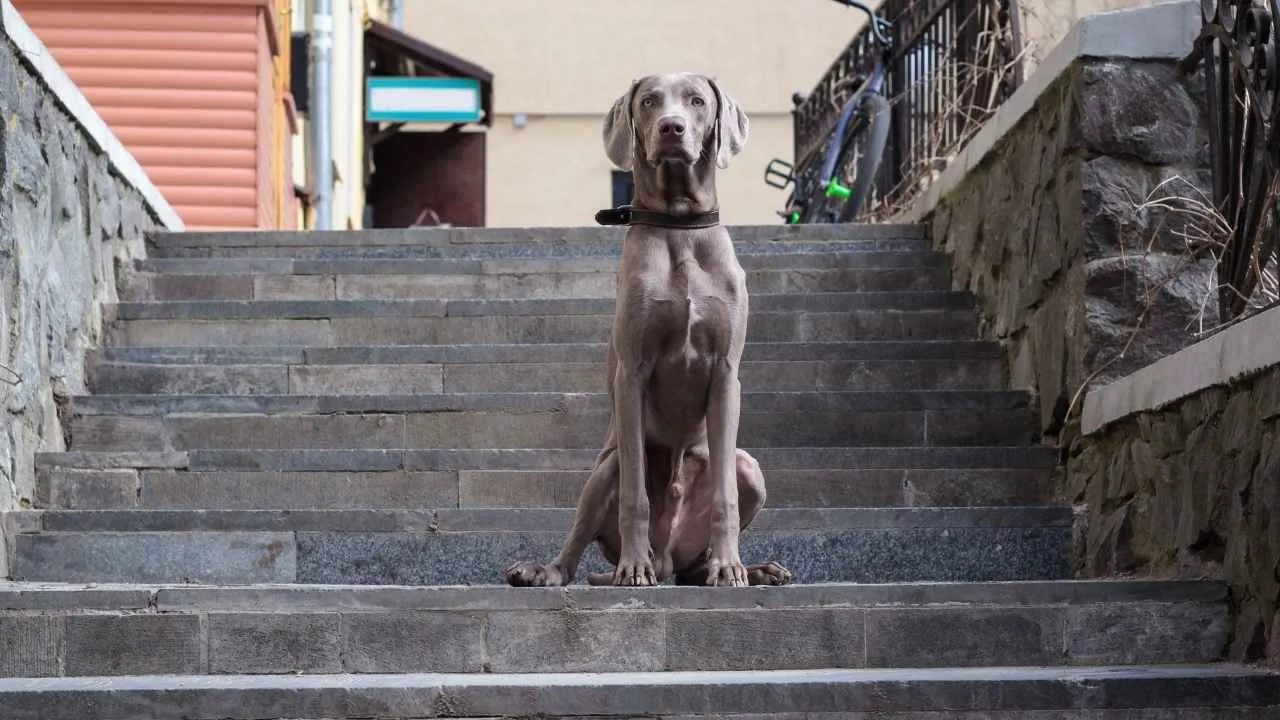
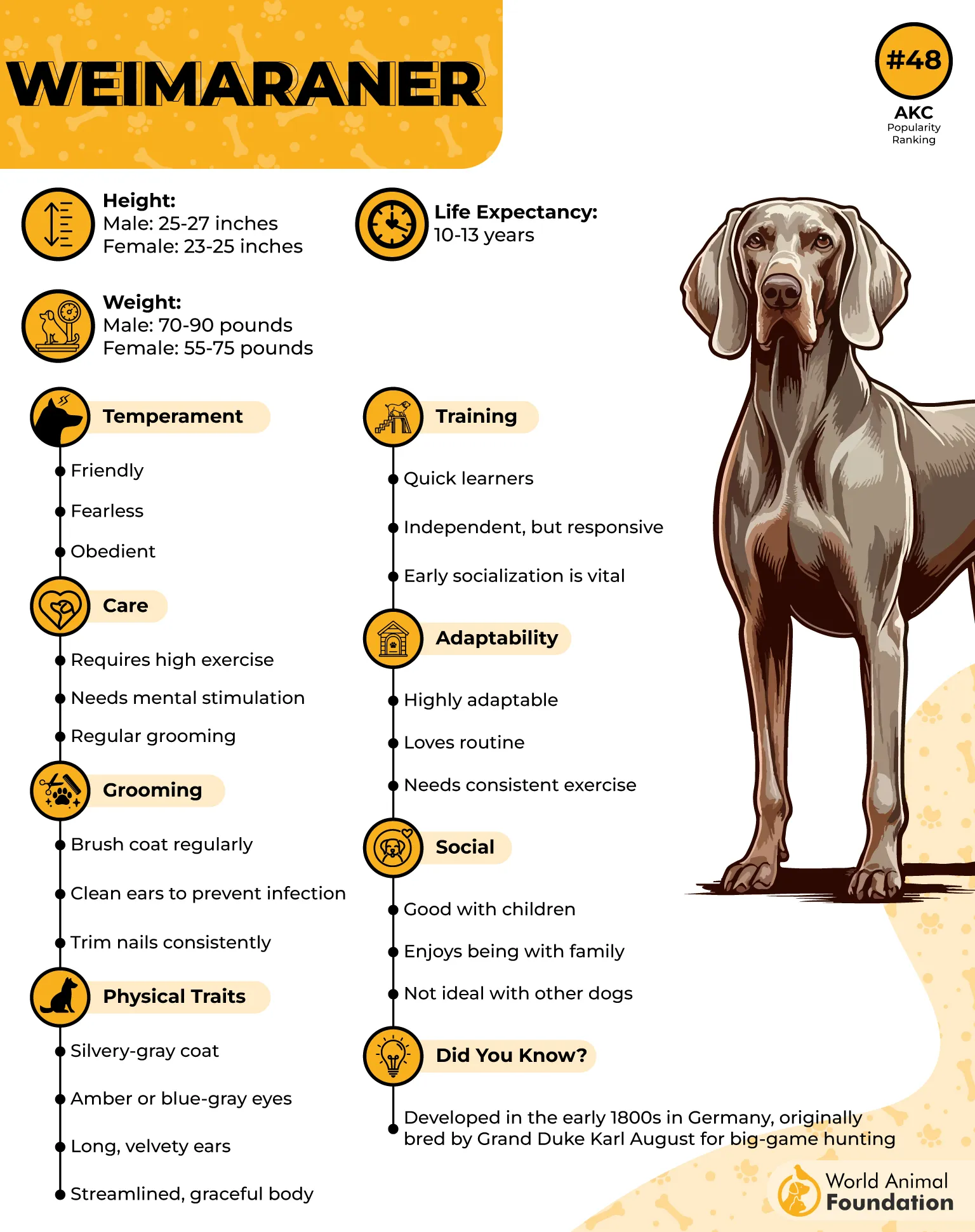
The Weimaraner, sometimes called the “Gray Ghost,” is a sleek hunting dog recognized for its silver-gray coat and striking amber eyes. Originally developed in Germany, this athletic breed is admired for intelligence, loyalty, and strong working instincts.
The Reliable Scent Worker with Remarkable Precision
Weimaraners are known for their remarkable scenting abilities, allowing them to detect and follow trails with impressive accuracy. Their powerful nose and determination make them effective tracking partners in both deer hunting and wildlife detection work.
These dogs are highly loyal and form deep bonds with their handlers, which enhances their responsiveness during training. Their eagerness to please and strong work ethic make them dependable partners in scent-based tasks.
Originally bred as versatile hunting companions, Weimaraners are skilled at pointing and retrieving game on land and even in water. Their courage and stamina allow them to stay focused on a trail long after other dogs may lose interest.
Because of their intelligence and drive, they excel in search work, detection roles, and outdoor tracking activities where precision and persistence matter.
FAQ: Are Weimaraners good dogs for tracking work?
Yes. Their exceptional sense of smell, trainability, and endurance make them highly reliable tracking and detection dogs.
Fact: Weimaraners are widely used in search-and-rescue and detection work due to their precise scent-tracking ability.
Conclusion
Dogs with strong scenting abilities and natural hunting instincts play an important role in tracking and wildlife detection. Many breeds developed for fieldwork combine endurance, intelligence, and focus, allowing them to follow scent trails across long distances.
With proper training and guidance, these dogs become reliable partners in search work, hunting activities, and wildlife monitoring.
While the breeds highlighted above are exceptional trackers, other capable scent-working dogs also contribute to detection tasks. The Labrador Retriever, for example, is widely respected for its intelligence, trainability, and keen sense of smell, making it useful in both field and detection roles.
Regardless of breed, successful tracking dogs rely on consistent training, physical stamina, and a strong bond with their handlers to perform their work effectively.
