




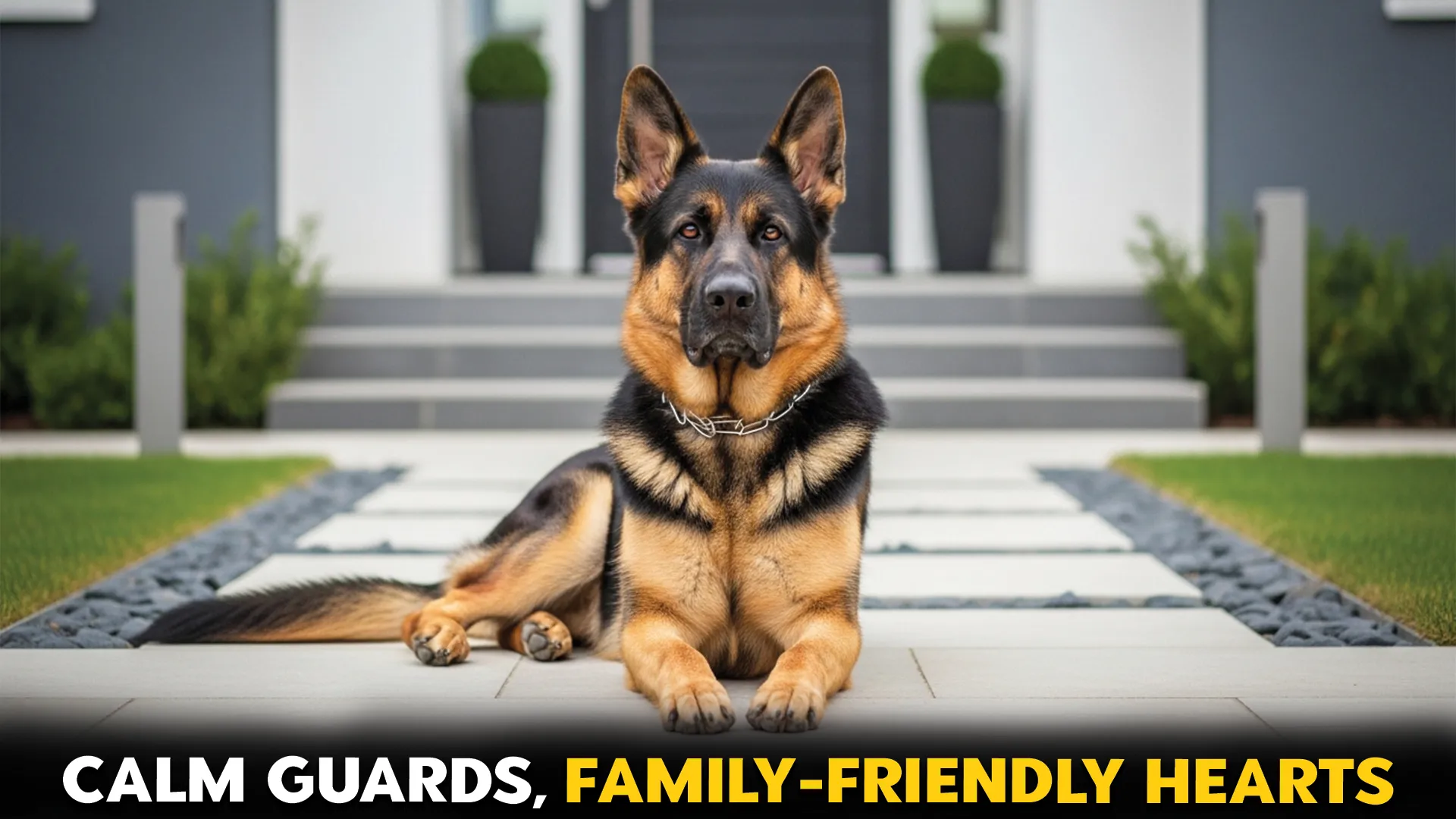
Want a dog that makes you feel safe without turning your home into a high-alert zone? Relaxed guard dog breeds can offer a steady presence, a watchful nature, and a friendly attitude when properly raised and trained.
These dogs tend to settle well in day-to-day life, making them a good fit for people who want a protector and a companion in one.
If you stay busy, you will also want a breed that is generally easier to live with, including manageable exercise needs, simpler grooming, and a temperament that responds well to consistent routines. Let’s look at calm, balanced options worth considering.
Relaxed Guard Dog Breeds: Balanced and Friendly Options for Families
1. Doberman Pinscher
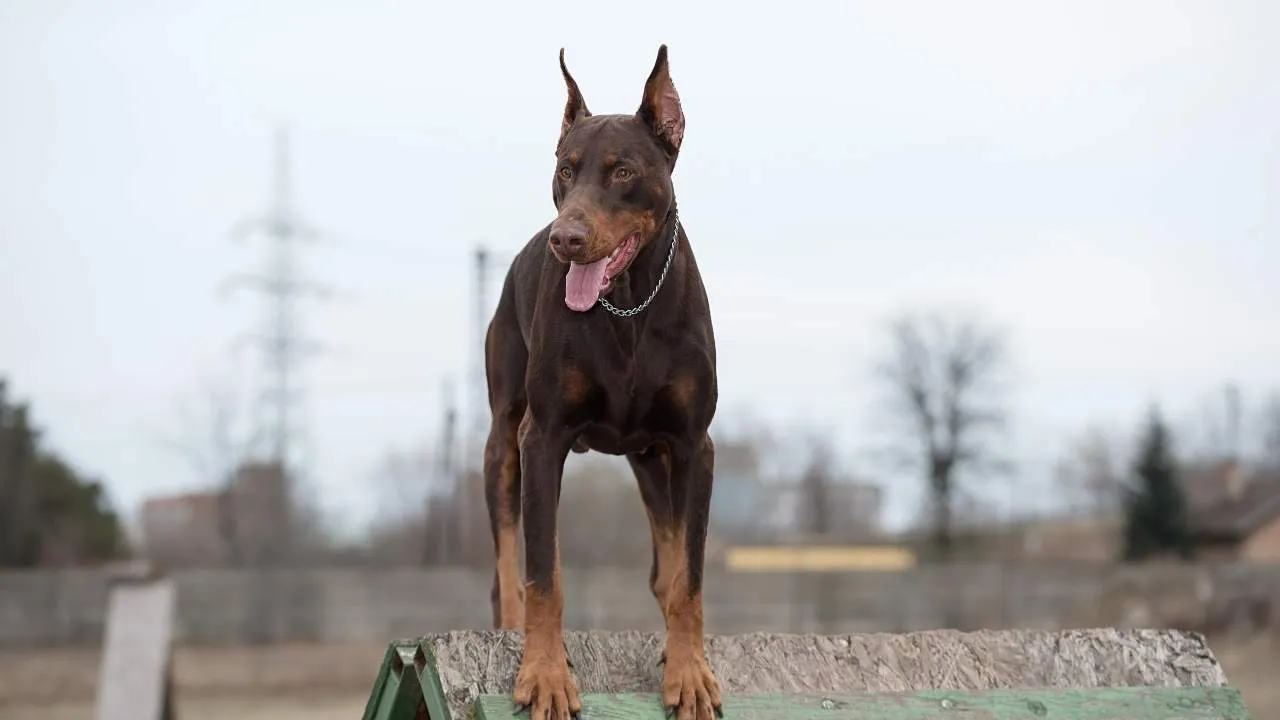
The Doberman Pinscher was developed in Apolda, Germany, by Karl Friedrich Louis Dobermann around 1890. This breed is sleek, agile, and powerful, with a short, smooth coat that can be black, blue, fawn, or red, plus rust markings on the head, throat, chest, base of the tail, and feet.
A lot of families choose this breed because it is known for being alert, fearless, and highly intelligent. With proper training and steady training habits, these dogs can settle into family life with a balanced temperament.
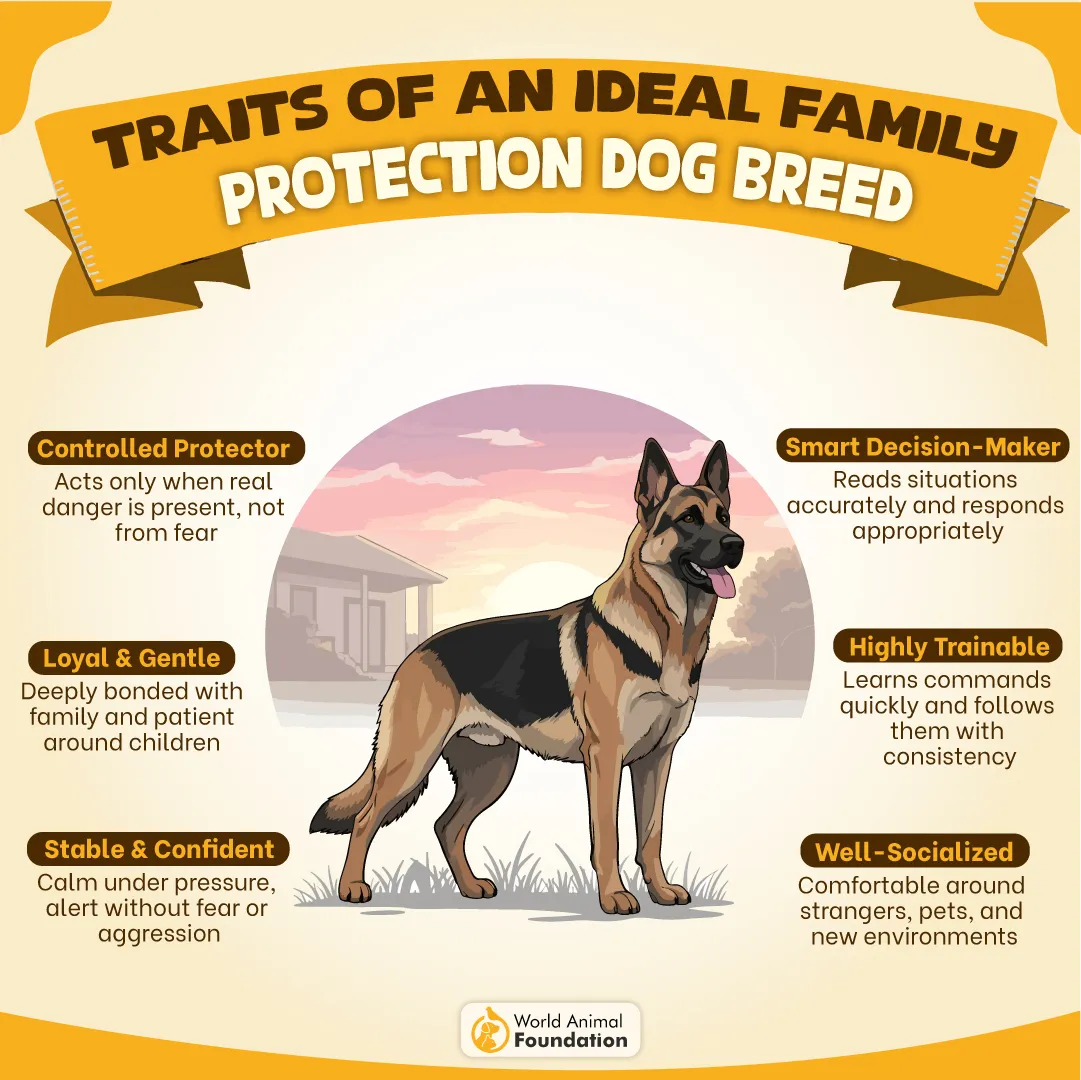
Good socialization matters, so a young age routine that includes calm, controlled introductions helps shape the right temperament.
If your goal is protection dogs that can also be a loyal companion, this breed often fits that “serious when needed, friendly at home” vibe.
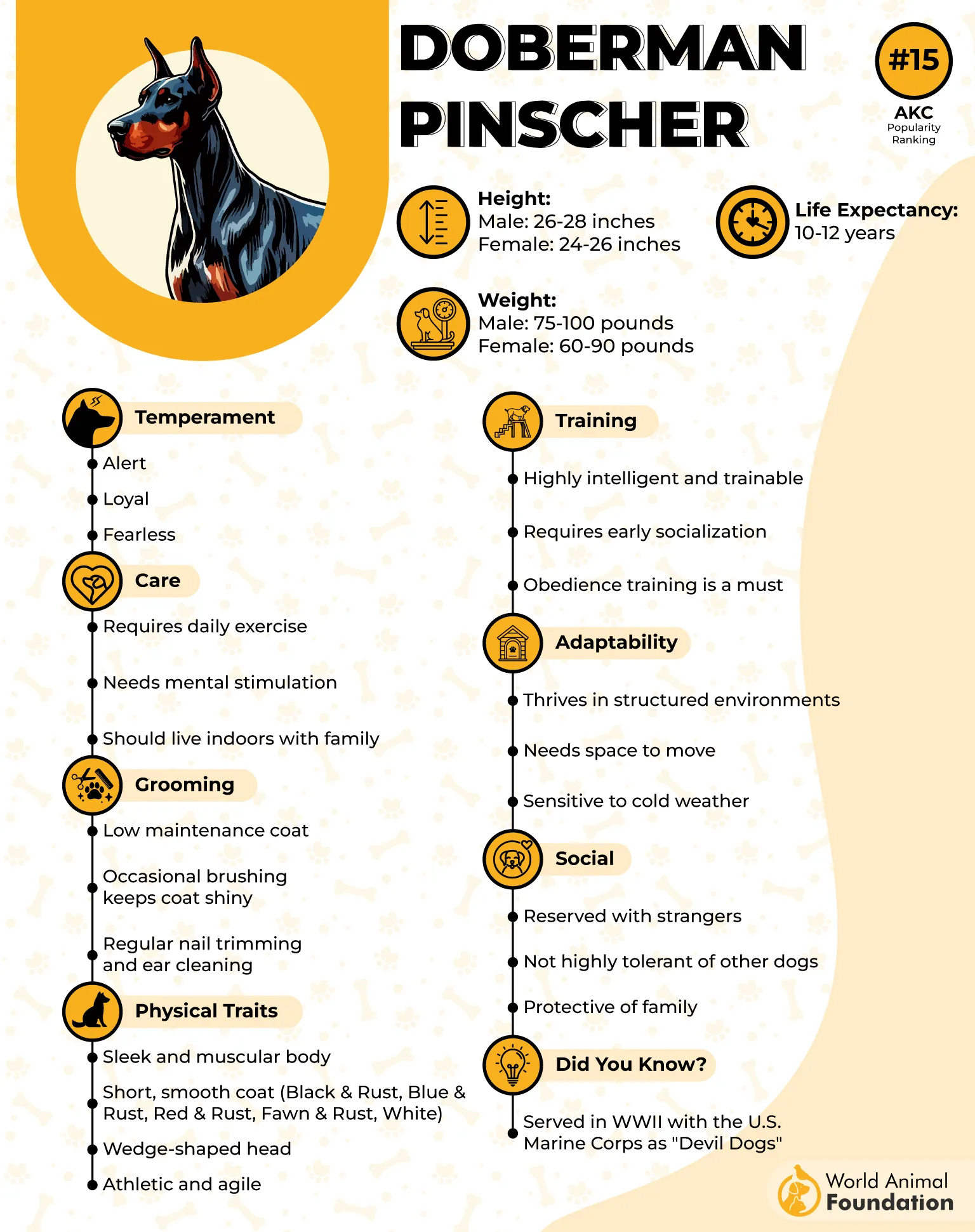
With early socialization and consistent training, the protective instincts can stay focused and sensible around children and visitors. That mix is why it shows up on many lists of guard dog breeds.
Why This Breed Is a Good Fit
A protective nature paired with loyalty can make family pets feel safer without constant drama.
Short coat upkeep keeps daily life simpler, even when your schedule gets busy.
The alert mindset can help protect the home while still being a loving companion in the family.
2. German Shepherd
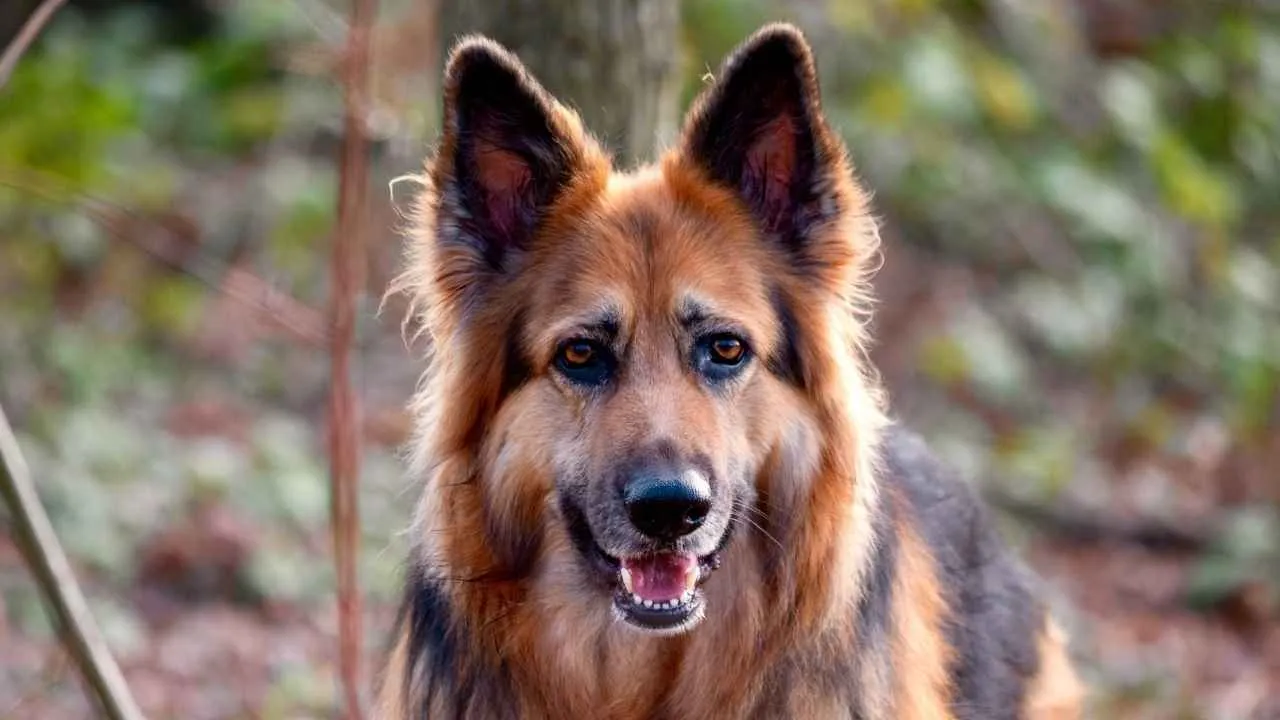
German Shepherd Dogs are among the most popular dog breeds globally, often valued for intelligence, loyalty, and athleticism.
This breed has a streamlined build and is described as strong and agile, which helps explain why it gets chosen for many demanding roles. In everyday family life, that same “ready to work” look can also show up as confident, alert behavior.
According to Britannica, German Shepherd Dogs have been used as herding dogs and as service animals, including guide dogs for the visually impaired. They also appear in police work and military roles, and many people know them as guard dogs as well.
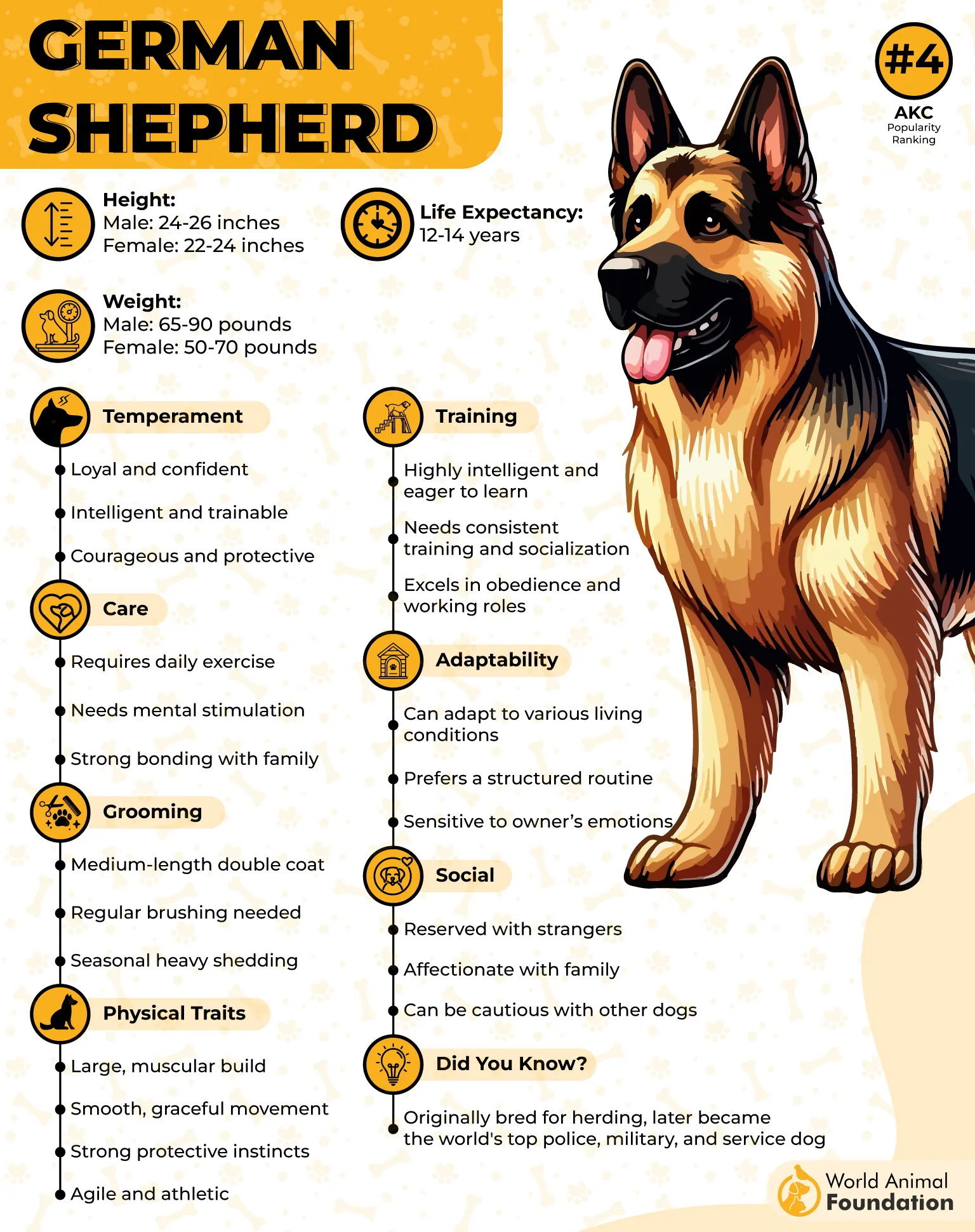
That versatility is impressive, but it also means training should be consistent so the dog has a clear direction. When people want protection dogs that still feel like loving companions, this breed often lands on the shortlist.
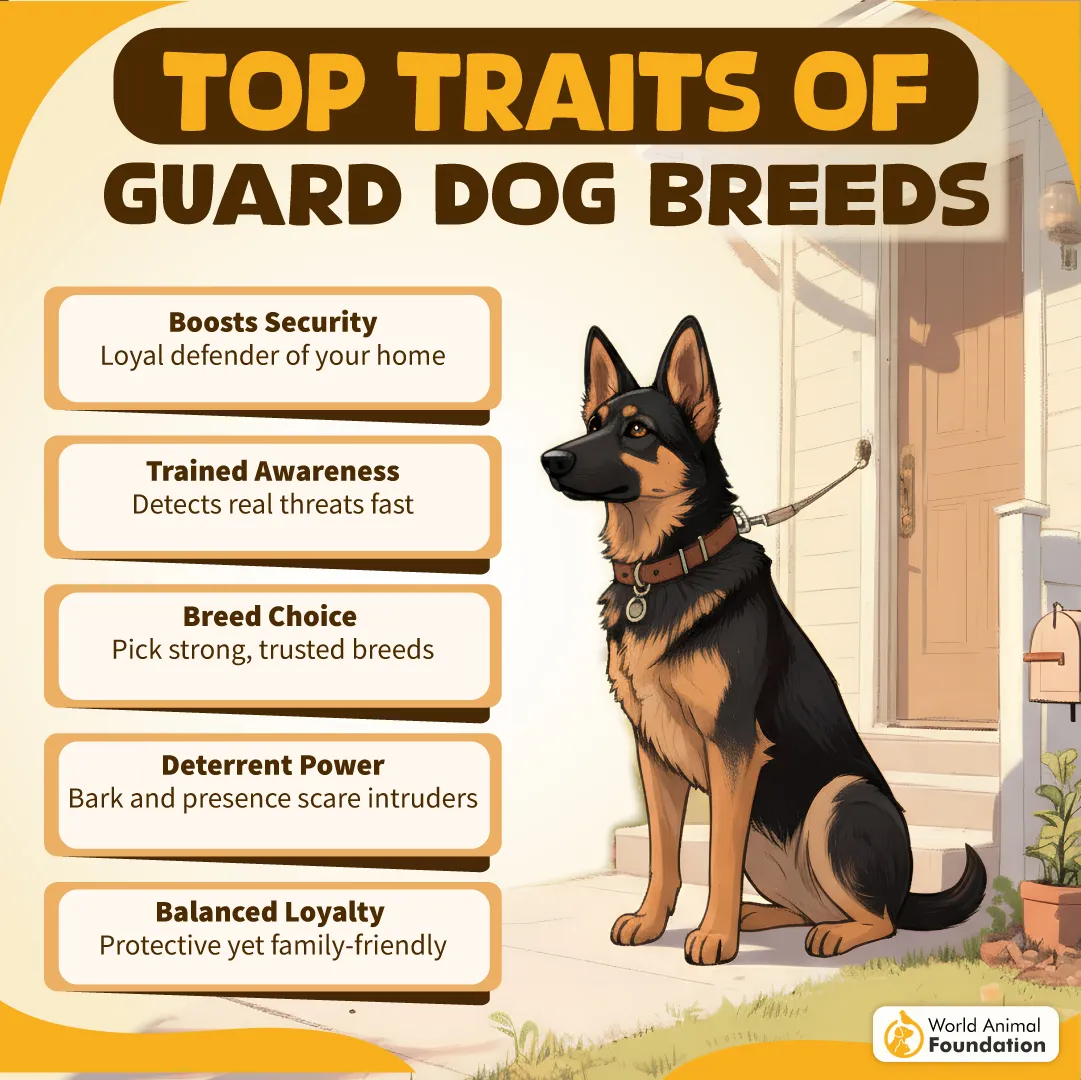
Good socialization helps the protective instincts stay thoughtful around strangers and other pets. With regular exercise and mental stimulation, many families find a calm rhythm that supports children, routine, and a loyal companion bond.
Why This Breed Is a Good Fit
The mix of smart focus and loyalty can support protection work and everyday family routines.
Clear training goals keep the dog engaged, not bored, which helps calm behavior at home.
A naturally watchful presence can protect what matters while still fitting into family life.
3. Boxer
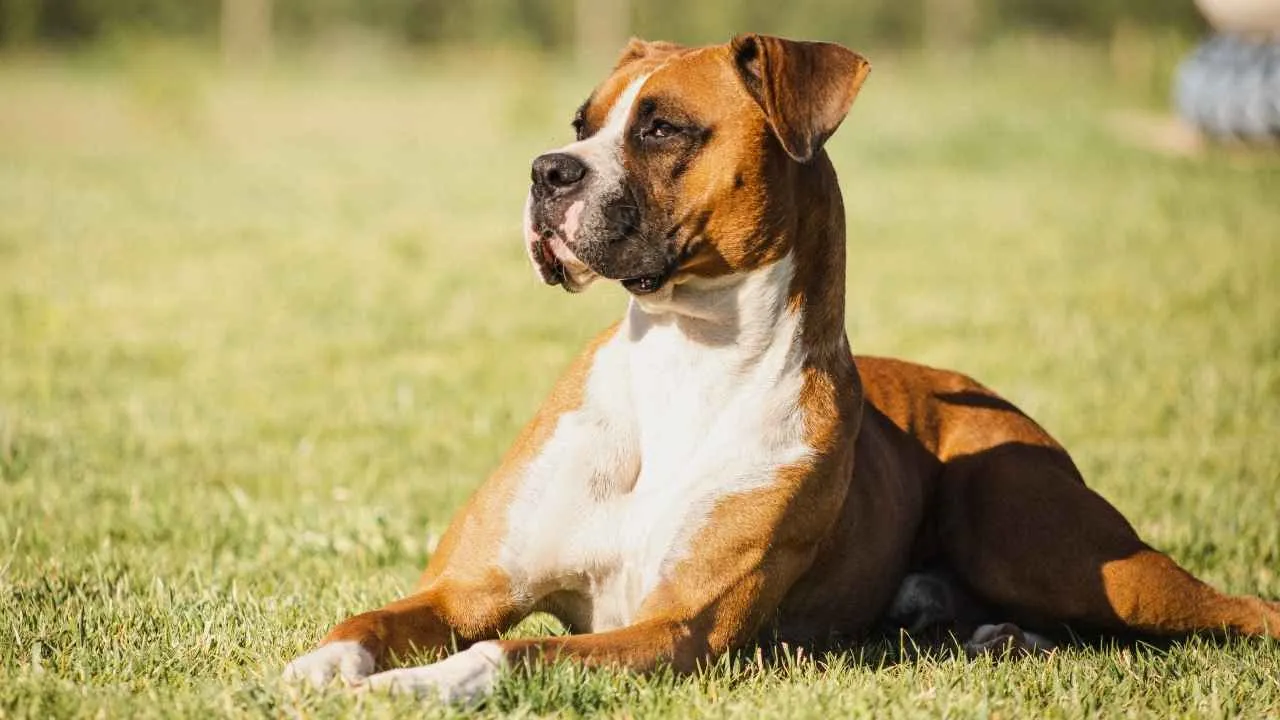
The Boxer is a smooth-haired working dog, named for its manner of “boxing” with sturdy front paws when fighting. Developed in Germany, it was historically used as a big-game hunter, and it has also been widely used in police work. Today, many people value this breed as a watchdog and a companion.
In appearance, the Boxer is trim and squarely built with a short, square-shaped muzzle and a black mask on its face. The coat is shiny and short-haired, in fawn or brindle. That tidy coat can make day-to-day pet care feel more straightforward for busy families.
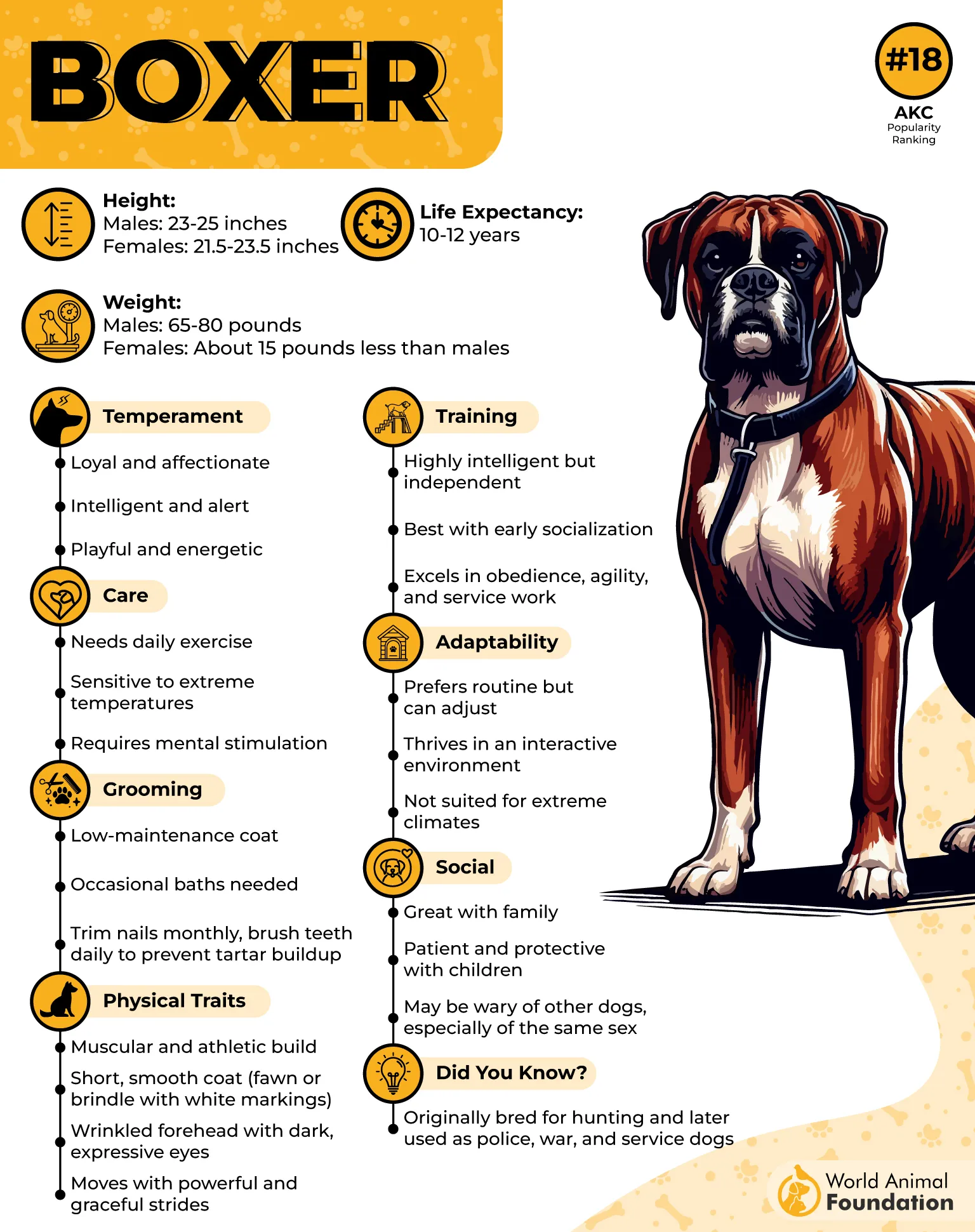
Because this is a protective breed with a working background, training and socialization should be taken seriously from the start. Consistent guidance helps the dog learn what to protect and when to stay calm.
With proper socialization, many families enjoy a loyal, playful dog that can be protective while still fitting into family life with children.
Why This Breed Is a Good Fit
A watchdog mindset can help protect the home, while the companion side supports family bonding.
A short coat makes basic pet upkeep easier in daily life.
Training with clear rules can help shape a calm, friendly routine around children and visitors.
4. Bernese Mountain Dog
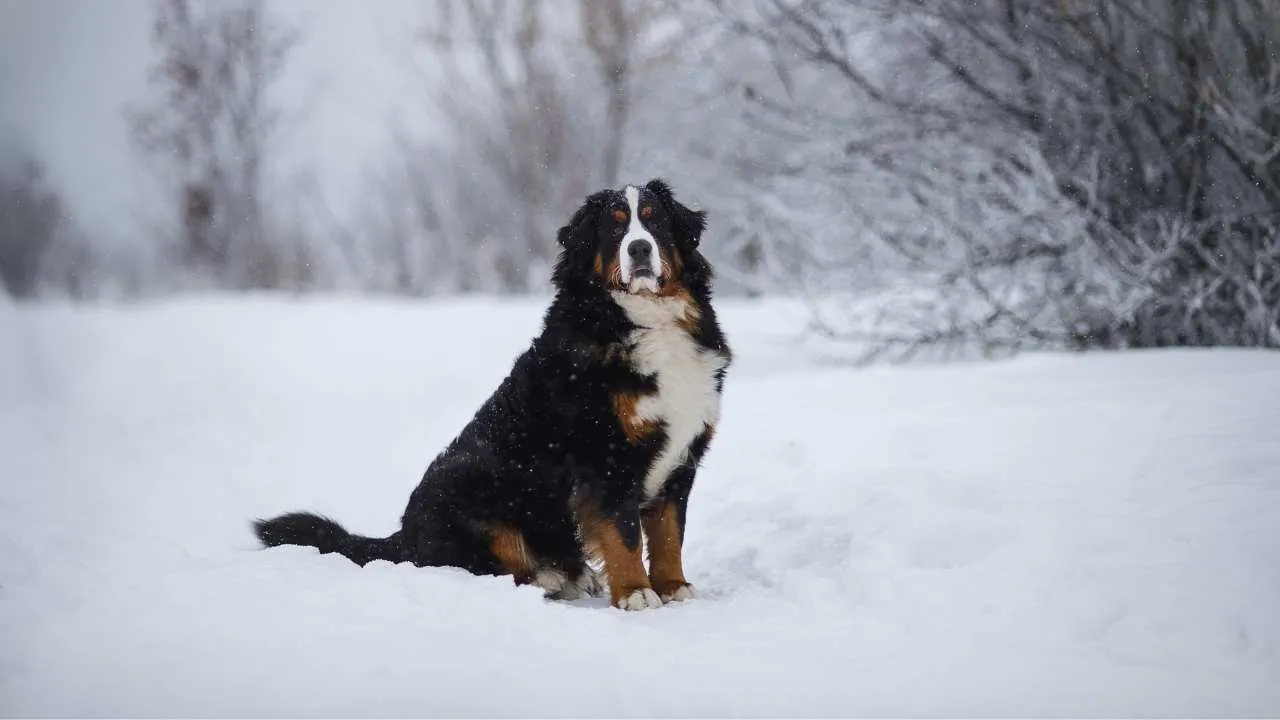
The Bernese Mountain Dog originated in Switzerland, where the breed was used as farm dogs. They were imported to the U.S. during the 1920s to work as farm dogs, but now these gentle giants are mostly family pets.
The first thing most people notice is size, since the average height is 23 to 27.5 inches and the weight is 70 to 115 pounds. Even with that big frame, the breed is often described as having a sweet temperament and “a big heart to match.”
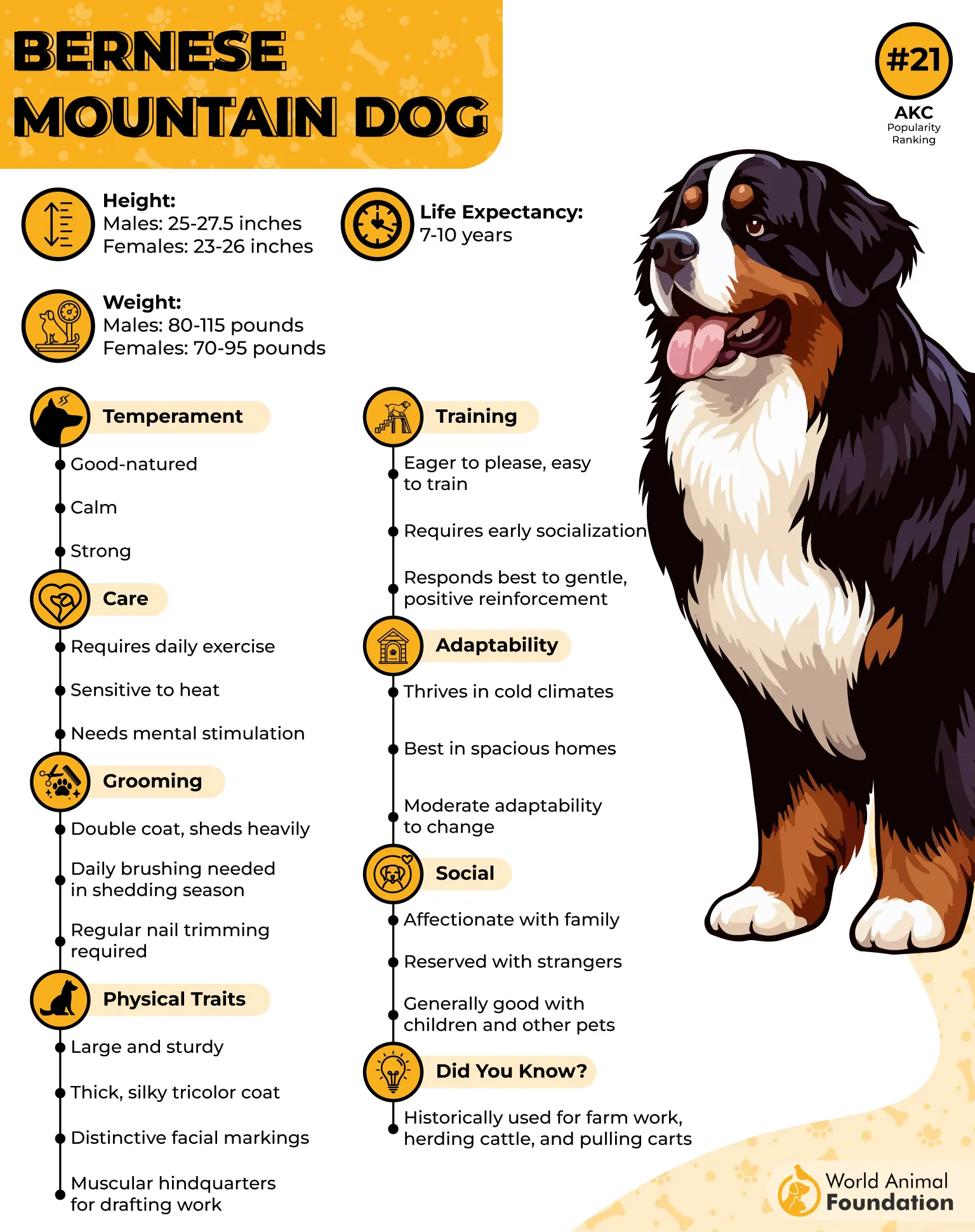
For many families, that combination can feel surprisingly calm in everyday family life. The size also means training should focus on manners early, so the dog learns to move politely around children and guests.
If you want protection dogs that do not feel intense all day, a large, steady presence can sometimes do a lot without noise.
Proper training and thoughtful socialization can help a dog stay relaxed, especially when it sees strangers come and go. Many people simply enjoy the loyal companion feel and the comfort of having gentle giants close by.
Why This Breed Is a Good Fit
Big, calm energy can make family life feel secure without constant barking.
The family-pet reputation suits homes with children who like affectionate pets.
Early training helps the dog protect space politely, not like a wrecking ball.
5. Cane Corso
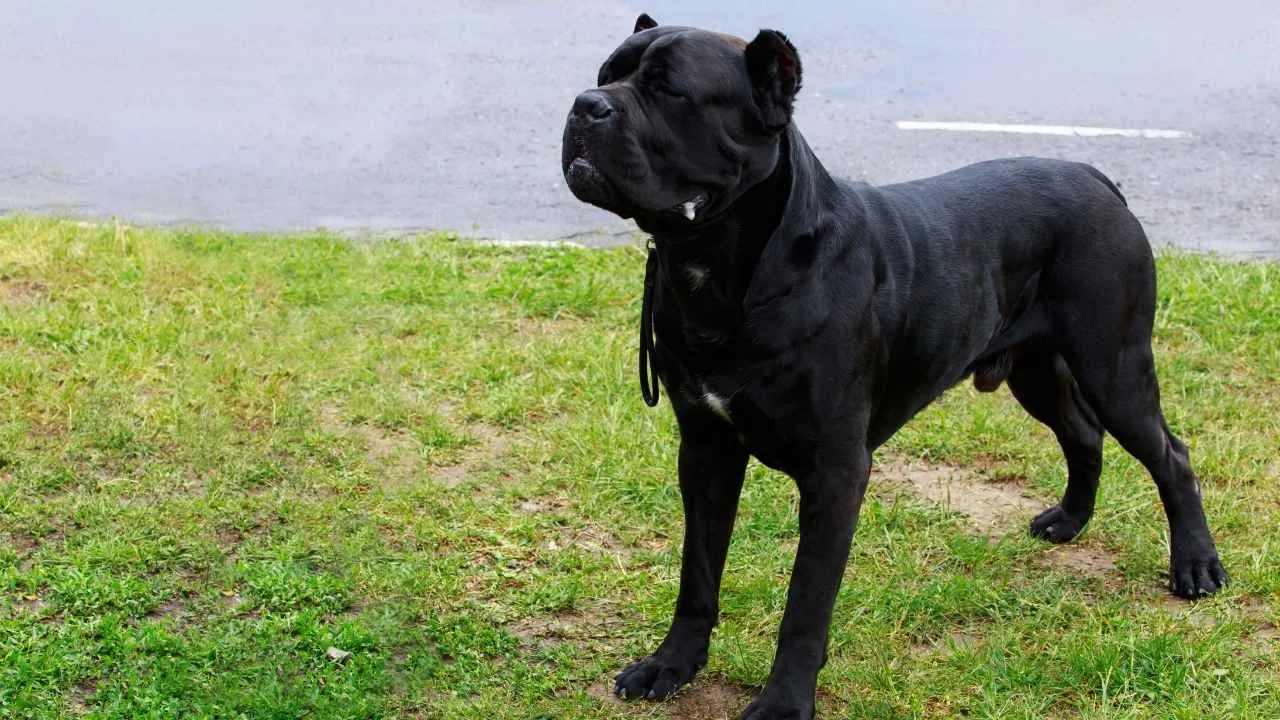
The Cane Corso is described as smart, trainable, and of noble bearing, with an assertive and confident presence. Its lineage is linked to ancient Roman times, and the name is said to translate roughly as “bodyguard dog.”
With a large head, an alert expression, and muscles under a short, stiff coat, the Cane Corso can look intimidating at first glance, according to the AKC. This breed is also described as intelligent, loyal, eager to please, and versatile, with an intensely loyal bond to its humans.
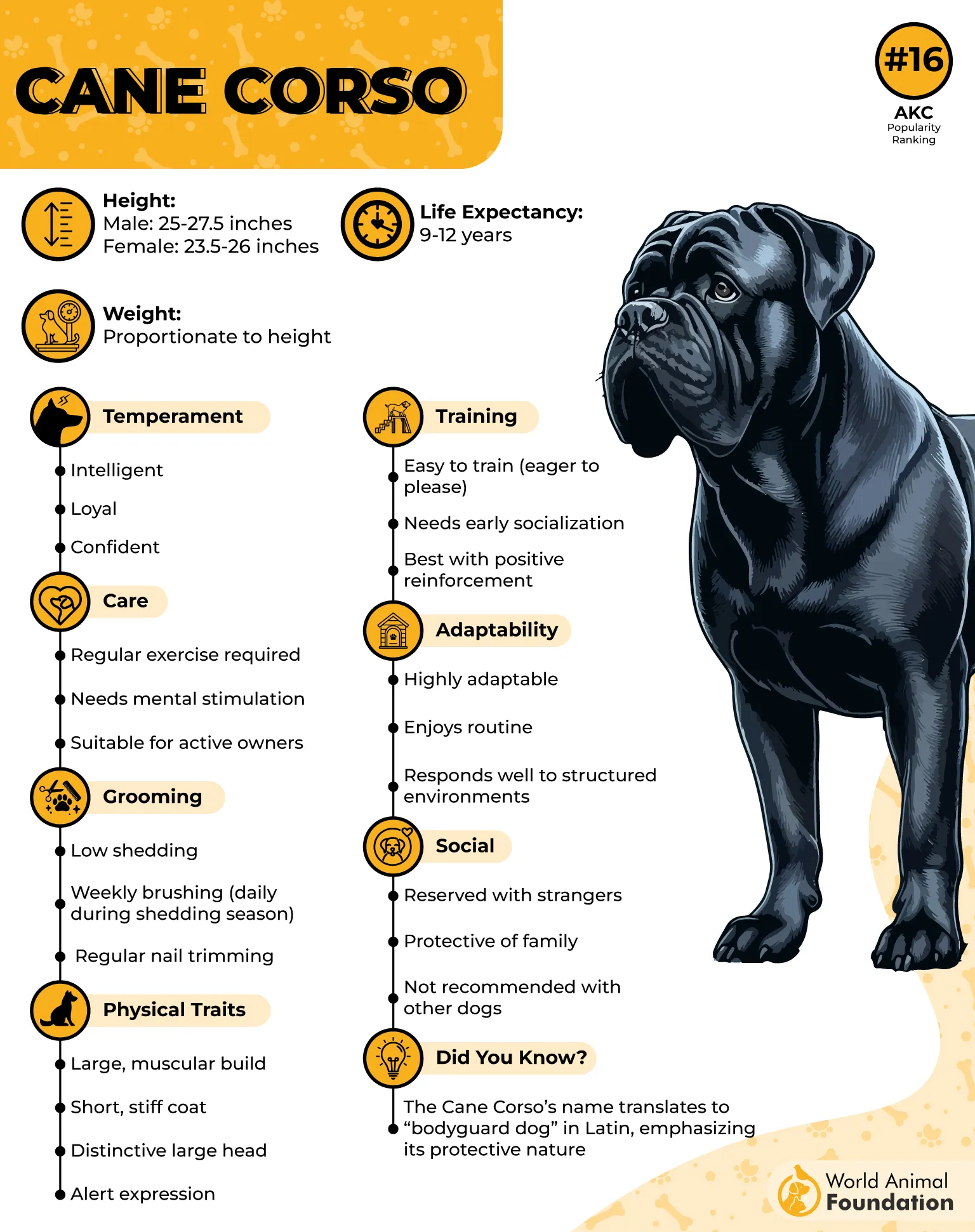
At the same time, it can be assertive and willful, which is why training should be clear and consistent. For families, that means building a routine that rewards calm behavior and respectful boundaries.
For protection dogs, the “professional bodyguard” vibe comes from both presence and temperament, not just looks. Responsible breeding and early socialization with people and other dogs is described as vital.
With proper socialization and proper training, many families aim for a balanced temperament where the dog can protect the home while staying calm around children and most people.
Why This Breed Is a Good Fit
The natural guardian attitude can help protect the home when strangers show up unexpectedly.
Trainable and loyal traits support strong bonds with the family, not random rule-making.
Consistent socialization can help the dog stay calm instead of acting “too confident” in public.
6. Bullmastiff
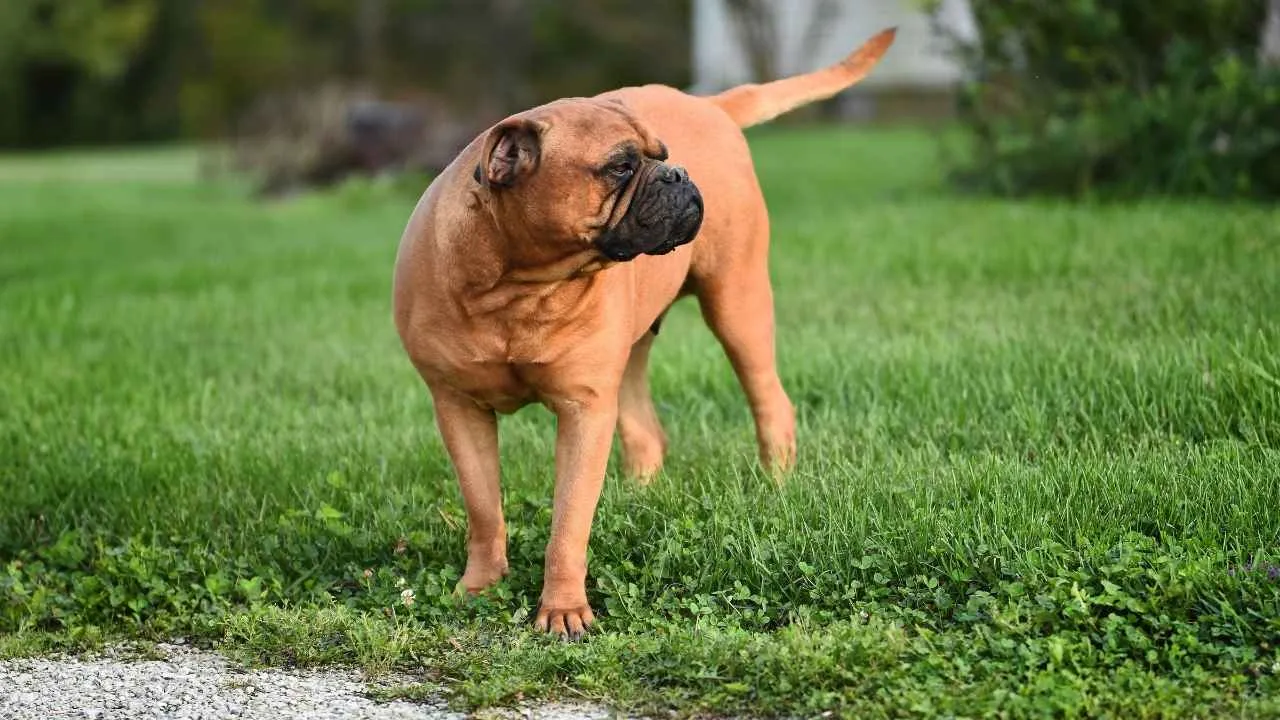
The Bullmastiff is described as fearless at work and docile at home, a large, muscular guard dog originally used to pursue and hold poachers. It stands up to 27 inches at the shoulder and weighs between 100 and 130 pounds, so it brings a large, intimidating presence to family life. Coats come in fawn, red, or brindle.
Beyond size, the breed is described as intelligent, alert, and confident, with a broad head and deep muzzle that many people recognize quickly.
The description also calls these dogs biddable and reliable. That “reliable” part matters in family settings, especially when you want pets that can settle down after excitement.
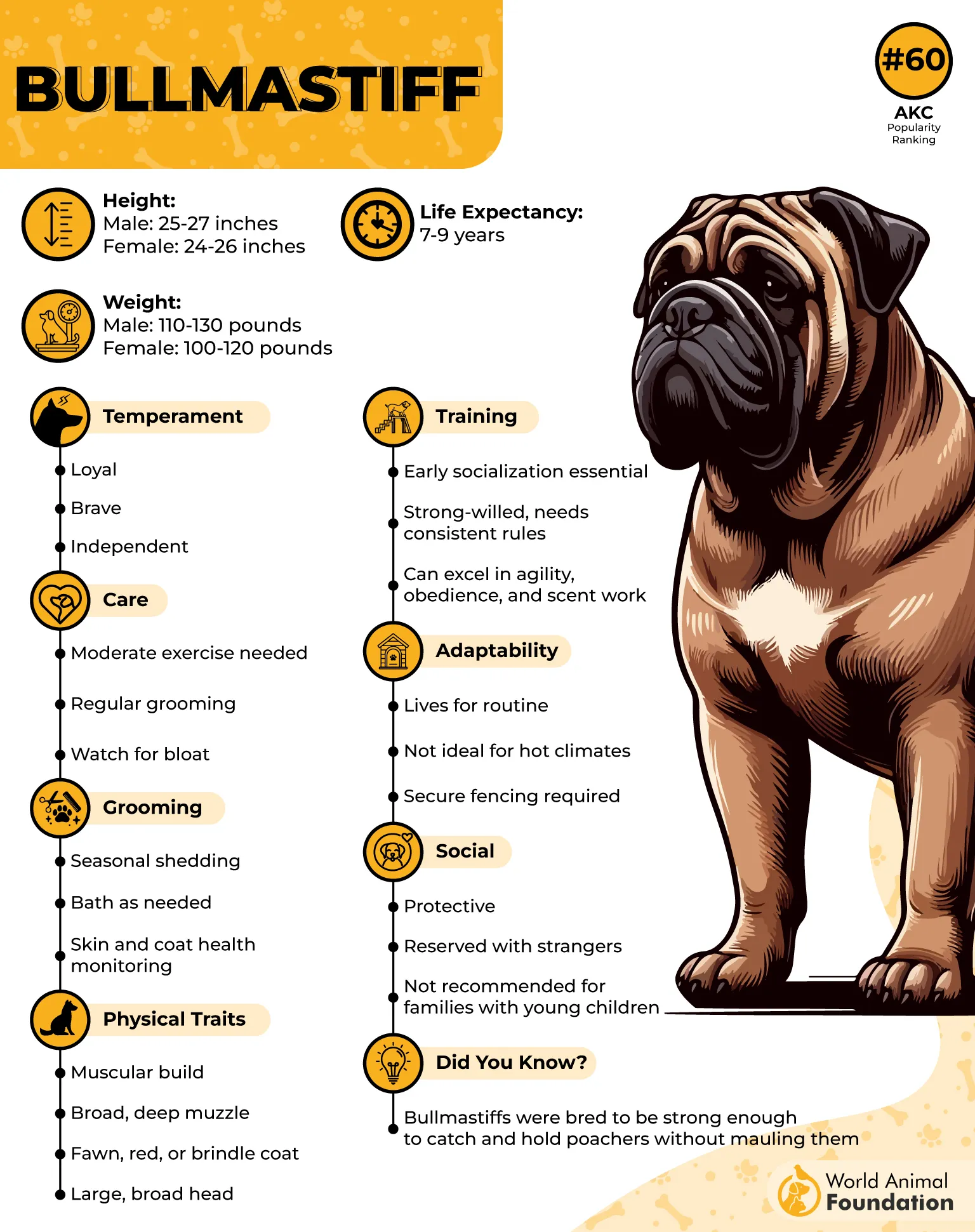
Because this is a large guarding dog, owners are advised to begin training and socialization early, while the puppy is still small enough to control.
Consistent training and steady socialization help shape protective instincts into sensible behavior around children. For many families looking at guard dog breeds, the appeal is a calm home partner that can protect without acting wild.
Why This Breed Is a Good Fit
Docile-at-home energy can feel like a calm guard dog breeds option for busy family life.
Early training helps the dog protect appropriately, not overreact.
A big, confident presence can do a lot of guarding before the dog even makes a sound.
7. Great Dane
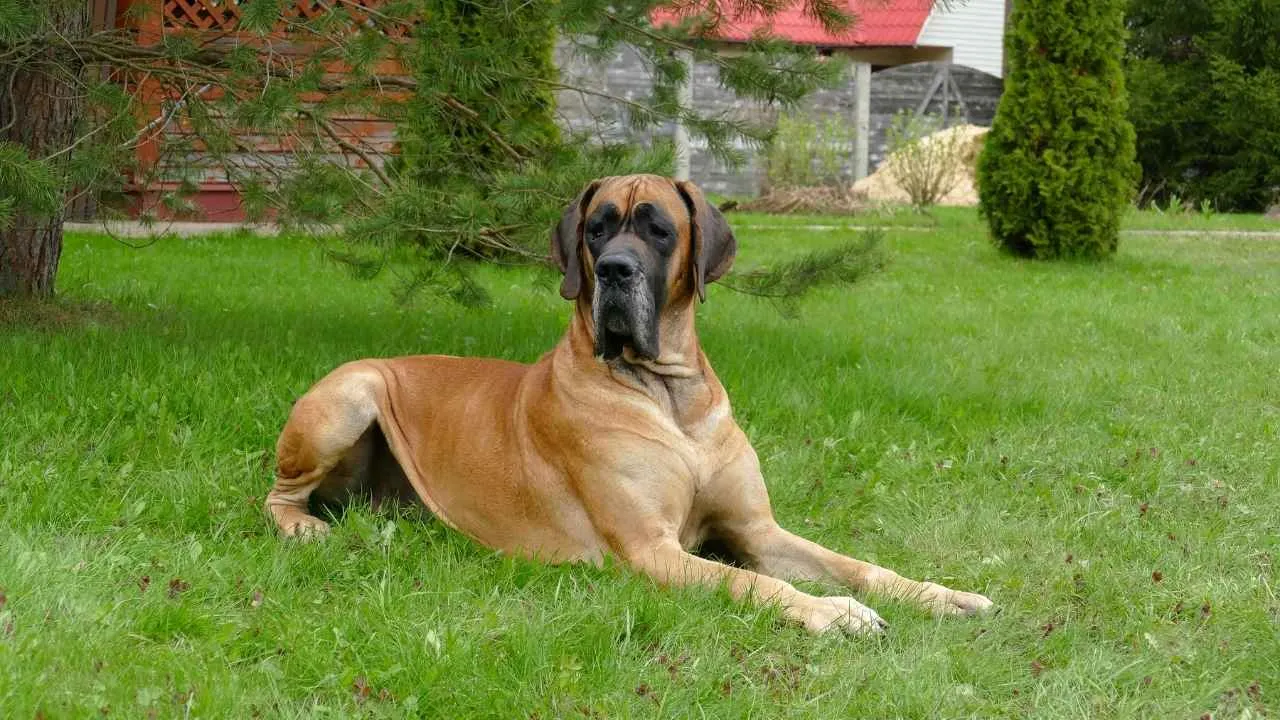
The Great Dane is often described as easygoing, but owning a dog of this size, weight, and strength remains a serious commitment.
Danes can be as tall as 32 inches at the shoulder, and they tower over most people when standing on their hind legs. Despite their imposing look, they are often described as a total joy to live with.
They are described as powerful giants, elegant and balanced, moving with a smooth, easy stride. Coats come in different colors and patterns, including the black-and-white “harlequin” look that many people recognize.
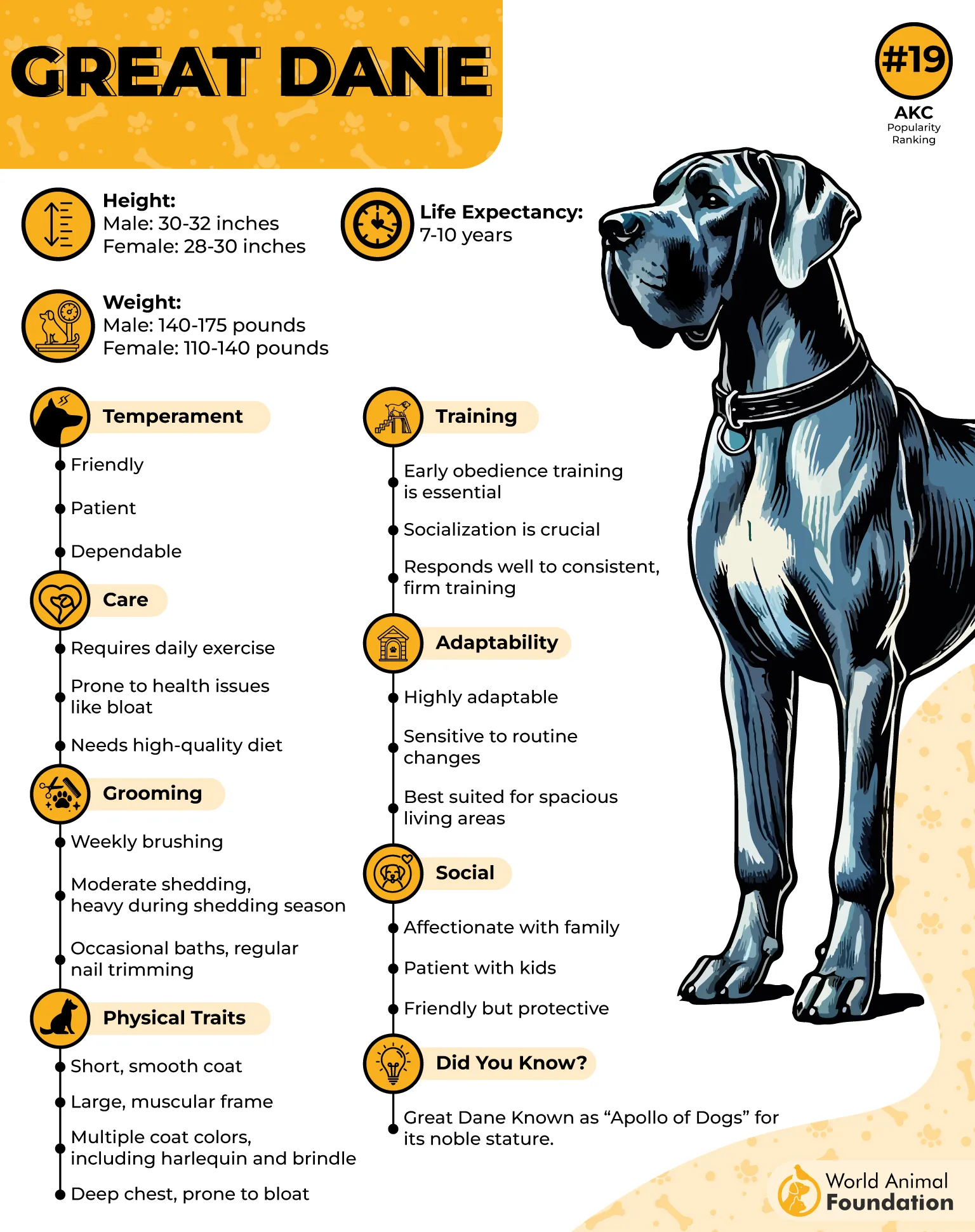
Despite their sweet nature, Danes are described as alert home guardians, and their look alone often makes intruders think twice. According to PetMD, despite their large size and guardian background, Great Danes are gentle dogs that love family life. They are often nicknamed the “Apollo of dogs.”
This breed is also described as patient with kids and as people pleasers who make friends easily. Training and consistent socialization help maintain a friendly, well-mannered temperament, especially around children and guests.
For families who want protection dogs with a surprisingly calm demeanor, the goal is a home guardian that can protect while remaining a loyal, loving presence in daily life.
Why This Breed Is a Good Fit
The “gentle giant” look can protect the home without the dog needing to act tough all day.
A sweet, people-pleasing temperament can make family pets feel welcoming rather than tense.
With training and socialization, the dog can remain calm around children while remaining alert.
Conclusion
Choosing a relaxed protector is really about fit, not hype. The best match is a breed whose temperament, training needs, and daily routine align with your family, home, and schedule.
No matter which of these dogs you love, focus on calm, consistent training and steady socialization so your dog knows what is normal and what is truly a problem.
Keep boundaries clear, reward good choices, and give your dog a job that makes sense for real life, like greeting politely, settling on a mat, and listening the first time. When you build trust early, you get a companion who feels safe to live with and fun to be around.
