




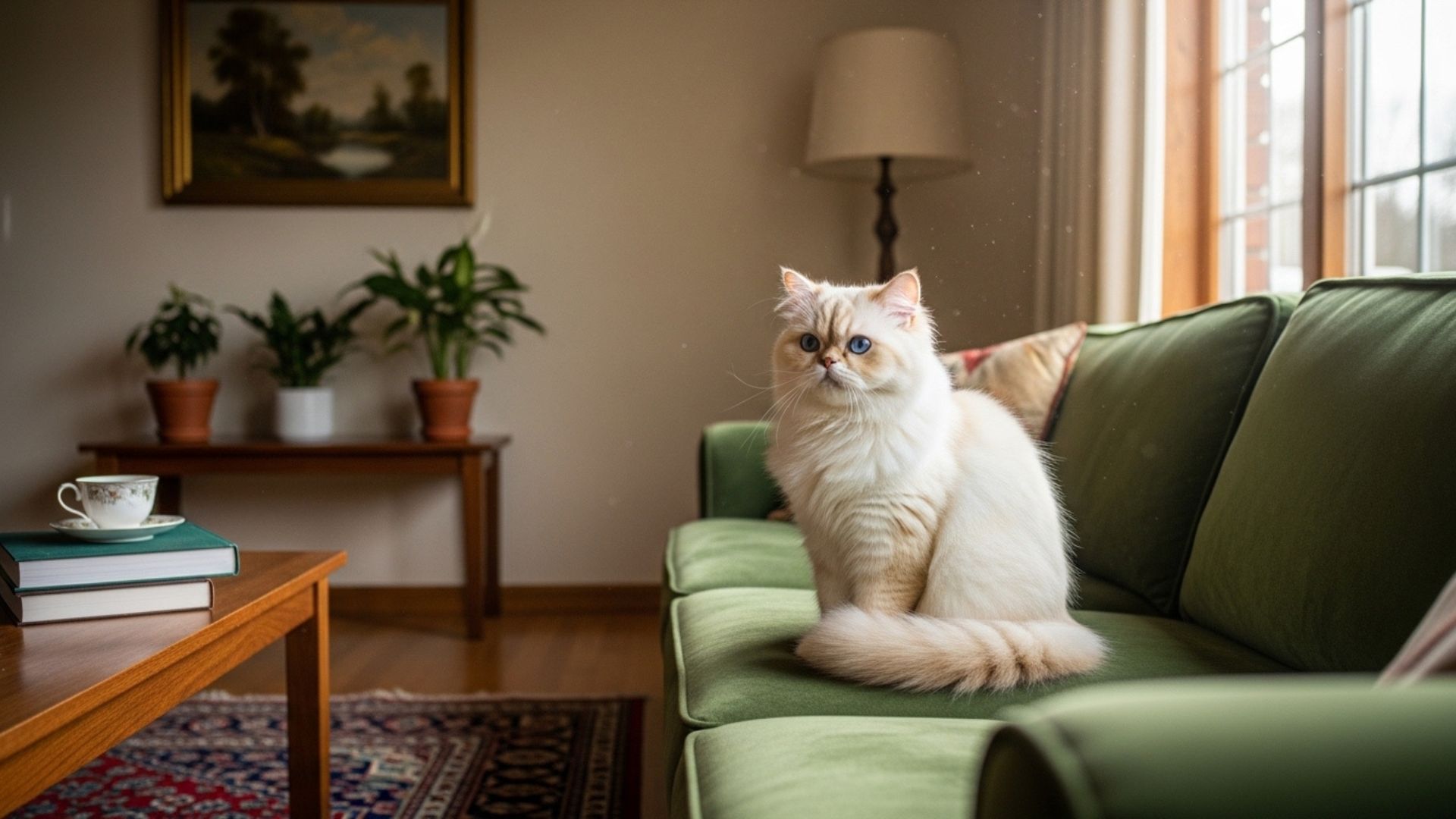
Cats may be known for their graceful movements and mysterious habits, but few features are as fascinating—or as functional—as their whiskers. These sensitive hairs act like built-in sensors, helping cats judge distances, detect air currents, and navigate tight spaces with confidence.
In some breeds, whiskers grow especially long, creating a striking look while enhancing their ability to explore the world around them. Longer whiskers often pair with larger heads, broader muzzles, or more rugged builds, allowing cats to better assess their surroundings.
From gauging whether they can fit through narrow openings to sensing subtle changes in their environment, whiskers play a crucial role in daily life. For cats that thrive in active, curious households, these tactile tools are essential for confident movement and spatial awareness.
These cats combine dramatic whisker length with gentle personalities and strong survival instincts. In this article, we’ll explore seven cat breeds known for their very long whiskers and uncover why this remarkable trait matters more than you might think.
Cat Breeds Known for Their Very Long Whiskers
1. Maine Coon
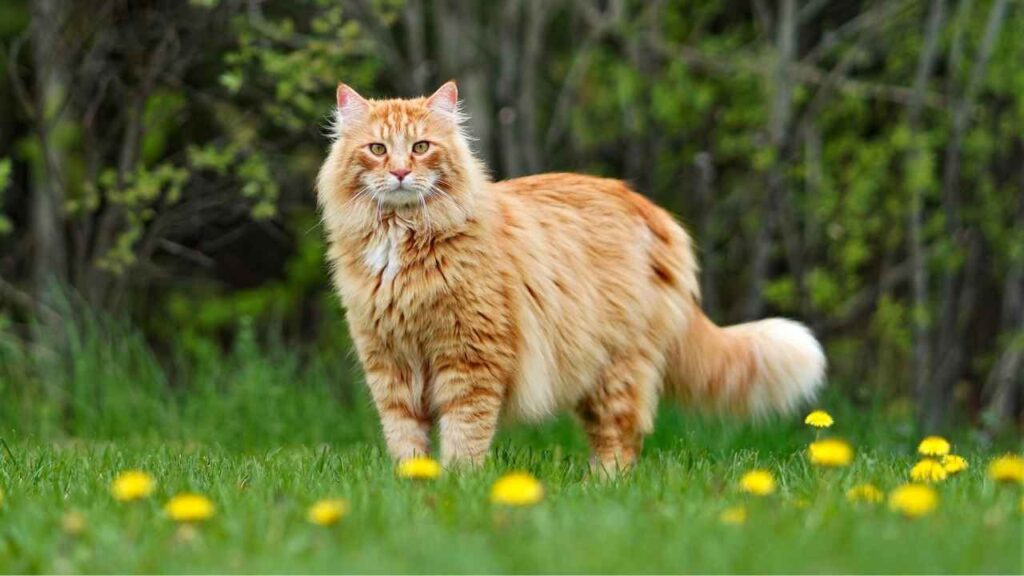
Often called the “gentle giant” or the American Longhair, the Maine Coon is one of the most recognizable domestic cat breeds. According to Britannica, Maine Coons are large, muscular, and heavy-boned cats, and they may have been named for their raccoon-like tail.
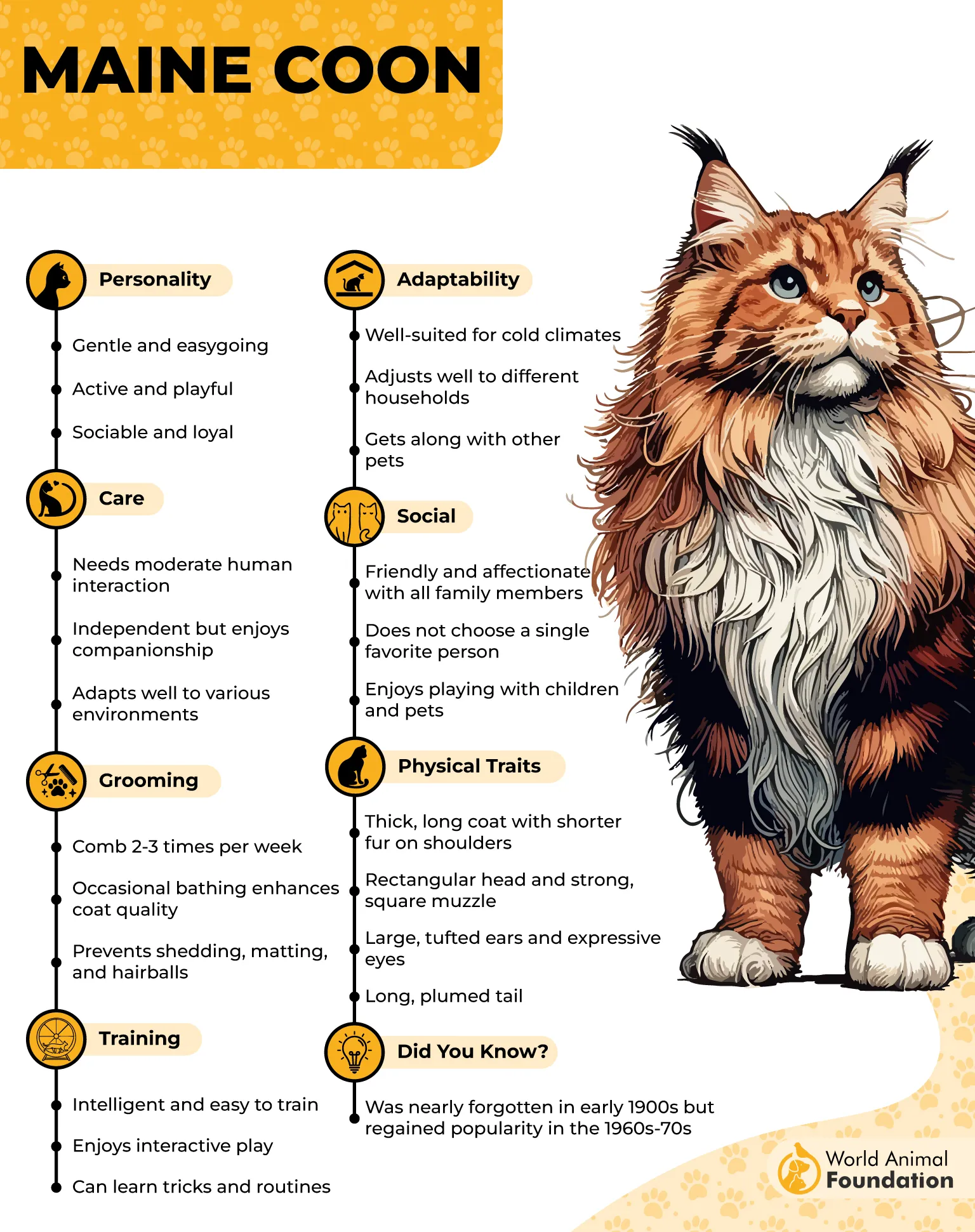
That large head and broad muzzle help explain why Maine Coons are famous for their impressively long, flowing whiskers. These whiskers act like advanced sensors, helping the cat judge spaces, balance on slippery surfaces, and confidently explore new environments.
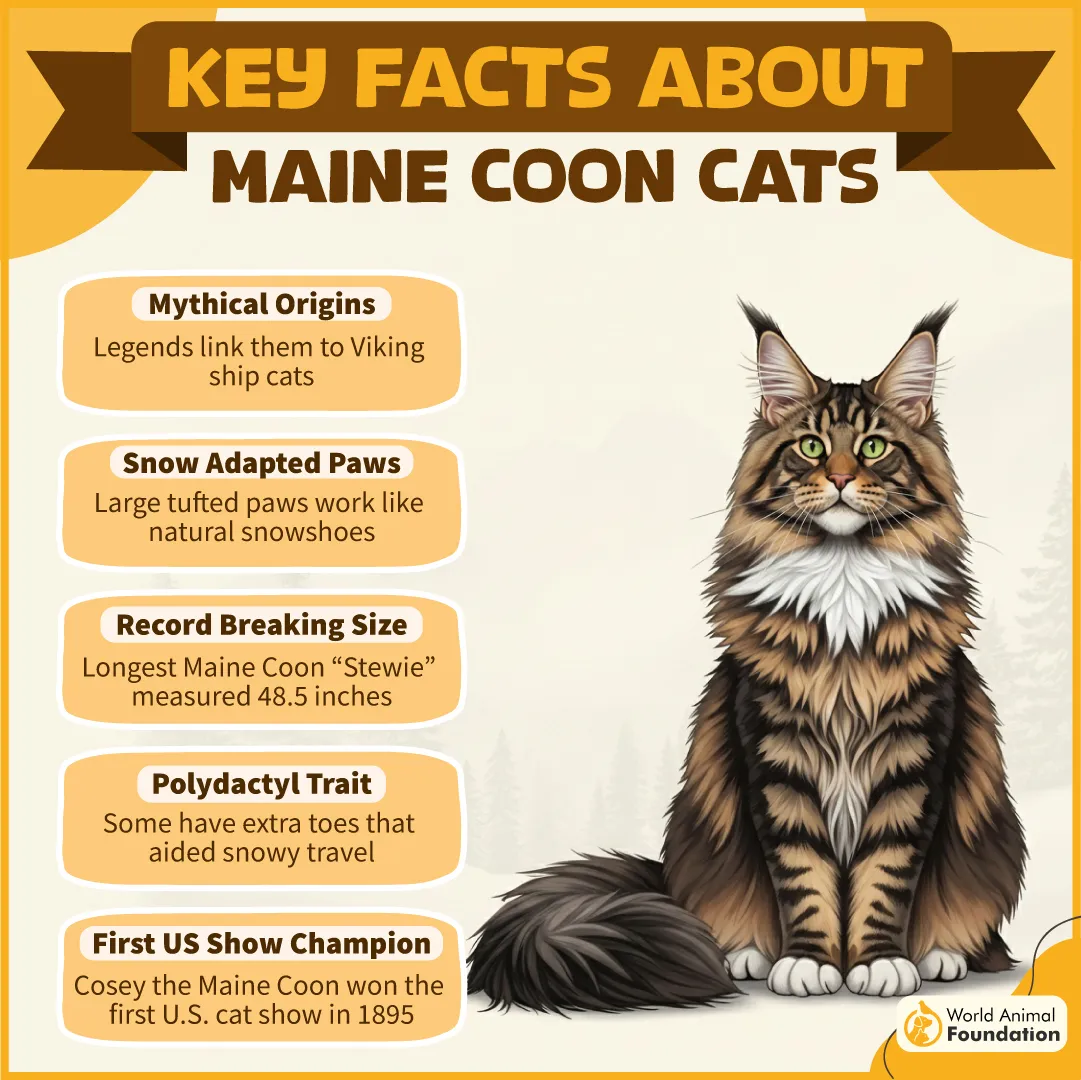
Maine Coons also display dog-like behaviors that complement their whisker use, such as playing fetch, enjoying water, and following family members from room to room. Their relaxed, people-loving nature means they use their whiskers constantly during interactive play and daily exploration.
Because of their size and curiosity, long whiskers are especially useful for navigating tight areas and uneven terrain.
Fun fact: The world record for the longest cat whiskers belongs to Missi, a Maine Coon from Finland.
2. Norwegian Forest Cat
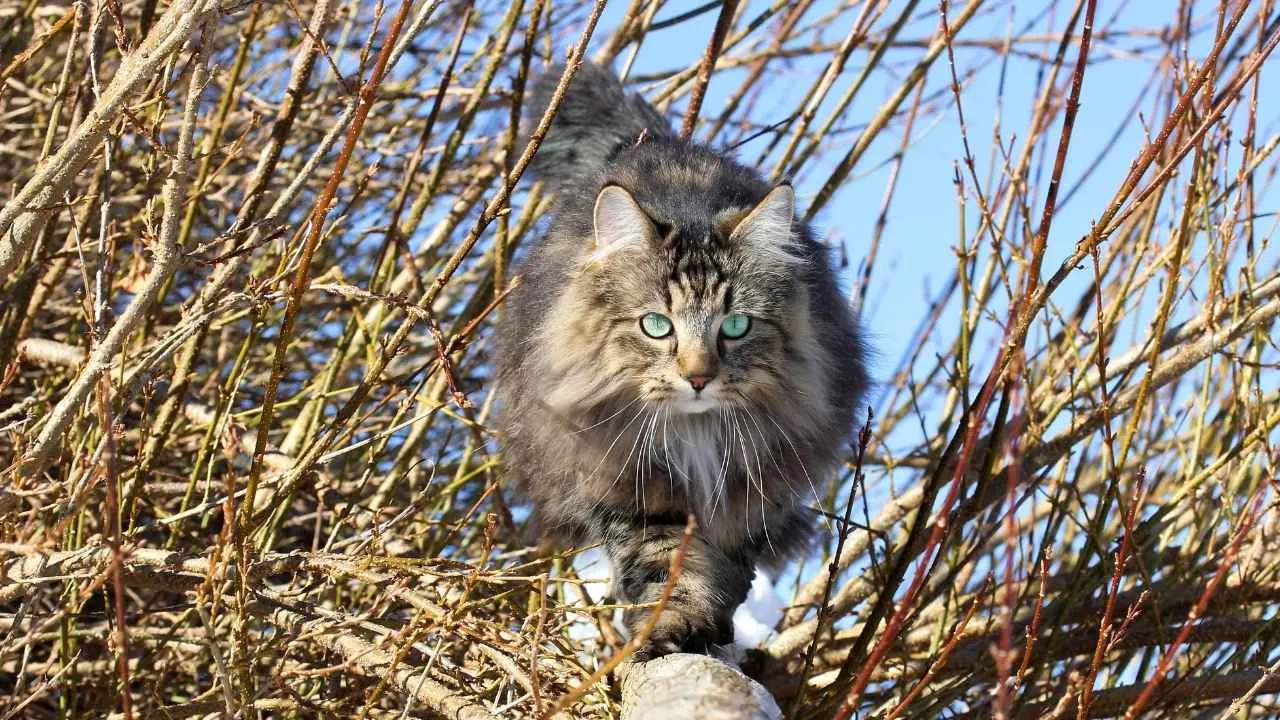
The Norwegian Forest Cat, often called the Wegie or Forest Cat, is a natural breed from Northern Europe known for its dramatic triangular face and rugged elegance.
According to PetMD, the Norwegian Forest Cat is a playful, large, muscular, and friendly breed. Its wild expression, thick ruff, and oversized whiskers give it a striking, almost mythical appearance.
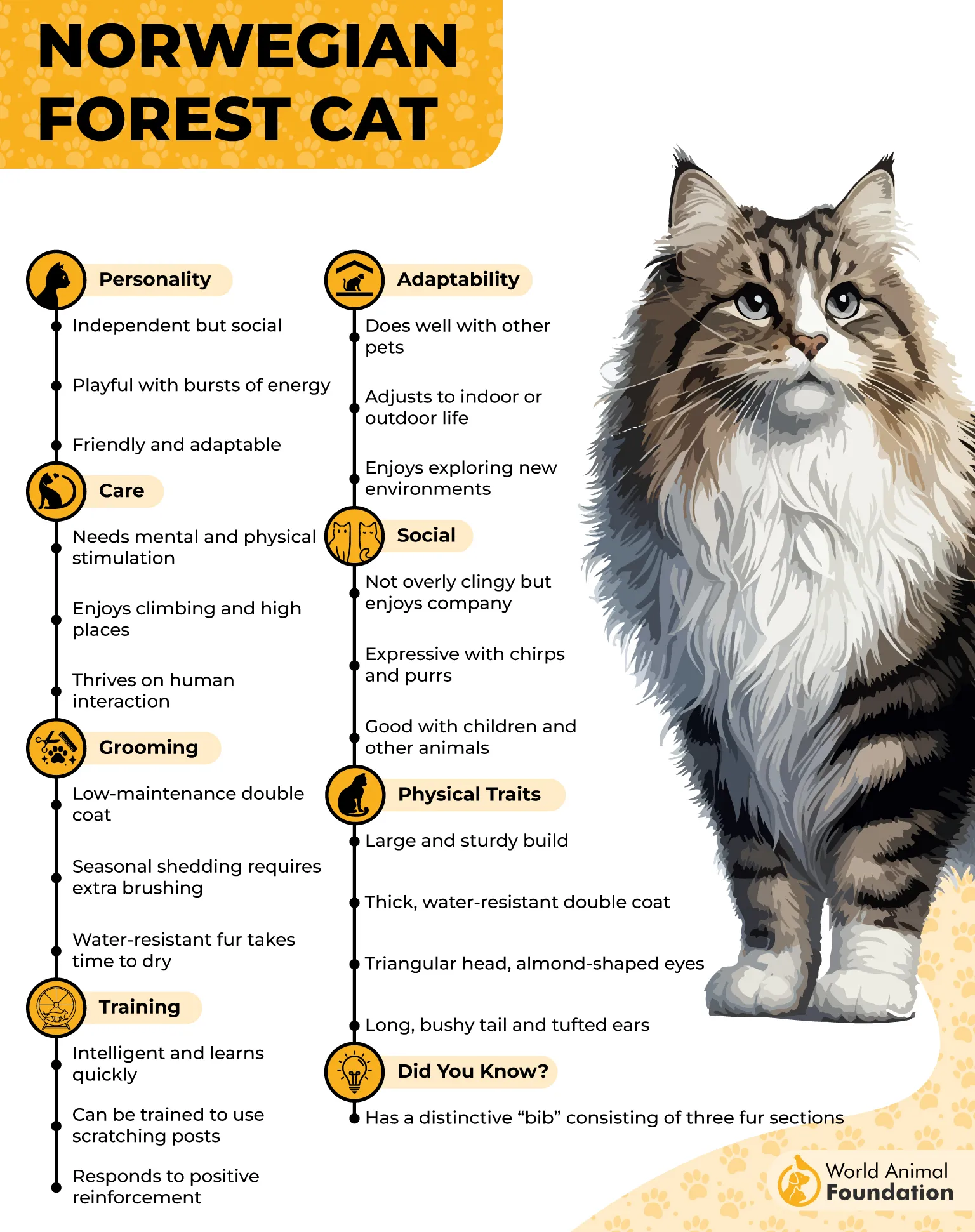
Those long whiskers aren’t just for show—they help this breed navigate dense environments and shifting terrain. Combined with a broad muzzle and angular features, the whiskers enhance spatial awareness, making the Norwegian Forest Cat confident and sure-footed in unfamiliar spaces.
Built for exploration, this cat’s whiskers work alongside keen senses and a powerful frame to judge distances and detect subtle air movements. Their calm, observant nature means they rely heavily on these sensory tools rather than impulsive movement.
Despite their majestic look, they are gentle companions that adapt well to home life while retaining excellent natural instincts.
Fact: The Norwegian Forest Cat is famous for having impressively long whiskers that complement its dramatic triangular head and ancient, folklore-rich history.
3. Persian

Also known as the Persian Longhair or, in traditional form, the Doll-Face Persian, this iconic breed is instantly recognized by its flat facial structure, flowing coat, and expressive eyes. Beneath all that facial fur, Persians also sport impressively long whiskers that subtly frame their rounded features.
According to Purina, although it enjoys lap time and being petted, it’s equally content to sit back and watch everyone’s comings and goings from a distance.
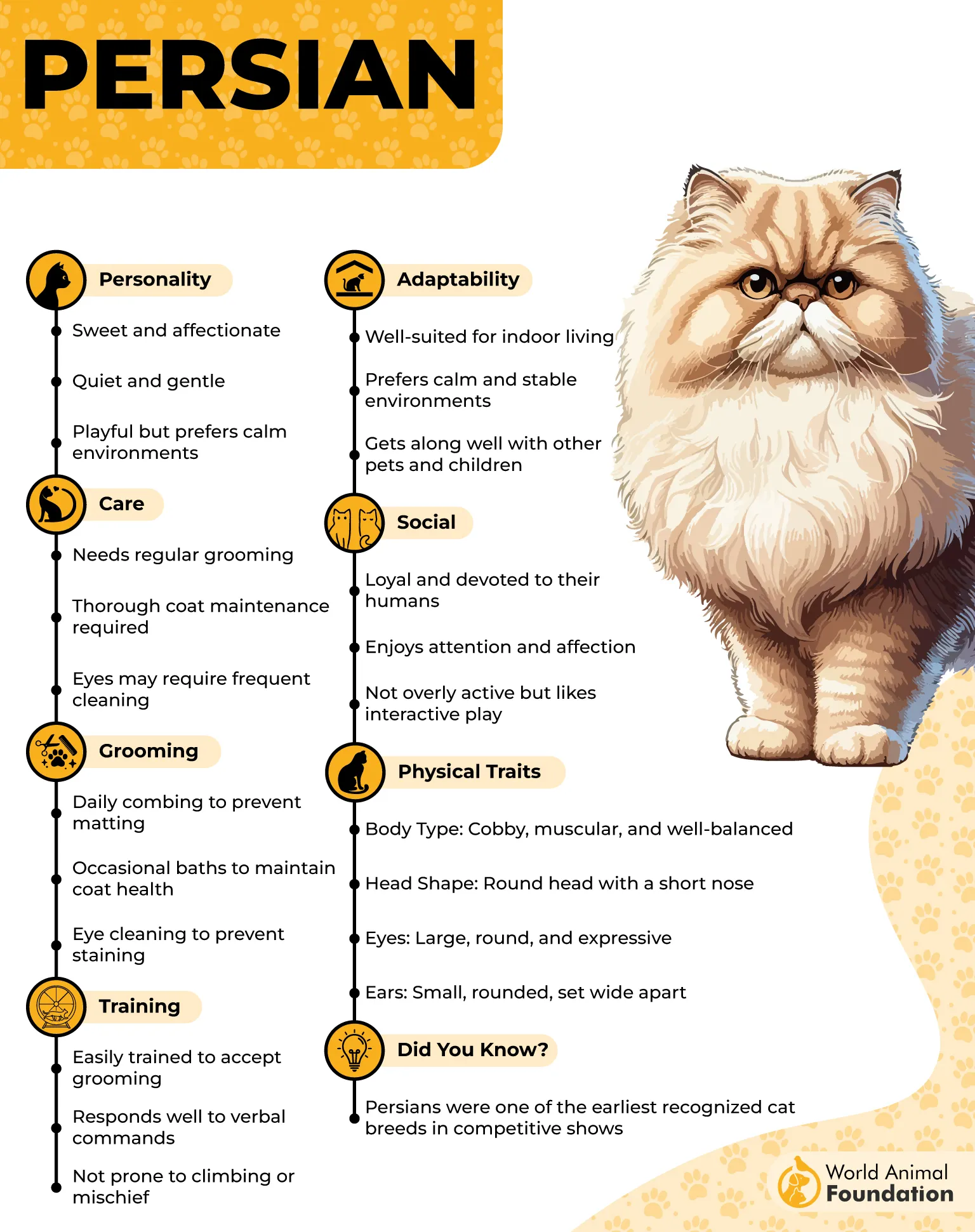
Those extended whiskers often blend into the thick facial coat, but they still play an important role in spatial awareness. Even with a calmer lifestyle, Persians rely on their whiskers to navigate furniture, doorways, and cozy lounging spots without needing to rush or leap.
Because Persians prefer relaxed environments, their long whiskers are especially useful during slow, deliberate movement. Combined with a low-energy temperament, these sensitive hairs help them remain confident and comfortable in familiar indoor spaces.
Regular grooming is essential, not just for the coat but also to keep whiskers free from tangles or debris.
Fact: Persian cats have been cherished companion animals since the 1600s, prized for both their luxurious appearance and gentle personalities.
4. Ragdoll
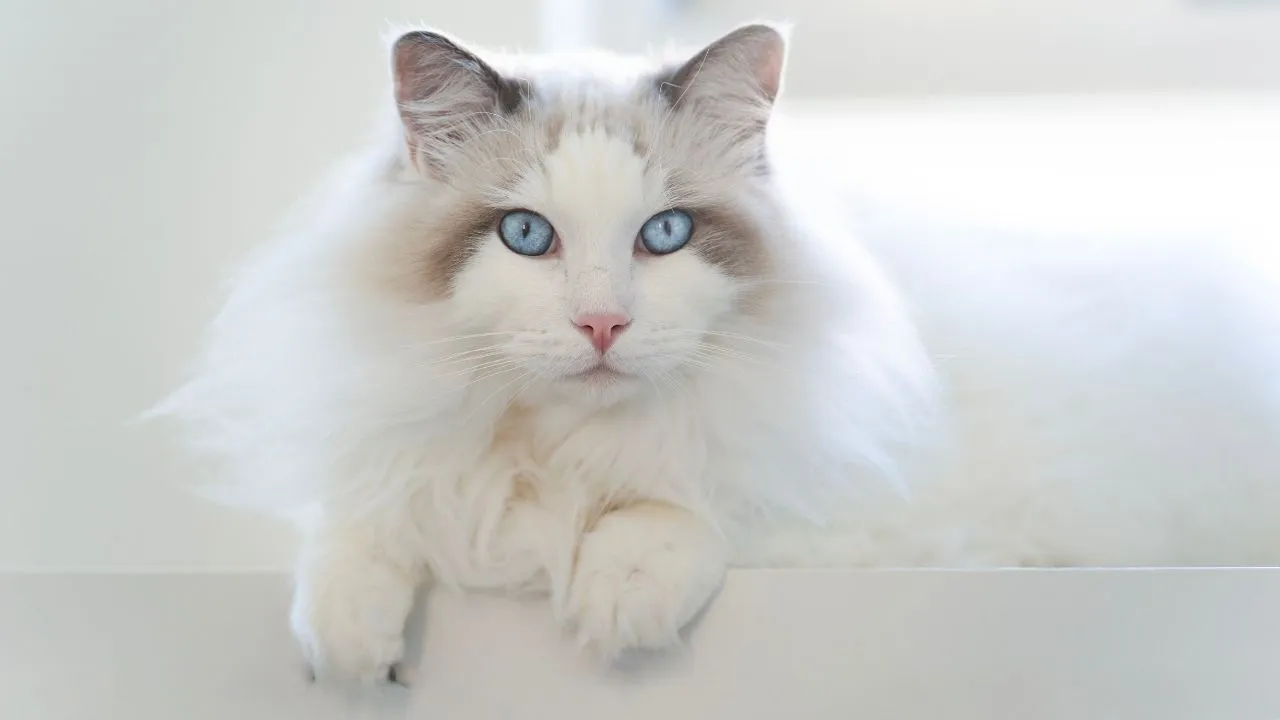
Also known simply as the Ragdoll cat, this large breed is celebrated for its striking blue eyes, plush semi-long coat, and relaxed, floppy demeanor. Developed in California, Ragdolls are instantly recognizable by their soft color-point markings and gentle expression.
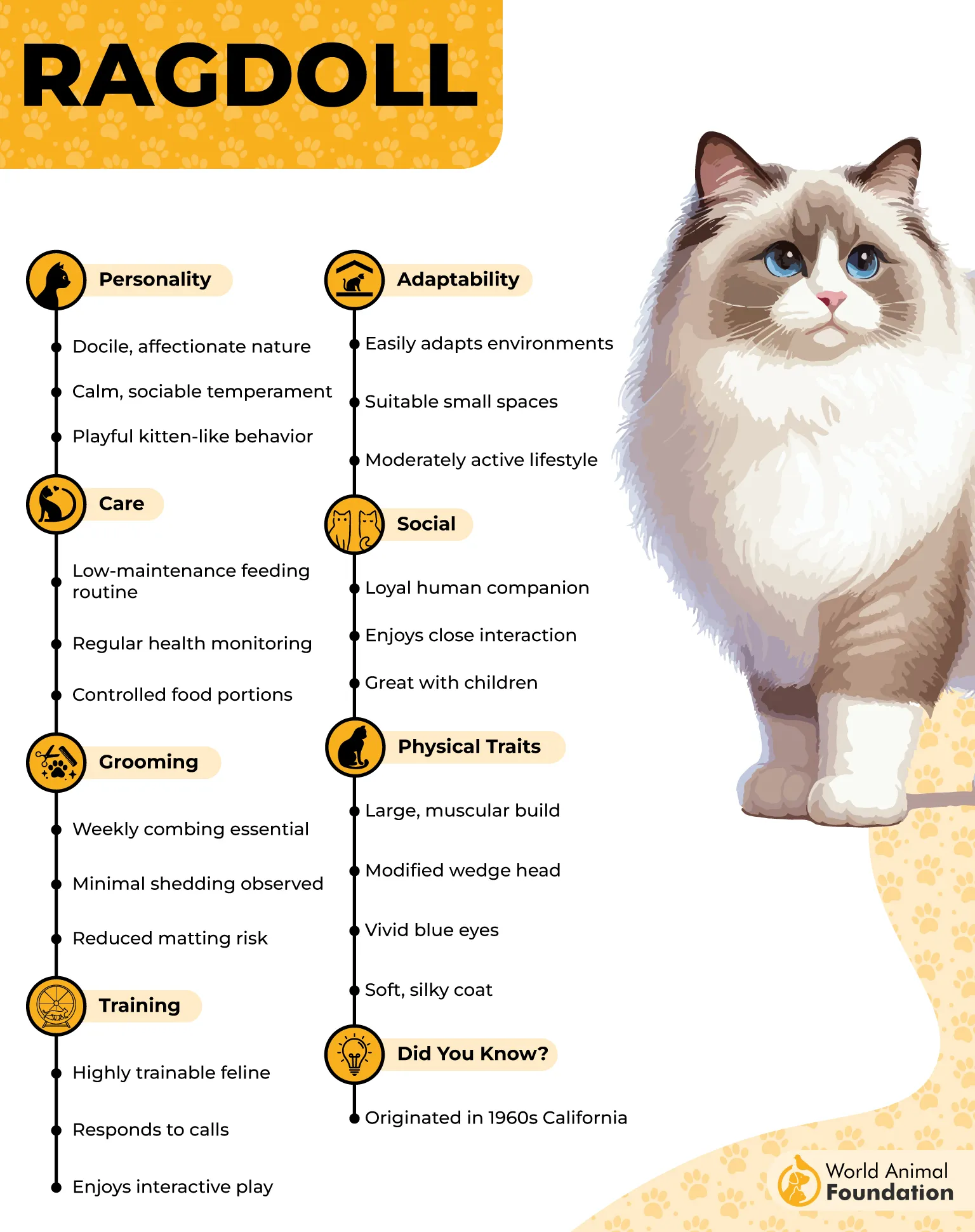
One standout facial feature is their long, prominent whiskers, which frame the broad muzzle beautifully. These extended whiskers enhance their spatial awareness and add to the breed’s serene, almost doll-like appearance, perfectly matching their calm temperament.
Ragdolls use their whiskers to navigate indoor spaces with ease, even in low light. Their confident yet unhurried movements show how these sensory tools help them judge distances while exploring their surroundings or following their favorite humans.
Because they are affectionate and people-oriented, Ragdolls often stay close to family members, relying on their whiskers during gentle play and relaxed exploration. Their facial structure and whisker length give them a majestic, balanced look that complements their famously laid-back personality.
Fact: The Ragdoll breed was officially recognized by the Cat Fanciers’ Association (CFA) in 2000.
5. Siberian
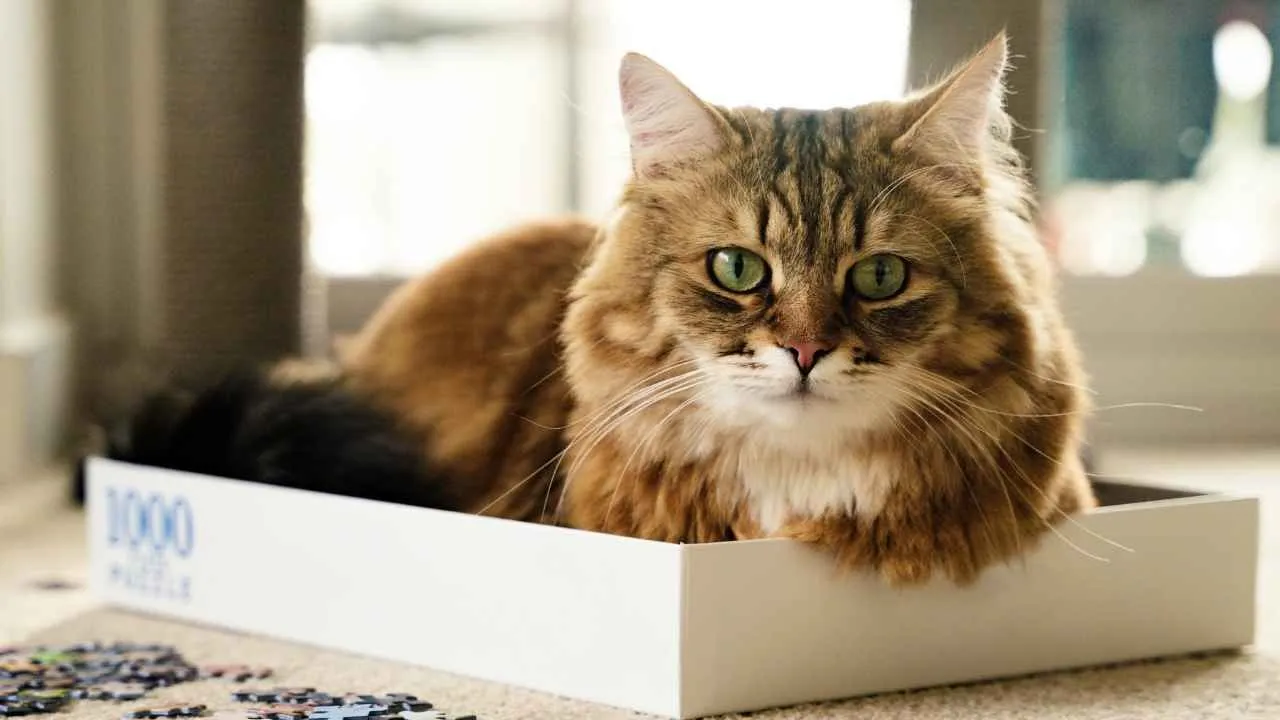
Also known as the Siberian Forest Cat or Moscow Longhair, the Siberian is a striking, semi-long-haired breed famous for its wild look. Thick coats, broad features, and impressively long whiskers give this cat a dramatic, nature-inspired appearance.
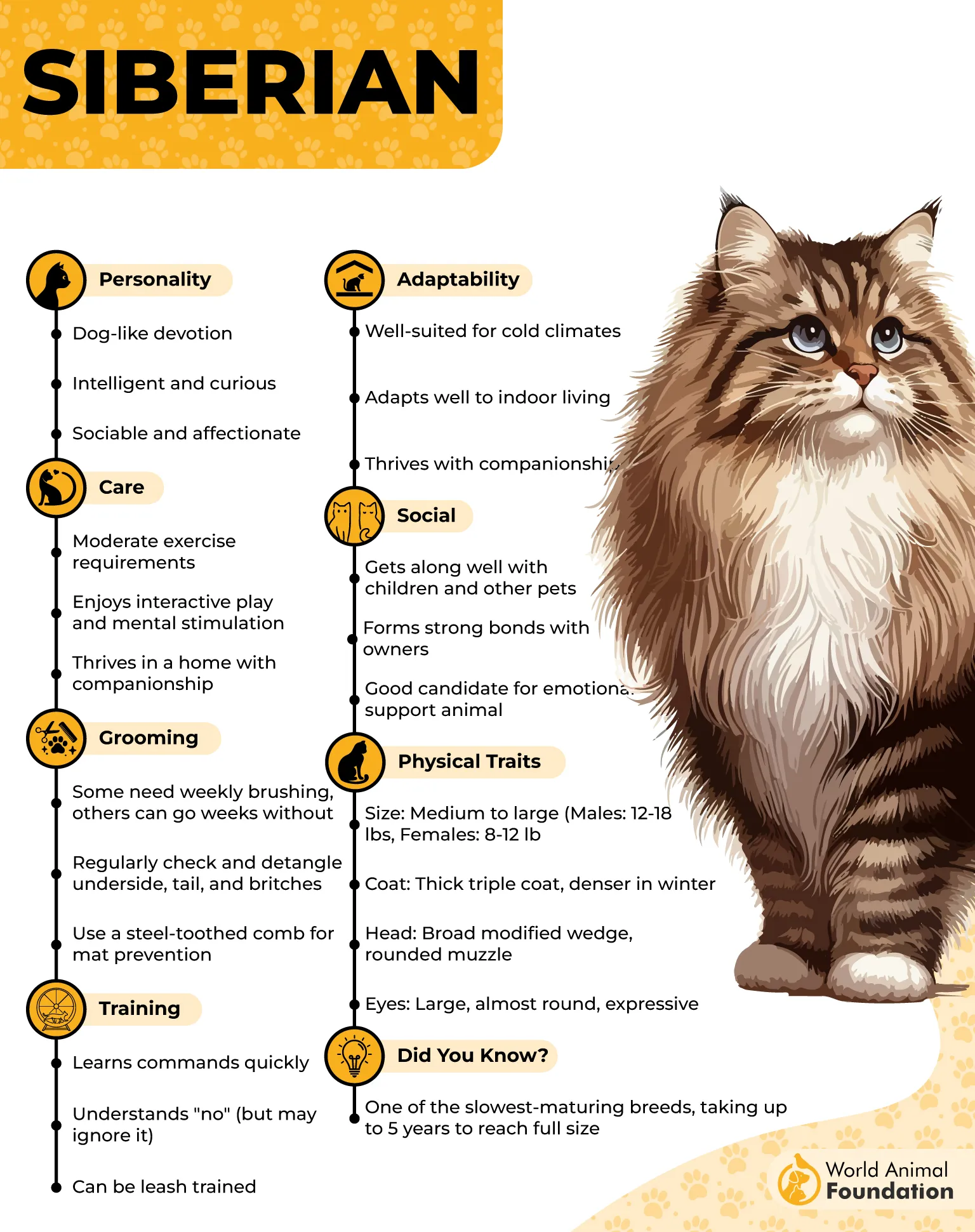
Those long whiskers help Siberians navigate confidently through space, especially when exploring or playing. Paired with a sturdy build and alert expression, their whiskers enhance spatial awareness in busy households.
Despite their rugged look, Siberians are affectionate and socially balanced. They enjoy staying close to their people without being overly demanding, often communicating with soft chirps rather than loud calls, which adds to their gentle charm.
Their whiskers often blend into the dense ruff framing the face, creating a regal outline that stands out in motion.
Fact: Siberian cats have water-resistant coats and are known to play with water, sometimes even joining their humans during shower time.
6. Turkish Angora
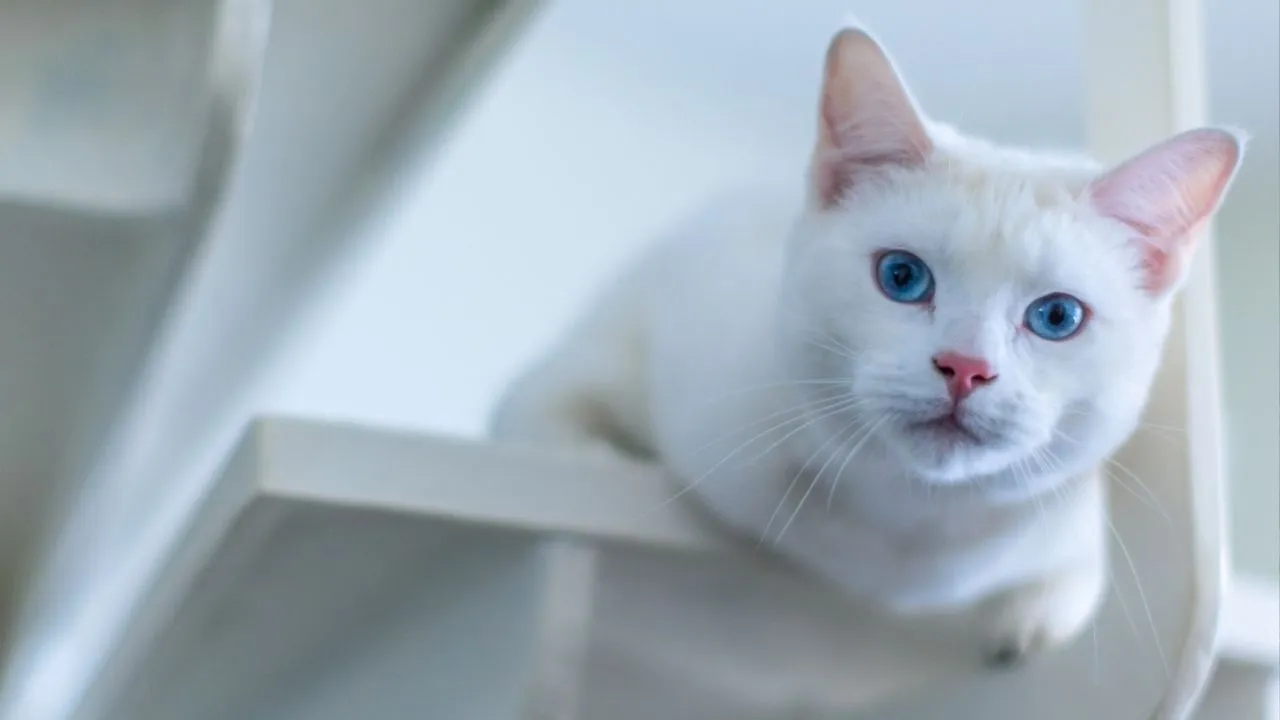
Also known simply as the Ankara cat, the Turkish Angora is one of the oldest long-haired cat breeds in the world, admired for its silky coat, elegant frame, and flowing, expressive whiskers. This graceful breed is most often associated with pure white fur, though modern lines appear in many colors.
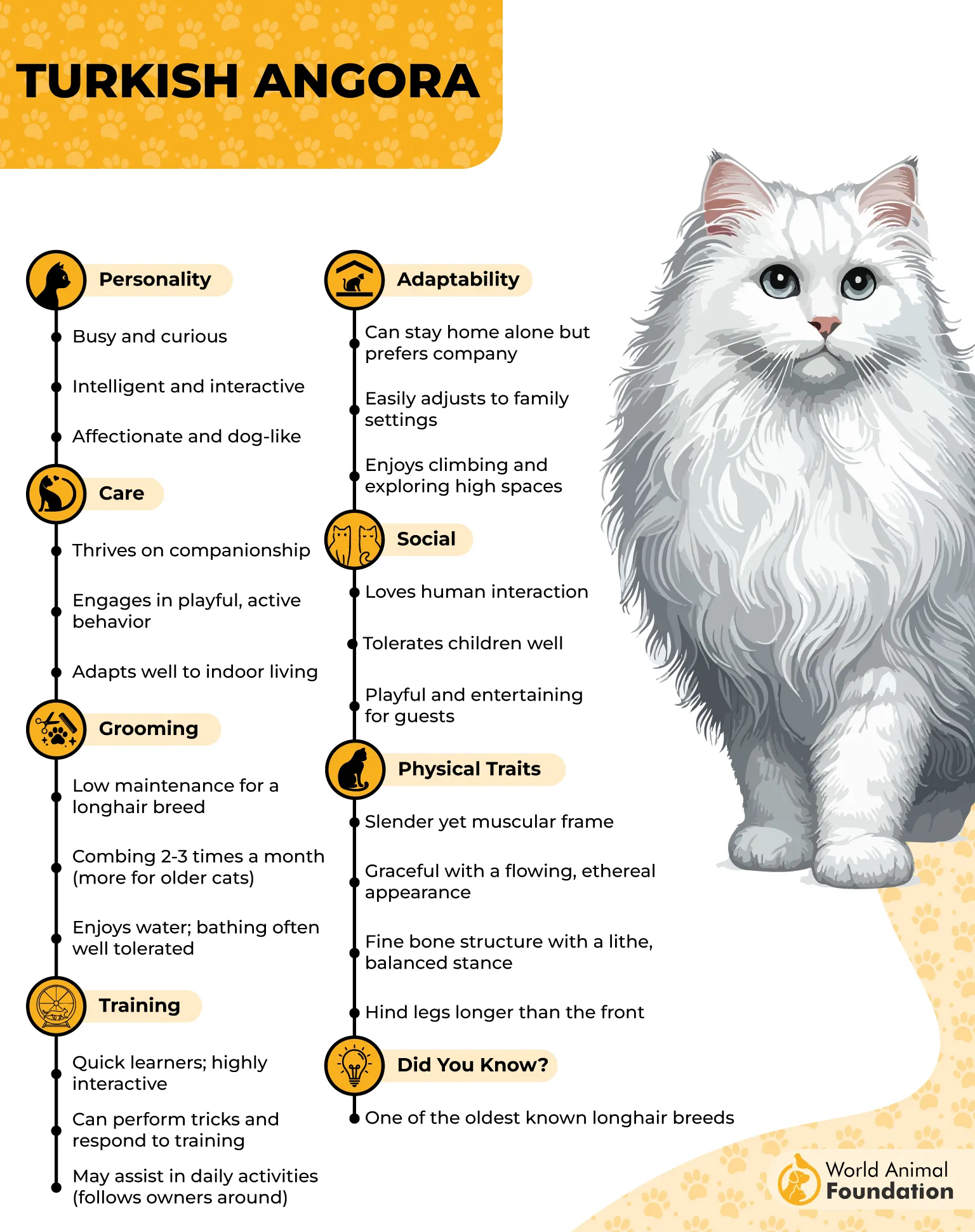
Those long, delicate whiskers are more than decorative—they complement the Angora’s angular head and keen senses. Highly agile and curious, this breed relies on its whiskers to judge distances when leaping onto high cabinets or navigating narrow perches around the home.
Turkish Angoras are intelligent, alert, and famously athletic, often seeming as if they barely touch the ground. Their prominent whiskers aid balance and spatial awareness, especially during climbing and quick directional changes that define their lively movement style.
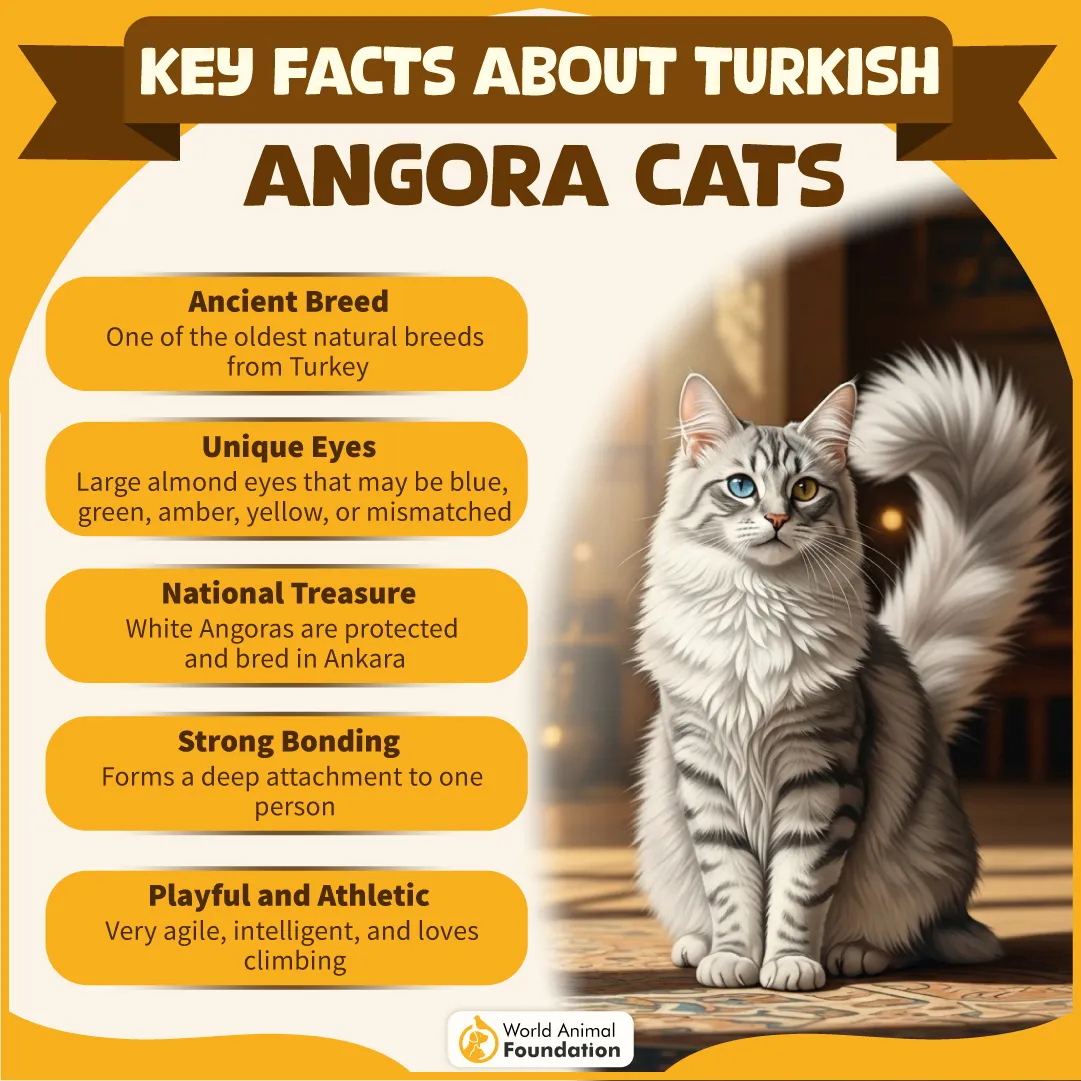
Despite their refined appearance, these cats are confident and strong-willed, forming close bonds with their people while remaining independent explorers. Their expressive whiskers often mirror their moods, flaring forward during play or curiosity.
Fact: The Turkish Angora’s documented history dates back to the 1600s, making it one of the earliest recorded long-haired cat breeds.
7. Somali
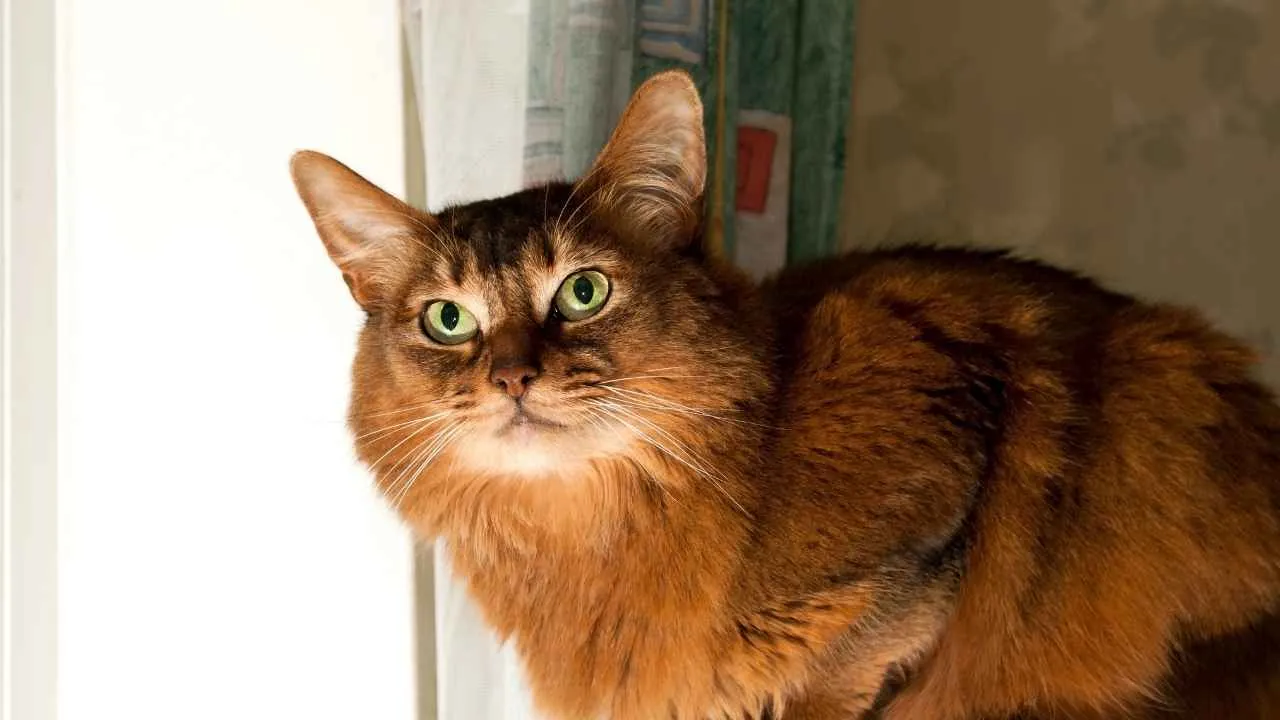
Often called the Fox Cat, the Somali is the semi-longhaired cousin of the Abyssinian, admired for its bushy tail, expressive face, and alert, athletic build. Its elegant features naturally highlight one standout trait—exceptionally long, expressive whiskers that frame the face beautifully.
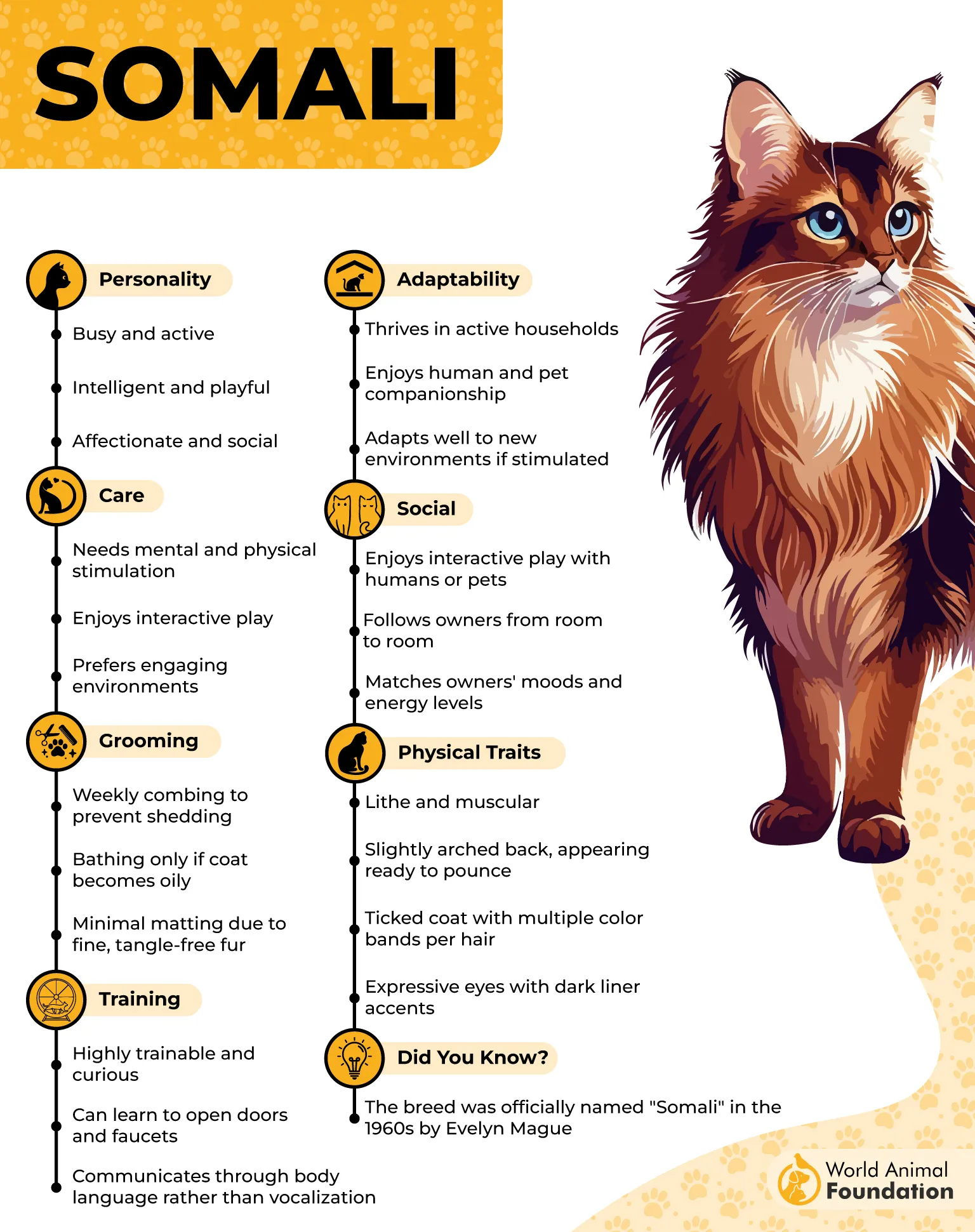
Those prominent whiskers play a key role in the Somali’s highly active lifestyle. Curious by nature, this breed relies on whisker sensitivity to judge tight spaces, track movement, and confidently leap, climb, and explore every corner of the home with precision.
Because Somalis dislike boredom, their long whiskers are constantly “at work,” helping them navigate interactive toys, high perches, and fast-paced play. Their sharp awareness and whisker-guided agility make them especially adept at sensing changes in their environment.
Highly social and people-oriented, the Somali thrives in busy households or with other pets, where its whiskers aid in communication and spatial awareness during play.
Fact: The Somali breed was officially recognized as a distinct breed in 1979 after developing from long-haired Abyssinians.
Conclusion
Cats with extra-long whiskers showcase just how remarkable mystacial whiskers and other tactile hairs truly are. These whiskers, commonly referred to as vibrissae, are deeply embedded in the nervous system and far more sensitive than human hair.
They help cats read their environment, detect objects, and move confidently through narrow spaces—even in low light conditions. From superciliary whiskers above the eyes to those near the front legs, every whisker on a cat’s face plays a role in balance, awareness, and a cat’s mood.
Understanding whisker function is important in feline medicine, as whisker stress, whisker fall, or sudden behavioral changes can signal discomfort. Some breeds even set records for extra-long whiskers, earning mentions in Guinness World Records and features by National Geographic.
Whisker length, coat color, and placement often align with breed standards, helping cats navigate forward positions, interact with other cats, and remain highly sensitive, even when farsighted or exploring unfamiliar spaces.
