




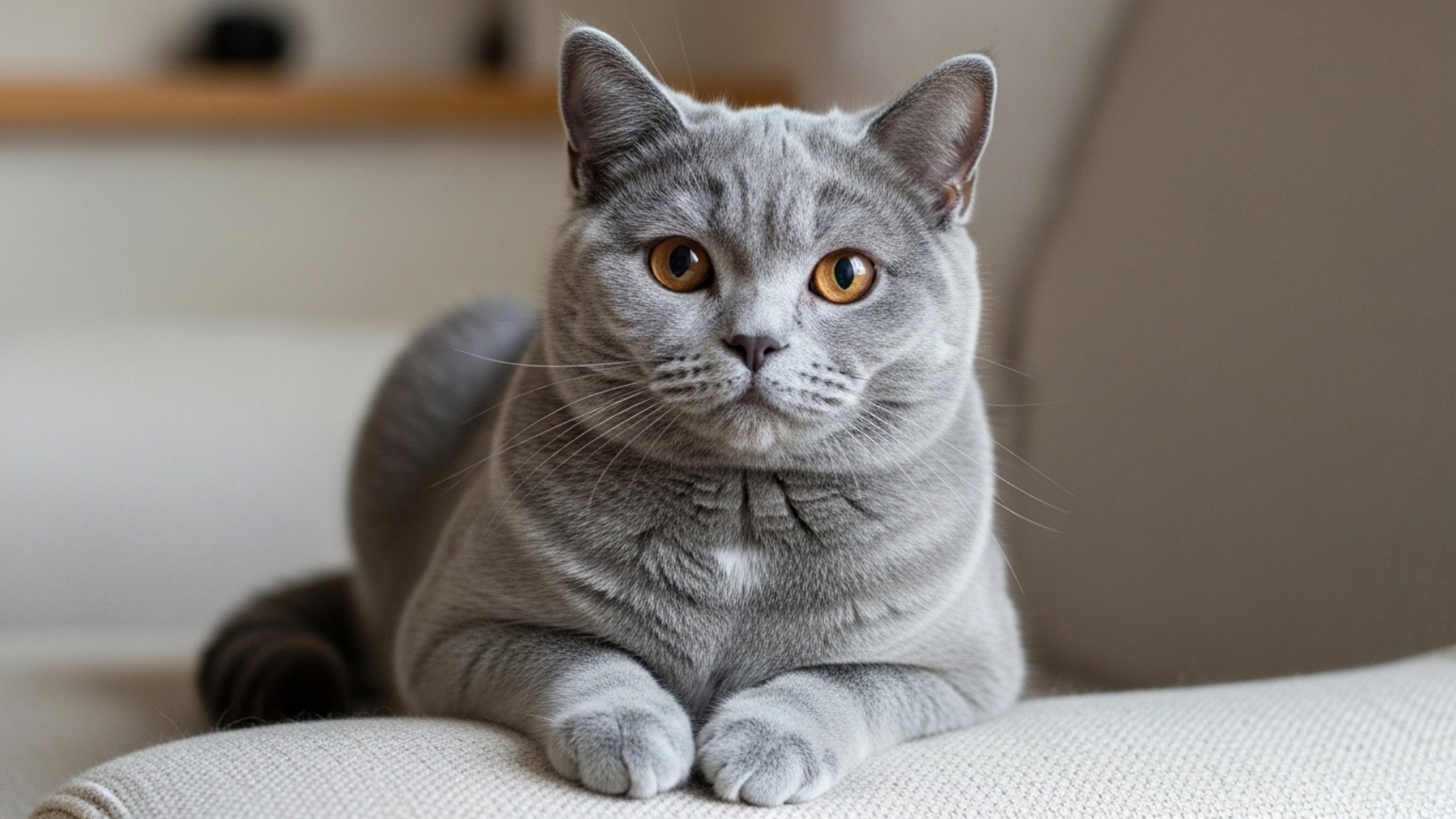
Choosing a cat isn’t just about looks—it’s about finding a temperament that fits your daily life. While all cats have unique personalities, some breeds are known for being consistently calm, adaptable, and easy to live with. These cats tend to integrate smoothly into households, showing fewer disruptive habits and more predictable behavior patterns.
Common concerns include aggression, destructive scratching, excessive vocalization, anxiety, or difficulty adjusting to indoor life. While environment and care matter, genetics also play a meaningful role. Certain breeds are naturally more even-tempered, affectionate, and resilient, making them less prone to stress-related or problematic behaviors.
Breeds developed for companionship often show lower aggression, higher tolerance, and stronger bonds with humans. In this article, we’ll explore seven cat breeds with minimal behavioral issues—and how understanding genetics can help you choose a feline companion that brings harmony, not hassle, into your home.
Cat Breeds with Minimal Behavioral Issues
1. Ragdoll
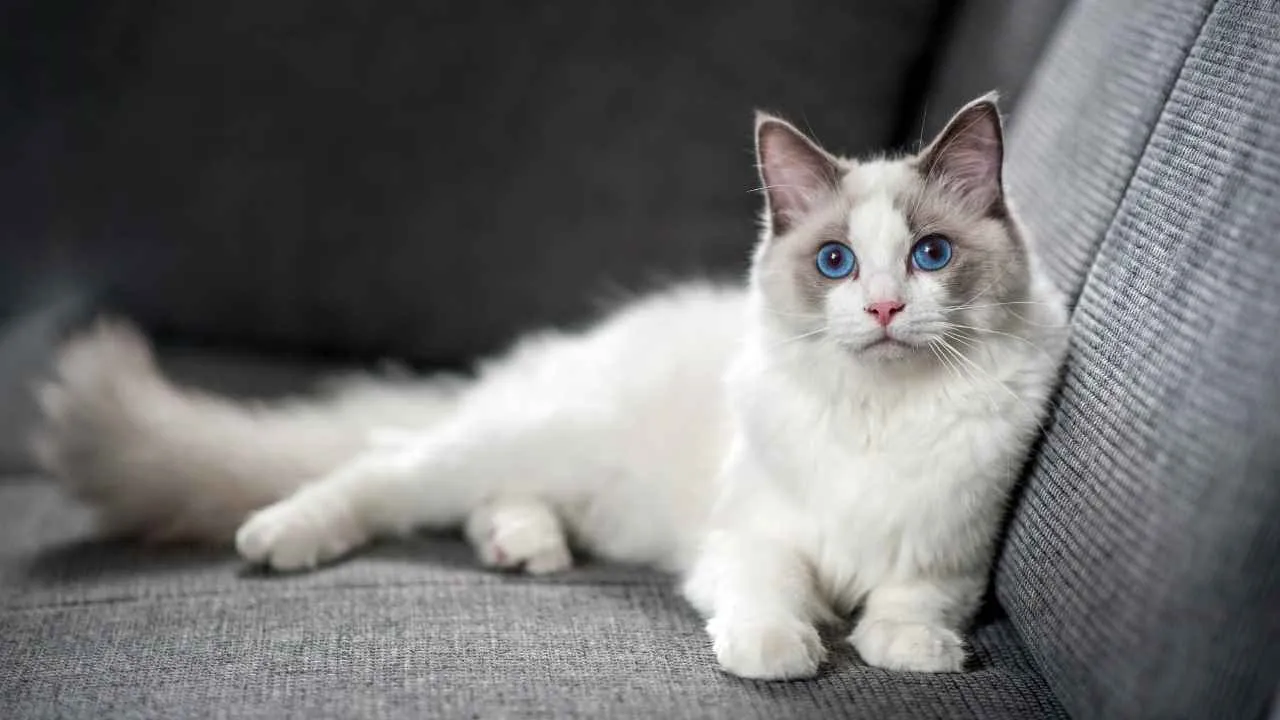
Also known simply as the Ragdoll, this large breed is instantly recognizable for its striking blue eyes and silky coat.
According to Britannica, the Ragdoll is a long-haired cat breed noted for completely relaxing its muscles when lifted, making it resemble a limp rag doll.
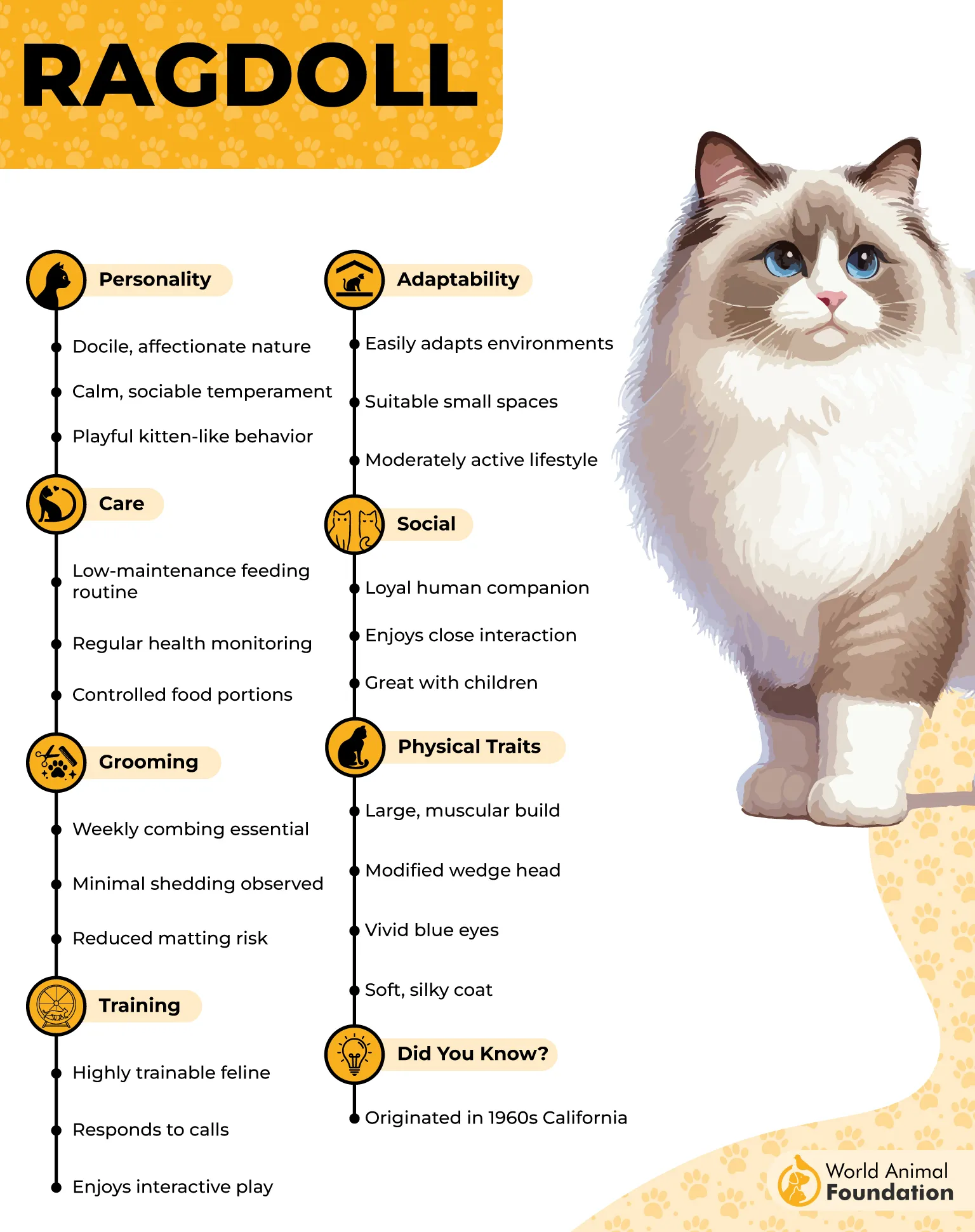
Calm, adaptable, and easygoing truly define this breed. Ragdolls are known for minimal aggression, rarely scratching or biting, and they adjust smoothly to household routines, making them one of the best-behaved indoor cats.
Their puppy-like personality contributes to low behavioral issues. They enjoy human company, tolerate being picked up, and remain composed even in busy homes with children, seniors, or other pets.
Because they are quiet, affectionate, and emotionally stable, Ragdolls are unlikely to develop stress-related behaviors when given consistent care.
Interesting fact: Ragdolls typically live 13–18 years and are well known for their unique trait of relaxing completely when held.
2. British Shorthair
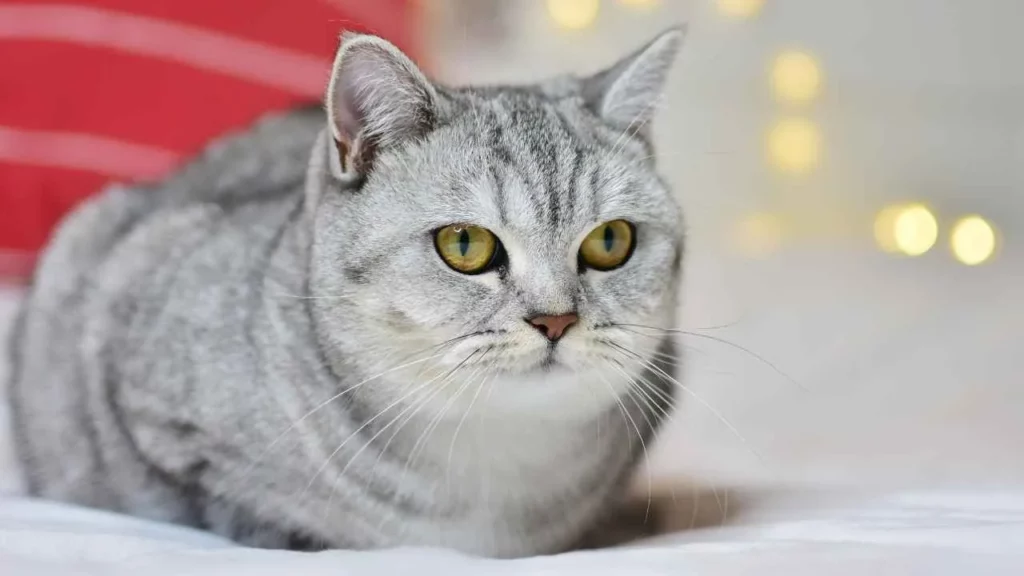
Also known as the British Blue, the British Shorthair is instantly recognizable for its round face, plush short coat, and sturdy build. This historic breed is admired for its quiet confidence, balanced temperament, and calm presence in the home.
According to PetMD, often referred to as the “teddy bear” of cat breeds for both appearance and temperament, the British Shorthair is believed to have originated in ancient Egypt before traveling with humans to Rome and eventually to Great Britain.
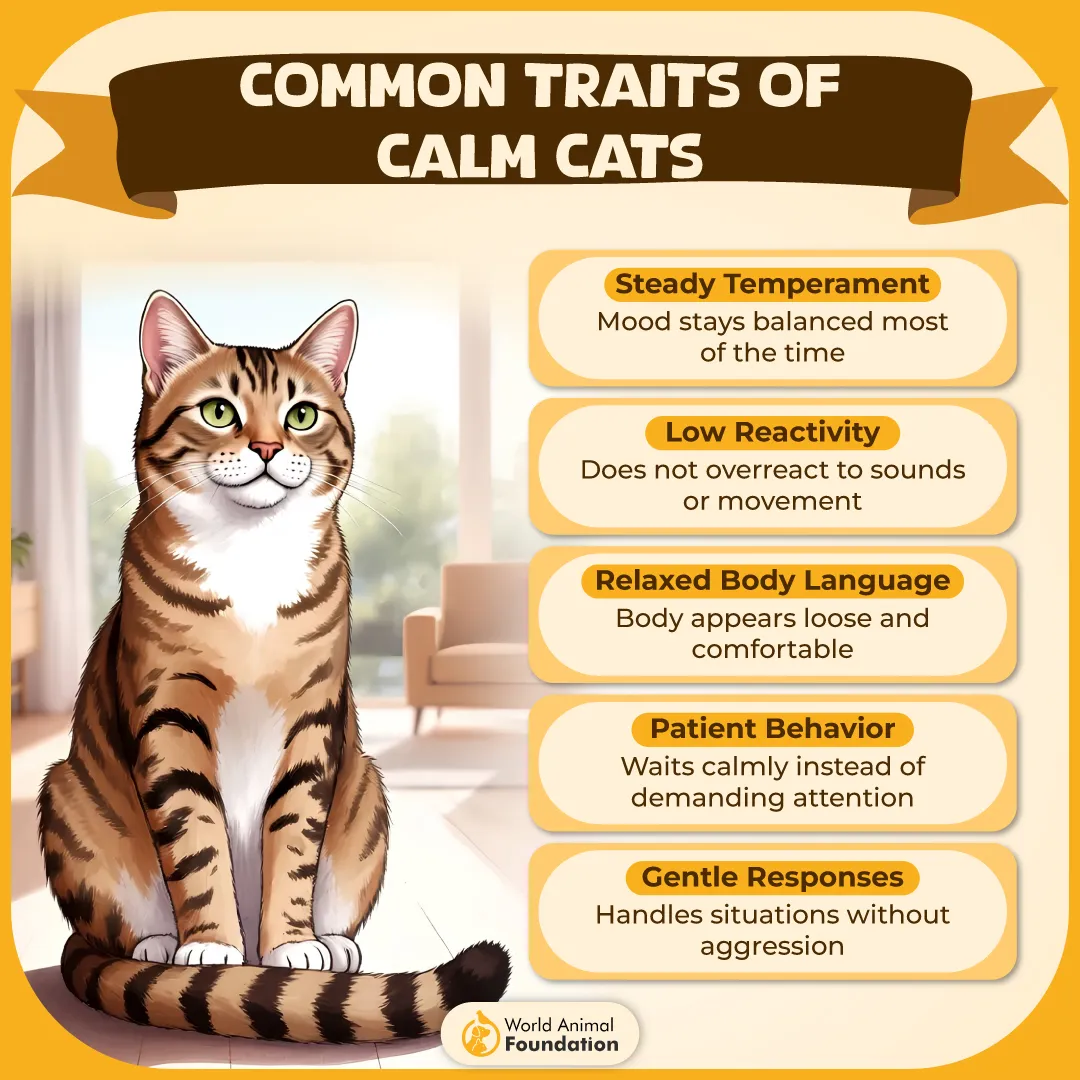
Fitting the idea of affectionate without being demanding, British Shorthairs form close bonds without clinging. They enjoy companionship but are perfectly content entertaining themselves, which helps keep stress-related behaviors to a minimum.
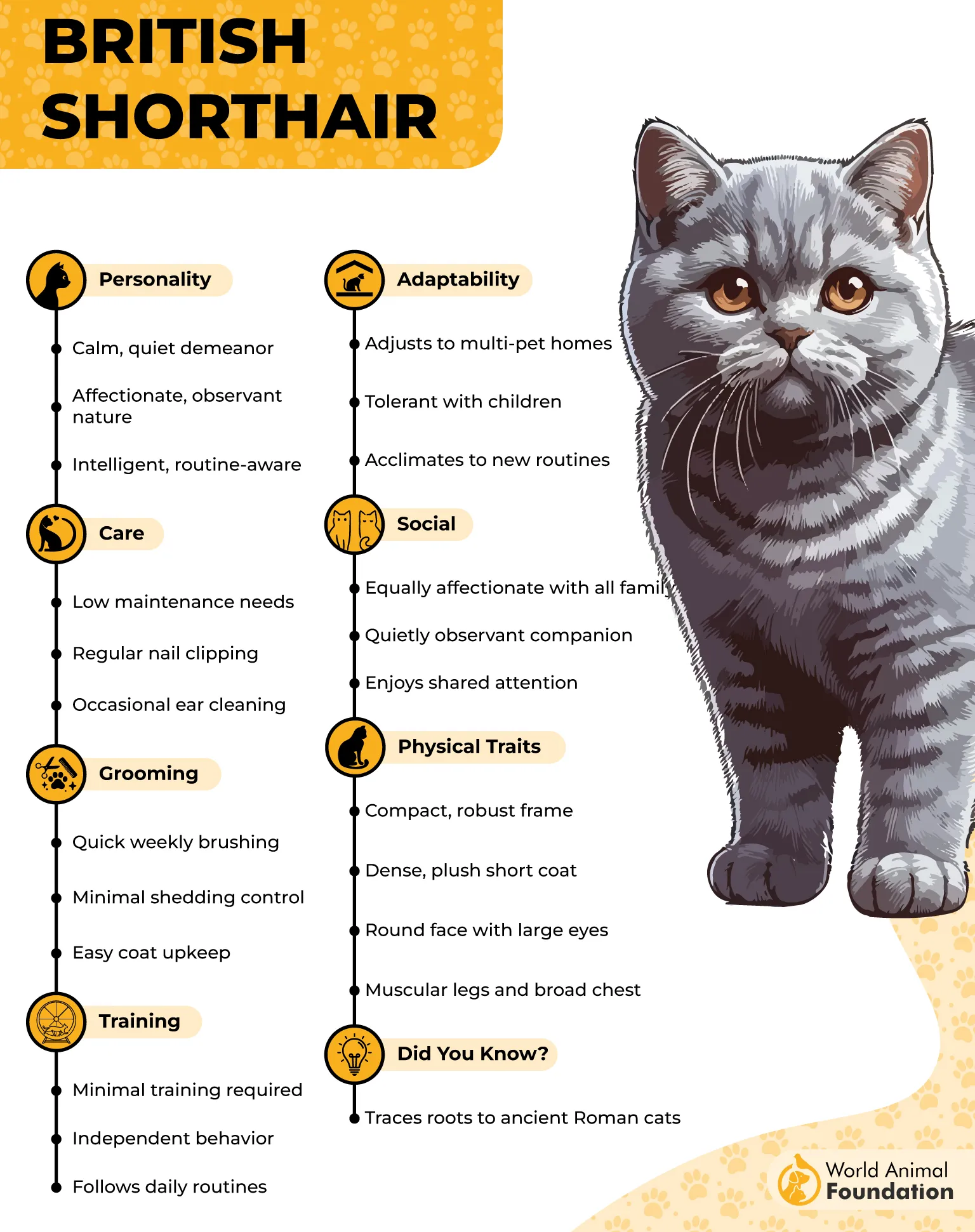
Their unflappable nature makes them especially easy to live with. Loud noises, visitors, or busy households rarely disturb them, reducing the likelihood of anxiety-driven issues like aggression or excessive vocalization.
Because they are polite, patient, and low-maintenance, this breed adapts well to apartments, families, and first-time owners alike.
Interesting fact: British Shorthairs are known for being excellent with children and other pets thanks to their calm, tolerant personality.
3. Scottish Fold

Also known simply as the Fold, the Scottish Fold is instantly recognizable by its unique folded ears and round, expressive face. This breed is gentle, quiet, and deeply affectionate, making it a natural fit for calm households.
According to WebMD, Scottish Fold cats—sometimes referred to as “Lops”—are recognized for their distinctive rounded appearance.

Often described as independent but well-mannered, Scottish Folds balance self-sufficiency with a strong desire for companionship. They rarely display disruptive behaviors and adapt easily to indoor routines without becoming anxious or demanding.
Their polite temperament means they’re easy to handle and train, responding well to gentle guidance. Rather than acting out, Scottish Folds tend to communicate needs softly, which contributes to their reputation for minimal behavioral issues.
Social by nature, they get along well with other pets and often thrive when paired with a feline companion.
Interesting fact: Scottish Folds are known for thriving in pairs and are celebrated for their soft voices and excellent indoor manners.
4. Maine Coon
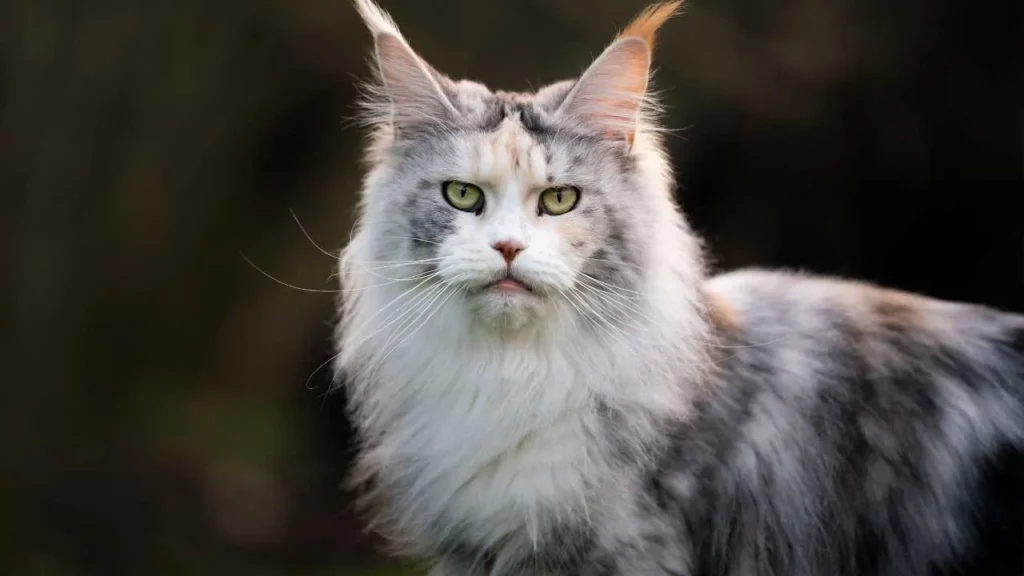
Often called the “gentle giant,” the Maine Coon is one of the largest domestic cat breeds, recognized for its tufted ears, shaggy coat, and dog-like loyalty. Despite its impressive size, this breed is calm, intelligent, and exceptionally well-mannered indoors.
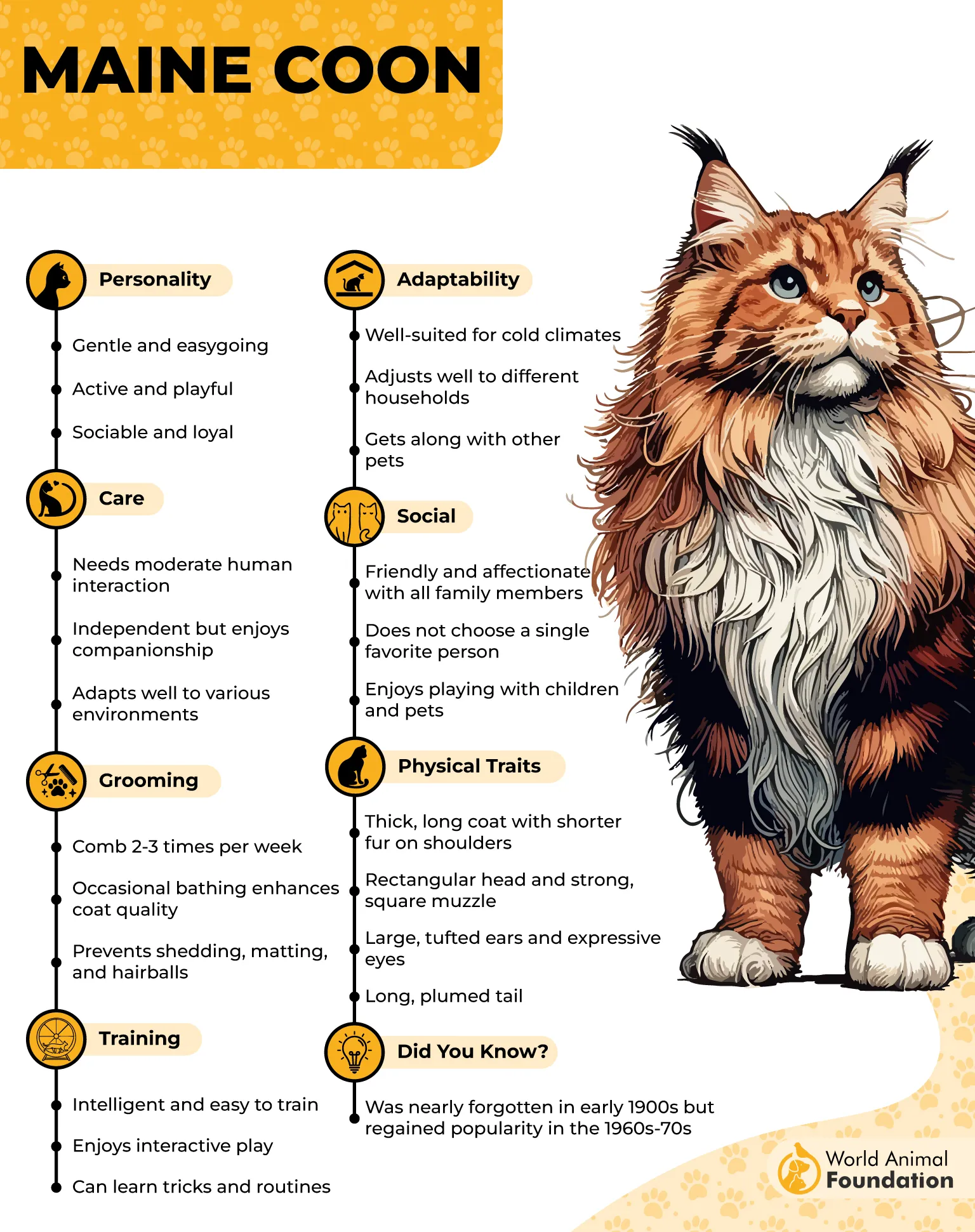
The Maine Coon fits effortlessly into busy or multi-pet homes. These cats are friendly without being pushy, confident without being demanding, and rarely display aggression or anxiety-driven behaviors.
Their trainability and steady temperament make them easy to live with. Maine Coons respond well to positive reinforcement, enjoy learning simple tricks, and adapt smoothly to household routines, reducing the likelihood of behavioral issues.
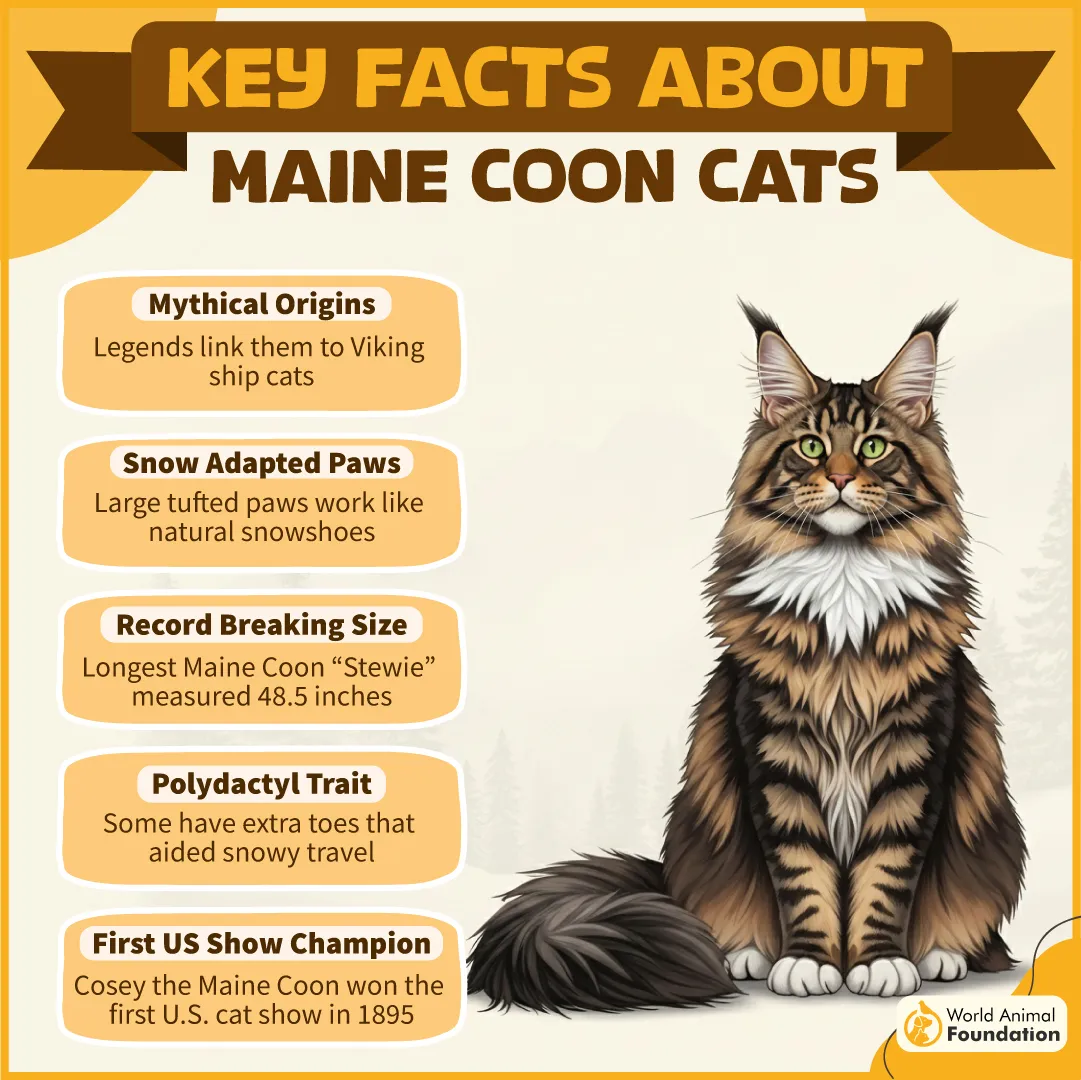
Because they’re patient, polite, and tolerant, Maine Coons are excellent companions for families with children or other pets.
Interesting fact: Maine Coons are known for their unusual love of water and can even be taught to play fetch or walk on a leash.
5. Persian
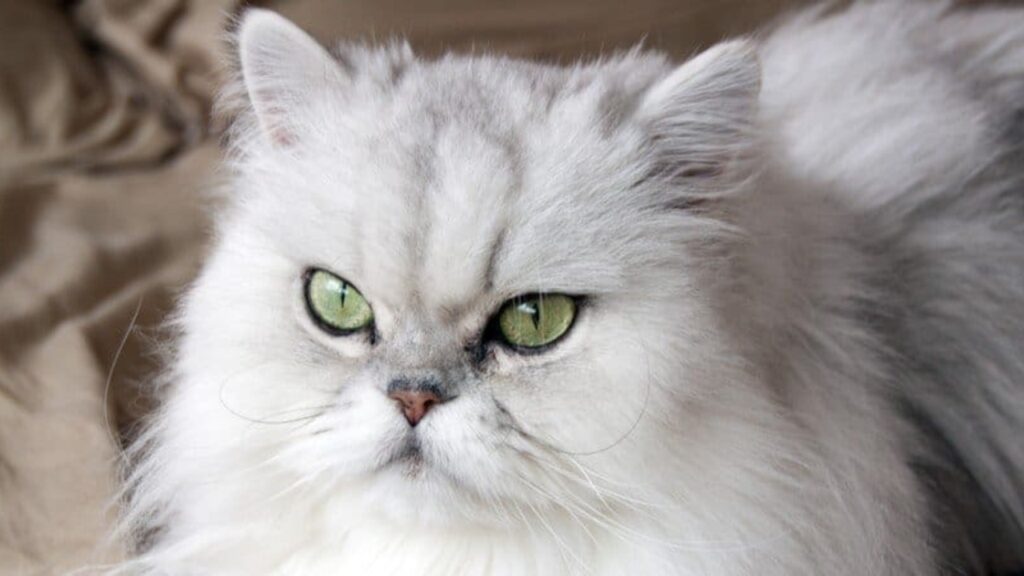
Also known as the Longhair Persian or simply the Persian, this iconic breed is instantly recognized by its plush coat, round build, and signature flat or “doll-face” features. Calm, elegant, and people-oriented, Persians have been cherished for generations as indoor companion cats.
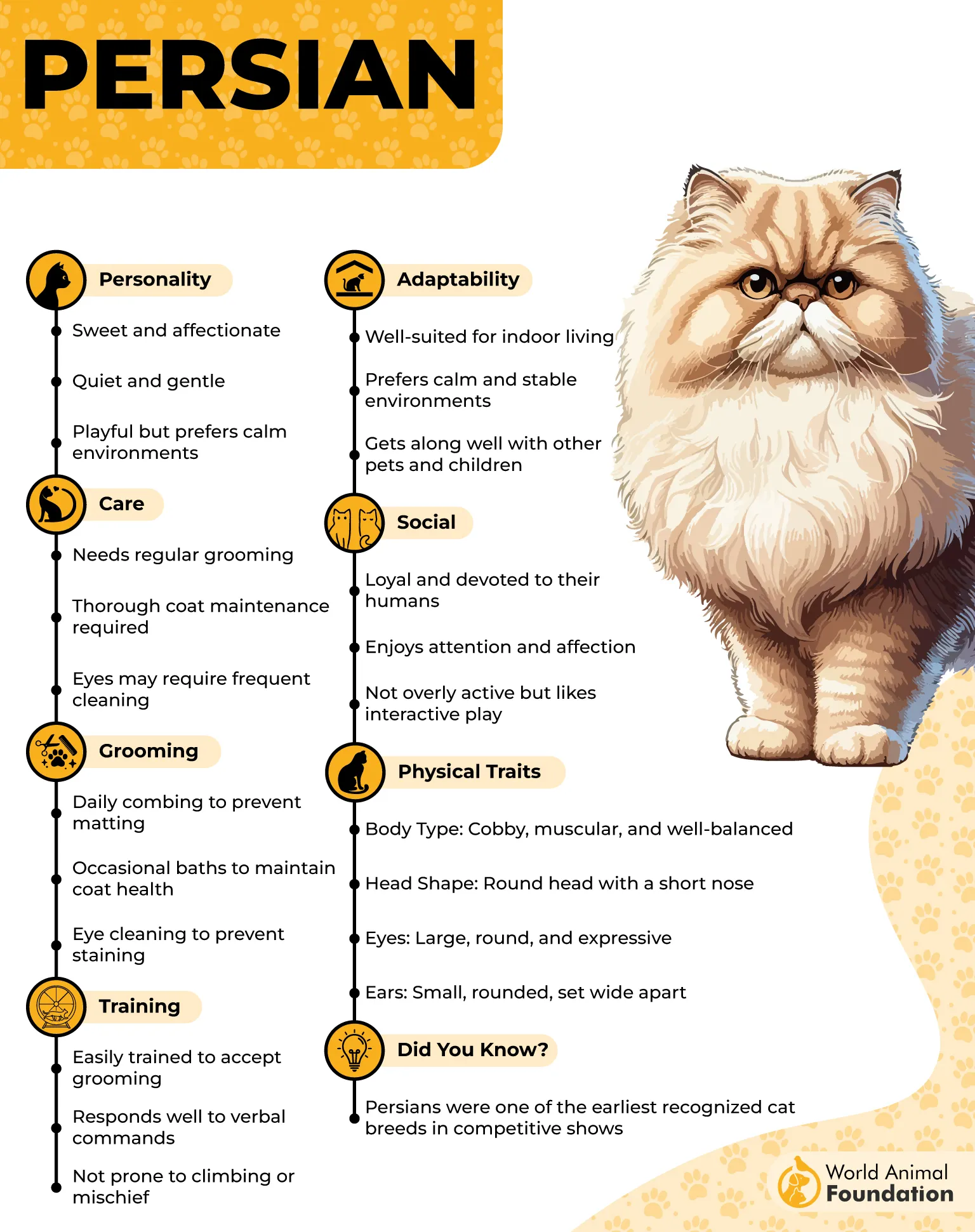
When it comes to behavior, Persians are naturally quiet and serene, rarely showing aggression, hyperactivity, or destructive tendencies in the home.
Their relaxed energy level means they’re content with predictable routines and low stimulation. Rather than acting out, Persians prefer lounging nearby, enjoying affection without being demanding or clingy.
This steady temperament makes them well-suited to quiet households, seniors, or families seeking an easygoing cat.
Interesting fact: Persians are known for being tolerant of children, other cats, and even dogs when properly socialized.
6. Birman
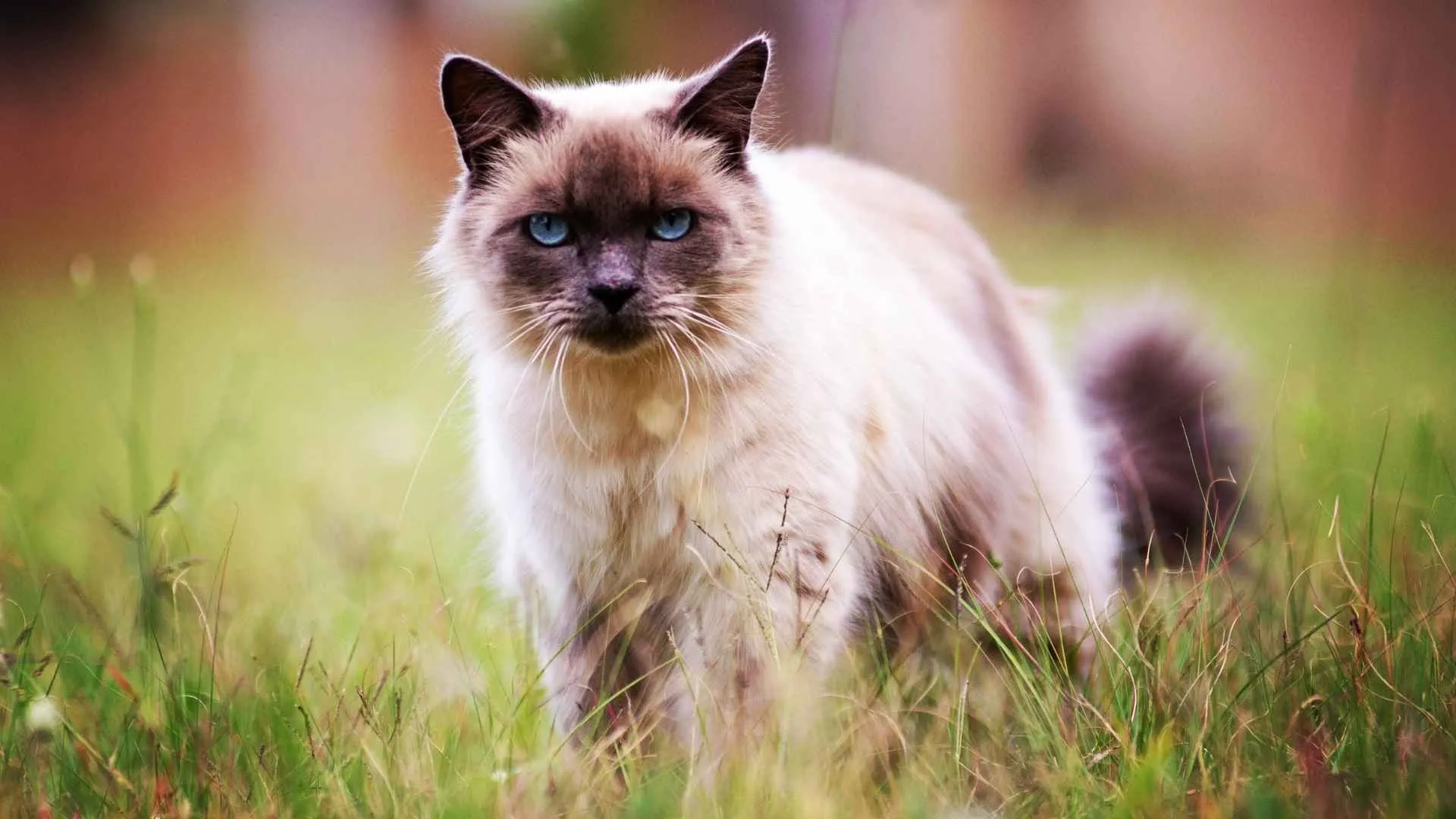
Also known as the Sacred Cat of Burma, the Birman is a striking long-haired breed recognized for its colorpoint coat, deep blue eyes, and calm, composed demeanor. This people-oriented cat is gentle, affectionate, and naturally well-mannered.

When it comes to minimal behavioral issues, their balanced temperament means they rarely display aggression, destructive habits, or anxiety-driven behaviors common in more high-strung breeds.
Birmans are smart and responsive, making them easy to train and quick to learn household routines. They enjoy interaction and gentle play without becoming demanding, which helps maintain harmony in busy or multi-pet homes.
Their patience and tolerance make them especially suitable for families with children or other pets, where stability is key.
Interesting fact: Birman cats are known for being soft-spoken, often communicating with gentle chirps rather than loud or excessive vocalization.
7. Burmese
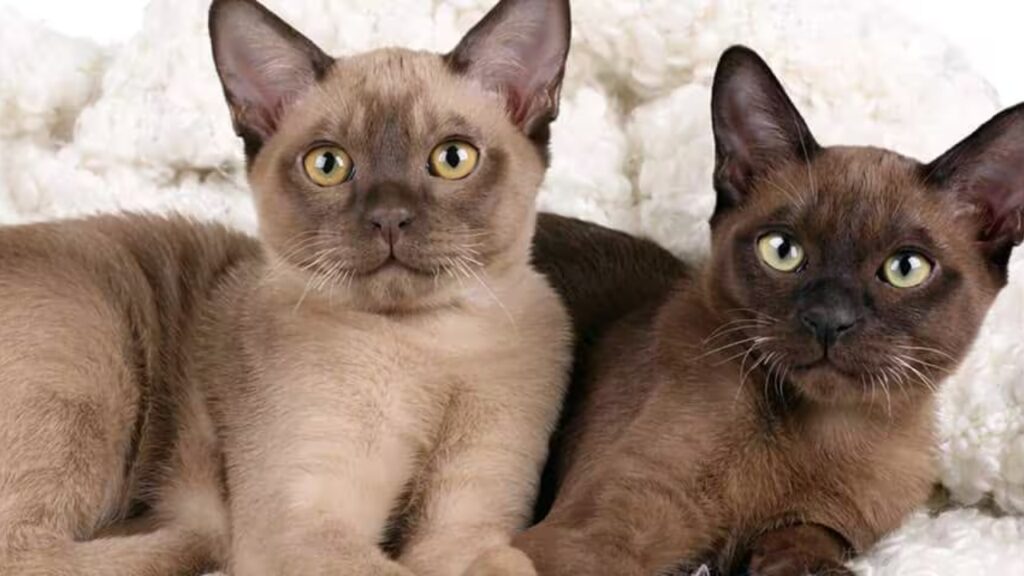
Also known as the European Burmese, the Burmese is a sleek, short-haired breed with a glossy coat and a deeply people-oriented nature. Originating from Southeast Asia, this cat is compact, expressive, and known for its warm, affectionate temperament.
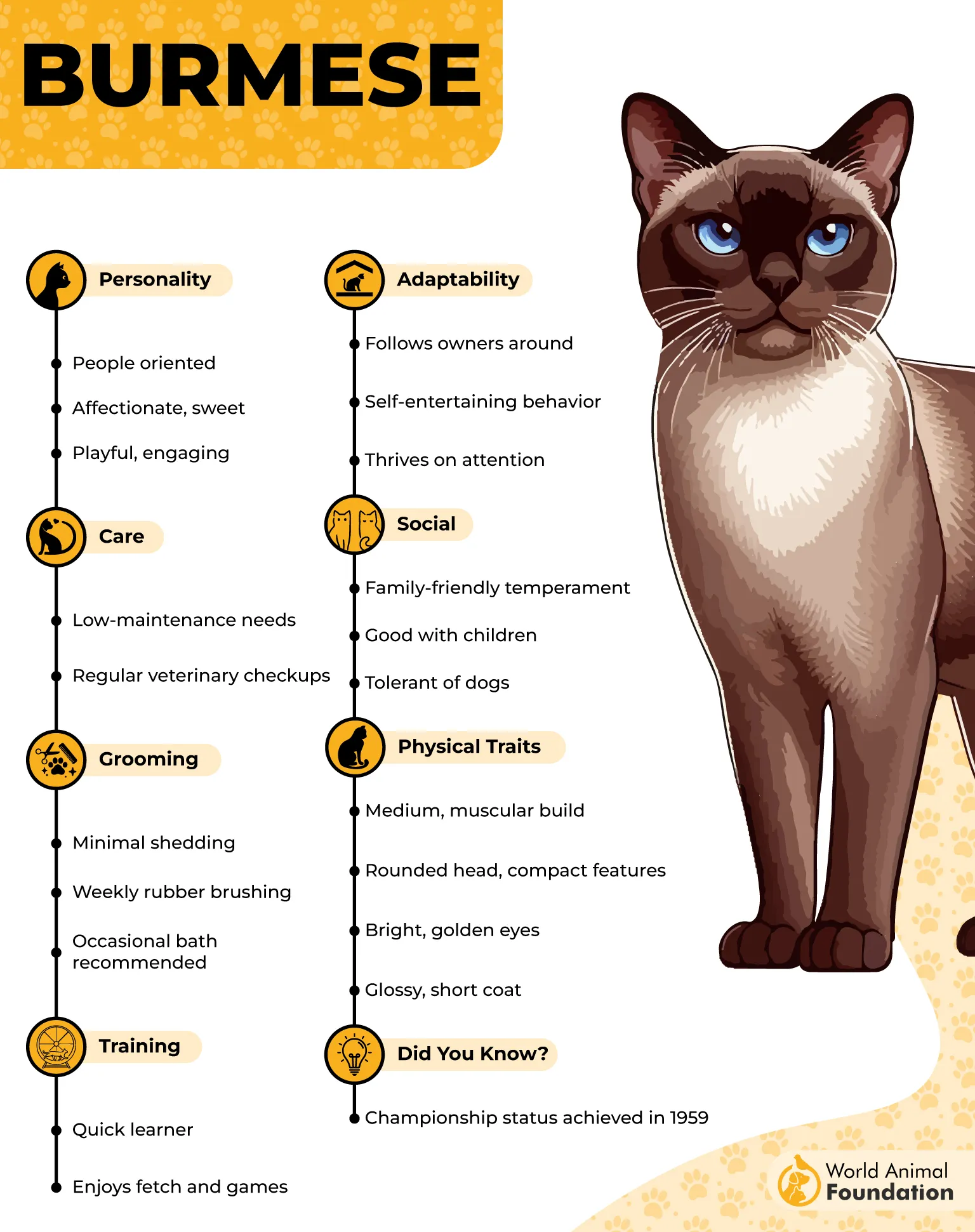
Burmese cats are a strong example of a relaxed personality suited for peaceful homes. They thrive on routine, respond well to gentle guidance, and are naturally low in aggression, which helps minimize common behavioral issues.
Their social but balanced nature means they enjoy companionship without becoming disruptive. Burmese cats adapt easily to indoor life, follow their owners from room to room, and handle changes calmly rather than reacting with anxiety or destructive habits.
Low maintenance needs further support for their easygoing reputation, as their short coats require minimal grooming and they’re generally hardy.
Interesting fact: Burmese cats are intelligent enough to learn games like fetch and are widely praised for their loyal, gentle behavior and low aggression levels.
Conclusion
Choosing a cat with fewer behavioral challenges can make daily life smoother for any cat owner. In the cat world, some breeds tend to be calmer, more adaptable, and easier to integrate with family members and even other animals.
While other breeds may need more patience, cats with a naturally laid back temperament and balanced cat’s personality often show lower aggression and fewer stress responses—especially with proper early socialization. It’s important to remember that behavior isn’t about looks alone.
Compared to the average dog, cats are often more self-directed, but selecting from the oldest cat breeds or well-known easygoing types helps pet owners find harmony. Ultimately, the right match depends on understanding temperament—not just similar coloring or appearance.
