




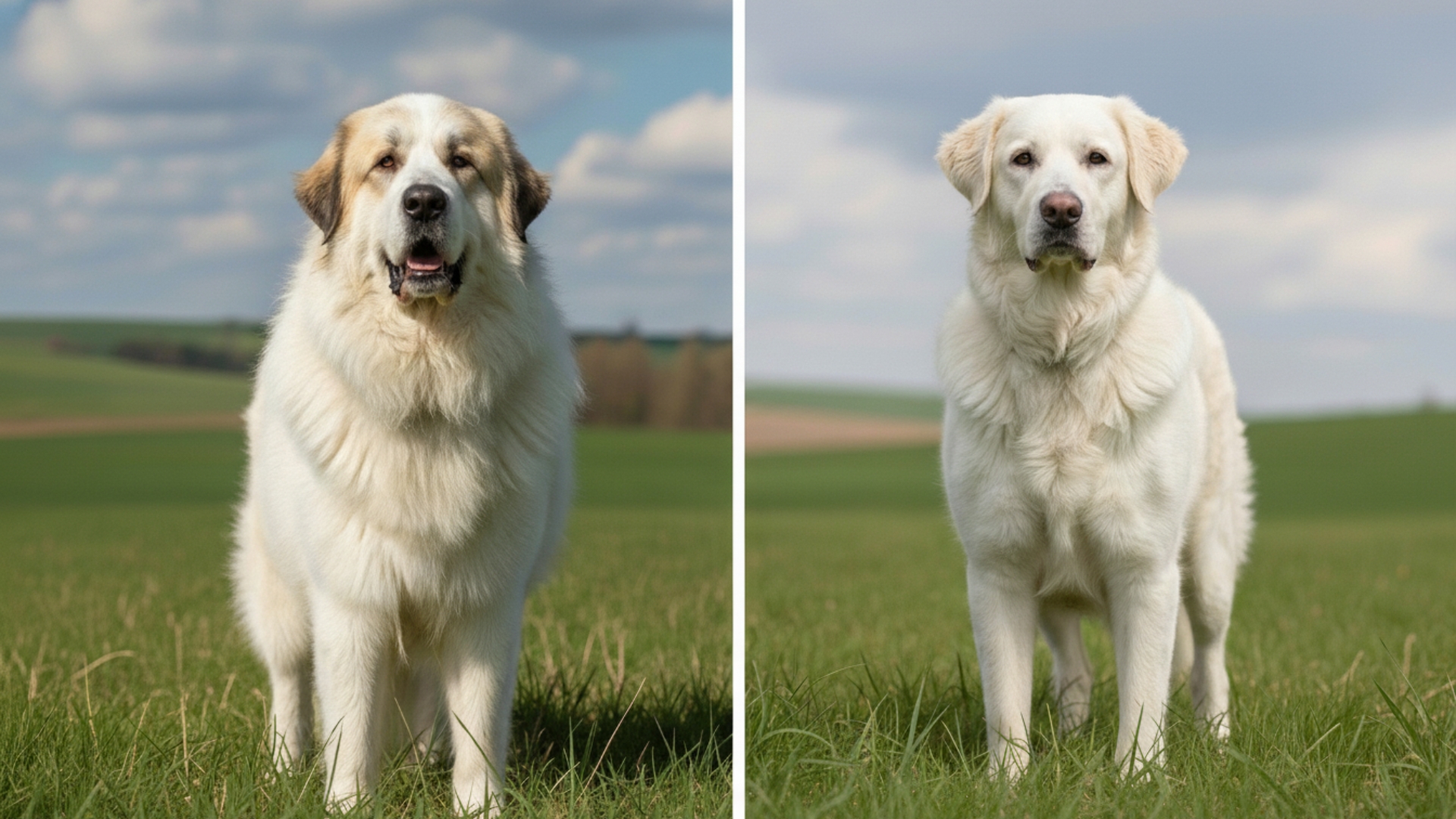
For thousands of years, the Great Pyrenees has stood as a reliable guardian of livestock, trusted to protect flocks from predators with intelligence, patience, and independence.
Unlike many breeds that rely heavily on human direction, Pyrs are bred to think for themselves, assessing threats and acting decisively when needed.
Their calm confidence, gentle nature with family, and protective instincts make them exceptional companions as well as guardians.
While the Kuvasz is also a strong and loyal dog with a rich history in Hungary, it often relies more on its owner’s guidance and can be reserved or suspicious of strangers.
The Great Pyrenees’ combination of size, intuition, and independent thinking gives it a unique advantage in guard duty, making it not only a formidable protector of livestock but also a steadfast guardian of the home.
Why Great Pyrenees Dog Breeds Outperform the Kuvasz on Guard Duty
Great Pyrenees vs. Kuvasz
Both the Great Pyrenees and the Kuvasz are formidable guardian breeds with centuries of experience protecting livestock and families.
Yet, while the Kuvasz is a strong, alert, and capable dog, the Great Pyrenees has a distinct edge in independent decision-making, patience, and adaptability. Pyrs combine size, intuition, and calm vigilance, often reading a situation more like a human might, according to the American Kennel Club.
Kuvaszok, though equally protective, tend to be more reserved and occasionally suspicious of strangers or other animals, requiring highly experienced owners to manage their dominant tendencies effectively.
This subtle difference in temperament and approach to guarding often makes the Great Pyrenees a more versatile protector in both rural and family settings.
Origins & Purpose
The Great Pyrenees hails from the towering Pyrenees Mountains between France and Spain, where farmers relied on these dogs to protect flocks from wolves, bears, and other predators.
Fossil evidence suggests their presence in the region as far back as 1800–1000 B.C., with ancestors likely tracing to white mountain dogs from Asia Minor around 11,000 years ago.
They were bred to be guardians, not herders, and their roles were clear: protect the flock and assess threats independently.
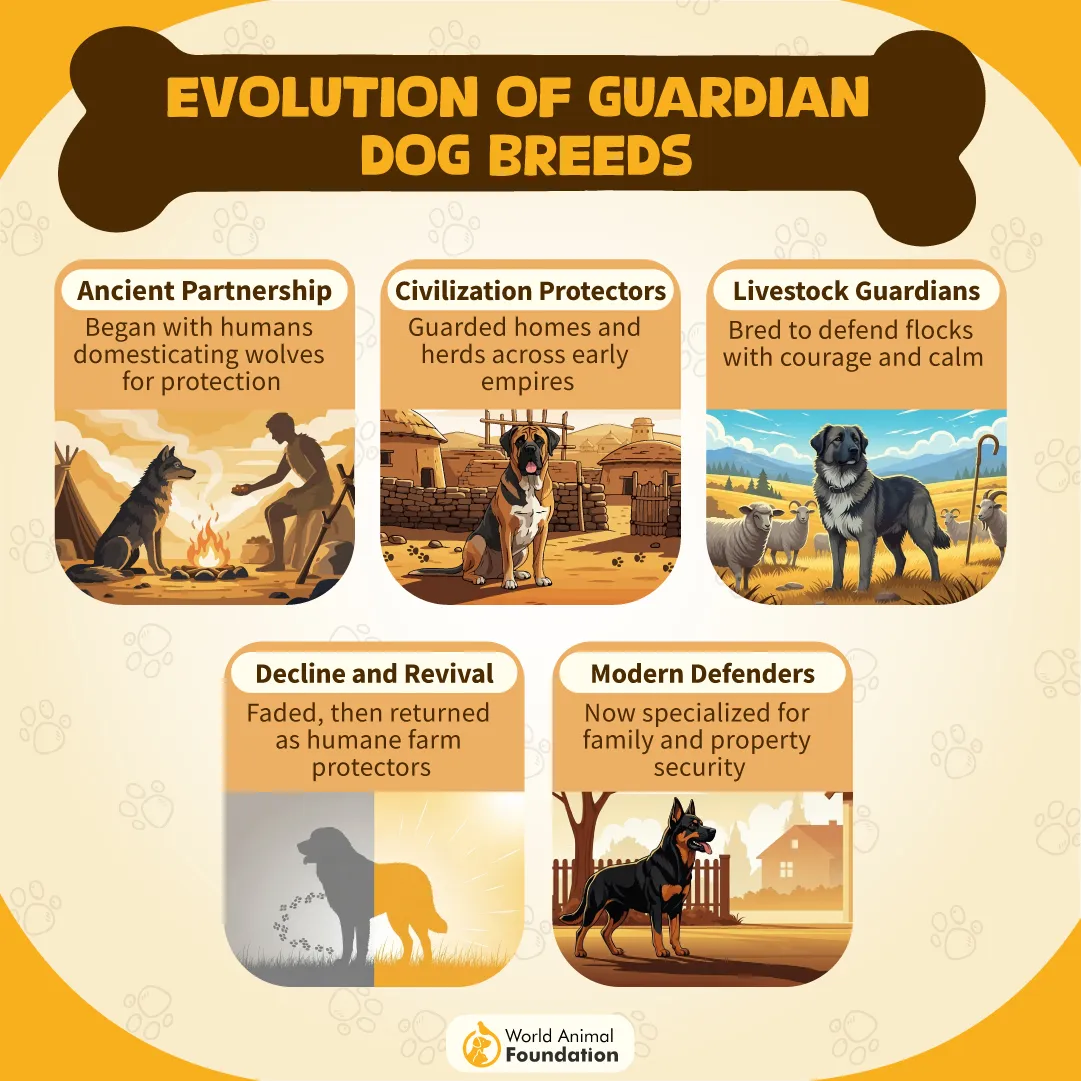
In contrast, the Kuvasz comes from Hungary, where medieval nobility and farmers alike employed them for both hunting and protection.
While strong and alert, Kuvaszok were shaped by centuries of human oversight and are generally more reliant on their owner’s commands to direct their guarding instincts. This historical difference contributes to the Great Pyrenees’ remarkable capacity for independent, proactive protection.
Size & Physical Build
Both breeds are impressive in size, with the Great Pyrenees often tipping the scale between 85 and 100+ pounds and standing tall at 27–32 inches at the shoulder.
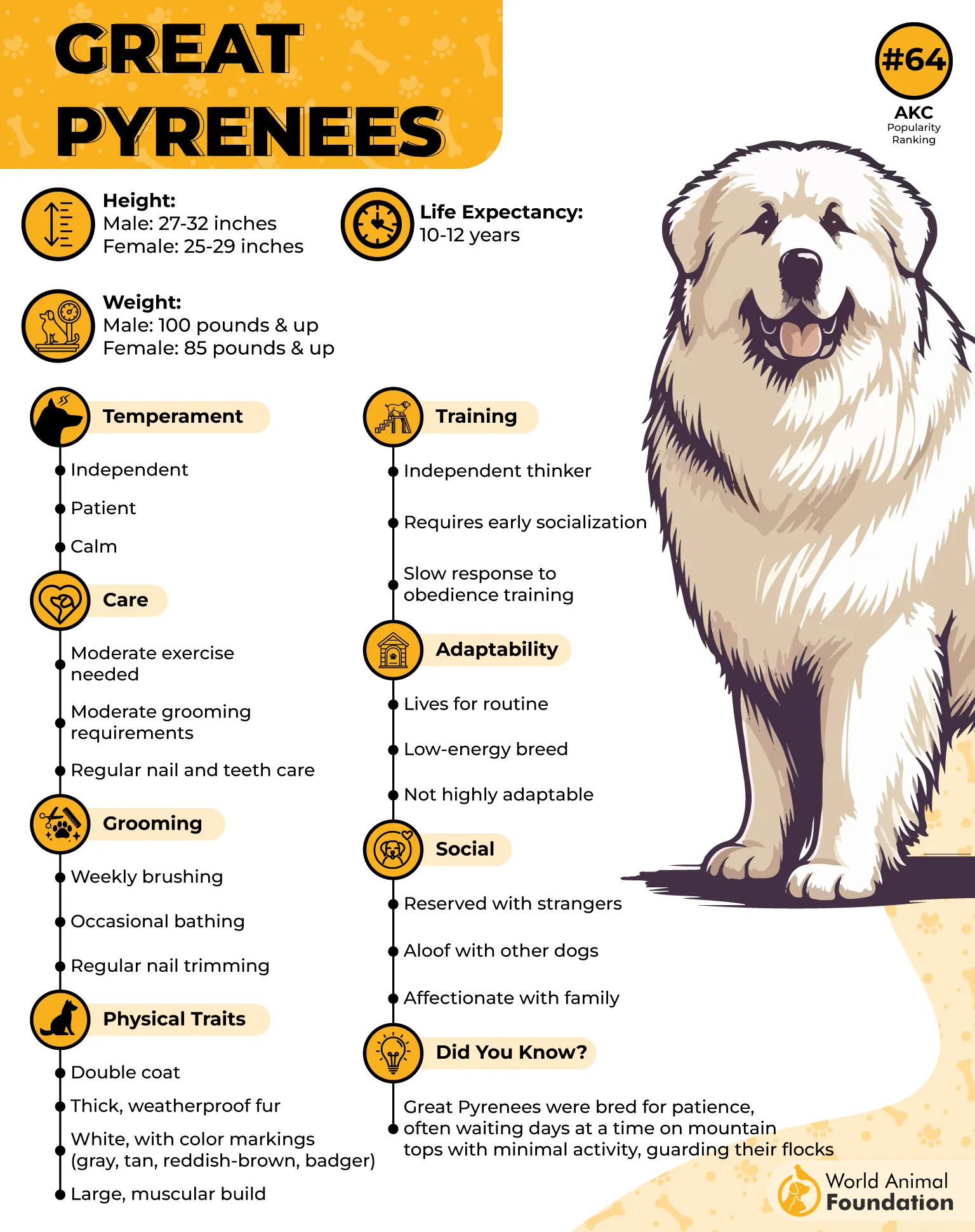
Their heavy, double coat protects them from harsh mountain weather, while their large, sturdy frame allows them to confront predators without hesitation.
The Kuvasz is slightly leaner and more agile, with males weighing 100–115 pounds and females 70–90 pounds, as explained by VCA Hospitals.
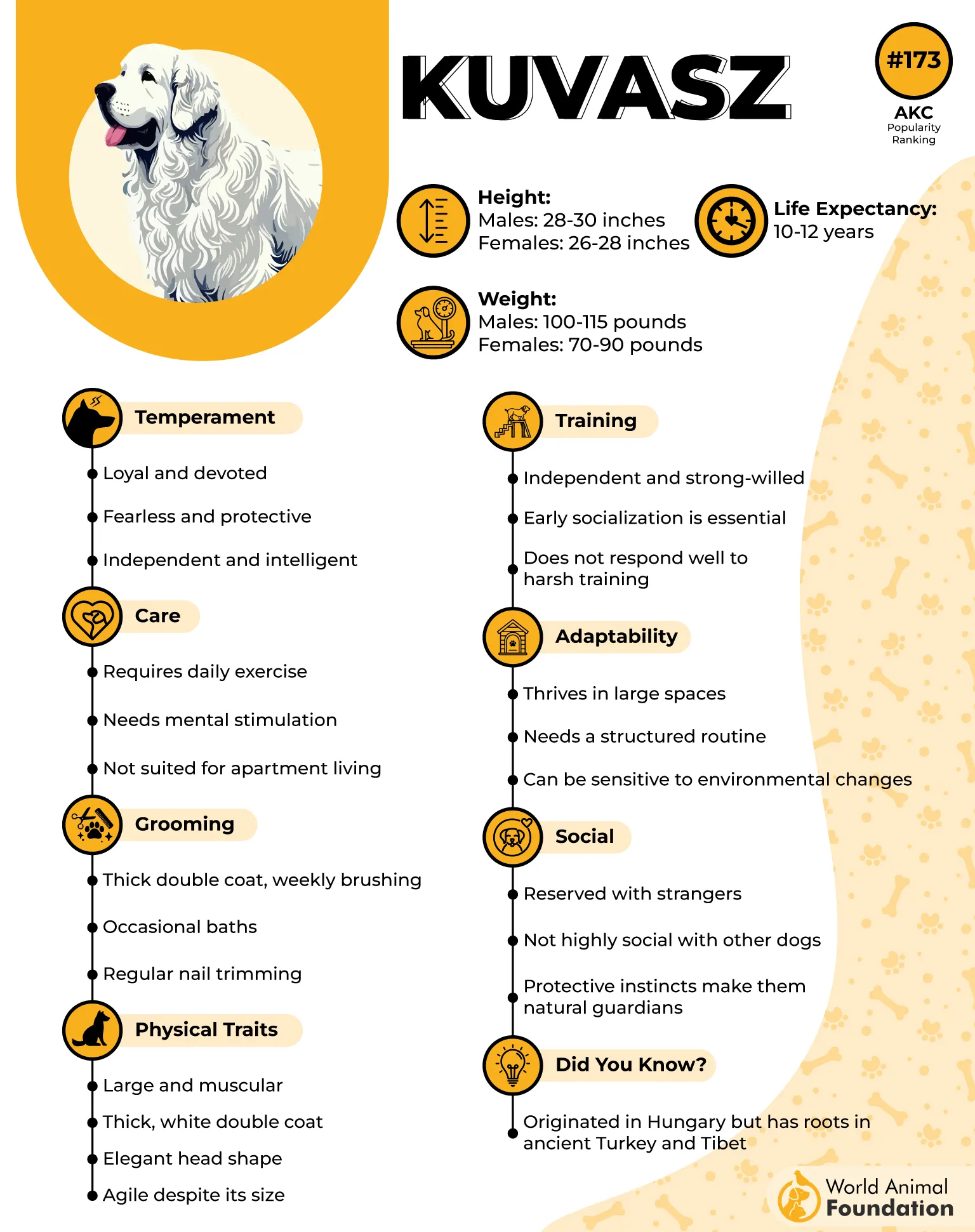
Their lithe build makes them excellent for chasing and pursuing, but in terms of sheer presence and imposing stature, the Great Pyrenees has a commanding edge that can deter threats before they escalate.
The Pyrs’ combination of mass, coat, and quiet strength gives them a natural aura of authority that enhances their effectiveness as guardians.
Temperament & Personality
The Great Pyrenees is often described as a “gentle giant” with a serious sense of duty. Loyal and protective, they treat family members as part of their flock, watching over children and household members with unwavering care.
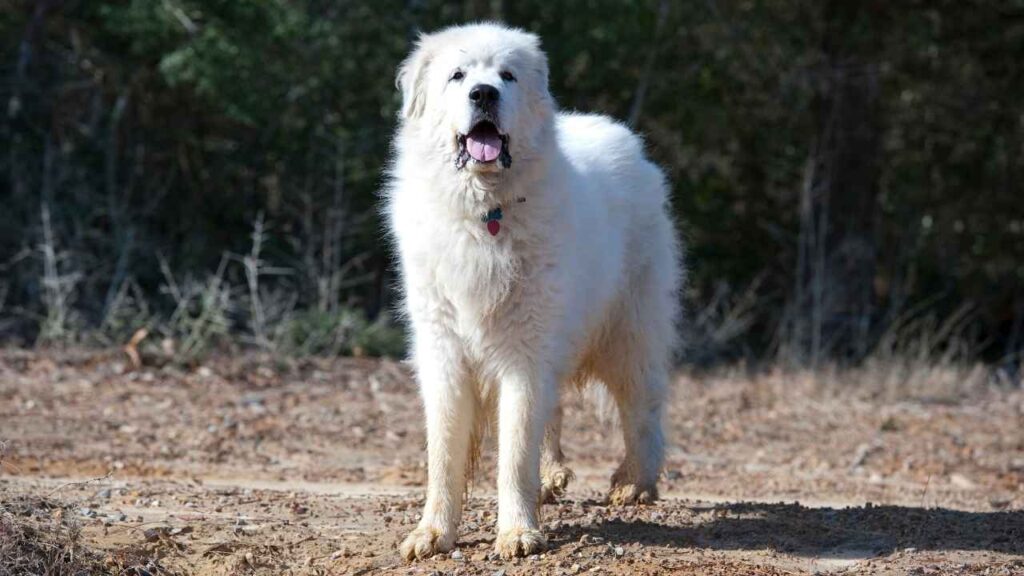
They are highly independent thinkers, which can make obedience training a challenge. But with patient, consistent guidance, this independence turns into an asset, allowing Pyrs to assess threats and act decisively without waiting for commands.
Kuvaszok are intelligent and loyal, but tend to be more reserved and less demonstrative in their affection. They may misinterpret playful behavior as aggression and require early, extensive socialization to channel their protective instincts appropriately.
While both breeds are capable guardians, the Great Pyrenees’ calm confidence, intuitive decision-making, and natural patience give them an advantage when it comes to sustained, effective protection.
Exercise & Energy Levels
The Great Pyrenees is not a high-energy dog, but that does not make it inactive or lazy. This breed was designed to conserve energy during the day and respond when it truly matters. A moderate daily walk and time to patrol its surroundings are usually enough to keep a Pyr satisfied, as stated by the Great Pyrenees Club.
This measured energy use allows the Great Pyrenees to stay alert for long periods, especially at night, when threats are more likely to appear.
The Kuvasz, by contrast, tends to have higher daily exercise needs and benefits from more structured physical activity. While athletic and agile, this can make the Kuvasz less settled during downtime. In guard work, the Great Pyrenees’ ability to remain calm yet responsive gives it an edge.
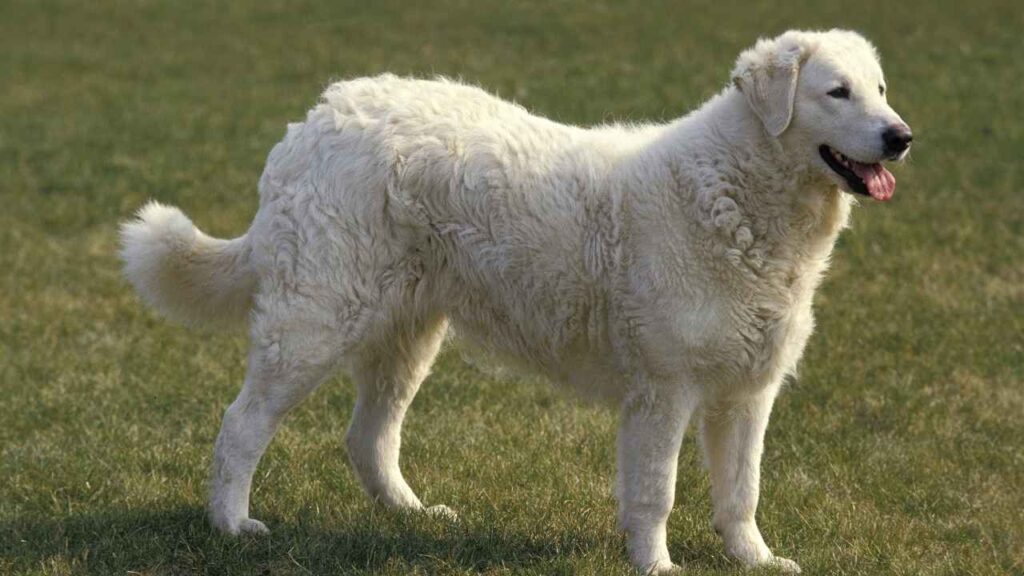
Training & Intelligence
Great Pyrenees dogs are highly intelligent but deeply independent. They were bred to make decisions without human input, which is exactly what makes them reliable guardians.
While they may not respond instantly to repeated commands, they excel at reading situations and acting appropriately without direction.
Kuvasz dogs are also intelligent but often require firmer, more consistent training and extensive socialization to manage their strong protective instincts.
Their independence can turn into stubbornness if not handled carefully. In guarding roles, the Great Pyrenees’ intuitive judgment and steady temperament often result in more balanced, predictable protection.
Coat Maintenance
The Great Pyrenees has a thick double coat designed to protect against harsh weather and predators. Despite its heavy appearance, the coat is naturally dirt-resistant and relatively easy to maintain with weekly brushing. Seasonal shedding does require extra attention, but daily grooming is not necessary.
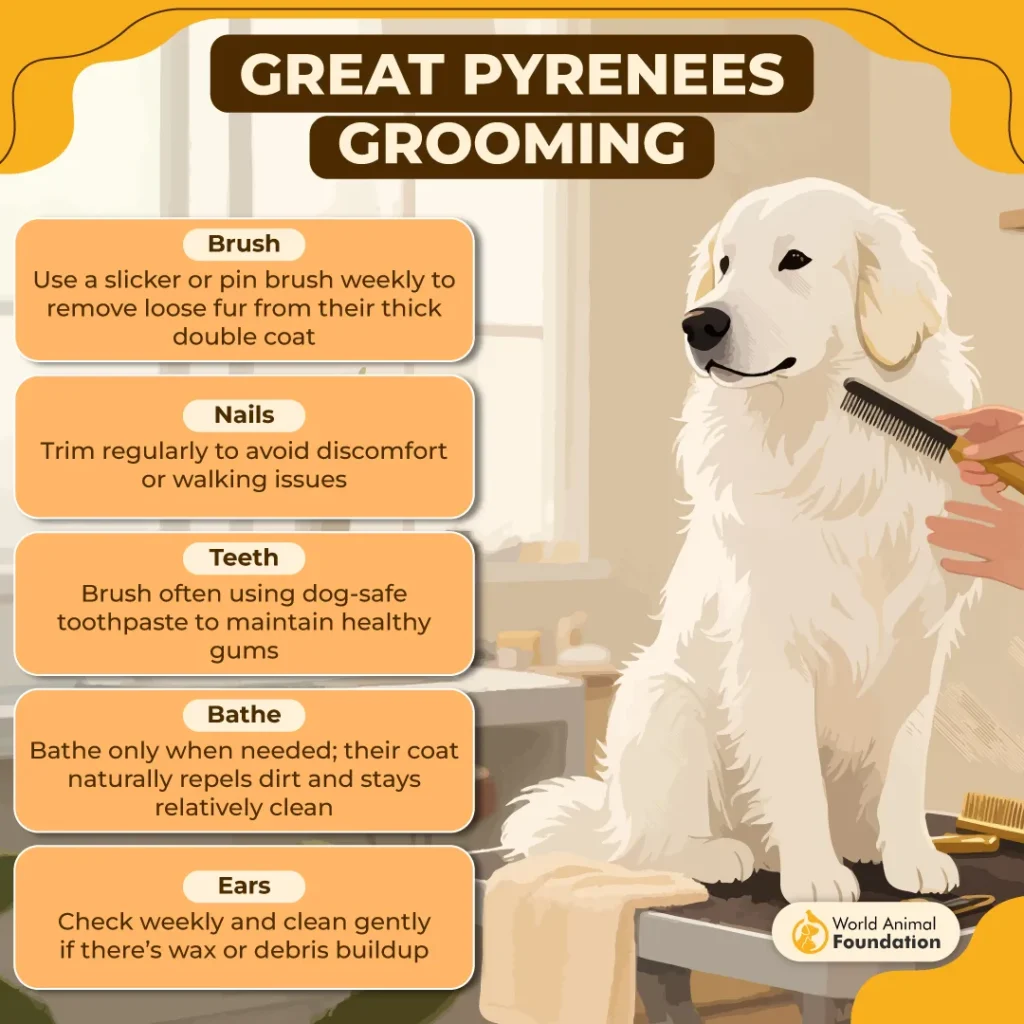
The Kuvasz also has a dense double coat and sheds heavily during certain times of the year.
While both breeds require routine care, the Pyrenees’ coat tends to be more forgiving and easier to manage for long-term outdoor guarding work.
Health & Lifespan
Great Pyrenees typically live between 10 and 12 years and are generally healthy when responsibly bred. Like many large dog breeds, they can be prone to joint issues, bloat, and certain genetic conditions, but regular veterinary care and proper feeding routines help manage these risks.
Kuvasz dogs have a similar lifespan but are known to mature slowly and can be more vulnerable to orthopedic problems, according to Hills Pet. Both breeds require committed care, yet the Great Pyrenees’ calmer lifestyle may reduce strain-related health issues over time.
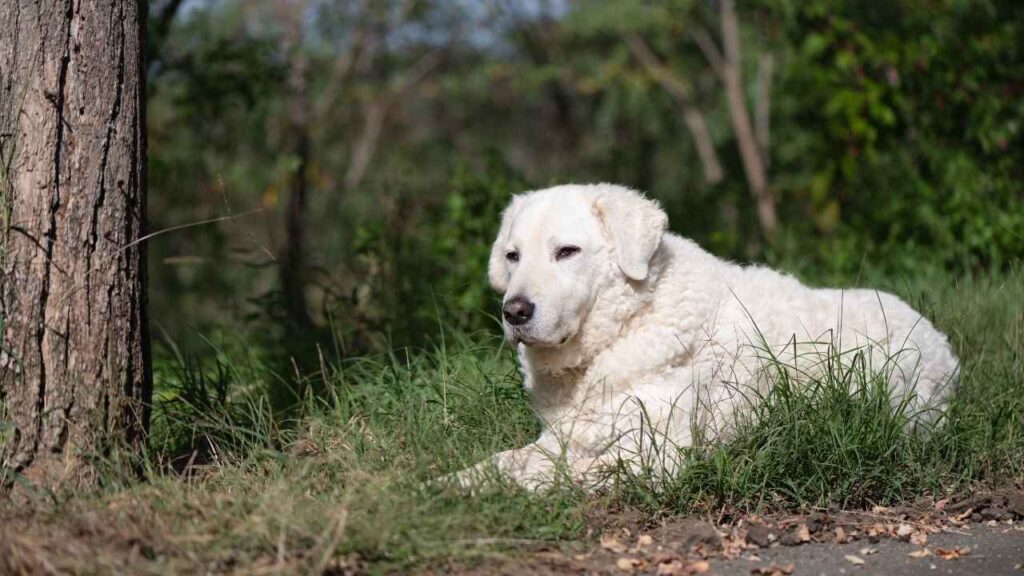
Great Pyrenees vs. Kuvasz: Suitability as Farm Dogs vs. Guard Dogs
Both breeds have strong livestock guardian backgrounds, but the Great Pyrenees stands out for its adaptability.
It transitions smoothly between guarding livestock and protecting a family home. Its nurturing nature allows it to bond deeply with children, other animals, and property it considers its own.
The Kuvasz is often more specialized, thriving best in experienced hands and clearly defined working roles.
While an excellent guardian, it may be less forgiving in family or mixed environments. This versatility makes the Great Pyrenees a more practical and reliable choice for modern guard duty.
Conclusion
When comparing the Great Pyrenees and the Kuvasz for guard duty, the differences lie less in strength and more in temperament, adaptability, and working style.
Both breeds have long histories as livestock guardians and possess strong protective instincts. However, the Great Pyrenees consistently demonstrates qualities that make it more dependable across a wider range of guarding environments.
Its ability to remain calm, assess threats independently, and protect without excessive aggression allows it to function effectively with minimal supervision. This balance is especially valuable on farms, rural properties, and family homes where constant human direction is not always possible.
The Kuvasz, while loyal and powerful, often requires experienced handling, structured training, and close management to ensure its guarding instincts remain controlled.
Its higher energy levels and sharper suspicion of strangers can limit its suitability in mixed or family-oriented settings.
Overall, the Great Pyrenees’ steady temperament, intuitive judgment, and versatility give it a clear advantage, making it a more reliable and practical choice for long-term guard duty in modern environments.
