




The bond between humans and dogs was forged in the wild long before backyards and living rooms; there were forests and open plains. For centuries, certain dog breeds have stood beside hunters as loyal partners, using their extraordinary senses, stamina, and intelligence. Hunting and tracking dogs are not just pets, but highly skilled companions with great instincts.
What makes a dog the best hunting breed is its sense of smell, far beyond human capability. Such dogs are built for endurance, capable of navigating rough terrain, icy waters, and vast fields without hesitation. But beyond their physical abilities, it is their focus, trainability, and unwavering loyalty that set them apart.
Different hunting styles require different strengths. Some are specialized to track scents over long distances, some for upland bird hunting, and some retrieve birds from hiding spots. Each breed has a unique skill set. In this article, we will talk about such hunting and tracking dogs that are perfect in their respective domains.
Amazing Dog Breeds Perfect for Hunting and Tracking
There are certain dog breeds that are ideal for tracking as well as hunting. Let’s discuss such breeds in detail:
1. Boykin Spaniel
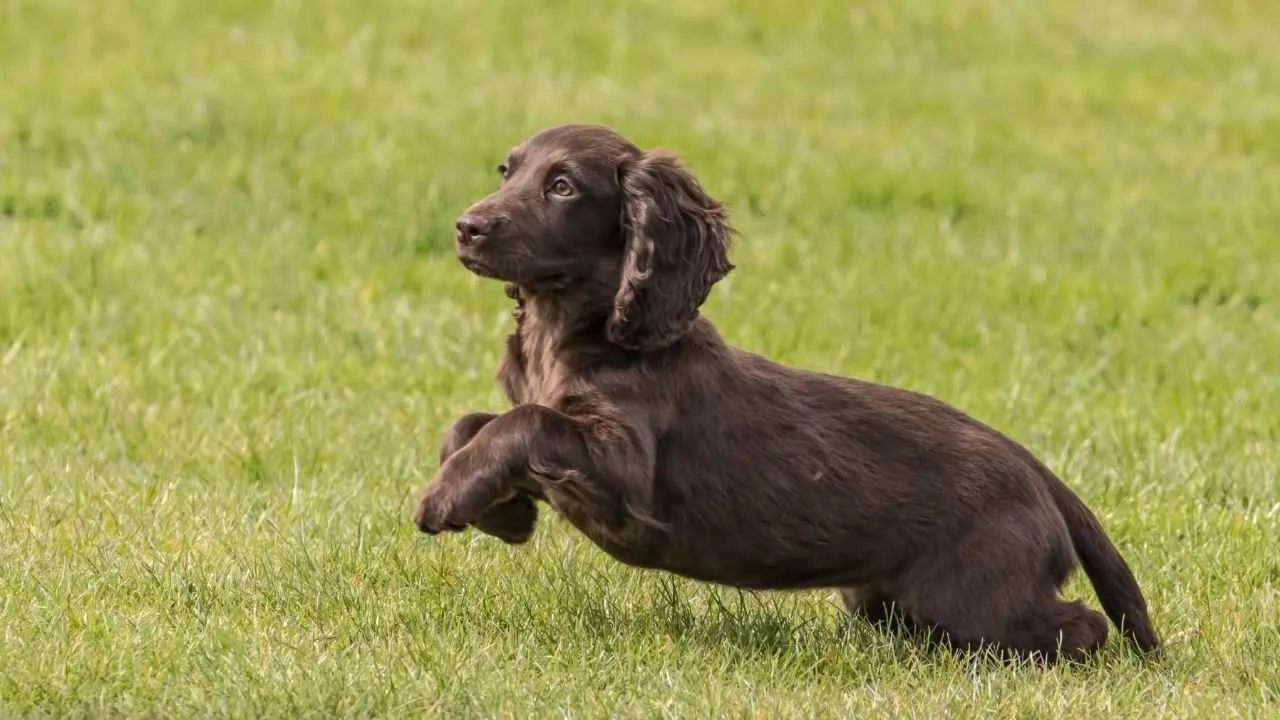
Boykin Spaniel is one of the water dog breeds in the medium-sized category with an athletic and sturdy body, chocolate colored coat, webbed feet, and strong legs. It was originally bred in the USA for wild turkey and waterfowl hunting. It is valued for its ability to sit quietly in a boat and then spring into action when needed.
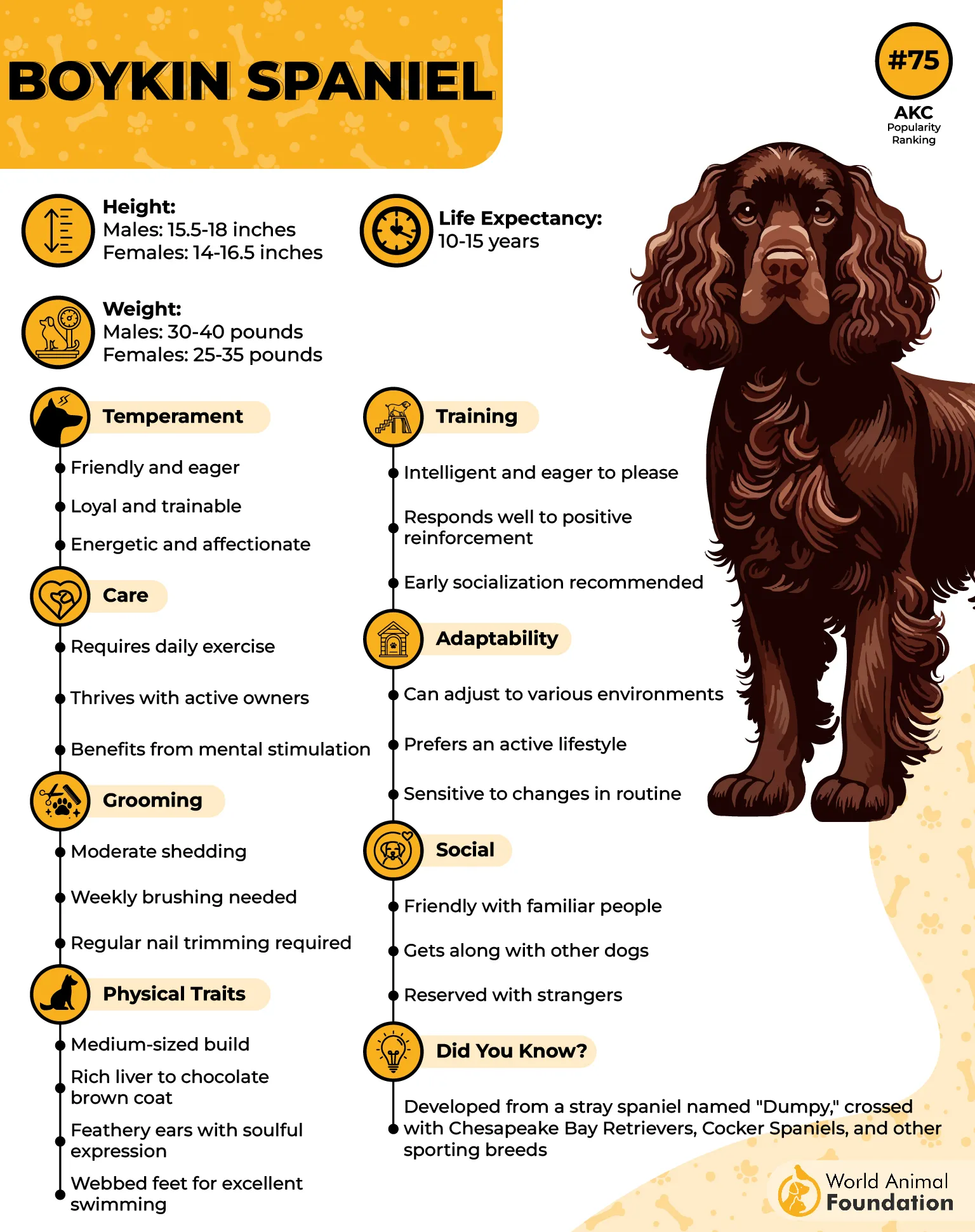
Boykin is friendly, affectionate, and deeply loyal to the family. It is intelligent and eager to learn. It is not a long-distance scent hound, but it excels at locating birds in dense cover. Its webbed feet and water-resistant coat make it a powerful swimmer, ideal for duck retrieval in lakes and swamps.
Moreover, it actively flushes birds from hiding spots, making itself ideal for upland game hunting. Since it was bred for Southern climates, it performs well in warm and humid conditions. It is eager to please and responsive to commands with consistent training.
But due to high energy, it demands daily exercise and mental stimulation. Boykin can develop separation anxiety if left alone too long. Without proper training, it can become overexcited in the field.
2. English Setter
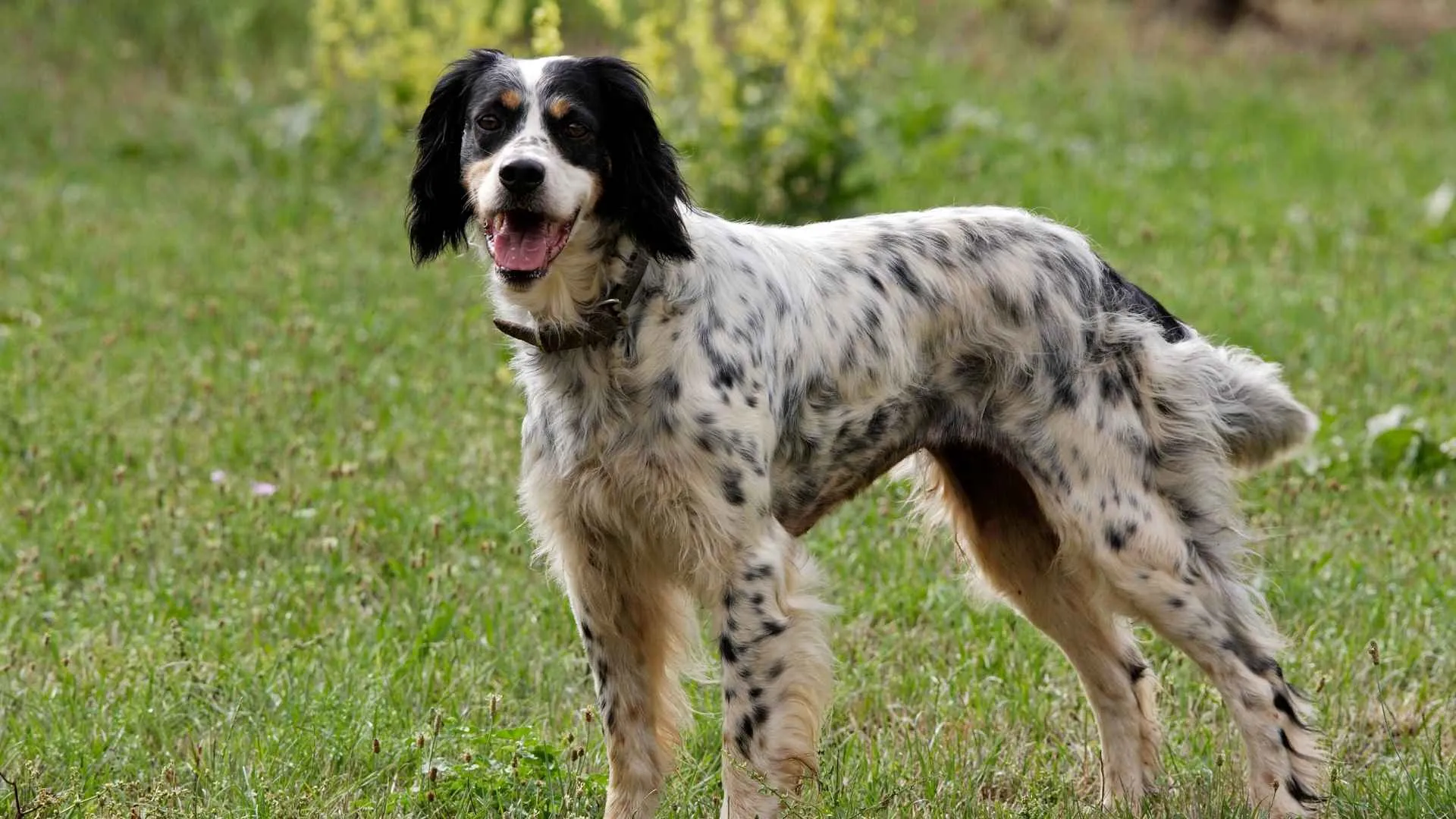
The English Setter is a spotted dog breed that hails from England, which has a medium to large athletic build with long legs, a distinctive feathered coat, a deep chest, and graceful movement. It was particularly designed for upland game bird hunting.
English Setter is gentle, warm-hearted, and people-oriented. It is energetic outdoors yet calm and sweet indoors. Being a good hunting companion, it is known for its refined nose, capable of detecting airborne scent particles at considerable distances. It covers ground efficiently in a sweeping motion, making it ideal for expansive upland terrain.
Built for endurance and can work steadily for long periods. Its natural pointing behaviour is stylish and reliable, often requiring minimal force to train. Interestingly, it has the ability of retrieving game carefully without damaging it. Further, it performs well in open fields, light woods, and rugged upland landscapes.
However, its feather coat requires frequent brushing to prevent matting. It may also develop stubborn tendencies if not trained early. It can only thrive in active families and demands daily physical activity. A strong hunting drive can lead to wandering if off leash in unsecured areas.
3. Bluetick Coonhound
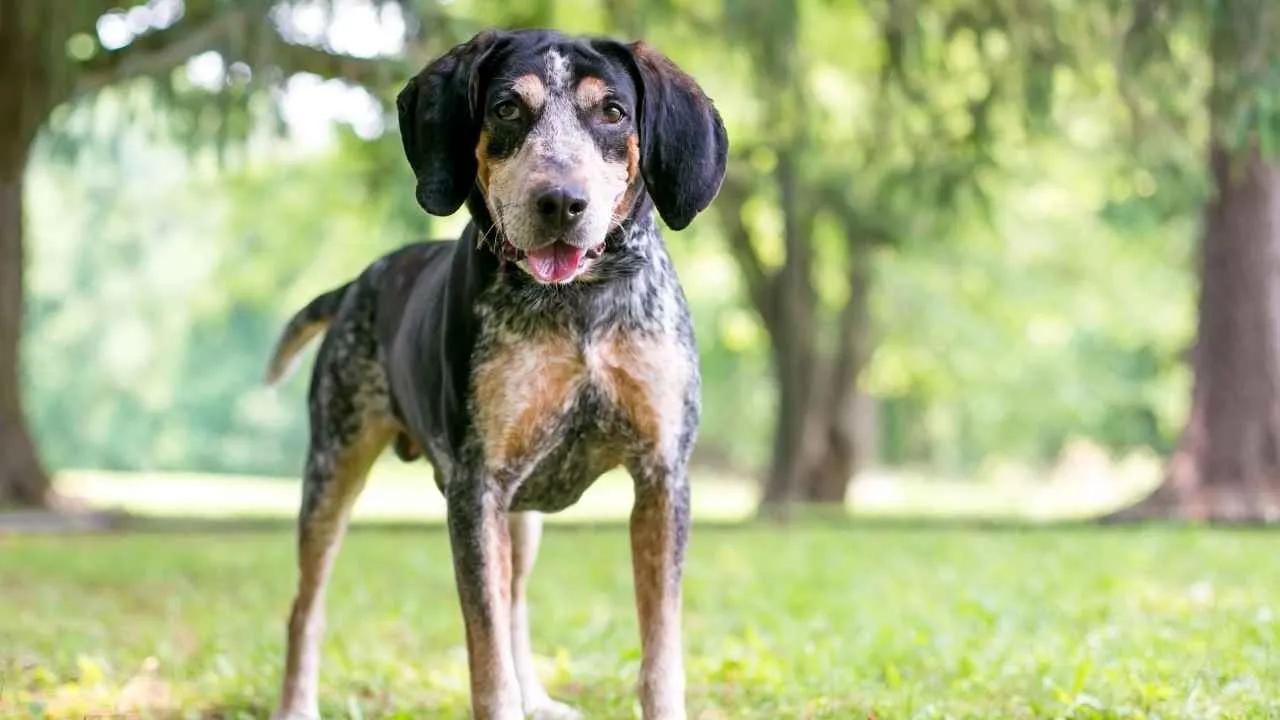
Bluetick Coonhound is a medium to large-sized dog with an athletic build, short, dense coat, long ears, and a deep chest. It originated in the United States as a cold-nosed scent hound for tracking small game such as raccoons, foxes, and even larger game like lions. It was designed for independent night hunting in swampy and wooded regions.
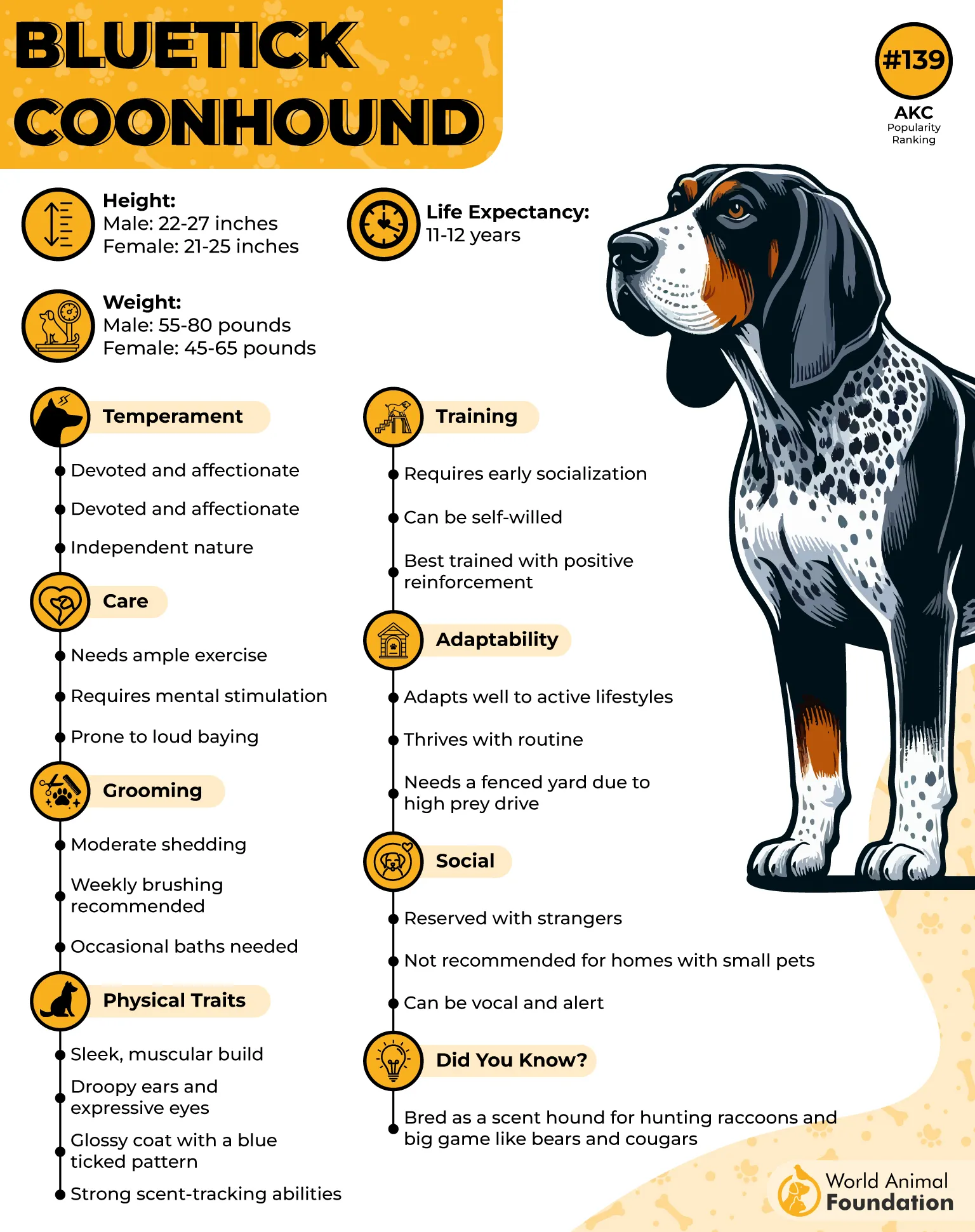
It is a loyal and loving companion of the family, but also intelligent and independent-minded. It is generally good with other breeds, especially other hounds. Amazingly, it is capable of detecting scent hours after an animal has passed. It keeps its nose low and follows scent particles on the surface. According to VCA, it is a cold-nosed breed, which means it can pick up older, cold scents.
It can work for hours and hours, even at night, without getting tired. One of its most valuable hunting traits is its voice. Its deep, melodic bay is used to signal active tracking. Further, it remarkably displays determination and courage even in the big game. It makes scent-based decisions without constant directions.
It is well-suited for experienced handlers who appreciate autonomous tracking dogs. Nonetheless, due to a very strong prey drive, it is not ideal for homes with small pets. It needs a large amount of exercise and mental engagement. It has a tendency to follow scent trails if not securely fenced.
4. Plott Hound
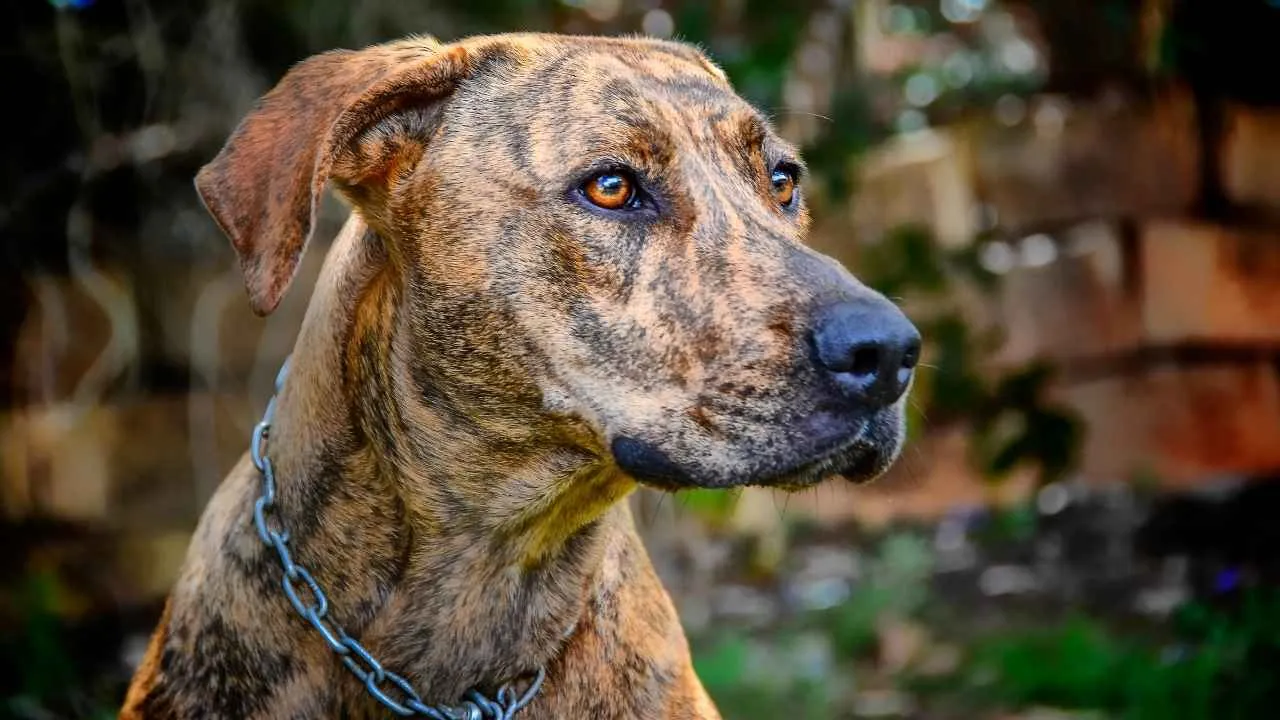
Plott Hound is an American dog with a medium to large but lean build, muscular frame, short, smooth coat that is camouflaged in wooded areas, and a deep chest for stamina. It was primarily bred for hunting big game, especially wild boar and deer. It is stated by Purina that the Plott is the state dog of North Carolina, where the breed was developed by German immigrants George Plott and his son Henry.
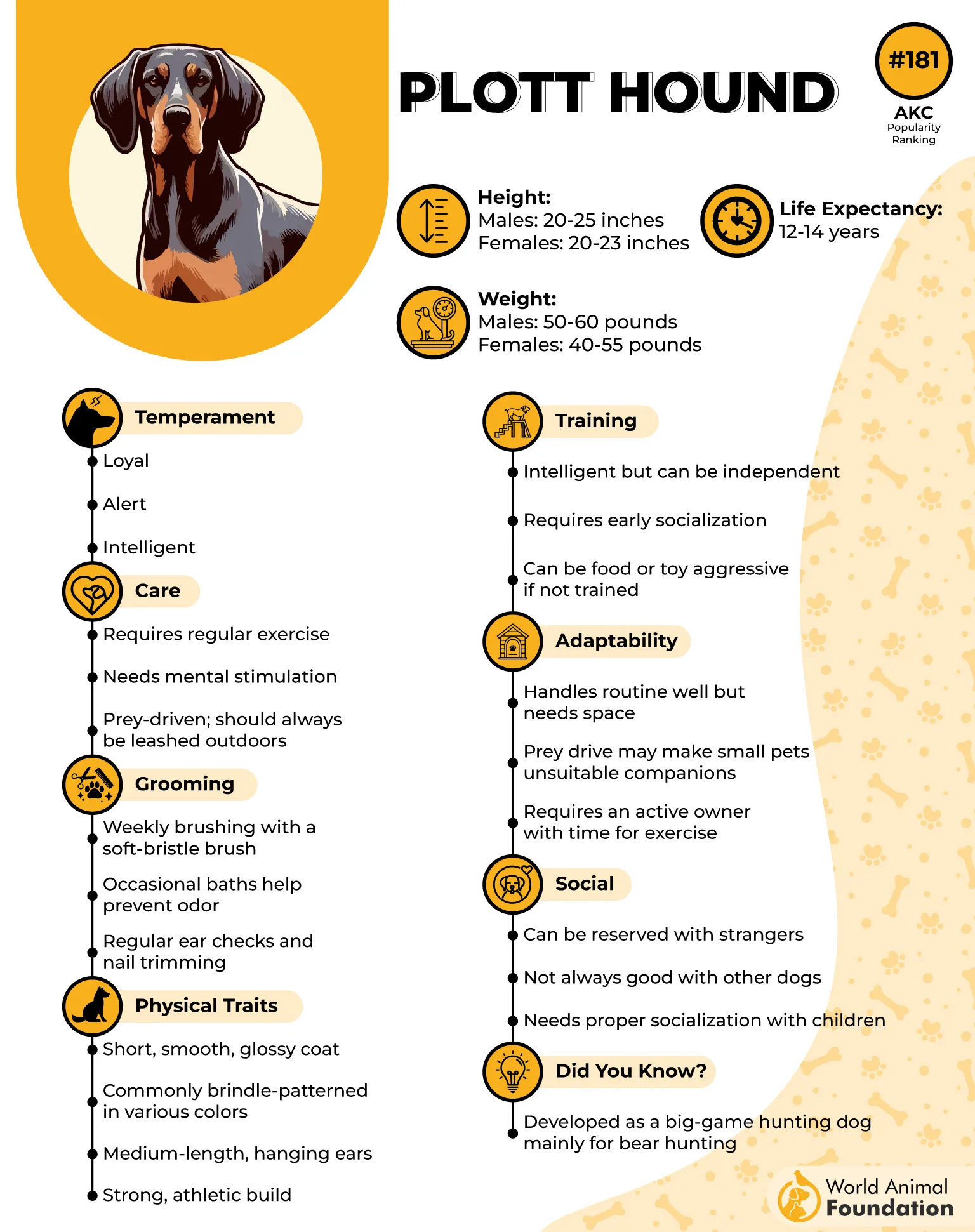
Plott Hound is loyal and protective with the family but bold and self-assured in the field. It is also intelligent and strong-willed. Interestingly, it is capable of trailing both fresh and older scent tracks. It is effective in variable weather conditions, including damp conditions and mountainous terrain. It is skilled at maintaining scent tracking over rocky ground where scent disperses.
Besides, its persistent vocalization signals both tracking progress and treed game. It maintains pressure on the animal until the hunter arrives. It is also known for mental toughness and persistence during difficult chases. Once locked onto a scent, it is extremely committed.
Nevertheless, its headstrong nature may challenge inexperienced owners and require firm and consistent training. It also demands extensive physical activity and space. Its vocal tendencies may not suit close neighbours.
5. Brittany
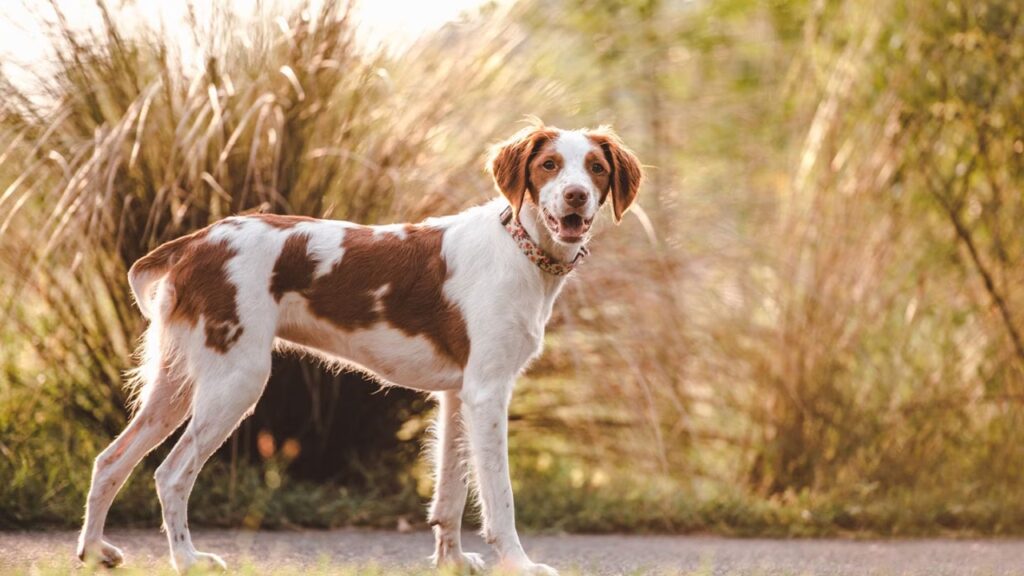
Brittany is one of the best hunting dog breeds with a medium-small and light frame, short to medium-length coat, naturally bobbed or short tail. It hails from France, where it was developed as a versatile upland bird dog to retrieve quails, pheasants, and woodcock. It is capable of locating, pointing, and hunting.
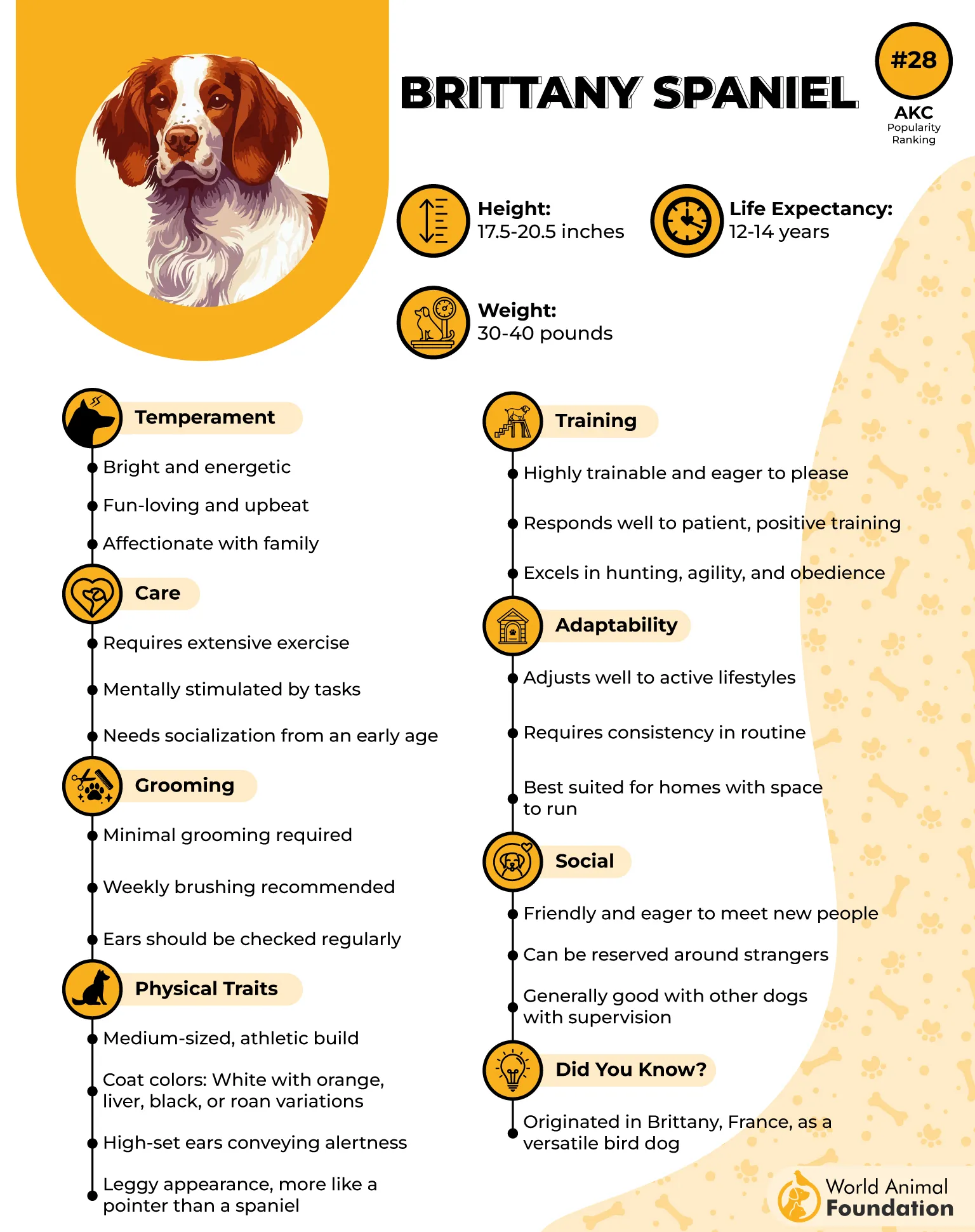
Brittany is affectionate, people-oriented, and a great family dog. It makes training easier as it is eager to please its owners. It is generally good with other dogs as well. Brittany is well known for blending agility with strong scenting ability. It uses both air-scenting and ground-scenting techniques when locating birds.
It is ideal for hunters who prefer their dog to stay within gun distance. Due to its soft mouth, it is capable of returning undamaged game. It is agile enough to navigate thick cover without slowing down. Additionally, it maintains enthusiasm throughout extended hunting tasks. It also adapts well to varying climates and types of hunting.
But it can become hyperactive or destructive if under-stimulated. It may be overly sensitive to heavy-handed training methods. Its strong prey drive can lead to chasing small animals. It also demands regular exercise to sharpen its intelligence.
6. Mountain Cur
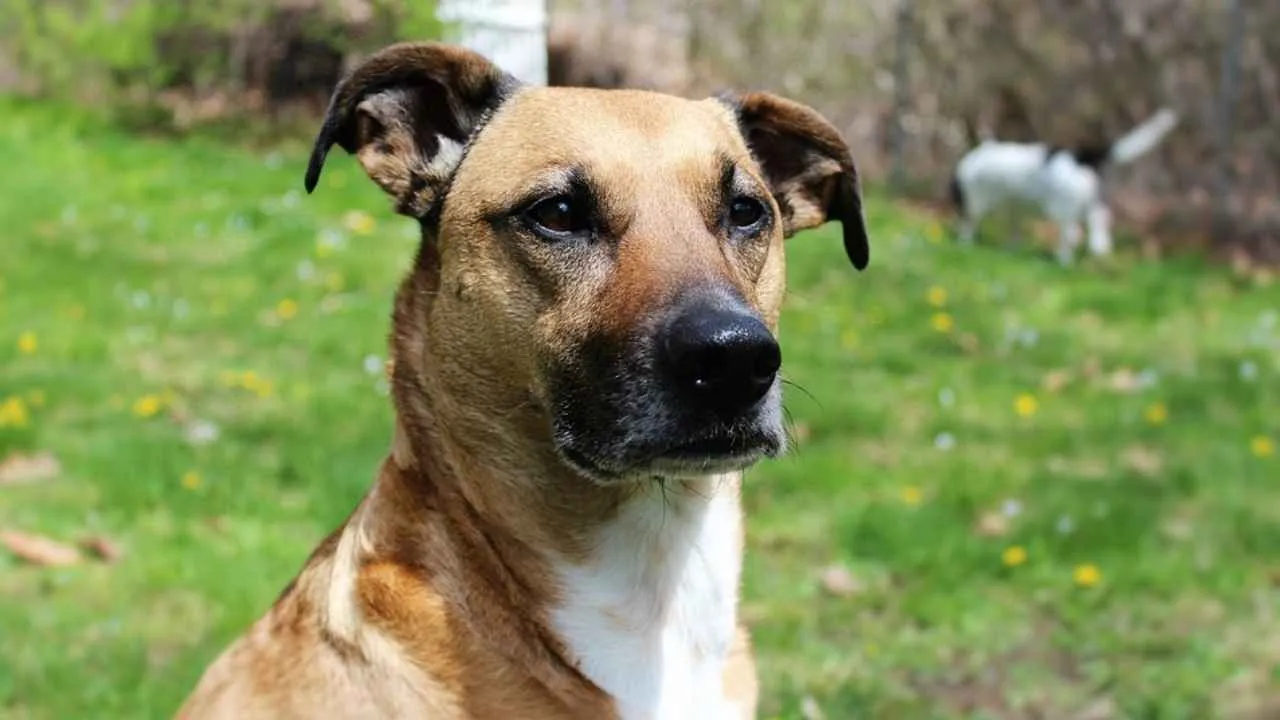
Mountain Cur is a medium-sized, muscular dog with an athletic build, short, dense coat, strong legs, and compact body built for climbing and quick bursts of speed. It was bred in the United States as a treeing and tracking dog for small and medium game. According to the American Kennel Club, the Mountain Cur was a crucial part of the cultures of early pioneers, settlers, and homesteaders.
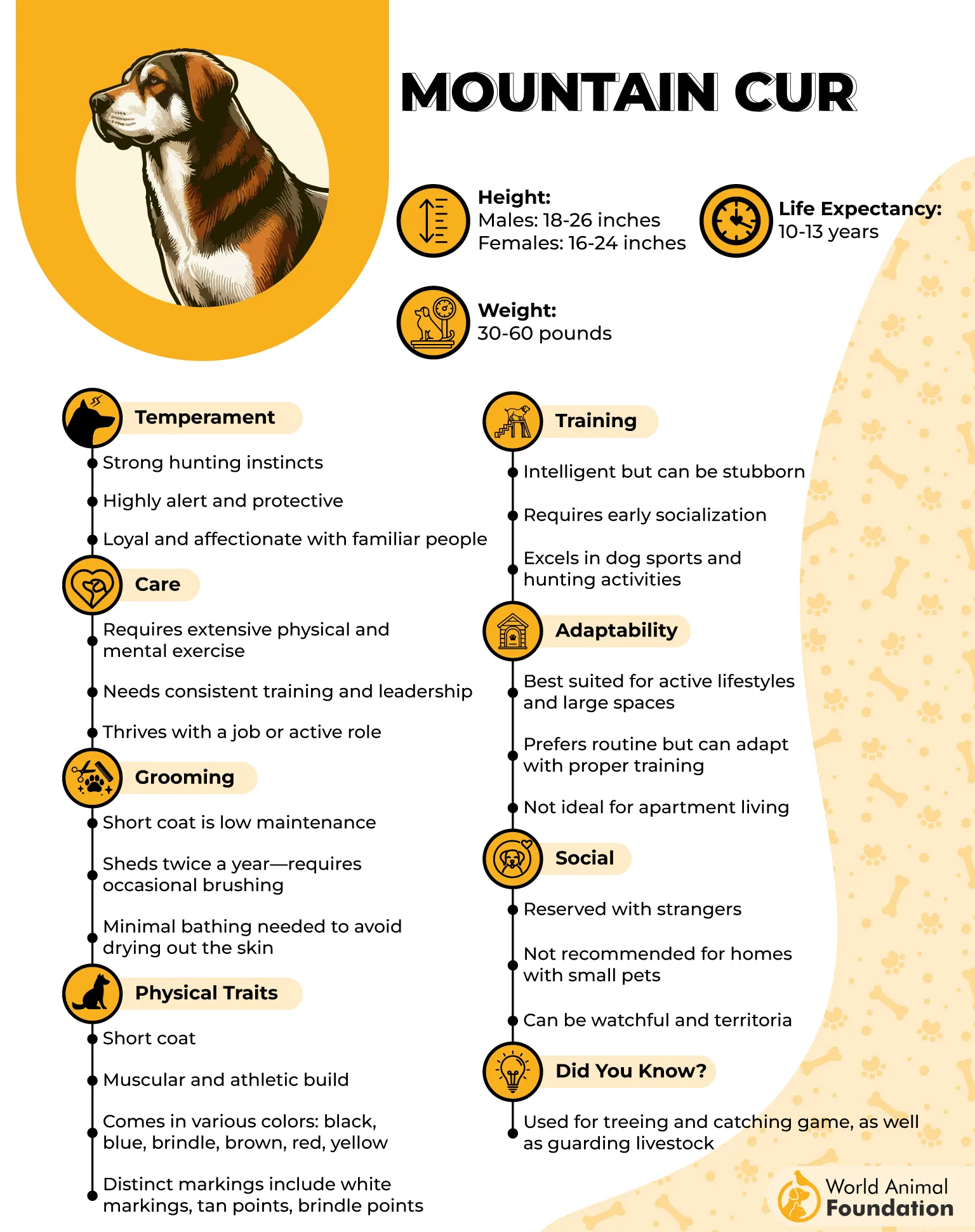
The Mountain Cur is faithful and protective of its family. Being naturally territorial, it makes itself a good watchdog. It maintains steady focus while trailing through wooded or rocky terrain. It is effective at tracking animals that change direction or double back. It stays at the base of the tree and barks sharply to alert the hunter.
Moreover, it is firm-footed and agile on steep slopes and rocky ground. It also has high endurance suited for long hunts in rugged conditions. Mountain Cur is naturally attentive and alert during hunts. It tracks the target quietly and reduces early alerting of prey.
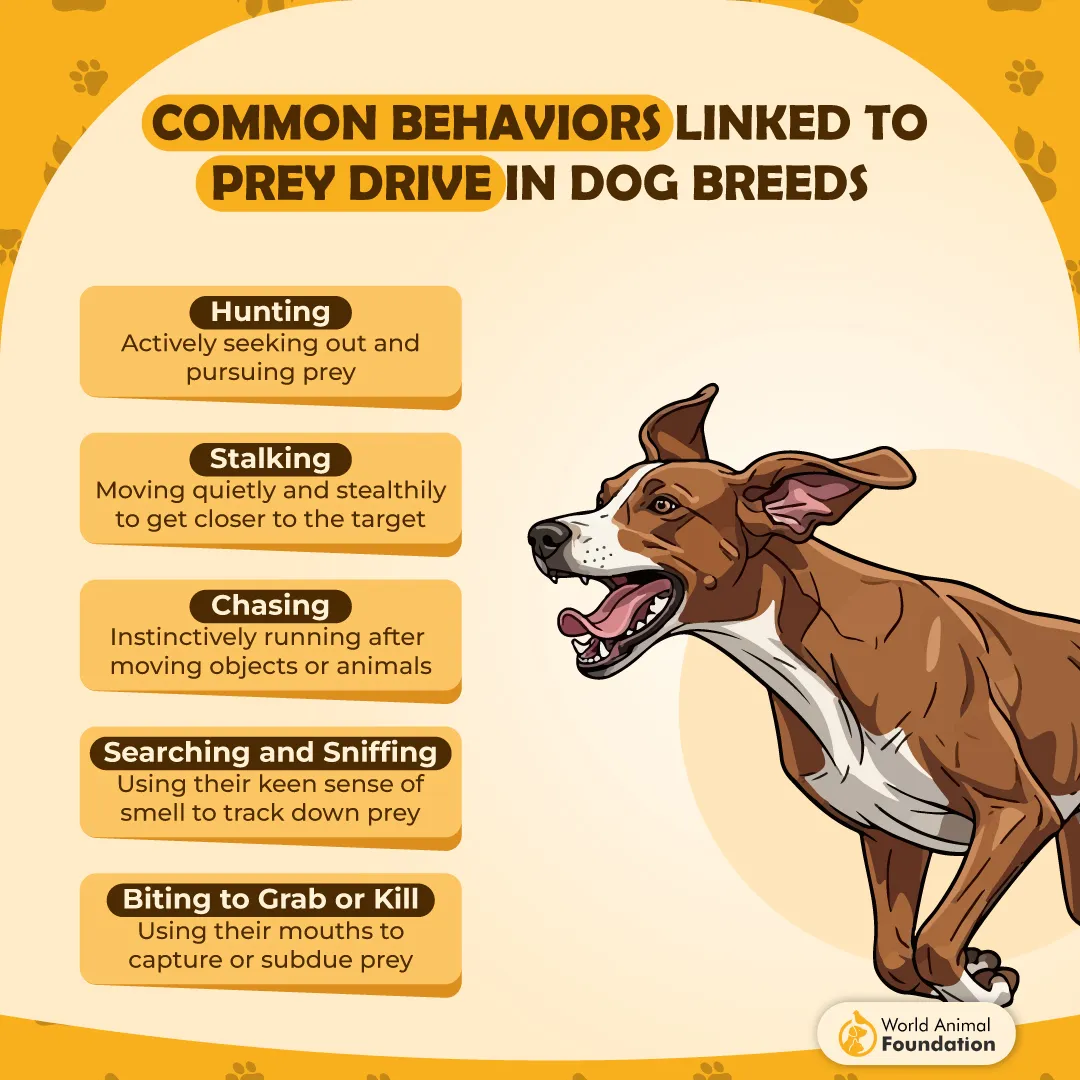
But due to a strong prey drive, it may cause chasing of other pets that are small in size. Its protective instincts require early socialization. Due to high exercise needs and being an active dog, it is not suitable for sedentary households. It has a tendency to become dominant without firm and consistent leadership.
7. Vizsla
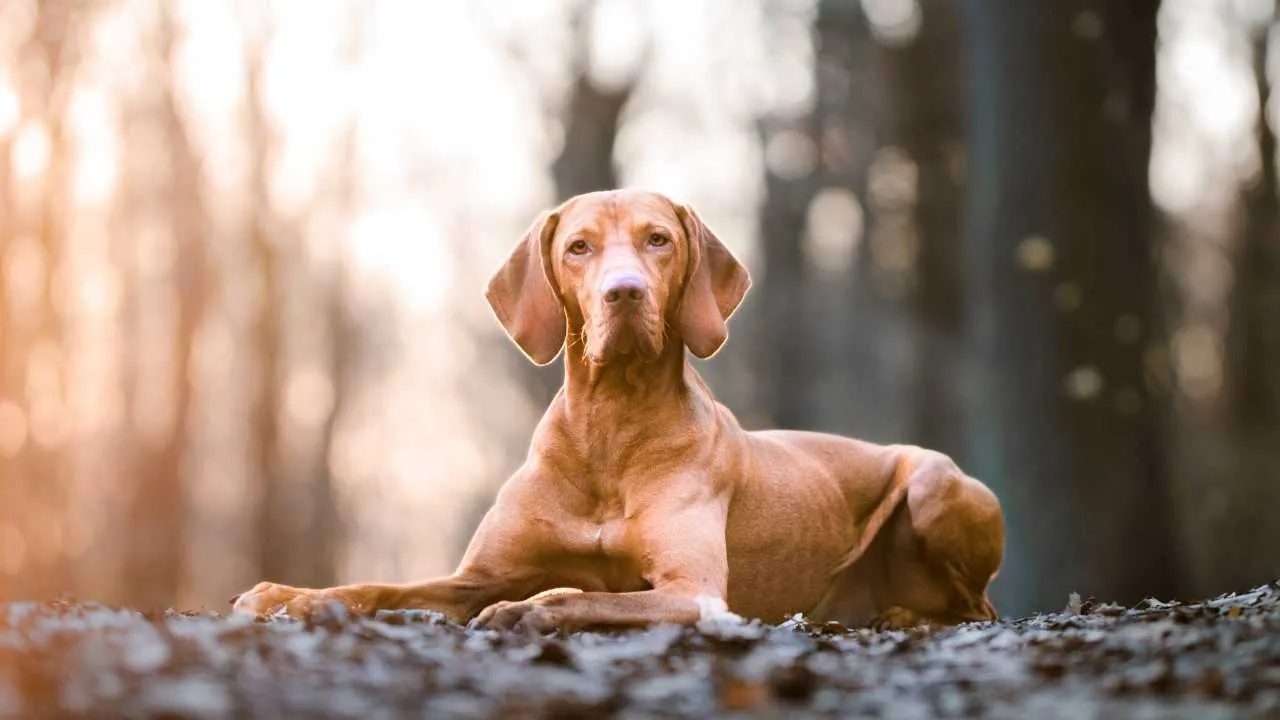
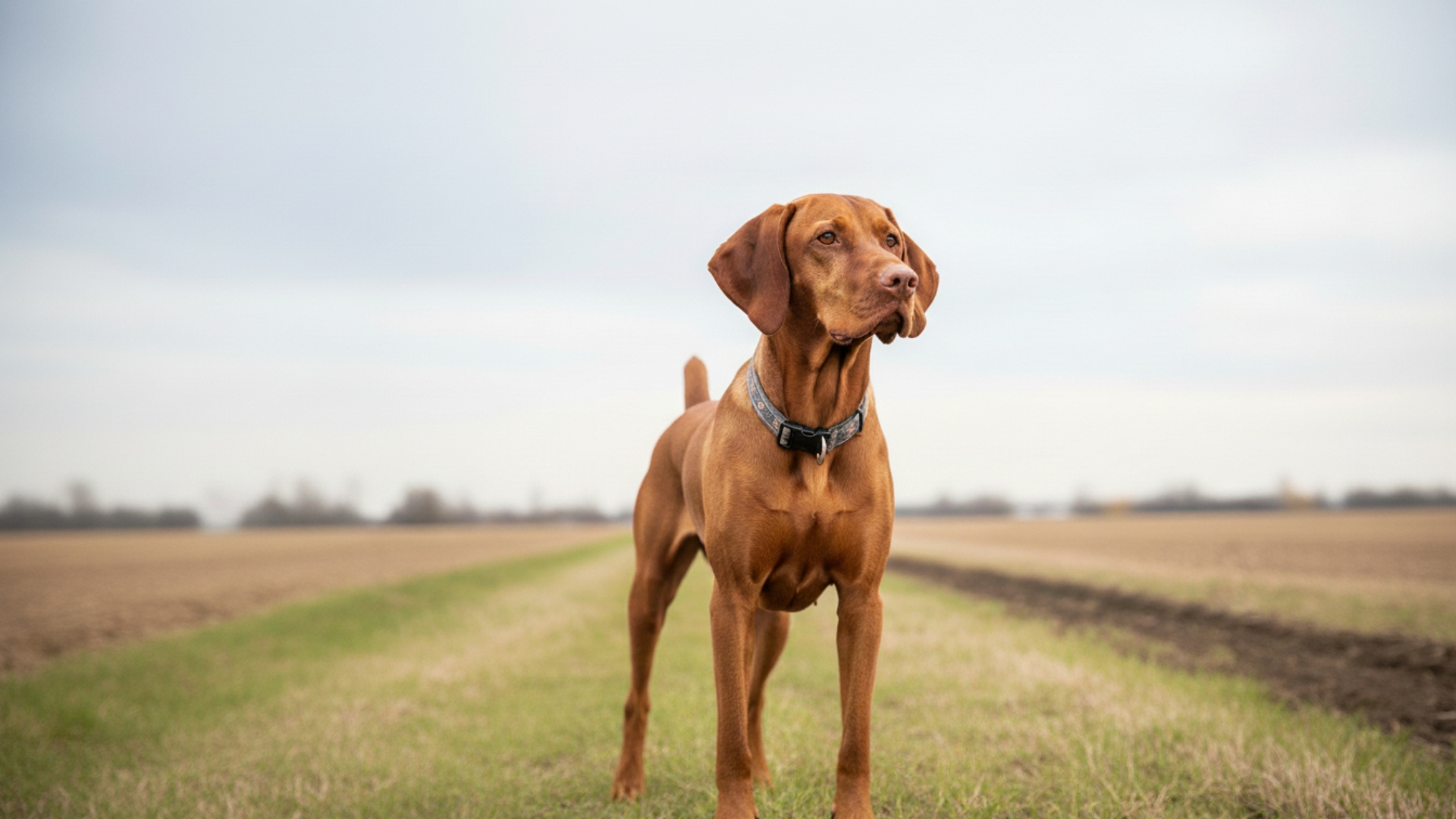
Vizsla is a medium-sized dog with a lean and muscular frame, short, smooth coat, long legs, a deep chest, and one of the ravishing red dog breeds. Its roots trace back to Hungary, where it was developed as a versatile pointing and retrieving dog capable of tracking wounded game. It is capable of working in open fields, grasslands, and light woodland.
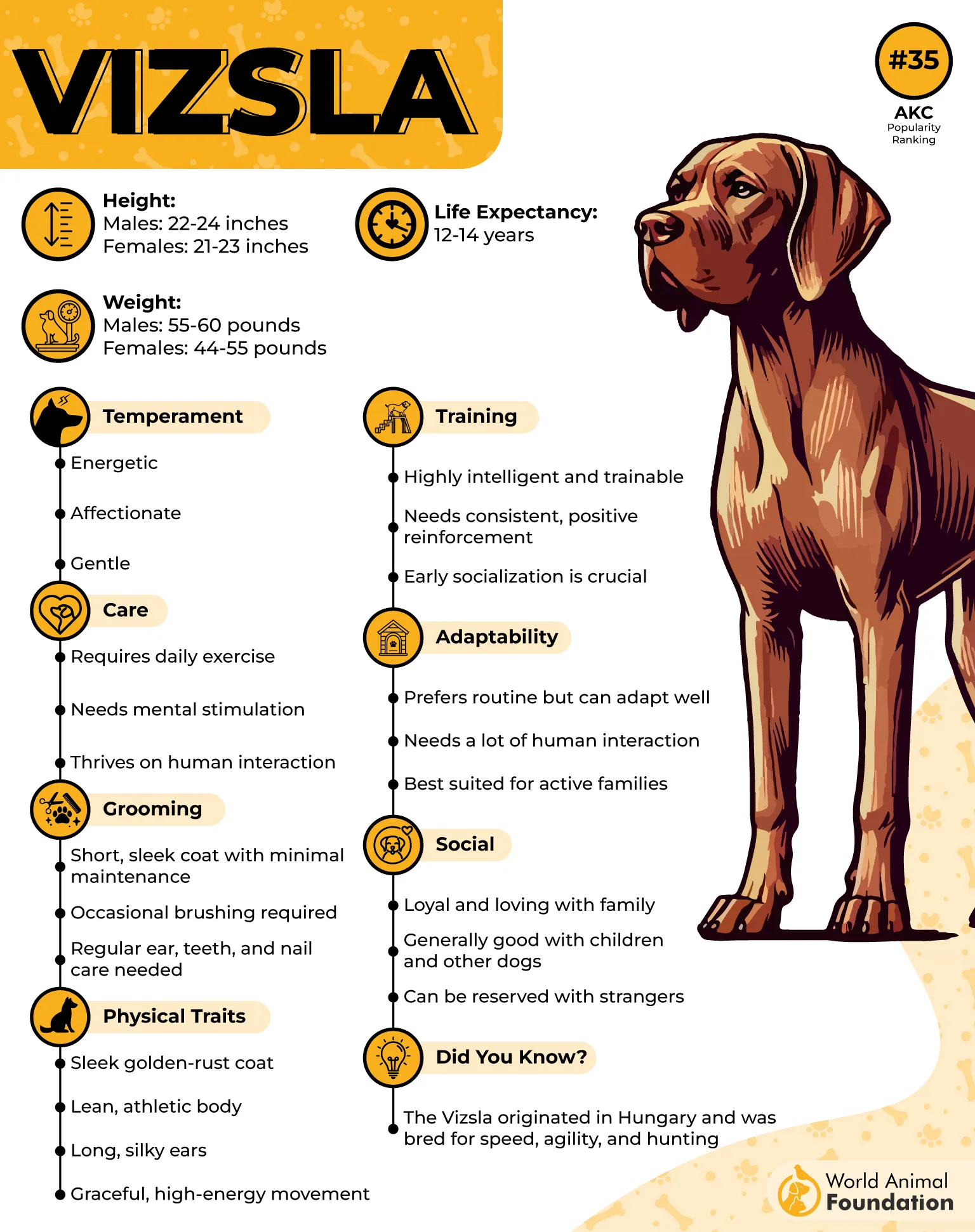
Vizsla is extremely warm-hearted and people-centred. It is always eager to please and intelligent as well. Being a tracking dog, it carries its head high to catch scent particles drifting in the wind. It adjusts direction fluidly when wind patterns shift. It naturally freezes upon detecting game and maintains a firm posture while awaiting the hunter.
It tends to hunt within comfortable gun range and responds quickly to whistles and hand signals. Velcro is ideal for hunters who prefer close teamwork rather than independent ranging. It has quick and efficient return delivery and preserves the game condition with its soft mouth.
Further, it is capable of sustained activity without overheating easily. Nonetheless, it is prone to separation anxiety if left alone for extended hours. Due to its sensitive nature, it may not respond to harsh training methods. Its short coat offers limited protection in cold temperatures.
Conclusion
In a nutshell, tracking and hunting dogs are more than just companions; they are the true partners in the field. They blend instincts, intelligence, and endurance to help hunters succeed across diverse terrains and game types.
Moreover, choosing the right hunting dog breed depends on the game type, terrain, hunting style, and training. These dogs are not just skilled hunters but also intelligent, energetic, and affectionate companions. Each breed has its own strengths, temperaments, and challenges.
Ultimately, hunting and tracking dogs remind us of the incredible bond between humans and canines. Whether chasing games across open fields, navigating dense forests and rugged terrain, and retrieving birds from water, these breeds exemplify dedication, loyalty, and an unmatched work ethic.
