




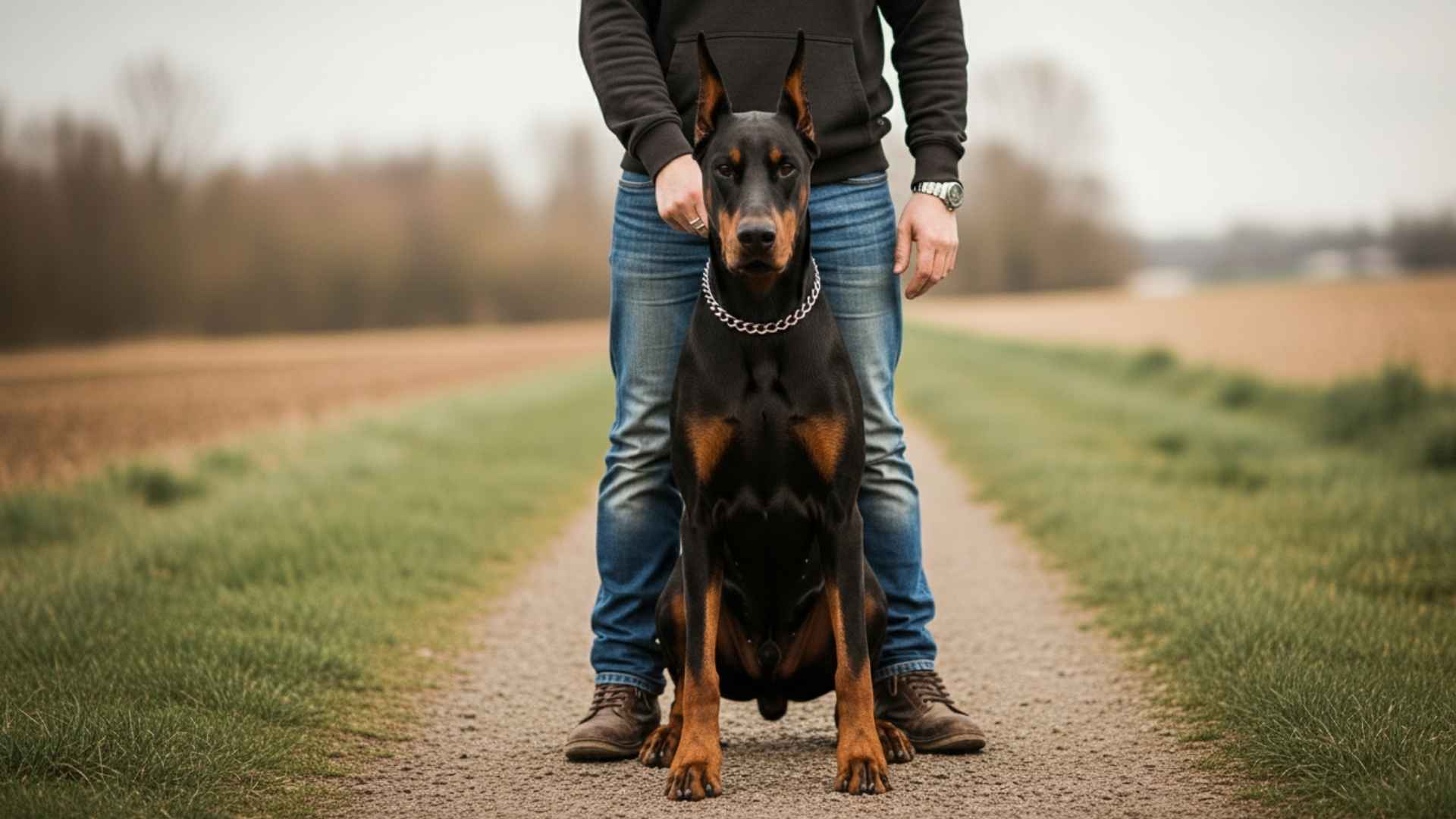
People bring dogs into their lives for many reasons. For some, it’s about companionship and unconditional love. For others, it’s about security; protecting a home, property, or even livestock. While all dogs can be loyal, not every breed has the natural instincts, confidence, and courage required to step into a true protection role.
Protection dogs are bred and trained to be alert, brave, and steady under pressure. They possess strong guarding instincts and a deep sense of loyalty toward their families. Physically capable and mentally sharp, these dogs are often well-suited to households that value both security and structure.
There’s a common misconception that guard dogs are automatically aggressive. In reality, a well-bred and properly trained guard dog is controlled, disciplined, and able to distinguish between real threats and everyday situations. Many of these breeds are also affectionate, family-oriented companions who enjoy playtime, attention, and even the occasional cuddle.
Below, we’ve highlighted seven of the best protection dog breeds: dogs that combine strength with loyalty and vigilance with devotion. Explore their traits to find a companion that can help safeguard your home, farm, and family while still being a loving member of your household.
Best Dog Breeds to Safeguard Against Danger
1. Doberman Pinscher
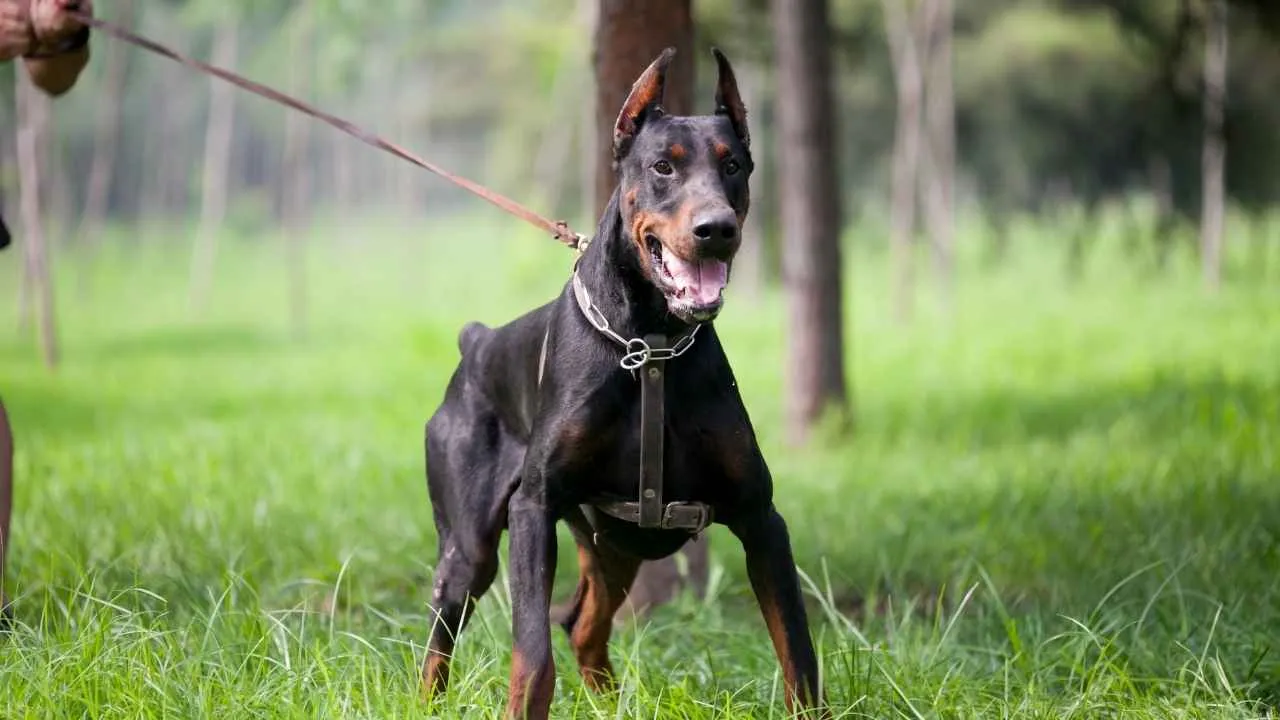
Doberman Pinscher was bred as a guard dog by Louis Dobermann, so they have innate protective instincts. They are muscular, quick, and alert in apprehending intruders.
Doberman Pincher is called “Doberman” in the UK and the US. This working dog breed is tough in the field but a loving companion at home. They are extremely loyal and inteligent that makes them perfect family pets.
These large dogs form unbreakable bonds with children, so it’s not incorrect to say that they thrive on human interaction.
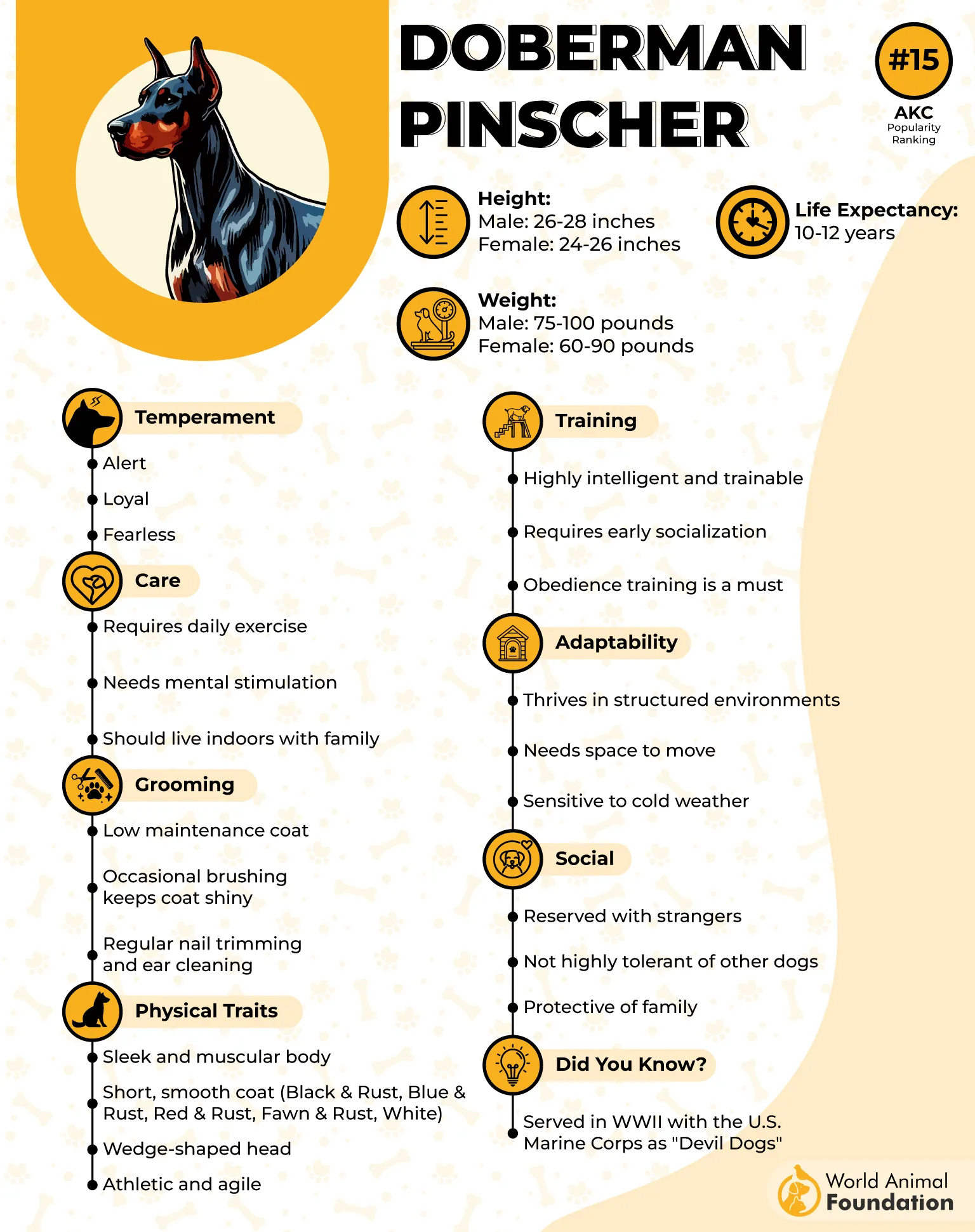
At the War Dog Cemetery at the U.S. Naval Base in Guam, a bronze statue honors the Dobermans who served during World War II, inscribed with the words “Always Faithful.” This tribute reflects the breed’s legendary loyalty and courage. And that’s why AKC called them one of the finest protection dogs.
Because they are highly energetic and intelligent, Dobermans require daily physical exercise and mental stimulation. Without proper outlets for their energy, they can become bored and potentially destructive if left alone for long periods.
Their short, smooth coat is low-shedding and relatively low-maintenance. Weekly brushing is usually sufficient to keep their coat healthy and remove loose hair.
2. German Shepherd
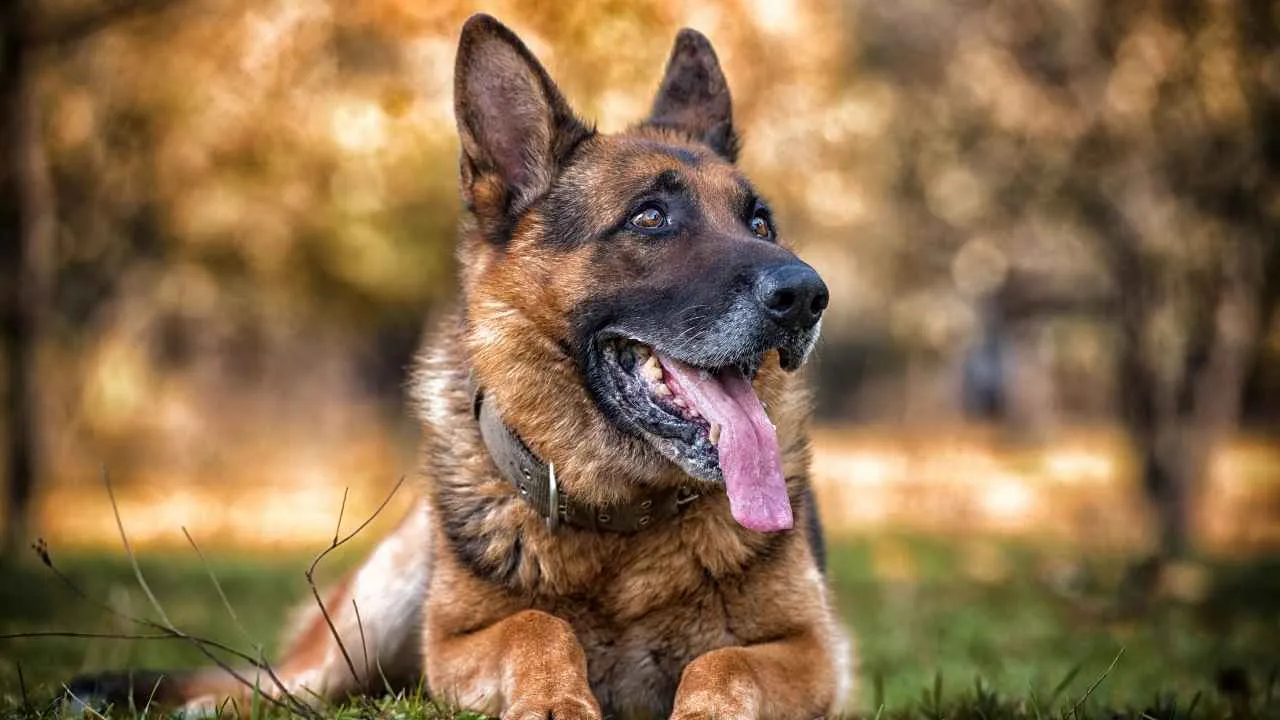
The German Shepherd is a confident, courageous, and highly alert dog breed known for its versatility and intelligence. They have long served in police K-9 units, military operations, and search-and-rescue missions, thanks to their trainability and strong work ethic.
Their impressive working history also makes them reliable protection dogs for families and, in some cases, livestock guardians when properly trained. German Shepherds tend to form especially strong bonds with one primary handler, though they remain loyal and devoted to the entire household.
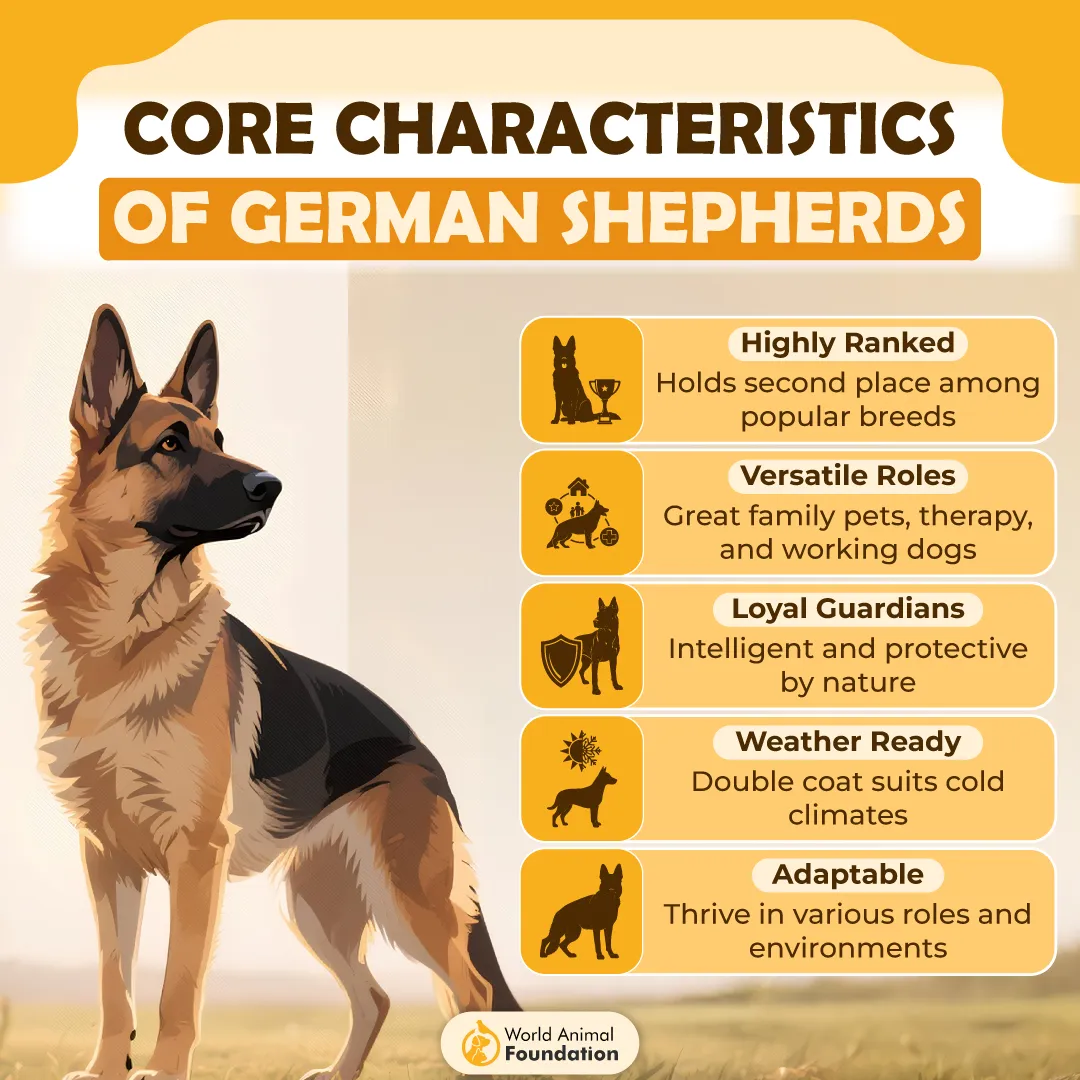
Petplan states that these dogs are highly active and require substantial daily exercise, typically at least 1–2 hours of physical activity combined with mental stimulation, to prevent boredom and destructive behavior.
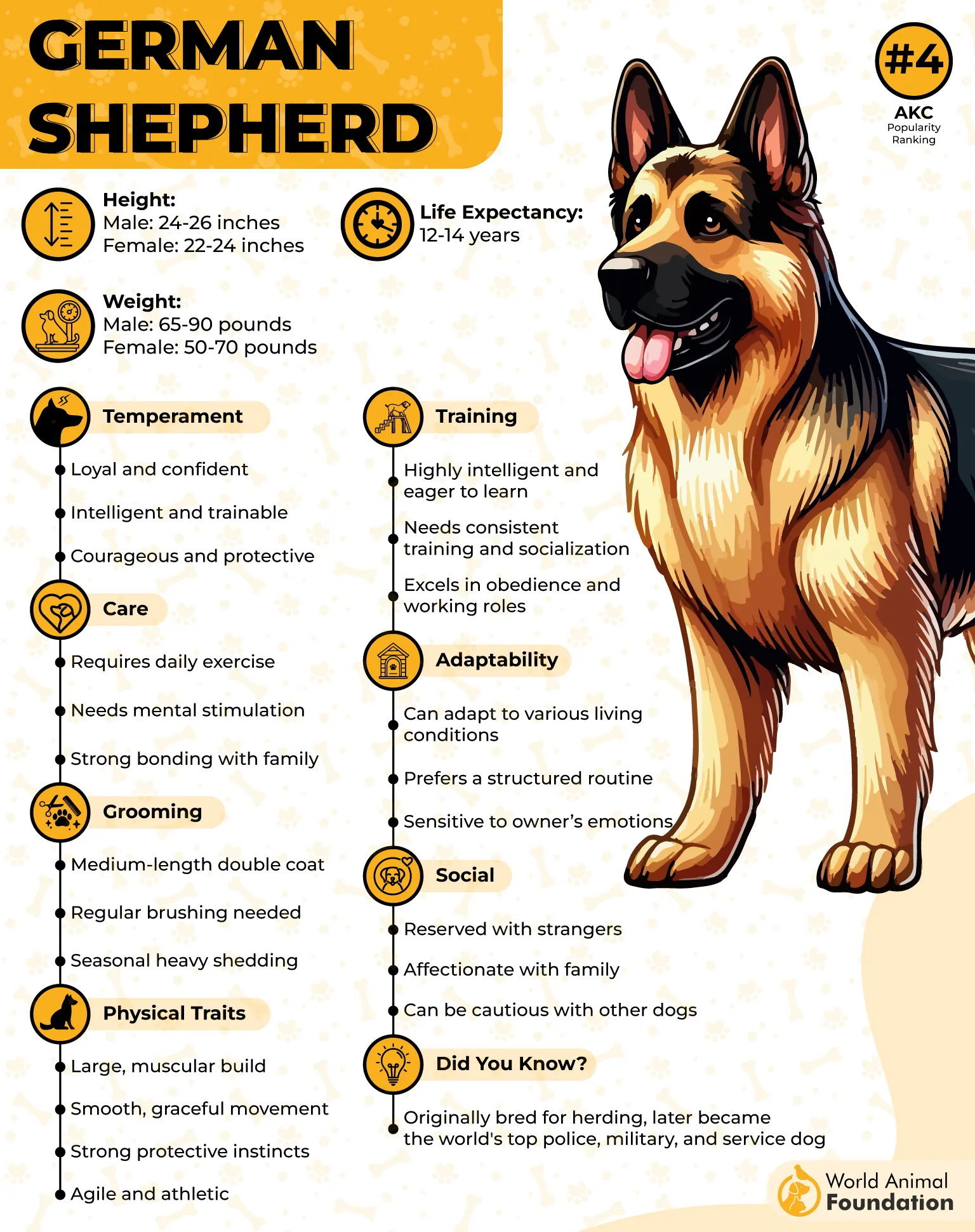
German Shepherds are often good with children when raised and socialized properly, but supervision is always recommended, especially due to their size and strength. They are naturally protective and can be reserved or aloof with strangers, which makes early socialization essential.
German Shepherds have a dense double coat that sheds year-round and heavily during seasonal changes, so regular brushing is necessary.
3. Rottweiler
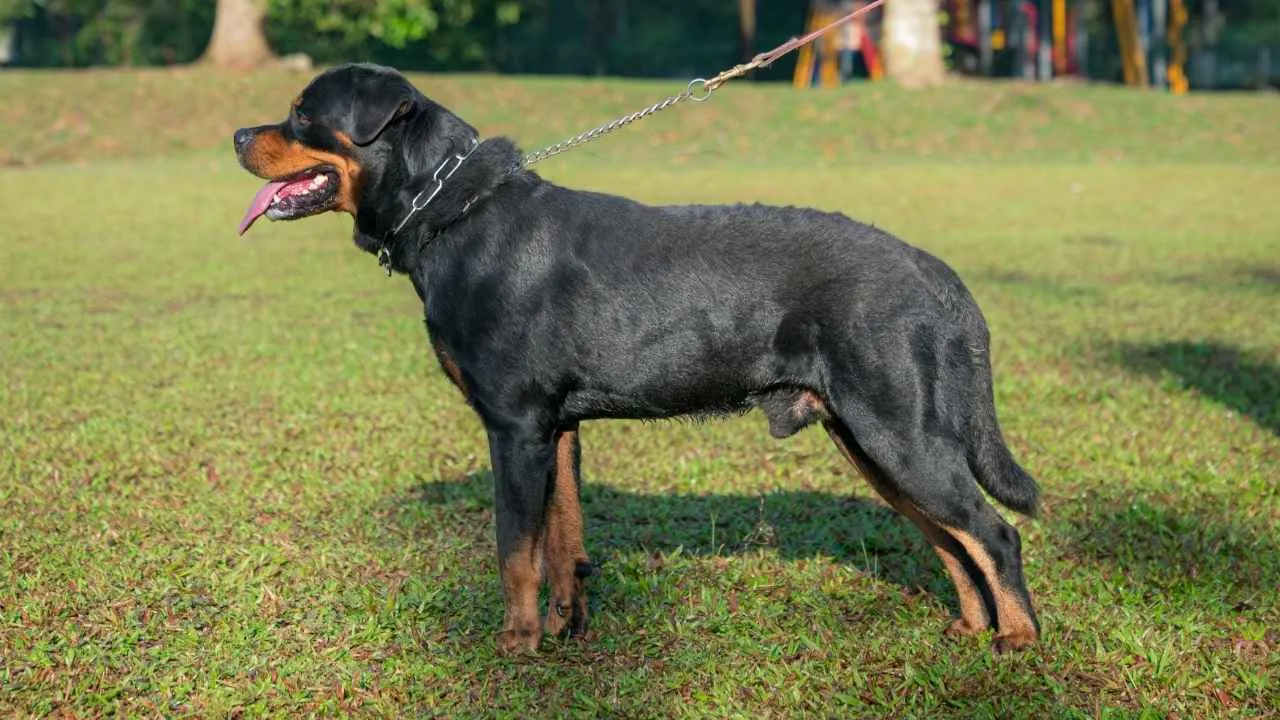
Rottweiler is a calm, confident, and brave dog breed with a strong herding and guarding history. They have broad heads, deep chest and wide eyes that may give them a tough boy look. But they are quite the opposite with their owners.
Rotties are sharp enough to detect potential threats and dangers at home. They are perfect playmates and gentle protectors that are easy to train with positive reinforcement.
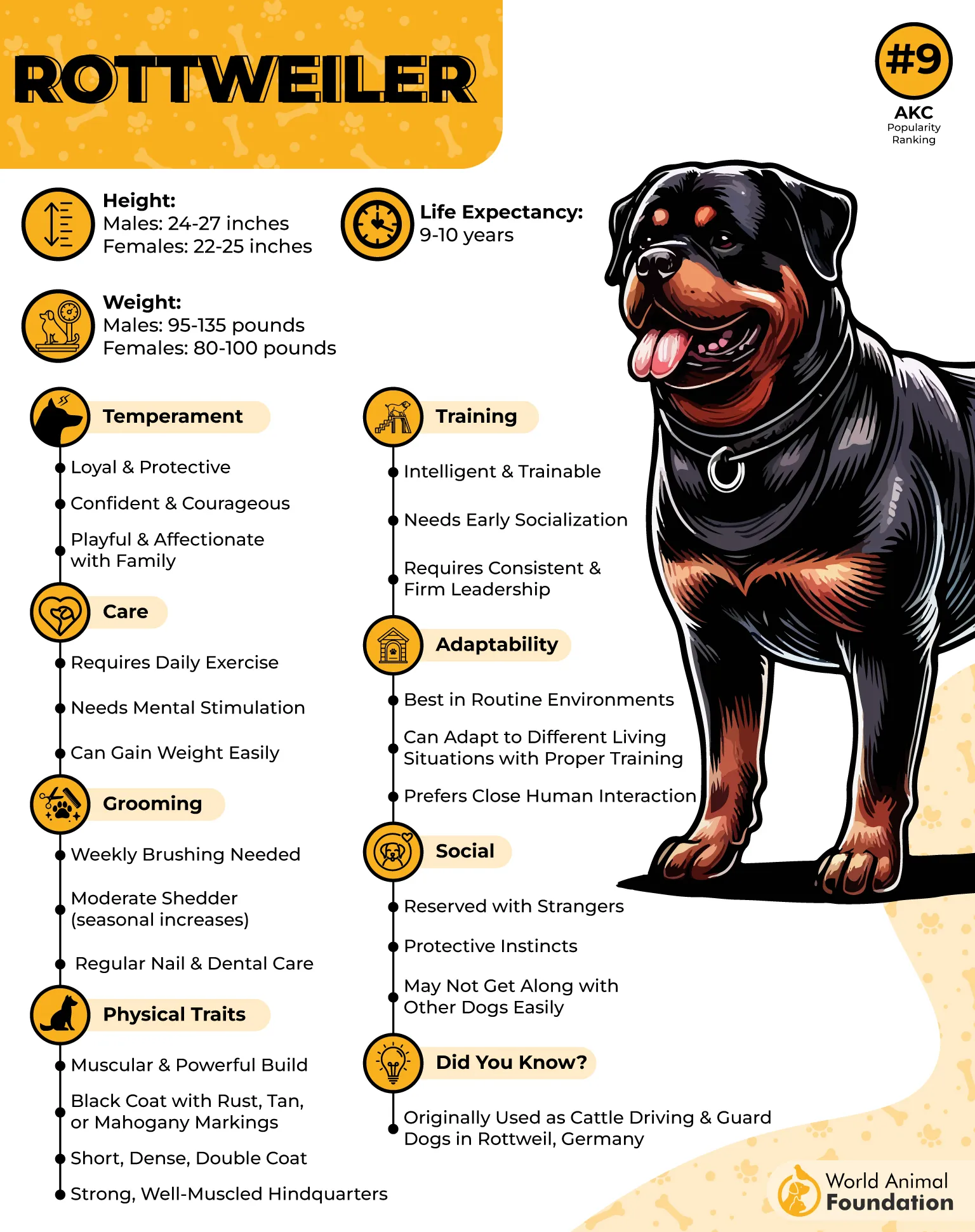
Despite their muscular size, many Rottweilers are surprisingly affectionate and may try to climb into your lap for attention. When raised properly, they can do very well in families with children, though supervision is always important due to their strength and size.
Rottweilers were among the early breeds used as guide dogs for the blind. They have also assisted in search-and-rescue efforts, including recovery work after major disasters such as the World Trade Center attacks.
Their short double coat is relatively easy to maintain but sheds moderately year-round, with heavier shedding in spring and fall. Weekly brushing is usually sufficient, though more frequent brushing during seasonal shedding helps manage loose hair.
4. Cane Corso
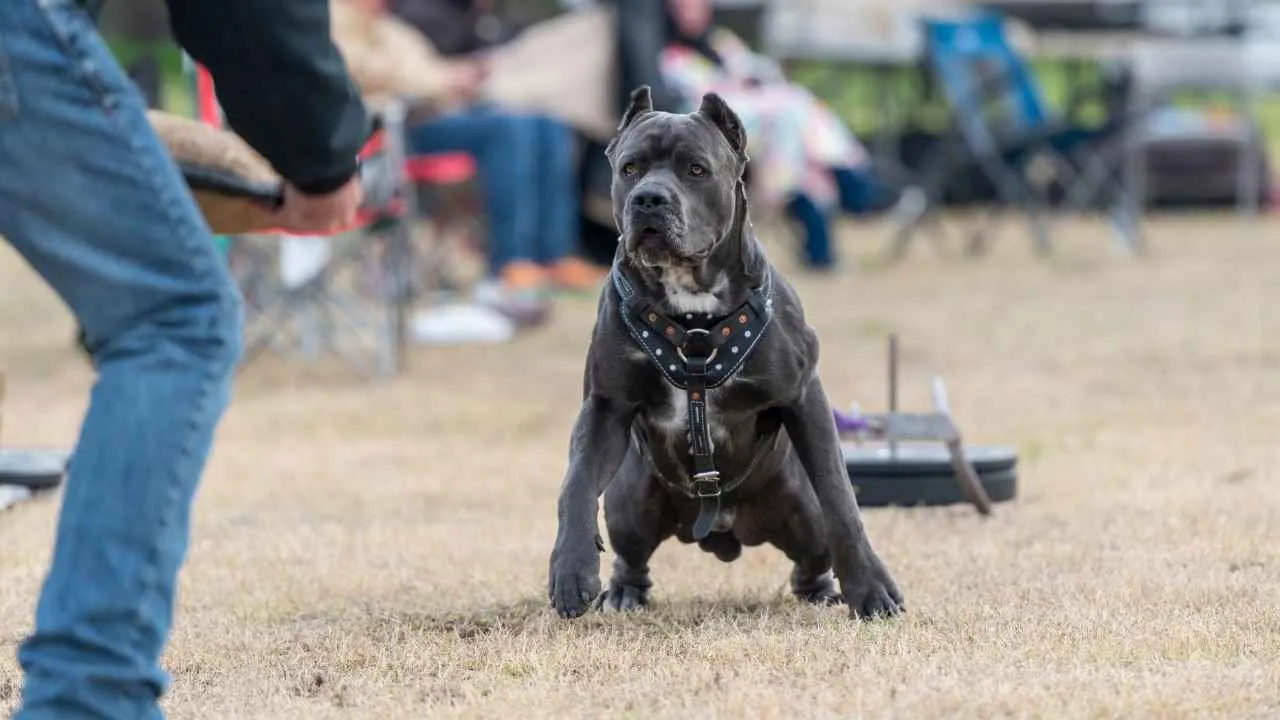
The Cane Corso is sometimes referred to as a “bodyguard dog” due to its long history as a property guardian. The name itself comes from the Latin cohors, meaning “protector” or “guardian of the courtyard.” Historically, this Italian breed served as a watchdog, farm dog, and even a hunter of large game.
Many breeders and enthusiasts describe the Cane Corso as both a devoted protector and a loyal family companion. While they can be affectionate and deeply bonded to their families, they are powerful, strong-willed dogs that require experienced handling. Without proper training and early socialization, they can become reactive or overly protective.
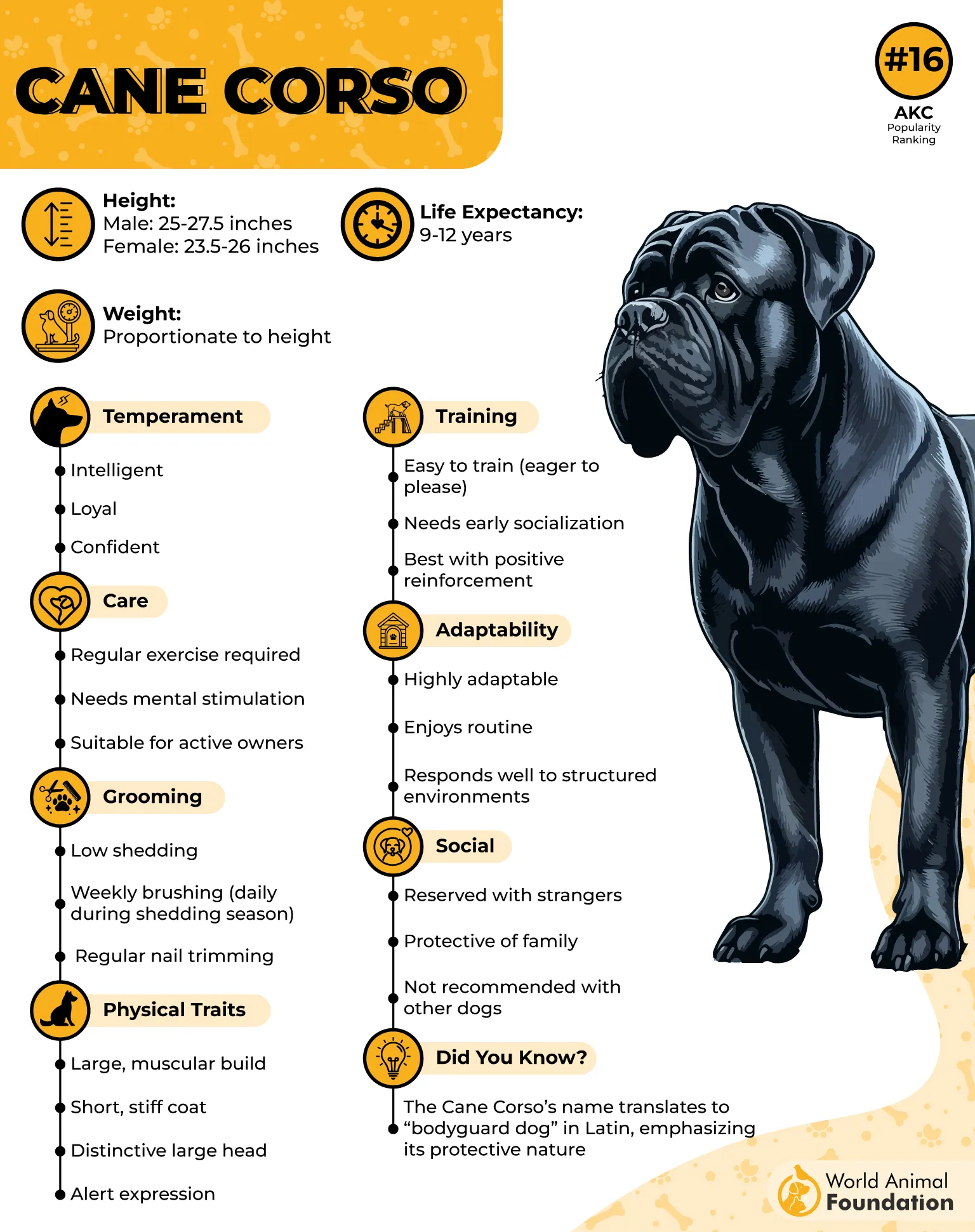
This large, muscular breed has appeared in historical Italian art and rural scenes, reflecting its long working heritage. They are loyal and confident but naturally wary of strangers, which makes early social exposure especially important.
They also have a moderate to high prey drive, so they should not be allowed off-leash in unsecured areas unless they are reliably trained. The Cane Corso has a short, dense coat that is relatively low-maintenance and easy to groom.
5. Belgian Malinois
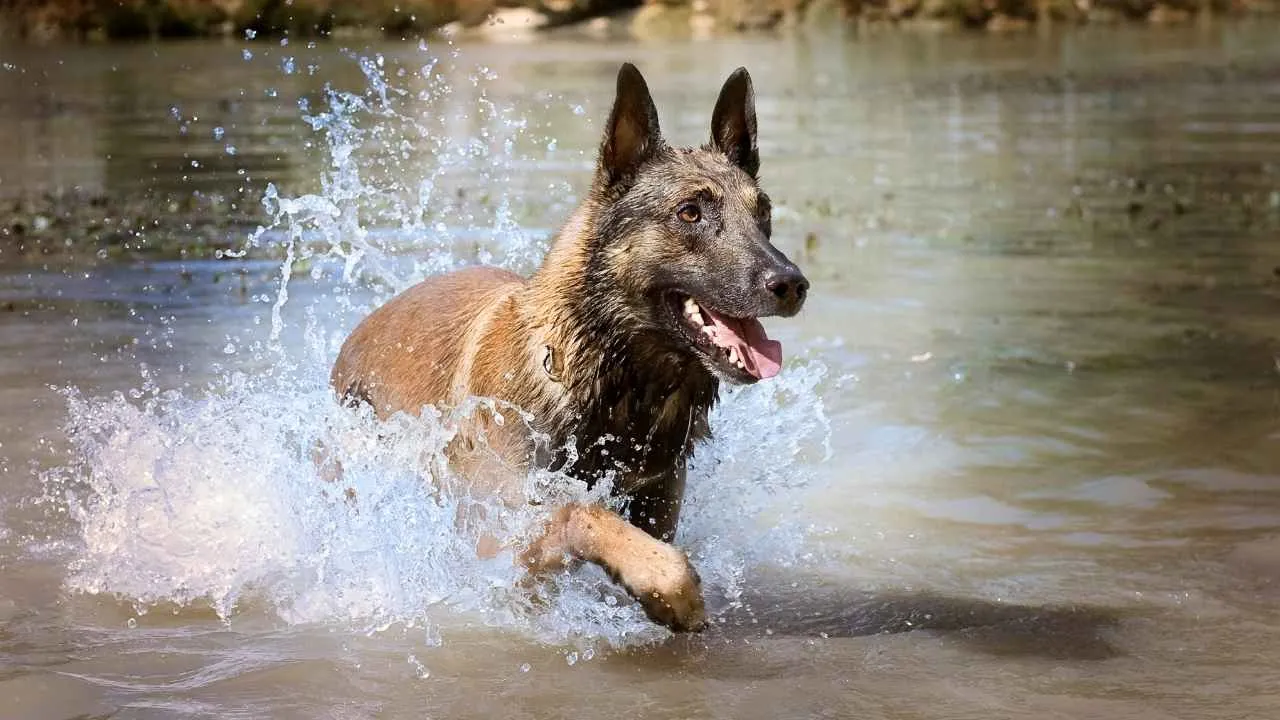
It would be impossible to discuss protection breeds without mentioning the Belgian Malinois. Originally bred for herding livestock in Belgium, this highly driven and intelligent dog has become one of the most respected working breeds in the world. Confident, athletic, and courageous, the Malinois thrives when placed in the right, experienced home.
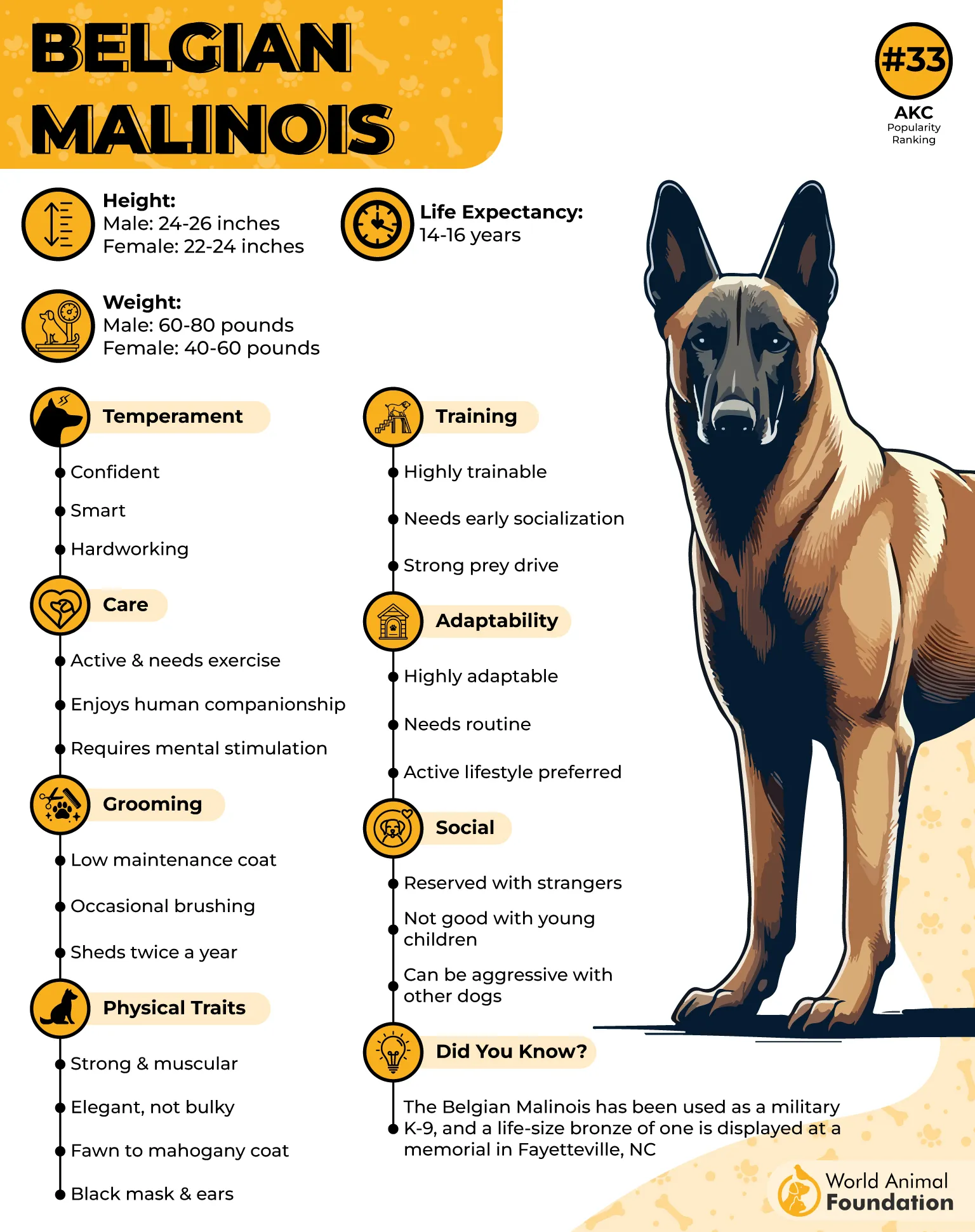
The Belgian Malinois is exceptionally loyal and forms strong bonds with its handler. Alert and highly perceptive, they are quick to notice unusual activity in their surroundings. However, they are not naturally relaxed, low-energy dogs; they are built for action and purpose.
Mals excel in activities such as hiking, tracking, obedience competitions, protection sports, and search-and-rescue work. Many also work in police and military roles due to their focus and trainability. They are tough and driven when working, yet responsive and devoted to their families when properly trained.
Chewy notes that this breed has very high exercise and mental stimulation requirements. A simple daily walk is not enough. They need structured training, challenging tasks, and vigorous physical activity to stay balanced and well-behaved. Without proper outlets, their energy and intelligence can quickly turn into frustration.
6. Giant Schnauzer
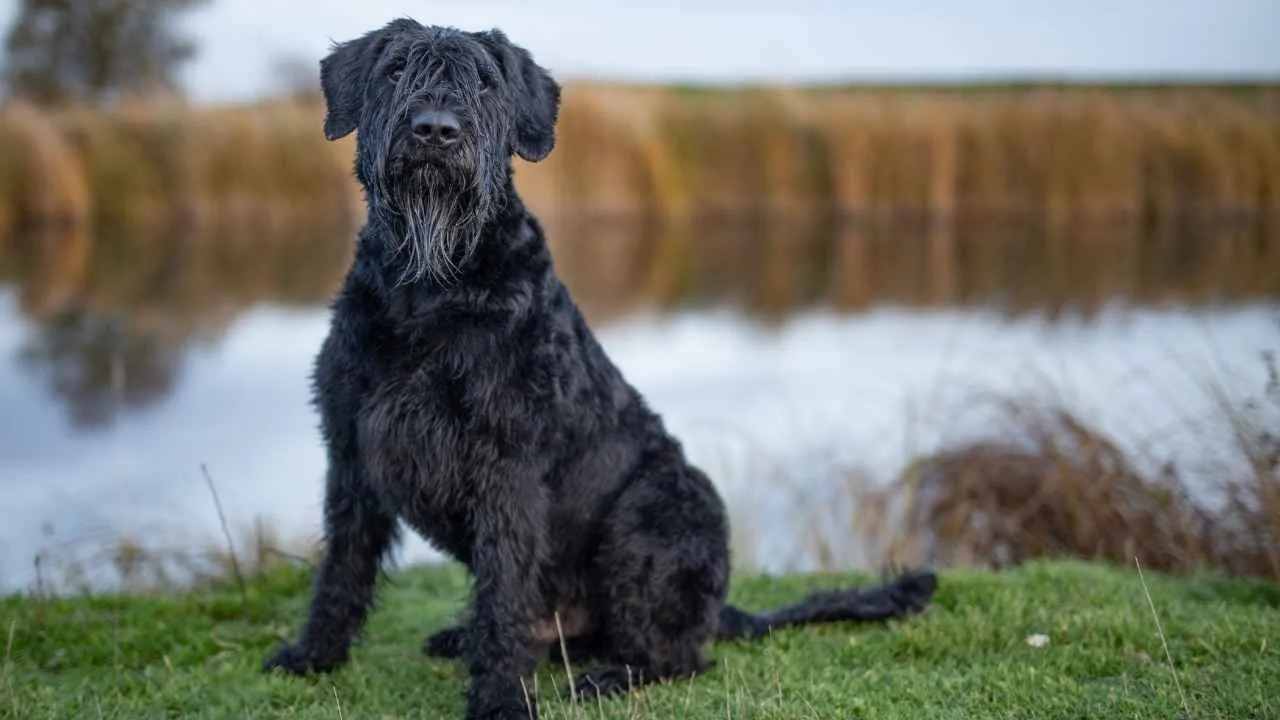
The Giant Schnauzer was originally bred in Germany as a farm and cattle-driving dog, later becoming a reliable guard dog for property and businesses. Their large size, strength, agility, and sharp awareness make them capable protectors in the right home.
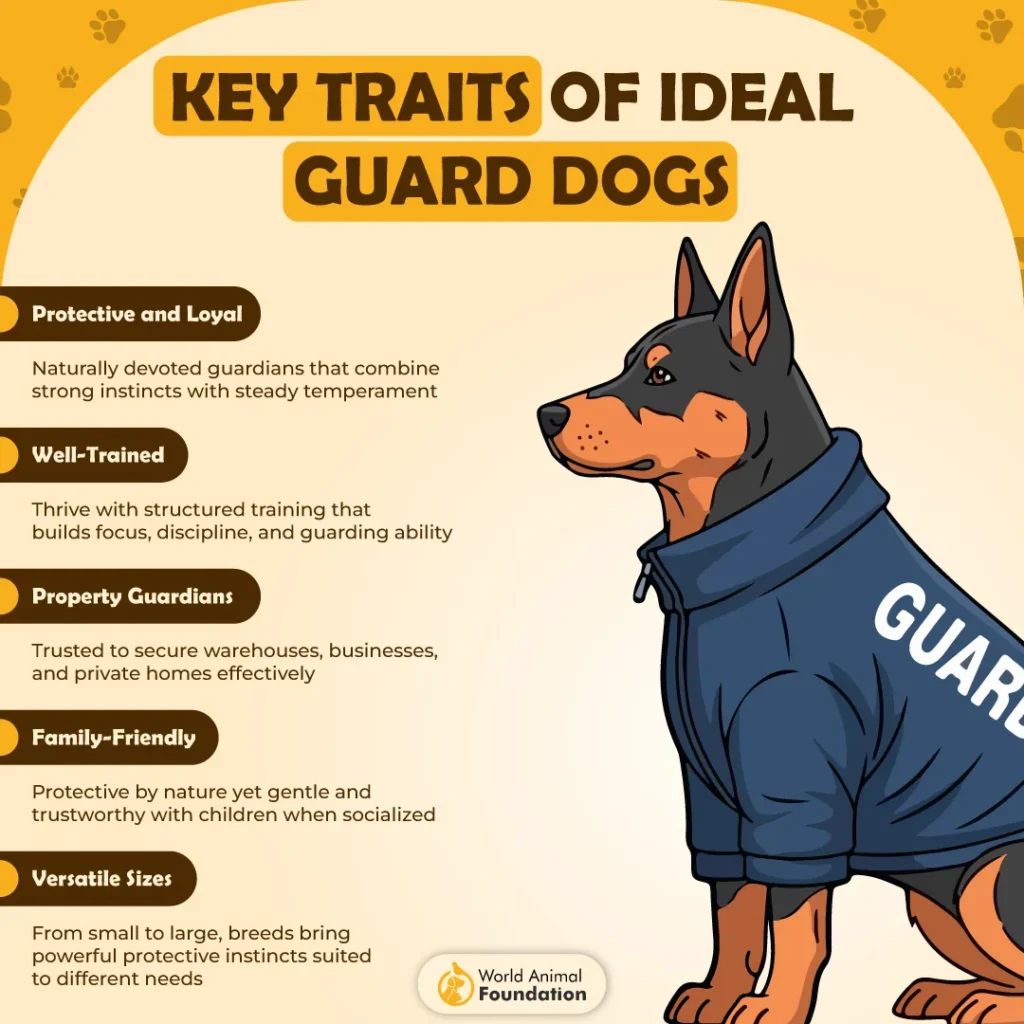
True to their name, Giant Schnauzers are powerful, robust dogs. They are high-energy and require plenty of daily exercise along with mental stimulation to stay balanced and well-behaved. Their intelligence and eager-to-please attitude make them highly trainable, especially with consistent, structured guidance.
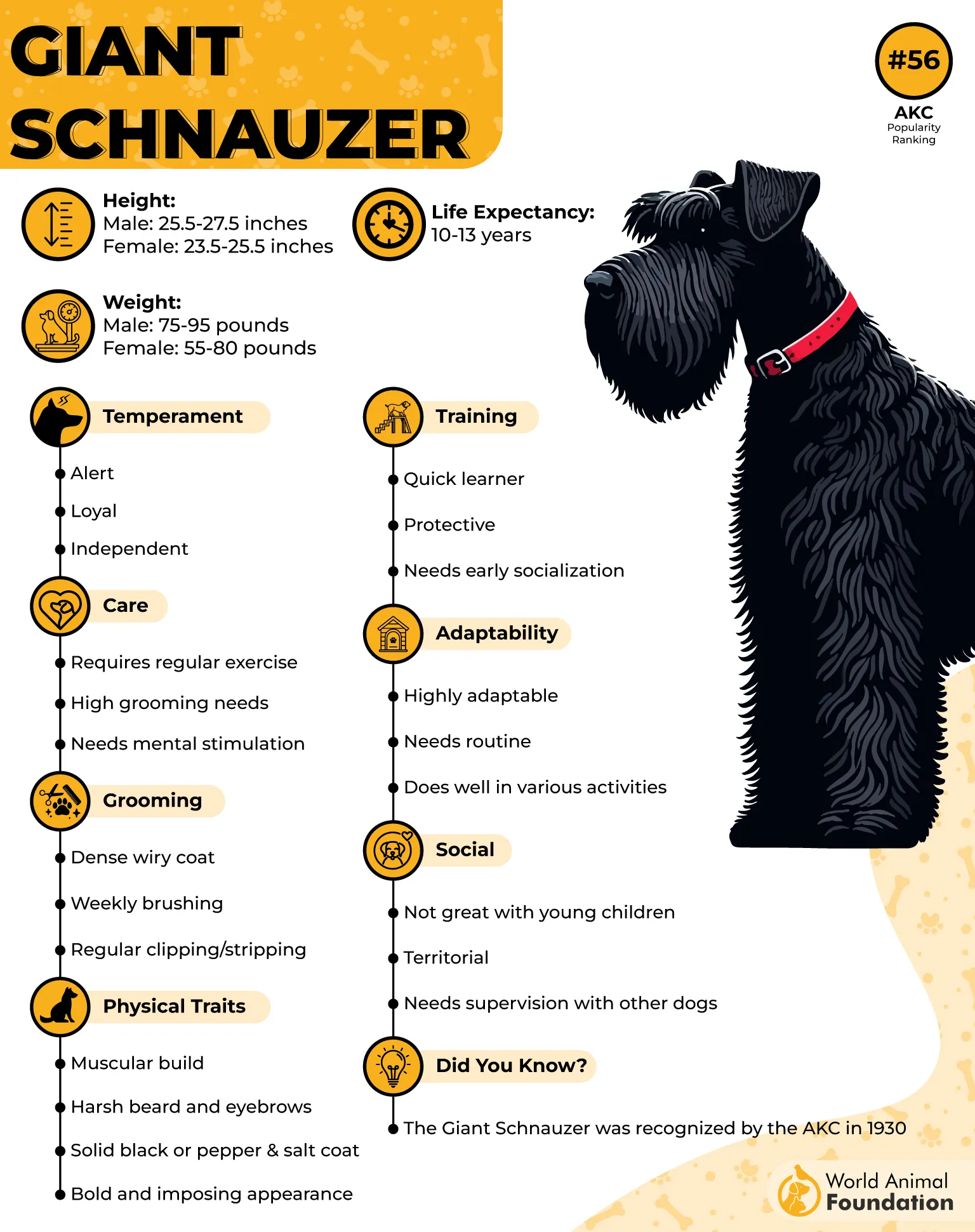
Giant Schnauzers are deeply loyal and naturally protective of their families. They can be wary of strangers and may bark to alert their owners, which makes early socialization important to ensure confident and controlled behavior.
They have a dense, wiry double coat that sheds minimally, but it is not maintenance-free. Regular brushing is necessary, and professional grooming or hand-stripping every few weeks helps maintain the coat’s texture and healthy appearance.
7. Bullmastiff
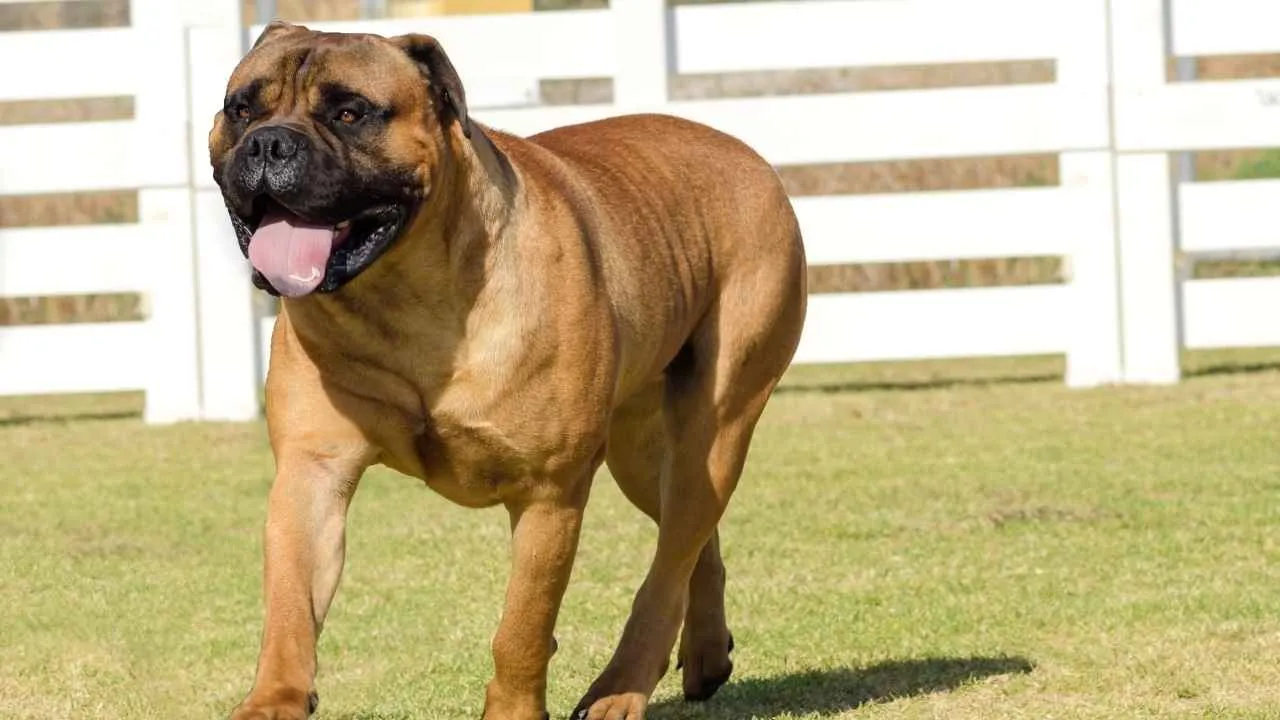
The Bullmastiff is a powerful and alert breed with a strong guarding history. In 19th-century England, they were nicknamed the “Gamekeeper’s Night Dog” because they assisted estate gamekeepers in protecting land from poachers and intruders.
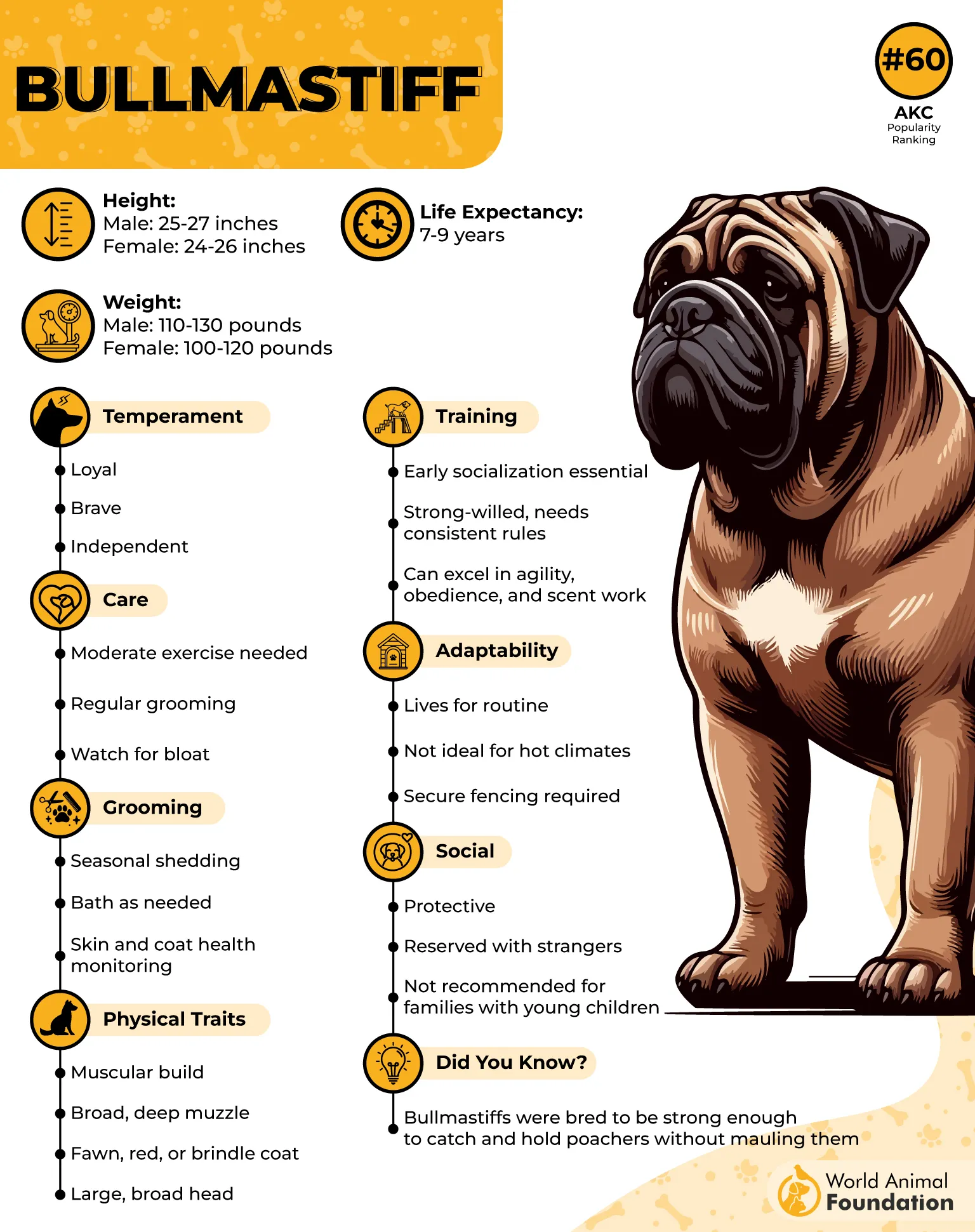
These working dogs were bred to track down and pin trespassers without excessive aggression. Their size, deep bark, and imposing presence alone are often enough to deter threats. Although they may look fierce and intimidating, Bullmastiffs are typically affectionate and devoted to their families.
They require moderate daily exercise, such as steady walks and interactive play, to stay healthy and mentally balanced. However, they are not endurance athletes and are not ideal companions for long-distance running, as they can tire more quickly than high-energy sporting breeds.
Bullmastiffs are intelligent but can also be independent and strong-willed. Consistent, patient training and early socialization are important. While they are generally confident rather than fearful, they are naturally protective and may bark or become alert when strangers approach.
Conclusion
A dog’s breed is only part of the equation; temperament and behavior ultimately depend on proper training, socialization, and responsible ownership. While the breeds mentioned above have strong guarding backgrounds, their protective abilities must be guided through structured training and consistent leadership.
When properly raised, these dogs can be deeply loyal and committed to protecting their families and property. However, protection should never rely on instinct alone. Meeting their exercise, mental stimulation, and grooming needs is essential for maintaining balanced behavior.
While raising a puppy allows you to shape behavior from an early age, adopting an adult dog is not necessarily a problem. Many adult dogs can transition successfully into new homes with patience and proper training.
Responsible ownership, not just breed choice, is what truly creates a reliable and well-mannered guardian.
