





Want a great dog without the high day-to-day costs and constant upkeep? The good news is that some breeds are easier on your schedule and your budget.
Bringing a dog into your life shouldn’t feel like a financial gamble. While every pup deserves quality care, some breeds are naturally easier on the wallet thanks to their manageable size, low grooming needs, and generally sturdy health.
The right choice can give you years of loyalty, laughter, and companionship—without stretching your monthly budget beyond comfort.
In this guide, we will walk through 10 low-cost dog breeds that are often easier to feed, groom, and care for in everyday life. If you are busy, choosing a dog that is typically lower maintenance can make everything smoother, from morning routines to travel plans.
You will also learn what “low cost” really means, what to watch for, and how to pick a pup that fits your home, time, and energy.
Top Low-Cost Dog Breeds: A Complete Guide
1. American Hairless Terrier
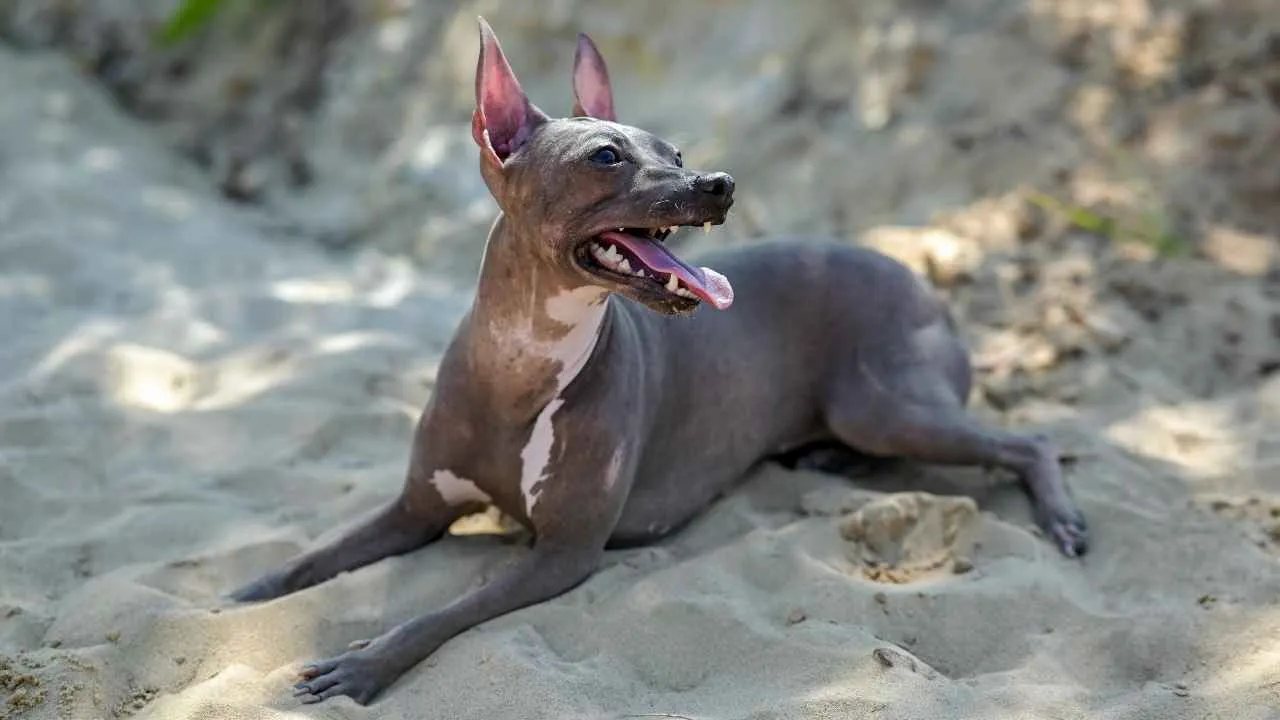
The American Hairless Terrier is the only hairless dog breed native to the U.S., and it started in the 1970s when a hairless puppy was born in a Rat Terrier litter.
This is a relatively new entry among breeds, but it already has a clear identity. For dog owners who like a tidy home, the no-hair look is a simple win.
According to PetMD, American Hairless Terriers stand about 12–16 inches and weigh roughly 12–28 pounds, which puts them in the small dog range for many homes.
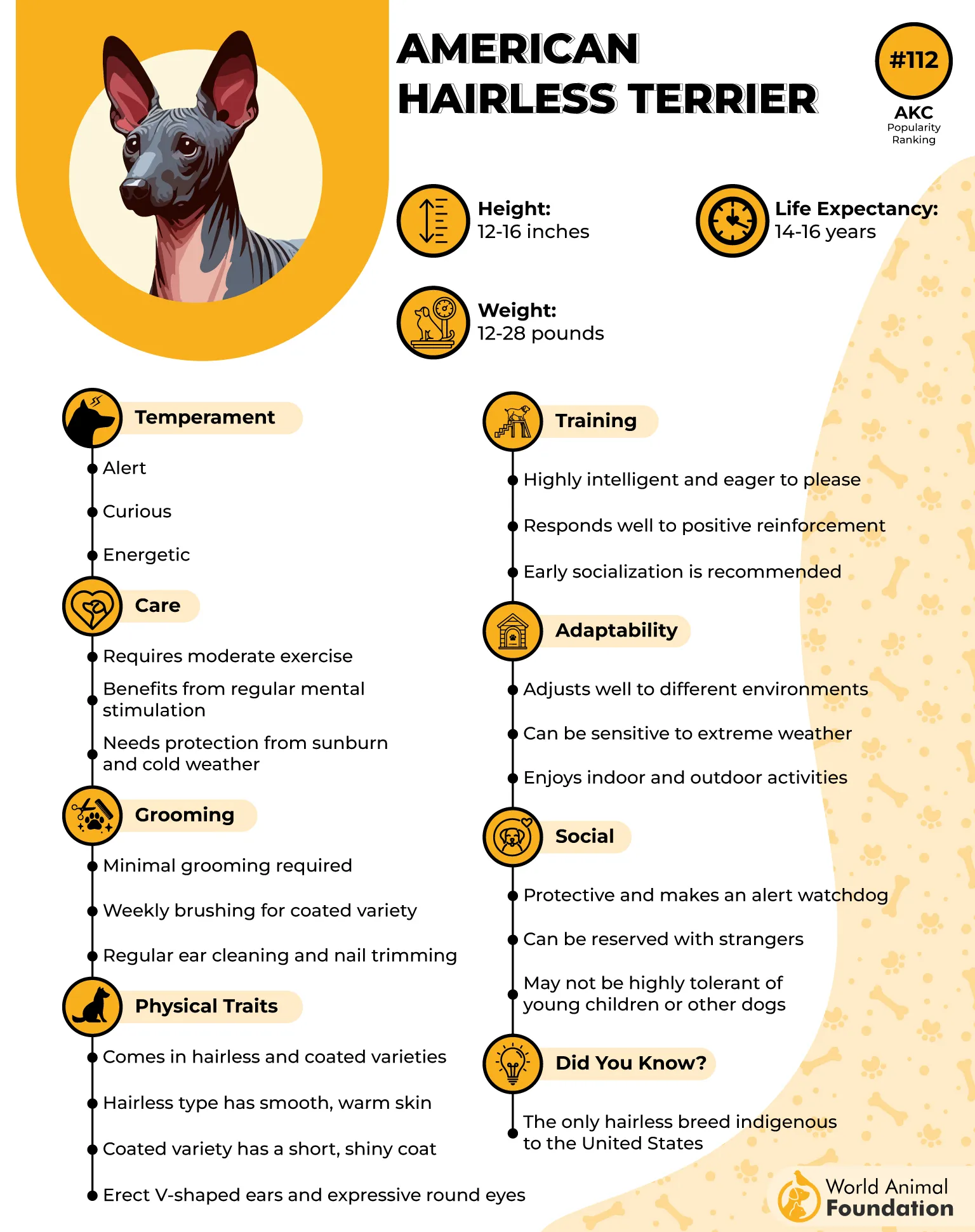
They are described as intelligent, high-energy, and playful, so exercise and training matter in daily life. If you enjoy spending time with a pup who wants to be involved, this one keeps things lively.
They may be a fit for some people with allergies, but “hypoallergenic” is not a guarantee. For owning a dog on a budget, it helps to plan for basic cost areas like food costs and routine grooming costs, even if the coat is not the main focus.
Price range is usually $2,000–$3,000 (USD) depending on lineage, health testing, and location. Adoption fees, when available, often fall around $200–$600.
Why This Breed Is a Good Fit
Minimal grooming can keep grooming costs simpler than those of many coated dogs.
A small size means food costs may feel easier to manage for many dog owners.
For first-time dog owners who like playful dogs, proper training can make life smoother early on.
2. American Foxhound

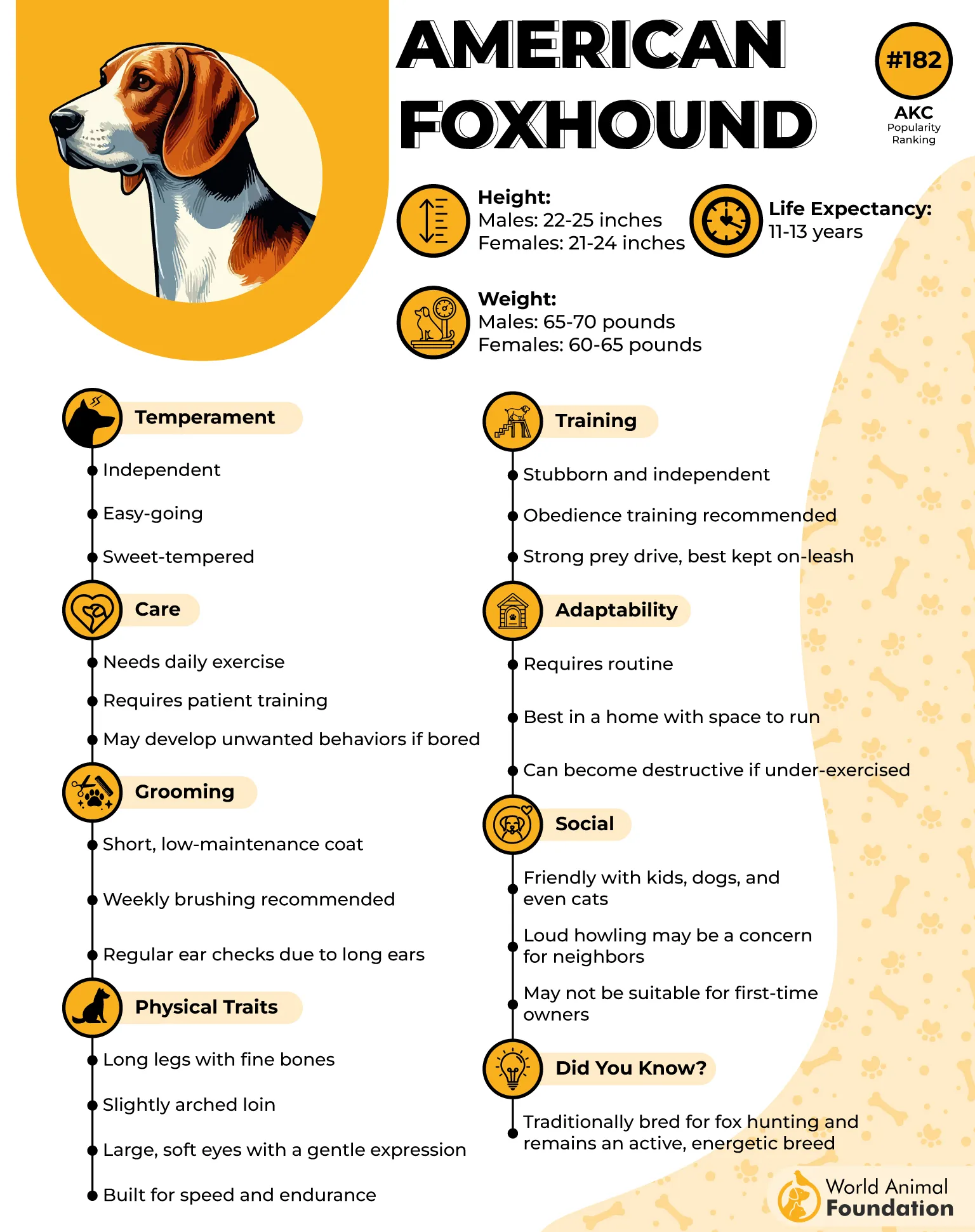
The American Foxhound was originally bred to lead Colonial-era foxhunts, so this breed has a working past and a steady purpose.
It is described as sweet and mild-mannered, with a determined side when doing what it was bred to do. Among popular breeds with deep history, it has a story tied to early America.
George Washington is connected to the breed’s development as an expert breeder who crossed dogs from England, France, and the U.S. The result became the official state dog of Virginia.
That background is part of what draws many dog owners to this classic name in the world of breeds. As per WebMD, American Foxhounds have big, soft eyes that give them a gentle look. Their eyes are set widely apart and are brown or hazel.
The coat is described as medium and tough, built for the outdoors, and it can come in any color, often in black, tan, and white. Long ears and a gently curved tail with a slight brush finish the look.
Price range is often $1,000–$2,000 (USD), influenced by breeder reputation and bloodline. Adoption fees for an American Foxhound commonly sit around $150–$600.
Why This Breed Is a Good Fit
If you like large breeds with an outdoorsy vibe, this one has that built-in heritage.
The coat description suggests a practical approach to grooming, which can help with grooming costs.
For dog ownership planning, consider purchase price and veterinary care as part of the overall cost picture.
3. Italian Greyhound
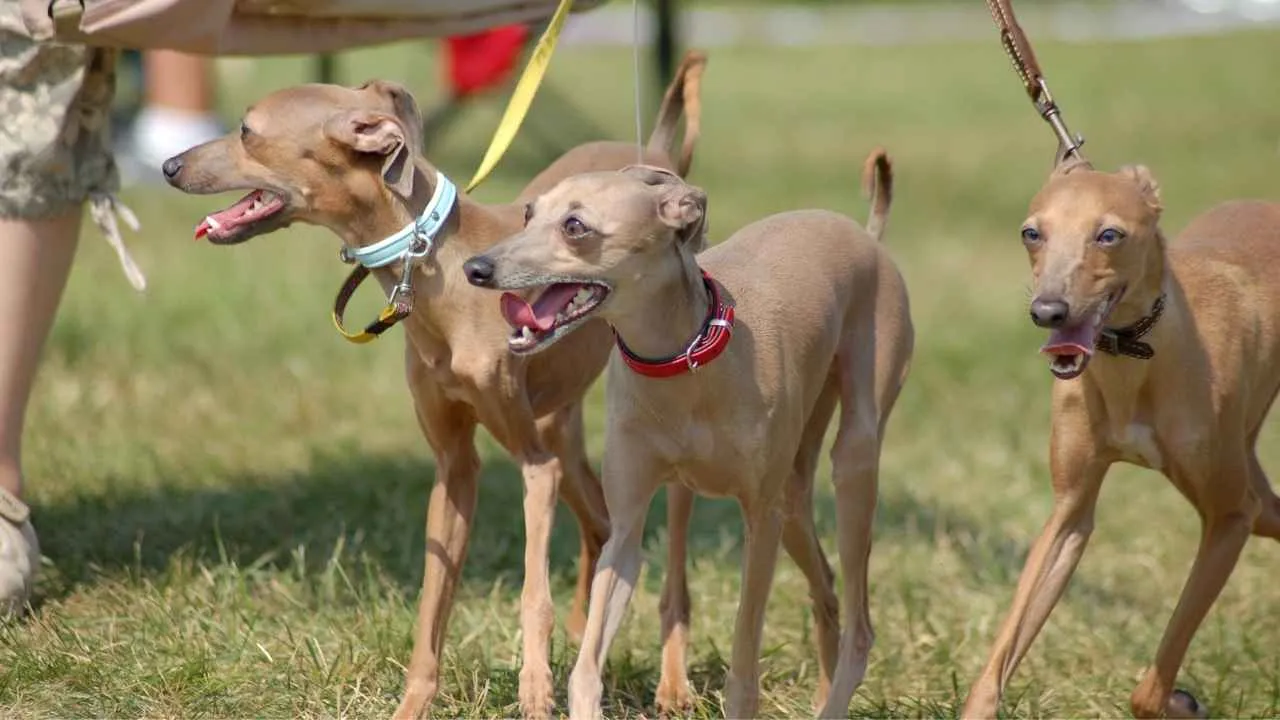
The Italian Greyhound is a true Greyhound in miniature, known for sleek lines, fine-boned legs, and a very affectionate style.
These dogs are described as alert and playful, with a strong preference for being close to their people. They may look like decorative couch dogs, but they have a serious instinct for pursuit.
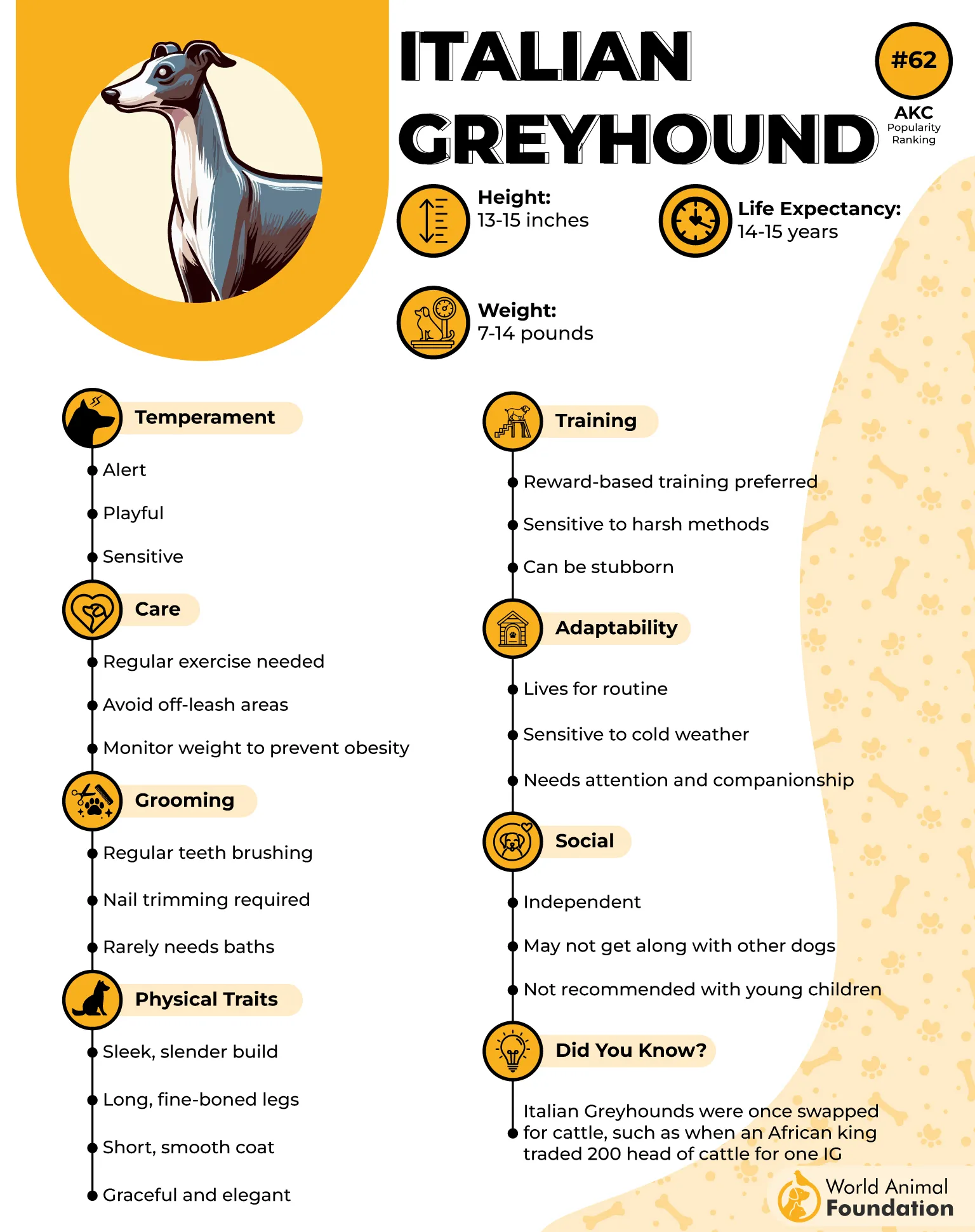
These dogs fit the small dogs category in many homes. They were bred for centuries to be companions and jesters, and they do not love being ignored. For many dog owners, that means you get a pup who wants to be part of the action, not off in a corner.
They are described as a short-coat, low-fat breed that needs extra care in cold weather. That kind of care can shape cost planning in day-to-day life, along with food and basic veterinary care needs. They can bolt after quick-moving prey, so training and safe handling routines matter.
Price range commonly lands around $2,500–$3,000 (USD), and can rise with champion lines and strong health screening. Adoption for an Italian Greyhound is less common, but fees are often $250–$700.
Why This Breed Is a Good Fit
Short coats can support minimal grooming and help keep grooming costs predictable.
If apartment living includes lots of couch time, these dogs often enjoy being close and cozy.
For low-maintenance goals, focus on regular exercise habits and steady training without overcomplicating it.
4. Pembroke Welsh Corgi
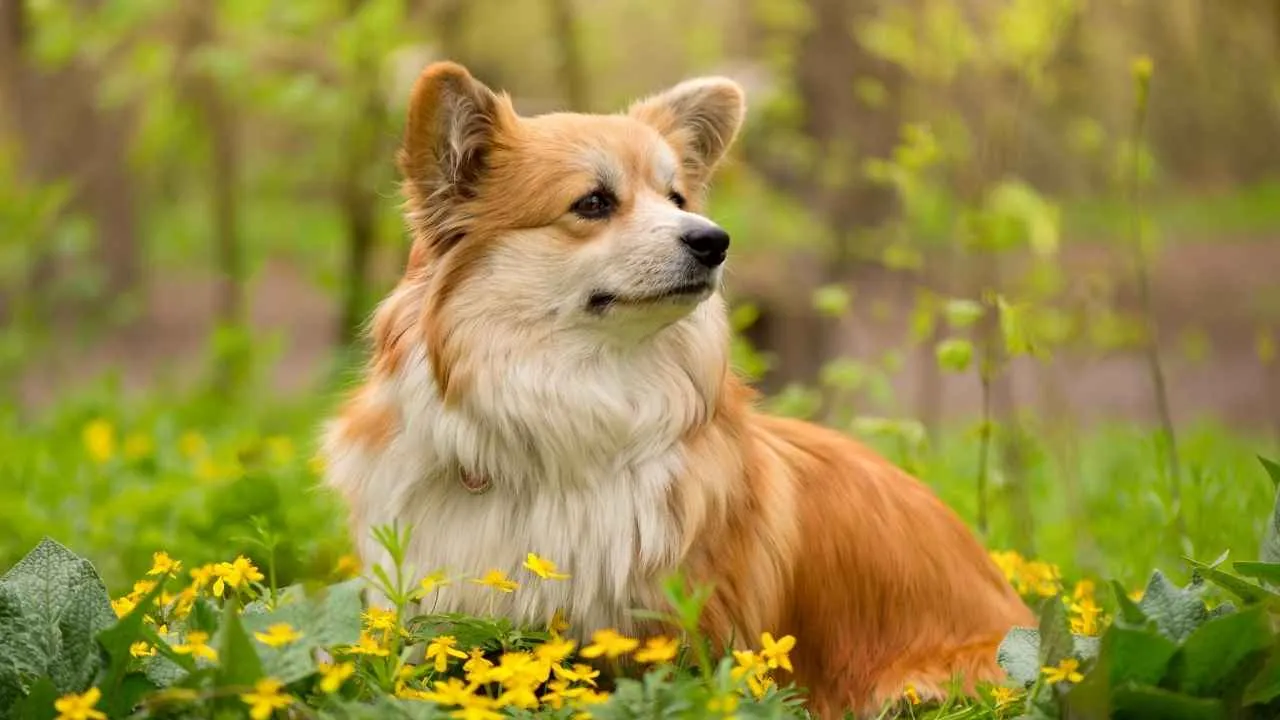
The Pembroke Welsh Corgi is one of the most popular dog breeds in the world, and it was initially bred to herd cattle and sheep in the U.K.
According to Britannica, Pembroke Welsh Corgi popularity also comes with famous fans, including Queen Elizabeth II, who had Corgis from childhood and received her first in 1933. For many dog owners, that mix of history and charm is hard to resist.
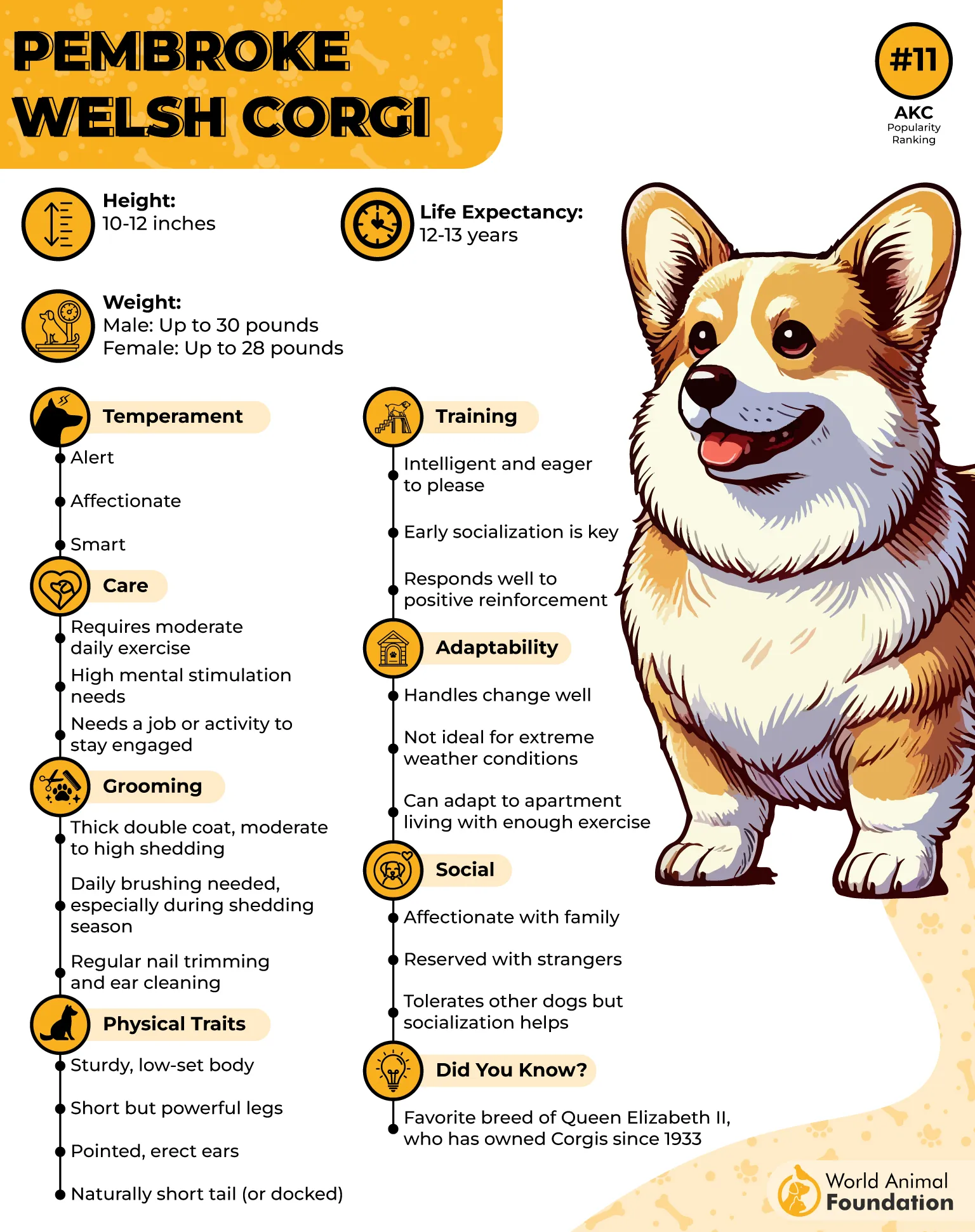
This is a short, sturdy, muscular dog breed with a medium stature. It is often just called “the Corgi,” but the Pembroke is one of two Corgi types. That recognizable build is part of why it shows up so often among popular breeds.
A key detail is the tail, which is often docked in Pembrokes, though the American Veterinary Medical Association opposes the practice, and it remains controversial.
When you are thinking about owning a dog, it helps to consider purchase price, grooming costs, and the kind of training you want to commit to early.
Price range is typically $1,200–$3,000 (USD), with demand and pedigree driving the higher end. Adoption fees for a Pembroke Welsh Corgi are often $200–$600 when found.
Why This Breed Is a Good Fit
For first-time dog owners, proper training can help a busy home run more smoothly.
If you like popular dog breeds, this one has a long-standing place in many families’ lives
Budget planning is easier when you map food costs and veterinary care alongside the purchase price.
5. Miniature Pinscher

The Miniature Pinscher is slender and graceful, yet strong, and is known for a distinctive high-stepping hackney gait. These dogs have a bold personality and a lot of animation. For dog owners who like a pet with a nonstop attitude, this breed delivers.
The coat is short and smooth, and the breed comes in clear red, stag red, and black and tan. Details like tail docking and ear cropping or leaving ears uncropped are part of the breed’s typical look.
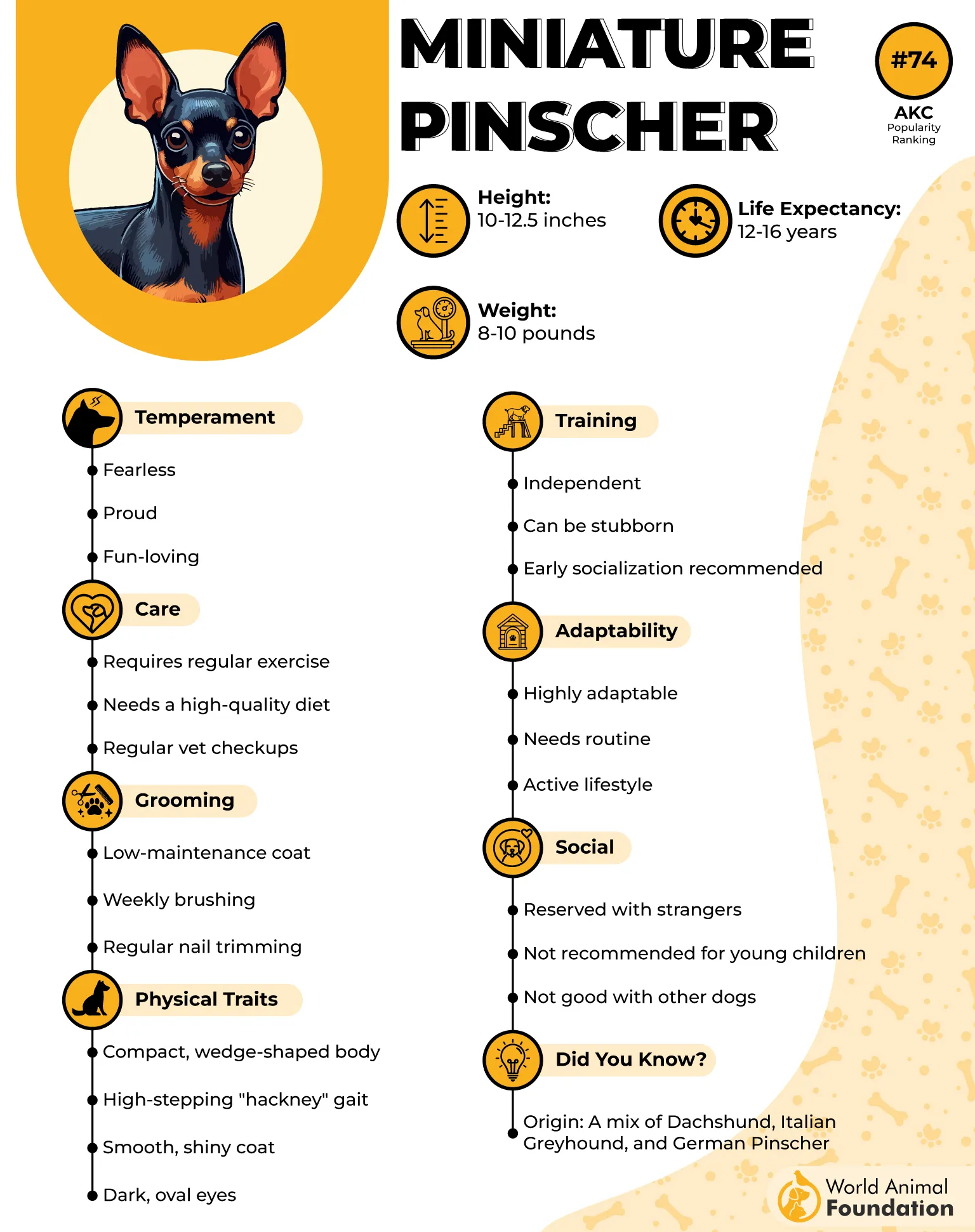
These dogs are described as perpetual-motion machines, curious and impetuous, with a reputation as the “king of toys.”
They can be scrappy with other dogs and may ignore commands, which means training matters for everyday life. When planning costs, keep purchase price, food costs, and possible vet costs in mind.
Price range is usually $1,000–$3,000 (USD) based on genetics, care standards, and region. Adoption fees for a Miniature Pinscher are commonly $150–$500.
Why This Breed Is a Good Fit
Short coats can support minimal grooming, helping with grooming costs in many homes.
If you want lively dogs in apartment living, this small size means space can feel manageable.
For low-maintenance planning, commit to regular walks and consistent training to avoid chaos.
6. Jack Russell Terrier

The Russell Terrier is upbeat, lively, inquisitive, and friendly, developed for use in foxhunts by England’s “Sporting Parson.” It looks like a plush toy, but it is described as an eager, tireless working terrier. For dog owners who want fun-packed into a small frame, this is a high-spirited option.
Their dark almond-shaped eyes and V-shaped ears create a keen, intelligent expression. The coat comes in three types, and it is mostly white with markings that may be tan, black, or both.
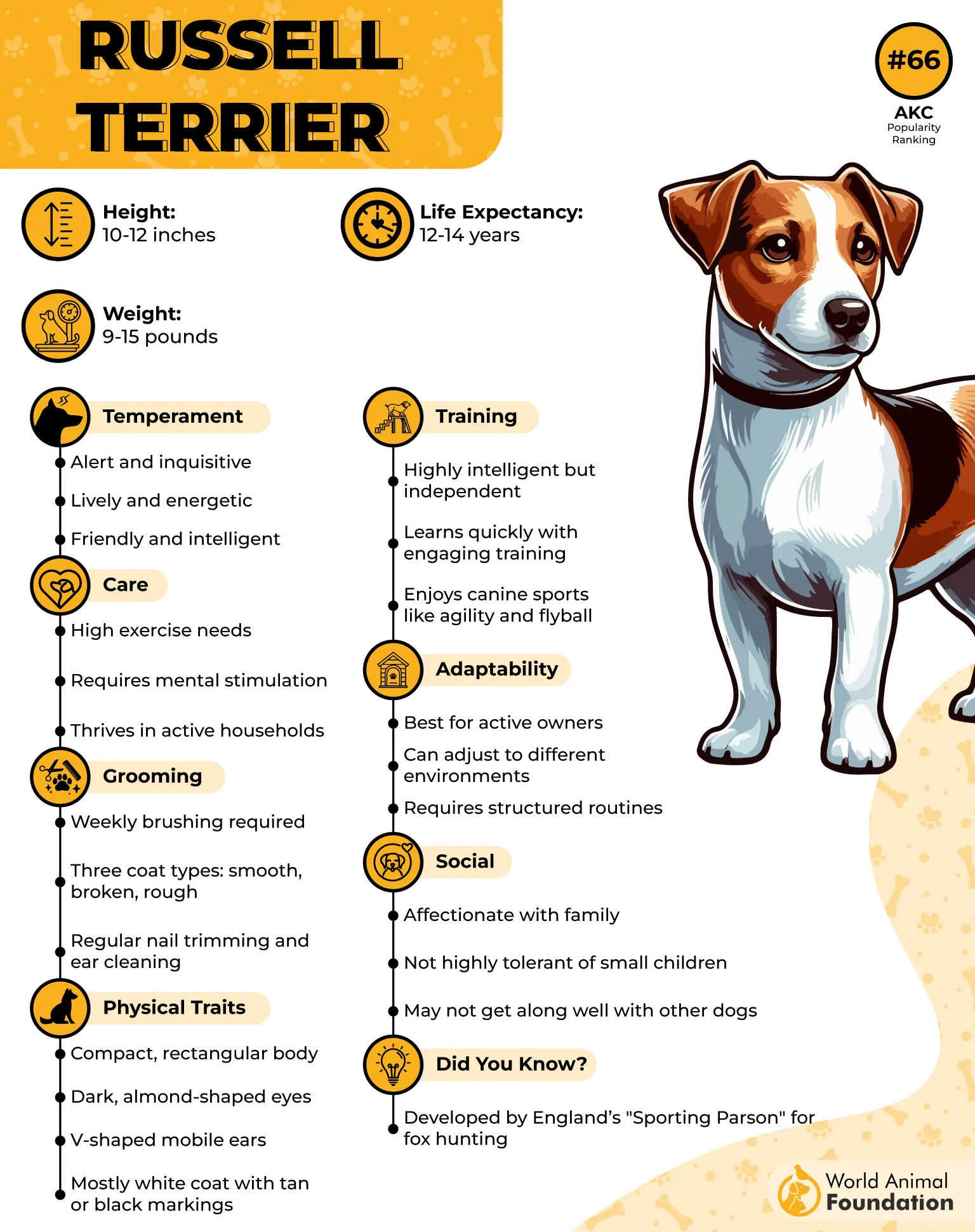
Russells move with an effortless gait and are known for innate confidence. For owning a dog in the real world, that confidence needs guidance through training and structure. When thinking about cost, include purchase price, food costs, and grooming, along with potential vet bills over time.
Price range is often $800–$2,000 (USD), sometimes higher for strong working or sport lines. Adoption fees for a Jack Russell Terrier usually run $150–$500.
Why This Breed Is a Good Fit
If you like dogs with a confident vibe, this breed brings energy without being complicated to describe.
A mostly short look can support minimal grooming, which may help manage grooming costs.
For low-maintenance dog breeds, planning regular exercise and clear training routines helps keep life calmer.
7. Australian Terrier

The Australian Terrier is short in stature but big on personality, created in Australia in the 1800s by cross-breeding several small terrier breeds from England.
It was developed to help ranchers and farmers keep property free of rodents and other predators. That background explains the spunky attitude many dog owners enjoy.
This breed received recognition from the American Kennel Club in 1960. They are described as adaptable as long as their needs for companionship, training, and exercise are met.
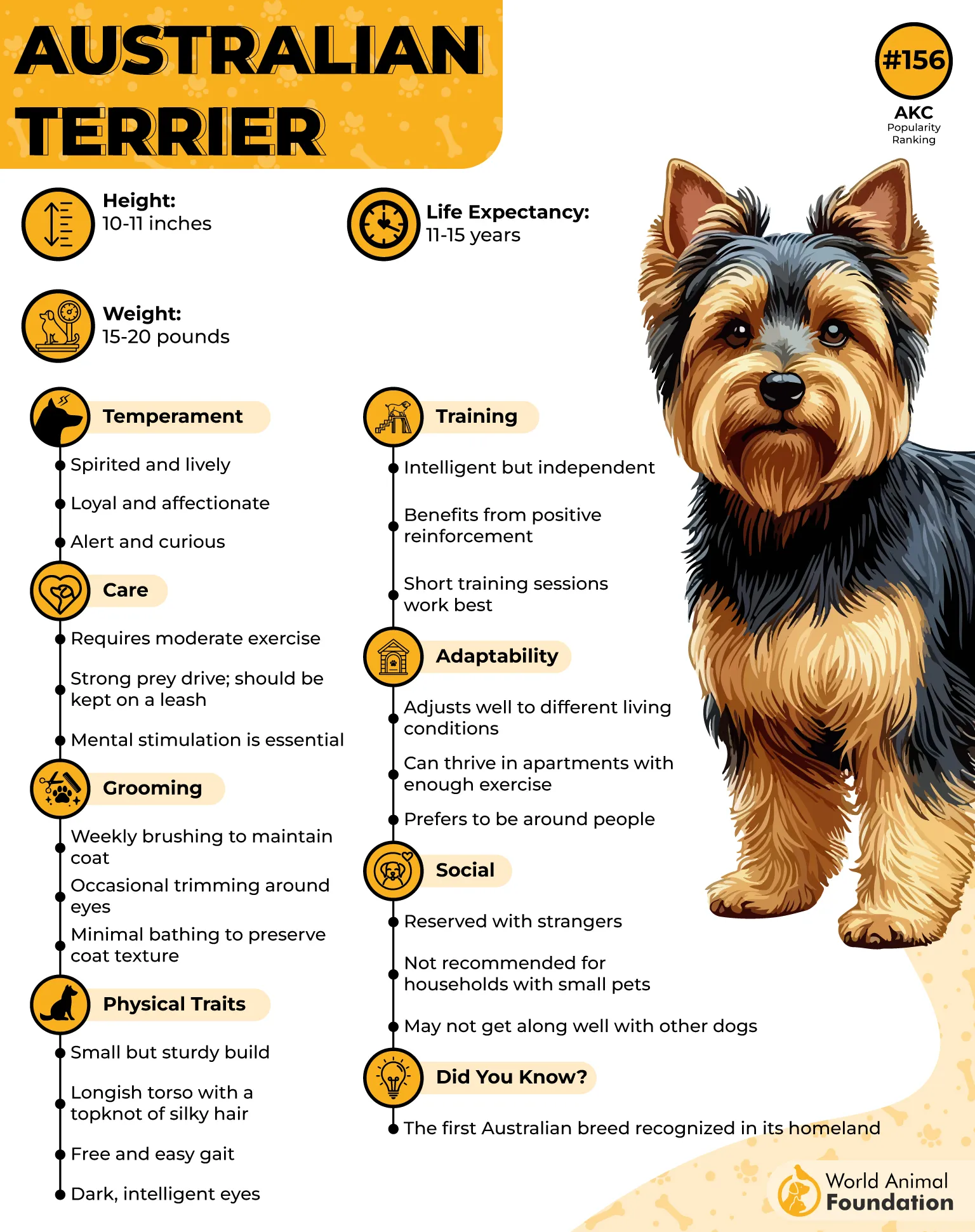
Because they were bred to hunt rodents, they are not content to sit on the sofa all day. The source also notes they are well-suited to apartment living if given sufficient exercise and mental stimulation.
For cost planning, consider purchase price, food costs, and grooming costs, plus veterinary care for routine needs.
Price range commonly sits around $1,000–$2,300 (USD), and scarcity can push prices up in some areas. Adoption fees for an Australian Terrier are often $200–$600.
Why This Breed Is a Good Fit
For dog owners with an active lifestyle, moderate exercise and play can match this upbeat nature.
Small size means daily food costs may feel easier to plan alongside other cost needs.
If you are adopting through rescue organizations, you may face adoption fees instead of a high purchase price.
8. English Setter
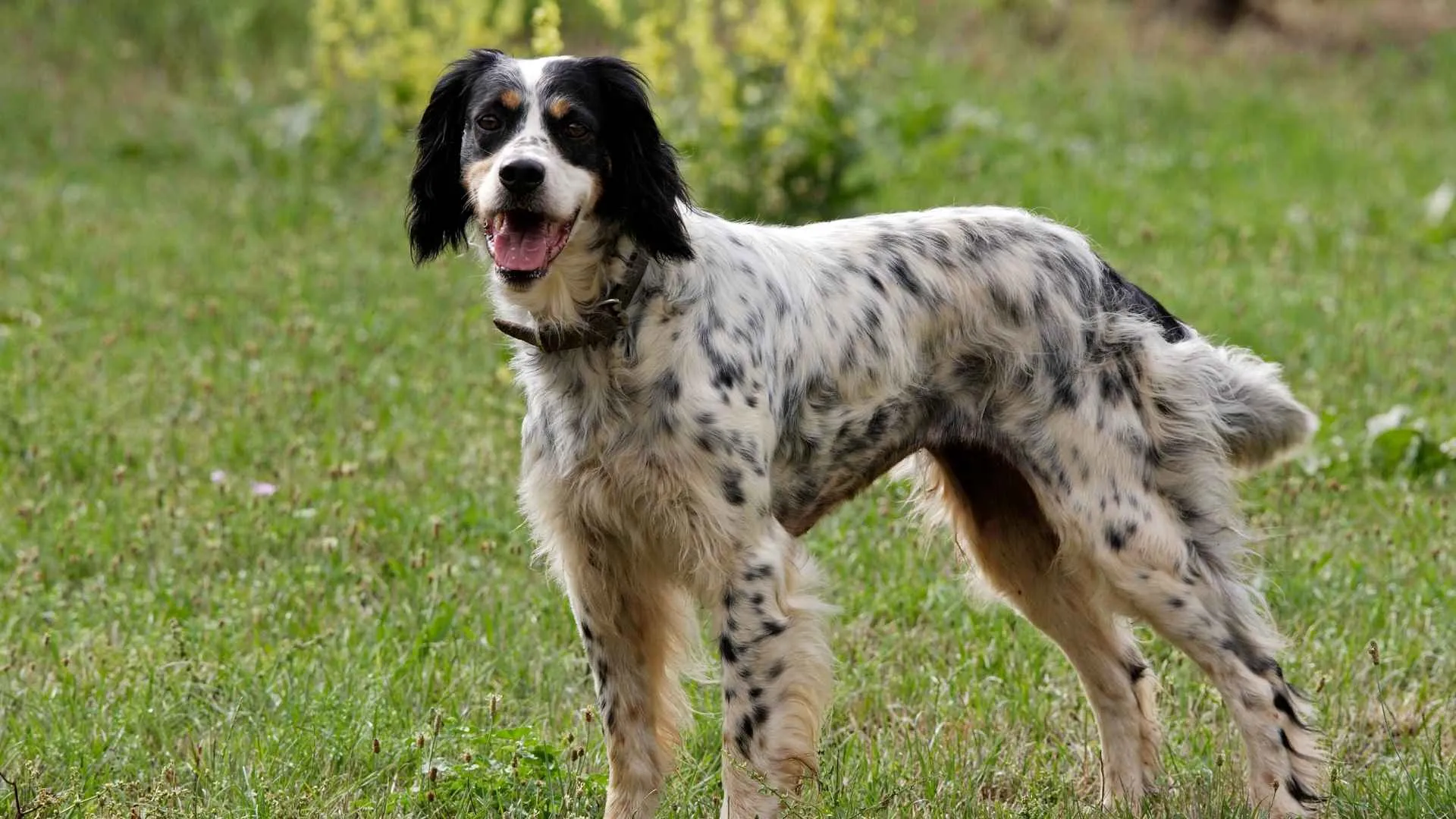
The English Setter is a medium-sized sporting dog of sweet temper and show-stopping good looks. It is one of the AKC’s four British setters, created to work on the different terrains of England, Ireland, and Scotland. Many dog owners love the mix of elegance and solid build described here.
The word “belton” is used for the speckled coat patterns, with colors like liver, lemon, and orange. A long oval-shaped head, dark brown eyes, and a soft expression help define the look.
The breed is described as merry, game, and boisterous at play, and it gets on well with other dogs and people.
With a showy coat, grooming becomes a practical part of owning a dog, and grooming costs can include regular brushing and sometimes professional grooming. Plan for food, basic veterinary care, and long-term cost needs.
Price range is often $600–$1,500 (USD), while high-end lines can reach $2,500+. Adoption fees for an English Setter commonly fall around $200–$600.
Why This Breed Is a Good Fit
If you enjoy grooming as part of bonding, the coat gives you something to do beyond quick routines.
For dog owners who share space with other pets, the friendly description can feel reassuring.
Pet insurance can help some families handle vet costs when planning long-term dog ownership.
9. Chihuahua

The Chihuahua is the smallest recognized dog breed and is named for the Mexican state of Chihuahua, where it was noted in the mid-1800s.
The breed is thought to derive from the Techichi, a small mute dog kept by the Toltec people long ago. For many dog owners, the history is as interesting as the tiny size.
This is an alert, saucy-looking companion that is sturdier than it may seem. It has a rounded head, large erect ears, prominent eyes, and a compact body. The coat can be smooth and glossy or long and soft, and it varies in color.
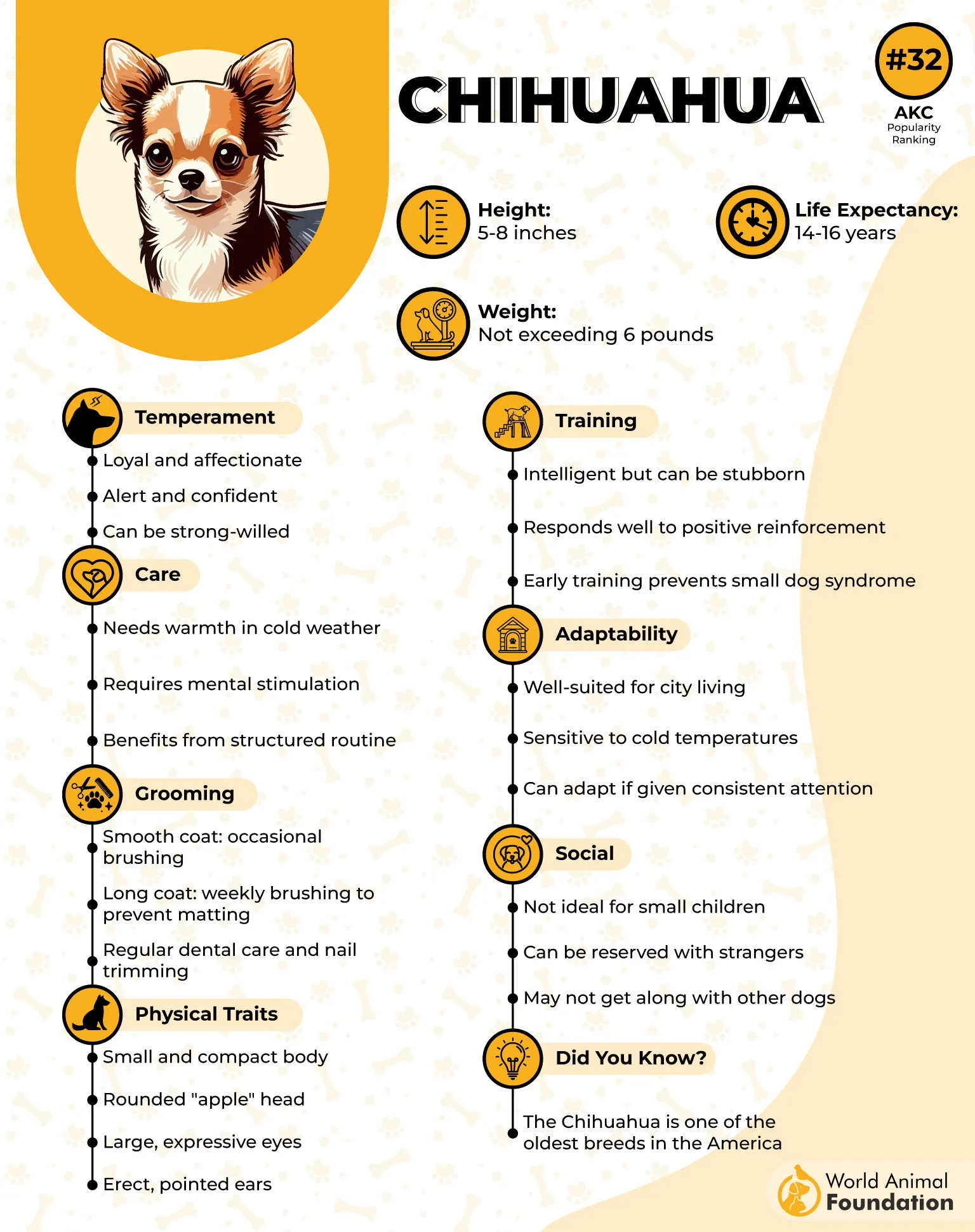
Chihuahuas are valued as spirited companions and are especially suited to apartment living. The American Kennel Club recognized the Chihuahua in 1904.
In terms of cost, small dogs can still have real needs, so plan for food, grooming, and veterinary care, plus purchase price if you go through reputable breeders rather than backyard breeders.
Price range can be wide at $800–$3,500 (USD), especially when size claims, and trend demand raise pricing. Adoption fees for a Chihuahua are often $50–$300.
Why This Breed Is a Good Fit
Small size means food costs can feel simpler to manage for many dog owners.
If you want low-maintenance routines, minimal grooming may work well for smooth-coated dogs.
For first-time dog owners, avoid puppy mills and look for reputable breeders to protect your budget and peace of mind.
10. Beagle

Beagles are described as happy-go-lucky, funny, and cute, with a pleading expression that wins people over. They were bred to hunt in packs, so they enjoy company and are generally easygoing. For many dog owners, that social side makes everyday life feel more cheerful.
Their face is a standout, with big brown or hazel eyes and long houndy ears set low on a broad head. Beagles are described as loving, lovable, happy, and companionable, and they are often listed among the most popular hound dogs with American pet owners.
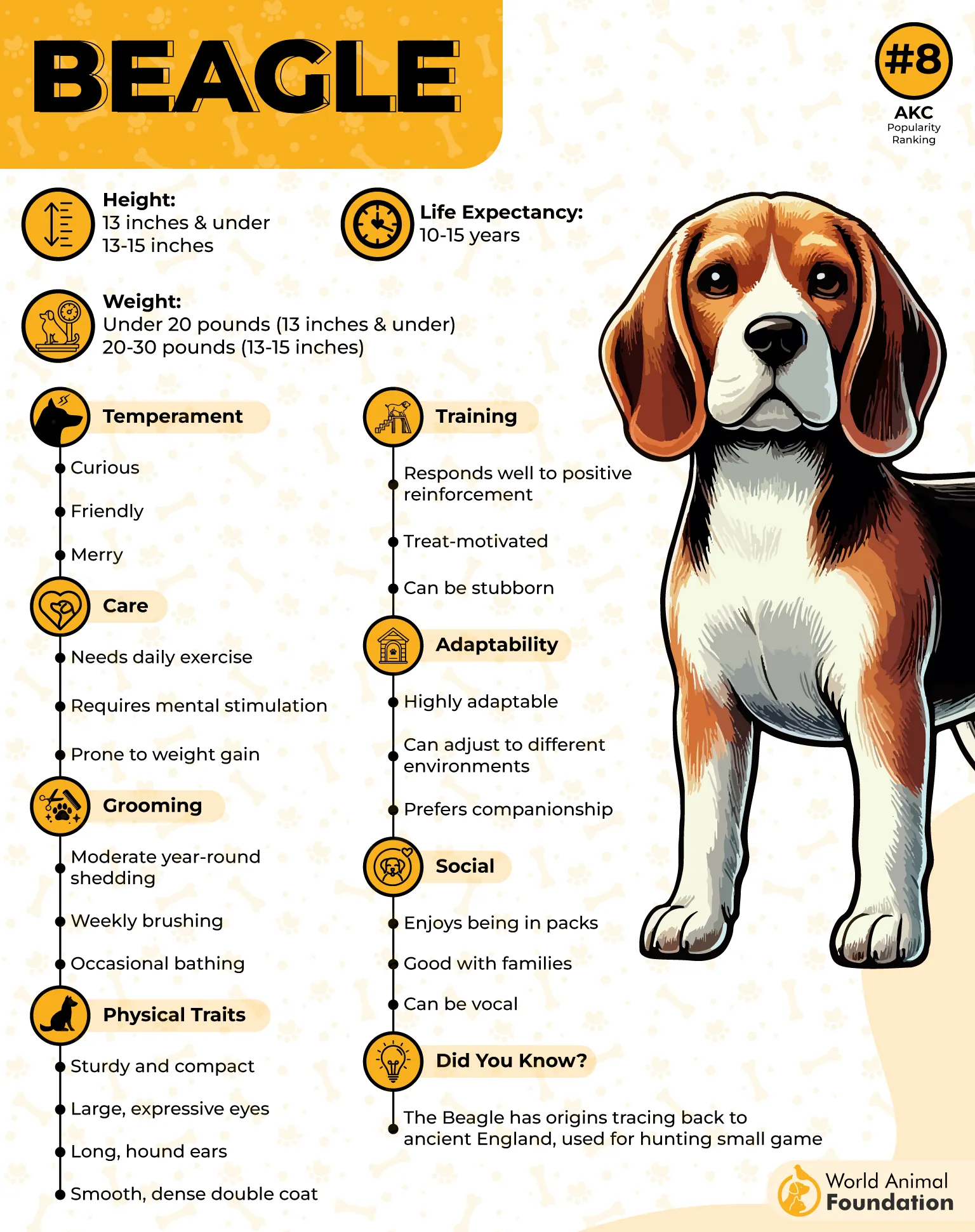
These dogs are also curious, clever, and energetic, and they require plenty of playtime. For cost planning, keep purchase price, food costs, grooming, and possible vet costs in view. If you choose to adopt, remember that the initial cost may come in the form of an adoption fee instead of a breeder’s price.
Price range is commonly $500–$2,000 (USD), depending on lineage and where you’re buying. Adoption fees for a Beagle often sit around $150–$500.
Why This Breed Is a Good Fit
Beagles can suit dog owners who want a friendly life companion with a playful streak.
Regular exercise and playtime can support low-maintenance goals by preventing boredom trouble.
If you are adopting from shelters, adoption fees may help you find low-cost dog breeds without chasing the highest purchase price.
Conclusion
Owning a dog on a budget is not about picking the “perfect” pup. It is about choosing a match you can care for with confidence, year after year. The cheapest dog breeds can still come with real responsibilities, so plan for food costs, grooming costs, and vet costs from the start.
If you want to lower surprises, consider adopting through rescue organizations, and ask clear questions about health issues and routine needs. If you prefer purebred dogs, avoid puppy mills and backyard breeders, and look for reputable breeders who focus on healthy puppies.
No matter which breeds you love, good habits and proper training make life easier for both you and your dog.
