




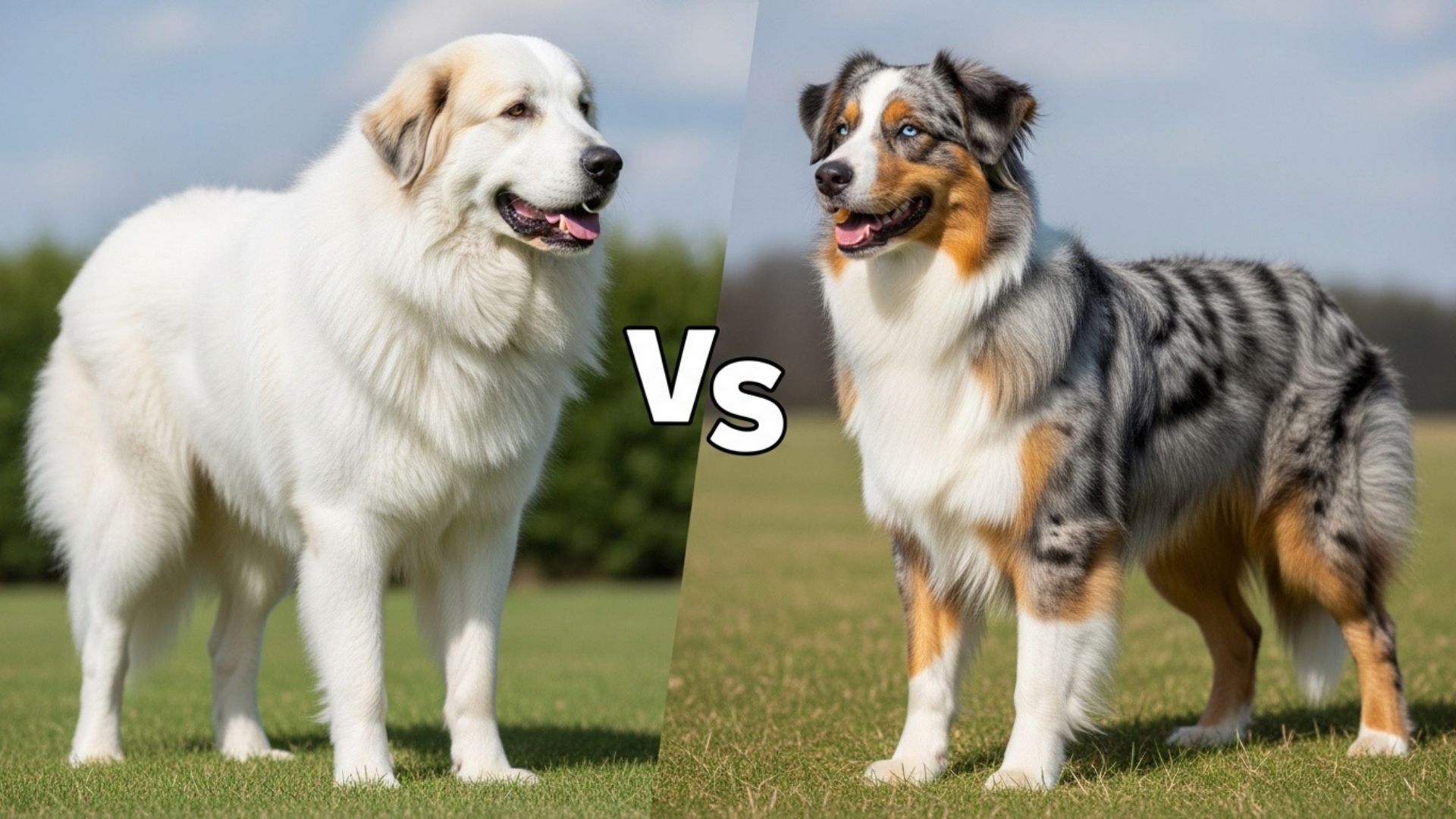
The Great Pyrenees and Australian shepherd represent two distinct approaches to canine development, each influenced by geography, history, and working roles.
The Great Pyrenees, originating from the Pyrenees Mountains, was bred as livestock guardians under demanding conditions, requiring independence, vigilance, and strength. In contrast, Australian Shepherds were bred to herd, displaying agility, responsiveness, and strong engagement with humans.
These basic differences affect behavior, instincts, grooming, and suitability for various lifestyles. By examining their traits side by side, potential owners and trainers can gain clear guidance on how each breed functions and excels in its environment.
Our comparison will ensure valuable insights for selecting the breeds that align with family dynamics, work needs, and personal expectations, emphasizing that intelligence, loyalty, and adaptability manifest differently across breeds.
Top Differences Between Great Pyrenees and Australian Shepherd Dog Breeds
Great Pyrenees vs Australian Shepherd Dog Breeds
Both of these working dog breeds excel in different environments, proving themselves as capable canine partners with purposeful lives. Their different origins explain their goal of developing, while acquiring some traits that may differ or share at some points.
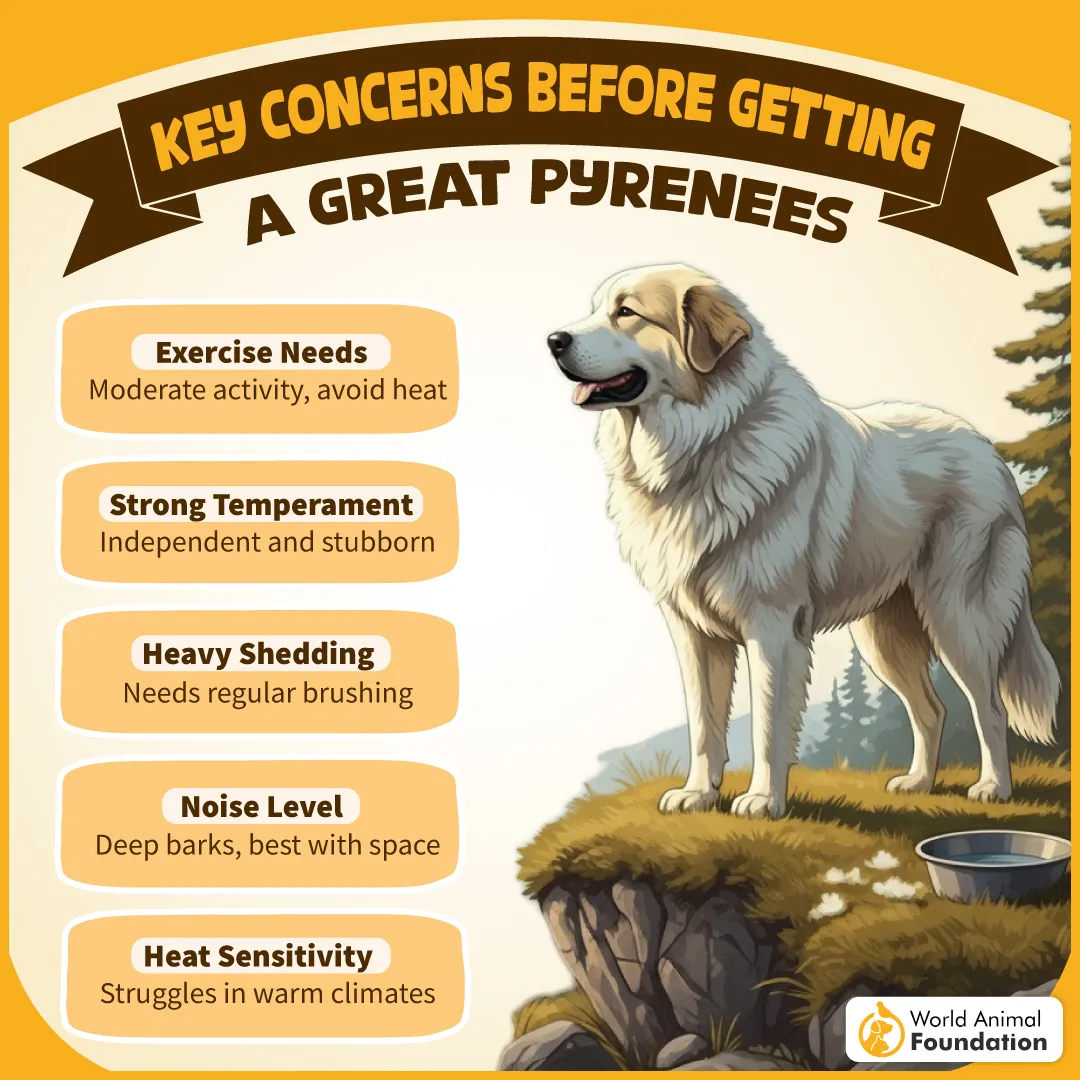
The Great Pyrenees is an old dog breed hailing from the mountainous range present in France and Spain. This large dog was developed as a herding breed for livestock. Their long history also revealed that they had been used for smuggling and loved by the royalty of King Louis XIV, as well as Queen Victoria.
In contrast, today’s Australian Shepherd was bred in America for herding as sheepdog on farms and ranches. Nevertheless, their history is interesting, as it is assumed that their ancestors were herding dogs in the Pyrenees mountains that were crossed with other dogs by native Basque people.
Australian Shepherds usually have two different colors, in particular called heterochromia. Their eyes are a mix of blue, brown, amber, green, or hazel. Apart from their eyes, Aussies were bred to have bobbed tails to ease their tasks as herding dogs. If they do not carry natural short tails, owners go for their cropping.
Both dog breeds have many names to call them. Great Pyrenees are also referred to as Pyrenean mountain dog in the United Kingdom and in France, Le Chien de Montagne des Pyrenees or Le Chien des Pyrenees.
Australian Shepherds are also known as Bobtail, Pastor dogs, Blue heelers, New Mexican dogs, California Shepherd, and Spanish Shepherd.
Size & build Differences
To better understand their physical presence and functional design, size, and structural differences will help the owners. Great Pyrenees are big, while Australian Shepherds are medium-sized dogs with an average weight ranging between 40 and 65 pounds only, which is relatively half of Pyrs.
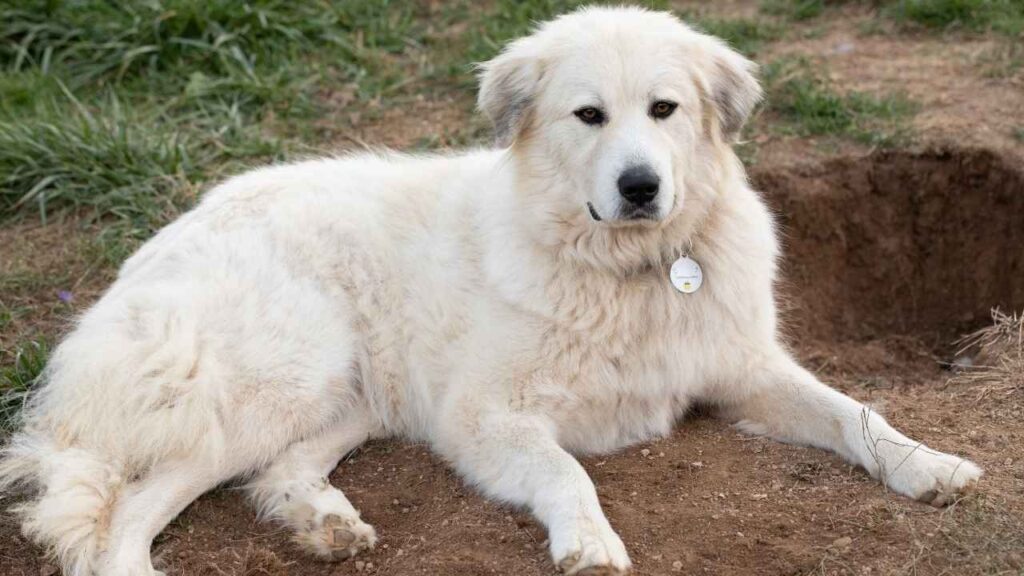
Great Pyrenees are white canines with immense power and build, making them quite good dogs as livestock guardians against many predators. They are 25 to 32 inches tall with thick coats protecting them from harsh conditions in frigid temperatures, says the AKC.
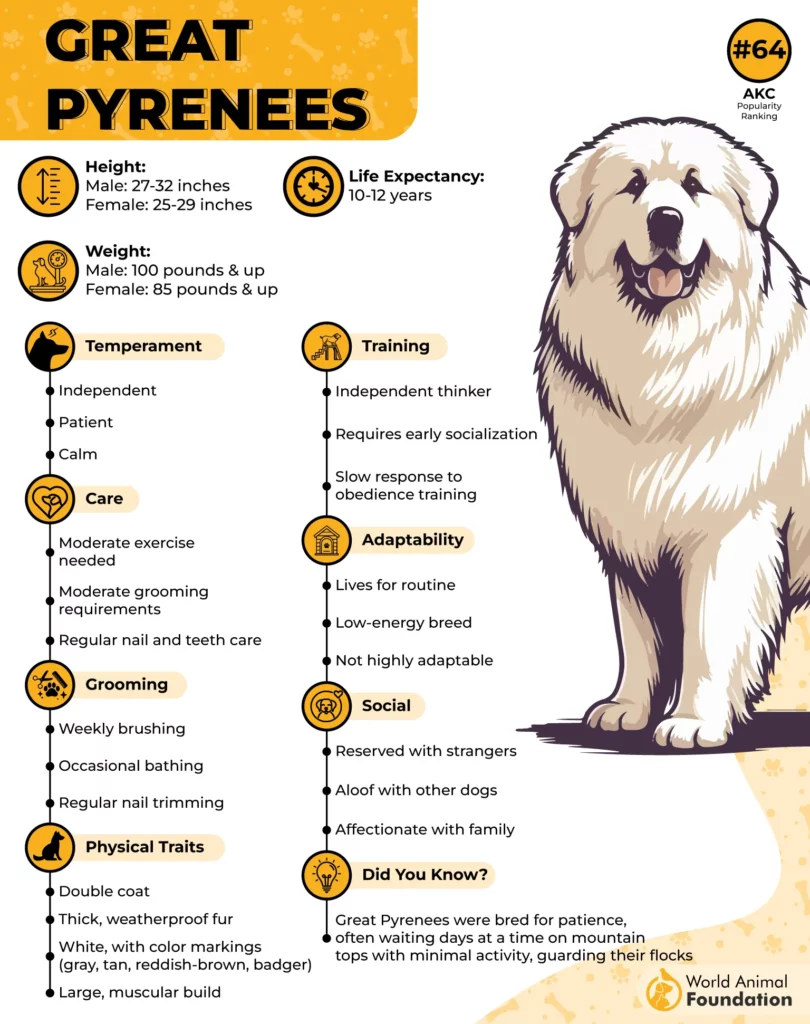
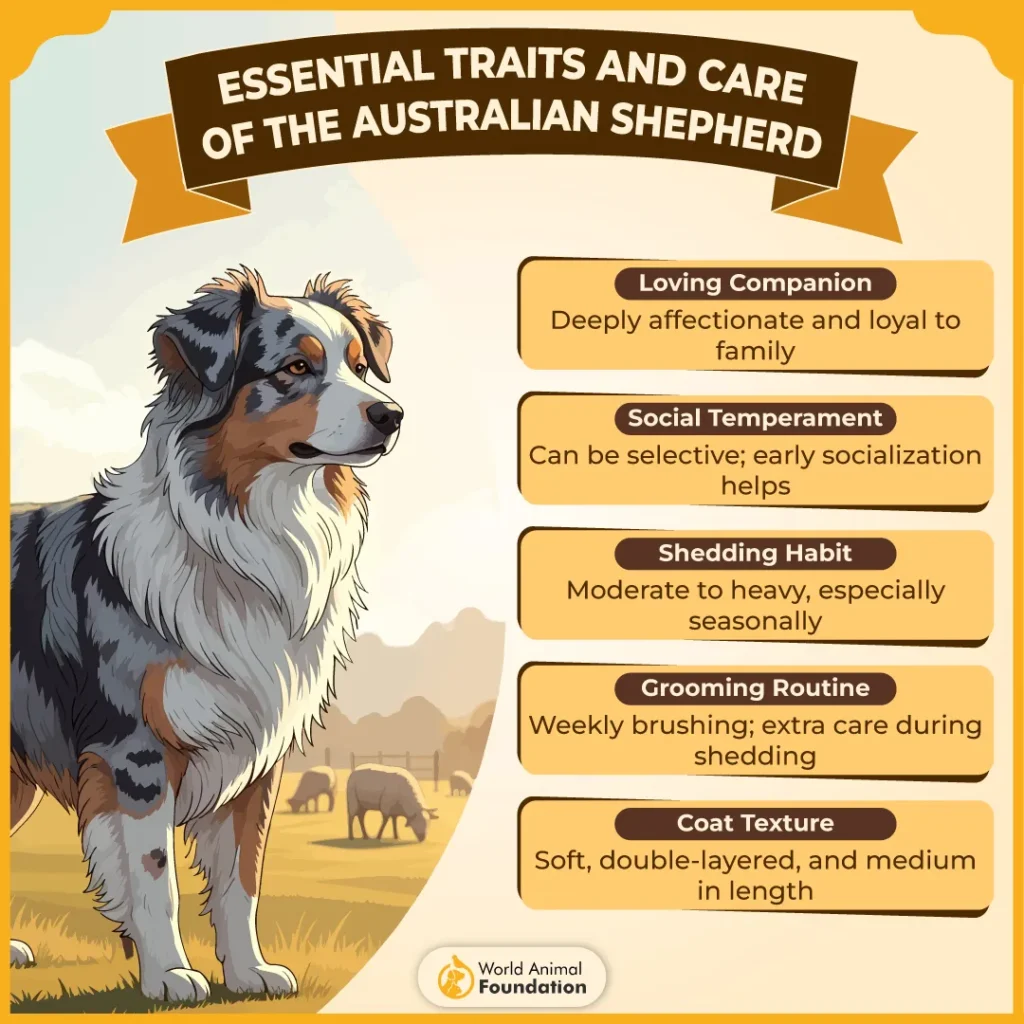
Medium-sized double coat of the Aussie comes in various colors, including the merle pattern. They are 18 to 23 inches tall on average and carry an agile and athletic build. Therefore, Australian Shepherds are more likely to maneuver across farms and rugged terrains.
Temperament & Personality
To meet the expectations and adapt the lifestyle well, emotional understanding and interaction of these two dog breeds are some essential factors, making the picks easy for owners. Their personalities and behaviors show how they will react to different environments.
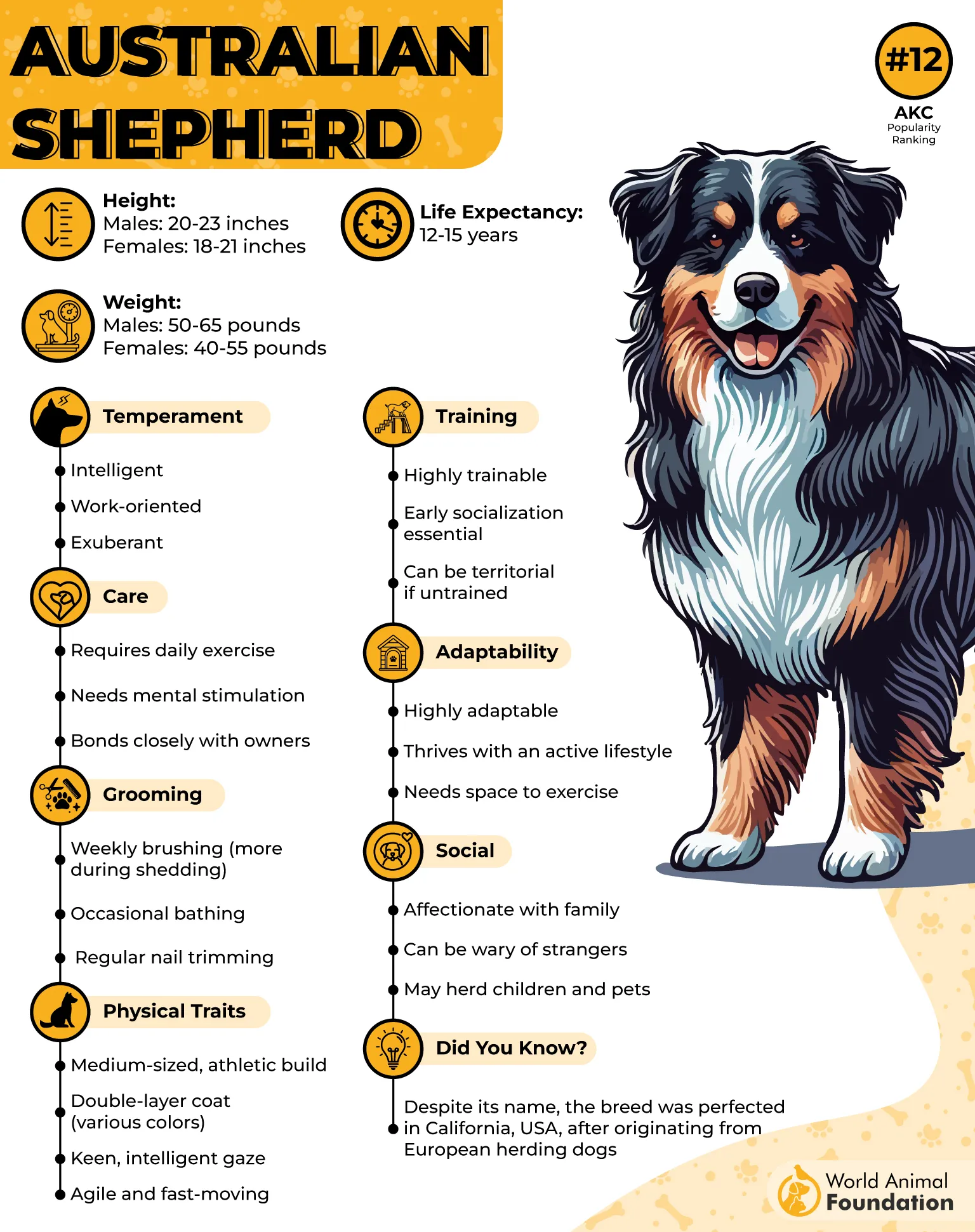
The Great Pyrenees is naturally protective and stays reserved around strangers and situations. They offer calm watchfulness while staying alert and attentive. On the other hand, most Australian Shepherds are friendly dogs, and with socialization and proper training, they get along with kids and other pets, as noted by Orvis.
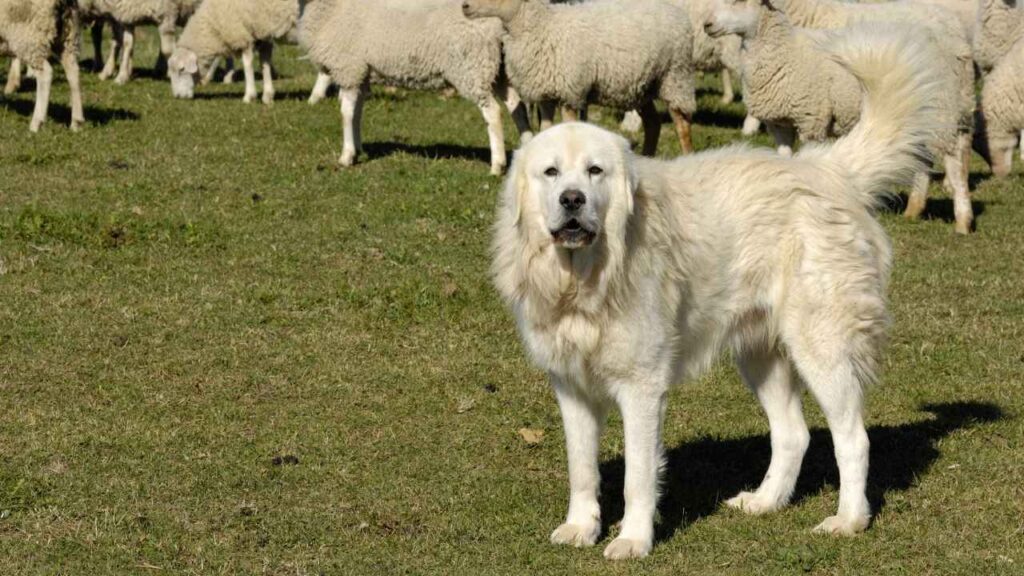
Though their social interactions are quite different, their way of protecting and showing loyalty towards their owners is something where these two breeds intersect. Both of them are affectionate and loyal dogs who bond closely with owners and can be opted as family pets.
Exercise & Energy Levels
Regardless of having a working breed, Australian Shepherds’ built design also reflects their ability to show some athleticism. Meanwhile, the Great Pyrenees is not a hyperactive dog but one with a moderate amount of energy.
Australian Shepherds need to burn off their high energy levels through regular exercise and mental stimulation. Thus, these dogs are not quite fit for households having sedentary lifestyle. Great Pyrenees are more into conserving their energy to be protective in their surroundings.
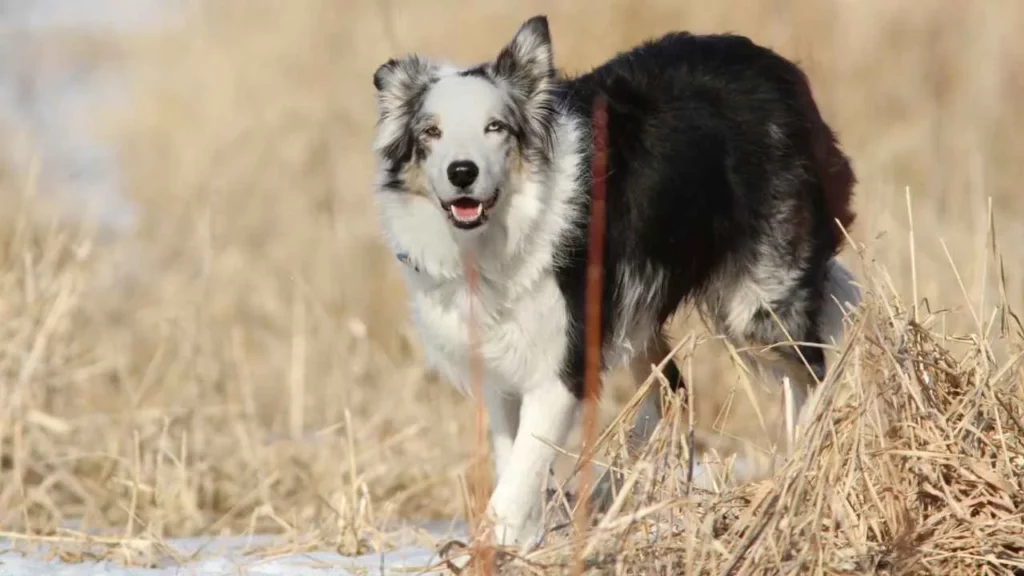
Australian Shepherds demand big houses with a good-sized fenced yard to run and relax. Aussies can display undesired behaviors if not stimulated well, including chewing and digging, according to PetMD. Pyrs’ exercise requirements can easily be met via daily walks.
In 1970, an Australian Shepherd named Hyper Hank became an international star for its incredible frisbee catching skills. Alongside the owner, named Eldon Mclntire, Hank performed at major events. It could leap 7 feet into the air to catch discs, which is also the reason behind popularizing disc dog freestyle competitions.
Training & Intelligence
When it comes to training these dog breeds, both of these have different temperaments and intellect levels to respond to commands. The ability of solving the problems also varies greatly. But, with consistency and right guidance, any breed can be trained effectively for both working and home settings.
Australian Shepherds are highly intelligent dogs who learn fast and excel in obedience training. They thrive with purposeful life, so they can also be trained as therapy dogs and also compete with other breeds in dog sports like herding.
Great Pyrenees are of strong willed nature, showing independence in their work. Thus, they are well-suited for experienced households who can enjoy their pros by training them through positive reinforcement methods.
Lifespan & Shedding
At last, we are exploring the long-term care needs and household maintenance expectations of these working breeds. Their grooming sessions are not extensive, though they have double coats. Regular brushing to maintain coat health and nail trimming are the main things to care for.
Great Pyrenees are typically healthy dogs if adopted from reputable breeders. On average, they live 10 to 12 years, which is a good life span as compared to other giant breeds. They are prone to some health problems as well, such as hip dysplasia, elbow dysplasia, and patellar luxation.
Australian Shepherds are also healthy canines, but they may develop some medical-related issues, including eye cataracts, hip dysplasia, and some kinds of cancer. Generally, two meals per day is the thumb rule of offering them food. But the diet of larger-sized dogs should be divided into multiple portions of meals to avoid bloating.
Conclusion
Understanding variations between the Great Pyrenees and the Australian Shepherd helps owners spend quality time with a breed that fits their lifestyle.
The Pyrenees, with its heavy guard instincts, will watch confidently over children and loved ones, showing gentle care, while the Australian Shepherd loves activity, working in a group, and enjoys time to wander.
Either males or females of both breeds bring love and can be a loyal companion for their owners.
