




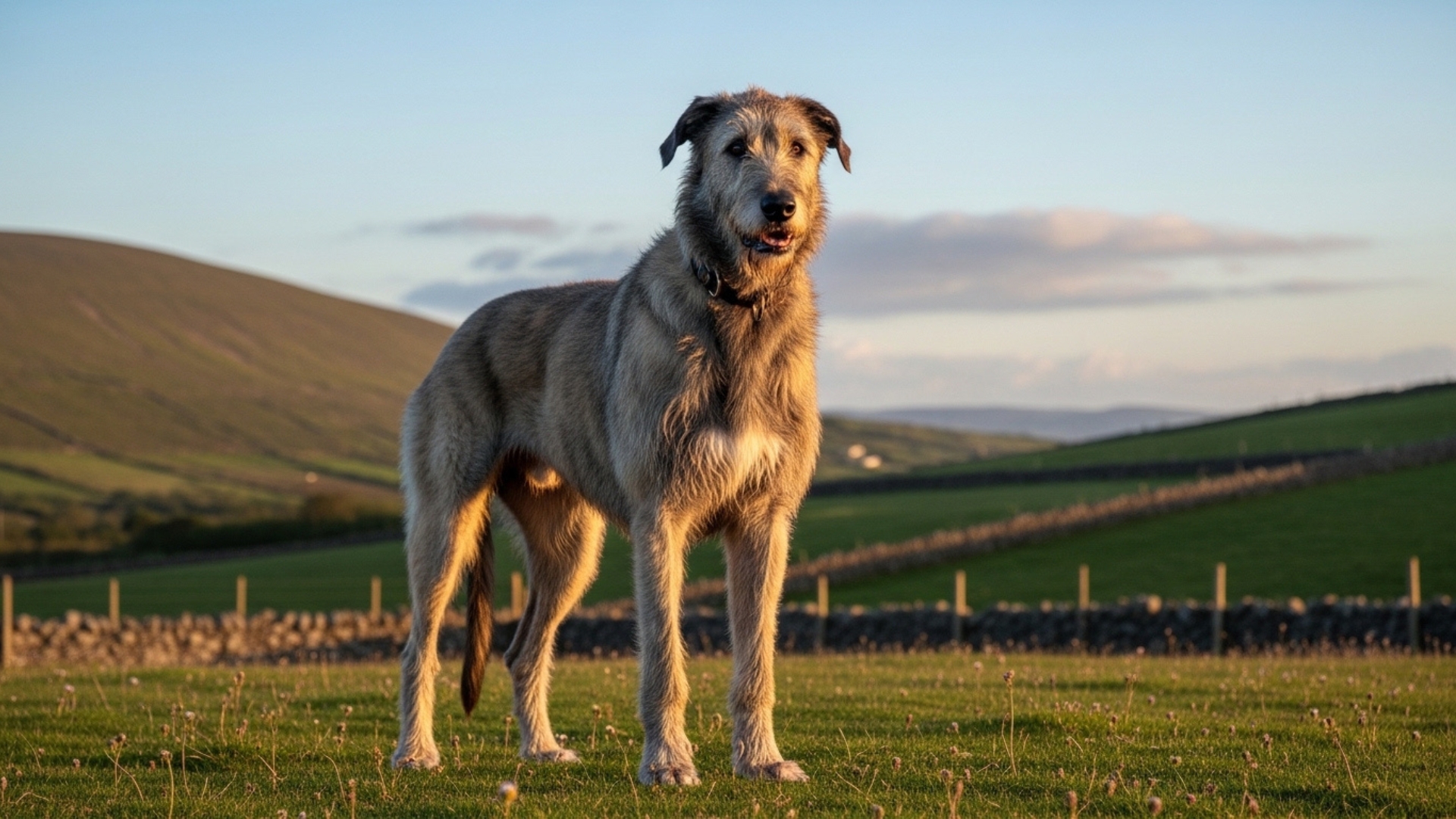
Giant dog breeds have a presence that cannot be ignored. Their size alone turns heads, but what truly sets them apart is their loyalty, emotional depth, and often centuries-old working heritage.
Many giant breeds were developed specifically for guarding, livestock protection, or rescue work.
But beyond the well-known gentle giants lies a world of extraordinary breeds that many people have never even heard of. These rare and unique giants aren’t just big in size; they’re rich in history, loyalty, and personality.
While giant dogs are impressive, they are not for everyone. Most require experienced dog owners, structured training, and significant space. However, for the right owner, these magnificent dogs offer companionship on a grand scale.
Let’s explore seven unique and rare giant dog breeds for exceptional companions that combine power, intelligence, and heart.
Unique and Rare Giant Dog Breeds for Exceptional Companions
1. Leonberger
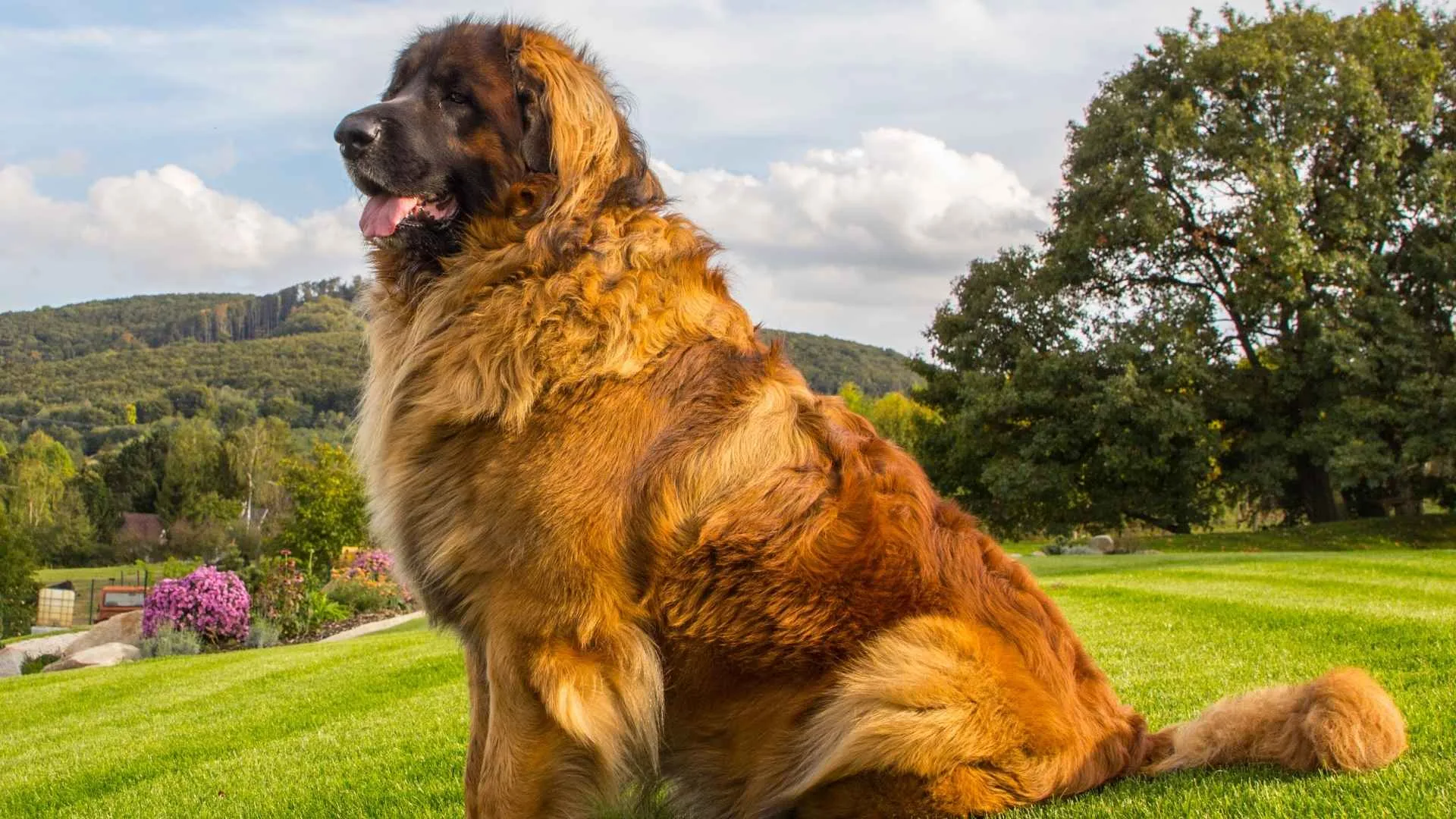
The Leonberger originated in Germany in the 19th century and was bred to resemble a lion, the symbol of the town of Leonberg. Today, there are an estimated 30,000 Leonbergers worldwide, all tracing back to a small post-World War II gene pool. This limited genetic base makes responsible breeding and health screening especially important.
Despite their massive size, Purina mentions that these dogs are known for their calm, placid temperaments. They are not aggressive by nature but tend to be reserved with strangers.
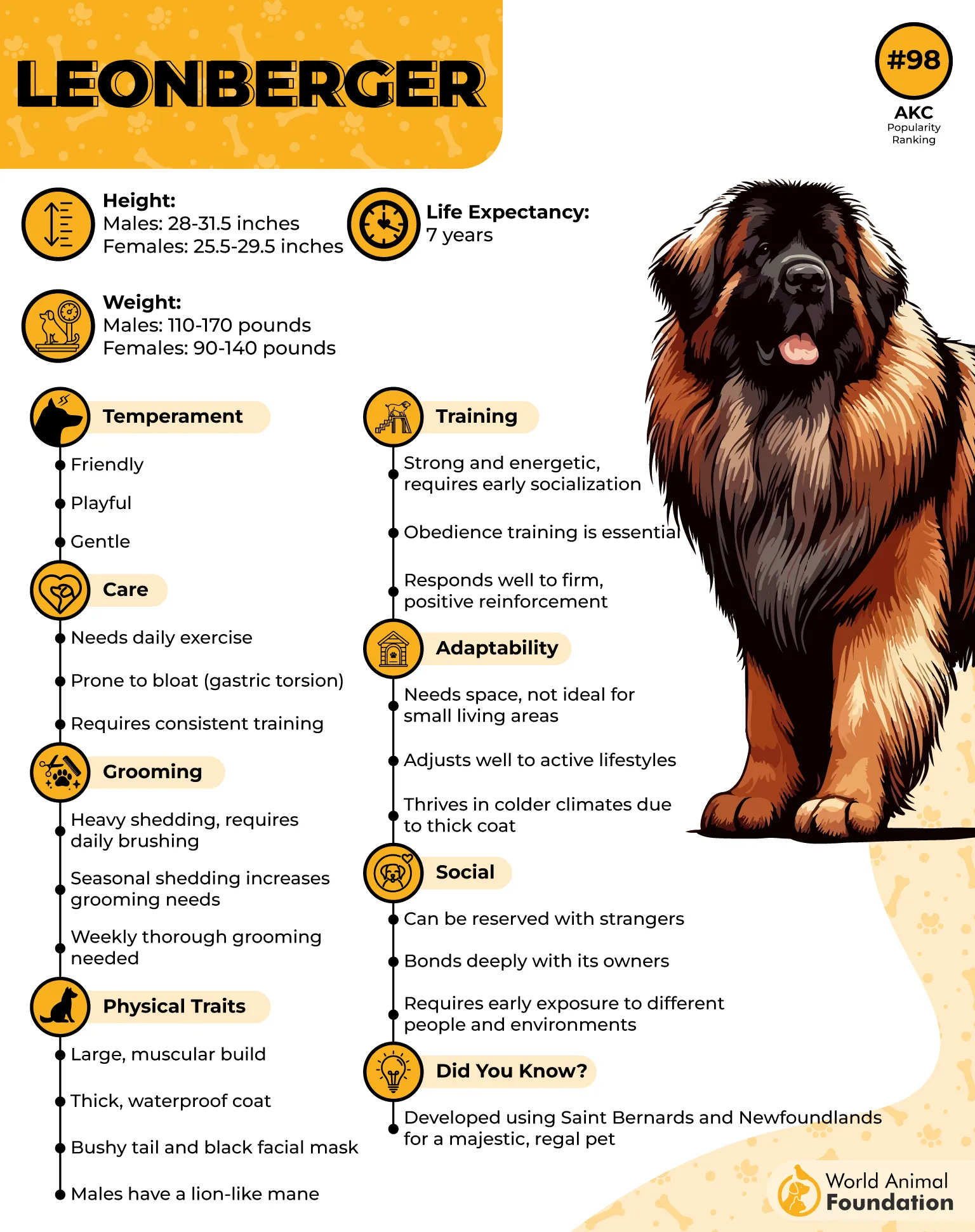
This large dog breed is highly intelligent. These dogs tend to excel at activities such as carting, water rescue, agility, and drafting. They require at least one hour of structured exercise daily to remain balanced. Without proper stimulation, boredom can lead to unwanted behaviors.
Their thick double coat requires brushing at least twice weekly. Seasonal shedding can be substantial, especially in spring and fall. Unlike many giant breeds, they are not excessive droolers.
These multi-purpose working dogs are among the rarest breeds, but they thrive in homes where they are part of daily life. They do not tolerate long periods of isolation well. This breed is best suited to experienced owners who enjoy an active outdoor lifestyle.
2. Irish Wolfhound
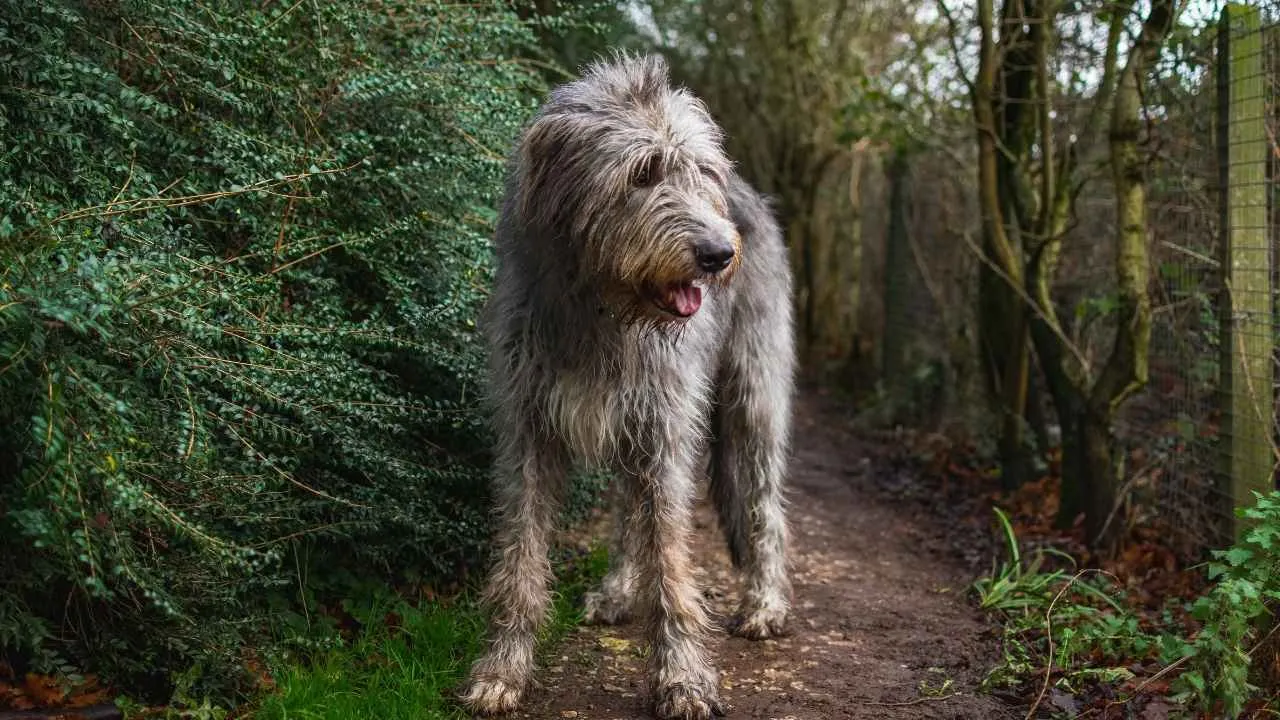
The Irish Wolfhound is considered the tallest breed recognized by the AKC. Historically, these big dogs were used in Ireland to hunt wolves and large game.
Despite their warrior heritage, modern Irish Wolfhounds are famously gentle and dignified. They are highly social and typically non-aggressive toward other dogs when properly socialized. Their size alone is often enough to deter intruders. The protective nature is definitely a big plus!
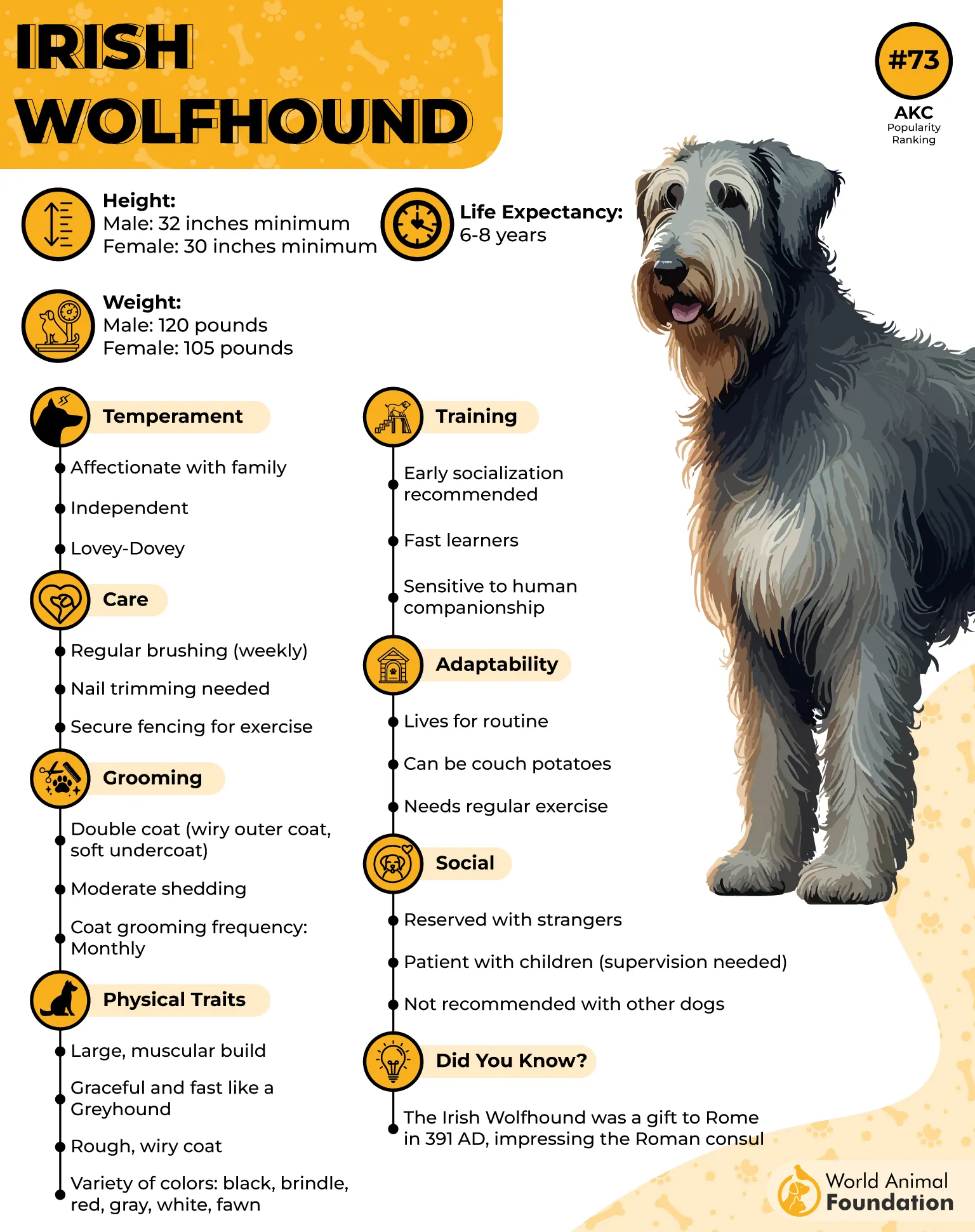
These giants require over two hours of daily exercise, according to many breed clubs. However, their activity consists of steady movement rather than frantic bursts. Secure fencing is essential due to their sighthound instincts.
The Reddit thread discusses the pros and cons of owning this dog in detail!
Their lifespan averages 6–8 years, which is typical for giant breeds. Responsible breeding programs aim to improve longevity through health screening. Early training is critical because managing a 140-pound adult requires solid obedience.
Irish Wolfhounds are affectionate family companions. They thrive on human interaction and should not be left alone for long periods. Their serene personality often surprises those unfamiliar with the breed.
3. Kangal
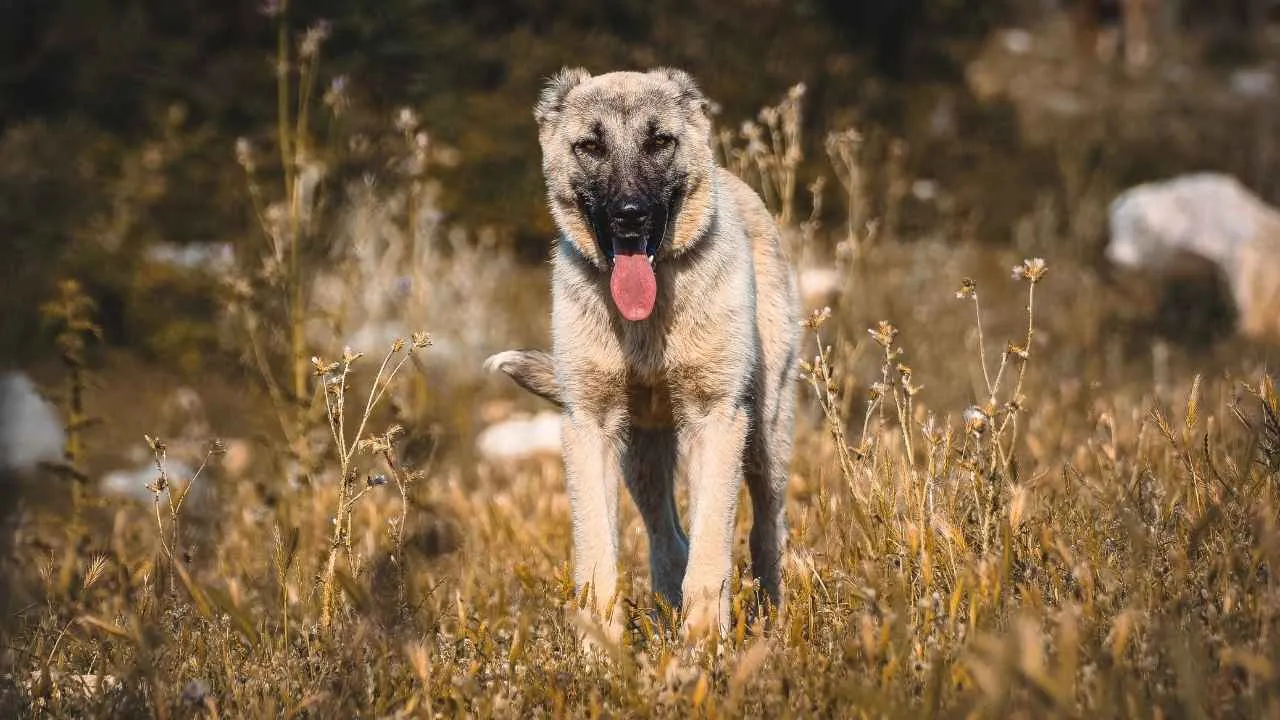
The Kangal originates from Turkey and is internationally recognized as a livestock guardian dog. These excellent guard dogs are massive and are renowned for their territorial instincts and protective capabilities.
They are protective and deeply loyal to their families. While reserved with strangers, they are typically calm and composed when properly socialized. Some of the biggest dog breeds out there have natural guarding instincts that do not require aggression training.
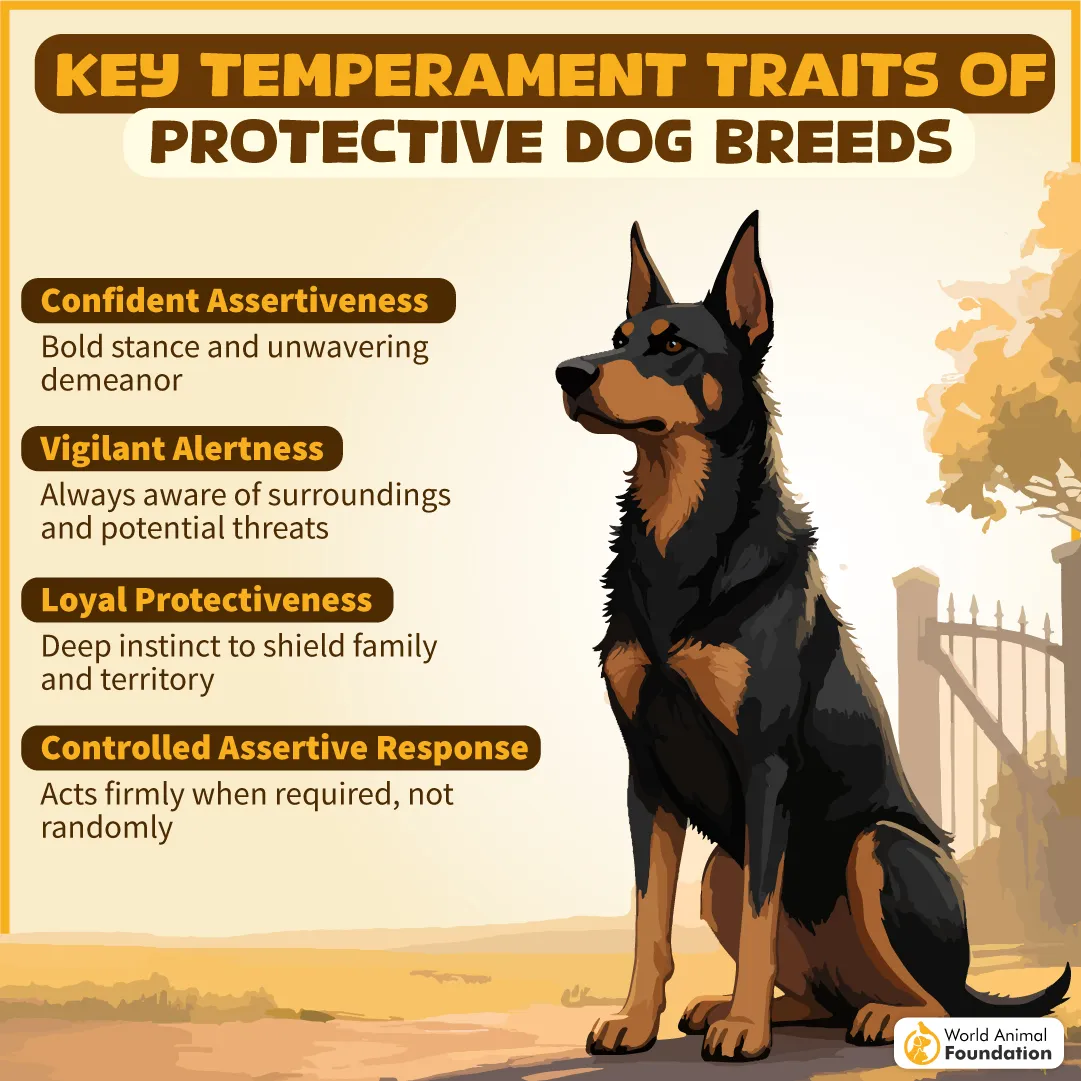
This breed evolved in harsh, arid environments, according to the Royal Kennel Club. As a result, they are physically resilient and can endure extreme climates. Early socialization is essential to balance their protective tendencies.
Kangals require space and purpose. They are not suited to apartment life and prefer rural or suburban homes with secure yards. Without proper leadership, their strong will can become difficult to manage.
Despite their imposing presence, Kangals are often gentle with children in their own family. They form close bonds and are deeply committed protectors. Experienced ownership is strongly recommended.
4. Tibetan Mastiff
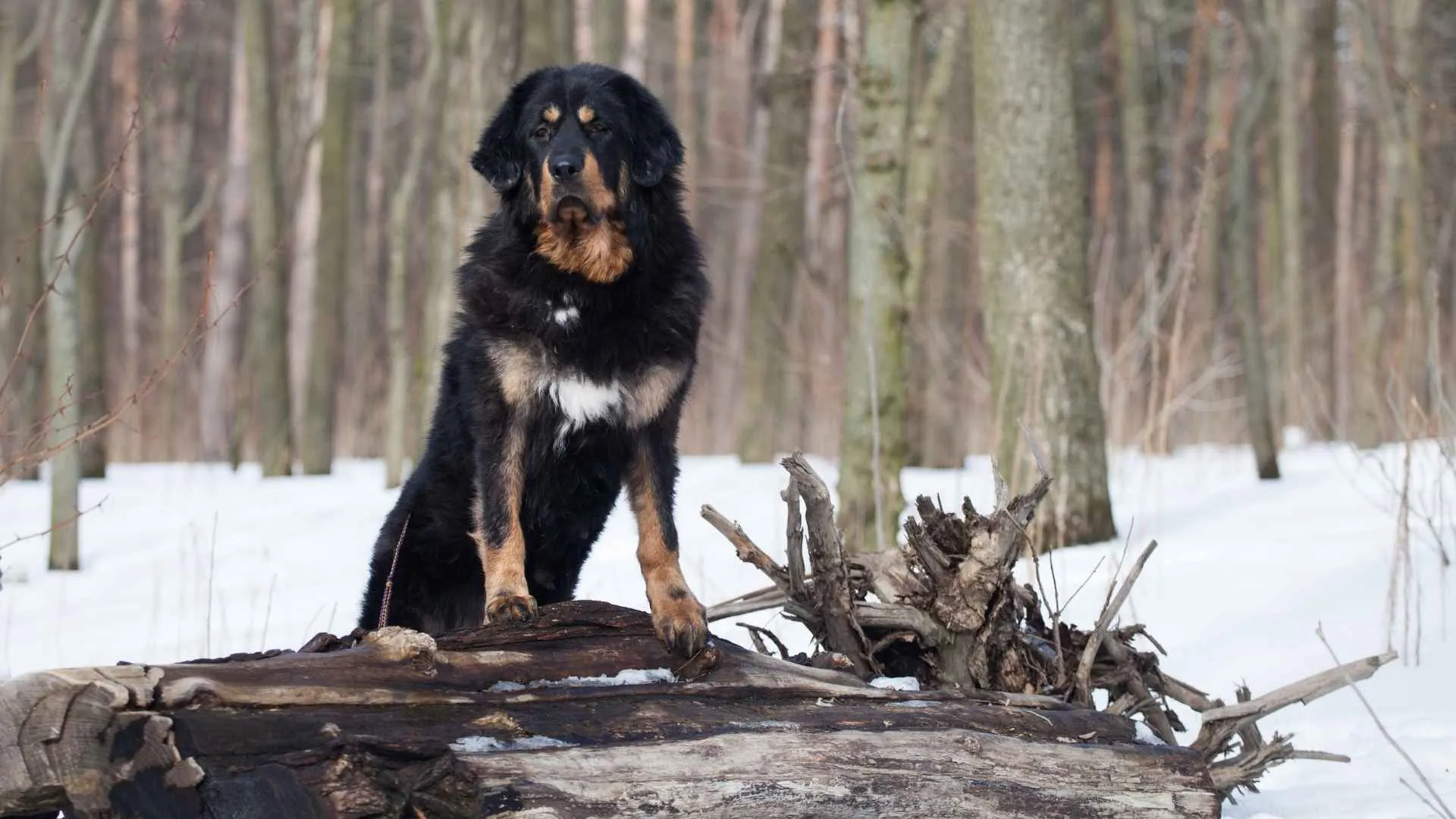
The Tibetan Mastiff is one of the world’s oldest guardian breeds, dating back thousands of years in the Himalayan region. Adults typically weigh between 70 and 150 pounds, depending on sex. Their thick mane-like coat gives them a lion-like appearance.
Historically, PetMD claims that these guard dogs were used to guard monasteries and livestock. Tibetan Mastiffs are highly territorial. They are aloof with strangers but affectionate with their families. Their protective instincts are deeply ingrained.
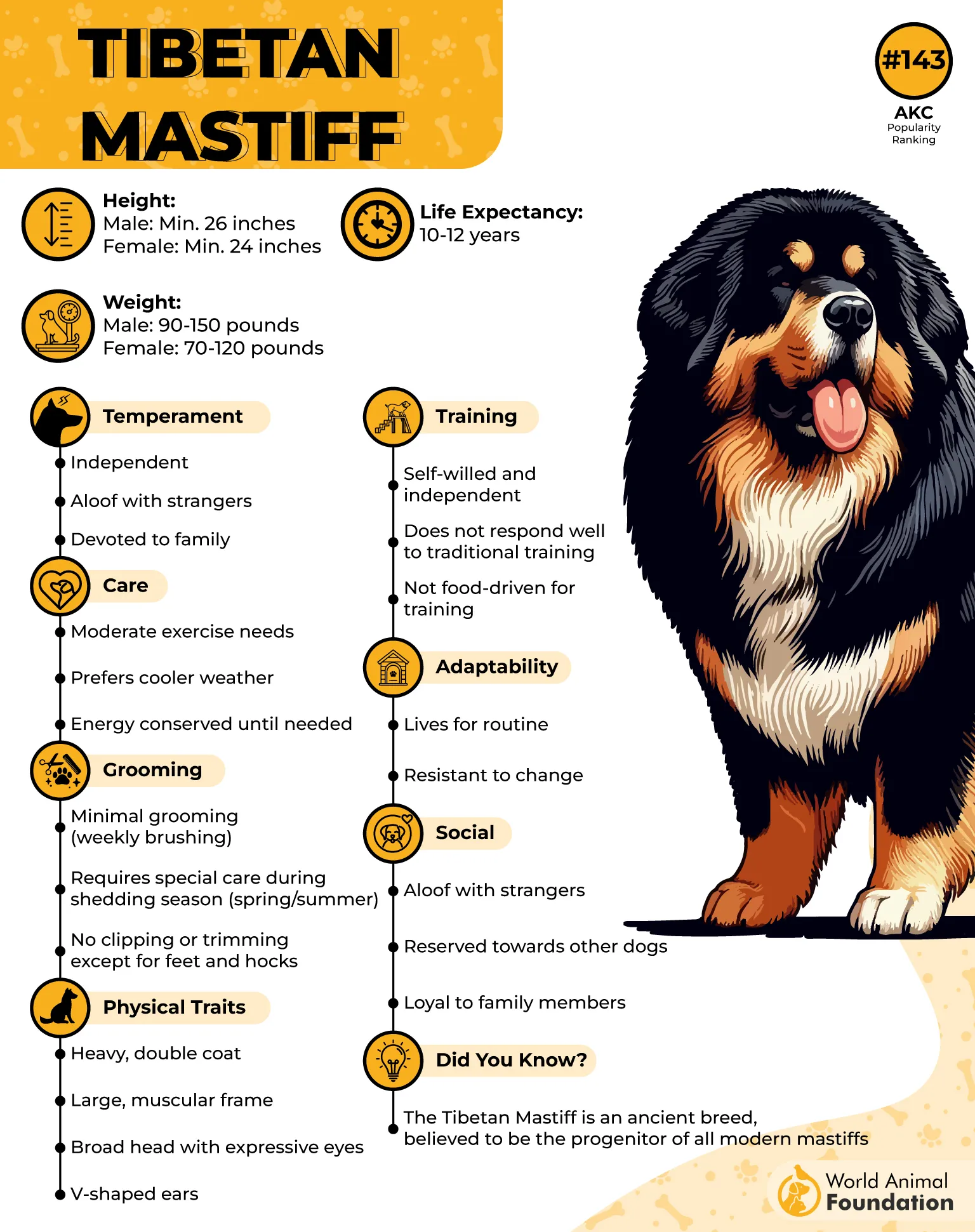
This breed is famously independent. They are intelligent but not eager to please, which means training requires patience and consistency. Early socialization helps prevent excessive guarding behaviors.
These mountain dogs are often more active at night due to their traditional role as guards. They can be vocal, especially if they perceive a threat. Owners must be prepared for this natural behavior.
Their dense coat makes them poorly suited to hot climates. Regular grooming is required, particularly during heavy seasonal shedding. With proper care, these Mastiffs can live 10–12 years, which is notable for a giant breed.
5. Caucasian Shepherd Dog
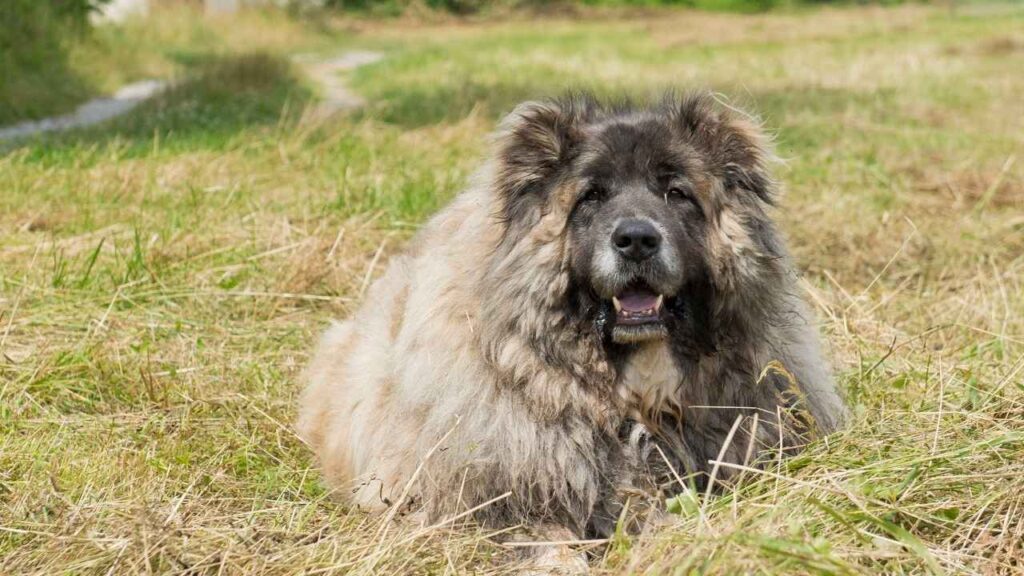
The Caucasian Shepherd originates from the Caucasus Mountains of Eastern Europe. These massive guardians can weigh between 100 and 170 pounds and stand up to 30 inches tall. They were bred to protect livestock from wolves and bears.
This breed is fearless and highly protective. When a threat is perceived, they are bold and decisive. Within the family circle, however, they are devoted and devoted.
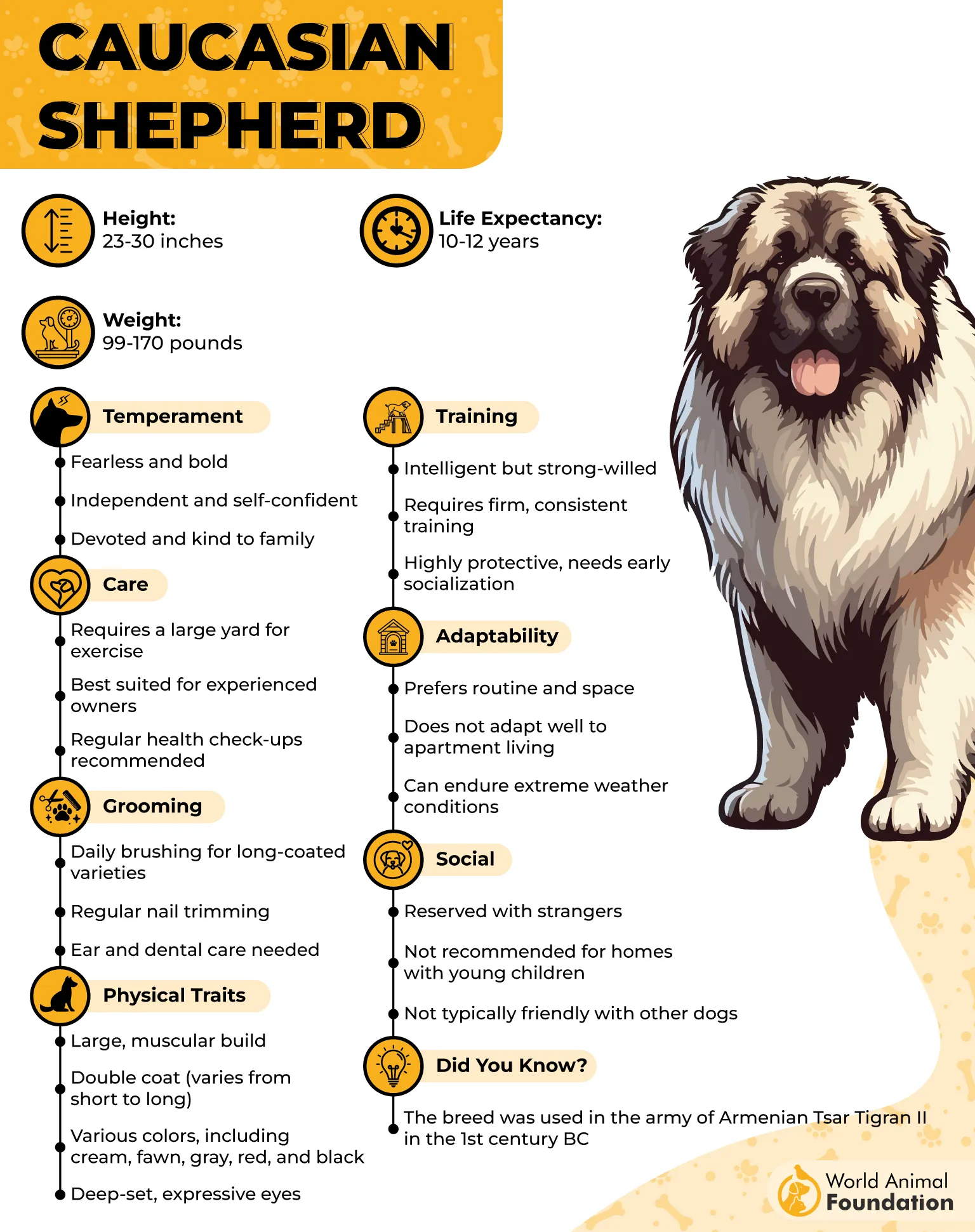
These Shepherd dogs require firm, experienced leadership. They are not ideal for first-time owners or households with frequent visitors. Socialization must begin early and remain consistent.
Due to their massive size, proper nutrition and joint support are essential. Large breed diets help prevent developmental orthopedic issues. Controlled exercise during puppyhood protects growing bones.
They thrive in spacious homes with secure fencing. Apartment living is generally unsuitable. With proper training, they can be loyal and stable companions.
6. Dogue de Bordeaux
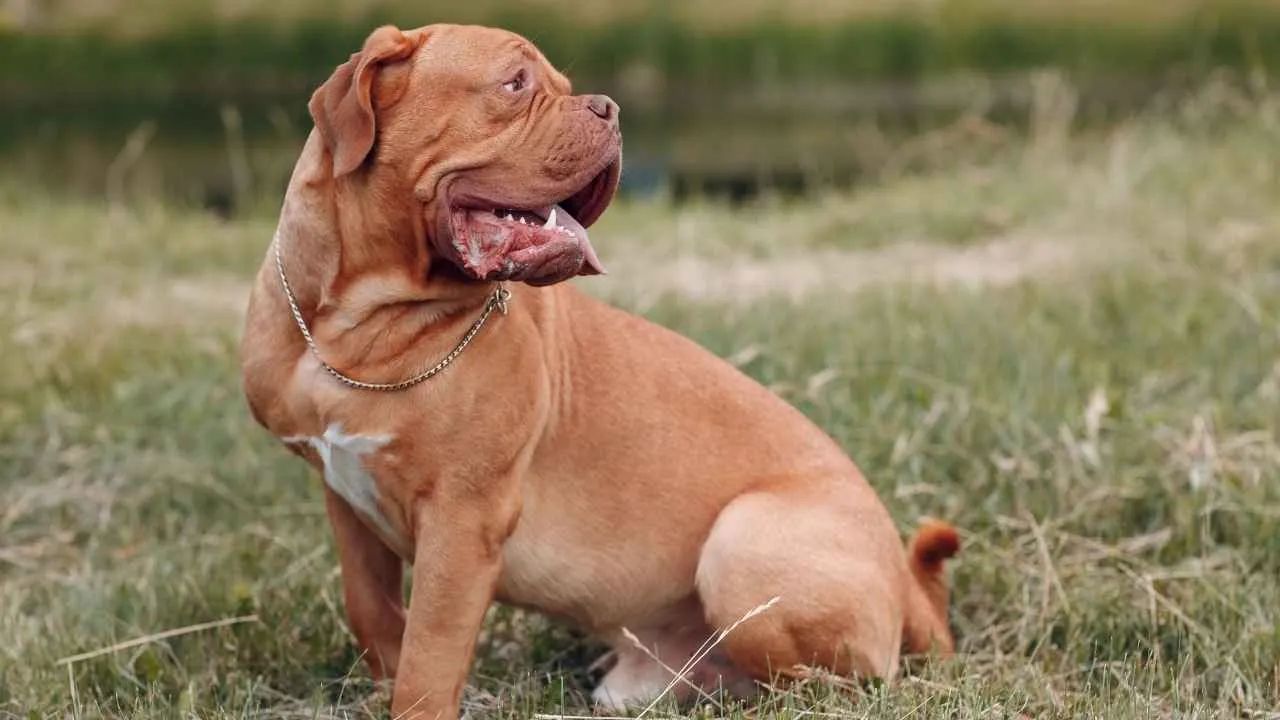
Also known as the French Mastiff, the Dogue de Bordeaux is instantly recognizable by its massive head and wrinkled expression. They were originally bred and used for guarding estates and pulling carts.
This breed is intensely devoted to its family. They are protective but not unnecessarily aggressive when properly trained. Their calm indoor demeanor contrasts with their powerful physique.
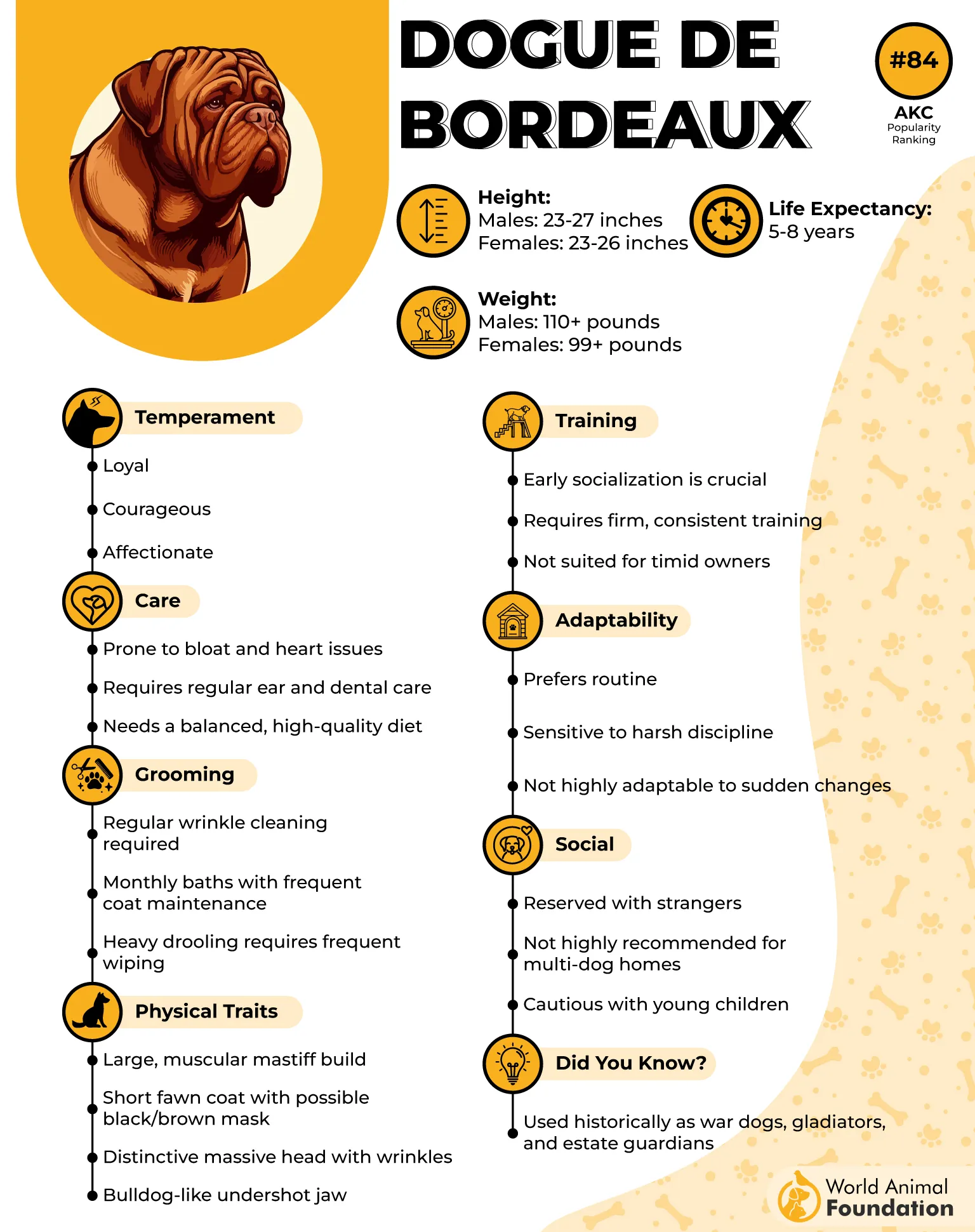
Unfortunately, this loyal dog has a shorter lifespan than many giants, typically averaging 5–8 years. Responsible breeding aims to improve longevity and reduce health risks. Obesity management is particularly important in this breed.
Omlet warns that these dogs require consistent training due to their stubborn streak. Positive reinforcement methods work best. Early socialization ensures balanced behavior around strangers and other animals.
Though imposing in appearance, they are caring “gentle giants.” They bond deeply with their owners and prefer structured home environments. Experienced handling is strongly recommended.
7. Spanish Mastiff
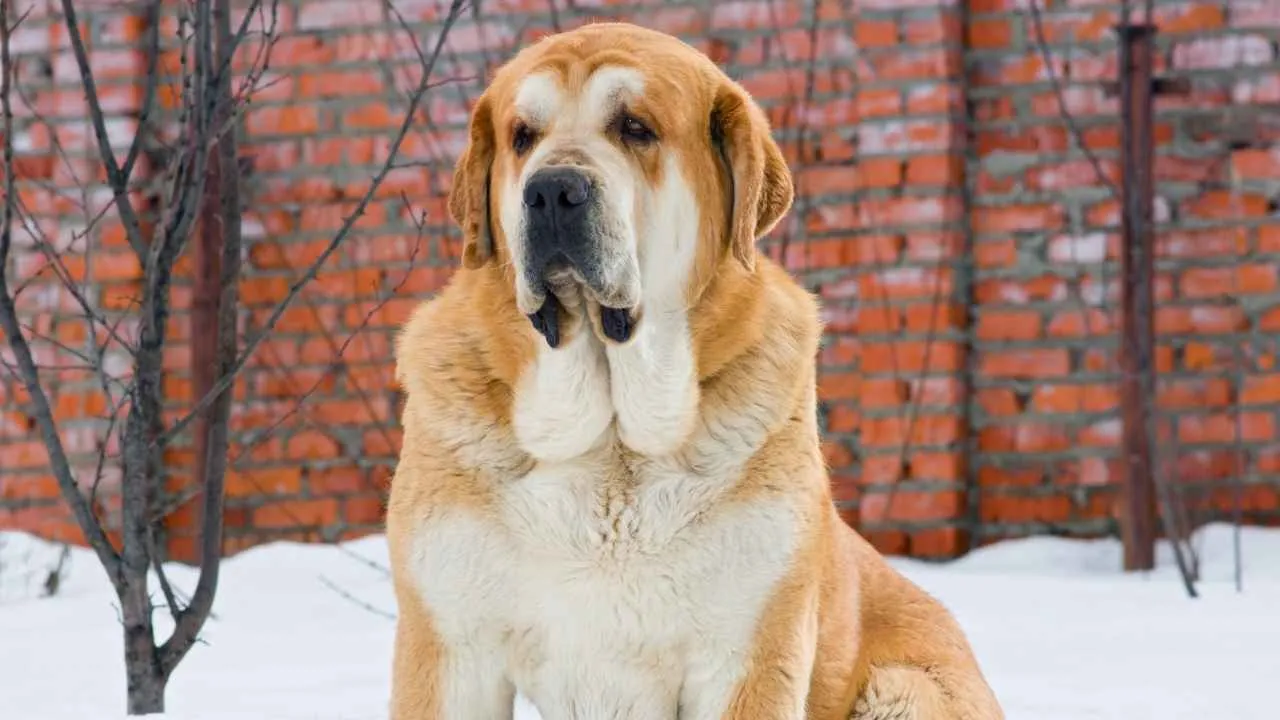
The Spanish Mastiff, or Mastín Español, has guarded livestock in Spain for centuries. This breed originated to defend flocks from wolves.
Despite their formidable presence, these dogs with an affectionate nature are calm and self-controlled. They are protective but not impulsively aggressive. Their steady temperament makes them reliable guardians.
They require moderate exercise rather than intense activity. A secure yard is important for letting them stretch their legs. Apartment life is not recommended for a dog of this size.
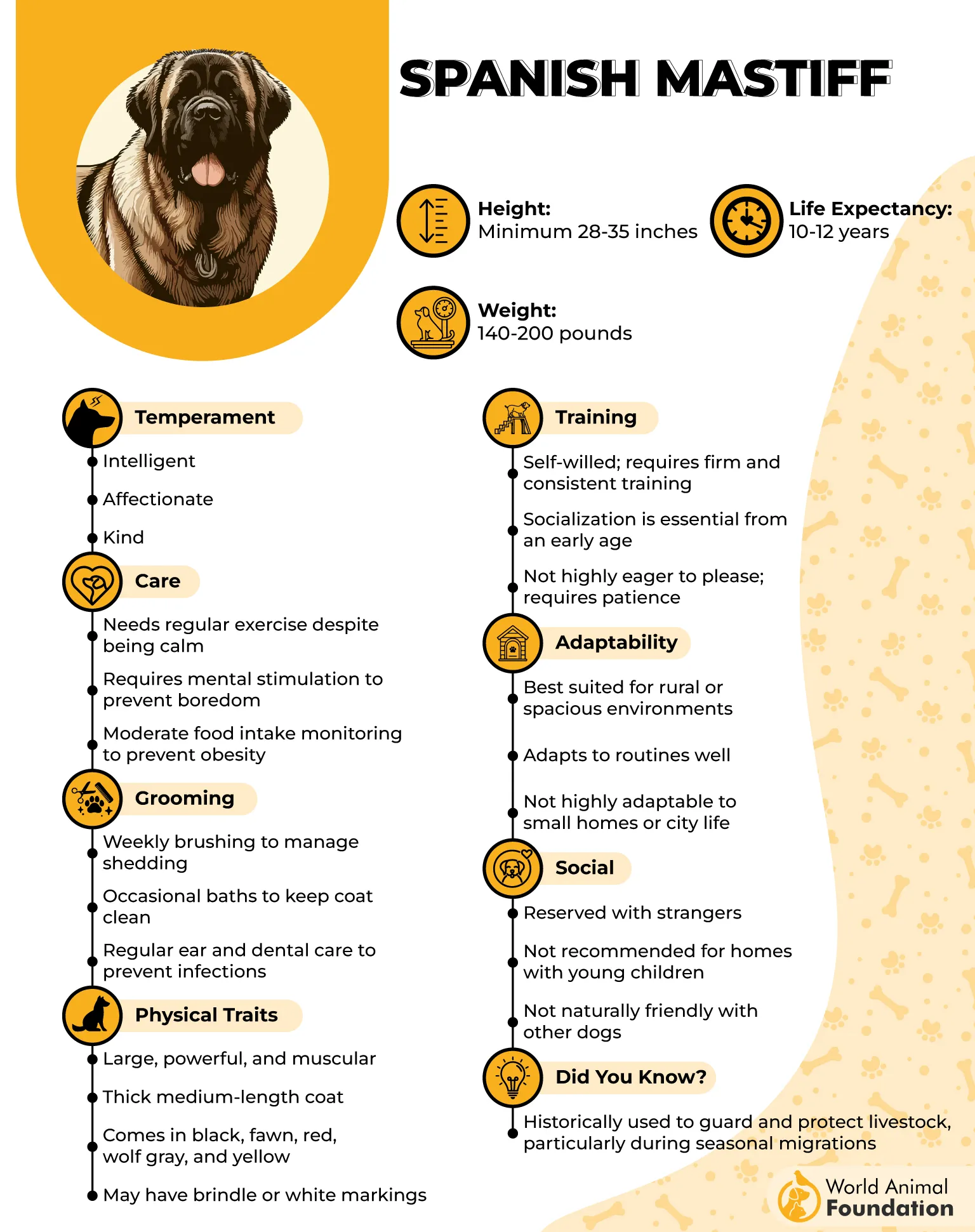
Joint health and diet consistency are crucial for longevity. Soft bedding helps prevent pressure sores due to their weight. With proper care, they can live approximately 10–12 years.
Spanish Mastiffs are affectionate with their humans, which makes them great family dogs. They are often gentle with respectful older children. Their combination of power and patience makes them exceptional guardians.
Conclusion
Giant dog breeds are not simply “big pets.” They are living pieces of history, bred for protection, endurance, and partnership with humans. Most of these giant breeds require experienced handling, structured training, and significant living space. Still, they make phenomenal family pets.
While some have shorter lifespans than smaller breeds, their loyalty and devotion are unmatched. Proper nutrition, preventive veterinary care, and early training dramatically influence their quality of life.
Bernese Mountain Dog, English Foxhound, Great Dane, Cane Corso, Great Pyrenees, Greater Swiss Mountain Dog, Saint Bernard, Black Russian Terrier, Scottish Deerhound, Doberman Pinscher, German Shepherd, Alaskan Malamute, Pyrenees Mountains, and English Mastiff are other breeds that also make extraordinary companions.
Their size may be impressive, but it’s their heart that truly defines them.
