




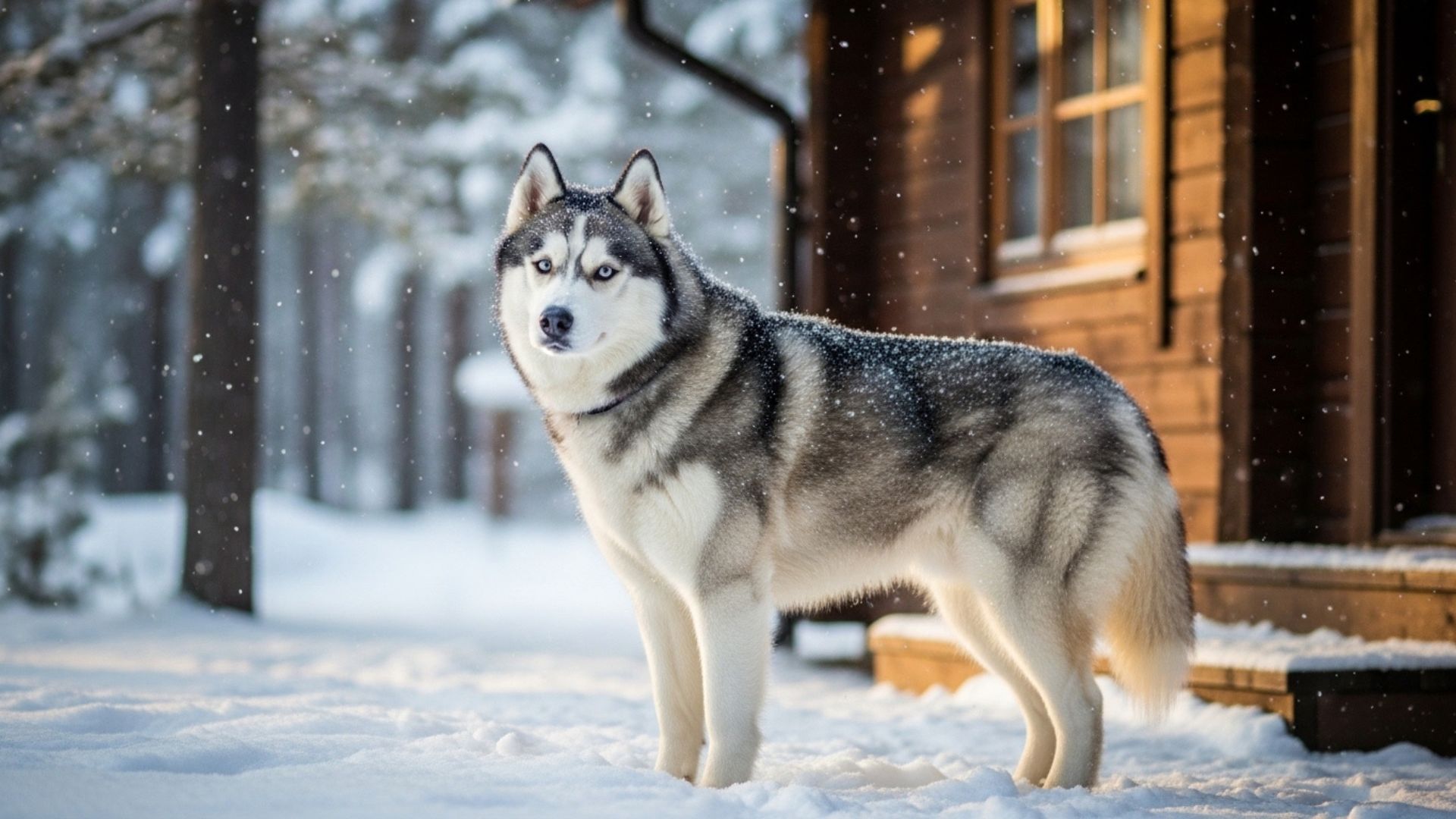
Snow-covered mountains and tundra create some of the harshest living conditions on earth. Yet, there are some dog breeds that are capable of living and thriving in these extreme cold environments, displaying resilience, strength, and unmatched endurance.
Bred for survival and to work closely with humans, these dogs possess thick coats, strong bodies, and a loyal nature, helping them to withstand the conditions where others do not. Today, these dogs remain vital options in cold regions, offering companionship and assistance together.
Understanding these hardy breeds that excel in extreme outdoor conditions reveals the remarkable ways in which canine strength and human partnership have evolved to overcome nature’s toughest challenges.
Fun Fact: There are many breeds that are bred for work independently, meaning they are able to make decisions without waiting for human commands, reflecting intelligence and providing a way to train them accordingly to ease the tasks of humans in different fields.
Dog Breeds That Excel in Extreme Outdoor Conditions
1. Alaskan Malamute
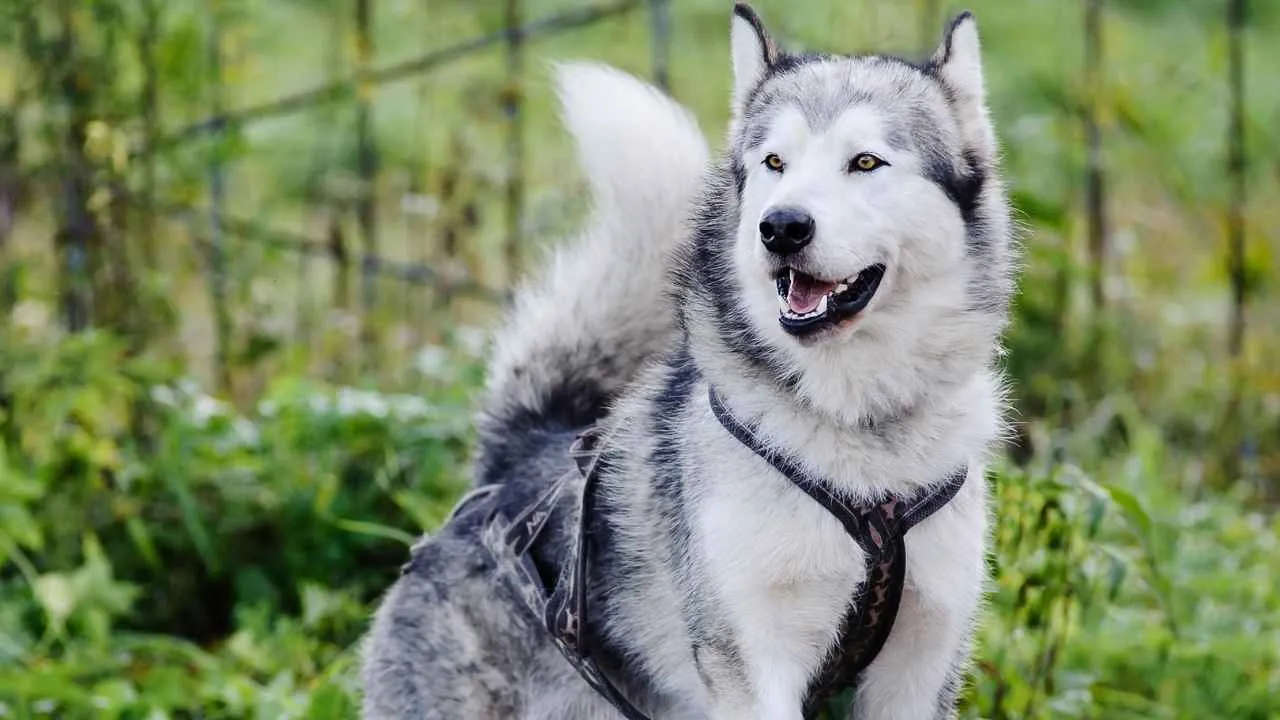
Alaskan Malamutes are one of the oldest dog breeds for pulling sleds in the region of Northwestern Alaska. These active dogs have also served in World Wars by carrying the loads and transporting them. Moreover, they were also used to hunt seals and boars, says PetMD.
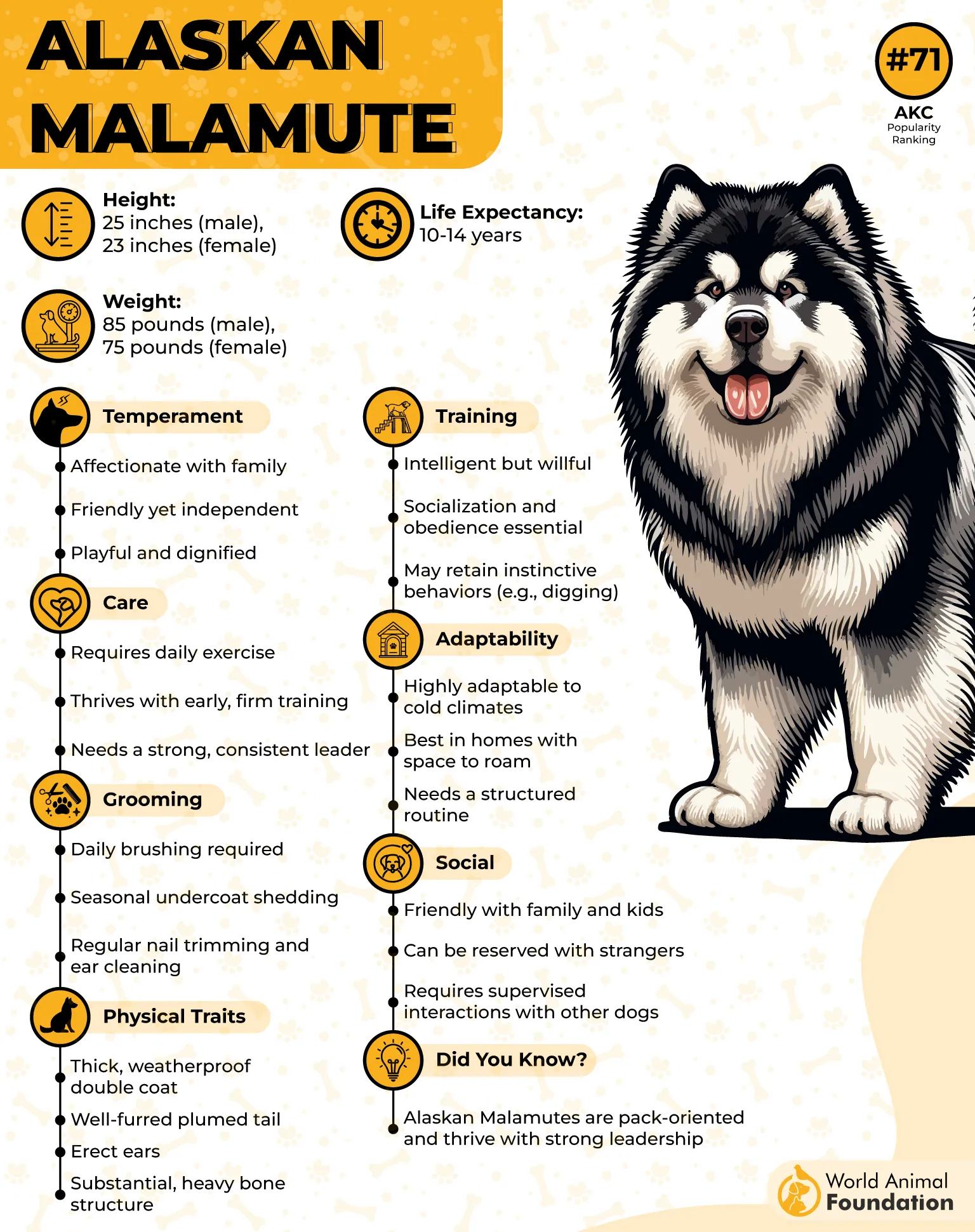
Overall, Alaskan Malamutes are a working dog breed, which means their physical and mental stimulation should not be compromised at all. While their thick coats protect them from harsh elements of cold weather, they also need regular brushing and occasional baths.
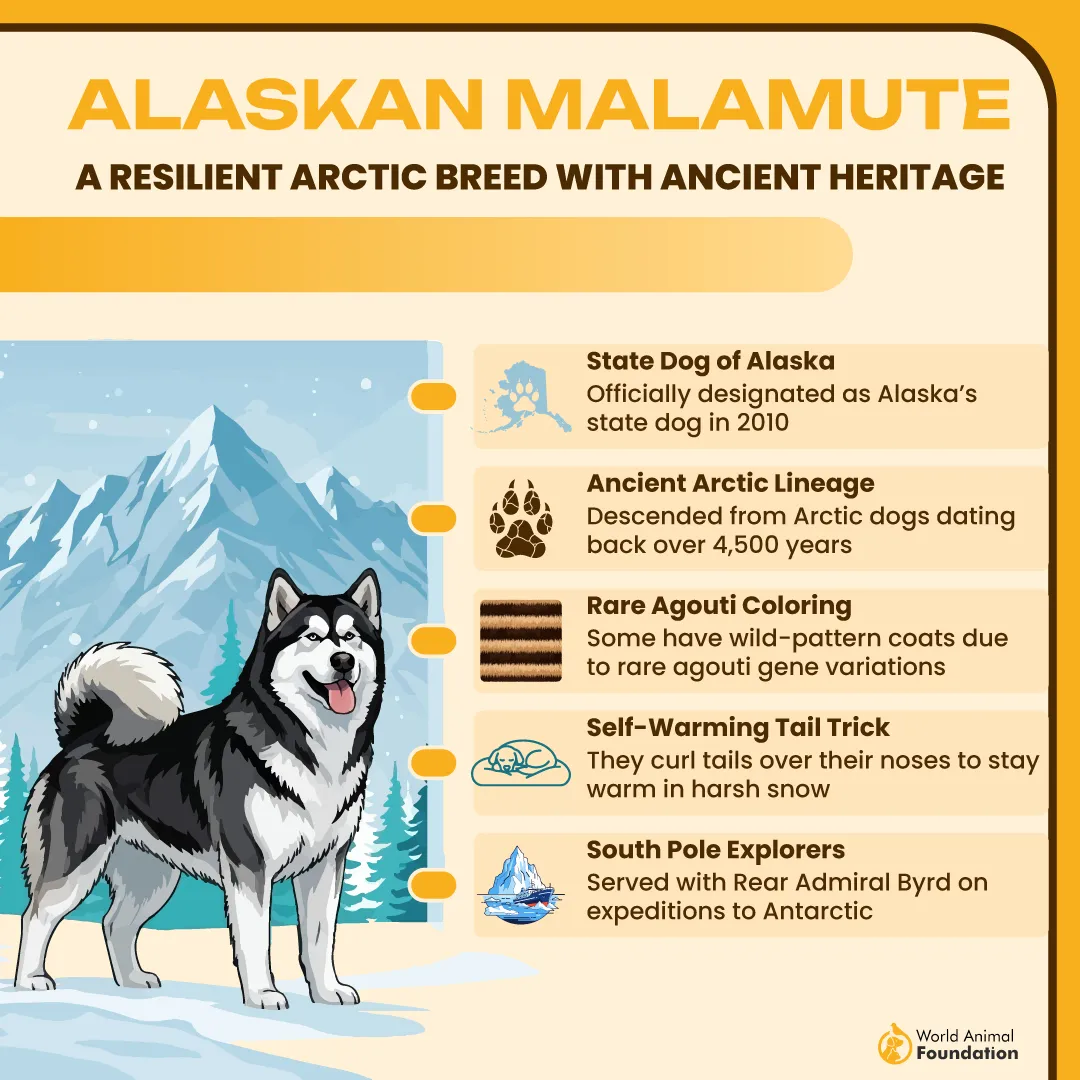
These dogs are whip smart and happiest when they are properly trained with reward-based systems, appreciating a purposeful life over a sedentary life. They have enough endurance and stamina to make great companions for outdoor adventures and dog sports.
2. Siberian Husky
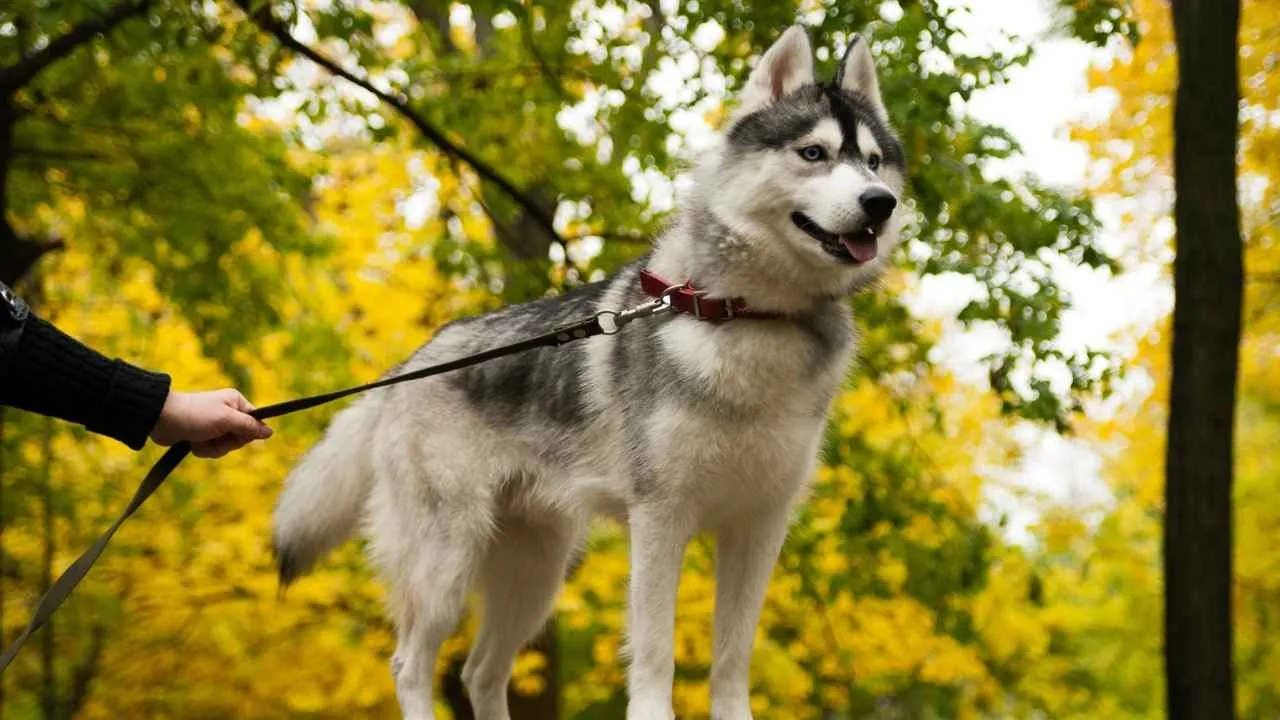
There are many perks of having a Siberian Husky if you live in cold climates with an active lifestyle. These medium-sized dogs can run up to 100 miles in a day, reflecting their resilience and strength to cover long distances seamlessly. The Siberian Husky was originally bred as a sled dog in Northeast Asia.
Being an active dog breed, Huskies are well-suited to a household with prior experience of handling dogs. They are not quite dogs, and always want to talk with their owners via howling. Early socialization and consistent training are important to have a well-behaved pup.
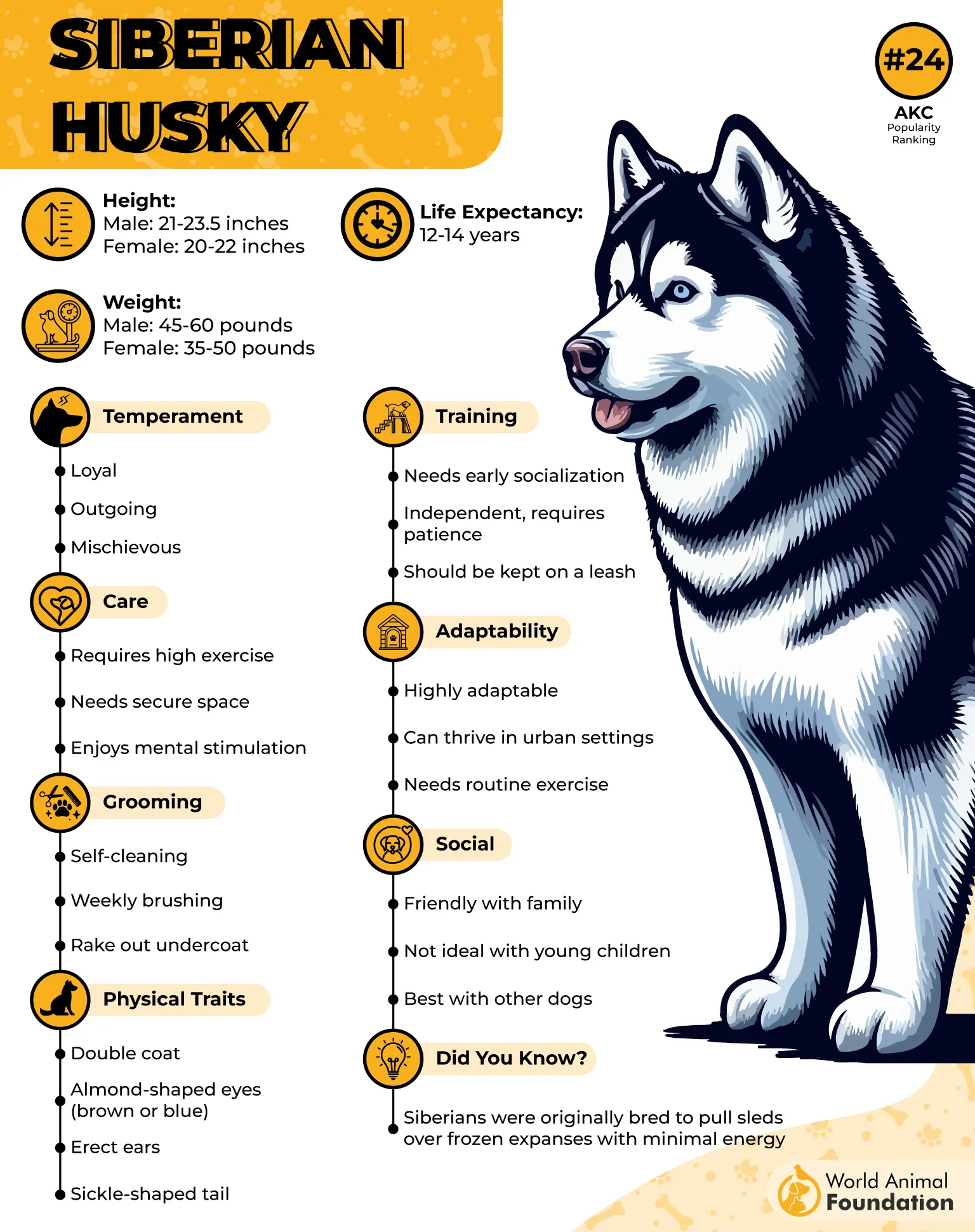
These athletic dogs love to run and roam, meaning they are not a good match for apartment dwellers. With long walks, these dogs outshine other breeds in agility and obedience. If you are thinking of outdoor activities with a Husky, you can pack your backpack without considering any second thought.
3. Tibetan Mastiff
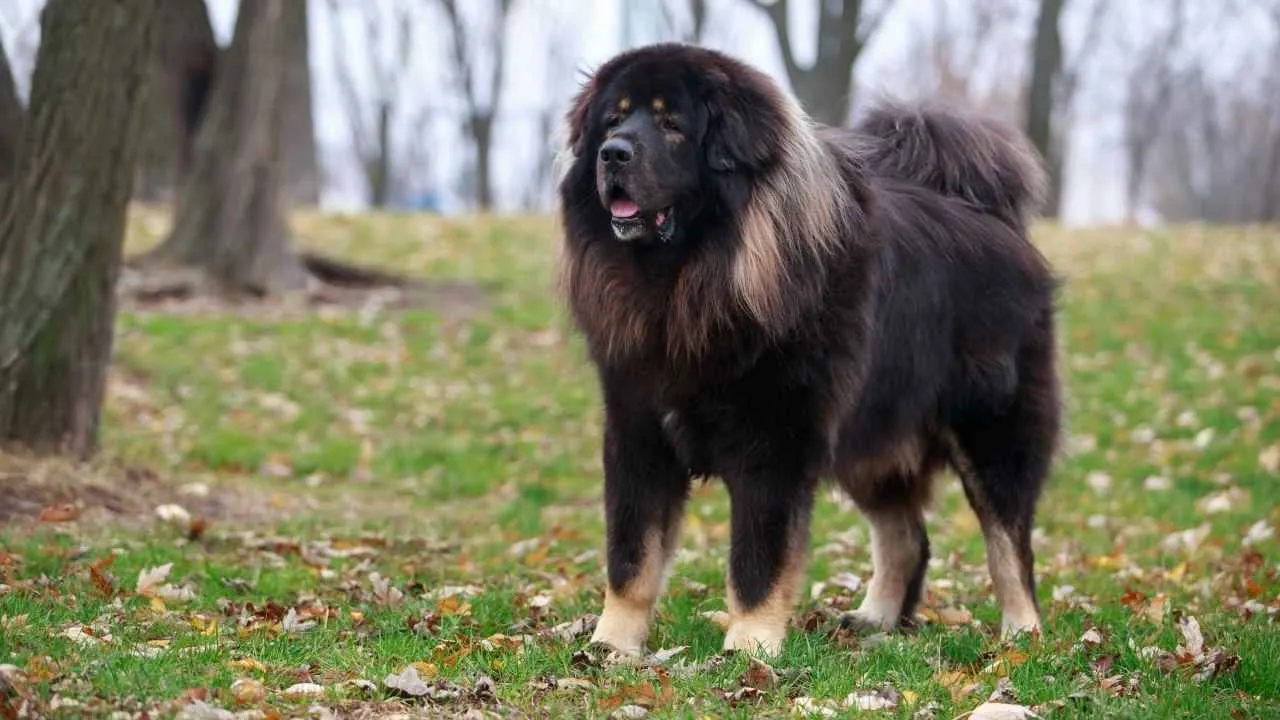
A rare breed, the Tibetan Mastiff is blessed with an intimidating build and size. Back in the past, they were used to protect the monasteries and villages in their native country. These mighty guard dogs of the Himalayan mountains and the Tibetan Plateau were also used to guard the livestock by shepherds.
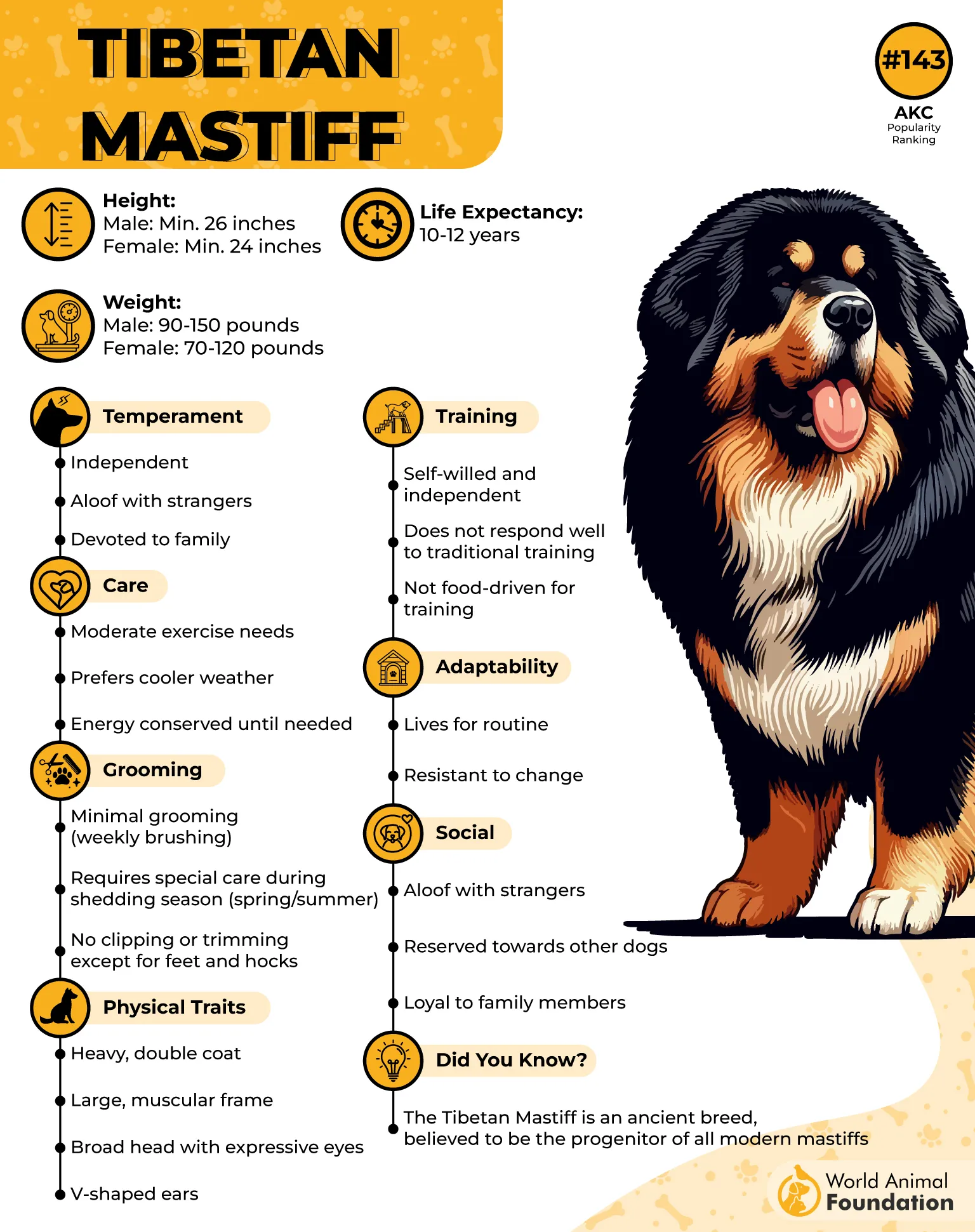
Tibetan Mastiffs are more active dog breed at night than during the day. They have a watchful and calm demeanor and stay reserved around strangers, but bond closely with their family members. Having a thick lion-like coat, they do not do well in hot weather or develop heat stress.
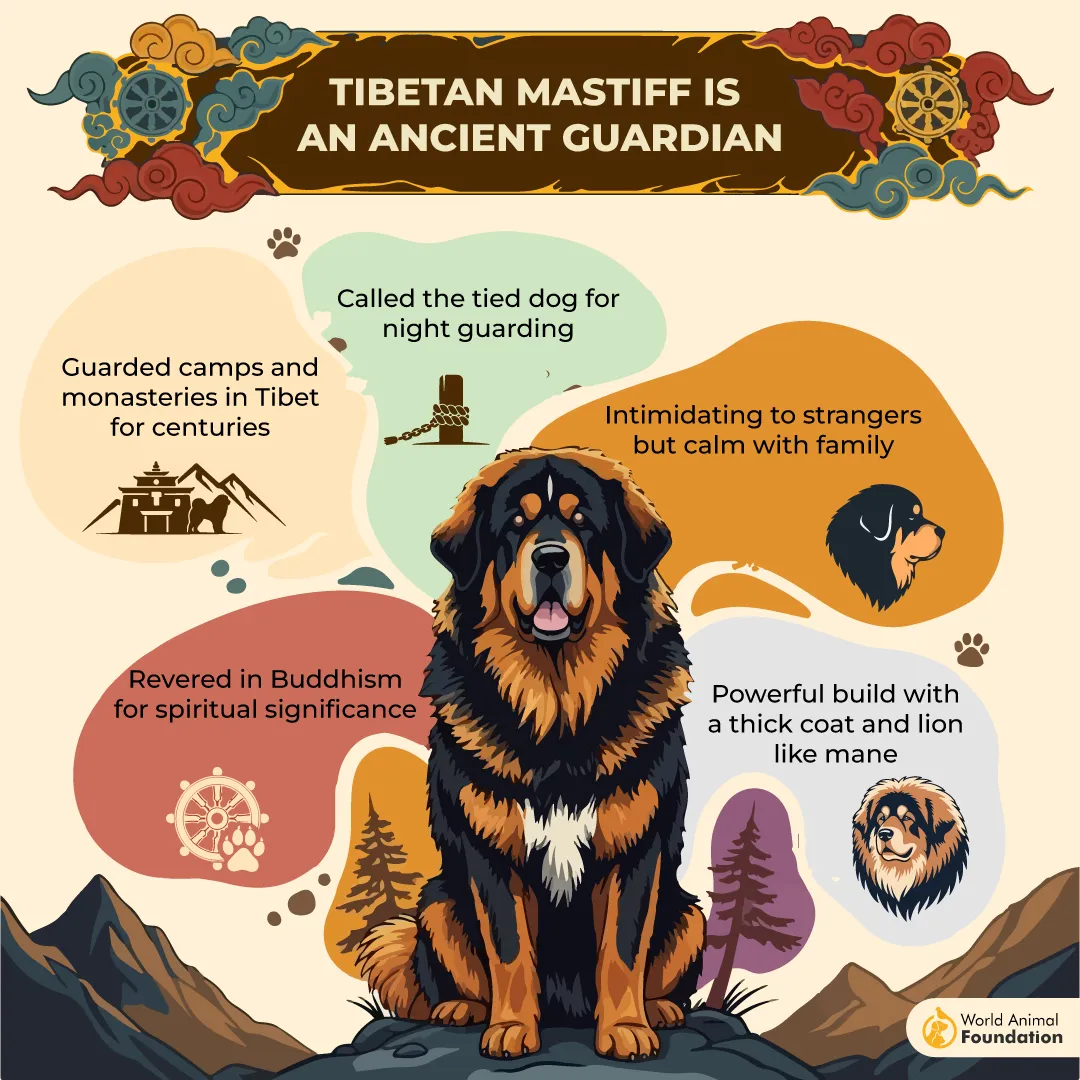
While these dogs are extremely intelligent and learn fast, their obedience training is difficult and takes time and patience from owners. Orvis mentions that the daily exercise of Tibetan Mastiffs ranges up to sixty minutes only, and they enjoy hiking, comprising short and easy trails in icy terrains.
4. Bernese Mountain Dog
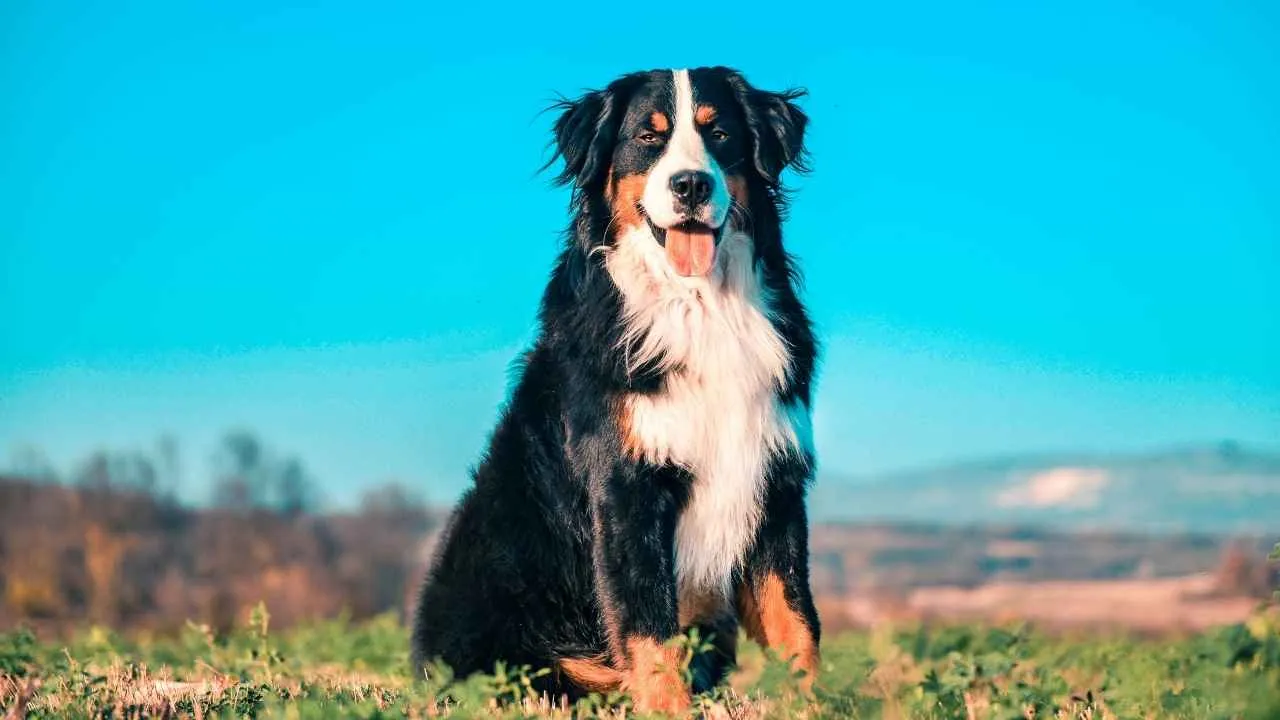
The history of the Bernese Mountain Dog dates back 2000 years to Roman Times, where they were used as herding dogs, sled dogs, and protection dogs for families and livestock. However, today these super versatile dogs are mostly admired as family pets.
The Bernese Mountain Dog is an amalgam of many beautiful traits. Being calm, quite and high-energy dogs, this fun-loving breed excels where ample space and love are provided. Additionally, these gentle giants are great while being outdoors in cold weather, but warm climates do not suit them.
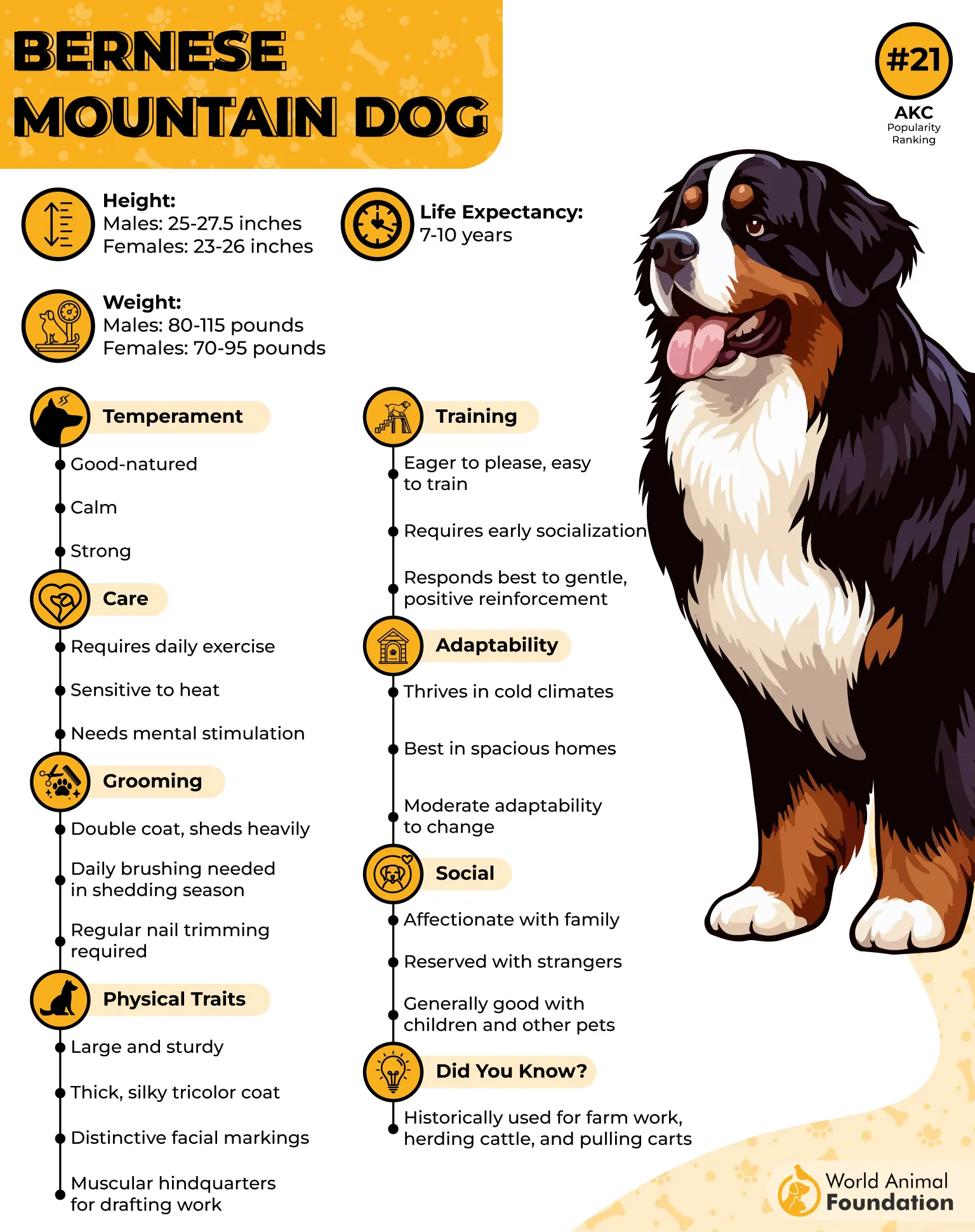
The Bernese dog can accompany you for long hikes in rugged terrain and trail running. Due to their sizes and breeding issues, they are prone to joint problems such as elbow and hip dysplasia. They are highly intelligent and eager to please, making training easier for pet parents.
5. Saint Bernard
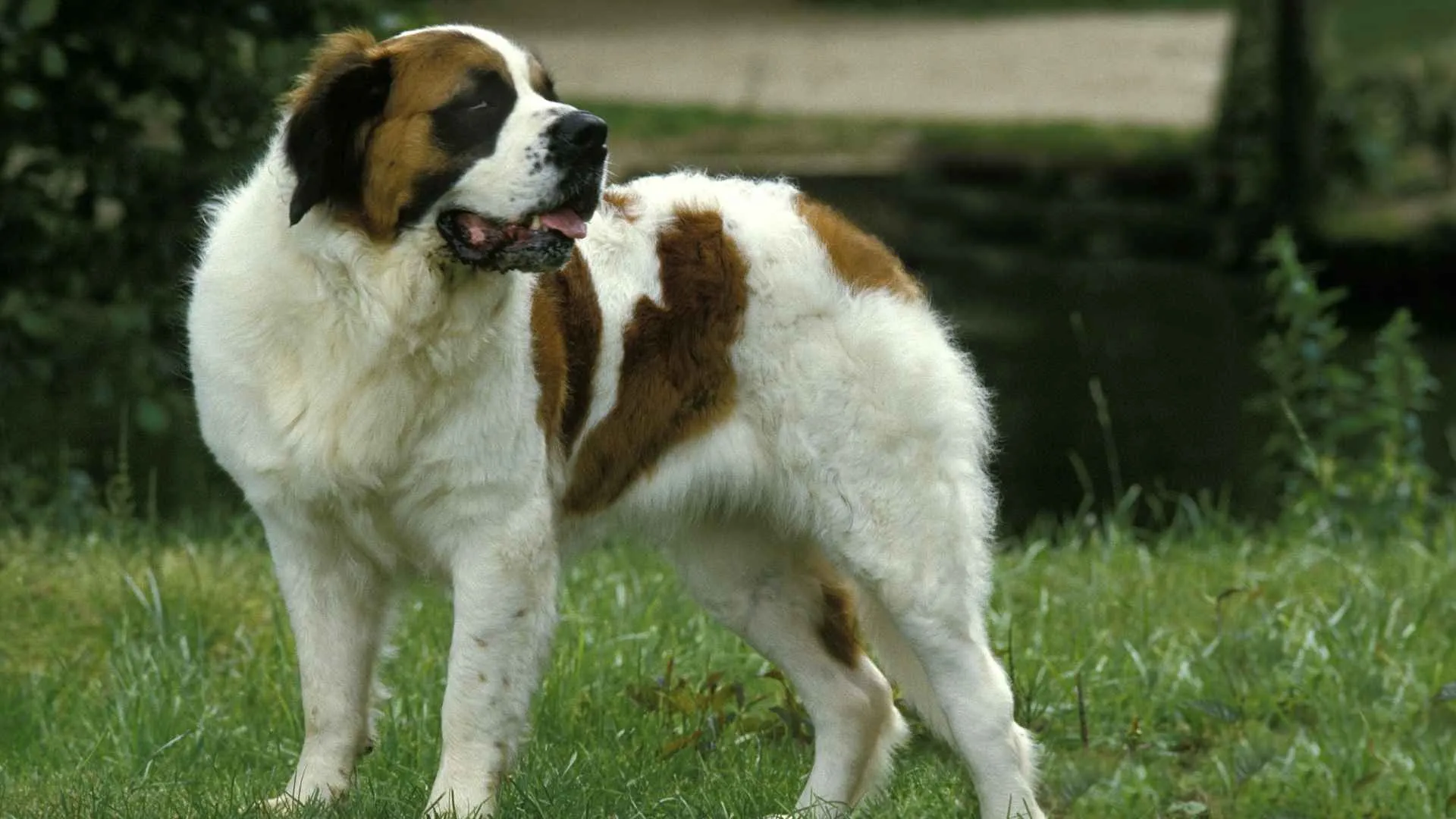
With a broad frame and powerful limbs, Saint Bernards were used to rescue the buried traveler in the snowy terrains of the Swiss Alps. Regardless of having an imposing presence, they are among the world’s most beloved and popular dogs, thanks to their impressive past and soft hearts, according to the AKC.
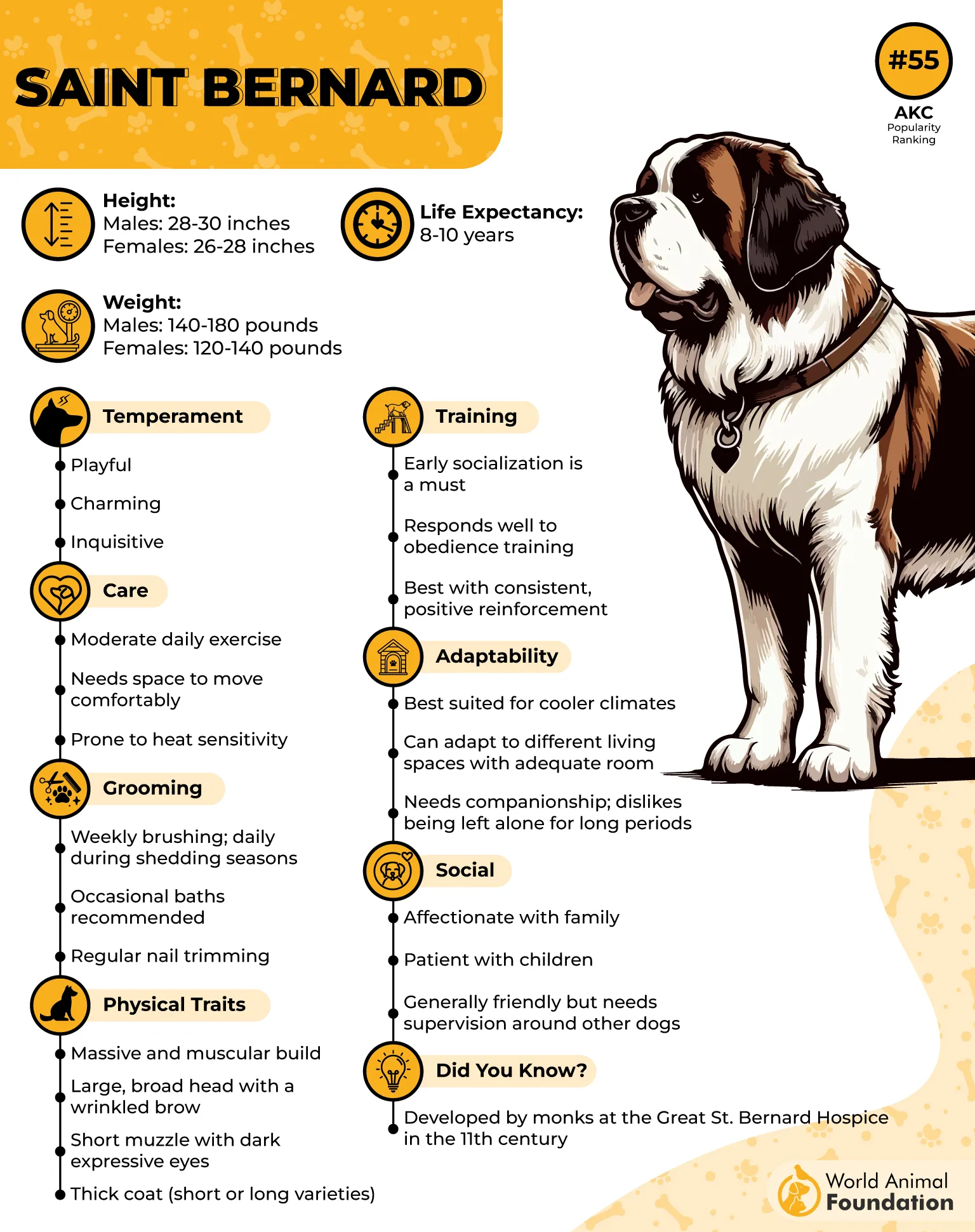
These dogs are very friendly and calm, who get along well with children and other pets if properly socialized and trained. They are not designed for warmer weather, and need 30 minutes of regular exercise for a happy and healthy life.
Since they were bred to rescue, Saint Bernards enjoy short hikes while carrying your essentials in a backpack. They are kind and learn to please their owners. These sensitive souls do not like to be left alone for long periods or may develop destructive behaviors.
6. Great Pyrenees
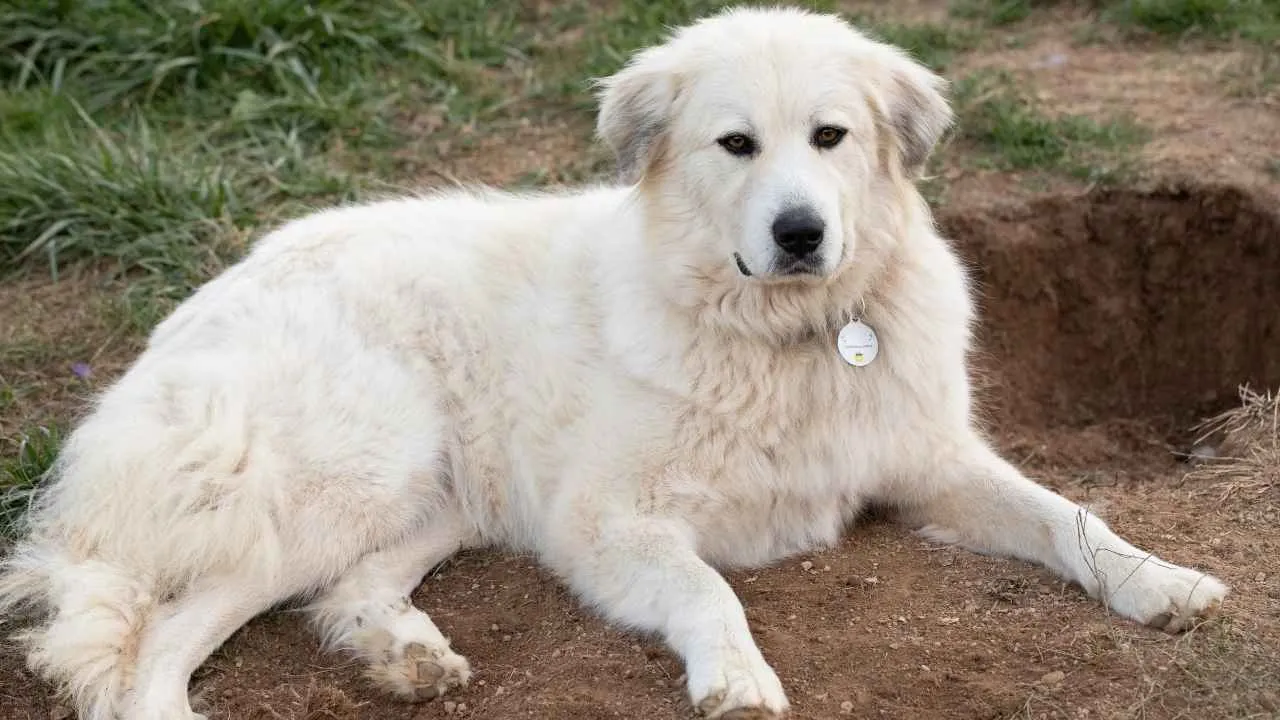
The Great Pyrenees is also known as the shepherd’s dog, as it has been used for protecting livestock for many years in the mountains of France and Spain. Today, this big white-coated gentle giant with its protective instincts intact offers protection to the ones it loves the most, including humans and other dogs.
They are independent dogs and mind their own business, which often makes their training difficult. To keep the health maintained, Great Pyrenees should be provided with regular exercise, including obedience trials and cart pulling.
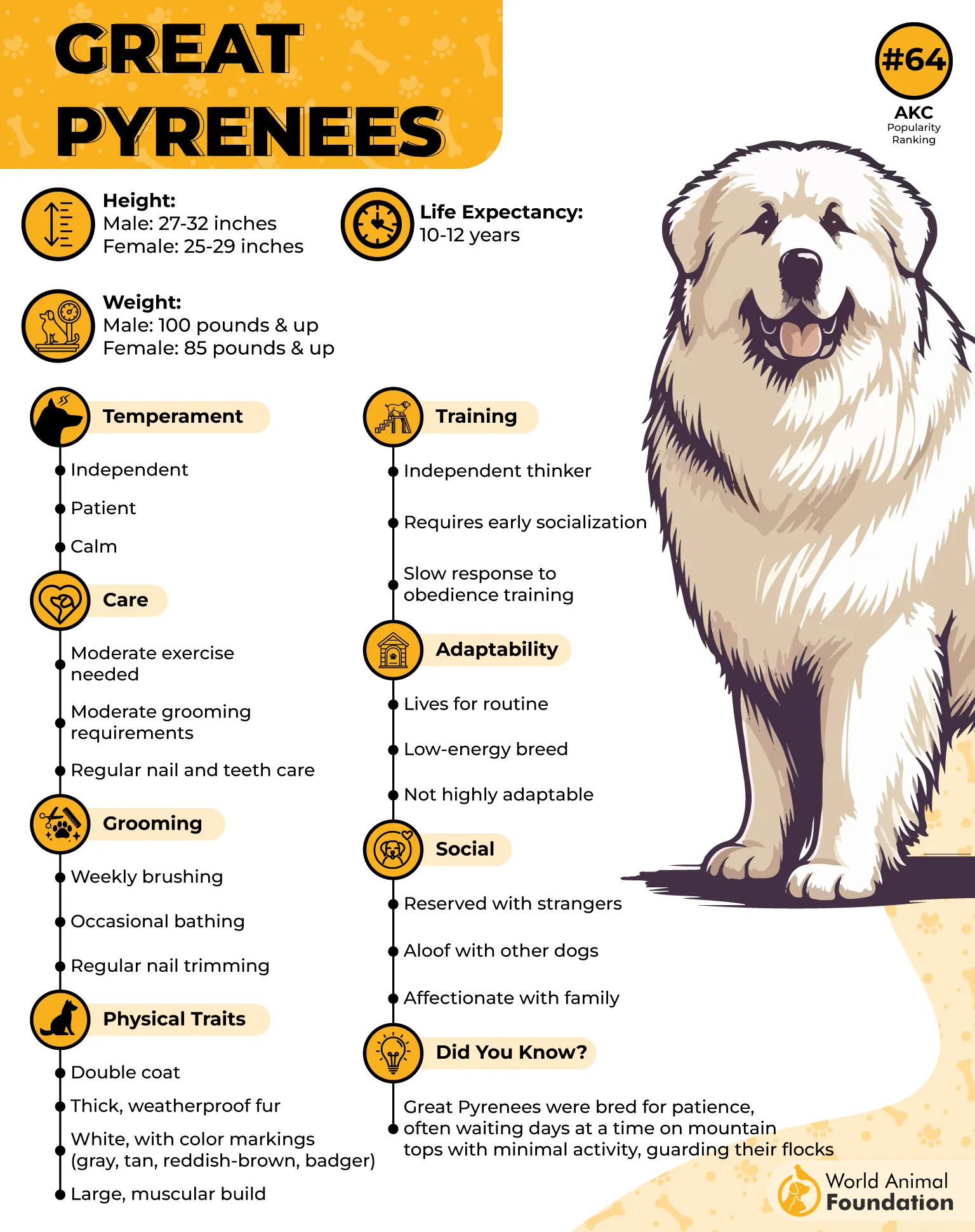
This breed has enough strength and endurance for outdoor living, but its calm temperament prefers to live with humans. Long hikes with Great Pyrenees are always memorable as they are capable of offering companionship along with carrying your backpack.
7. Akita
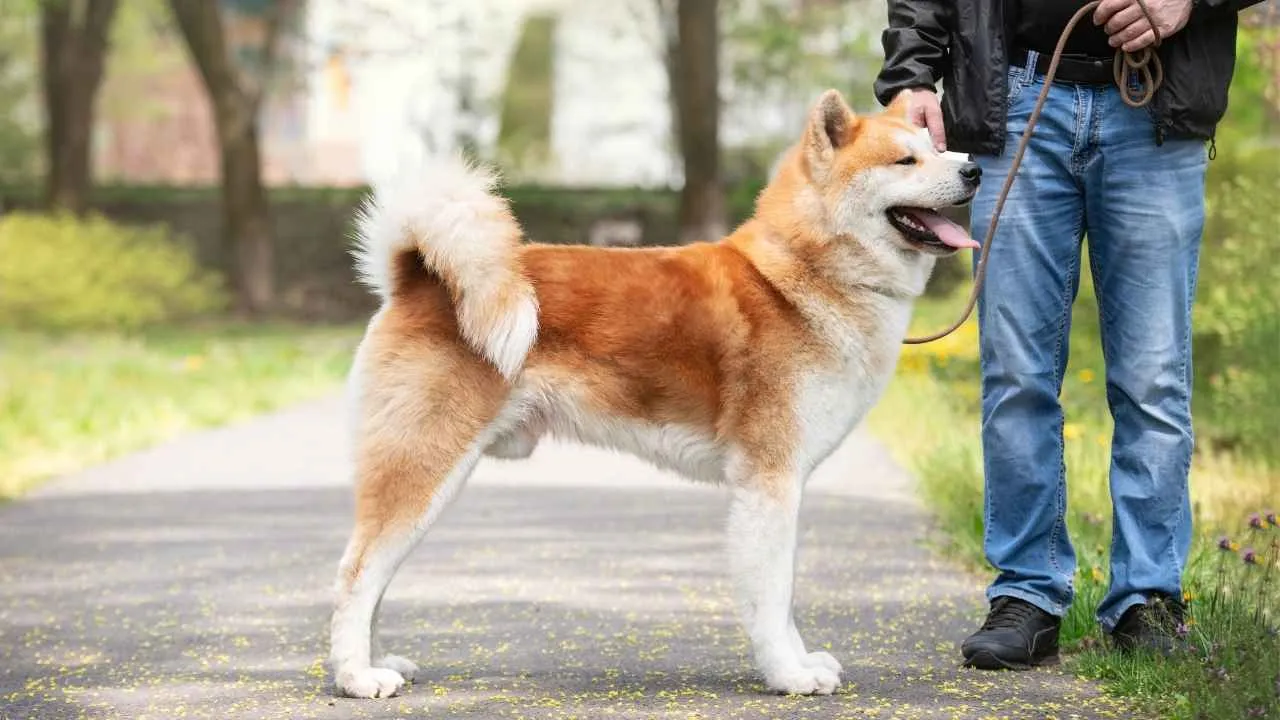
Akita is the largest dog breed of Japan, and was bred to hunt and guard for royalty millennia ago. Today, these loyal dogs are celebrated as a symbol of happiness and health in their native homeland. Being an active dog breed, they love to play with their active families.
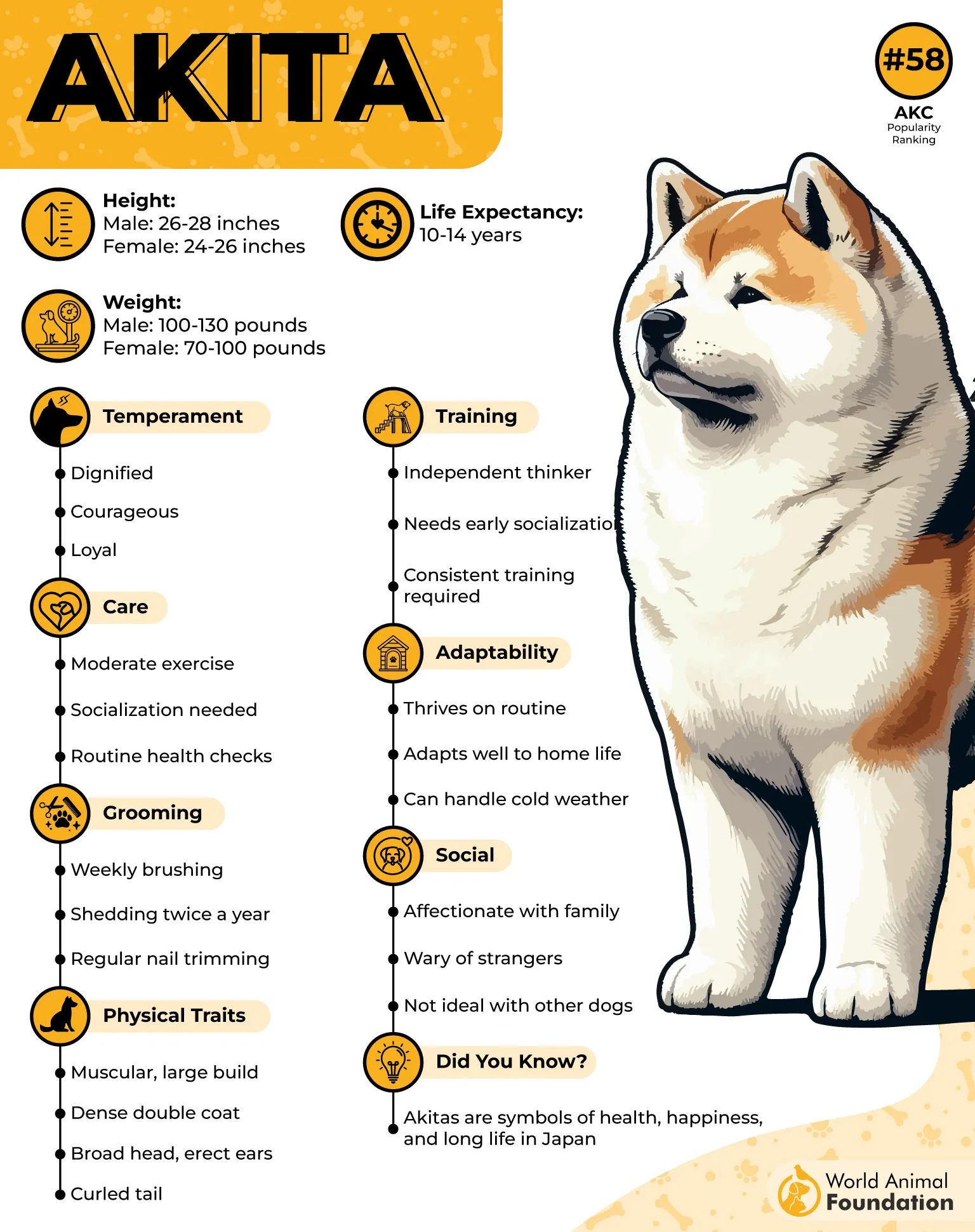
Akita is intolerant of other animals and wary of strangers, but with its owner, this breed always show affectionate and silly side. They are independent canines and suited to experienced pet parents who can teach them basic training to act confidently.
Though Akita do not have boundless energy, they love outdoor adventures in cold weather, such as long hikes and hunts. Owing to strong prey drive, they chase after small animals with swift movements, which is why Akitas should not be kept off leash.
Conclusion
Resilience and loyalty often go hand in hand; the above-mentioned list of our dogs proves this. Whether trekking through snow-covered terrains or guarding remote homesteads, these hardy companions thrive where others struggle.
With proper care and training, these dogs not only survive harsh environments but also form deep bonds with people who rely on them.
Belgian Malinois, English Sheepdog, Bluetick Coonhound, Rhodesian Ridgeback, German Shorthaired Pointer, Border Collies, Jack Russell Terriers, Australian Cattle Dog, Australian Shepherd, and German Shepherd, are some more active and best dog breed sad with different temperaments and origins.
