




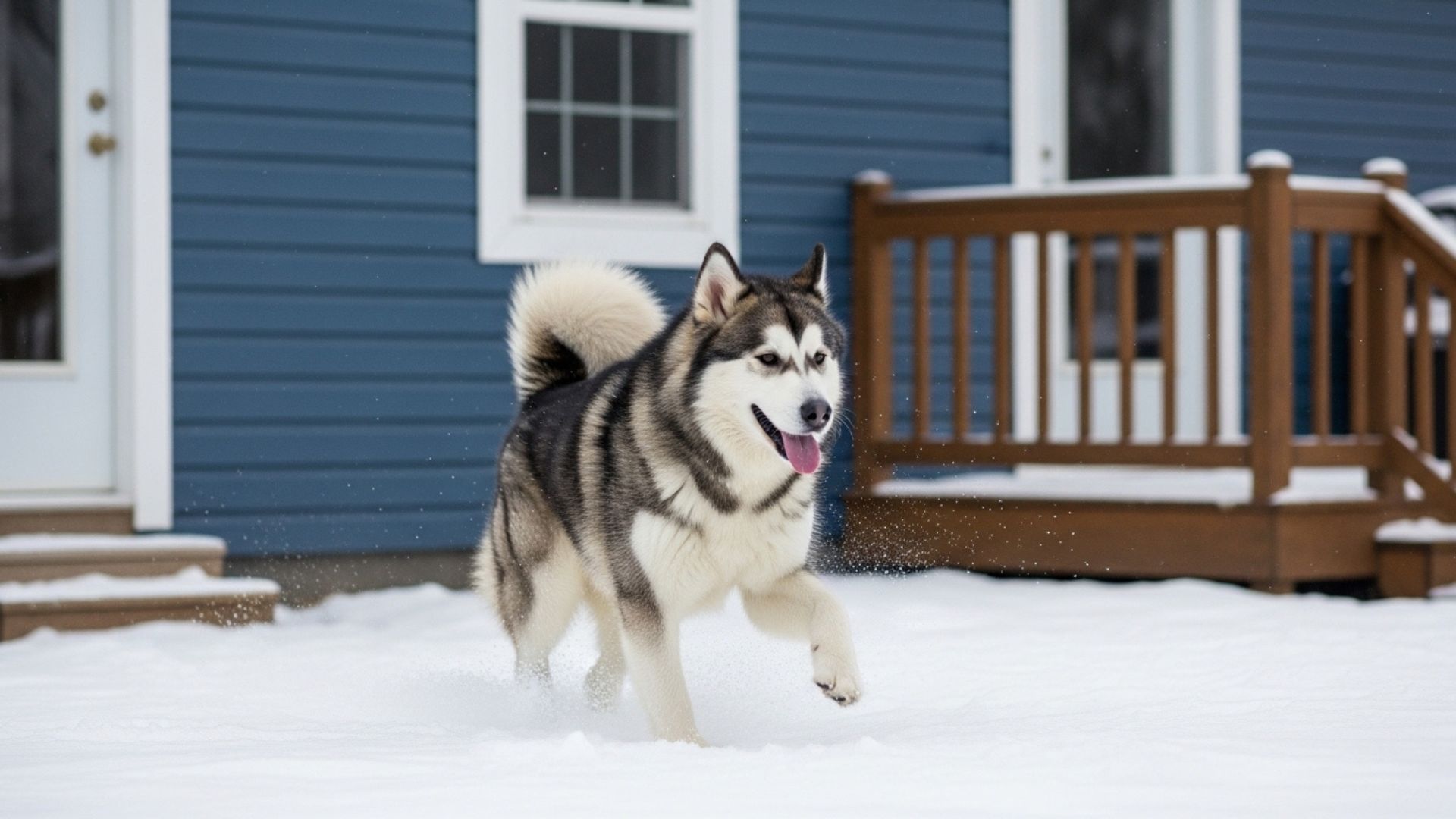
Winter is not for the faint of fur. While some pups would rather sunbathe year-round, others were practically built for blizzards. Hardy cold-weather breeds come equipped with thick double coats and roots that trace back to icy regions, which means snow days feel more like play days.
From powerful working dogs to fluffy companions who treat frost like confetti, these breeds shine when temperatures drop. Of course, even the fluffiest snow lover needs safe, cozy care when it gets bitterly cold. Ready to meet the dogs who think winter is their season?
Did you know?
Many cold weather breeds come with built in winter gear. Some have broad paws that work like natural snowshoes and bushy tails they curl over their noses for warmth, plus a built in heat exchange system in their feet that helps maintain body temperature in icy conditions.
Hardy Dog Breeds: Ready for Winter’s Chill
1. Siberian Husky
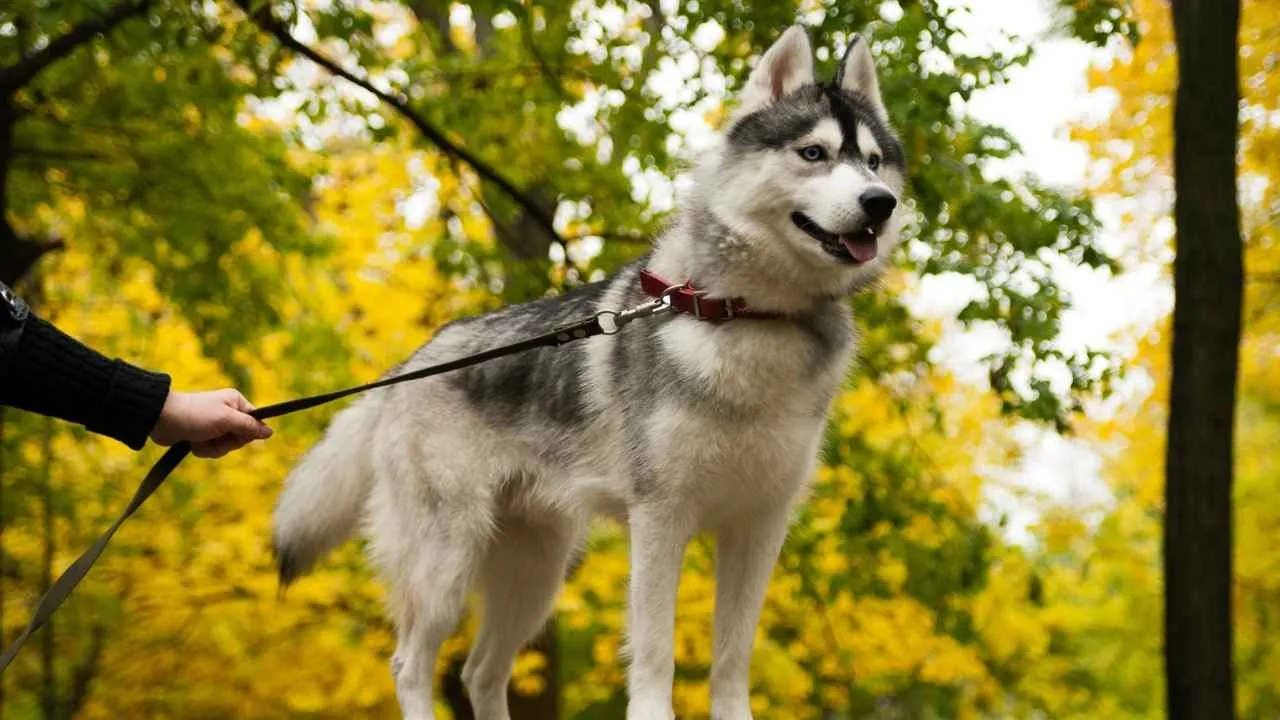
Snow starts falling, and the Siberian Husky suddenly looks fully alive. This medium-sized, thickly coated sled dog carries a mischievous spark in almond-shaped eyes that can be brown, blue, or both. Friendly and dignified, the Sibe treats frosty mornings like an open invitation.
Developed by the Chukchi people of northeastern Asia, these dogs were bred to pull light loads at moderate speeds across vast frozen expanses. They worked in packs, covering long distances efficiently while conserving energy in sub-zero temperatures.
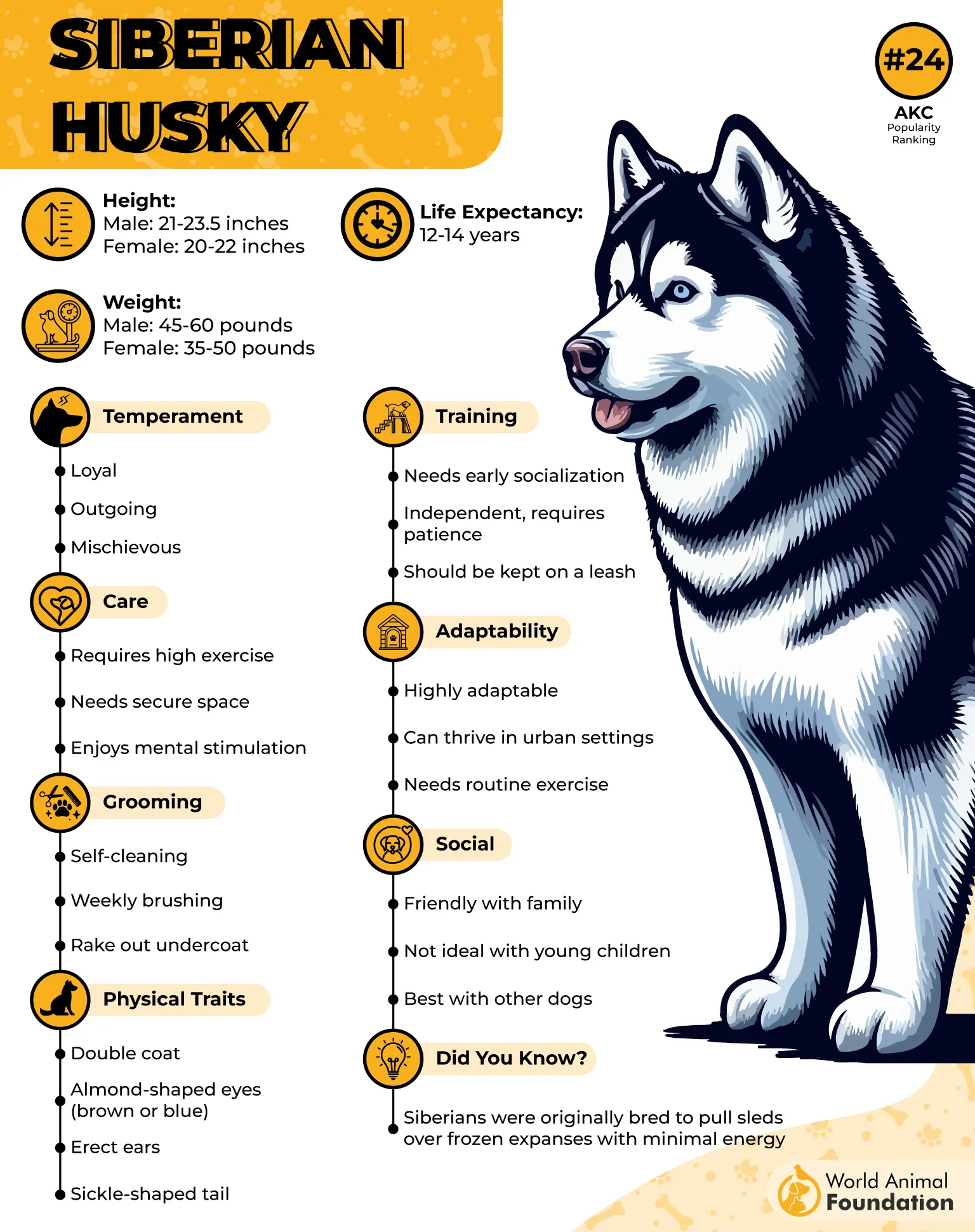
A dense insulating undercoat holds warmth close to the body, while longer guard hairs repel snow and moisture before it reaches the skin. Tough, padded paws with fur between the toes add traction and protection, letting them move across icy terrain with ease.
Special Considerations For this Breed
Has a strong instinct to chase small animals and needs secure containment
This breed is not well-suited to being left alone all day due to its social nature.
2. Alaskan Malamute
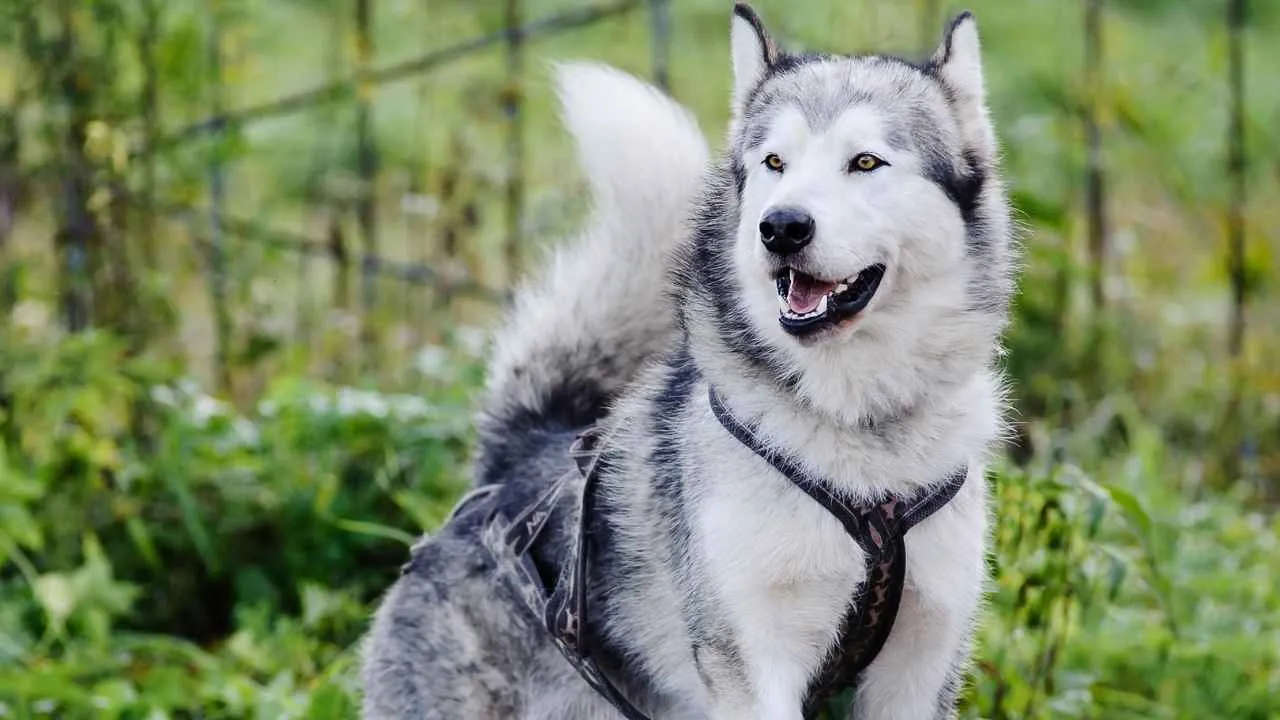
If winter had a heavyweight champion, it would look a lot like the Alaskan Malamute. Substantial bone, a deep chest, and a furry, plumed tail give this spitz-type worker an unmistakable presence. Beneath that powerful build is a loyal, playful, affectionate spirit.
Originally bred by the Mahlemiut people of Alaska, Malamutes were designed to haul heavy loads at low speeds over long distances. They worked in teams, acting as freighters of the Arctic, built for strength and endurance rather than quick bursts of speed.
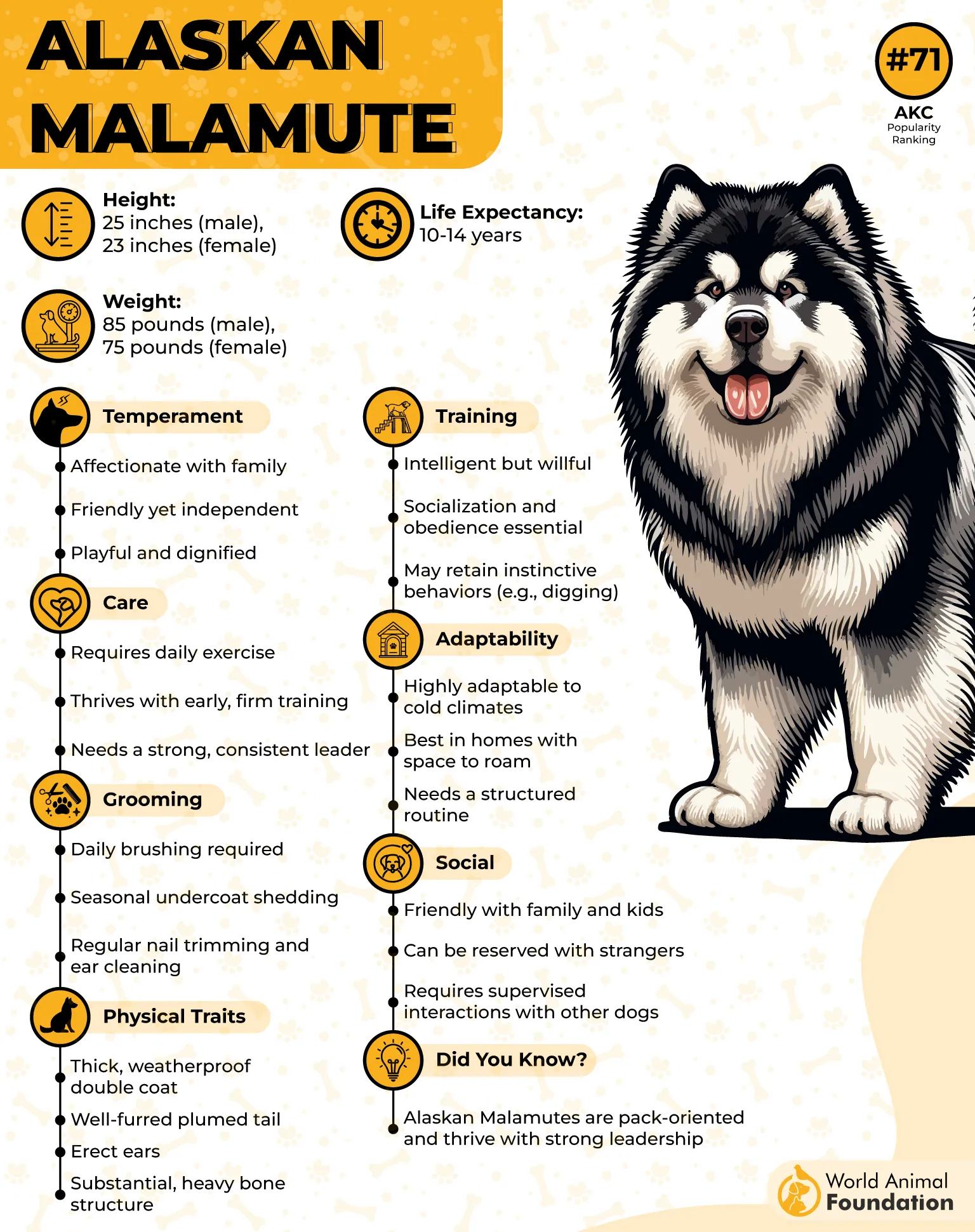
That weatherproof, thick coat shields them from harsh Arctic conditions while they carry serious weight across snow-covered ground. Everything about their structure, from powerful shoulders to sturdy frame, reflects a dog meant to work steadily through bitter cold.
Special Considerations For this Breed
Can be willful and stubborn, requiring early consistent obedience work
Needs significant daily activity to channel strength and prevent boredom
3. Bernese Mountain Dog
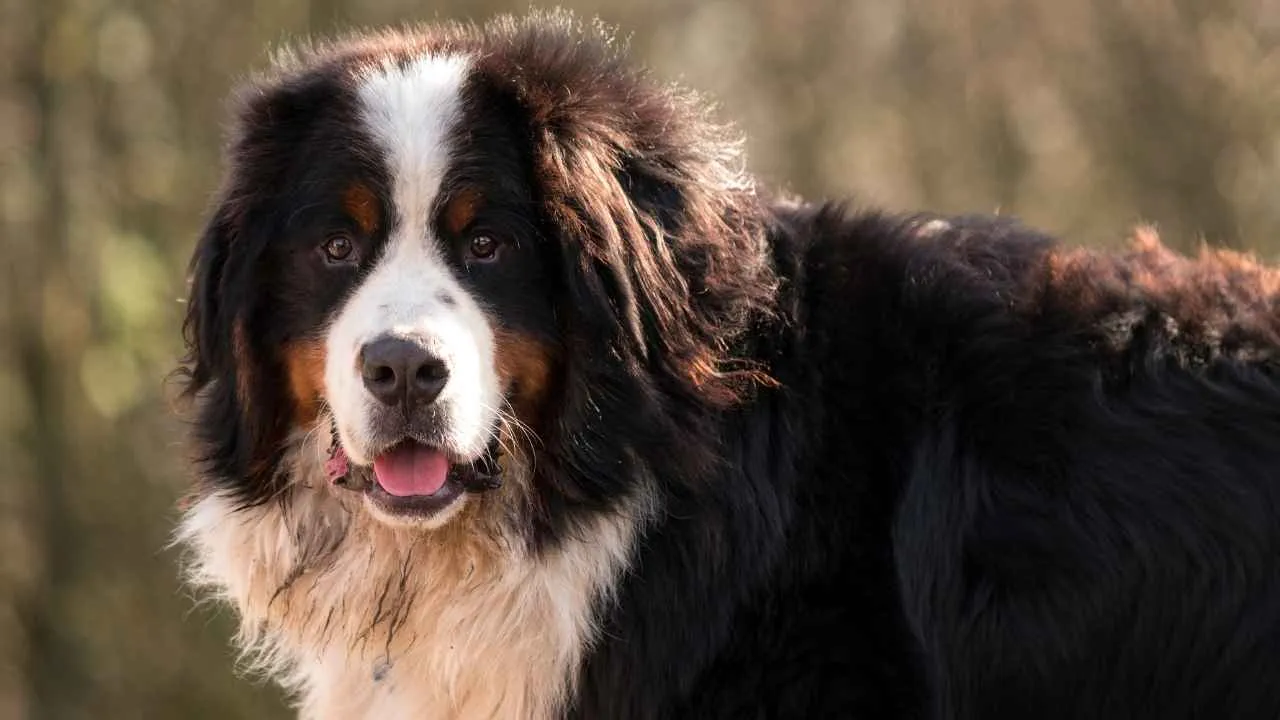
The Bernese Mountain Dog steps into a snowy landscape like it belongs in a postcard. Big, sturdy, and wrapped in a striking tricolor coat of black, white, and rust, this Swiss farmhand combines strength with a sweet, open expression.
A longer outer coat paired with a woolly undercoat offers dependable insulation in cold climates. Hardy and built for outdoor tasks, the Berner remains comfortable in brisk weather while staying calm and composed through long, chilly workdays.
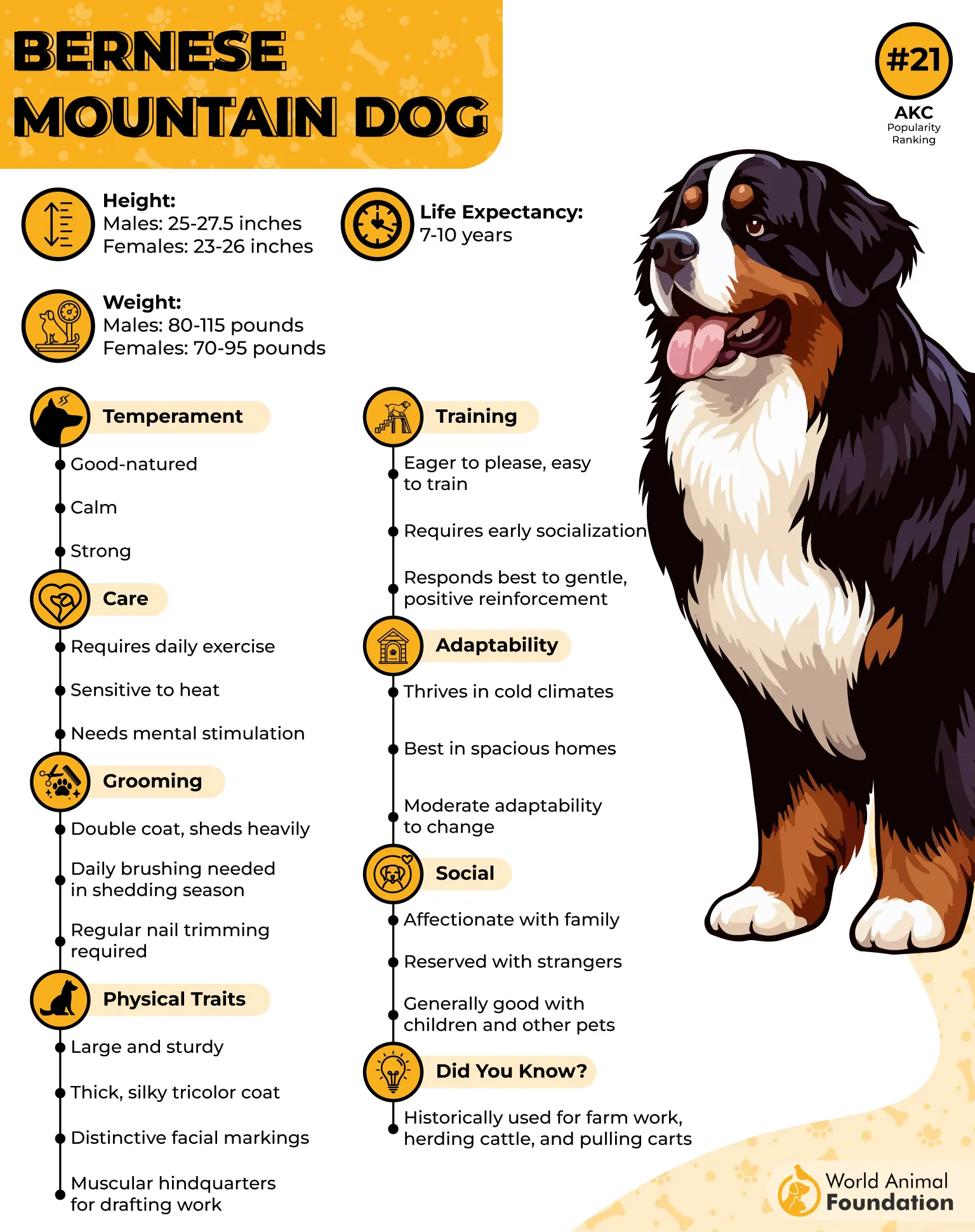
In the canton of Bern, these dogs multitasked across farms and mountain pastures. They drove cattle, guarded property, and pulled carts loaded with goods, using muscular hindquarters and steady focus to move confidently across rugged, snowy terrain.
Special Considerations For this Breed
Heavy year-round shedding increases during seasonal coat changes
Prone to certain joint conditions that benefit from careful weight management
4. Tibetan Mastiff
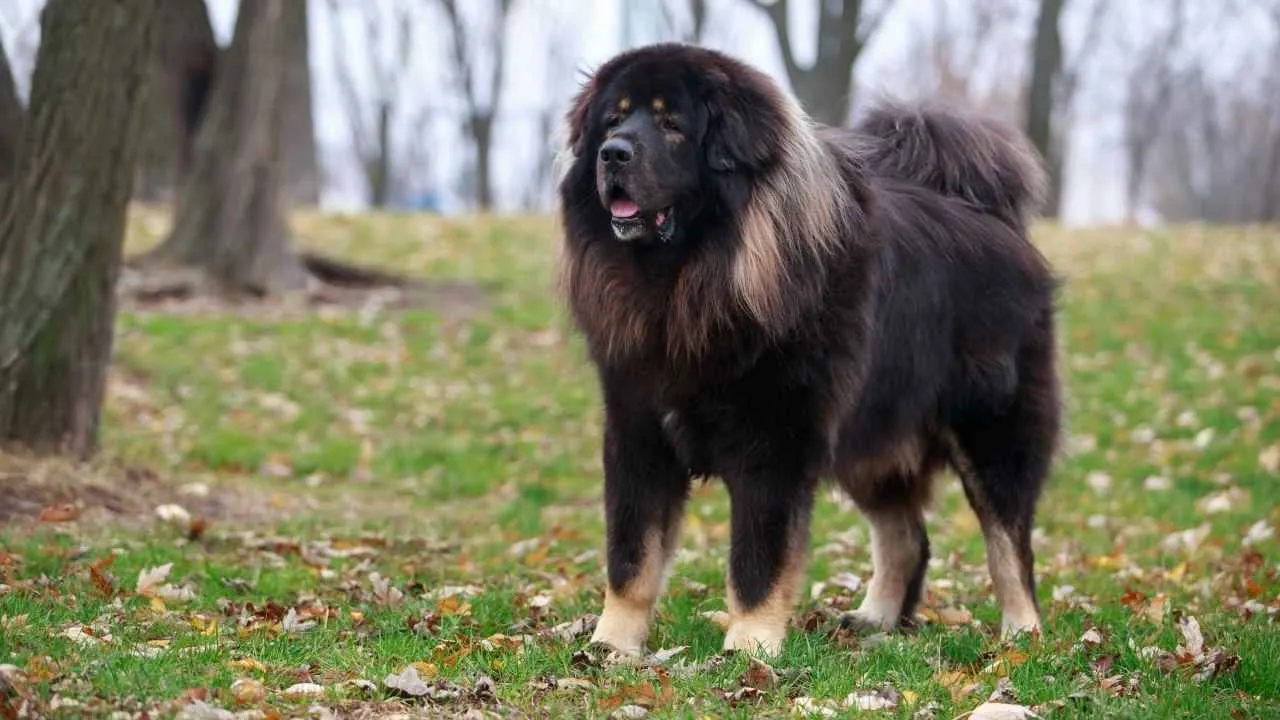
High in the Himalayas, the Tibetan Mastiff built its reputation as a guardian long before modern dog shows existed. Recognized by the American Kennel Club (AKC) in 2006, this towering, muscular breed carries a broad head, expressive brown eyes, and an air of quiet authority in cold climates.
Gentle and devoted with family, the breed remains reserved and territorial with strangers. Calm indoors and more active in cooler weather, it prefers purposeful patrol over structured games, conserving energy until something demands attention.
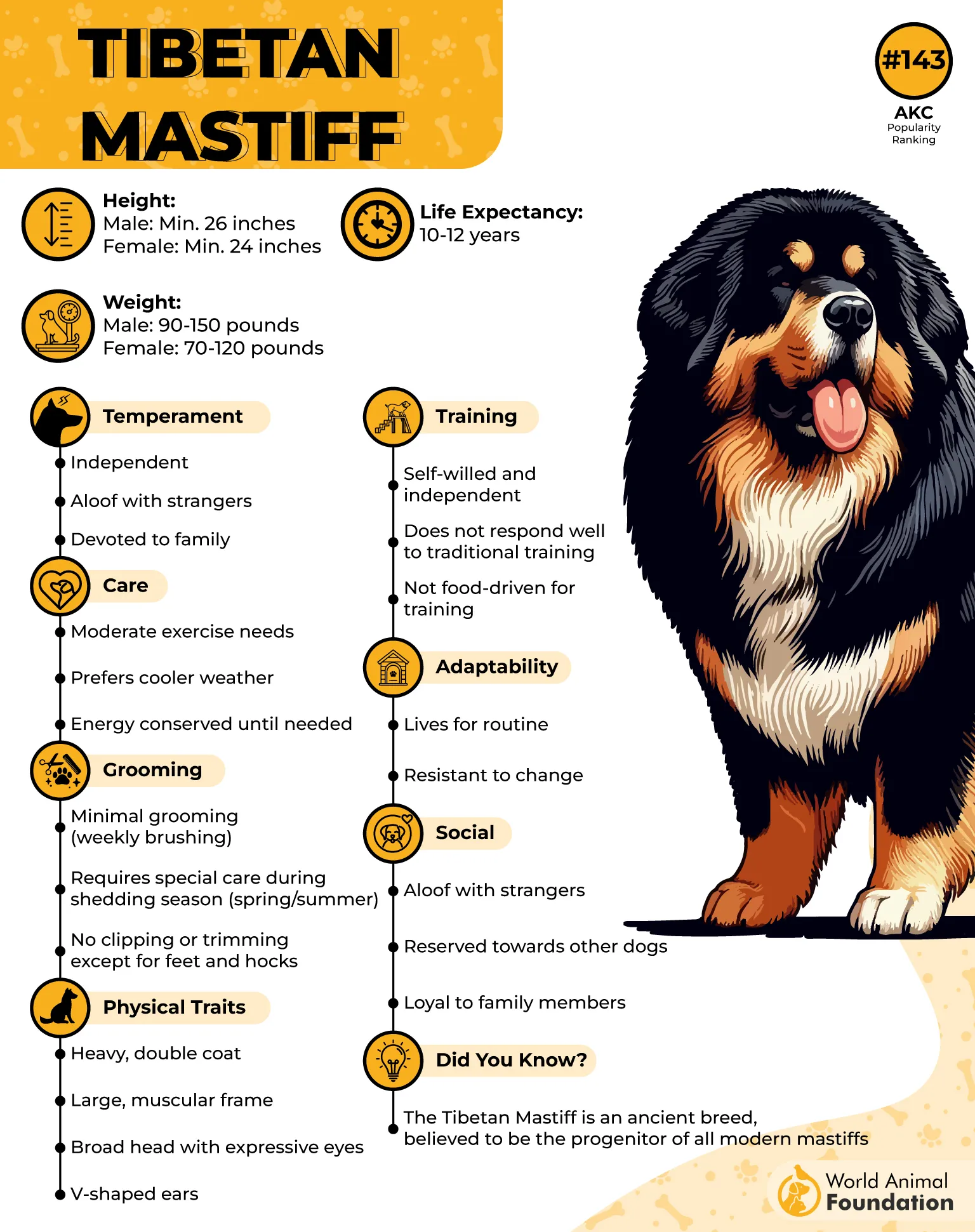
This giant is strictly for seasoned dog owners who know their way around powerful, independent breeds. They need space, secure fencing, and peaceful walking routes. Homes with older teenagers or no children at all are the better match.
Special Considerations For this Breed
Not reliably responsive off-leash and requires a secure space to roam
Does not respond consistently to treatment-based training and requires patient handling
5. Akita
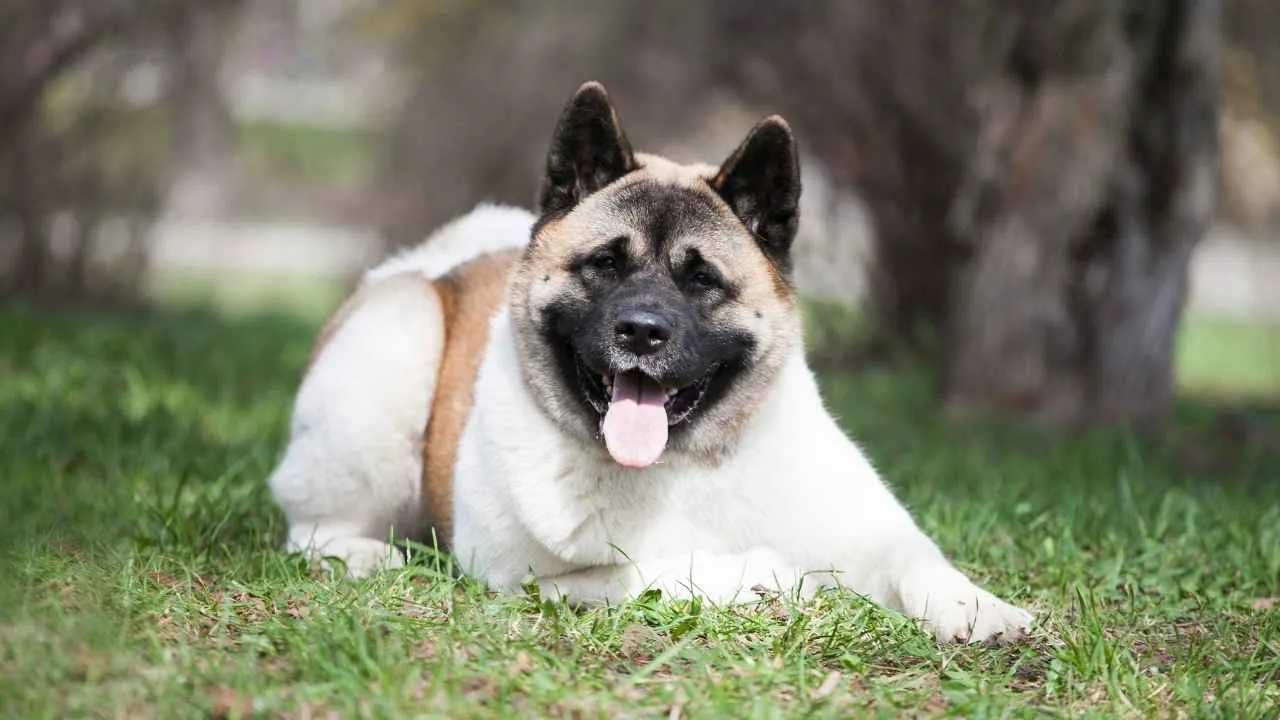
Snowy landscapes suit the Akita’s serious expression and sturdy build just fine. This cold-weather dog from northern Japan carries dignity in every step, with a broad head, erect ears, curled tail, and thick fur built for cold conditions.
According to WebMD, Akitas do not need intense workouts to stay healthy. A brisk walk or easy jog once or twice daily usually does the trick. They enjoy simple games like fetch, but heat and overexertion should always be avoided.
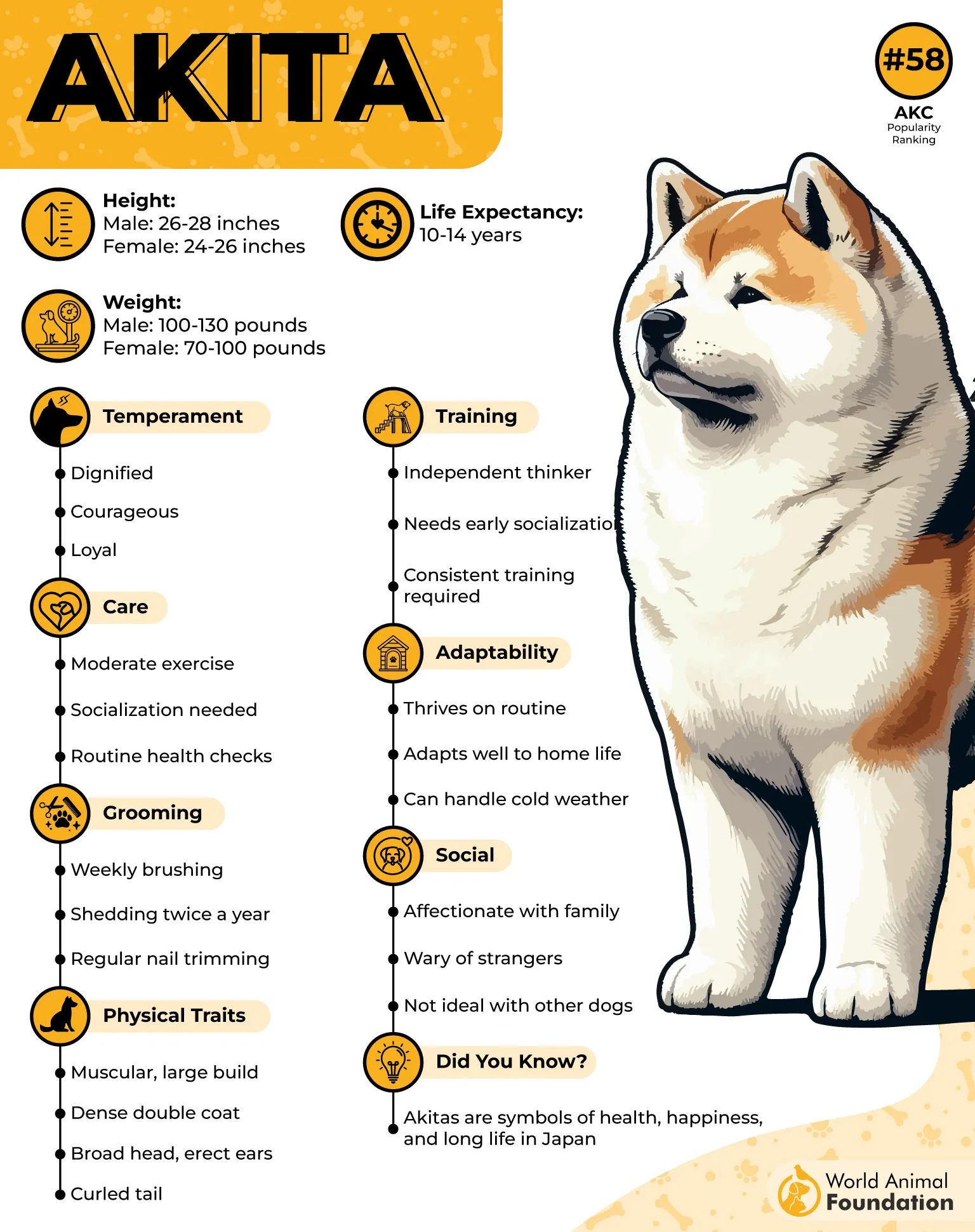
Intelligent and profoundly loyal, this snow dog breed also has an independent, headstrong streak. Consistent instruction beginning in puppyhood is essential, along with early socialization, so they learn to accept strangers appropriately.
Special Considerations For this Breed
Increased risk of bloat, which requires pet parents to recognize emergency symptoms
Can be food possessive and should be fed separately from other pets
6. Great Pyrenees
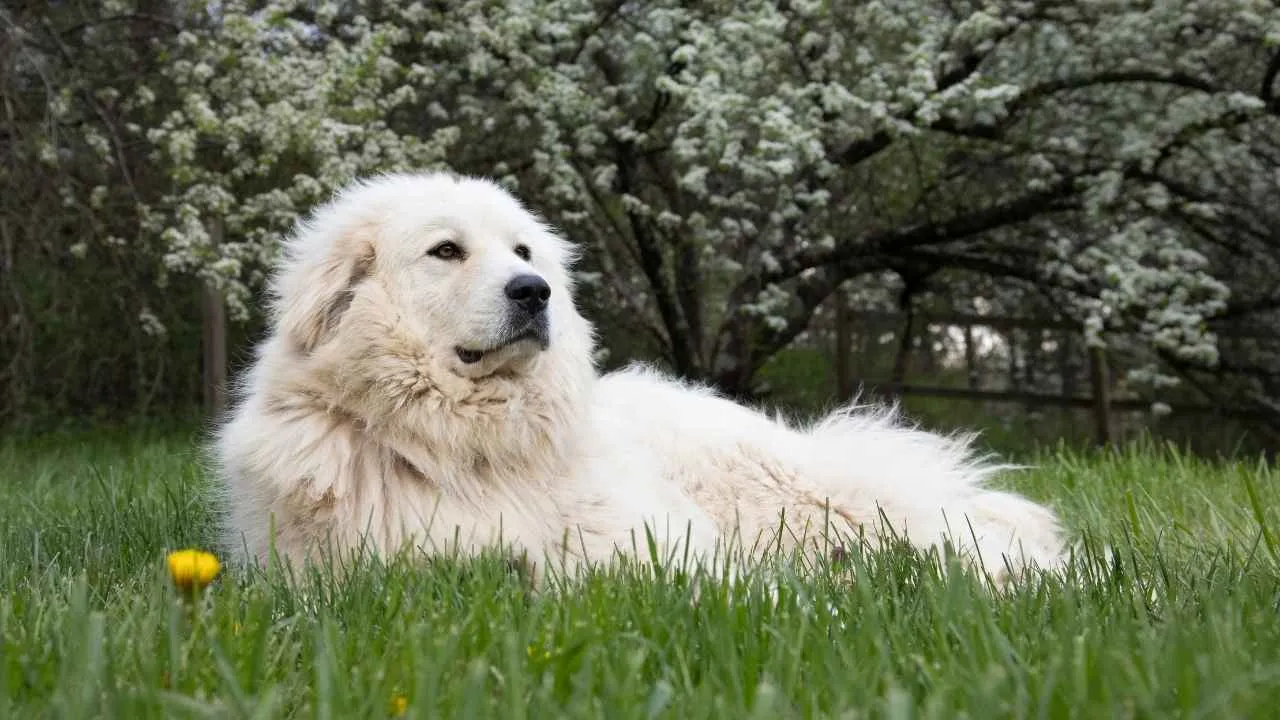
Perched on frosty ridgelines with that thick white coat catching the light, the Great Pyrenees looks like it was born to rule the snowy mountains. Calm, patient, and quietly watchful, this mountain-bred guardian carries a peaceful vibe that can switch to full alert in a heartbeat.
For centuries in the Pyrenees Mountains between France and Spain, these dogs protected flocks from wolves, bears, and rustlers. They conserved energy while patrolling vast, freezing terrain, then moved with grace and speed when a real threat appeared.
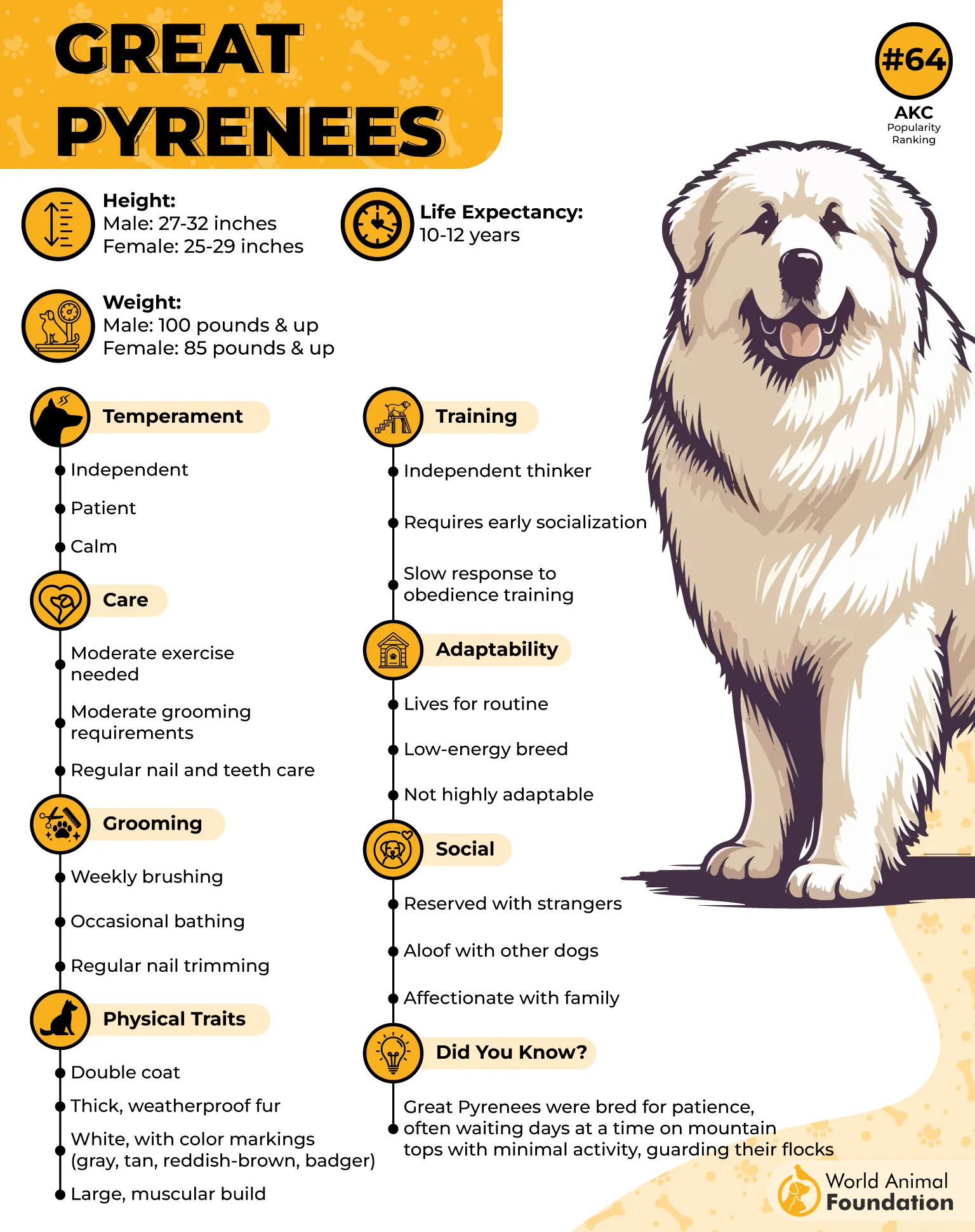
Great Pyrenees have a fairly low energy level and are not constantly on the move. They are calm, steady dogs who prefer relaxed activity over nonstop action, making them more about quiet patrols than high-speed adventures.
Special Considerations For this Breed
An independent mindset can result in slow responses during standard obedience work
Strong tendency to bark as an alert, even at minor disturbances
7. Saint Bernard
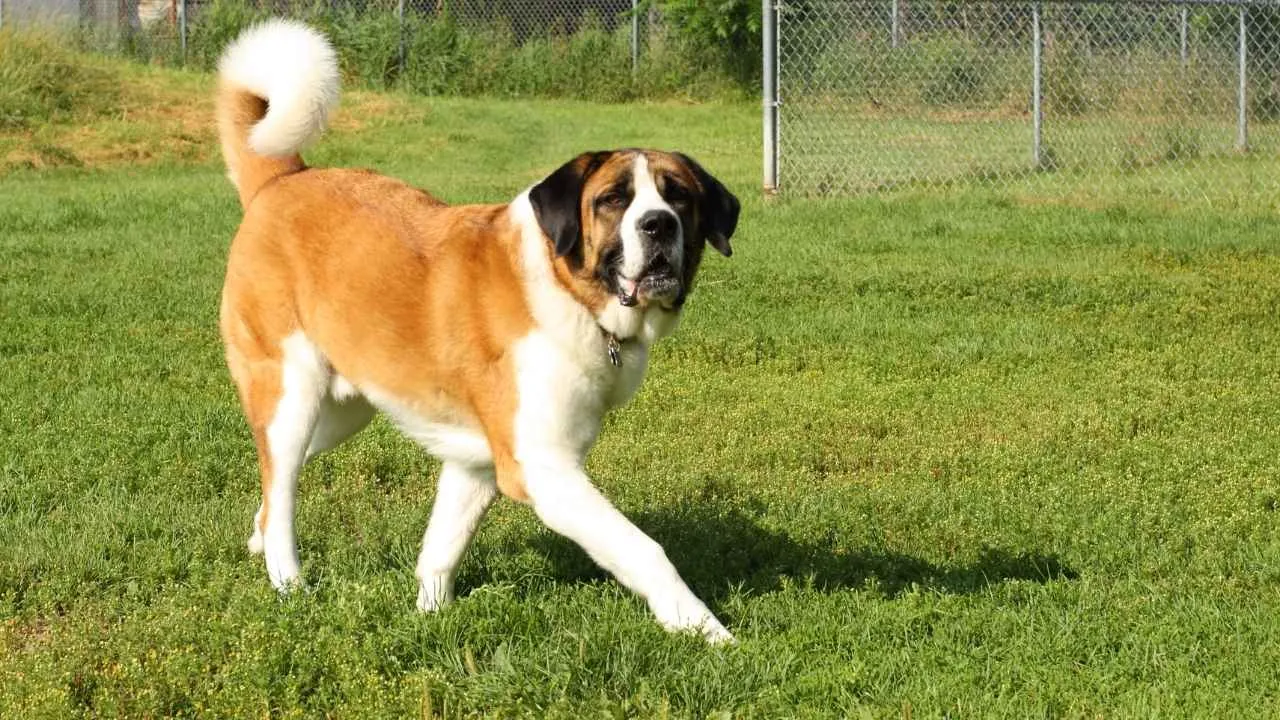
Few dogs are as instantly recognizable in snowy scenes as the Saint Bernard. Massive, extraordinarily muscular, and crowned with a huge head and beautiful dark eyes, this gentle giant combines imposing size with a famously patient, friendly nature.
Centuries ago, at the Great St. Bernard Pass in the Alps, these dogs were developed as avalanche rescue dogs to locate and rescue travelers buried by snow. Working at high altitudes through deep drifts, they became legendary lifesavers in brutal winter conditions.
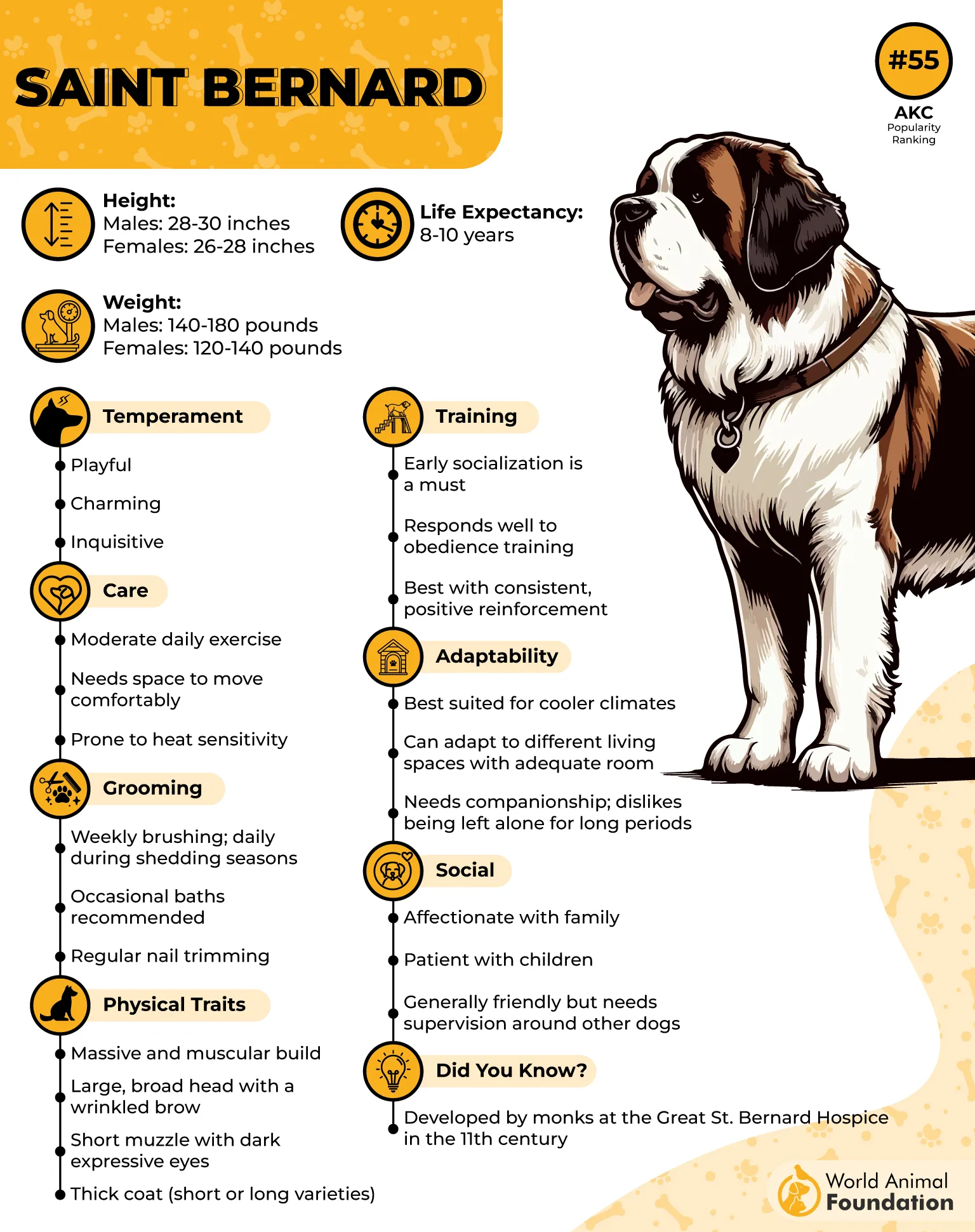
As noted by PetMD, Saint Bernards start as big, bouncy puppies and then mellow into the calm giants everyone loves. They are smart and genuinely want to please, so early training goes a long way with a dog this wonderfully massive.
Special Considerations For this Breed
Produces significant drool that requires regular cleaning around the mouth
Size makes early socialization and structured obedience classes especially important
Conclusion
As temperatures drop and the days grow crisp, certain dogs seem to light up with excitement. The breeds we explored are not just built for frosty days; they embrace them with confidence and strength. Each one offers something unique to a home that understands their needs.
If snow piles high where you live, welcoming one of these hardy companions could feel like a natural fit. Take your time, learn their personalities, and picture the kind of partnership you want. The right match will not just handle the cold, it will warm your life in the best way.
If you are further interested in such wonderful breeds, some other dogs you can look up include American Eskimo Dog, Chow Chow, German Shepherd, Shiba Inu, and Norwegian Elkhound.
