




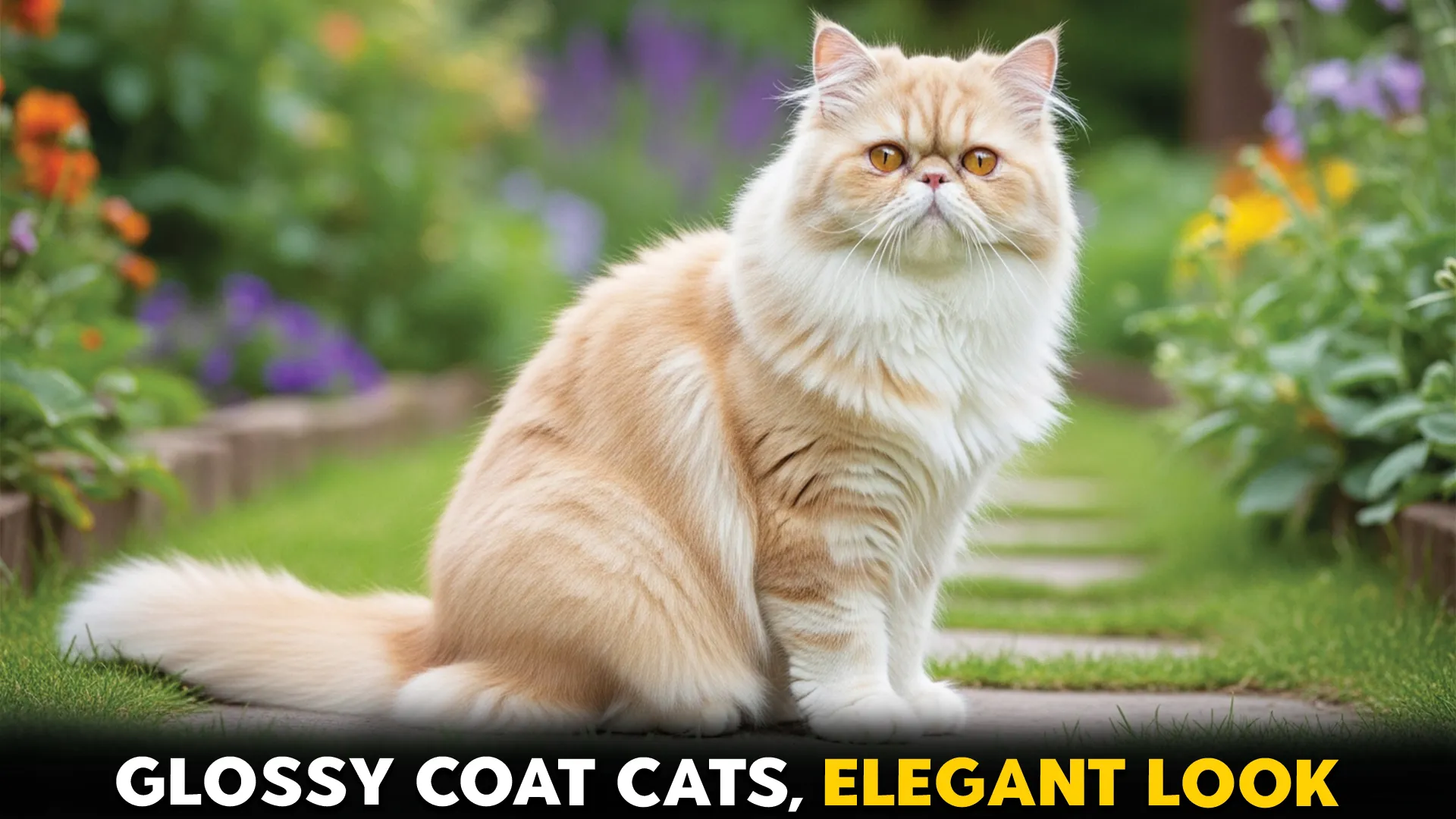
A glossy coat is often one of the first things people notice about a cat, instantly signaling health, elegance, and good genetics. From sleek short fur that reflects light like satin to smooth, flowing coats with a natural sheen, shine is more than just a cosmetic trait. It’s the result of fine hair texture, balanced oils, and well-structured fur that lies flat and smooth against the body.
Breeds with naturally fine, short, or silky fur often appear shinier because their coats tangle less and allow light to bounce cleanly off the surface.
In this article, we explore seven cat breeds celebrated for their glossy coats and refined appearance. By taking a closer look at the genetics behind shine and smooth fur, you’ll discover why certain cats maintain a polished look with minimal effort and how their unique coat traits set them apart from fluffier, high-maintenance breeds.
Cat Breeds with Glossy Coats
1. Burmese
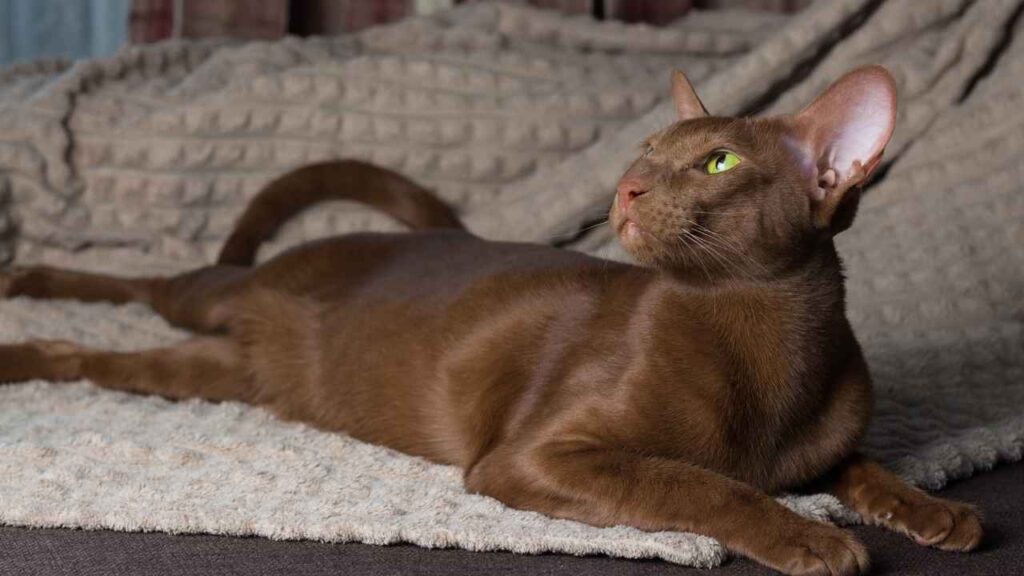
Also known simply as the Burmese, this breed is instantly recognizable for its compact build, golden eyes, and ultra-smooth coat. Often described as “Velcro kitties” due to their people-focused nature, Burmese cats combine strong muscle tone with a surprisingly soft, polished appearance.
According to PDSA, Burmese cats are energetic and love to play, and with a bit of encouragement, they may even “chat” quietly with you. They enjoy sitting on your lap or beside you, and because they’re good climbers and jumpers, a cat tree can help them climb safely.
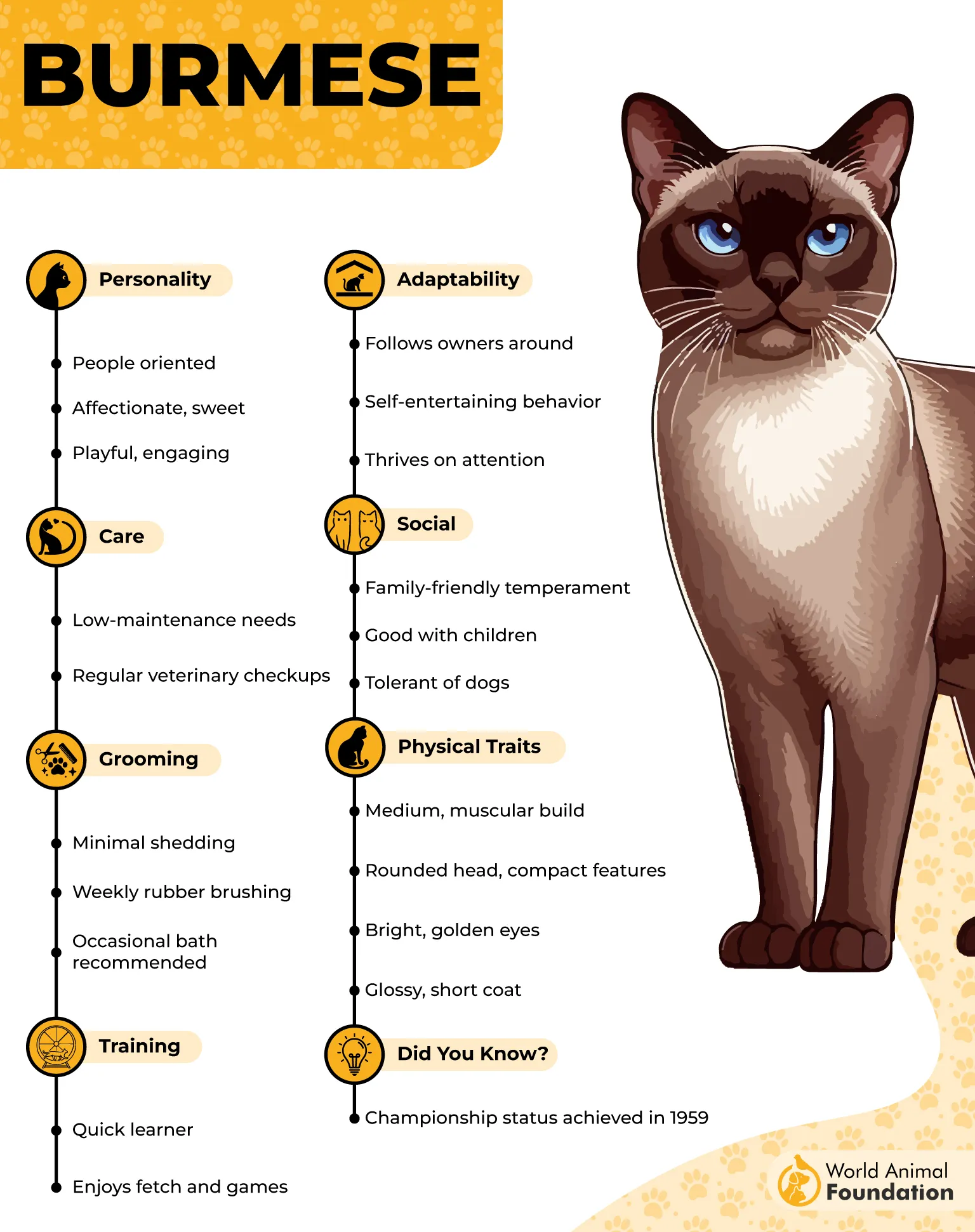
The hallmark of the breed is its close-lying, satin-finished coat that reflects light like a mirror. The rich sable color—dark, warm, and evenly shaded—enhances the glossy effect, making the fur appear almost luminous under natural or artificial light.
Genetics plays a key role in this shine. Burmese coats are made up of very short, fine hairs that lie flat against the body, allowing natural oils to distribute evenly. This structure minimizes matting and maximizes smoothness, giving the coat its signature gleam.
Despite their muscular frame, grooming needs are minimal. Light weekly brushing helps maintain the sheen and remove loose hair.
Fun fact: Adult male Burmese cats can reach or exceed 12 pounds while still appearing compact and refined.
2. Abyssinian
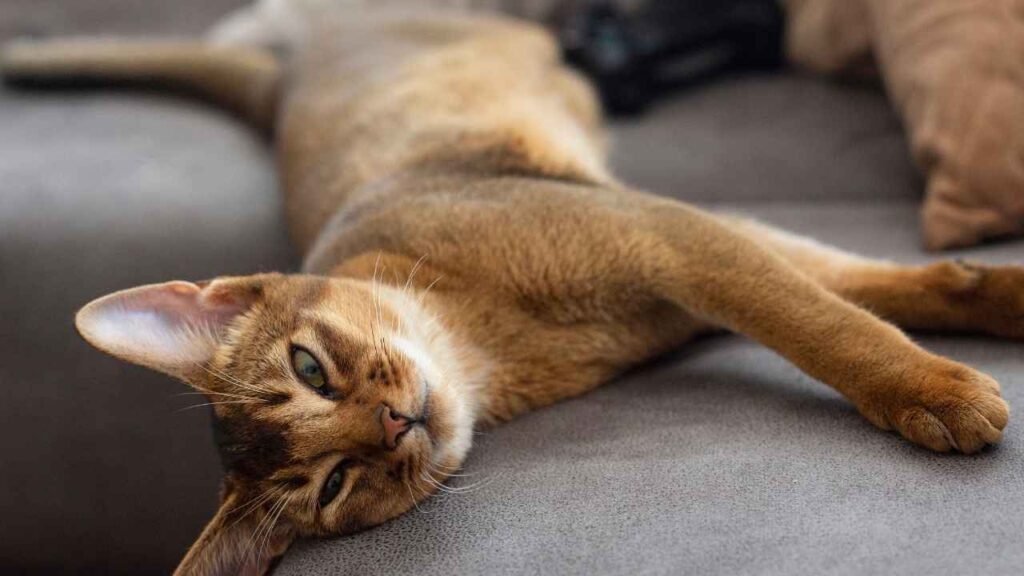
Commonly called the Aby or Abys, the Abyssinian is a medium-sized, short-haired breed admired for its wild appearance and athletic elegance. Its arched neck, large cupped ears, and almond-shaped eyes enhance a sleek look that feels both refined and natural.
PetMD notes that while the striking Abyssinian could easily stand out at any cat show, the breed often prefers independent activities around the home.
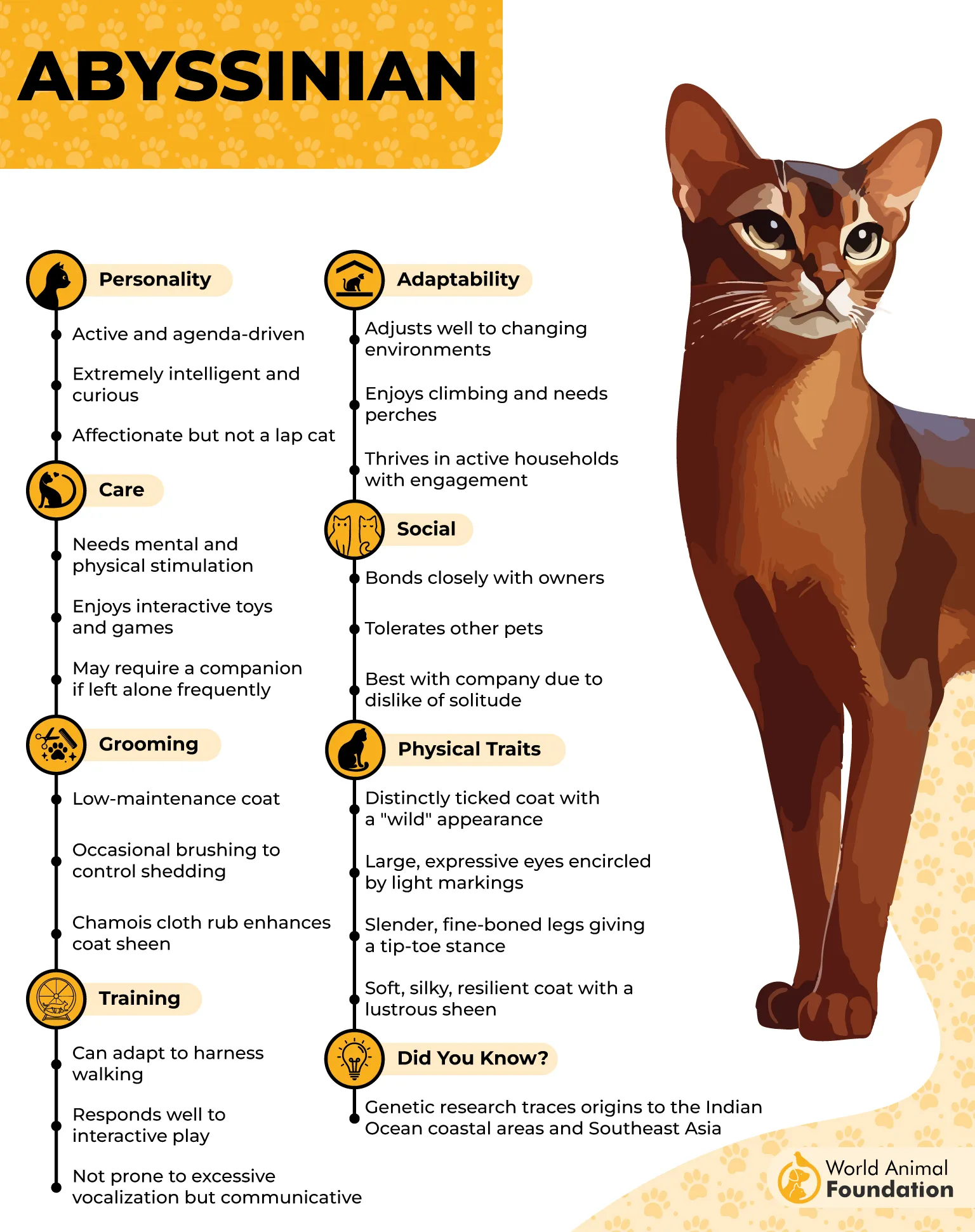
The breed’s glossy appeal comes from its dense, resilient coat marked by ticking—bands of color on each hair that reflect light beautifully. This unique structure gives the fur depth, warmth, and a radiant finish that appears to glow as the cat moves.
Genetics are key to the Abyssinian’s exceptional shine. Fine, close-lying hairs reduce friction and help natural oils spread evenly, keeping the coat smooth without heavy grooming. Occasional brushing or a gentle chamois rub enhances the sheen even further.
Highly active and inquisitive, this breed benefits from enrichment that keeps its coat and body in peak condition through regular movement.
Fun fact: Abyssinians are most commonly seen in a rich ruddy color, but also come in blue, cinnamon, and fawn.
3. Oriental Shorthair
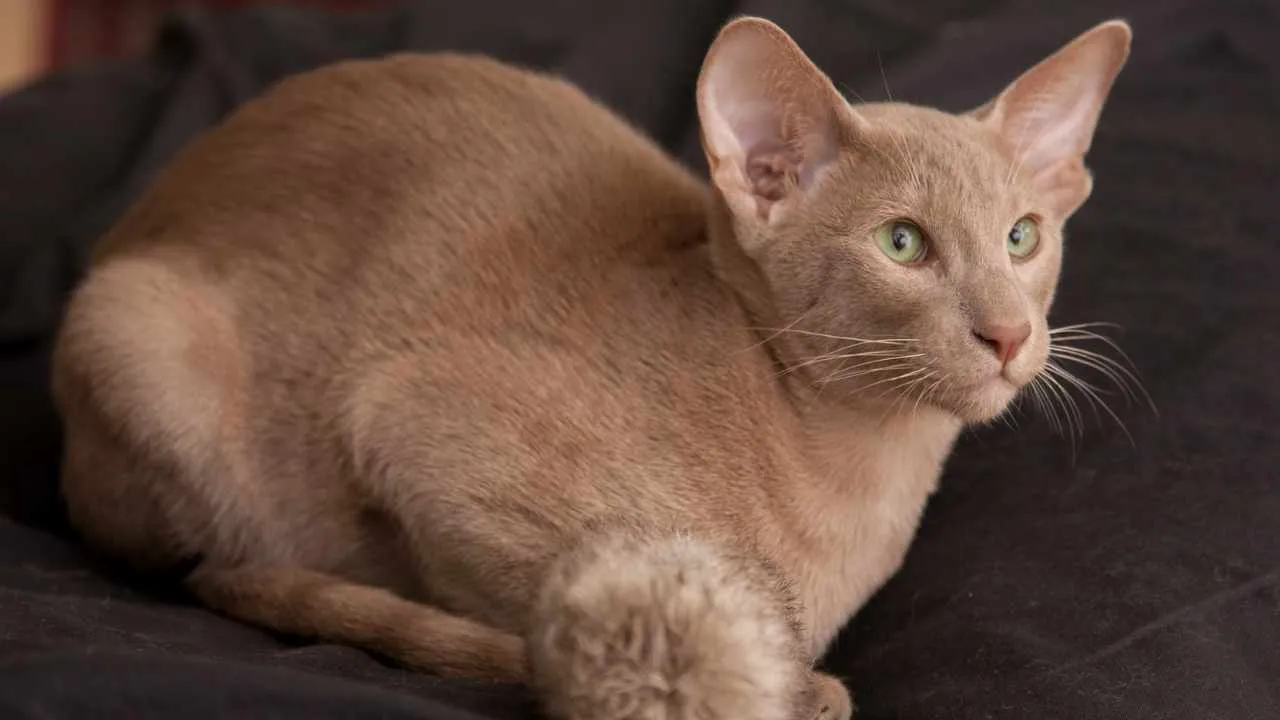
Also called Orientals, the Oriental Shorthair belongs to the Siamese breed group and shares the same elegant body type. With a triangular head, oversized ears, and bright green eyes, this breed stands out for both its striking look and refined coat.
The Oriental Shorthair’s very short, fine fur lies flat against the body, creating a naturally glossy, silk-like finish. Because the coat lacks a dense underlayer, light reflects easily off the surface, enhancing its polished appearance.
Genetics are responsible for the breed’s smooth texture and shine. Available in an extraordinary range of solid colors and patterns—from jet black to spotted tabby—the uniform coat structure ensures the glossy effect remains consistent regardless of color.
Maintenance is minimal, which helps preserve the natural sheen. Weekly brushing removes loose hair without dulling the coat, while occasional wiping enhances smoothness.
Fun fact: Oriental Shorthairs always have green eyes and are recognized in dozens of colors and patterns, excluding pointed varieties.
4. Siamese
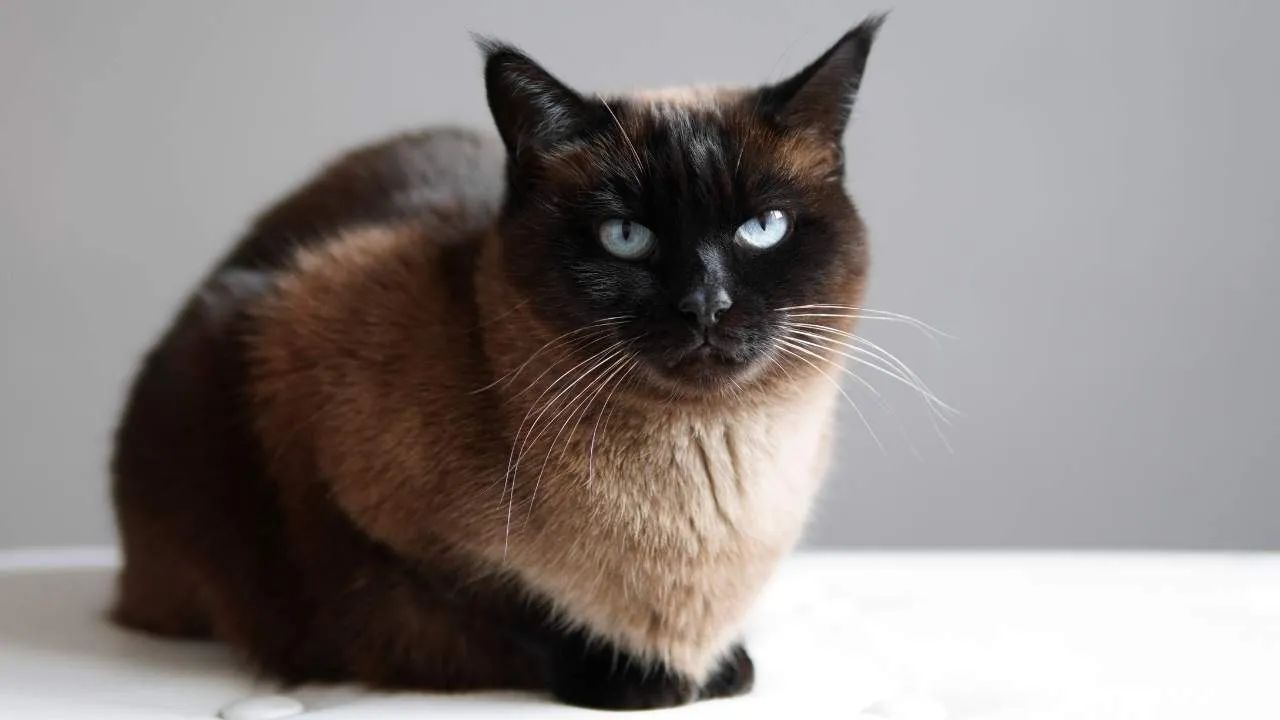
Also known as the Royal Cat of Siam, the Siamese is a short-haired breed originating from Thailand, formerly called Siam. Its long, slender body, wedge-shaped head, large ears, and vivid, almond, striking blue eyes create an instantly recognizable silhouette.
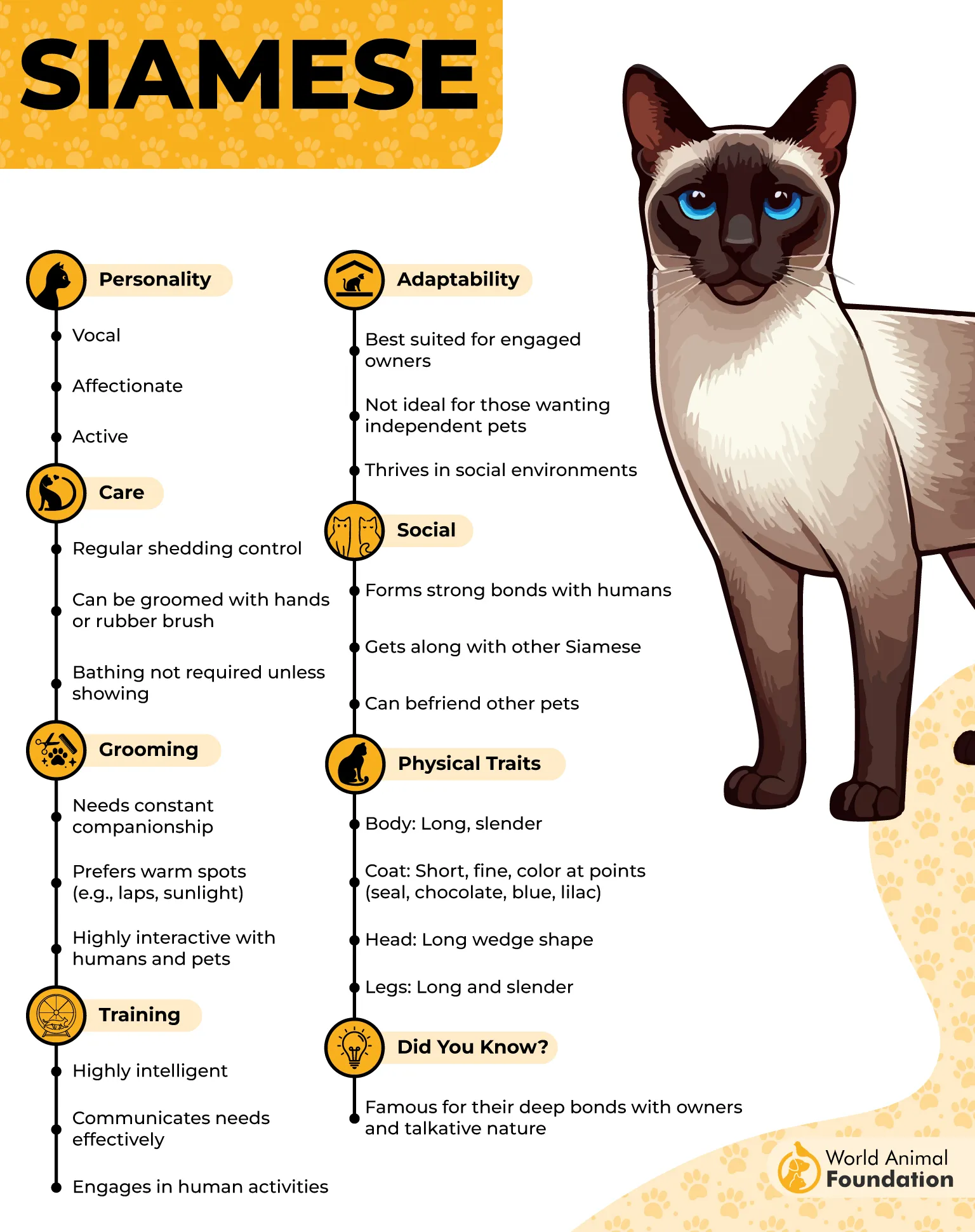
The Siamese is celebrated for its fine, close-lying coat that appears naturally glossy. With no undercoat, the short fur reflects light smoothly, enhancing the breed’s polished look. This sleek texture allows the coat to feel silky while maintaining a refined sheen.
Kittens are born pale and gradually develop darker points on the ears, face, legs, and tail. These temperature-sensitive markings contrast beautifully against the lighter body, further highlighting the coat’s shine.
Minimal grooming is needed to maintain the gloss, as the fur resists tangling and shedding. Occasional brushing keeps the coat smooth and radiant.
Fun fact: The Siamese coat lacks an undercoat, which contributes to its exceptionally soft, glossy finish.
5. Bengal
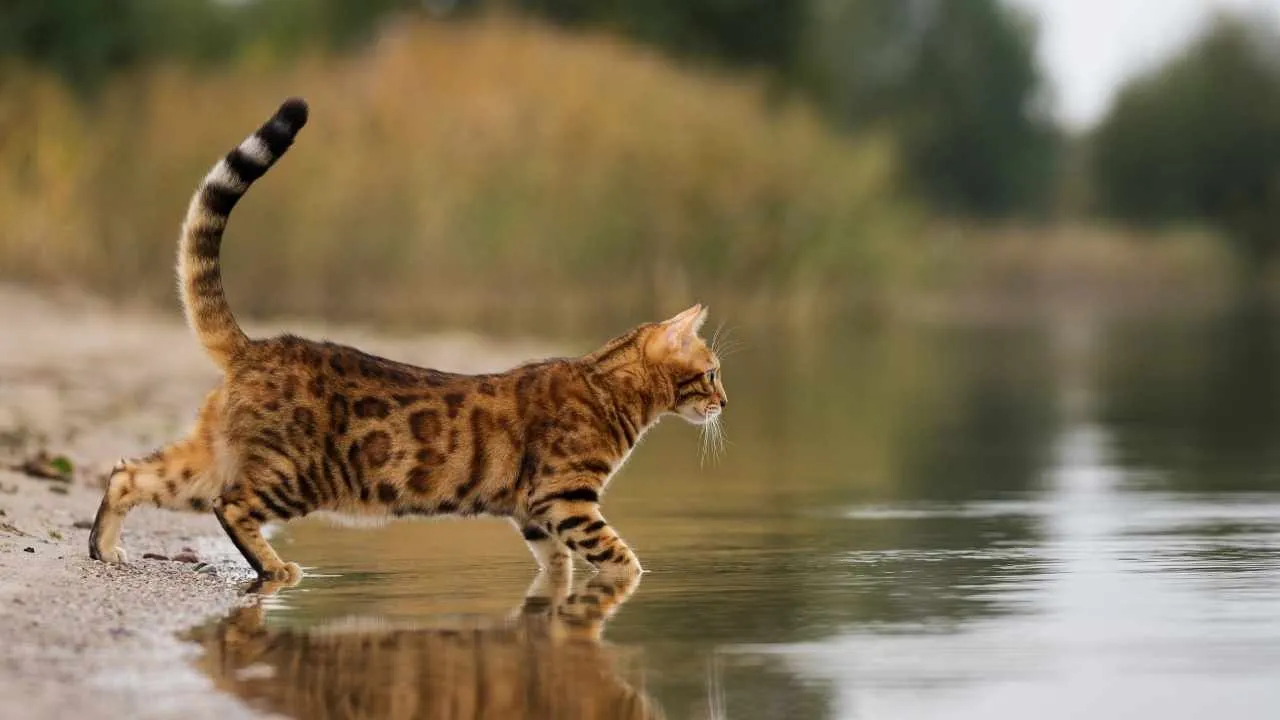
Also called the Leopard Cat Look-Alike, the Bengal is a medium-to-large, powerfully built breed known for its exotic appearance and striking coat. With a long, muscular body and wide-set almond eyes, Bengals blend wild aesthetics with a fully domestic temperament.
According to Purina, Bengals can be fantastic pets for experienced cat owners who want an active, curious, dog-like cat and can keep them entertained with toys, games, and plenty of environmental enrichment.
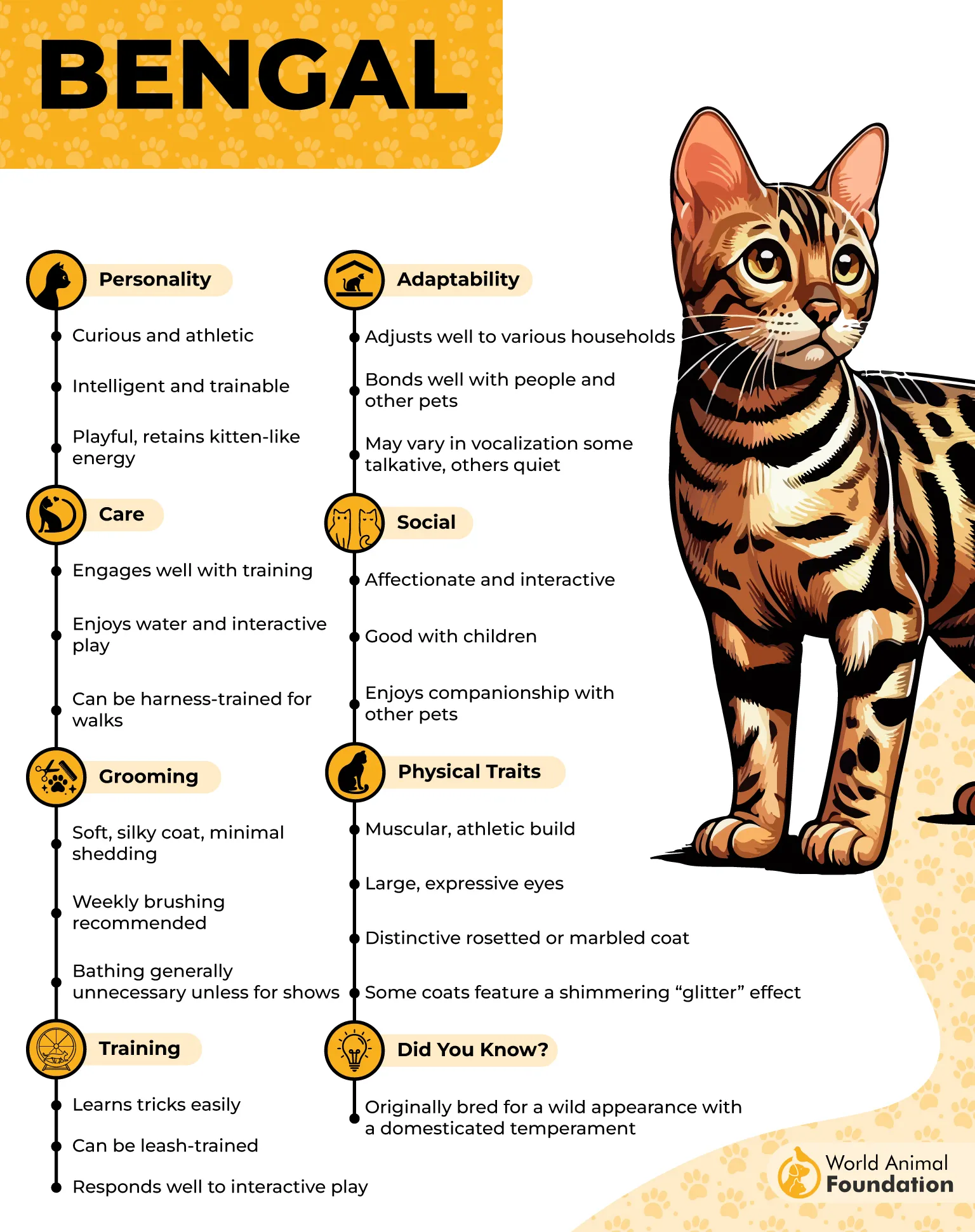
The Bengal’s glossy coat is one of its defining traits. Short, dense, and unusually soft, the fur reflects light beautifully, enhancing its spotted or marbled patterns. This smooth texture gives the coat a radiant finish that stands out even among other short-haired breeds.
Color plays a major role in that shine. Recognized shades like brown, silver, and snow create strong contrast between the base coat and markings, intensifying the glossy effect. In sunlight, especially silver Bengals appear to shimmer, amplifying their polished look.
Despite their wild appearance, Bengals require minimal grooming. Weekly brushing keeps the coat sleek and healthy while preserving its natural sheen.
Fun fact: Adult male Bengals commonly reach between 12 and 16 pounds while maintaining a sleek, athletic silhouette.
6. Ocicat
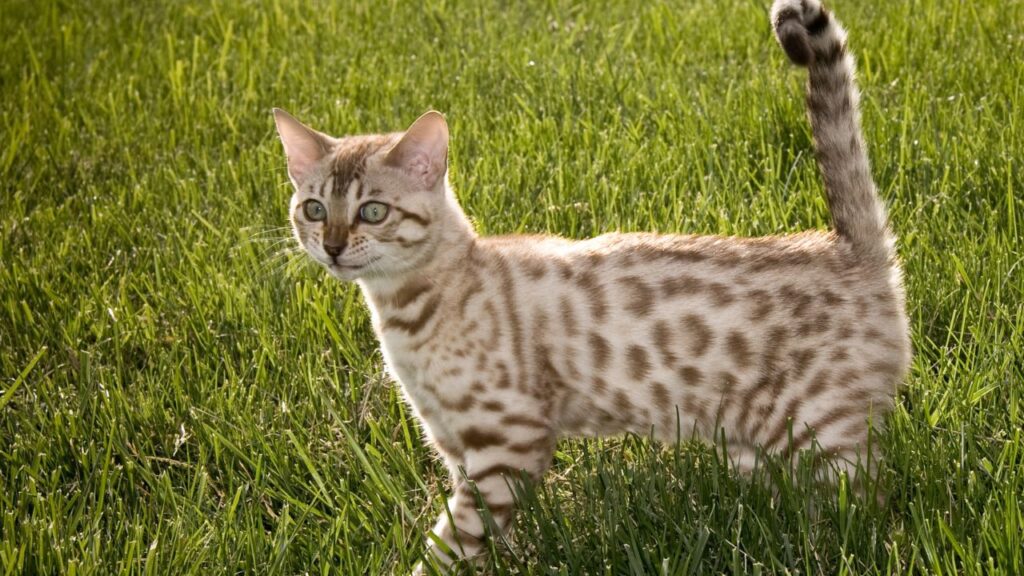
Often nicknamed the “mini ocelot,” the Ocicat is a domestic breed designed to resemble a wild cat while retaining a friendly temperament. Developed in the 1960s, it stands out for its athletic build, spotted tabby coat, and sleek, short fur that hugs the body.
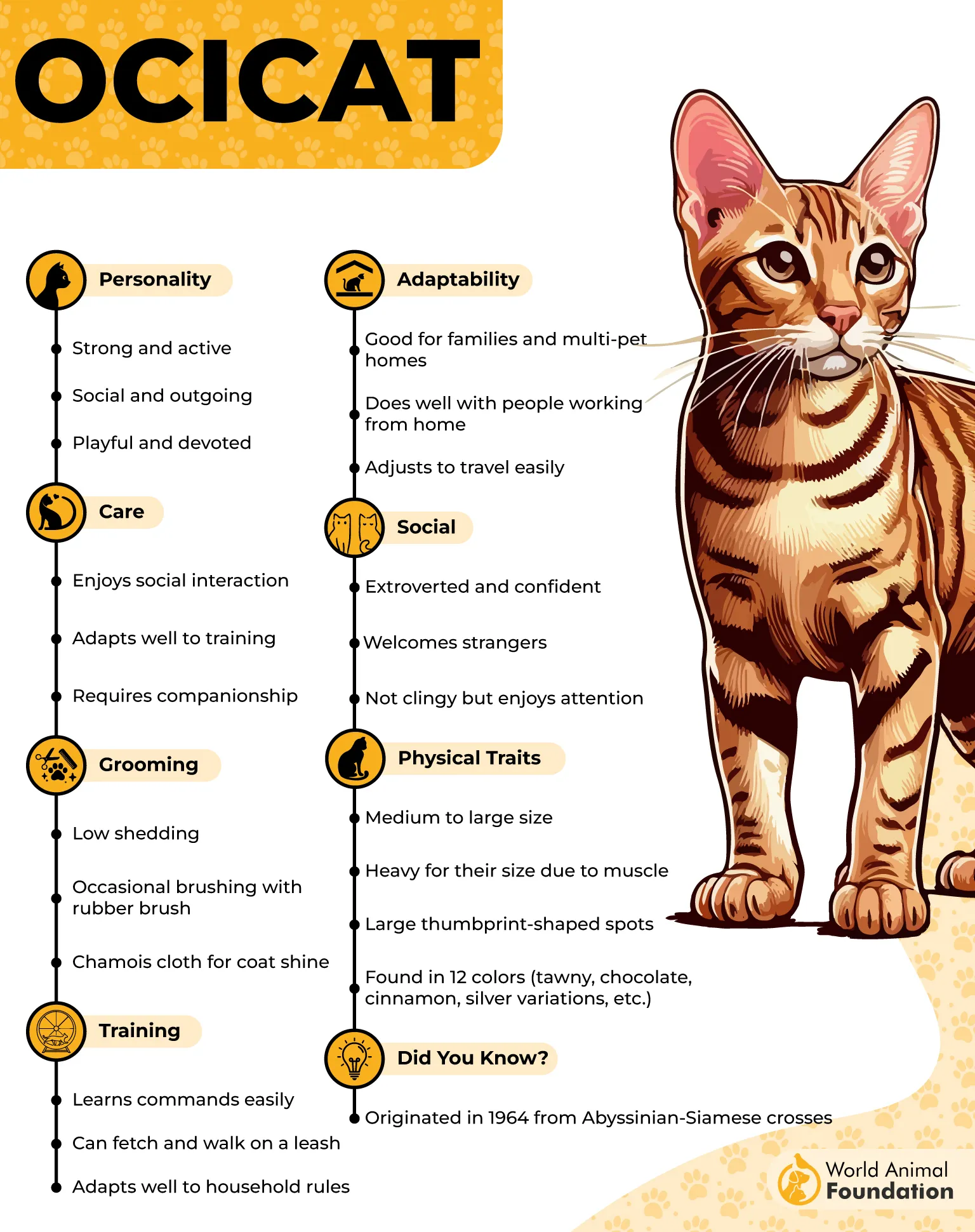
The Ocicat’s glossy appearance comes from its dense, velvety coat made up of banded hairs that reflect light evenly. The bold spots contrast sharply with the lighter background, enhancing the shine and giving the coat a polished, eye-catching finish.
Low grooming needs make this breed especially appealing. Light shedding means weekly brushing—or even a quick wipe with a chamois—is enough to remove loose hair and boost natural luster. Bathing is rarely necessary unless preparing for a show.
Function meets beauty in the Ocicat’s coat structure. The smooth, close-lying fur minimizes tangles while maintaining a consistent sheen across all twelve recognized colors.
Fun fact: The Ocicat was first developed in Michigan in 1964 by crossing Abyssinian and Siamese cats.
7. Egyptian Mau
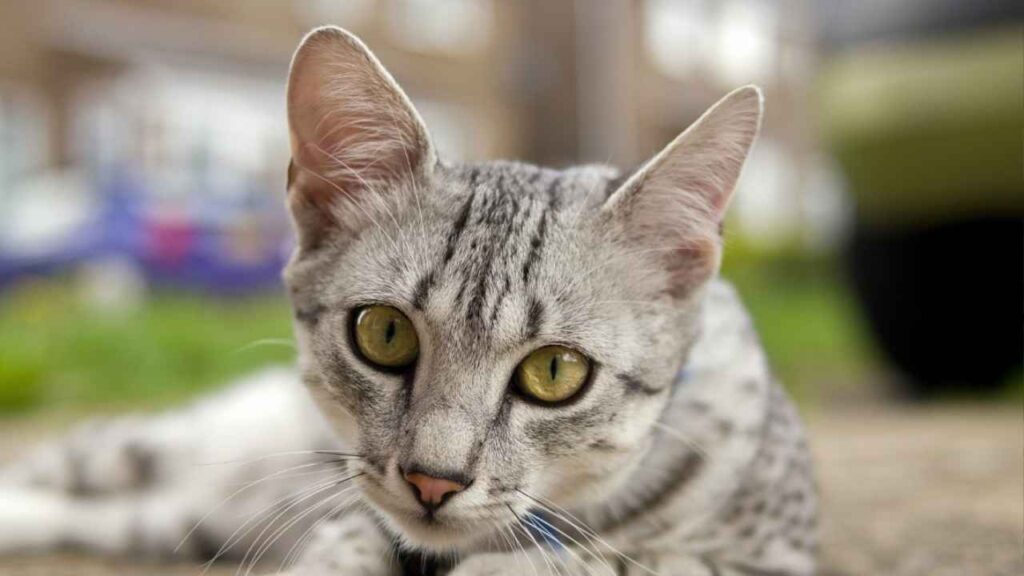
Also known simply as the Mau, the Egyptian Mau is an ancient breed celebrated for its naturally spotted coat, vivid green eyes, and graceful, athletic build. Revered in ancient Egypt, this elegant cat carries a regal presence shaped by centuries of history.
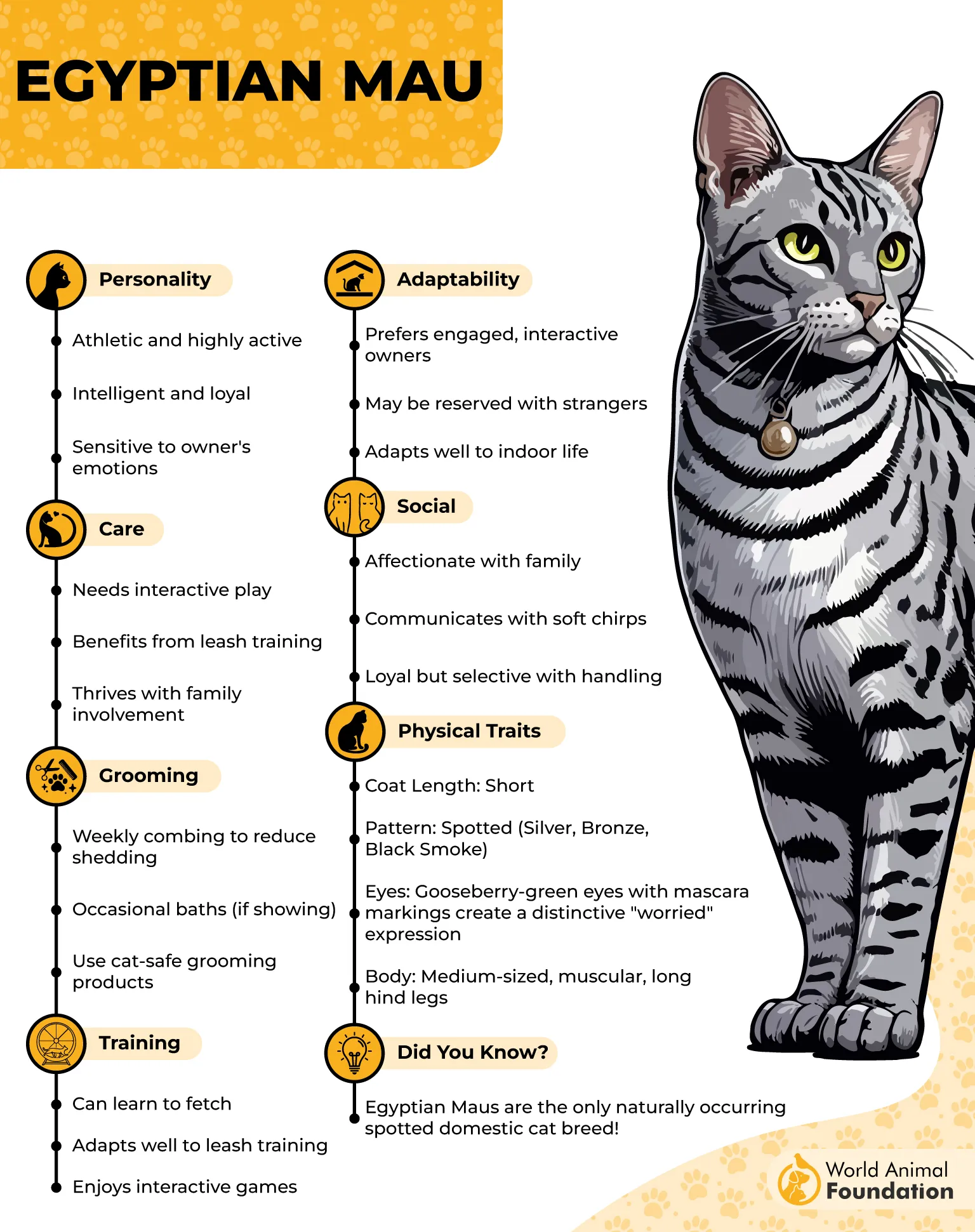
The Mau’s short to medium-length coat lies close to the body, creating a smooth, velvety texture with a noticeable shine. It’s random spotting—seen in silver, bronze, and smoke shades—reflects light beautifully, giving the coat a refined, luminous finish.
Genetically unique among domestic cats, the Mau’s glossy appearance comes from fine, resilient hairs and minimal undercoat. This structure allows natural oils to spread evenly, enhancing both softness and sheen while keeping the coat neat and polished.
Low grooming needs help to preserve that natural gloss, with light weekly brushing being sufficient.
Fun fact: The Egyptian Mau is one of the few naturally spotted domestic cat breeds, with patterns that even appear on its legs and shoulders.
Conclusion
Cat breeds with glossy coats highlight how genetics, coat structure, and texture shape beauty in the cat world. While long-haired and fluffy cat breeds are often admired for a plush coat, bushy tail, and fluffy appearance, shine can appear in both short and long fur.
Whether a cat breed’s known for a silky coat or one whose coat is long with layered coat colors, luxurious coats reflect health, grooming, and natural design.
For cat lovers and pet parents, understanding the difference between long-haired cats, other long-haired breeds, and low-maintenance coats matters.
Long-haired cat breeds with a double coat or outer coat, shaped by cold climates and harsh winters, need regular grooming and regular brushing to prevent matting.
From gentle giant breeds to laid-back cats with an affectionate nature, glossy fur—short or long—remains a timeless mark of beauty for pet owners.
