




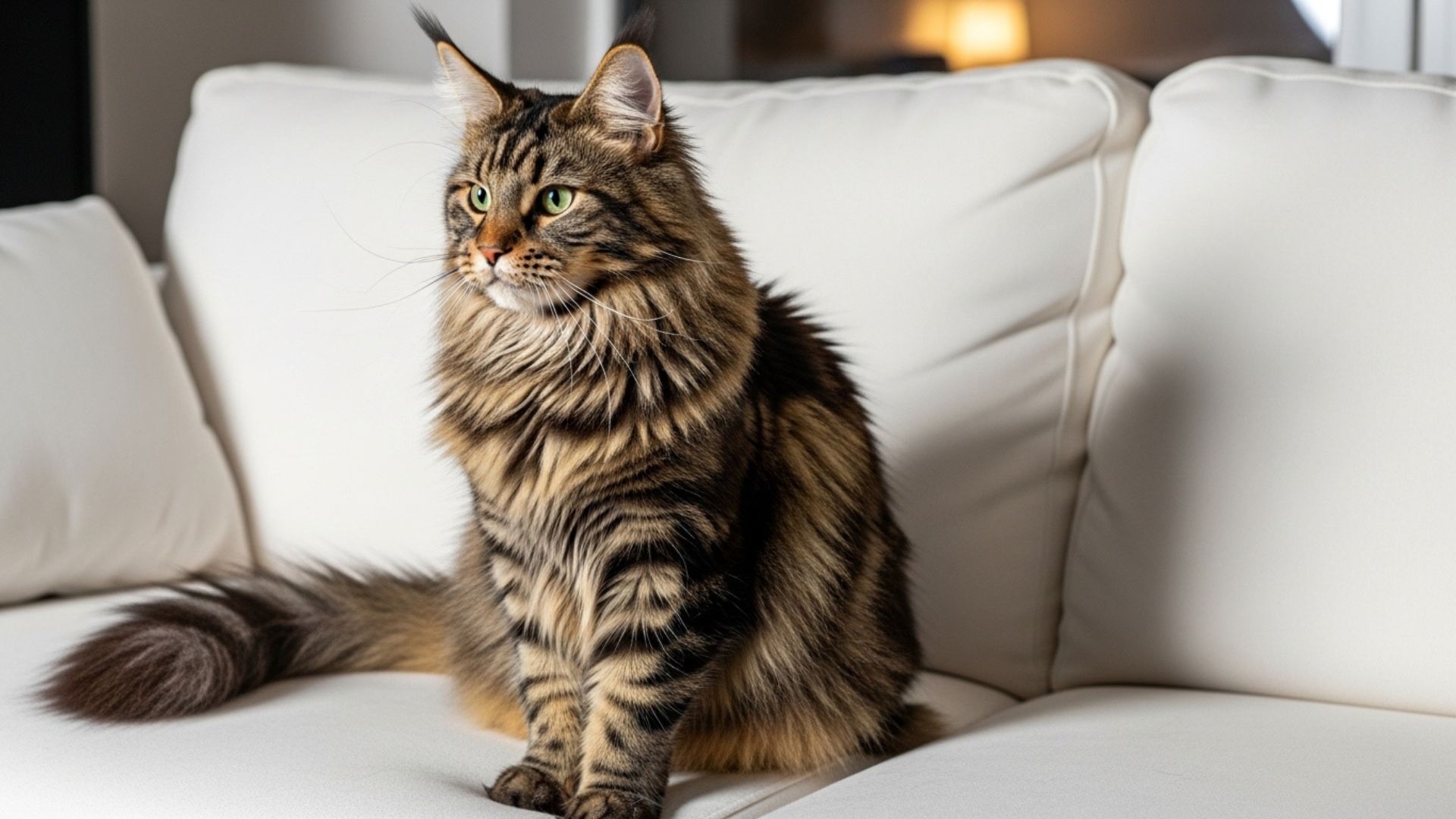
A cat’s coat can be far more than stripes or spots—it can be a signature, a story written in fur. In this article, we’re exploring 7 cats with the most unique coat patterns, celebrating felines whose markings look more like living artwork than simple coloration.
Subtle variations in genes control pigment placement, color intensity, and pattern symmetry, creating rare and striking fur designs that can’t be replicated. Some patterns develop before birth, while others continue to change as a cat matures, making each coat a one-of-a-kind masterpiece shaped by nature.
Beyond beauty, coat patterns can carry deeper significance. They often hint at a breed’s history, environment, and even temperament, influencing how cats are perceived and admired. Understanding why these patterns exist adds a new layer of appreciation, transforming a pretty coat into a fascinating blend of biology, evolution, and feline individuality.
Cat Breeds with the Most Unique Coat Patterns
1. Bengal
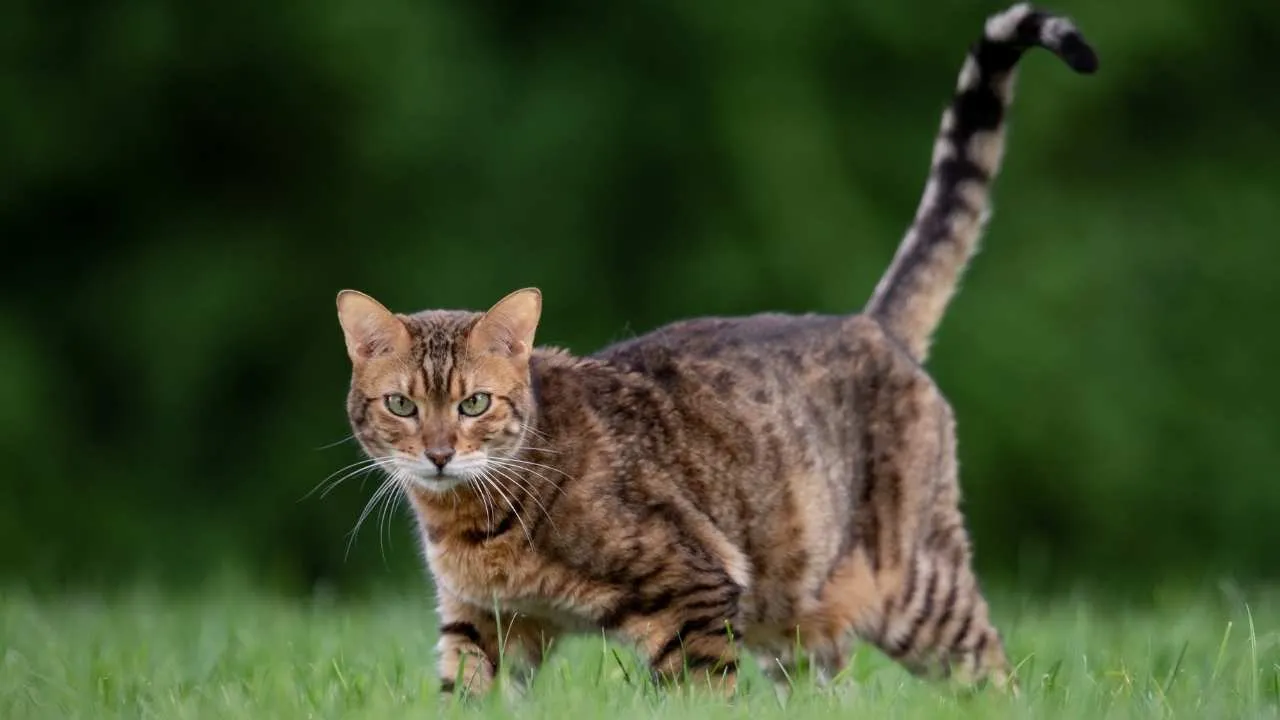
The Bengal cat, sometimes called the leopard cat look-alike, is a striking hybrid breed created from domestic cats and Asian leopard cats. Instantly recognizable, Bengals combine an exotic appearance with an energetic, playful personality that makes them unforgettable companions.
According to Britannica, the Bengal cat is a short-haired domestic breed that was developed in the United States during the 1970s and 1980s through the crossbreeding of an Asian leopard cat and a domesticated tabby cat.
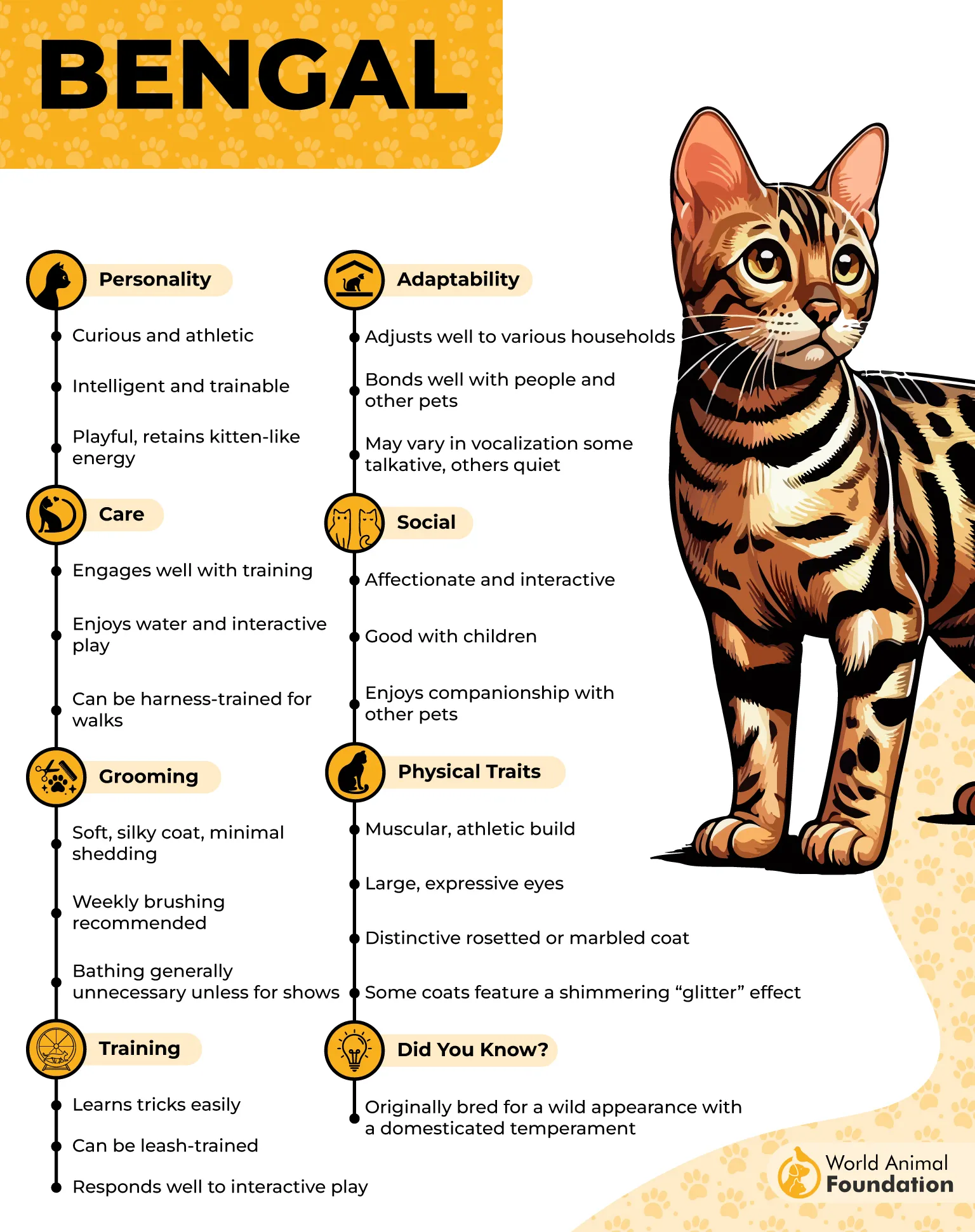
What truly sets the Bengal apart is its extraordinary coat, often described as a living work of art. Bold spots and rosettes are arranged in carefully balanced patterns, mimicking the look of wild jungle cats while remaining soft and velvety to the touch.
Color variations add even more visual drama. Bengals may display rich golds, warm browns, creams, or marbled patterns, all designed to highlight contrast and depth. Each cat’s markings are genetically unique, ensuring no two Bengals ever look exactly alike.
Beyond beauty, this breed’s coat reflects intentional breeding focused on preserving wild aesthetics without sacrificing domestic temperament.
2. Maine Coon
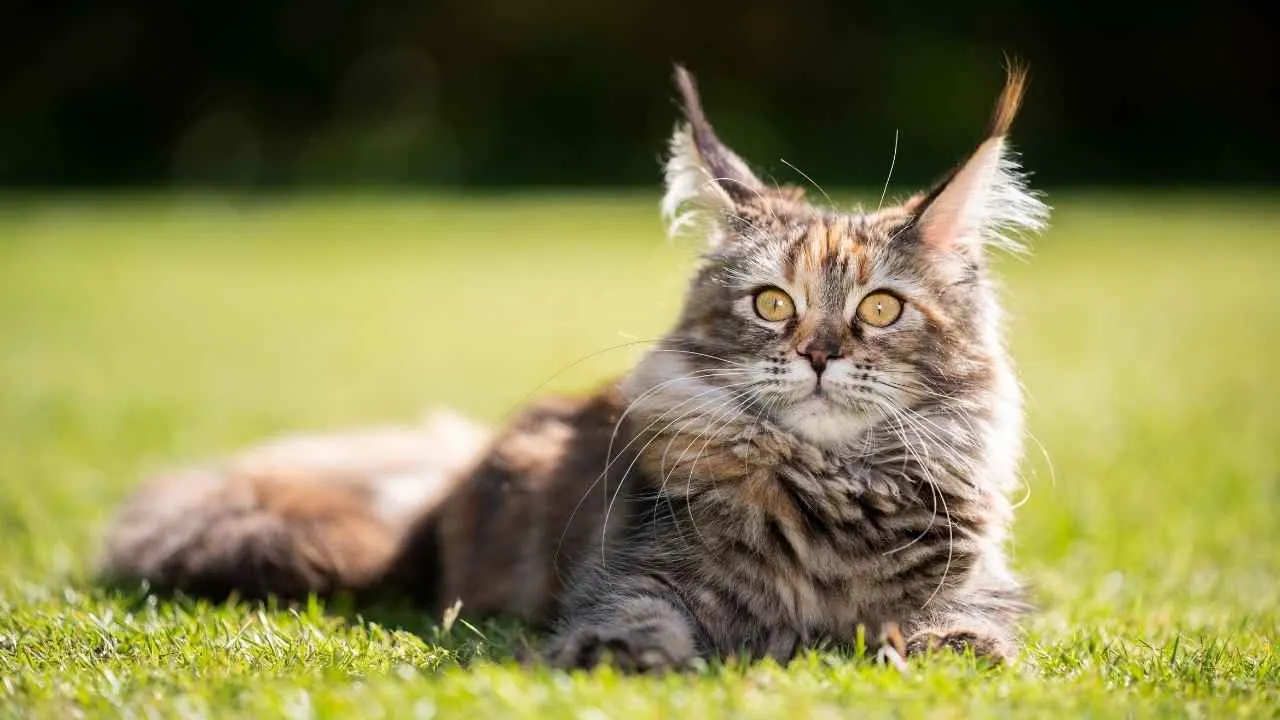
The Maine Coon, often called “America’s cat” and known as one of the gentle giants of the feline world, is instantly recognizable for its large frame and luxurious coat.
According to PetMD, the Maine Coon originated in the state of Maine and continues to hold the title of the official state cat. With lynx-like ear tufts, a bushy tail, and a rugged yet friendly presence, this breed blends wilderness charm with domestic warmth.
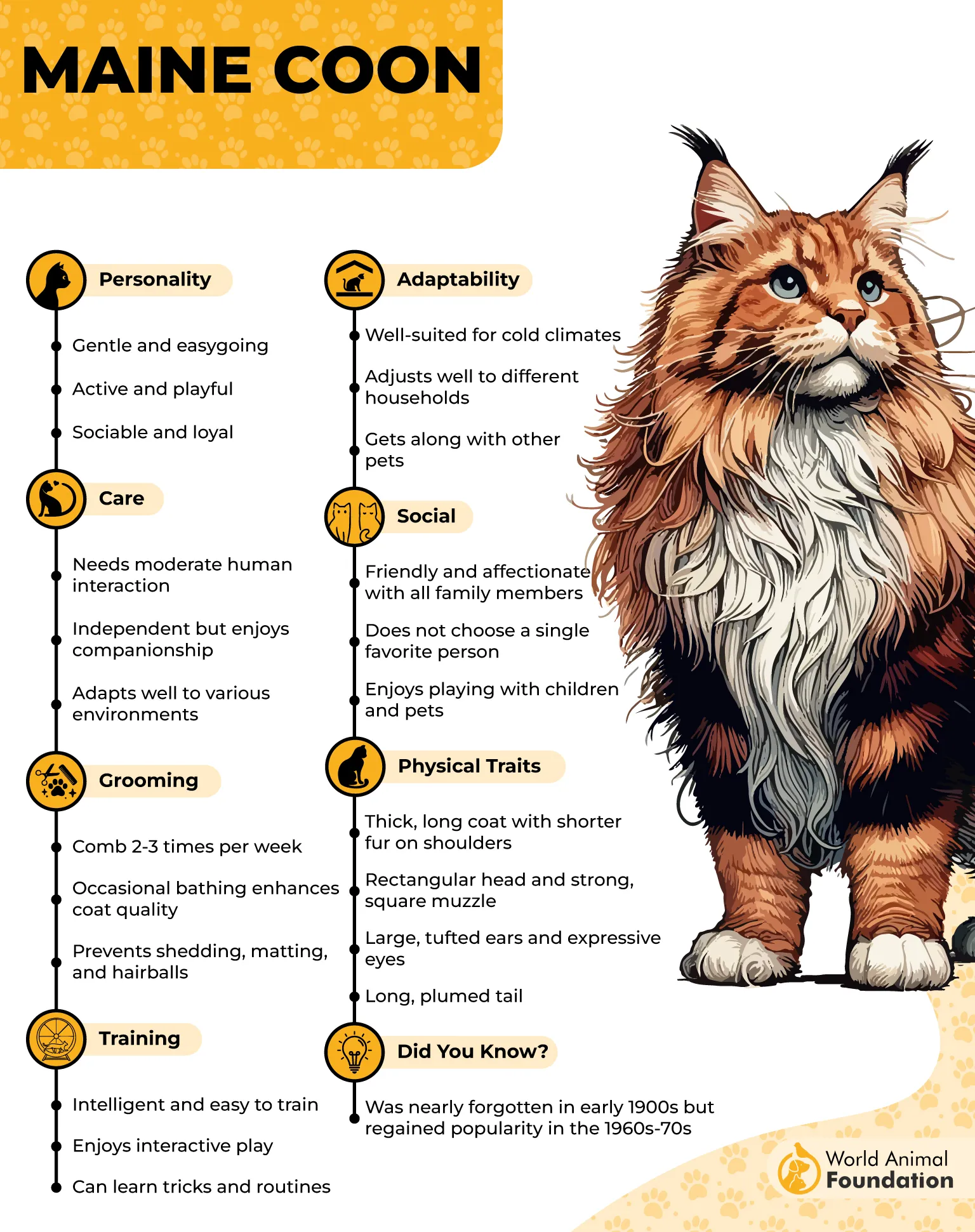
When it comes to bold patterns that stand out, the Maine Coon’s coat is a true showstopper. Its fur comes in striking designs such as mackerel tabby, spotted tabby, and classic tabby, often mixing stripes and spots to create a dramatic, eye-catching look.
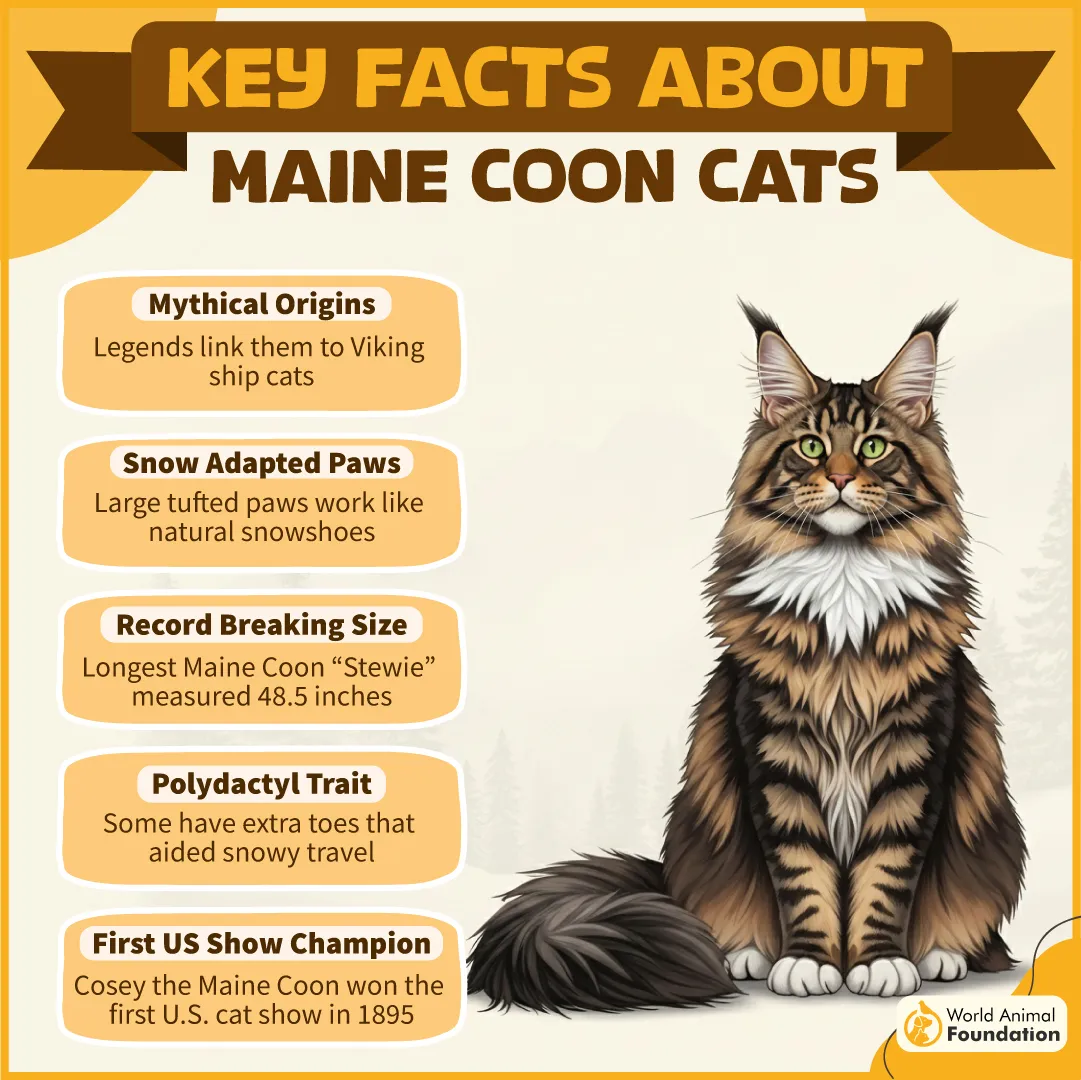
These unique coat patterns aren’t just decorative—they reflect the breed’s natural history. Tabby markings once provided camouflage in forested environments, and the water-repellent, thick fur helped protect Maine Coons from harsh weather conditions.
The long, flowing coat showcases rich color variations that enhance every swirl and stripe.
A notable fact about the Maine Coon is that classic tabby individuals display a distinct “M” marking on the forehead, along with clearly defined swirls, rings on the tail, and evenly barred legs.
3. Turkish Van
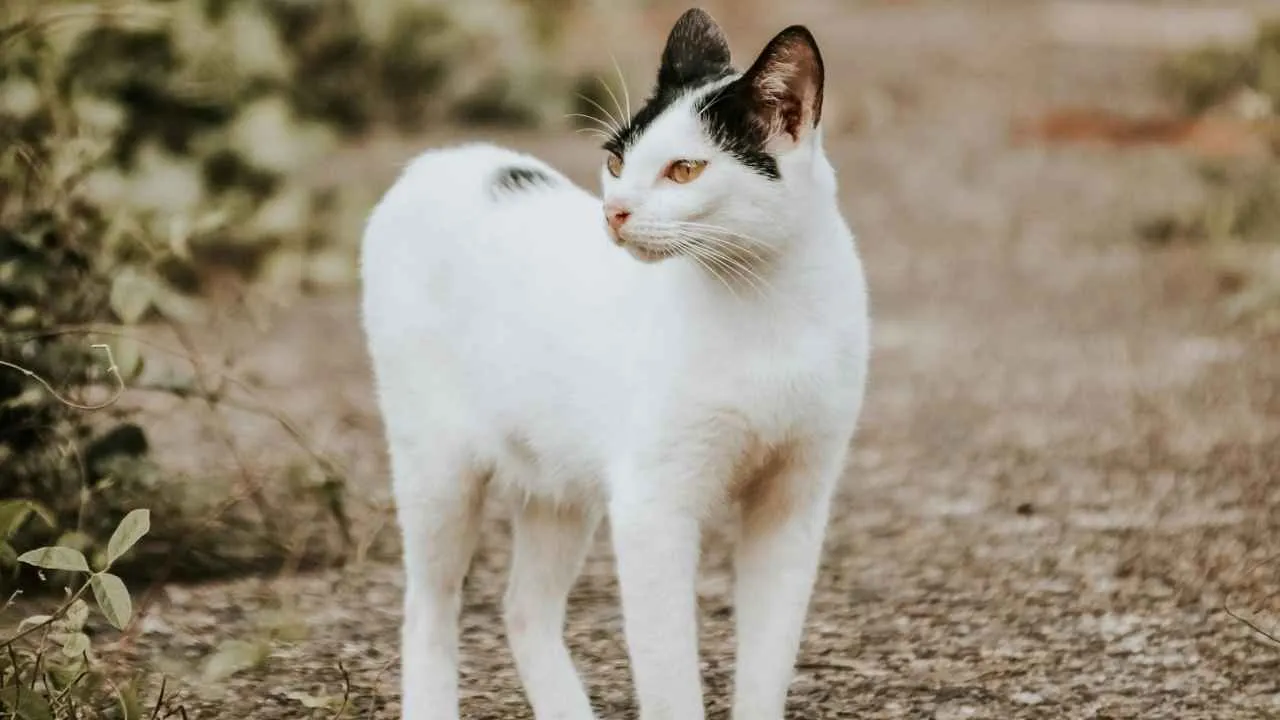
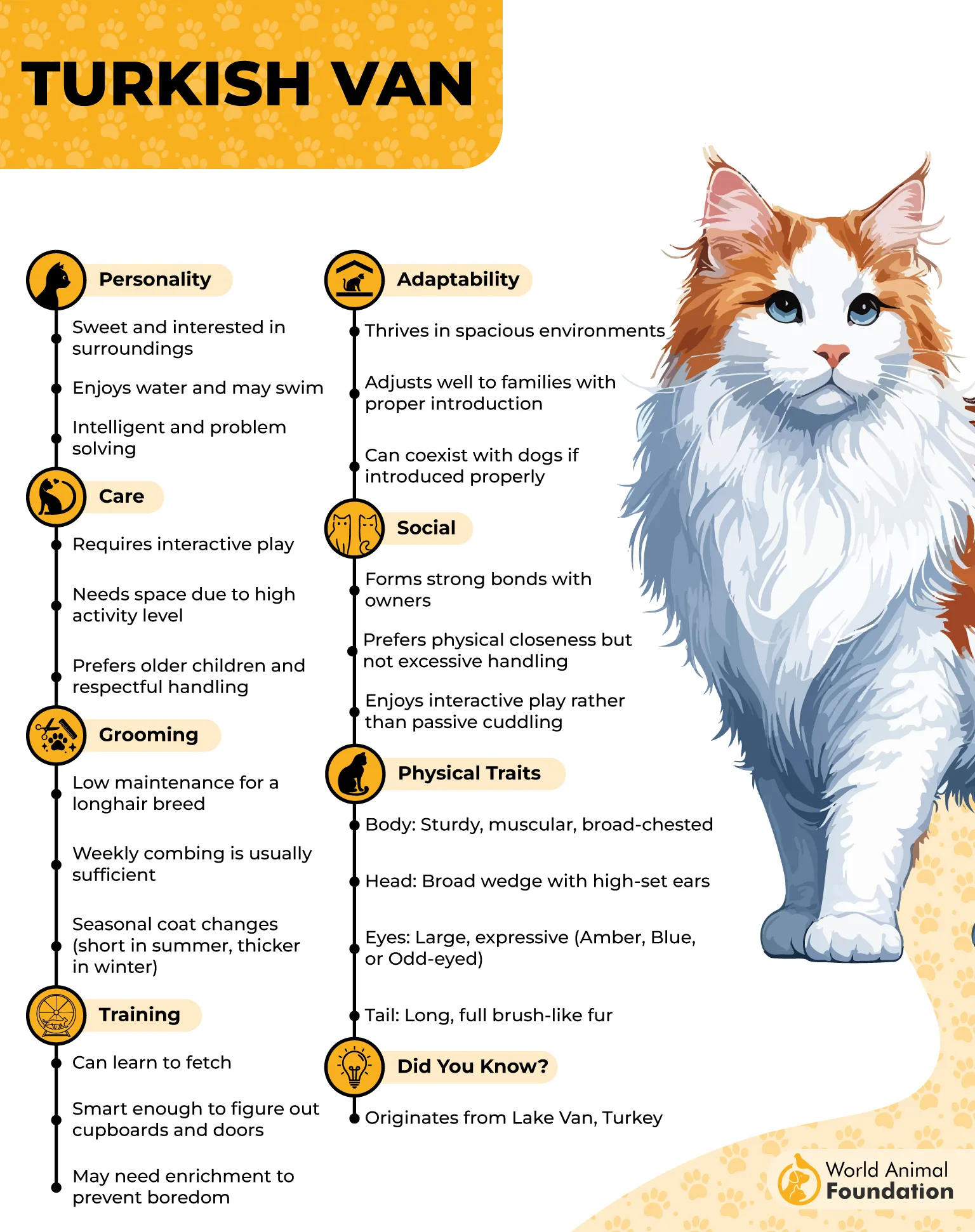
The Turkish Van, often nicknamed the “swimming cat”, is a striking breed best known for its rare and elegant Van pattern. This pattern features a mostly white body with color confined to the head and tail, creating a clean, symmetrical look that instantly stands out.
According to WebMD, these cats are described as lively and enjoyable companions that fit well into many households, although they are considered a relatively rare breed.
What makes this coat truly unique is its natural balance and contrast. The placement of color appears intentional, almost artistic, giving the Turkish Van a look often described as nature’s perfect symmetry rather than random markings.
Adding to its distinction, the Turkish Van has semi-long, soft fur that is naturally water-resistant. This unusual coat texture supports the breed’s famous love of water, setting it apart from most cats in both appearance and behavior.
Beyond looks, this breed is intelligent, playful, and deeply people-oriented, often forming strong bonds and enjoying companionship. A notable fact about the Turkish Van is that its water-resistant coat is one reason it’s known for enjoying swimming more than most cats.
4. Lykoi
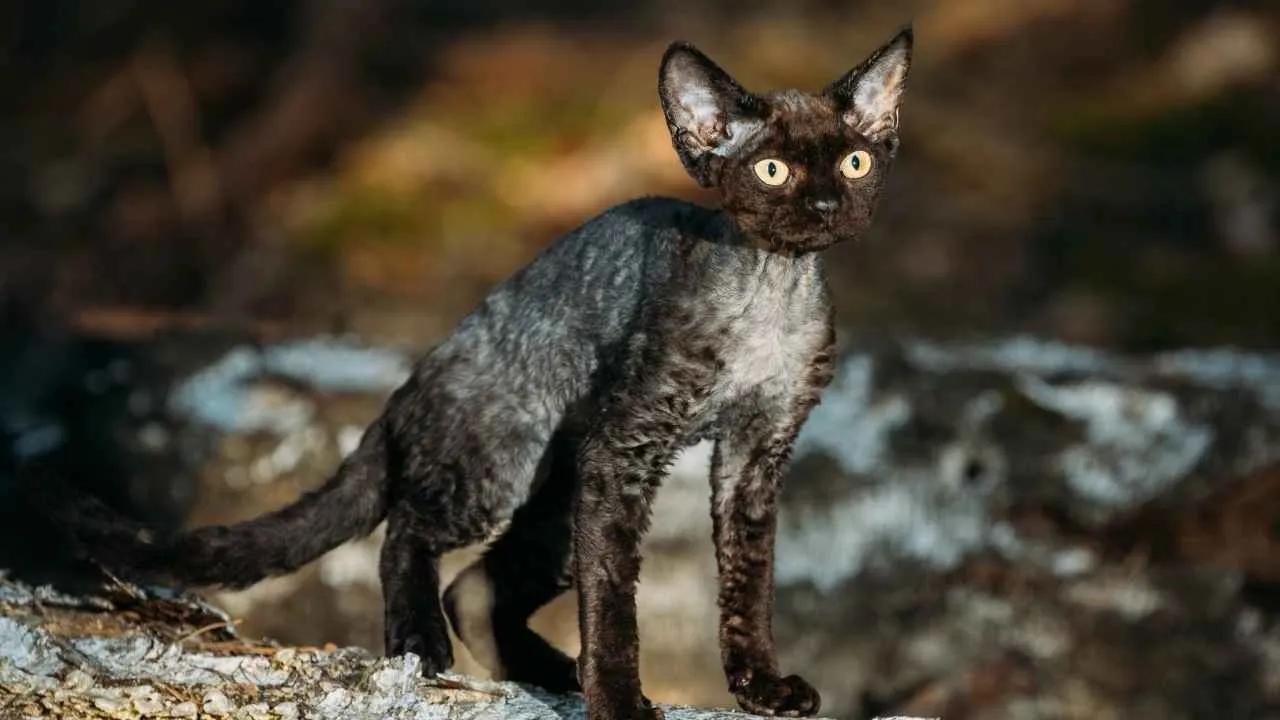
The Lykoi, often called the Wolf Cat, is one of the rarest and most unusual-looking felines in the world. Its name comes from the Greek word for wolf, a nod to its sparse, patchy coat and striking werewolf-like appearance that immediately sets it apart.

When it comes to unique coat patterns, the Lykoi feels almost wild-inspired. Its roan coat is a mix of white and dark hairs, while the face, legs, and tail are usually solid in color, creating a dramatic, uneven pattern unlike any other breed.
This distinctive look is the result of a natural genetic mutation that affects hair growth. Lykoi cats have little to no undercoat, causing their fur to grow in patches and sometimes shed so heavily that they appear nearly hairless during seasonal molts.
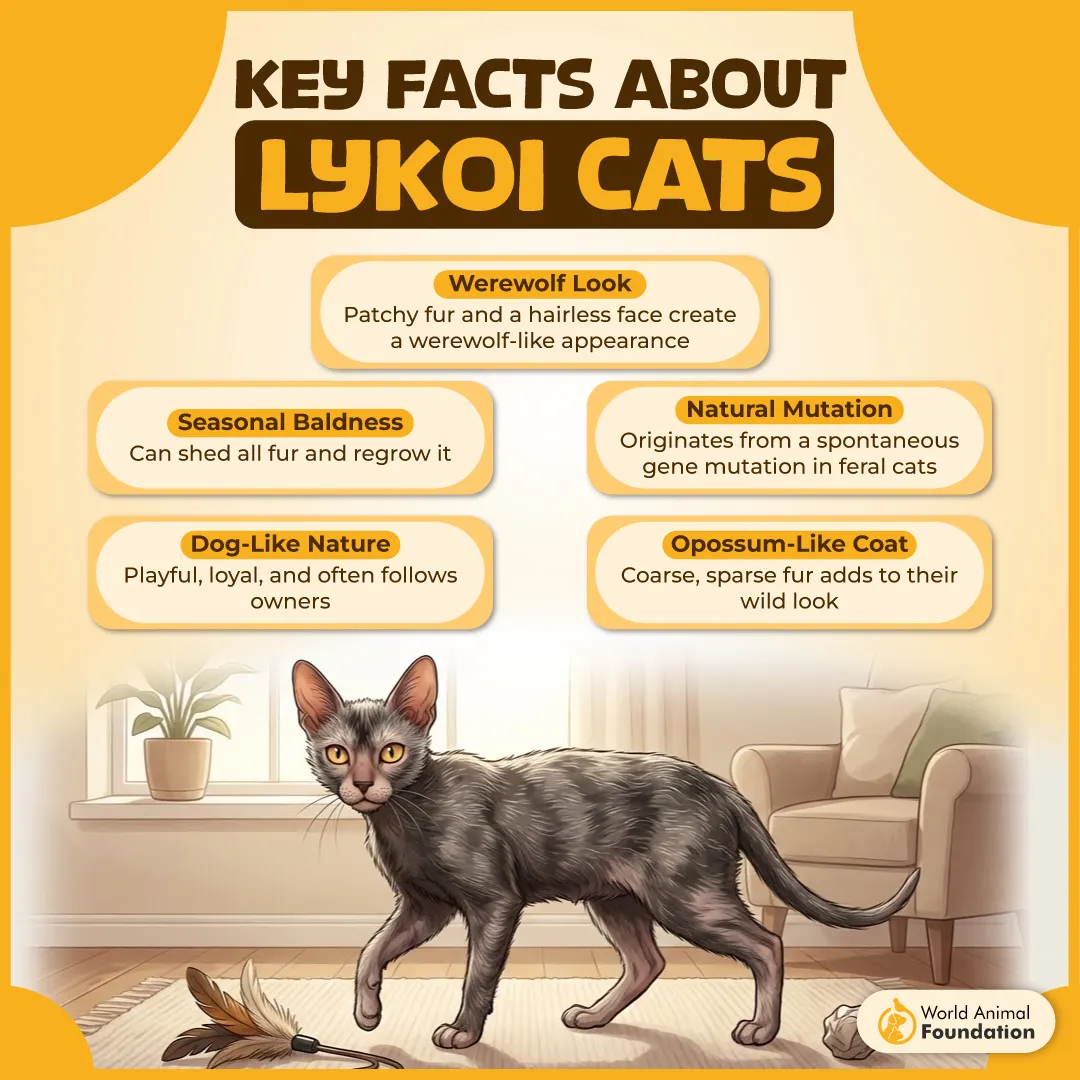
Despite their eerie appearance, their coat is soft and smooth to the touch.
5. Scottish Fold
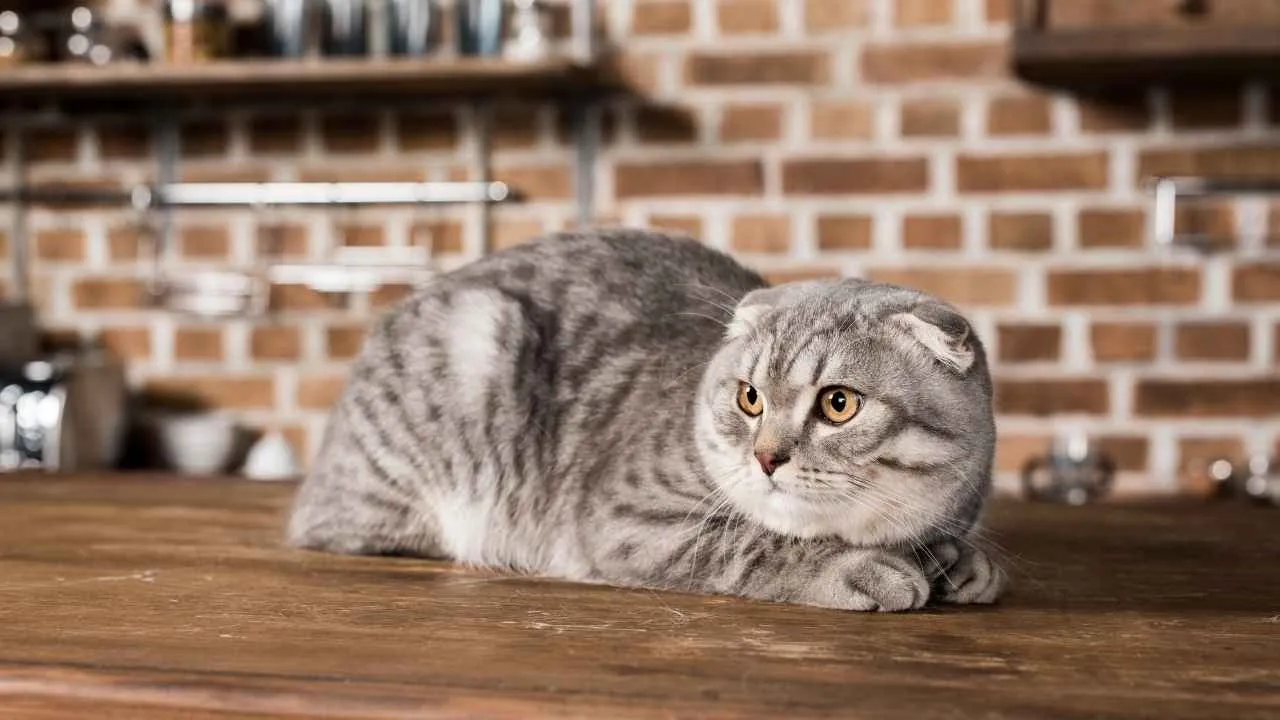
The Scottish Fold, sometimes called the Patterned Scottish Fold, is instantly recognizable for its folded ears and plush, velvety coat. This breed’s soft fur appears in a wide range of colors and patterns, from classic tabby to bicolor and calico, giving each cat a distinctive look.

What truly sets this breed apart is how unusual colors and textures combine so seamlessly. The dense undercoat and smooth outer hairs create a cuddly texture, while varied markings add visual depth that makes every Scottish Fold feel one of a kind.
Genetics play a major role in shaping these striking coats. Careful breeding influences both color distribution and texture, resulting in coats that can feature stripes, spots, or solid tones, all enhanced by the breed’s rounded face and gentle expression.
Beyond appearance, their iconic ears are the result of a genetic mutation affecting cartilage, giving them an owl-like charm.
A notable fact about the Scottish Fold is that its folded ears come from a dominant gene and must be bred carefully to avoid skeletal issues.
6. Egyptian Mau
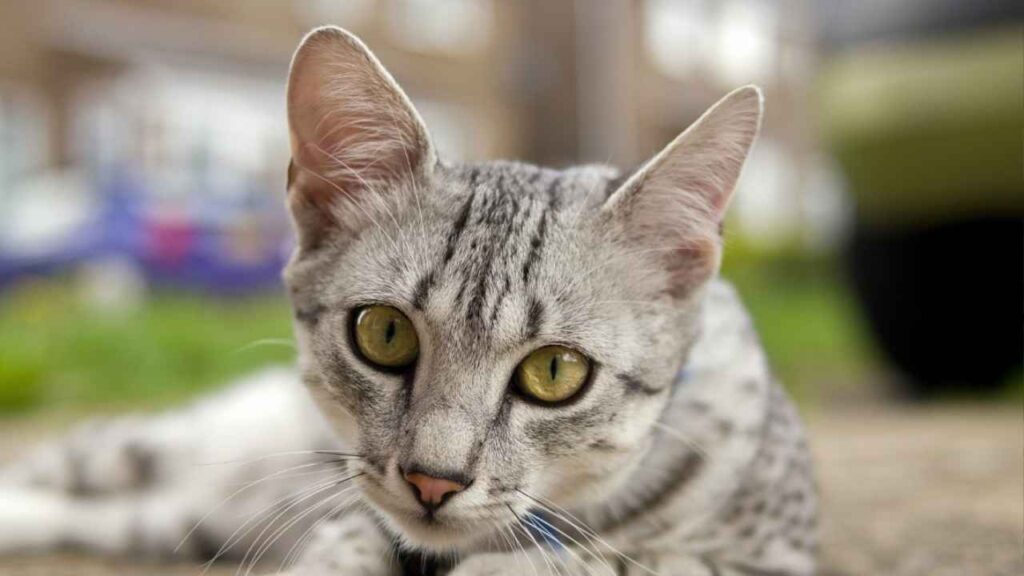
The Egyptian Mau, often simply called the Mau, is an ancient breed celebrated for its elegant build and naturally spotted coat. Unlike many patterned cats, its markings are not selectively bred, giving this feline a truly authentic and historic appearance.
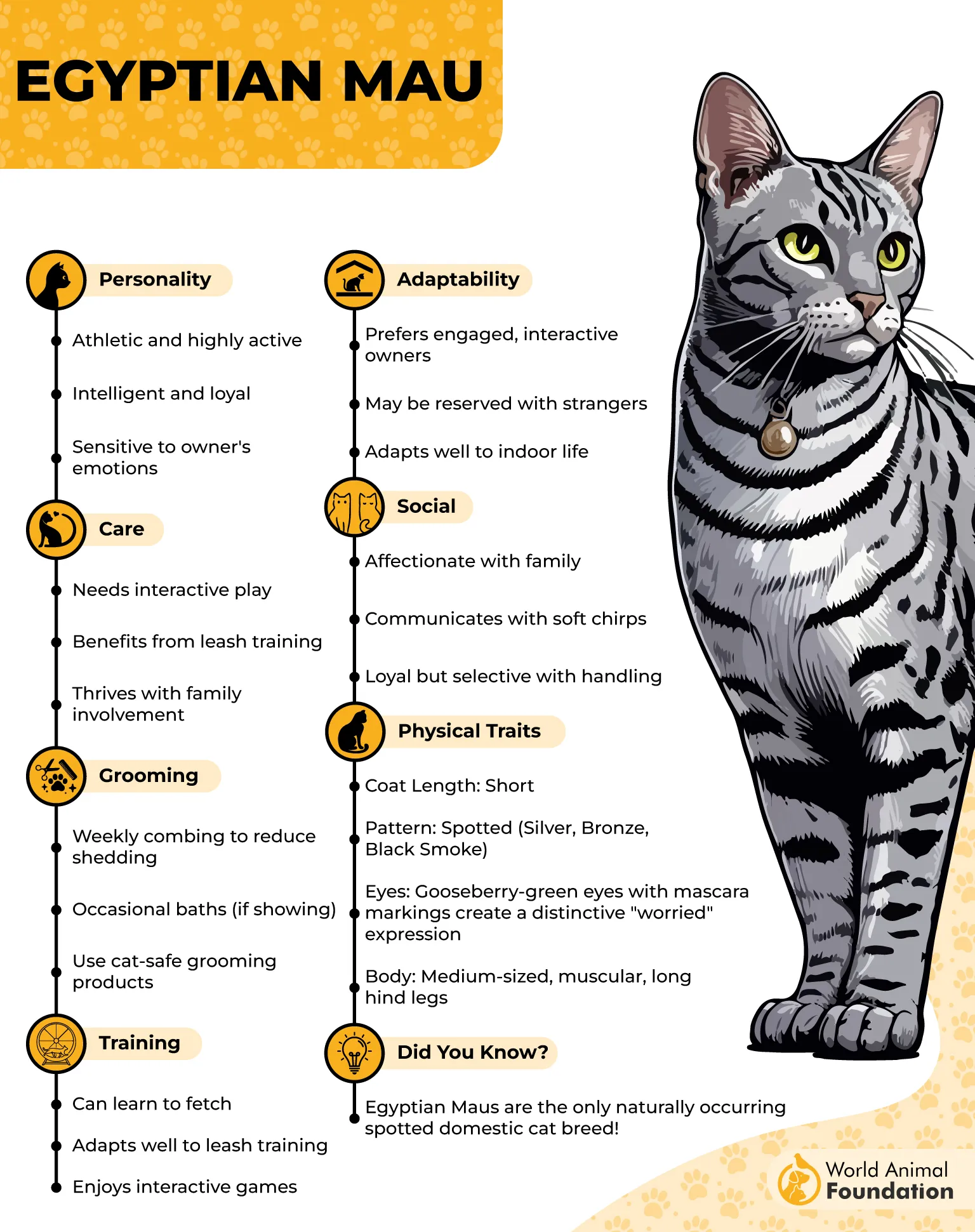
What sets the Egyptian Mau apart is its one-of-a-kind fur design. Each cat displays randomly placed yet harmonious spots that appear not only on the coat but on the skin beneath, making every pattern completely unique.
These bold spots, reminiscent of a wild leopard, flow along the Mau’s sleek, muscular body. The contrast between its athletic frame and carefully scattered markings enhances the breed’s exotic look and highlights the role genetics plays in creating rare coat patterns.
Beyond visual appeal, the Mau’s coat connects it to its ancient roots and natural heritage.
A notable fact about the Egyptian Mau is that it is one of the very few cat breeds with naturally occurring spots rather than man-made patterns.
7. Norwegian Forest Cat
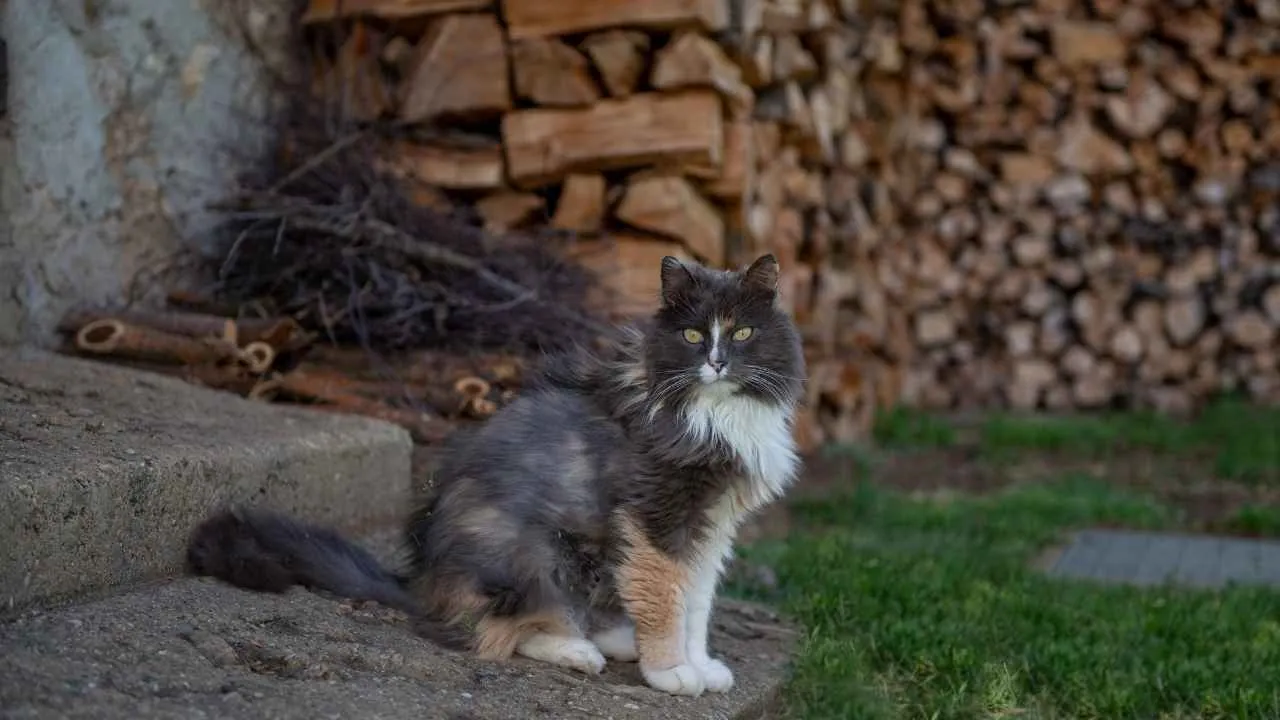
The Norwegian Forest Cat, also known as the Wegie or Norsk Skogkatt, is a majestic breed celebrated for its wild appearance and luxurious double coat. Originating in Scandinavia, this natural breed combines a powerful build with a striking range of coat colors and patterns.
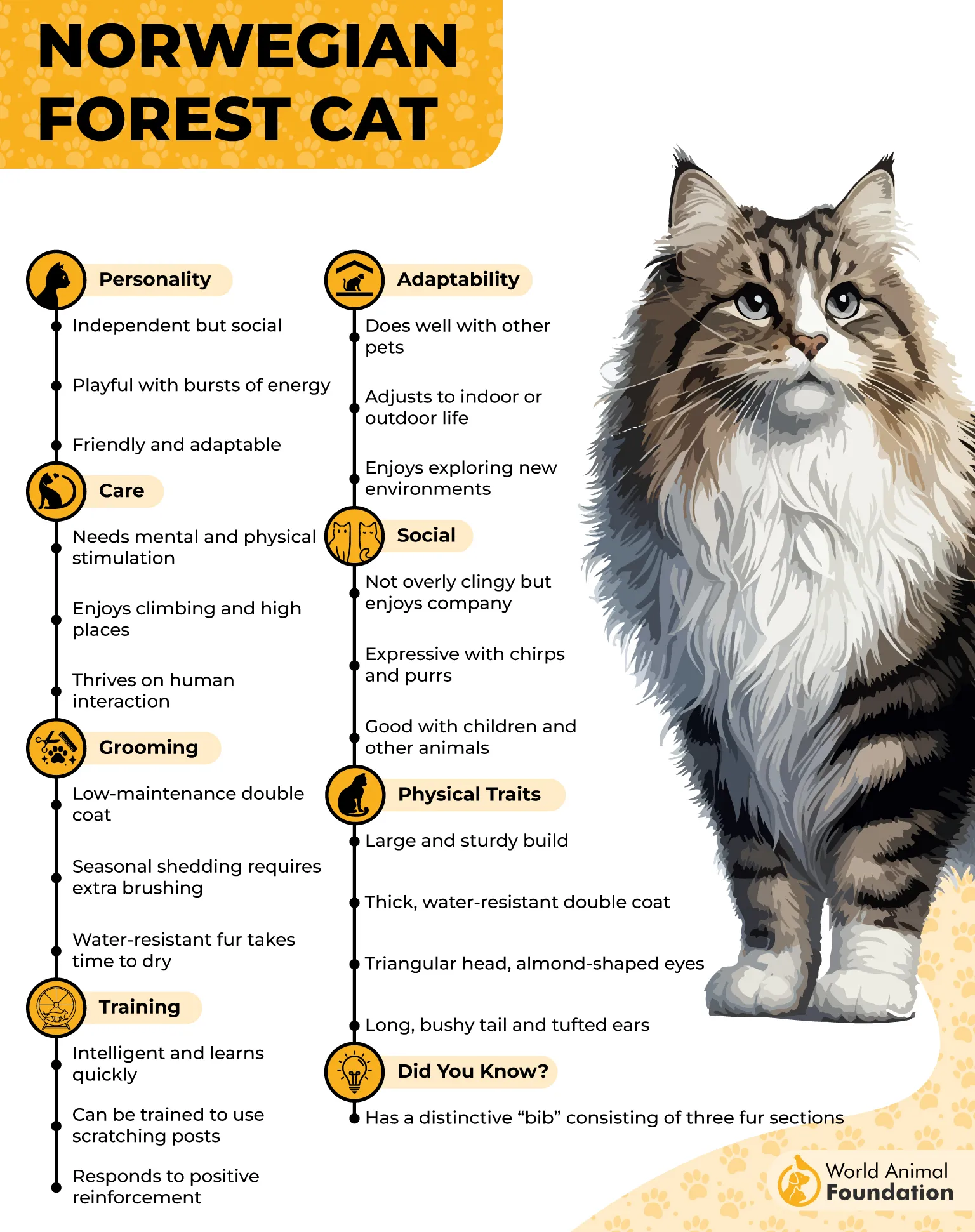
When it comes to unforgettable coat designs, tabby patterns are among the most iconic in this breed. Dense markings form bold swirls, including the signature “M” on the forehead, dramatic cheek patterns, and a dark line running down the spine that anchors the design.
Beyond tabby, Norwegian Forest Cats also display stunning tortoiseshell and solid patterns. The mix of black, red, and cream in tortoiseshell coats creates a mosaic-like effect, made even more eye-catching by their bushy tails, ear tufts, and full neck ruff.
Their thick, water-resistant coat isn’t just beautiful—it’s functional, developed for survival in cold Nordic forests.
A notable fact about this breed is that each Norwegian Forest Cat showcases a unique combination of markings, making no two coats exactly alike.
Conclusion
Unique coat patterns turn cats into living works of art, with each design shaped by genetics and history. From the classic brown tabby to tortoiseshell cats and elegant colorpoint cats, a cat’s coat color is influenced by how pigment travels through the hair shaft.
Whether it’s a pure white coat, solid colored fur, or black tips that add contrast, every beautiful cat carries a pattern that feels intentionally painted.
What makes these coats so fascinating is how science meets beauty. The colorpoint gene creates dramatic contrasts, while rare looks like the chinchilla pattern showcases delicate shading and beautiful colors.
No matter the style, each unique pattern adds personality and charm, reminding us that feline beauty goes far beyond appearance—it’s written strand by strand in every coat.
