




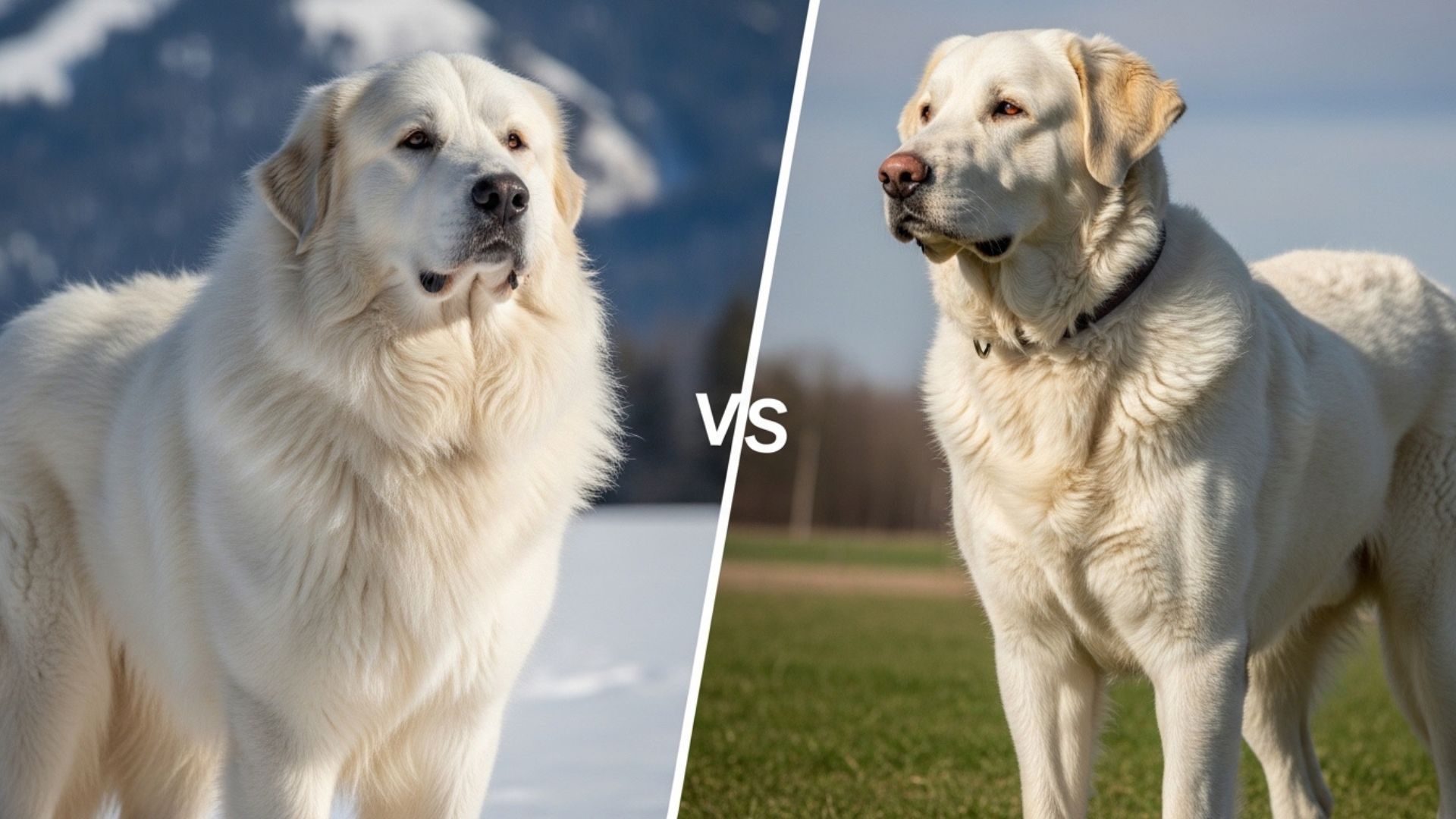
Choosing between two majestic white livestock guardian breeds isn’t easy. The Great Pyrenees and the Kuvasz are both ancient, intelligent, and fiercely devoted protectors. At first glance, they look strikingly similar—large, powerful, and wrapped in thick white coats designed to withstand harsh climates.
But beneath those similarities lie important differences in temperament, energy level, training style, and overall lifestyle fit. Both breeds were developed to guard livestock independently in mountainous regions, yet their guarding styles and personalities evolved in distinct ways.
Those nuances matter—especially if you’re deciding which breed fits your home, farm, or family best.
While the Kuvasz is agile, intense, and highly athletic, many prospective owners ultimately find the Great Pyrenees better suited for modern family life and livestock protection in rural environments.
Below are eight compelling reasons why the Great Pyrenees may be the more practical and balanced choice.
Compelling Reasons to Pick a Great Pyrenees Dog Breed Over a Kuvasz
1. Origins & Purpose
The Great Pyrenees originated in the Pyrenees Mountains between France and Spain, where they guarded sheep against wolves and bears. According to the American Kennel Club, the breed has served as a livestock guardian for centuries, often working independently in remote mountain terrain.
The Kuvasz, meanwhile, was originally bred in Hungary and also functions as a livestock guardian dog (LGD). Historically, Kuvaszok guarded both flocks and royal estates. Their role leaned slightly more toward personal and property defense compared to the more flock-focused Pyrenees.
Both breeds share guardian instincts, independence, and courage. However, the Great Pyrenees was specifically refined to coexist closely with livestock over long periods, emphasizing patience and steadiness over intensity.
If your primary goal is livestock protection in open rural land, the Pyrenees’ deeply ingrained flock-bonding instinct often makes them more specialized for that role.
2. Size & Physical Build
Both breeds are large, but the Great Pyrenees generally carries more bone mass and bulk from a young age. Males typically stand 27–32 inches tall and can weigh up to 100 pounds, sometimes reaching 130 pounds or more. Kuvasz males range from 28–30 inches and 100–115 pounds
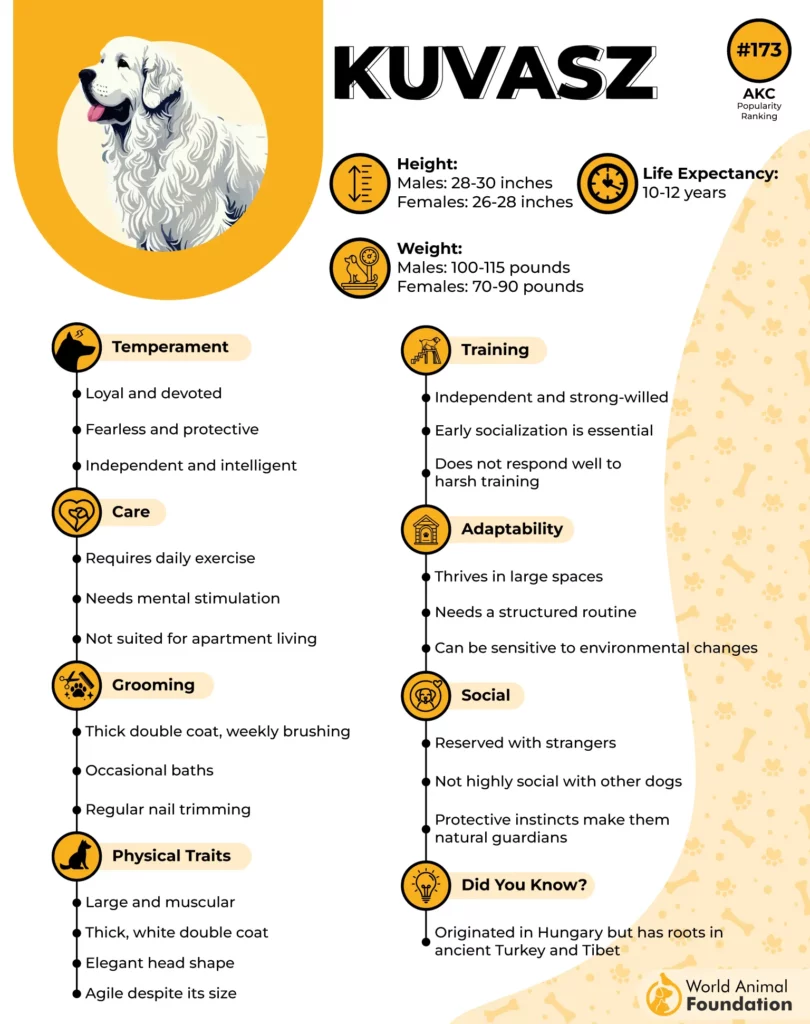
The Pyrenees’ heavier frame provides a more imposing visual deterrent against predators. Their presence alone can discourage threats before confrontation even begins.
Additionally, the Great Pyrenees has a broader, blockier head with a pronounced stop, whereas the Kuvasz head is slightly narrower with a softer stop.
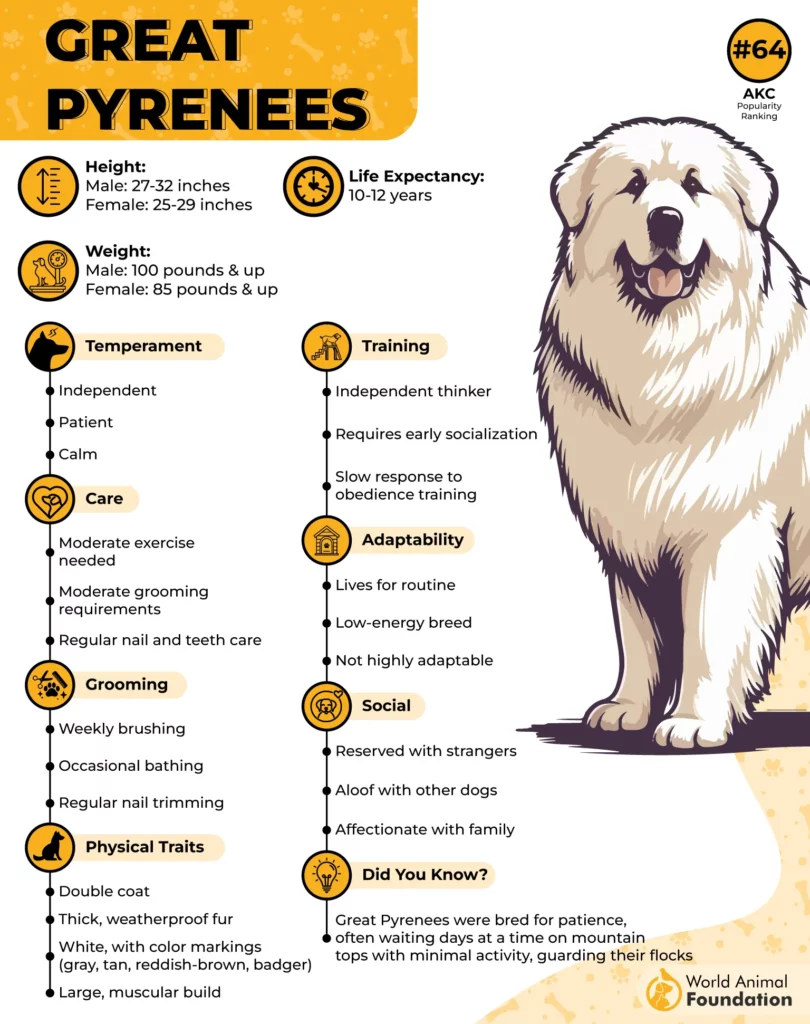
A unique physical trait sets the Pyrenees apart: double dewclaws on the hind legs, a breed hallmark recognized in the AKC standard. The Kuvasz does not typically have this feature.
3. Temperament & Personality
Great Pyrenees are often described as “gentle giants.” They are calm, patient, and affectionate with their families. While protective, they are not typically reactive without cause.
Kuvasz owners say that, by contrast, these dogs tend to be more intense and serious guardians. They are often more aloof with strangers and may react more quickly to perceived threats.
The Pyrenees’ measured approach to guarding—patrol, assess, bark—makes them more forgiving in mixed environments where visitors or neighbors are common.
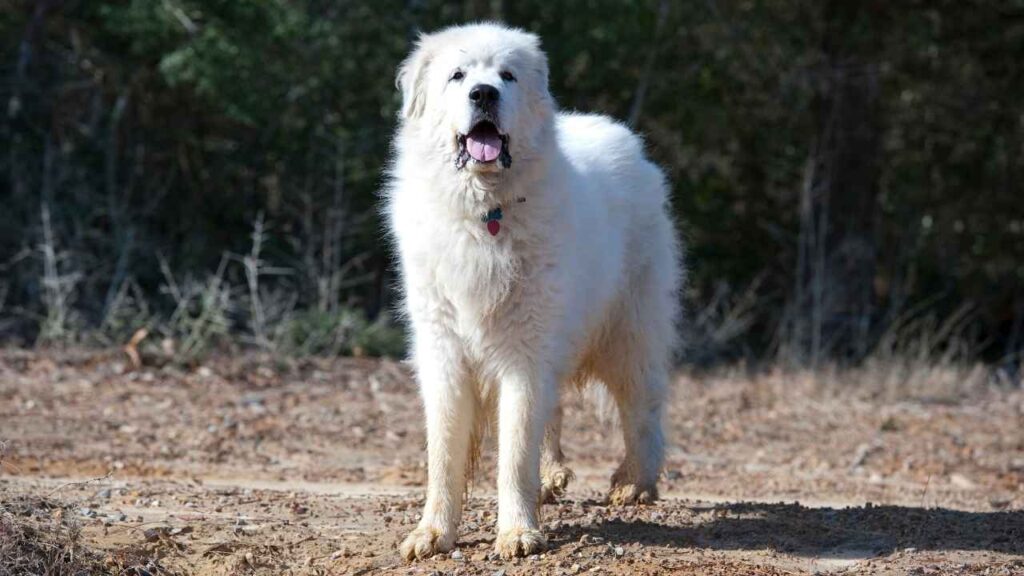
For families seeking a livestock guardian that balances protection with gentleness, the Great Pyrenees often feels more adaptable as it tends to form strong bonds with its family members.
4. Exercise & Energy Levels
The Kuvasz has moderate to high energy needs and requires 1–2 hours of regular exercise daily, claims the Royal Kennel Club. They are agile and athletic, often thriving in active, structured routines. It benefits from long walks, hikes, or active farm work and requires mental stimulation to prevent boredom.
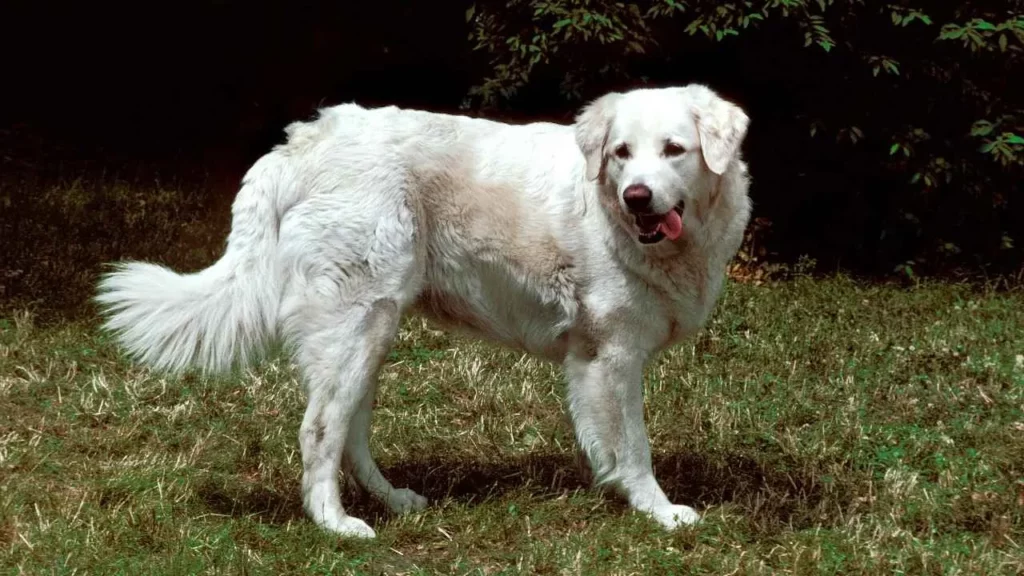
Great Pyrenees, on the other hand, are those large dogs that have lower to moderate energy levels. Historically, they conserved energy during the day and patrolled at night. Two 20–30 minute walks per day typically suffice for non-working Pyrenees.
If you want a livestock guardian who does not have excessive exercise requirements, the Pyrenees may be easier to manage.
5. Training & Intelligence
Both breeds are intelligent and independent. However, Kuvasz dogs are often described as more sensitive and reactive to tone and correction.
Great Pyrenees are independent thinkers but less intense, as per PetMD. They may ignore commands they find unnecessary, but they are generally less reactive. For first-time livestock guardian owners, their steadier temperament can be easier to navigate.
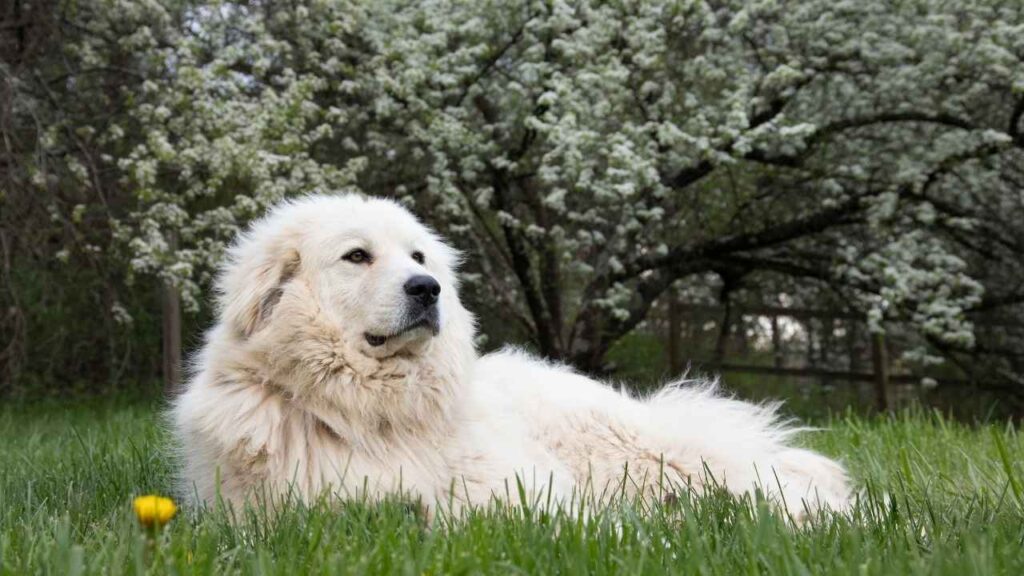
They rely heavily on presence and barking to deter predators. They patrol calmly and often remain gentle with livestock, even poultry.
Kuvasz dogs are more proactive and may physically confront threats more readily, according to the Royal Canin. While effective, this intensity requires experienced handling.
For large rural farms focused on predator deterrence rather than active confrontation, the Pyrenees’ guarding style is often more predictable and steady.
6. Coat Maintenance
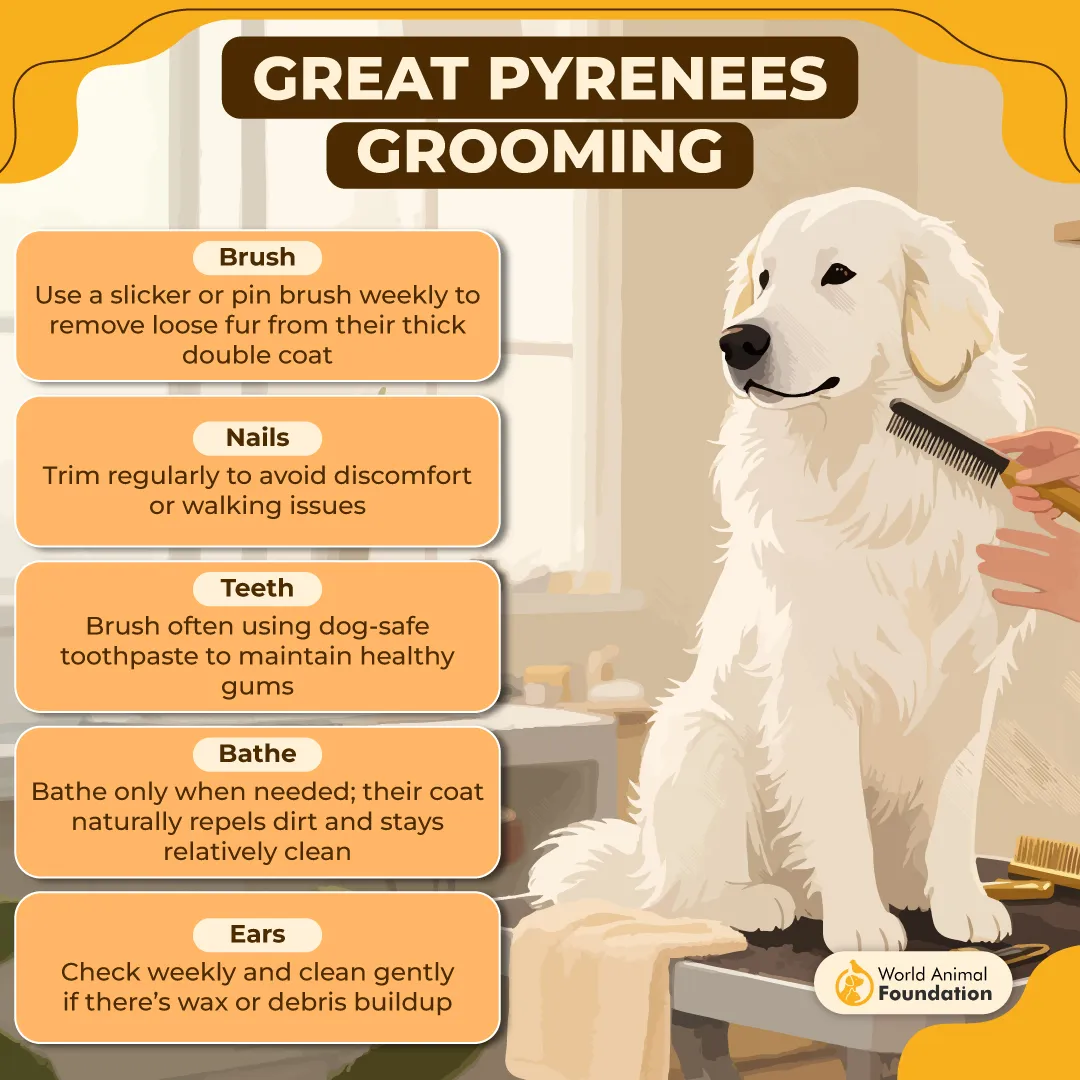
Both these two breeds have double coats. The Great Pyrenees has a thick double coat consisting of:
A long, coarse outer coat (straight or slightly wavy)
A dense, soft undercoat for insulation
This double coat protects them from harsh mountain weather—cold, snow, and even heat when properly maintained. They shed heavily, especially during seasonal coat blowouts.
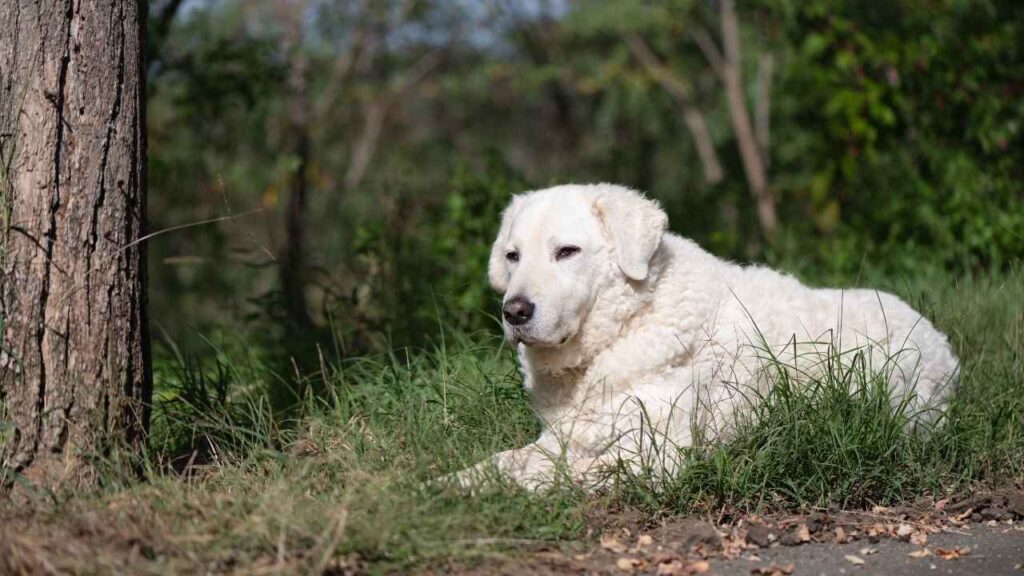
The Kuvasz also has a thick coat, made up of:
A medium-length, wavy or slightly curly outer coat
A soft, insulating undercoat
The Kuvasz coat is often described as “self-cleaning” and slightly wavy, with a texture that resists dirt and matting. However, the Great Pyrenees coat requires regular grooming that includes extensive brushing, especially during shedding seasons.
While both have distinct grooming needs, many owners report that Pyrenees coats shed dirt effectively once dry.
7. Health & Lifespan
Both breeds are working dogs and live a life of 10–12 years.
Purina says Great Pyrenees are prone to certain health issues such as hip and elbow dysplasia, bloat (GDV), skin issues, and osteosarcoma (bone cancer). Kuvasz may be more prone to autoimmune thyroiditis and progressive retinal atrophy.
Kuvasz has a slight edge in overall health. It is generally leaner and has a more athletic build. Also, there are just a few reports of certain cancers compared to giant breeds
Health management for both breeds requires responsible breeding and regular veterinary care.
8. Great Pyrenees vs. Kuvasz: Farm Dog vs Guard Dog
If your priority is livestock protection across wide acreage, the Great Pyrenees’ nocturnal patrol and bark-heavy deterrent strategy may be ideal.
If your goal is a more athletic, intense personal property dog with phenomenal guarding instincts who stays closer to defined boundaries, the Kuvasz may excel.
However, for many rural families, the Pyrenees strikes a more balanced tone between guardian and gentle companion.
Conclusion
Both the Great Pyrenees and the Kuvasz are magnificent livestock guardian breeds shaped by centuries of purposeful work. They are independent, intelligent, and deeply protective.
Yet when weighing temperament, energy, guarding style, and adaptability to family life, many prospective owners find the Pyrenean Mountain Dog more forgiving, calmer, and better suited to large-scale livestock protection compared to many other pets.
Ultimately, the best choice depends not on their key differences but on your land, experience, and expectations. But if you’re seeking a steady, patient, and devoted guardian with centuries of proven flock-protection heritage, the Great Pyrenees stands tall—literally and figuratively.
