




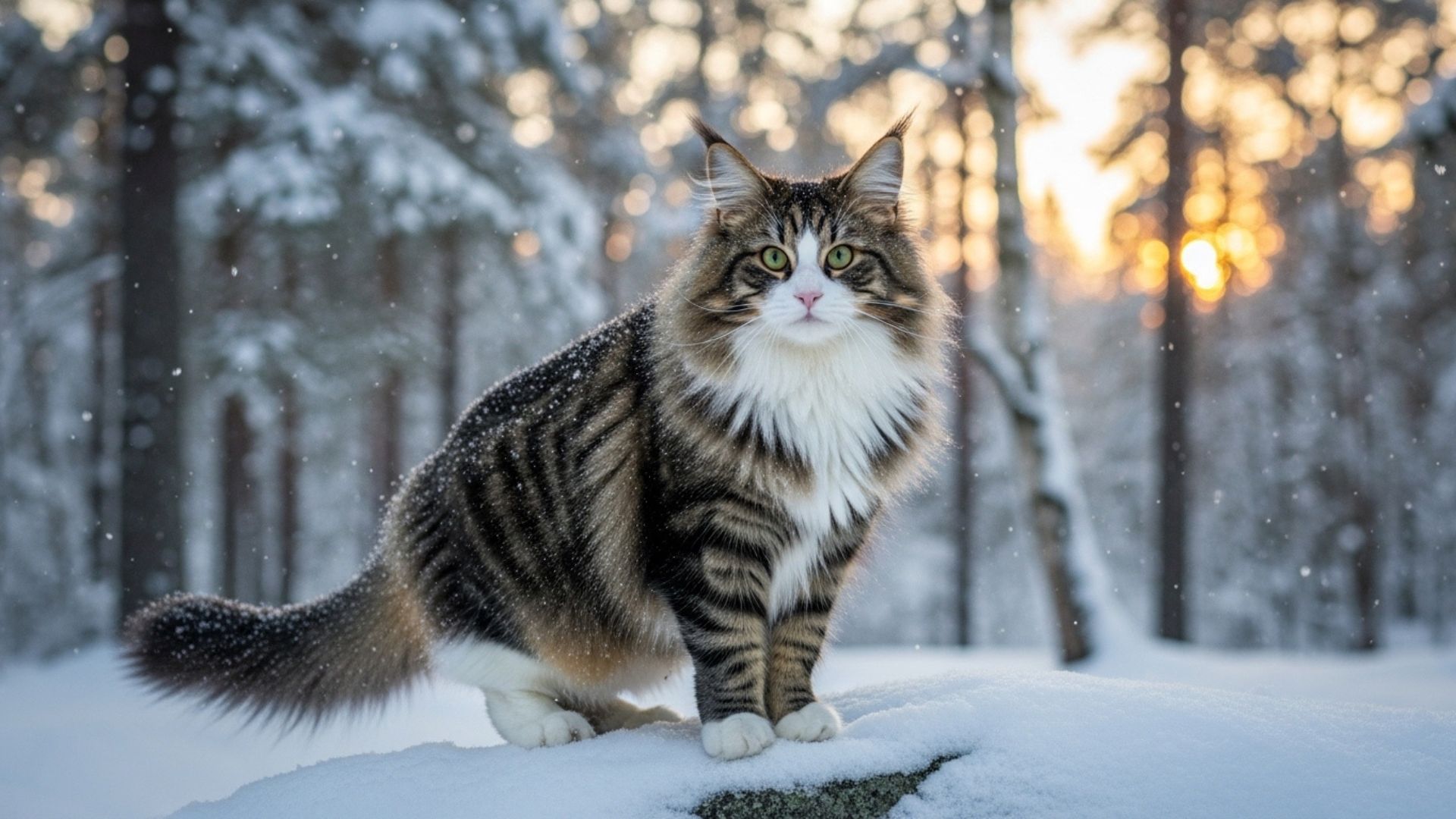
Snowy landscapes may look magical, but surviving in cold climates requires more than just curiosity and courage. Not all cats are built for icy temperatures, yet certain breeds have evolved to thrive where snow, frost, and long winters are part of daily life. These cats aren’t just tolerant of the cold—they’re uniquely equipped for it.
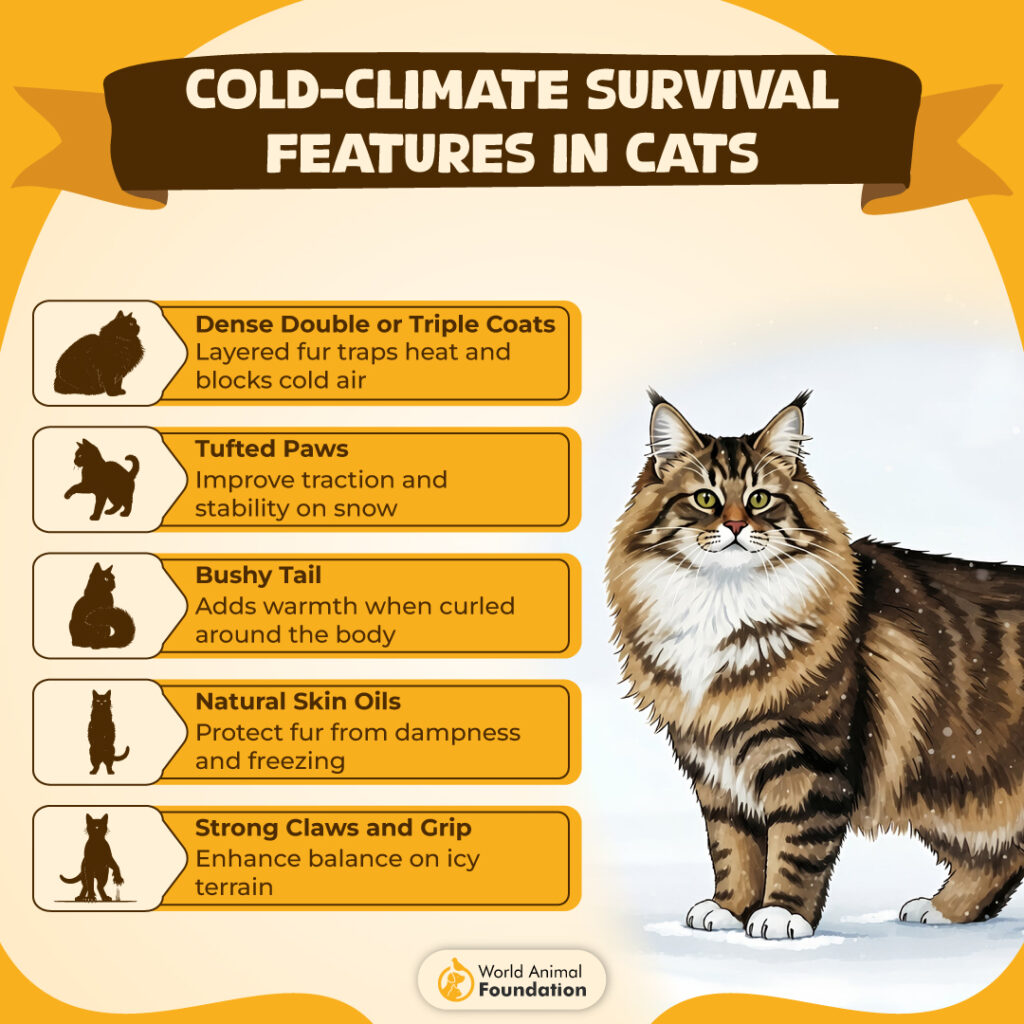
What makes a cat breed suited for cold climates comes down to physical adaptation. Thick, multi-layered coats trap heat while repelling moisture, keeping skin warm and dry even in harsh conditions. Tufted paws act like natural snowshoes, while bushy tails provide extra warmth when curled around the body. Compact builds, shorter ears, and strong frames also help conserve body heat in freezing environments.
In this article, we explore cat breeds adapted to snowy regions and the key traits that support winter survival. From dense fur textures and natural skin oils to sturdy body shapes, these cats demonstrate how evolution shaped them into resilient companions capable of thriving in cold, snow-covered landscapes.
Cat Breeds Adapted to Snowy Regions
1. Siberian
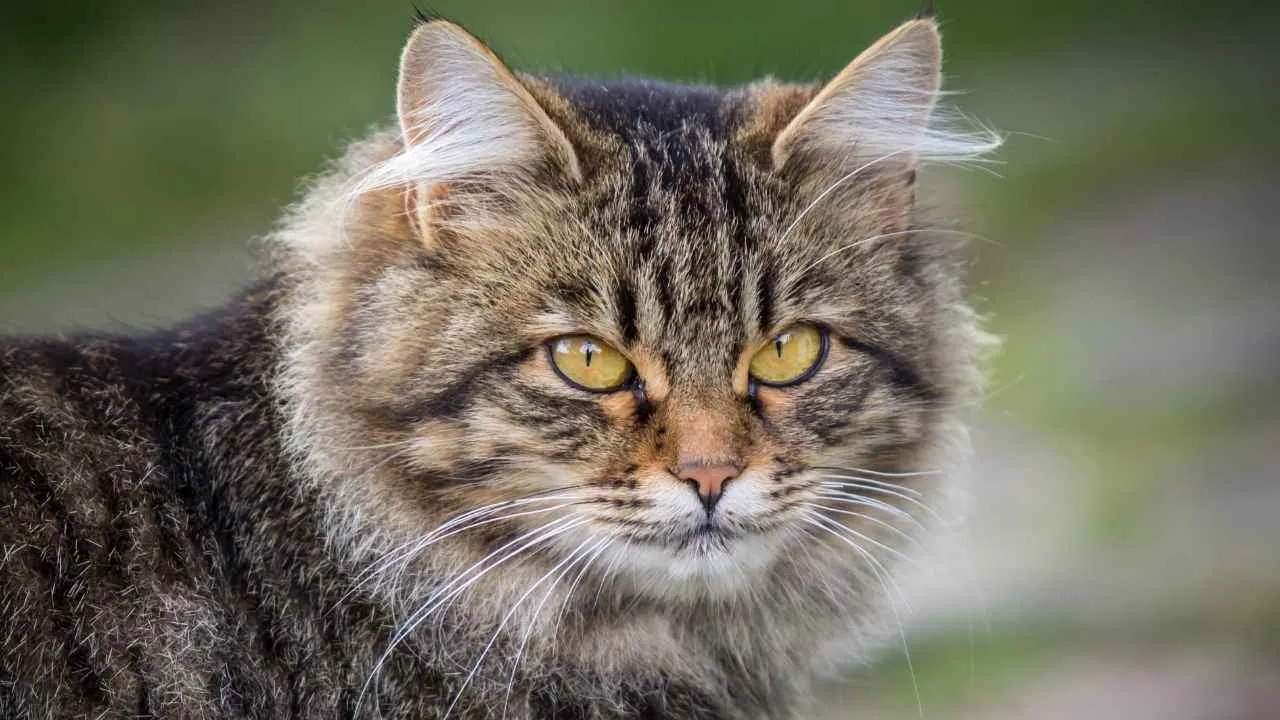
Also known as the Siberian Forest Cat, the Siberian is an ancient breed developed in the harsh climates of Russia. Large, powerful, and naturally resilient, this cat is perfectly suited to life in extreme cold.
According to PetMD, Siberians are gentle, adaptable, and very intelligent, making them fun to have around, though their personalities can vary widely.
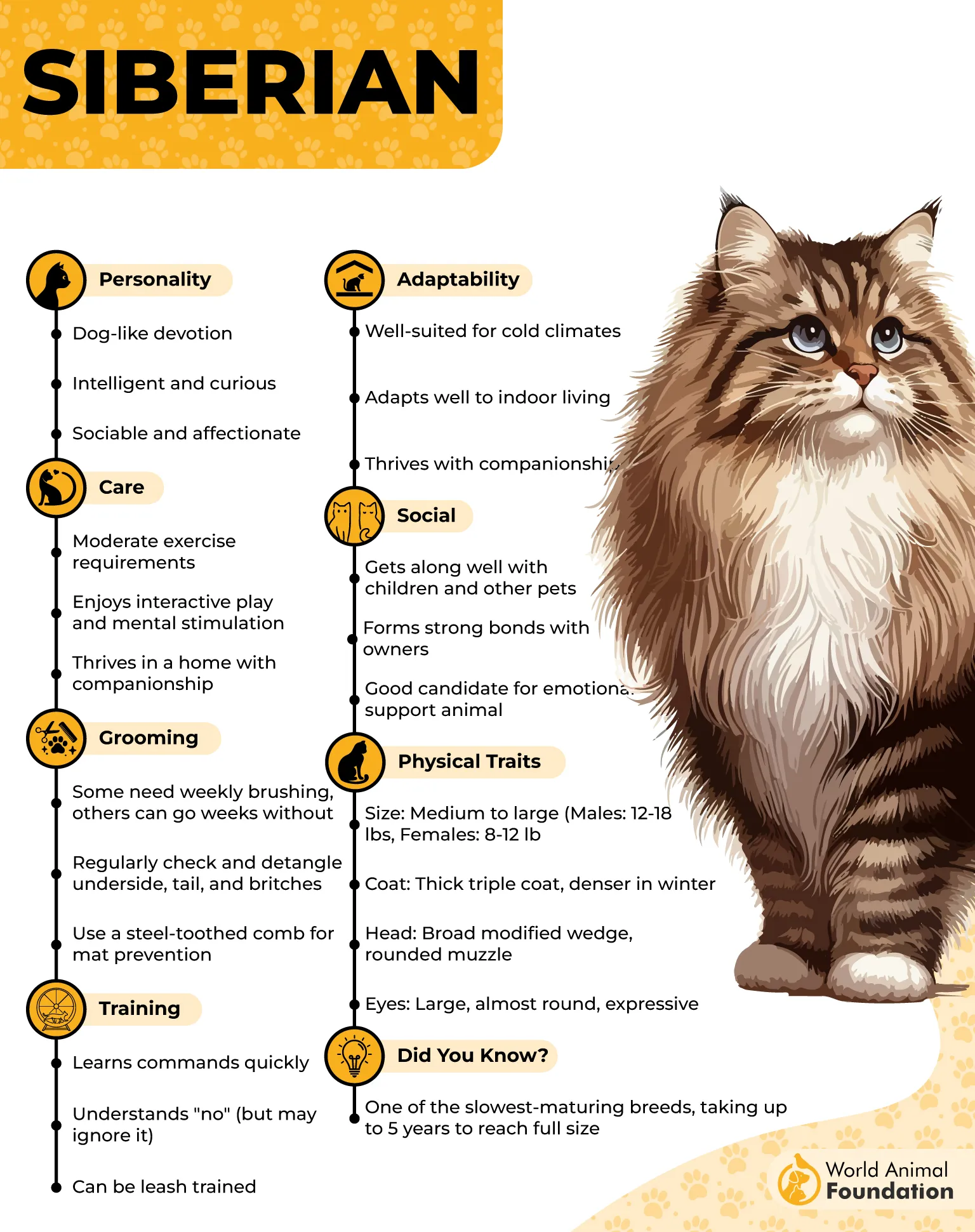
Its defining feature is a dense, triple-layered coat designed for winter survival. A soft insulating undercoat traps warmth, a middle layer maintains structure, and long, water-resistant guard hairs repel snow and moisture.
Seasonal adaptability enhances its cold tolerance. The coat thickens during winter and sheds down in warmer months, while large, tufted paws function like natural snowshoes on icy terrain.
Despite its thick fur, grooming needs are moderate due to natural resistance to matting.
Fun fact: Siberian cats produce lower levels of Fel d 1, the protein responsible for most cat allergies.
❄️ Cold Climate Cat Match
2. Norwegian Forest Cat
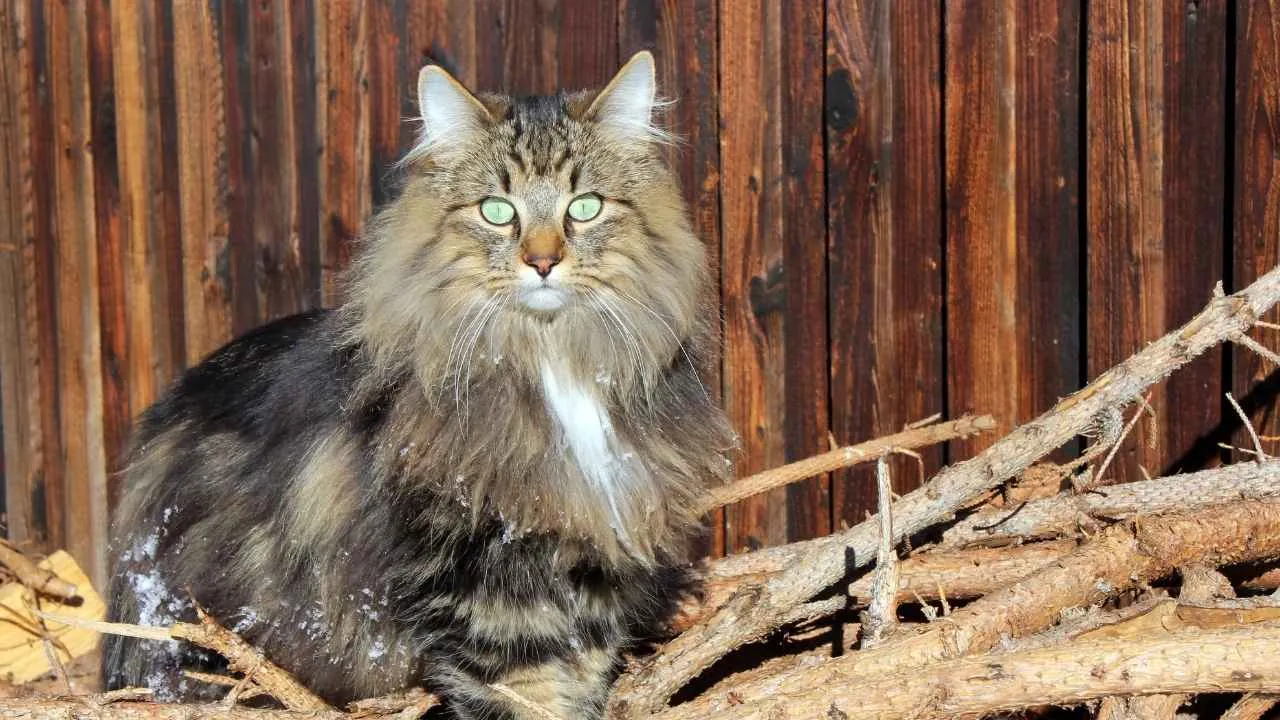
Often called the Wegie, the Norwegian Forest Cat is a large, naturally developed breed from Scandinavia. Known as a gentle giant, it combines a calm temperament with strong independence and impressive physical strength.
According to PDSA, Norwegian Forest cats are usually quiet unless they want your attention. They aren’t typically lap cats and are more likely to perch up high in a room.
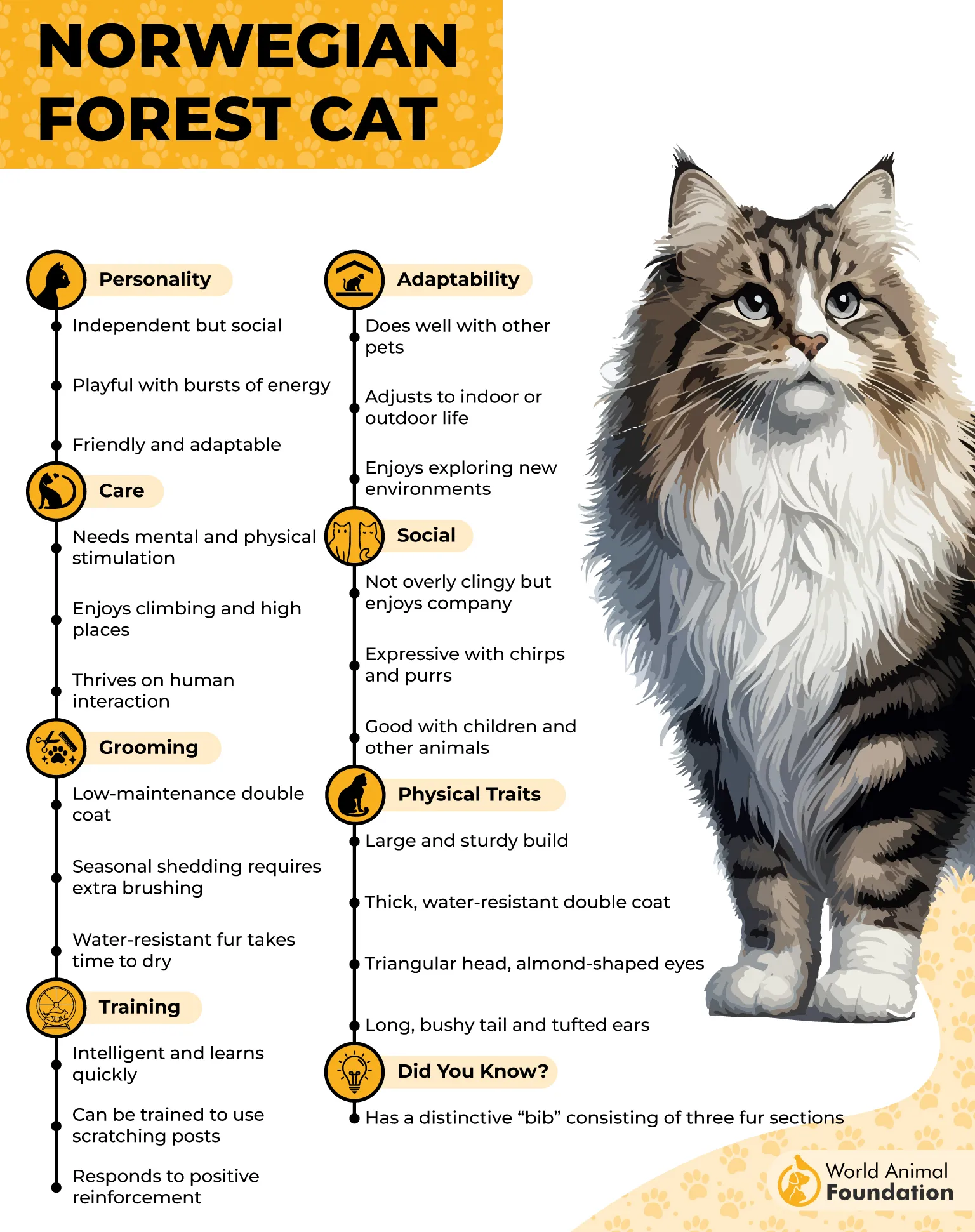
This breed is perfectly adapted to snowy environments thanks to its dense, semi-long coat. A thick undercoat provides insulation, while long, waterproof guard hairs protect against snow, rain, and freezing winds.
Cold-weather survival is further supported by a bushy tail used for warmth and powerful claws built for climbing icy trees and rugged terrain. These traits also enhance its natural hunting abilities in forested landscapes.
Highly intelligent and resourceful, Norwegian Forest Cats enjoy practicing their hunting skills through play and exploration.
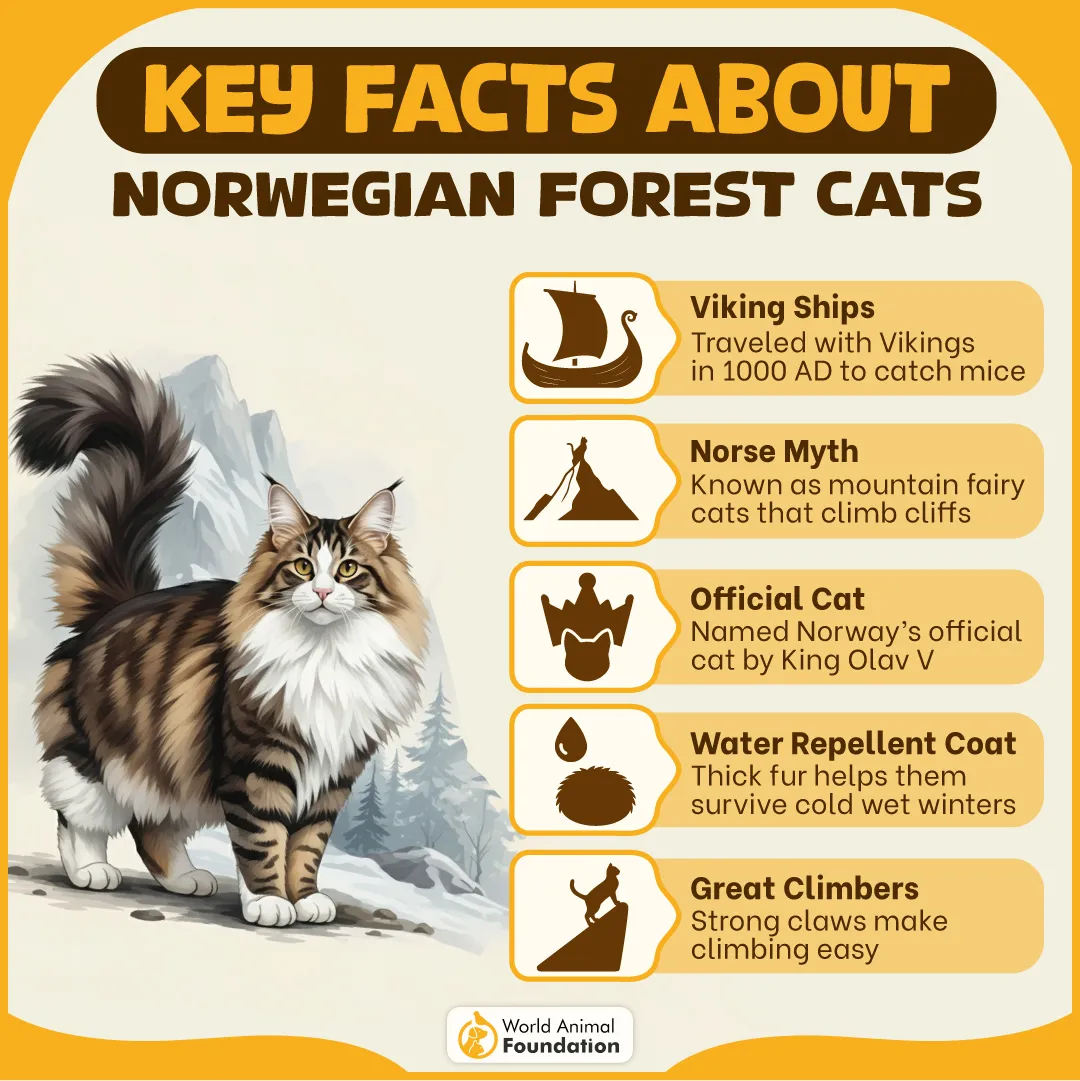
Fun fact: the Norwegian Forest Cat appears in Norse mythology and was said to pull the chariot of the goddess Freyja.
3. Maine Coon
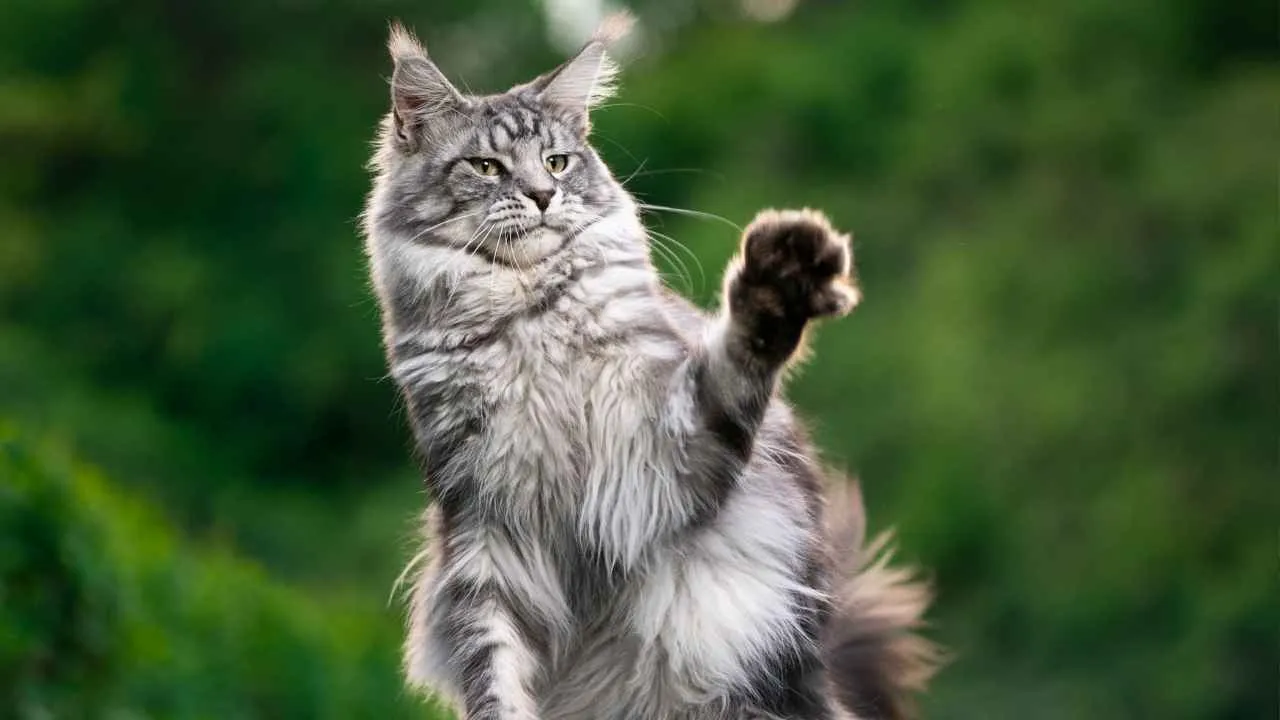
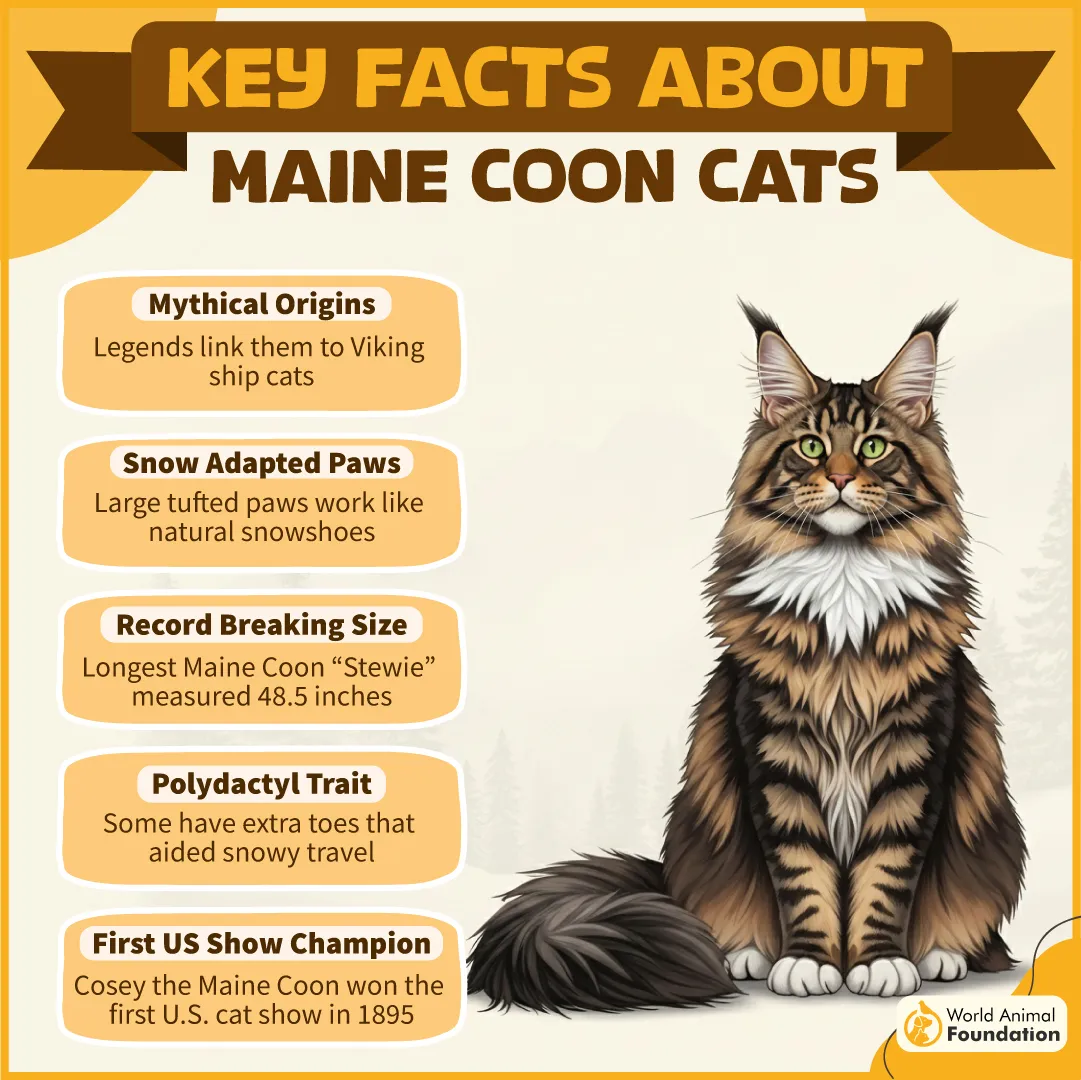
Also known as America’s native winter cat, the Maine Coon is one of the largest domestic cat breeds and a longtime favorite in cold regions.
Originating in the northeastern United States, this gentle giant is built for harsh winters. According to WebMD, Maine Coon cats are a large breed known for being affectionate and friendly.
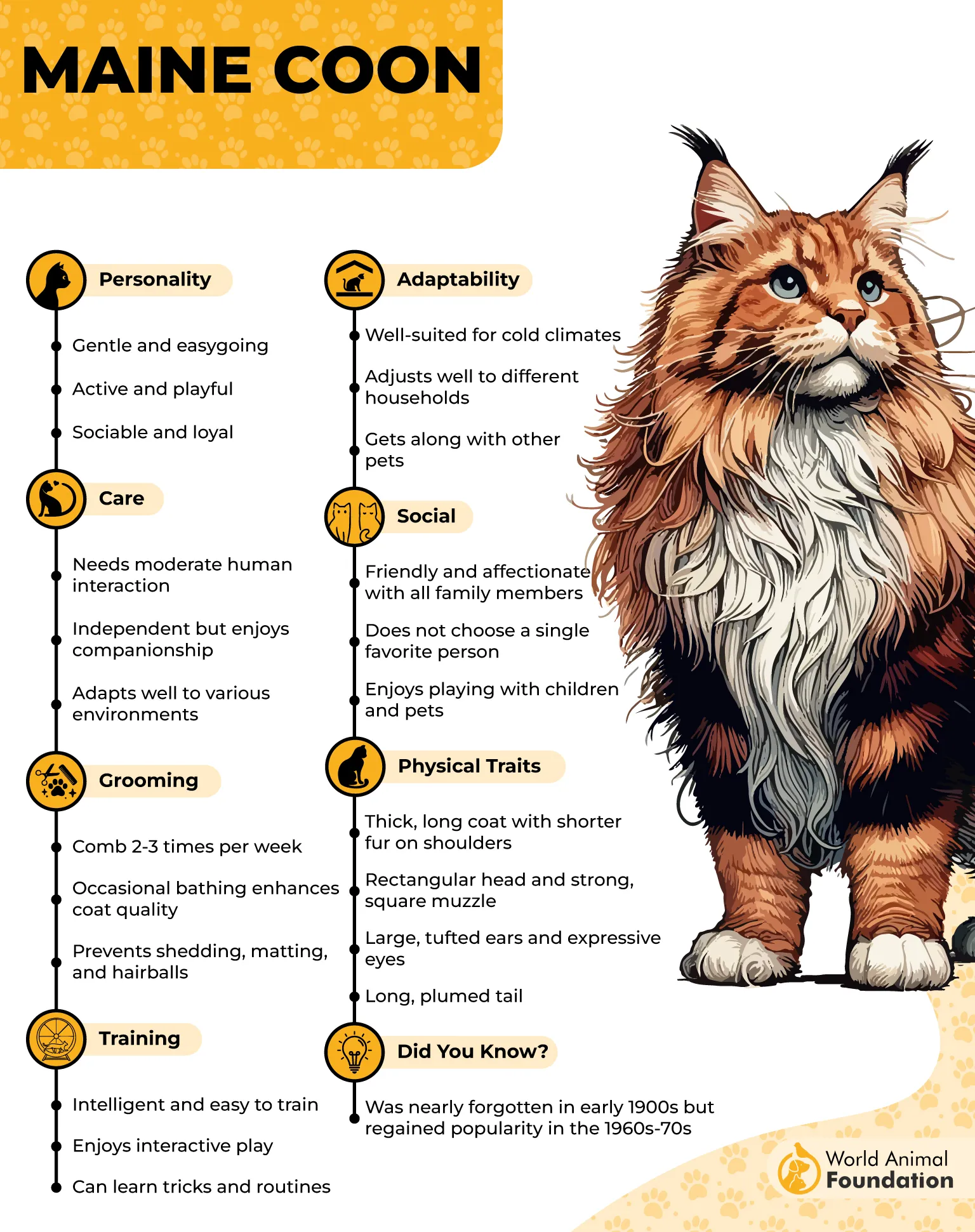
A thick, shaggy coat provides excellent insulation, especially around the belly and hindquarters, where warmth is most needed. The fur is also semi-water-repellent, helping protect the skin from snow and icy moisture.
Wide, furry paws act like natural snowshoes, giving the Maine Coon stability on slippery terrain. Many individuals are even polydactyl, with extra toes that further improve balance and traction in snowy conditions.
Despite its size, this breed is relaxed and people-friendly, adapting well to indoor life while retaining strong cold-weather resilience.
Fun fact: Adult male Maine Coons can weigh up to 25 pounds while remaining agile in winter environments.
4. Kurilian Bobtail
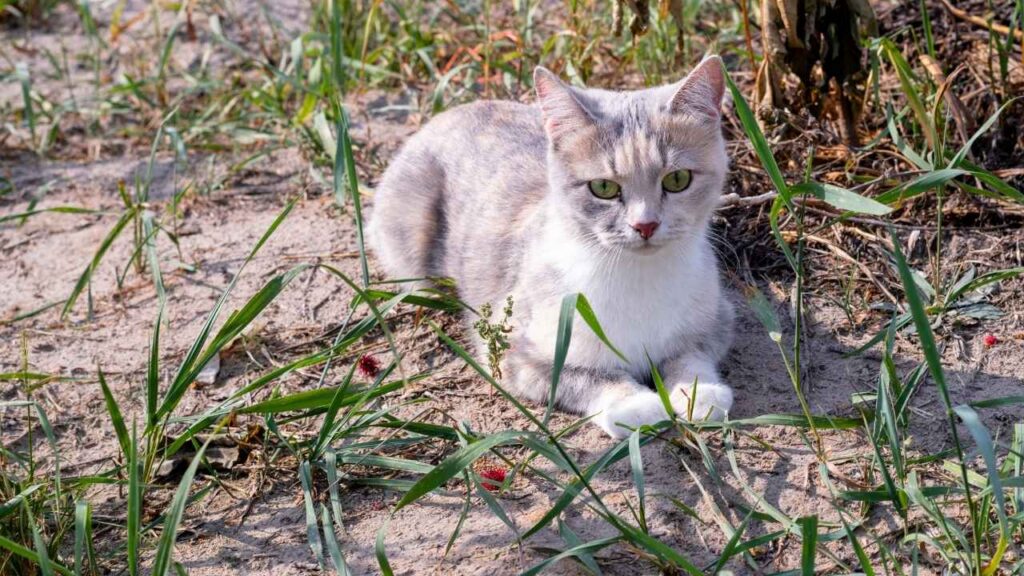
Also known as the Kuril Islands Bobtail, the Kurilian Bobtail is a naturally developed breed from the harsh Kuril Islands between Russia and Japan. Its signature short, pom-pom tail and sturdy build give it a distinctive, rugged charm.
Cold climates shaped this breed’s survival skills. A dense coat—either short or semi-long—provides insulation against freezing winds and damp snow, while natural oils help repel moisture in icy conditions.
Strong muscles and longer hind legs allow the Kurilian Bobtail to move confidently across uneven, snowy terrain. Its agility and balance made it an effective hunter in the wild, even along icy shorelines.
Despite its tough exterior, the breed is famously gentle and sociable. It adapts well to family life while retaining its resilience.
Fun fact: Kurilian Bobtails are often called “fisher cats” because they are unafraid of cold water and naturally skilled at catching fish.
5. Russian Blue
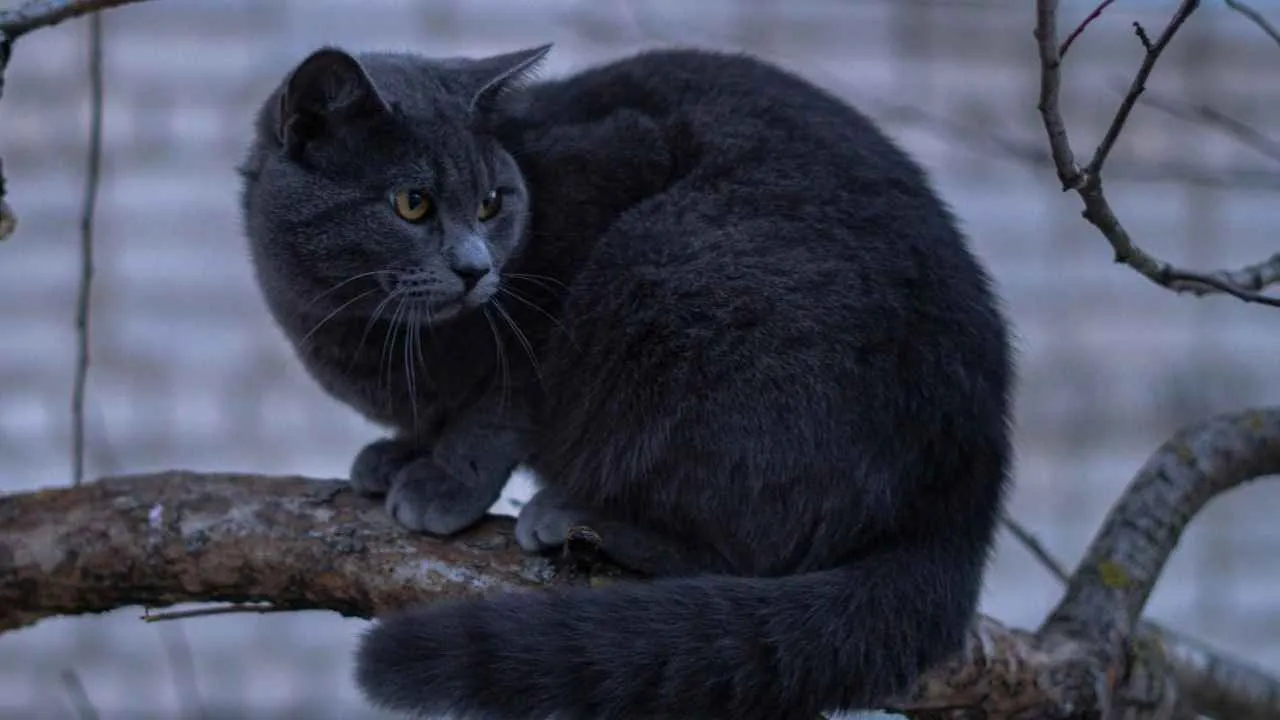
Also known as the Archangel Blue, the Russian Blue traces its origins to northern Russia near the Arctic Circle. This elegant breed is instantly recognized by its silver-tipped blue coat and calm, observant nature.
Cold climates suit the Russian Blue perfectly. A dense double coat—featuring a plush insulating underlayer and a coarse outer layer—helps trap warmth while repelling moisture, making snowy conditions far more comfortable.
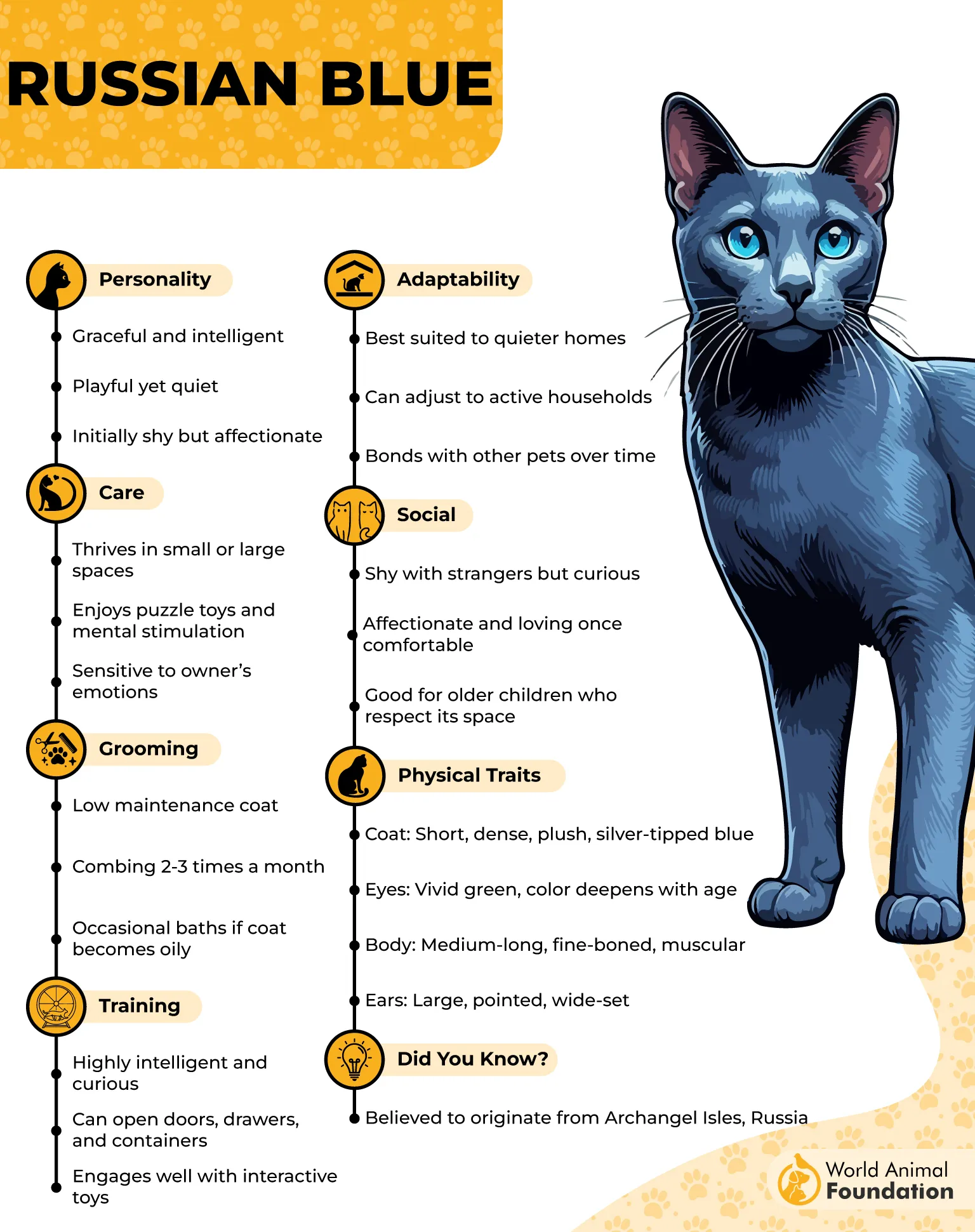
Unlike some outdoor explorers, Russian Blues prefer familiar territory but still enjoy cool-weather outings with their humans. Snowy air and mild cold energize them, and their thick fur prevents heat loss during winter play.
Adaptable and low-maintenance, they balance independence with loyalty, thriving indoors while remaining physically equipped for harsh winters.
Fun fact: Russian Blues were once prized for their luxurious fur, which legends compared to the texture of seal pelts.
6. Selkirk Rex
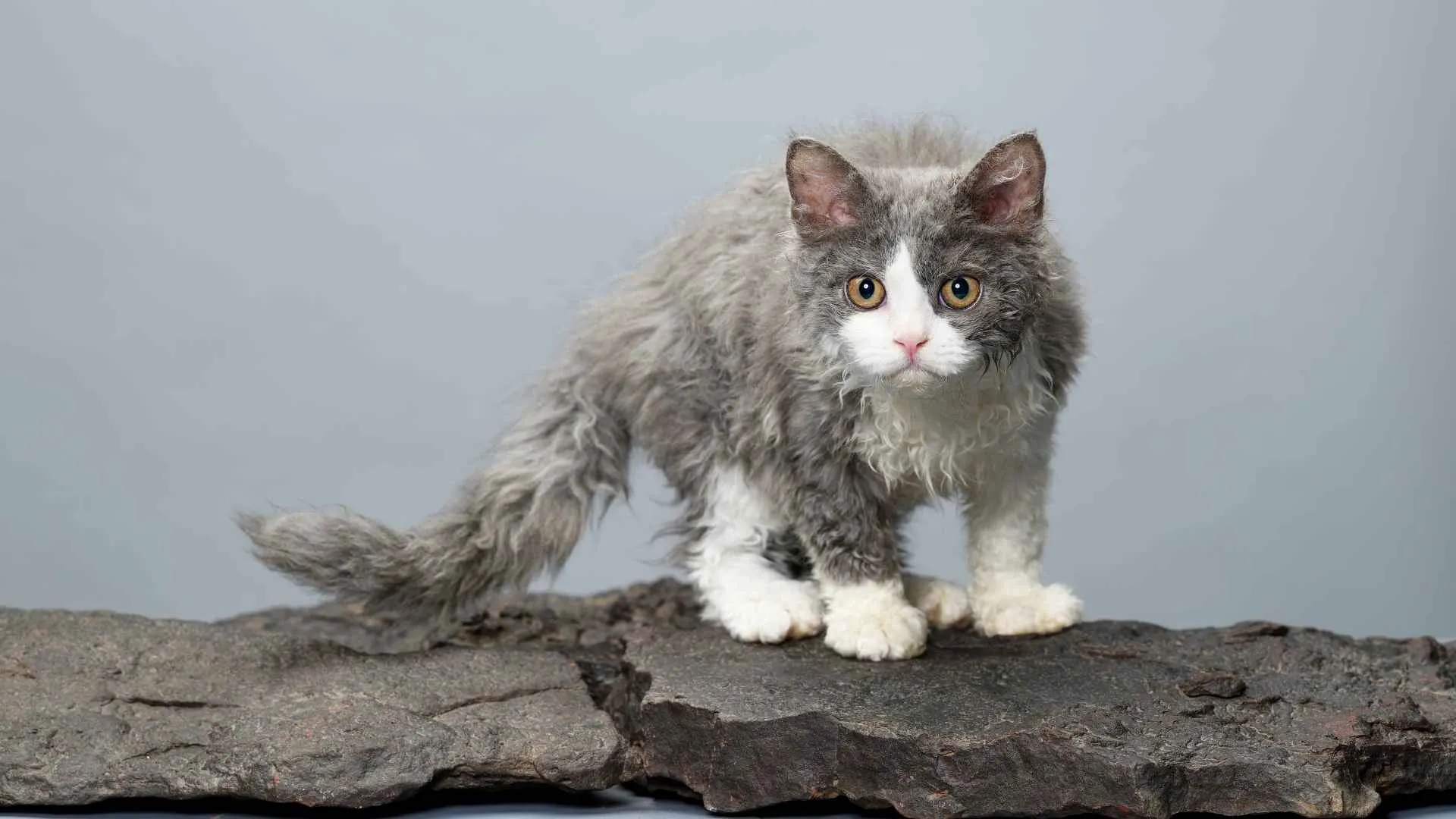
Often nicknamed the “cat in sheep’s clothing”, the Selkirk Rex is known for its round face, big eyes, and plush, curly coat. Originating in mountainous Montana, this breed comes in both short- and long-haired varieties.
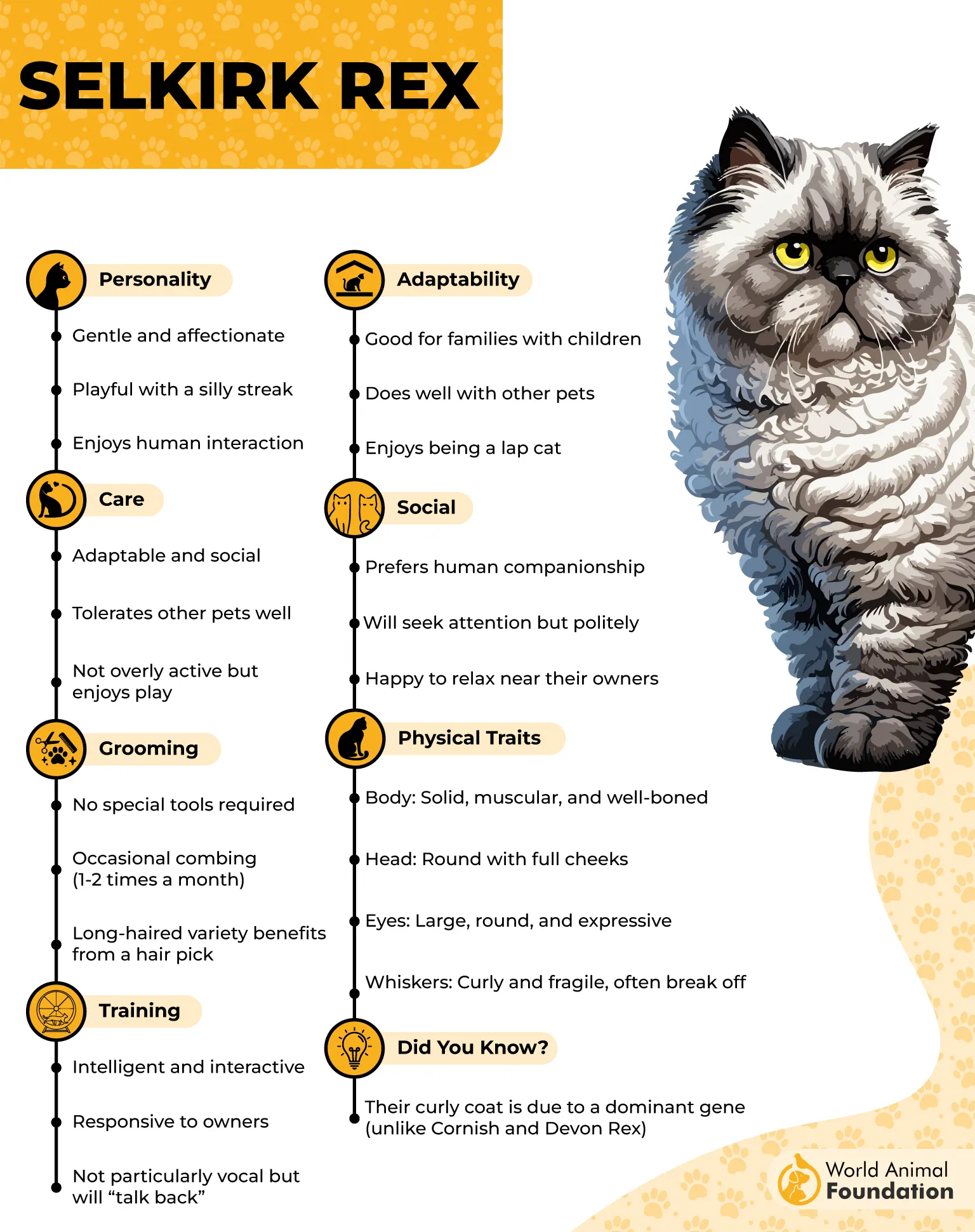
That dense, wool-like coat is a major advantage in snowy regions. The curls trap warmth close to the body, offering natural insulation that helps the Selkirk Rex stay comfortable in cold temperatures.
Strong legs and large, rounded paws provide steady footing on icy or uneven ground. Combined with a muscular build, this gives the breed surprising agility despite its teddy-bear appearance.
Low-shedding and naturally thick, the coat offers protection without demanding excessive grooming, making winter care manageable.
Fun fact: Selkirk Rex kittens are born with very curly fur that temporarily straightens before returning to full curls as they mature.
7. American Bobtail
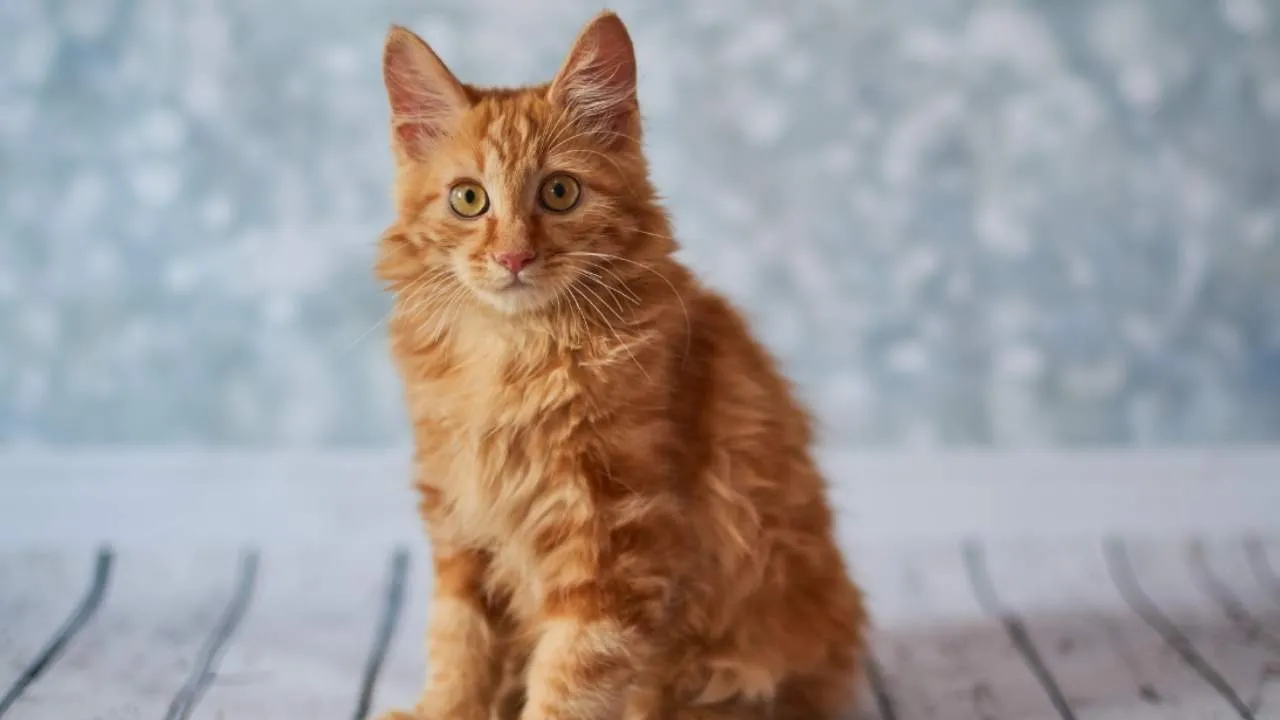
Also called the Bobtail, the American Bobtail is a naturally short-tailed cat native to North America. With a wild, rugged appearance and a sturdy build, this breed was shaped by natural selection rather than refined aesthetics.
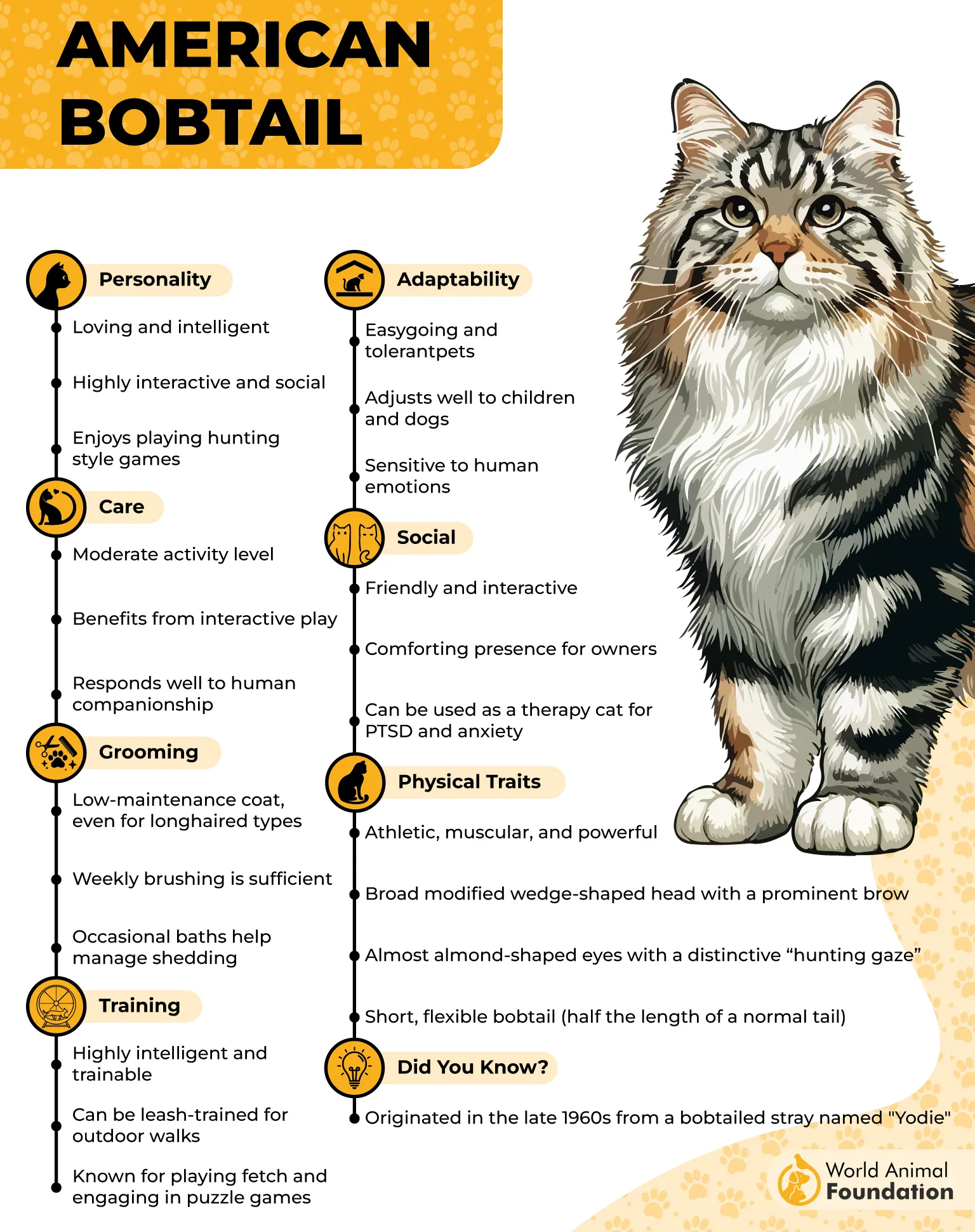
Cold climates suit the American Bobtail well thanks to its shaggy double coat, which provides insulation against snow and low temperatures. Both short- and long-haired varieties offer protection, making this breed comfortable in winter conditions.
Strong muscles, broad features, and an athletic frame help the American Bobtail move confidently across rough or icy terrain. Its alert eyes and adaptable nature reflect a cat capable of thriving in challenging outdoor environments.
Despite its untamed look, the American Bobtail is friendly and intelligent, adjusting easily to family life while retaining its adventurous spirit.
Fun fact: Every American Bobtail has a uniquely shaped tail—no two are exactly alike.
8. Chartreux
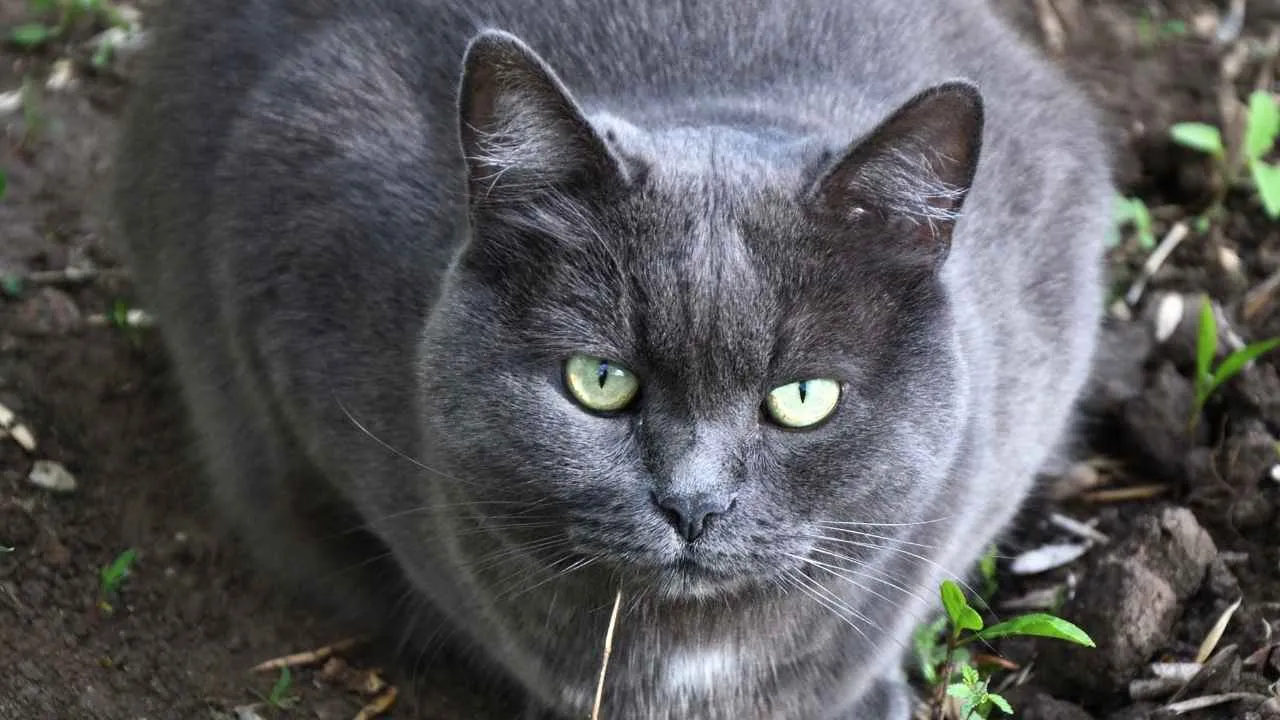
Also known simply as the Chartreux, this rare French breed is instantly recognized by its dense blue-gray coat, muscular build, and calm, observant nature. Quiet and composed, it carries a sturdy appearance shaped by colder climates.
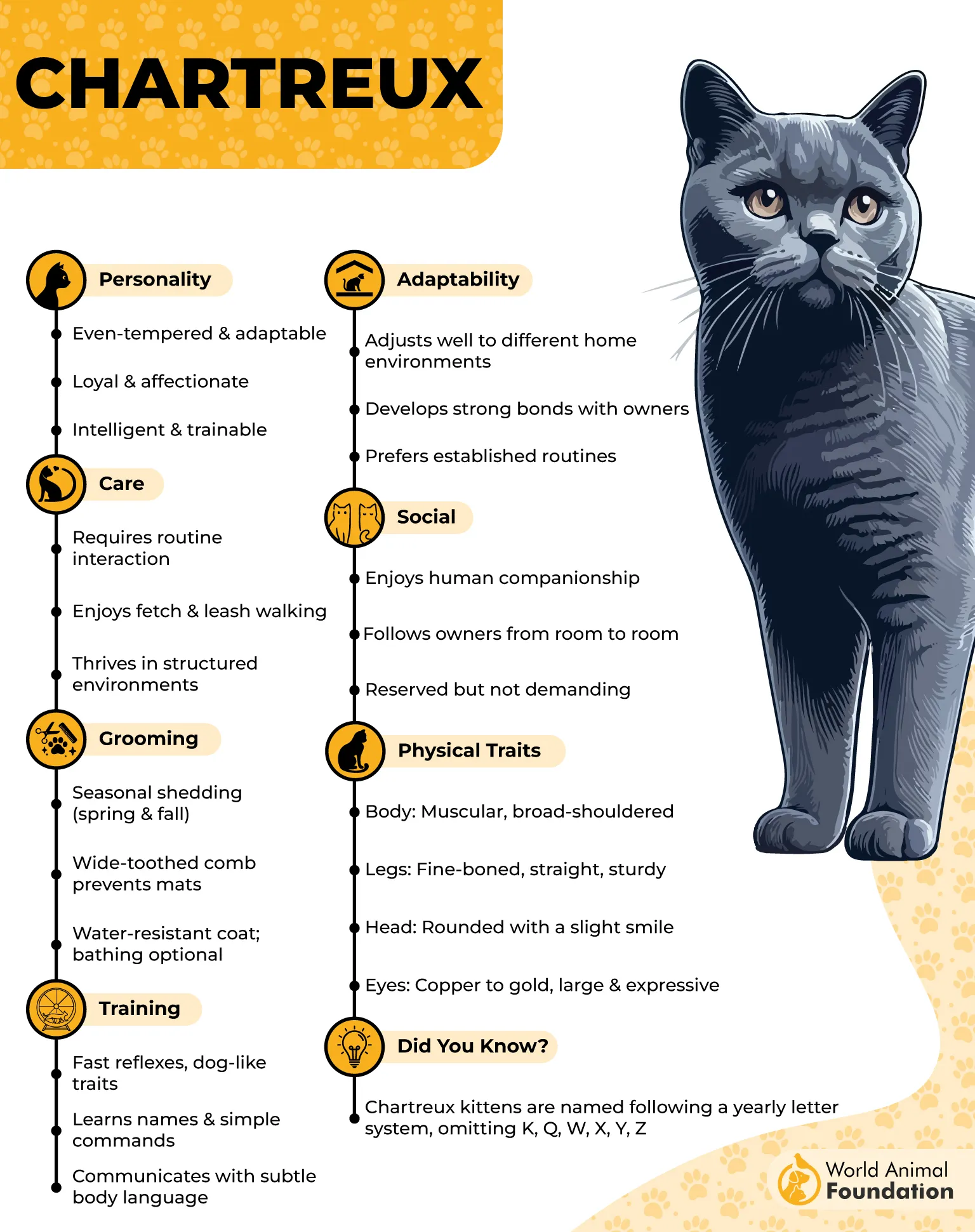
The Chartreux is naturally suited for snowy regions thanks to its thick double coat. The fur is water-resistant and insulating, helping the cat stay warm and dry even during long, damp winters.
Strong muscles and a compact frame allow this breed to move efficiently through snow without tiring easily. These physical traits also support its natural hunting ability, making it both resilient and practical in cold environments.
Despite its winter-ready build, the Chartreux has an easygoing temperament and adapts well to indoor life when needed.
Fun fact: The Chartreux’s coat is so water-repellent that it dries quickly even after bathing, a trait that helps protect it in cold, wet conditions.
9. Himalayan
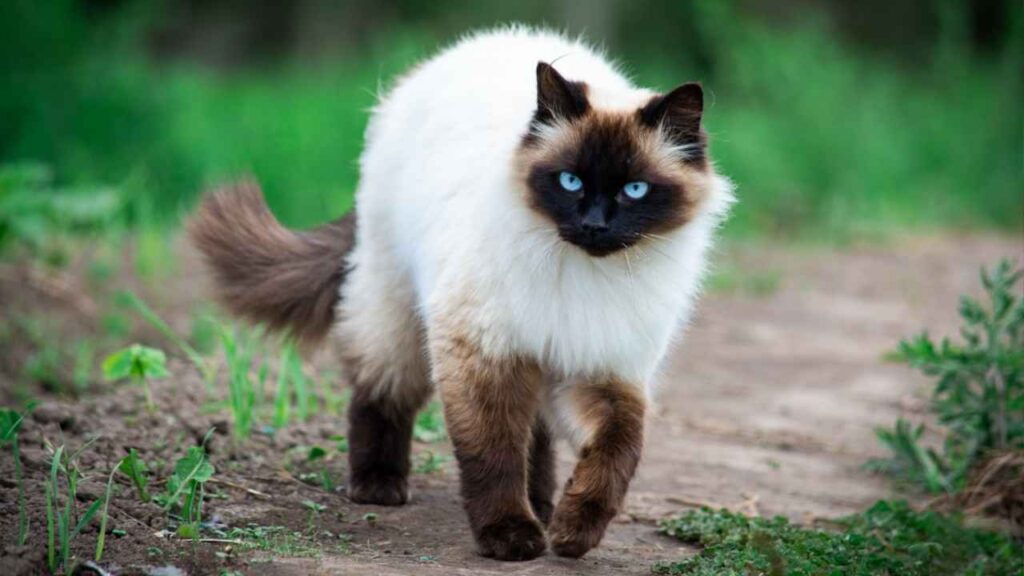
Also known as the Himalayan Persian or Himmy, the Himalayan is a long-haired, colorpoint breed that blends Persian elegance with cold-tolerant traits. Its plush appearance reflects a heritage shaped for cooler environments.
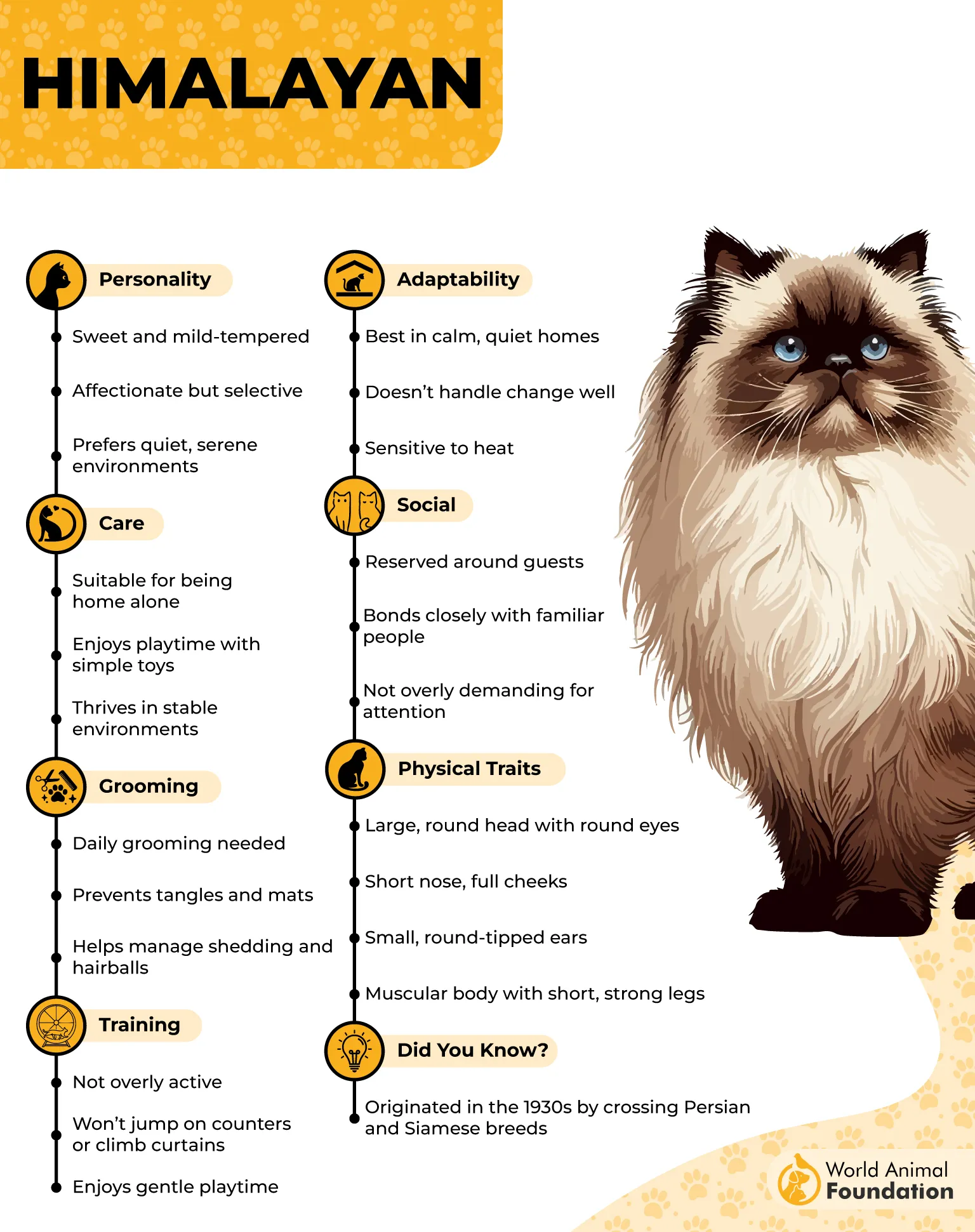
The Himalayan’s thick, dual-layered coat provides strong insulation, helping the cat retain warmth when temperatures drop. This dense fur makes the breed far more comfortable in chilly settings than most short-coated cats.
Natural skin oils add another layer of winter defense. These oils help prevent moisture from clinging to the fur and freezing against the skin, an important adaptation for cold and damp conditions.
While well-suited to cold climates, the Himalayan’s luxurious coat requires consistent care to stay healthy and insulating.
Fun fact: Himalayans often prefer cooler indoor temperatures and can feel uncomfortable in excessive heat due to their heavy fur.
Conclusion
Cat breeds adapted to snowy regions demonstrate how evolution shapes survival in chilly temperatures. Cold-weather cat breeds rely on thick coats, a dense undercoat, and in some cases a triple coat to retain body heat and shield against snow.
Features like a water-resistant coat, long hair, and a heavy winter coat allow these naturally adapted cats to thrive in cooler climates where many cats would struggle.
While other cats may tolerate cold to varying degrees, only certain cats are truly built for winter life—standing apart from other animals through generations of adaptation.
