




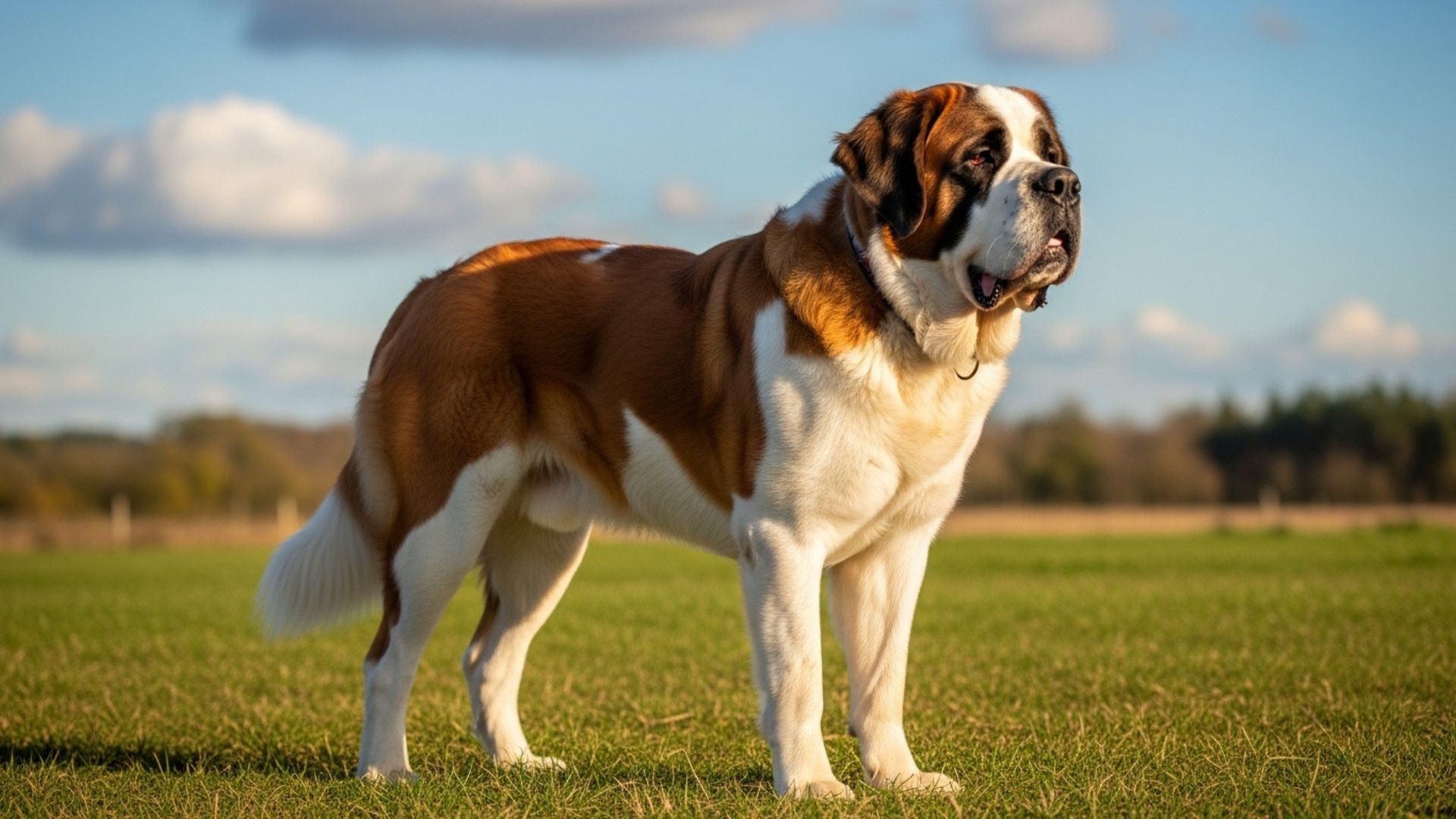
There’s something undeniably magical about large dogs with soft souls. They take up half the couch, lean on you like living furniture, and somehow believe they’re lapdogs despite weighing as much as a small adult.
These gentle giants combine impressive size with calm temperaments, emotional intelligence, and a deep devotion to their families. Far from being intimidating, many of the world’s largest dog breeds are among the most patient, affectionate, and loving companions you could ever meet.
Large breeds were often developed for serious work — rescuing people, guarding livestock, pulling carts, or assisting humans in harsh conditions.
Over time, selective breeding favored not just strength, but steadiness. The result? Dogs that are emotionally grounded, people-focused, and remarkably tolerant, especially with children.
Below are some of the most beloved gentle giant dog breeds worldwide.
Each brings its own personality, history, and special brand of affection. If you’re dreaming of a dog that’s both majestic and mellow, you’re in the right place.
Awesome Large Dog Breeds with Gentle Giants’ Hearts
1. Newfoundland
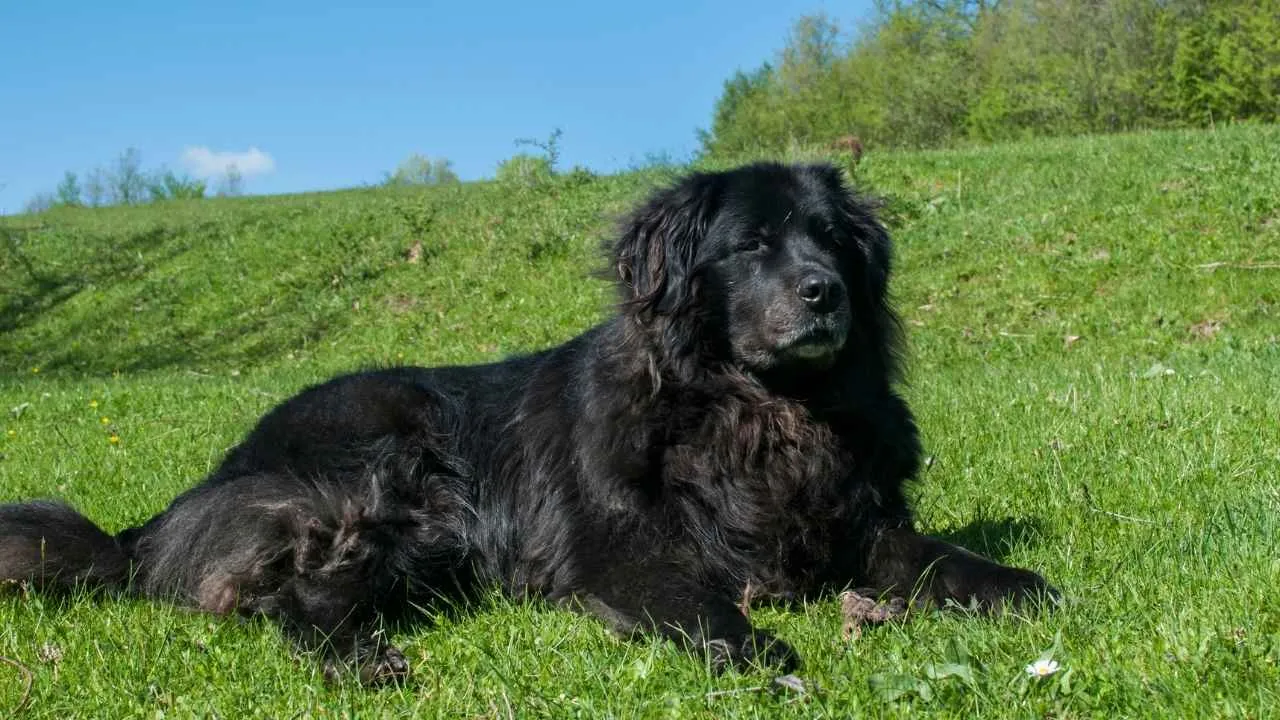
The Newfoundland is the definition of calm strength wrapped in fur. Originally bred in Newfoundland, Canada, these dogs worked alongside fishermen, hauling nets, pulling carts, and most famously, rescuing people from icy waters.
AKC claims they are strikingly massive
Temperament-wise, Newfies are famously gentle. Often nicknamed “nanny dogs,” they are known for their natural patience with children and their ability to sense when gentleness is required.
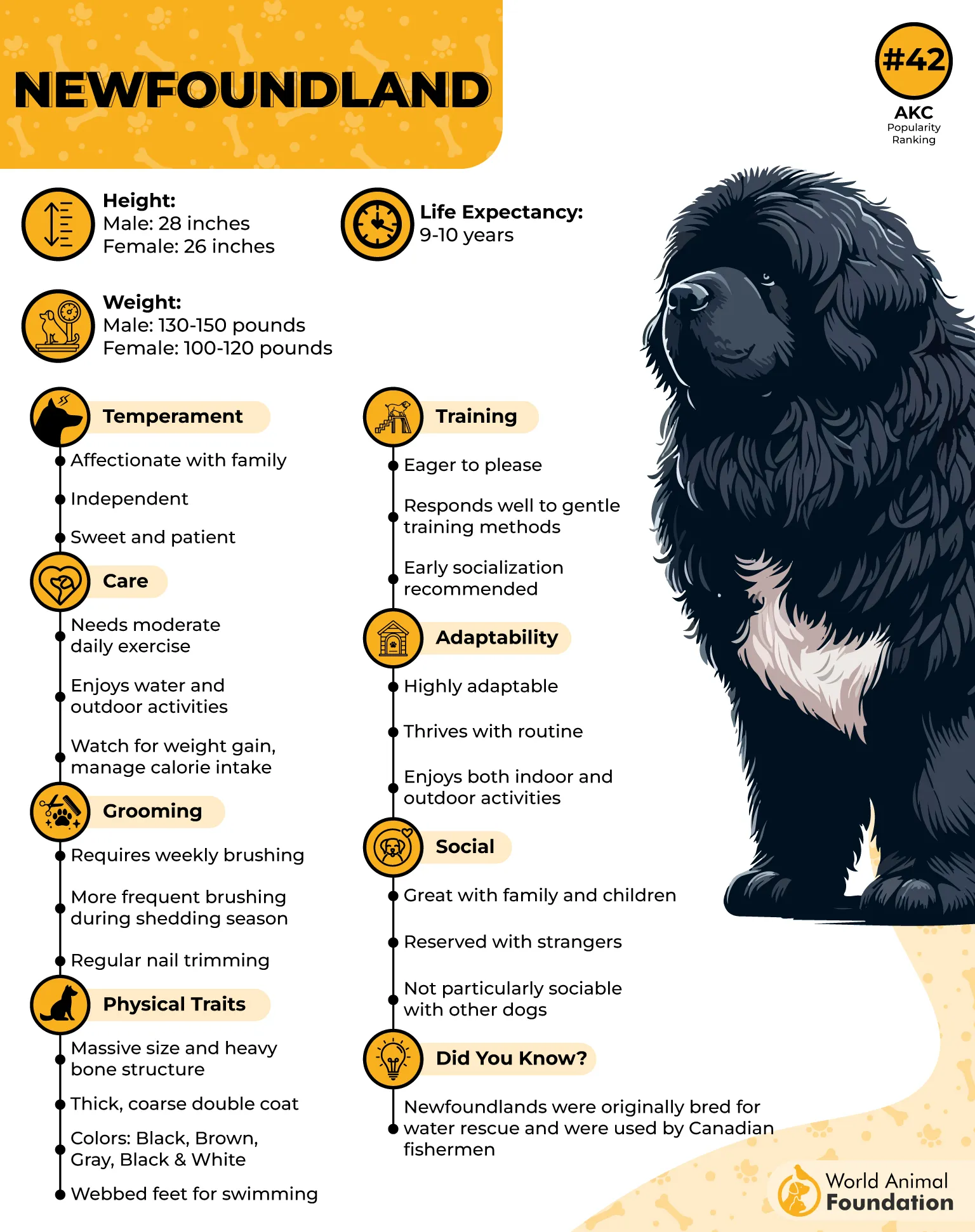
Living with this dog feels like having a slow-moving, loving shadow. They follow you from room to room, quietly observing, always present. While they’re not hyperactive, they do need daily mental stimulation and moderate exercise to stay healthy.
Swimming is their favorite activity, and even a short dip can improve their joints and mood.
Of course, there are trade-offs. Adult males are big, and their size is associated with significant drooling, heavy shedding, and extensive grooming requirements. Their thick double coat requires regular brushing, and professional grooming is often unavoidable.
Health concerns such as hip dysplasia and heart disease are also more common, making responsible breeding crucial.
2. Bernese Mountain Dog
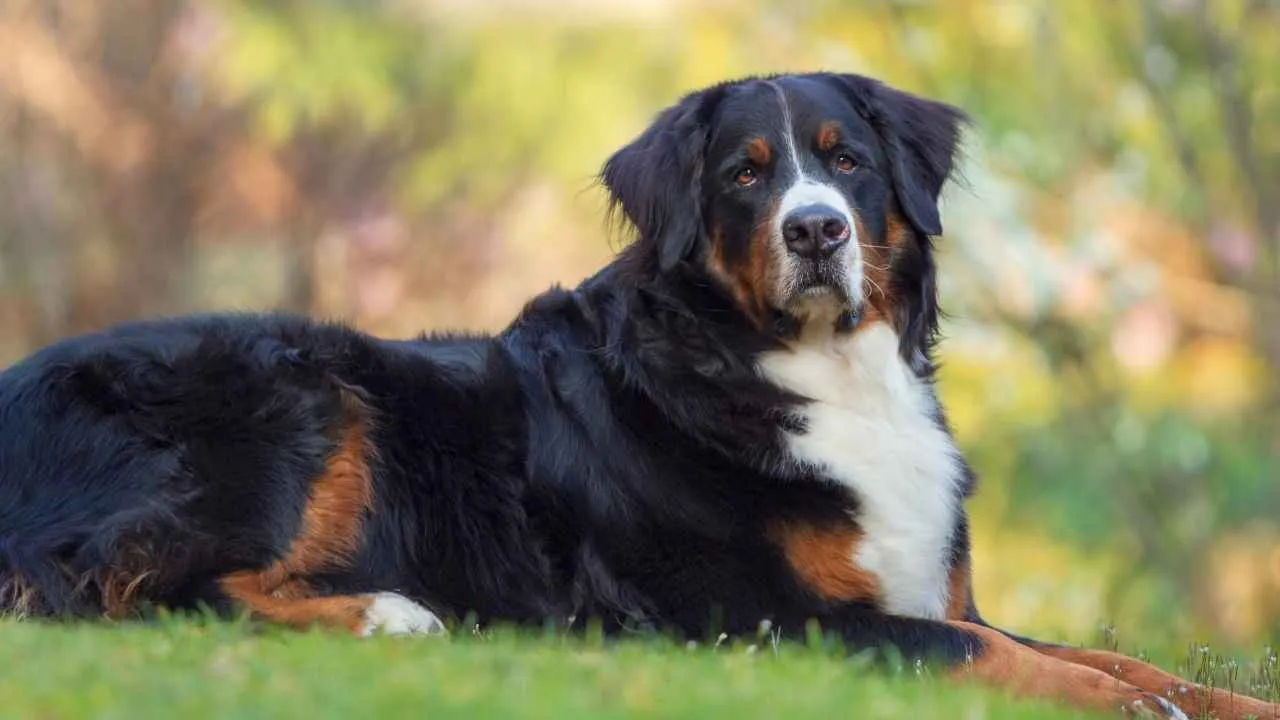
The Bernese Mountain Dog brings warmth, intelligence, and a strong work ethic wrapped in a striking tri-colored coat. Originating in the canton of Bern in Switzerland, these dogs were bred as farm all-rounders — herding cattle, pulling carts, and guarding homesteads.
These mountain dogs are famously family-oriented. They don’t just enjoy being around people — they need it. Left alone for long periods, they can become anxious or withdrawn. With children, they’re patient and tolerant, often positioning themselves as quiet observers during play.
Their protective instincts remain intact, but they rarely escalate without reason, making them excellent watchdogs without the edge of aggression.
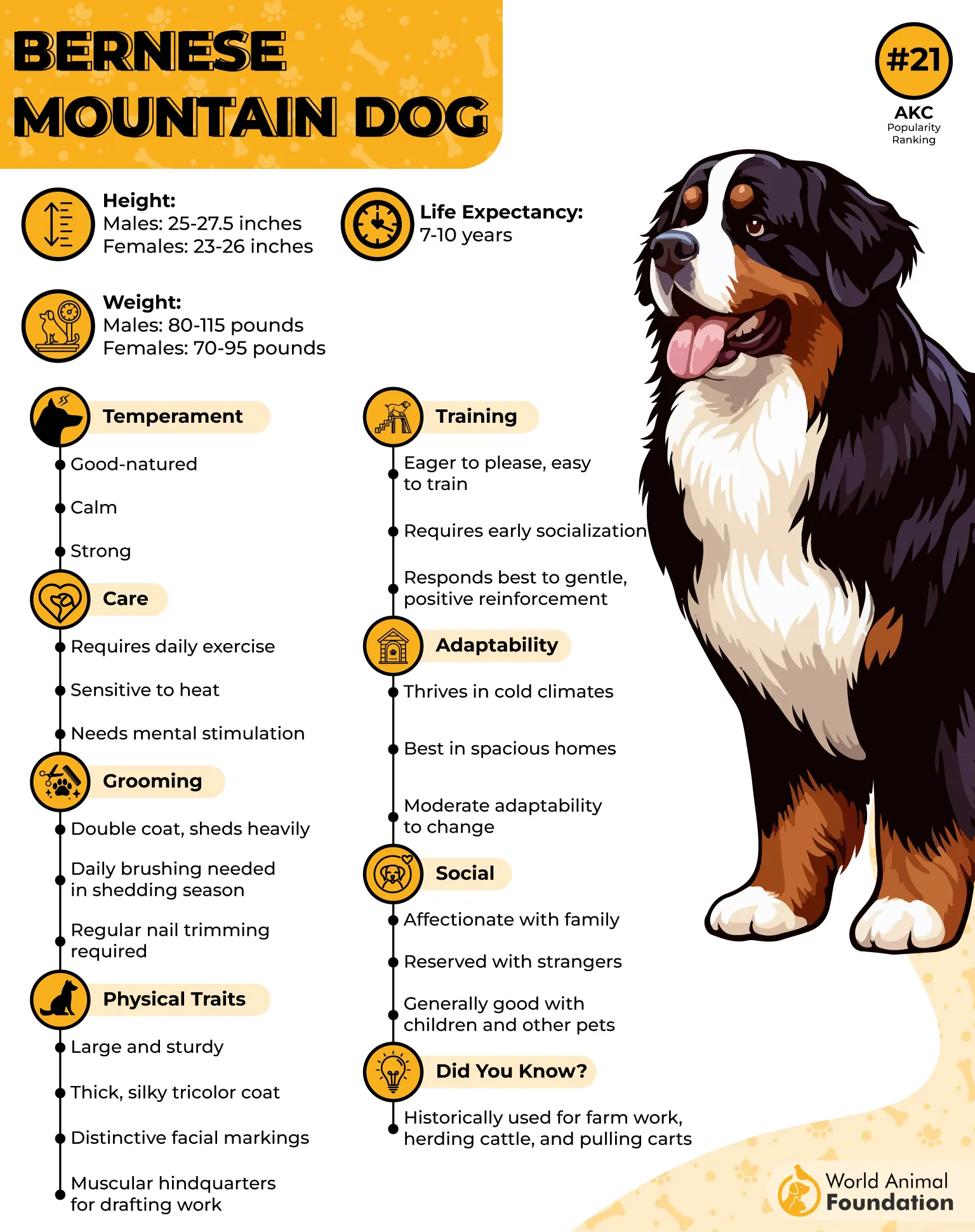
One charming (and sometimes challenging) trait is their slow maturity. Bernese Mountain Dogs often retain puppy-like behavior well into adulthood, sometimes up to three years. While this means a longer training window, it also means a longer phase of playfulness, curiosity, and emotional openness.
With consistent positive reinforcement, they learn eagerly and enjoy having “jobs” to do.
Physically, Berners are powerful yet graceful. They require regular exercise to support their joints and mental health. Hiking, pulling carts, and structured play are ideal outlets. Despite their working heritage, they’re not frantic — they prefer purposeful activity over endless running.
3. Irish Wolfhound
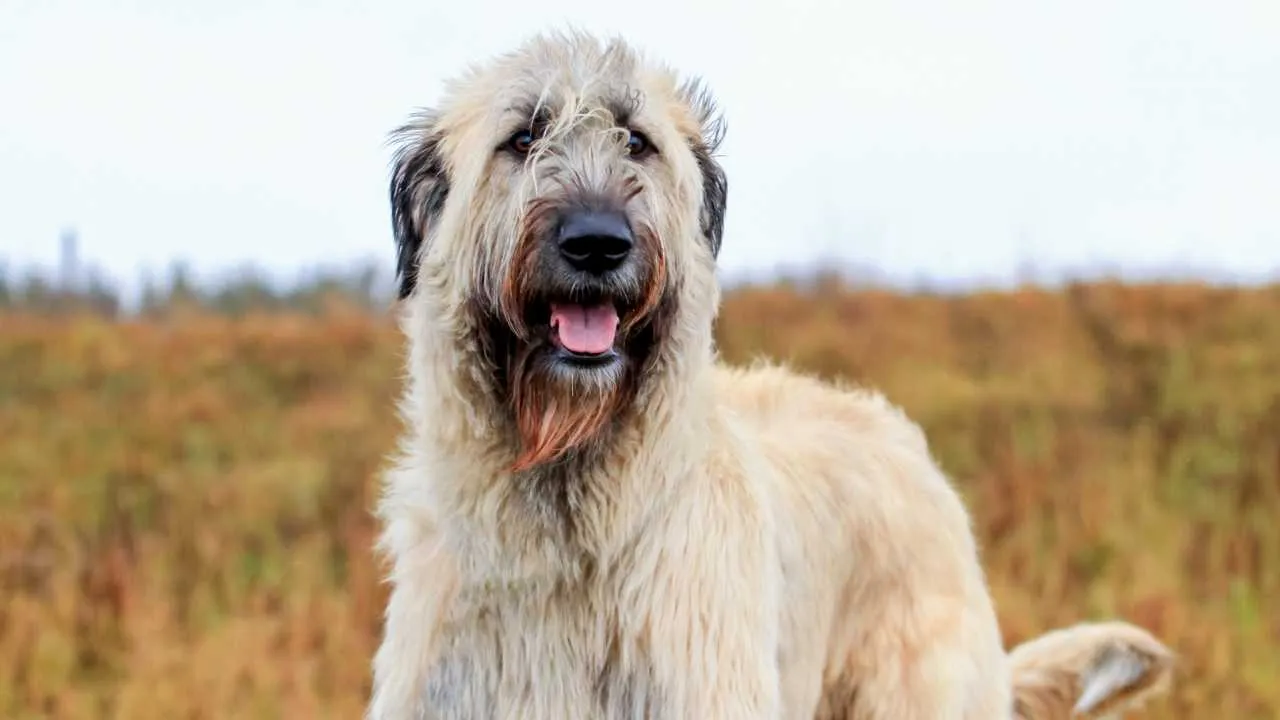
Few dogs command attention like the Irish Wolfhound. Towering, elegant, and quietly dignified, this breed is among the tallest in the world. Historically bred to hunt wolves and protect Irish settlements, today’s Wolfhound is far removed from ferocity — gentle, thoughtful, and deeply affectionate.
Despite their size, they are known for their calm and almost philosophical demeanor. They are not natural guard dogs, but their sheer presence alone is enough to deter intruders. With family, however, they are soft-hearted companions who form deep emotional bonds and thrive on affection.
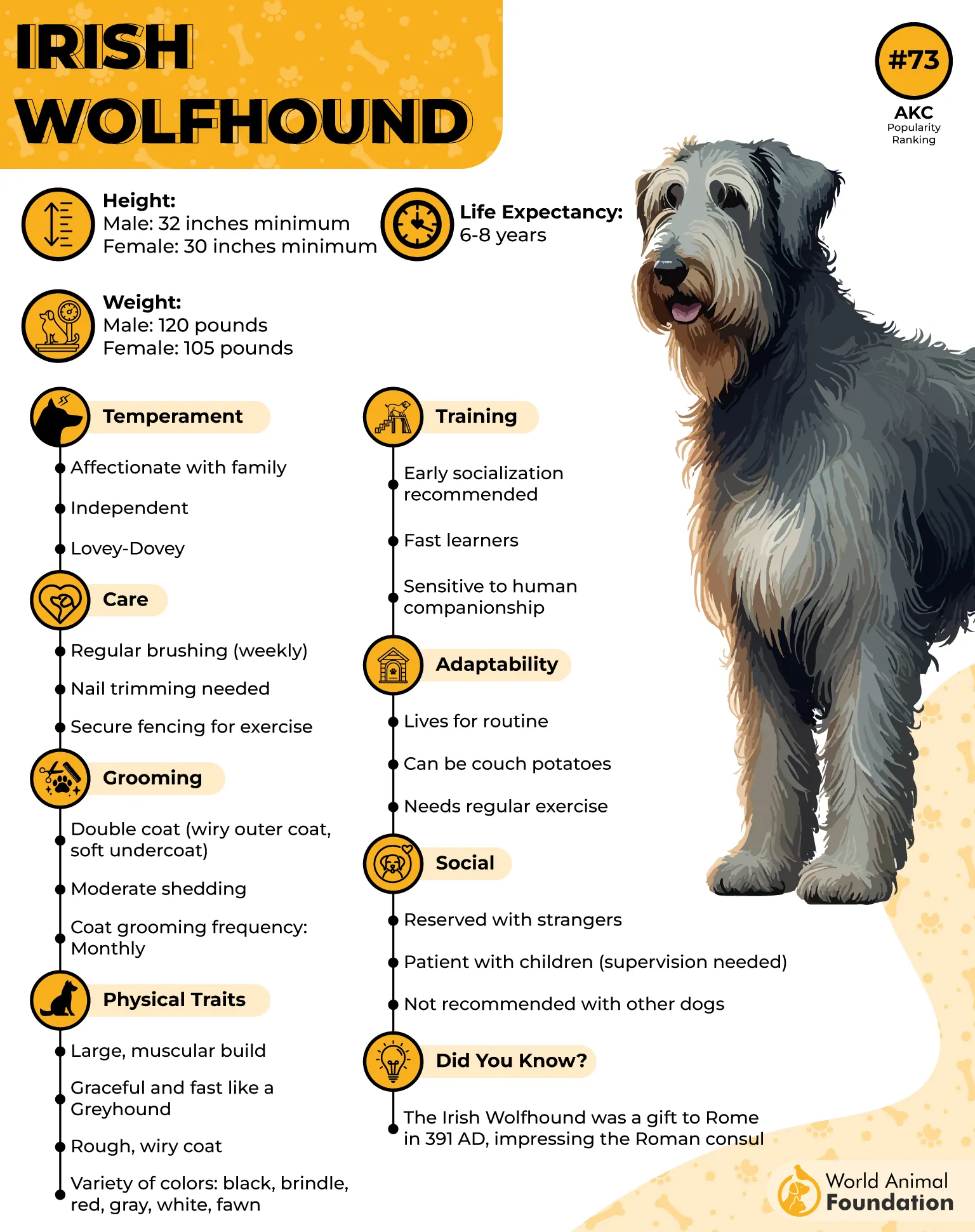
Exercise needs are often misunderstood. While Wolfhounds require daily walks and space to stretch their long legs, they are not hyperactive dogs.
In fact, many are happiest lounging indoors after a good stroll. Surprisingly, they adapt well to apartment living when they receive regular outdoor exercise and human interaction.
Training should begin early, not because they’re difficult. Gentle handling is essential — rough treatment can cause fear or withdrawal. Positive reinforcement is most effective, as Wolfhounds are sensitive and emotionally perceptive.
Like many giant breeds, lifespan is relatively short, averaging 6–8 years. Heart conditions and bone cancer are notable risks.
4. Saint Bernard
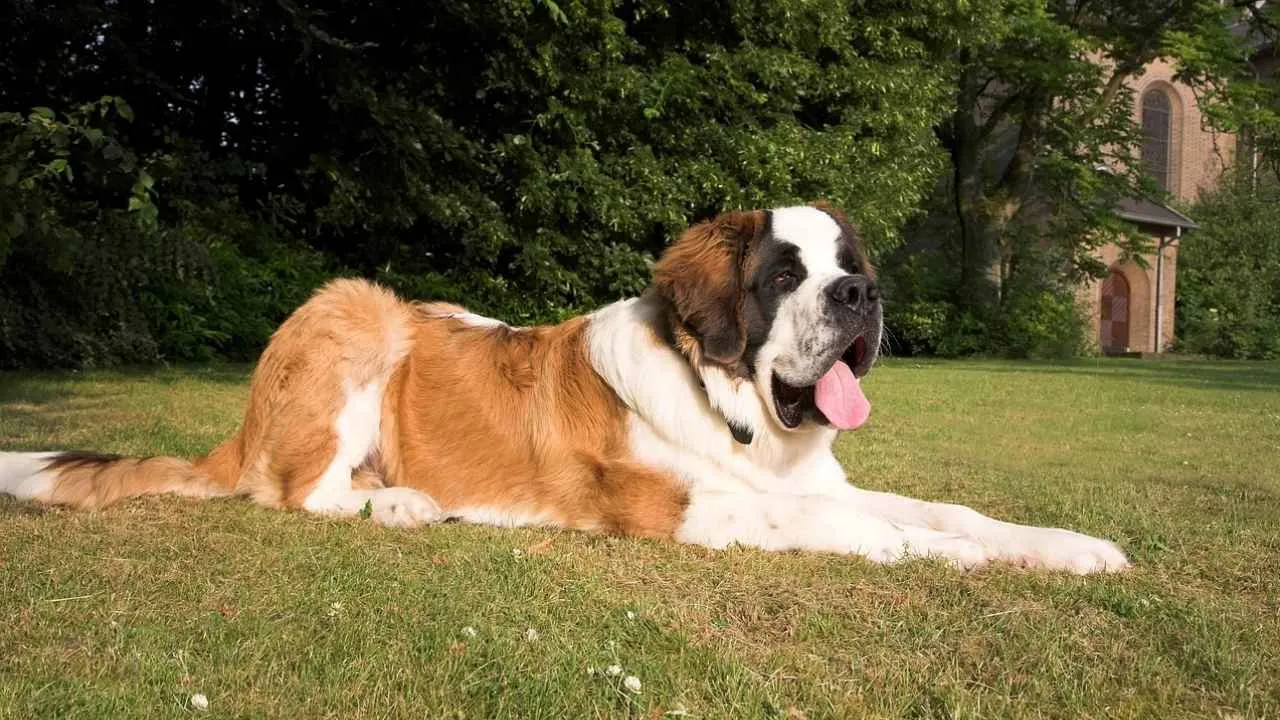
Saint Bernards are walking legends. Developed in the Swiss Alps by monks at the Great St. Bernard Pass, these dogs were used to rescue travelers lost in snowstorms.
Temperament is where this breed truly shines. PetMD mentions that they are calm, patient, and deeply affectionate, particularly with children. Their steady nature makes them excellent family dogs, though supervision is essential given their enormous size.
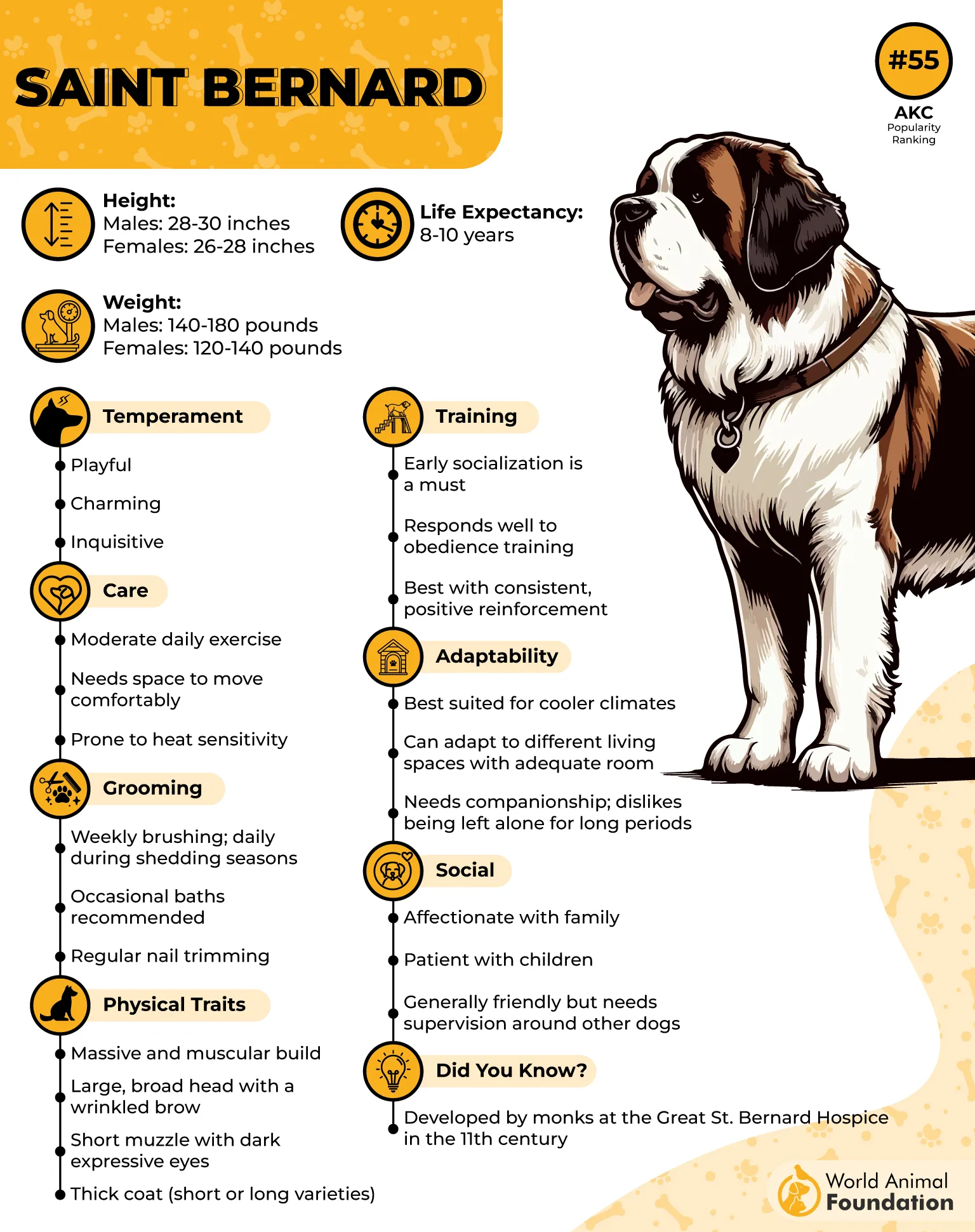
They are not high-energy dogs and prefer a slower pace. Long, intense exercise sessions aren’t necessary; instead, they thrive on regular, gentle walks and being close to their humans. Saint Bernards are happiest when they’re part of daily family routines, even if that means lying directly in the middle of the hallway.
Drool, shedding, and physical presence are included. They take up space unapologetically and rarely move just because you want them to. Grooming is manageable but frequent, especially during seasonal shedding.
For homes that value calm companionship over constant activity, the Saint Bernard is a dream. They’re living proof that strength and softness can coexist beautifully.
5. Great Dane
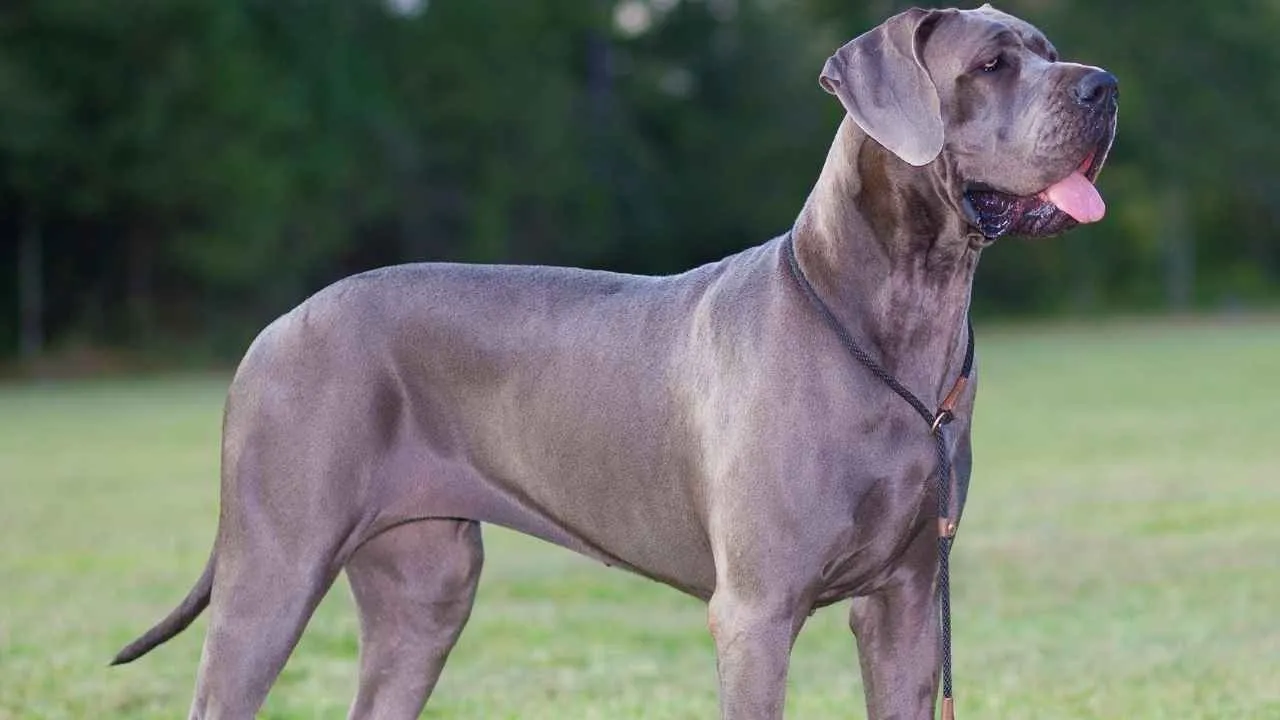
Often called the “Apollo of Dogs,” the Great Dane combines elegance with a famously gentle temperament. Their intimidating size is balanced by a calm and loving personality that makes them excellent family companions.
Great Danes are deeply people-oriented. They don’t enjoy isolation and often insist on being involved in everything their humans do — even if that means attempting to curl up on your lap. Children are patient and tolerant, though early training is essential to prevent accidental knockdowns.
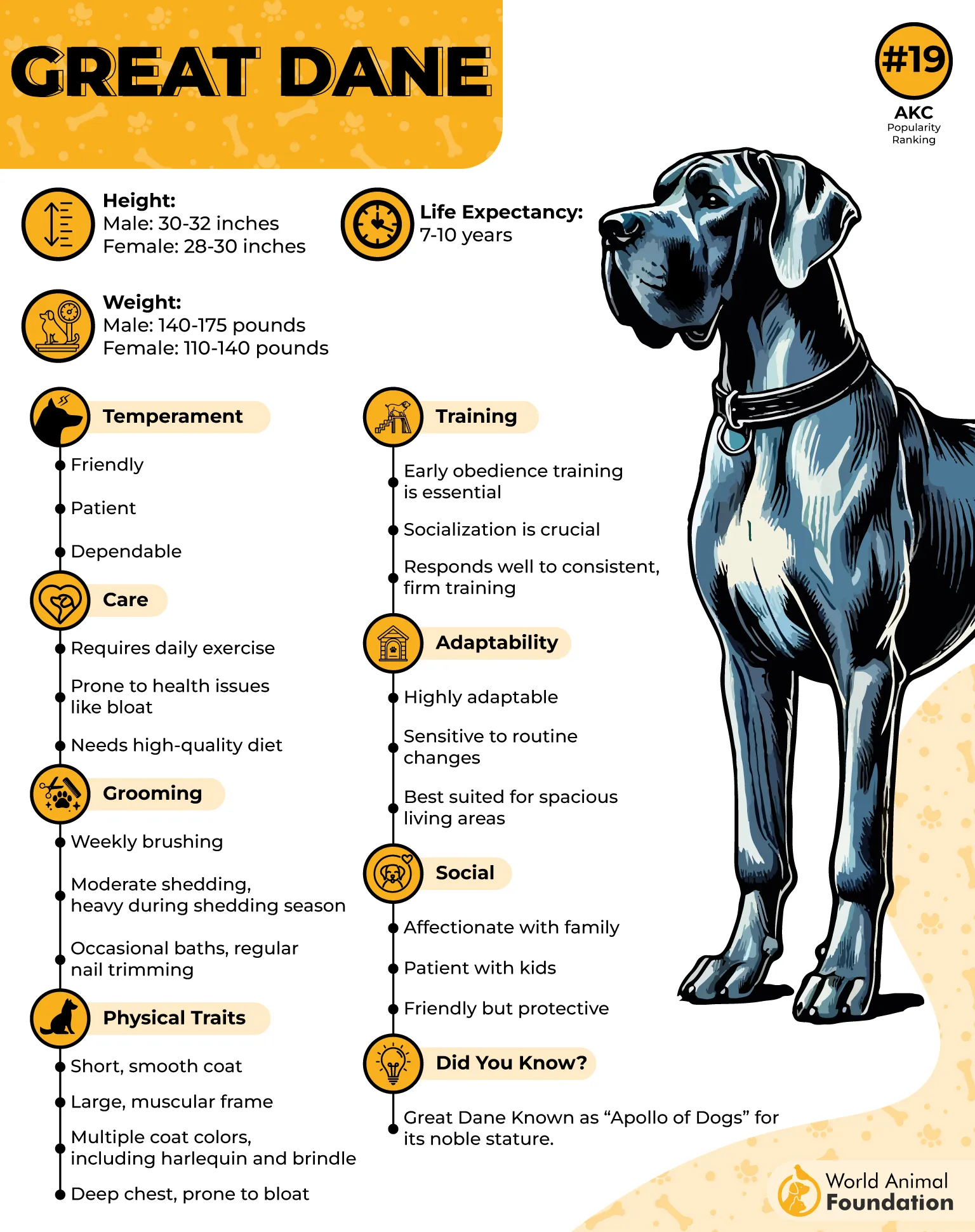
Exercise needs are moderate. Contrary to popular belief, the Royal Kennel Club says they are not endurance athletes. Daily walks and light play keep them healthy, while excessive running can stress their joints. Surprisingly, they can adapt well to apartment living if their exercise needs are met.
Their short coat is low-maintenance, making grooming easier than for many giant breeds; however, their size results in higher food costs, larger beds, and more careful health monitoring. Common issues include bloat (GDV), heart disease, and joint problems.
With a lifespan of 7–10 years, Great Danes live fast and love hard. They are gentle giants in every sense — emotionally present, physically impressive, and endlessly devoted.
6. Mastiff
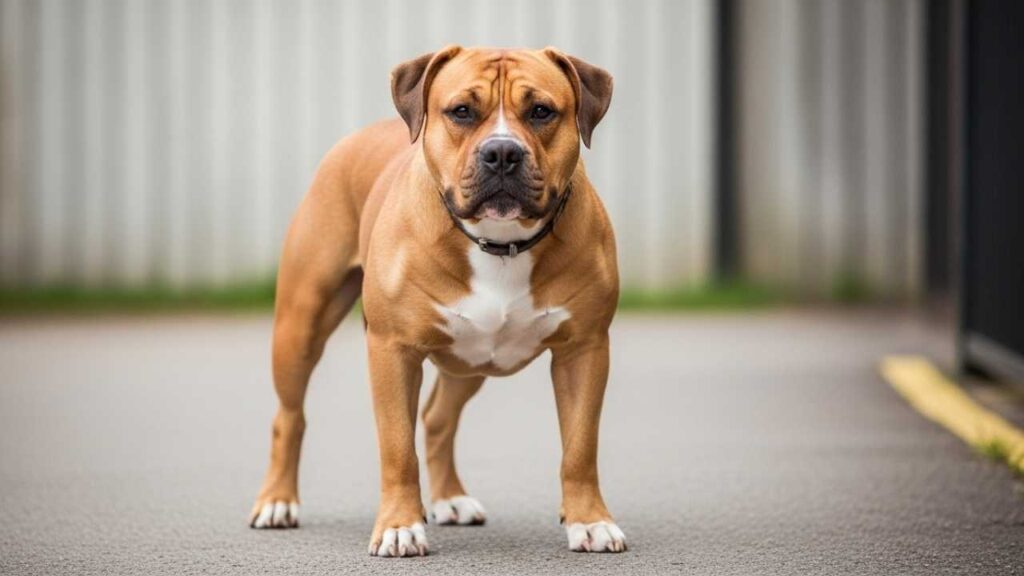
Mastiffs are ancient guardians with a surprisingly soft interior. Bred for protection and guarding, modern Mastiffs are calm, dignified, and emotionally balanced when well-trained. Their loyalty is profound, and they tend to form strong bonds with their immediate family.
Despite their guarding history, Mastiffs are not excitable dogs. They’re slow to react and prefer observation over action. This makes them excellent household companions, though their size makes early training non-negotiable.
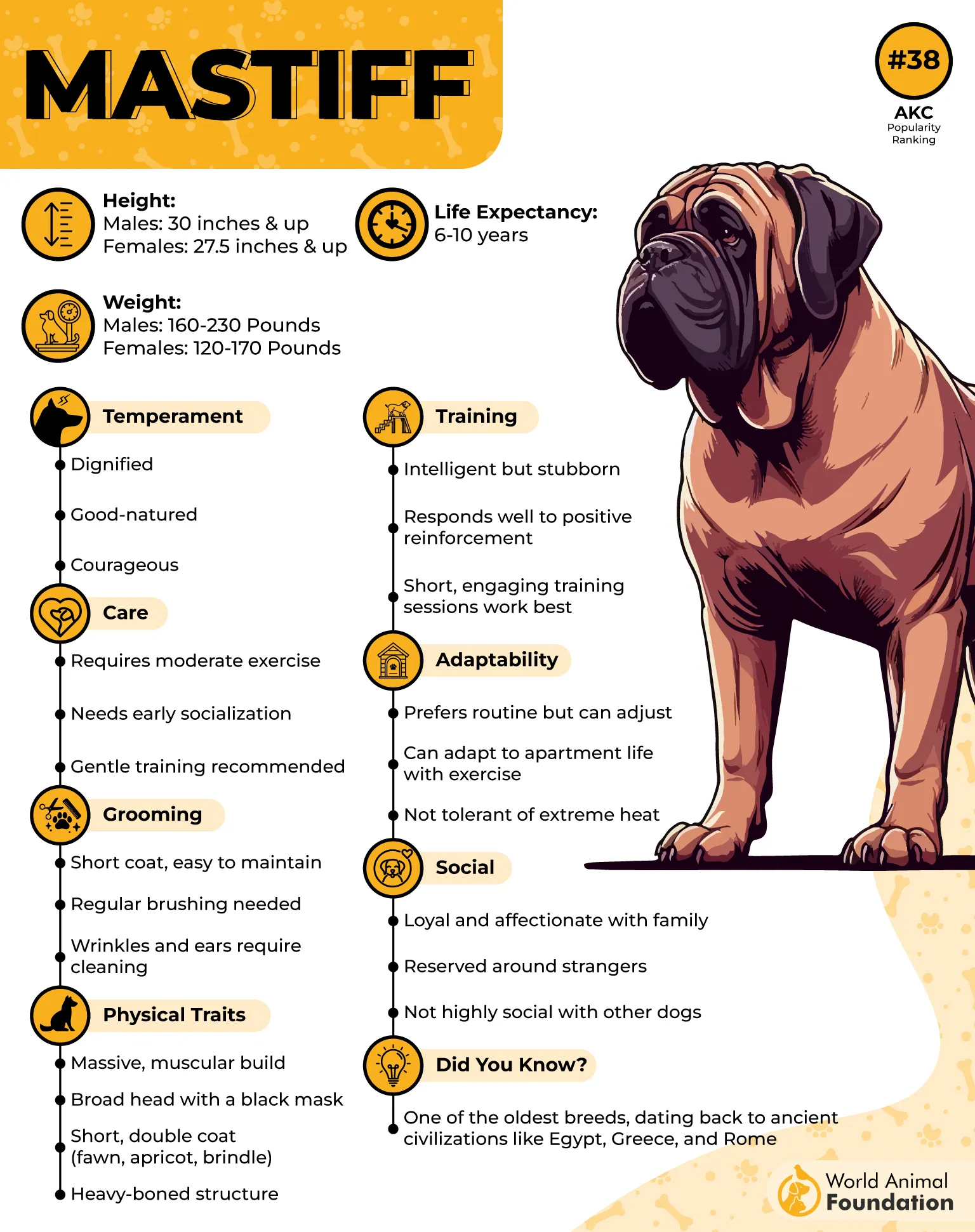
They require less exercise than many large breeds and typically enjoy one or two relaxed walks per day. Mentally, they thrive simply by being near their people. Mastiffs are content lounging at home, soaking in family life, and occasionally reminding everyone of their imposing presence.

Transportation, travel, and space should be considered carefully. Everything costs more with a Mastiff—food, veterinary care, accessories—and planning is essential. However, they are emotionally low-maintenance and deeply appreciative of gentle interaction.
For those seeking a calm, watchful, affectionate big dog breed who values peace over chaos, the Mastiff delivers in spades.
7. Leonberger
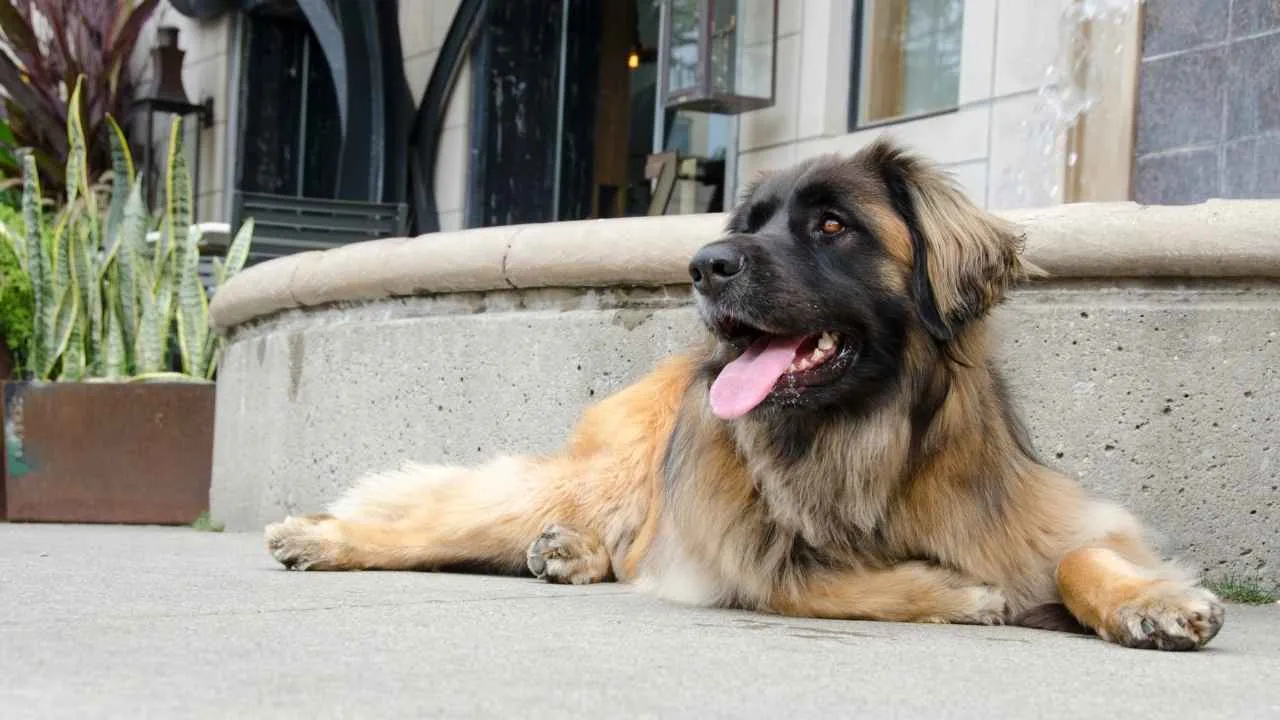
The Leonberger feels like a cross between a lion, a nanny, and an emotional support therapist. Originating in Germany, this lush-coated giant was bred to resemble the lion on the town crest of Leonberg — and they absolutely succeeded. Beneath the regal exterior lies a deeply affectionate, people-centered dog.
Leonbergers are known for emotional intelligence. Many owners report that these dogs instinctively respond to human moods, offering comfort when someone is upset. Hill’s Pet states that they thrive on companionship and do poorly when isolated. This is not a kennel dog — it’s a full-time family member.
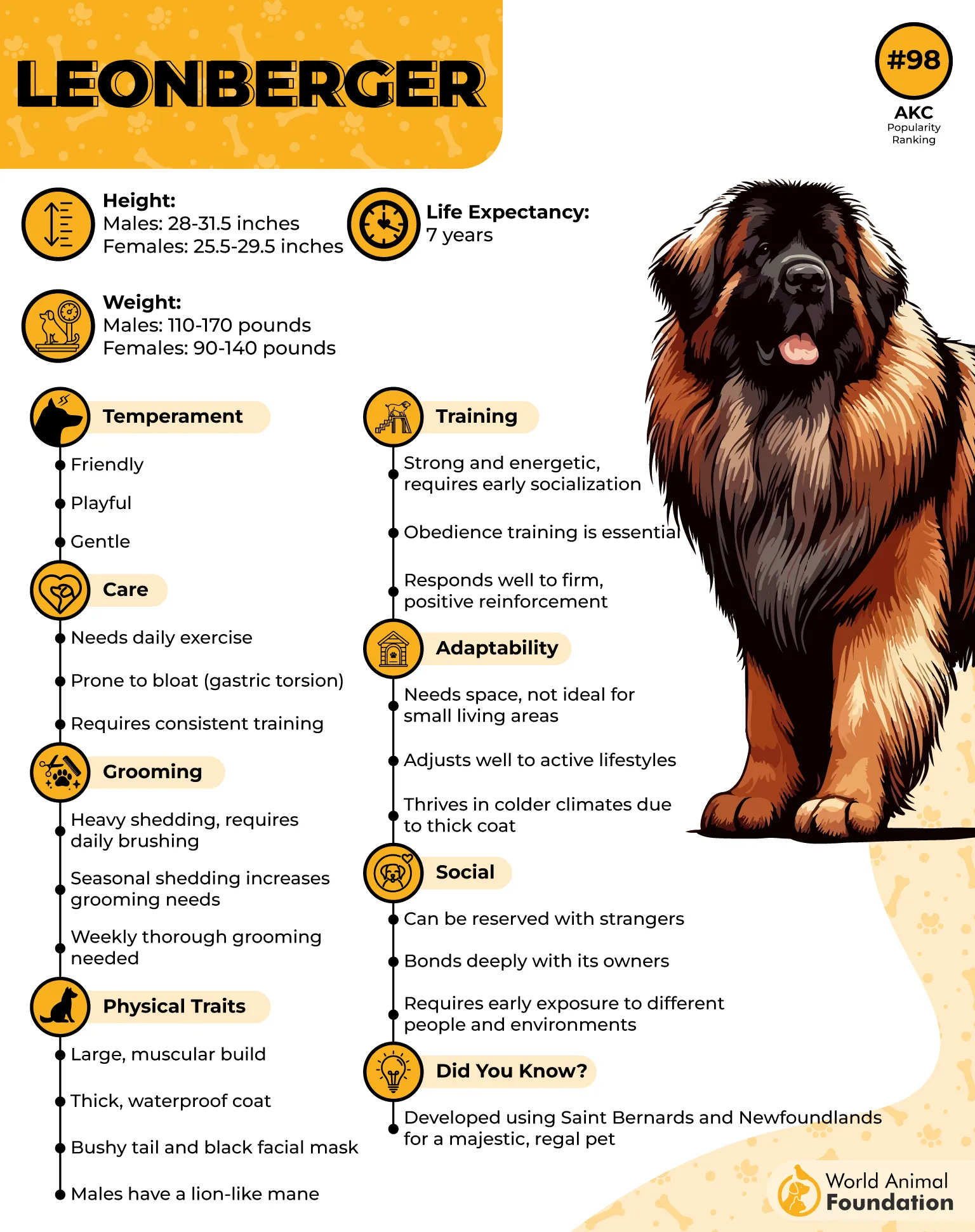
Despite their calm indoor demeanor, these incredibly loyal dogs require high levels of exercise. Daily walks, swimming, and structured play are essential to maintaining their physical and mental balance.
They are gentle with children, though supervision is essential due to their power. Socialization from an early age helps ensure their natural confidence translates into polite behavior around strangers and other animals.
With a lifespan of 8–9 years, Leonbergers remind us that quality often outweighs quantity. They are among the best giant dog breeds, known for loving deeply, living fully, and leaving unforgettable memories.
Conclusion
Gentle giant breeds remind us that size doesn’t define softness — character does.
These dogs offer a rare blend of strength, patience, and emotional depth that few other companions can match. They don’t just fill a home physically; they fill it emotionally, becoming protectors, confidants, and loyal friends.
Golden Retriever, Neapolitan Mastiff, French Mastiff, Labrador Retriever, Tibetan Mastiff, and Alaskan Malamute are some other massive dogs that you can expect to behave well.
Choosing one of these breeds known for their gentle nature means choosing commitment, responsibility, and intention. But for those who are ready, the reward is extraordinary: a dog whose heart is as vast as their frame, and whose presence changes the rhythm of your life for the better.
