




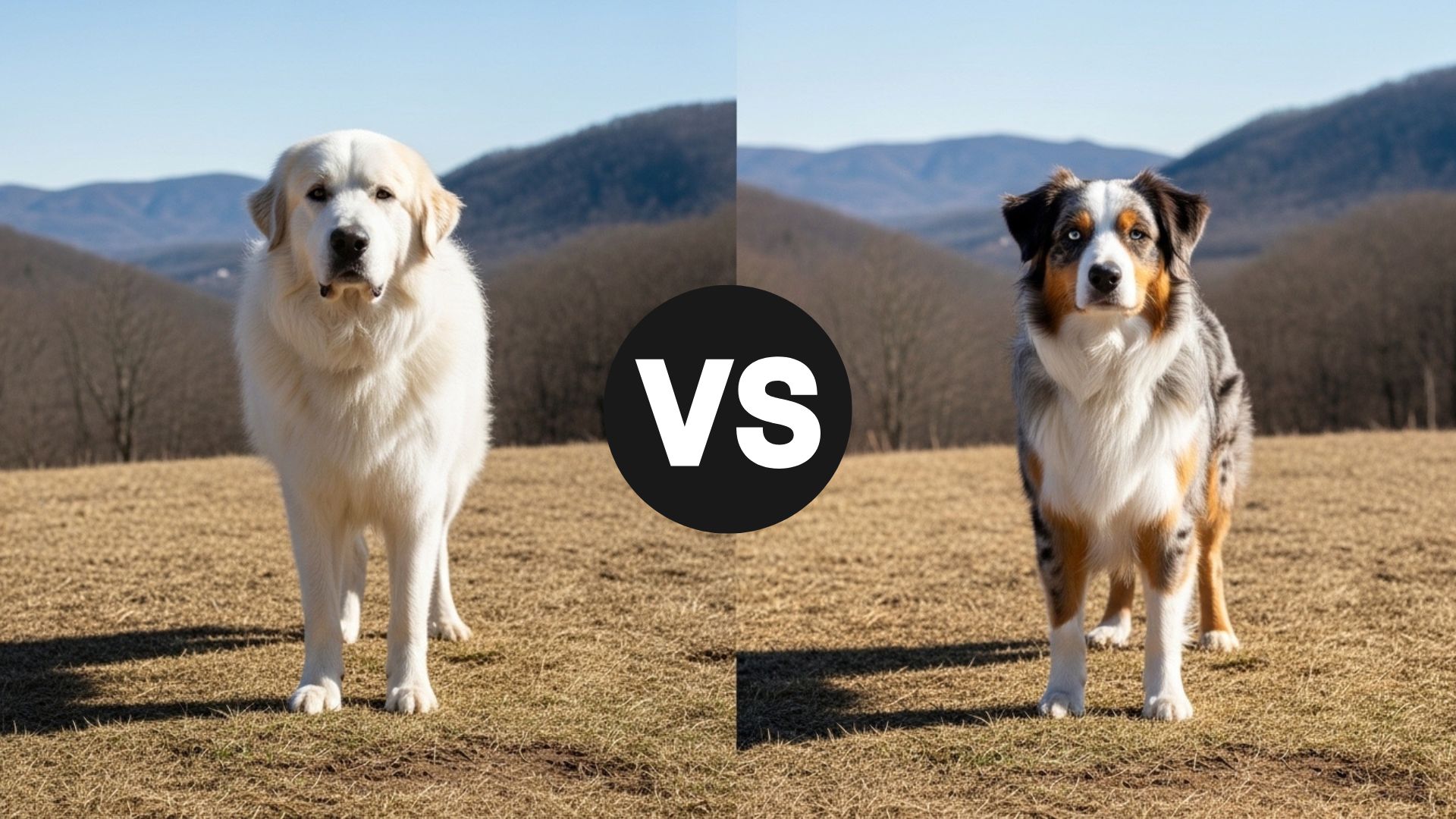
Choosing between the Great Pyrenees and the Australian Shepherd isn’t just picking a dog — it’s choosing a lifestyle.
On one side, you have the Great Pyrenees: calm, powerful, and born to guard with quiet confidence. On the other hand, the Australian Shepherd: fast, brilliant, and bursting with energy, always ready for the next challenge. Both are incredibly loyal. Both are stunningly intelligent. And both bring very different vibes into a home.
This face-off goes beyond size and fluff. It’s about temperament, energy levels, training needs, and how each dog fits into real, everyday life. Whether you’re looking for a laid-back protector or a high-energy partner who keeps you on your toes, this comparison will help you see which breed truly matches your world.
Let the Great Pyrenees-Australian Shepherd showdown begin.
Key Takeaways
Discover which breed matches your lifestyle: the calm, protective Great Pyrenees or the energetic, sharp Australian Shepherd.
Learn how size, personality, and energy levels shape each dog’s daily needs and fit in your home.
Get the scoop on training challenges and what makes these breeds smart in very different ways.
Find out the key health issues to watch for to keep your furry friend happy and healthy for years.
Dog Breeds: Great Pyrenees vs Australian Shepherd Face Off
Size & build Differences
Great Pyrenees
The Great Pyrenees is a true giant. Males typically weigh 100–110 pounds and stand 27–32 inches tall, while females aren’t far behind at 85–100 pounds and 25–29 inches in height.
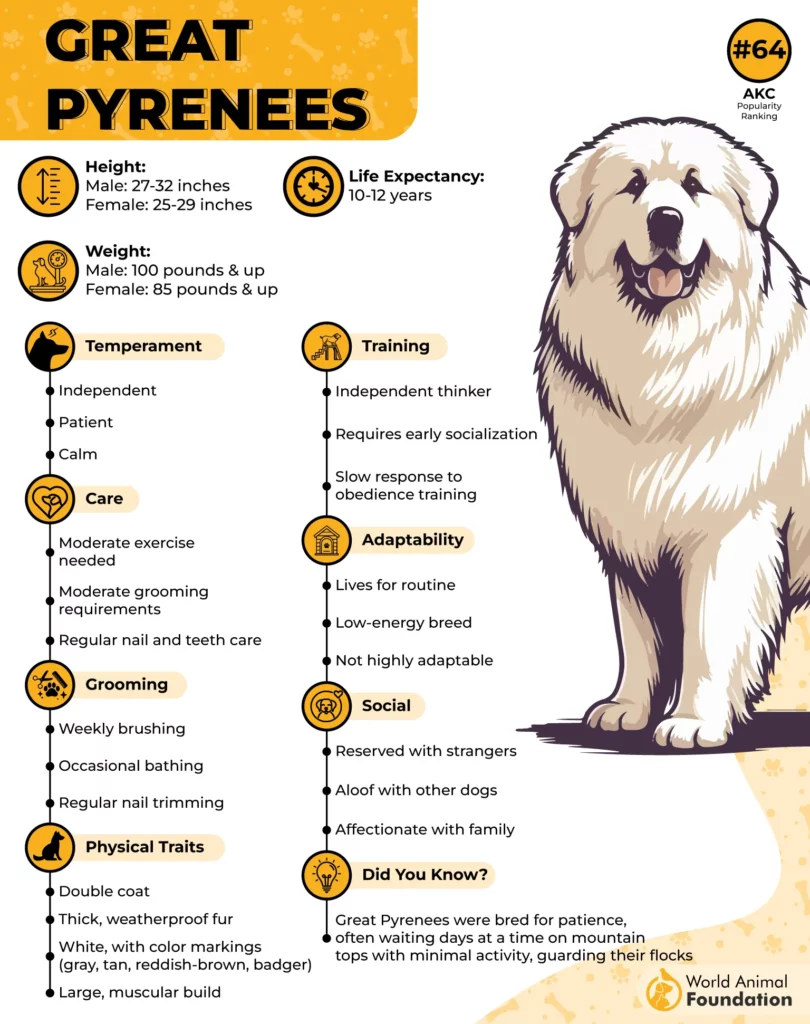
At first glance, they can look even larger thanks to their thick, fluffy double coat. But beneath all that fur is serious muscle. Pyrs are strong, solid dogs designed to stand their ground against predators.
Their bodies are slightly longer than tall, with a level back, a long plumed tail, and a broad yet balanced head. Soulful dark eyes and small folded ears give them a calm, gentle expression that contrasts with their imposing size.
Australian Shepherd
Australian Shepherds are much more compact and athletic. Males usually weigh 50–65 pounds and stand 20–23 inches tall, while females range from 40–55 pounds and 18–21 inches in height.
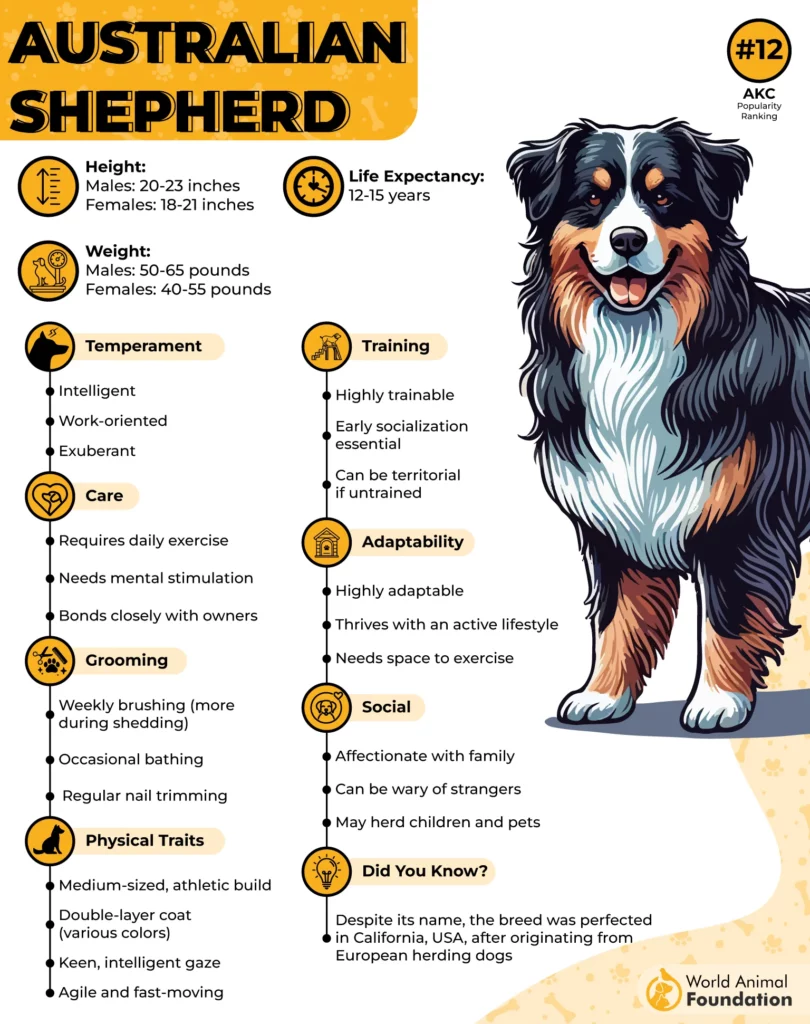
Instead of bulk, Aussies are built for speed and stamina. They’re lean, deep-chested, and straight-backed—strong without being heavy. Their alert face, expressive eyes (often in striking colors or mismatched pairs), and high-set ears reflect their sharp intelligence and constant readiness to move.
Quick Size Comparison
Great Pyrenees: Large, heavy, muscular guardian
Australian Shepherd: Medium-sized, lean, agile herder
Visual impact: Pyrs dominate with sheer size; Aussies impress with athletic balance
Temperament & Personality
Great Pyrenees
The Great Pyrenees has a much more laid-back and composed personality. Bred for centuries as livestock guardians, Pyrs are known for their emotional stability and quiet confidence. They’re affectionate and devoted to their families, especially gentle with kids and animals under their care.
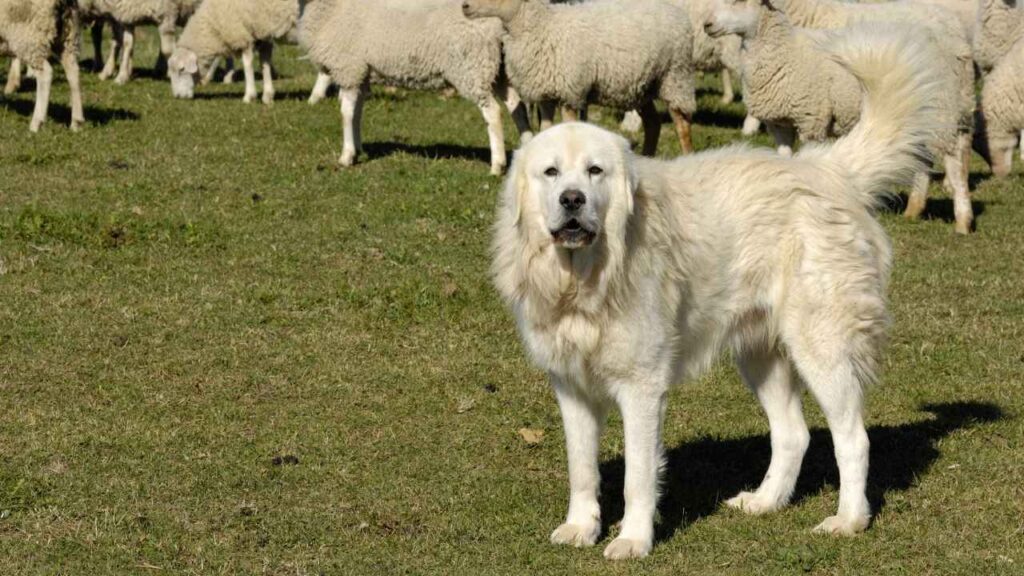
Common temperament traits include:
Calm, patient, and mature
Protective without being aggressive
Reserved with strangers
Strongly independent thinkers
Pyrs are intelligent but self-directed. While early obedience training is important, they tend to lose interest in repetitive commands—especially those that don’t align with their instincts.
As adults, they may comply slowly or selectively, but they’re generally well-behaved, trustworthy, and capable guardians.
Australian Shepherd
According to the AKC, Australian Shepherds are deeply loving dogs that form strong bonds with their people. These pups crave companionship and will happily follow you everywhere—from daily errands to room-to-room shadowing at home. Being left alone for long periods doesn’t suit them well.
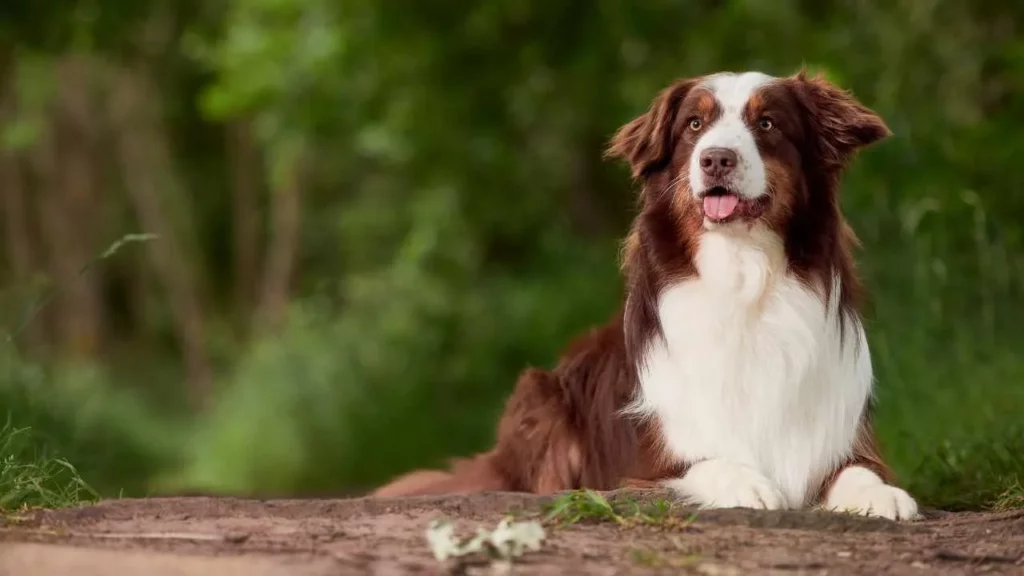
Key personality traits include:
Highly loyal and eager to please
Extremely hardworking and task-oriented
Playful, alert, and always “on.”
Can become bored and destructive without enough activity
Aussies are happiest when they have a job to do. Herding comes naturally to them, whether it’s livestock, children, or other animals.
Their strong sense of responsibility means they may try to guard people or possessions, so early training and proper socialization are important. The upside? Training is usually a joy—Aussies learn fast, love mental challenges, and even pick up habits just by watching you.
Exercise & Energy Levels
Great Pyrenees
Despite their massive size, Great Pyrenees dogs are surprisingly low-energy. If they don’t have land to patrol, moderate walks a couple of times a day are usually enough to meet their physical needs.
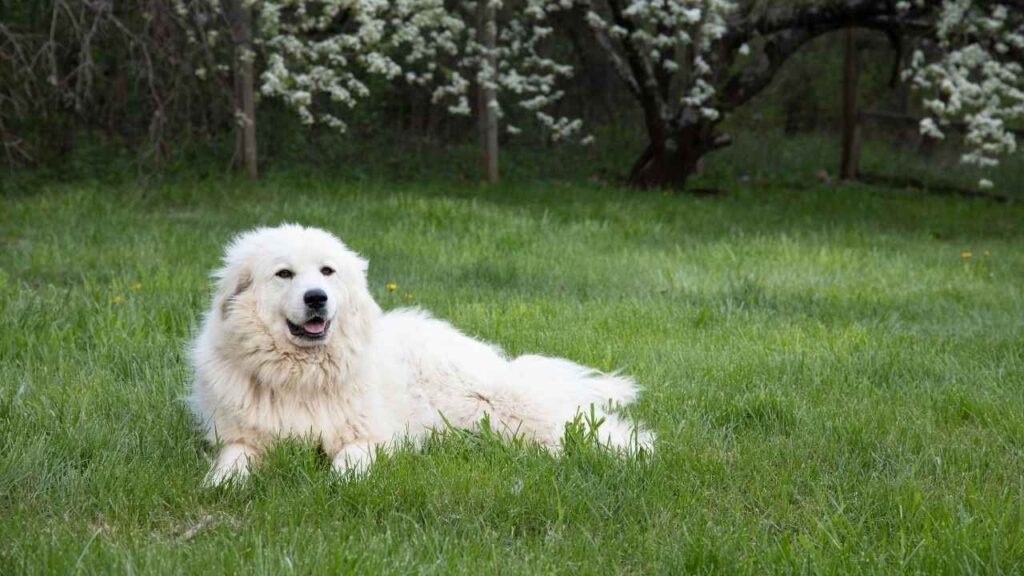
What matters most for Pyrs:
Consistent but relaxed daily walks
A sense of purpose, like watching over family or property
Light training or low-intensity activities to prevent boredom
While they don’t need intense workouts, Pyrs still require enrichment. Mental stimulation and occasional activities help keep them from becoming restless or destructive.
Australian Shepherd
Australian Shepherds are energetic to the core and need one to two hours of exercise every day to stay happy and balanced. Farm work or herding naturally meets this need, but in a typical home, they’ll rely on structured activity.
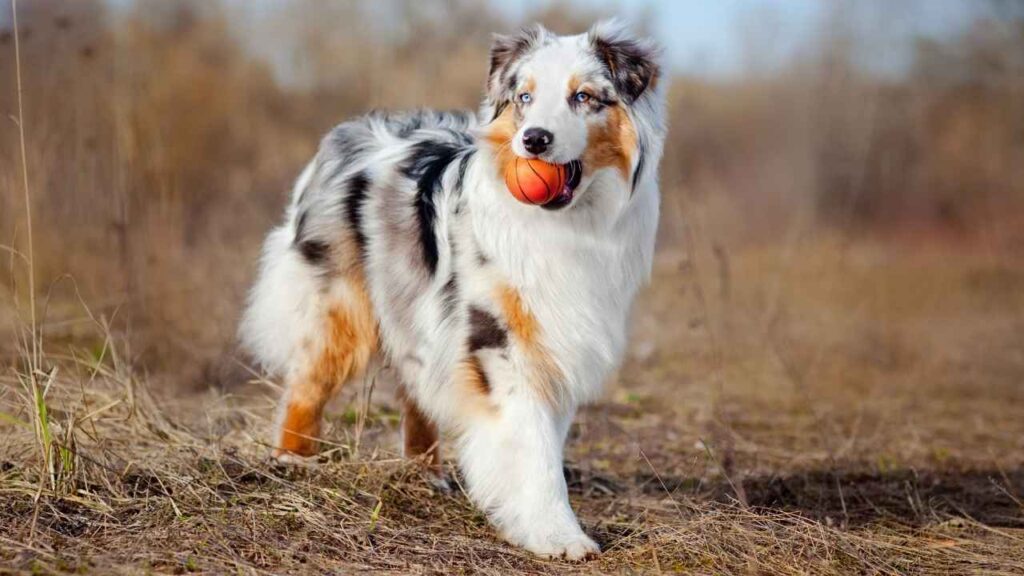
What keeps an Aussie satisfied:
Long daily walks, runs, or hikes
A large, fenced yard for zoomies
Agility, obedience, or canine sports
Regular training sessions and trick practice
Just as important as physical exercise is mental stimulation. Aussies love learning, performing, and showing off new skills. Without enough activity or engagement, their boredom can quickly turn into mischief.
Training & Intelligence
Great Pyrenees
Great Pyrenees dogs are just as intelligent, but training them can be more challenging. Bred to guard livestock independently, they’re strong-willed and accustomed to making their own decisions, as mentioned by Orvis.
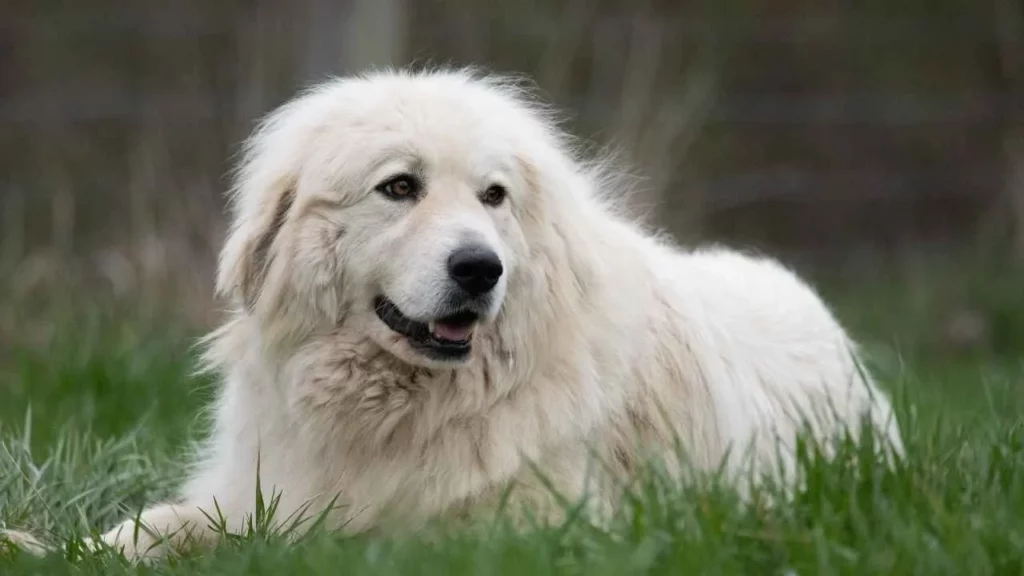
What training a Pyr looks like:
Needs early leadership and clear boundaries
Short, varied sessions to prevent boredom
Heavy focus on socialization and leash manners
Reliable recall is important due to wandering tendencies
While obedience training is useful, Pyrs shine most when given a job. Activities like carting, nosework, herding, and even low-impact agility give them a sense of purpose.
Training should progress slowly, especially during growth, to protect their joints. Though they may never be obedience stars, they are capable, thoughtful learners when training aligns with their instincts.
Australian Shepherd
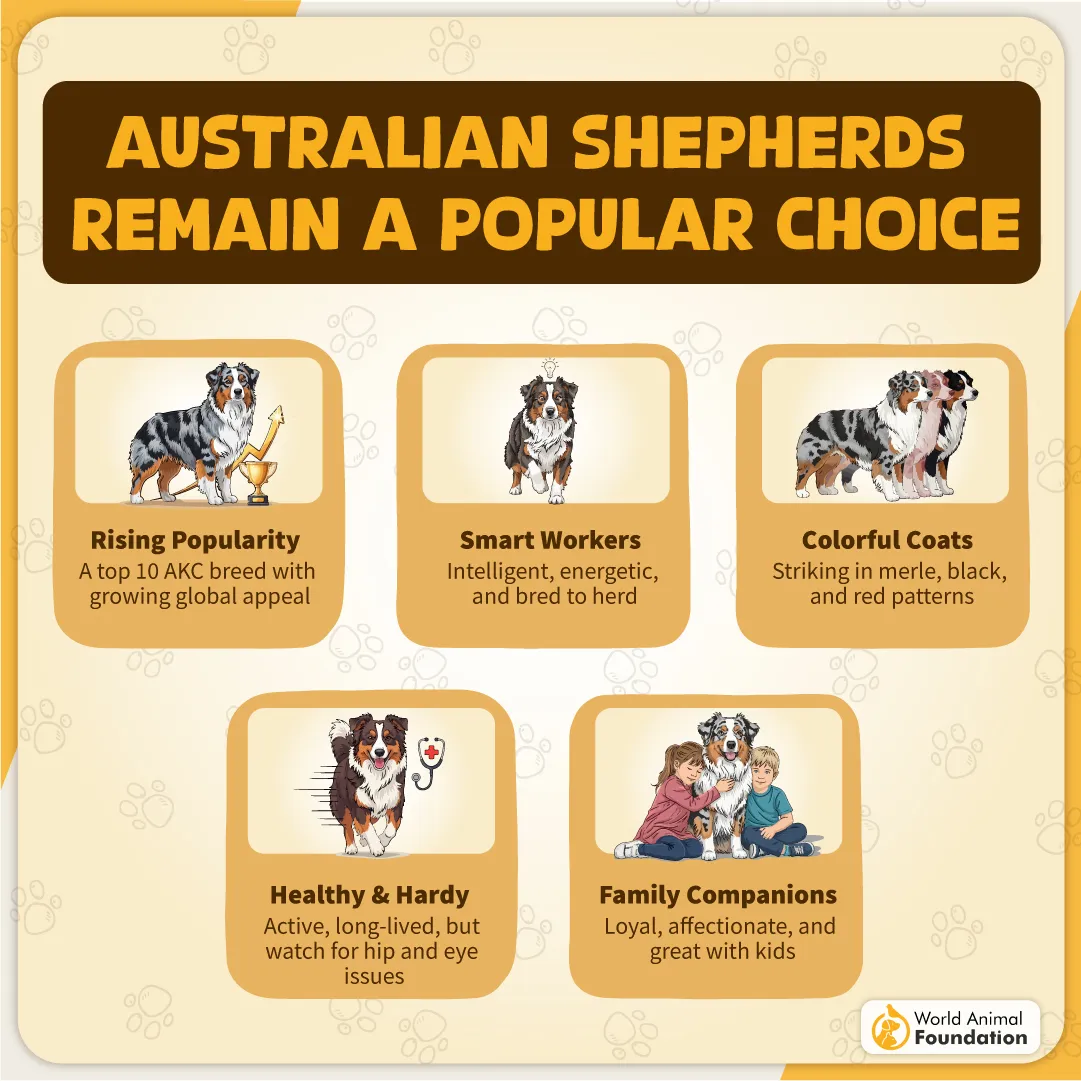
Australian Shepherds are famously smart and highly trainable. They thrive on structure, consistency, and positive reinforcement, making them one of the easiest breeds to work with—especially when training starts early.
Training highlights:
Learns commands quickly and enjoys repetition
Responds best to firm, consistent, reward-based training
Needs early and ongoing socialization
Excels at tricks, obedience, and enrichment activities
Puppyhood is a critical stage. Toilet training requires frequent breaks, and crate training helps with both house-training and confidence.
Puppy school and controlled social experiences expose Aussies to new people, animals, and environments, shaping them into confident, well-mannered adults. Training shouldn’t stop after puppyhood—ongoing mental challenges are essential to keep their sharp minds engaged.
Health & Lifespan
Great Pyrenees
The Great Pyrenees has an average lifespan of 10–12 years, which is fairly long for a giant breed. They’re typically robust and resilient, but their large size and genetics make them prone to certain conditions—many of which can be screened through responsible breeding and early veterinary care.
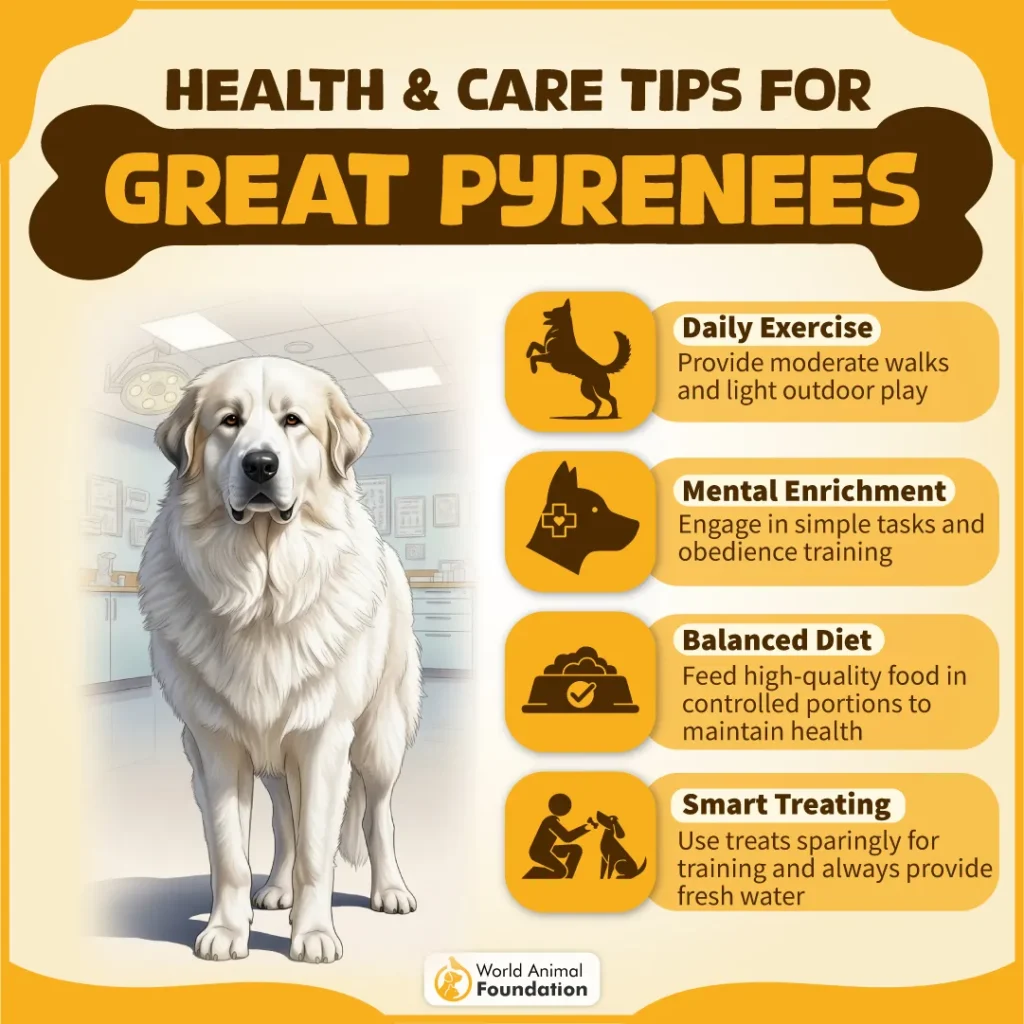
Common health concerns in Great Pyrenees include:
Hip dysplasia
Elbow dysplasia
Chondrodysplasia (dwarfism)
Patellar luxation
Entropion
Gastric dilatation and volvulus (GDV / bloat)
Joint and growth disorders are especially important to monitor, as they can be influenced by genetics, diet, weight, and exercise during puppyhood.
Eye conditions and neurological diseases like NDG can be inherited and are best detected through genetic testing. Due to their deep chest, Pyrs are also at risk for life-threatening bloat, making preventive care and quick response critical.
Australian Shepherd
Australian Shepherds tend to live longer, with an average lifespan of 12–15 years. While they’re active and generally healthy dogs, they are predisposed to several inherited conditions—particularly involving the eyes, nervous system, and immune health.
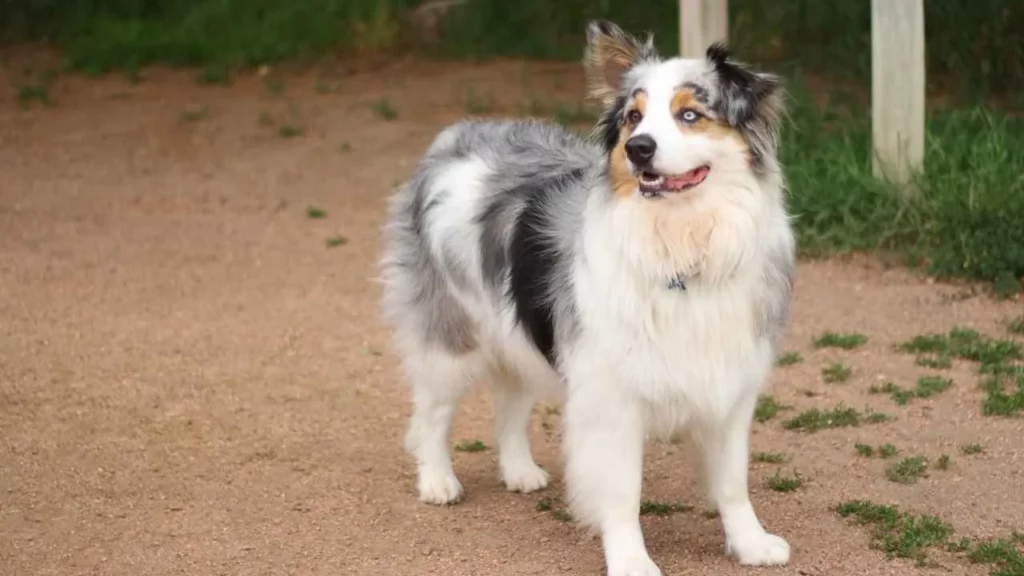
Common health concerns in Australian Shepherds include:
Hip dysplasia
Elbow dysplasia
Progressive retinal atrophy (PRA)
Collie eye anomaly
Epilepsy
Multidrug resistance mutation (MDR1)
Deafness
Many of these conditions can be managed or screened through genetic testing and regular veterinary care. PetMD mentions that eye diseases are especially common in Aussies, and early ophthalmologic exams are strongly recommended.
Conclusion
Choosing between the Great Pyrenees and the Australian Shepherd really comes down to lifestyle. The Pyr offers calm strength, steady protection, and independence, while the Aussie brings energy, intelligence, and an eagerness to stay involved in everything you do.
From size and temperament to training needs, exercise levels, and health considerations, each breed shines in its own way—but for very different types of owners.
Before making a decision, be honest about your time, space, and daily routine. A dog that fits your life will thrive—and so will you. Whether you’re drawn to the quiet confidence of a guardian or the nonstop spark of a working partner, choosing the right match turns a good dog into the perfect one.
