




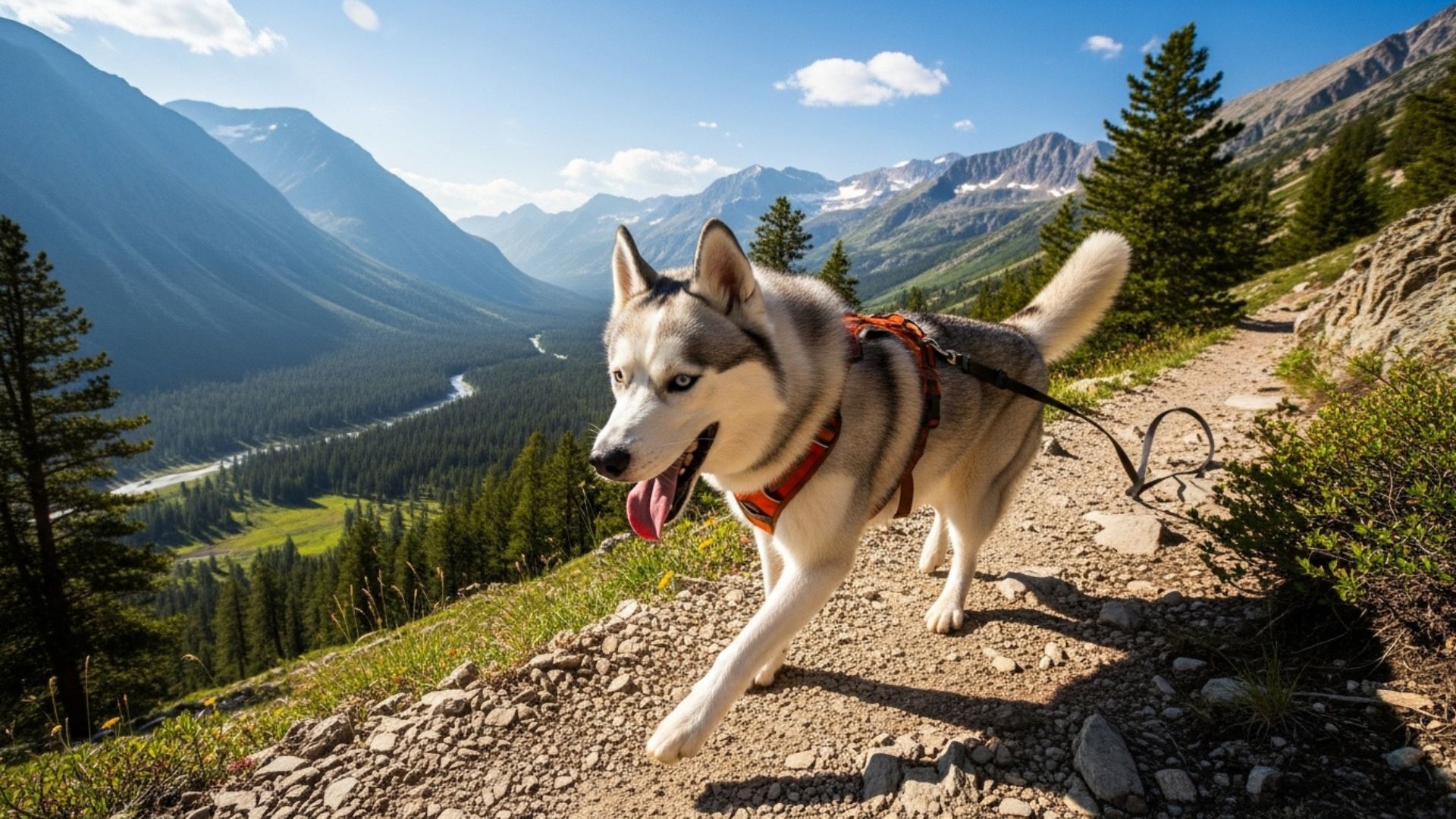
Hiking is not merely running around, but it is a state of mind. The long hikes, changing landscape, turn of the weather, and hours of continuous motion require strength, brains, and confidence. Although most other breeds like a walk around the block, some of them are literally designed to look at the wilderness.
Such dogs do not simply tolerate long-distance hiking trails; they love them. These great hiking partners are the most advantageous ones that have physical stamina able to endure hours of strenuous activity as well as mental strength.
They can stick to the unequal rough terrain, balance the temperature, walk on unknown ground, and even possess the emotional stability to listen where it counts, making for great trail partners.
Listed below are nine of the most ideal dogs proven to be great hiking buddies, camping, and exploring the wilderness. Every breed is measured in terms of stamina, versatility, temperament, and actual trail performance.
So let’s check them out!
Best Dog Breeds for Hiking and Exploring the Wilderness
1. Vizsla
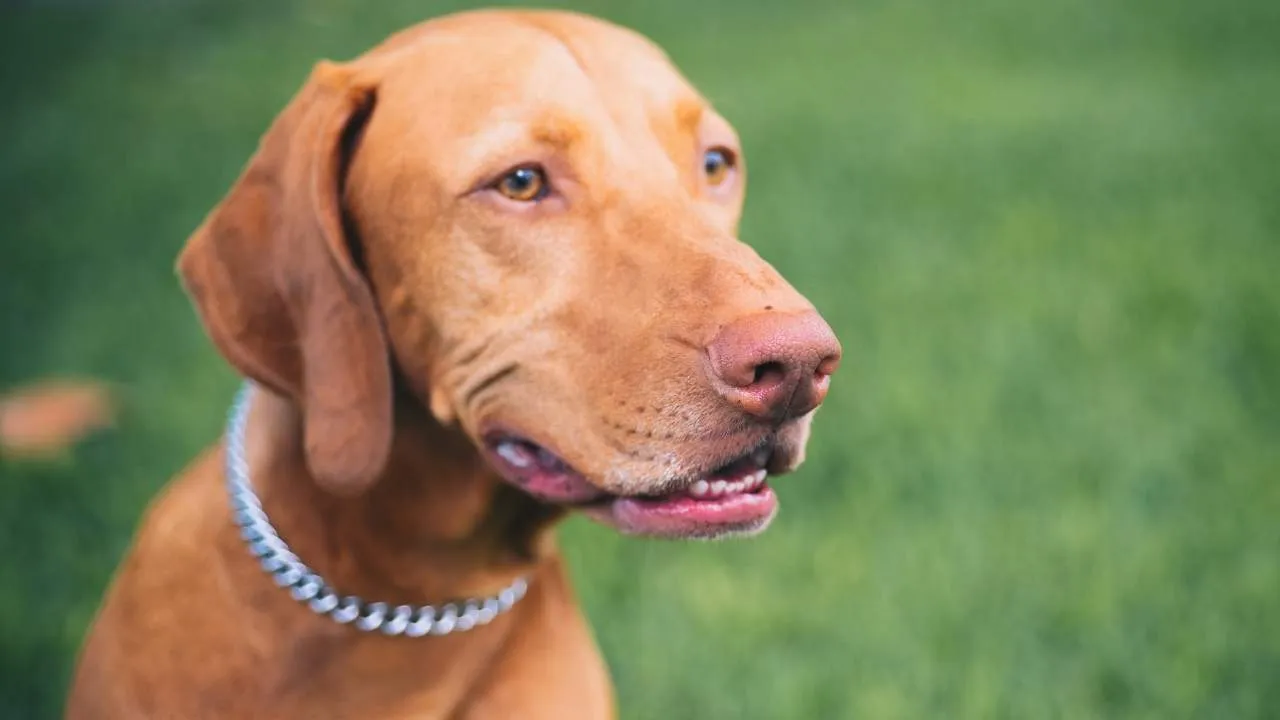
Originally bred to be a hunting dog, this dog breed is also known as a velcro dog. Do not be misled by their affectionate nature, as this breed was designed to be in motion. They love to go over ground and are best on long-distance trails.
One trait that makes Vizslas particularly attractive to hiking partners is the combination of athleticism and obedience. According to the AKC, Vizslas should be exercised vigorously on a daily basis in order to stay mentally balanced, and thus hiking is a perfect activity for their active lifestyle.
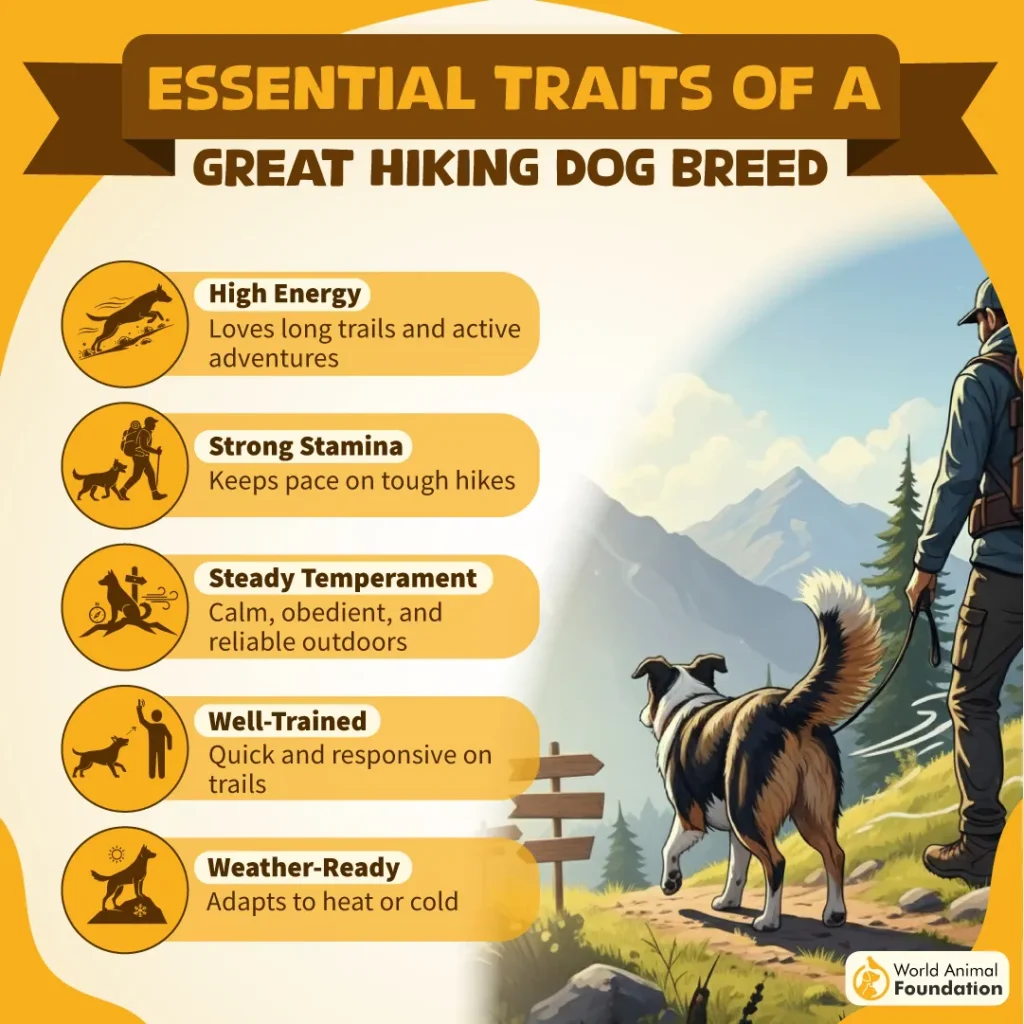
Besides being physically fit, this high-energy dog is also known as an intelligent breed. They are very responsive to the speed and temper of their owner, and thus a good company on hikes that are mentally taxing. These dogs are also lightweight, which means they do not strain their joints during long distances.
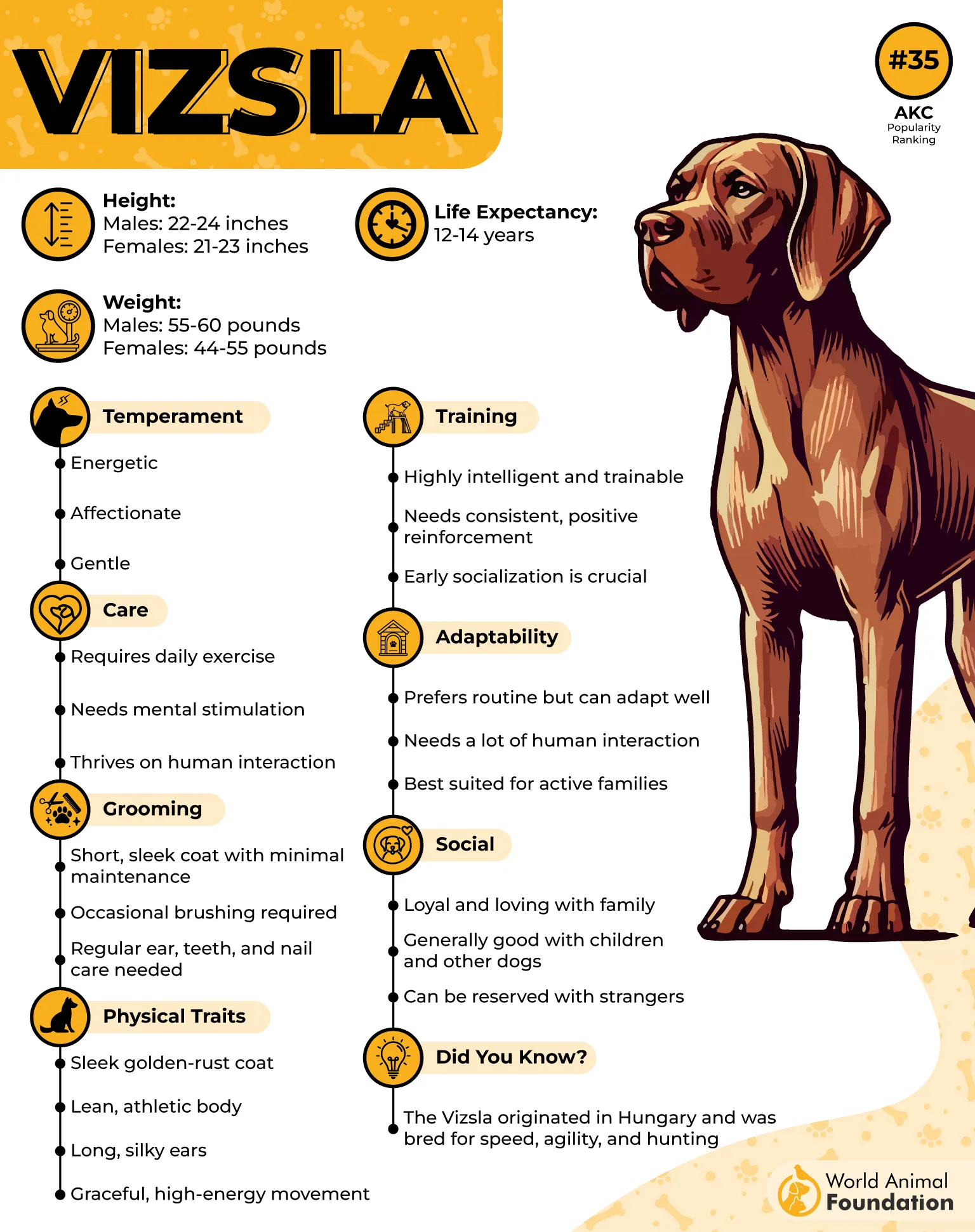
Why Vizslas Are Good Trail Dogs
Strong, lean body to move continuously
Great intelligence and sensitivity
Formidable connection with the handler, minimizing wandering
Trail Considerations
A short coat is not much protection against the cold weather hikes
Needs early recall training on wildlife-heavy areas
2. Siberian Husky
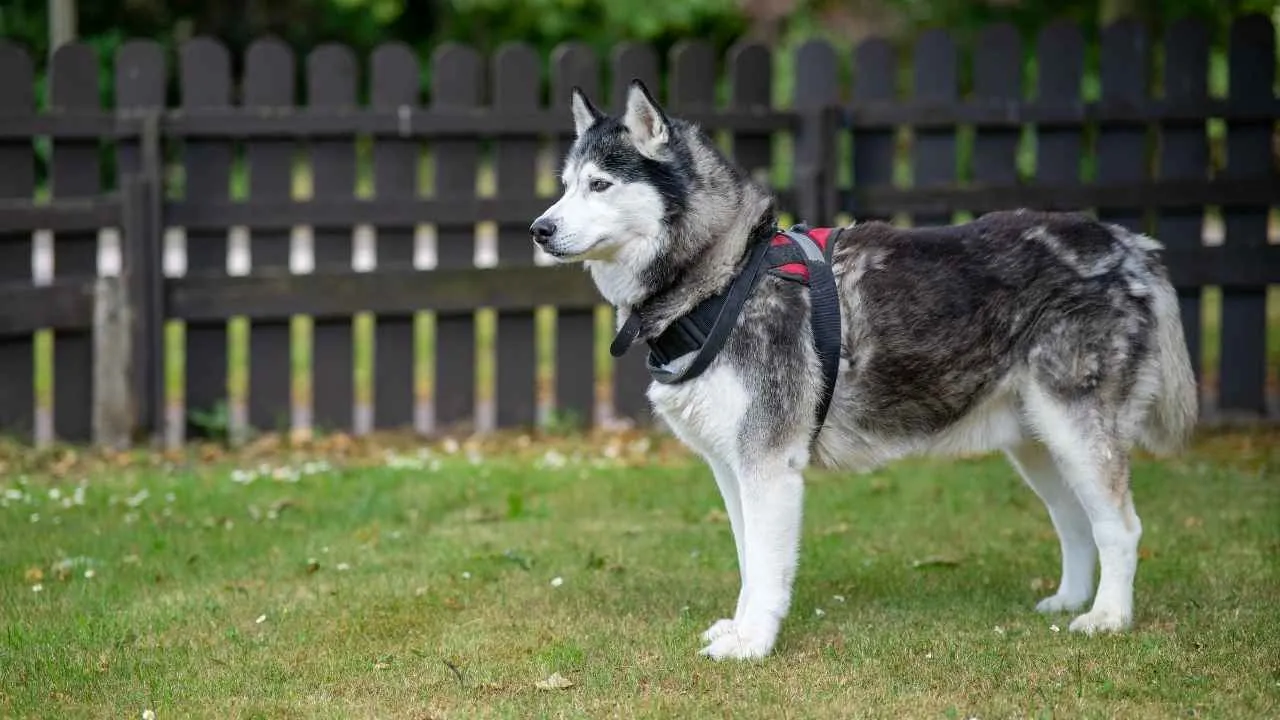
There is hardly any breed that is more aesthetically related to being an adventure dog when compared to the Siberian Husky. This athletic dog was originally bred to pull sleds over frozen terrains. They are able to travel miles without getting tired, and even after most breeds wear out, they are still active.
One thing about them is that they are independent, and thus they need handlers as well as a leash. Huskies have boundless energy and love moving, and that should be accompanied by regular training and proper trail control.
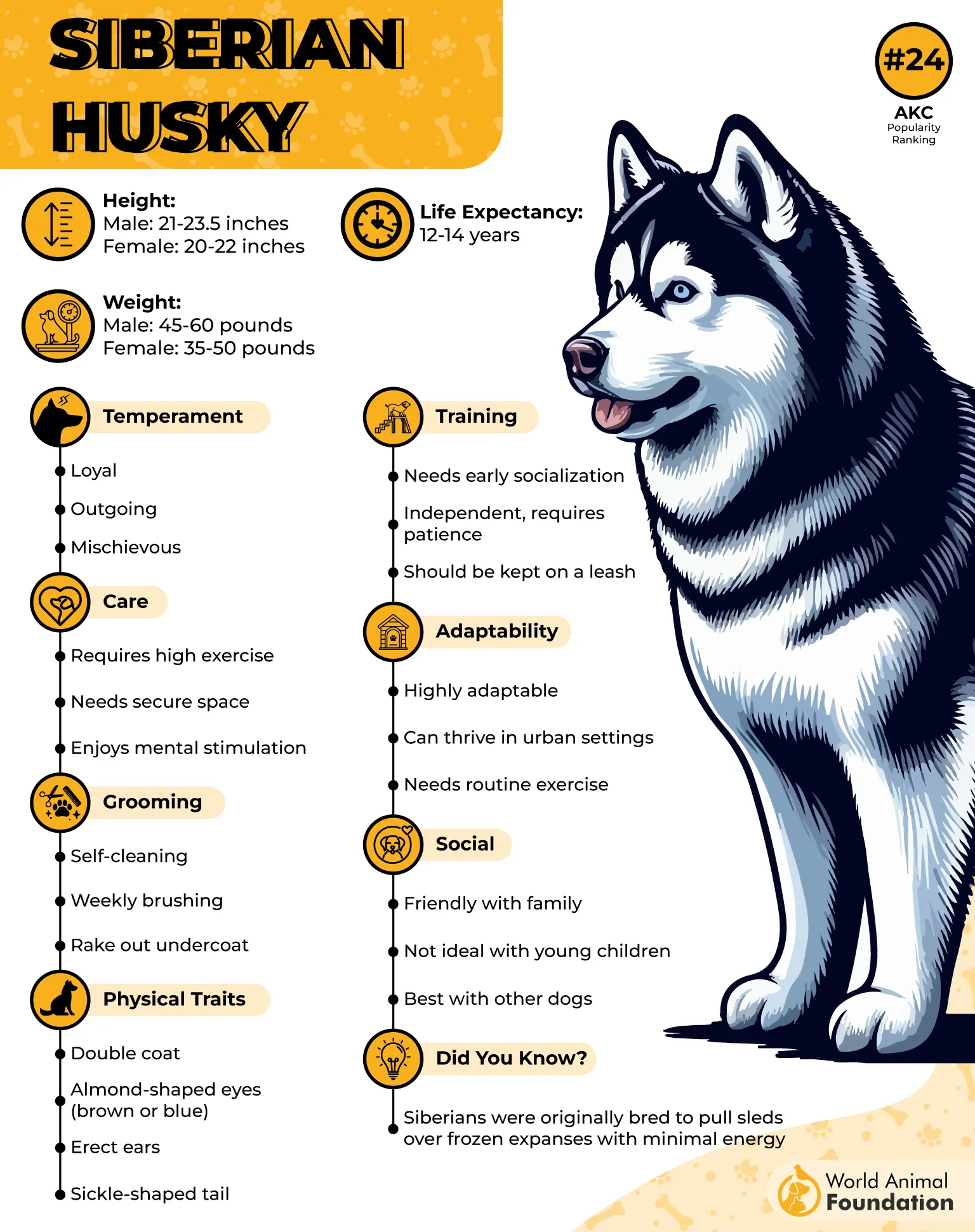
Huskies pace themselves, saving their energy for long distances. They are perfect for long hikes since they have the innate capacity to control their movements. Nevertheless, they are curious-minded, and therefore, they must be purposeful and limited in their hiking.
Why Do Huskies Prefer Wilderness Terrain?
Very high endurance
Dressy coat against cold weather
Efficient running over big distances
Trail Considerations
Strong prey drive
Not very good as an off-leash dog
3. Bernese Mountain Dog
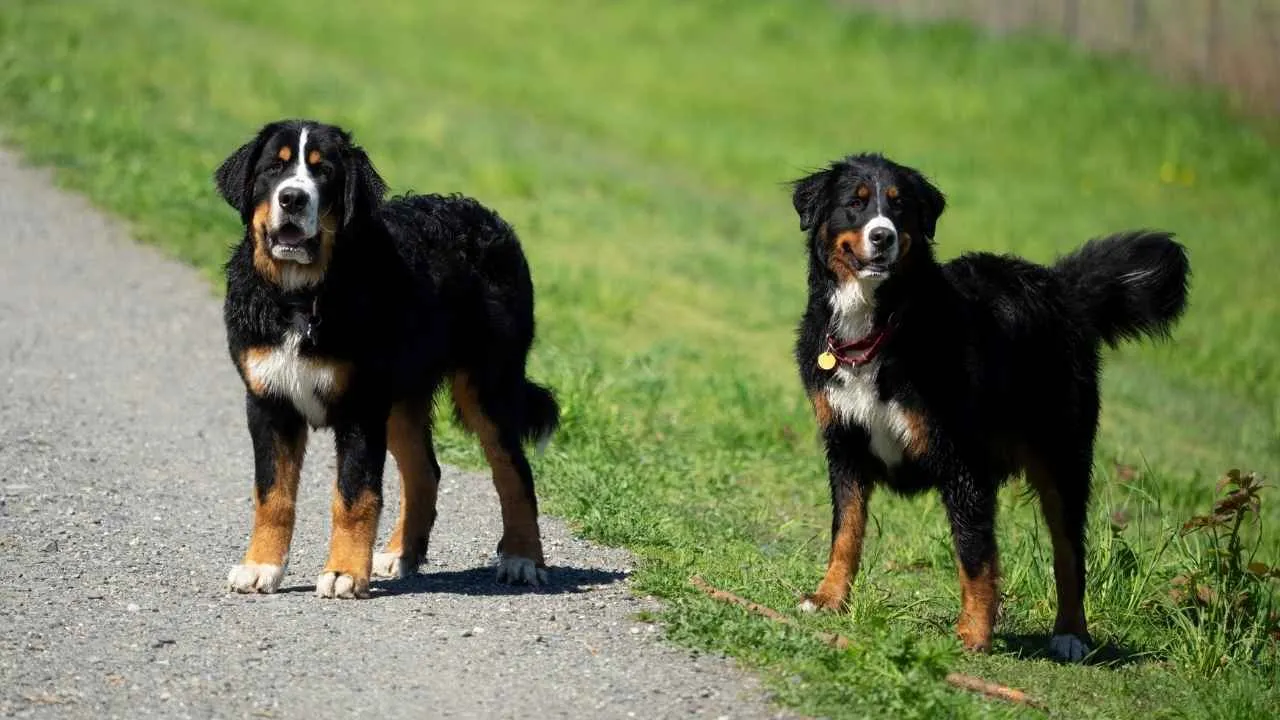
The Bernese Mountain Dog originates in the Swiss Alps and is adapted as a working dog to work on farms because it cannot be contained in the rough landscape and cool weather. Instead of rushing about, they move in a steady fashion; they are well-suited to lengthy and scenic hikes as opposed to fast ones.
This breed is strong, which makes it suitable for the mountains, as they are great dogs that are calm in behavior. Their personalities qualify them as dependable people to do group hikes and family trips.
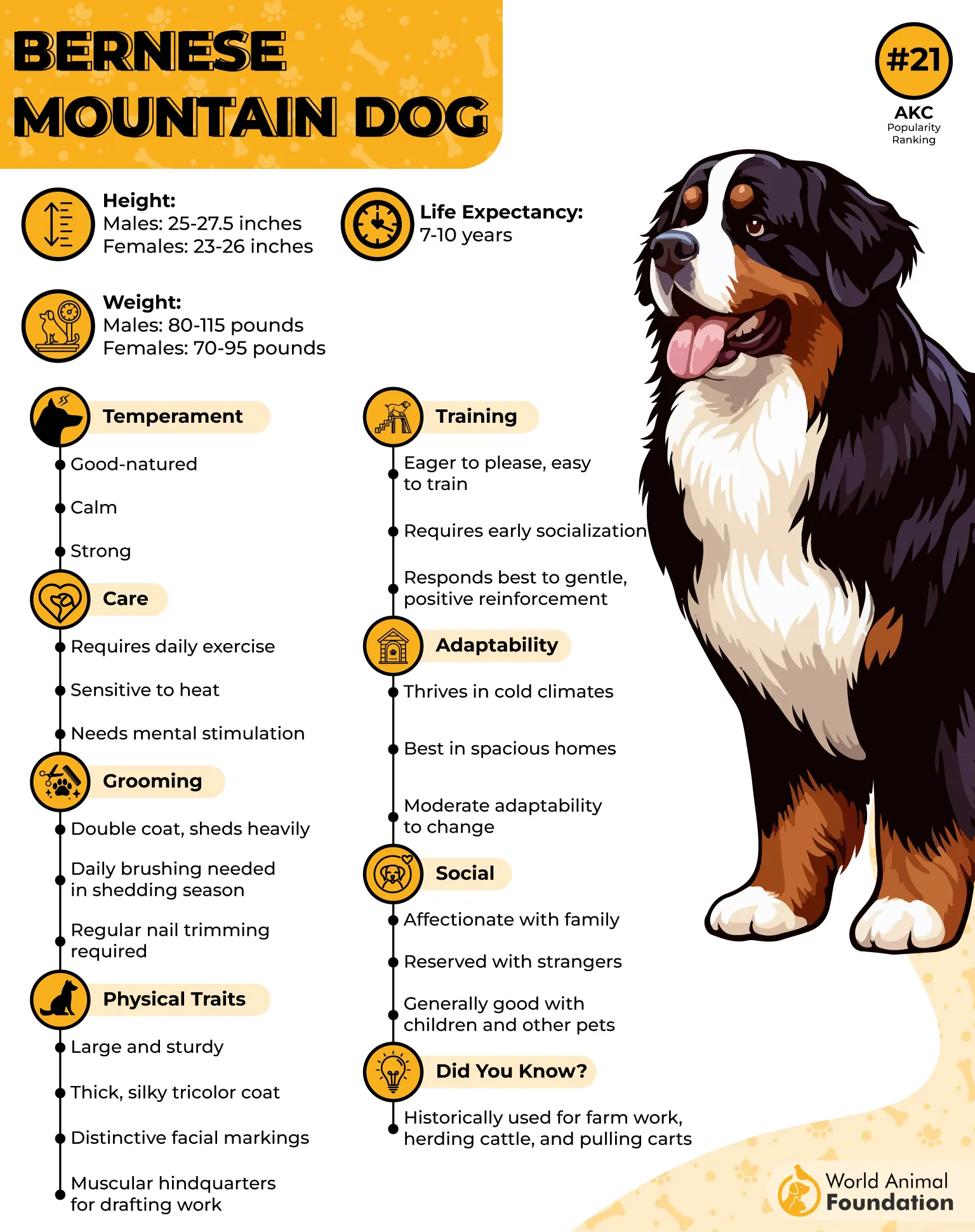
These dogs are great for slow and steep incline hikes in which stamina is more significant than speed. They particularly rely on rocky or rough surfaces, as they have a strong bone structure.
Strengths On The Trail
Powerful legs to lift up
Calm, steady movement
Gets along with families, other dogs, and strangers
Trail Considerations
Heat sensitivity
Nerdy compared to an athletic breed
4. Rhodesian Ridgeback
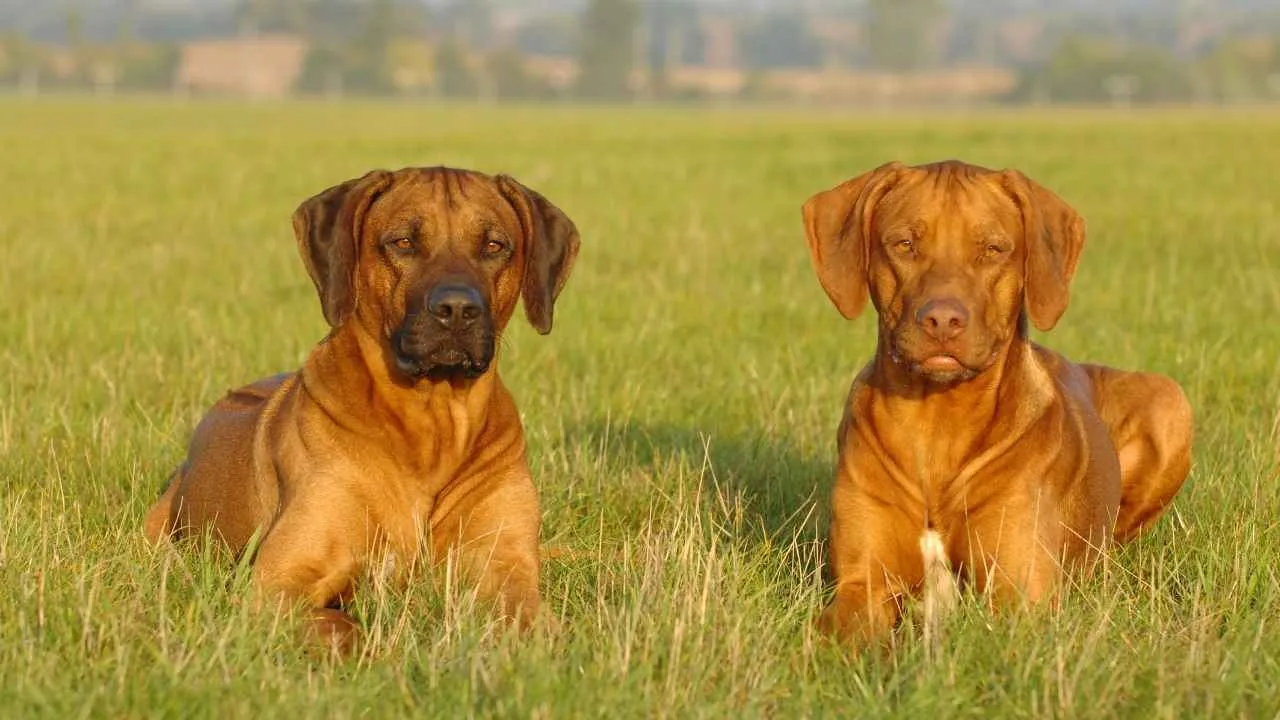
Rhodesian Ridgeback, a powerhouse of stamina and security, was bred to hunt large game across Africa. The breed is especially adapted to dry and rough surfaces and hiking for long hours in warm weather.
Ridgebacks are dogs that love the outdoors and have amazing stamina. They are free thinkers, which sometimes works on uncertain ground, but they need solid training that will guarantee good recall.
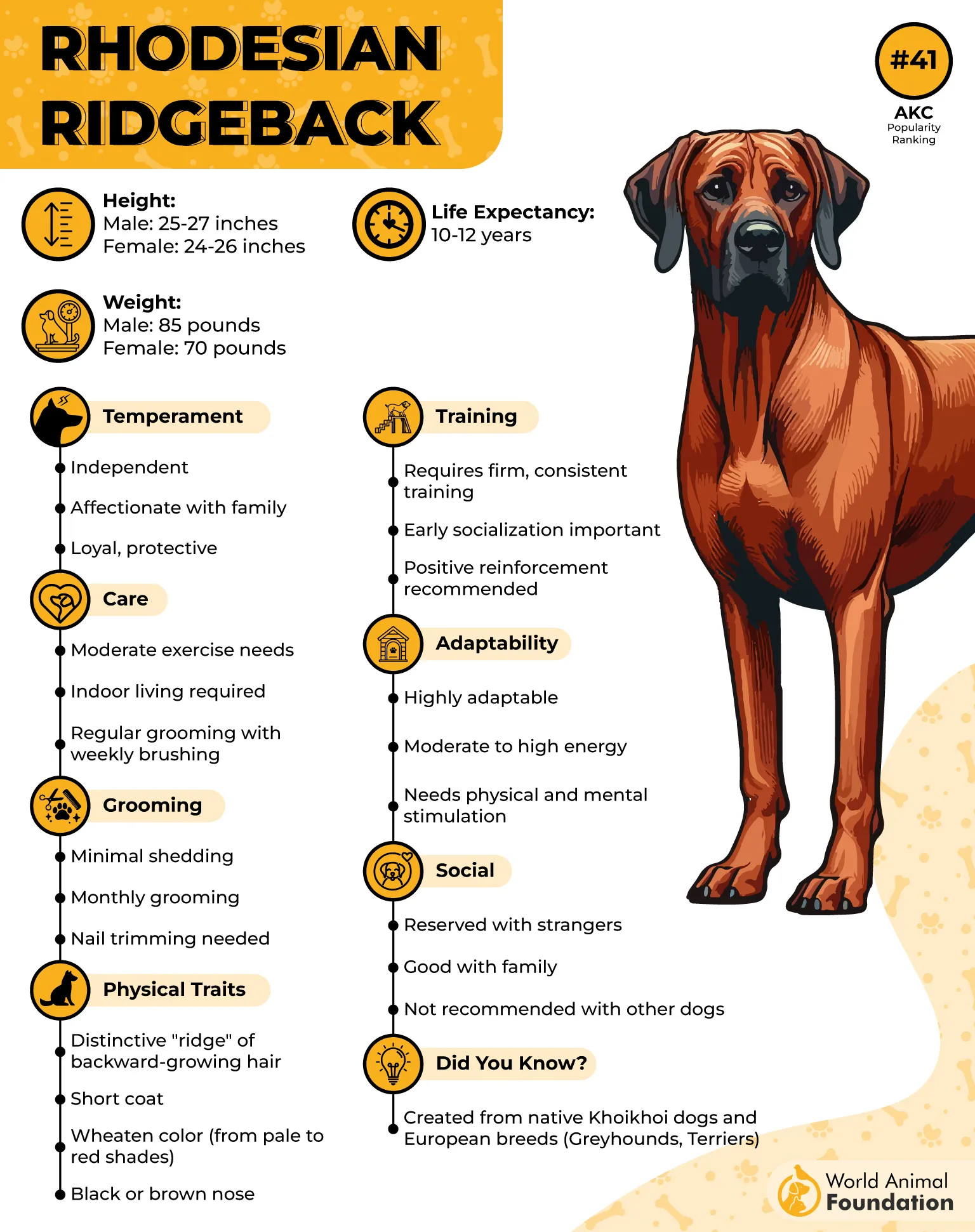
Ridgebacks have a silent self-confidence that is evident in difficult terrain. They are also less sensitive to unexpected sounds or the outdoors and therefore dependable in isolated places. Their short coat also dries up easily after crossing water or an increase in humidity.
The Benefits Of Ridgeback Hiking
Strong, athletic frame
Tend to have high heat tolerance
Loyal to their owners and fearless
Trail Considerations
Can be stubborn, especially as a pup
Needs early socialization
5. Golden Retriever
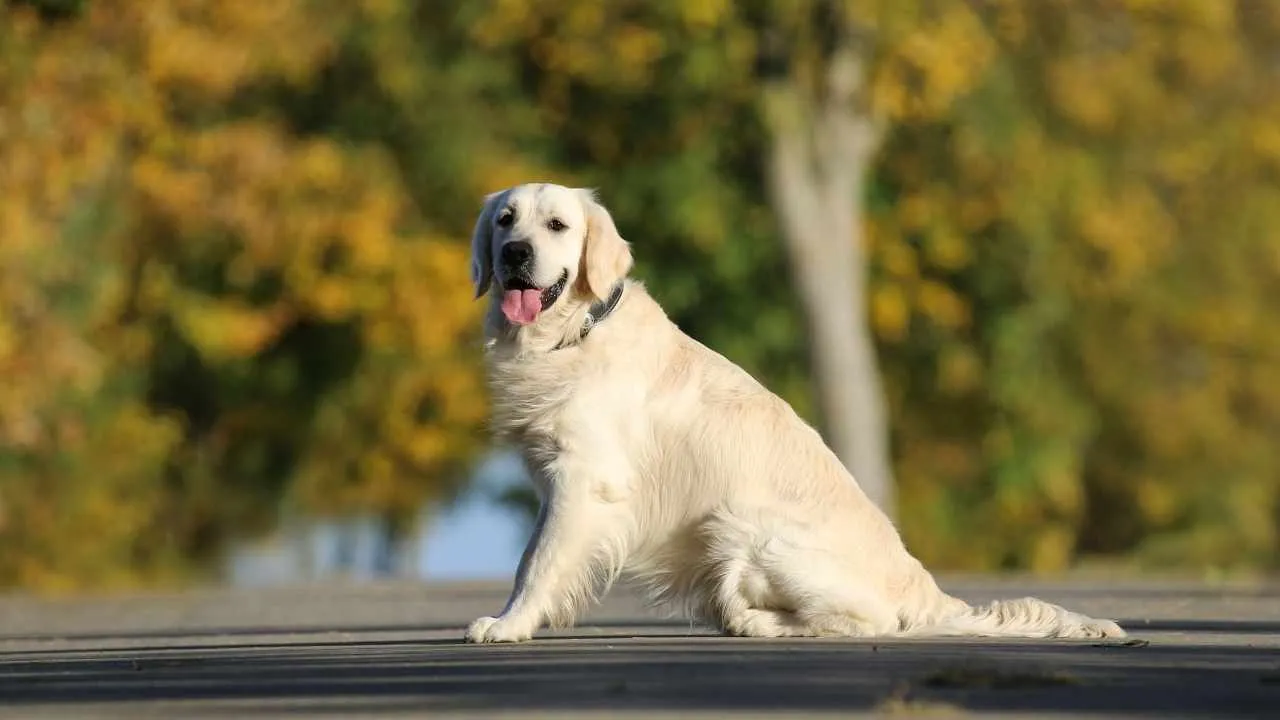
Golden Retrievers are mostly characterized by family life, but they also make excellent companions for the outdoors. Being bred as hunting retrievers, these dogs have stamina, intelligence, and an inbuilt fondness for water – so they are best suited during hikes that involve streams or lakes.
PetMD states that, given organized regular activity, Goldens are known to perform well. They are also among the simplest dogs to train, whether as a beginner or not, due to their enthusiasm for pleasing people.
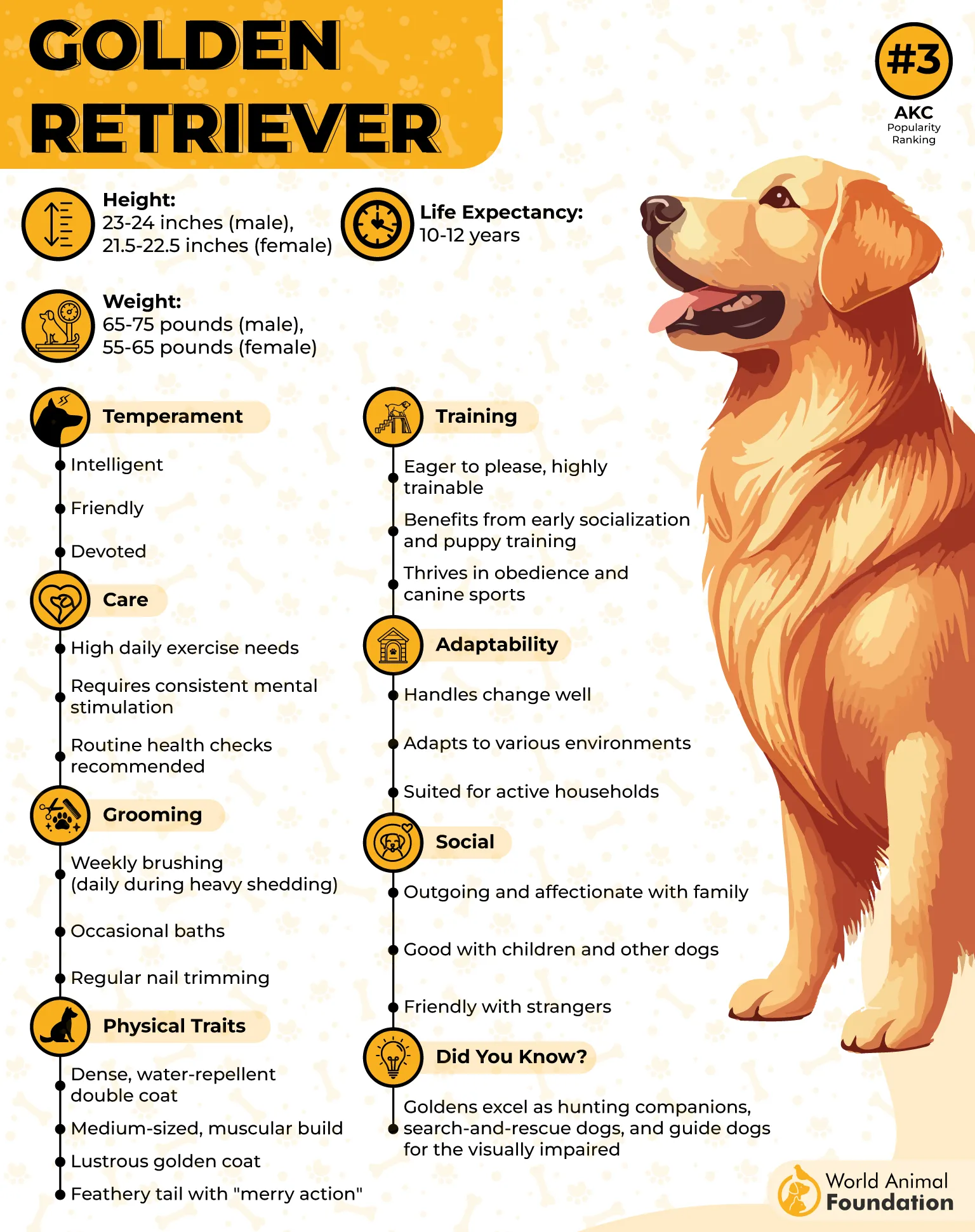
Golden Retrievers hike with gladness in a consistent manner as opposed to explosive vigor. These animals make great morale boosters in long adventures, particularly among novice hiking partners. They can easily move along the forest tracks, the open fields, and the waterways because of their flexibility.
Why Goldens Are Favorites
Excellent obedience and endurance
Friendly and fun-loving, adaptable dogs
At ease in outdoor activities
Trail Considerations
After hikes, grooming of thick coats is necessary
Middle-range stamina, in contrast to other dogs
6. German Shepherd
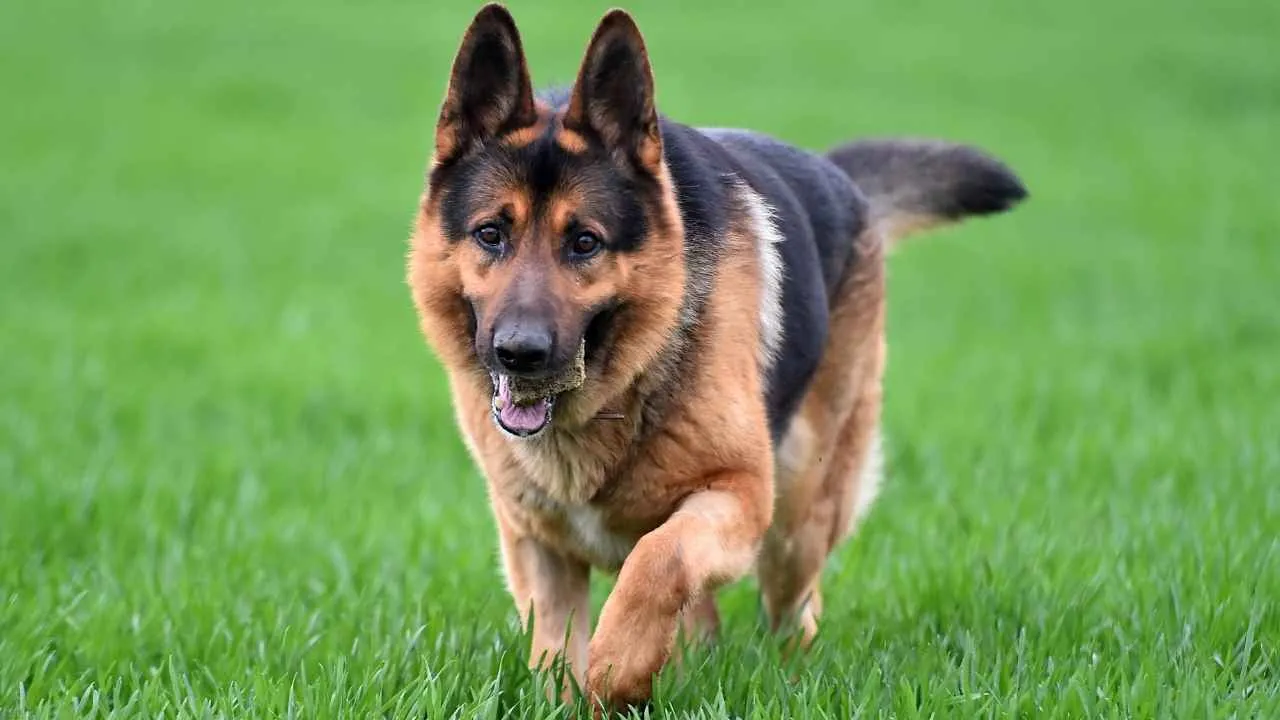
German Shepherds are one of the most multipurpose, energetic dogs in the world. They are strong, intelligent, and emotionally stable, making them good companions in uncertain locations in the wilderness.
German Shepherds are good at activities that demand long hours of concentration and stamina. In the field, it will result in reduced distractions, increased recollection, and heightened situational awareness.
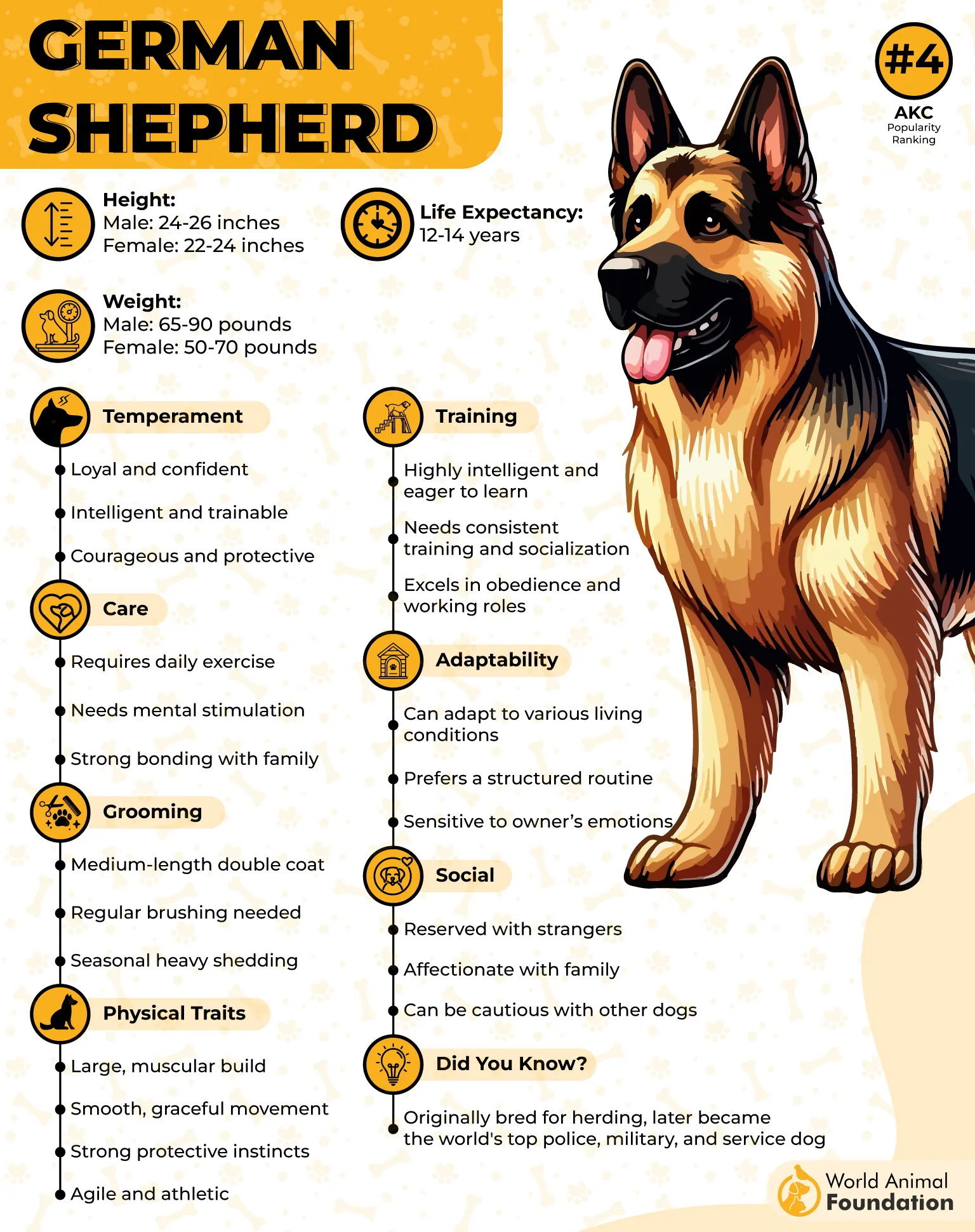
German Shepherds scan the area during hiking, and this gives them an extra awareness. This is especially useful in lonely or foreign paths. They have a capacity to alternate their slow pace walking and sharp alertness, which is unique.
The Strengths Of The German Shepherd
Exceptional intelligence
Powerful instincts of protection
Good stamina through good training
Trail Considerations
Needs mental stimulation
The state of the joints needs to be checked
7. Alaskan Malamute
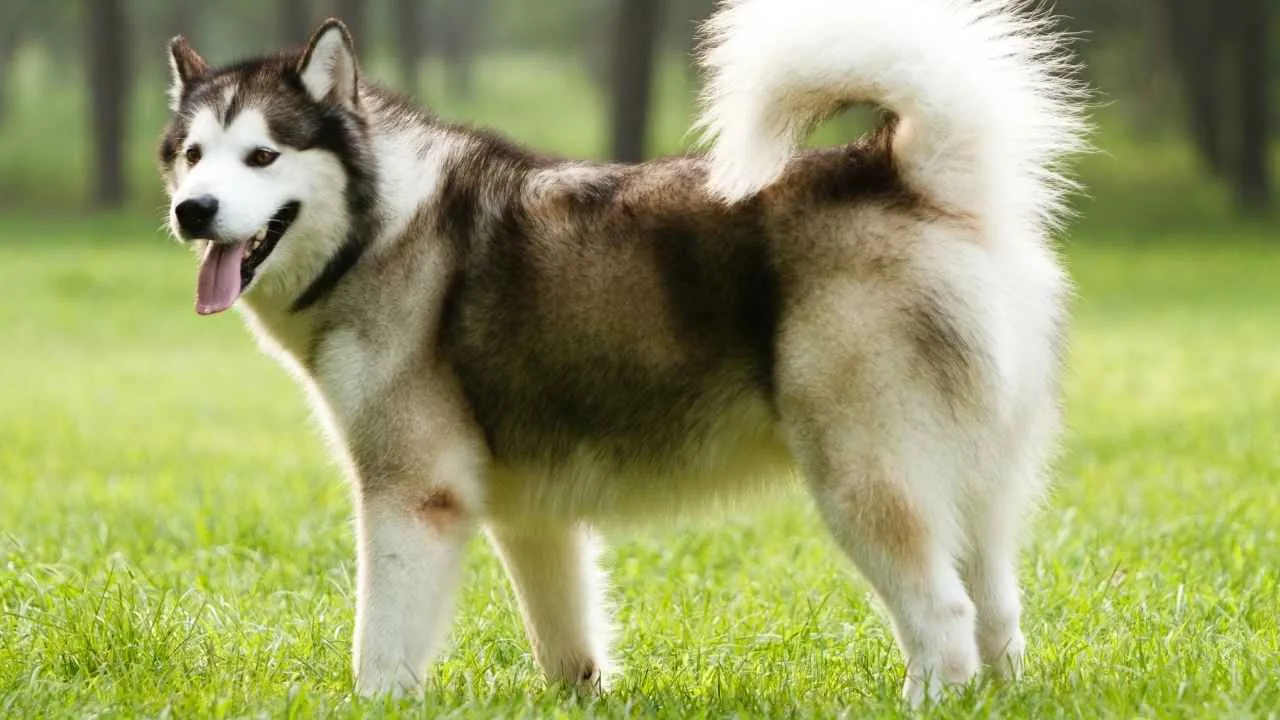
These dogs were larger and stronger than the Huskies and were used to carry heavy packs of cargo over snow-covered areas. This is why they are best used in cool weather backpacking.
Malamutes are strikingly powerful and tough, yet they demand authoritative leadership. They are most appropriate for those who have experience on the hiking trail and know the pack dynamics and conditioning.
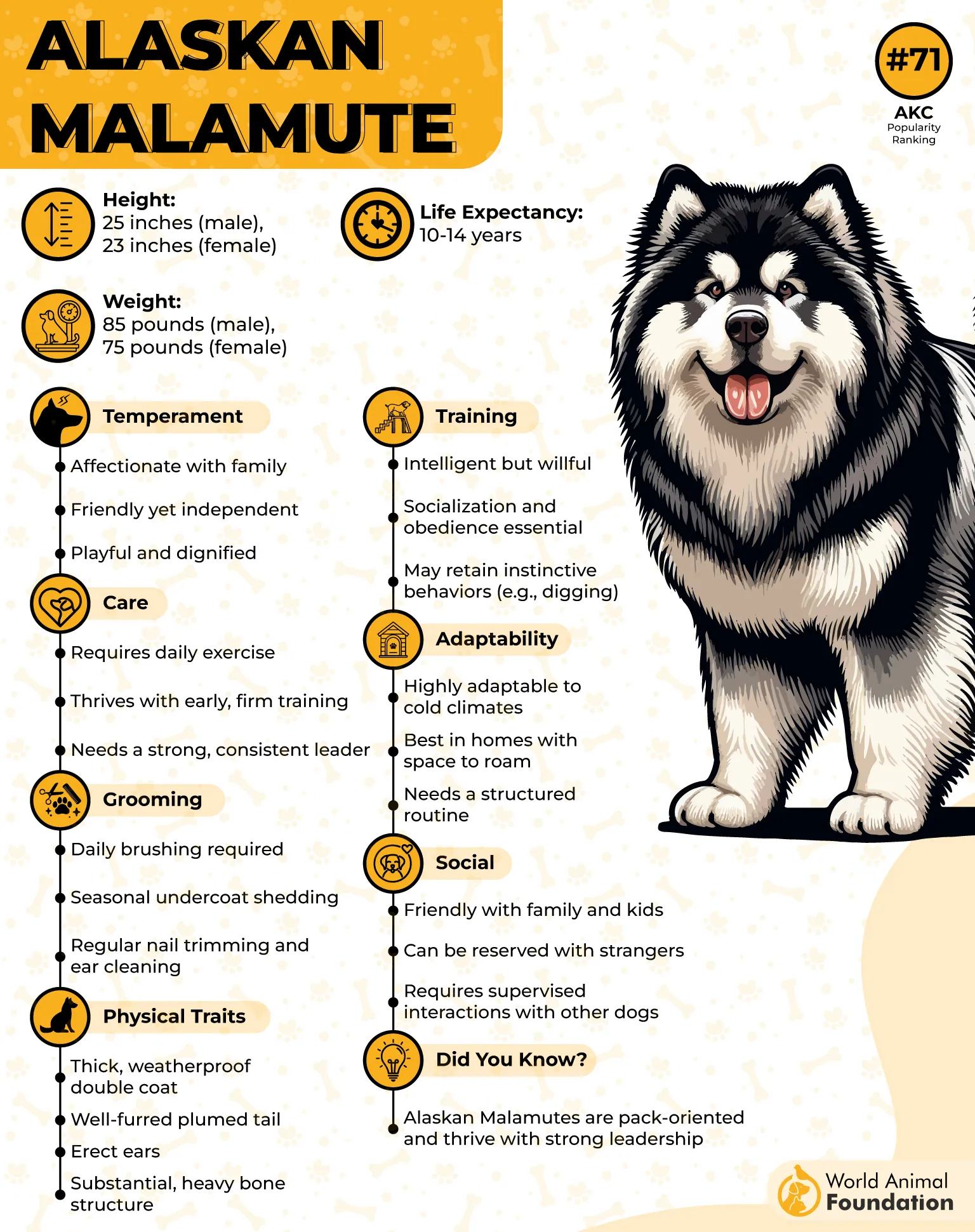
These dogs are brilliant in endurance-related exercises in which slow speed is more vital than power. There is also the resistance that protects them against the abrupt weather changes in cold areas.
Optimum Characteristics Of Wilderness Hiking
Incredible strength
Cool weather resilience
Steady and agile dogs
Trail Considerations
Unsuitable for hot climates
Needs regular training
8. Labrador Rtriever
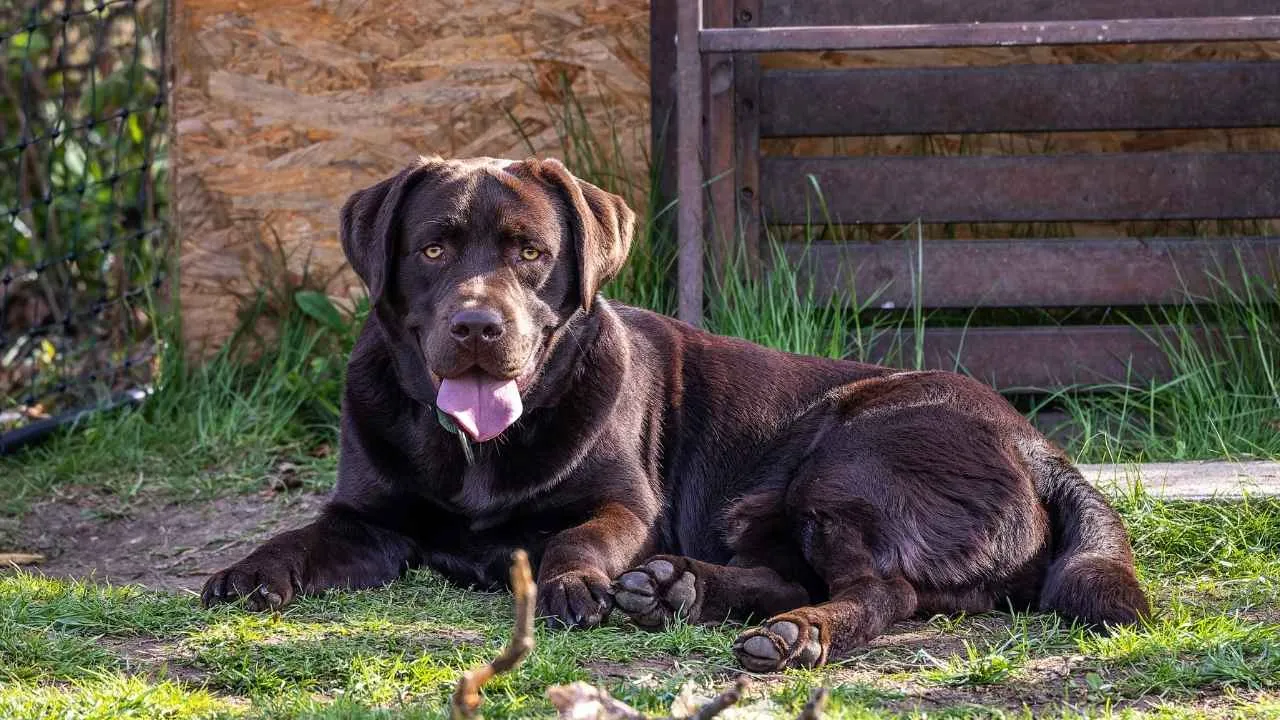
Few breeds can be compared to the Labrador Retriever in terms of stamina, agility, and adaptability. Labs can be taken on almost any kind of trail and are particularly adapted to hikes that have water crossings or camping.
Labradors are among the most dependable hiking companions as they are physically strong and relaxed. They are also very versatile, and this makes them a great hiking choice regardless of the experience level of the hiker.
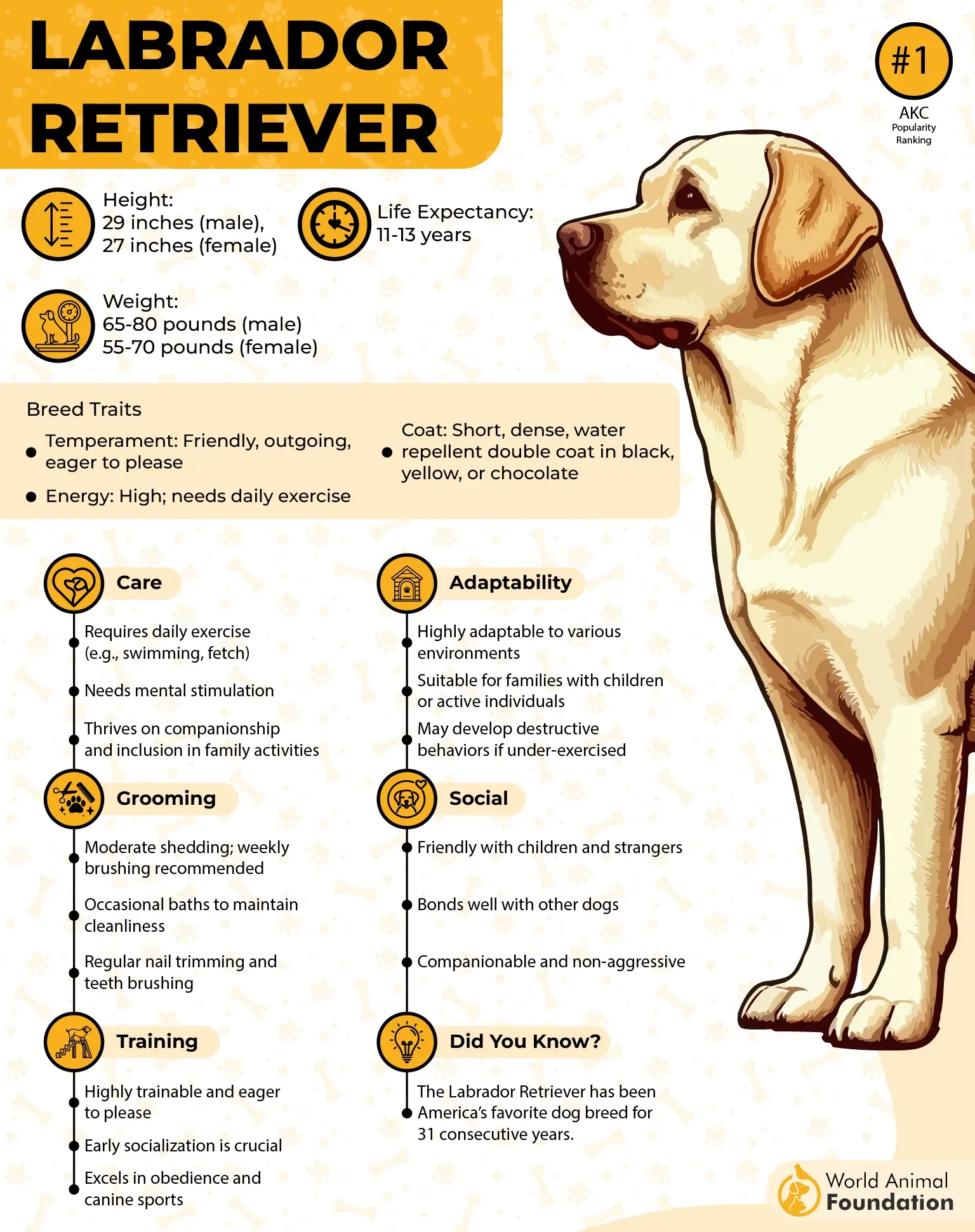
Labradors also add sanity and enthusiasm to every mile. They also recover fast following a break, and hence they are good with stop-and-go hikes. They have a natural desire to explore and get interested without being too reactive.
Labrador Hiking Highlights
Strong swimmers
Flexible on changing terrain
Superior stamina
Trail Considerations
Tend to overeat, and weight needs to be monitored
Needs structured exercise
9. Border Collie
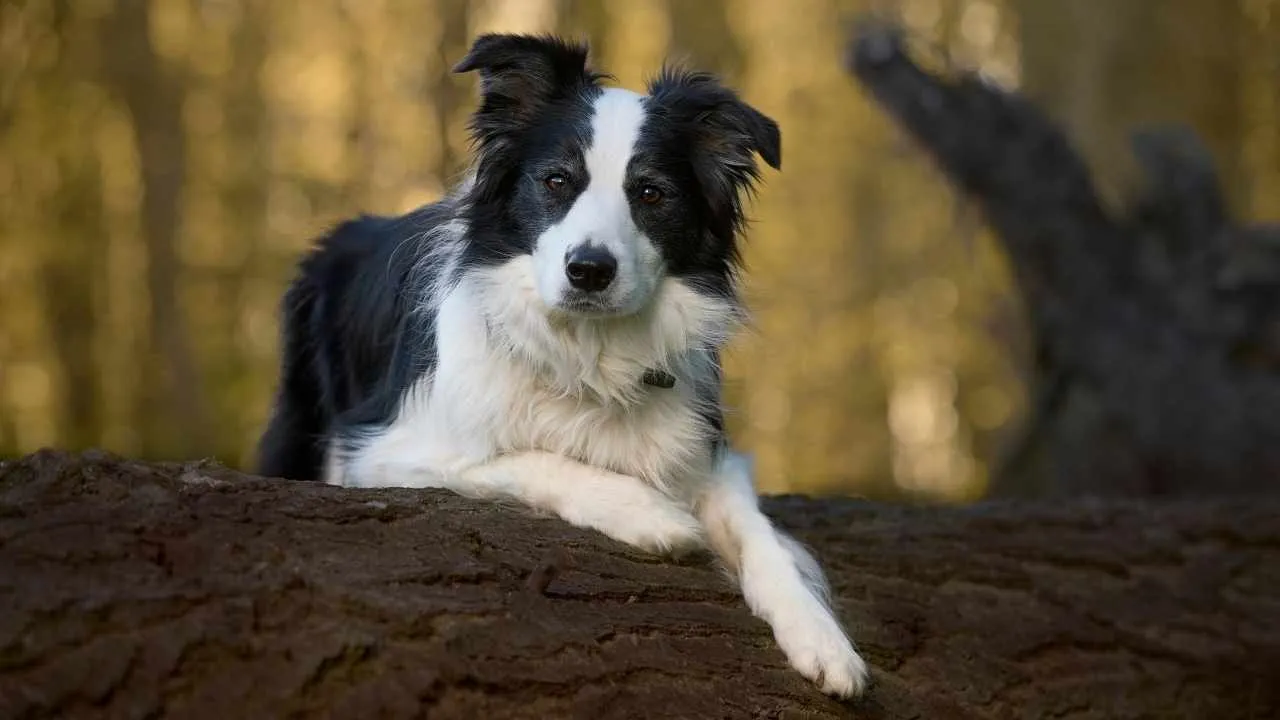
The Border Collie cannot be compared with any other in terms of smartness and vigor. Although the dog is traditionally trained as a herder, their stamina and concentration makes them excellent hiking companion.
Border Collies are one of the most intelligent dogs, as discovered by the AKC, and the intelligence is reflected in their good trail sense. They shine in the state of being mentally and physically active.
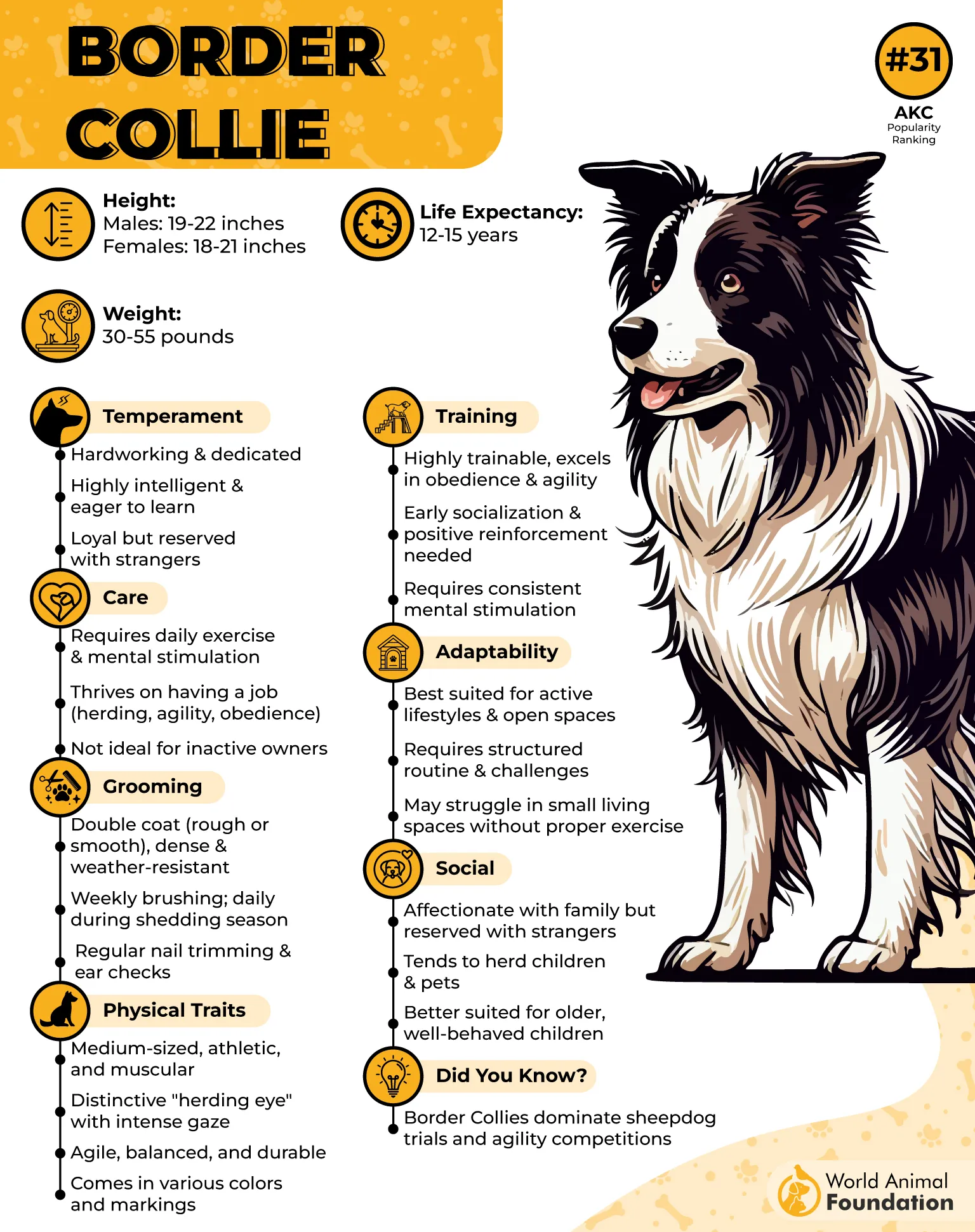
The hiking life is kind to these dogs. They naturally determine footing, changes of elevation, and ahead items. This renders them particularly successful on the technical or narrow trails where accuracy is key.
The Border Collie In The Sunshine
Extreme stamina
Acute situational awareness
Agile and responsive
Trail Considerations
Needs constant stimulation
Not ideal for relaxed hikers
Conclusion
The above breeds are unique as these dogs exhibit physical stamina as well as mental flexibility and emotional consistency. Whether going through the alpine trails, desert tracks, or forested backcountry, the right dog will not only improve the experience but will also never make it tricky.
Owning a dog responsibly is all about balancing the instincts of the dog with your way of life. Dogs that hike require more than running around; they require organization, schooling, and confidence.
