




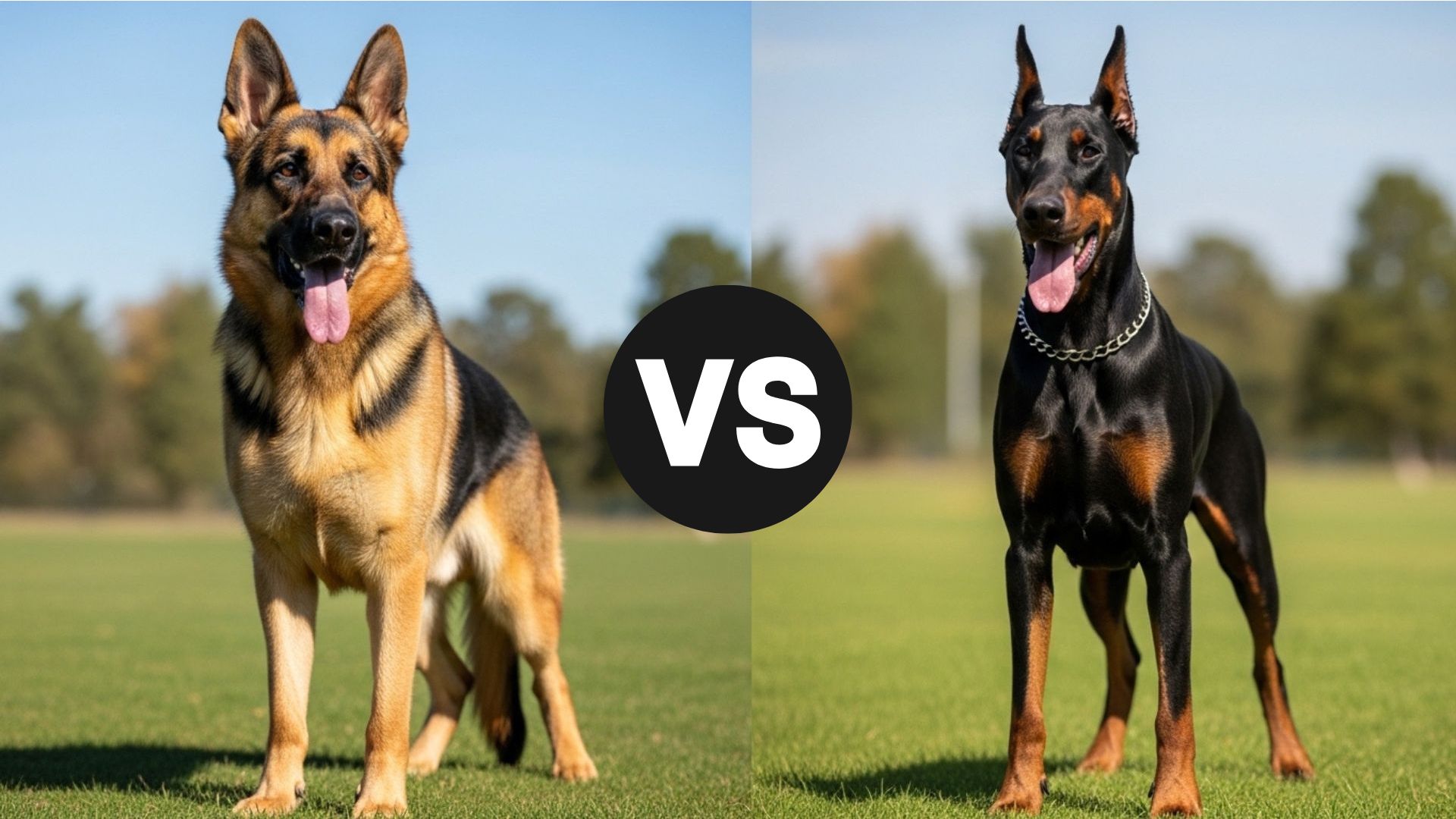
Breeders rarely mention that guardian breeds from different lineages live completely different daily lives. Marketing materials showcase loyalty, intelligence, and protective instincts equally for both. What gets omitted are the unglamorous realities that determine long-term success.
One breed tolerates being left alone for work hours better, but demands intense exercise before and after. The other suffers from separation anxiety more readily, yet needs less total activity if mental stimulation stays consistent.
Grooming requirements differ dramatically despite both having short coats. Health problems affect them at different life stages and drain bank accounts in distinct ways. Training one breed feels intuitive for novice owners, while the other demands professional guidance to prevent dominance issues.
Families choosing based on protection ability alone discover these crucial differences after bringing a puppy home. This guide reveals the practical realities that separate these loyal breeds beyond their guarding instincts.
Key Takeaways
Two breeds, both celebrated for courage and devotion, show that guardian instincts alone do not tell the whole story.
German Shepherds are steady, resilient, and excel with clear guidance, making them reliable for families who can match their rhythm.
Dobermans combine athletic agility with sharp intelligence and a deep desire to connect, creating a companion that energizes every household.
By seeing how their energy, needs, and temperaments differ, you’ll discover which loyal breed truly suits your lifestyle.
German Shepherd vs. Doberman Pinscher: Evaluating These Loyal Dog Breeds
Origins & Purpose
German Shepherd dogs were developed in western Germany in 1889 by Captain Max von Stephanitz, who focused on utility, intelligence, and consistency, as per GSDCA. At that time, herding dogs across Germany shared a name but differed widely in structure and ability. Careful selection of the strongest working specimens led to a standardized dog built for disciplined tasks.
Doberman Pinschers were developed in Germany toward the end of the nineteenth century by Karl Friedrich Louis Dobermann. Working at a local dog pound, he combined several breeds to produce a vigilant, responsive dog suited for demanding duties. The breed’s foundation emphasized function and awareness rather than uniform ancestry.
Purpose and Service
German Shepherds gained recognition through organized police and military use, particularly during World War I. Their capacity to follow complex instructions and remain focused under pressure reinforced their value in controlled environments. That service history shaped a dog known for structured awareness in close partnership with humans.
Doberman Pinschers earned a distinct reputation during World War II after being enlisted by the U.S. Marine Corps in 1942. Trained as sentries and scouts, they became the official Marine war dog during the conflict, as stated in the Marine Corps University. Their performance established a lasting association with precision, vigilance, and readiness.
Size & Physical Build
German Shepherd Built
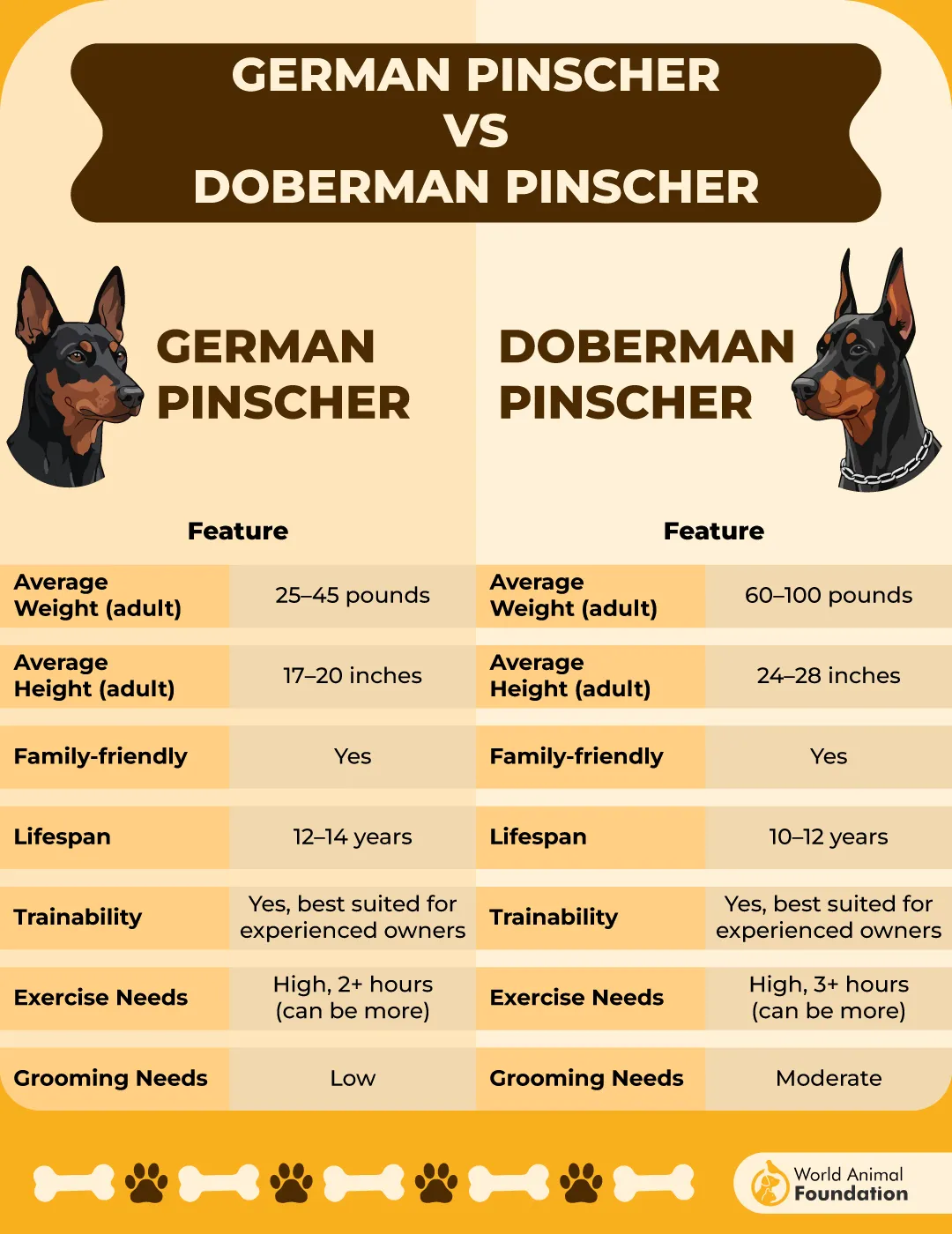
German Shepherd males typically stand between 24 and 26 inches and weigh around 65 to 90 pounds, while females fall slightly below that range. The breed presents a solid, robust frame shaped by generations of herding and service work. Their physical structure supports strength with controlled movement.
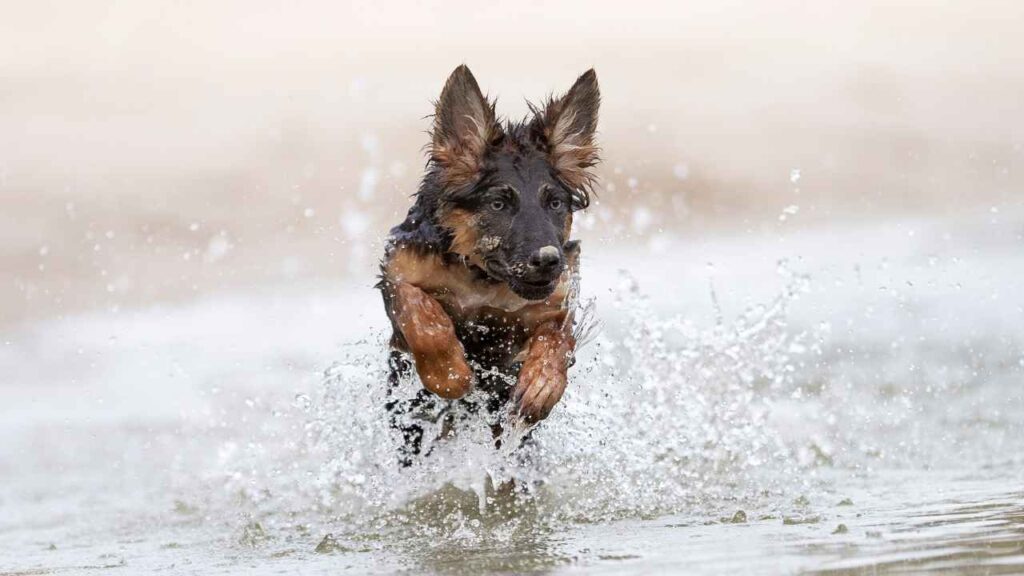
They carry more substance through the body, which contributes to stability and endurance during prolonged tasks. Their build reflects a balance between power and sustained activity rather than speed alone. This structure aligns closely with roles requiring steady presence.
Doberman’s Working Frame
Doberman Pinscher males usually reach 26 to 28 inches and weigh between 75 and 100 pounds, with females measuring slightly smaller. The breed is taller on average and built with a leaner, more streamlined outline. That height and proportions create an imposing silhouette in confined spaces.
Dobermans are lighter on their feet, with a physique designed for quick response and agility. The combination of height and lean muscle allows efficient coverage of space. That physical design supports alert movement and rapid positioning when needed.
Temperament & Personality
German Shepherd
German Shepherd temperament varies by individual, with breed influencing only a small portion of overall behavior. Their herding and guardian background often shows through loyalty and steady alertness in familiar spaces. Within the home, they tend to stay gentle while remaining reserved around unfamiliar people.
These Shepherds are generally reliable with children when training and socialization begin early and remain consistent. Calm behavior around family members improves when children learn respectful interaction. Supervision helps maintain balanced responses and clear boundaries.
Doberman Pinscher
Doberman Pinschers are commonly described as energetic, alert, and deeply people-focused. Their intelligence becomes most visible in homes where engagement and activity are part of daily life. Without enough involvement, that sharp awareness can shift into restlessness.
Dobermans are often patient with children, though their enthusiasm during play can overwhelm very young kids. Early socialization supports controlled behavior around small children and other pets. Supervised interaction helps channel their energy safely.
Exercise & Energy Levels
German Shepherd
German Shepherds are wired for movement and problem-solving, so daily activity keeps them mentally settled. Skipping regular exercise often shows up as restlessness around the house. A mix of walks and focused play usually works best.
Starting young helps German Shepherds build healthy habits without overstimulation. Short walks, safe play zones, and clear boundaries keep their attention in check. Structured outlets like agility, tracking, or dock diving give them something to work toward.
Doberman Pinscher
Dobermans approach exercise with intensity and enthusiasm, making routine movement part of daily balance. Long walks or hikes help release energy while keeping them mentally engaged. Access to a secure space for free movement makes a noticeable difference.
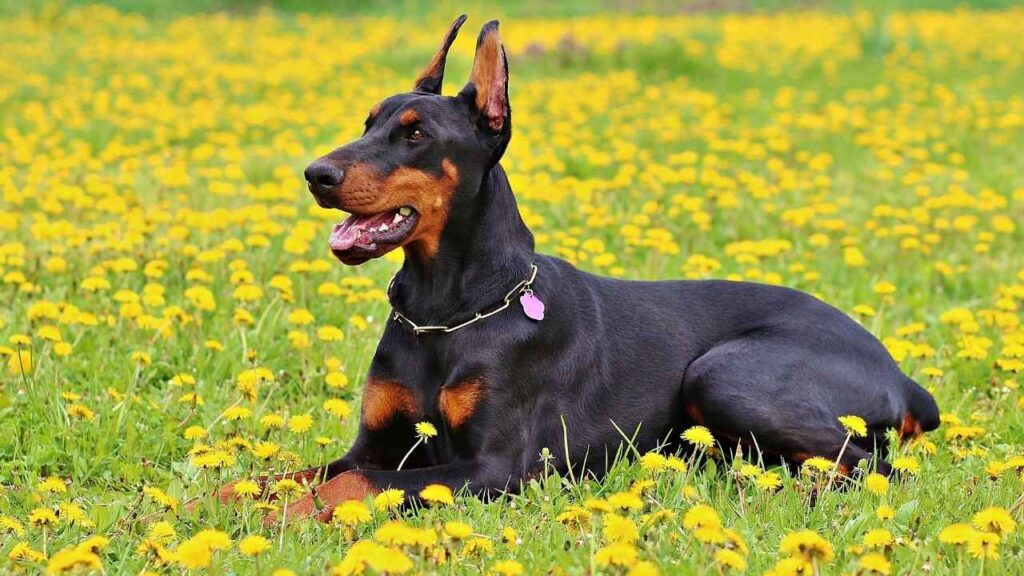
Dobermans enjoy activities that feel purposeful rather than repetitive. Sports like obedience, agility, and tracking tap into both speed and focus. Shared training sessions often become their favorite way to stay active.
Training & Intelligence
German Shepherd
German Shepherds absorb information quickly, which makes early training feel more like guidance than correction. Puppy classes and steady obedience work help shape an adaptable adult that reads situations well. Reward-based methods and consistent training tend to bring out their best focus.
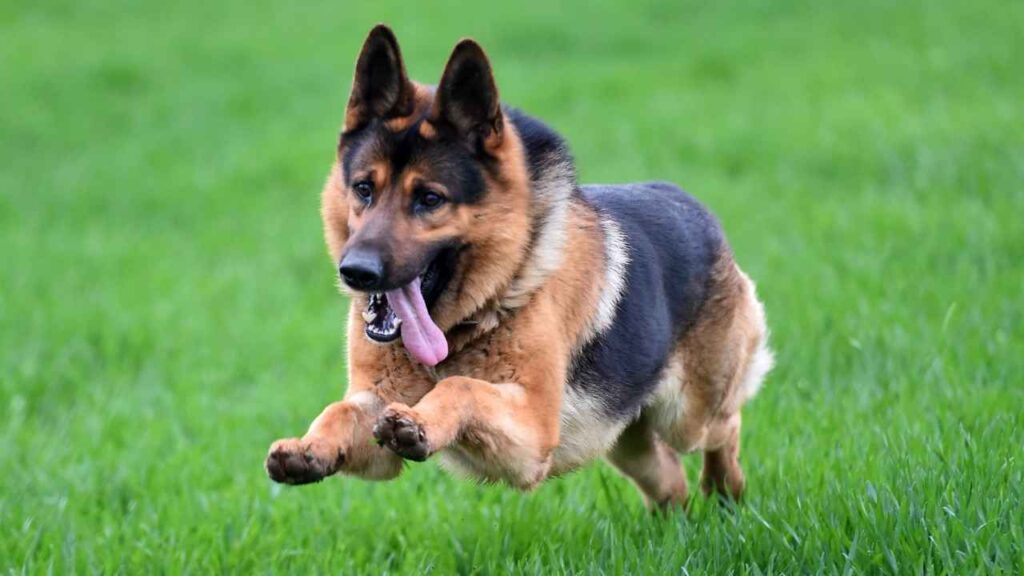
Living closely with the family plays a big role in how German Shepherds learn and respond. Daily exposure to household routines sharpens their awareness and cooperation. That closeness often turns training into a shared rhythm rather than a formal task.
Doberman Pinscher
Dobermans are highly trainable and quick learners with sharp responses, picking up commands with impressive speed. Without early structure, that intelligence can turn into pushy or destructive behavior. Puppy training and early socialization help keep their confidence well-directed.
Dobermans do best when learning happens inside the home rather than from a distance. Being raised alongside their people strengthens responsiveness and emotional balance. Training becomes smoother when trust and routine develop together.
Coat Maintenance
German Shepherd
German Shepherds wear a medium-length double coat that pairs a dense, protective outer layer with a soft, insulating undercoat. A few quick brush sessions each week are usually enough to keep loose hairs in check, but during seasonal sheds, stepping up grooming prevents stray hairs from taking over your furniture. Baths are occasional, letting the coat stay naturally resilient with minimal effort.
Doberman Pinscher
On the other hand, Doberman Pinschers keep things sleek with a short, glossy coat that responds well to a daily once-over with a soft brush or grooming mitt. This simple routine maintains shine and health without any heavy maintenance. As per PetMD, rare baths mean the Doberman stays polished and tidy while leaving owners plenty of extra free time.
Health & Lifespan
German Shepherds live around 12 to 14 years and thrive when bred responsibly with screened stock. They are prone to hip and elbow dysplasia as well as degenerative myelopathy, so early awareness is essential. Daily exercise, mental stimulation, and a structured routine help maintain their strength and prevent issues like bloat.
Recommended Health Tests – German Shepherds
Hip Evaluation
Elbow Evaluation
Temperament Test
Dobermans average 10 to 12 years and require careful monitoring of inherited conditions such as dilated cardiomyopathy, hip dysplasia, and von Willebrand’s disease.
Bloat is also a concern, making knowledge of symptoms and swift action critical. A consistent lifestyle with regular activity, mental engagement, and routine check-ups supports long-term wellness.
Recommended Health Tests – Dobermans
Hip Evaluation
Cardiac Exam
Ophthalmologist Evaluation
Thyroid Evaluation
Von Willebrand Disease I (VWDI) – DNA Test
Suitability of the Family Guard Dog Breed vs the Loyal Dog Breed
German Shepherds often feel like the ultimate all-rounder. They watch, they learn, and they react with purpose. Their natural alertness and intelligence make them excellent protectors, especially in homes where a watchful eye is valued.
Keeping them active and mentally engaged turns that vigilance into a reliable guard instinct rather than restless energy.
Doberman Pinschers might make you hesitate at first with their sleek, commanding presence, but look closer, and a loyal, affectionate companion emerges. Their energy is boundless, curiosity is constant, and their intelligence makes them eager to bond with the right person.
When given proper outlets for exercise and attention, Dobermans balance protective instincts with loving devotion.
Conclusion
German Shepherds and Dobermans may share a guardian label, but they live that role through very different temperaments and needs.
One thrives on structure, patience, and clear leadership, while the other depends on closeness, activity, and emotional connection.
Exercise demands, training style, health concerns, and family dynamics all shape which breed fits best.
When those details are respected, both dogs become steady protectors and devoted companions. The right choice is not about strength or appearance. It is about how well the dog’s instincts align with your time, energy, and expectations inside the home.
