




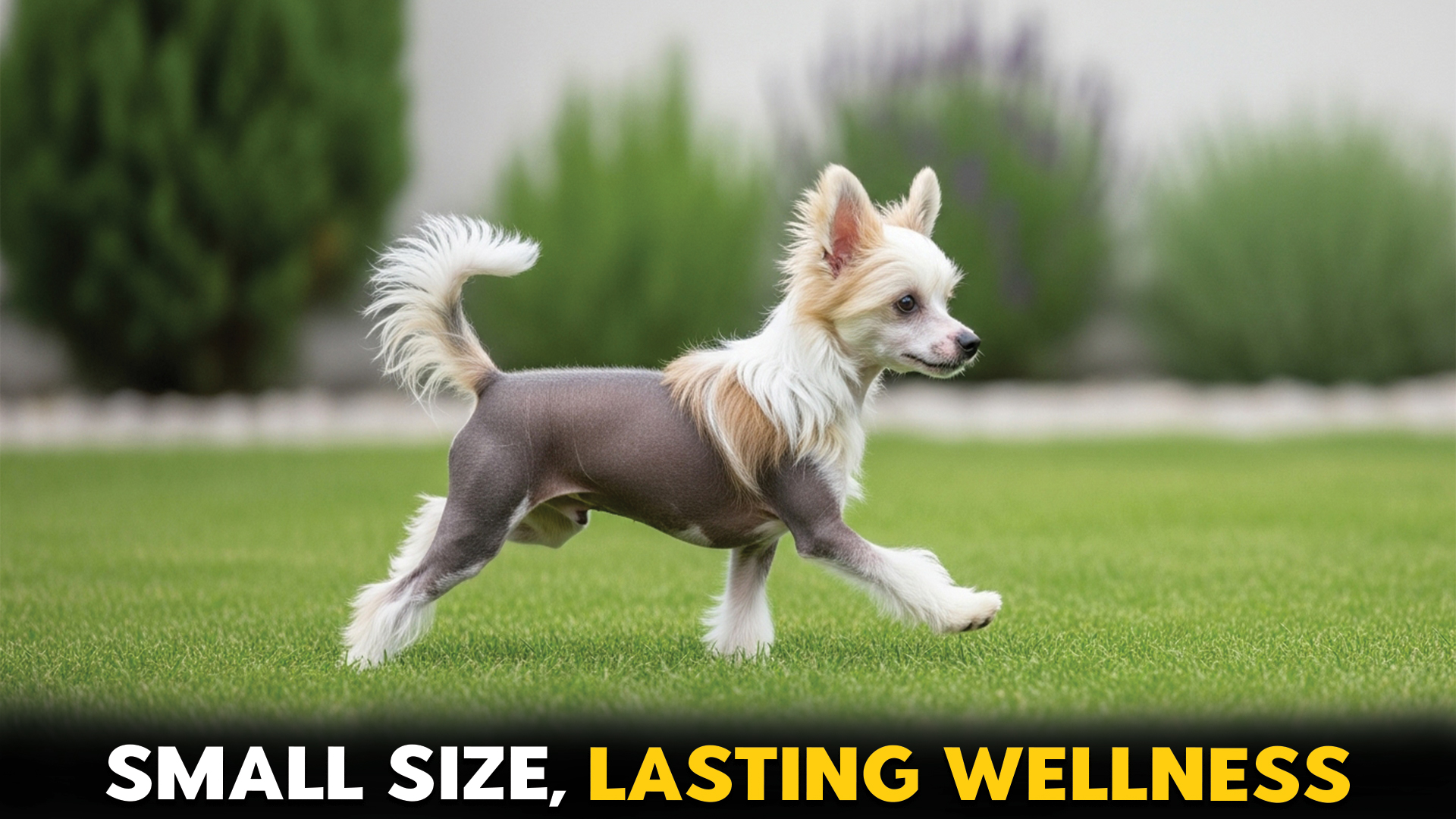
Looking for a furry friend who’s not only cute but built to stick around for the long haul? You’re not alone! When it comes to choosing a small dog, many people want more than just charm—they want a companion with solid health and a longer-than-average lifespan.
After all, who doesn’t want their four-legged buddy by their side for years of adventures, couch cuddles, and daily walks?
According to Hill’s Pet, smaller dog breeds tend to live significantly longer than larger ones—sometimes even twice as long! But longevity isn’t just about size; it’s also about genetics and how well certain breeds avoid common health pitfalls.
So, before you bring home your next best friend, it’s smart to think about more than just looks and personality. Choosing a dog with unusual long-lasting health can mean more happy years and fewer vet visits.
Ready to discover which small breeds are the real health champions? Let’s dive in and find your perfect lifelong companion!
Key Takeaways
Meet small breeds like the Chihuahua and Jack Russell that live way longer than you’d expect.
Discover why Dachshunds and Miniature Schnauzers need extra care to stay healthy.
Learn how genetics and lifestyle shape your pup’s long-term health.
Find easy tips to help your small dog live a happy, long life.
Small Dog Breeds with Unusual Long-Lasting Health
1. Chinese Crested

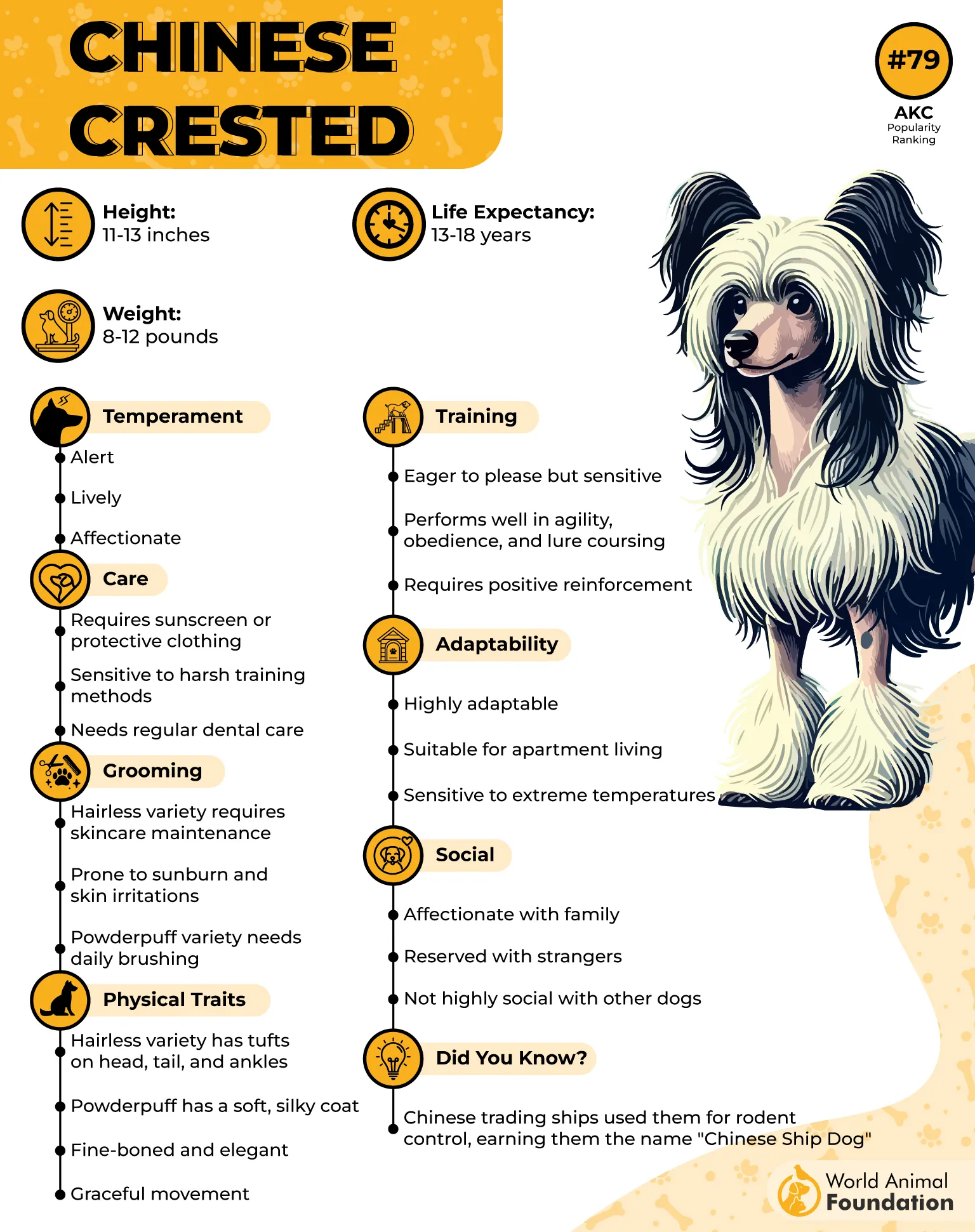
The Chinese Crested is a small companion dog with an affectionate temperament. It is known for being friendly and people-loving. One of its most notable traits is its long lifespan. Most Chinese Cresteds live between 13 and 18 years, which is considered unusually long for dogs.
Health Conditions to Know
Chinese Cresteds are generally healthy dogs. However, they can be prone to a few health issues. These include eye problems, luxating patella, and epilepsy.
Most of these conditions are common in other small breeds as well. Regular vet checkups and a healthy lifestyle can help lower the risk of these problems.
Coat Type and Special Care
This breed comes in two varieties: hairless and full-coated. The hairless variety is often chosen by people with allergies. Because of their exposed skin, hairless Chinese Cresteds need extra care. They can be sensitive to both hot and cold temperatures.
Overall, these little dogs do not carry many genetic abnormalities in their breeding lines, which supports their long and healthy lives.
2. Jack Russell Terrier

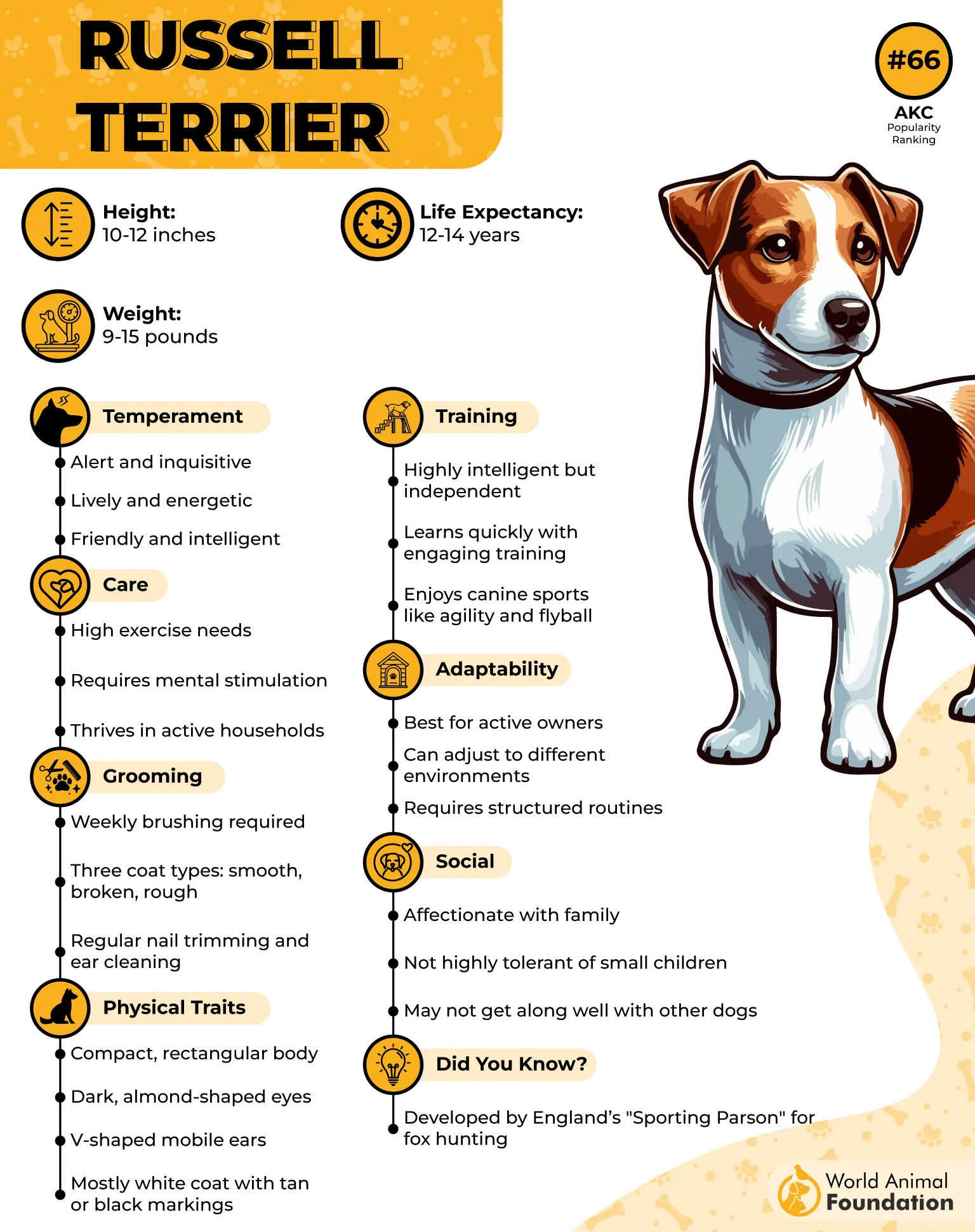
The Jack Russell Terrier, also known as the Parson Russell Terrier, is a small dog with an impressive lifespan. Many live between 13 and 16 years. Some even live longer.
According to this Quora thread, the oldest Jack Russell was a dog named Willie, who lived to be 20 years old and passed away in 2014. The breed was originally bred in England nearly 200 years ago to hunt small game and foxes.
Personality and Energy Levels
Jack Russells are smart, bold, and outgoing dogs. They are alert, confident, and always ready for fun. Bred as working dogs, they still retain a strong drive and very high energy.
These dogs love the outdoors and enjoy activities like hiking, agility training, flyball, and nose work. Because of their energy needs, they may not be the best choice for apartment life or city living.
Health and Physical Strain
Being so active comes with some health considerations. Jack Russell Terriers can develop conditions such as patellar luxation and arthritis over time.
These issues are often linked to their constant movement and high activity levels. With proper exercise, routine checkups, and good care, many Jack Russells remain an active and highly trainable companion dog long into old age.
3. Chihuahua

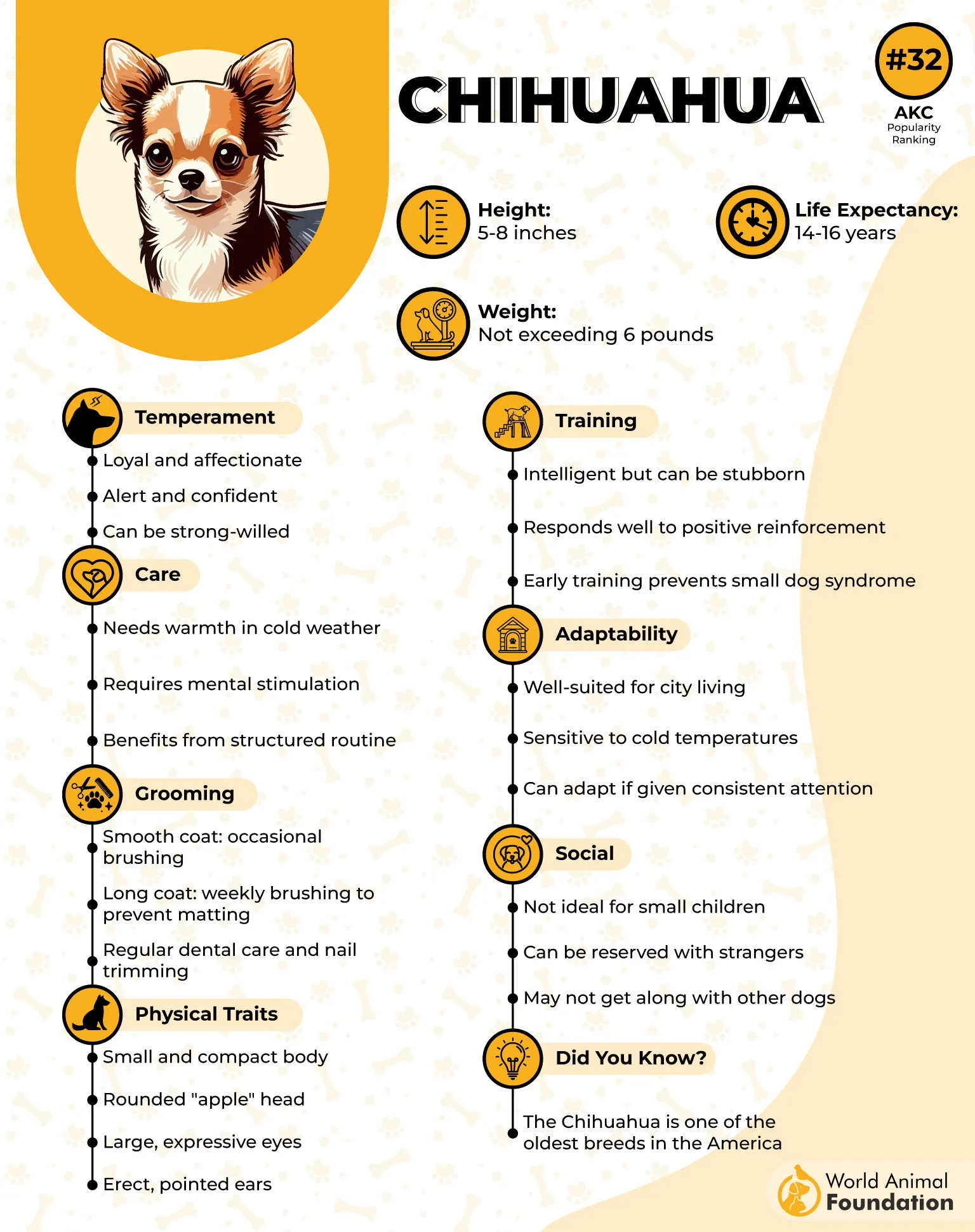
Chihuahuas originated in Mexico and are the world’s smallest dog breed. They are also one of the longest-living dog breeds. Many Chihuahuas live past 15 years, and some reach 18 to 20 years of age.
One Chihuahua named Megabyte lived to 20 years and 265 days and was recorded as the oldest of the breed at the time of his death in 2014.
Personality and Daily Life
Chihuahuas are alert, lively, and often sassy dogs. They are exceptionally loyal and deeply attached to their pet parents but may be reserved around strangers. Despite their tiny size, they are confident and energetic, and make great family dogs.
They are intelligent, entertaining, and can do well with gentle and patient children. Chihuahuas are mostly indoor dogs and were bred for warm weather, so they do not tolerate cold temperatures well. Both short-hair and long-hair varieties exist.
Health, Exercise, and Care
Chihuahuas are considered hardy and are among the healthiest dog breeds. However, they can develop health issues over their long lives. Common concerns include patellar luxation, heart disease, and obesity. Because they are prone to weight gain, portion control is important.
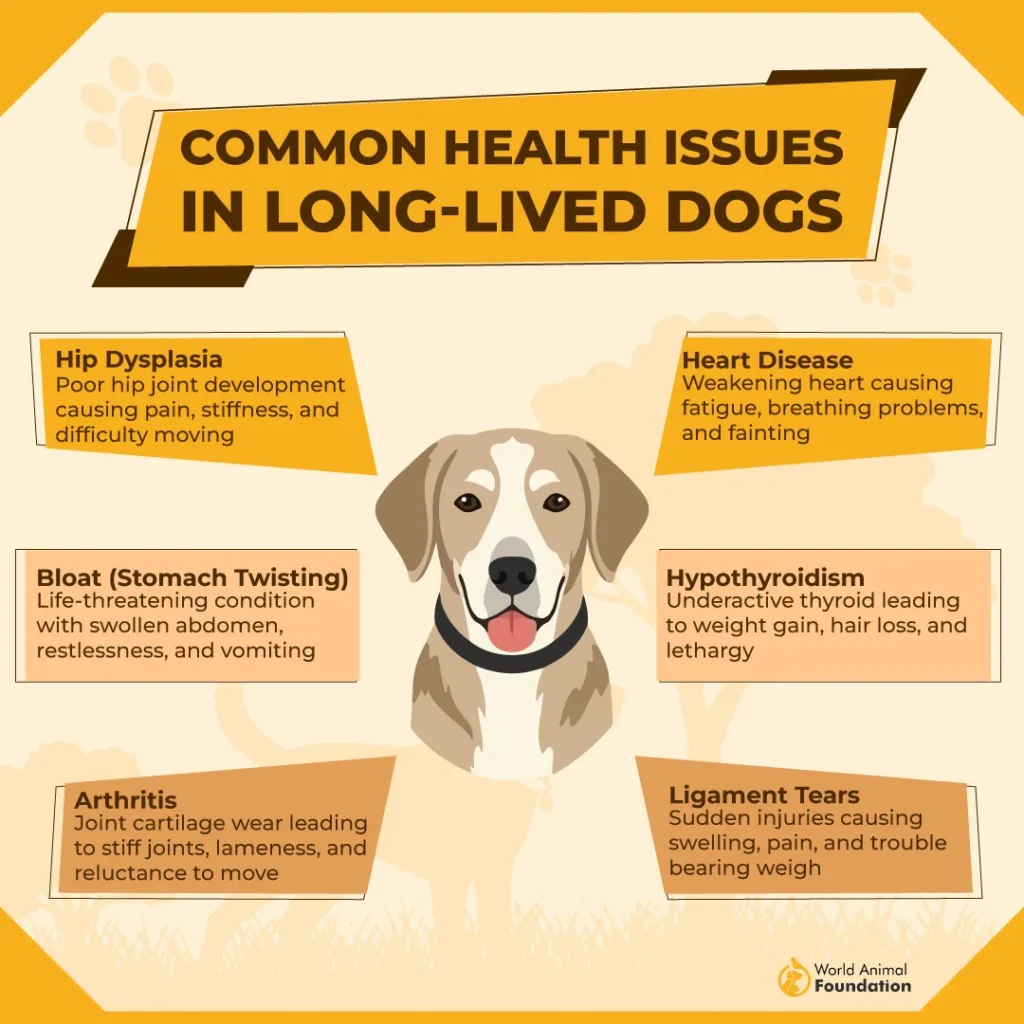
While they do not need much exercise, daily movement and mental stimulation are necessary for this toy dog breed. Simple activities like indoor play or a short walk help reduce strain on their joints and support healthy aging.
4. Dachshund
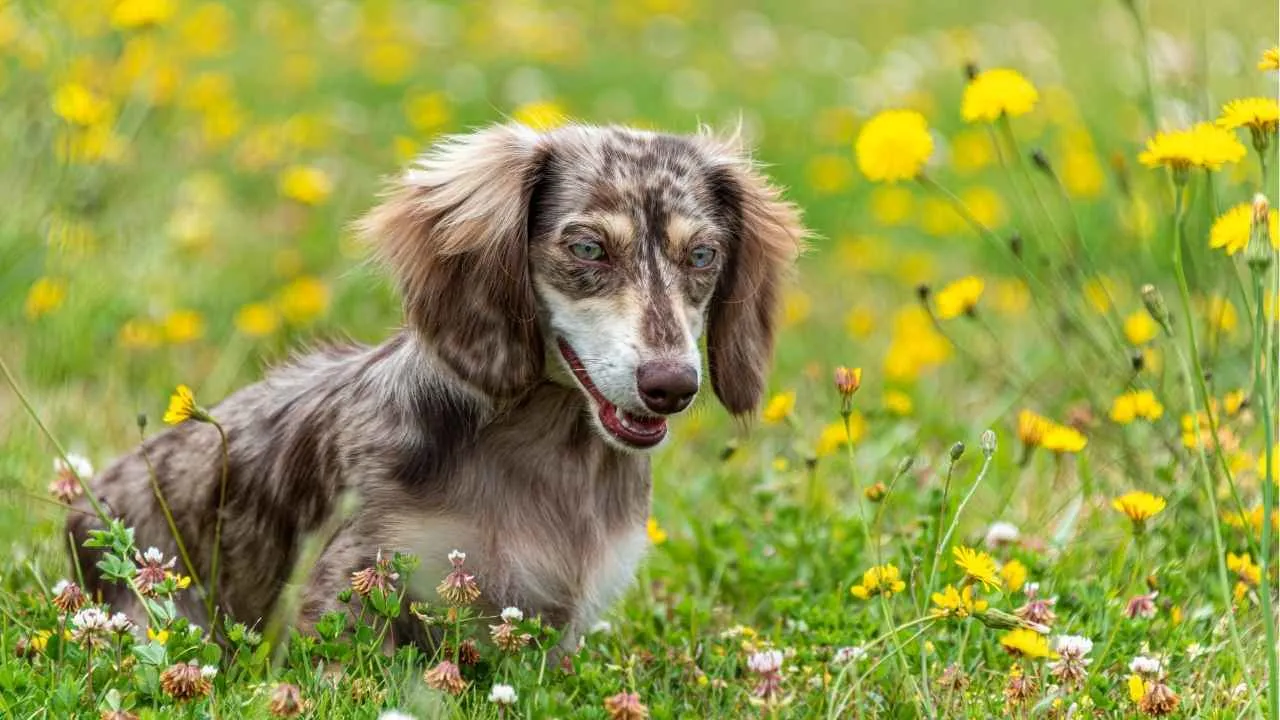
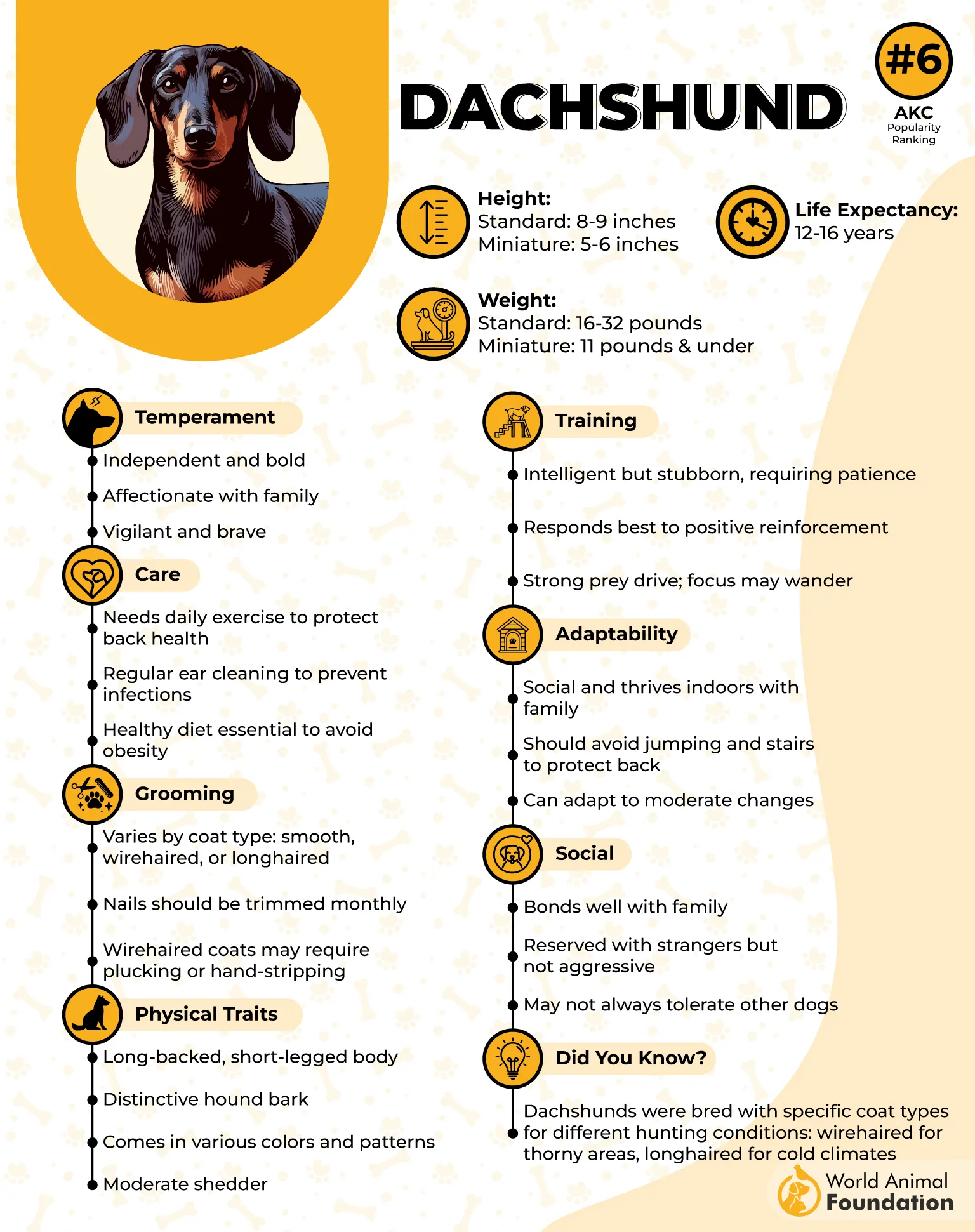
Dachshunds are long-bodied dogs often called “wiener dogs” or “hot dogs.” They were developed in Germany around 600 years ago to hunt badgers, which is where their name comes from. Despite their small size, they are muscular and energetic. It is not uncommon to meet a Dachshund over 15 years old.
Personality and Popularity
Dachshunds are spunky, playful, and full of personality. They are known to be stubborn at times, but are usually very fun to be around. Their independence and bold curiosity are part of their charm. They have three coat types: smooth, wirehaired, and longhaired.
According to the American Kennel Club, Dachshunds are currently the sixth most popular dog breed, across both standard and miniature sizes and all coat varieties.
Health and Special Care
A Dachshund’s long back puts extra strain on its spine. As they age, they can develop back injuries or intervertebral disc disease (IVDD). Obesity can make these problems worse.
Dachshunds love to eat, so weight control is very important. Even a few extra pounds can increase the risk of lower-back injury. Keeping them fit and at a healthy weight helps support their short legs and long spine over time.
5. Yorkshire Terrier

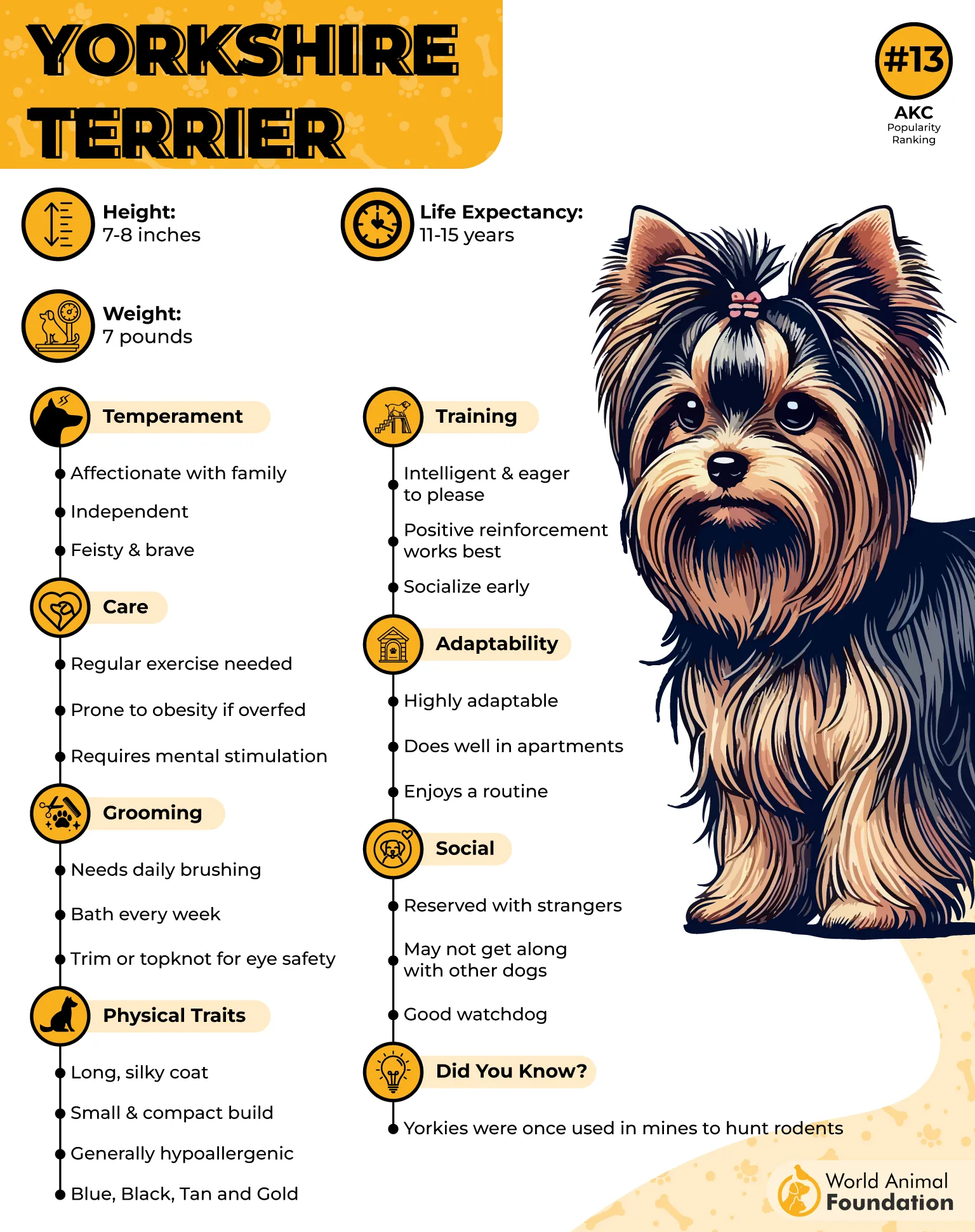
Yorkshire Terriers, often called Yorkies, are one of the longest-living small dog breeds. Many live between 13 and 15 years, and some live even longer.
With proper healthcare, including regular veterinary visits and dental cleanings, Yorkies often enjoy long lives. The breed originated in England, where it was first used to catch rats in clothing mills before becoming popular with aristocrats.
Personality and Temperament
Yorkies are affectionate, bold, and curious dogs with big personalities. They are brave, inquisitive, and energetic. While loyal and loving with their families, they are not quiet lap dogs. Terrier instincts give them strong guarding behavior and a vocal nature.
Yorkies can be stubborn, mischievous, and easily bored, often creating their own entertainment. They are also intelligent, eager to please, and highly food-motivated, which helps with training.
Health and Ongoing Care
Yorkshire Terriers are considered a fairly healthy breed, but they are prone to some health issues. Common concerns include patellar luxation, tracheal collapse, and Legg-Calvé-Perthes disease.
Veterinarians may perform knee and hip tests to help identify problems early. Because of their delicate build, careful handling and routine health monitoring are important.
6. Miniature Schnauzer
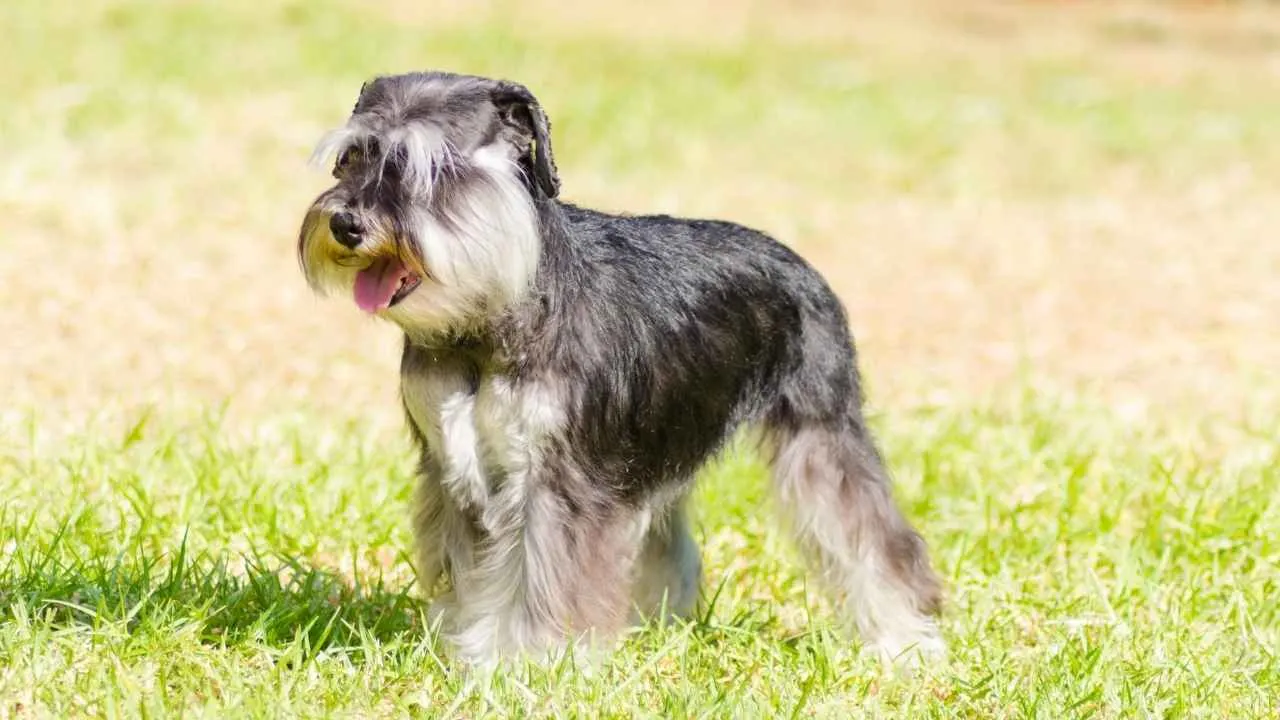
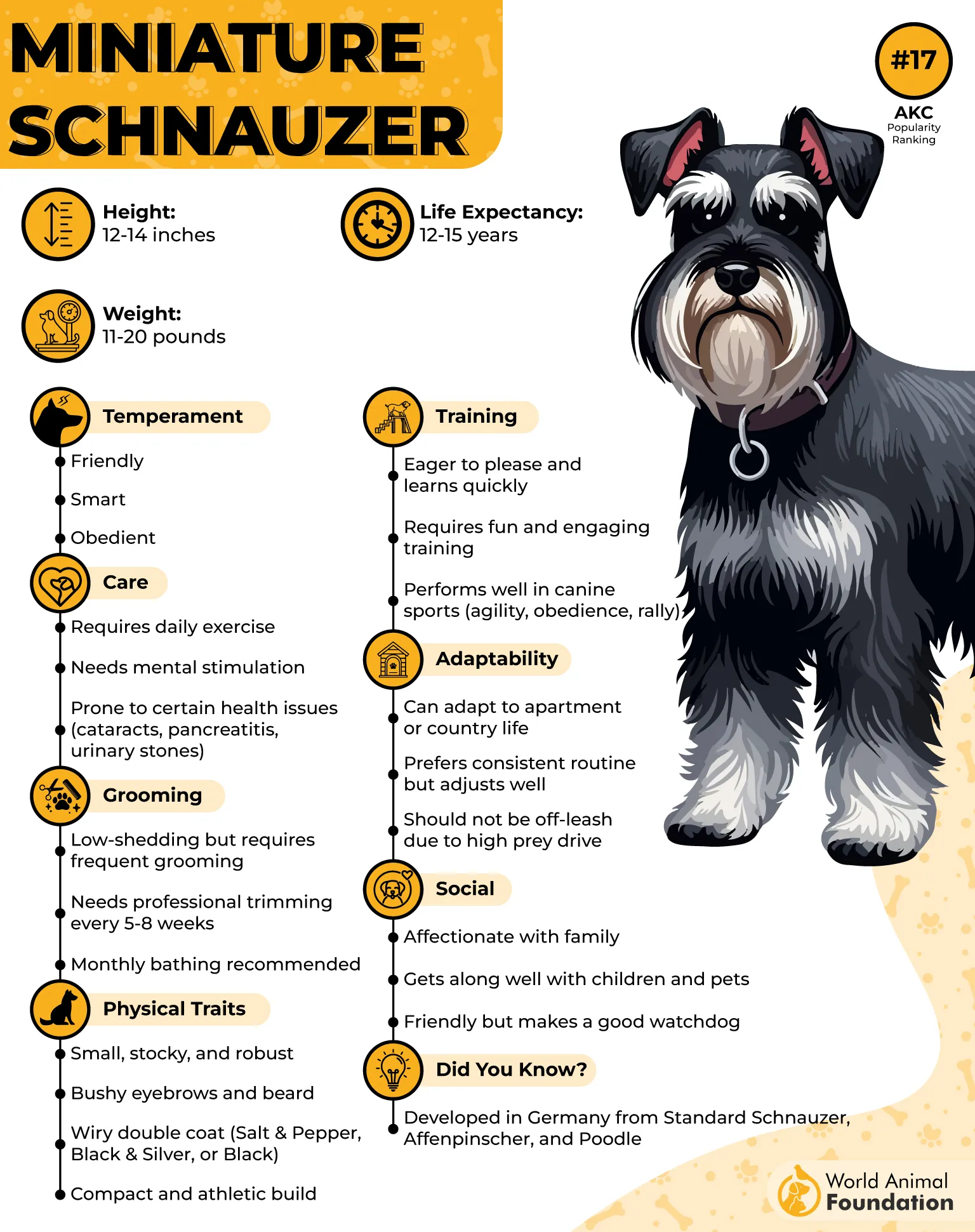
Miniature Schnauzers are the smallest members of the Schnauzer family. They are the longest-living of the three Schnauzer types. On average, they live between 12 and 15 years.
These bearded dogs are known for their expressive faces and sturdy build. They adapt well to different living environments, including apartments.
Personality and Daily Life
Miniature Schnauzers are spunky, intelligent, and affectionate. They enjoy daily walks, indoor play, and spending time with their families. They can be stubborn but respond well to proper training and early socialization.
These dogs are alert and make good watchdogs. They enjoy interactive play and do well with families, children, and solo owners alike.
Health and Care Needs
Miniature Schnauzers are generally healthy and have few genetic health issues. However, they need help maintaining a healthy average weight. Obesity can increase the risk of diabetes mellitus.
They can also develop conditions such as pancreatitis, bladder stones, and skin problems like Schnauzer comedo syndrome. Regular grooming and routine vet care are important to keep their coats and overall health in good condition.
7. Miniature Pinscher

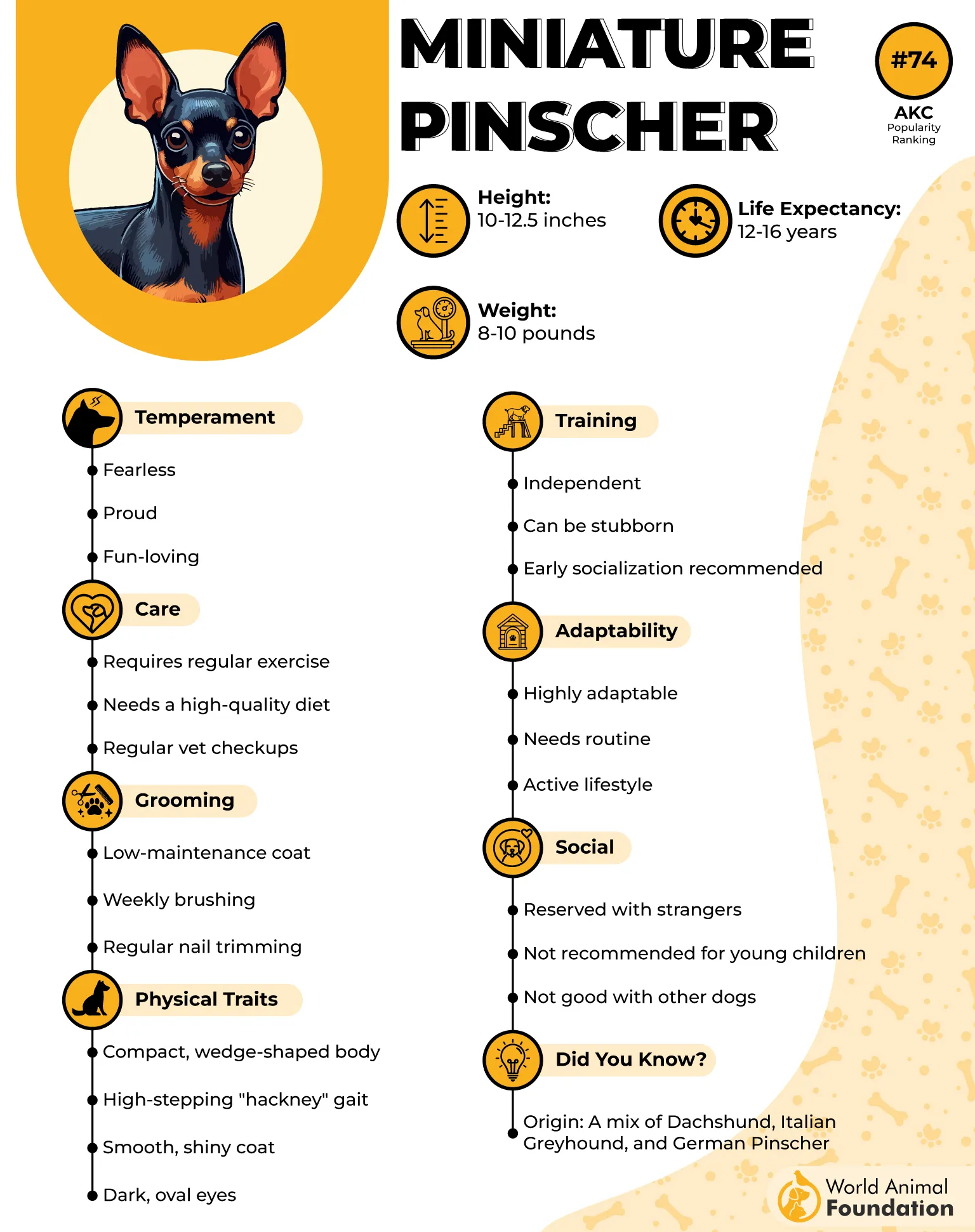
Miniature Pinschers, often called “Min Pins,” are small dogs with big personalities. They are not miniature Dobermans, though they look similar.
According to the Miniature Pinscher Club of America, the breed likely came from crossing Dachshunds with Italian Greyhounds. Min Pins typically live up to 16 years, which is a long lifespan for a small dog.
Personality and Temperament
Min Pins are fearless, fun-loving, and feisty. They have a distinctive high-stepping, prancing gait. These toy dogs are protective of their home and family.
While affectionate and devoted, they may not always tolerate very active or noisy children. Their bold and curious temperament makes them playful and cuddly companions.
Health and Care
Miniature Pinschers can be prone to several health issues. These include patellar luxation, hypothyroidism, progressive retinal atrophy, and heart defects.
Regular veterinary care and early health screenings are important to manage these risks. With proper care, Min Pins often enjoy many healthy years with their families.
Conclusion
Choosing a small dog with long-lasting health means more years of joy, companionship, and adventures together. While no breed is perfect, understanding their unique traits and potential health needs can help you find a furry friend who fits your lifestyle and brings happiness for many years to come.
Remember, adopting or buying a dog is a big commitment—but it’s also one of the most rewarding decisions you’ll make. By prioritizing health and care, you’re setting the stage for a strong bond that grows deeper over time.
So take your time, do your research, and get ready to welcome a lively, loving companion into your life. They’re waiting to steal your heart.
