




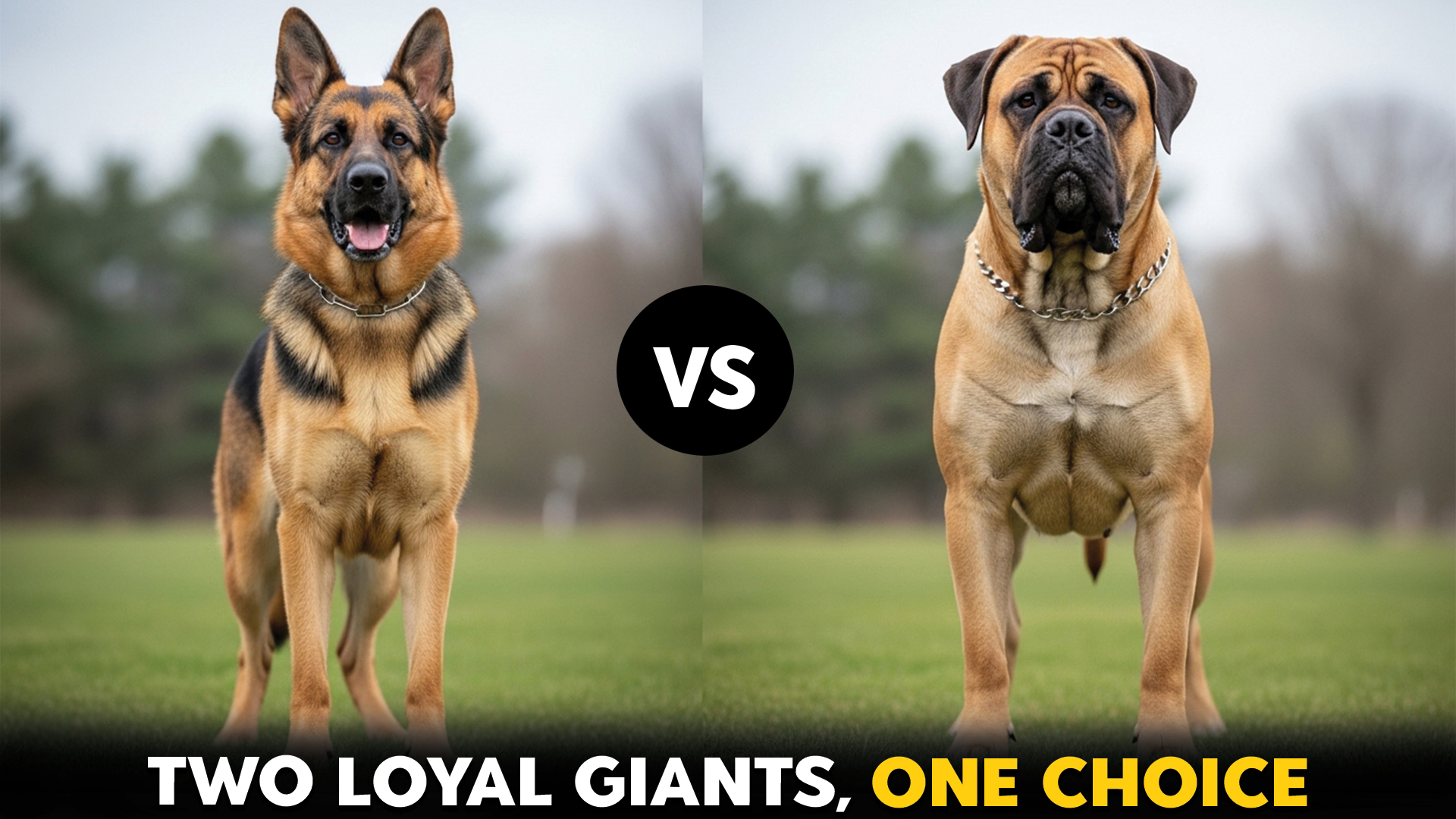
Choosing a new four-legged family member is a big decision, especially when you are looking at two iconic guardians in the canine world. If you’ve narrowed your search to the German Shepherd and the Bullmastiff, you clearly value loyalty, strength, and presence.
While both dogs are famous for their protective nature, they differ in daily energy, training needs, and historical roots.
In this deep dive, we’ll break down everything you need to know about these two best dog breeds. Whether you want an active partner for runs or a steady presence at home, this comparison will help you choose the right companion.
German Shepherd vs. Bullmastiff: Comparing Two Loyal Dog Breeds
At first glance, these two dogs represent different philosophies of “the working dog.” The German Shepherd, often known in Britain as an Alsatian, is a medium-to-large powerhouse of versatility. Originally bred for the high-intensity work of herding sheep in Germany, this breed has evolved into the “Swiss Army Knife” of dogs, serving in everything from search-and-rescue to police work.
On the other side of the ring, we have the Bullmastiff. This is a dog built for pure, unadulterated strength. Known as a “silent guardian,” the Bullmastiff was designed for security. While the Shepherd is agile and vocal, the Bullmastiff is compact, symmetrical, and incredibly solid.
Bullmastiffs are heavy-boned and powerful, but don’t let that tough exterior fool you; they are often described as “gentle giants” when they are off the clock and relaxing with their favorite humans.
Origin & Historical Background
The German Shepherd was developed in 1899 by Max von Stephanitz, who wanted to create the ultimate working dog by crossing traditional German herding breeds. Their intelligence and bravery earned international recognition after World War I.
By 2016, they became the second most popular breed in the U.S., inspiring new variations like the King Shepherd, a mix of German Shepherds and Shiloh Shepherds.
The Bullmastiff’s roots go back to 18th-century England, where gamekeepers needed a dog to catch poachers at night without causing serious harm. By crossing the massive English Mastiff with the tough Bulldog, they created the “Gamekeeper’s Night Dog.”
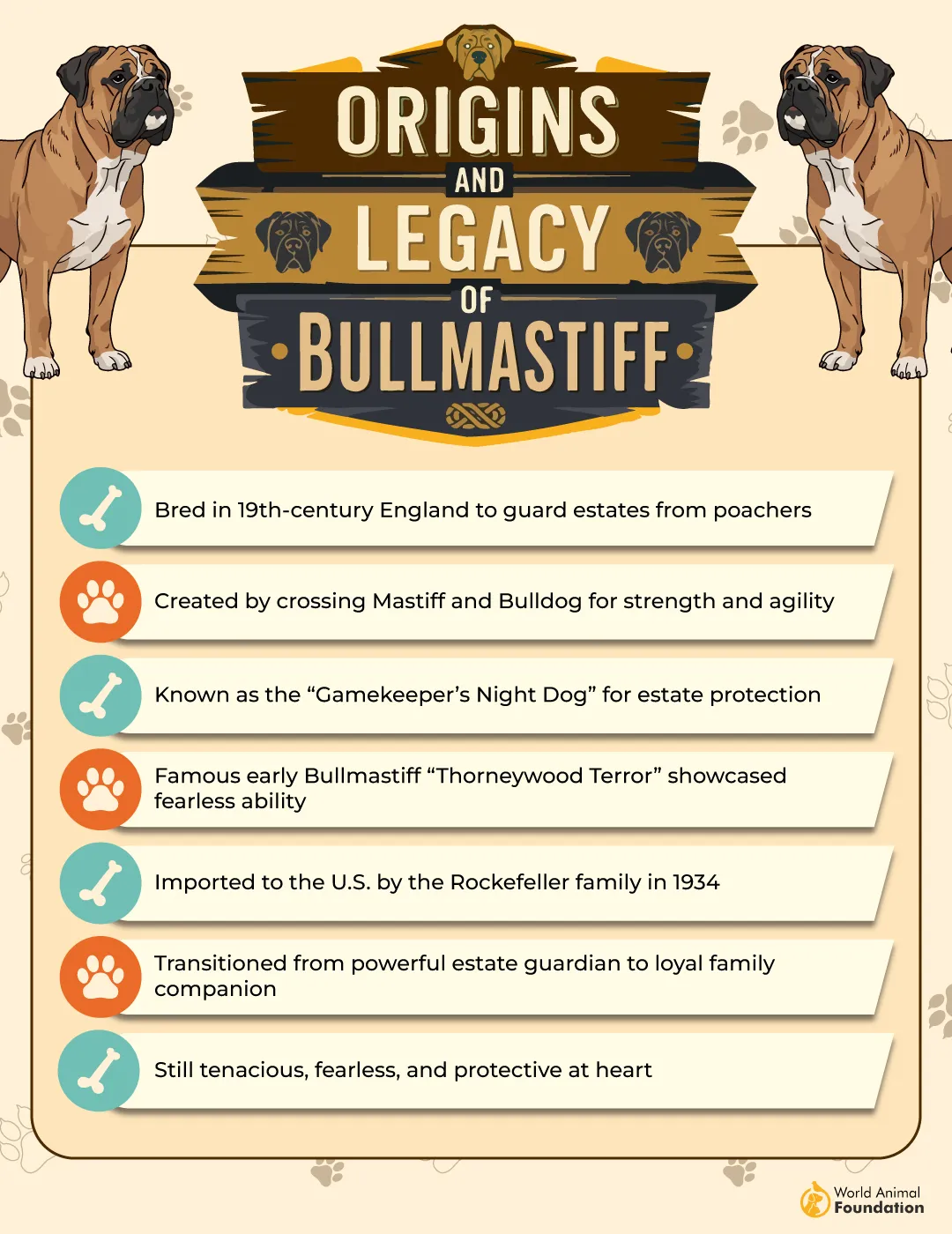
Officially recognized in 1924, Bullmastiffs may no longer patrol forests, but their instinct to guard property remains strong.
Size, Build & Physical Structure Comparison
The German Shepherd is the athlete. Their build is large and muscular, but always agile. They are actually longer than they are tall, which gives them that iconic ground-covering gait. One thing you’ll notice is the “sloped back” in show lines, whereas working lines usually maintain a straighter, more traditional back.
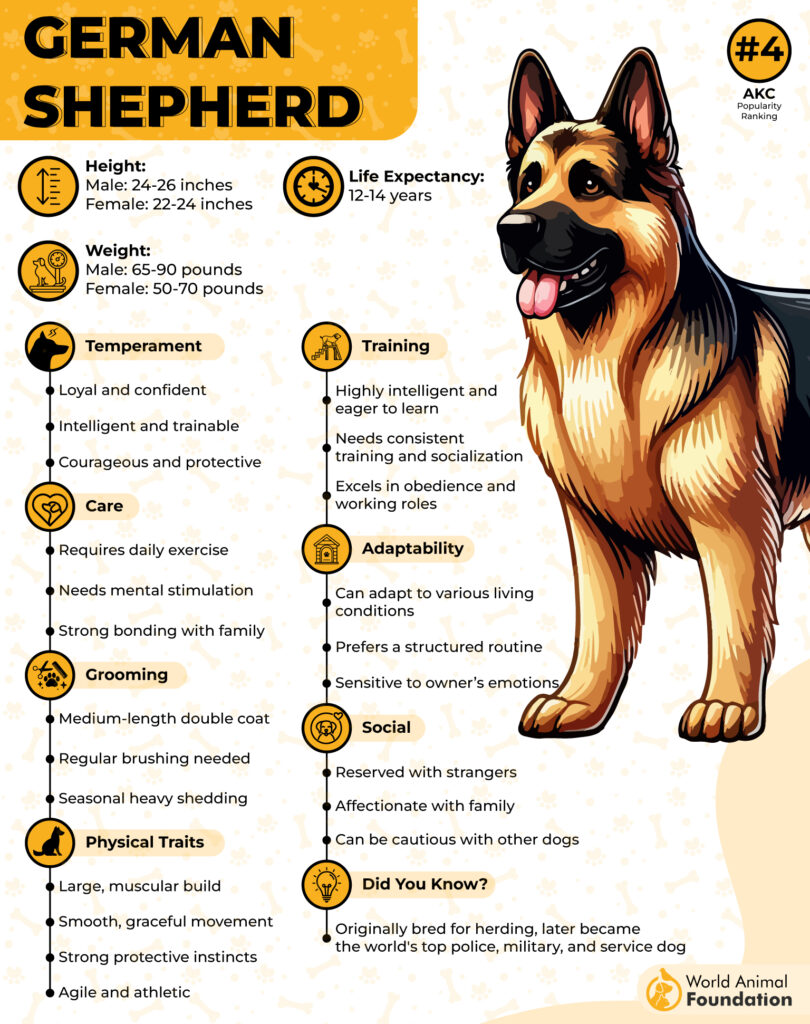
The Head: It is strong and perfectly proportionate to the body, carrying an expression that is both intensely intelligent and always alert.
The Ears: These are perhaps their most famous feature, erect, triangular, and standing tall to catch every stray sound in the environment.
The Muzzle: They possess a strong, elongated muzzle with a prominent black nose, designed for both heavy breathing during work and precise scenting.
The Tail: A bushy, “plume-like” tail that carries a slight curve, which becomes much more distinct and expressive when they are excited or on duty.
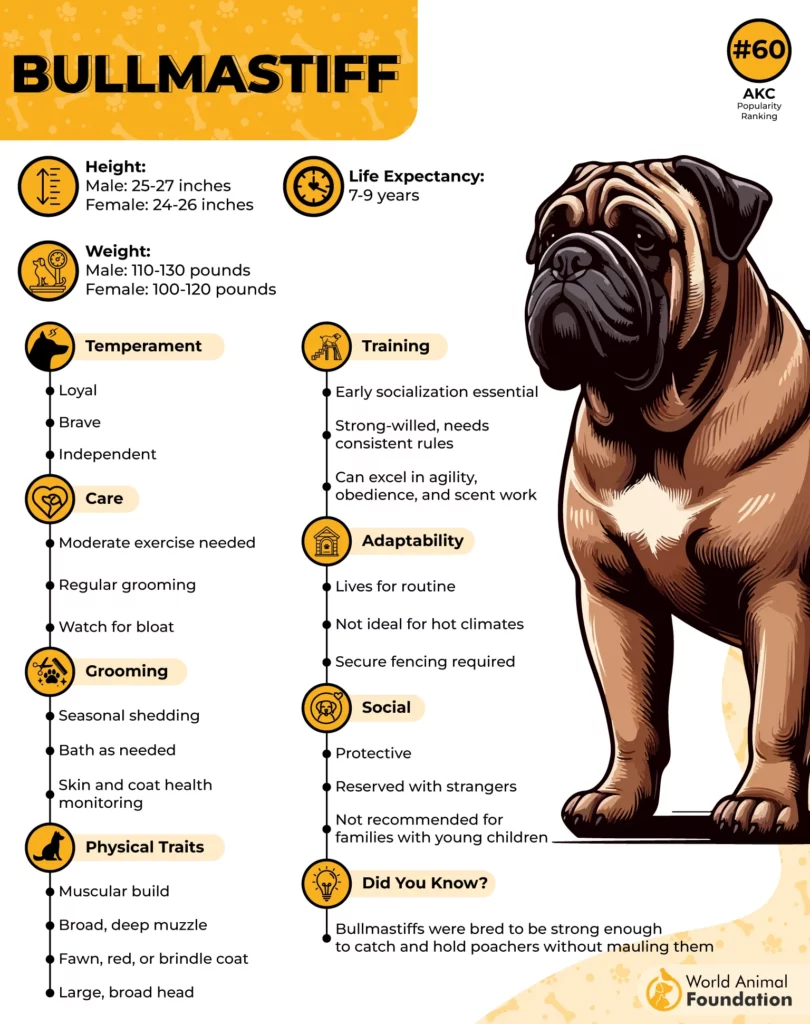
The Bullmastiff, meanwhile, is built like a tank. They are compact and square-shaped, with a heavy-boned body that is muscular but never looks clumsy.
Temperament & Personality Traits
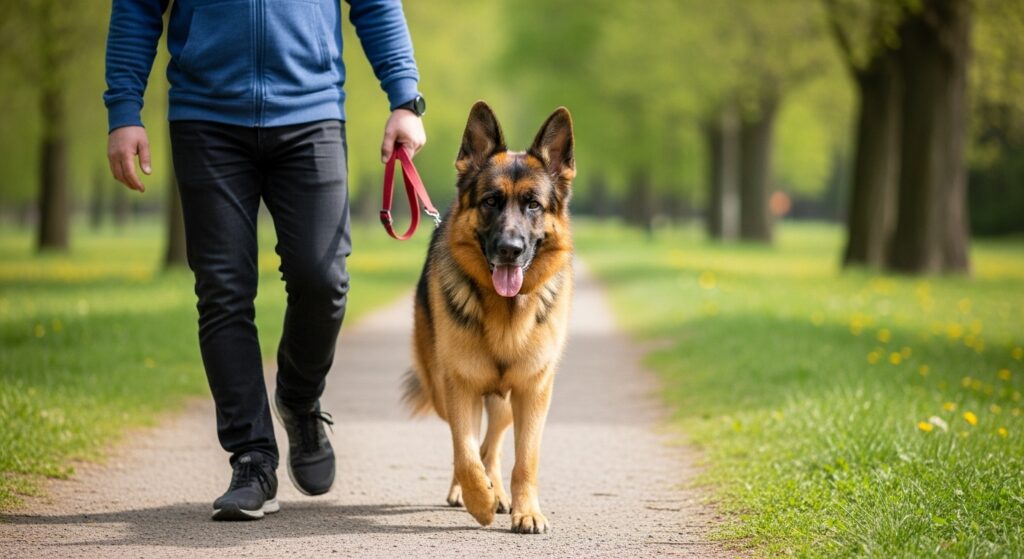
The German Shepherd is a loyal companion that thrives on attention. These family dogs love being part of every family activity, from hikes to couch time. Their protective nature can make them cautious with strangers, as they like to “vet” newcomers before fully accepting them.
Bullmastiffs bring a calmer type of companionship, being fearless when needed but gentle at home. They are patient, sweet, and rarely provoked, though they can be reserved around unfamiliar people or dogs. Always aware of their surroundings, they make dependable, attentive family guardians. Overall, Bullmastiffs are also excellent family dogs to have.
Exercise Needs & Energy Levels
German Shepherds are high-energy dogs. They don’t just want exercise; they need it to stay mentally healthy. This includes daily walks, runs, and play sessions. If you don’t give a Shepherd a job to do, like agility, tracking, or competitive obedience, they might start finding their own “jobs,” like redecorating your couch with their teeth. GSD’s also excel in various dog sports.
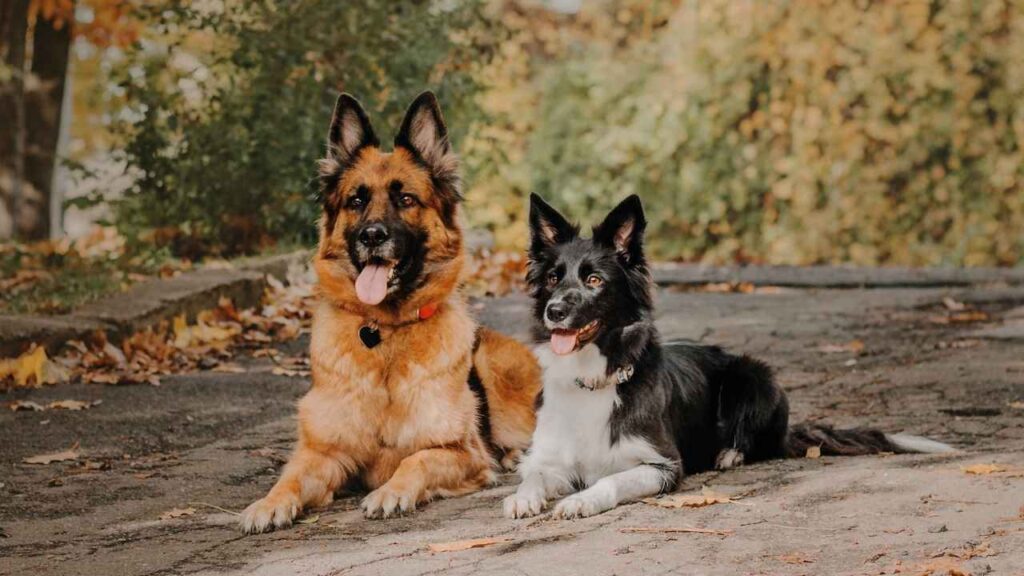
Hills Pet notes that Bullmastiffs are much more laid back. A moderate daily walk and some outdoor playtime are usually enough to keep them happy. While they aren’t exactly “lazy,” they definitely don’t make good running partners for long-distance joggers.
In fact, you have to be careful with Bullmastiff puppies; exercising them too much during their rapid growth stages can actually cause long-term health problems.
Intelligence, Trainability & Work Potential
The German Shepherd is highly intelligent and quick to learn. These smart dogs respond best to reward-based training and instructions delivered in a firm, calm tone.
This is why you see them in so many high-stakes roles like disability assistance, search-and-rescue, and police dogs.
Bullmastiffs are also smart, but they have a bit of a “stubborn” side, as mentioned by WebMD. They are strong-willed, especially as puppies, so they need a trainer who is firm but gentle.
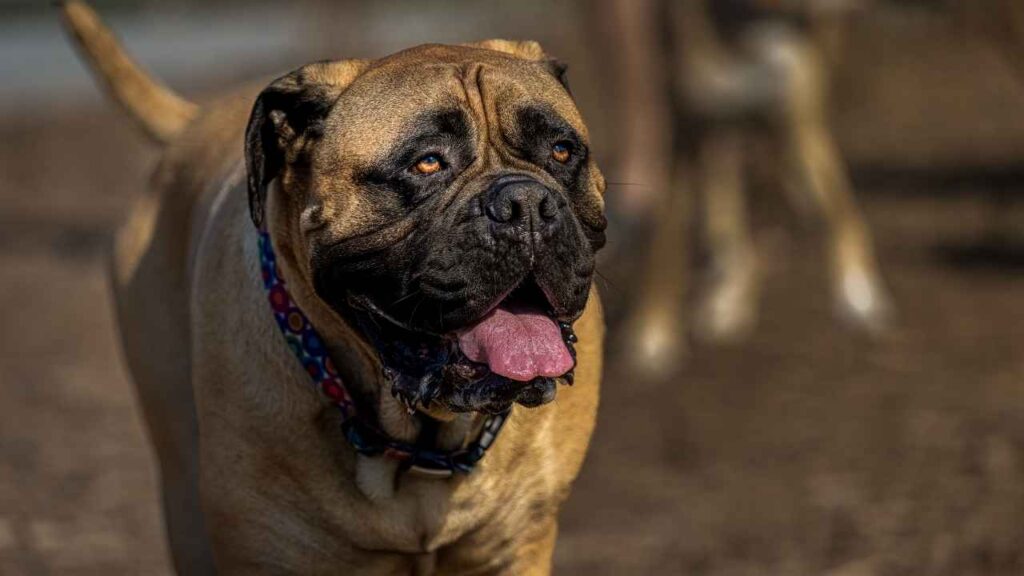
They won’t just do something because you asked; they like to see the value in it. That said, they respond well to rewards and are pros at obedience and scent-tracking exercises.
Protective Instincts & Guarding Style
The German Shepherd is a proactive guardian. Because they were bred as herding dogs, they view the family as their “pack.” Their guarding instinct is built into their DNA. These guard dogs are naturally alert and will use their voice and presence to detect and deter threats before they even get close.
The Bullmastiff is the best guard dog as they have a very specific guarding sequence. First, they run up to the suspicious person. Next, they slam their front feet into the ground to take a stand. A growl or bark follows, using their massive size as a threat.
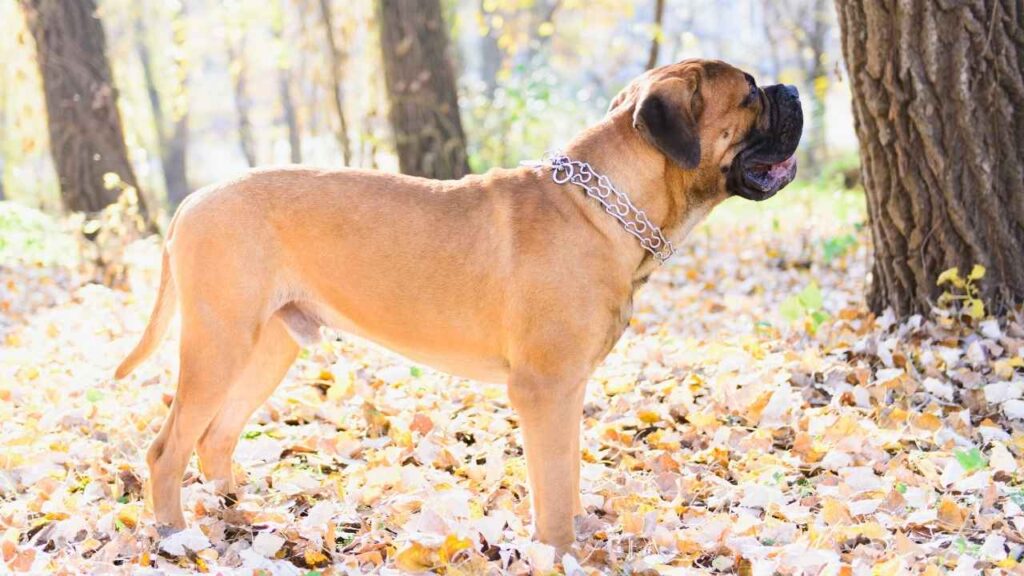
These pups prefer to evaluate the situation before taking action. Bullmastiffs often use their weight to shove or pin an intruder. Biting is actually their last resort.
Coat Type, Shedding & Grooming Requirements
If you get a German Shepherd, you’re going to see a lot of fur. They have two varieties: the double coat and the long, harsh outer coat.
Both have an undercoat that sheds year-round, with heavy “blowouts” twice a year. You’ll need to brush them every few days to keep the hair from taking over your home.
Bullmastiffs are much lower maintenance in the hair department. Their coat is short, straight, and coarse, so minimal grooming is required.
However, they bring a different challenge: drool. You’ll also need to keep their facial wrinkles clean and dry to avoid irritation. They do shed seasonally, but it’s much more manageable than the Shepherd.
Health Concerns & Average Lifespan
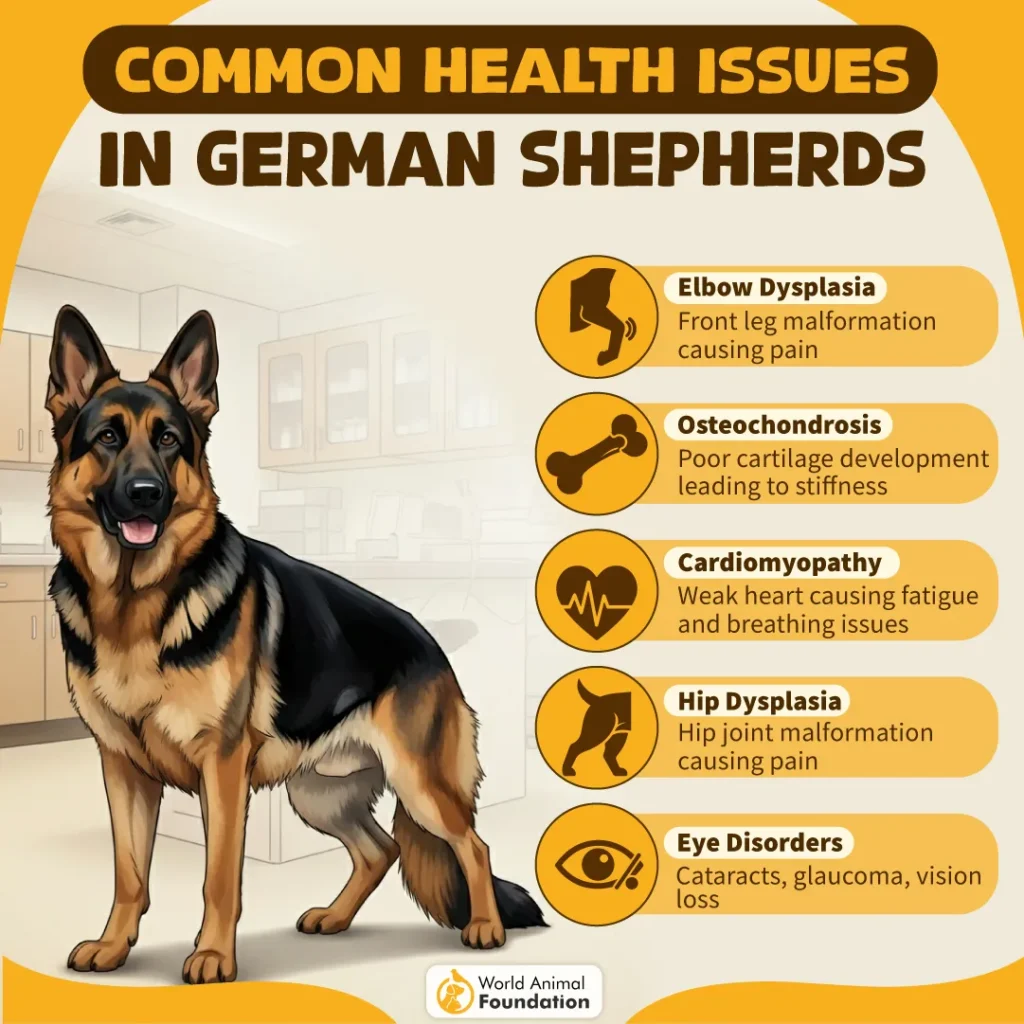
According to PetMD, German Shepherds typically live 7–10 years. Moreover, German Shepherds are prone to several health problems, so pet insurance is a smart investment.
Bullmastiffs have a lifespan of about 7–9 years. While they are generally healthy, their large size makes them prone to certain issues, so finding a reputable breeder who screens for genetic health is essential.
Suitability for Families, Guard Duty & Living Conditions
The German Shepherd is perfect for active families who want a dog that can participate in every adventure. They need space to run and a family that is dedicated to constant training. They thrive when they have a job to do and a “pack” to protect.
The Bullmastiff is actually a surprisingly good “big dog” for diverse living conditions, provided they get their daily walks. Because they are so calm indoors, they are wonderful family protectors for those who want a “silent” guardian rather than a vocal one. They are sweet with children but need early socialization to handle strangers properly.
Final Verdict
At the end of the day, both the German Shepherd and the Bullmastiff are elite examples of canine loyalty. Choose the German Shepherd if you want an intelligent, high-energy partner who will challenge you and stay by your side through every hike and training session.
Go for the Bullmastiff if you prefer a steady, powerful, and gentle-natured protector who is just as happy napping at your feet as they are guarding your front door. Both dogs will give you their whole hearts; you just have to decide which lifestyle fits yours!
