




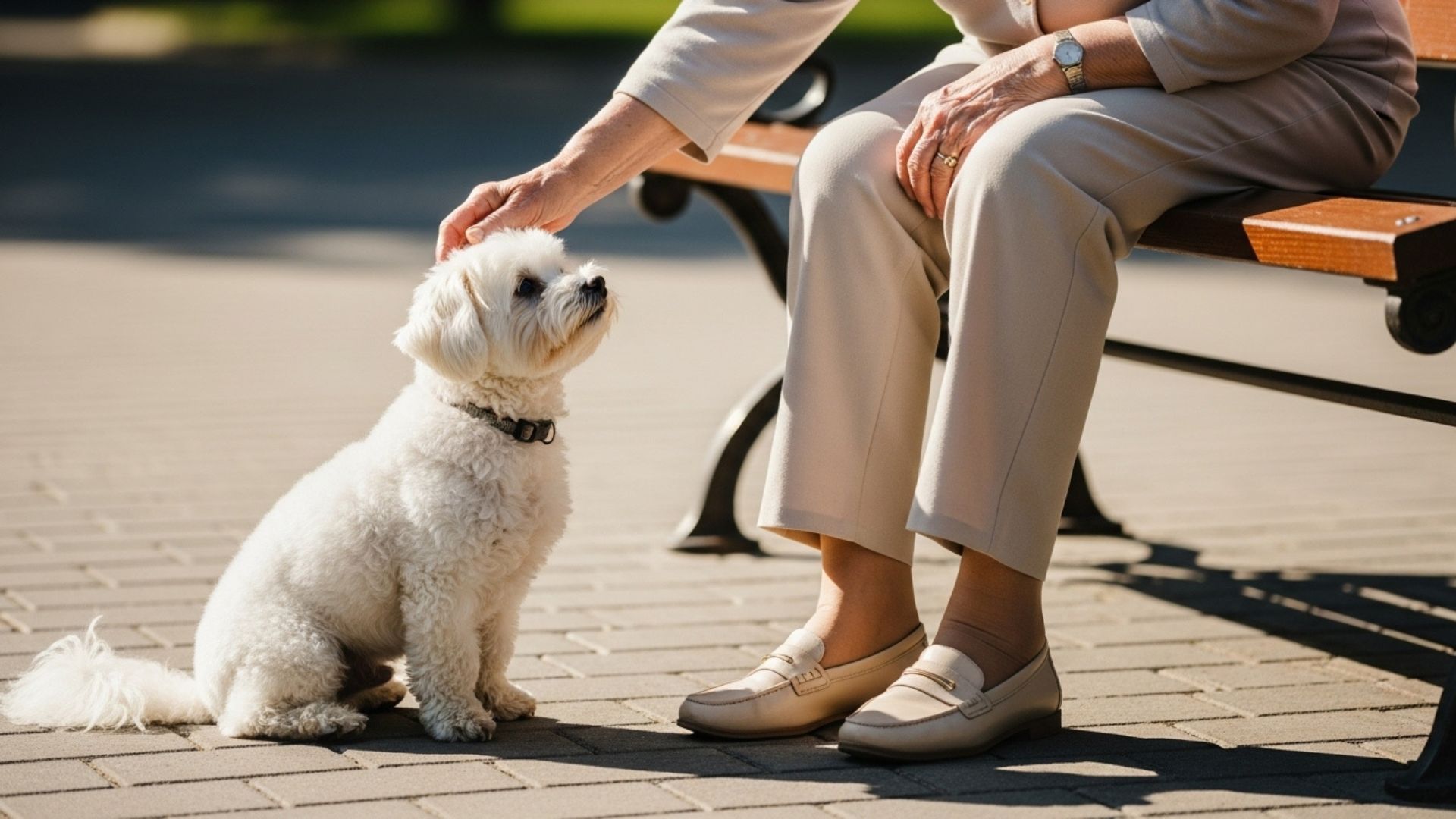
Small paws can bring big comfort when life slows down a bit.
For many older adults, a pet can turn quiet hours into better days. The best match is a dog that fits your living situation, respects mobility issues, and matches your energy level.
If larger breeds feel heavy, smaller breeds can be safer to lift and easier to travel with. This blog will focus on senior dogs with friendly manners and low-maintenance routines that support pet ownership.
You will see why these dog breeds for seniors are often gentle lap dogs and great companions for older adults who want simple dog ownership.
The best dog breeds feel like a calm, yes, not a daily struggle for any dog lover.
Ideal Pocket-Sized Dog Breeds for Seniors
1. Bichon Frise
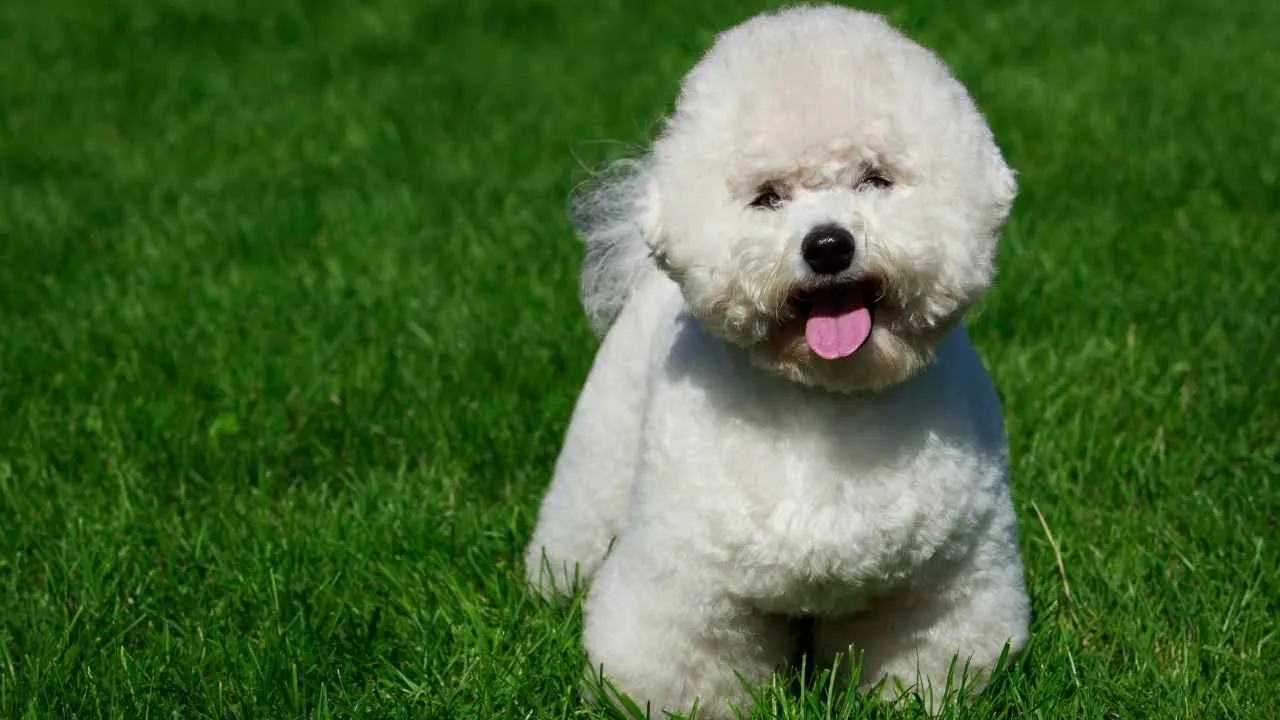
A cloud-soft buddy with a cheerful heart
The Bichon Frise is one of those charming dogs that seems to wake up smiling. This breed is known for a friendly spirit and a people-first mindset, which helps create strong bonds with older adults.
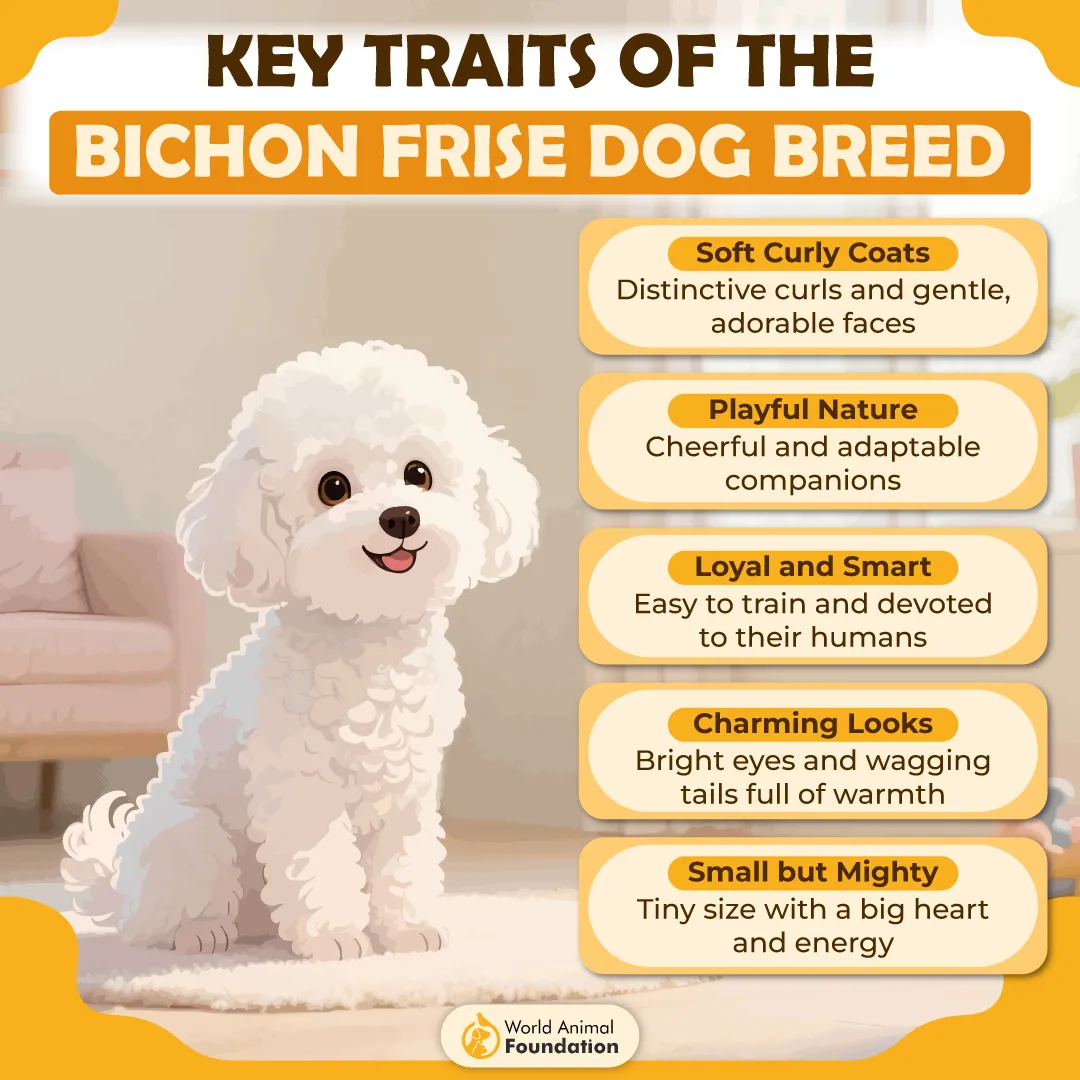
This dog is one of those small dogs that keeps moods light. Many pet parents love how this dog stays close without being pushy. The energy level is upbeat, yet it can settle fast after a bit of play. That mix makes it a great choice among dog breeds for seniors who want joy without chaos.
Coat care matters here, but it can still feel doable. The coat is fluffy and tends to be low shedding, which many pet owners appreciate for cleaner furniture. This breed has hair that keeps growing, so coat care is part of life.
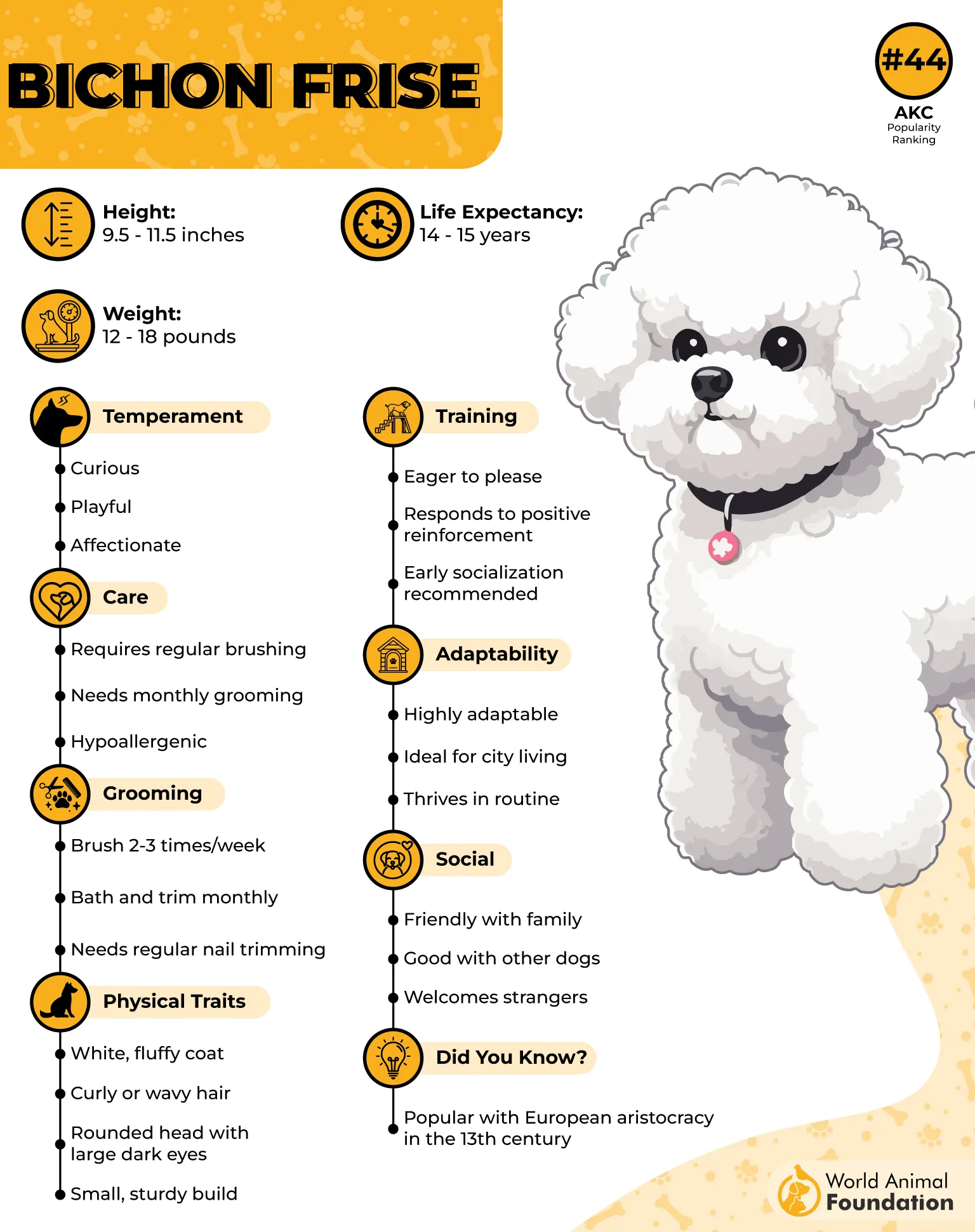
A puppy cut can make care easier and keep the face tidy. With a steady schedule, grooming becomes a simple routine instead of a big chore.
Exercise needs are moderate. This dog enjoys daily walks, but it does not need long periods outside. A few brief strolls and some indoor games often work well. Keep mental stimulation in the mix with gentle puzzles or hide-and-seek treats.
And here’s the best part! A Bichon often acts like a happy little greeter, which can lift your mood on quiet days.
Best for: older adults who want playful, affectionate dogs
Helpful habits: regular grooming and monthly trims
Home fit: great companions for smaller spaces
2. Shih Tzu
A cozy lap friend who loves slow living
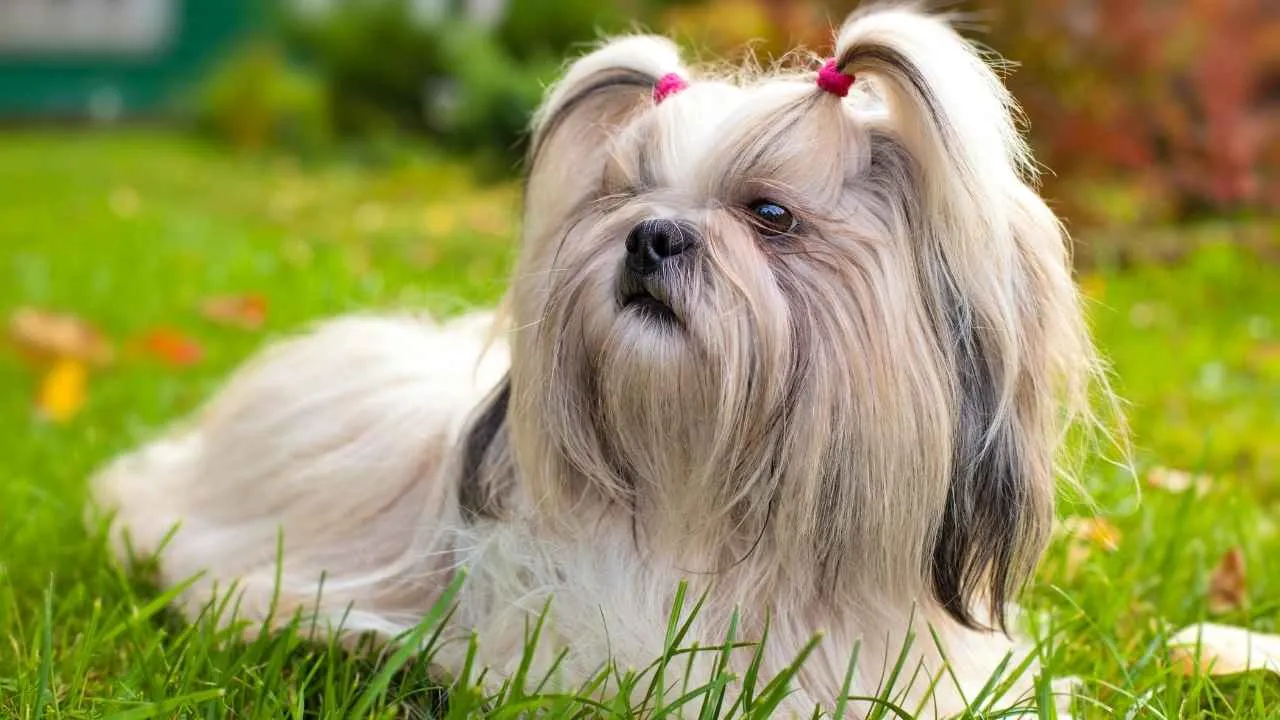
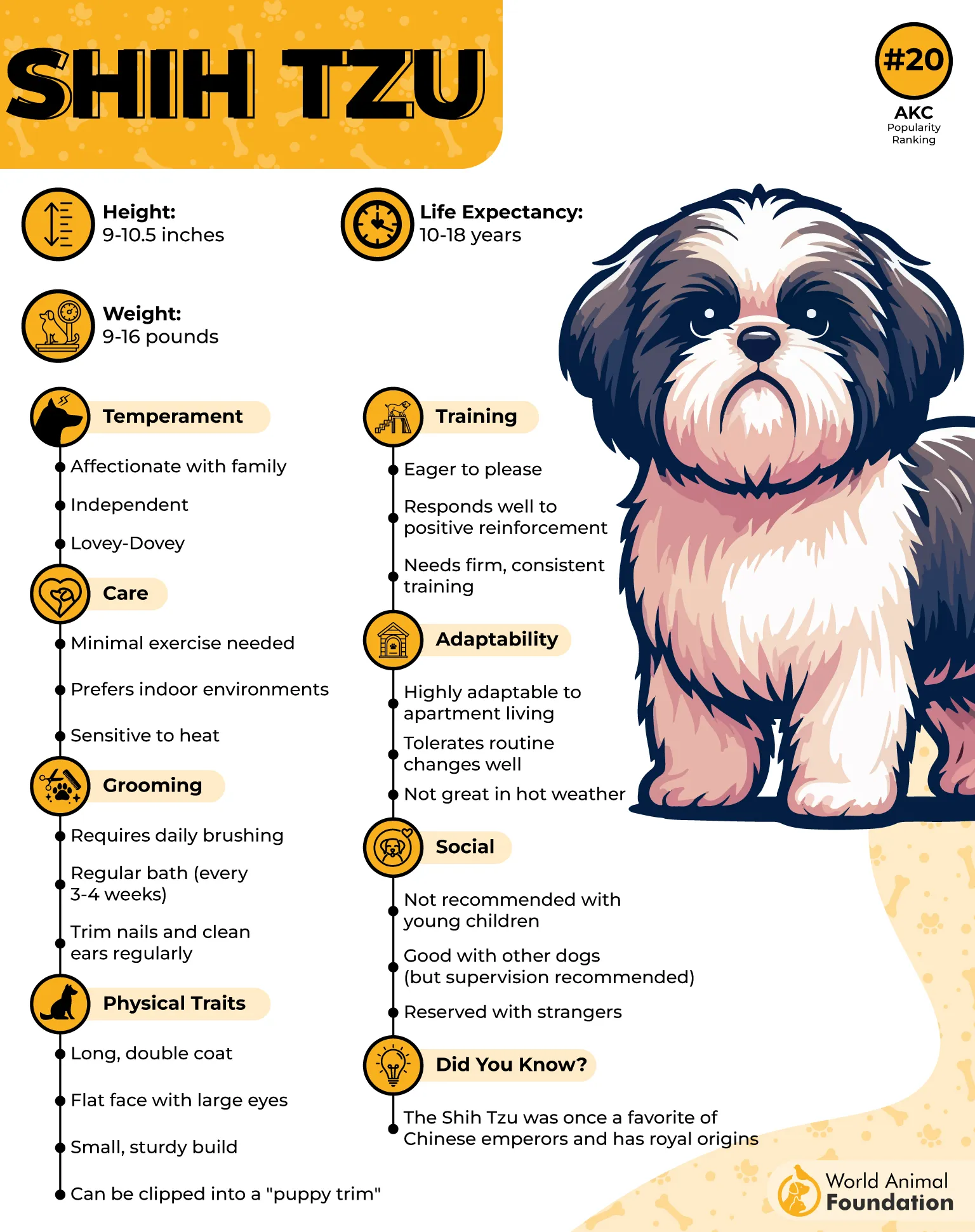
Shih Tzus are classic lap dogs, built for closeness and calm. This breed often has an affectionate nature and a calm demeanor that suits older adults who want a softer pace. Many adult dogs prefer being near you. It gets even worse, though, if you want a dog that ignores you. A Shih Tzu will likely choose you every time.
That long coat can be gorgeous, but it requires grooming. You can keep it long with daily brushing, or choose a practical puppy cut and reduce tangles fast. Either way, plan for coat care as part of pet ownership.
The upside is that a well-kept coat can feel silky and clean, and many people enjoy the calm bonding time that comes with brushing. If you prefer low maintenance, the shorter style is usually the smoother road.
Their energy level is usually low to moderate. Many Shih Tzus are fine with light exercise and a gentle play session. Daily walks help keep joints moving, but brief strolls often do the job.
Watch for heat sensitivity, since short-nosed dogs can struggle in hot weather. With a steady routine, this breed can be one of the best dog breeds for older adults who want a sweet, steady shadow.
Best for: quiet homes and sofa snuggles
Coat tip: routine cleaning keeps eyes and ears comfy
Bonus: wonderful companions for calm evenings
3. Pug
The little comedian with a big heart
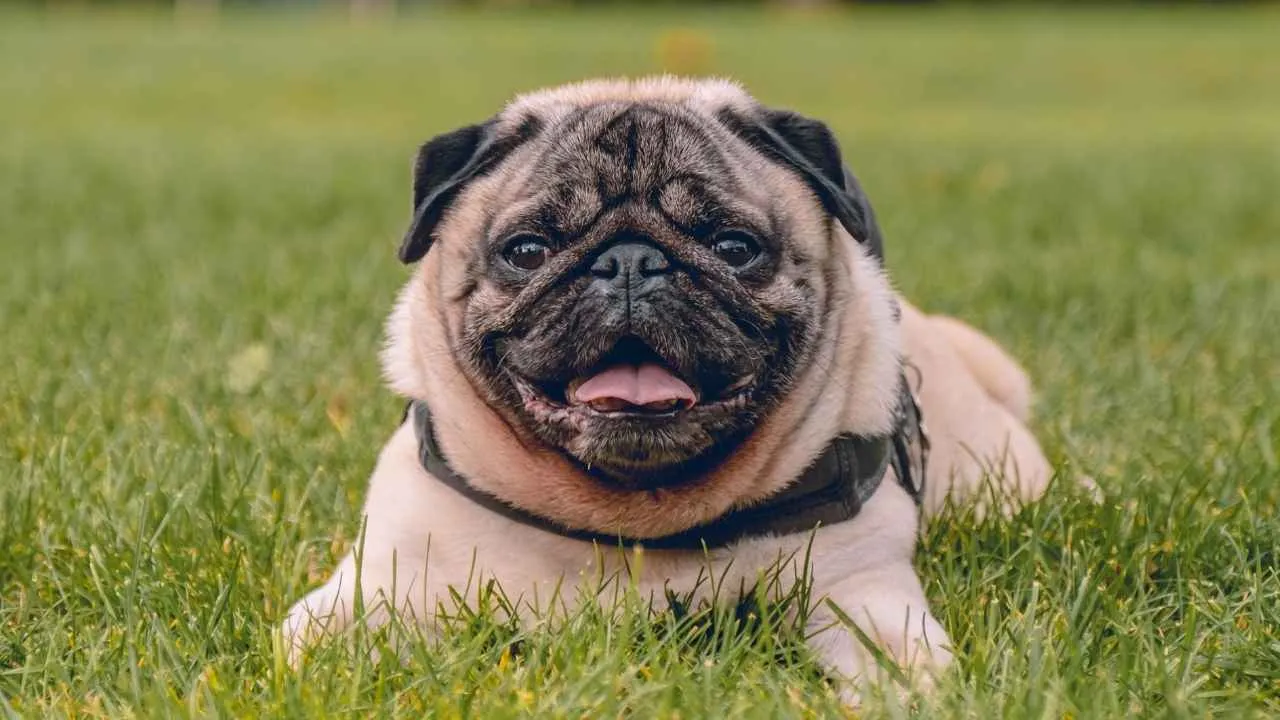
This breed loves people, enjoys attention, and often makes older adults laugh without trying. The energy level is playful in short bursts, then suddenly the dog turns into one of those couch potatoes. That on-off switch is a big reason Pugs show up on lists of dog breeds for seniors.
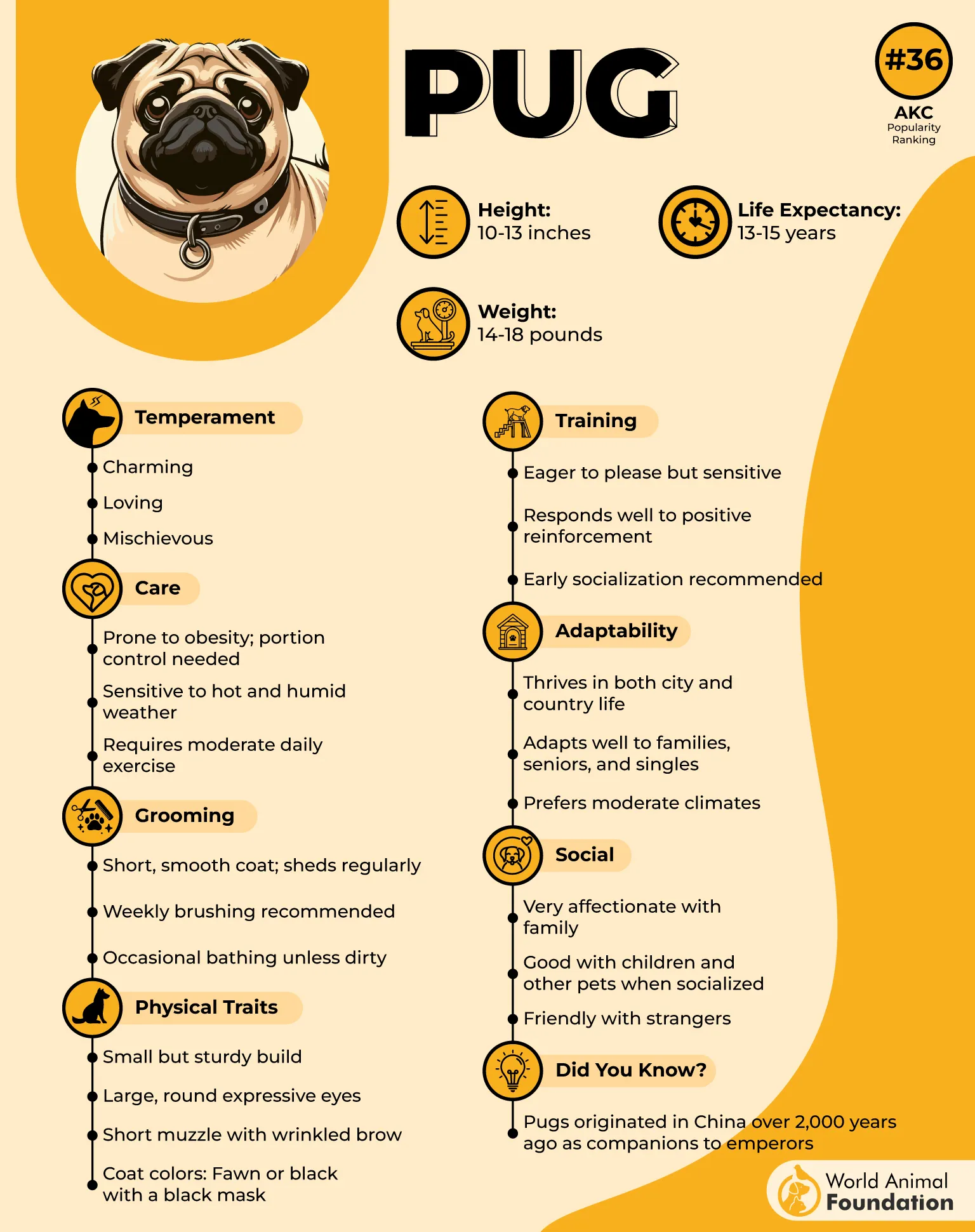
Pugs have a short coat, so coat care looks simple at first. Still, they can shed, so brushing helps keep hair under control. Face wrinkles also need gentle care to stay clean and dry. This is not hard, but it is a habit to keep.
For exercise, Pugs do best with light activity. Think brief strolls and simple indoor play. They can overheat fast, so avoid long midday outings. If mobility issues are part of your story, a Pug often matches that pace well.
As per AKC, keep an eye on health issues like breathing trouble and weight gain. With smart care, this breed can be a loyal shadow who brings daily laughs and steady love.
Best for: older adults who want low-key fun
Exercise style: brief strolls and cool-weather outings
Care note: gentle wrinkle cleaning supports physical health
4. Pekingese
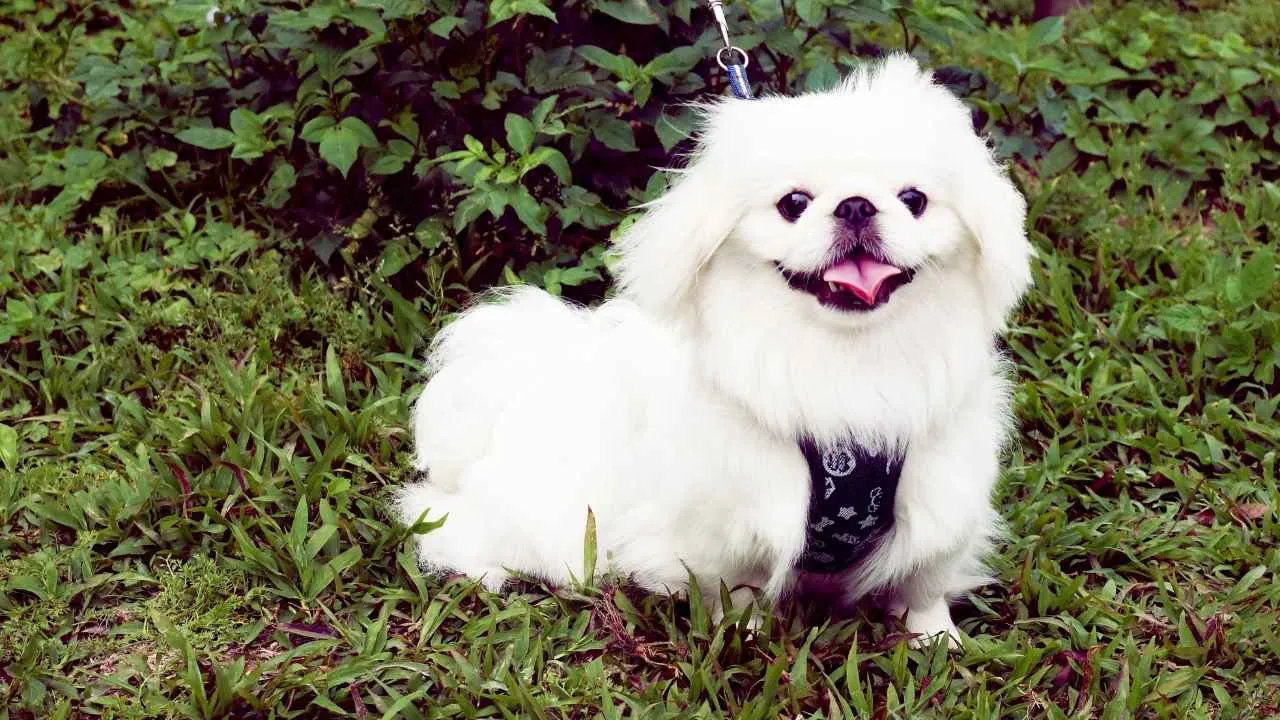
A tiny royal with a calm nature
This breed tends to be confident, calm, and deeply devoted to its person. Many older adults enjoy that it is affectionate without being frantic. It may take time to warm up to other dogs, but with patient social time, it often becomes steady and polite.
That famous coat is part of the charm. It is a long coat with a thick, plush look, so coat care is a real part of the deal. Careful brushing helps prevent mats. Some pet parents choose trims that keep the look neat while easing care.
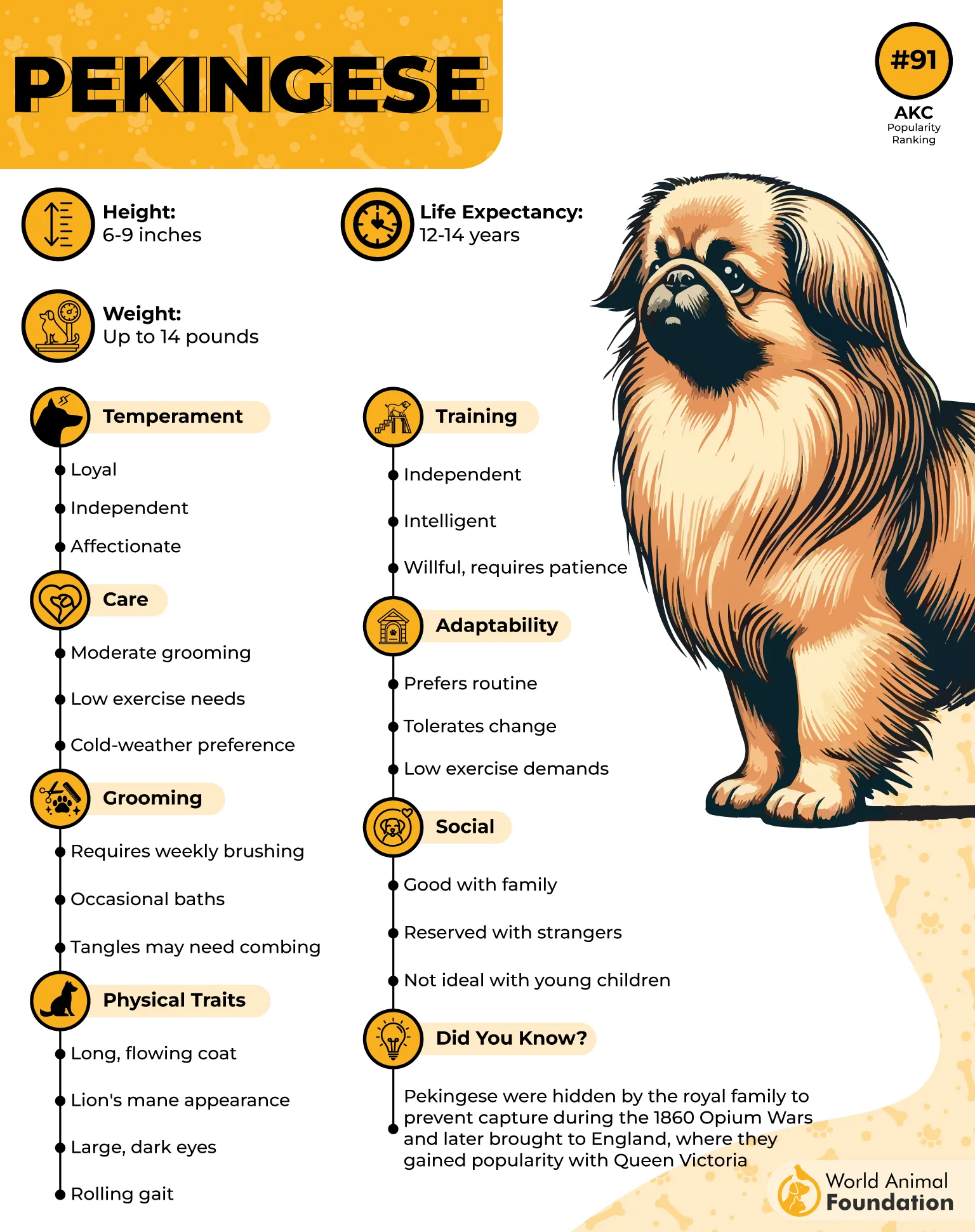
This breed does not scream easy coat upkeep, but the work can be manageable if you like routines and calm at-home care sessions.
Pekingese generally prefer moderate exercise needs at most. Daily walks should be gentle and short, and many are content with indoor wandering and play. This breed dislikes heat and rough handling. If you want a small dog that feels dignified, steady, and sweet, this can be a great fit for older adults who value peace and quiet.
Best for: calm homes and slow schedules
Coat note: Weekly brushing keeps the coat comfortable
Fun fact: this breed was once kept as palace royalty
5. Japanese Chin
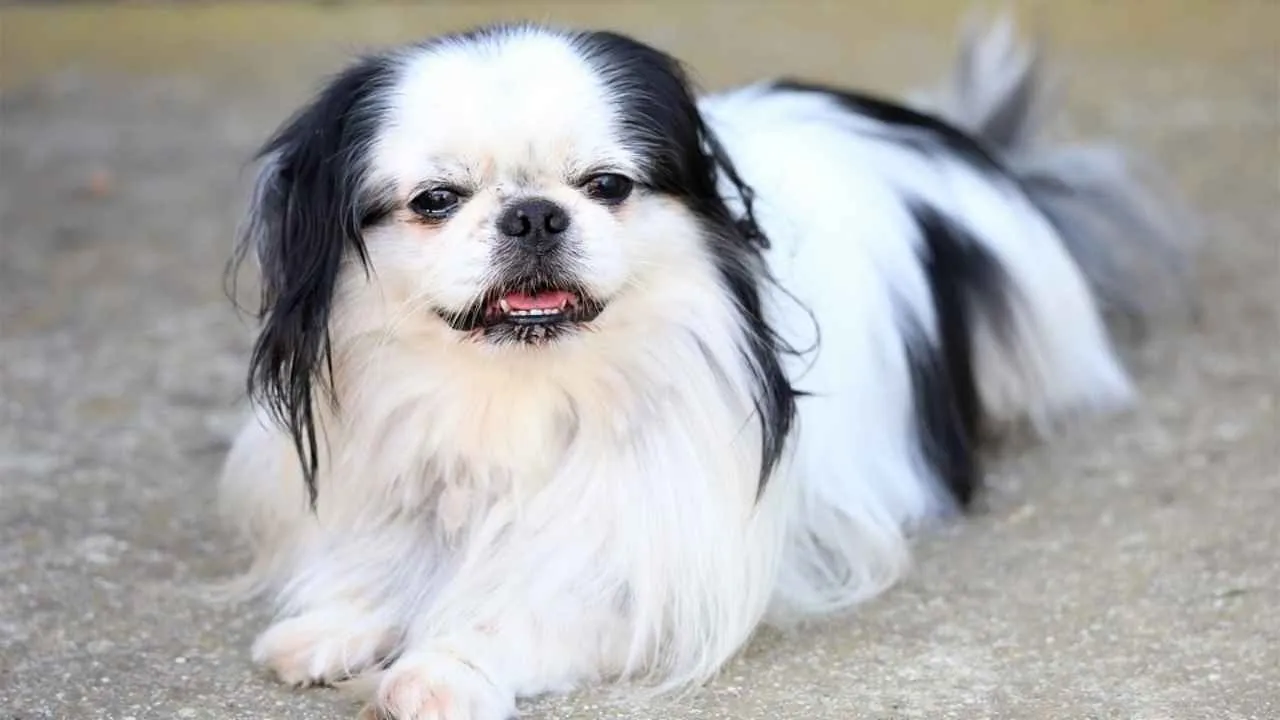
A soft-footed charmer who loves close company
This breed is gentle, alert, and quietly funny. Many older adults like how it bonds closely and enjoy spending time nearby without demanding constant action. It can be a great companion for reading, relaxing, or watching a movie.
Its coat is usually silky, with feathering on the ears and tail. Grooming is not intense, but it does require brushing to keep it neat and to reduce loose hair.
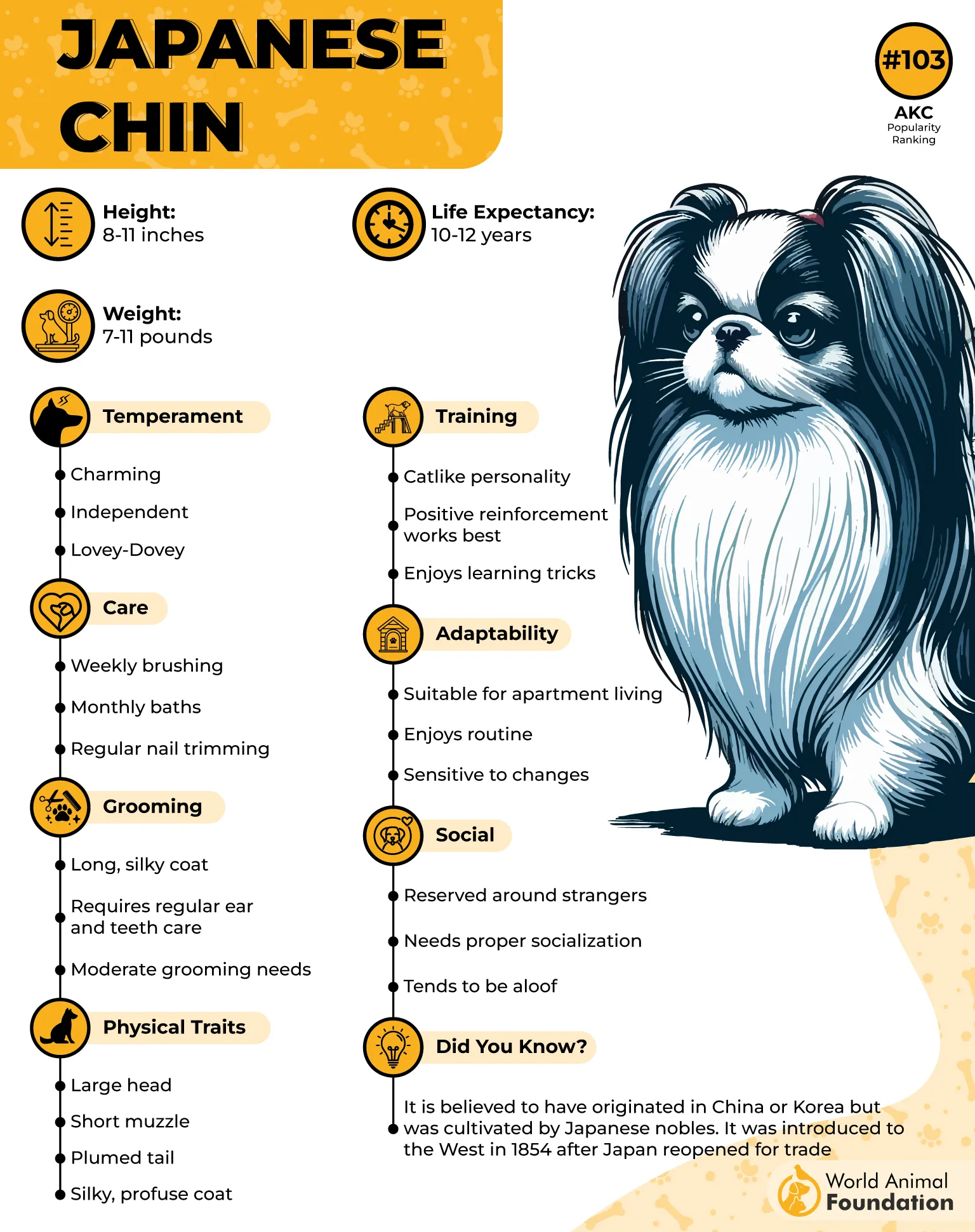
Many are low-shedding compared to heavy shedders, though no dog is totally mess-free. Keep the face clean, check the ears, and you have a simple routine. This is a nice middle ground for older adults who want a polished look without constant salon trips.
The energy level is moderate, with bursts of play and long, calm stretches. A Chin can do well with light exercise and daily walks, plus a little mental stimulation indoors. It tends to be sensitive, so gentle handling matters.
For many breeds for seniors, this one stands out as sweet, polite, and easy to live with in a quiet living situation.
Best for: older adults who enjoy a calm, bonded pet
Coat care: grooming keeps the silky coat smooth
Home fit: excellent companions in smaller homes
6. Maltese
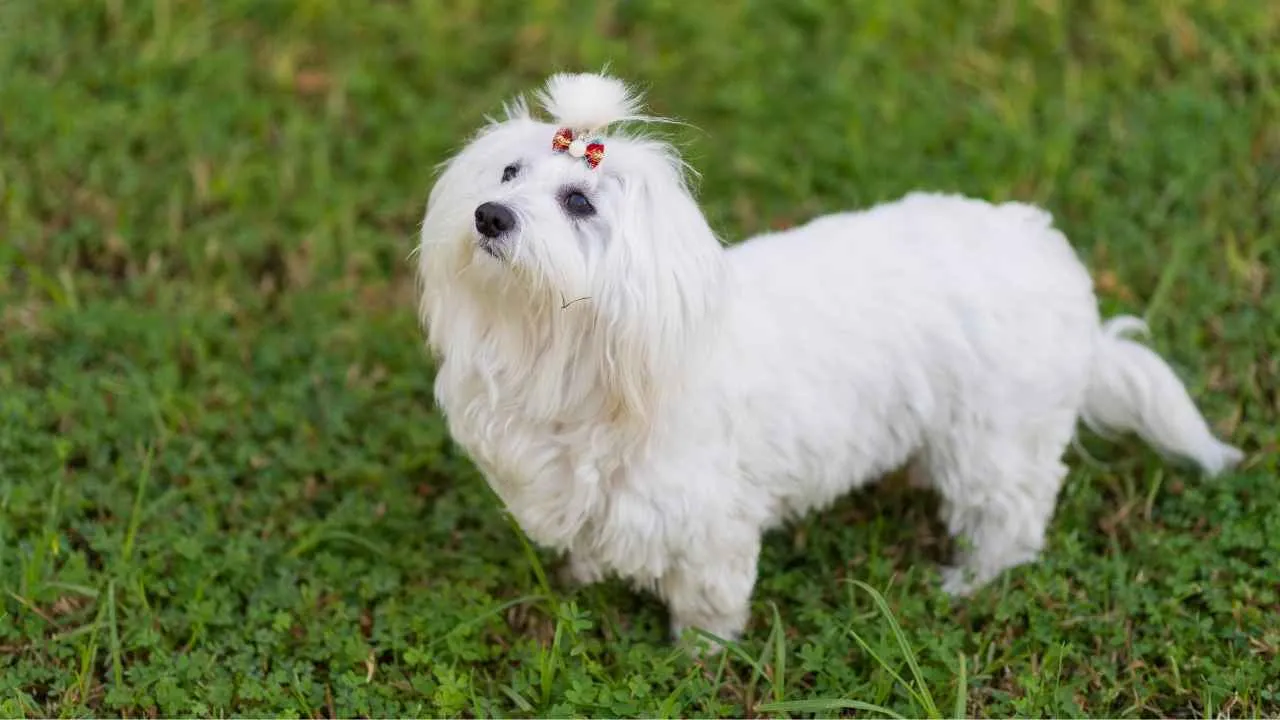
A bright little friend with a big cuddle habit
The Maltese is a classic among small dog breeds and is often picked for its loving vibe. This breed usually enjoys closeness, which is why it is common in lists of dog breeds for seniors. The kind of dog that follows you from room to room like a loyal shadow, then settles into your lap with a deep sigh.

The coat is a big feature here. It is long, white, and can feel like silky hair. Grooming is important, and daily combing helps avoid knots. If that sounds like too much, many pet parents choose a shorter trim, which lowers the work while keeping the dog comfy.
Regular trims also help keep tear stains and face hair neat. This is not minimal grooming needs, but it can still be low maintenance when you choose the right style.
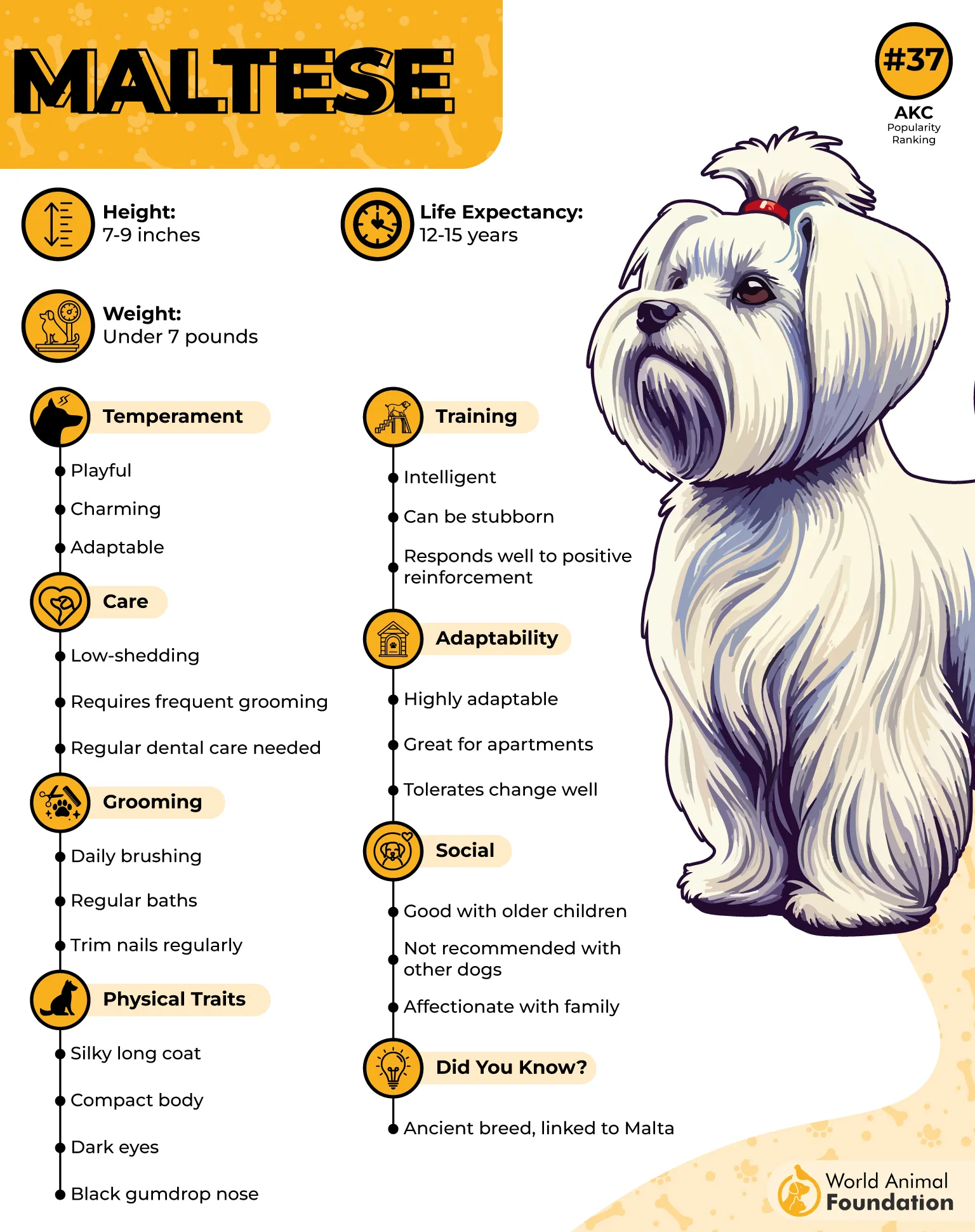
Maltese dogs usually do well with minimal exercise. A few daily walks, indoor play, and basic training can be enough. They often enjoy light activity more than intense running.
According to PetMD, this breed can be sensitive, so gentle words work better than harsh tones. With steady love and simple care, the Maltese can become one of your most excellent companions through the golden years.
Best for: lap dog lovers who want closeness and small dogs that stay gentle
Coat tip: a shorter cut supports low maintenance
Daily routine: daily walks plus indoor games
7. Pomeranian
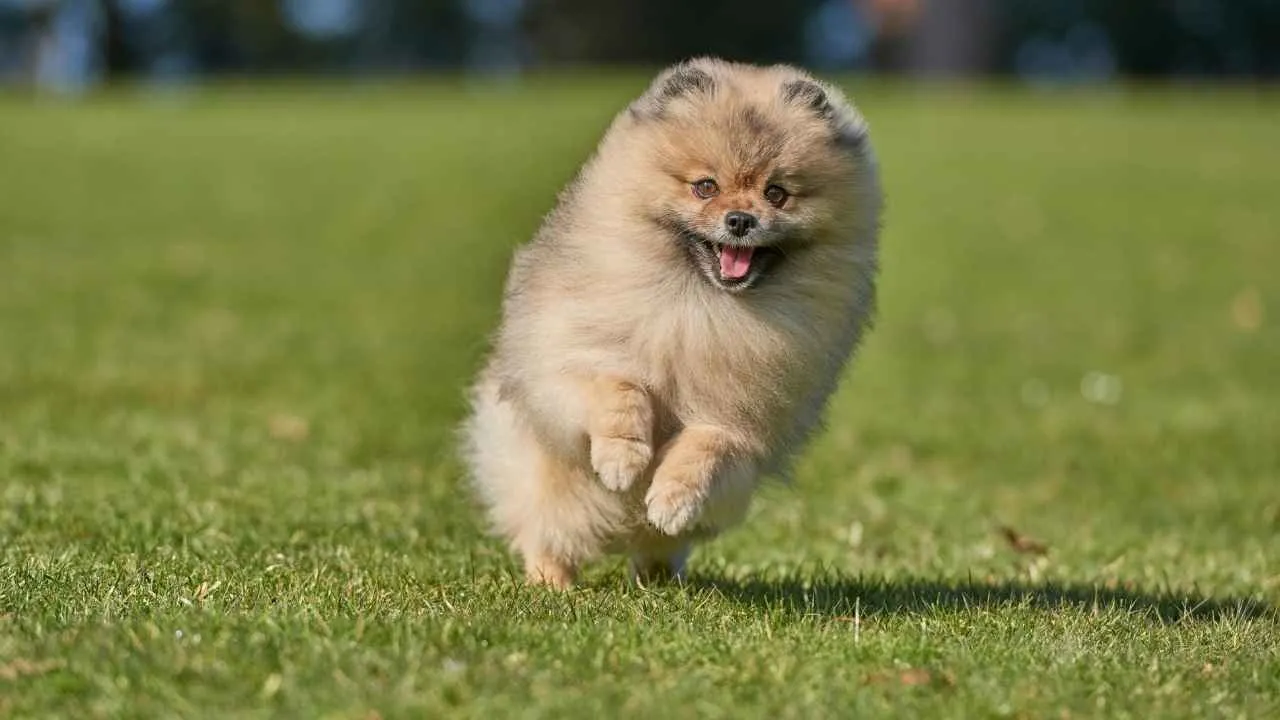
A tiny fluff ball with a bold personality
Pomeranians are small dogs with a big voice and an even bigger spirit. This breed is lively, smart, and often highly intelligent in training sessions. Many older adults enjoy the spark, as long as the routine stays steady.
The energy level can be higher than that of some pocket pets, but it is often manageable in small bursts. With kind boundaries, this breed becomes one of those great companions that keep life feeling bright.
Their double coat is thick and fluffy, so coat care is part of the package. Brushing helps prevent tangles and keeps shedding down. Some owners ask for trims, but shaving is not always ideal for coat health.
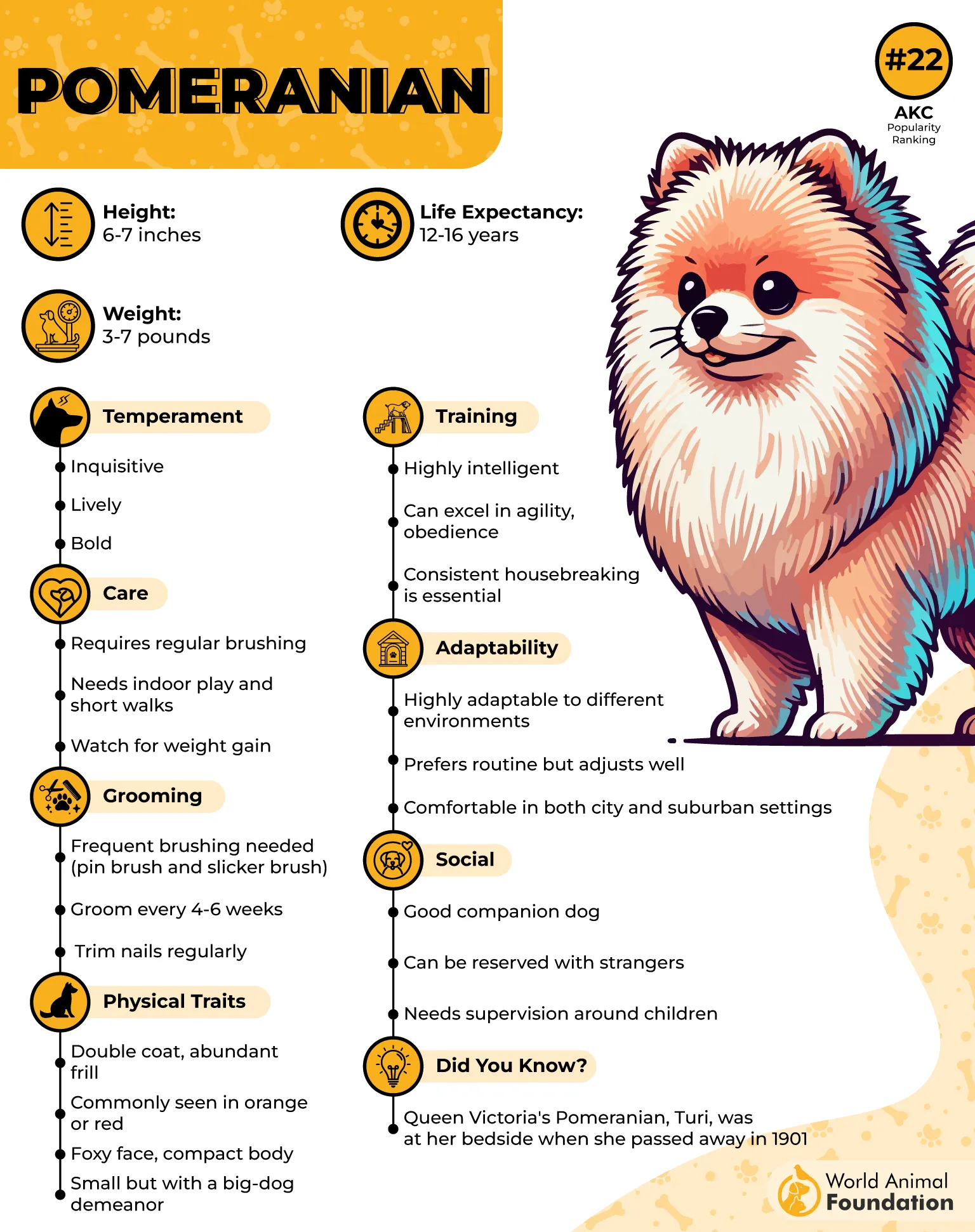
This breed does not require easy coat upkeep, yet it can still be a low-maintenance dog if you stick to simple weekly care and quick touch-ups. Keep nails trimmed, and the dog stays more stable on floors, which matters if mobility issues exist at home.
PitPat notes that Pomeranians like daily walks, but they can also burn energy through indoor play and training games. Light exercise works well for many older adults. Watch for barking habits and start gentle training early, even with adult dogs.
Avoid dog breeds that are too intense for your routine, but do not fear a Pomeranian if you enjoy a lively little pal. With care, it can be the best dog breed pick for older adults who want fun, warmth, and a fluffy sidekick.
Best for: older adults who like a brighter, alert pet
Training win: smart minds love mental stimulation
Coat care: regular brushing keeps the fluff clean
Conclusion
Picking from dog breeds for seniors is about comfort, not perfection. Start with your daily walk plan, your budget, and how much coat care you can handle. A little grooming is normal, but set yourself up for minimal maintenance when you can.
Meet a few adult dogs, ask about health issues, and notice how you feel when the dog sits beside you. That feeling matters. Older adults deserve calm joy, not stress. When you choose the right breed, pet ownership turns into a steady friendship that grows stronger through the golden years.
If you feel stuck, revisit breeds for seniors and pick the best dog breeds for your home right now.
