




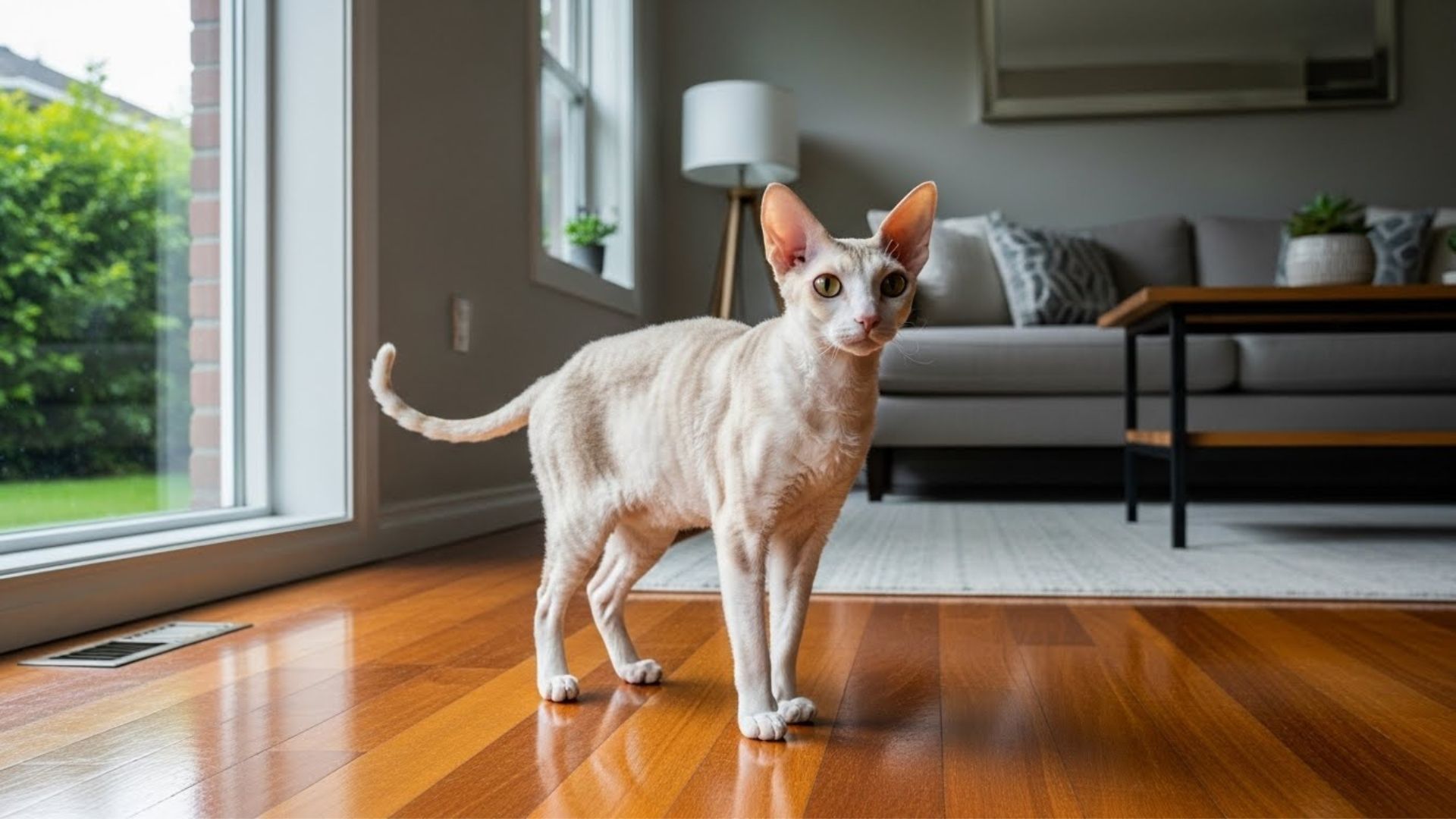
Curly-coated cats stand out instantly, with soft waves and tousled textures that make them look like they’ve just stepped out of a photoshoot. These rare feline beauties offer more than eye-catching looks—their coats invite touch, making cuddle time especially irresistible. For cat lovers who want a companion that’s both affectionate and visually unique, curly-haired breeds hold a special appeal.
Unlike common straight-coated cats, curly-coated breeds owe their distinctive fur to natural genetic mutations. These traits are uncommon, which is why curly cats remain relatively rare and highly sought after. Their coats can range from tight waves to loose curls, giving each breed—and each individual cat—a personality all its own. Many of these cats are also known for being people-oriented, playful, and adaptable, adding to their charm beyond appearance.
Recognized by major feline organizations such as the Cat Fanciers’ Association and The International Cat Association, only a handful of breeds carry this curly-coat distinction. In this article, we’ll explore cat breeds known for their curly coats and discover what makes these uniquely styled felines so special to own and adore.
7 Cat Breeds Known for Their Curly Coats
1. Devon Rex

Also known simply as the Devon Rex cat, this breed originated in Devon, England, and is instantly recognizable for its short, wavy coat, large, low-set ears, and pixie-like face.
According to Britannica, the tail is long, tapers toward the end, and is heavily furred. Often compared to a poodle, the Devon Rex has a delicate appearance paired with a playful, social personality.
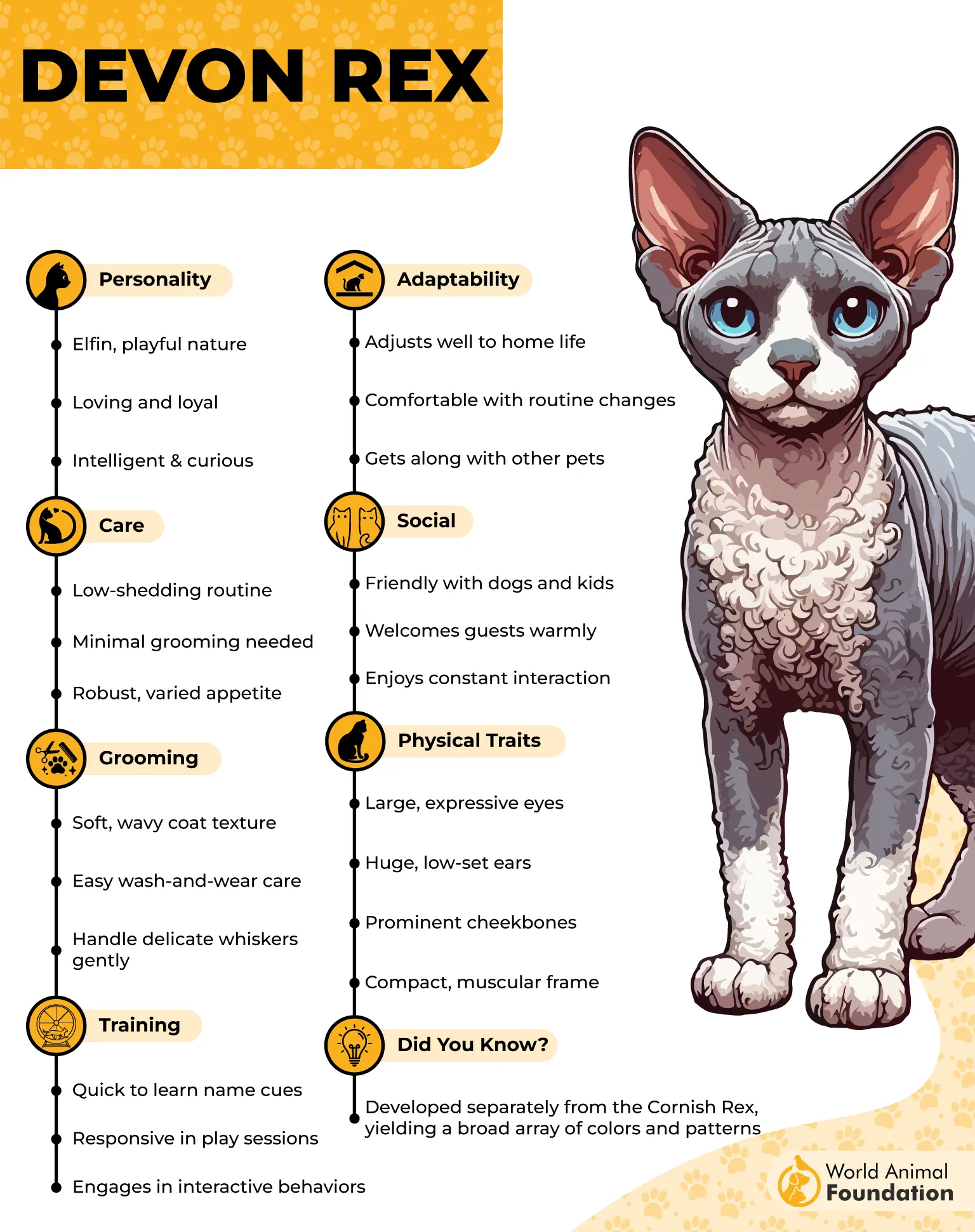
The Devon Rex’s curly coat is the result of a natural genetic mutation that affects hair structure. Unlike other rex breeds, its coat is slightly denser and features soft waves rather than tight curls, giving it a distinct texture that feels warm and plush to the touch.
Understanding what causes curly coats in cats starts with genetics, and the Devon Rex is a prime example. The breed traces back to a single curly-coated kitten named Kirlee, whose unique mutation proved different from that of the Cornish Rex, establishing a new curly-coated line.
Beyond their looks, these cats are energetic and affectionate, often insisting on staying close to their people.
Fun fact: the entire Devon Rex breed descends from one curly-coated kitten discovered in England in 1960.
2. Cornish Rex
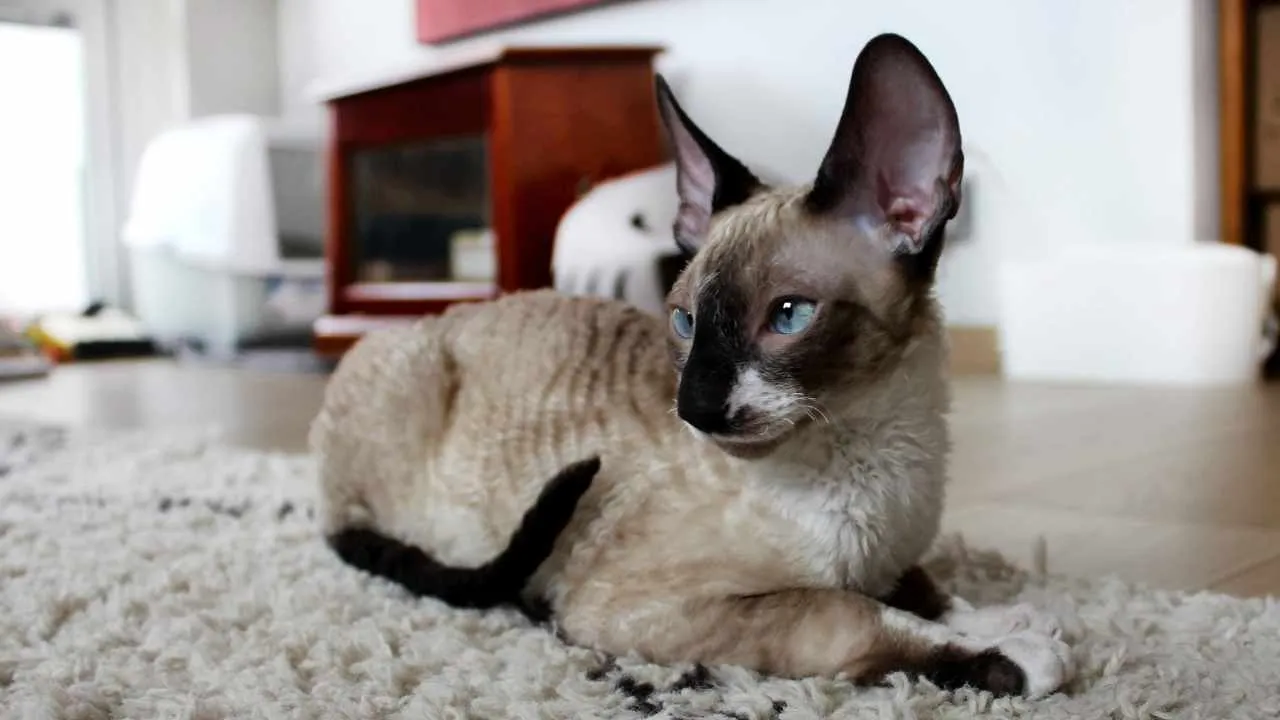
Also known simply as the Rex, the Cornish Rex originated in Cornwall, England, and is famous for its ultra-short, wavy “rexed” coat that lies close to the skin. With long legs, a tucked waist, and a soft, velvety texture, this breed looks and feels unlike any other cat.
According to PetMD, the Cornish Rex stands out for its short, curly or wavy coat, angular face, high cheekbones, and large ears, which set it apart from many other cats.
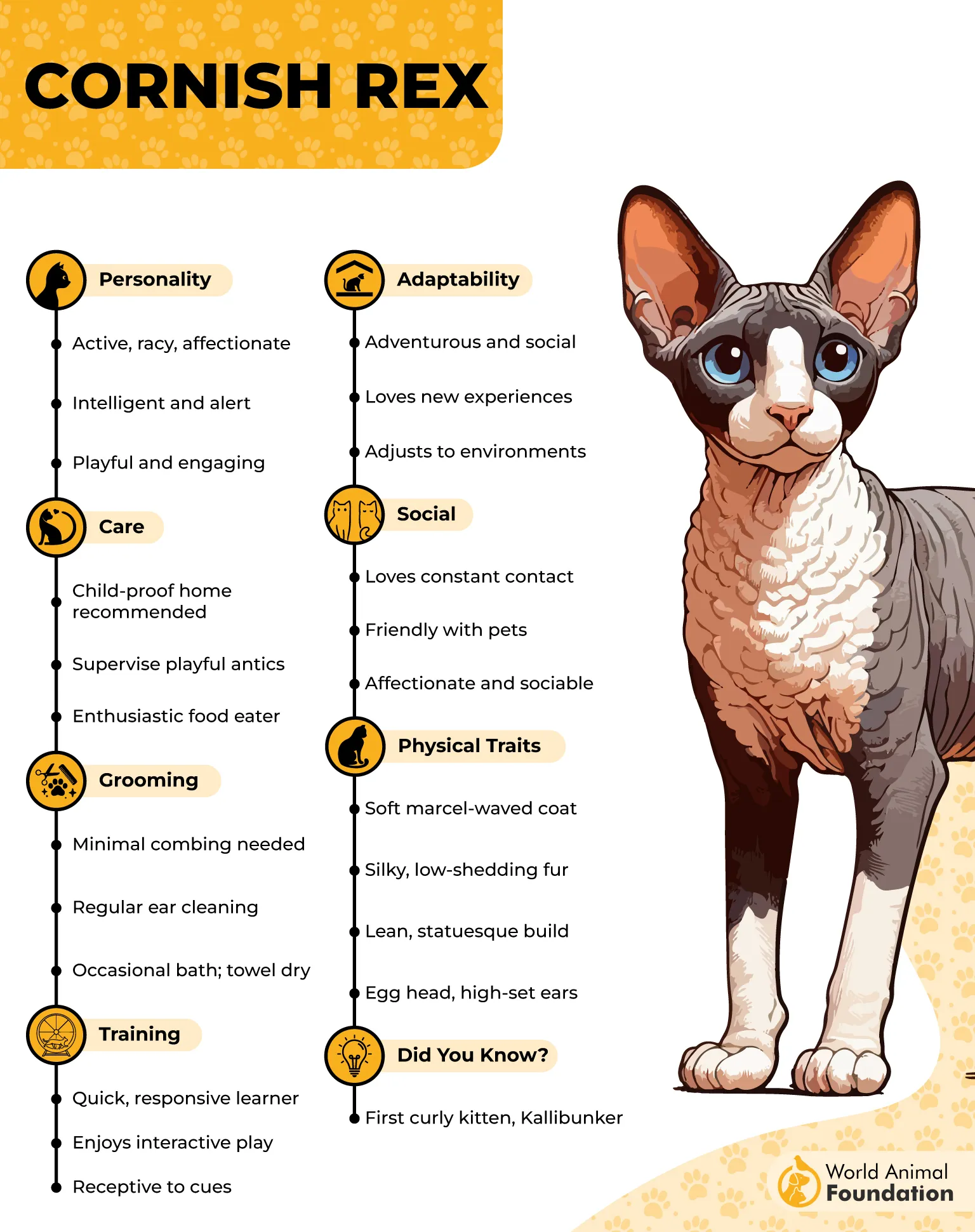
The Cornish Rex’s curls are the result of a rare genetic mutation that removes the guard hairs found in most cats. This creates rows of tight or loose waves, giving the coat its signature rippled appearance and silky touch.
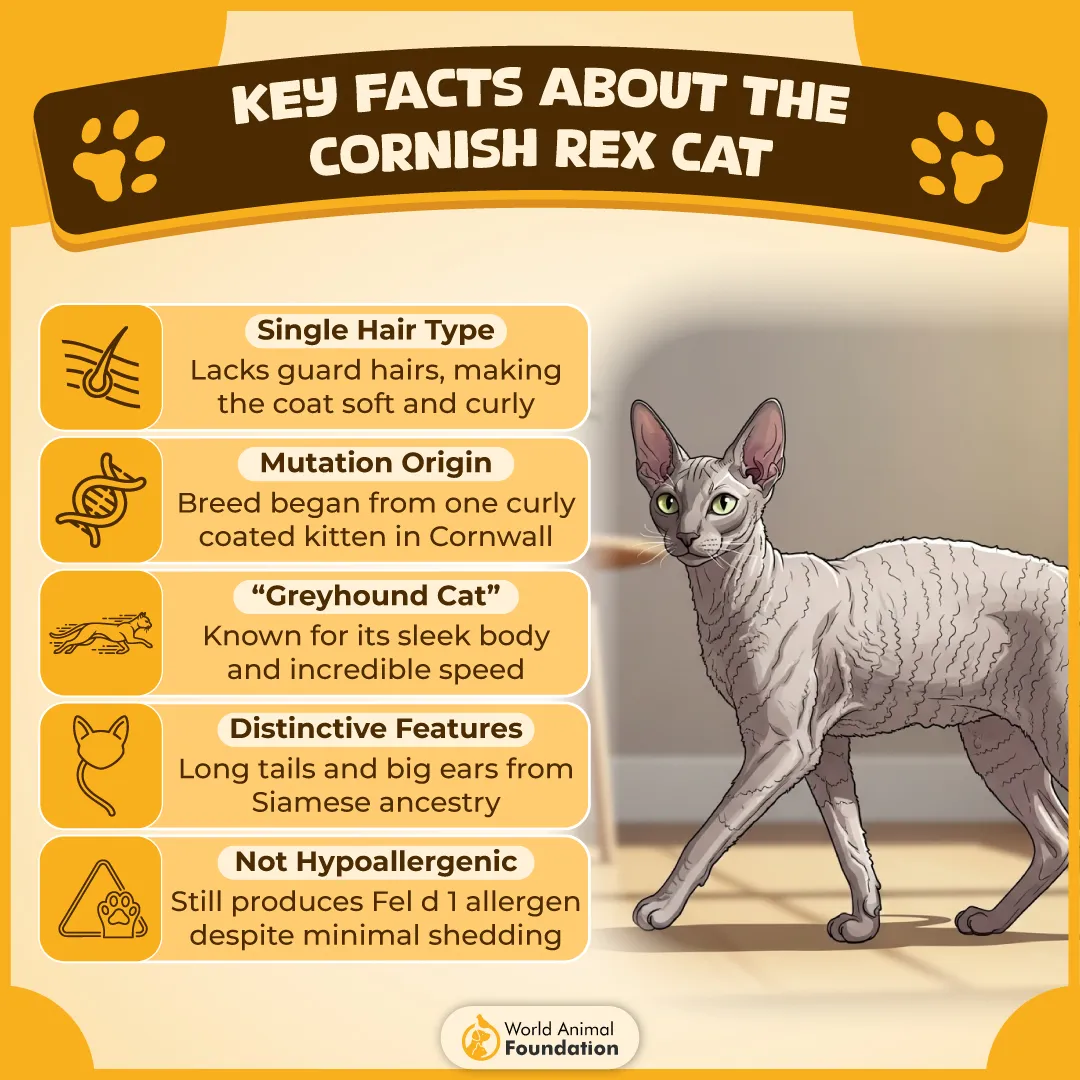
Understanding the genetics behind wavy and curled fur helps explain why this breed sheds less than many others. The mutation affects the structure of the hair shaft, producing fine, flexible curls rather than straight hairs, which contributes to its unique texture.
This genetic trait traces back to a single kitten and remains carefully preserved today.
Fun fact: all Cornish Rex cats descend from one curly-coated kitten born in Cornwall in 1950.
3. Selkirk Rex
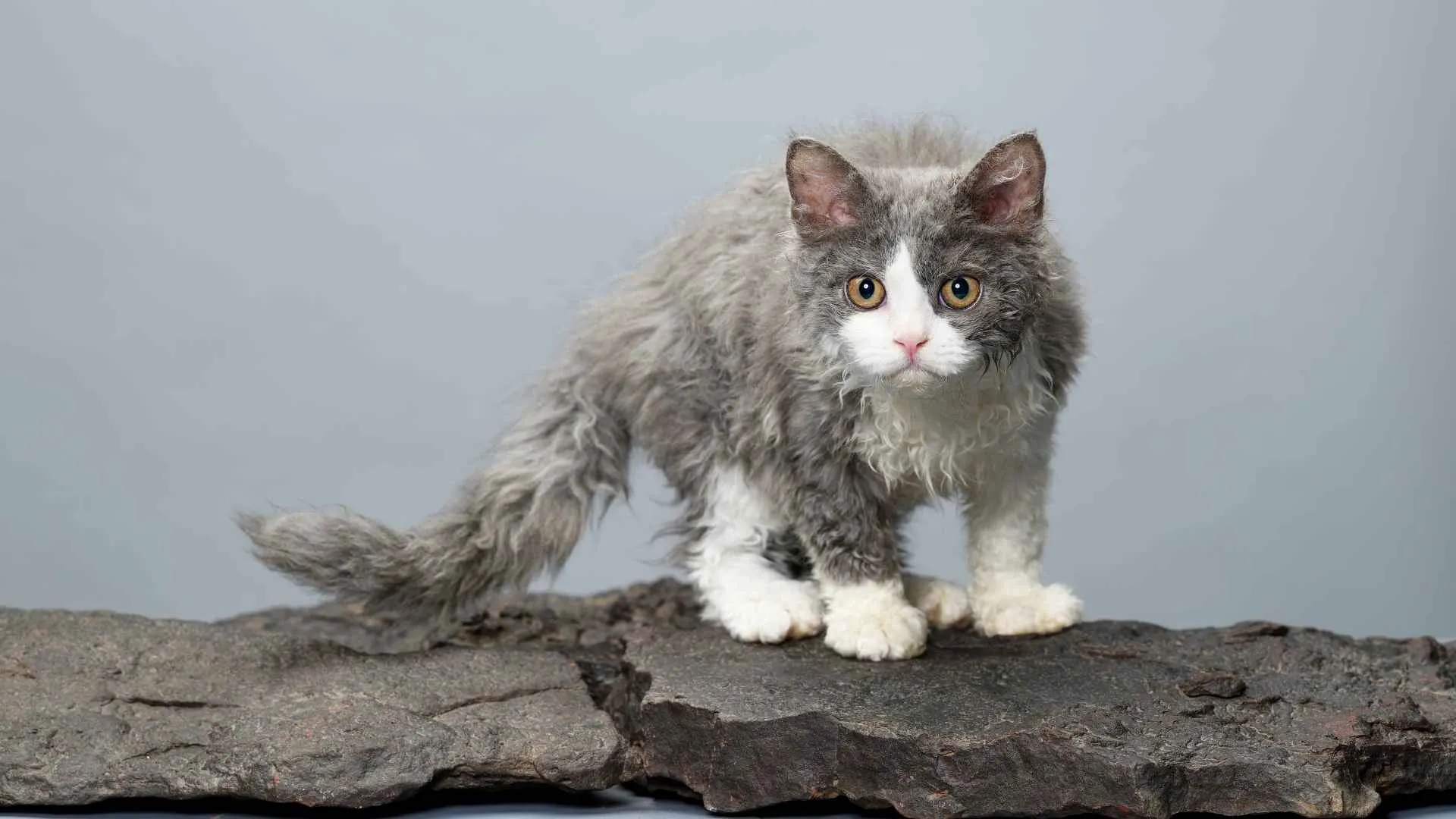
Also known as the “cat in sheep’s clothing,” the Selkirk Rex is instantly recognizable for its plush, curly coat and teddy-bear appearance.
According to WebMD, the Selkirk Rex is a calm cat known for its curly coat. Originating in Montana from a naturally curly-haired stray, this breed comes in both long-haired and short-haired varieties.
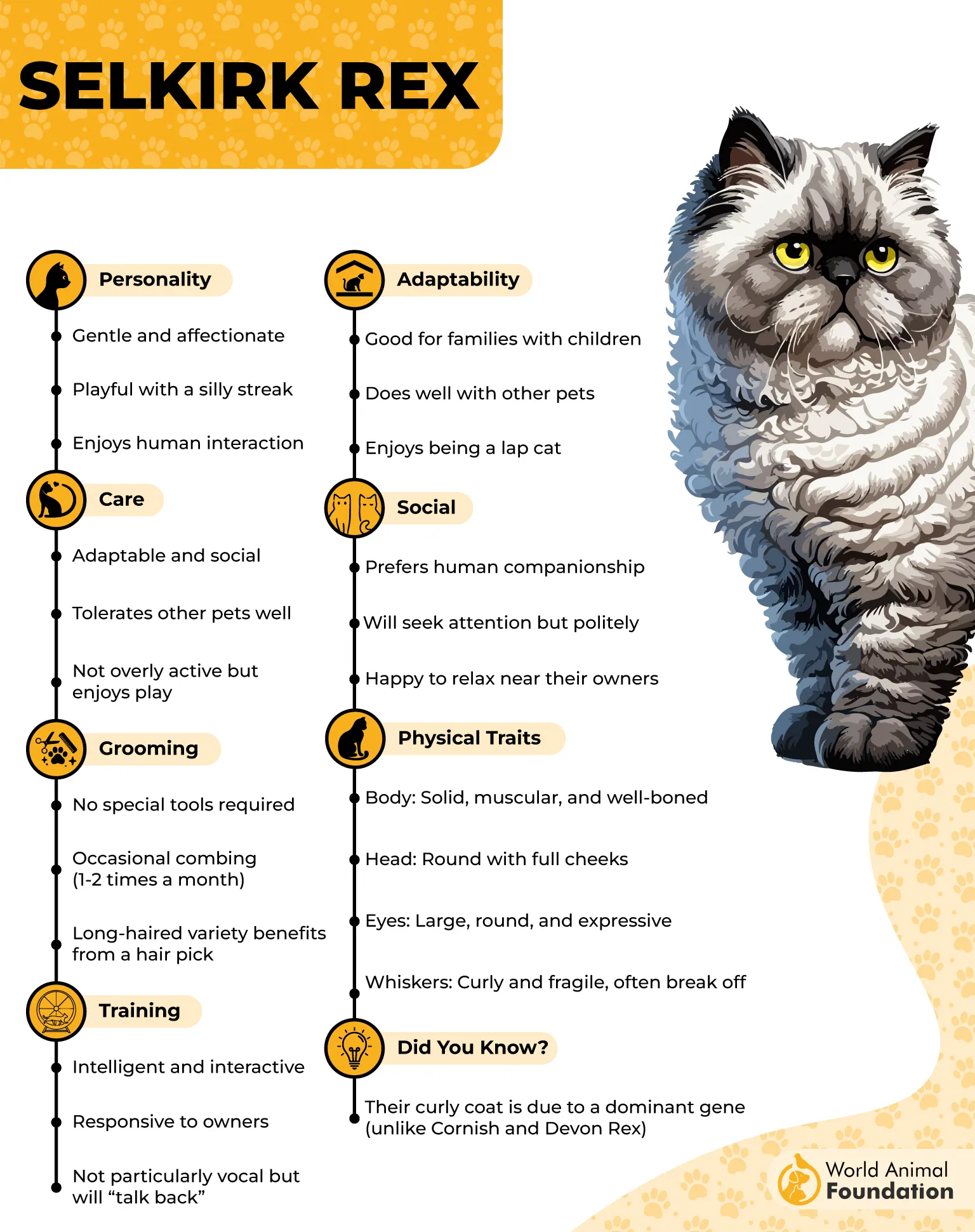
Among Rex cat breeds, the Selkirk Rex is famous for its dense, soft curls that invite constant petting. Their loose waves or tighter ringlets give them one of the most distinctive curly coats in the feline world, setting them apart visually from other Rex breeds.
Beyond looks, Selkirk Rex cats are relaxed, affectionate, and people-oriented. They enjoy cuddling and gentle play, making them a favorite for those who want a curly-coated cat with a calm, easygoing temperament rather than nonstop energy.
Their curly fur can appear in nearly any color or pattern, adding to their appeal.
Fun fact: the Selkirk Rex’s curly coat is caused by a dominant gene, and some kittens are born with straight hair instead of curls.
4. Laperm
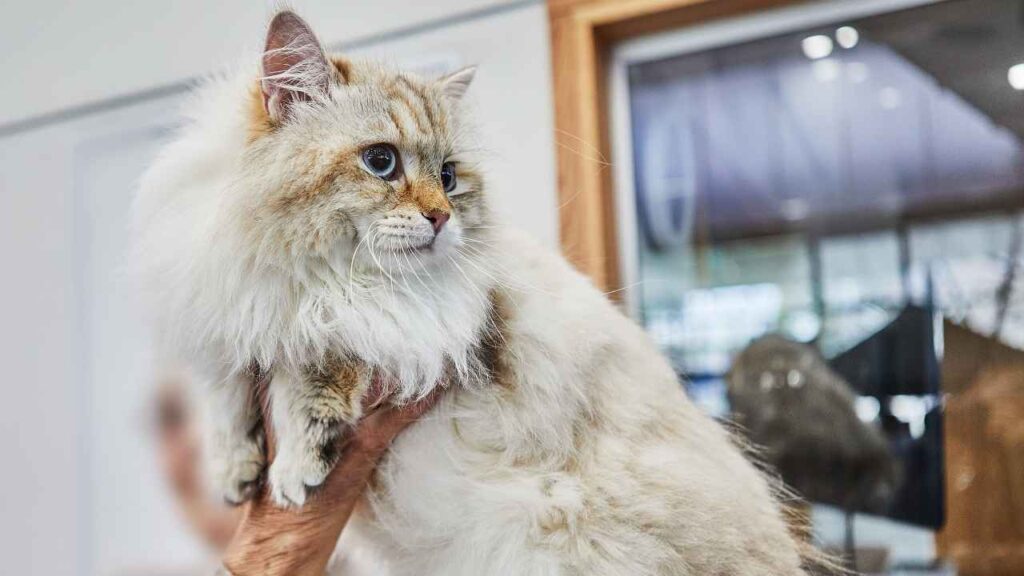
Also known simply as the LaPerm cat, this breed originated in Oregon after a naturally bald kitten later developed a soft, curly coat. LaPerms are medium-sized cats, standing about 12–18 inches tall and weighing roughly 6–10 pounds, with an unmistakable wavy or curly appearance.
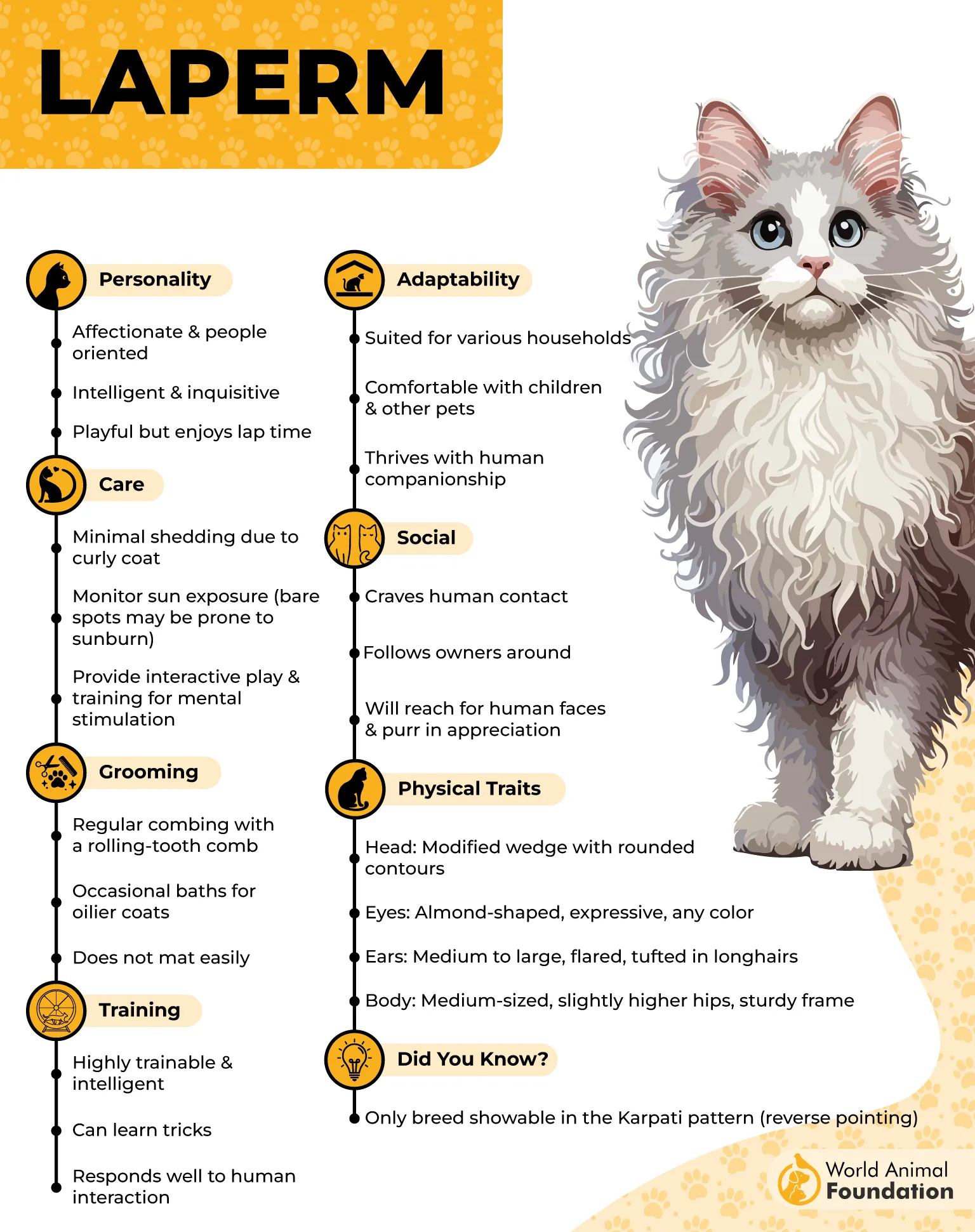
Their signature curls require thoughtful care, making grooming an important part of life with a LaPerm. While their coat can look high-maintenance, it’s surprisingly manageable with gentle brushing a few times a week to prevent tangles, especially during shedding periods.
Care and grooming tips for curly-coated cats like the LaPerm focus on preserving curl structure. Wide-toothed combs, light hand-grooming, and occasional spritzing with water help keep curls defined without damaging delicate hair. Over-brushing can pull curls straight, so a light touch works best.
Regular nail trimming and basic ear and eye checks complete their routine.
Fun fact: the LaPerm’s curly coat comes from a spontaneous genetic mutation first discovered in barn cats in Oregon in 1982.
5. Tasman Manx
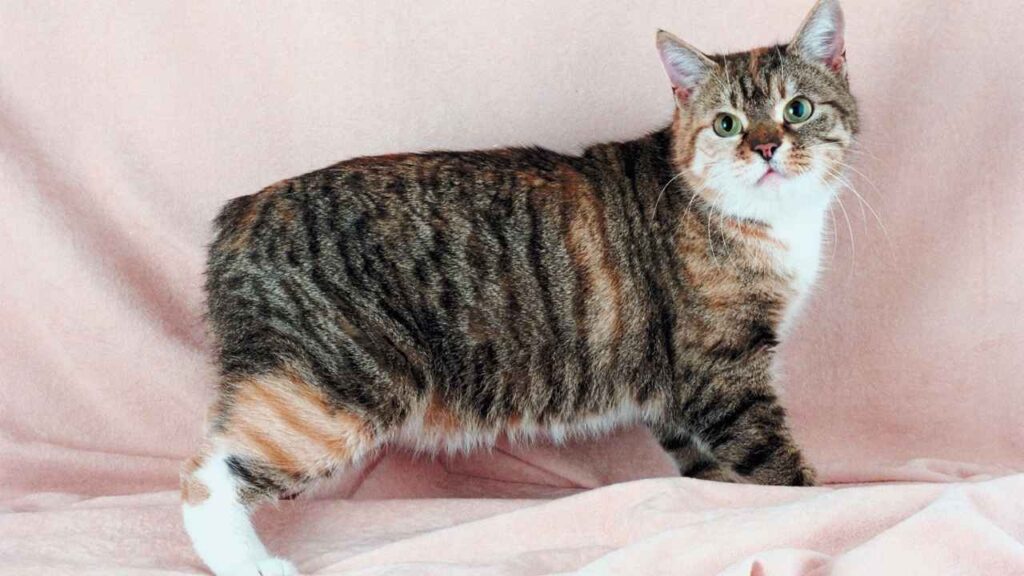
Also known simply as the Tasman, the Tasman Manx is a rare breed from Australia and New Zealand, named after the Tasman Sea. Recognized by the New Zealand Cat Fancy, this stout, powerful cat is unusual for its mildly curly coat and naturally tailless body.
Its coat appears rippled or “ripped,” giving a curlier look than it truly has, and is often paired with kinked whiskers and curled toes. These recessive traits come together to create one of the most distinctive curly-coated cats in the feline world.
Do curly-coated cats shed less? In the case of the Tasman Manx, shedding can still be noticeable. Like other Manx types, they have a double coat, which means regular brushing is important to manage seasonal shedding.
Consistent grooming helps reduce loose fur and keeps the coat healthy, regardless of length.
Fun fact: Tasman Manx cats are either completely tailless (“rumpy”) or nearly tailless (“stumpy”), and both are accepted under breed standards.
6. German Rex
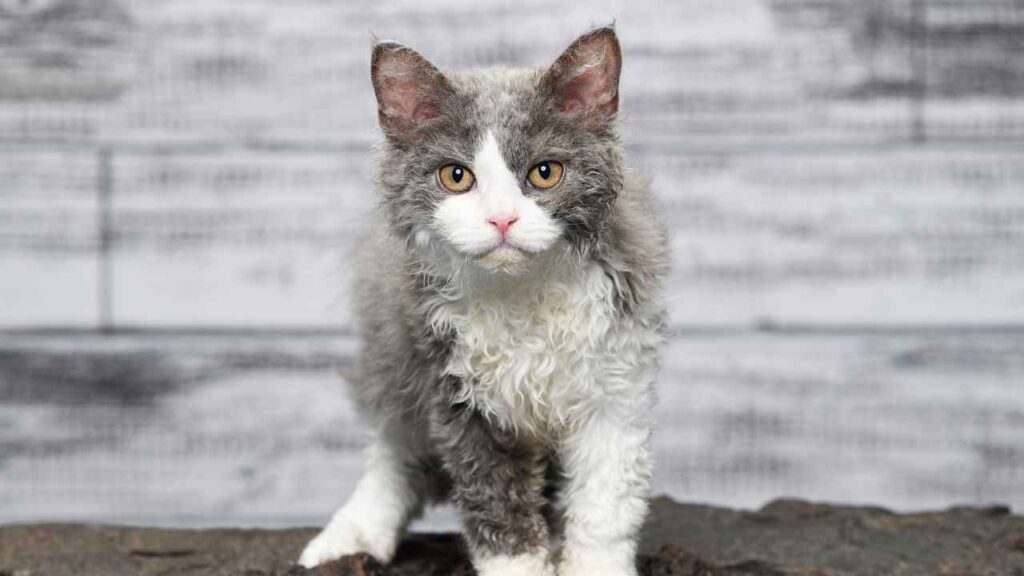
Also known simply as the German Rex, this rare breed originated in Germany and is officially recognized by FIFe. It is one of the European “rex” cats and is sometimes grouped with the Cornish Rex due to genetic similarities.
The German Rex is instantly recognizable by its soft, curly coat that covers the entire body, including curled whiskers. Lacking guard hairs, its short fur feels silky and velvety, giving the breed one of the most distinctive coats in the cat world.
When asking whether curly-coated cats are hypoallergenic, the German Rex offers mild benefits but no guarantees. Like all cats, it produces Fel d 1 allergens, though its fine coat may reduce loose dander compared to heavier shedding breeds.
Allergy sensitivity still varies by individual cat and owner, so time together matters most.
Fun fact: the German Rex traces back to a rescued stray named Lammchen found in Germany after World War II and typically weighs under 8 pounds.
7. Oregon Rex
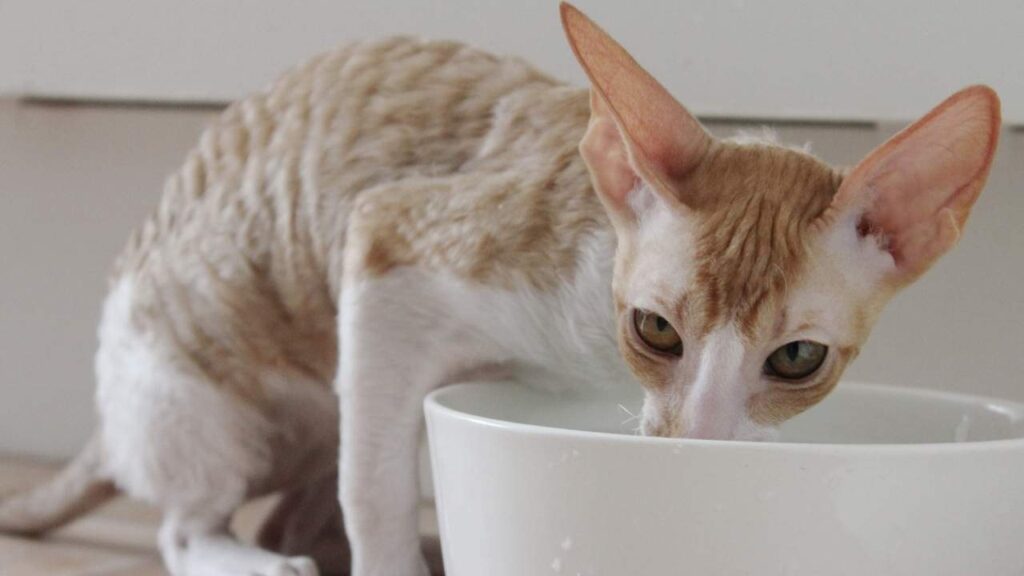
Also known simply as the Oregon Rex, this early American curly-coated breed first appeared in Oregon during the 1950s. It was admired for its tight, wiry curls and sleek, athletic build, setting it apart from other Rex cats of its time.
The Oregon Rex’s coat was its defining feature, ranging from bristly waves to dense ringlets created by a unique genetic mutation. When choosing the right curly-coated breed, coat texture and rarity play a role, and this breed was considered especially distinctive in appearance.
Physically, the Oregon Rex shared traits with the Cornish and Devon Rex, including long legs, a wedge-shaped head, large ears, and expressive oval eyes. Its short, curly coat came in various colors, giving it a refined yet playful look that would suit hands-on, engaged households.
Though no longer around, its temperament is still discussed among Rex enthusiasts.
Fun fact: the Oregon Rex is now considered extinct, but it helped demonstrate that curly coats can arise naturally and influence modern Rex breeds.
Conclusion
Cat breeds known for their curly coats capture attention with their unique curly coats and irresistible charm. From cornish or devon rex lines to the laperm breed, these curly coated cat breeds owe their look to a curly hair gene, a dominant trait that affects everything from wavy fur to even their whiskers.
Not all curly coats are the same—some feature loose wavy hair, others tight curls—making these unique cats especially fascinating to cat enthusiasts and cat owners alike.
Along with beauty comes responsibility. Proper grooming, regular grooming, and thoughtful coat care help manage loose hairs, prevent matting, reduce skin irritation, and avoid issues that may trigger allergies.
Despite their delicate fur, many are affectionate cats with charming personalities, often a great family pet that gets along with other pets. Whether laid back or playful, these curly-coated companions stand apart from straight haired cats in both looks and character.
