




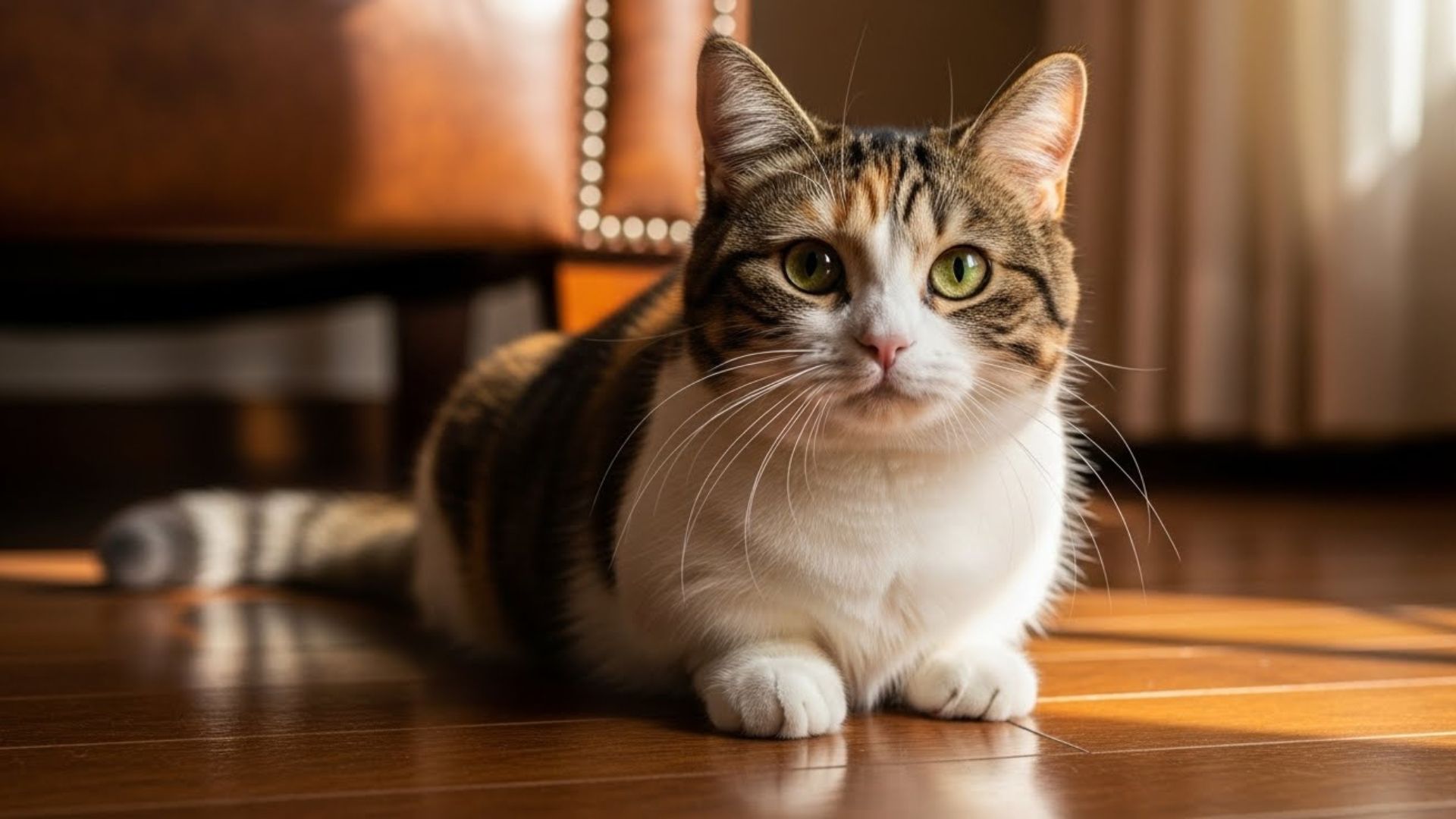
Not every cat dreams of scaling bookshelves or surveying the room from the highest perch. Some breeds are far more content, keeping all four paws firmly on the ground, favoring comfort, stability, and easy access to their favorite people. These cats bring a calm, reassuring presence to the home and are often happiest lounging nearby rather than climbing to new heights.
Ground-preferring cats tend to have sturdy, muscular builds and a relaxed approach to daily life. Their physical structure often makes jumping less appealing, and their personalities lean toward steady companionship instead of constant exploration. This doesn’t mean they lack charm or affection—quite the opposite. Many of these cats are famously cuddly, people-oriented, and loyal, offering quiet companionship that feels warm and dependable.
For owners who prefer fewer counters invaded and less concern about toppled décor, these breeds are an excellent match. In this article, we’ll explore cat breeds that prefer ground level, highlighting why their down-to-earth nature makes them such beloved companions in calm, cozy households.
7 Cat Breeds That Prefer Ground Level
1. British Shorthair
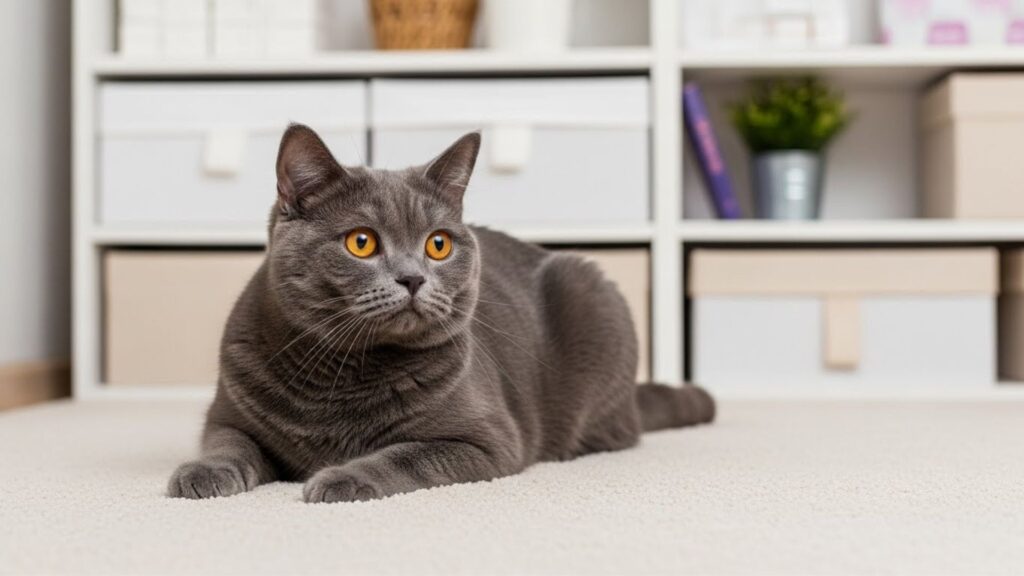
Also known historically as the British Blue, this breed is one of the oldest pedigreed cats, admired for its round face and sturdy, muscular build.
According to Britannica, British Shorthairs have a short, thick tail and are known for their calm, gentle nature and easygoing temperament.
Descended from cats brought to Britain during Roman times, the British Shorthair is calm, confident, and unmistakably teddy-bear-like in appearance.
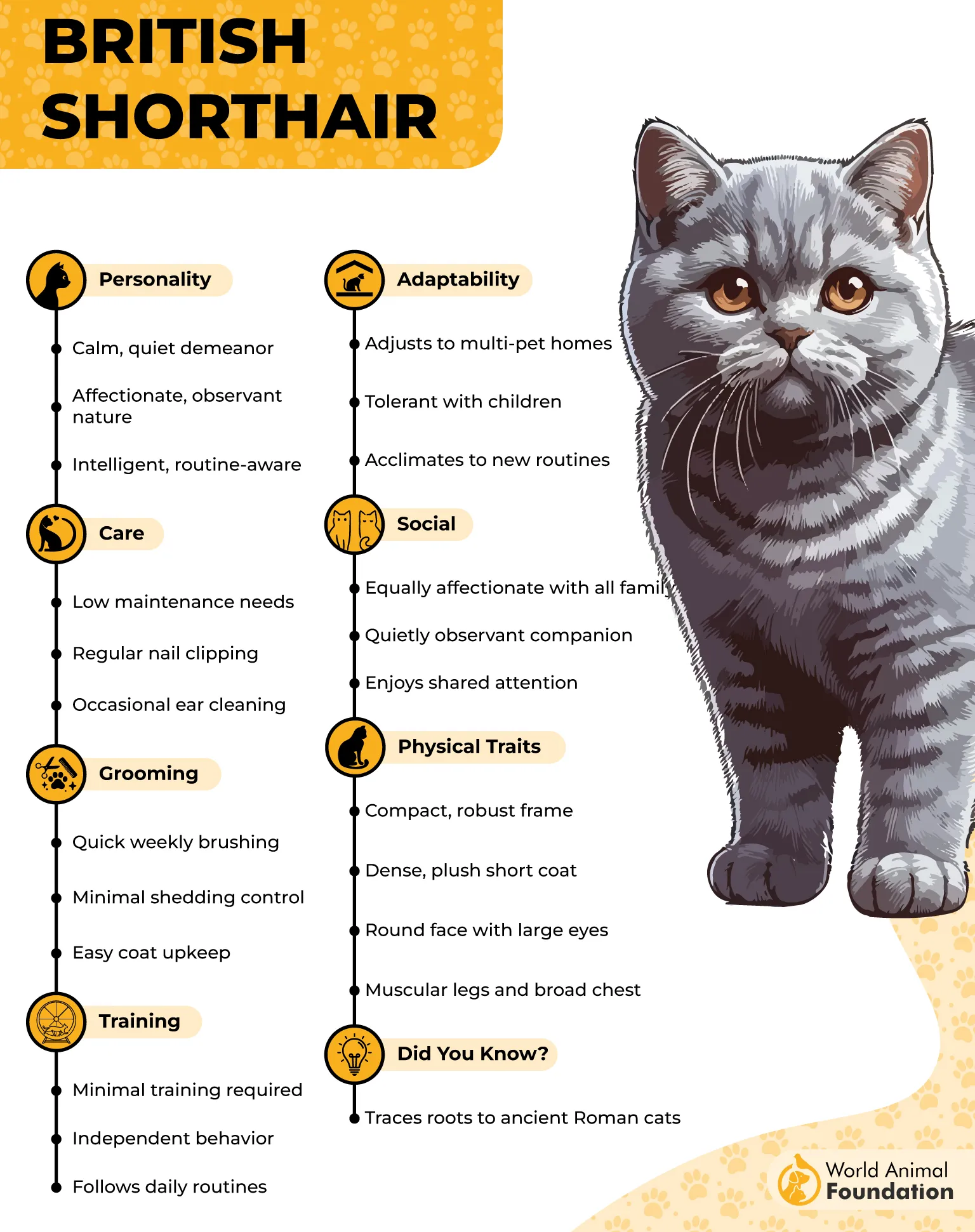
Their solid frame and short, powerful legs help explain why British Shorthairs prefer staying close to the ground. Unlike more agile climbers, they’re happiest supervising household activity from floor level or a low sofa rather than leaping onto counters or shelves.
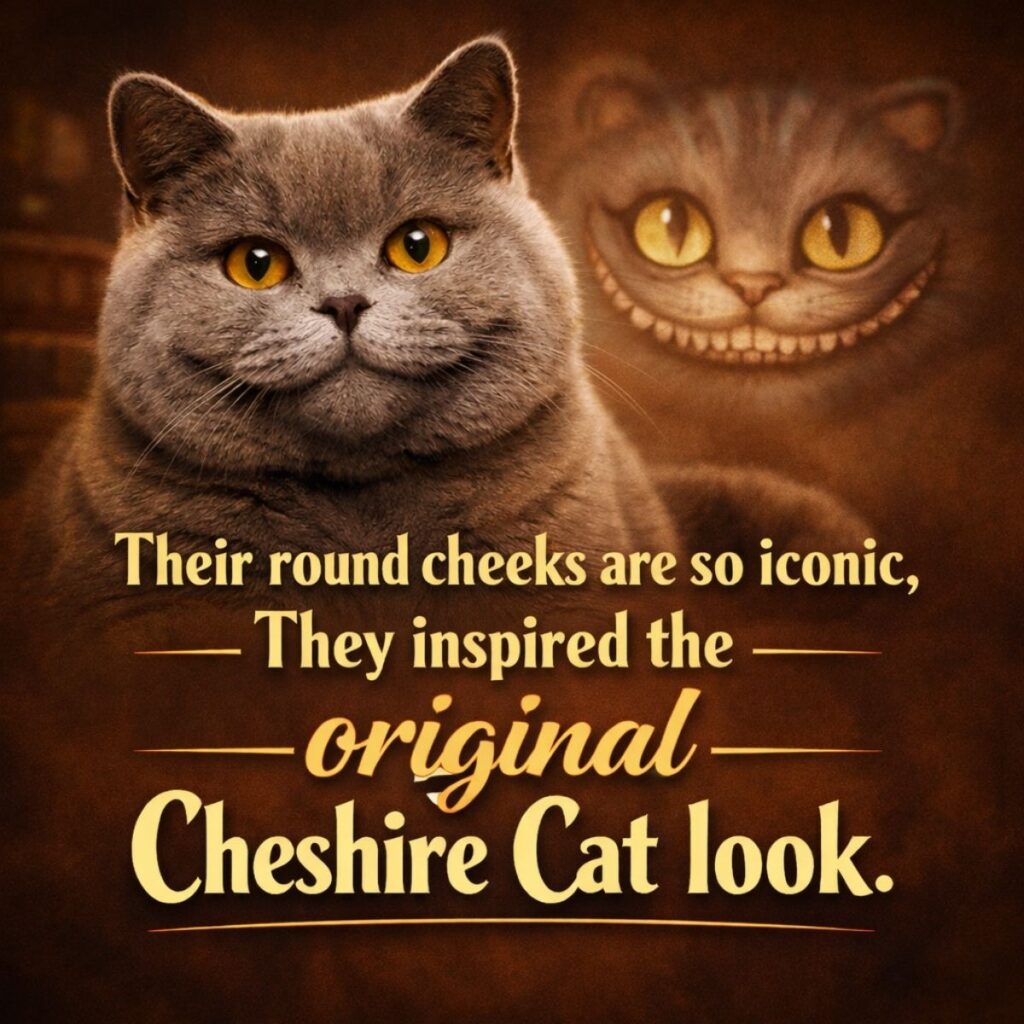
Personality also plays a role in this grounded preference. British Shorthairs are easygoing and observant, enjoying proximity to their people without constant physical interaction. They tend to follow routines, walk quietly from room to room, and settle nearby instead of seeking high vantage points.
Maintaining a healthy weight and predictable feeding schedule supports their comfort and mobility.
Fun fact: the British Shorthair’s coat has more hairs per square inch than any other cat breed, giving it its famously thick, plush texture.
2. Persian
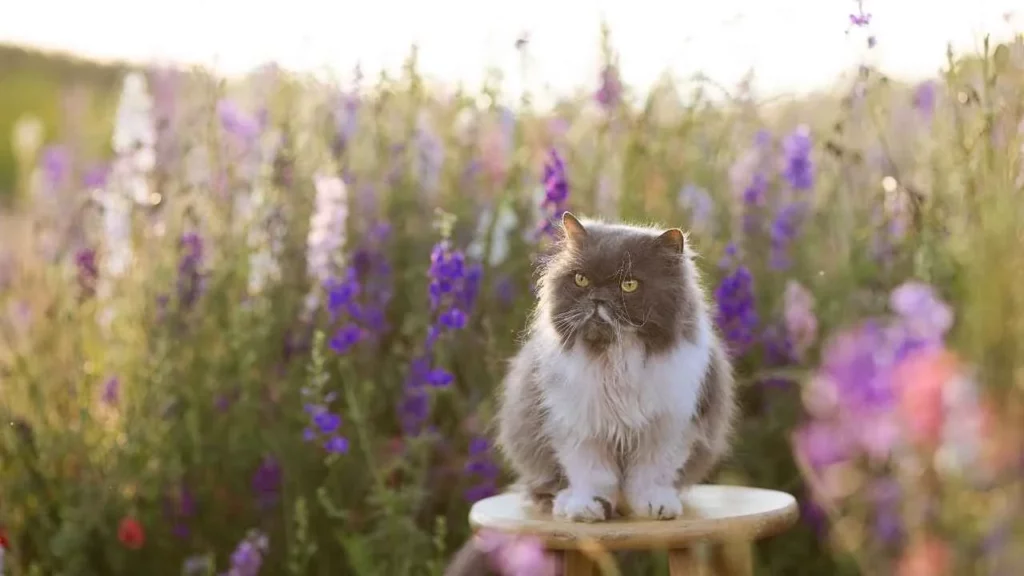
Also known as the Persian Longhair, this ancient breed originated in Persia (modern-day Iran) and is celebrated for its flowing coat, round face, and serene expression.
According to PetMD, Queen Victoria owned two Persian cats, and in 1871 this highly sought-after breed won attention with a show-winning appearance at the first modern cat show. With a compact, sturdy body and short legs, the Persian is built more for comfort than climbing.

Persians are famously ground-oriented cats, preferring soft floors, couches, and laps over shelves or high perches. Their calm temperament and low-energy lifestyle make them content staying close to their humans rather than exploring vertical spaces.
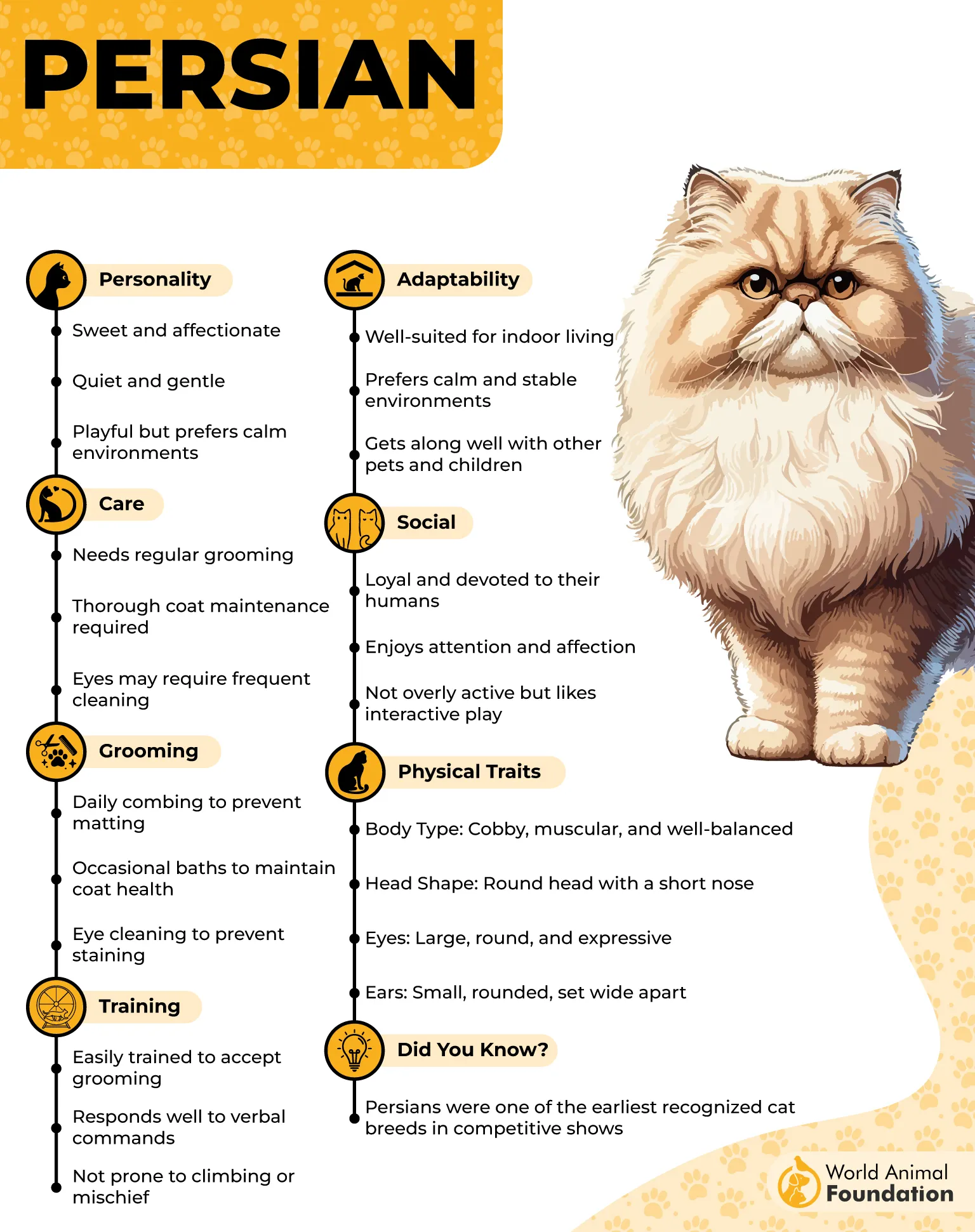
Instincts and anatomy play a major role in this behavior. A broad chest, short limbs, and a heavier coat reduce agility, while their brachycephalic (flat-faced) structure favors relaxed movement instead of jumping or leaping.
These cats thrive in quiet indoor environments with predictable routines and cozy resting spots at floor level.
Fun fact: Persians are known to express affection through gentle behaviors like kneading, slow blinking, and choosing to nap beside—or directly on—their favorite person.
3. Ragdoll
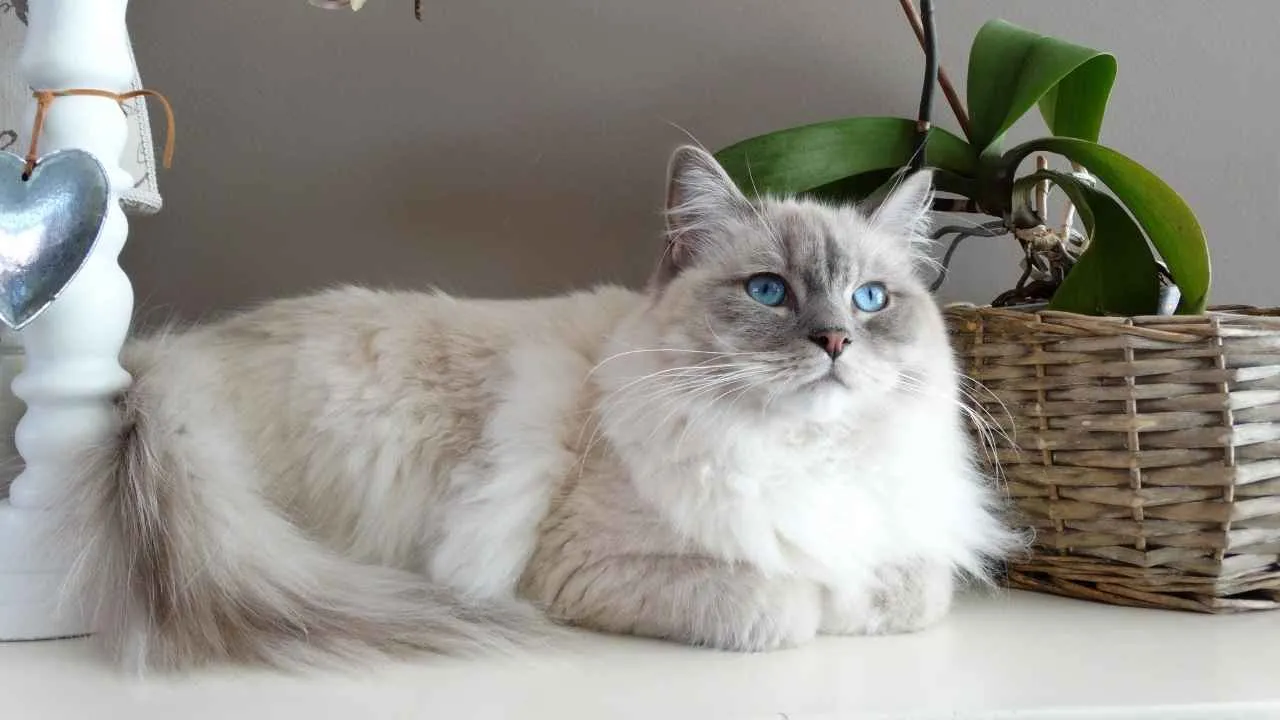
Also known simply as the Ragdoll cat, this large, blue-eyed breed is famous for its tendency to go limp when held, a trait that inspired its name.
According to WebMD, Ragdoll cats are a relaxed and patient breed. With a soft, semi–long coat and a sturdy frame that can reach up to 20 pounds, the Ragdoll is built more for lounging than leaping.
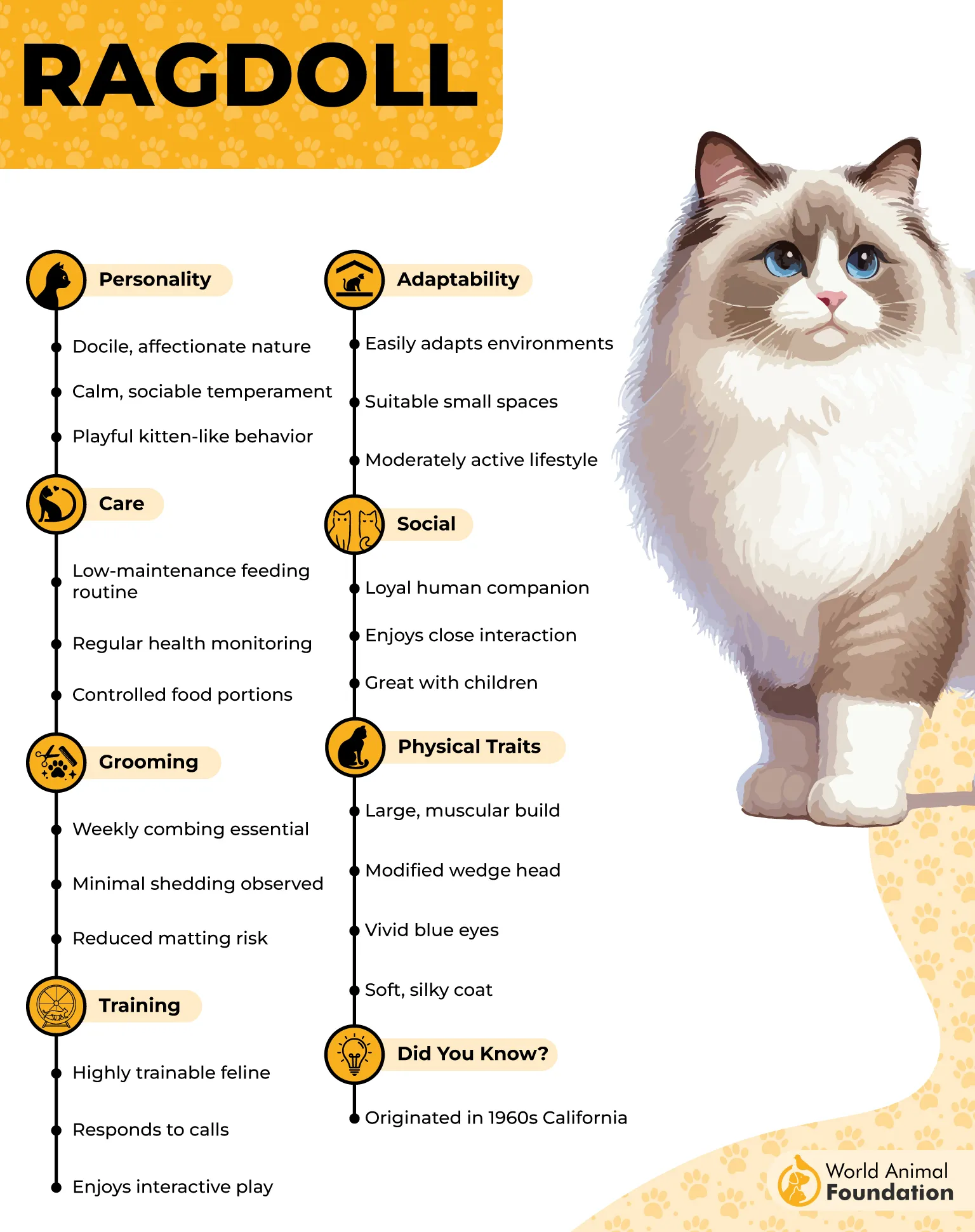
When it comes to ground-level living, Ragdolls are a natural fit. Their calm demeanor and heavy build mean they’re far more interested in stretching out on the floor or settling into a nearby lap than climbing shelves or perching on high furniture.
Temperament plays a key role in this preference. Ragdolls are trusting, affectionate, and emotionally attuned to their people, often choosing to follow family members from room to room and relax close by rather than seeking vertical adventures.
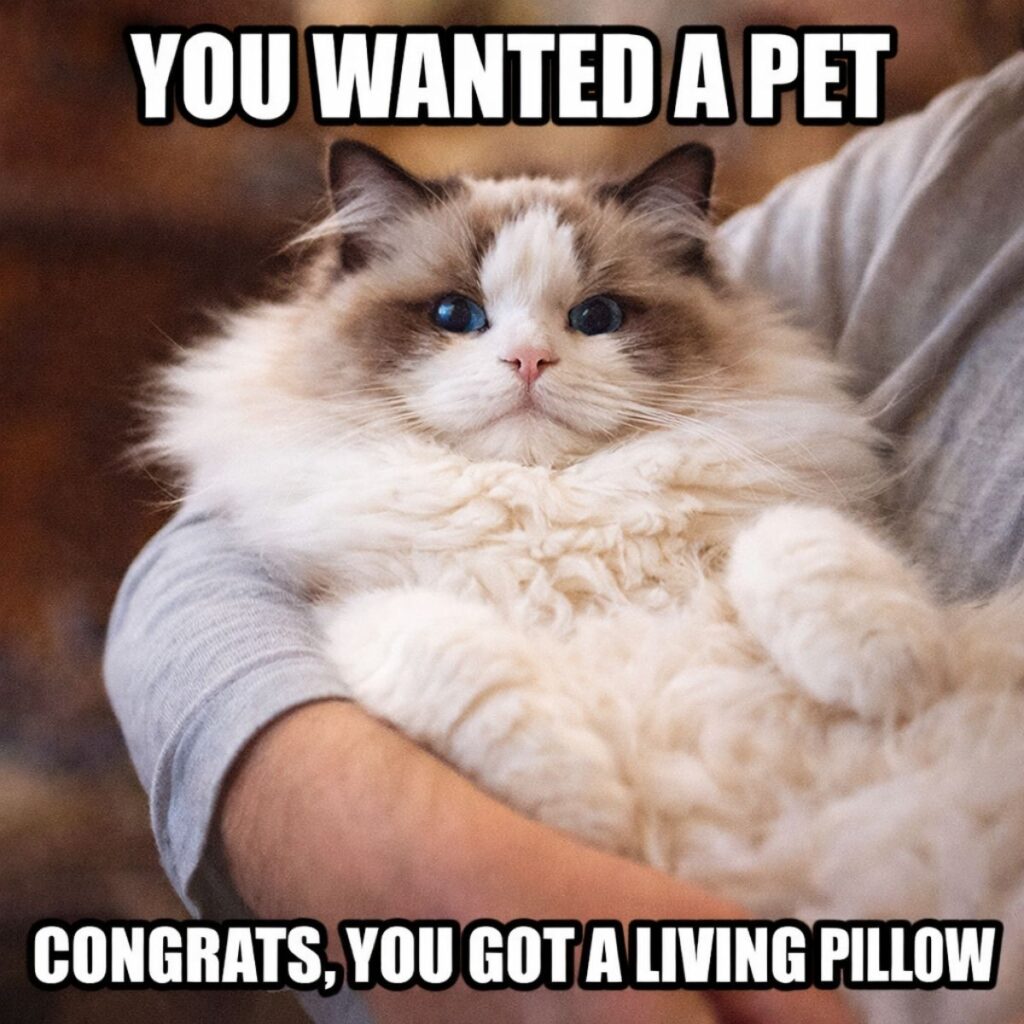
Their low-key energy makes them ideal for households that value peaceful companionship over constant activity.
Fun fact: the Ragdoll’s famously relaxed nature often causes them to completely flop when picked up or cuddled.
4. Exotic Shorthair
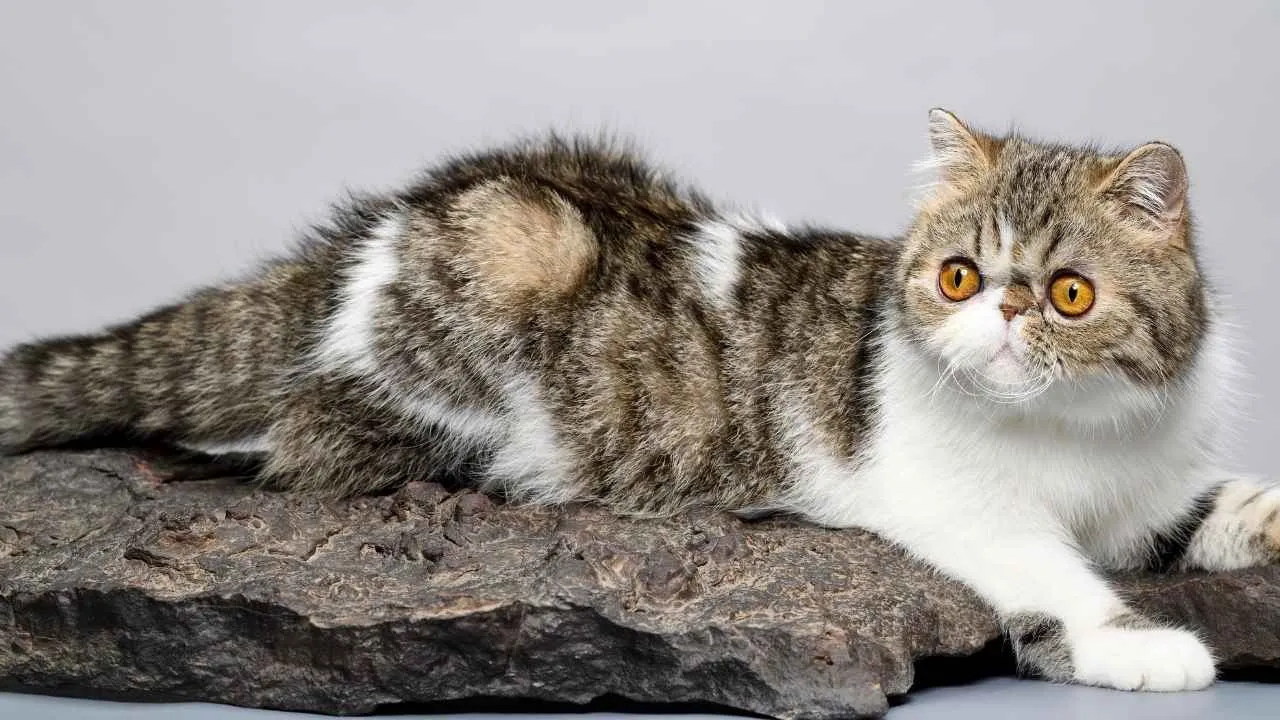
Often nicknamed the “lazy Persian,” the Exotic Shorthair is a medium-sized breed developed in the United States, closely resembling the Persian but with a short, plush coat. Its round face, dense fur, short legs, and compact body naturally keep it closer to the ground than many agile climbers.
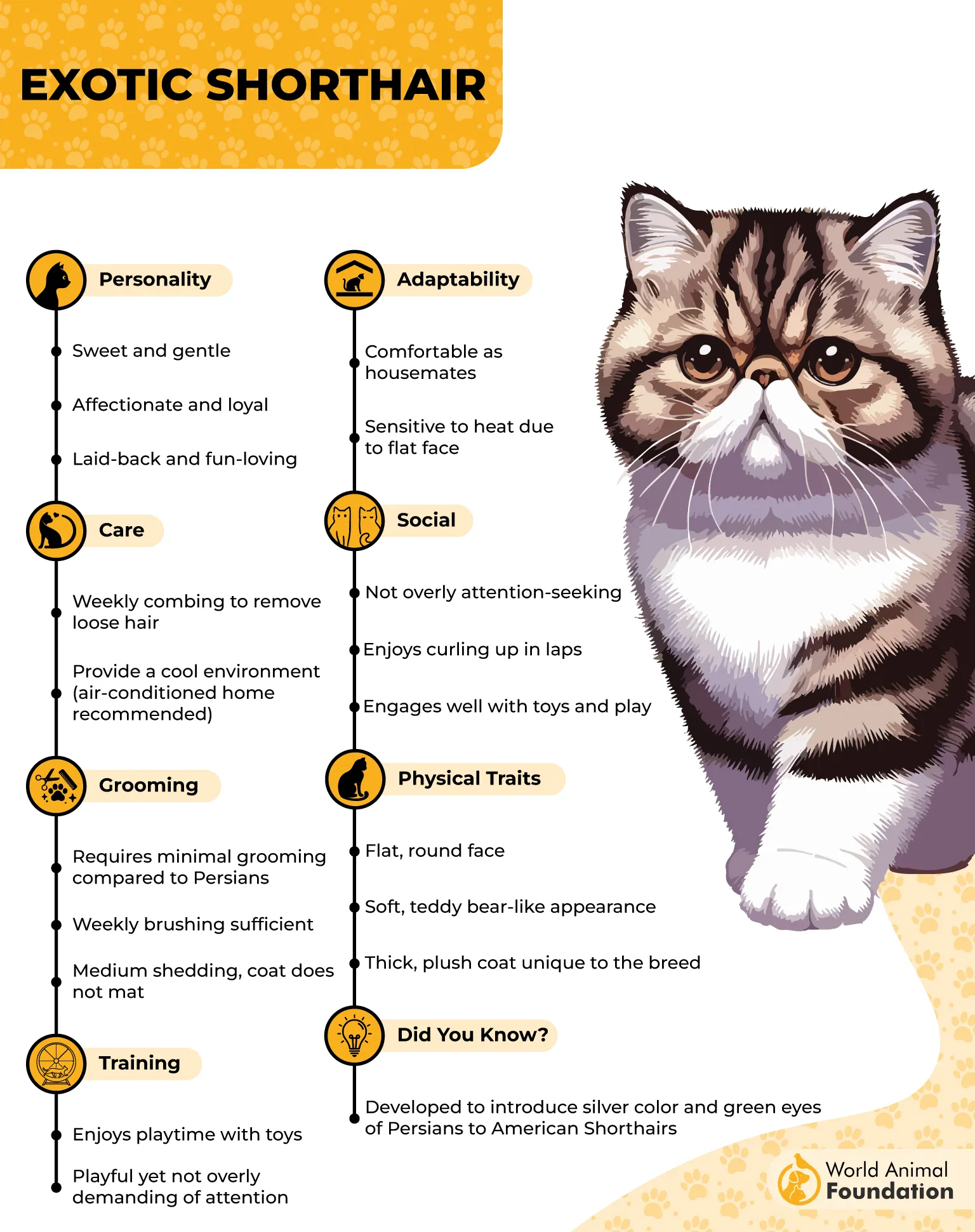
When it comes to vertical activity, the Exotic Shorthair prefers comfort over height. Their sturdy build and low energy levels mean they’re far more likely to lounge on sofas or floors than leap onto shelves or cabinets.
Environment plays a key role in shaping this behavior. Homes with cozy floor-level beds, accessible toys, and limited vertical obstacles suit them best, encouraging gentle movement without pushing excessive jumping or climbing.
While playful in short bursts, they favor ground-based games like chasing laser pointers or feather toys.
Fun fact: Exotic Shorthairs are known for having short legs that naturally keep them lower to the ground.
5. Scottish Fold
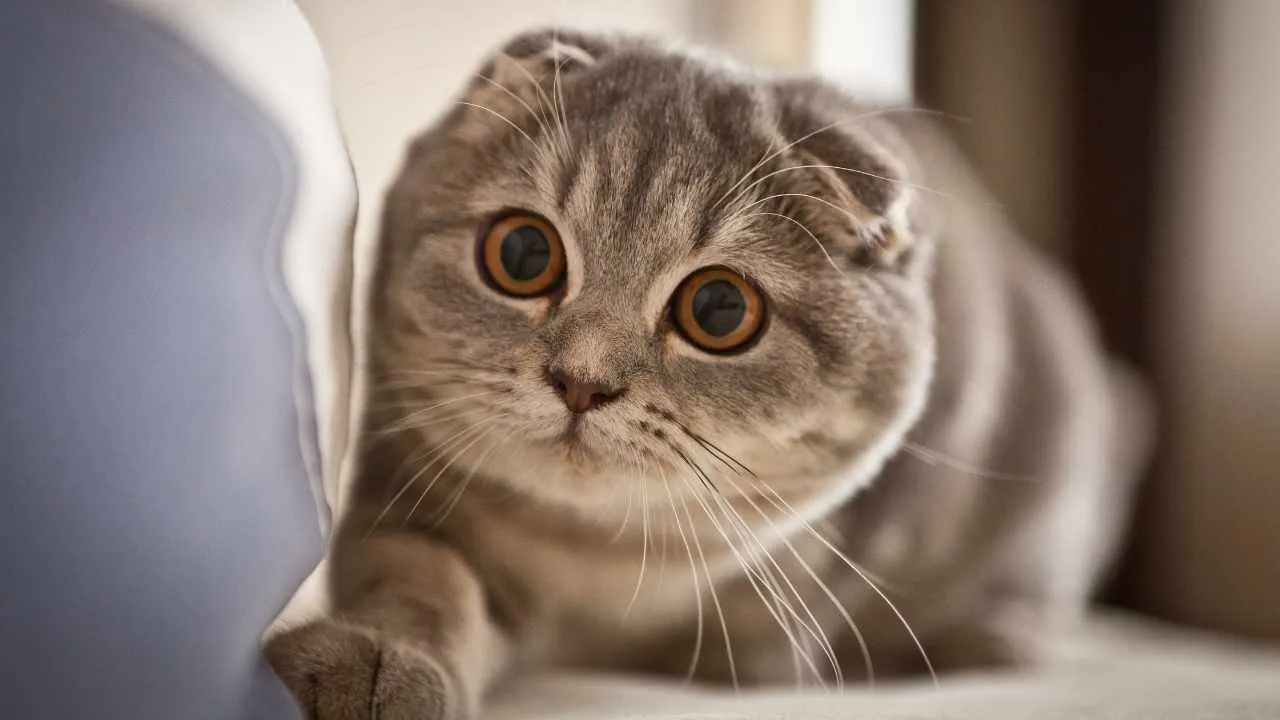
Also called the Fold, the Scottish Fold originated in Scotland and is known for its round face, plush coat, and distinctive forward-folded ears. This medium-sized cat has a gentle expression and a calm demeanor that often appeals to families seeking a relaxed companion.

Scottish Folds are frequently described as laid-back, but their preference for staying close to the ground is closely tied to physical comfort. A genetic mutation affecting cartilage can limit mobility, making jumping and climbing less appealing for this breed.
When considering the best home setups for ground-level cats, Scottish Folds benefit from soft bedding, low platforms, and easily accessible food, water, and litter areas. Minimizing the need for stairs or high perches helps reduce strain on their joints.
Regular veterinary care and attentive observation are essential to maintain quality of life.
Fun fact: the same gene responsible for the Scottish Fold’s folded ears causes osteochondrodysplasia, a condition that affects bone and cartilage development throughout the body.
6. Birman
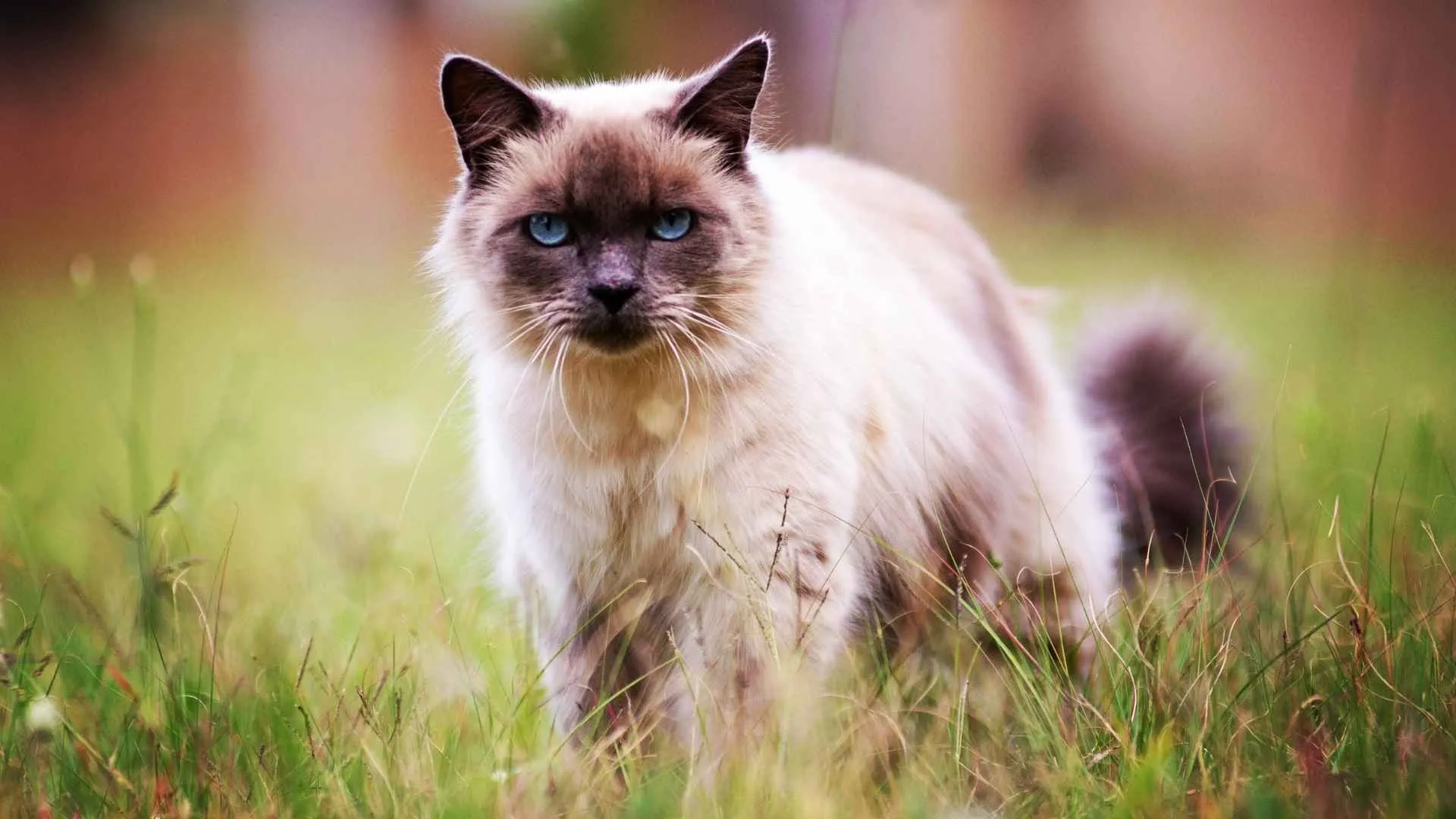
Also known as the Sacred Cat of Burma, the Birman is a medium-to-large, stocky breed with striking blue eyes, color-pointed markings, and distinctive white “gloves” on each paw. With a muscular body and calm demeanor, this breed is more grounded than acrobatic by nature.

Birmans generally prefer staying closer to floor level, choosing to follow their owners from room to room rather than leaping onto high shelves. Their balanced energy level and sturdy frame make them more comfortable with gentle play and low climbing rather than constant jumping.
When considering health and mobility, maintaining a healthy weight is especially important for Birmans. Their naturally solid build means excess weight can place strain on joints, so regular play, controlled portions, and moderate activity help support long-term mobility.
Their single, silky coat is easy to maintain and doesn’t hinder movement, but routine checkups remain essential.
Fun fact: despite their long, luxurious appearance, Birmans have no undercoat, which makes grooming simpler and reduces matting.
7. Chartreux
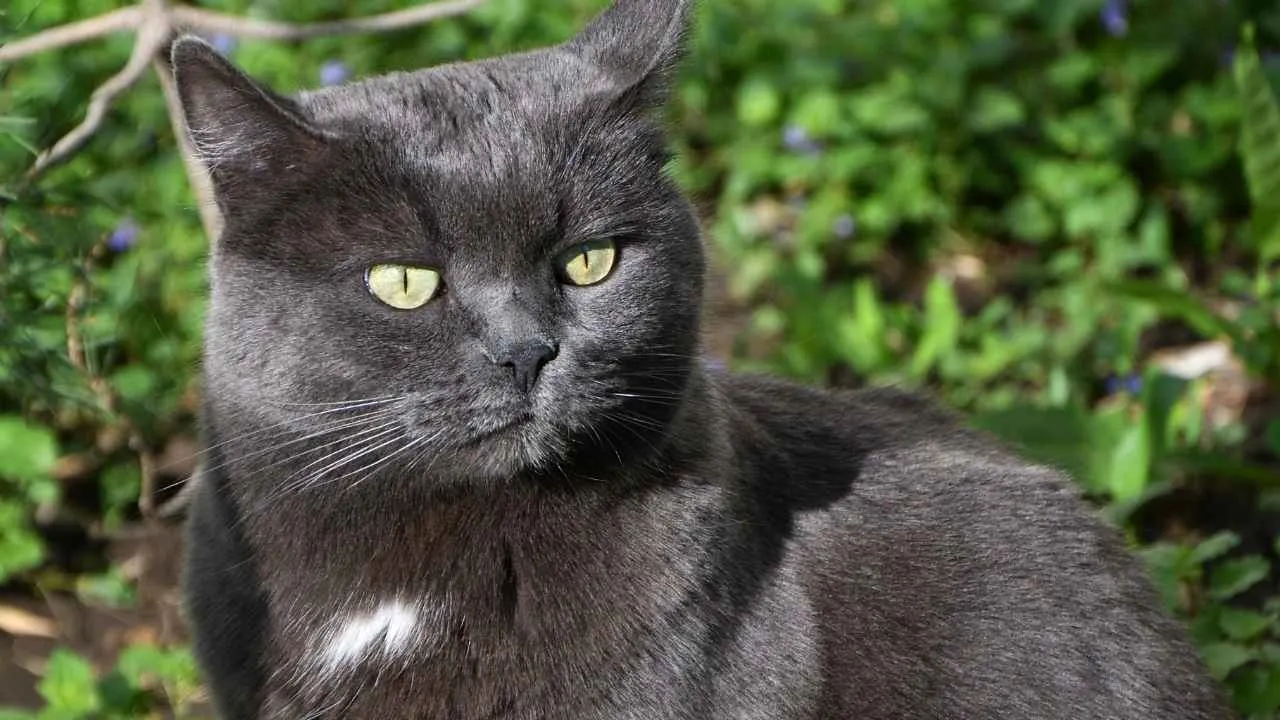
Also known as the French Blue, the Chartreux is a historic breed linked to French monasteries and royalty. It’s instantly recognizable by its blue-gray coat, quiet demeanor, and sturdy, muscular body often described as “a potato on toothpicks.”
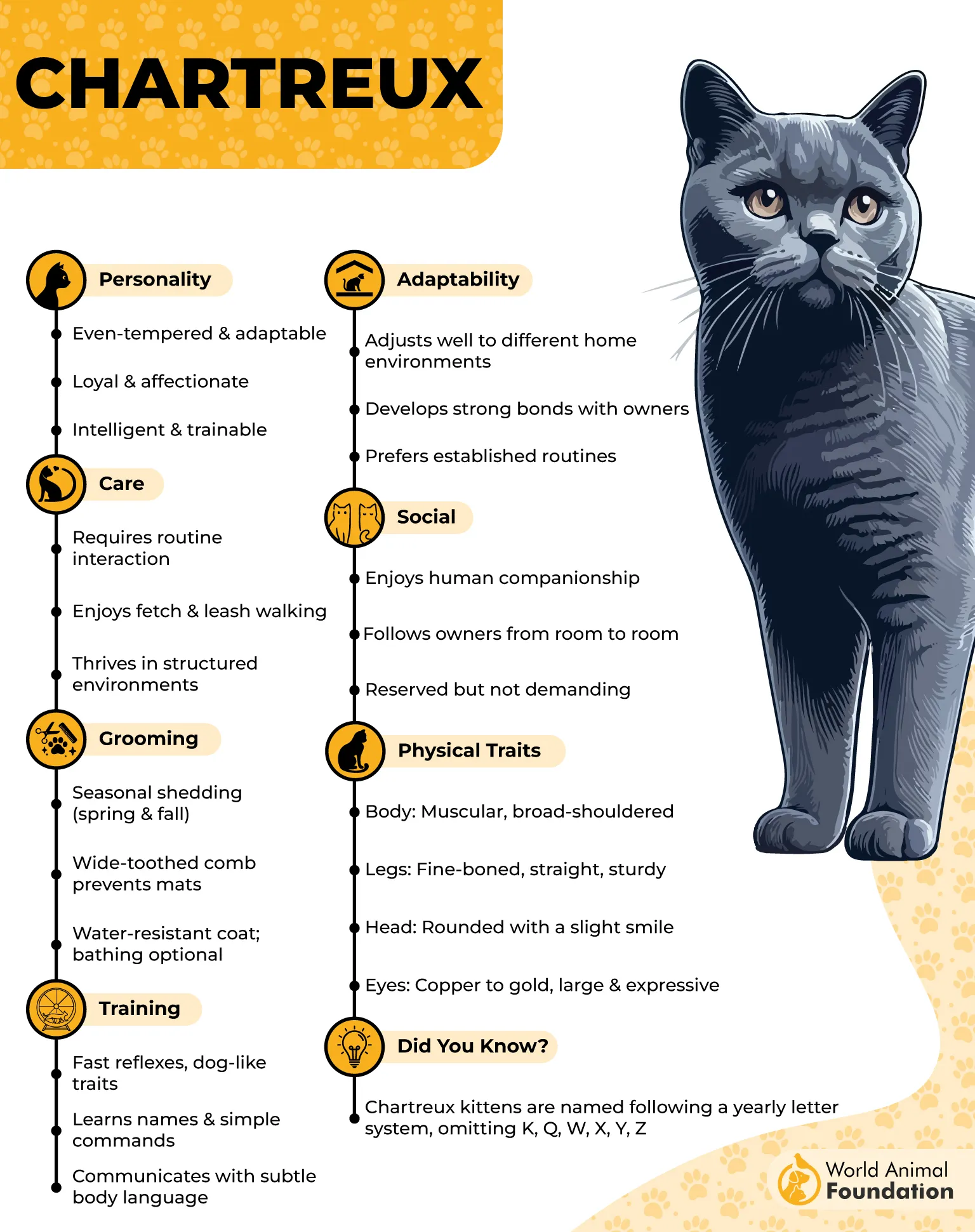
Built with a compact frame, broad chest, and powerful muscles, the Chartreux tends to feel most comfortable staying grounded. Rather than seeking high perches, this breed prefers patrolling floors and lounging nearby, which aligns perfectly with a ground-level lifestyle.
When considering indoor vs. outdoor life, Chartreux cats adapt best to calm indoor environments where they can move freely without excessive climbing. Their quiet nature and strong bond with their people make them well suited to homes that value low-key companionship over constant activity.
Regular play at floor level helps keep them fit without stressing their joints or encouraging risky jumps.
Fun fact: Chartreux cats are much heavier than they appear due to their dense musculature.
Conclusion
Cat breeds that prefer ground level remind us that cats are known for diverse habits, and not all cats feel drawn to heights. Certain cat breeds with a sturdy or athletic build, such as the Manx cat or other calm cats, show a natural inclination to stay low, valuing stability over climbing cat trees.
These indoor cats often display a quiet and composed nature, making them a best bet for apartment living, where mental stimulation, physical stimulation, and environmental enrichment can be provided without vertical risk.
While savannah cats and other high energy or highly active breeds thrive on outdoor exploration, ground-loving cats are highly adaptable and easily adapt to life indoors with human company.
ven a rescue cat or new cat may prefer floor play, playing fetch, or to chase things rather than climb. With the right balance of enjoy playing, learn tricks, and safe routines, these gentle, highly intelligent companions become some of the best cat breeds for relaxed homes.
Cat Breeds Ground Level: Can You Score 5/5? 🐱
Which breed is historically known as the British Blue?
Why do Persians typically avoid climbing high places?
What unique trait gave the Ragdoll its name?
What condition affects Scottish Folds due to their ear gene?
Which breed is nicknamed the “French Blue”?
