




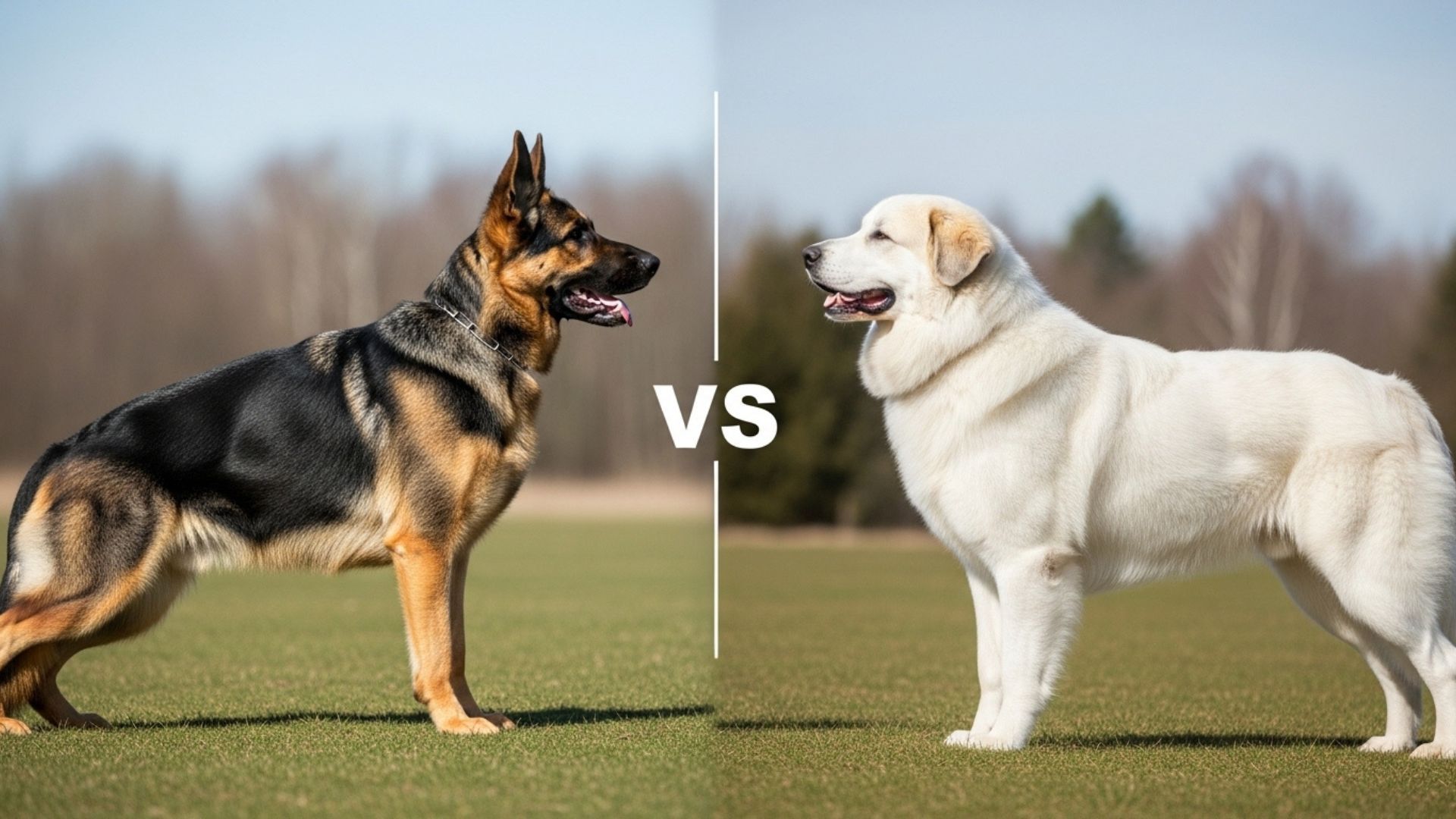
Choosing between the German Shepherd and the Great Pyrenees is more than a matter of size or appearance—it’s about lifestyle, purpose, and personality.
One is a sharp-minded, high-energy working dog known for obedience and versatility, while the other is a calm, majestic guardian bred to protect with quiet confidence.
Understanding the essential differences between these two remarkable breeds—from temperament and training to care and living needs—can help you decide which one truly fits your home and expectations.
In the case of German Shepherd and Great Pyrenees breeds, the decision becomes more profound as both are powerful, loyal dogs and, in different ways, protective.
Though both breeds may appear alike at first in terms of size and strength, their characters, daily requirements, and ways of bonding are very different.
A German Shepherd is eager to share its work with you. On the other hand, a Great Pyrenees would rather be your silent protector. Knowing these differences will save you a lot of trouble in the long run and will help you in picking a pet that is best suited for your home.
Essential Differences: German Shepherd vs Great Pyrenees Dog Breeds
Overview
Although both breeds are working dogs, their original purposes completely determined their temperaments. German Shepherds were developed for herding and service work. Additionally, Great Pyrenees were bred to guard livestock independently in mountainous regions.
This history tells why one breed looks for commands while the other follows its instincts.
Before going into detailed comparisons, it is necessary to treat each breed as a character instead of merely a pet.
Size & Build Differences
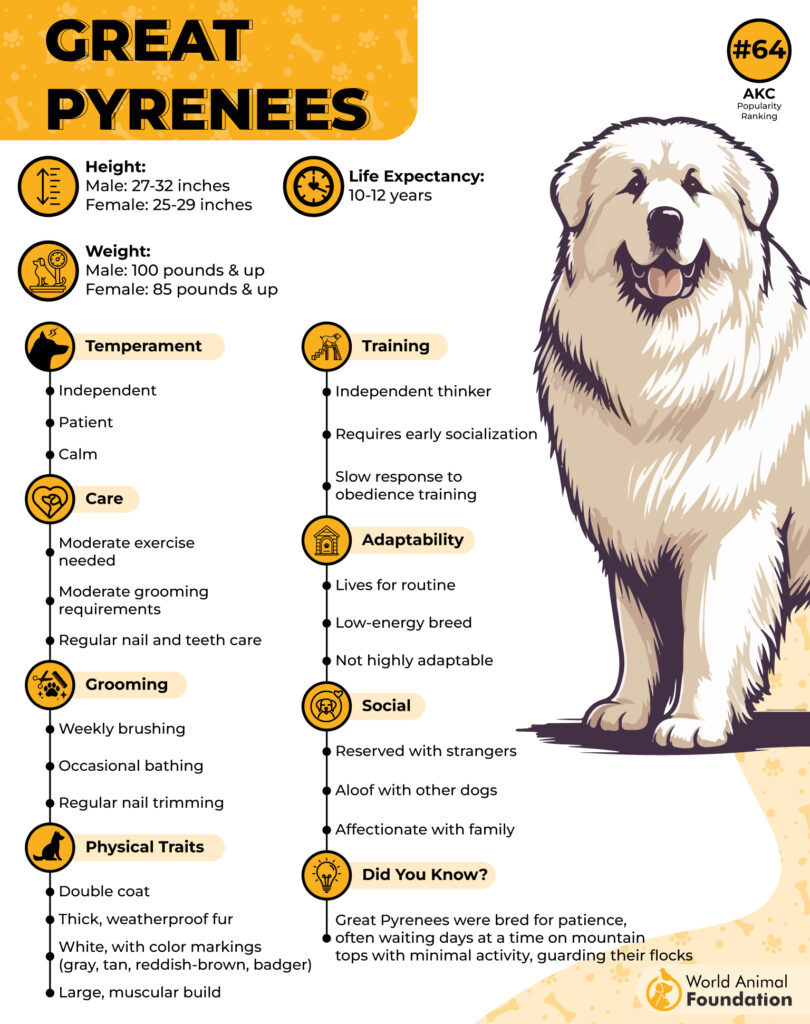
The Great Pyrenees is a dog that is obviously bigger and heavier. Such dogs, when fully grown, usually take up 25-32 inches in height and 85-100+ lbs in weight. Their size makes them not athletic but rather calm and grounded.
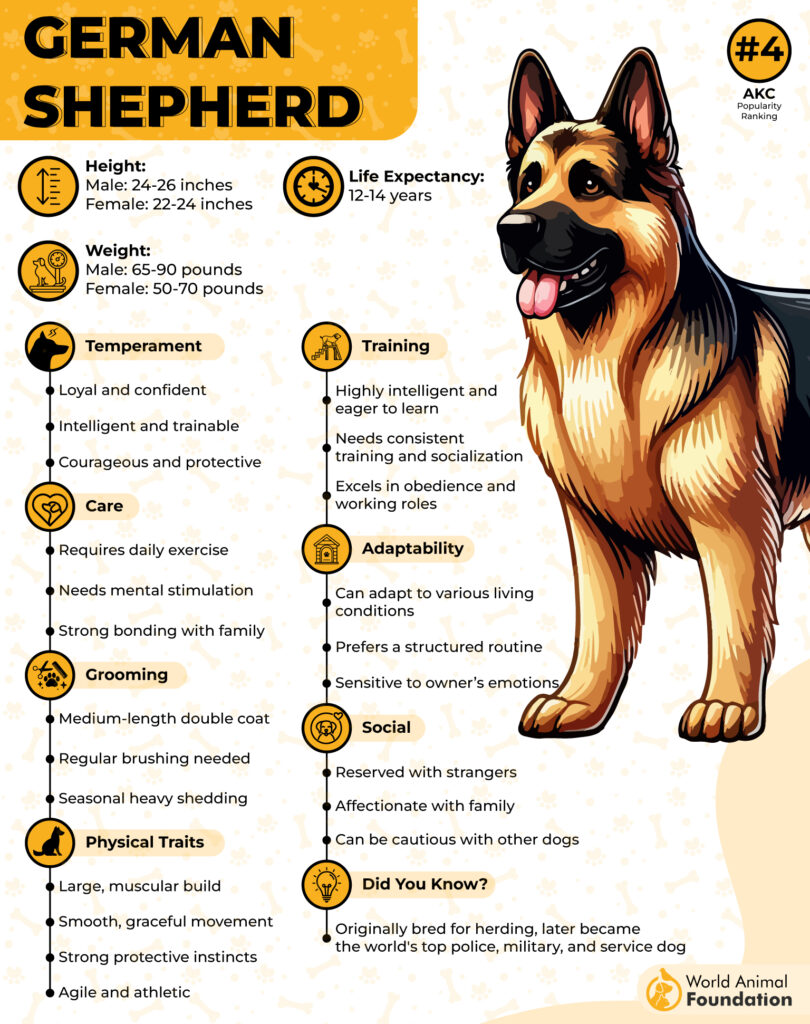
German Shepherds, on the other hand, are a little smaller, measuring 22-26 inches in height and weighing 50-90 lbs. Their physique is thin, muscular, and endurance-like as opposed to bulk.
As per Britannica, German Shepherds were created for movement and quickness, and Great Pyrenees developed the power to guard for hours without moving.
Temperament & Personality
Great Pyrenees dogs, by nature, are always quiet and tolerant. They treat humans in the family gently, and they softly express love. They don’t constantly demand attention but are emotionally there.
They are very loyal to the family but not overly aggressive. Their vigilance is perceived as that of a thinker rather than a stimulator. PetMD points out that Pyrenees dogs generally observe first and then act, relying on their judgment.
On the contrary, German Shepherds create very strong ties. They need constant interaction and are very inclusive. They are self-assured, watchful, and ready to do anything for their owners.
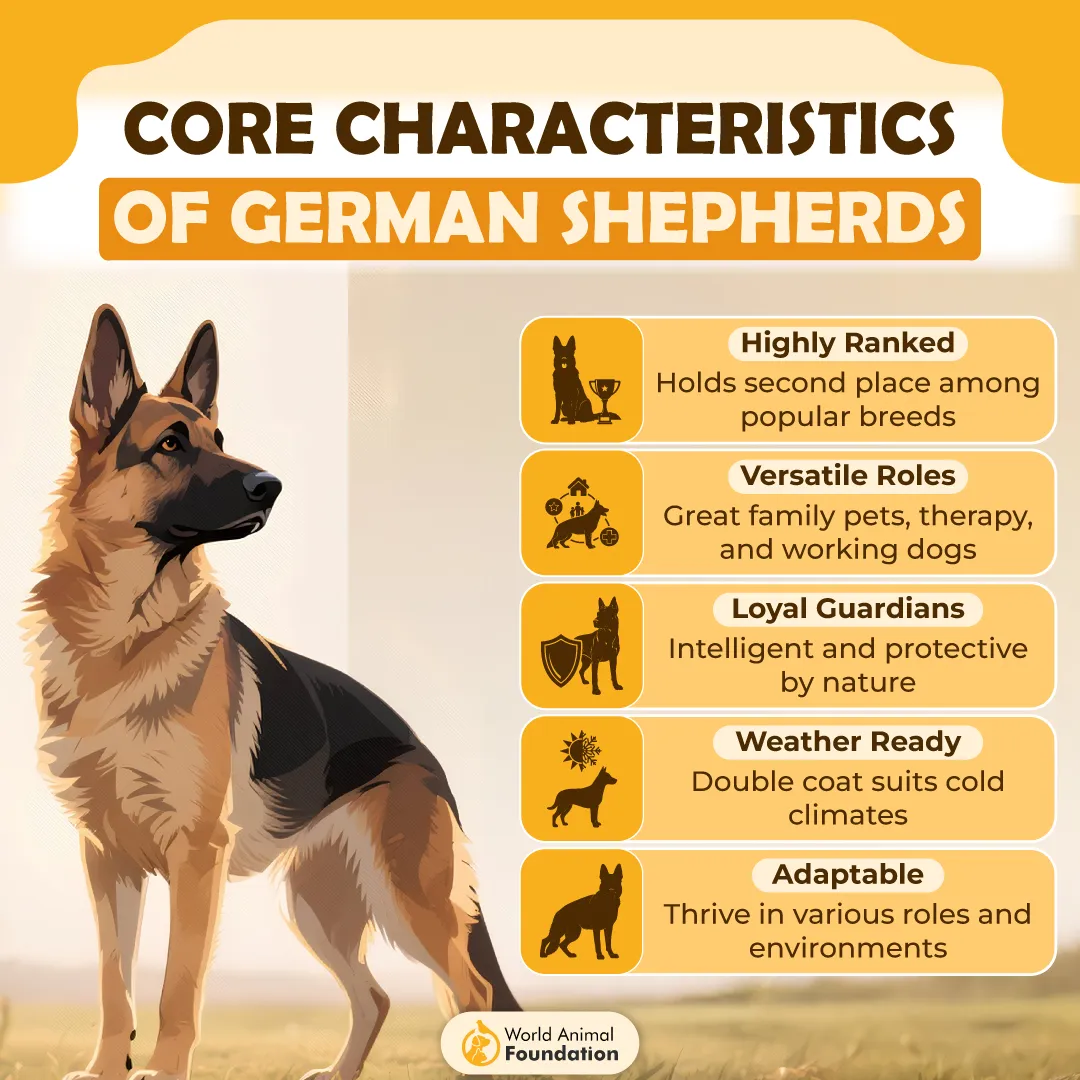
If not socialized properly, Shepherds could be doubtful about strangers. But with training, they can be transformed into steady and trustworthy partners.
Exercise & Energy Levels
Great Pyrenees generally have low-to-moderate energy levels. They like to have slow walks, mental stimulation, and outdoor time under supervision. Daily activity of about one hour is sufficient.
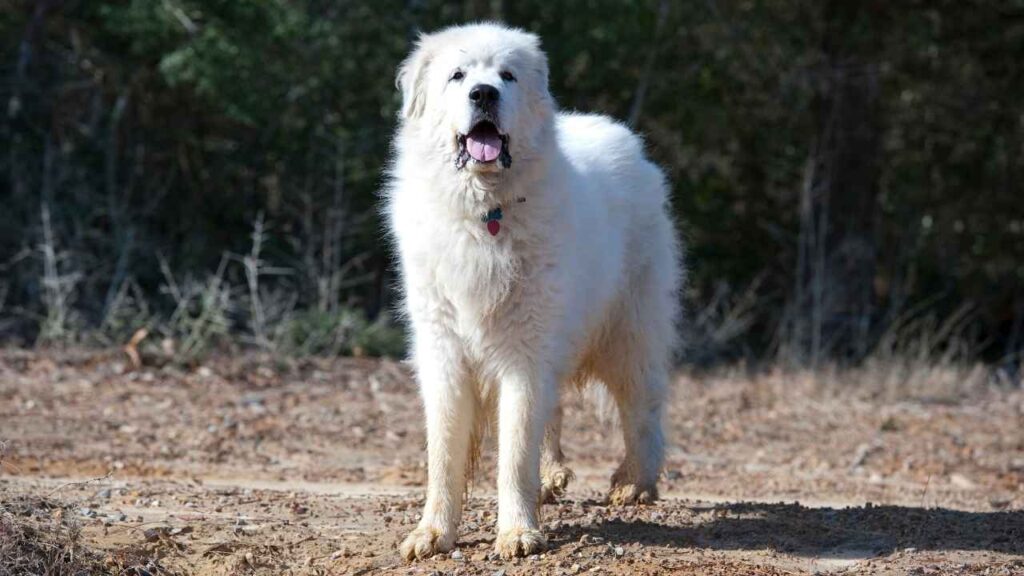
They are naturally energy savers and do not prefer any strenuous or repetitive workouts. High-energy routines can cause stress in guardian breeds, said VCA Animal Hospitals.
German Shepherds, on the other hand, burn a lot more calories than they need. Two to three hours of daily or even more vigorous exercise are necessary, if not always so, especially during the first year.
They can do jogging, hiking, agility, and obedience gaming, etc., to remain mentally balanced. If not physically active, behavioral problems usually show up.
Training & Intelligence
The biggest difference in the wide variety of characteristics among the breeds is evident in the aspect of training. The Great Pyrenees is a breed of intelligent dogs, but not very trainable ones; they understand commands but might only follow them when they consider it important.
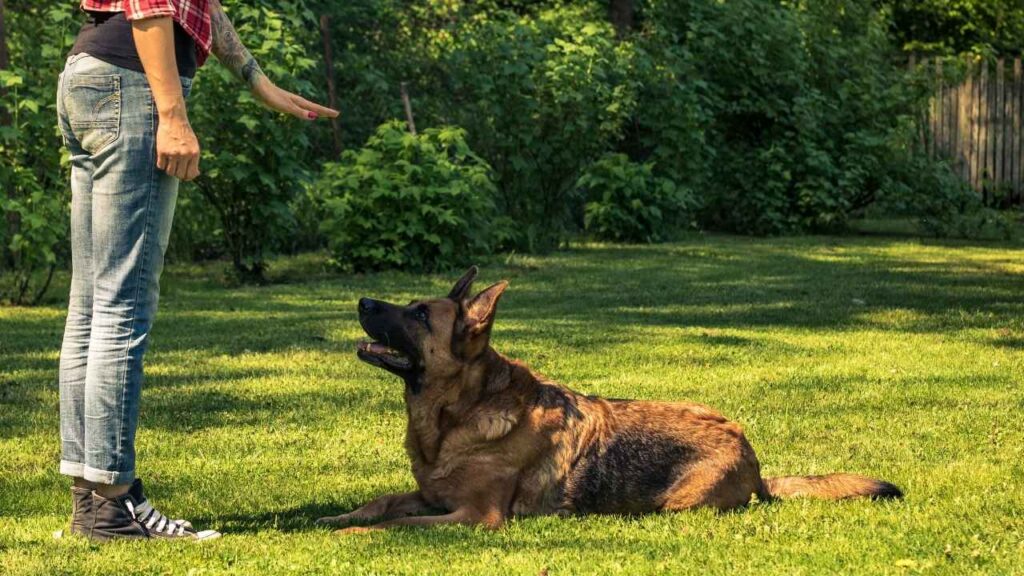
The Great Pyrenees should be treated with pure and unadulterated calmness, positive reinforcement, and short periods of training. Harsh training methods do not work at all. Being patient is the key while working with the Great Pyrenees.
German Shepherds rank among the most eager-behaved dogs worldwide. They want the owners’ leadership and supervision. Training is a process of confidence-building rather than resistance.
Obedience and socialization at an early stage are vital. The Shepherds are the ones who shine if they are given a task or responsibility.
Vocal Behavior
One of the characteristics of the Great Pyrenees is barking. This activity is not incidental but rather a part of their communication. The barking lets the family know about movement, sounds, or an unfamiliar presence.
The Pyrenees might bark at night, for instance, at delivery trucks, or even at shifting shadows. Being a livestock guardian dog breed, barking is the strongest instinct of the Pyrenees dogs.
The German Shepherd’s vocalize, but there is a purpose behind it. Whenever they sense something suspicious, they will inform the owner, but if well-exercised and trained, they will not be too loud.
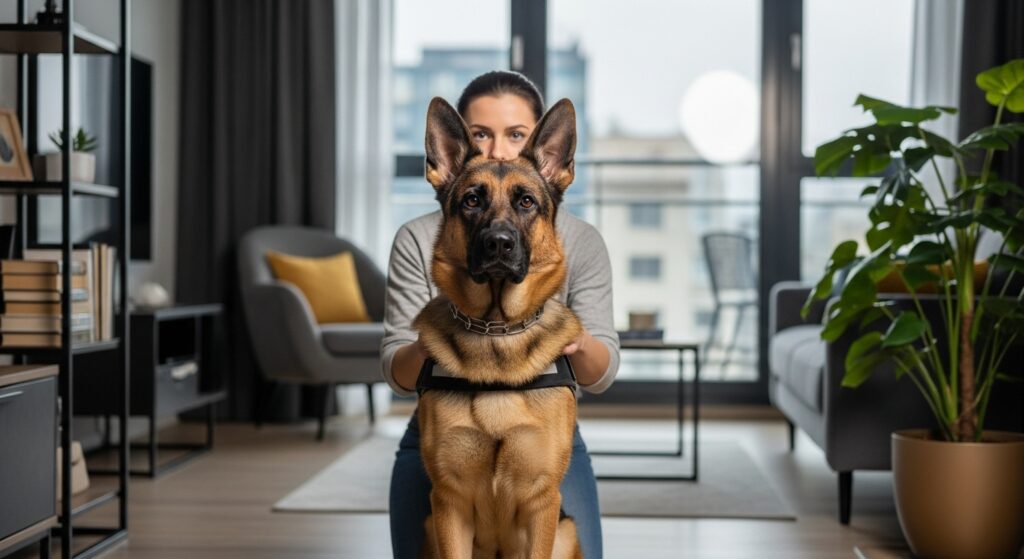
The Shepherd that is bored may bark more than the satisfied one.
Coat & Grooming
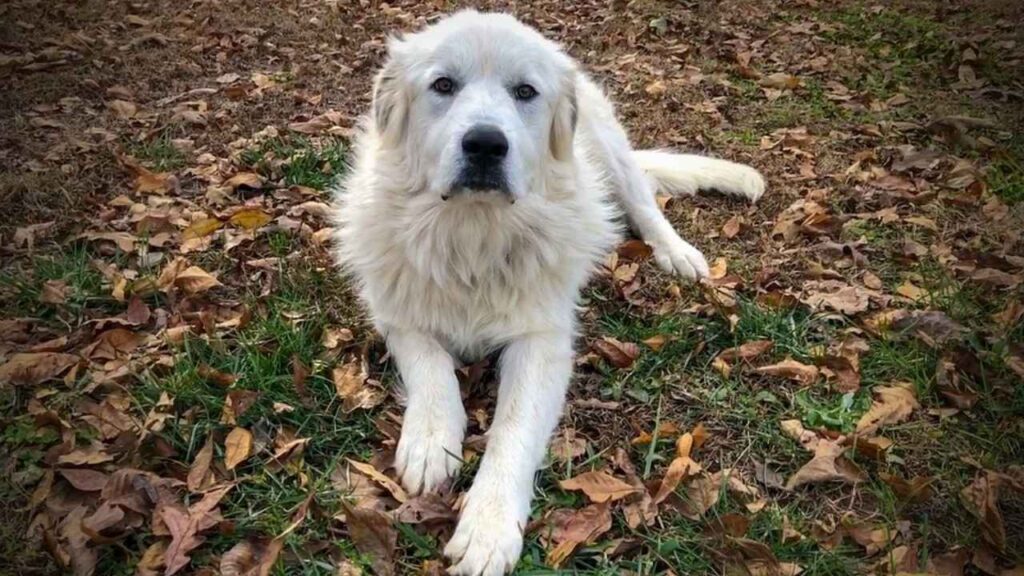
The Great Pyrenees possesses a hefty double coat that can survive the coldest weather. Additionally, this breed’s coat has a unique quality that enables it to fend off dirt and not get tangled.
Generally, weekly brushing is enough, but there is an increase in shedding during the seasons. Indoor shedding has been greatly reduced due to proper brushing.
German Shepherds, on the other hand, have a double coat too, but the shedding is more consistent. Occasionally, seasonal “coat blowing” takes place at the most intense level.
Apart from that, the dogs of both breeds will need similar grooming procedures, such as trimming of nails, cleaning of ears, and taking care of teeth, so as to keep them healthy and happy.
Health Issues & Lifespan
The Great Pyrenees has an average lifespan of 10 to 12 years. This breed is mainly at risk of having these medical conditions: bloat, joint issues (hip and elbow dysplasia), eye problems, and extremely rare neurological conditions.
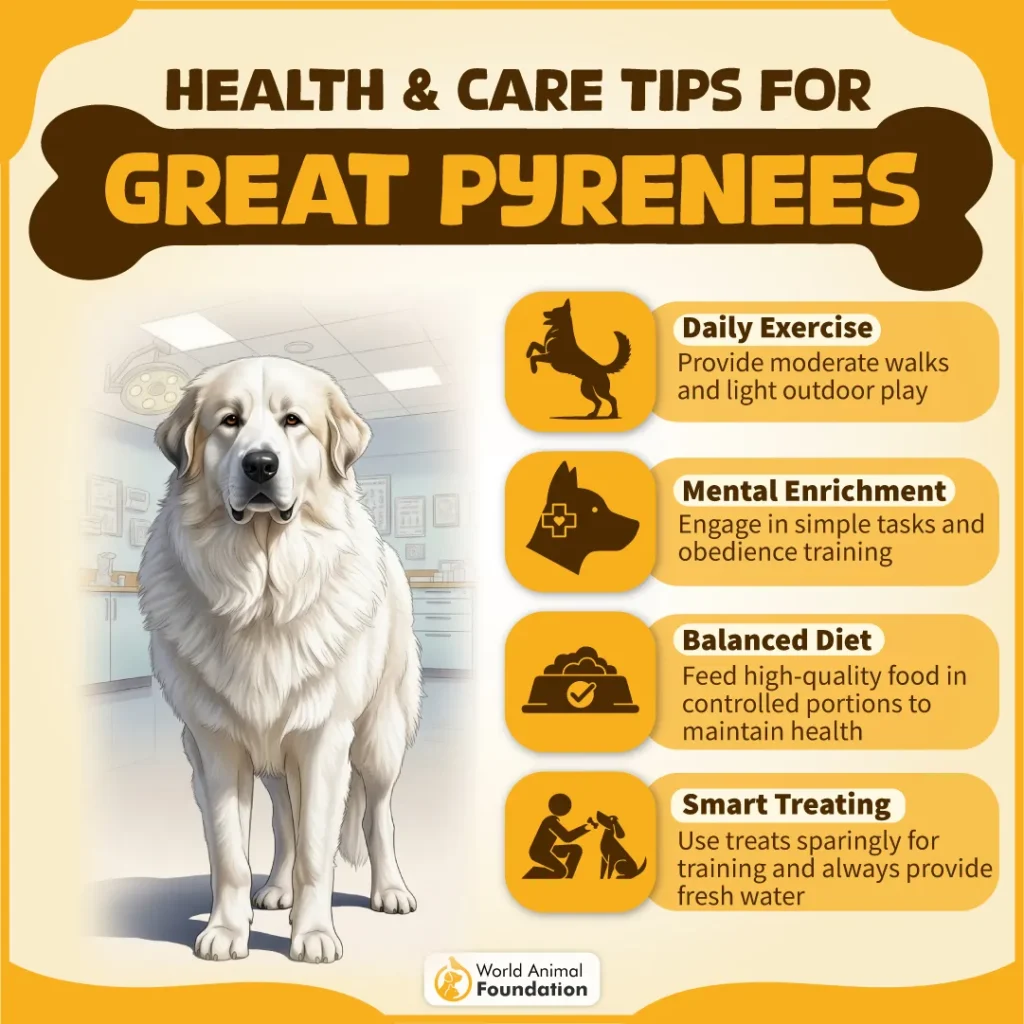
Besides, all these risks can be reduced by responsible breeding practices and proper weight management. It is advisable that the owner of a large dog breed should consider getting insurance in case of orthopedic issues.
The life span of the German Shepherd is 7-10 years, which is shorter than that of the Great Pyrenees. The act of overbreeding has led to an increase in common health problems.
The German Shepherd is prone to hip dysplasia, degenerative myelopathy, allergies, gastrointestinal issues, and heart disease. It is crucial to diagnose them early.
Suitability for Home Security vs Family Life
The Great Pyrenees dogs are very effective in passive security. Their mere existence is enough to drive away the intruders. They do the guarding very quietly and without showing any signs of aggression.
The Great Pyrenees dogs are perfect for those families that demand quiet protection and have sufficient space. That guardian breeds do best with owners who understand their independence.
German Shepherds are always on the go when it comes to protecting. They make quick responses and obey commands. They are fit for the specific security roles that are well-disciplined.
Children in the families usually get very close to the Shepherds, as long as training and supervision are regular.
Conclusion
While both the German Shepherd and the Great Pyrenees are intelligent and loyal breeds, they serve very different purposes. The German Shepherd excels as a highly trainable, energetic working dog that thrives on structure, activity, and close human guidance.
In contrast, the Great Pyrenees is a calm, independent guardian, best suited for spacious environments and owners who appreciate a more relaxed yet protective companion. Choosing between the two ultimately depends on your lifestyle, living space, and expectations from a canine partner.
