




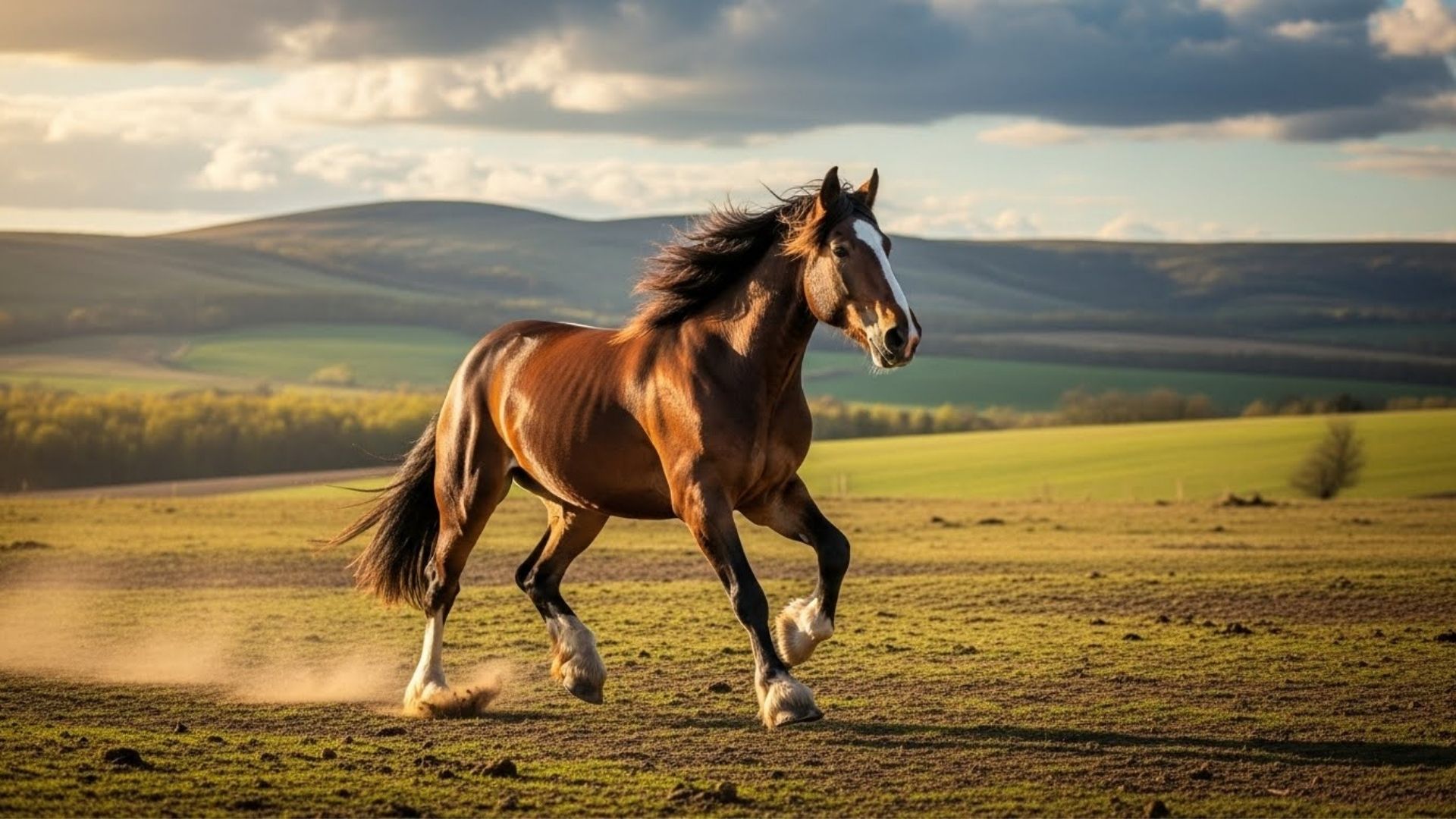
Social media feeds are filled with slow-motion videos of flowing hair, dramatic movement, and cinematic beauty. Horses with the longest manes dominate these moments, captivating viewers within seconds.
Their visual appeal fits perfectly into a world driven by imagery, where movement tells the story before words do. A long mane creates instant drama, turning simple motion into something worth watching again and again. Yet this fascination is not new.
Long-maned horses have captured human attention long before screens existed, appearing in art, folklore, and storytelling across cultures. Their appeal has endured because it feels natural rather than manufactured. The mane grows freely, responding to wind, motion, and time.
In this article, you will explore horses famous for their exceptionally long manes and understand why their flowing hair continues to captivate modern audiences and timeless traditions alike.
Key Takeaways
Horses with flowing, majestic manes instantly capture attention, turning every stride into a graceful display.
Friesians and Gypsy Vanners show off thick, wavy hair that frames powerful necks and complements elegant movement.
Icelandic horses and Andalusians use their long manes not just for beauty but for protection against wind, snow, and sun during their travels.
By the end, you’ll see which breeds turn ordinary movement into a visual spectacle of hair and grace.
Horses with the Longest Mane
1. Friesian
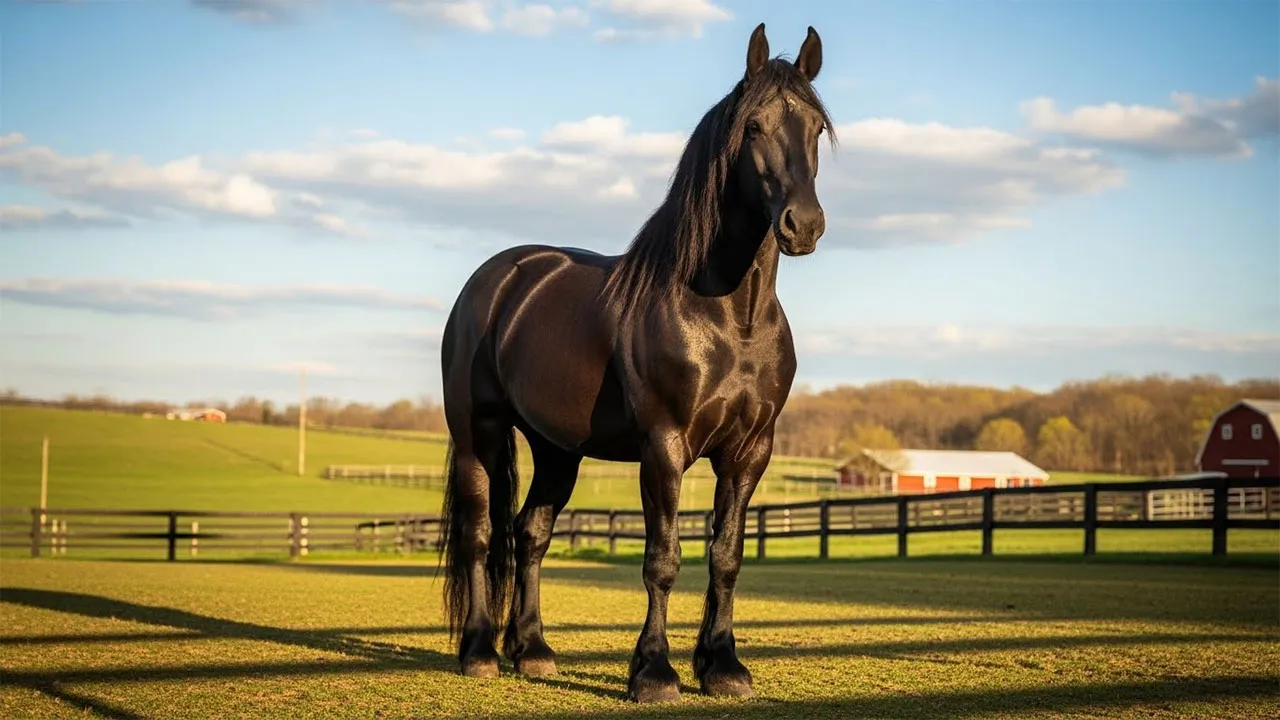
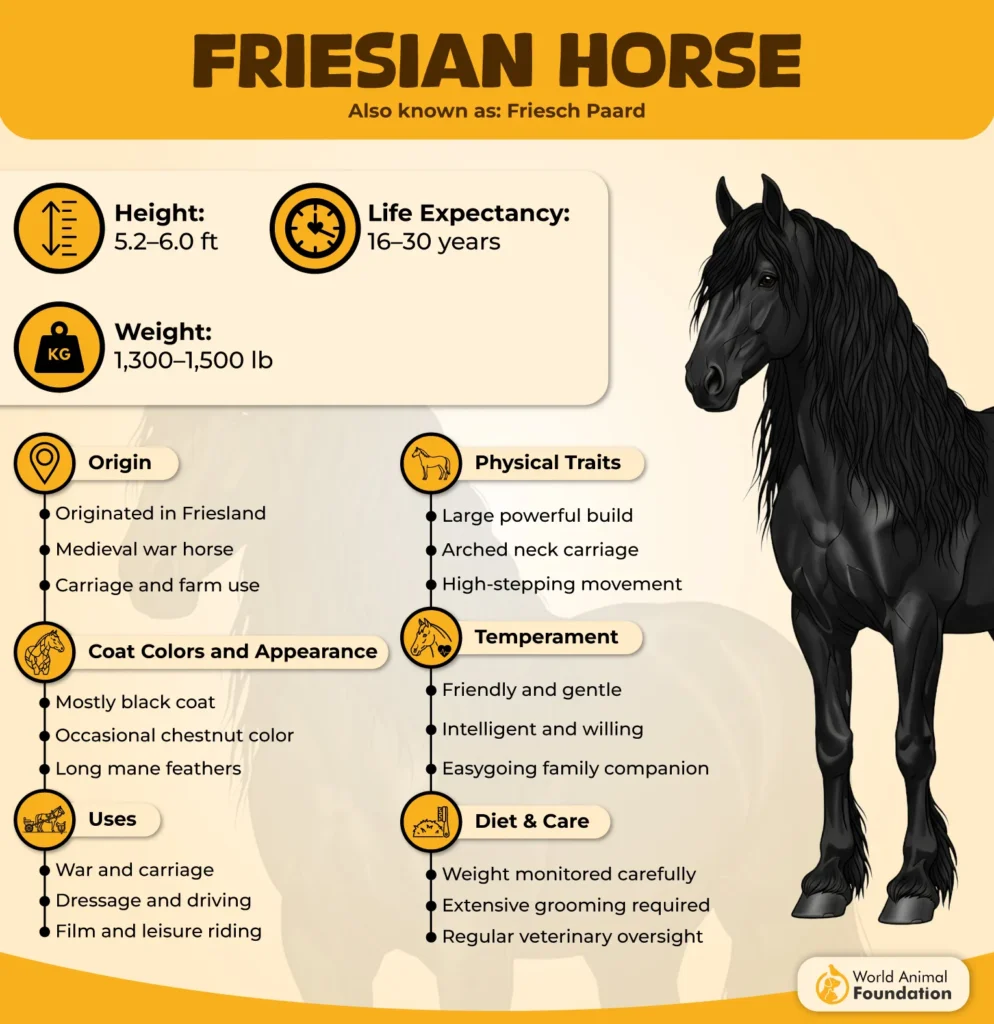
Friesian horses are known for their striking black coats and flowing manes that instantly draw the eye, as per PetMD. Their elegant movement gives a sense of power without heaviness, making them stand out in any setting. Thick, wavy hair accentuates their strong, graceful neck and overall silhouette.
Mane and Tail That Impress
The long, abundant hair on Friesians is a result of careful breeding over centuries, giving them a signature look admired worldwide. Maintaining this impressive mane and tail requires regular attention to keep it tangle-free and glossy.
Their hair brings practical charm to any appearance
Thick, wavy mane for dramatic flow
Full tail that moves with every step
Feathering on legs adds visual balance
Strength With Elegance
Friesians combine muscular build with agility, allowing smooth and controlled movement across varied terrain. Their posture and rhythm support steady steps, making them look powerful yet composed. This balance between bulk and elegance contributes to their commanding presence.
2. Gypsy Vanner
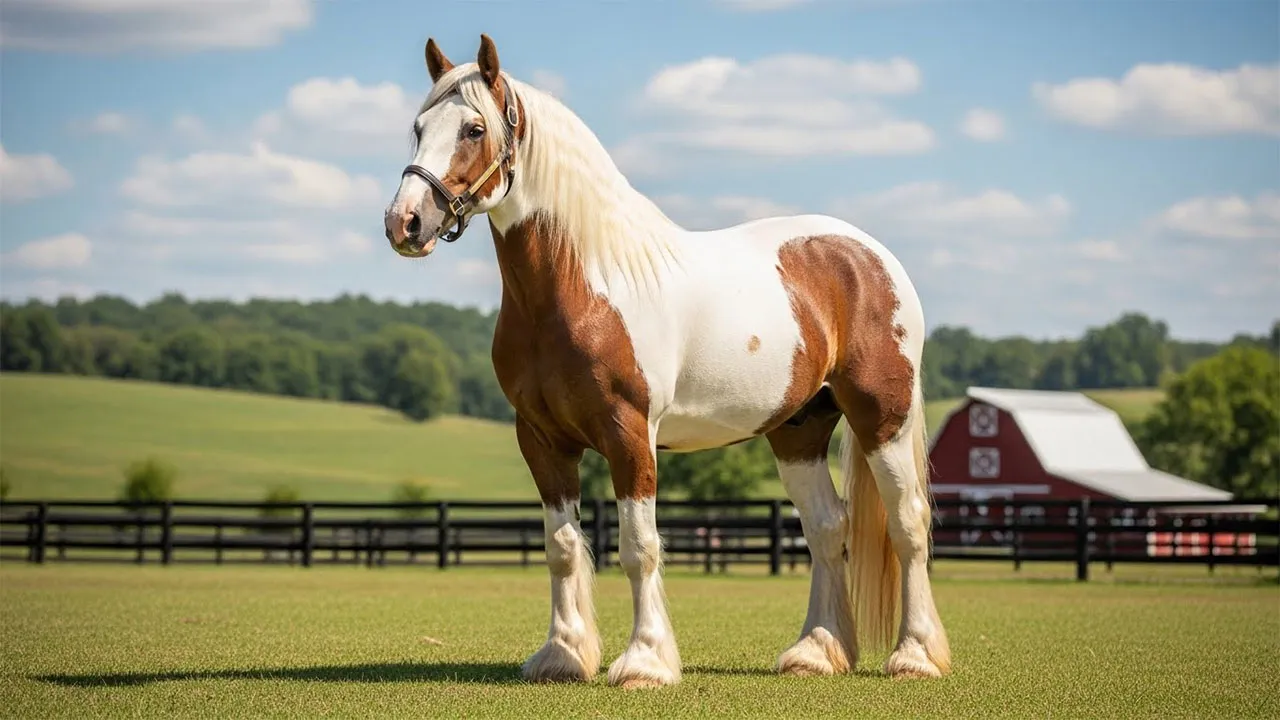
Gypsy Vanners stand out with flowing manes, tails, and feathered legs that add a sense of elegance to every step. Their flashy coats catch the eye, but it’s their movement that truly draws attention. This combination of grace and strength makes them captivating in open spaces.
Mane and Tail Features
The long, thick hair on their mane and tail reflects their draft horse lineage while staying lighter than traditional draft breeds. These features come with practical advantages for handling and presence in the wild.
Notice how these traits shine
Heavy feathering on lower legs
Flowing mane that frames the neck
Thick tail with natural volume
Versatility Beyond Looks
Their calm and gentle nature allows them to adapt to different activities, making them effective partners in a range of tasks, as per Western Horsemen. Elegance is paired with reliability, helping the horse navigate varied terrain without hesitation. They combine beauty with functionality seamlessly.
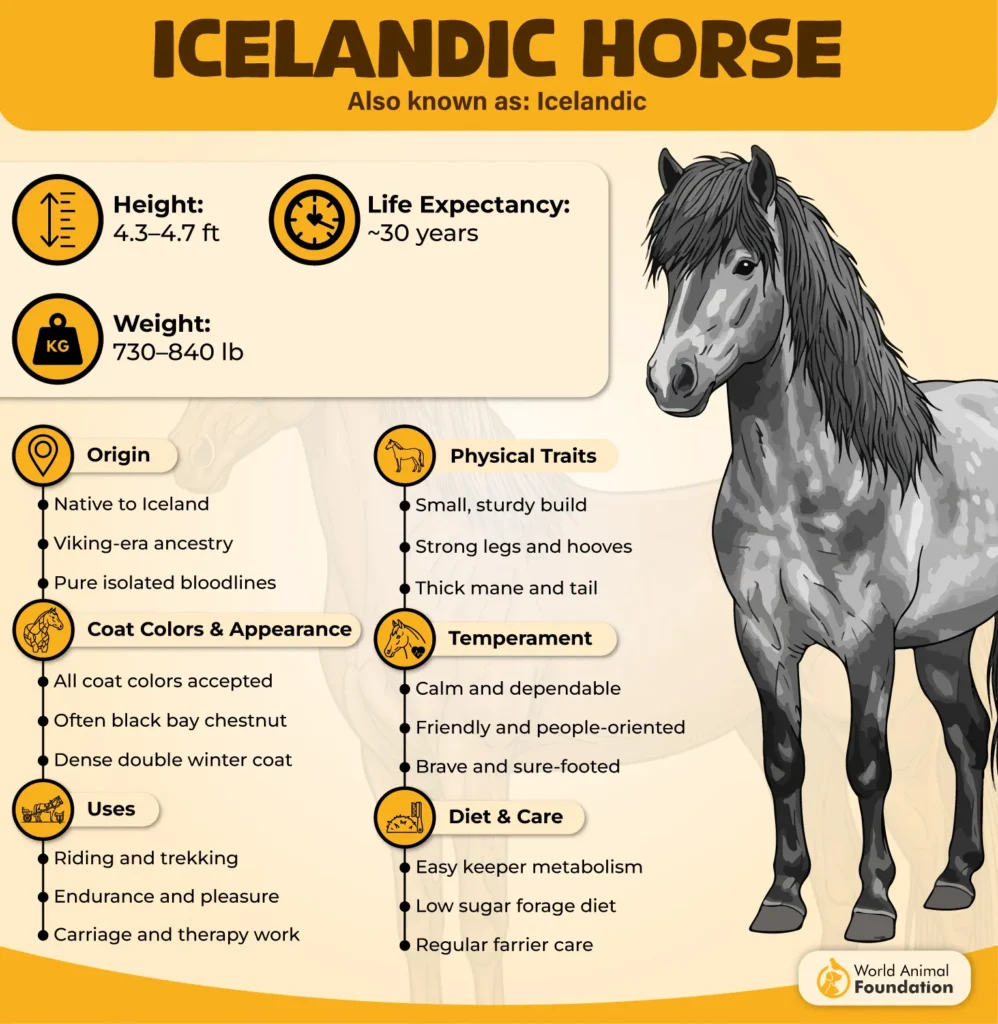
3. Icelandic Horse
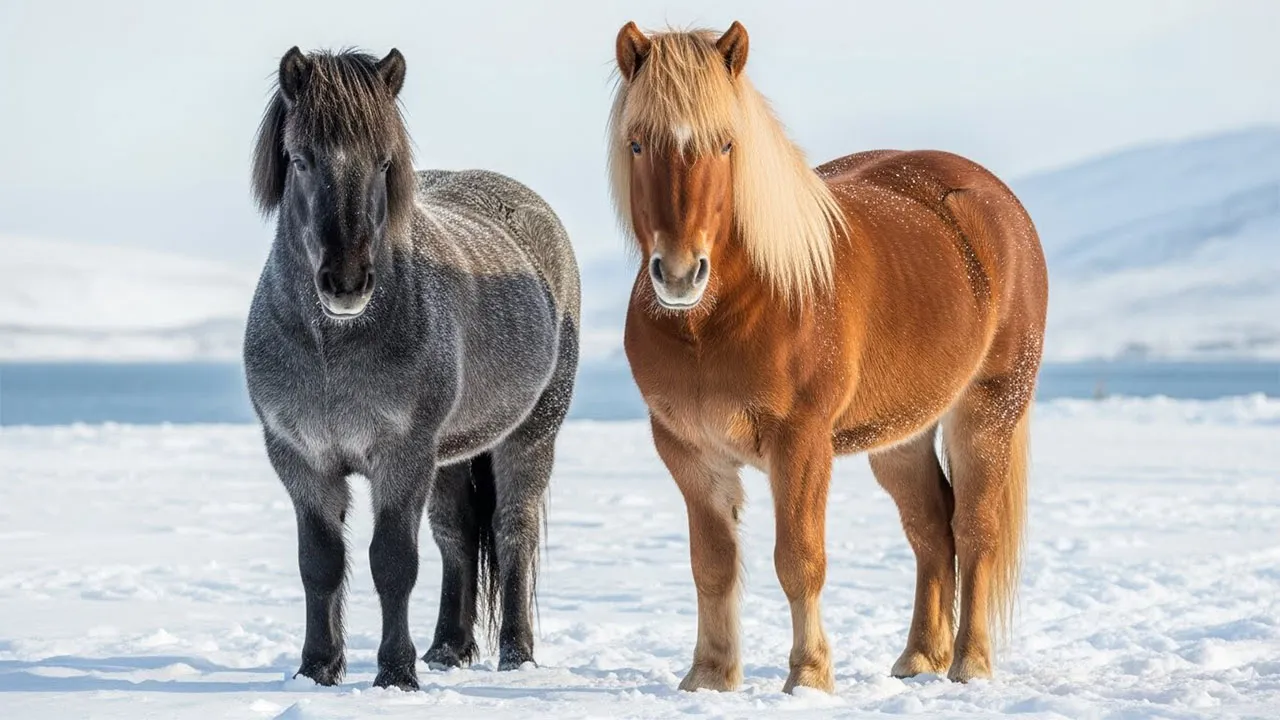
Icelandic horses carry long, thick manes that move freely during their tölt and flying pace. Their compact, hardy build supports a stable footing on rough terrain. The mane’s coarse texture helps shield them from wind, snow, and rain, keeping the horse comfortable in harsh conditions.
Seasonal Protection and Practicality
Hundreds of years of selective breeding shaped manes and tails that are full and coarse. Their double coat provides warmth, while the tail and mane serve functional purposes.
These traits make life in extreme weather manageable.
Thick mane insulates during winter
Long tail keeps insects away in summer
Dense coat adjusts with seasonal temperatures
Natural Agility With Flowing Hair
Even over uneven terrain, Icelandic horses move with balance and precision. Their manes and tails float naturally, without interfering with motion. The hair adds protection and keeps the horse cozy while moving over ice, snow, or rocky paths.
4. Andalusian
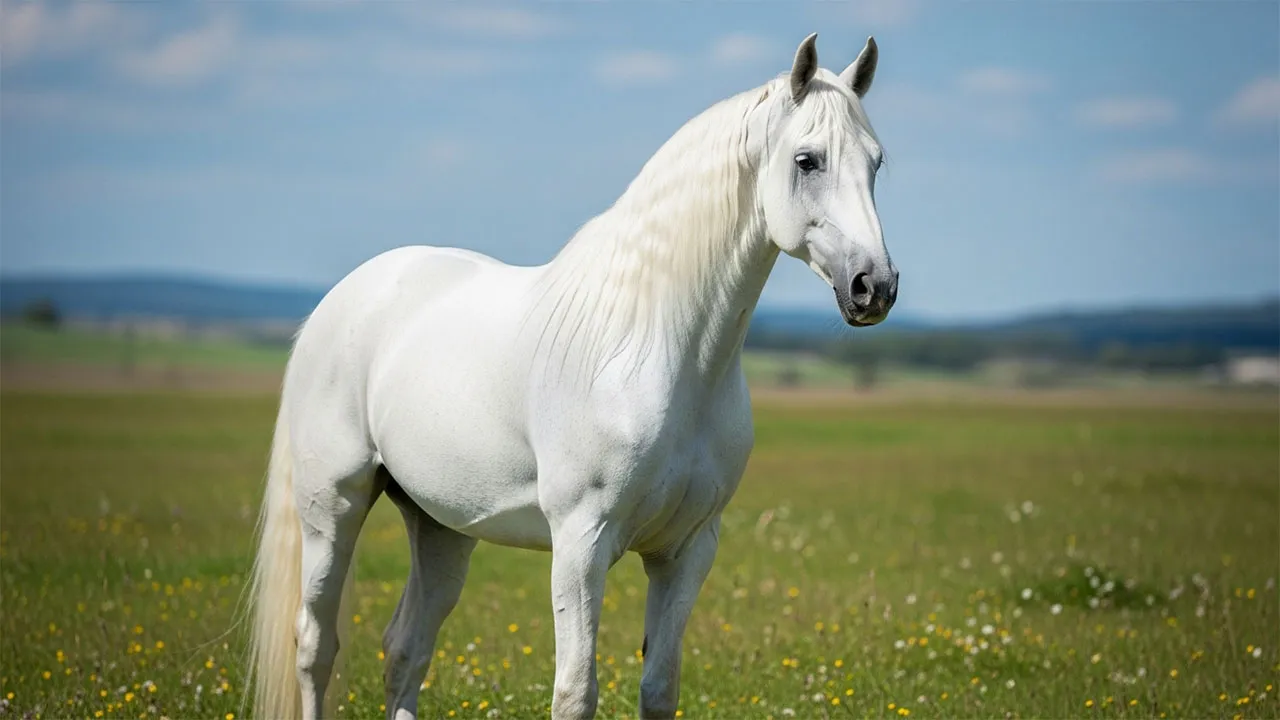
Andalusian horses are admired for the natural wave and thickness of their manes and tails. Their hair often falls in soft, abundant layers that move beautifully with every step. This quality makes them striking when moving through open fields or trails.
Hair That Commands Attention
The mane and tail are not only long but resilient, showing texture and volume that stand out in wild settings. When styled for shows or practical use, it can be braided or left loose without losing its elegance.
A few highlights of their hair appeal include
Thick, wavy strands that resist tangling
Full tail complements their flowing mane
Lustrous hair that shines in sunlight
Grace in Movement
Their hair complements their elegant, high-stepping gait, adding a visual rhythm to each stride. This rhythm is noticeable in both relaxed strolls and spirited movement across open terrain. The combination of movement and hair makes them visually impressive in natural landscapes.
5. Haflinger
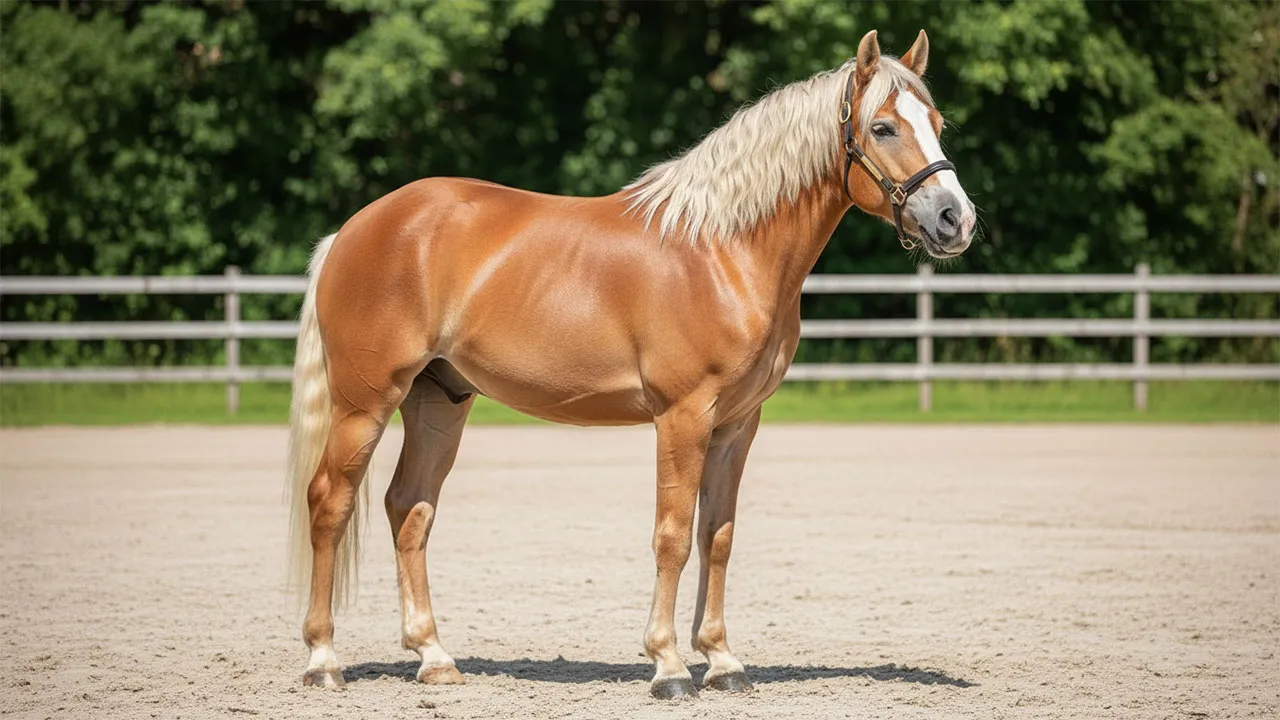
Haflinger has a dense, flaxen mane that keeps it cozy during harsh winter days. This thick hair covers the neck and blends with the cream-colored tail for natural protection. Their chestnut coat, paired with the long mane, makes them visually striking while practical in cold conditions.
Grooming and Care
Long hair requires consistent attention, and Haflingers handle it with calm patience. Brushing sessions are essential to prevent tangles and maintain the mane’s natural flow.
A few grooming highlights include:
Flaxen mane and tail remain soft
Tolerates long grooming without fuss
Hair is naturally thick for insulation
Gentle Temperament
Haflingers are friendly and approachable, making them suitable for children and those learning horse care, as ClipMyHorse TV reports. Their calm nature allows close interaction and handling without stress. Being personable helps them adjust to living in a family environment while enduring cold seasons.
6. Shire
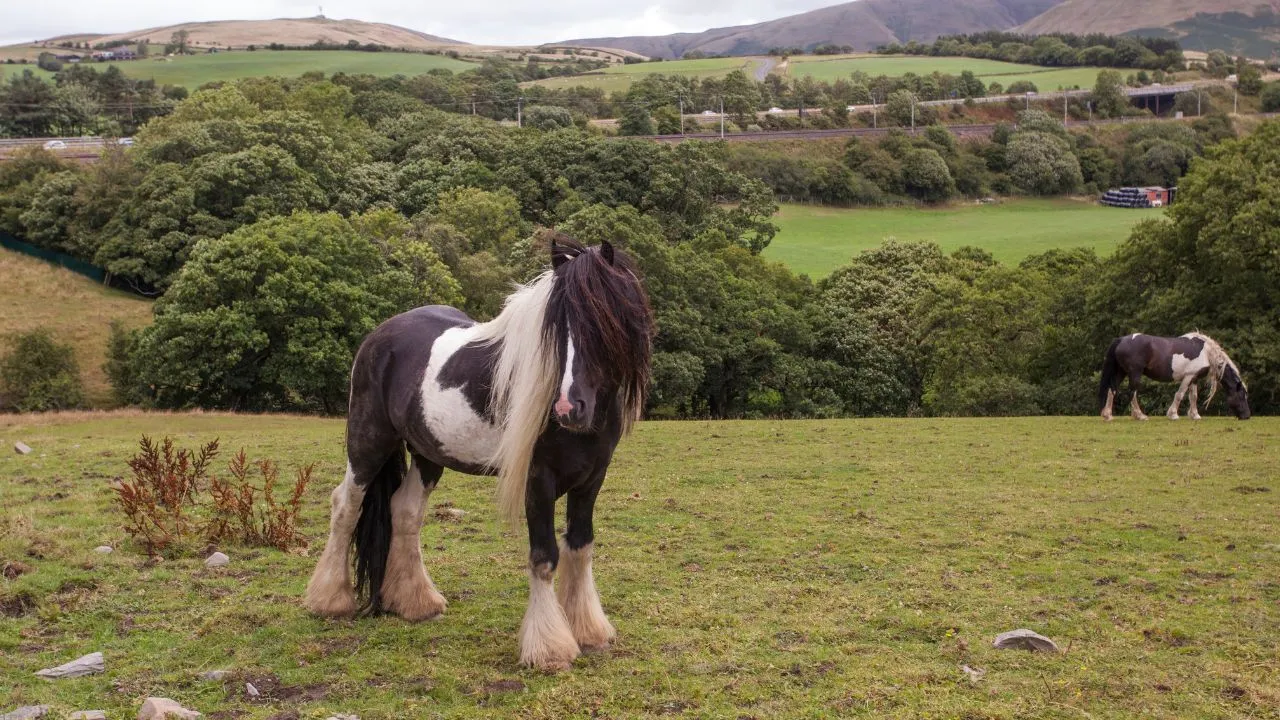
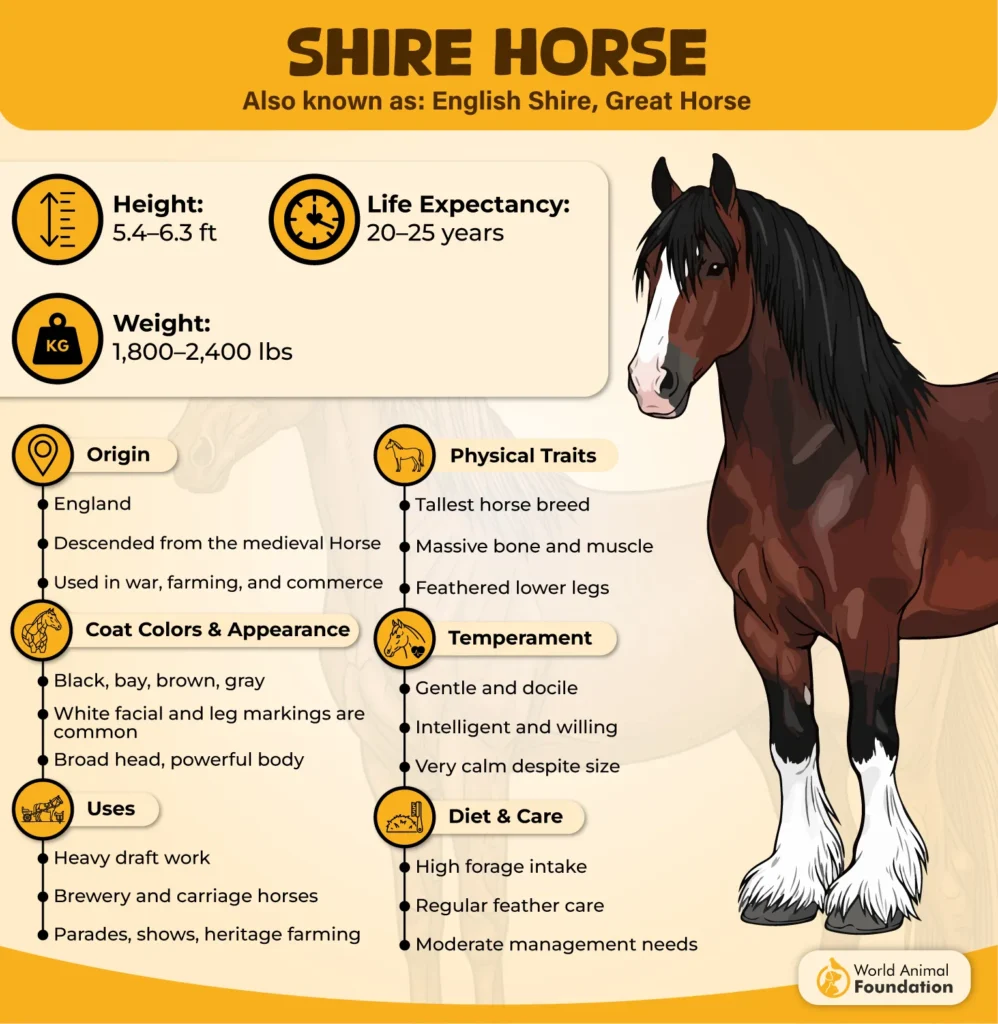
Shire horses were developed to handle demanding work such as hauling goods and pulling barges. Their large, muscular bodies allow them to move steadily across uneven surfaces without strain. Thick feathering on the legs protects against mud, water, and rough terrain during extended tasks.
Hair That Flows
If allowed to grow naturally, a Shire’s mane and tail can become long and impressive, contrasting with the shorter or braided styles often used for practical work. The hair on their lower legs serves a protective purpose while giving them a distinctive look in open areas.
These traits make them both functional and striking:
Feathered legs guard against debris and moisture
Long mane and tail develop when ungroomed
Hair length can vary with care and environment
Steady and Alert
Shires maintain a calm focus even while handling heavy loads or navigating challenging ground. Their movements are deliberate and controlled, allowing them to traverse uneven terrain safely. Their alertness ensures they respond consistently to changing conditions without unnecessary tension.
7. Arabian
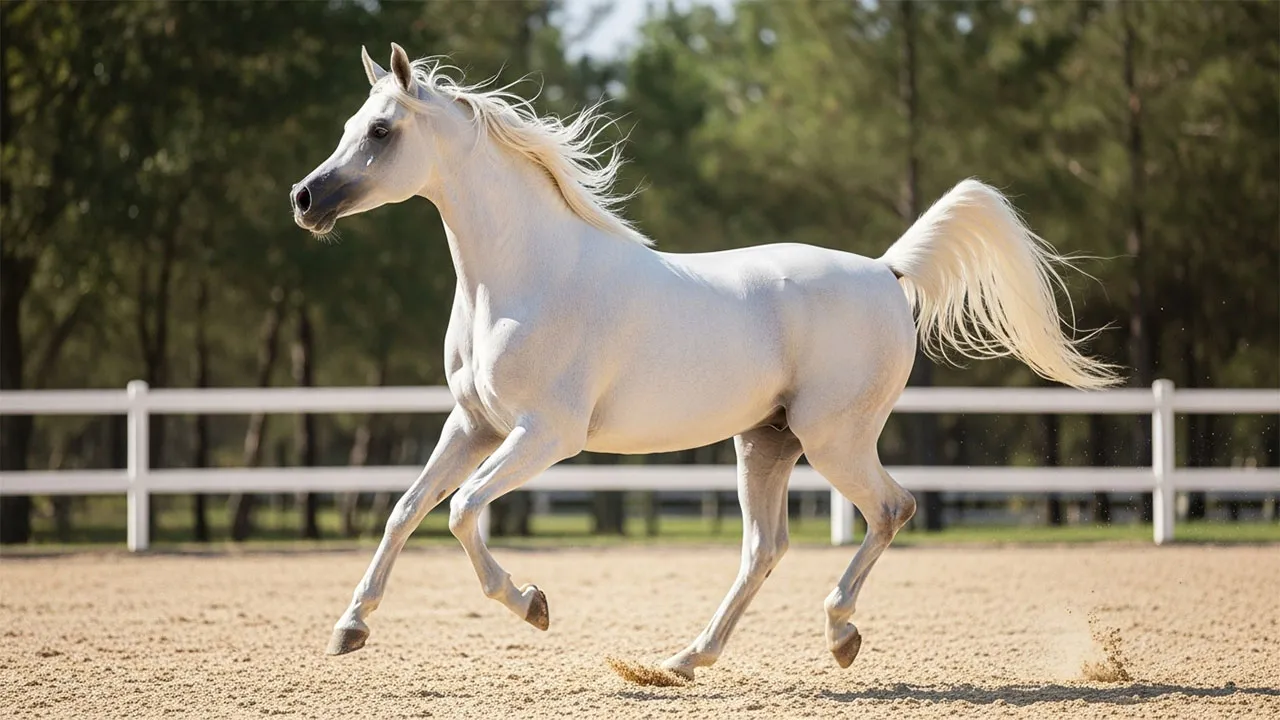
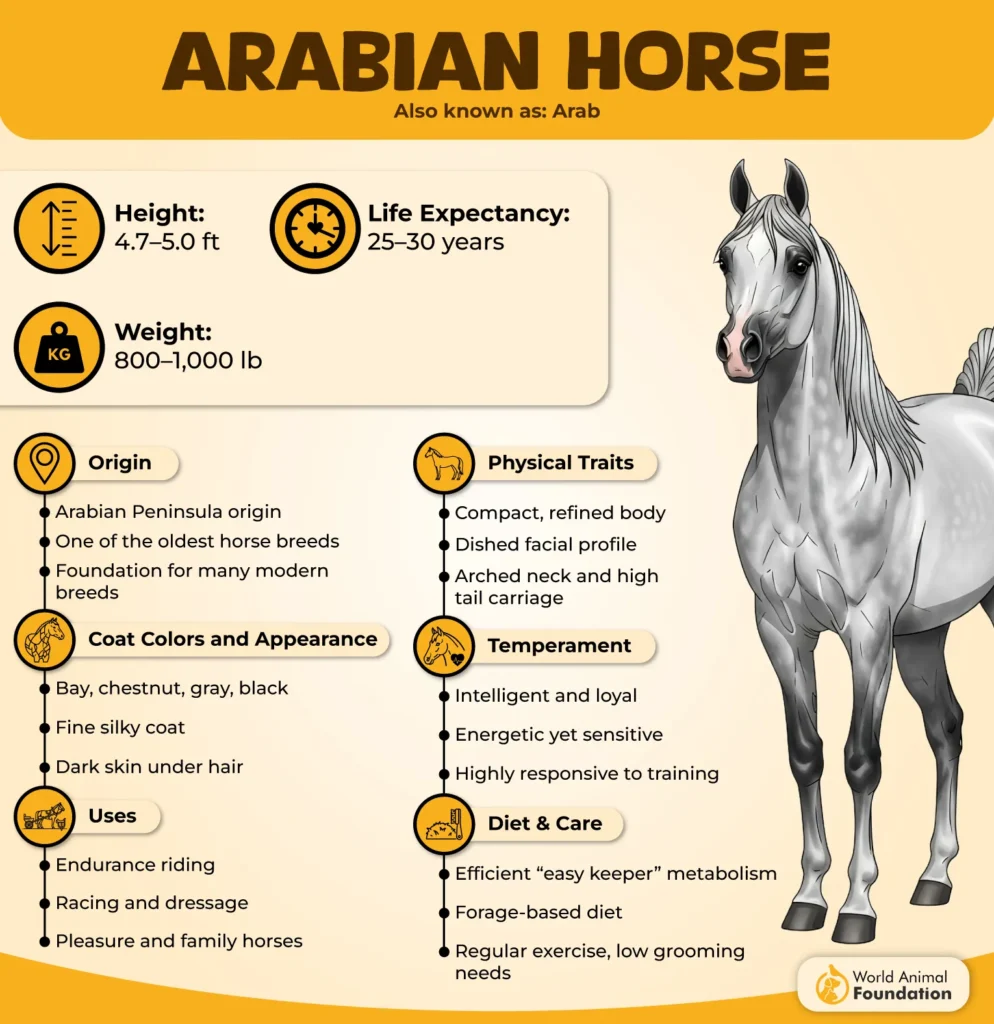
Arabian horses are known for their well-arched necks and high-set tails, which often show off long, flowing hair. Their manes can drift behind them as they move across open pastures, adding a striking sense of motion. This natural display highlights the grace and energy of the breed.
Mane and Tail Details
The length and texture of an Arabian’s mane and tail vary with ancestry, and maintaining them requires care. A longer mane can help with summer flies and give the horse a more striking presence in motion.
Here’s what to notice about their mane and tail:
Wavy or straight hair, depending on lineage
Tail held high to accentuate posture
Mane flows freely during movement
Show and Trail Appeal
Arabians with long manes are often featured in saddleseat or in-hand classes to emphasize their flashy movements. The flowing hair enhances their elegance while showing their athleticism. It also adds visual drama when they move energetically across a pasture.
8. Paso Fino
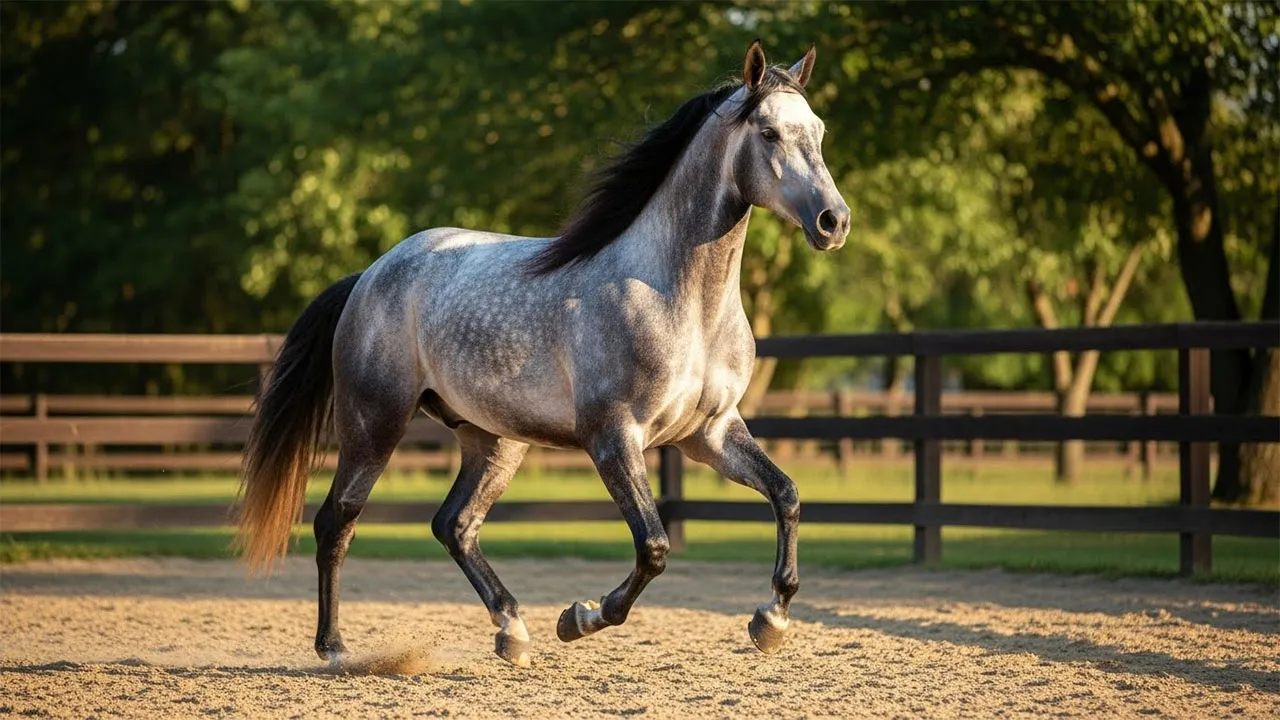
Paso Fino moves with an elegance that draws attention with every step. The smooth, flowing gait makes it easy to observe its long, silky mane and tail swinging naturally. Its balance and fluidity create a visual harmony that emphasizes both movement and hair.
Signature Gaits Enhance the Look
This breed performs more than just the usual walk, trot, and canter. The specialized gaits give the mane a chance to flow freely and accentuate the horse’s elegance.
These traits are best seen in action
Paso Fino: a natural, smooth four-beat gait
Paso Corto: slightly quicker, rhythmic steps
Paso Largo: extended stride with effortless glide
Hair That Stands Out
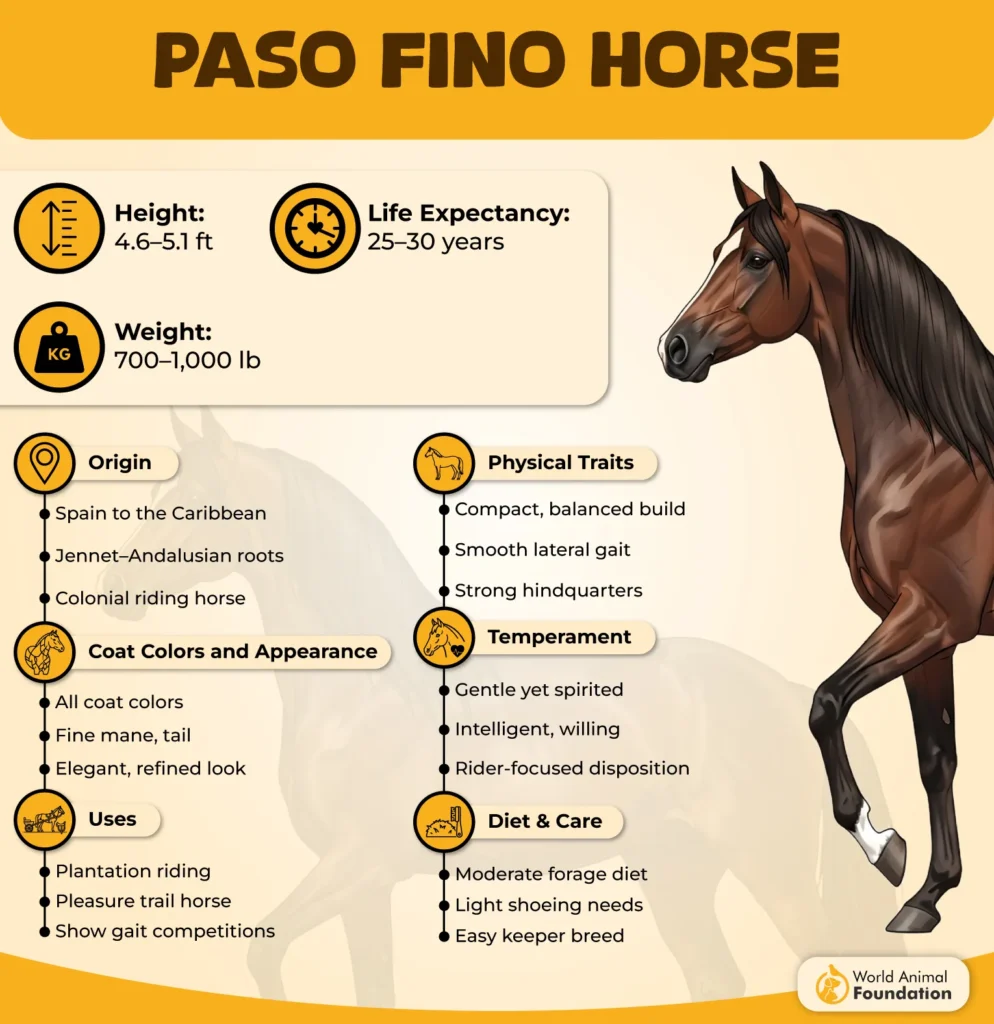
A thick, luxurious mane and tail are part of the breed standard, often left unbraided to showcase natural growth. This richness enhances the show-ready appearance and highlights movement on open trails. Long hair complements every turn and shift in gait, giving the horse a striking silhouette.
9. Shetland Pony
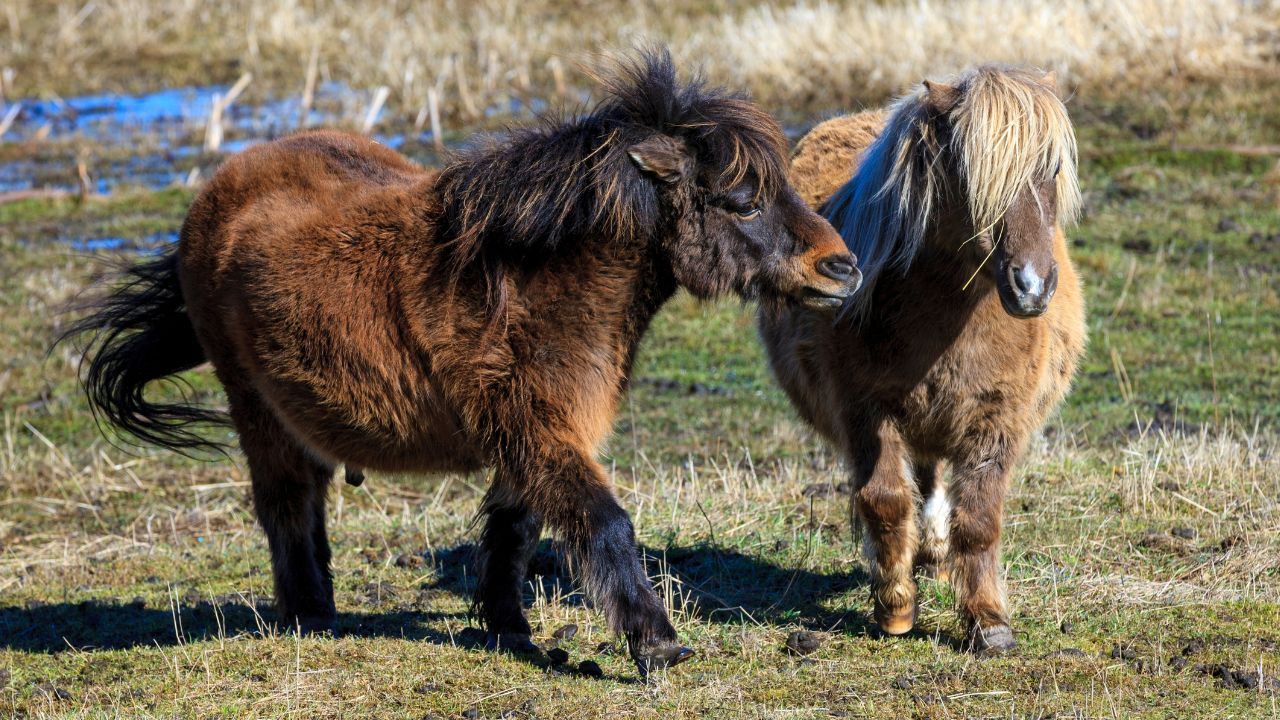
Shetland Ponies have exceptionally long, thick manes and tails that shield their head, neck, and eyes from harsh weather. This dense hair grows especially long in winter, keeping them insulated against wind, rain, and snow. Their sturdy build pairs with the mane to help them endure tough conditions.
Mane Features
The mane and tail have practical purposes as well as visual appeal, supporting the pony in extreme climates. Seasonal changes affect the coat, giving a short summer look and a shaggier winter appearance.
Some notable qualities of their hair
Thick and bushy mane and tail
Forelock protects the eyes
Long winter coat for insulation
Compact Power
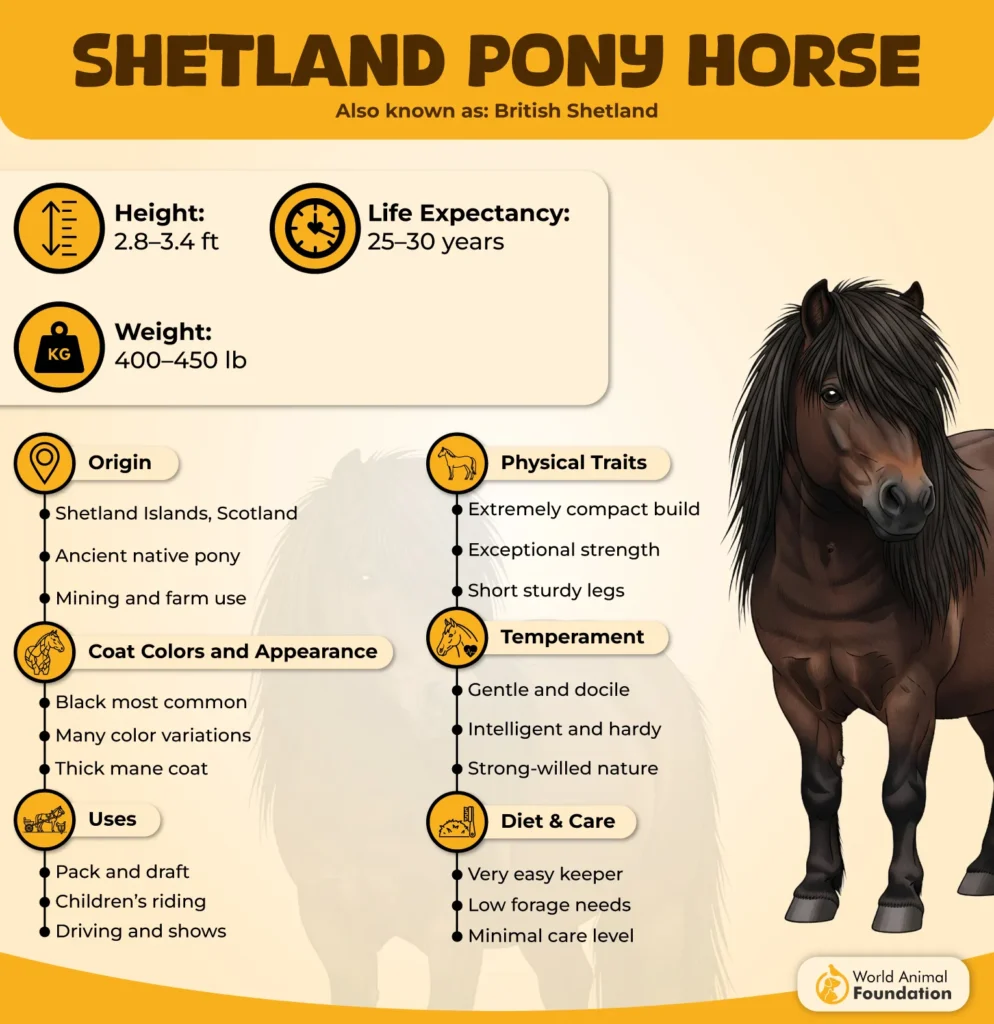
Short stature does not limit strength, as these ponies are surprisingly robust and hardy. Historically, they worked as pit ponies, managing heavy tasks despite their size. Their durability and resilience make them suited for challenging terrain and outdoor work.
Conclusion
Long manes are more than decoration. They reflect history, environment, and careful breeding across different horse breeds. From heavy draft lines to compact island ponies, these horse breeds show how hair can serve protection, balance, and presence at the same time. Some even appear in world records for mane length, while others are admired simply for natural abundance.
Flowing hair, subtle white markings, and steady movement come together to create unforgettable silhouettes. What connects these horse breeds is not exaggeration, but consistency. Mane length grows through time, care, and genetics. For anyone drawn to visual elegance, these horse breeds prove that beauty in horses often grows slowly and lasts a lifetime.
