




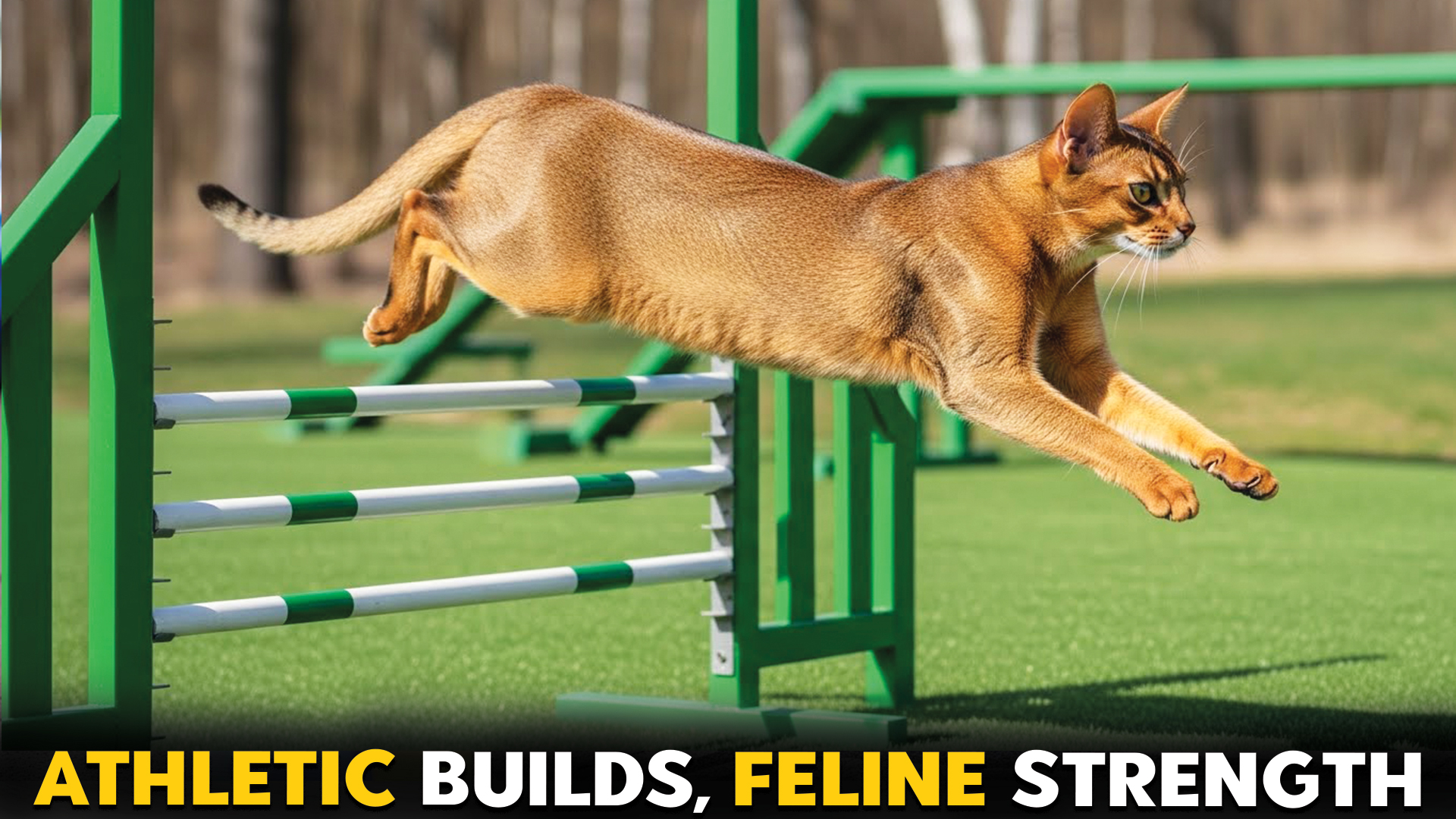
If your cat can hop onto the fridge like it’s no big deal, you’ve got a little athlete on your hands. Some breeds are naturally built for speed, jumping, and climbing, with lean bodies, long legs, and an “I can reach that” attitude that turns your home into a mini adventure park.
That kind of cat doesn’t just move differently; they live differently. One minute, they’re a blur across the room, the next, they’re perched somewhere you didn’t realize was even reachable, looking pleased with themselves. Up next, we’ll meet cats with this athletic style and see what makes each one a standout.
Fun Fact
Cats don’t just jump up; they plan it. Many will pause, stare, and “calculate” a leap like tiny furry engineers before launching.
Cat Breeds with Athletic Build
1. Abyssinian
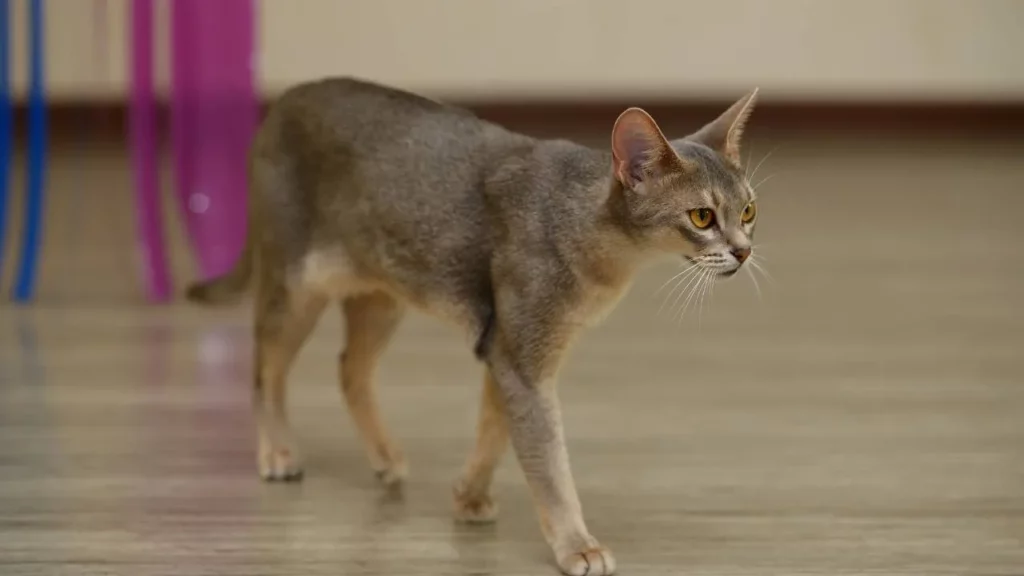
If you live with an Abyssinian cat, you will notice they move with purpose. They love having places to go and things to do, and quiet lounging is not always their favorite. Curious and busy, they look for the next activity.
The Abyssinian is medium-sized with a lengthy shape and well-defined muscles. They have a playful nature and enjoy playing and jumping, so they tend to stay in motion around the home. Cats with naturally lean looks, short hair, and angular faces often trend more active, and the Abyssinian fits that profile.
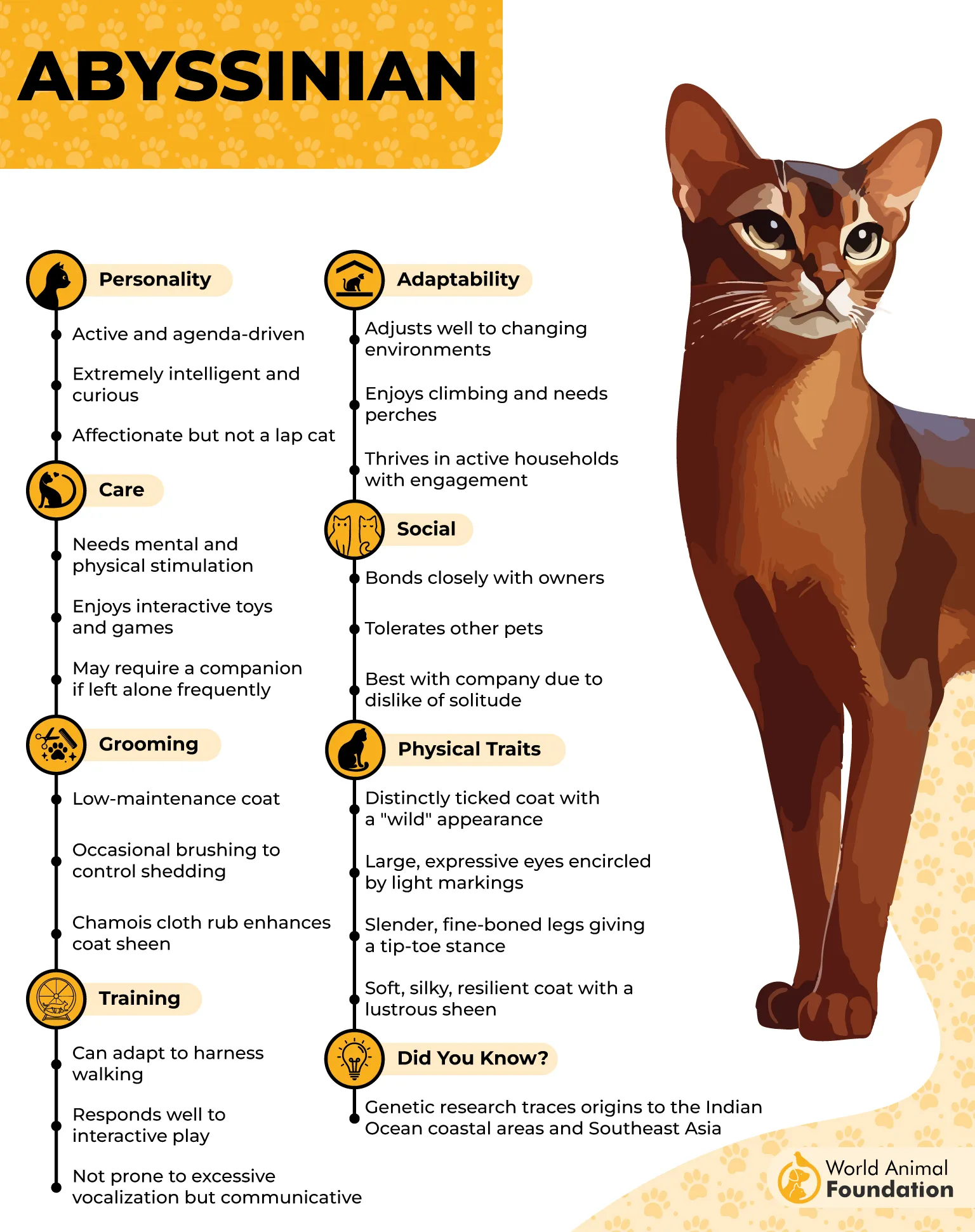
As mentioned by Purina, Abyssinian grooming is usually simple, since weekly brushing is typically enough to keep their coat in good shape. During heavier shedding seasons, you may want to brush more often and add an occasional bath to help lift loose hair and speed up cleanup.
Fun Fact
The Abyssinian got its name because the first one imported to the UK was brought from Egypt. It was first shown at London’s Crystal Palace in 1871.
2. Bengal
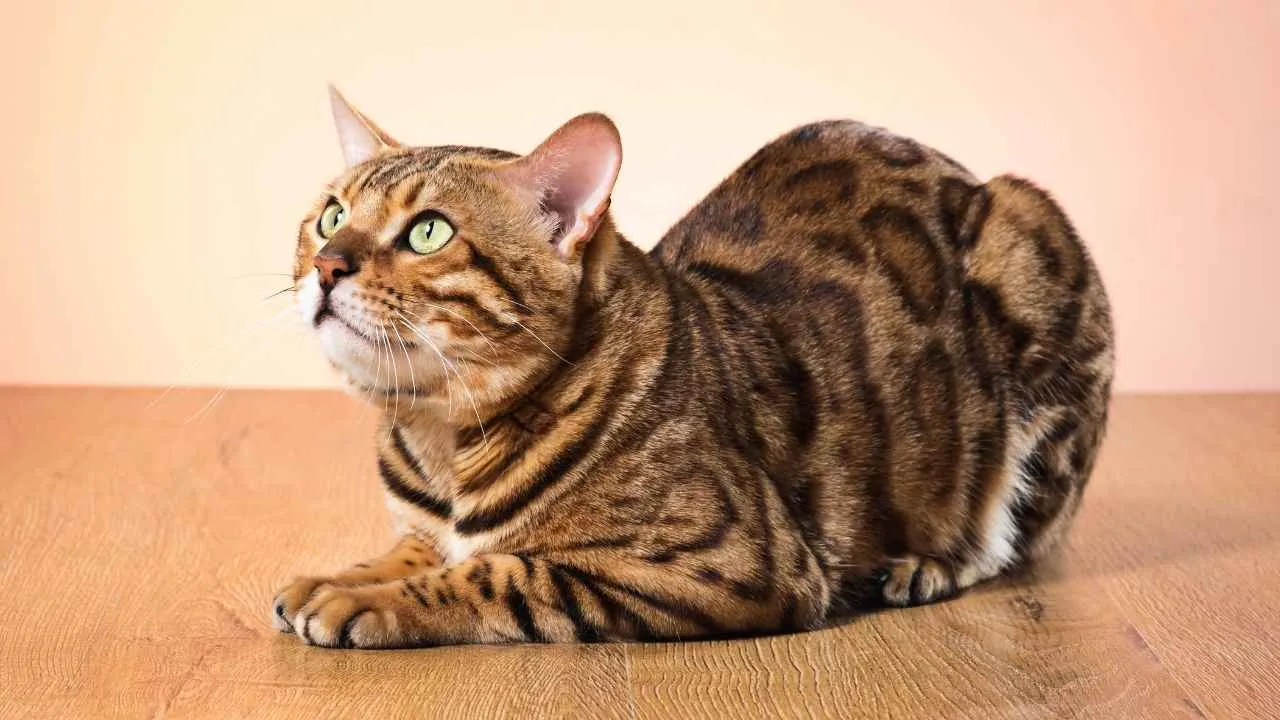
A Bengal cat has that wild look people notice right away. Many wear a lush, dense coat with distinctive spots that can show up as marbled, rosette, horizontal, or more random patterns, giving them a truly wild appearance.
This breed was developed for cat owners who wanted the wild-cat style without the risks of owning a wild cat. As mentioned by WebMD, Bengals enjoy climbing, and many are fond of playing in water, so boredom is the real enemy here. They also enjoy the company of their people and do best with families ready to keep them engaged.
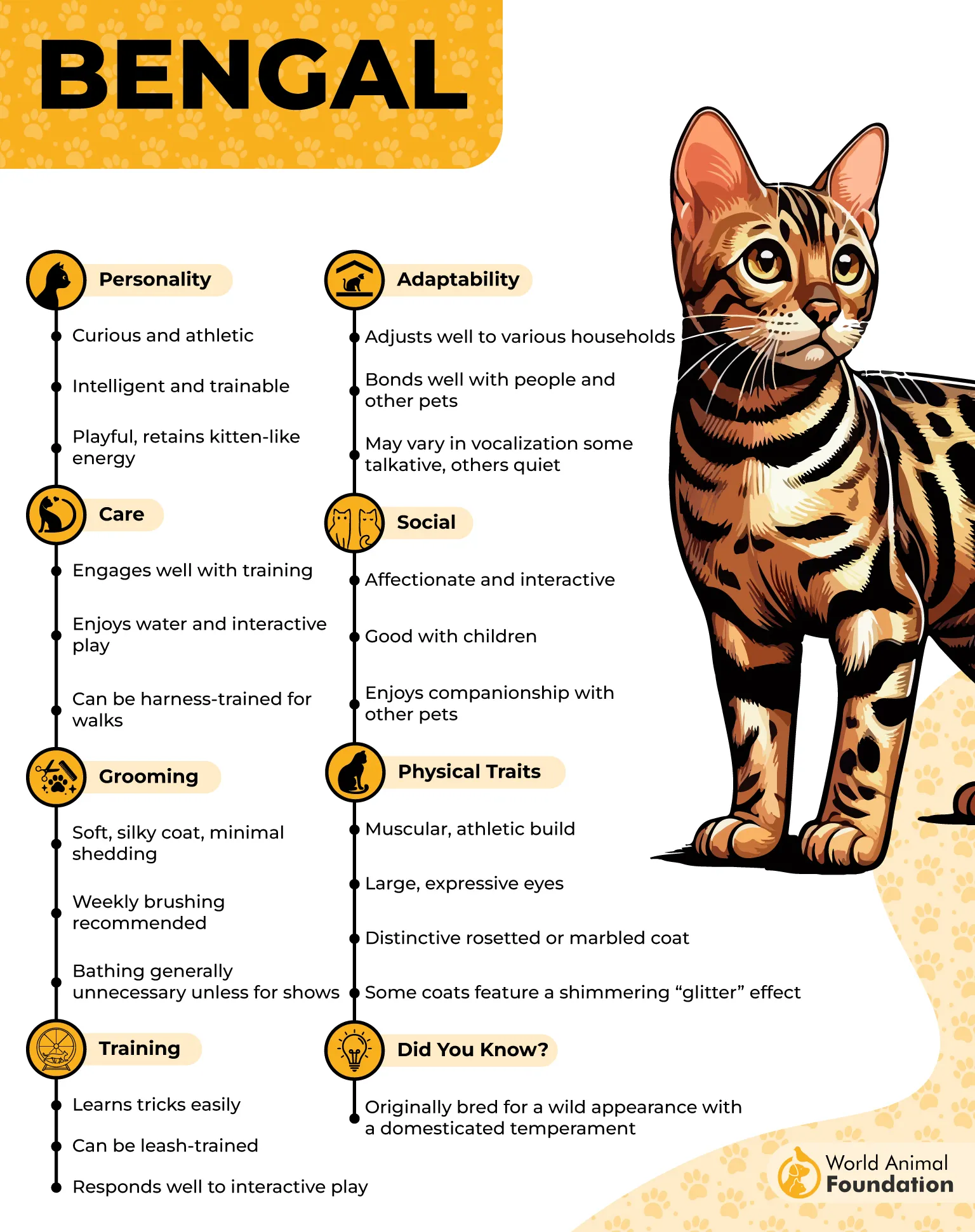
Bengal cats are curious, very active, and not shy about letting you know what they want. They can be more territorial, and their high prey drive can shape how they act around other animals. If they’re outdoors, keep a close eye on them, since they may chase birds or other small animals.
Fun Fact
Bengals were created by crossing an Asian leopard cat with several domestic breeds, including Egyptian Maus, Abyssinians, and Burmese. Those domestic roots helped shape the Bengal we know today.
3. Savannah

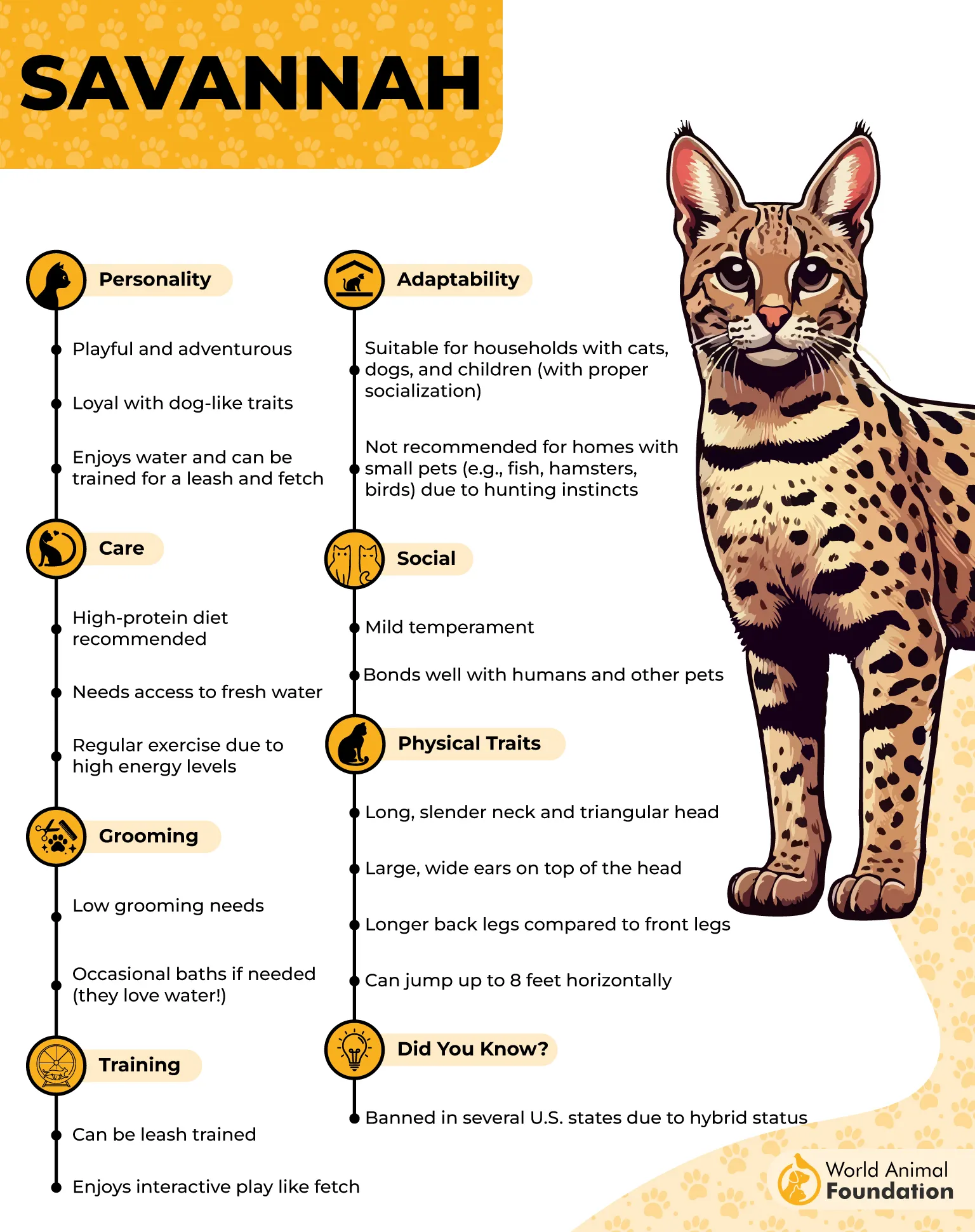
The Savannah cat is hard to miss, with a spotted pattern that can bring a leopard to mind. This hybrid breed comes from crossing a domestic cat with a wild serval, and that wild cat ancestry shows in the Savannah’s powerful, agile look. It is the kind of cat that treats high places as fair game.
As mentioned by PetMD, Savannah cats are generally healthy, but some genetic issues can occur, so breeder testing helps. Concerns include pyruvate kinase deficiency, progressive retinal atrophy, and hypertrophic cardiomyopathy. Dental disease is also common, so daily tooth brushing and routine vet checks matter.
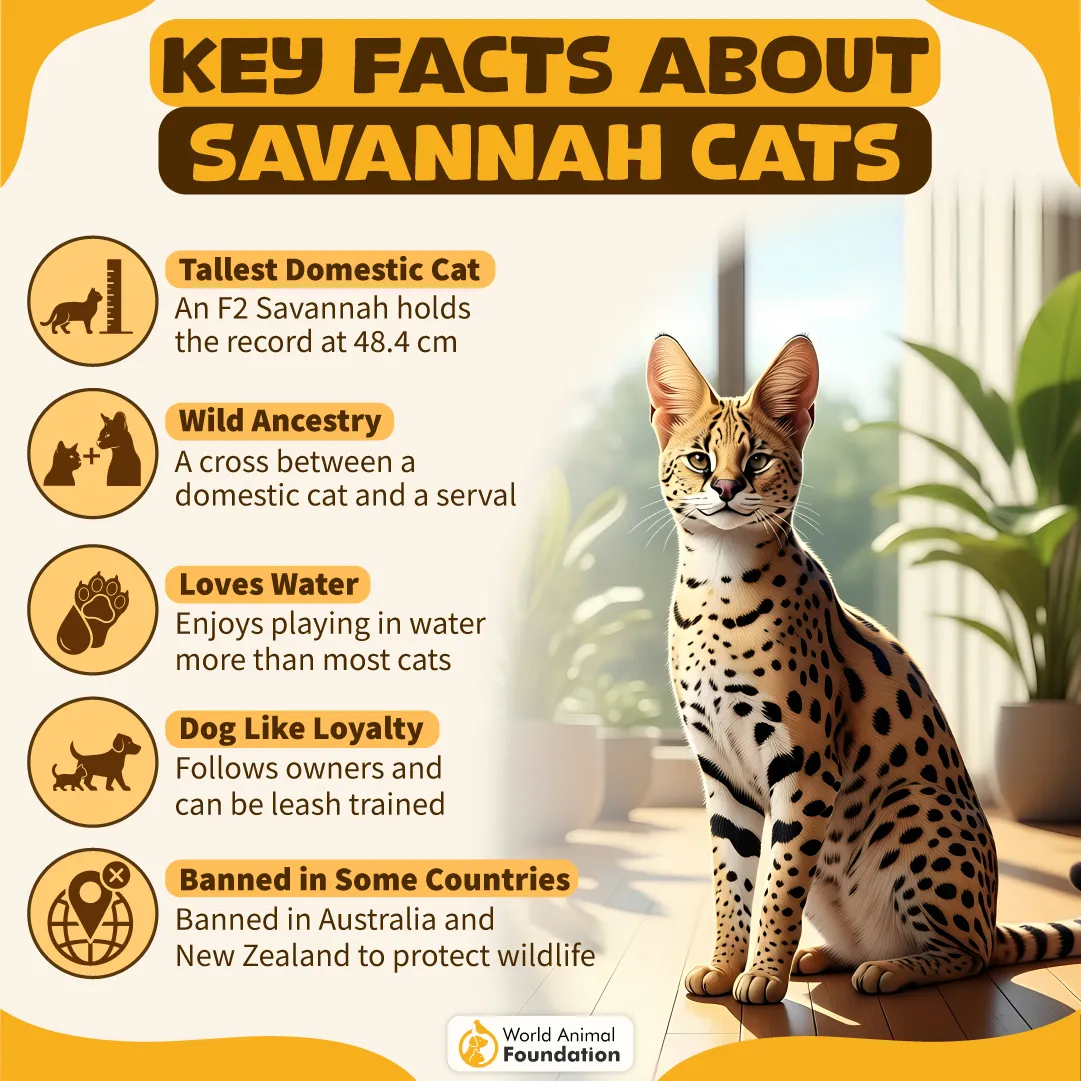
Savannah cats are highly intelligent and often form strong bonds with their humans, which makes training a good fit for this breed. With leash training, you can take them for walks and even light jogs. Because they’re agile and eager to explore, they should never be allowed off-leash.
Fun Fact
Savannah cats are often called “Velcro kitties” because they like to stick close to their favorite person and follow them from room to room. Many also love water, so don’t be shocked if yours tries to join bath time like it was invited.
4. Egyptian Mau
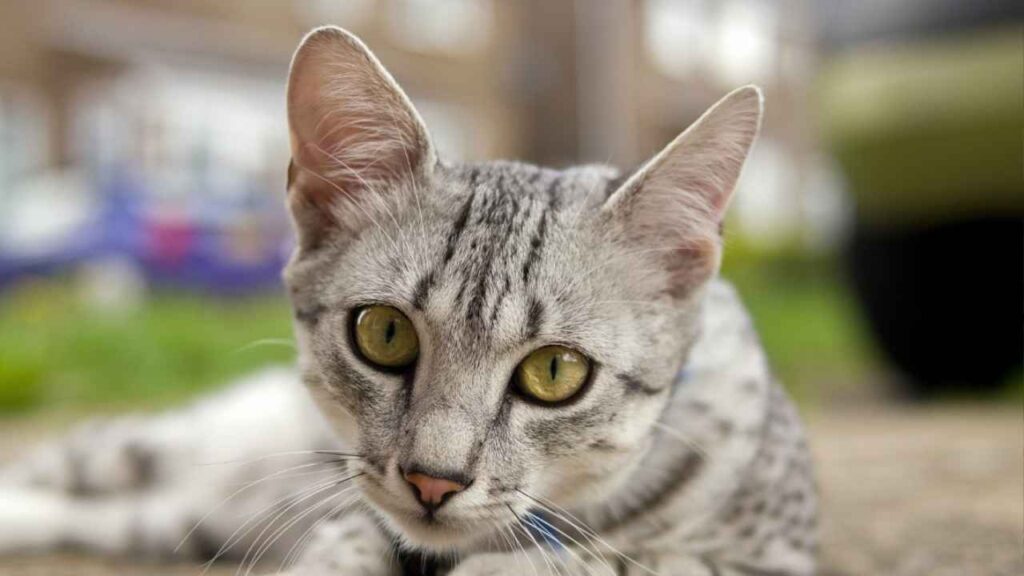
The Egyptian Mau is the kind of cat that looks elegant even when it’s doing something slightly chaotic. With natural spots, bright eyes, and a sleek, muscular body, it looks ready for quick turns and fast takeoffs.
They need frequent exercise, so provide scratching posts, tall cat trees, and safe indoor areas for climbing and jumping. Some also enjoy water and may figure out how to turn on a faucet if they want a fresh drink.
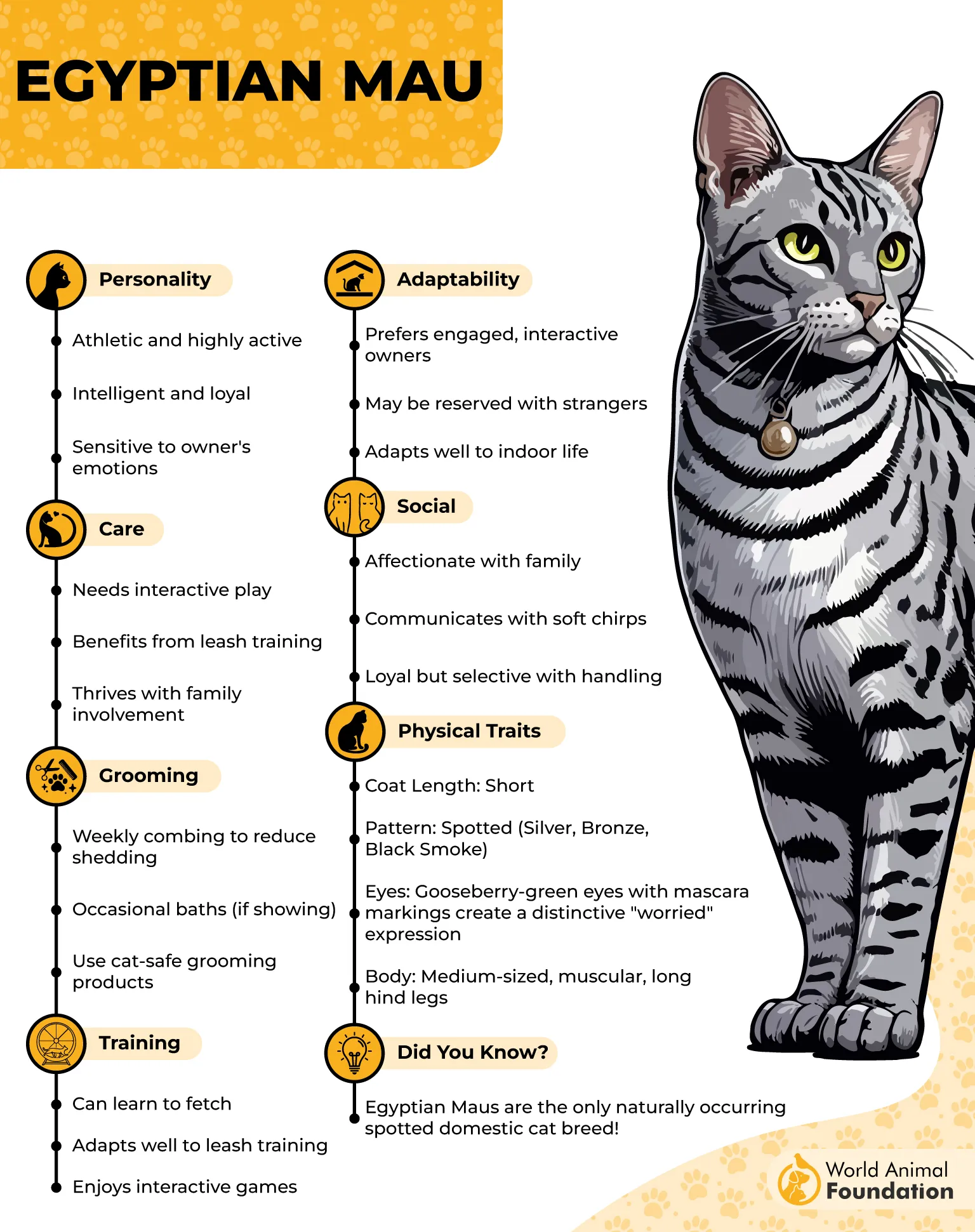
With visitors, a Mau may hang back and watch from across the room. Once it feels comfortable, it becomes bold and often picks one favorite person to follow and focus on. You might even catch that trademark tail wiggle when it’s happy.
Fun Fact
The word “Mau” comes from ancient Egyptian and means “cat” (and is also linked to “sun”). Ancient Egyptian frescoes and papyri from around 1550 B.C. show spotted cats with markings similar to today’s Egyptian Mau.
5. Ocicat
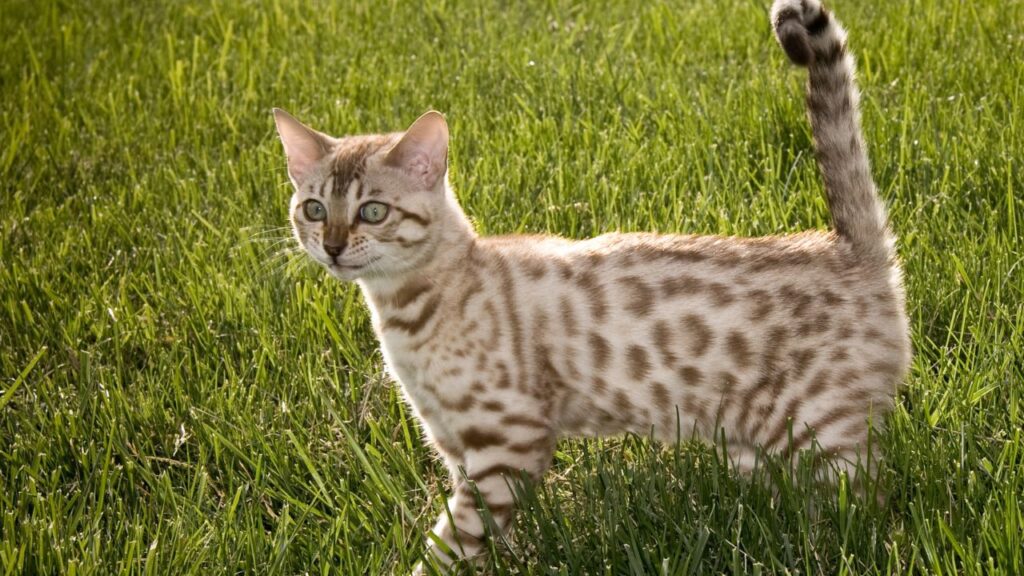
The Ocicat is a confident, people-focused cat with an athletic look and a striking pattern. The breed started as a surprise when a spotted kitten appeared in breeder Virginia Daly’s Siamese and Abyssinian breeding program. That unexpected beginning helped shape the Ocicat we know today.
Health-wise, Ocicats may be susceptible to amyloidosis (which can affect organs like the kidneys), pyruvate kinase deficiency (which can lead to anemia), and progressive retinal atrophy, a genetic eye condition that can begin with night blindness and progress to vision loss.
Choosing a responsible breeder who uses genetic testing and keeping up with regular veterinary checkups can help catch issues early.
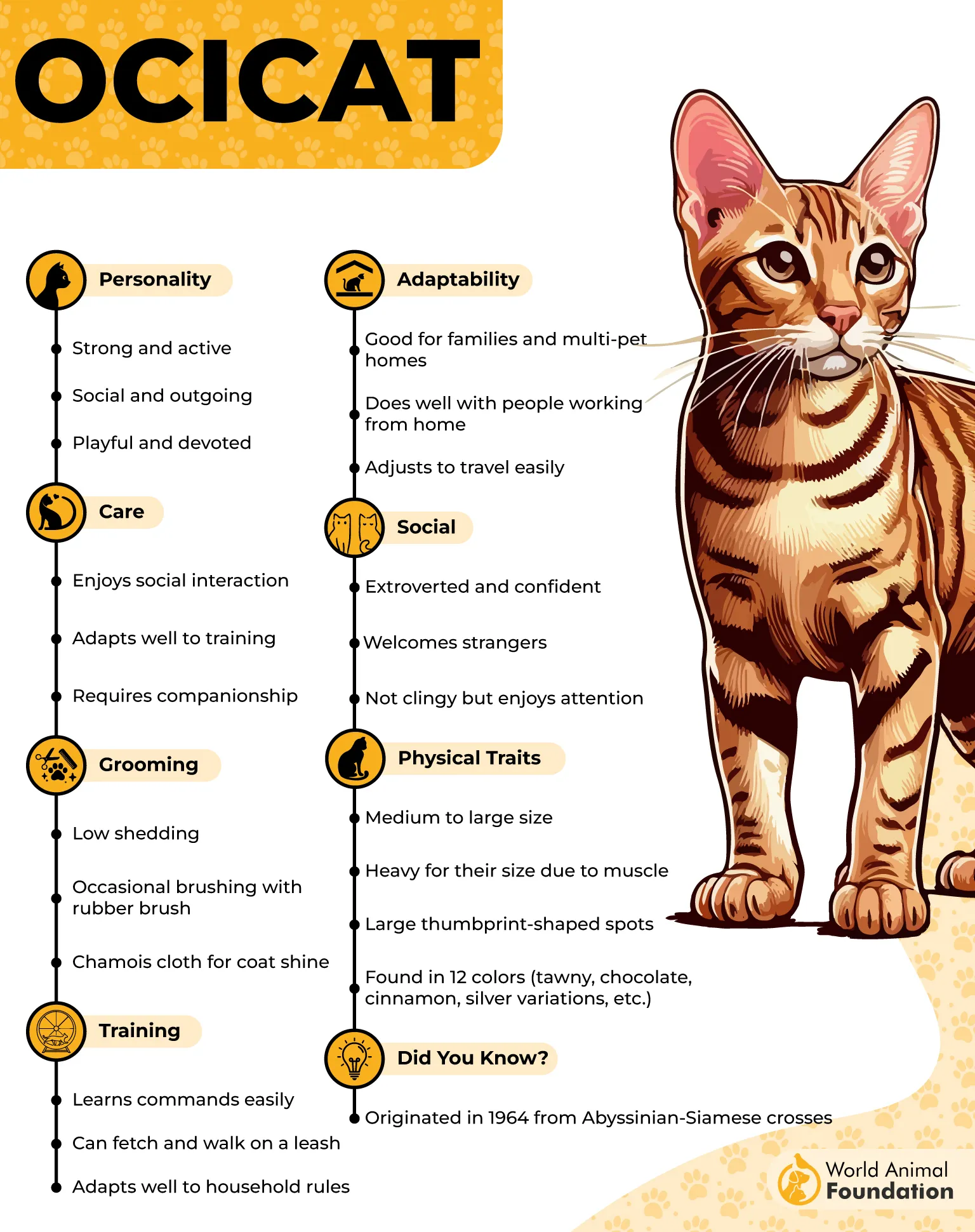
Ocicats are smart, social, and strongly attached to their people, often sticking close and wanting to be involved. They need plenty of exercise and can be prone to separation anxiety because they bond so tightly with their family. Many stay busy on their own, but they do best with regular attention and interaction.
Fun Fact
Ocicat coat color is officially judged by one tiny detail: the color of the tail tip. It’s the deciding clue for sorting an Ocicat into the correct color category, no matter what the rest of the markings look like.
6. Korat
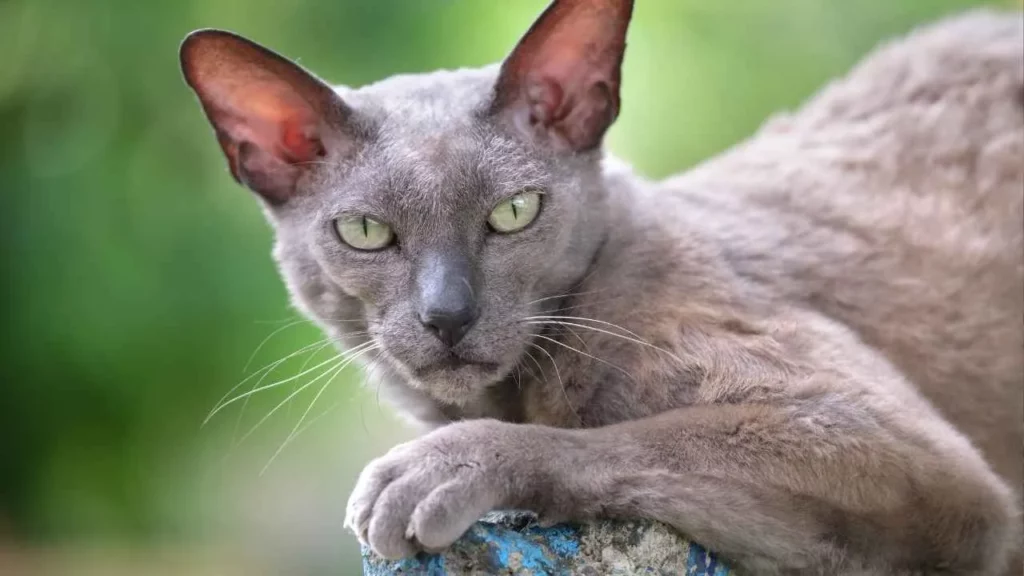
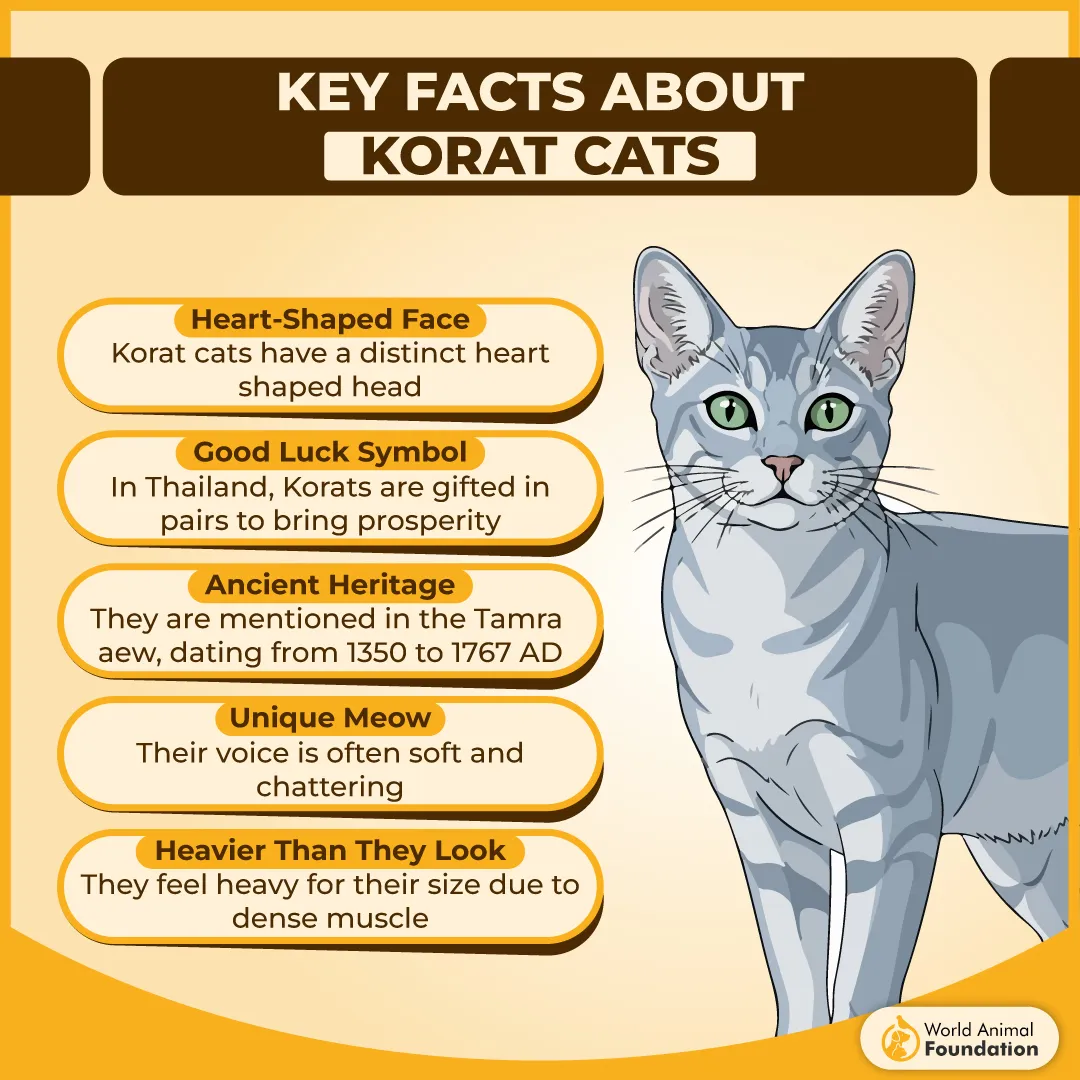
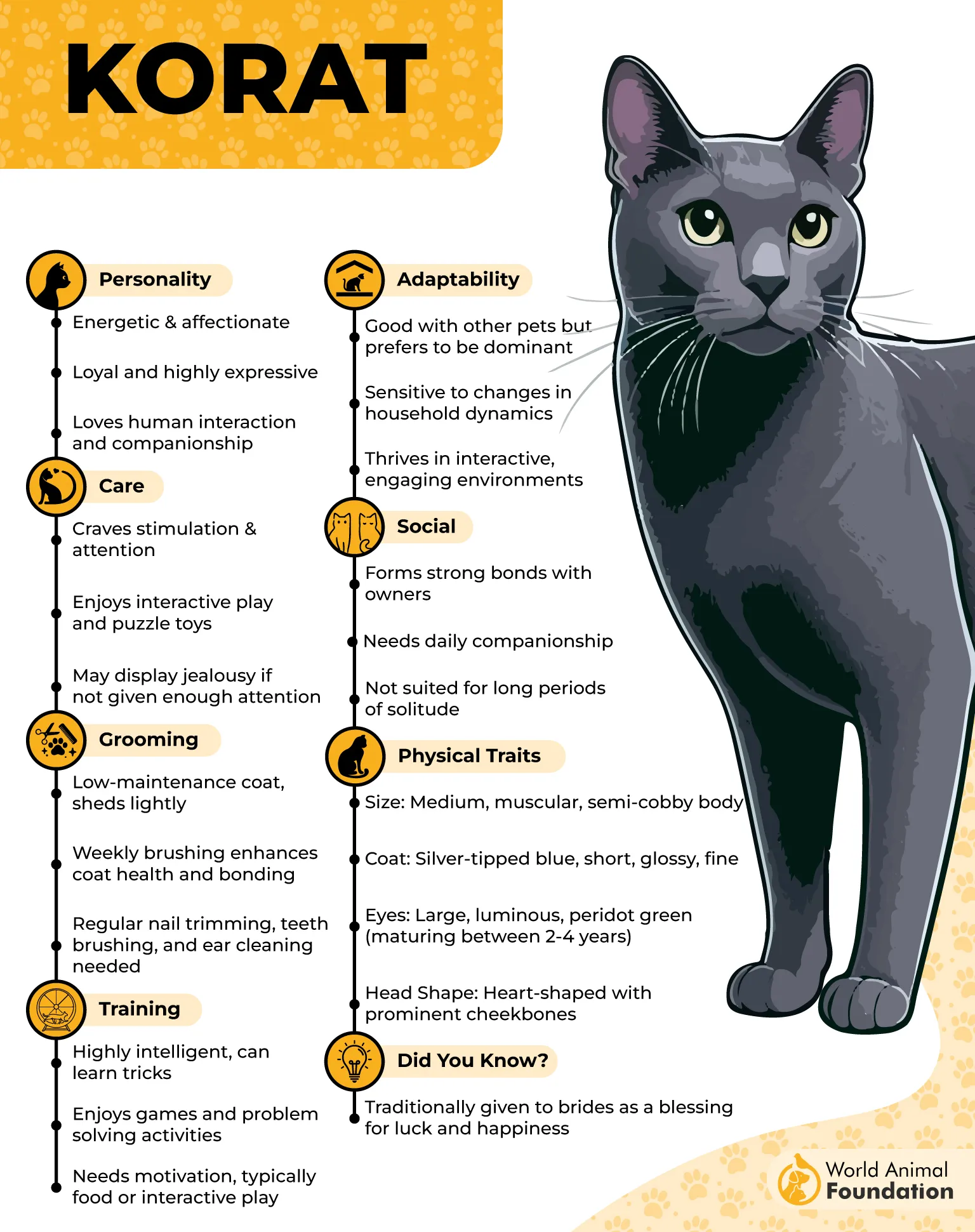
A Korat carries a built-for-action look in a compact body that’s naturally stocky and solid. The breed is famous for a blue coat tipped with silver and luminous green eyes that seem to glow in the right light. A heart-shaped face and large ears add to that alert expression.
Korats have a playful nature, so they do best with plenty of mental stimulation and daily interaction. They may also enjoy having other cats or even other animals around, especially when you’re not in the mood for games.
Set up cat trees, scratching posts, shelves, and perches so they have places to climb and settle in. They do best with attentive owners who don’t mind spending extra time playing games with them.
Korats are often quite vocal and love to talk to their people throughout the day. They use a range of sounds like soft meows, chirps, and trills to ask for attention, play, or to follow you from room to room. With plenty of interaction and a predictable routine, their chatter usually stays charming rather than constant.
Fun Fact
Korats reached the U.S. in 1959, when Jean Johnson received a pair from Bangkok. They’re often described as minimally altered by modern breeding.
7. Chausie
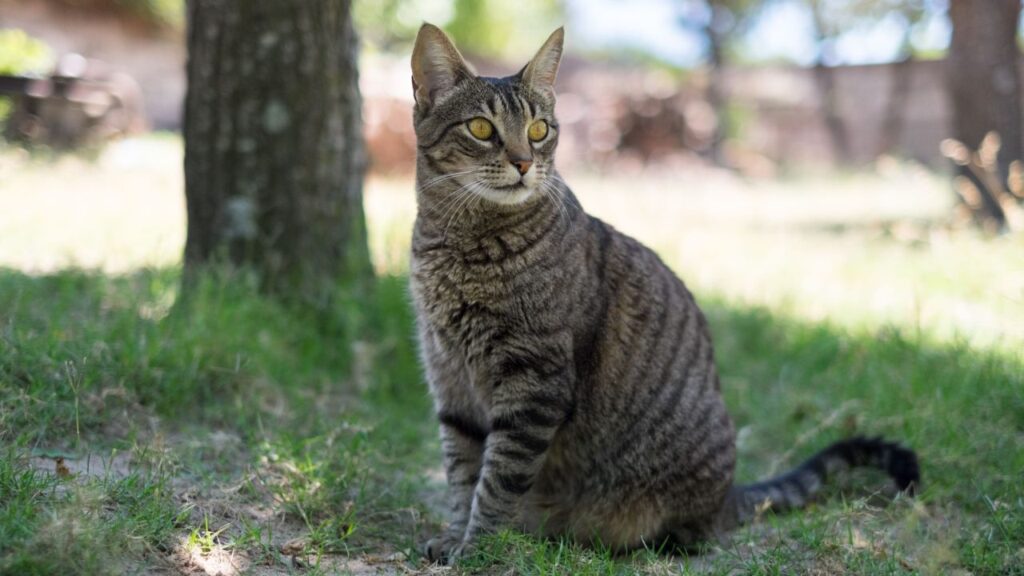
The Chausie is a sleek, athletic, high-energy cat known for its confident presence and love of movement. Smart and deeply interactive, it thrives with plenty of play, climbing space, and regular engagement with its people.
Chausies are medium to large with a lean, long look, plus a deep chest and flat flanks that make them seem built for movement. Add high-set pointed ears, strong cheekbones, and those angular gold-toned eyes, and they always look a little “on duty.”
Care is refreshingly simple: a weekly brush and regular nail trims usually do the job. They’re generally healthy, but their shorter intestinal tract can make plant-based ingredients tough to handle, and they may be prone to food allergies and inflammatory bowel disease, so you might need to be a bit picky about what’s in the food bowl.
Fun Fact
The name “Chausie” comes from the jungle cat’s scientific name, Felis chaus. The breed was recognized by The International Cat Association in 1995 and later received championship status in 2013.
Conclusion
Choosing a cat with an athletic build is really about finding the right match. These breeds tend to be sleek, curious, and always ready to move, which is great if you want a cat who feels like an active part of the household.
Take a quick look at your daily routine and your space. Do you enjoy an involved cat who likes to be nearby and busy, or would you rather have a quieter companion who’s happiest sticking to the basics?
If the lively option sounds like your kind of fun, go with the breed that fits your home’s vibe and be ready to support that energy in a smart way. With the right setup and steady care, you’ll end up with a confident cat who keeps things entertaining. If you’re interested in cats like these, some other breeds you can look up include the Maine Coon, Japanese Bobtail, Cornish Rex, Oriental Shorthair, and Devon Rex.
