




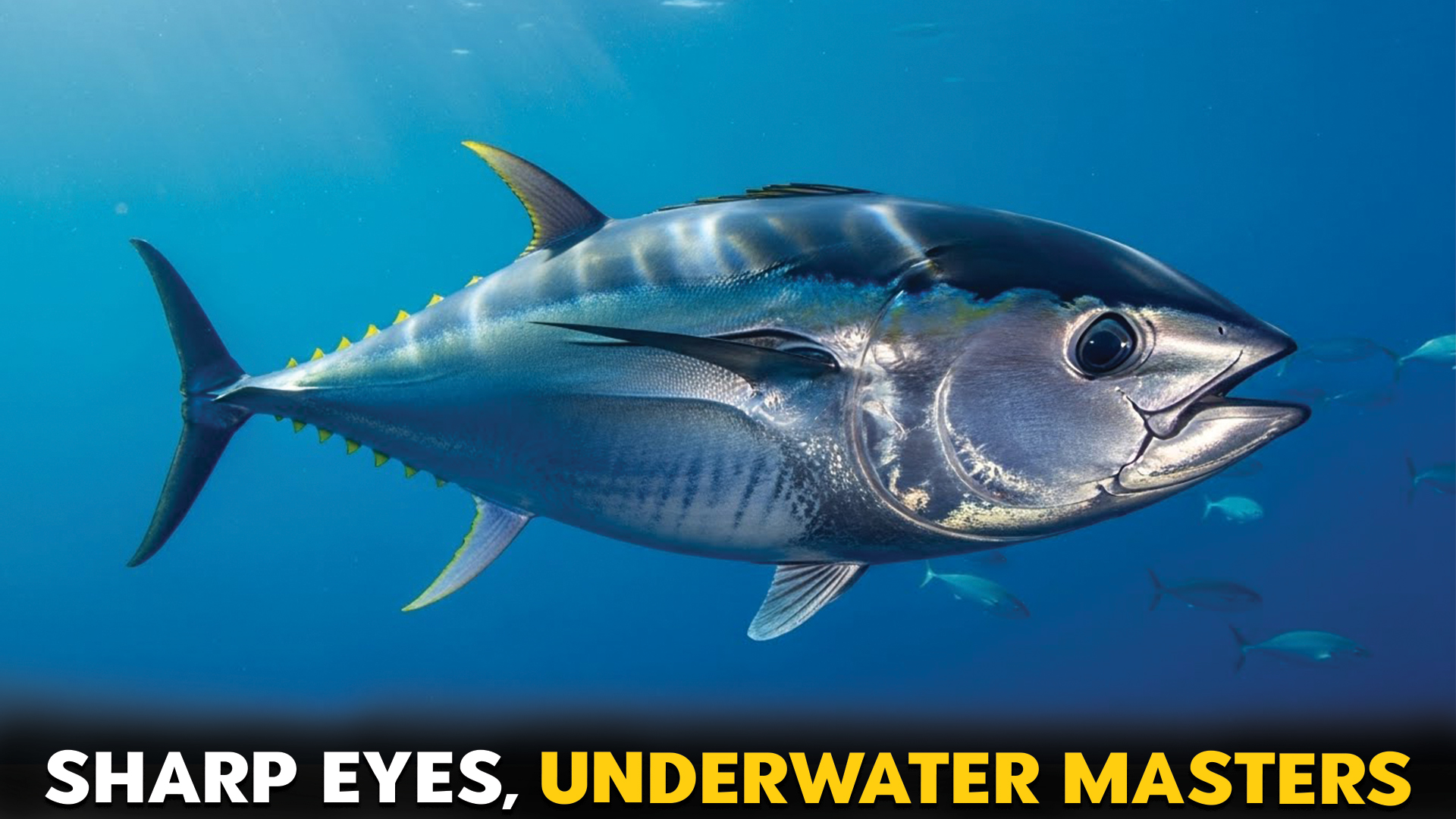
We spend so much time talking about brains, speed, and size that we forget one underrated superpower: eyesight. In the underwater world, vision isn’t just helpful — it’s the difference between dinner and becoming dinner. From spotting the target at great distances to navigating low-light conditions, some fish have evolved truly next-level sight.
Welcome to the deep dive into fish with the best vision, where large eyes, advanced retina structures, and insanely tuned photoreceptor cells create vision systems that often outperform human eyes. While humans struggle in dim light, many fish thrive in darkness, murky water, and extreme depth.
Vision underwater isn’t easy. In fact, many marine animals have poor vision. Ultraviolet light bends, scatters, and fades fast. That’s why elite visual hunters rely on adaptations such as binocular vision, enhanced focus, specialized lens shapes, and ultra-sensitive eyes that detect motion, contrast, and fine detail. Some even see more light than an average human ever could.
Let’s meet the aquatic icons with the best underwater vision, the sharpest eyesight, and some of the most sophisticated vision systems in the entire animal kingdom.
7 Fish with the Best Eyesight
1. Banded Archerfish
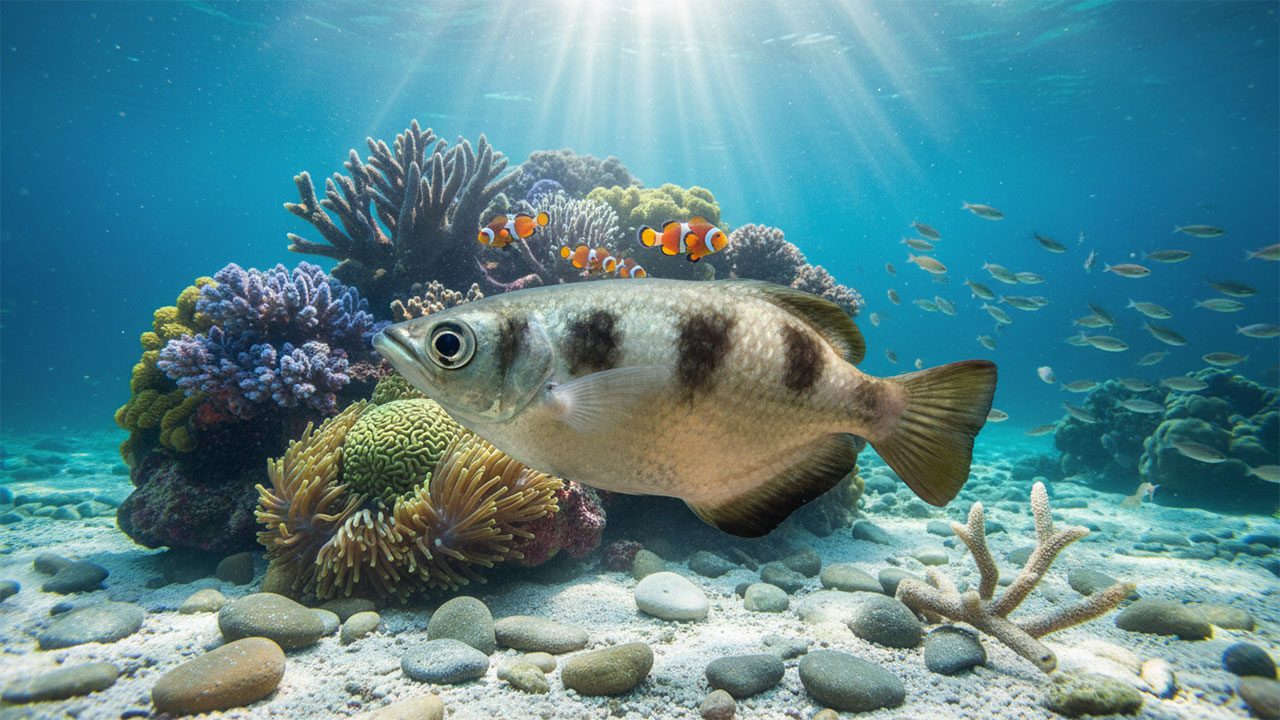
The banded archerfish is basically the sniper of the fish world. Famous for shooting jets of water to knock insects off branches, this fish depends heavily on precision sight. Its eyes are positioned to give strong binocular vision, allowing it to judge distance, angle, and motion with scary accuracy.
What makes this even more impressive is refraction. When UV light passes from air to water, objects appear shifted — a nightmare for aiming. Archerfish compensate for refraction through learning and neural processes, proving that vision here isn’t just optical, it’s cognitive. Experiments suggest that young archerfish improve accuracy over time, refining their visual acuity quickly.
Inside the retina, areas with high cone density allow these fish to resolve fine detail at moderate range. That means better tracking of fast-moving prey near the surface, in both bright and low light.
Compared to human vision, archerfish sight is built for action that works in its favor in the animal kingdom. This isn’t passive seeing — it’s calculated, adaptive, and lethal—one of the clearest examples of best eyesight meeting real-world survival.
2. Atlantic Bluefin Tuna
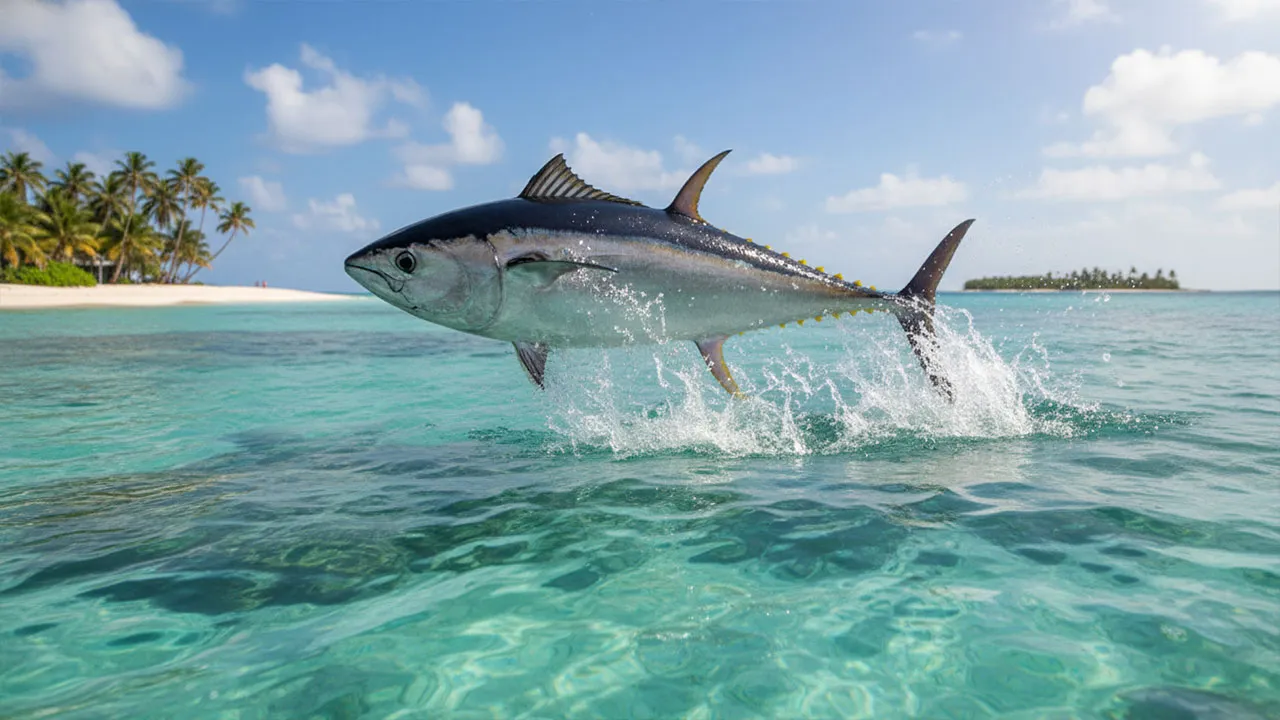
Speed is useless without sight, and Atlantic bluefin tuna know this well. These powerhouse swimmers rely on elite underwater vision to hunt while racing through open water. Their eyes are tuned for scanning great distances, making them deadly efficient predators.
Unlike near-sighted fish, tuna track movement far ahead, using sharp focus and fast optic nerves to process visual data at high speed. Their brain and visual system work together to handle motion blur at extreme velocity. Their fast swimming style is backed by strong peripheral vision, helping tuna track threats and prey without slowing down.
Schooling behavior adds another advantage: hundreds of eyes scanning the environment at once. This creates a shared early-warning system against predators and boosts hunting success.
While not flashy, tuna vision is pure performance. It’s functional, fast, and perfectly adapted to life in the open environment, where seeing first often means surviving longer.
3. Swordfish
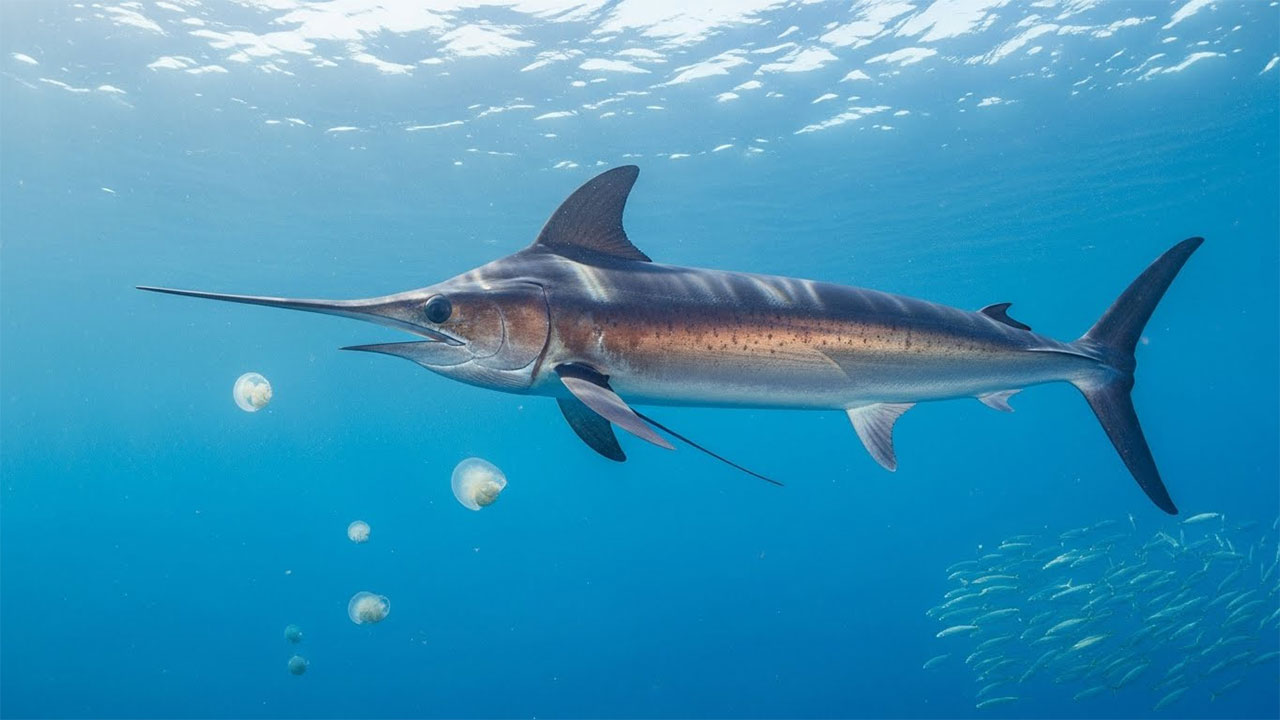
Swordfish don’t just see — they cheat the system. By warming their retina and surrounding tissues, swordfish increase visual process speed in cold, deep water. This thermal trick boosts their ability to track fast-moving targets in dim light.
Their large eyes let in significantly more light than human eyes, giving them a serious edge in deep-sea darkness. While most fish slow down visually in cold water, Oceana says swordfish stay locked in.
This selective heating makes their vision more energy-efficient than full warm-blooded systems. It’s targeted evolution at its finest, showing how adapted eyes can dominate extreme habitats. This adaptation gives swordfish exceptional night vision, allowing them to track fast prey in deep, cold water long after sunlight disappears.
Among fish with the finest eyesight, swordfish prove that seeing well isn’t just about size — it’s about smart biological upgrades.
4. Giant Manta Ray
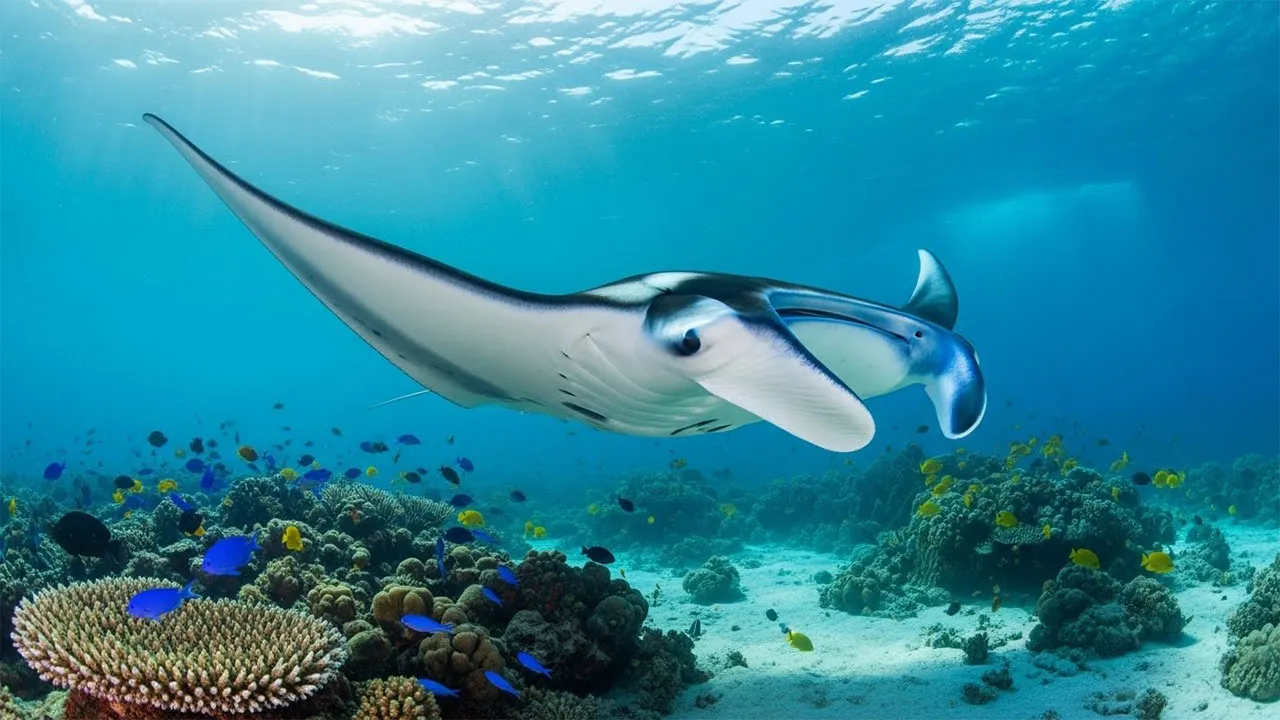
Giant manta rays combine big brains with big eyes. They have some of the largest eyes in the animal world relative to body size, giving them a sweeping panoramic view of their surroundings. Their eyes are huge — in some individuals, each eyeball is about the same volume as a small lime, which helps them gather more light.
Their vision helps them navigate both clear and murky water, detect movement, and recognize shapes — including humans. Divers often report mantas approaching out of curiosity, then calmly swimming away once assessed. Some researchers suggest that manta rays may also use visual cues, such as polarized light, to navigate and make sense of shifting underwater scenes.
Their brain size rivals that of some primates, suggesting vision here works alongside memory and learning. It’s not just about seeing — it’s about understanding the scene.
With eyes positioned on the sides, manta rays maximize awareness, making them among the most visually aware animals in the ocean.
5. Spotted Eagle Ray
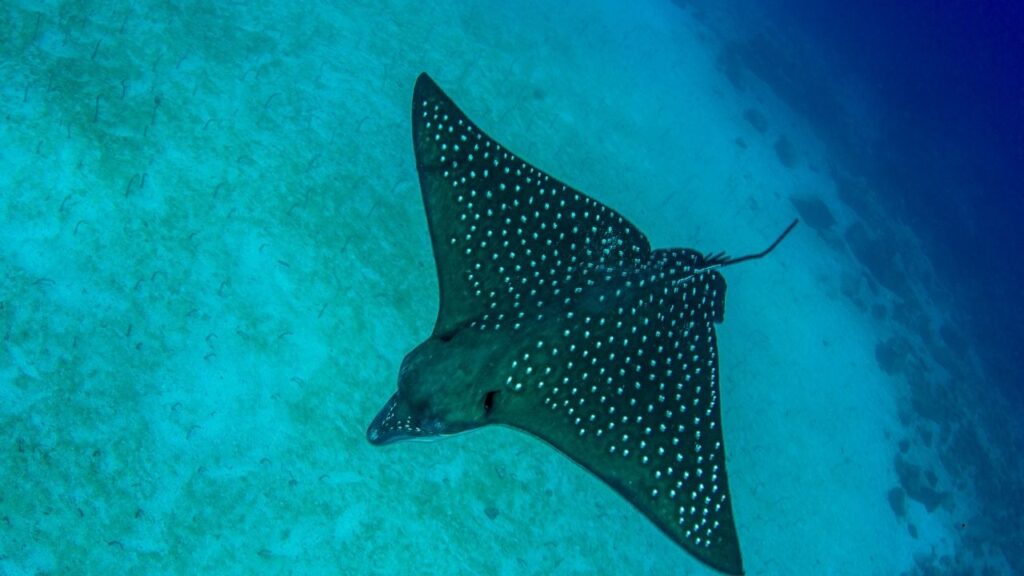
The spotted eagle ray looks like it belongs in the sky, but its eyesight is built for reefs and open water. While it relies on electroreception to locate buried food, its eyesight helps with navigation and obstacle avoidance.
These rays perform well in low-light conditions, using their vision to orient themselves over sand, rocks, and coral formations. Their heads and eye placement give a broad visual field.
Although they don’t depend on vision to detect prey under sand, they rely on sight to detect danger and move gracefully through complex habitats.
This balance of sense systems makes them versatile survivors in changing underwater environments.
6. Atlantic Halibut
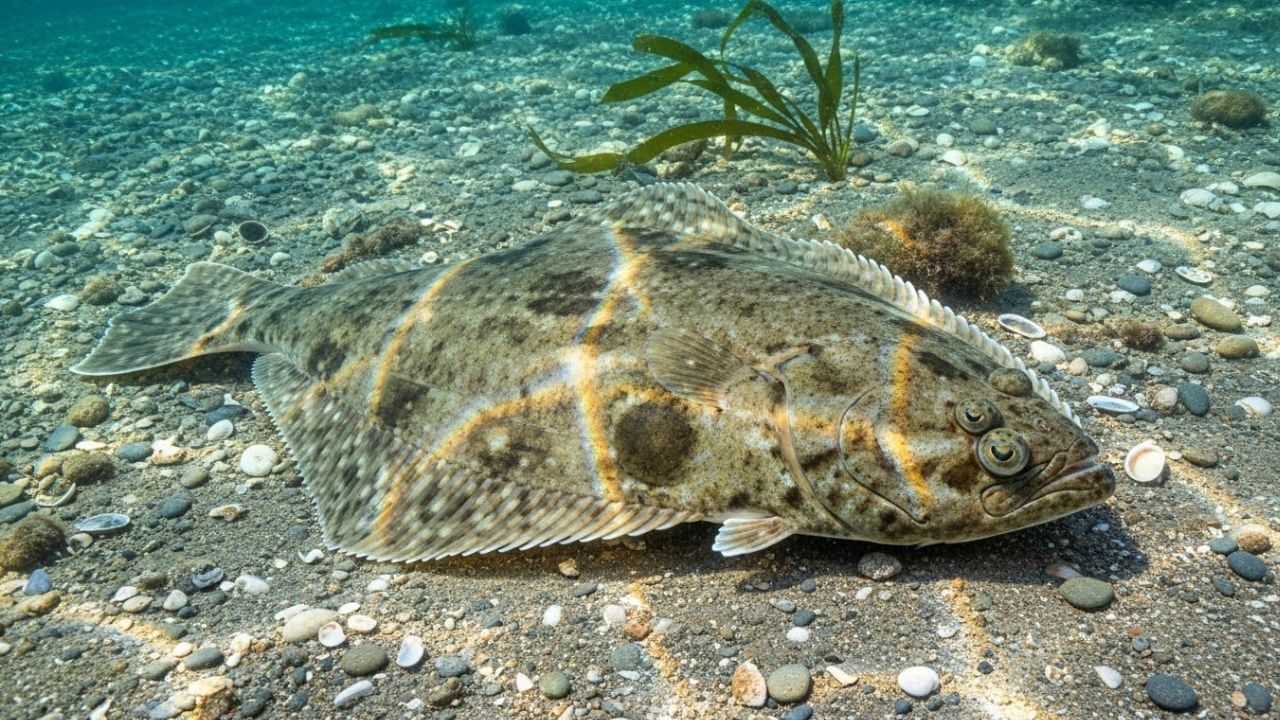
Halibut takes visual adaptation to a weird but effective place. Born with eyes on both sides, as Britannica describes, they undergo a transformation in which one eye migrates so that both eyes sit on the same side of the head.
This gives halibut an upward-facing view while resting on the seafloor. From this position, they can spot passing prey in the bright light and incoming threats without moving.
Their retinal and lens structures are tuned for viewing silhouettes above, even in low-contrast conditions. It’s a specialized but powerful setup.
This sideways life proves that sometimes the best vision isn’t about seeing everything — just seeing the right thing at the right time.
7. Barracuda
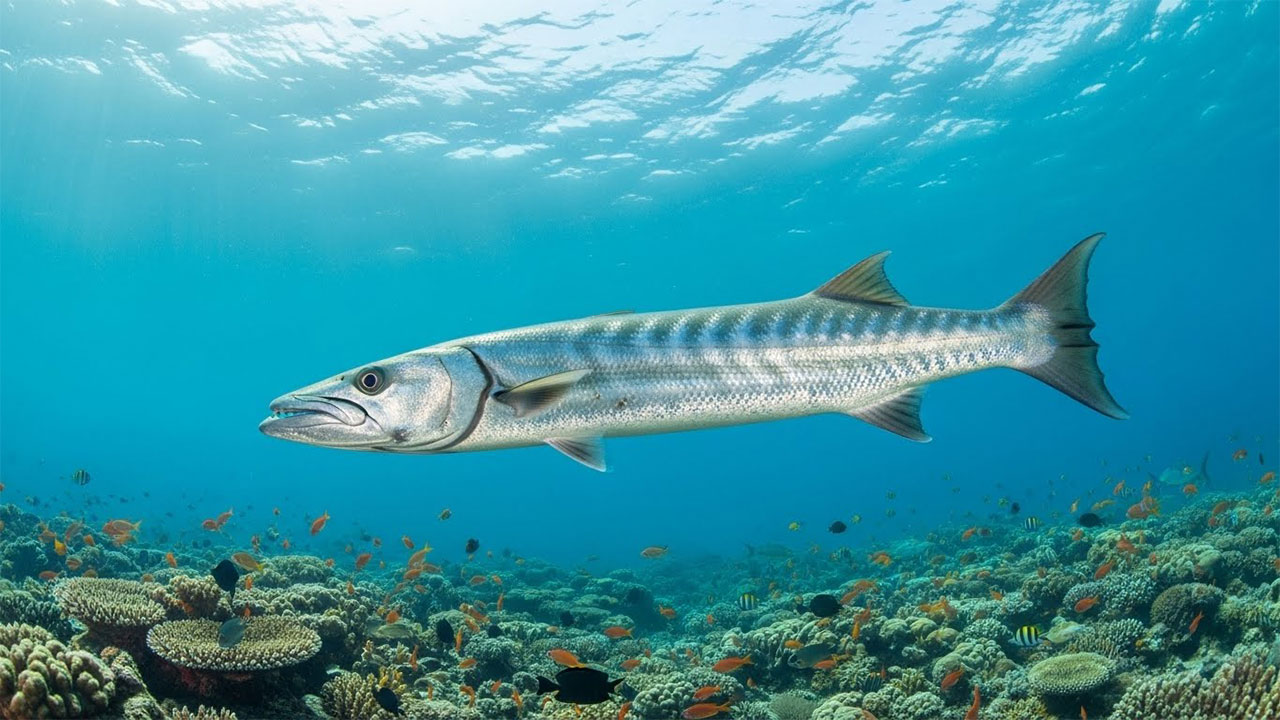
Barracudas are pure visual predators. Their hunting strategy revolves around spotting flashes, movement, and reflections — anything that stands out in the water. Their eyesight allows them to lock onto targets from far away.
Juveniles hunt in groups, using collective vision to corner prey, while adults rely on solo ambush powered by speed and precision. Once a target is chosen, escape is nearly impossible.
Their large eyes, streamlined heads, and keen focus make barracudas among the most efficient hunters in the sea. Their hunting also benefits from strong colour vision, helping them notice weird flashes and shiny scales before the prey even reacts.
When speed meets sight, you get a predator that defines visual dominance underwater.
Conclusion
From snipers like archerfish to speed demons like tuna and swordfish, these fish with the finest eyesight show how vision shapes life underwater. Seeing clearly means finding food, avoiding predators, and thriving in complex environments. Compared to humans, certain fish can process visual information influenced by circular polarised light, revealing how alien underwater vision can be.
While human vision dominates land, underwater champions rely on adaptations far beyond our own — bigger eyes, specialized retina, smarter brain processing, and extreme sensitivity to light. Across many species, dense clusters of light sensitive cells are what make elite underwater vision possible.
In the end, these species remind us that the ocean isn’t dark and mysterious to everyone — for some fish, it’s crystal clear.
