




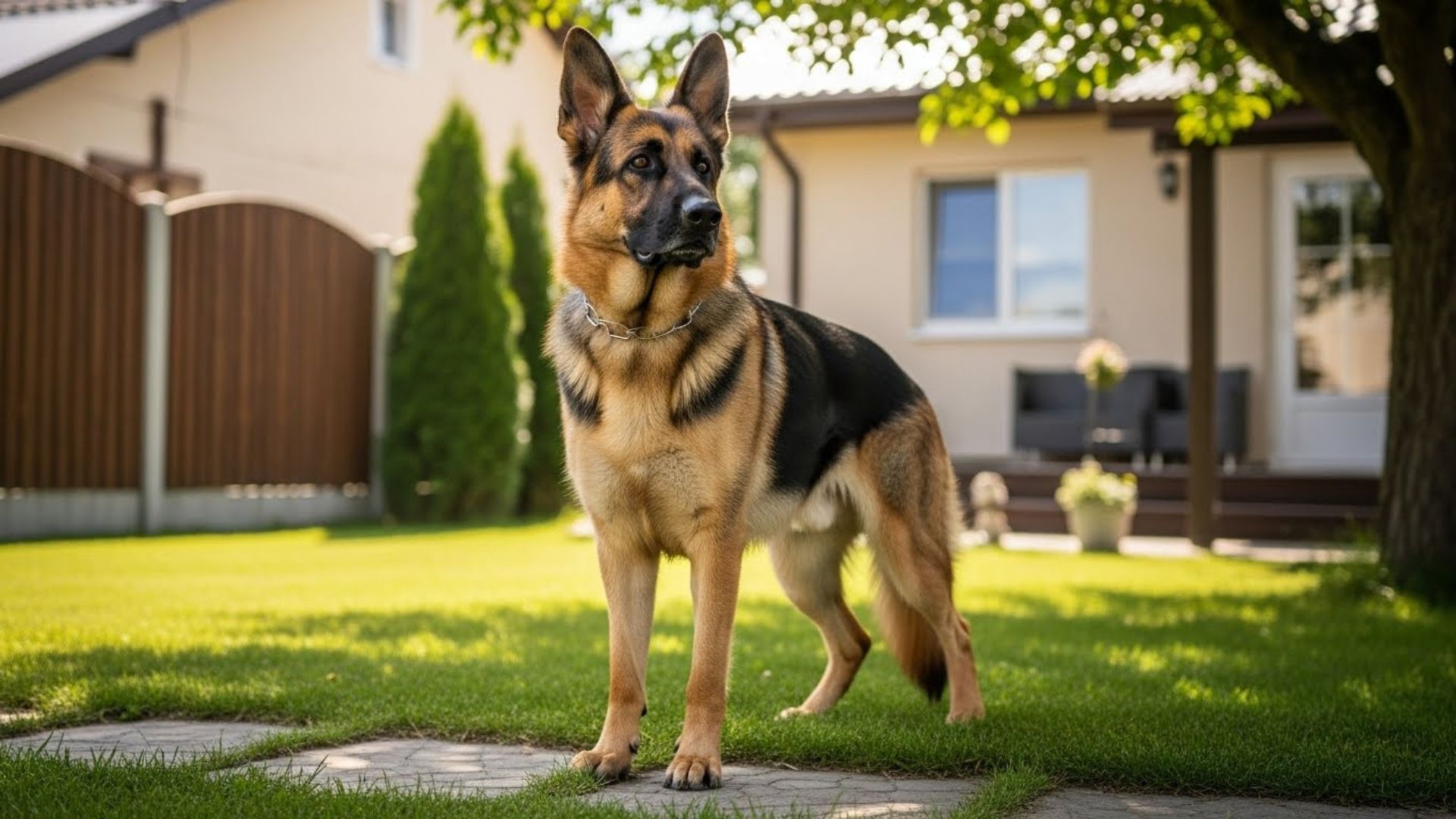
Home security is not always about locks, alarms, or cameras blinking in the dark. Sometimes it is a dog who lifts their head, listens closely, and quietly decides whether something belongs or not.
The best dogs for protection are not nonstop barkers or muscle-bound showoffs. They are steady, aware, and deeply connected to their people. Certain breeds are naturally suited for this role, offering reassurance without turning daily life into a training drill.
Ahead, you will meet dog breeds known for their instincts to watch, protect, and stay closely connected to their people. Each one brings a unique mix of confidence, loyalty, and everyday livability that makes them more than just a presence at the door.
Fun Fact
Dogs often notice changes in routine before humans do, including unfamiliar sounds, scents, or movement patterns. That is why some dogs seem to react “out of nowhere” when something in their environment feels different.
Excellent Dog Breeds for Home Security and Protection
1. German Shepherd
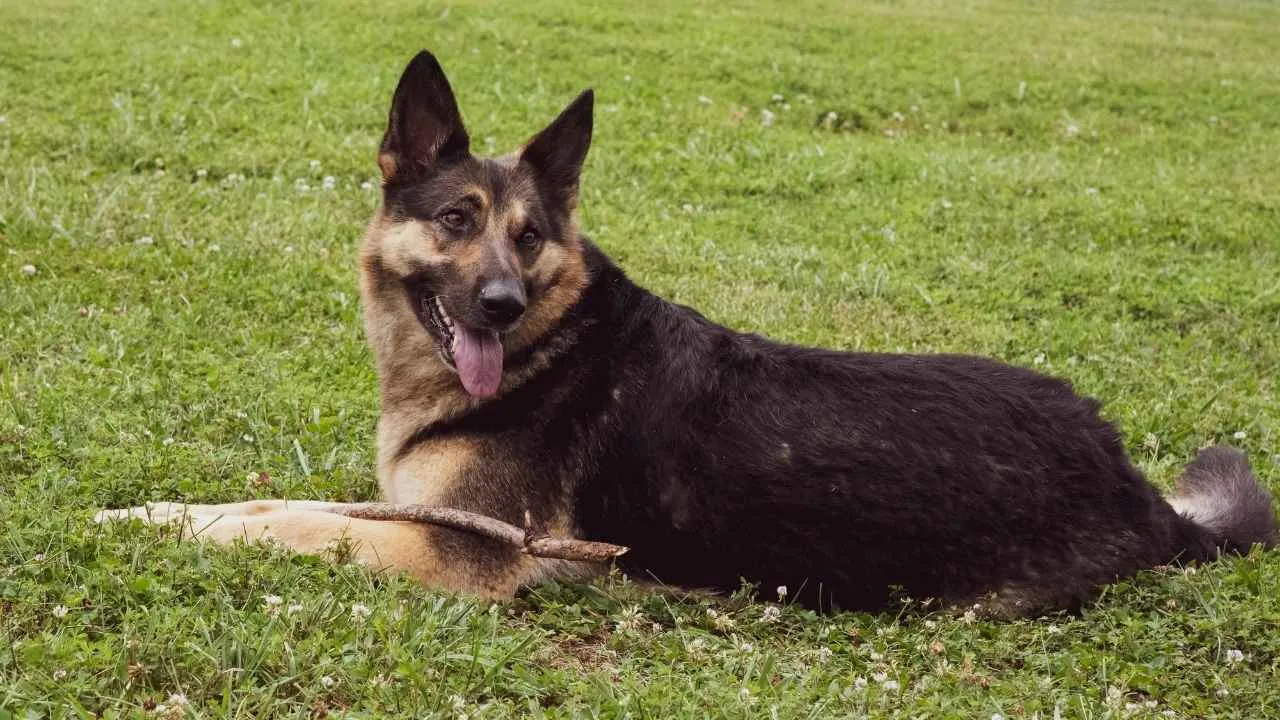
German Shepherds tend to move through life like they have a mental checklist running in the background. They notice patterns, remember routines, and stay tuned in to the people they live with. Having a role to play, whether that is training, learning commands, or structured activities, keeps them mentally satisfied.
They do best in homes that enjoy engagement rather than passive companionship. Without enough stimulation, their energy can turn into restlessness, but when their needs are met, they show a surprisingly playful and humorous side. Many settle into the house as both entertainers and problem-solvers.

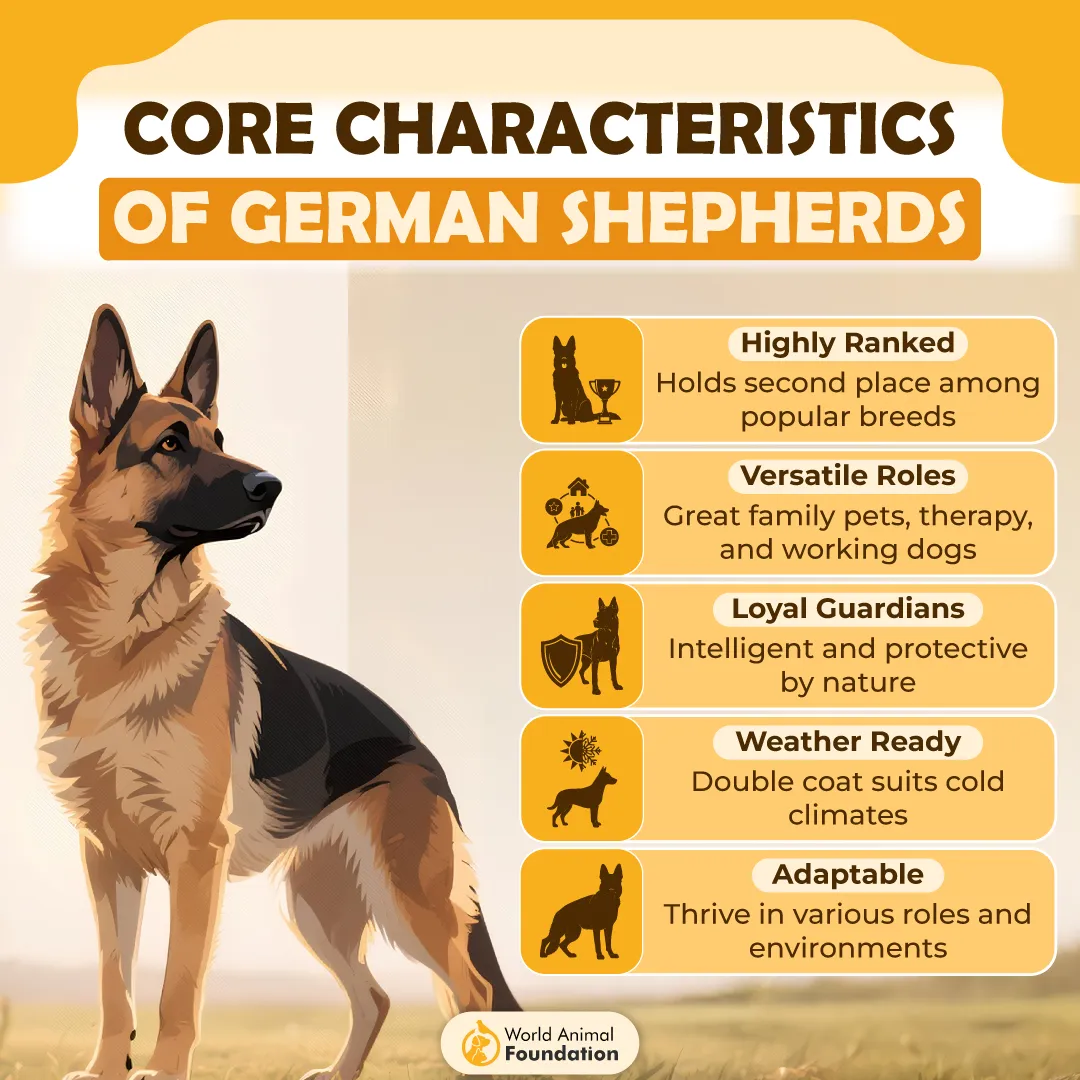
As per PetMD, German Shepherds are typically very loyal and watchful. They’re usually affectionate and steady with their household, while staying more cautious and reserved with unfamiliar people.
Fun Fact
German Shepherds helped establish early guide dog programs because of their ability to learn complex tasks while remaining calm and focused.
2. Cane Corso
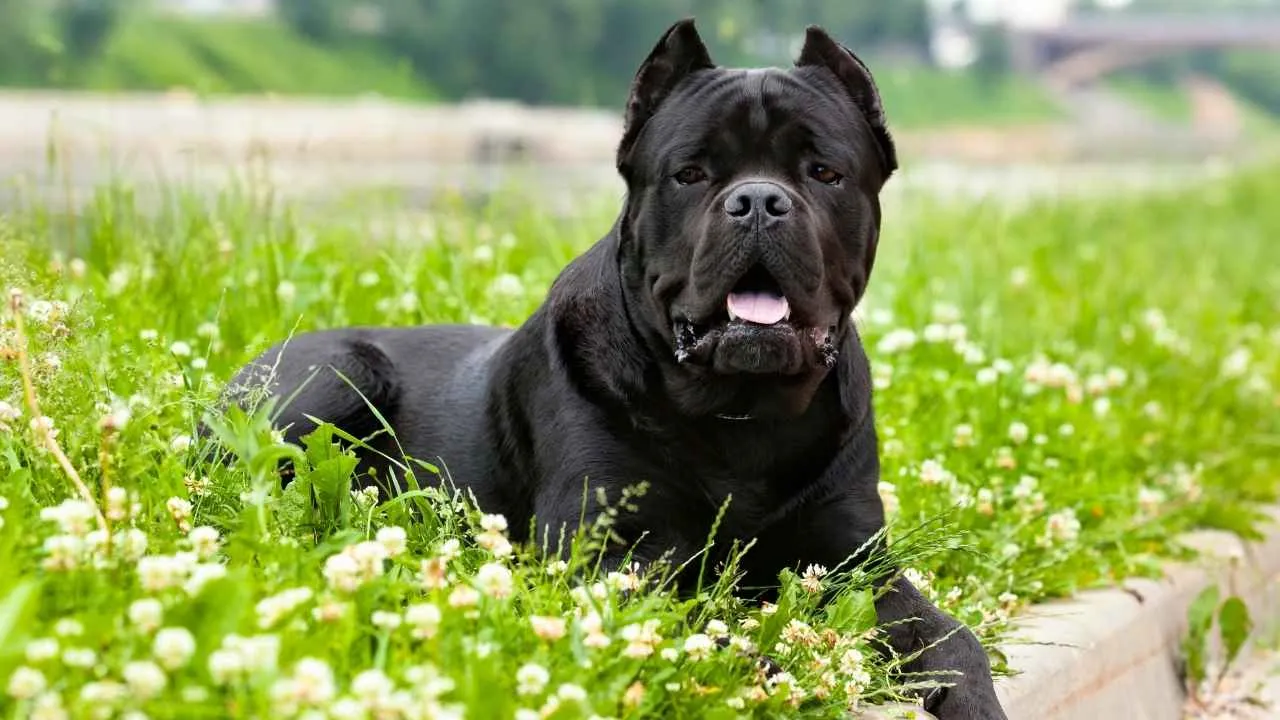
A Cane Corso often appears thoughtful, almost as if it is weighing every situation before responding. This breed is not flashy or impulsive and prefers to rely on instinct and judgment. Their presence feels controlled and deliberate rather than reactive.
In everyday life, Cane Corsi thrive when they are part of the household rhythm. They do not enjoy being sidelined and tend to settle best when routines are predictable. Early exposure to people and environments plays a major role in shaping their behavior.
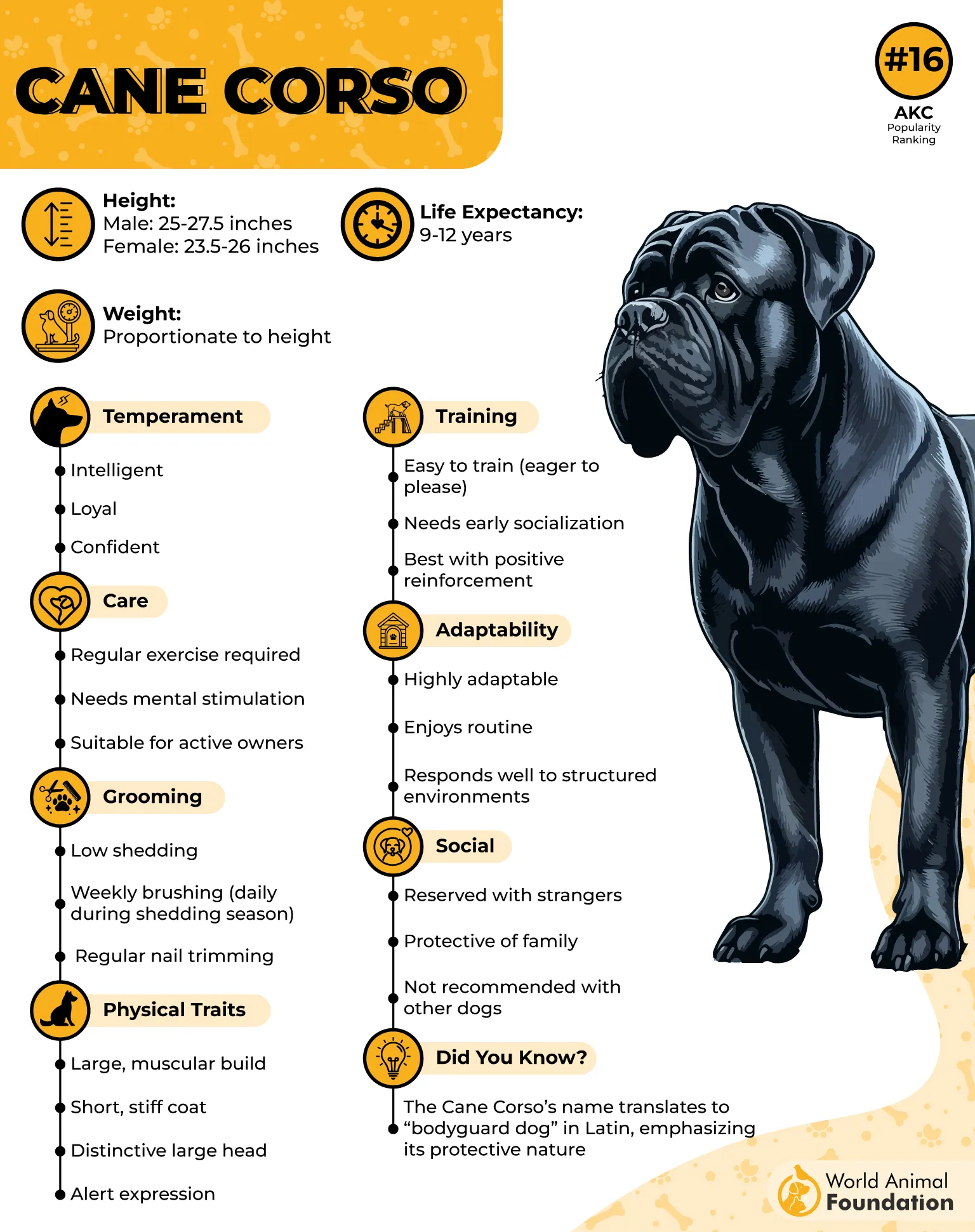
Training a Cane Corso works best when expectations are clear and consistent. They are capable learners who respect confident handling and calm direction. With proper upbringing, they show a composed blend of loyalty, restraint, and strength.
Fun Fact
Cane Corso translates loosely to guard dog of the courtyard, a name rooted in their long-standing role protecting Italian properties.
3. Great Dane
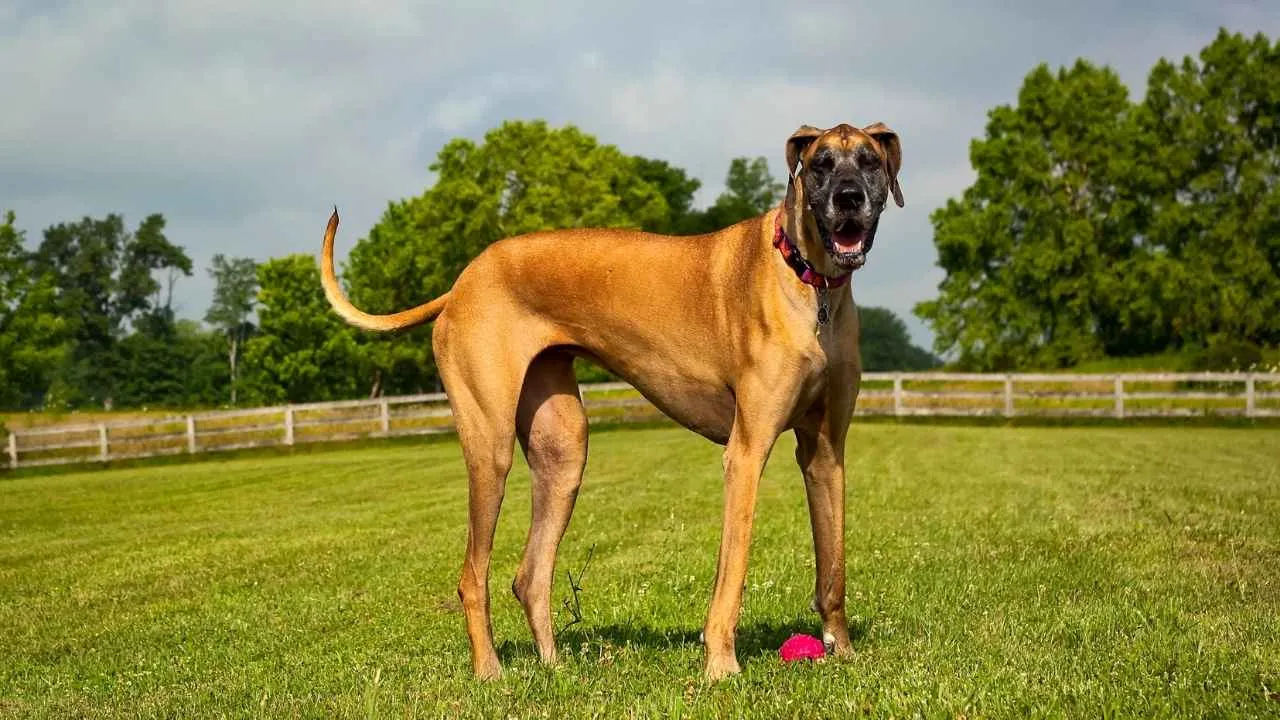
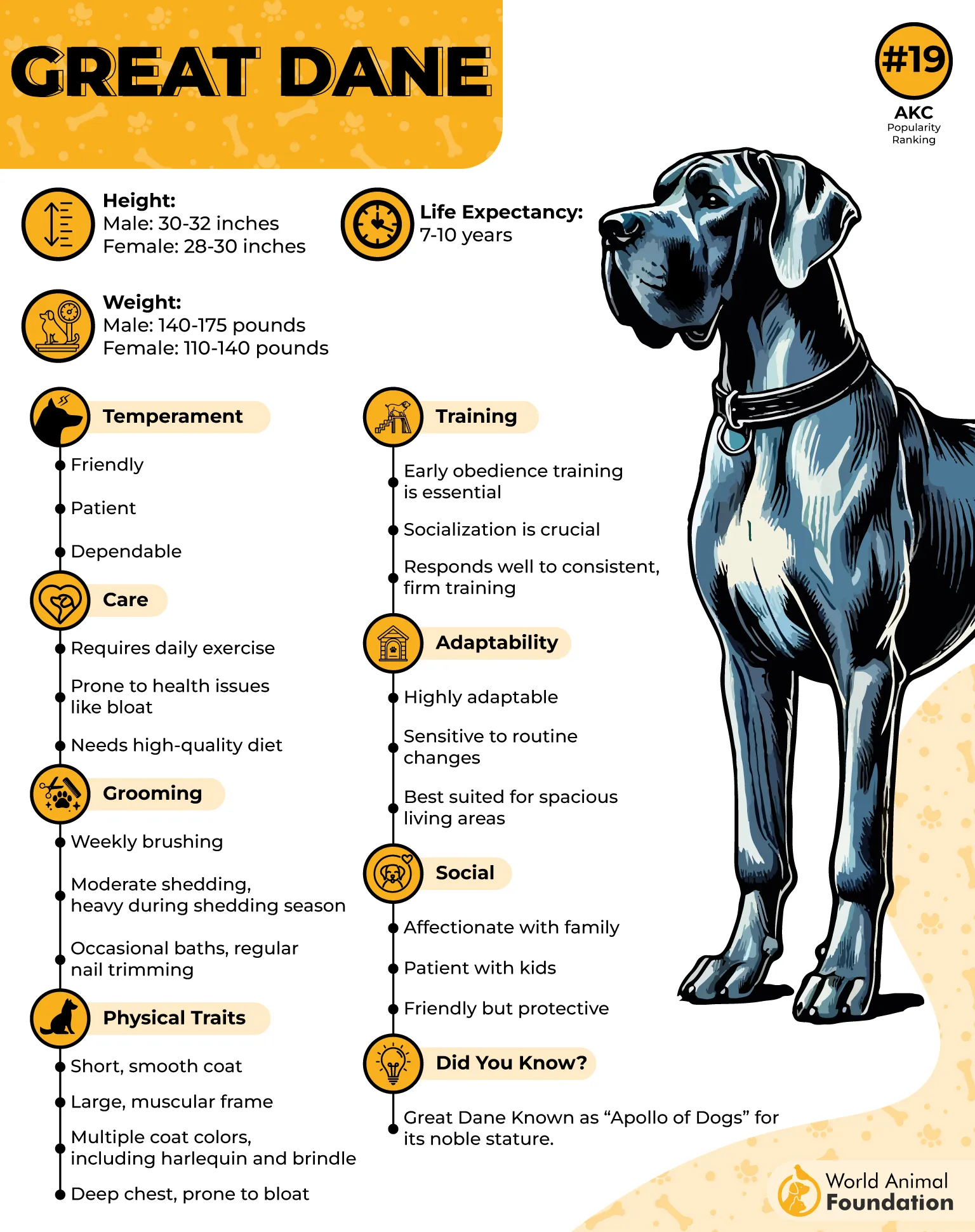
Great Danes often challenge assumptions the moment you meet them. Their towering height suggests intensity, yet their personality is usually relaxed and welcoming. Many are content to observe quietly while staying socially engaged.
They are selective with their voices, which makes their bark more noticeable when it happens. Instead of pacing or patrolling, they rely on presence and awareness. Their calm demeanor adds a steady, grounding energy to the home.
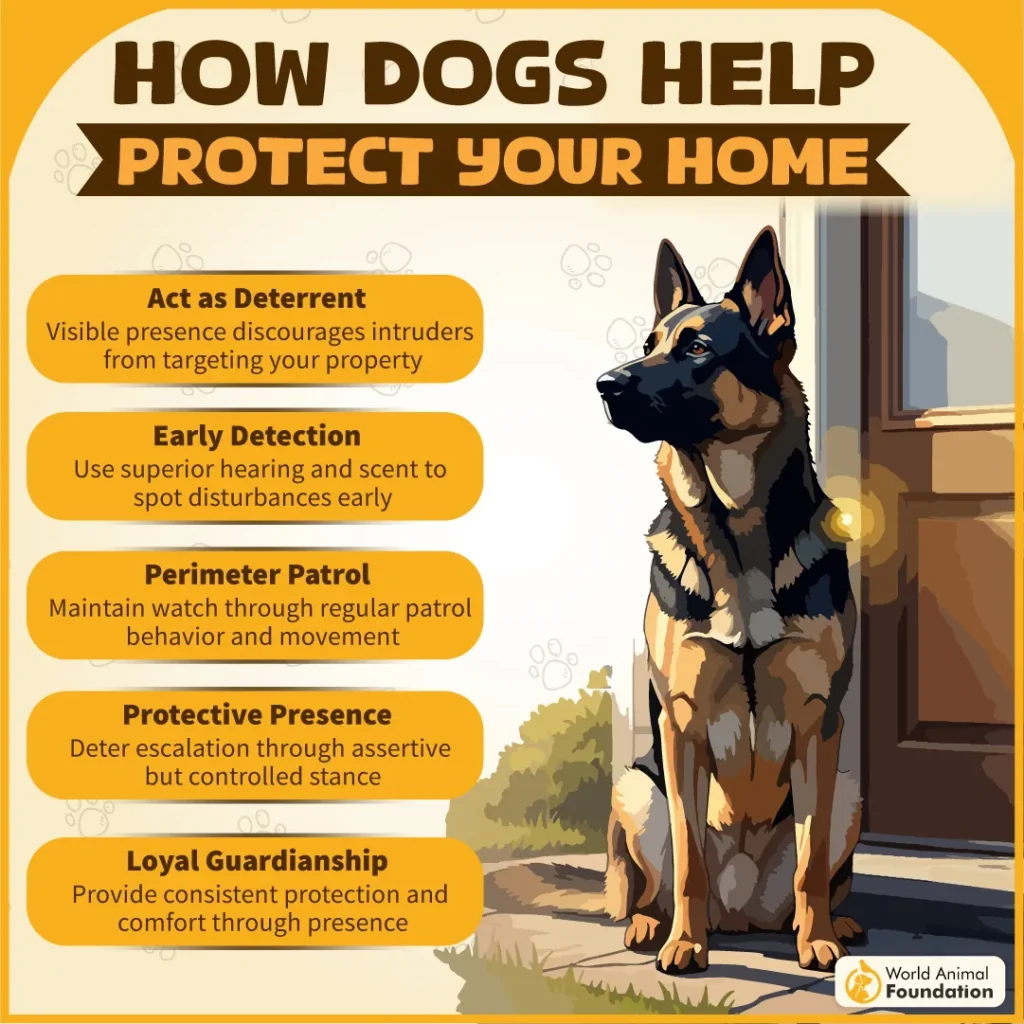
According to WebMD, with a mix of playfulness and confidence, they often fit well into family homes, including those with children. Their mild, easygoing nature also makes them generally simple to train and pleasant to live with.
Fun Fact
Great Danes were once bred to hunt wild boar before transitioning into the calm companions they are known as today.
4. Rottweiler
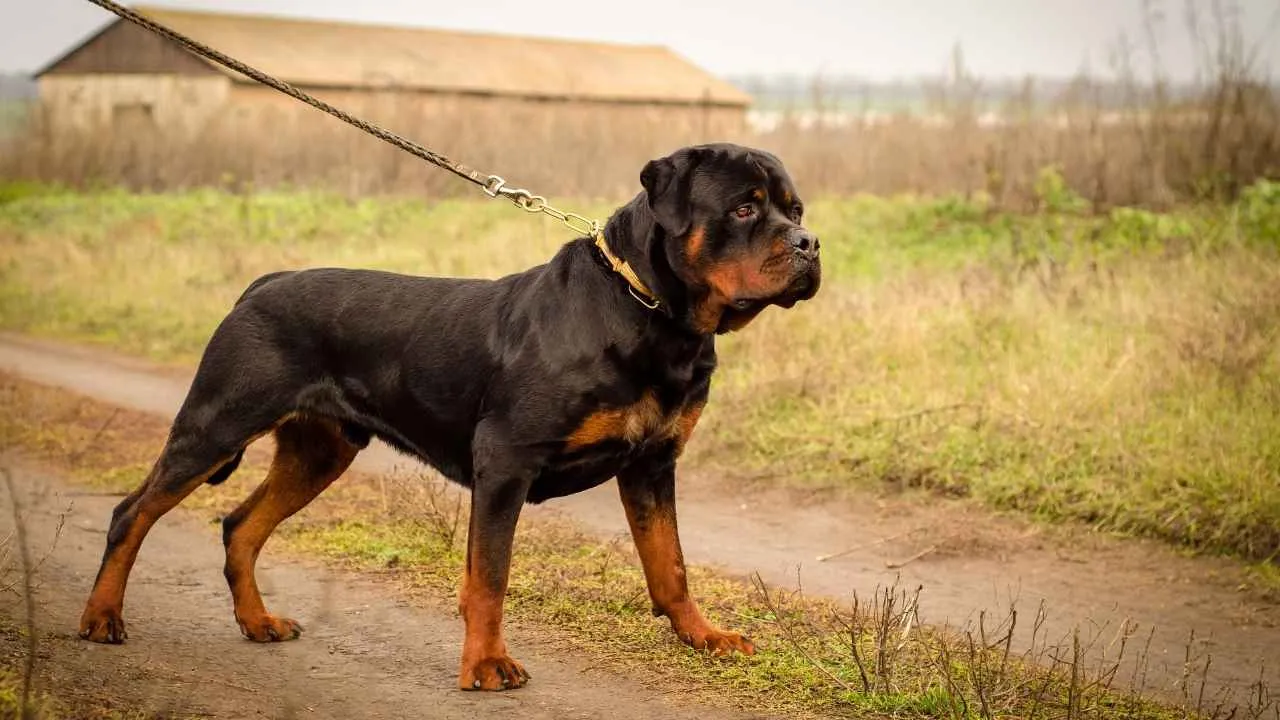
Rottweilers approach situations with patience and intention. They are not quick to react and prefer to take in their surroundings before making a move. This measured nature often gives them a composed, self-assured presence.
Training is most effective when it is structured and consistent. Rottweilers respond well to routine, responsibility, and regular physical activity. When raised in a stable environment, they develop into dependable companions with a strong sense of purpose.
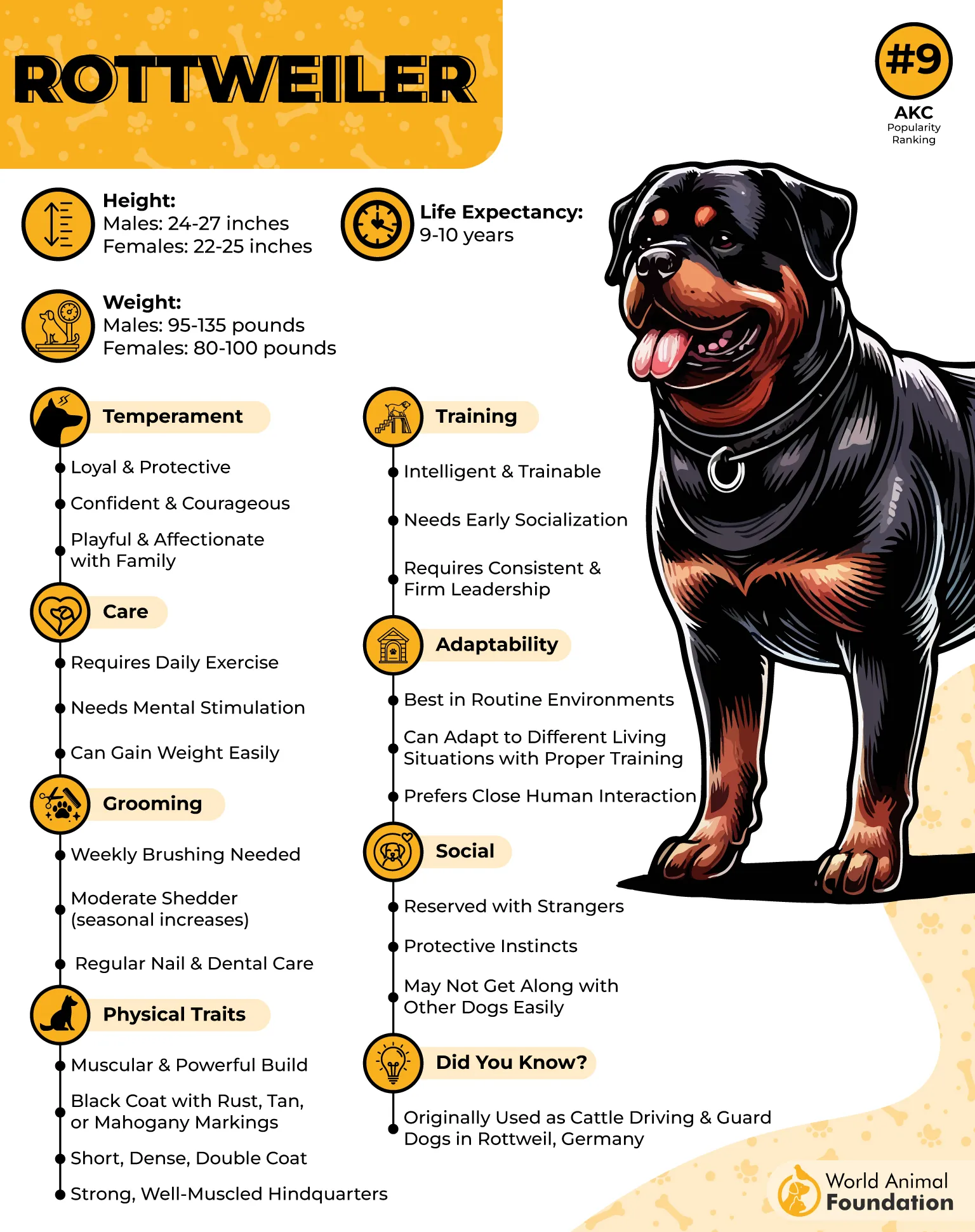
At home, they tend to form strong attachments and show a nurturing side, especially toward family members they trust. Clear social boundaries help them understand which situations require concern and which are simply part of daily life.
Fun Fact
Rottweilers originally worked alongside butchers, guarding livestock and goods during transport, which shaped their steady and watchful temperament.
5. Tibetan Mastiff
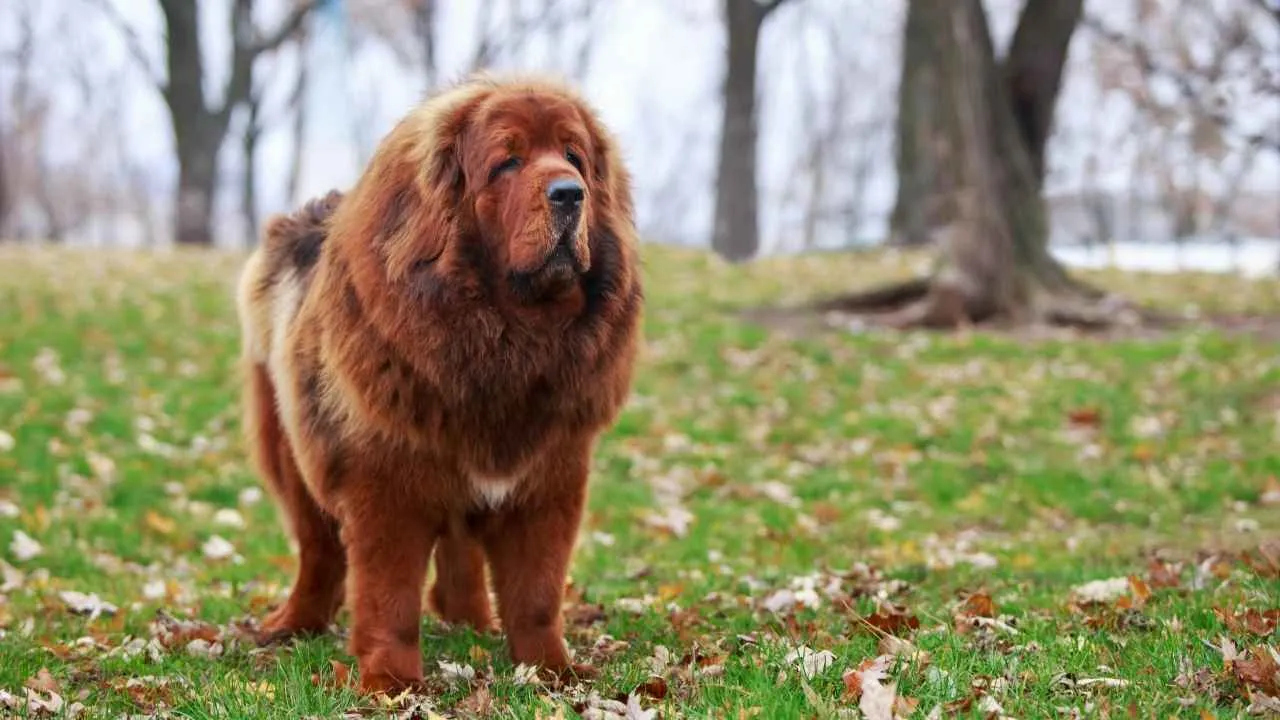
Centuries of working alone in harsh terrain shaped the Tibetan Mastiff into a dog that relies heavily on instinct. Rather than reacting quickly, this breed prefers to watch from a distance and make deliberate decisions. Silence and stillness are often part of how they monitor their surroundings.
Once bonded, their loyalty is profound and unwavering. They are settled and composed with those they trust, while unfamiliar people are met with distance and caution. Their size, coat, and independent mindset make them a better match for experienced owners.
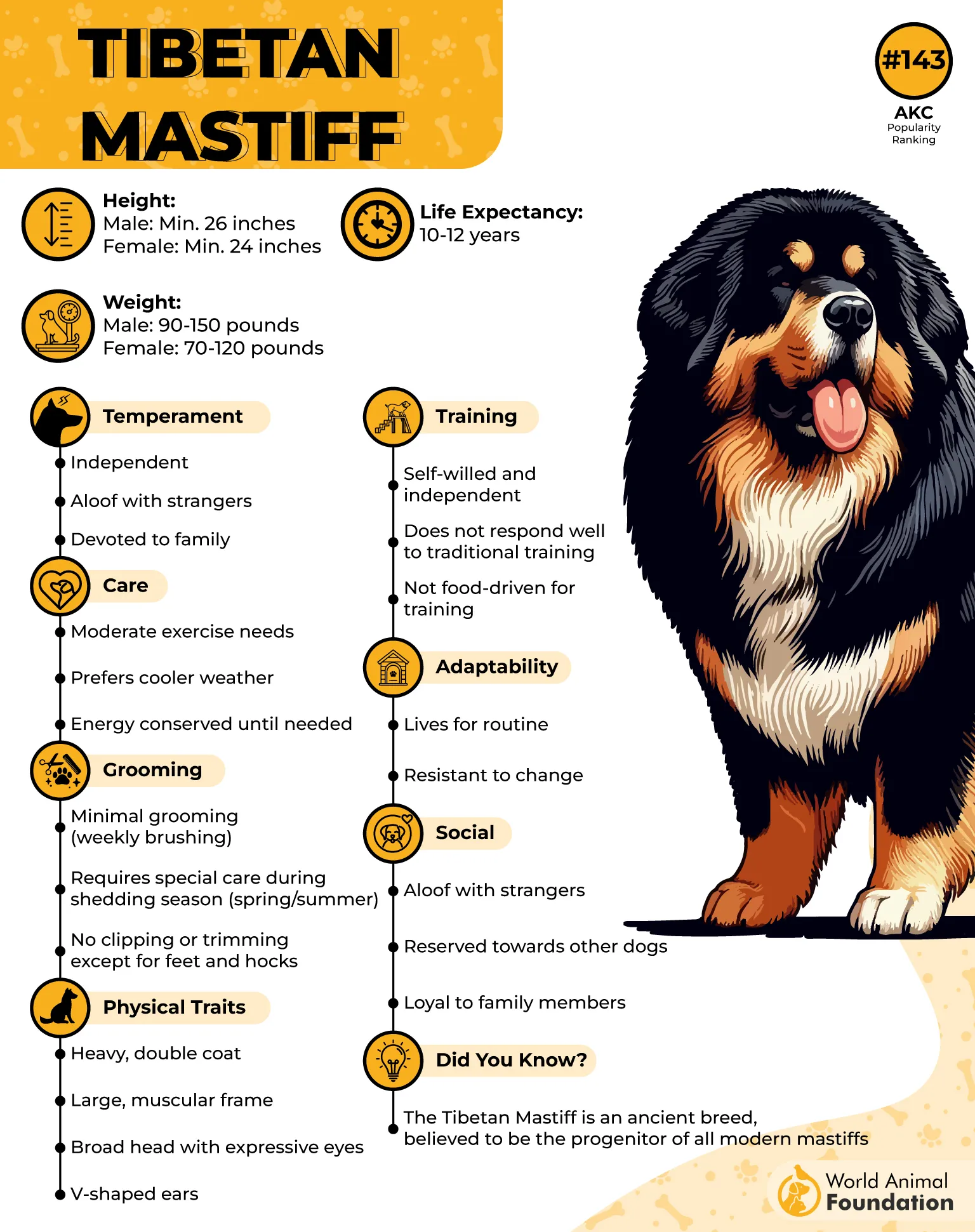
This is not a breed that looks for constant instruction. Tibetan Mastiffs value consistency over repetition and respond best to calm, confident leadership. Social exposure must start early and continue regularly, especially in homes with guests or changing routines.
Fun Fact
Tibetan Mastiffs were historically gifted to visiting explorers as symbols of respect and trust, prized for their self-reliance.
6. Doberman Pinscher
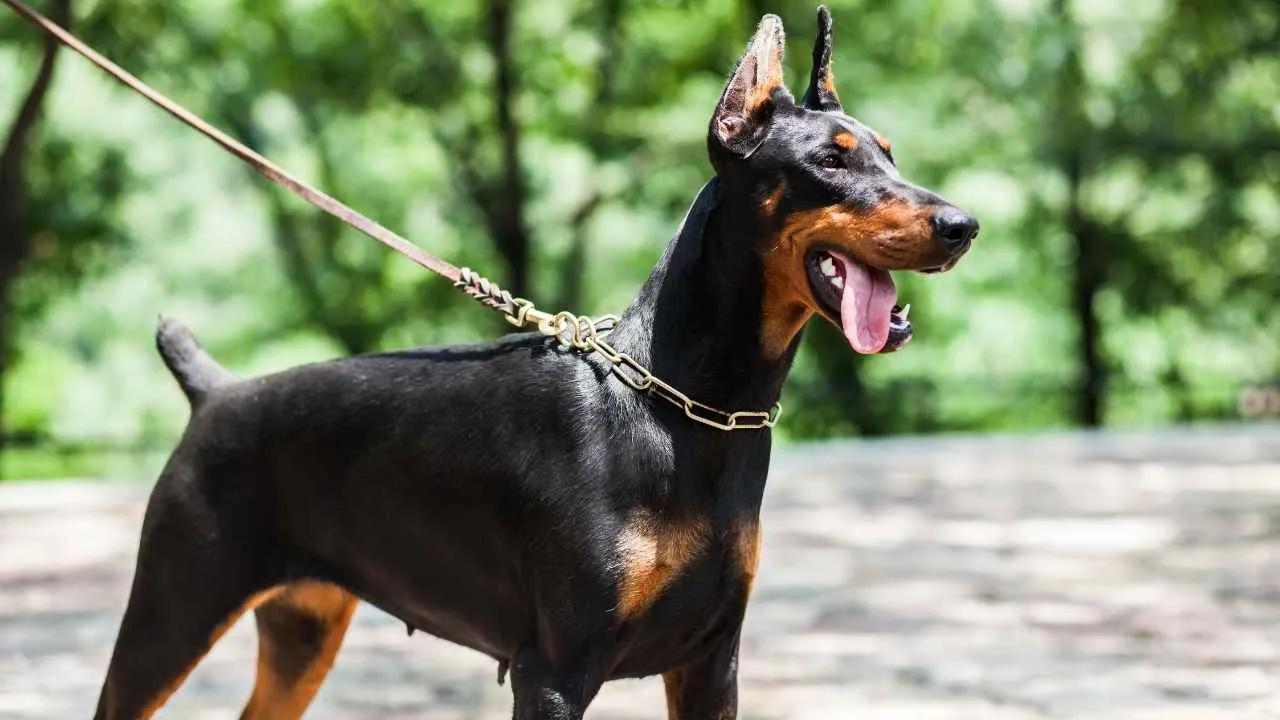
Dobermans are fast thinkers with an intense awareness of human behavior. They tend to track movement, tone, and body language closely, often reacting to subtle changes before others notice. This sensitivity gives them a sharp, focused presence.
According to the AKC, the Doberman is a high-energy, athletic dog that thrives on regular movement and activity. Daily walks, long hikes, and access to a secure space for running are important for both physical health and mental balance.
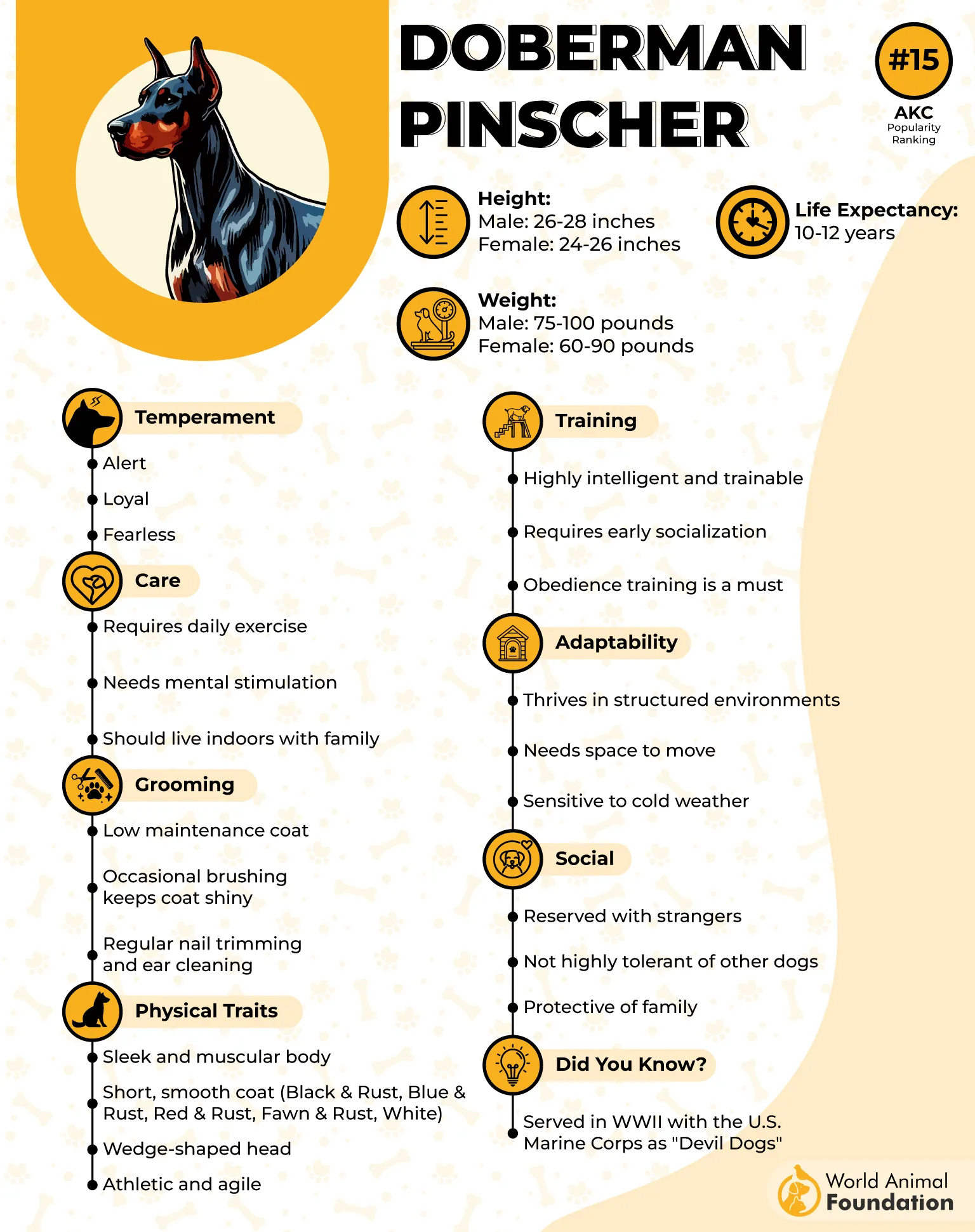
They thrive in busy, active households where they can put their brains to work. Regular exercise and room for free play are essential. If they’re left alone too long without anything to do, they may start finding their own entertainment in destructive ways.
Fun Fact
The Doberman Pinscher was intentionally bred to accompany a tax collector, making personal security part of the breed’s original design.
7. Boxer
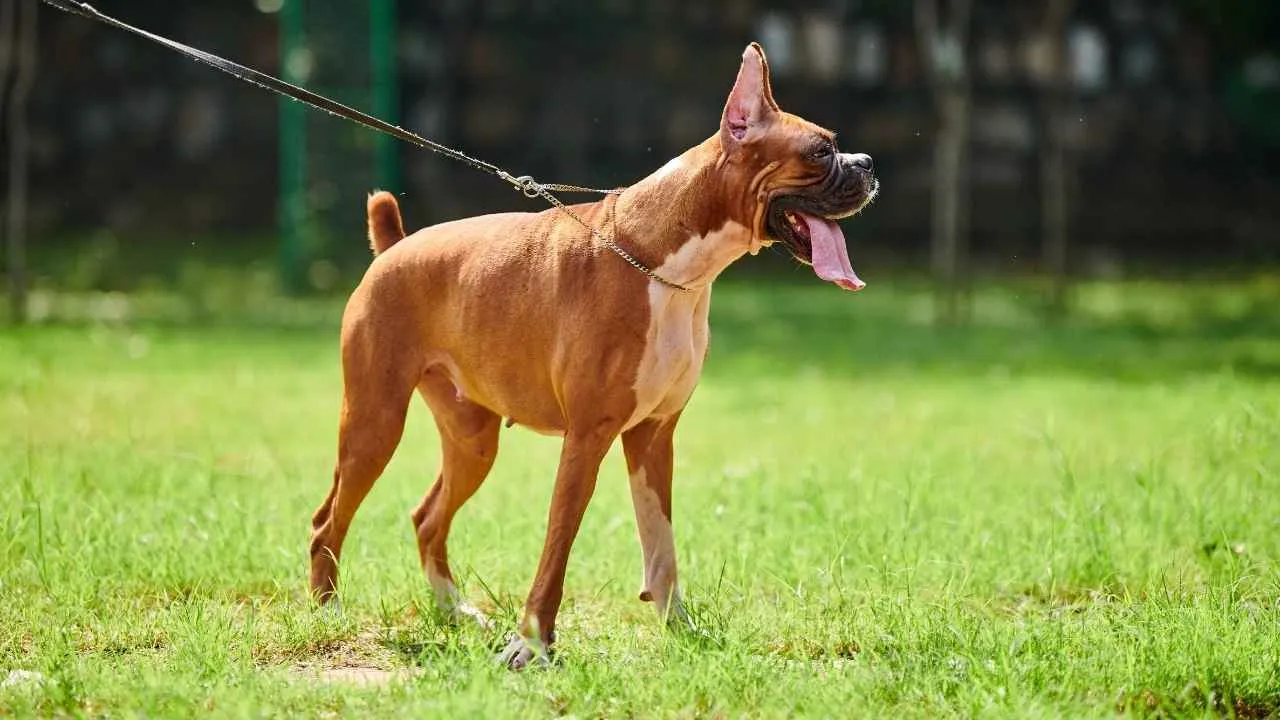
Boxers bring a bold personality into any home, combining enthusiasm with natural awareness. They tend to stay involved in whatever is happening, often moving from room to room to stay connected. Their reactions are expressive and easy to read.
Rather than subtle observation, Boxers rely on engagement. They need daily activity and hands-on interaction to stay content. Training early helps shape their excitement into controlled, manageable behavior as they mature.
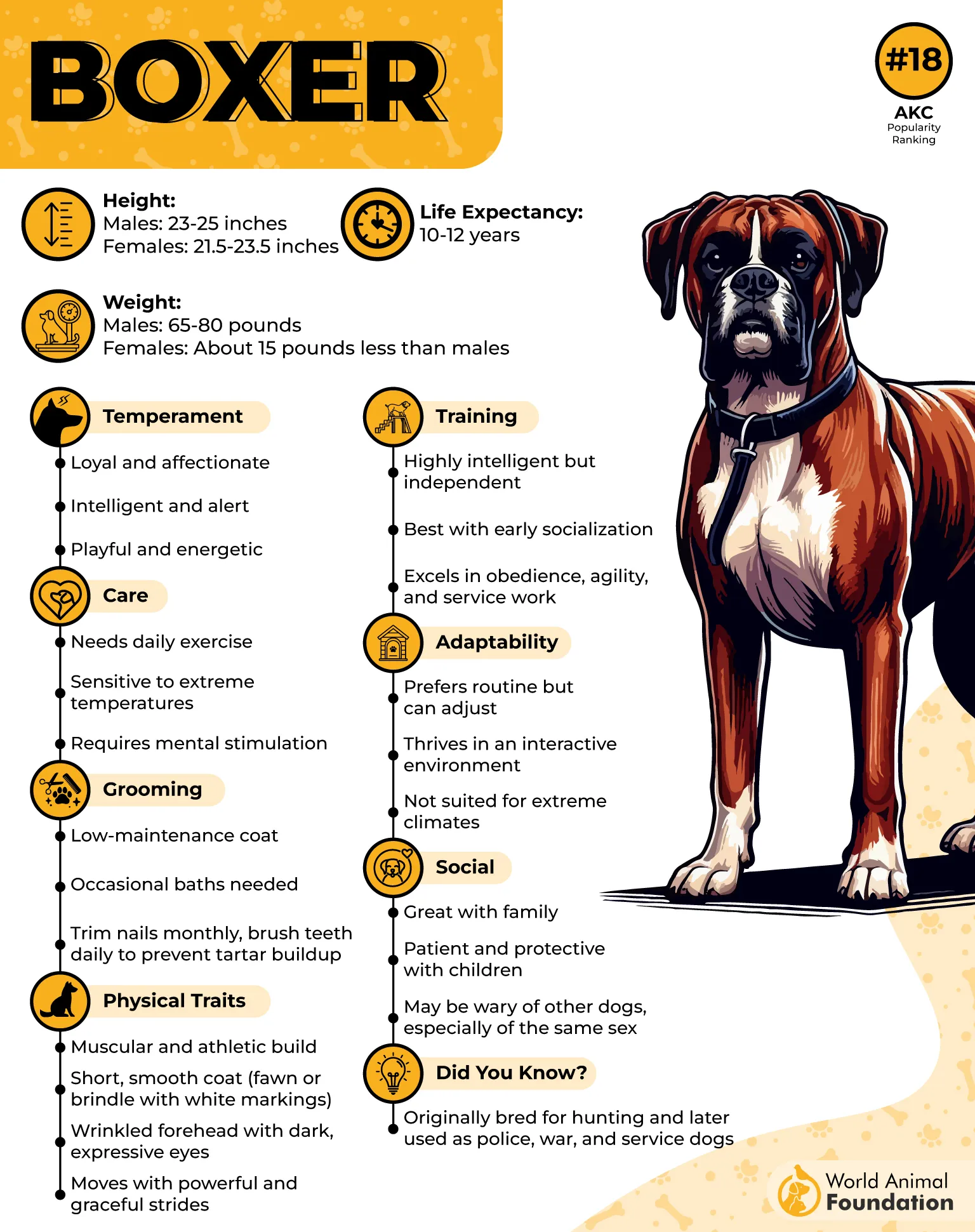
Their affectionate nature shines most with family, especially children. Boxers are playful and social but still quick to react when something feels unfamiliar. That blend of warmth and responsiveness gives them a distinct, lively presence.
Fun Fact
Boxers were originally bred for hunting large game, which explains their powerful build and quick, springy movements.
Conclusion
Choosing from the best guard dog breeds is about finding a balance between protection and family life. Excellent guard dogs combine a protective nature and a confident stance with proper training, mental stimulation, and early socialization.
The best guard dogs are highly trainable, extremely intelligent, and capable of reading threatening situations. When raised with care, these protective dog breeds form strong bonds, remain extremely loyal, and can be wonderful family pets that deter intruders and keep you safe.
Other breeds, such as the Catahoula Leopard Dog, Staffordshire Bull Terrier, Australian Shepherd, Standard Schnauzer, Giant Schnauzer, Italian Mastiff, and Rhodesian Ridgeback, are also considered great guard dogs.
