




The underwater world is nature’s laboratory for the most bizarre and brilliant adaptations you could imagine. Evolution has been cooking up wild solutions for millions of years, and fish species have been at the forefront of this biological innovation.
While many fish stick to the conventional “swim around, eat stuff, don’t get eaten” lifestyle, the fascinating fishes we’re about to explore took the road less traveled—sometimes literally crawling out of the water to do it. From the crushing pressure of the deep sea floor to the oxygen-deprived mud of African swamps, these aquatic pioneers have conquered some of the planet’s most extreme environments. Their unique adaptations aren’t just cool party facts; they’re testament to life’s incredible ability to survive and thrive in a changing climate where most organisms would give up and call it a day.
Whether you’re a marine biology nerd or just someone who appreciates nature being absolutely unhinged, you’re in for a treat. Let’s talk about the fish that have adapted to unique habitats flawlessly.
7 Fish That Have Adapted to Unique Habitats
1. Anglerfish

Living at depths where the pressure would crush most other organisms like a soda can, the Anglerfish have bodies built to withstand conditions that would make other vertebrates implode. We’re talking depths of up to three thousand feet or more, where sunlight has given up entirely, and the cold is constant.
Their torpedo-shaped body is designed for ambush hunting prey species rather than speed. They don’t chase down their prey—they’re more of the “sit and wait for dinner to come to me” type. Their massive mouths can unhinge to swallow prey nearly their own size, which is extremely important when food is scarce in the deep ocean, and you can’t afford to be picky eaters.
Scientists and researchers have recorded over two hundred species of anglerfish, each with its own variations on this deep-sea survival strategy. Some have multiple lures, while others have body shapes optimized for specific depth zones on the sea floor.
Despite living in one of Earth’s most extreme habitats, National geographic says these fish have thrived for millions of years, proving that sometimes looking like a nightmare and having questionable relationship dynamics is exactly what evolution ordered. They’ve become icons of deep-sea adaptation, showing us that in the dark depths where most fish fear to tread, being weird isn’t just acceptable—it’s the key to survival.
2. Antarctic Icefish
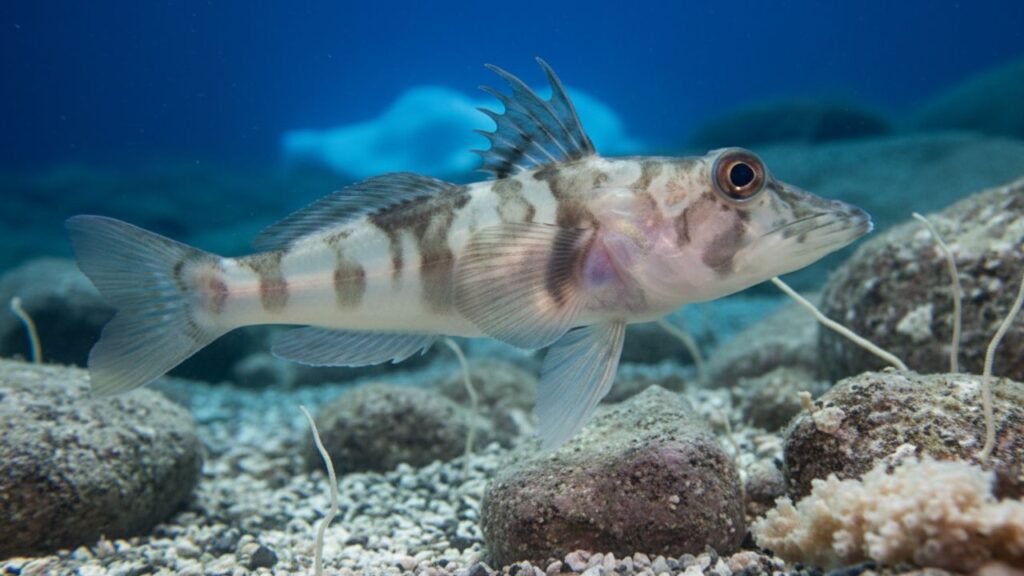
If fish could be vampires, Antarctic icefish would be the undisputed champions. These ghostly pale fish swimming through the frigid waters of the Southern Ocean have pulled off something that sounds impossible: they survive without hemoglobin, the protein that makes blood red and carries oxygen in virtually all other vertebrates.
This wild adaptation allows them to thrive in waters so cold they’d turn most marine fish into fishy popsicles.
The Antarctic icefish have conquered one of the planet’s most hostile environments through a combination of unique adaptations. Living in waters that hover around minus one point eight degrees Celsius, these fish produce antifreeze glycoproteins that prevent ice crystals from forming in their tissues. Without this biological antifreeze, the water inside their cells would freeze solid, and they’d become the world’s least appetizing ice sculpture.
Their bodies are designed to extract oxygen directly from the surrounding habitat through their skin and massive gills, compensating for the lack of hemoglobin. The cold water actually helps here—it holds more dissolved oxygen than warmer water, which is one of those rare cases where the environment works in their favor.
Some species have such translucent bodies that you can literally see their internal organs and eggs through their skin, making them look like living biology textbooks swimming around the Antarctic ocean.
3. Mudskipper
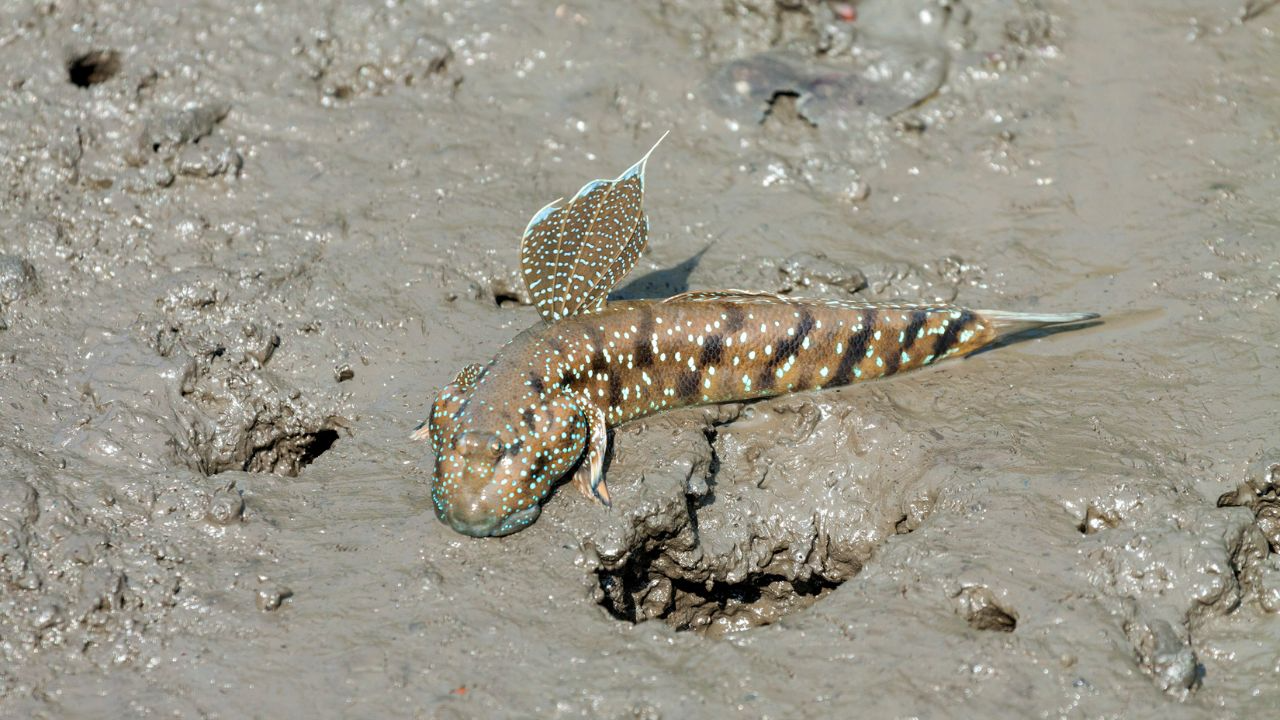
Mudskippers are amphibious creatures that live in mudflats, mangroves, and tidal areas where the line between water and land gets blurry. During low tide, while other fish are desperately waiting for the water to return, they are out there strutting their stuff on the mud, looking like tiny prehistoric creatures that forgot they’re supposed to stay in the ocean. They use their modified pectoral fins as makeshift legs to “skip” across the surface (hence their name), and honestly, watching them move is both adorable and slightly unsettling.
The mudskipper’s ability to survive out of water for extended periods is thanks to several mind-blowing adaptations.
First off, Britannica mentions that they can absorb oxygen through their skin and the lining of their mouths, as long as they stay moist. They carry water in their enlarged gill chambers like portable scuba tanks, essentially breathing underwater air while on land. Their bulging eyes sit atop their heads like little periscopes, giving them 360-degree vision to spot predators and prey from their muddy vantage points.
These eyes can also retract into their sockets to keep them moist—it’s like they have built-in windshield wipers. Some mudskipper species can survive out of water for several days, as long as they can keep themselves damp and avoid dehydration.
There are about thirty-two species of mudskipper spread across the Indo-Pacific region, from Africa to Australia, each adapted to its specific coastal habitat. These fish are living proof that the transition from water to land—which took our ancestors millions of years—isn’t actually that hard if you’re creative about it.
4. West African Lungfish
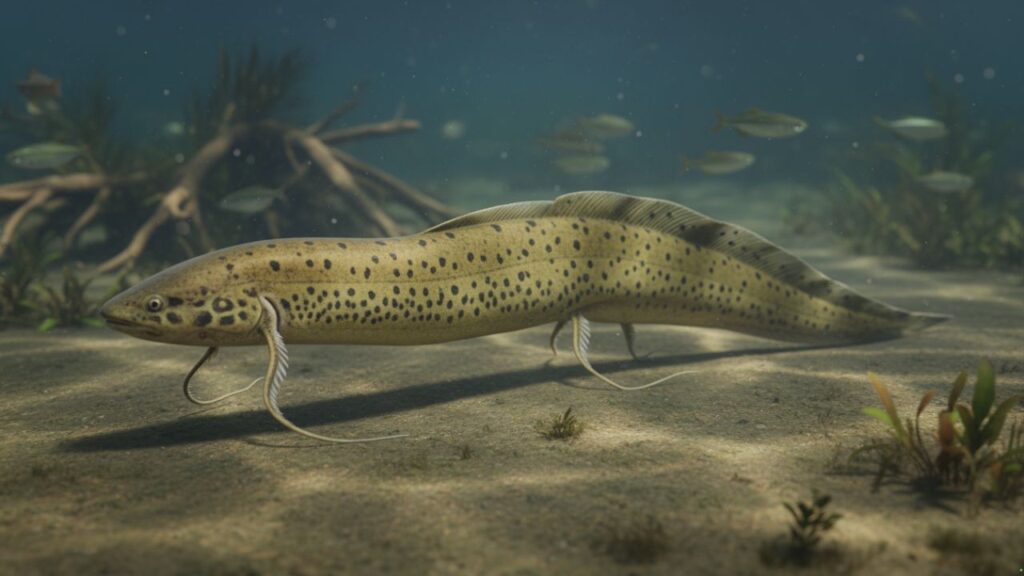
Living in rivers and lakes across tropical Africa, these ancient fish have evolved to withstand something that would kill most aquatic life: the complete drying up of their habitat.
When the dry season hits, and water becomes scarce, the lungfish doesn’t panic—it has a plan that’s been perfected over four hundred million years of evolution. It burrows into the mud, secretes a mucus cocoon, and enters a state of suspended animation called estivation.
The secret to this incredible survival strategy lies in its most obvious, unique adaptation: actual, functional lungs. While most fish rely entirely on gills to extract oxygen from water, lungfish have both gills AND lungs, making them biological overachievers. They can gulp air from the surface, absorbing oxygen through their lungs just like terrestrial animals.
In fact, during the dry season when they’re buried in mud cocoons, they switch entirely to lung breathing, taking in air through a small tube that connects to the surface. Their body metabolism slows to a crawl, reducing their need for food and oxygen to almost nothing.
They essentially become living fossils, preserved in mud, waiting for the rainy season to bring water back to their surroundings.
5. Goblin Shark
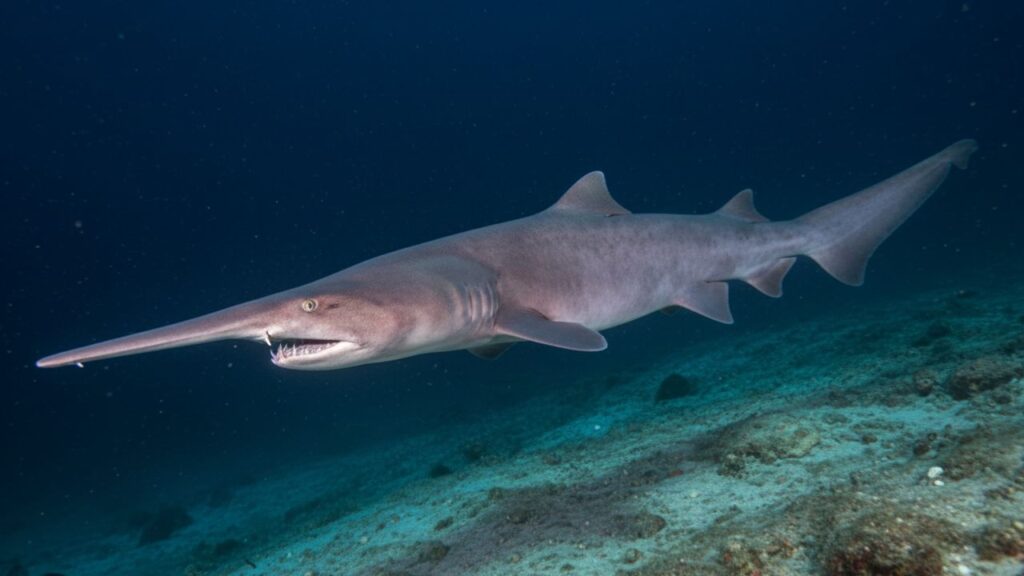
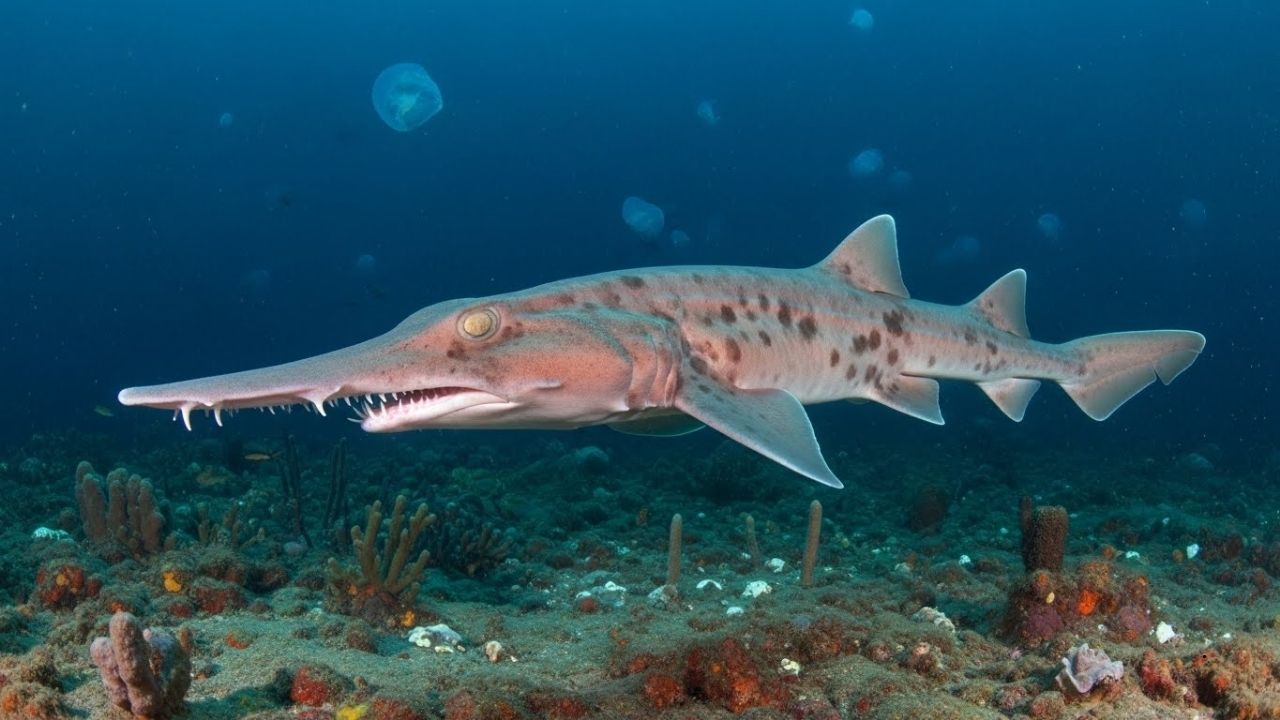
These rare sharks live at depths between two hundred and four thousand feet, prowling the dark ocean where most other organisms wouldn’t dare venture.
The goblin shark’s most famous adaptation is its protrusible jaw mechanism, a nightmare fuel feature delivered with scientific precision. When prey is detected, the shark’s jaws can extend forward independently of its head, shooting out at high speed to catch unsuspecting small fish and other organisms. They attract prey in about zero point three seconds—blink, and you’ll miss it. The jaw extension can be up to nine percent of the shark’s total body length, meaning a ten-foot goblin shark can extend its mouth almost a foot from its face.
Goblin sharks are fast swimmers and are found in all major oceans. Still, encounters are extremely rare—they’ve earned the nickname “living fossil” because they’re the only surviving members of the family Mitsukurinidae, which dates back about 125 million years.
Everything about them screams “ancient survivor”—their primitive body shape, their specialized hunting adaptations, their ability to thrive in an environment where pressure and darkness would crush and blind other species.
6. Clownfish
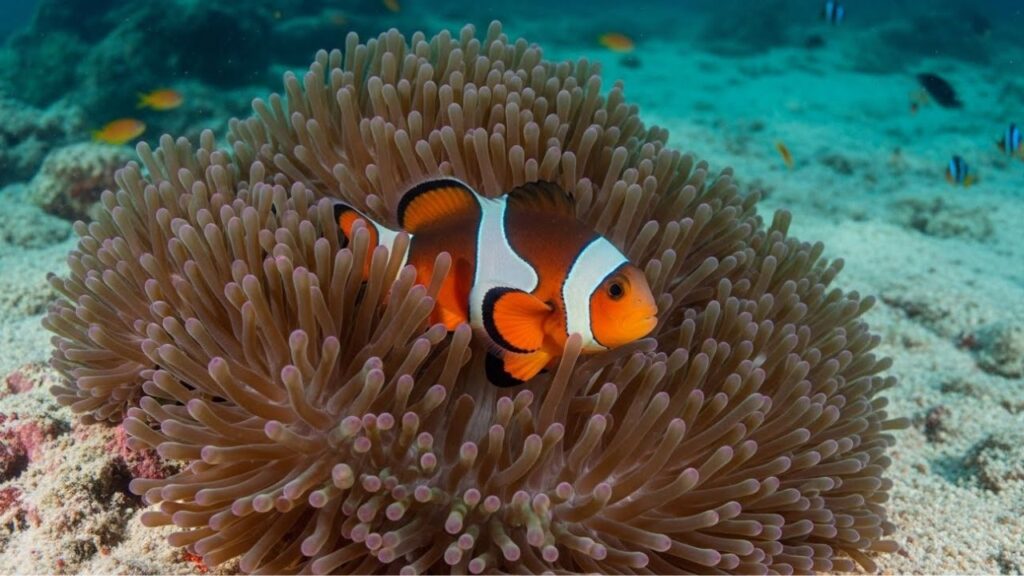
Thanks to a particular animated movie, clownfish have become the most famous aquarium fish on the planet, but their real-life story is way more interesting than their Hollywood debut. These vibrant orange-and-white fish species live among the venomous tentacles of sea anemones on coral reefs throughout the eastern Pacific and Indian Oceans, in a relationship that would kill most other fish.
Clownfish have evolved unique adaptations that make them ideally suited to life among the stinging tentacles of their anemone homes. Their mucus coating isn’t present from birth—young clownfish actually acclimate to their specific anemone by carefully touching it and building up immunity over time, like building tolerance to poison in small doses.
Different clownfish populations and species are adapted to different anemone species, showing how specific these relationships can be. The anemone becomes their entire world—they’re born in it, grow up in it, rarely venture more than a few feet from it, and will aggressively defend it from other clownfish. This fierce territoriality means that finding suitable anemones is competitive, and real estate on a coral reef is significant for their survival.
7. Banded Archerfish
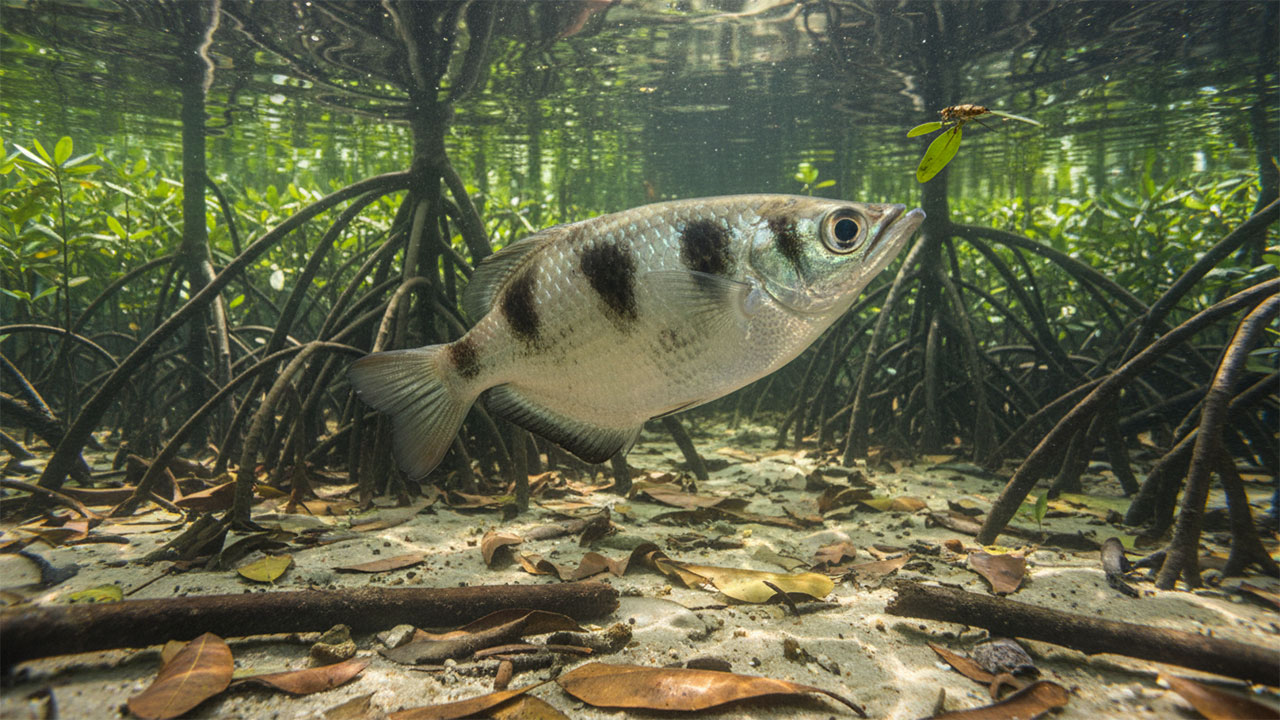
The banded archerfish has mastered a skill that most fish would never even consider attempting: projectile hunting. These freshwater fish from Southeast Asia have evolved the ability to shoot down insects and other prey from overhanging vegetation by spitting precisely aimed jets of water.
They can knock insects off branches up to six feet above the water surface with remarkable accuracy, causing their prey to fall into the water where they’re quickly eaten. It’s one of the most sophisticated hunting techniques in the animal kingdom, requiring complex calculations of refraction, distance, and target movement that rival human precision.
The physics behind the archerfish’s hunting technique is genuinely impressive. The fish forms a narrow tube with its tongue and the roof of its mouth, then forcefully compresses its gill covers to create a high-pressure water jet.
Beyond their impressive hunting skills, archerfish demonstrate remarkable vision and spatial reasoning. Their eyes are specially adapted to see clearly both above and below the water surface—a challenge because light behaves differently in water than in air. This binocular vision gives them the depth perception necessary to gauge precisely how far away their prey is.
Conclusion
From the deep-sea horrors of anglerfish and goblin sharks to the walking, air-breathing rebels like mudskipper and lungfish, these species show us that there’s no single “right” way to be a fish. Some grow torpedo-shaped bodies for speed, others embrace their inner blob. Some stick to traditional gills that perform many functions, while others develop lungs or learn to breathe through their skin.
Many of these fascinating fish and their habitats are endangered or threatened by human activity, climate change, pollution, and habitat destruction. When we destroy coral reefs, we’re not just removing pretty underwater scenery—we’re eliminating the homes of clownfish, moray eels, and countless other species that have nowhere else to go. When we pollute rivers and lakes, we’re threatening the lungfish that have survived for hundreds of millions of years.
