




When you think of snakes, the first images that come to mind might be long, slithering bodies or formidable predators. But some of the world’s snakes are so tiny they could curl up in the palm of your hand.
These miniature marvels are among the smallest reptiles on Earth, yet they are fully functional, perfectly adapted to survive in their habitats.
Small snakes often occupy narrow spaces, hidden in leaf litter, soil, or under rocks, where larger predators cannot reach. Their diet usually consists of tiny insects, worms, and other small invertebrates, which they capture with precision despite their tiny jaws.
Their size also makes them ideal for environments with limited resources, where bigger snakes might struggle to thrive. Despite their diminutive size, these snakes are fascinating examples of evolution’s creativity.
Join us as we explore the world of the tiniest snakes and discover just how much wonder can fit into a few inches of scaled perfection.
Fun Fact: The thread snake (Leptotyphlops carlae) is less than 4 inches long as an adult, making it the smallest snake species.
Smallest Snakes in the World
1. Barbados Threadsnake
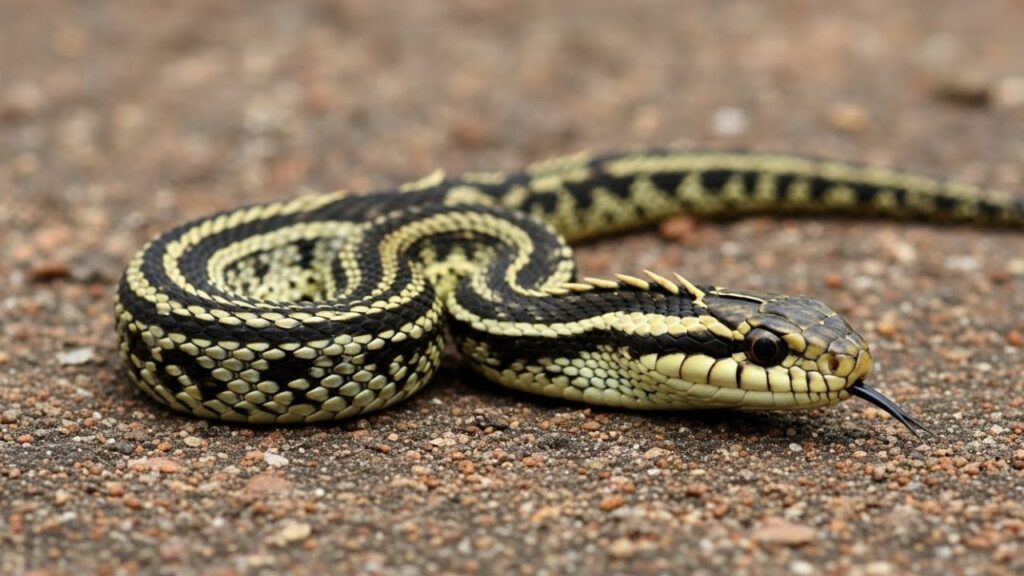
Imagine a snake so tiny it could easily hide behind your pinky nail. Meet the Barbados Threadsnake — officially the smallest snake on the planet.
Adults are barely 3.94 inches long, which is about the size of your average candy bar… or your phone charging cable if it magically came to life. The largest specimen ever found? Just over 4 inches. Yep, it’s basically the espresso shot of snakes.
Discovered in Barbados (and possibly neighboring Antigua and Barbuda), this little snake spends its days sneaking under rocks and snacking on termites and ant larvae. It’s like a miniature, slithery pest control service — no need for pesticides when you’ve got this tiny critter on patrol.
The Barbados Threadsnake was officially recognized as its own species in 2008 by herpetologist S. Blair Hedges, who named it after his wife. Before then, specimens were just thought to be a member of some other snake family — the world didn’t realize it had a literal snake-sized celebrity hiding in plain sight.
This snake isn’t just small; it’s slender too, about as wide as a spaghetti noodle, says Wikipedia. So yeah, imagine trying to hold your dinner pasta, and suddenly it wriggles away — that’s about the size of this little snake.
Here’s a fascinating twist: the female lays just one egg at a time, and when it hatches, the baby is already half her size. Talk about starting life with some serious swagger!
So next time you think size doesn’t matter, remember the Barbados Threadsnake — tiny, mighty, and making the ant and termite world tremble beneath its spaghetti-thin body.
2. Brahminy Blind Snake
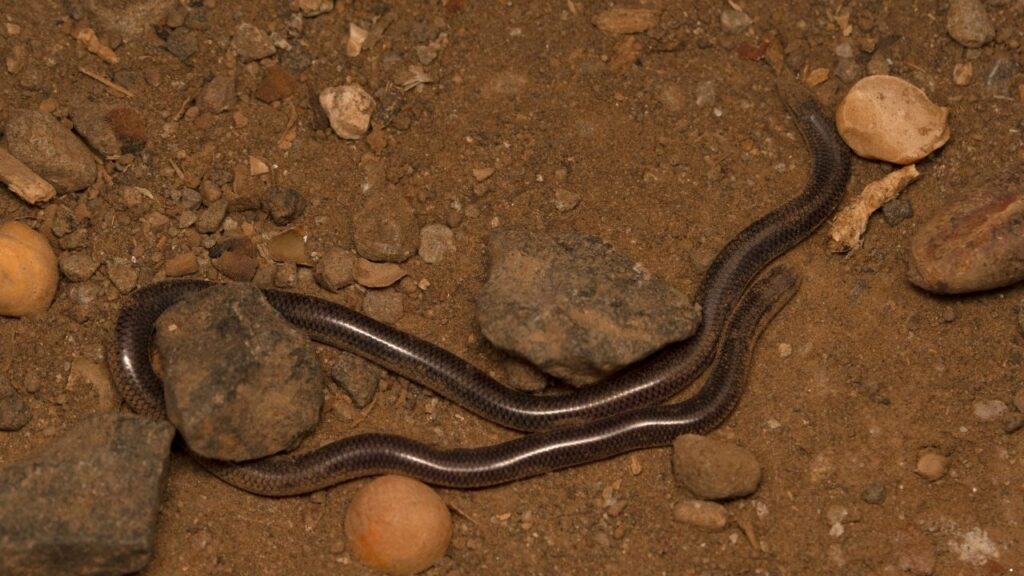
If you thought the Barbados Threadsnake was tiny, meet its almost-as-small cousin, the Brahminy Blind Snake. This little slitherer can be as short as 2 inches — yes, shorter than a credit card — though some ambitious individuals stretch up to 6 inches.
That makes it the second smallest snake in the world, right behind our spaghetti-thin friend from Barbados. Native to Asia and Africa, these snakes are master travelers. How? By stowing away in potted plants, earning them the whimsical nickname “flowerpot snake.”
So the next time your new plant mysteriously wiggles, you might have more than soil to worry about. One of the Brahminy Blind Snake’s quirks is its indistinguishable head and tail. Without a magnifying glass, you could easily mistake the tail for the head.
Peek closer, and you’ll spot tiny, almost useless eyes on the head and a little spur on the tail — it’s like the snake is playing an eternal game of peek-a-boo with the world. These snakes also come in a rainbow of shades: dark gray, silvery, yellowish beige, purple, and even albino. Fashion-forward, even in the snake world.
When it comes to food, the Brahminy Blind Snake isn’t picky. Its diet includes ants, termites, their eggs and larvae, beetles, caterpillars, earthworms, and — wait for it — even feces and fungi. It’s basically a tiny, slithering garbage disposal with a gourmet twist.
Here’s where it gets truly mind-blowing: all Brahminy Blind Snakes are female. That’s right — they reproduce via parthenogenesis, meaning no males are required. Each female can lay 1–8 eggs, and every hatchling is an exact copy of its mom.
In short, the Brahminy Blind Snake is small, sneaky, and surprisingly self-sufficient — a pint-sized powerhouse that proves sometimes the smallest creatures can have the biggest surprises.
3. Texas Blind Snake
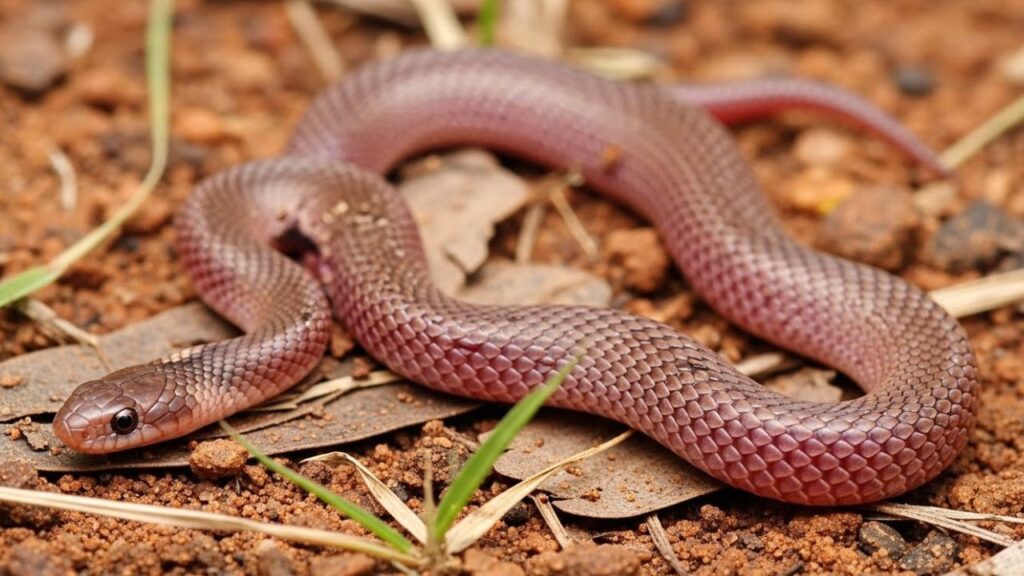
If you’ve ever dug in your garden and thought you spotted an earthworm, think again — it might have been a Texas Blind Snake!
This little burrower ranges from about 3.94 inches to 11 inches long, making it a modest-sized contender in the world of tiny snakes, Britannica noted. Found from southwestern Kansas down into Mexico, it thrives in deserts and other dry areas — as long as it has a shady hideout and a bit of moisture.
Like its blind snake cousins, it’s easy to mistake this reptile for a wriggly earthworm. But a closer look reveals a smooth, shiny body with scales that are uniform and small, and a lovely gradient from lavender to pinkish-brown on top to a paler underside.
And if you’re curious, the Texas Blind Snake is distinguished from its cousin, the western blind snake, by three scales on the top of its head (the western one only has one). It’s like a tiny reptilian fingerprint!
These snakes are shy homebodies, often hiding under logs, rocks, or even in compost piles of suburban yards — basically the perfect garden roommate who doesn’t ask for rent. They follow the trails of earthworms, but unlike a nosy neighbor, they don’t eat the worms.
Reproduction is low-key, too. After mating, females lay about four long, narrow eggs with papery shells. And while they’re called “blind snakes,” they aren’t completely blind — they can detect differences in light intensity, which helps them stay hidden and safe.
With four subspecies — two in Mexico and two in the U.S. — and a conservation status of least concern, these snakes are thriving quietly under our feet, doing their part to keep the insect world in check without ever asking for applause.
4. Peters’ Thread Snake
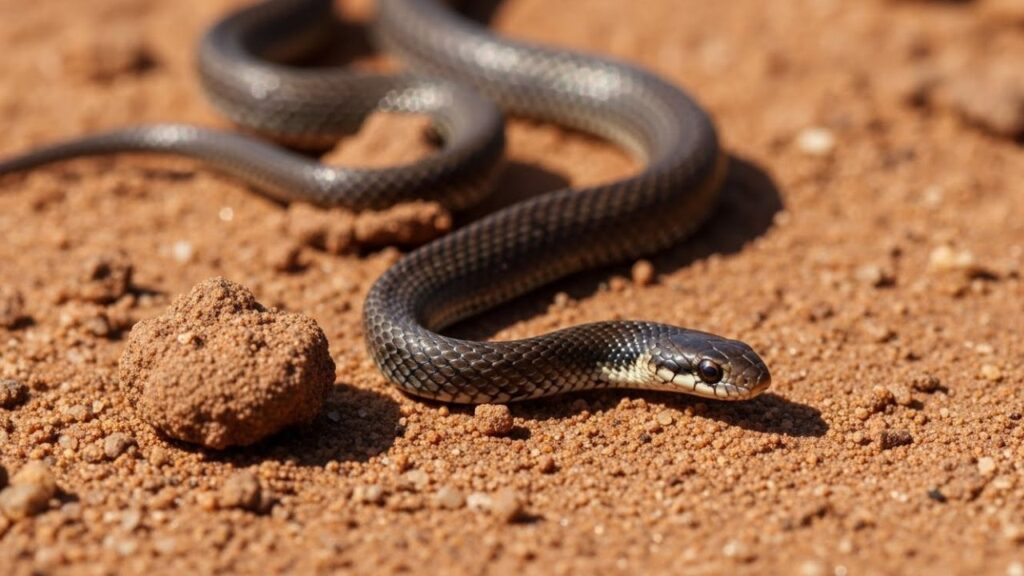
Meet Peters’ Thread Snake, a tiny, secretive resident of Southern Africa. Measuring only 7.9 to 11 inches, it’s another miniature marvel in the world of snakes. Like many of its thread snake cousins, it’s tricky to tell head from tail if it’s staying still — those minuscule eyes aren’t much help in solving the mystery.
This little snake is a true underground specialist. Most of its life is spent in burrows, but after a heavy rainstorm, it may venture out to explore the wet world above.
And where does it like to dine? Right around termite nests, feasting on termites and their eggs — basically a tiny, shiny exterminator keeping the termite population in check.
When it’s not burrowing, you might spot it under rocks or logs, silently going about its business. Its dark, glossy scales make it look sleek and shiny, but don’t be fooled — it’s completely harmless.
However, some people mistake it for the burrowing asp, a highly venomous snake. So, yes, size isn’t everything — but Peters’ Thread Snake proves that small can still be impressive.
With its secretive habits, subterranean lifestyle, and termite-loving diet, Peters’ Thread Snake is a perfect example of how even the tiniest creatures play a huge role in their ecosystem — all without needing to bite anyone!
5. Lined Snake
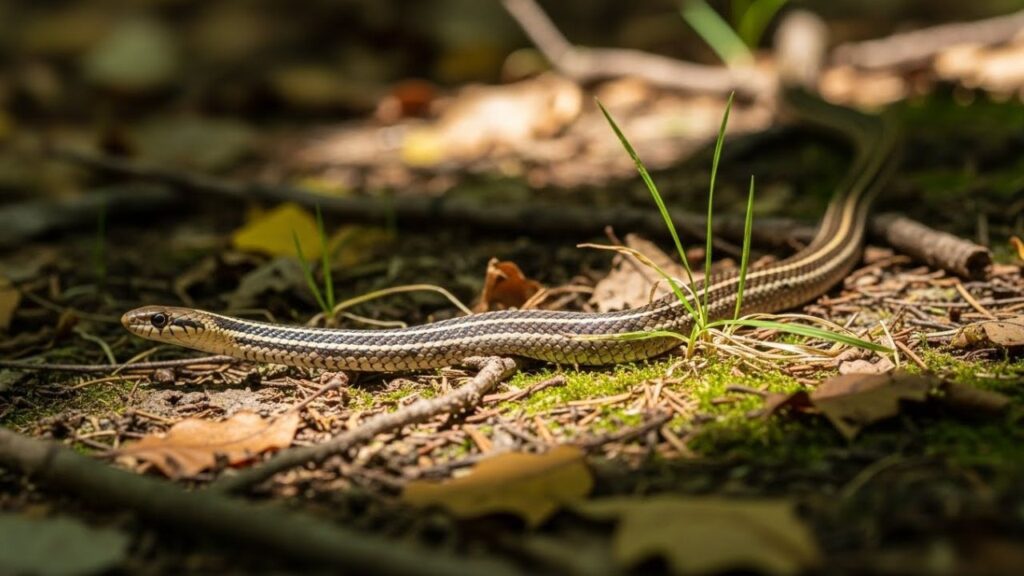
Say hello to the Lined Snake, a modest but mighty resident of the Great Plains, stretching as far east as Illinois. Growing between 8.66 and 15 inches, it’s larger than some of the tiniest snakes we’ve met, but still small enough to slip under logs, rocks, or even the occasional garden mulch with ease.
There are four subspecies of Lined Snake: the Central Lined, Northern Lined, Merten’s Lined, and Texas Lined Snake — a little snake family reunion spread across the plains. They’re adaptable creatures, found in woods, prairies, abandoned lots, and sometimes even around human homes.
When winter arrives, these snakes hibernate in rocky crevices, dreaming of worms and warm summer days. Reproduction is a patient process. Females are ready to breed at about two years old. Mating happens in the fall, but fertilization is delayed until spring — it’s like nature’s way of keeping eggs on hold until the perfect moment.
In August, the female gives birth to 2–12 live young, all independent and ready to face the world without a parental hand. As for diet, the Lined Snake has simple, wormy tastes. It mostly munches on earthworms, emerging to hunt after a rain, but it also enjoys snails and slugs.
With its subtle stripes, adaptable habits, and understated charm, the Lined Snake is another reminder that even small, unassuming creatures can make a big ecological impact — all without making a fuss.
6. Flat-Headed Snake
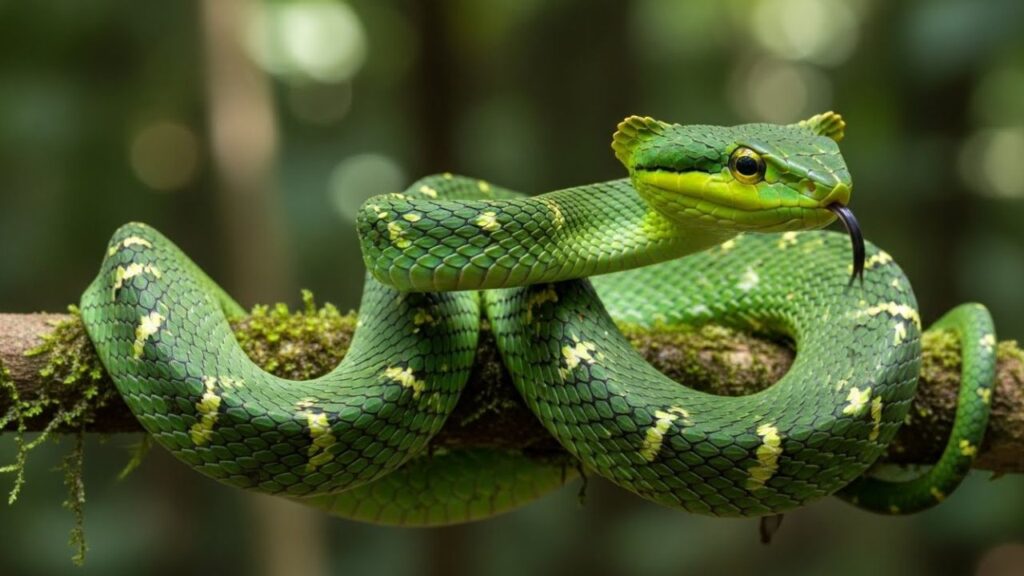
Meet the Flat-Headed Snake, a small but fascinating resident of Australia. True to its name, this snake has a distinctively flattened head, which gives it a slightly alien, yet endearing appearance. It’s one of the smaller species, generally growing just 6 to 10 inches long, making it a true pocket-sized predator.
This little snake is a specialist hunter, feeding primarily on skinks and other small lizards, which it tracks with remarkable stealth.
Its slender body allows it to slip into tight crevices, under rocks, and into leaf litter to ambush prey — basically a miniature ninja of the bush.
Despite its size, the Flat-Headed Snake has potent venom for its prey, but poses no threat to humans, making it a tiny yet efficient predator in its ecosystem. It’s secretive and shy, rarely seen unless it’s foraging at night or hiding after a rainstorm.
With its unique head shape, stealthy hunting skills, and small size, the Flat-Headed Snake proves that even the tiniest snakes can pack a punch in the survival department.
7. Ringneck Snake
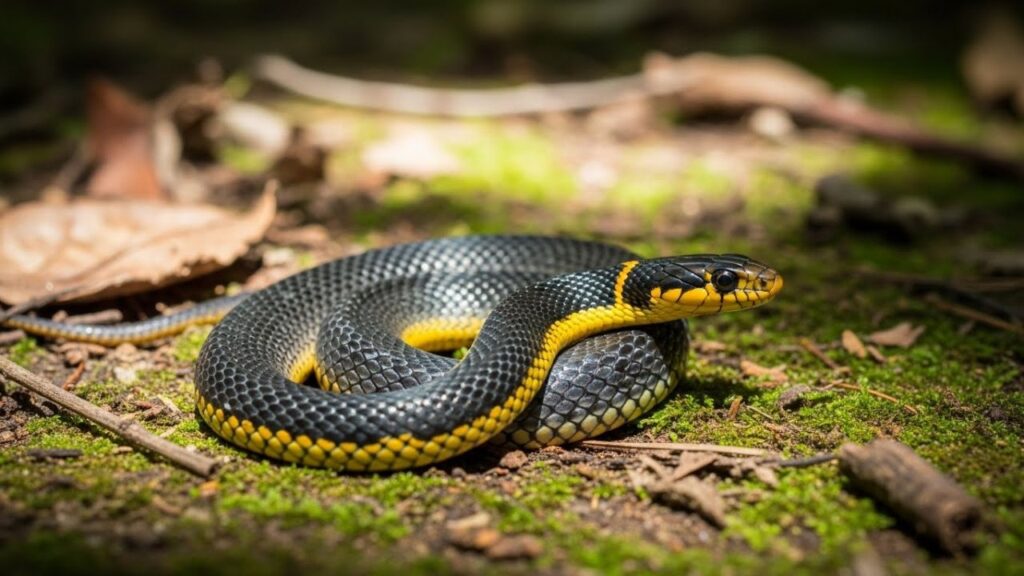
Meet the Ringneck Snake, a small but colorful creature that ranges from Canada all the way down to central Mexico.
This little serpent gets its charming name from the bright band of yellow, red, or orange-yellow around its neck, while the rest of its body can be olive green, blue-gray, brown, or charcoal. There are about 14 subspecies, all averaging around 9.8 inches long, with the regal ring-necked snake being just a tad longer — the “royalty” of the group.
Unlike most of the tiny snakes we’ve met, the Ringneck Snake is venomous, though only just enough to subdue its prey. Its menu is diverse, including lizards, young snakes, frogs, salamanders, slugs, and earthworms. Don’t worry, though — it’s peaceful toward humans, and its tiny, rear-facing fangs make it completely harmless to us.
When threatened, this clever little snake performs a dramatic move: it curls its tail and flashes its bright red anal vent — basically a tiny warning flag that says, “Back off, buddy!” Think of it as the snake world’s version of a neon traffic cone.
The Ringneck Snake proves that even a small, nocturnal snake can be colorful, clever, and surprisingly feisty — all while maintaining its secretive, stealthy lifestyle.
Conclusion
The world’s smallest snakes, including the Malagasy Blind Snake, Barbados Threadsnake, Short-Headed Garter Snakes, and Variegated Snail Eater, are fascinating examples of nature’s diversity. With features like a worm-like body, pink belly, and short head, these burrowing snakes thrive in slightly moist soil, coastal forests, and areas rich in insect eggs, insect larvae, and termite eggs. Most threadsnake populations are non-venomous and generally harmless, laying one to four eggs or producing live young over more than a year.
Despite their tiny size—sometimes half the size of other snakes—they play a crucial role in controlling insect populations. However, habitat destruction, invasive species, and threats to endemic reptiles put them at risk, with species like the critically endangered Barbados Threadsnake highlighting the importance of ecological surveys and conservation efforts led by organizations and programs, including the Barbados Ministry and Caribbean program officers like Connor Blades. These small but remarkable snakes remind us that even the tiniest creatures are vital to our world’s ecosystems.
