




From the sands of ancient civilizations to hidden corners of remote islands, some cat breeds come with histories as fascinating as their looks. These cats with unique ancestry carry stories that stretch back through time, connecting modern pet parents with the distant past.
Whether their lineage traces to old-world companions of royalty or rare populations shaped by isolated environments, each breed brings a sense of heritage and character.
In this article, we explore cat breeds known for remarkable origins and evolutionary paths that set them apart. For global cat owners and curious animal lovers, learning about these exceptional lineages adds depth to the joy of sharing life with a feline friend.
Cat Breeds with Unique Ancestry
1. Bengal
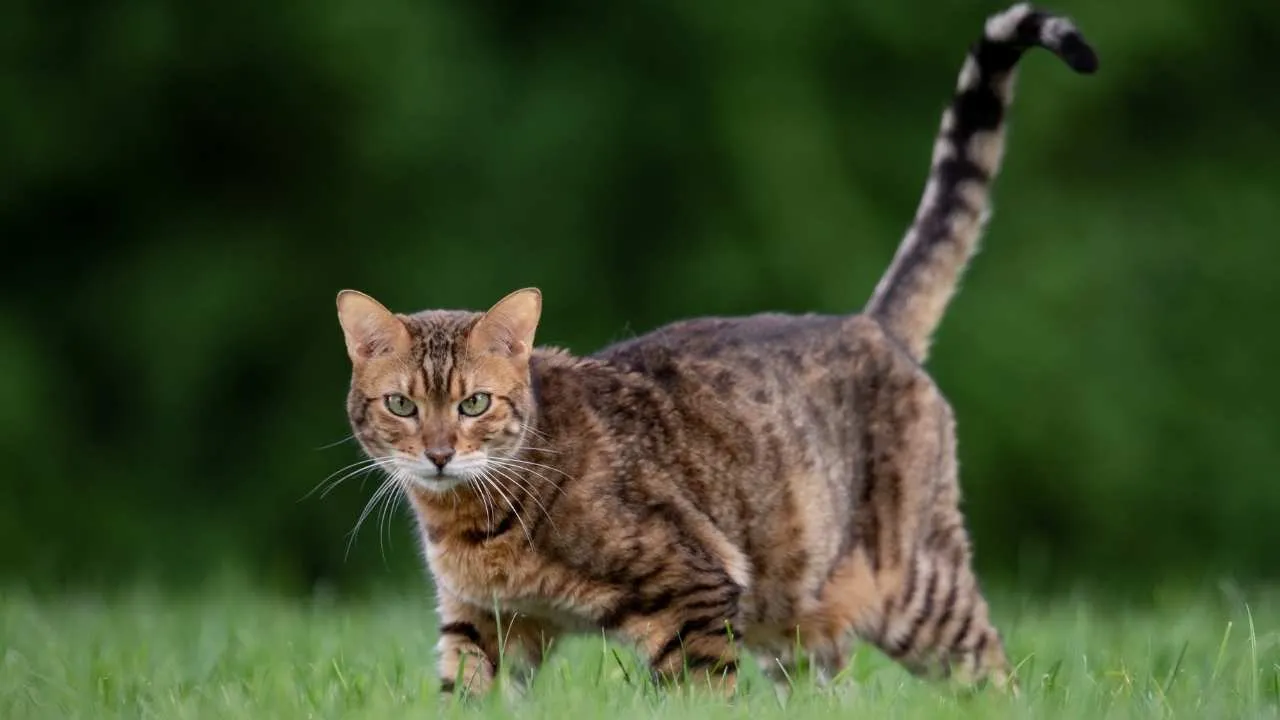
The Bengal cat has a modern origin shaped by deliberate crossbreeding that sets it apart from most domestic cats. Its ancestry includes both domestic cats and Asian leopard cats, creating a lineage that feels closer to the wild than many familiar breeds. This background explains why Bengals often display heightened alertness and strong physical presence.
According to PetMD, Bengals were developed to retain an exotic look while adapting to domestic life. Selective breeding focused on stabilizing temperament while preserving distinctive traits tied to their ancestry. The result is a breed that carries visible reminders of its origins without losing its ability to live comfortably in human homes.
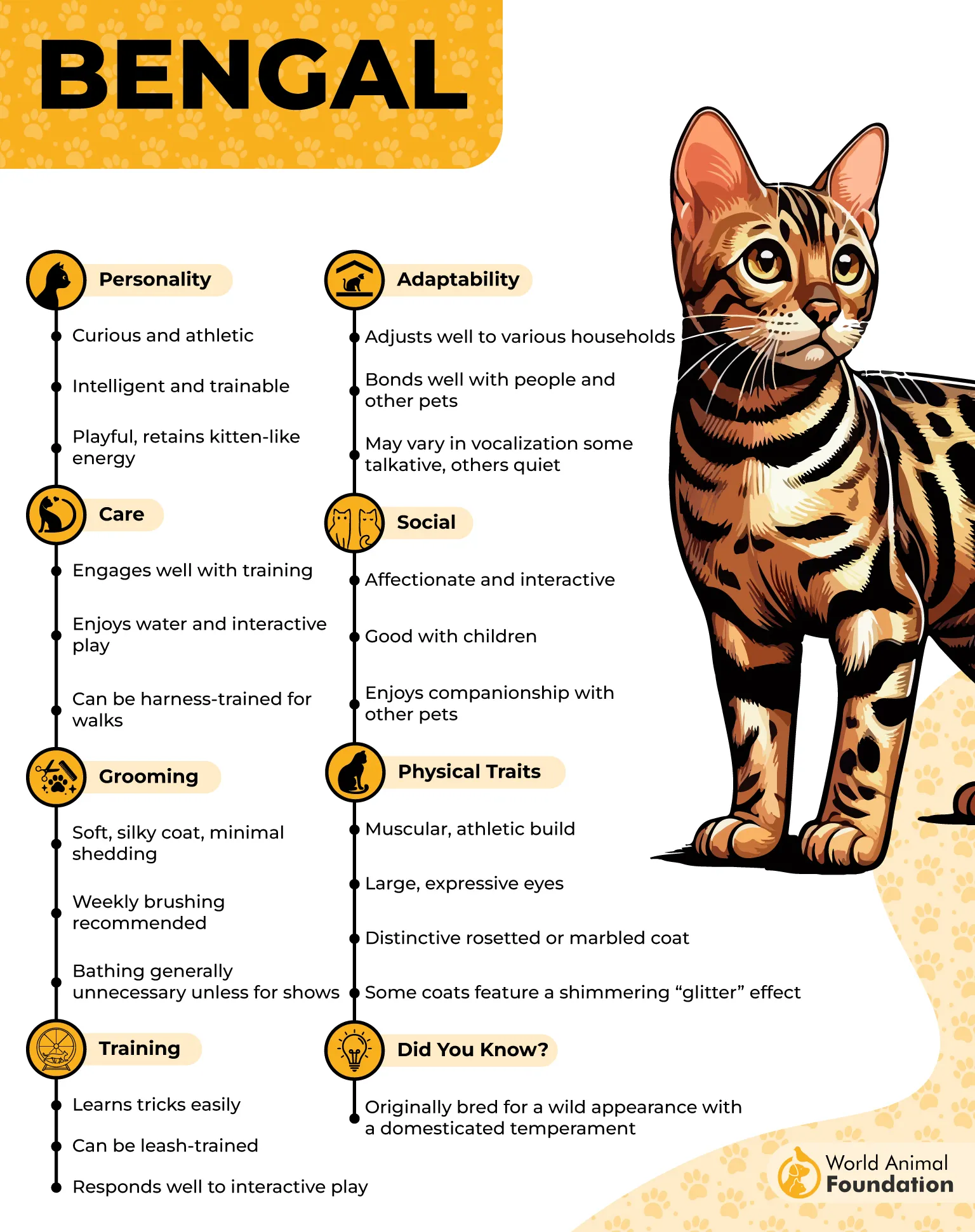
Because of this background, Bengals often show high energy and curiosity. They tend to enjoy climbing, exploring, and staying mentally engaged throughout the day. Their ancestry contributes to a confident personality that feels bold, athletic, and always ready for action.
Why This Cat Is a Good Fit
Appeals to owners fascinated by wild-inspired domestic breeds
Thrives in homes that enjoy active interaction and enrichment
Offers a unique blend of exotic heritage and household adaptability
2. Savannah
Savannah cats have one of the most distinctive ancestries among recognized breeds. Their lineage includes domestic cats crossed with servals, resulting in generations that vary widely in size, appearance, and behavior. This generational structure plays a major role in how each Savannah fits into home life.
Early generations tend to retain more traits linked to their serval ancestry. Later generations are typically more predictable and easier to manage as companions. Understanding this ancestry helps owners choose a Savannah that matches their lifestyle.
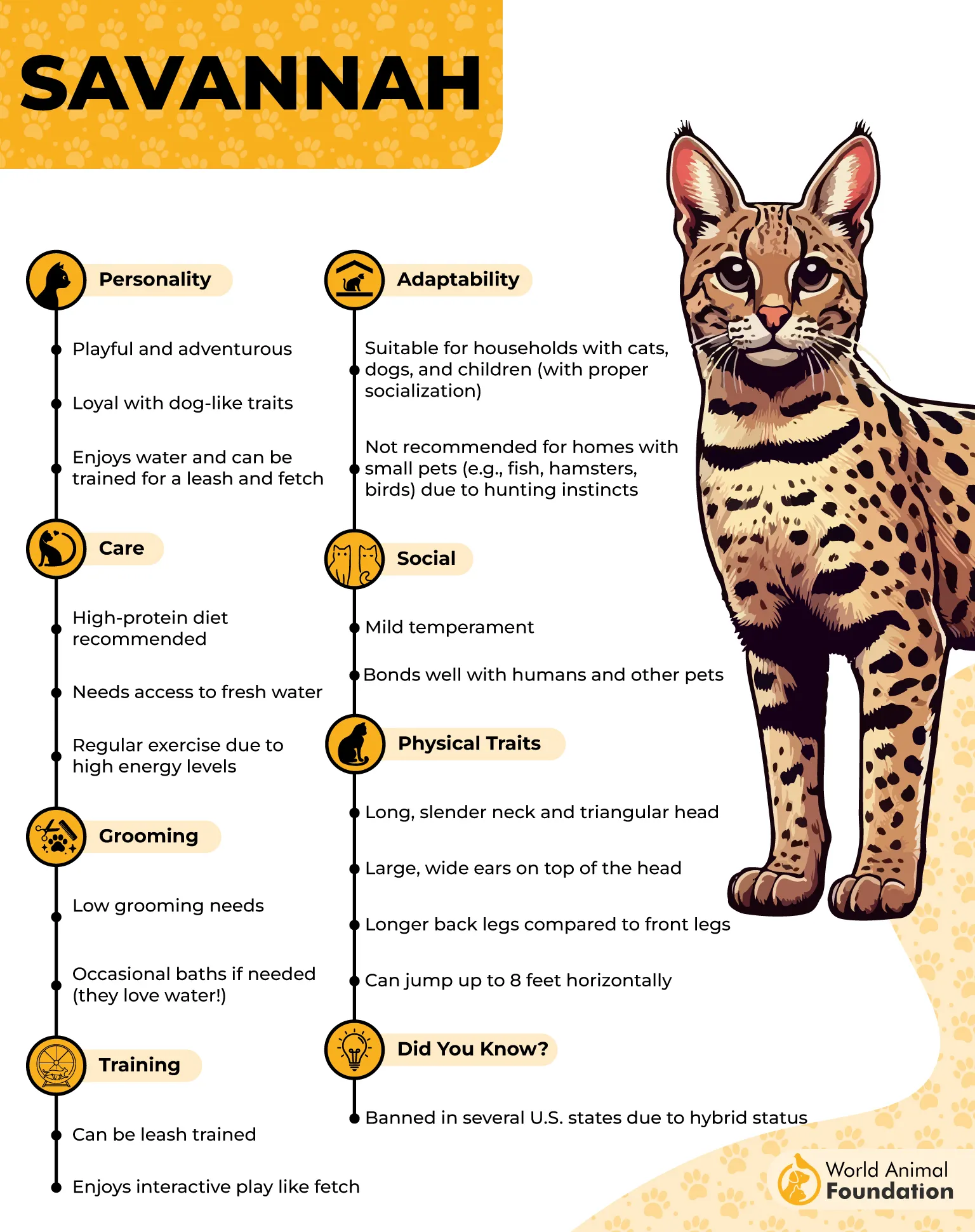
As per PetPlan, Savannah cats often show high intelligence, confidence, and awareness of their surroundings. Their ancestry contributes to long legs, athletic movement, and strong curiosity. These traits make them impressive to watch and highly interactive within the home.
Why This Cat Is a Good Fit
Best for experienced owners interested in unique feline lineages
Offers a visible connection to wild ancestry within a domestic setting
Ideal for homes prepared for an active, intelligent cat
3. Egyptian Mau
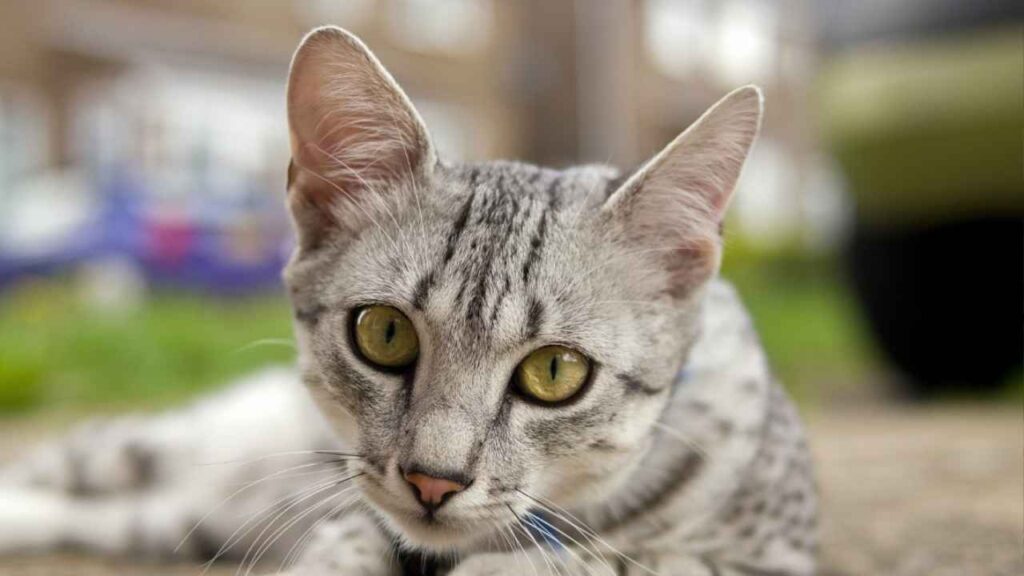
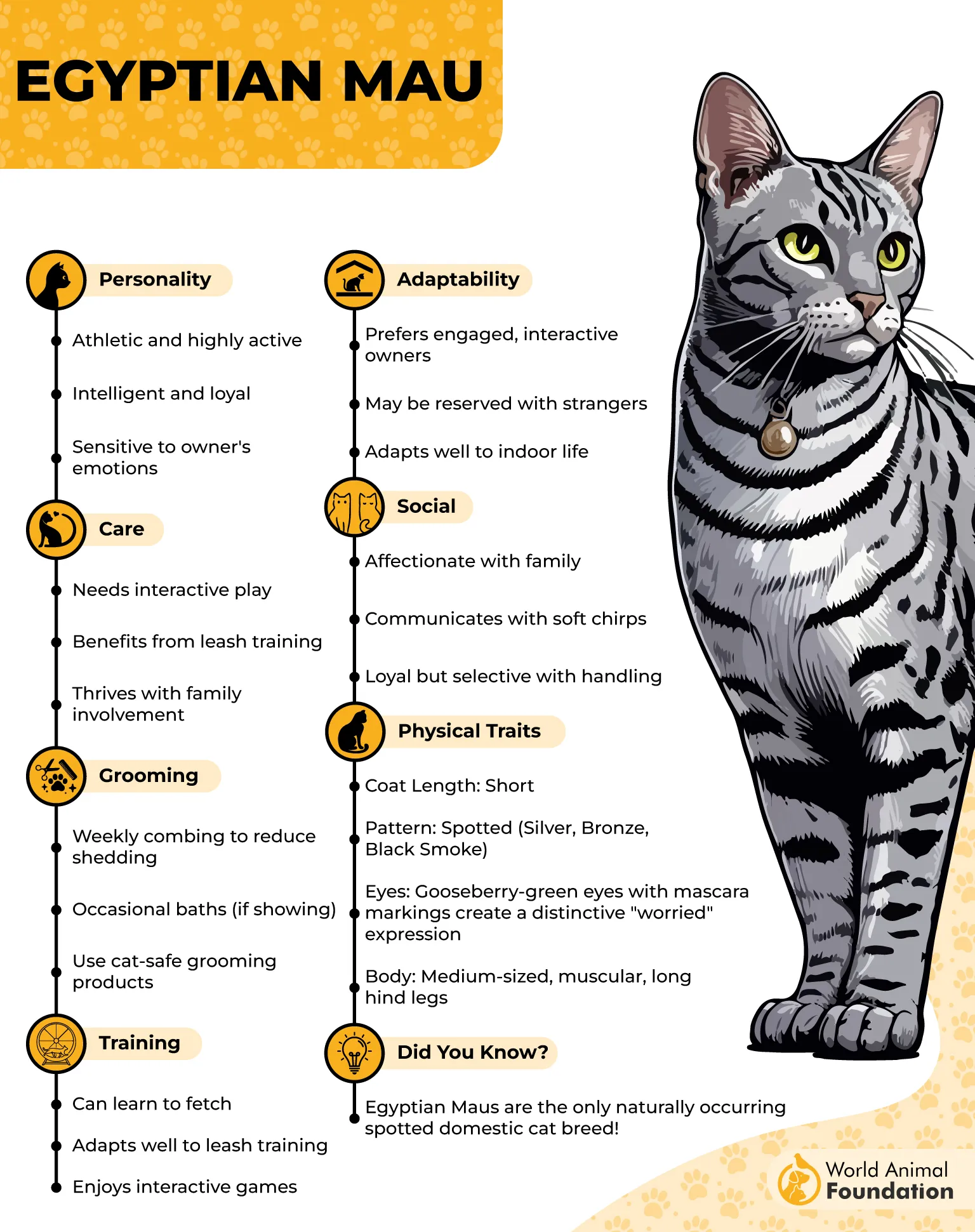
The Egyptian Mau is one of the few naturally spotted domestic cat breeds. Its ancestry traces back to ancient cats depicted in early Egyptian art, giving it a direct historical connection unlike many modern breeds. This natural development sets it apart from selectively created hybrids.
Unlike many spotted cats, the Mau’s markings were not produced through recent crossbreeding. Its lineage reflects centuries of natural selection rather than deliberate human design. This gives the breed a strong sense of authenticity and historical continuity.
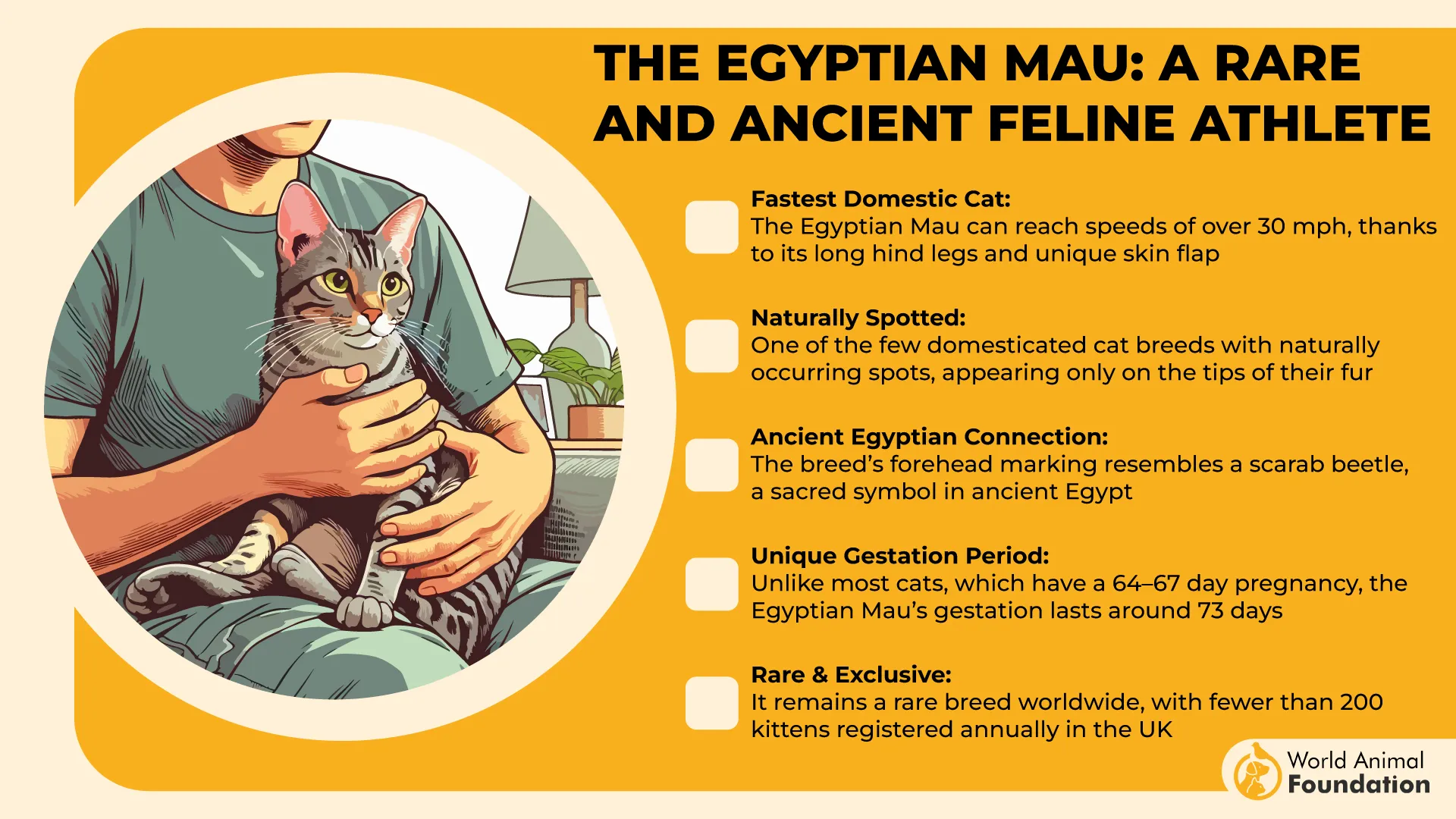
Egyptian Maus are often described as alert and observant. Their ancestry contributes to agility and quick movement, paired with a reserved but loyal temperament. They tend to form close bonds while maintaining an independent streak.
Why This Cat Is a Good Fit
Ideal for owners drawn to ancient, naturally developed breeds
Combines historical significance with domestic companionship
Suits households that value loyalty balanced with independence
4. Norwegian Forest Cat
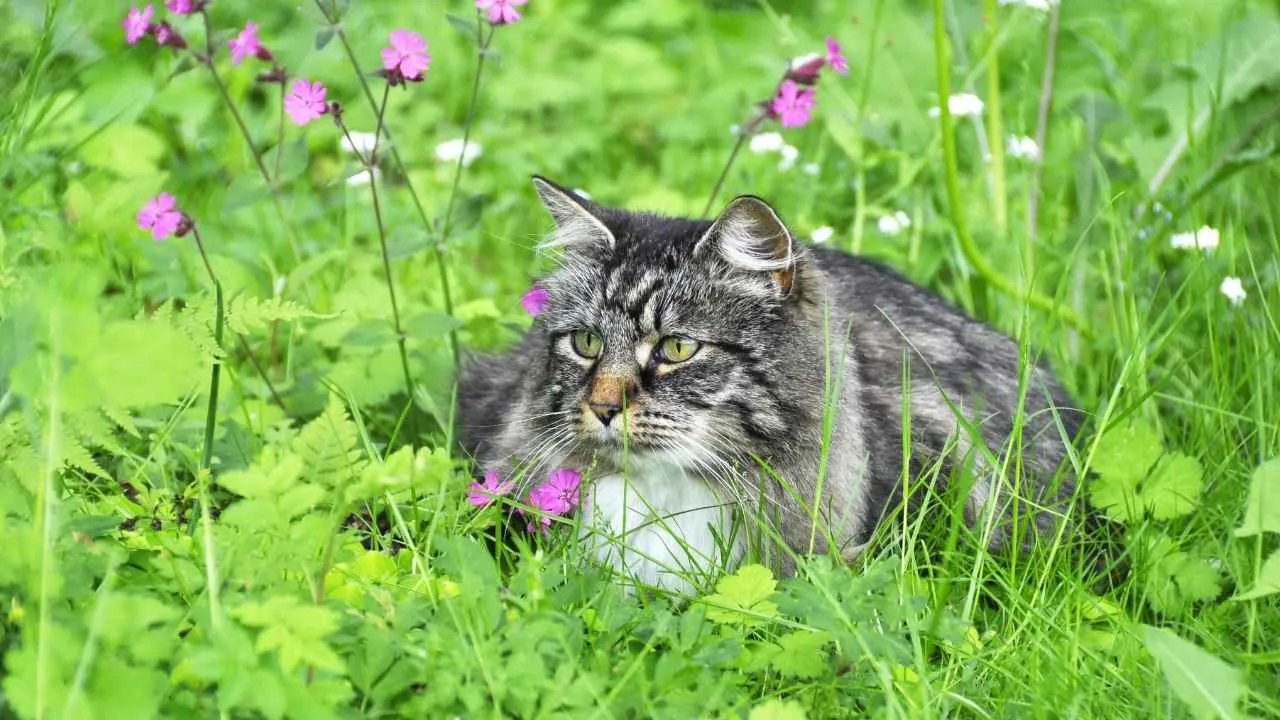
As per Britannica, the Norwegian Forest Cat developed through natural adaptation rather than intentional crossbreeding. Its ancestry is closely tied to the harsh climates of Northern Europe, where survival shaped both body structure and temperament. This natural evolution gives the breed a rugged yet calm presence.
Long before formal breed recognition, these cats lived alongside humans while remaining shaped by the environment. Their lineage reflects centuries of adaptation to cold, forests, and rough terrain. This background explains their sturdy build and self-sufficient nature.
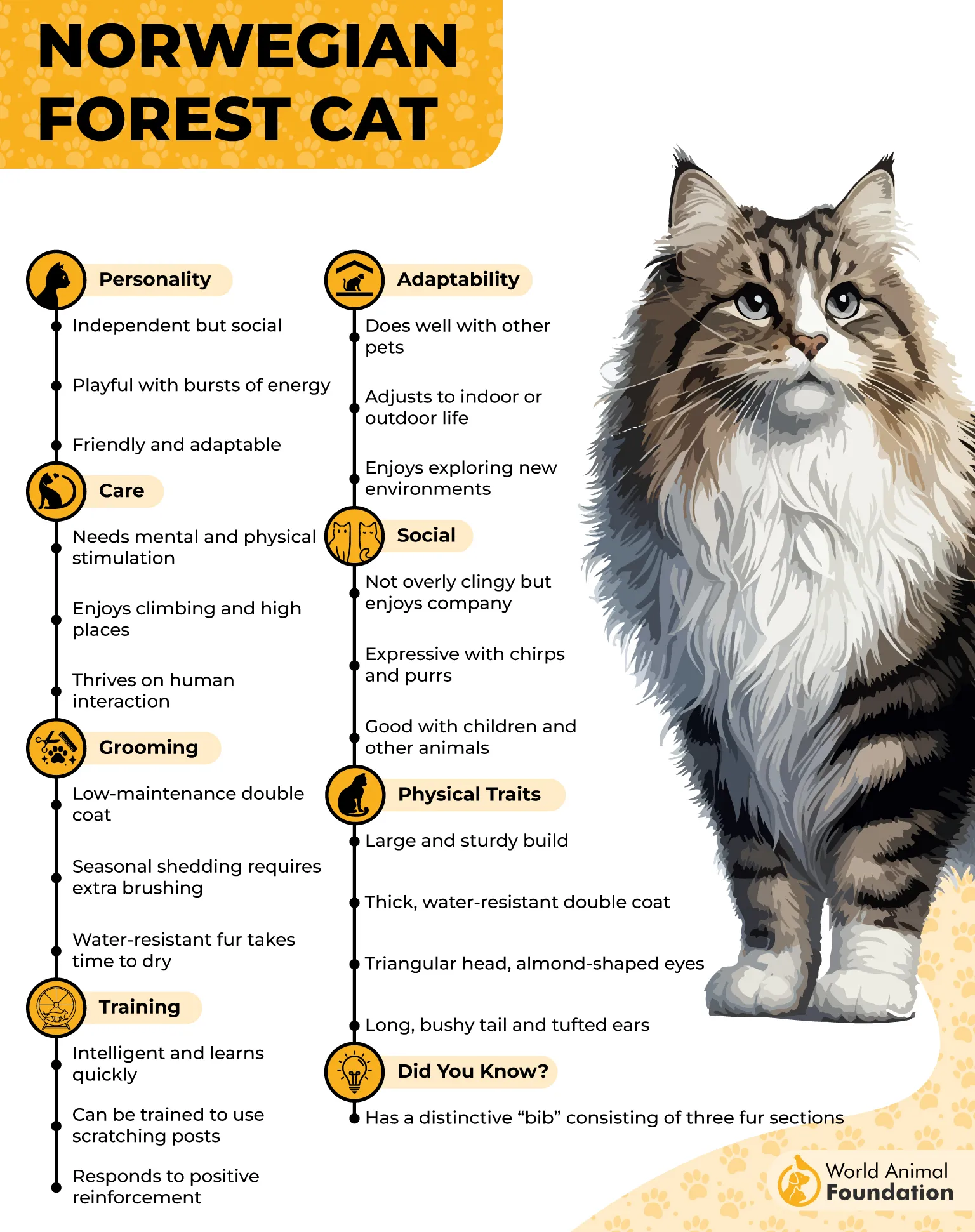
Norwegian Forest Cats are often calm, patient, and observant. They tend to mature slowly and carry themselves with quiet confidence. Their ancestry supports a balance of independence and gentle interaction within family life.
Why This Cat Is a Good Fit
Appeals to owners who value naturally evolved breeds
Well-suited for families seeking calm, resilient companions
Offers a strong heritage paired with a relaxed domestic temperament
5. Abyssinian
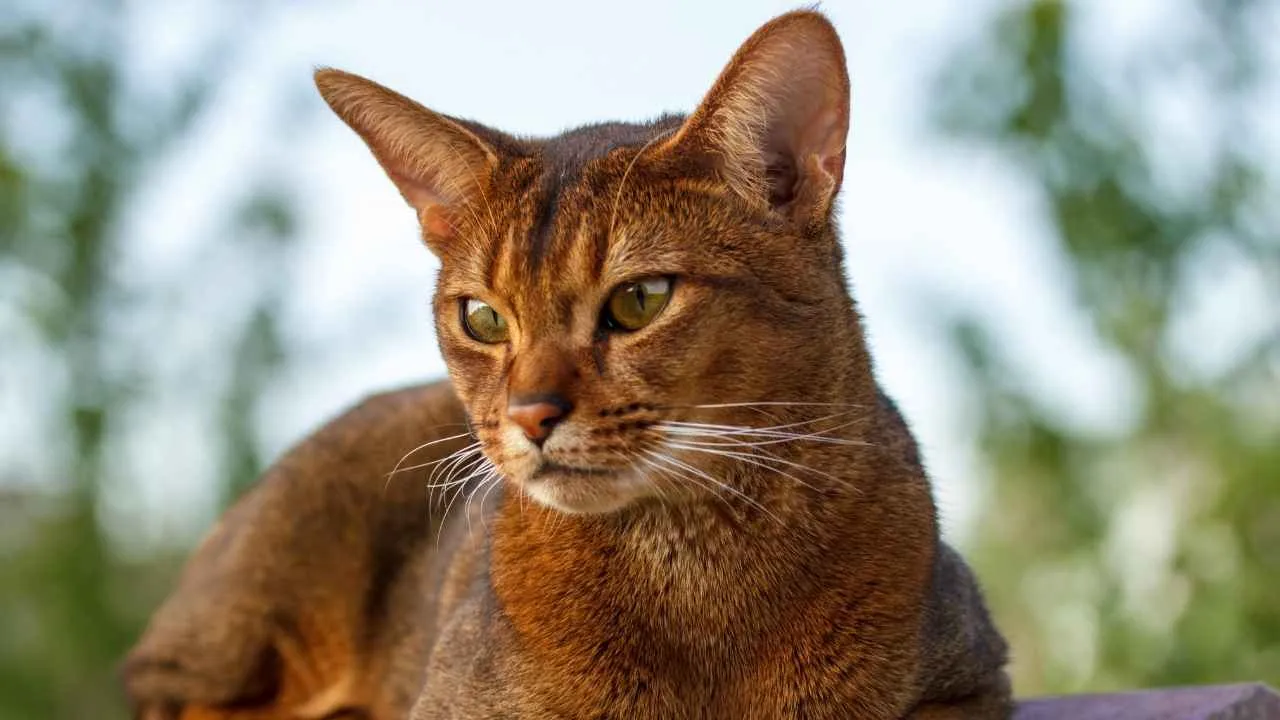
The Abyssinian is often associated with one of the oldest known feline lineages still present today. Its ancestry is frequently linked to regions around the Indian Ocean and northeastern Africa, giving the breed a long and debated history. Rather than being created through recent crossbreeding, the Abyssinian developed naturally over time.
Historical records and early cat shows helped shape the modern Abyssinian while preserving its ancient roots. The breed’s development focused on maintaining its distinctive appearance and active temperament. This careful preservation helped keep its lineage recognizable across generations.
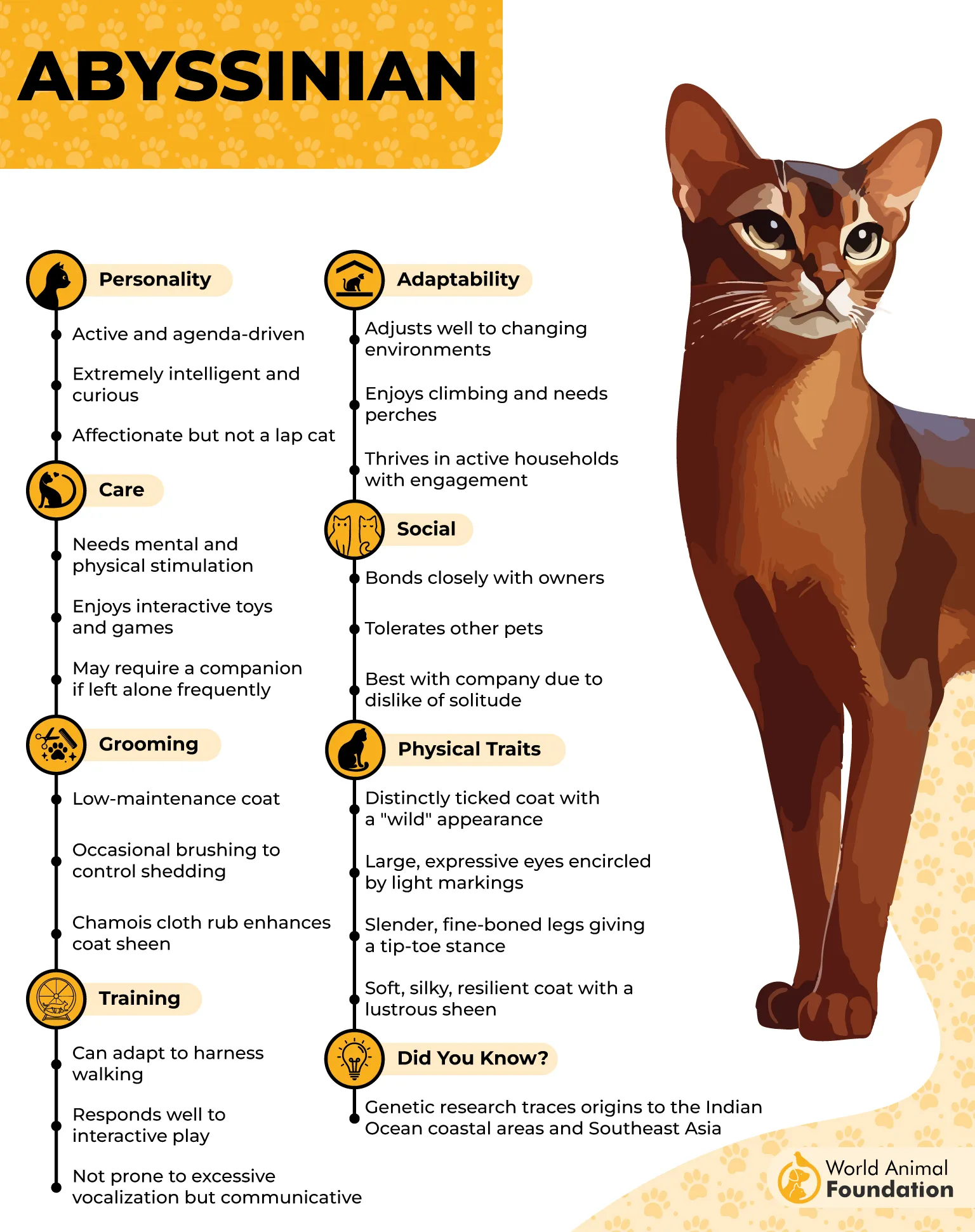
Abyssinians are known for their alert behavior and strong physical coordination. Their ancestry supports a curious, energetic personality that favors movement and engagement. They tend to thrive in environments that allow exploration and mental stimulation.
Why This Cat Is a Good Fit
Appeals to owners interested in ancient, naturally developed breeds
Ideal for active households that enjoy interactive pets
Combines historical significance with lively companionship
6. Sphynx
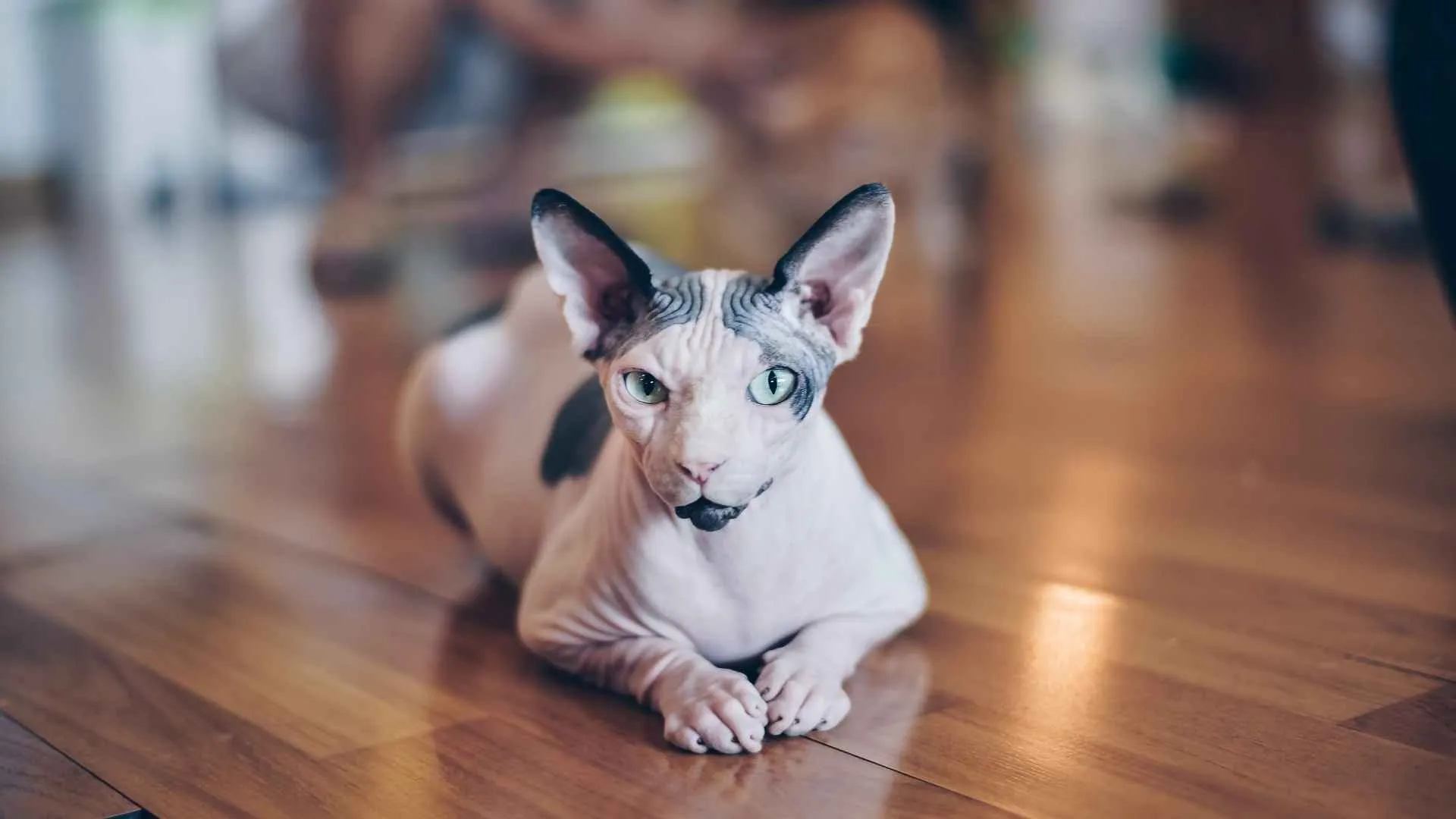
The Sphynx has a unique ancestry that began with a natural genetic mutation rather than an ancient lineage. Hairlessness appeared spontaneously, and selective breeding helped establish the breed while maintaining overall health. This origin sets the Sphynx apart from most traditionally coated cats.
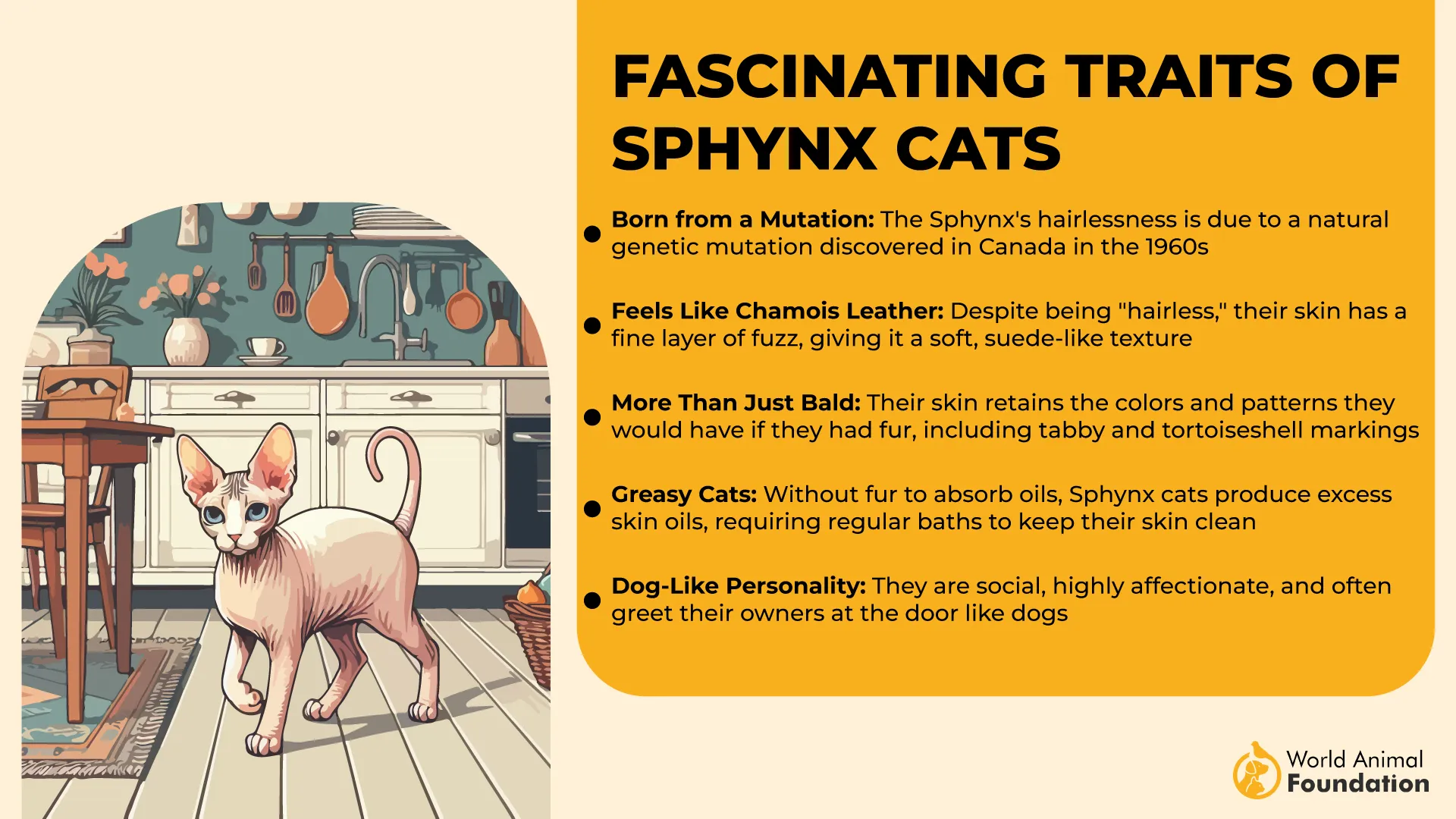
Despite their modern development, Sphynx cats quickly gained recognition due to their unusual appearance and strong personalities. Breeding programs focused on stabilizing the trait while keeping a friendly, social temperament. Their ancestry reflects human-guided development rather than natural isolation.
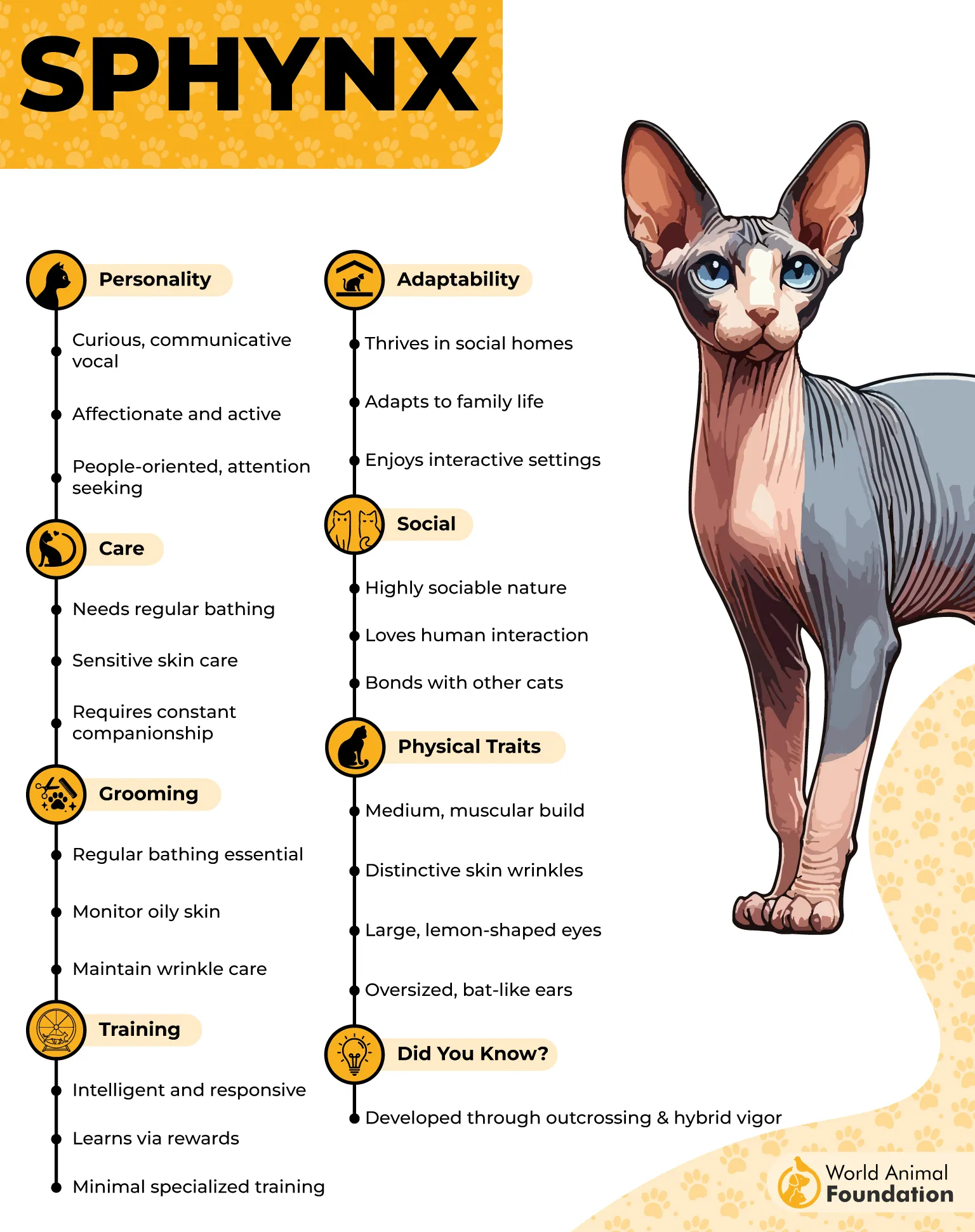
Sphynx cats are known for being affectionate, social, and people-focused. They often seek warmth and closeness, reinforcing their reputation as companion-oriented pets. Their background contributes to a breed that thrives on human interaction.
Why This Cat Is a Good Fit
Perfect for owners fascinated by rare genetic origins
Thrives in homes that enjoy close human connection
Offers a modern breed story with a standout personality
7. Kurilian Bobtail
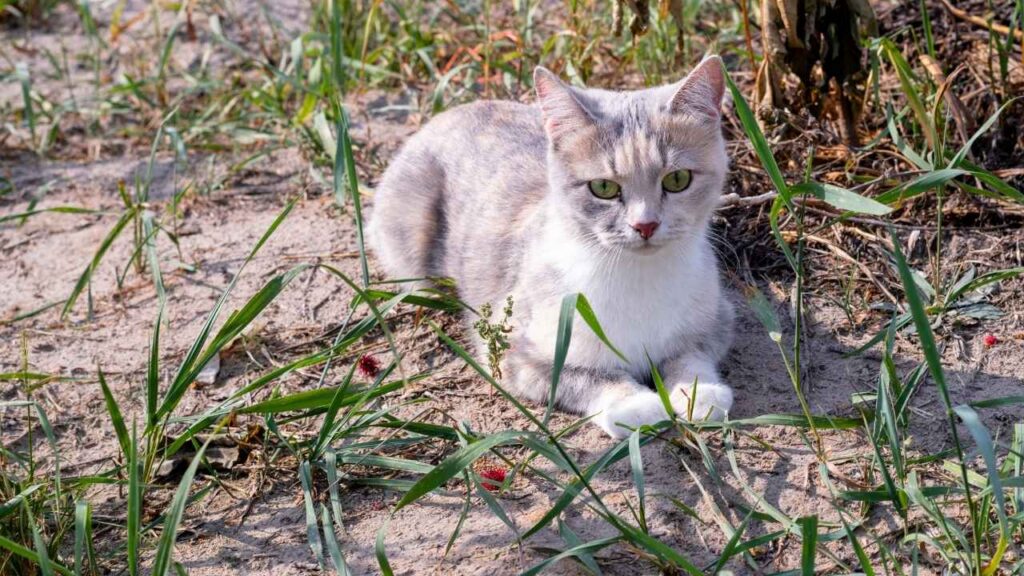
The Kurilian Bobtail originated naturally on the Kuril Islands, where isolation shaped its distinctive traits. Its short, bobbed tail developed through natural selection rather than deliberate breeding. This gives the breed a strong connection to its geographic origins.
Living in a rugged environment influenced both physical structure and behavior. Kurilian Bobtails developed resilience, adaptability, and strong hunting instincts. These traits remained even as the breed entered domestic settings.
Today, the Kurilian Bobtail is valued for its balance of independence and affection. Its ancestry supports confidence and problem-solving skills. Owners often notice a sturdy, capable cat that still forms close bonds with its family.
Why This Cat Is a Good Fit
Appeals to owners interested in island-evolved breeds
Offers a naturally developed lineage with unique traits
Well-suited for homes seeking confident, adaptable cats
Conclusion
The cat world is full of remarkable stories, and breeds with unique ancestry add extra depth for cat lovers and cat enthusiasts alike. From wild ancestors and jungle cat roots to natural mutations shaped by harsh winters or isolated regions, these cats show how history, environment, and human companionship intersect.
Some bring playful nature, others a reserved nature, dog-like personality, or affectionate nature, yet many form strong bonds and become cherished companions. Whether highly intelligent, muscular in build, or known for minimal grooming, these cats often thrive with interactive play, puzzle toys, and engaged owners.
Other breeds such as the Maine Coon, Siamese cat, Persian cat, Russian Blue, Scottish Folds, Manx breed, Oriental Shorthair, Bombay cat, Khao Manee cats, and even exotic types like the hairless cat or werewolf cat also hold unique places recognized by the Cat Fanciers Association and International Cat Association.
