




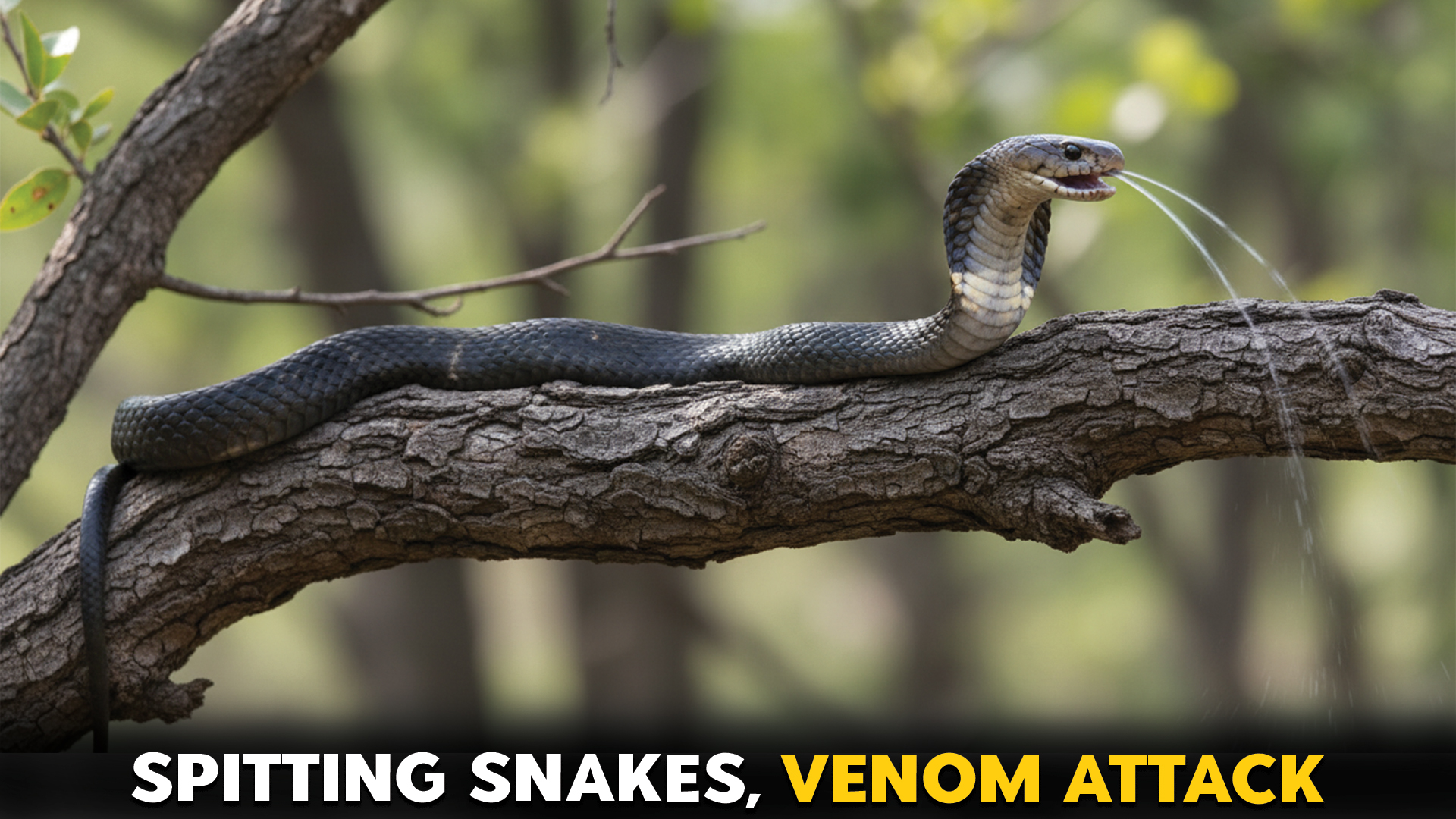
When most people think of venomous snakes, they imagine lightning-fast strikes and sharp fangs. But some snakes take a completely different approach to defense—they spit venom. Instead of biting, these snakes eject venom through the air, aiming straight for the eyes of perceived threats.
Venom-spitting snakes are masters of precision. Their venom isn’t meant to kill from a distance but to cause intense pain and temporary blindness, giving them time to escape danger. This remarkable adaptation shows just how diverse and strategic snake defenses can be.
Often misunderstood and feared, these snakes play an important role in their ecosystems. Their spitting ability is not aggression—it’s a last-resort survival tactic. When respected and left alone, they prefer avoidance over confrontation.
Today, we will take a closer look at snakes that spit venom at threats, exploring how this behavior works and which species are famous for this dramatic yet effective defense mechanism.
Fun Fact: Spitting cobras can accurately spray venom several feet toward a predator’s eyes. This defensive tactic causes intense pain and temporary blindness—giving the snake time to escape.
Snakes That Spit Venom at Threats
1. Black-necked Spitting Cobra
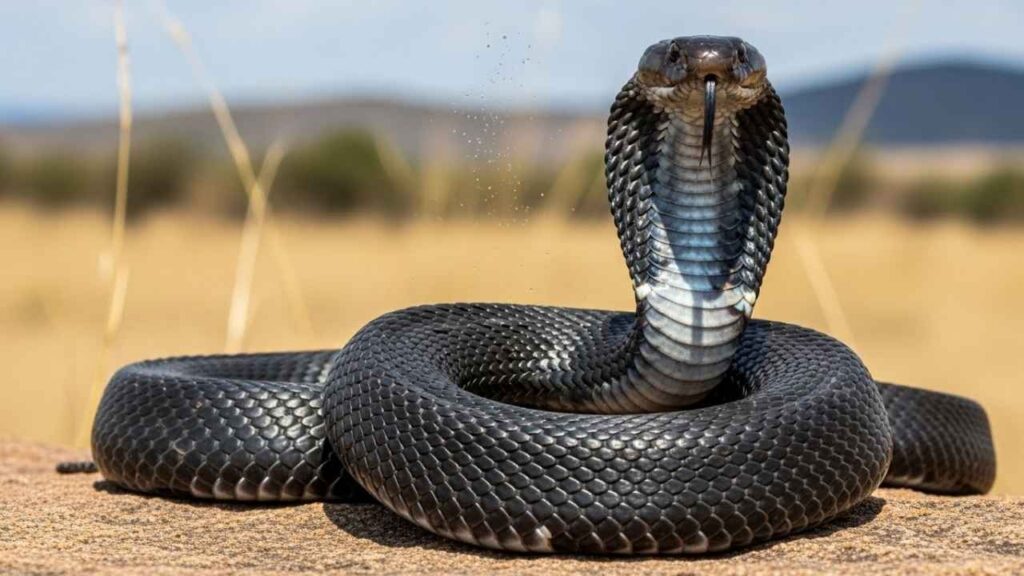
Meet the Black-necked Spitting Cobra, the drama queen of the snake world. These serpents don’t just bite—they spit. That’s right, when threatened, they can launch venom at potential predators (or curious humans) with the precision of a tiny, slithery squirt gun.
Native to the forests and savannas of southern Africa, the black-necked spitting cobra isn’t just a one-trick pony. Its glossy black neck—hence the name—flares dramatically when it’s angry, giving off a “back off, buddy” vibe that’s both intimidating and oddly majestic.
What makes this snake even cooler (and slightly terrifying) is its aim. These cobras don’t spray venom willy-nilly. They can accurately hit a target’s eyes from several feet away. Venom in the eyes can cause temporary blindness, which is basically nature’s way of saying, “I warned you, now you’re paying the price!”
Don’t worry, though—these snakes prefer to spit first and bite only if absolutely necessary. They’re much like a strict parent: “I’ll squirt you if you don’t listen, but I won’t bite… unless you really deserve it.”
Despite their fearsome reputation, black-necked spitting cobras are surprisingly shy. They’d rather perform their spectacular venom show than actually fight, making them both fascinating and respectful creatures of the wild.
If snakes had a superhero identity, the black-necked spitting cobra would be Venom Squirt, protector of personal space, armed with an eye-stinging superpower. Just remember: admiration from a safe distance is the only way to truly enjoy this spitting spectacle!
2. Mozambique Spitting Cobra
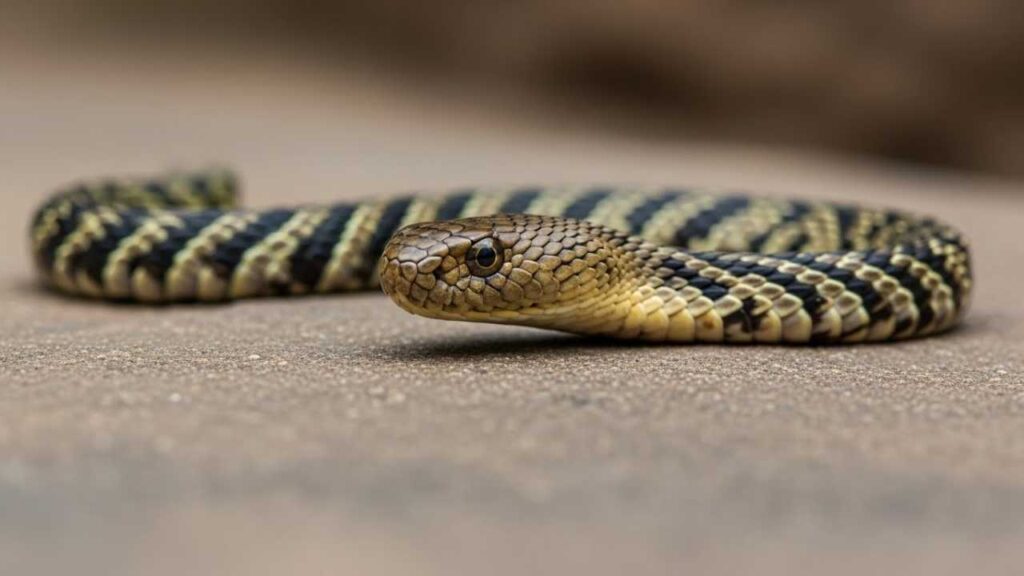
Native to Africa, this cobra is famous (or infamous) for its fiery temper and deadly aim. It’s the kind of snake you definitely don’t want to challenge in a staring contest. Its scientific name, Naja mossambica, might sound fancy, but don’t let that fool you—this little serpent is basically the ninja of venom.
Its bite is extremely potent, comparable to the American Mojave rattlesnake, which is one of the deadliest rattlesnakes in the world. That means a run-in with this cobra is no joke—its venom can cause severe tissue damage, leaving a lasting mark on anyone unlucky enough to be bitten.
But the Mozambique cobra doesn’t always bite first. Oh no. Its specialty is spitting venom, a tactic straight out of a horror movie. Wikipedia noted that if threatened, it can accurately squirt venom into an attacker’s eyes, causing pain, temporary blindness, or even permanent damage.
Despite its deadly reputation, the Mozambique Spitting Cobra isn’t just a villain; it’s a master of intimidation. It can flare its hood, hiss loudly, and make itself look larger—basically saying, “I’m more trouble than I’m worth.
In short, the Mozambique Spitting Cobra is Africa’s version of a dramatic action hero: lethal, precise, and capable of leaving a memorable mark—literally. Admire it from a distance, and remember: it’s one of the continent’s most dangerous snakes for a very good reason.
3. Red Spitting Cobra

Say hello to the Red Spitting Cobra, a flashy, fearless, and slightly terrifying member of the spitting-cobra squad. With a name like that, you might expect it to be all style and no substance—but don’t be fooled.
This snake is like a tiny, venomous firecracker: colorful, dramatic, and packing a punch that you really don’t want to test. Britannica says what makes the Red Spitting Cobra stand out is its venom, which is loaded with phospholipase-A2—a fancy scientific term for “ouch factory.”
This toxin, along with its venom buddies, maximizes pain, especially if it hits the eyes. In fact, this cobra aims for the face when it feels threatened, making it the ultimate defensive sniper. Left untreated, a venom hit can lead to temporary or even permanent blindness, turning a “close encounter with a snake” into a story you’d rather forget.
Interestingly, researchers think spitting cobras, like our red friend here, evolved this venom-squirting skill specifically to ward off humans. So next time you see one, remember: it’s not just being dramatic—it’s protecting itself in the most effective way possible.
And here’s a fun twist: despite all this pain it can cause, scientists are fascinated by the Red Spitting Cobra. Its venom is actually helping researchers study new painkilling drugs. That’s right—this tiny scarlet menace is secretly contributing to human medicine.
In short, the Red Spitting Cobra is a little snake with a big personality: stylish, strategic, and not someone you want to invite to a staring contest. Admire its vibrant scales—but keep a safe distance unless you’re keen on a venomous face splash!
4. Indochinese Spitting Cobra
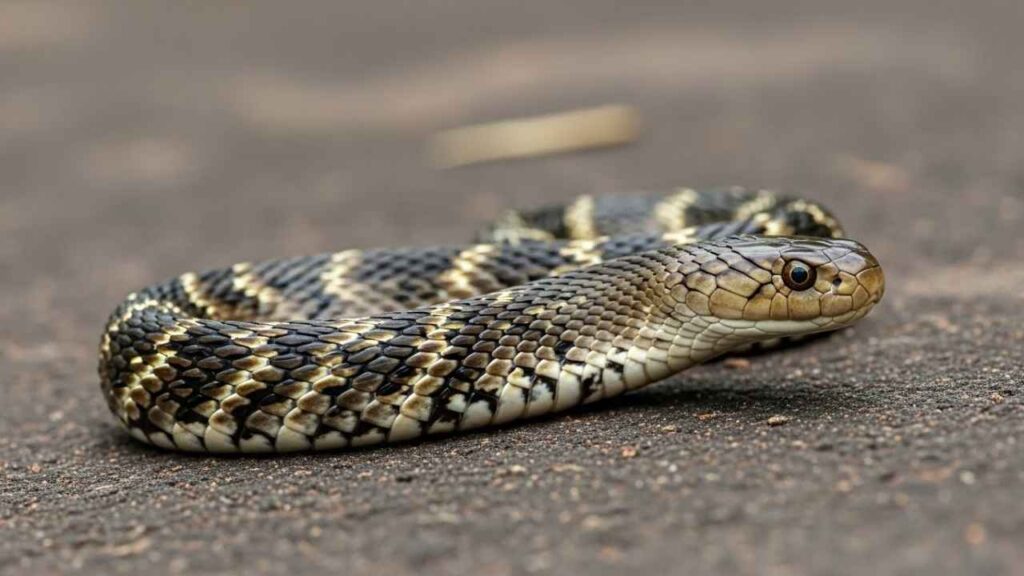
Meet the Indochinese Spitting Cobra, the dramatic snake that rules parts of Southeast Asia with a glare… and a venom squirt. Native to countries like Thailand, Vietnam, and Cambodia, this cobra isn’t just any garden-variety serpent—it’s the kind of snake that makes you double-check your sandals before stepping outside.
Like its spitting cousins, the Indochinese Spitting Cobra has perfected the art of aimed venom projection. When it feels threatened, it can launch its venom toward the eyes of a predator—or an unlucky human—causing intense pain and temporary blindness if not promptly rinsed away.
This species is also known for its signature defensive pose: rearing up, spreading its hood, and hissing loudly as if to say, “Step closer and see what happens!” It’s all for show, of course—the venom spit is the real “get lost” tool.
Despite its fearsome reputation, the Indochinese Spitting Cobra generally prefers to scare rather than fight. It’s like a very intimidating bouncer at the club of the jungle: look tough, spit a little, and hope the threat leaves quietly.
Interestingly, its venom contains a cocktail of toxins that not only defend the snake but also make it a subject of medical research, especially in the study of pain and tissue damage.
So while it’s busy being a tiny terror in the forests of Indochina, it’s also helping humans understand venom in ways that might someday save lives.
5. Chinese Cobra
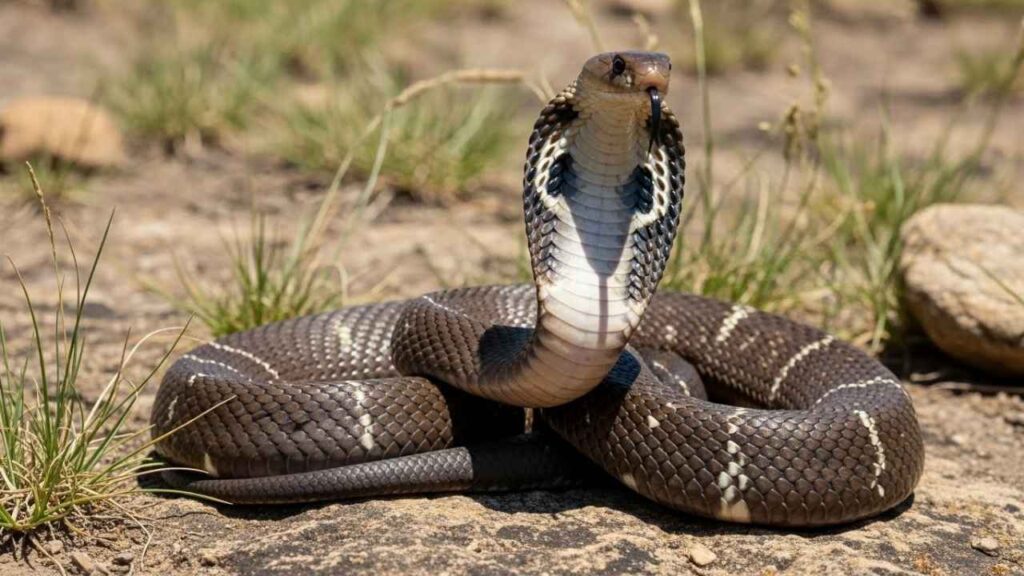
Meet the Chinese Cobra, a true master of intimidation and precision venom-squirting from East Asia. Found across southern China, Taiwan, and parts of Southeast Asia, this cobra may look elegant with its glossy scales, but don’t let its sleek appearance fool you—it’s packed with attitude and venom.
Like other spitting cobras, the Chinese Cobra has a special trick up its… hood. When threatened, it can launch venom at the eyes of predators (or careless humans) with deadly accuracy. One hit and it’s no laughing matter: intense pain, temporary blindness, and a memorable lesson about keeping your distance.
Its defensive display is nothing short of theatrical. It rears up, spreads its hood, and hisses like it’s auditioning for a role in a horror movie. But behind the drama, there’s strategy: the cobra prefers to warn and scare off threats before resorting to a bite.
Interestingly, the Chinese Cobra’s venom is not only a defense mechanism but also a subject of scientific fascination. Researchers study its toxins to better understand pain, tissue damage, and potential medical applications.
So while it may be busy scaring off intruders in the wild, it’s also contributing quietly to human knowledge, making it a tiny but mighty researcher in its own right.
6. Rinkhals
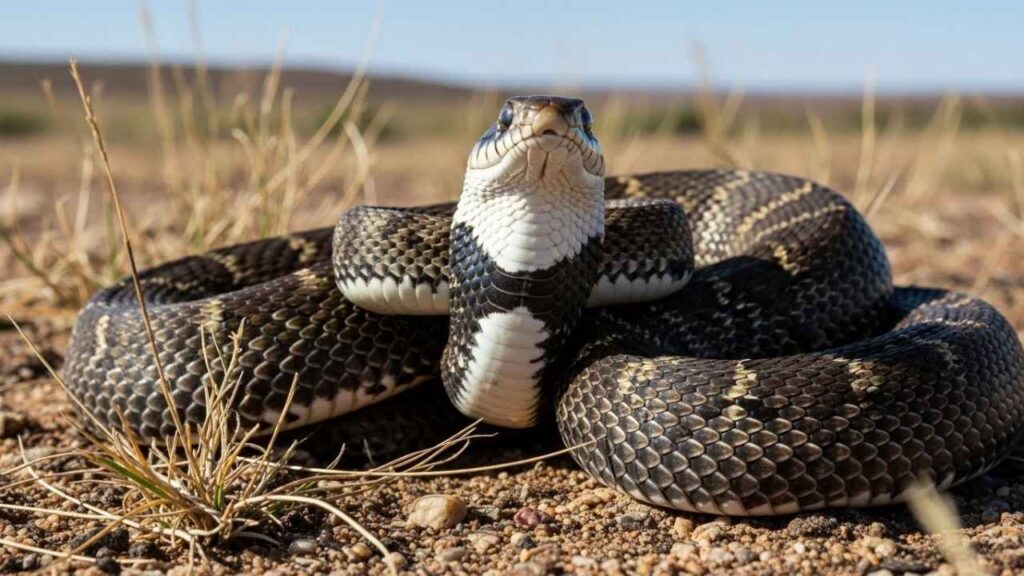
Say hello to the Rinkhals, also known as the ring-necked spitting cobra—a snake that’s equal parts show-off, precision shooter, and master of escape. Found in parts of southern Africa, this serpent isn’t just another hooded snake—it’s a one-snake circus, complete with venom squirt, loud hiss, and even a fake-death performance if things get too scary.
When threatened, the Rinkhals puts on a full-on theatrical display. It spreads its hood, revealing the striking striped neck that gives it a flair for the dramatic, and hisses like it’s narrating a horror movie.
Then comes the pièce de résistance: it can accurately spit venom up to 3 meters (almost 10 feet!), aiming mainly for the eyes of predators. But wait, there’s more. This snake has a flair for the dramatic beyond spitting.
Despite its theatrics, the Rinkhals is highly skilled and intelligent. Its venom-spraying technique is precise, showing a remarkable control over its venom glands. It prefers to warn and deter before biting, proving that sometimes brains (and a little drama) are just as important as brawn.
In short, the Rinkhals is the performer of the spitting-cobra world: stylish, dramatic, dangerous, and a little bit sneaky. If snakes had a stage, this one would take center ring every time—just make sure to watch from a safe distance unless you want a venomous encore in your eyes!
7. Javan Spitting Cobra
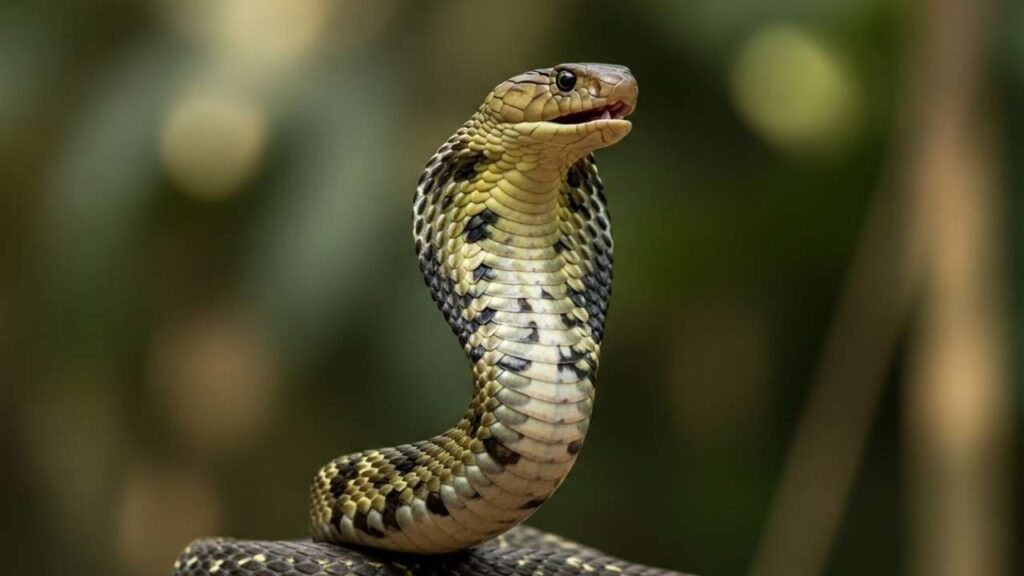
Meet the Javan Spitting Cobra, a venomous virtuoso from the Indonesian island of Java. Sleek, alert, and not at all shy, this cobra has perfected the art of keeping predators—and nosy humans—at a safe distance… mostly using its eyes as target practice.
Like its spitting cousins, the Javan Spitting Cobra is all about defense with flair. When threatened, it spreads its hood, hisses menacingly, and launches venom with astonishing accuracy toward the eyes of its foe.
The Spitting Cobra venom itself is a carefully engineered cocktail, designed not just to harm but to warn. Scientists are fascinated by its composition because it’s effective enough to deter attackers yet precise enough for the snake to conserve its supply. In other words, this cobra isn’t just scary—it’s smart about being scary.
Despite its lethal capabilities, the Javan Spitting Cobra prefers to warn first and bite only if necessary, proving that intimidation can be mightier than direct confrontation. With its striking hood and agile movements, it’s a true performer in the wild, earning it a top spot among the spitting-cobra lineup.
In short, the Javan Spitting Cobra is Java’s own little squirt artist: dramatic, deadly, and remarkably clever. Admire its hood from a safe distance, and respect its aim—this is one cobra that really knows how to make a point!
Conclusion
Spitting cobras are remarkable members of the Elapidae family in the genus Naja, including the spitting cobra Naja, the black spitting cobra, and Naja pallida, found in North Africa as well as Asian and African cobras. These true cobras and other cobra species have evolved the ability to spit venom from their fang morphology with keeled scales, allowing them to inject venom or eject venom accurately as self-defense against mammals, prey, early hominins, or threats near human dwellings.
Most spitting cobras can successfully hit a target with snake venom from the mouth, providing a life-saving deterrent, while other venomous snakes like coral snakes, mambas, and vipers rely on direct bites to deliver venom. These large cobras, with dark brown coloring or other variations, give live young and thrive in the wild, demonstrating the powerful adaptations of reptiles to protect themselves and hunt effectively, as left untreated, bites can be extremely dangerous.
