




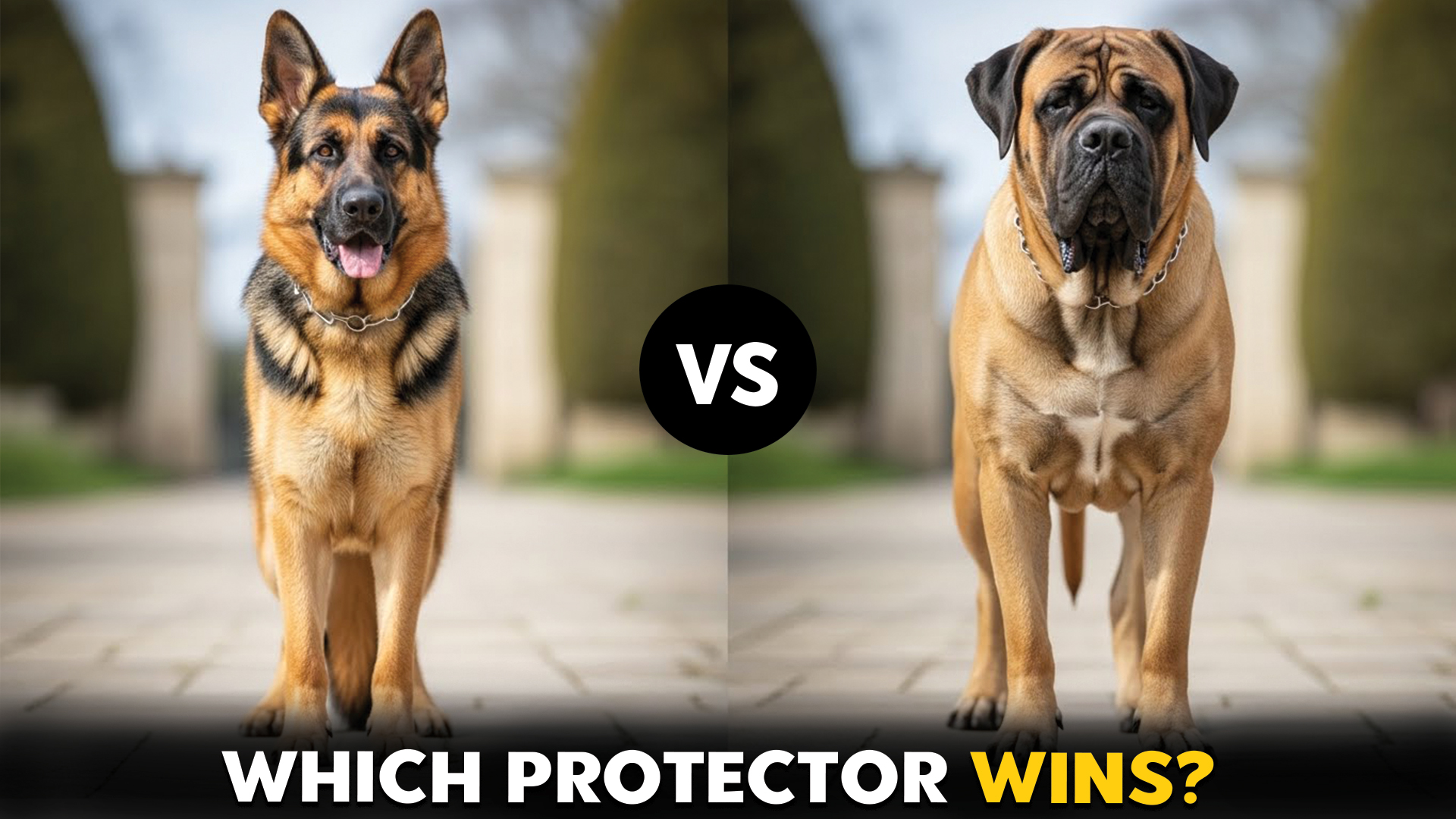
Twas the night before New Year’s Eve, when a grandmother sat beside the hearth in her home to narrate the tale of the battle between the plucky David, a young shepherd, and the massive Goliath, who was a formidable Philistine warrior, a story of faith, courage, and divine intervention.
But hold on, we gathered here for an entirely different matter, Hooman!!! Uh, no, we weren’t because the battle between these two breeds is also quite similar and symbolic to the biblical legend.
Because after all, here stands a literal young shepherd and an ancient warrior! But this isn’t a gladiatorial arena, and they aren’t fighting a duel to the death. But rather competing and vying for an entirely different matter.
The one thing for which many wars were fought and won in the history of humankind, Love. (Or in this case, attention, care, and acceptance of their prospective human parent.)
German Shepherd vs. English Mastiff: A Dog Breed Comparison Guide
Background & Origin Overview
German Shepherd
The modern-day German Shepherd breed is a cross between long-haired and wire-haired shepherd dogs of the German regions of Württemberg, Thuringia, and Bavaria. German Shepherd Rescue Elite notes that they were initially bred for herding sheep, and soon they became famous after the role they played in both World Wars, with many allied soldiers taking the breed to their home countries.
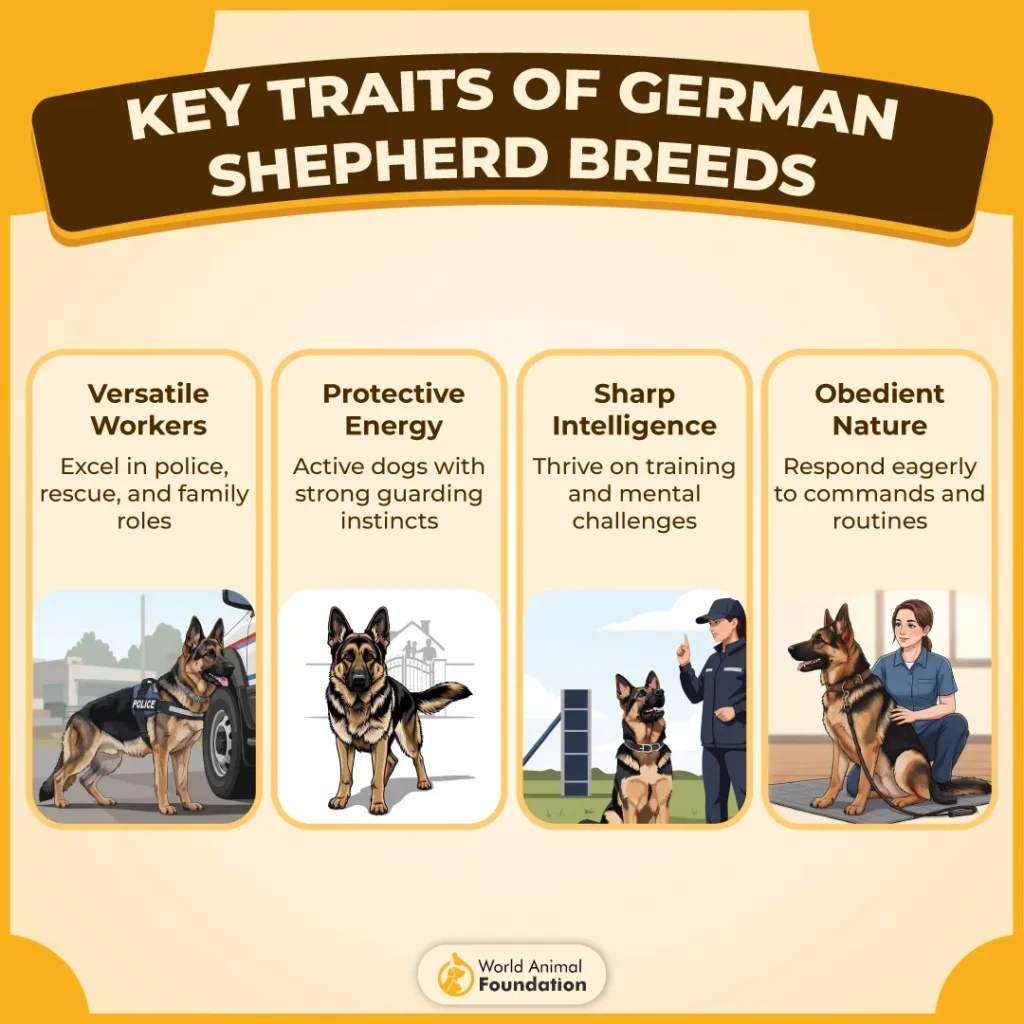
The German Shepherd was refined by Max Emil Von Stephanitz, who, after their replacement in shepherding, promoted them as the best K-9 police and military dogs, and to this day, their demand and popularity have not dwindled but rather increased.
English Mastiff
On the contrary, the enormous, powerful, and impressive ancestor to many purebred dogs, the Mastiff, has been around since 2500 B.C. Caesar praised the Mastiff for its fighting ability in 55 A.D., and the Phoenician sailors introduced the breed to England in the 6th Century.
The breed was exploited as it participated a lot in blood sports, bearbaiting, bullbaiting, lion baiting, and dog fighting. These pups also served in wars, and to this day, they happen to protect their masters and property vigilantly.
Size, Weight & Overall Physical Build
German Shepherd
The German Shepherd is a balanced and muscular dog that resembles its grey wolf ancestors. Poised, confident, and always ready to work, this working dog has graceful curves, a slightly elongated body, a deep chest, and overall firm structure, and a weight of around 50-100 pounds, and a height of 22 to 26 inches.
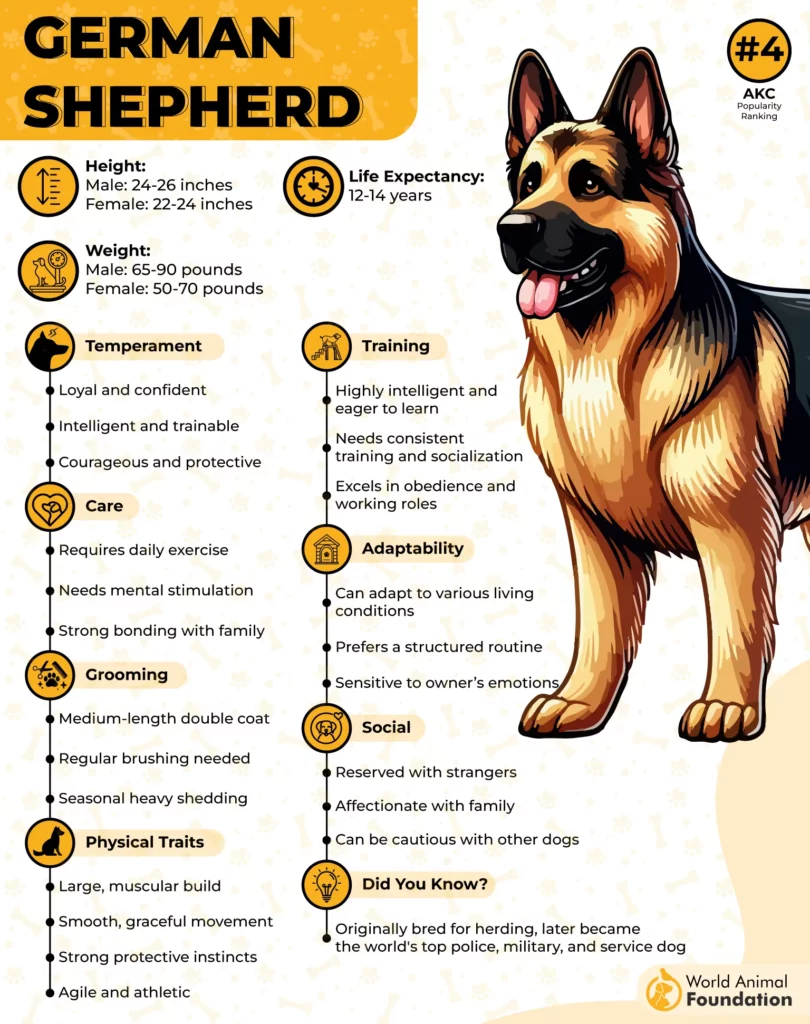
This pup has alert ears, dark almond-shaped eyes that give an intelligent and eager expression, and an aura of authority and nobility. Equipped with bushy, slightly curved tails that look like a saber. Sheps have straight backs and muscular frames, with bodies that are longer than they are tall.
English Mastiff
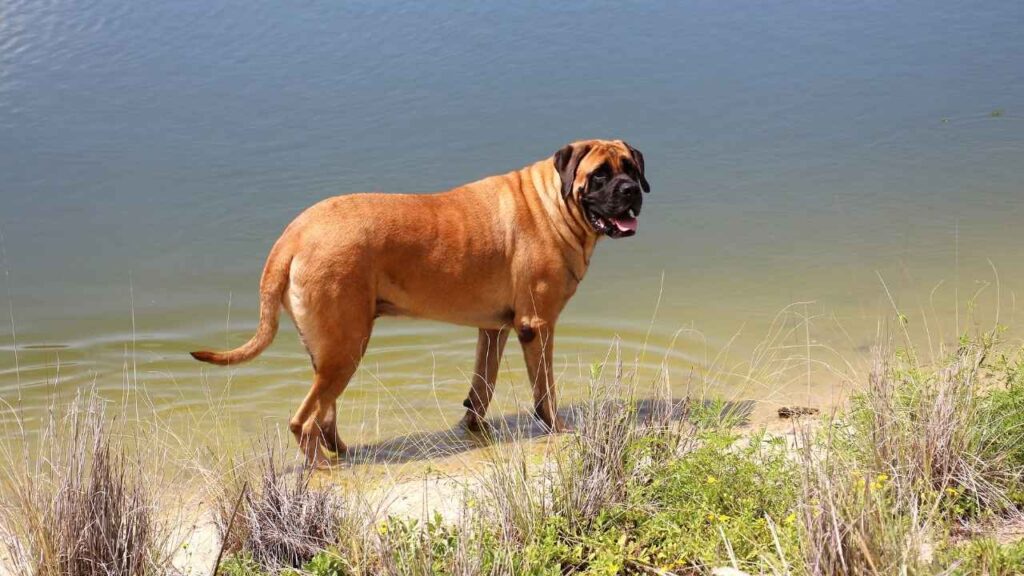
On the other hand, the Mastiffs are built like an army tank, weigh between 175 and 200 pounds, are heavily muscled, and are blessed with a big, prominent head, wrinkled foreheads, and drooping jowls. A black mask covers their eyes and nose. Moreover, their ears flop downward, and their tail sits high on the rear end.
These pooches look scary and intimidating on the outside. But on the inside are gentle-hearted giants that just want love and attention from everyone around them. These Mastiffs move slowly, but with purpose, and despite seeming intense and overwhelming, they make excellent family dogs.
Temperament, Behavior & Personality Traits
German Shepherd
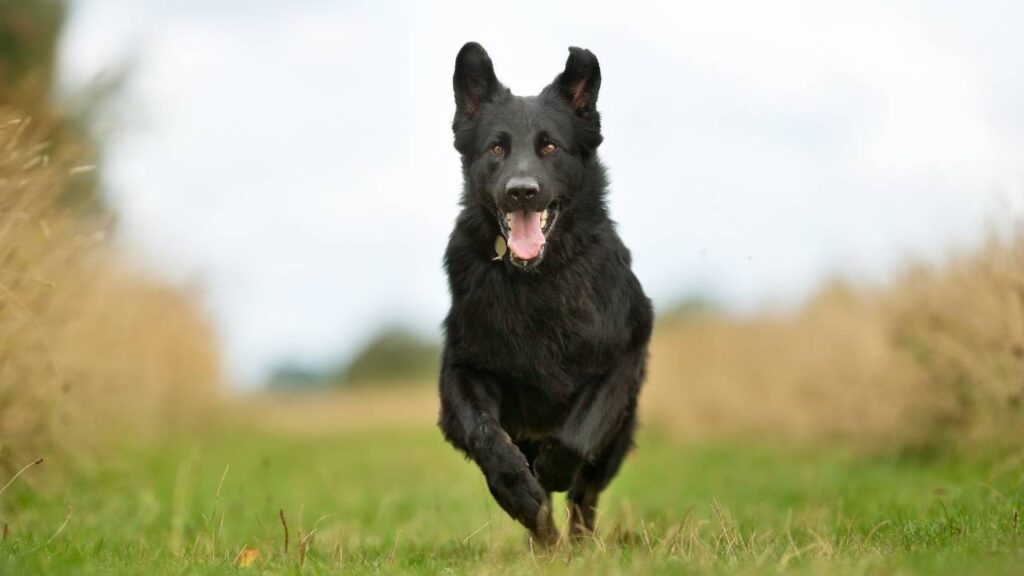
German Shepherds are super pups that are active, smart, and equipped with an undeniably heroic aura. These pups prefer working and playing hard and are always 10 steps ahead of everyone else. These muscular pups love to help others with their duties and are often seen in K-9 squads assisting police officers and military personnel with their daily missions.
Britannica notes that German Shepherds are one of those pooches who’ll pick an all-day hike over a movie marathon any day, and someone who loves to live life on the edge by climbing trails and leading rescue operations. But behind the scenes, they are all soft and mushy on the inside who love their families with all their hearts and would practically do anything to keep their pack safe and sound.
One of the most reliable guard dogs in the world, along with many other streaks and talents, this faithful service dog would happily take a bullet for you, and at the end of the day, it just wants to be loved.
English Mastiff
These gentle giants are quite lovely and down to earth despite having a size that can be compared to a small bear. They are known for having adorable quirks and are genuinely caring and kind-hearted. These sturdy puppies are also friendly and low-key, which means they don’t have a ton of built-up energy to invest. They fit well with folks who are Zen and calm, just like them.
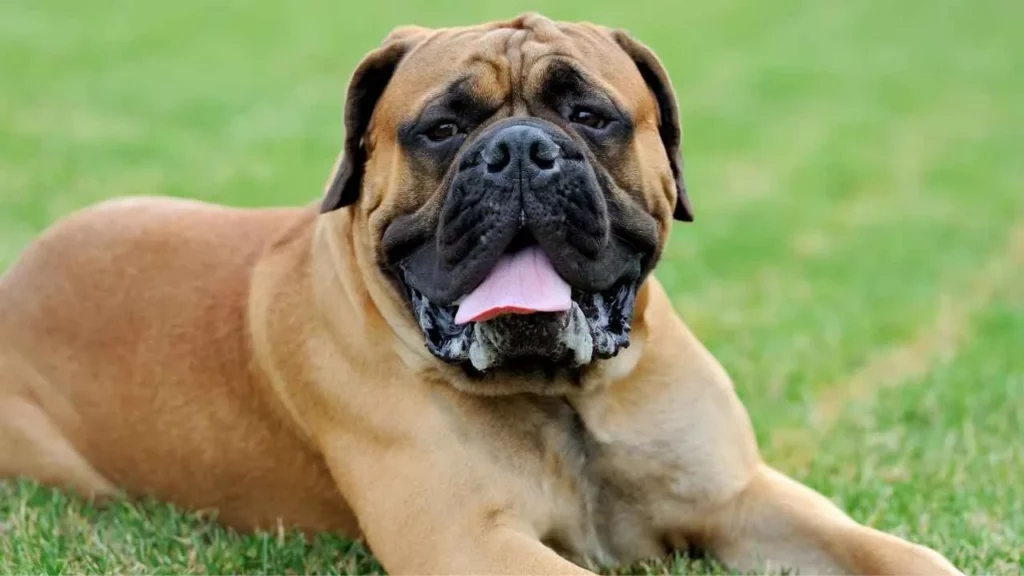
These dogs get along with children of all ages, as they make great canine partners for kids. You will just need to supervise the Mastiff-kiddo interaction.
Exercise Needs & Daily Activity Levels
German Shepherd
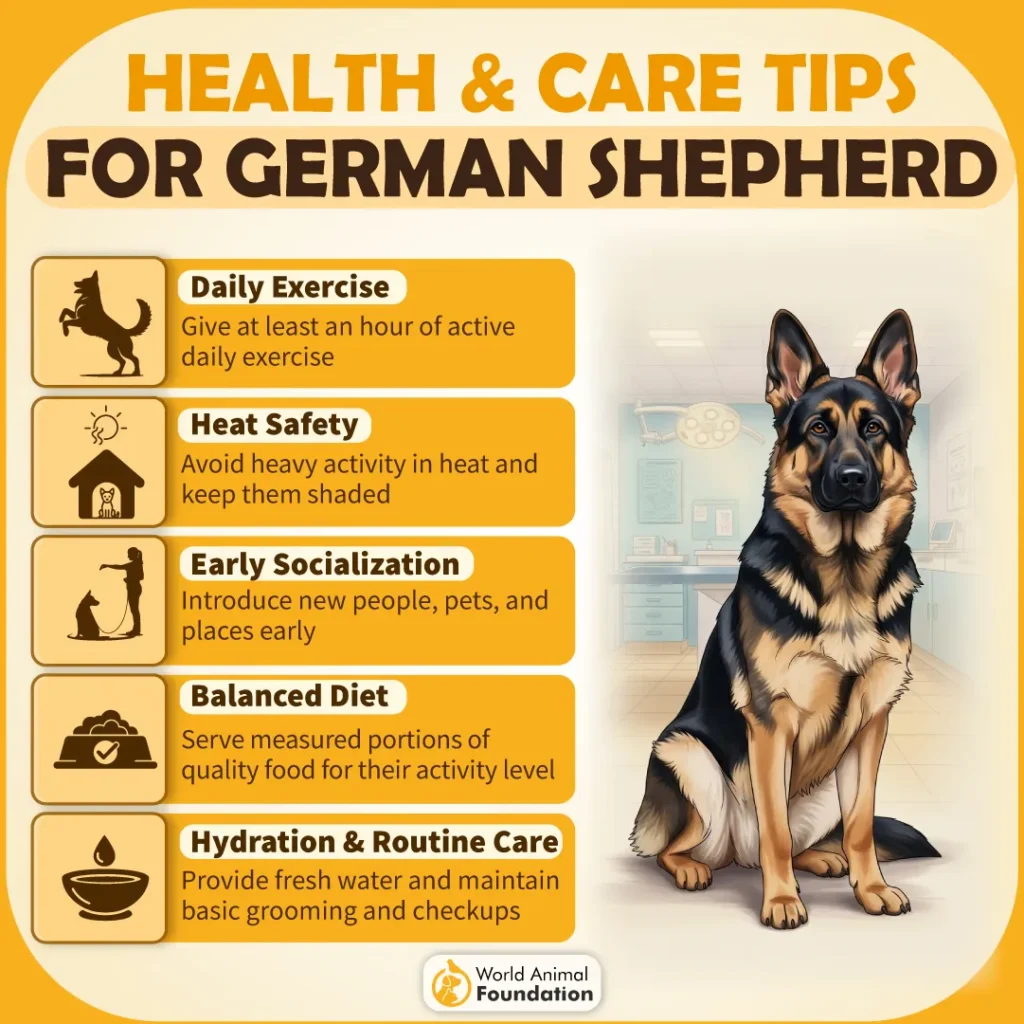
German Shepherds are the happiest when busy, so enriching their environment with purpose is the ideal way of handling these dogs. Give them something to think about and do. Start training and socializing early. Work on their sniffing skills with puzzle toys, treasure hunts, and scent walks.
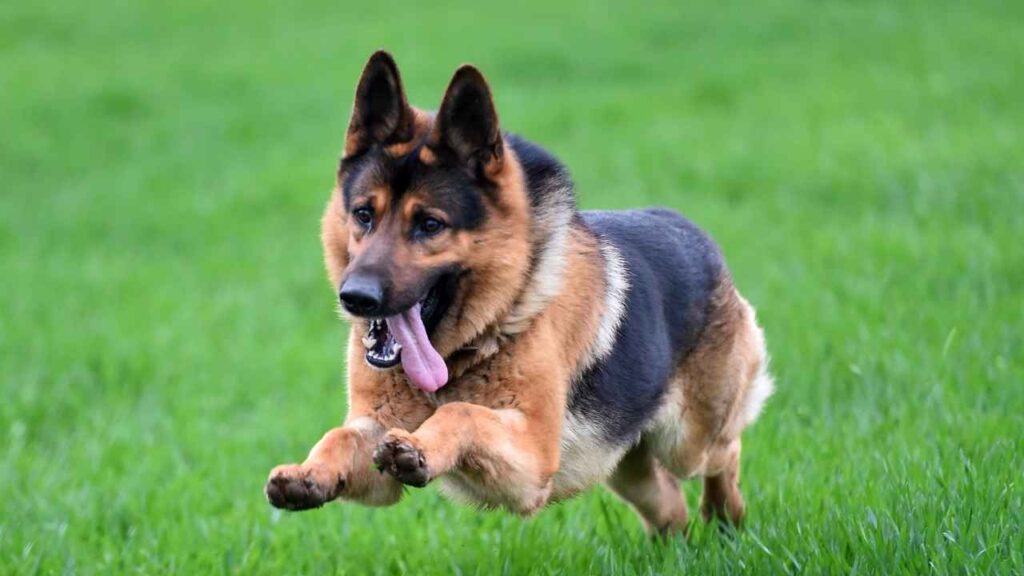
Moreover, to strengthen your bond, try agility, tracking, herding, or assistance, and guide work. Brisk neighborhood jogs, a run in the woods side by side, or a sprint in a fenced yard can do your German Shepherd good.
Furthermore, a game of fetch or dip in the pool or a lake nearby is a great way to burn some of the explosive energy these pups have.
English Mastiff
It might seem counterintuitive, but do not expect this pooch to compete in marathons. It simply isn’t built for speed, but rather strength and durability. Hence, its daily activity levels don’t even come close to those of the German Shepherd.
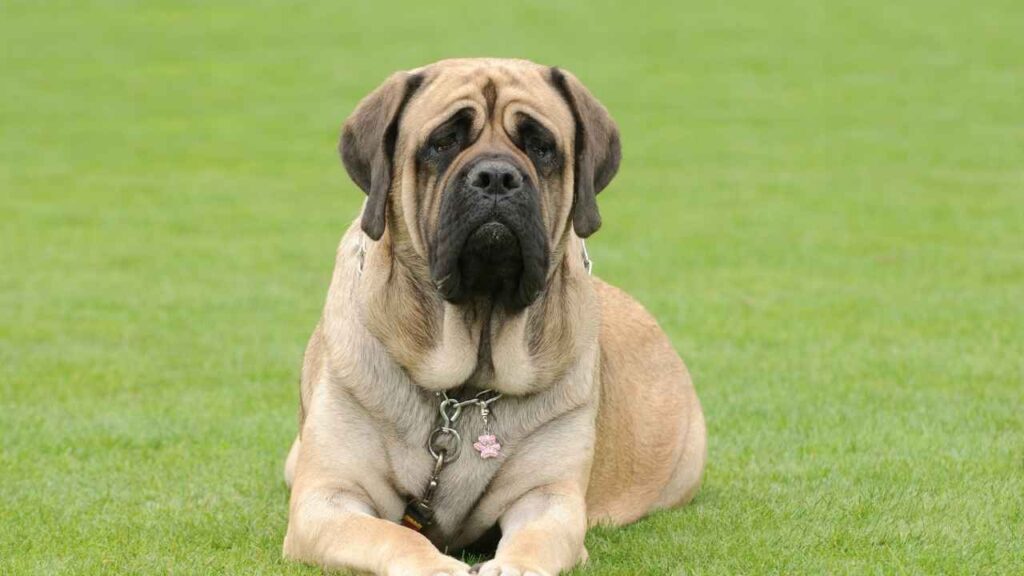
PetMD notes that as an idea for enjoying its leisure time, doesn’t involve agility trials but rather a slow walk in nature, max for a mile or two, along with breaks where they will stop to smell the roses along the way.
Prolonged exercise isn’t simply their cup of tea. Hence, try introducing low-impact exercises like swimming and puzzle solving in their routine, or if you are really enthusiastic, take them out for a hike or a tedious, long walk.
Make sure you have enough muscles built up because when exhausted, these dogs plop down anywhere, which means you’ll have to carry them home in your arms like a princess. But beware, as this princess might weigh just as much or more than you.
P.S. These pups can easily damage their fragile bones when they are young. Hence, keep the counter surfing and stair racing to a minimum.
Intelligence, Trainability & Working Potential
German Shepherd
Highly trainable, remarkably intelligent, and stupendously workaholic, the German Shepherds are quick learners. They can grab onto complex commands and concepts flawlessly, work tirelessly, and still have enough energy left for playtime.
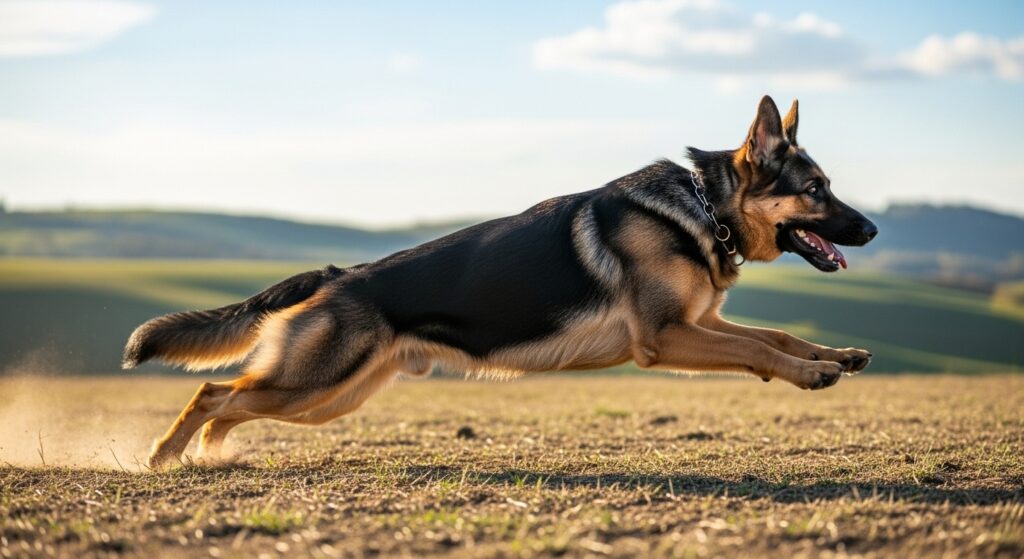
They are also the 3rd most intelligent dog breed in the world, which means they can maneuver their way out of a fenced yard, or pull a Houdini on you, due to their witty brains. Having these plucky pups at home can be tough for first-time dog owners.
But the presence of cleverness in them also translates into adaptability and obedience. The point is that they only need proper guidance and training from their owners. You can also hire a professional trainer for these dogs or enroll them in service to utilize their true working potential.
English Mastiff
According to Stanley Coren, these dogs are the 72nd smartest dog breed in the world, with the lowest working and obedience intelligence. These quirky floofs happen to be bright dogs, and if basic commands, obedience training, and socialization are introduced to them early on, they do grab on to stuff more quickly.
Try positive reinforcement with praise, training treats, and toys to teach your puppies how to be at their best. Moreover, patience and consistency are key when raising and guiding this Mastiff puppy.
Alertness, Protectiveness & Vocal Behavior
German Shepherd
These quintessential police dogs were OG herders, hence they are born chatterboxes. They are also habitual of barking when they perceive a threat and want to alert you to something out of order in your surroundings. These precious doggos also bark when they are bored. Hence, to curb their chattiness, you will need to introduce exercise and play to keep them engaged and occupied.
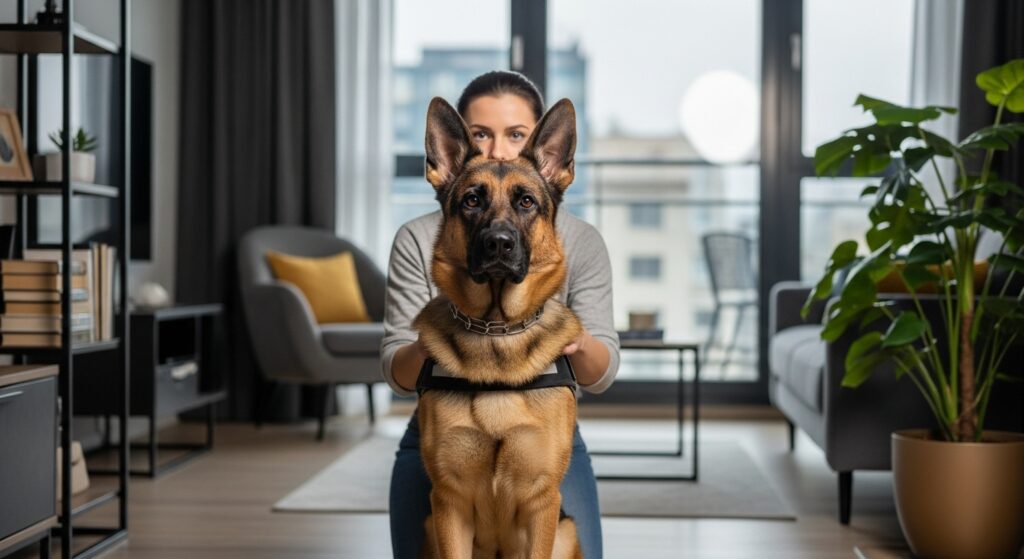
These German Shepherds were also selectively bred for livestock protection. Hence, their alertness, agility, and reflexes are sharp, and their protective instincts are well ingrained in their blood. Moreover, these instincts give these pooches that defensive edge, fearlessness, and courage to stand in the face of danger.
English Mastiff
On the other hand, these English Mastiffs portray a beautiful balance of docility and alertness. These pups are known to be peaceful yet reliable when it comes to protection. Moreover, these pups also display patience and tolerance and even showcase their nurturing, sensitive side when they interact with children.
The vocal behavior of this dog is quite surprising, as these chubby pups that were originally bred to be guard dogs barely bark. But rather than remain silent, it is also to be noted that when they do bark, the whole neighborhood might shake away from sleep. Because their bark is deep, booming, and quite resonant, just like their protective instincts and suspiciousness of strangers.
Coat Type, Shedding Level & Grooming Care
German Shepherd
Most German Shepherds have a medium-length double coat. With an outer coat that is typically dense and straight, but some may be slightly wavy. These pups have a shedding level that can only be defined as fur everywhere.
Whether you have black and tan puppies or some sable, grey, blue, or entirely black pooches, you will see their fur covering your curtains, antique furniture, and even the carpets they walk and roll on. Moreover, in periods of seasonal shedding, you’ll need a strong Dyson or Bissell vacuum to keep up with the amount of fluff in the air.
English Mastiff
Featured in the Canterbury tales and bestowed with accolades, the Mastiff breeds were used to fight battles and were honored by Julius Caesar himself due to their sheer grit, courage, and power on the battlefield.
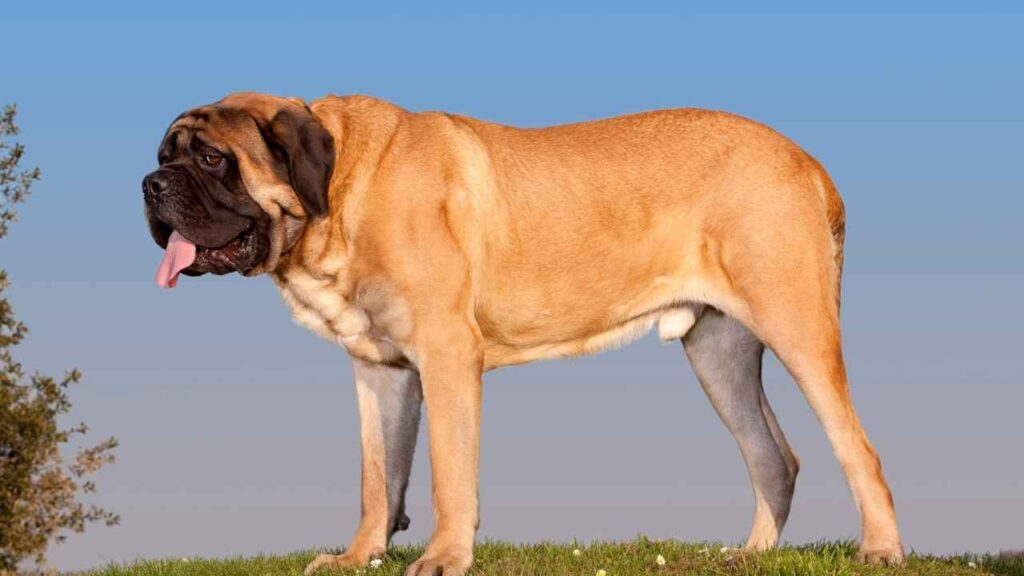
These puppies have a short, dense double coat that is easy to brush and doesn’t shed as profusely as a German Shepherd. With baths required every 4 to 6 weeks and brushing every few days with a grooming mitt or bristle brush.
Health Risks, Genetic Issues & Lifespan
German Shepherd
The German Shepherd puppy has an average lifespan of 12-14 years and is prone to quite a few health issues, so awareness is key for prospective and current pet owners.
German Shepherds are prone to both seasonal and food allergies, which can usually cause itching or a rash. With some enduring life-threatening conditions like bloat and gastric dilatation volvulus, certain cancers, including lung, bone, intestinal, and hemangiosarcoma (malignant tumors that develop in blood-rich areas like the heart or spleen).
Degenerative myelopathy that leads to paralysis of the hind legs over time. Dilated cardiomyopathy, epilepsy, and hip and elbow dysplasia. Moreover, genetic diseases like Canine Scott syndrome, hemophilia, MDR1 medication sensitivity, cone degeneration, also called day blindness, and pannus are also something you should keep an eye out for.
Knowing if your German Shepherd is a carrier or at risk for these conditions beforehand can help you and your veterinarian plan for your pup’s lifelong care.
English Mastiff
If you are a true canine enthusiast, you must already know that large-breed dogs tend to live shorter lives than small dogs.
They have an average lifespan of only 6-10 years and are prone to plenty of health issues like heart disease or dilated cardiomyopathy, progressive retinal atrophy (PRA), epilepsy, elbow and hip dysplasia, bloat and GDV, and genetic health conditions like Canine Multifocal Retinopathy 1 (CMR1).
Neurological diseases like Degenerative myelopathy are also quite common in these dogs that happen to be the descendants of Mastiff-type ancestors who hunted lions, according to The Mastiff Club of America.
Hence its better to choose a responsible breeder when adopting these pooches who provides proper purebred ancestry information and genetic testing results so you can walk into the role of pet parenting with proper knowledge.
Suitability for Families, Guarding & Home Environment
German Shepherd
German Shepherd Dogs are great companions for active families. Because even though they are devoted, affectionate, and quite loving, they command attention and love being involved in their pack’s daily activities.
Generally friendly towards children and at times overprotective of their people, these pups remain standoffish and highly skeptical of strangers.
A wonderful option for athletic owners that seeking reliable companionship and families that need a dependable security guard, these sometimes calm, sometimes turbulent like a gust of wind dogs make incredibly interesting partners in crime.
English Mastiff
Mastiffs are eager to please dogs that love attention and companionship, and are suitable for families that have a laid-back way of living life. English Mastiffs make wonderful guardians as well, and need some room and space to roam and play, like a house with a proper fenced backyard to provide them with a productive outlet when they want to wander.
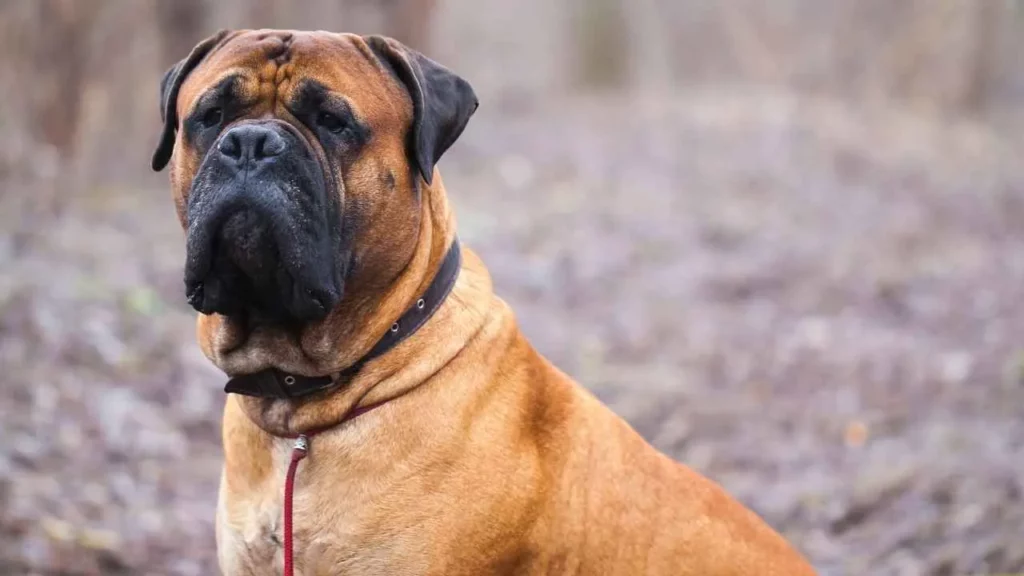
These pooches aren’t too agile or fast-paced, but that doesn’t mean they can survive in the concrete jungle without any dog parks nearby. Their large paws need soft materials underfoot, and a spot to splash like a lake or pool nearby will be a good match.
Conclusion
At the end, when it comes to wittiness, smartness, and versatility, the German Shepherd beats the English Mastiff by leaps and bounds. But if you love giant pooches and need a slightly low-maintenance, low-energy pooch, then the English Mastiff is the best choice for you.
As these puppies also prove to be quite rewarding as companions and guardians, are powerfully built and quite dashing. On one end, Mastiffs are also courageous souls with an impeccable fighting ability, but they are neither too talkative nor rampant, but rather dignified, calm, and patient.
While the German Shepherds have barks as loud as a machine gun and boundless energy, which can be quite challenging for elderly pet parents to handle. On the contrary, there are also cons to owning a droopy-jowled Mastiff that lives a short life, is too big to handle, and also drools a lot.
There are highs and lows in your future, whether you choose a German Shepherd or an English Mastiff, as both breeds have their pros and cons. Hence, evaluate your lifestyle before bringing these pooches home.
