




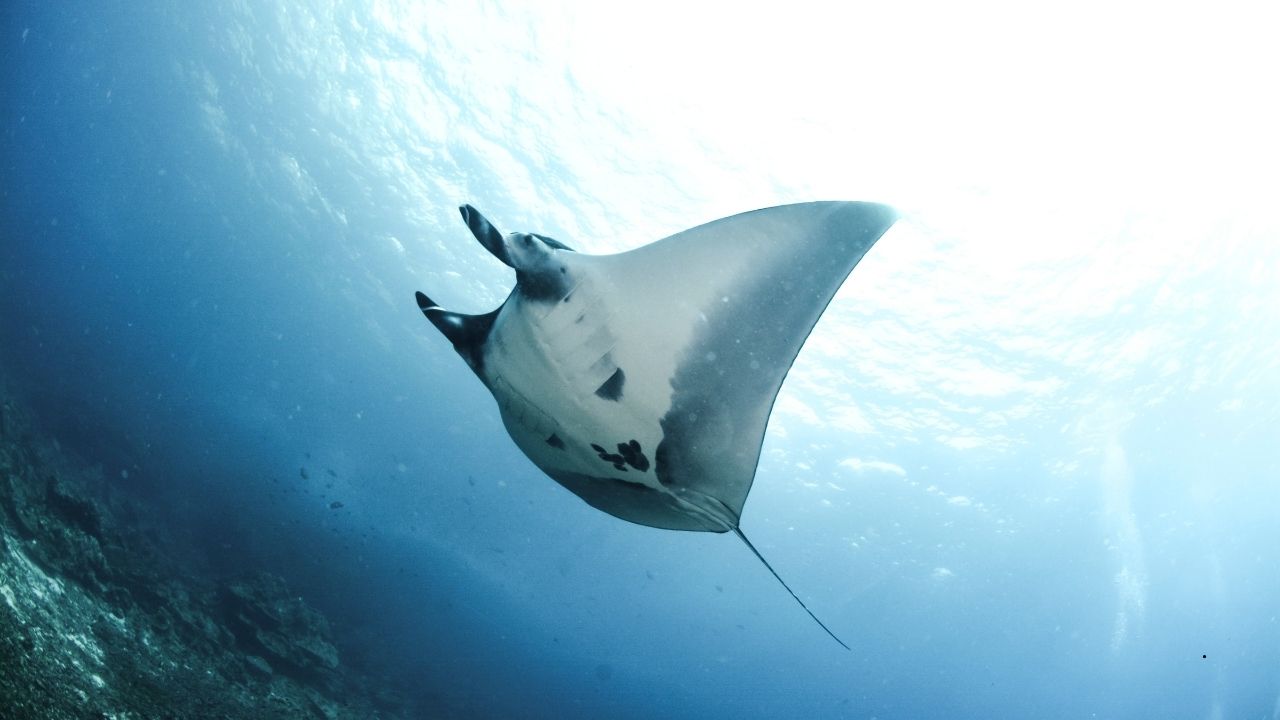
While the fish in our home aquariums give us a tiny glimpse into the aquatic world, giants lurk in the deep, both in freshwater and in the vast ocean. We’re not just talking about fish that are a little bit bigger; we’re talking about actual monster-sized fish that defy the very idea of what a fish can be.
This isn’t about your average big fish story. We’re diving deep into the realm of fish that can grow to enormous sizes, creatures so massive they seem like they belong in a legend. From ancient, armored beasts that patrolled the rivers long before us to gentle giants that glide through the ocean like living kites, these fish species are the titans of their domain.
So, let’s explore some of the most colossal fish swimming in our world’s waters today. It’s a journey that will make you appreciate the sheer scale and diversity of life beneath the surface.
Fish That Can Grow to Enormous Sizes
1. Great White Shark
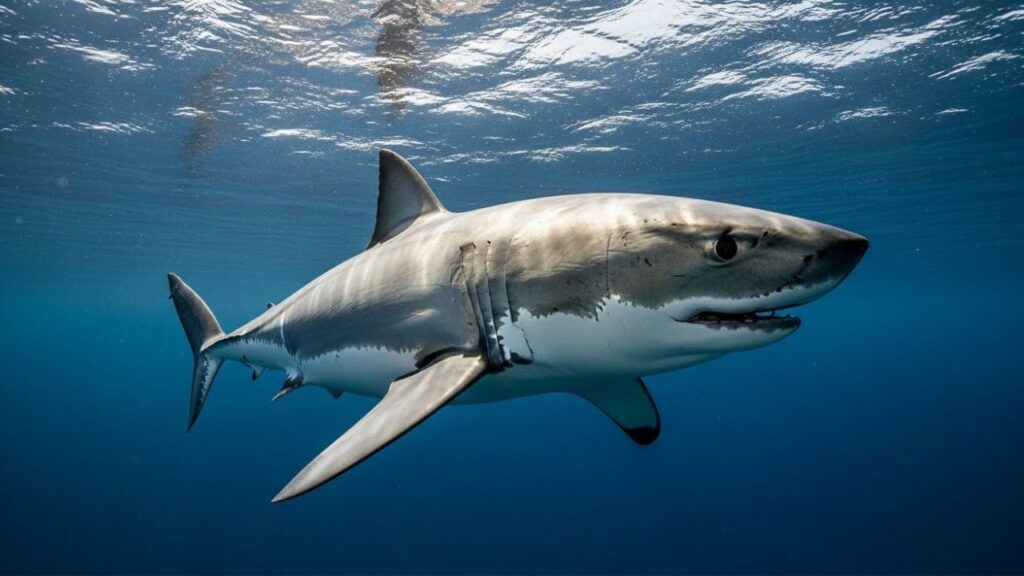
Estimated Size: Up to twenty feet in length and weighing over four thousand pounds.
When you think of a massive, toothy fish, the Great White Shark is probably the first animal that comes to mind. Thanks to Hollywood, this shark has a reputation as a mindless eating machine, but the reality is far more fascinating!
This is the world’s largest predatory fish, a true apex predator that has been perfecting its hunting skills for millions of years. Seeing one in the wild is a humbling experience, a powerful reminder of nature’s raw power. Their sheer size is hard to comprehend until you see a photo of one next to a dive cage.
The Great White is a master of its environment. With a torpedo-shaped body built for speed and power, it patrols coastal waters around the globe, from the west coast of the United States to the shores of South Africa. These sharks are not just brutes; they are intelligent and curious creatures.
So, what does a fish of this size eat? Pretty much whatever it wants! Young Great Whites start by feeding on smaller fish, rays, and other sharks. As they grow larger, their diet shifts to larger prey such as seals, sea lions, and even small whales.
They are a carnivorous species known for their iconic hunting technique—ambushing prey from below with a devastating burst of speed. Their mouth is armed with up to 300 serrated, triangular, sharp teeth arranged in two rows, which are constantly replaced throughout their lives.
2. Beluga Sturgeon
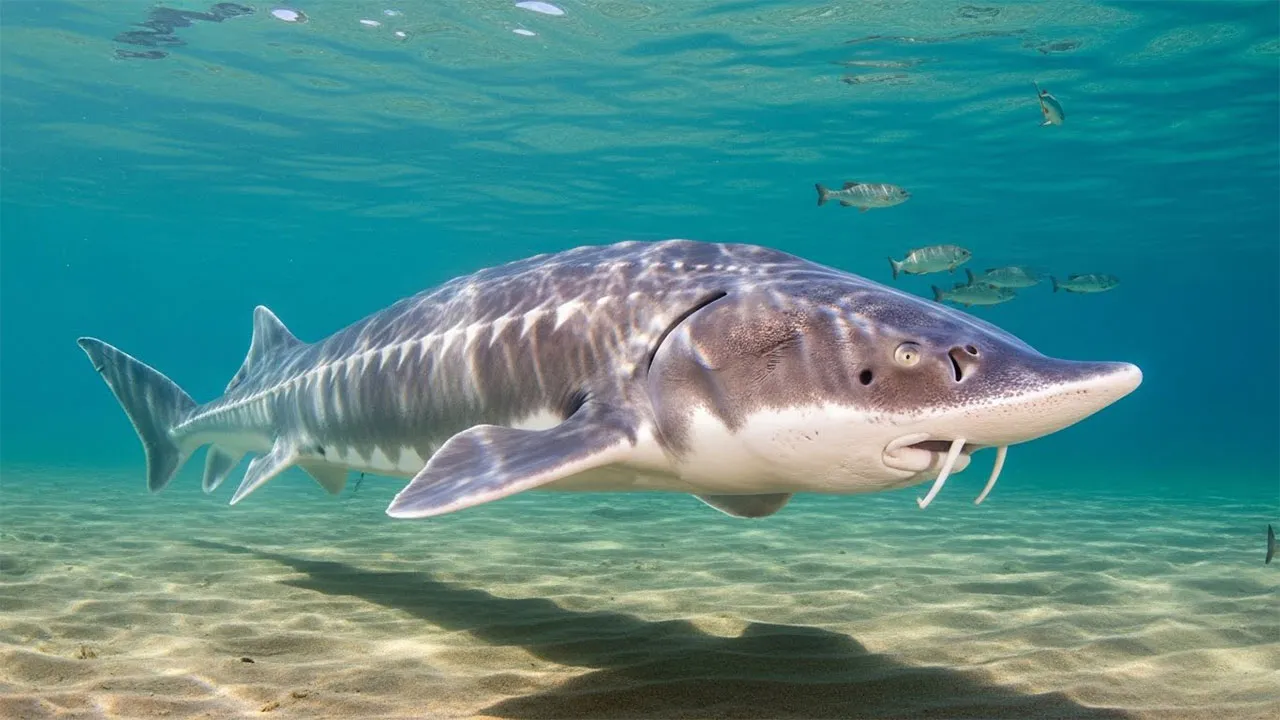
Estimated Size: Can exceed twenty-four feet in length and weigh over three thousand five hundred pounds.
Let’s move from the saltwater ocean to the freshwater rivers of Eurasia to meet a living dinosaur: the Beluga Sturgeon.
No, not the whale!
This is a fish, and it holds the title of being one of the largest freshwater fish in the world. These ancient fish have been around for about two hundred million years, which means their ancestors were swimming when dinosaurs roamed the Earth!
Native to the Caspian and Black Sea basins, this hardy species spends most of its life in saltwater but migrates up freshwater rivers to spawn. Imagine a fish the size of a small bus swimming up a river! Their appearance is just as prehistoric as their lineage.
They lack the typical scales of other fish; instead, their bodies are covered in five rows of bony plates called scutes, like a suit of armored scales. This, combined with their large, vacuum-like mouth and whisker-like barbels, gives them an otherworldly look.
The Beluga Sturgeon is not a picky eater. It cruises along the riverbed and seabed, using its sensitive barbels to detect food. Once it finds a meal, it extends its tube-like mouth and sucks it in.
Their diet consists mainly of other fish, but large specimens have been known to eat waterfowl and even baby seals. They are opportunistic feeders, and their large size means they need a lot of food to survive.
3. Giant Manta Ray
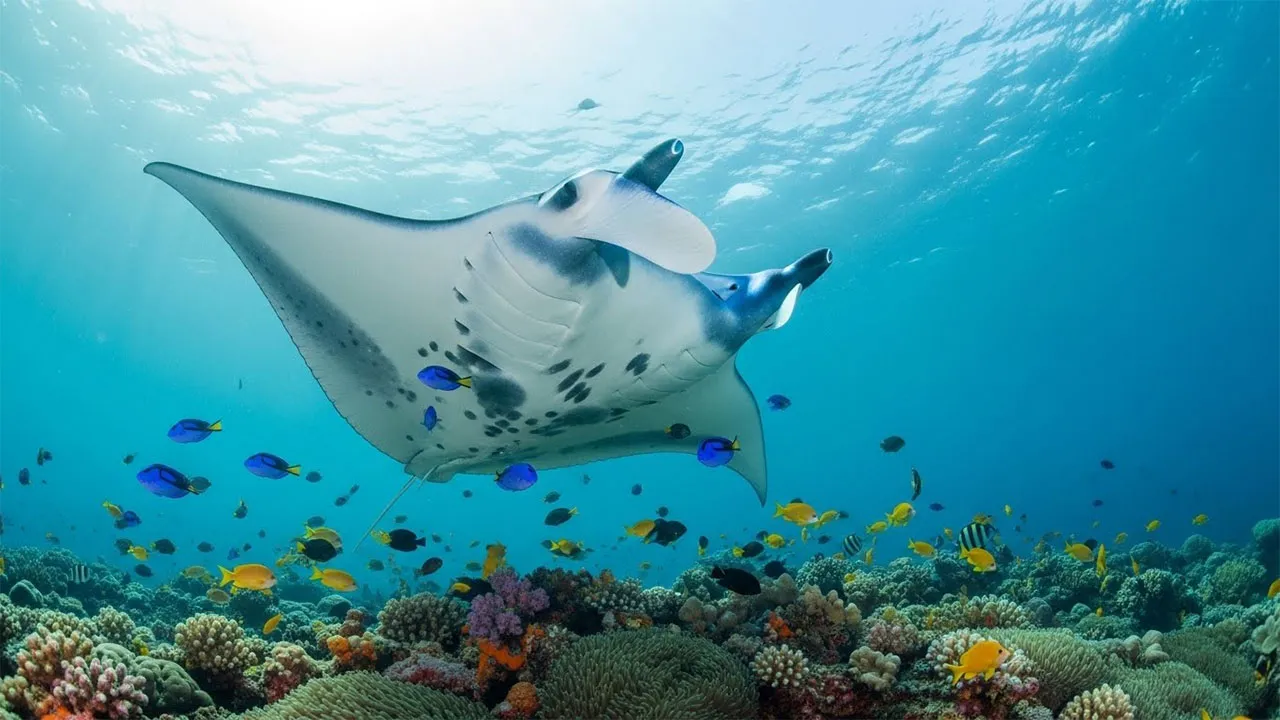
Estimated Size: A wingspan of up to twenty-nine feet.
If the Great White is the king of power, the Giant Manta Ray is the queen of grace. This is one of the most majestic and intelligent fish in the sea.
Watching a Manta Ray “fly” through the water with slow, deliberate flaps of its massive pectoral fins is like watching a ballet. They aren’t just large; they are enormous, with a “wingspan” wider than a delivery truck.
Oceana mentions that these gentle giants are found in tropical and subtropical waters worldwide. Unlike their stingray cousins, they don’t have a sharp barb on their tail for defense. Instead, their primary defense is their incredible size and speed.
They are filter feeders, meaning their huge mouth is designed not for biting, but for gulping down massive amounts of water filled with tiny zooplankton, their primary food source. They use special lobes on their heads, called cephalic fins, to funnel plankton-rich water into their mouths as they swim. This feeding process is a spectacle to behold.
Manta Rays are also believed to be one of the smartest fish in the ocean. They have the most significant brain-to-body size ratio of any cold-blooded fish and have been observed exhibiting complex social behaviors.
4. Mekong Giant Catfish
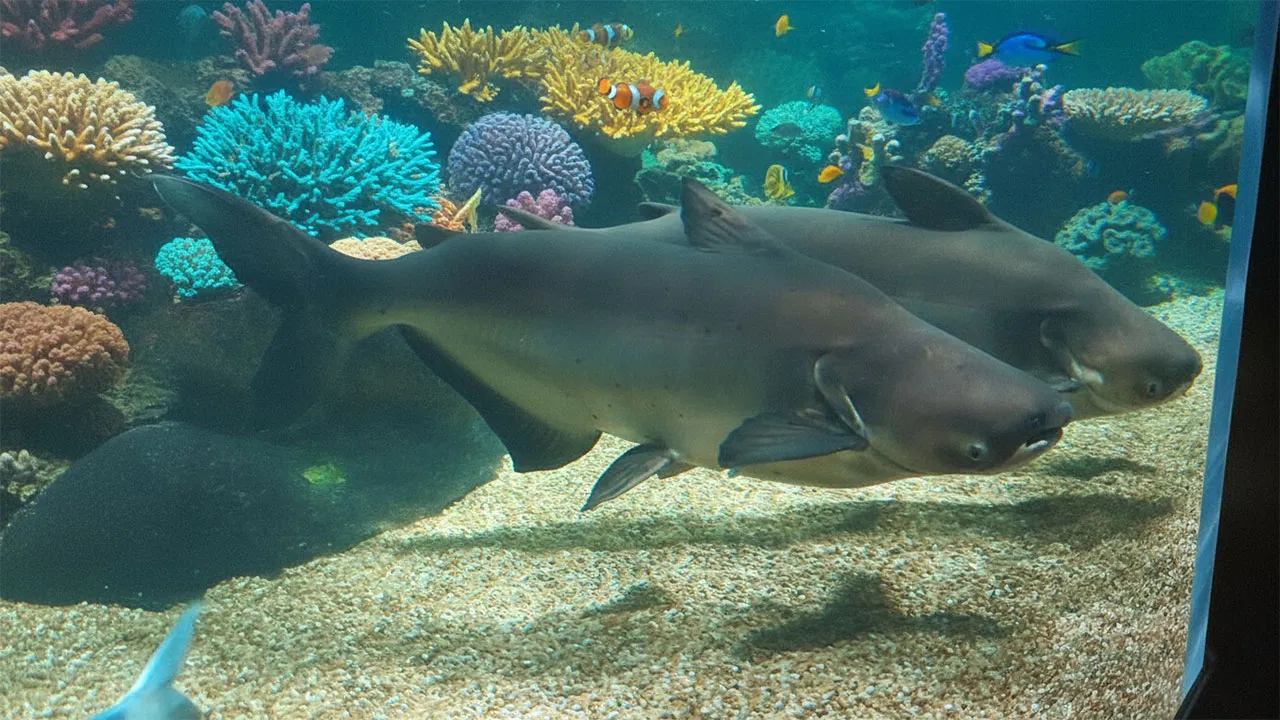
Estimated Size: Up to ten feet in length and six hundred fifty pounds.
Welcome to Southeast Asia, home to a true river monster: the Mekong Giant Catfish, or Pangasianodon gigas. This behemoth is a strong contender for the title of the world’s largest freshwater fish and is a legend in its native region.
When you picture a catfish, you might think of the Blue Catfish or Wels Catfish, but this particular catfish species is in a league of its own. Finding one of this size is an angler’s dream, but today it’s increasingly rare.
This is a similar threat faced by other famous migratory giants, such as the king salmon, whose spawning journeys are often halted by man-made barriers.
Not one of the very common species, this remarkable fish is found exclusively in the Mekong River basin. What makes this giant particularly interesting is its diet.
They start life as cannibals, eating their siblings, but after their first year, they lose their teeth and switch to a plant-based diet. This dietary shift is unique among such large catfish. It’s often confused in the aquarium trade with the much smaller Red Tail catfish, but this giant belongs in a massive river, not a tank.
The life of a Mekong Giant Catfish is a race to get big. They are among the fastest-growing fish in the world, capable of reaching over 400 pounds in just 6 years.
Sadly, the story of the Mekong Giant Catfish is tragic. It is listed as critically endangered. The construction of dams along the Mekong River has fragmented its habitat and blocked its migration routes, while overfishing has decimated its population. The current record for the largest specimen caught is a symbol of what the river is losing.
5. Alligator Gar
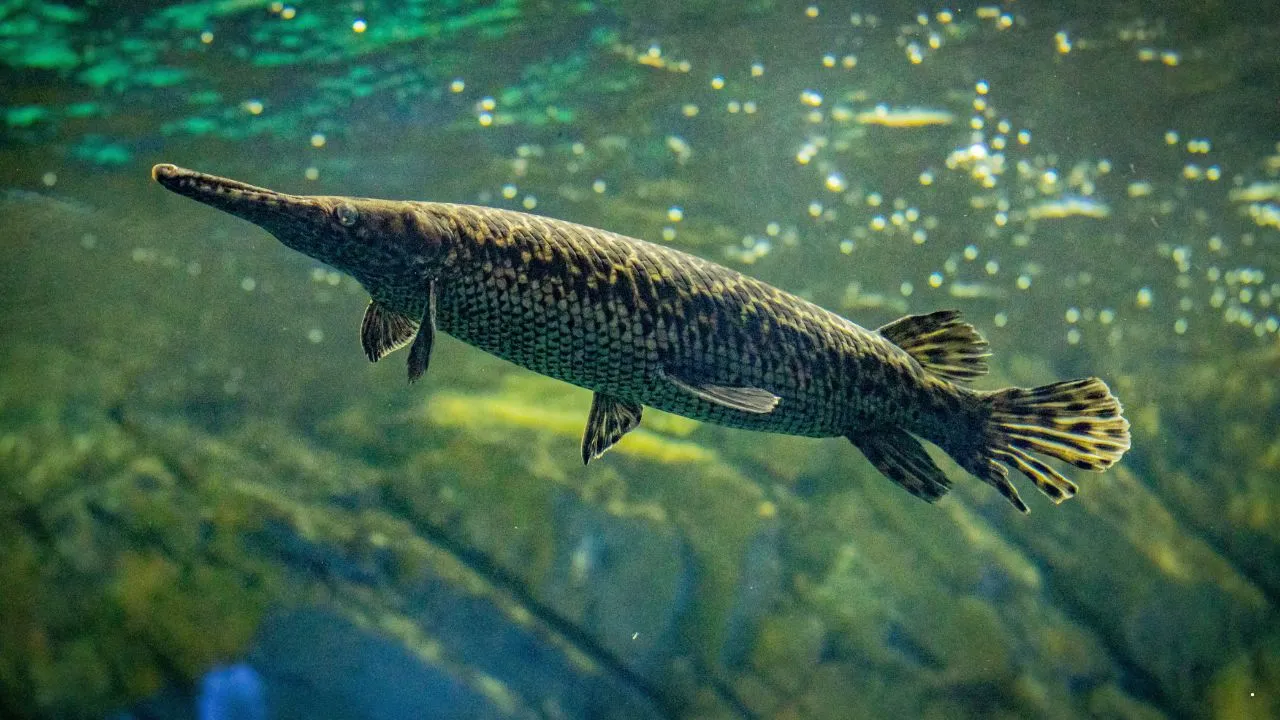
Estimated Size: Can reach up to ten feet in length and weigh over three hundred pounds.
Let’s travel to the rivers and lakes of North America to meet a fish that looks like it swam right out of the Cretaceous period.
The Alligator Gar, Atractosteus spatula, is a living fossil, a primitive freshwater fish that has been around for over one hundred million years. Its name comes from its long, broad snout and two rows of large, sharp teeth, which give it a distinctly reptilian look. This is one fish you wouldn’t want to bump into while swimming accidentally!
The Alligator Gar is built like a tank. Its long, cylindrical body is covered in diamond-shaped, interlocking ganoid scales that are as hard as enamel. These armored scales provided such adequate protection that Native Americans used them as arrowheads.
This native species is incredibly resilient and can even survive in poor water conditions by gulping air from the surface, thanks to a specialized swim bladder that functions like a lung. They inhabit slow-moving rivers, lakes, and even brackish estuaries across the southern United States.
6. Giant Freshwater Stingray
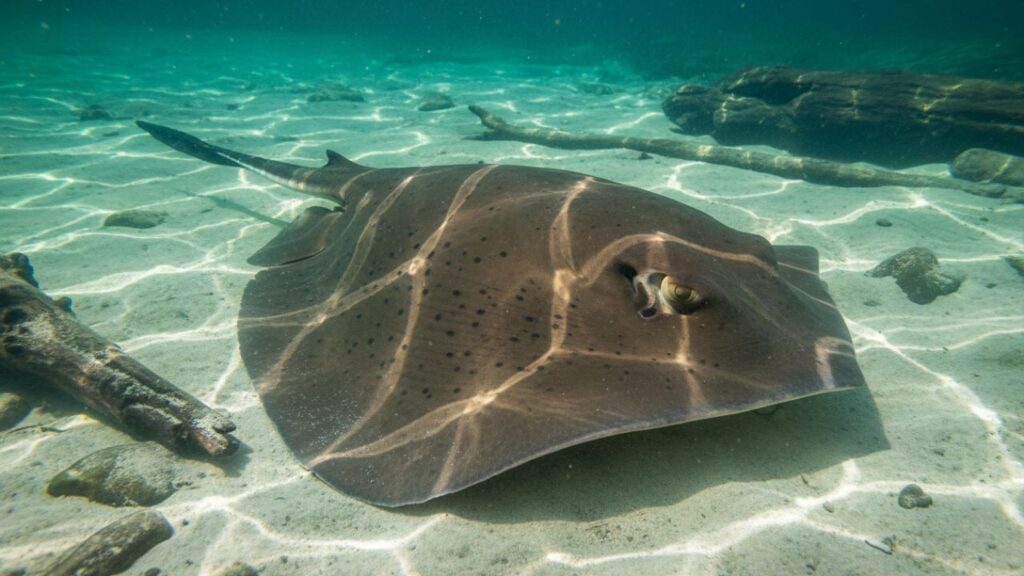
Estimated Size: Can reach a disc width of over six feet and a total length of sixteen feet.
Deep in the rivers of Southeast Asia and northern Australia lurks a creature of incredible proportions: the Giant Freshwater Stingray.
It isn’t your average beachside stingray; this is a colossal, pancake-shaped animal that can weigh over one thousand pounds, making it one of the largest freshwater fish on the planet. They are so elusive and live in such deep, murky water that they remain one of the least-understood giant fish species.
These stingrays spend their days buried in the sand or mud at the bottom of large rivers, making them incredibly difficult to spot. They use a special sense called electroreception to find their prey, which consists of invertebrates, crustaceans, and small fish hidden in the riverbed.
They can detect the faint electrical pulses emitted by their prey’s muscles and then use their powerful, disc-like bodies to pin the meal down before consuming it.
National Geographic says the most famous feature of any stingray is, of course, its tail. The Giant Freshwater Stingray is armed with a single, serrated barb that can be up to fifteen inches long. This barb, coated in a toxic venom, is purely a defensive weapon.
7. Atlantic Goliath Grouper
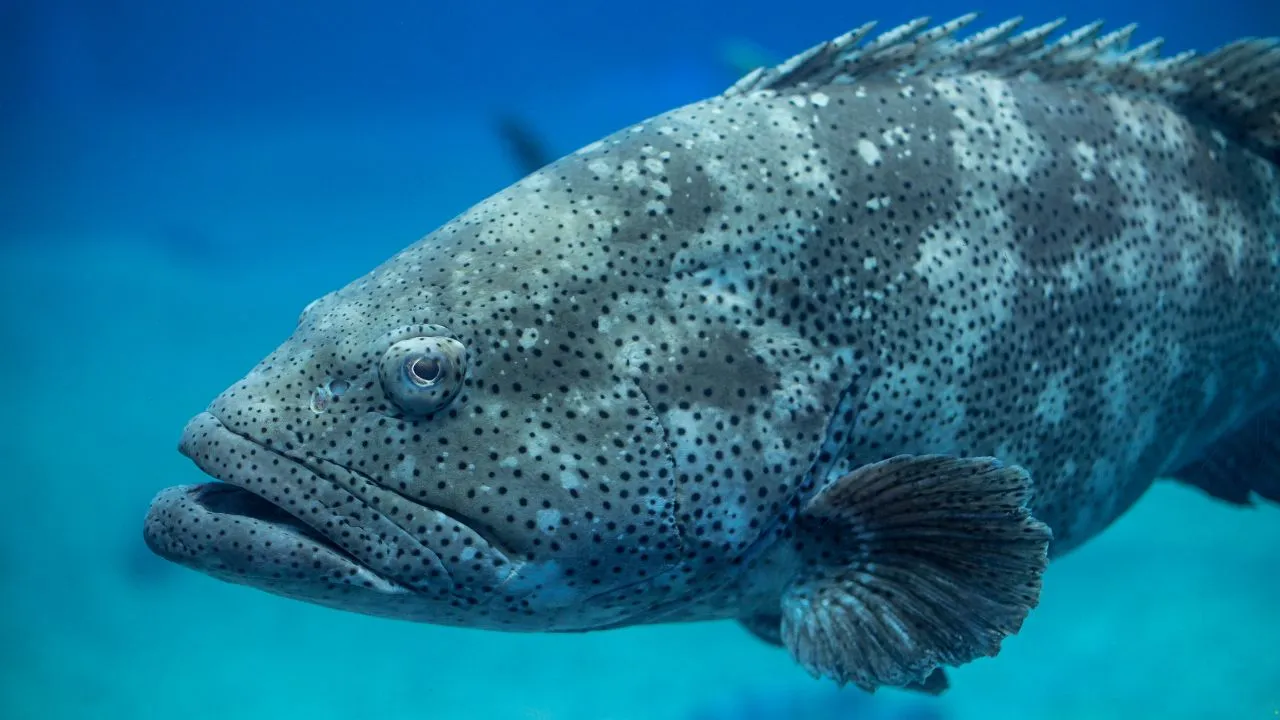
Estimated Size: Up to eight feet long and eight hundred pounds.
Imagine you’re scuba diving around a shipwreck, and a fish the size of a small car emerges from the shadows. You’ve just met the Atlantic Goliath Grouper. This massive saltwater fish is the most prominent member of the sea bass family in the Atlantic Ocean and is an awe-inspiring sight.
Compared to other species, they are known for their curious, sometimes grumpy faces, with a huge mouth and small, beady eyes. This is a large fish that commands respect.
Goliath Groupers are typically found in shallow tropical waters, preferring to hang out around rocky reefs, shipwrecks, and ledges. These structures provide perfect hiding spots from which to ambush their prey. They are not fast swimmers over long distances; instead, they rely on short, powerful bursts of speed.
This large species was once a common sight in the waters of Florida and the Caribbean, but it was fished to the brink of extinction. Their slow growth, late maturity, and tendency to aggregate in large groups for spawning made them an easy target for anglers.
Conclusion
From the toothy grin of a Great White Shark to the gentle glide of a Manta Ray and the prehistoric form of an Alligator Gar, the world’s waters are home to some truly awe-inspiring giants. These fish, which can grow to enormous sizes, are more than just biological curiosities; they are vital parts of their ecosystems, often sitting at the very top of the food chain.
The stories of these big fish are often intertwined with our own. We are fascinated by their power, mystified by their size, and, unfortunately, usually responsible for their decline. The plights of the Beluga Sturgeon and the Mekong Giant Catfish serve as powerful warnings about the consequences of overfishing and habitat destruction.
