




When you think of a pet’s lifespan, you might picture a loyal dog living for a decade or two, or perhaps a cat gracefully reaching its late teens. When it comes to aquarium pets, many people think of guppies or bettas, whose time with us is often measured in just a few years. But what if we told you that some of the oldest living animals on Earth are fish? It’s true!
We’re not just talking about that surprisingly resilient goldfish you won at a fair. While a common goldfish, when correctly cared for, can indeed live for decades, and its elegant cousin, the koi fish, can live even longer, they are just the tip of the iceberg.
Many popular species for home aquariums, such as the intelligent oscar fish and the charming clown loach, can live for over 15 years with proper care. Even other popular pets like the angelfish, discus fish, or a feisty firemouth cichlid can live for a good long while. But the creatures we’re about to explore make those lifespans look like a brief holiday.
We are diving deep into the world of fish that live not just for years, but for multiple decades, and in some cases, for centuries. These are the faithful elders of the aquatic world, ancient beings that challenge our very understanding of aging and life itself.
Get ready to meet some incredible fish that can live for decades.
Fish That Can Live for Decades
1. Greenland Shark
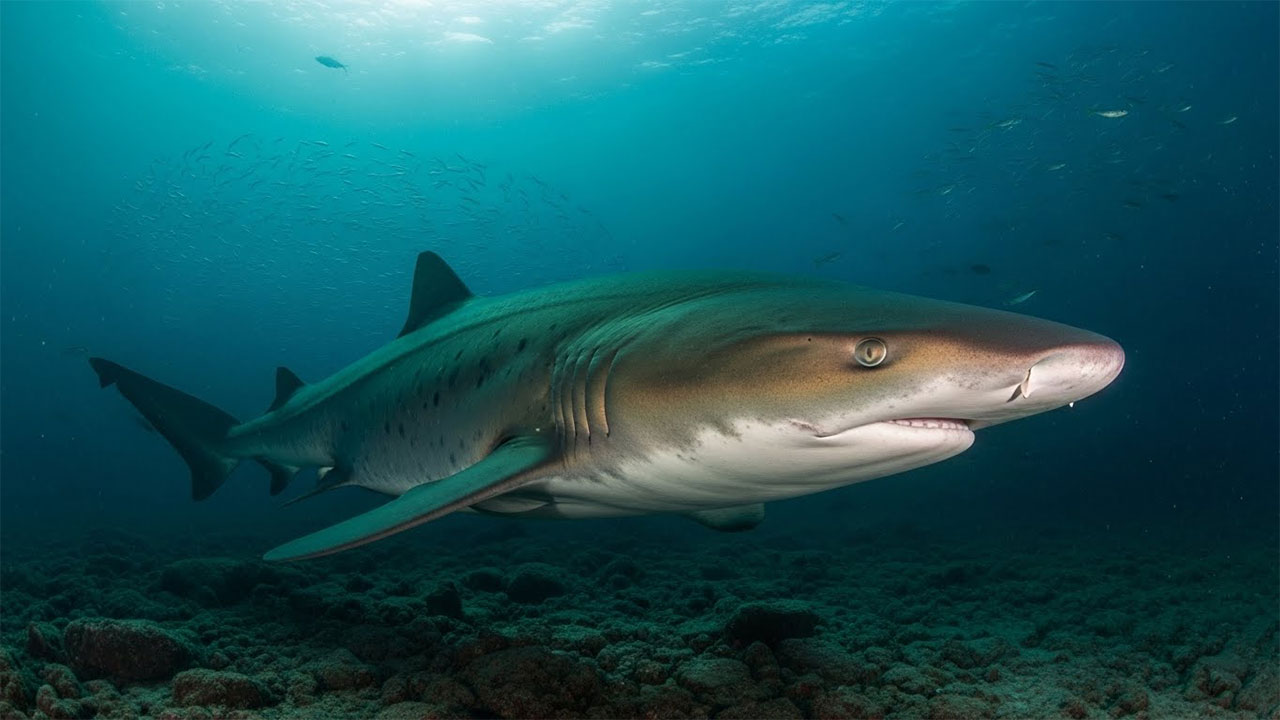
If there were a contest for the oldest vertebrate in the world, the Greenland shark would take home the gold, silver, and bronze.
This enigmatic creature drifts silently through the frigid, dark waters of the North Atlantic and Arctic Oceans, a living relic from a time long past. Growing up to twenty-four feet long, it is one of the largest carnivorous sharks on the planet.
Its appearance is almost ghostly, with a stout body, rounded snout, and smooth skin that lacks the prominent dorsal fin many of us associate with sharks. They are the ultimate survivors, perfectly adapted to an extreme-cold, high-pressure habitat.
The secret to their incredible longevity is a life lived in super slow motion. Scientists have used radiocarbon dating on the eye lenses of these animals to determine their age, and the results are staggering. The oldest known Greenland shark was estimated to be at least 272 years old, possibly as old as 512 years.
That means there could be sharks alive today that were born before the United States was even a country! Their metabolism is incredibly slow to cope with the freezing water, and they grow at a glacial pace of less than half an inch per year. This slow life is the key to their remarkable age.
2. Orange Roughy
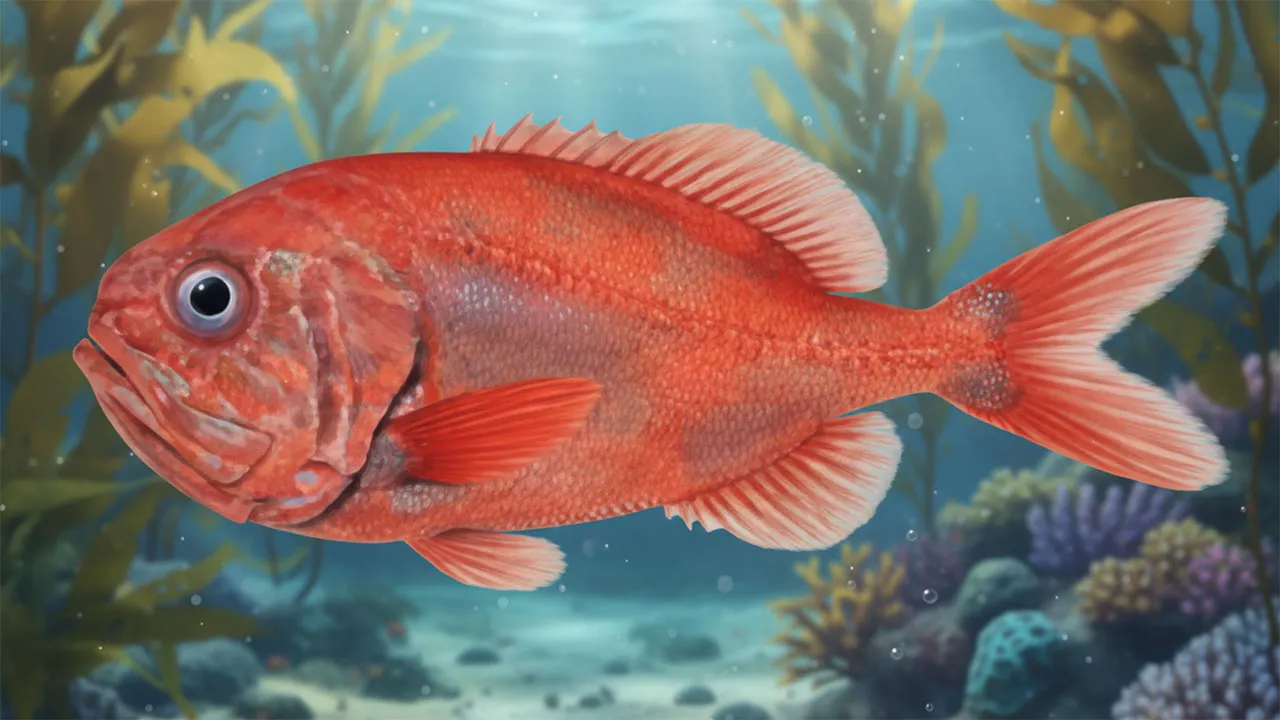
This species became a culinary superstar in the nineteen eighties, famous for its mild, white flesh that made it a popular choice on menus around the world.
Found in the deep, cold waters of the Atlantic, Pacific, and Indian Oceans, this fish lives at depths where sunlight is a distant memory, often congregating around underwater mountains called seamounts.
The Orange Roughy is another member of the century club, and it’s a prime example of a fish that can stay alive for decades. Smithsonian Ocean says its long lifespan is a direct result of its extreme habitat. In the cold, stable environment of the deep sea, life moves at a crawl.
Scientists determine their age by examining their otoliths, or ear stones, which form growth rings much like a tree. These rings have revealed that Orange Roughy can live to be well over 150 years old, with some estimates pushing their maximum age closer to 200 years. This incredible longevity is a survival strategy in an environment where food can be scarce.
For a fish with such a long life, their lifestyle is one of patience. They grow very slowly and mature late, often not reproducing until they are over 30 years old. This life history strategy works perfectly in a stable, predator-scarce environment, but it becomes a critical weakness when humans enter the picture.
3. Rougheye Rockfish
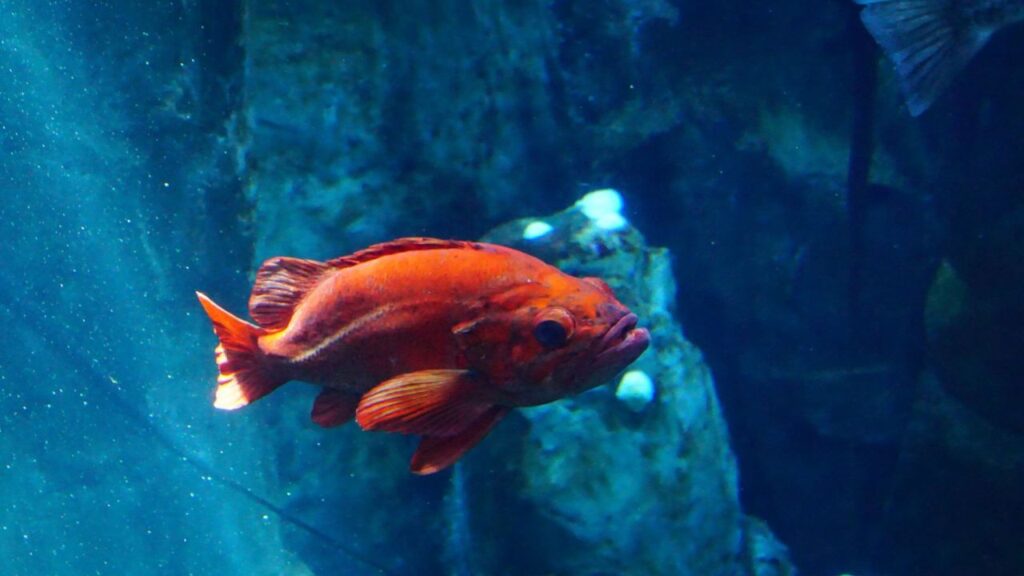
In the calm, deep waters of the North Pacific, from Japan to California, lives a family of fish known as rockfish, or the Sebastes genus. Among this diverse group, the Rougheye Rockfish stands out as one of the oldest.
Named for the small, sharp spines below its large eyes, this fish is a bottom-dwelling predator, perfectly camouflaged in shades of red and orange to blend into its rocky surroundings. They are a classic example of a species where a long lifespan is a defining characteristic.
The Rougheye Rockfish is a true Methuselah, with a documented lifespan of over two hundred years. One individual caught off the coast of Alaska was estimated to be 205 years old, meaning it was swimming in the Pacific Ocean during the presidency of Thomas Jefferson. Like other deep-water fish, its longevity is tied to the cold, stable environment it calls home.
Life for a Rougheye Rockfish is a patient affair. They spend their days near the seafloor, often at depths of over two thousand feet. Unlike many other fish that lay eggs, rockfish have internal fertilization and give birth to tiny, live larvae.
A large, old female Rougheye is incredibly important to the population, as she can produce millions of young over her long life. This reproductive strategy helps ensure that at least some of her offspring survive the perils of the open ocean and settle on the seafloor, beginning their own long journey.
4. Lake Sturgeon
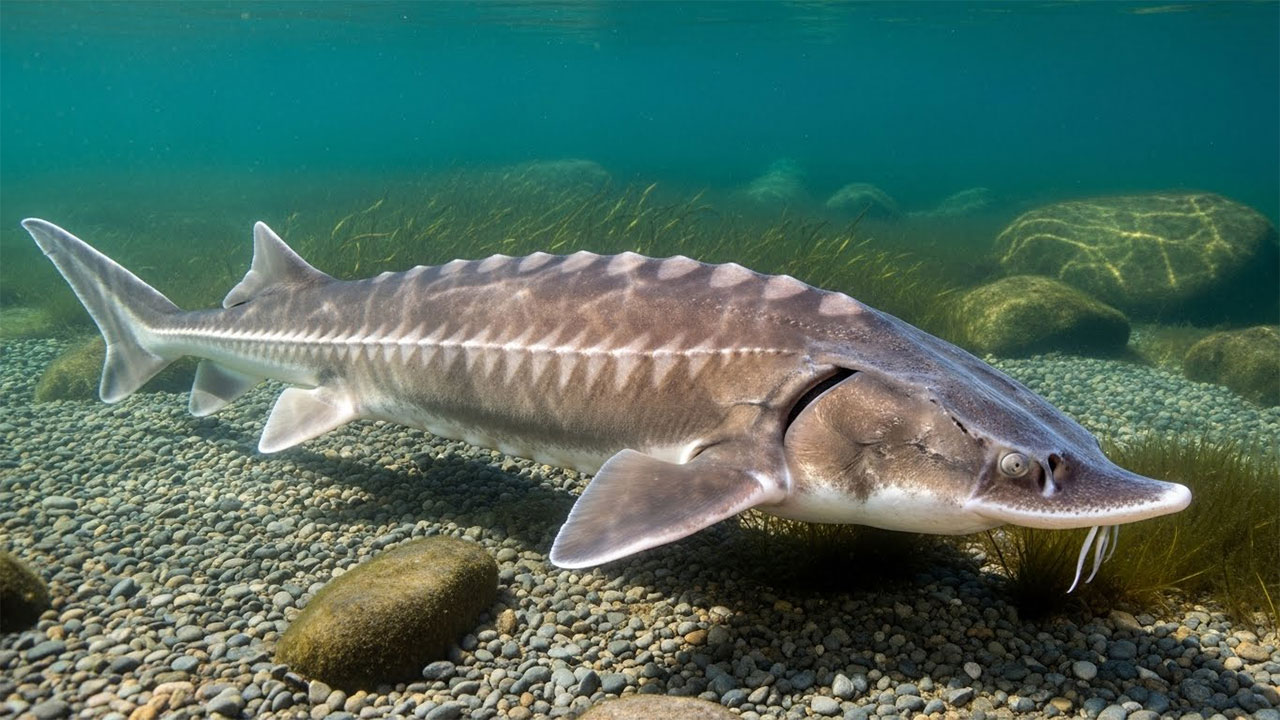
Moving from the salty depths to the great freshwater rivers and lakes of North America, we meet a living dinosaur: the Lake Sturgeon. This magnificent fish looks like it swam right out of the prehistoric past, with a torpedo-shaped body, a shark-like tail, and five rows of bony plates, called scutes, instead of scales.
Using sensitive, whisker-like barbels that would make any catfish jealous, it navigates the murky bottoms of its habitat. This native species is not a type of catfish, but it is one of the most ancient and impressive freshwater fish in the world.
The Lake Sturgeon is a freshwater giant with a lifespan to match its size. These incredible animals can live for well over a century, with the oldest recorded female reaching an astonishing 152 years of age. They grow very slowly in the cool freshwater of their native range.
Their longevity is comparable to that of another long-lived freshwater species, the bigmouth buffalo. The bigmouth buffalo has been found to live for over 110 years, proving that extreme age isn’t just for ocean dwellers. For both the sturgeon and the bigmouth buffalo, a slow-paced life is the key to reaching such a great age.
A sturgeon’s life is a journey through time. They are bottom-feeders, using their protrusible, vacuum-like mouths to suck up insects, crayfish, and other small creatures from the riverbed. They don’t reach spawning age until they are fifteen to twenty-five years old, and even then, they may only spawn once every four or five years.
5. Common Carp
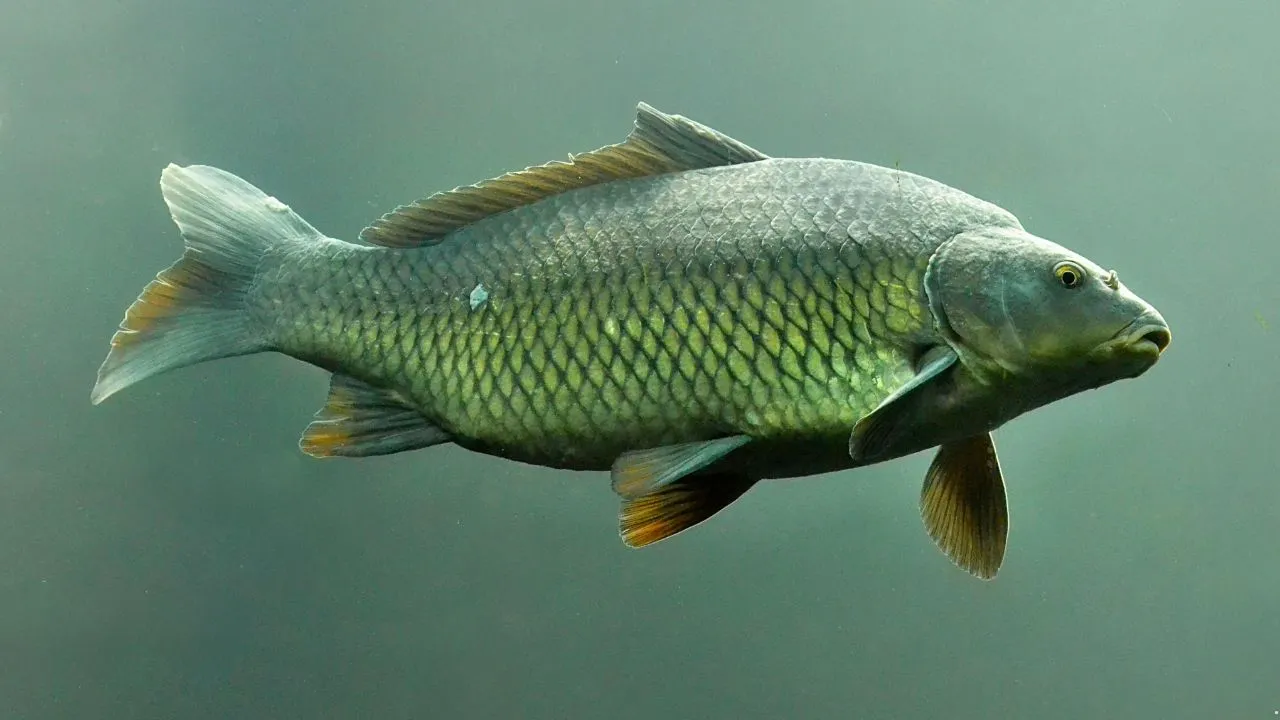
The Common Carp is one of the most widespread freshwater fish in the world. Often found in ponds, lakes, and slow-moving rivers, it’s a hardy and adaptable species.
To many anglers and ecologists, especially in North America, where it can be invasive, it’s seen as a bit of a pest. But this humble fish and its more celebrated cousin, the koi fish, hold a remarkable secret: the potential for a very long life. The common carp itself can live for several decades in the wild.
The true stars of longevity in the carp family are the domesticated koi. These “living jewels” are a type of common carp selectively bred for their beautiful colors and patterns, especially in Japan. While a wild carp might live for twenty to thirty years, a well-cared-for koi can live for fifty years or more.
For koi and even the common goldfish, achieving a long lifespan is heavily dependent on the care provided by fish owners. These are popular pets, but they require more than a small bowl to thrive. A long life for these fish requires a large pond or a massive aquarium with excellent filtration to keep the water clean.
A proper diet, ample space to grow, and a stress-free environment are all critical. When these conditions are met, these fish can become cherished family pets, sometimes being passed down through generations. The health and longevity of these pets are a direct reflection of the care they receive in their tanks and ponds.
6. Alligator Gar
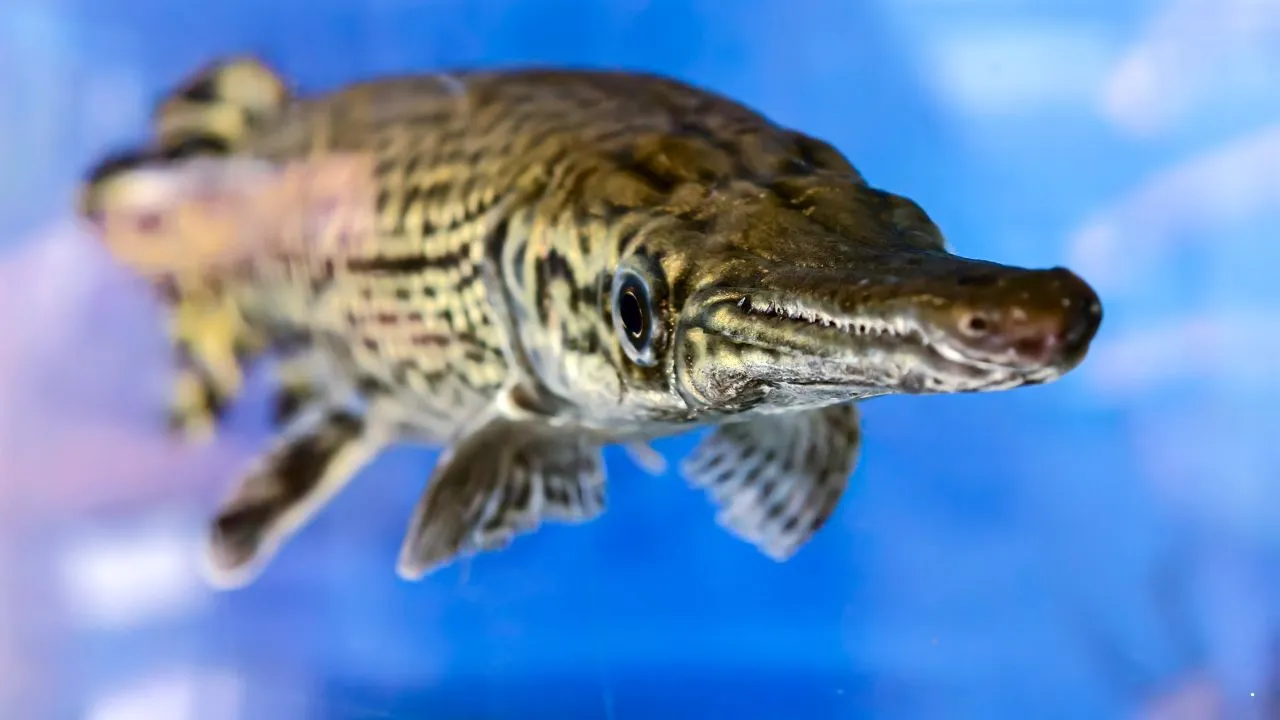
Lurking in the slow-moving rivers and backwaters of the southern United States is a fish that looks like a visitor from the Cretaceous period. The Alligator Gar is a true river monster, with a long, broad snout filled with two rows of sharp teeth, resembling an alligator.
Its body is covered in hard, diamond-shaped, enamel-like scales called ganoid scales, which once served as arrowheads for Native Americans. The National Geographic is not a type of catfish, but a member of an ancient lineage of fish, a primitive species that has been patrolling our freshwater for millions of years.
These prehistoric predators are among the longest-living freshwater fish in North America. While not reaching the multi-century lifespans of the Greenland Shark, they are certainly a fish that can live for decades.
The Alligator Gar has a unique adaptation that contributes to its success: it can breathe air. It has a specialized swim bladder that functions much like a lung, allowing it to gulp air from the surface. This ability lets it survive in warm, stagnant, low-oxygen water where most other fish, including many catfish, would perish.
For many years, the Alligator Gar was misunderstood and persecuted. It was labeled a “trash fish” by many and was blamed for eating popular game fish, leading to efforts to eradicate it from many waterways.
7. Pacific Rockfish
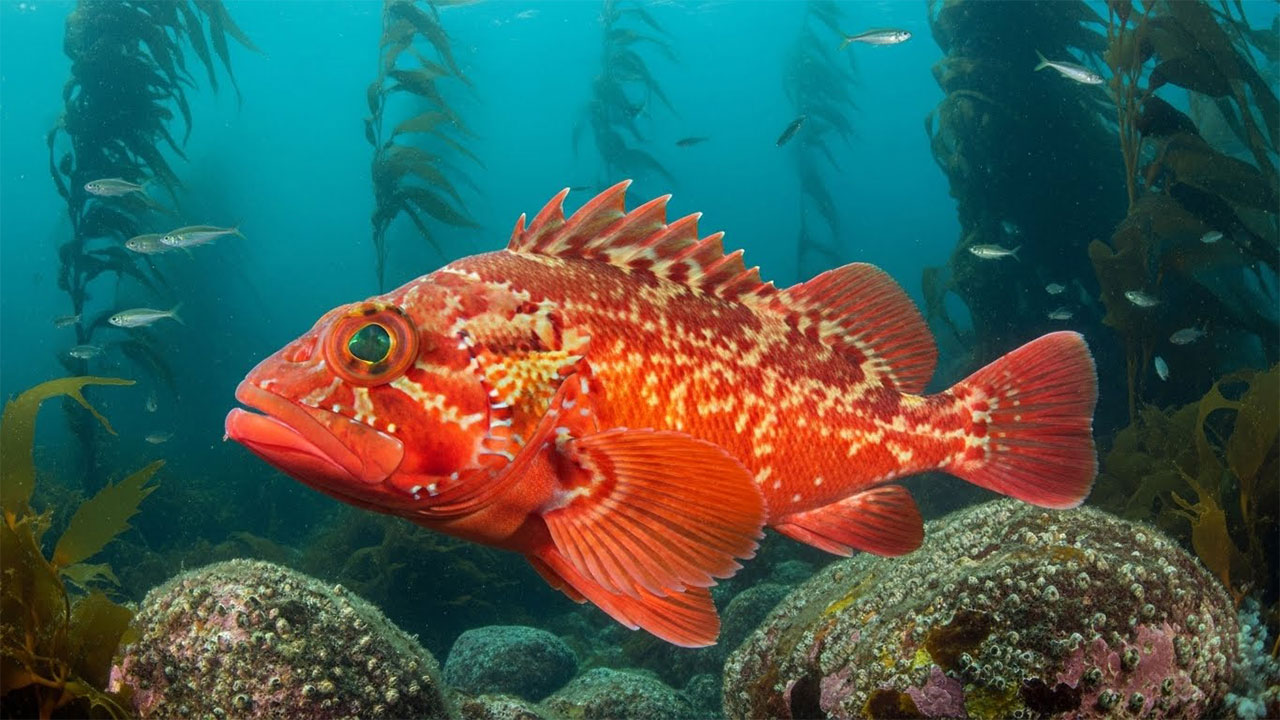
The Pacific Ocean is home to an incredibly diverse group of over 100 fish species known as Pacific Rockfish, belonging to the genus Sebastes. These species come in a dazzling array of colors, shapes, and sizes, from the small and vibrant to the large and formidable.
Many of these fish species share a remarkable trait: an exceptionally long lifespan. They are a perfect example of how an entire group of related animals has adapted to a life of longevity in the deep, cold waters of the Pacific.
Many members of this group live very long lives. The Rougheye can live for more than two hundred years, but it’s not alone. The Shortraker Rockfish can live for over one hundred and fifty years, and the Yelloweye Rockfish can live for well over a century. Dozens of other Pacific Rockfish species regularly live for fifty to one hundred years.
Most of these long-lived rockfish species thrive in deep water along the continental shelf. Life is slow here. Food is less abundant, temperatures are low and stable, and growth is sluggish. This is the perfect recipe for a long life. Like the Rougheye, many of these species give birth to live young, and the oldest, largest females are the most important reproductively.
A single, hundred-year-old female can produce more healthy offspring than dozens of younger fish combined, making her survival critical for the population.
Conclusion
From the five-hundred-year-old Greenland Shark navigating the arctic abyss to the one-hundred-fifty-year-old Lake Sturgeon patrolling our freshwater rivers, or a creature in your freshwater aquarium, the aquatic world is filled with creatures whose lifespans defy belief.
We’ve seen that the secrets to a long life in the fish world often involve a slow metabolism, a cold and stable habitat, and a patient journey to maturity. These fish that live for decades, and even centuries, are more than just biological curiosities; they are a sign of the incredible resilience and diversity of life on our planet.
To protect these species is to protect a living heritage that has existed for far longer than any of us has been alive.
