




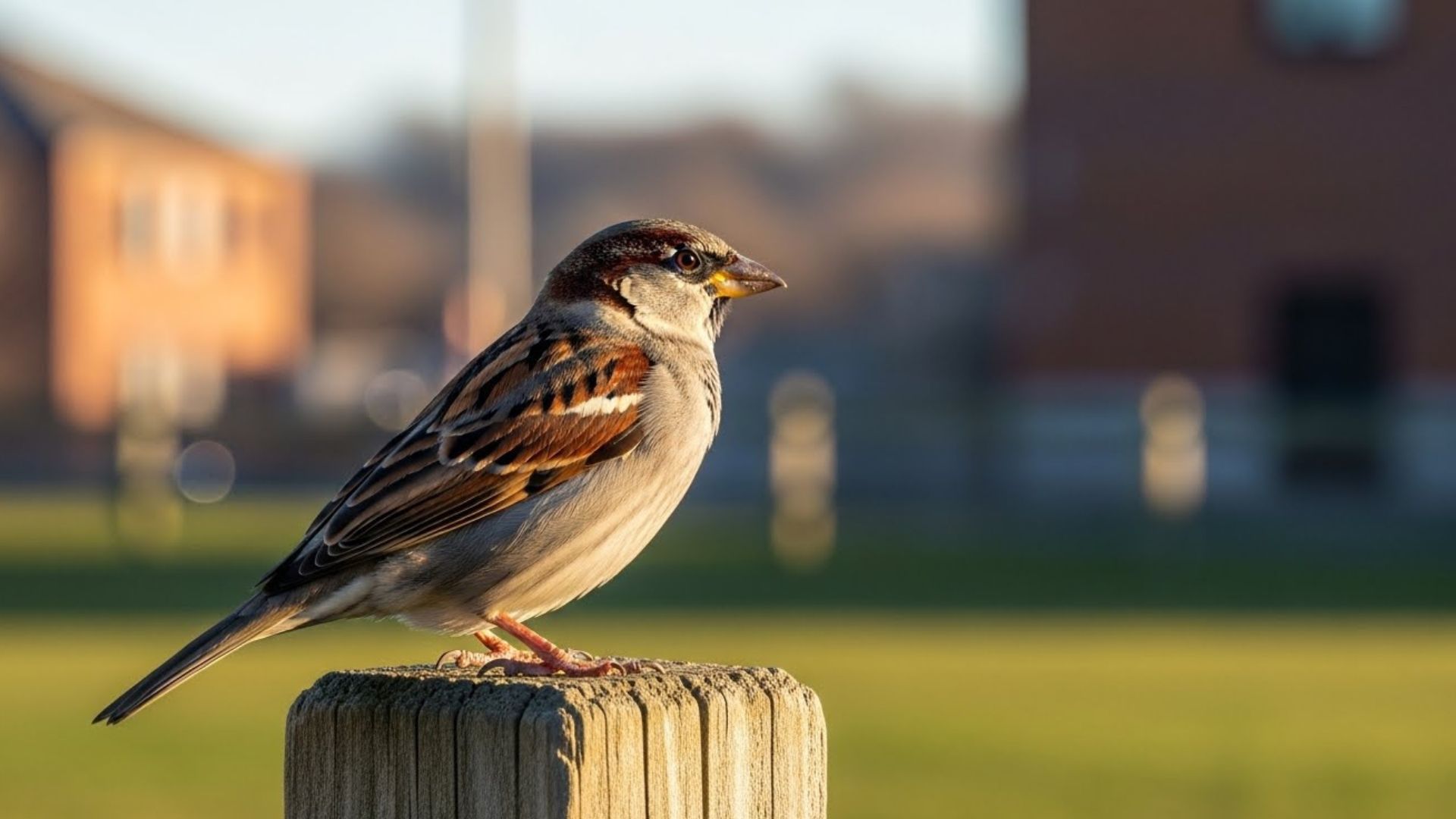
Birds are among the most adaptable animals on the planet, with nearly 10,000 species spread across every continent and almost every habitat on Earth. From frozen regions to tropical zones, birds have learned to survive in places that seem completely different from one another.
A key reason for this success is habitat flexibility. While many birds prefer specific environments, some can use multiple habitats to meet their needs for food, shelter, and breeding.
Did you know that forests alone support approximately 78% of all bird species? Yet, birds are also commonly found in wetlands, grasslands, deserts, and even in busy cities.
A bird’s habitat often reflects how it lives, feeds, and avoids danger. Some rely on water-rich areas, others thrive in open landscapes, and many now share spaces shaped by humans.
As habitats continue to change due to urban growth and environmental shifts, birds that can live in diverse habitats play an important role in maintaining ecological balance.
Key Takeaways
See how House Sparrows, Mallards, and Barn Swallows thrive in wildly different habitats.
Uncover cool facts about Pigeons, American Crows, and Starlings living close to us.
Meet the European Robin and other birds that brighten gardens and forests.
Find out why adaptability is the secret to birds’ survival everywhere.
Birds That Can Live in Diverse Habitats
1. House Sparrow
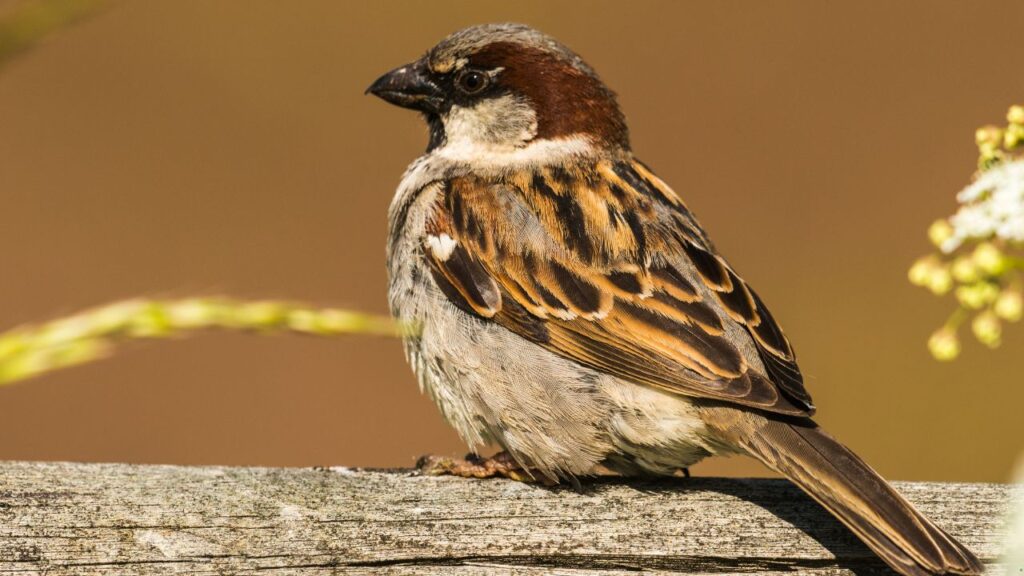
The House Sparrow is one of the most familiar birds in towns, parks, and gardens. It was brought to America from Europe to control insect pests, but instead, it became a pest itself. Today, it lives closely alongside humans and is found almost everywhere there are buildings.
Along with two other introduced birds, it is now one of the most common birds around homes. Its ability to survive on human waste and adapt to busy environments clearly shows why it fits perfectly under birds that can live in diverse habitats.
How to recognize it:
Males have chestnut-brown upperparts, a gray crown, black eye line and bill, and whitish-gray cheeks.
The throat and upper breast are black, while the underparts are grayish tan.
Females are mostly tan, with darker reddish-brown wings, a pale eyebrow, and a yellowish bill.
A single white wing bar may be seen, though it is often faint in females.
The song is a repeated, slurred chireep or chirip, and the call sounds harsh.
House Sparrows are noisy, social birds found around the world. They thrive in cities, villages, farms, and anywhere people live. However, despite their success, their numbers have dropped sharply in some places.
In the UK, the population fell by 71% between 1977 and 2008, affecting both urban and rural areas. Numbers are still declining in England, though recent increases are seen in Scotland, Wales, and Northern Ireland.
Even so, this species has a very large range and population. Because the decline is not rapid enough to meet risk thresholds, it is currently listed as Least Concern.
2. Pigeon
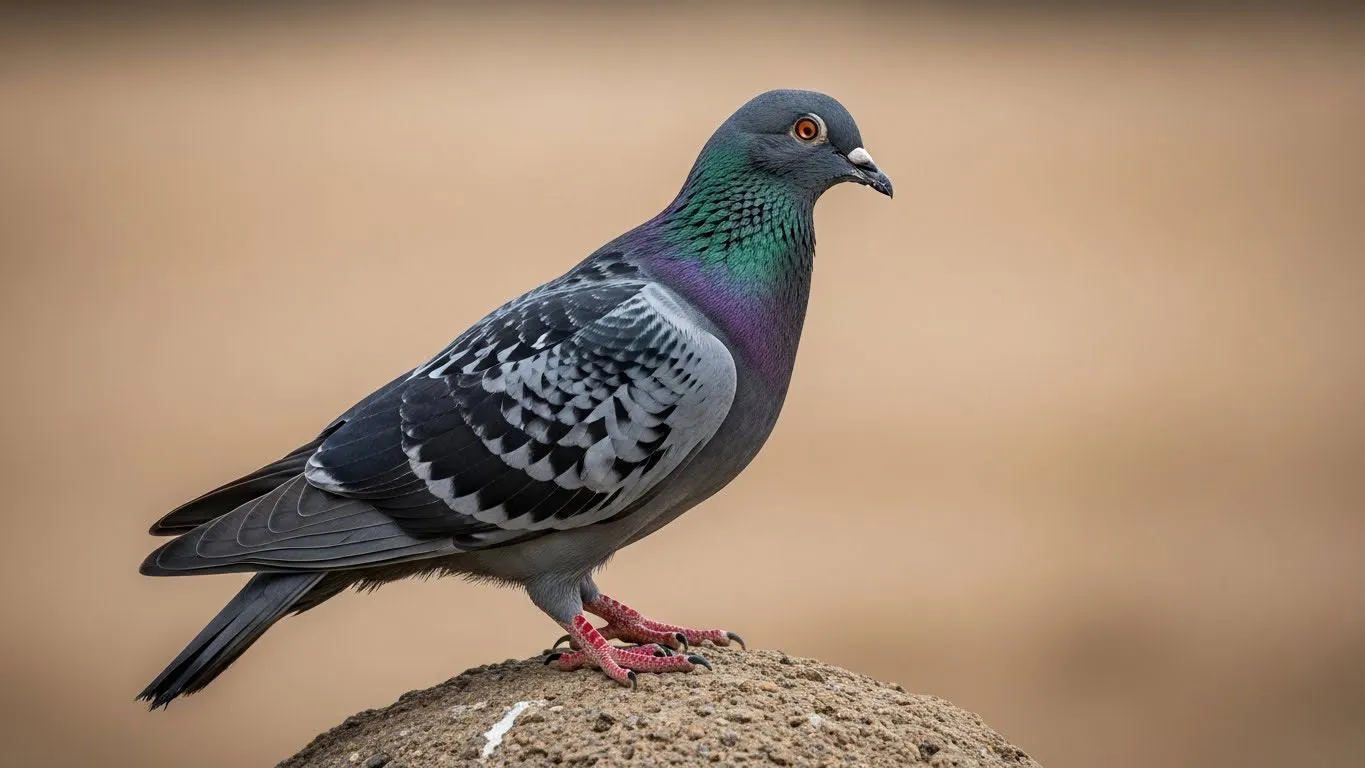
Pigeons are one of the most successful and adaptable birds in the world. Many of the pigeons seen in cities across the United States are feral rock doves, descended from birds brought from Europe in the early 1600s. These birds quickly spread after some escaped into the wild.
While pigeons naturally nest on cliffs and in caves, they easily adjusted to human spaces. Building ledges now serve as perfect substitutes, helping pigeons thrive in both natural and urban habitats.
Key facts about pigeons:
Pigeons belong to the family Columbidae, which includes several hundred species.
Smaller members are called doves, while larger ones are known as pigeons.
The white domestic pigeon is famously recognized as the “dove of peace.”
Their long history with humans explains their strong presence in towns and cities worldwide.
Pigeons have compact bodies, short legs, small heads, and strong wings built for long, sustained flight. Rock pigeons often show gray wings with dark bands and iridescent green and purple feathers around the neck, along with orange-red eyes.
However, their appearance can vary widely. Domesticated pigeons display hundreds of color patterns, ranging from pure white to speckled or bronze.
As noted by naturalists, all these forms are believed to descend from the rock pigeon, highlighting how one species adapted to countless habitats across the globe.
3. American Crow
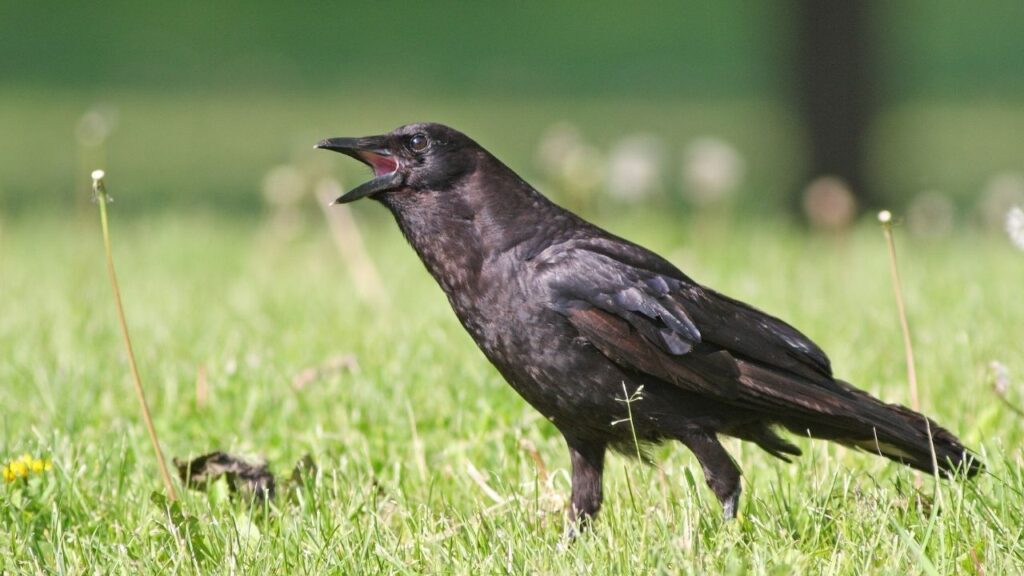
The American Crow (Corvus brachyrhynchos) is a large, intelligent bird from the crow family. It is easily recognized by its all-black feathers with a glossy, iridescent sheen. This bird is a common sight across much of North America.
It adapts well to change and is now found in farmlands, beaches, open woods, roadsides, and busy town centers. Its loud, hoarse caw is one of the most familiar bird sounds on the continent.
Why American Crows thrive in many habitats:
They feed mostly on the ground and eat almost anything.
Their diet includes earthworms, insects, seeds, fruit, garbage, carrion, and even chicks taken from nests.
They are often seen in treetops, open fields, and near human activity.
Their flight is steady and methodical, with strong flapping and few glides.
According to Live Science, American Crows are known for their high intelligence and social behavior. Their success in living alongside humans clearly reflects this trait. Even after past efforts to control their numbers, they are now more common than ever.
Outside the nesting season, they are highly sociable and gather in large communal roosts during winter. These roosts can include thousands, or even tens of thousands, of birds in one area.
Reports of sudden “invasions,” such as those seen near industrial sites, often result from these seasonal gatherings. A closely related species, the fish crow, lives farther south and is spreading its range, but it is best identified by its distinct, nasal call rather than appearance.
4. Common Starling
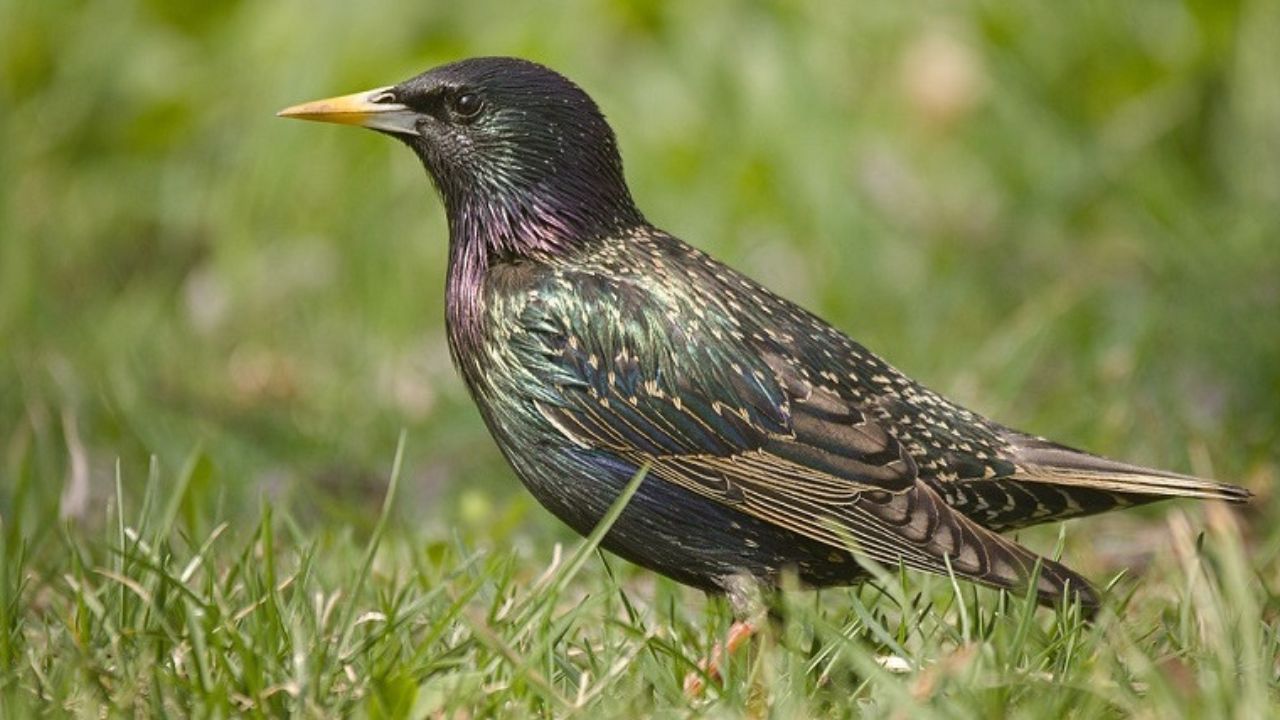
The Common Starling is one of the most adaptable birds in the world. Originally from Europe and Asia, it was introduced to many regions for insect control.
Today, it is found across North America, South Africa, Argentina, Polynesia, New Zealand, and eastern Australia. In Argentina, it continues to spread at a rate of 22 km per year.
What makes starlings easy to spot:
Feathers shine with purple and green tones, but look black from a distance.
White spots cover the body in autumn but fade with wear.
Bills and legs change from dark to yellow during the breeding season.
Young birds appear dull grey-brown.
Males are glossier than females, though both look similar.
Starlings thrive in open country, pastures, gardens, towns, and cities. They form large, noisy flocks and roost together at traditional sites. Each day, these flocks spread out to feed in urban areas and farmland.
Their calls are loud and varied, including squeaks, rasps, whistles, trills, and screams. They often mimic other birds and are known for a falling whee-ee call, as mentioned by Audubon.
Due to their rapid spread and strong adaptability, the Common Starling is considered one of the most invasive bird pests worldwide, yet it remains one of the most familiar garden birds wherever it settles.
5. European Robin
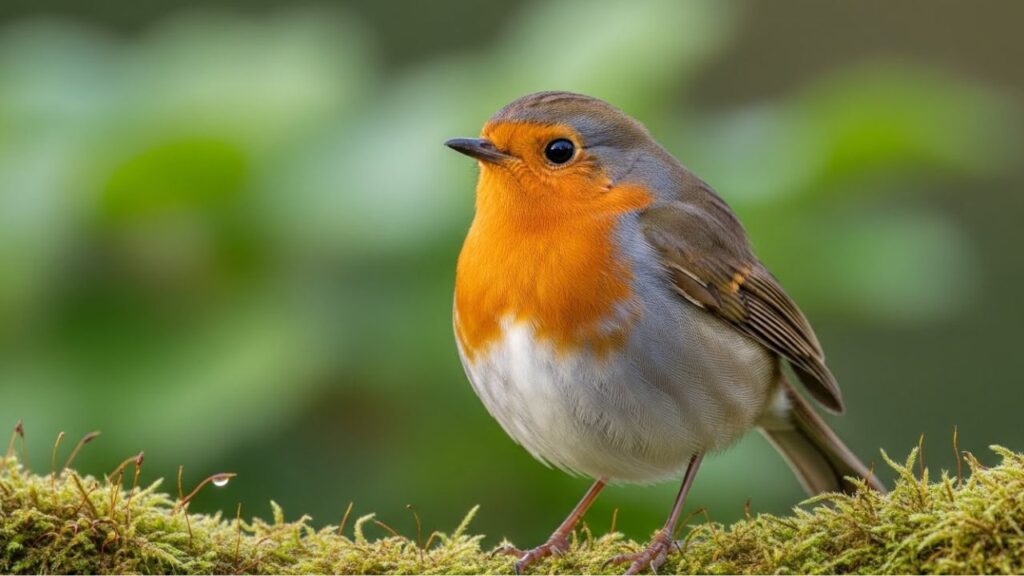
The European Robin is one of the most loved birds in the United Kingdom and Ireland. It is strongly linked with Christmas and often appears on holiday cards and decorations. Large numbers are seen in the UK during October, when birds arrive from northern regions.
These seasonal movements can create “falls,” where robins seem to appear everywhere. They are commonly spotted daily in gardens, wetlands, and nature reserves, often showing little fear of people.
Where European Robins live and feed:
Found in forests, damp woodlands, gardens, hedges, farmland, and heathland.
Often stays close to cover and low vegetation.
Eats seeds and berries in winter.
Feeds on insects, worms, and other ground-dwelling invertebrates in summer.
Frequently follows gardeners to catch exposed prey.
European Robins have a bright orange face and breast, though this can be hidden when they turn away. Juveniles look very different, with pale buffy spotting instead of orange.
Despite their friendly image, robins are highly territorial and defend their space aggressively. They hop on the ground, flick their wings, and cock their tails while feeding. Their song is high-pitched and varied, with warbles, trills, and soft rambling notes.
With a large range, a growing population, and strong adaptability to many habitats, the European Robin is listed as Least Concern, making it a clear example of a bird that thrives across diverse environments.
6. Mallard Duck
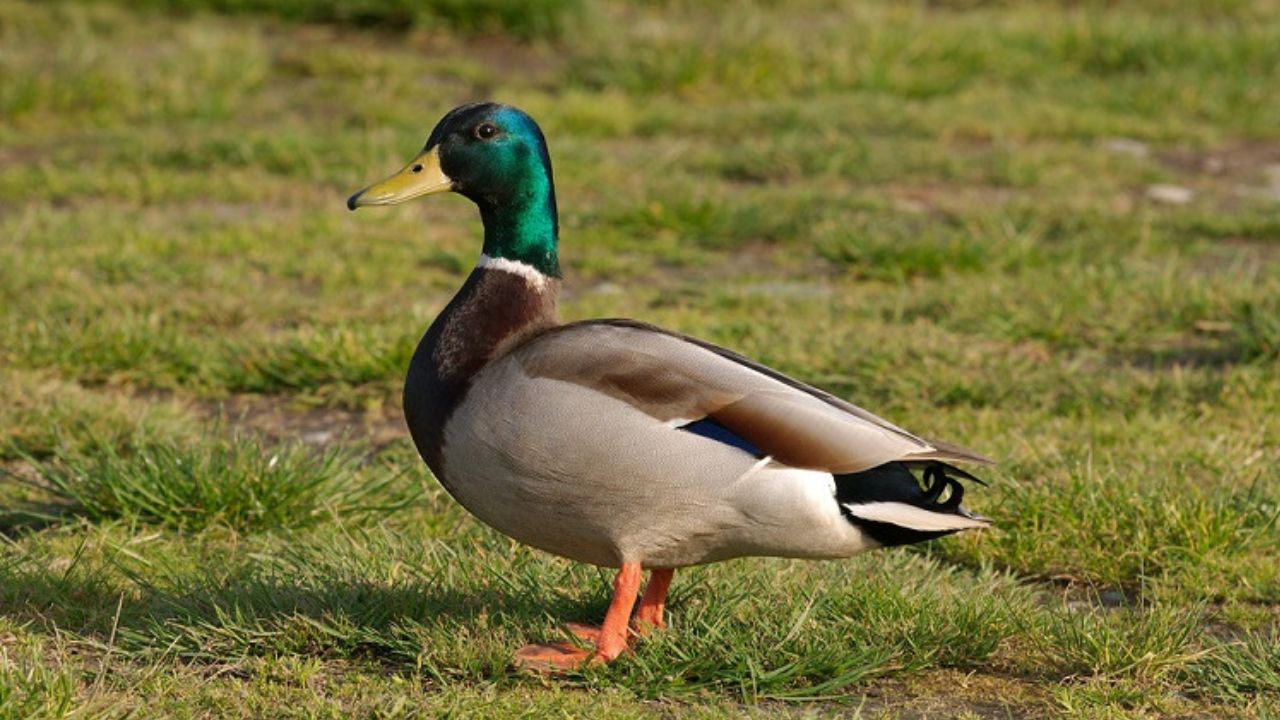
The Mallard is one of the most familiar and widespread ducks in the world. It is often called a “greenhead” because of the male’s dark, iridescent green head. The male also has a yellow bill, orange legs, a chestnut breast, and a gray body with a black rump.
Females and juveniles look very different. They are mottled brown and have dull orange bills with dark markings. This clear difference helps mallards adapt and blend into many environments.
Where Mallards thrive:
Found anywhere with water, including wetlands, lakes, creeks, and rivers.
Common in city parks and even backyard ponds.
Often seen in flocks and mixed with other duck species.
Known to hybridize with related ducks where ranges overlap.
Mallards are highly adaptable and comfortable around people. They are found across both towns and countryside and are thought to be the most abundant and wide-ranging duck on Earth.
Their wings show a blue-violet patch bordered by white bars, which helps with identification. Mallards are dabbling ducks and feed in shallow water. While they are often fed by people, bread is not healthy for them.
They do better on foods like sweetcorn, lettuce, oats, and seeds. Their ability to live in natural wetlands and human-made spaces makes the mallard a perfect example of a bird that thrives in diverse habitats.
7. Barn Swallow
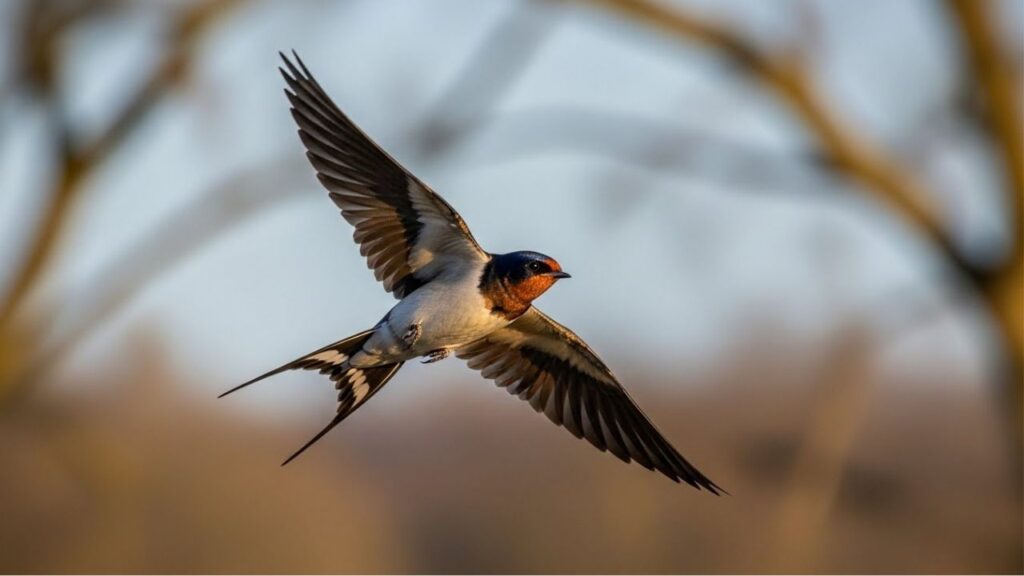
The Barn Swallow is the most widely distributed swallow and a strong example of a bird that lives in diverse habitats. It has bluish-black upperparts, a blue crown and nape, and a rich orange forehead and throat.
The underparts range from buff to cinnamon in color. Its long, pointed wings and deeply forked tail make it easy to recognize. Males are brighter than females and appear more colorful in flight.
How to identify and hear it:
Long, deeply forked tail with white spots visible during flight.
Iridescent navy-blue back with a dark rump.
Orange throat and forehead with a narrow blue-black chest band.
Call sounds include sharp kit-kit and scratchy svit-svit.
Song is a long, twittering chatter with rough notes mixed in.
Barn Swallows live in open habitats such as fields and wetlands and are often seen feeding in flocks. They nest close to people and build mud cup nests in barns, cowsheds, or under docks. Maine Audubon states that each nest requires 750–1400 mud pellets, gathered over long distances.
For centuries, this bird has lived near humans and is seen as a sign of spring and good luck. Some individuals return from wintering areas as early as mid-March, though larger numbers arrive by mid-April.
Due to certain risks, the species is listed as Special Concern in Ontario, meaning it may face future threats despite still living widely in the wild.
Conclusion
Bird life is full of fun and fascinating adaptations that help different birds survive in unique ways. From bird beaks shaped for specific tasks to webbed feet made for swimming and hooked beaks designed to hunt, these traits reflect incredible bird diversity.
Some birds walk on land, others fly through the night, and many rely on plumage for protection or display. While birds migrate to find better resources, not all birds do.
Adults raise eggs using skills shaped by their native habitats, feeding on plants, dead animals, or other animals, depending on their needs.
Despite these strengths, different species face many challenges today. Habitat loss threatens native habitats and reduces access to food, shelter, and safe nesting sites. Predators, changing environments, and fewer resources affect how birds hunt and survive.
There are other bird species as well that can adapt to various habitats. These include the Great Horned Owl, Bald Eagle, Northern Cardinal, Chicken, Hawk, Goose, Buzzard’s Heron, and Vulture.
