




A cat’s eyes are often the first thing that captures our attention—glowing, expressive, and endlessly mesmerizing. From icy blues to rich golds and vivid greens, feline eye colors add an extra layer of beauty and mystery to already captivating companions.
These striking hues aren’t just visually stunning; they’re the result of fascinating genetic combinations that vary by breed, coat pattern, and ancestry.
Across the feline world, certain breeds are especially known for their unforgettable eyes. Some display deep sapphire blues that seem almost luminous, while others boast coppery ambers, emerald greens, or even mismatched eyes that stop you in your tracks. In many cases, eye color is closely tied to breed-specific traits, making it an identifying feature as much as an aesthetic one.
Whether you’re a lifelong cat enthusiast or simply curious about what makes each breed unique, exploring feline eye colors offers a deeper appreciation for genetics at work.
In this article, we’ll highlight cat breeds with the most remarkable eye colors, showcasing just how breathtaking nature’s design can be.
Cat Breeds with the Best Eye Colors
1. Siamese
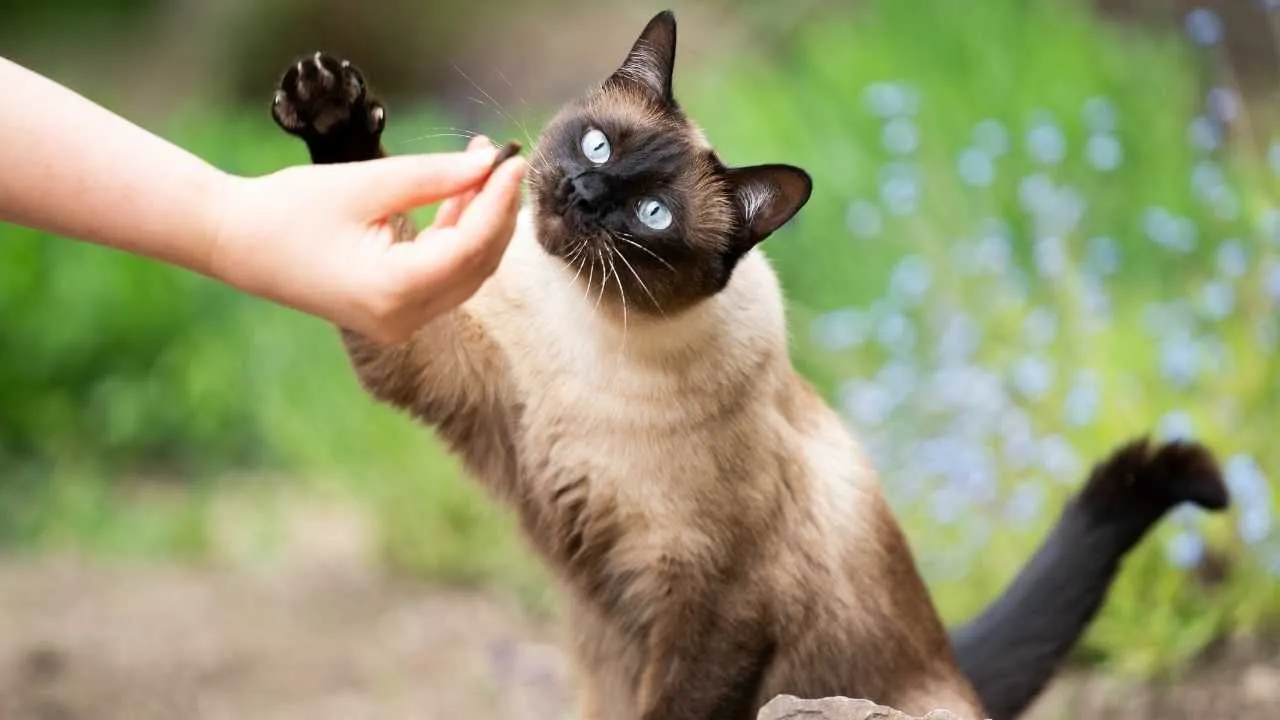
Also known as the Thai cat, the Siamese is instantly recognizable for its sleek frame, pointed coat pattern, and iconic almond-shaped eyes.
According to Britannica, the Siamese is a well-known short-haired domestic cat breed that originated in Thailand, which was officially called Siam until 1939.
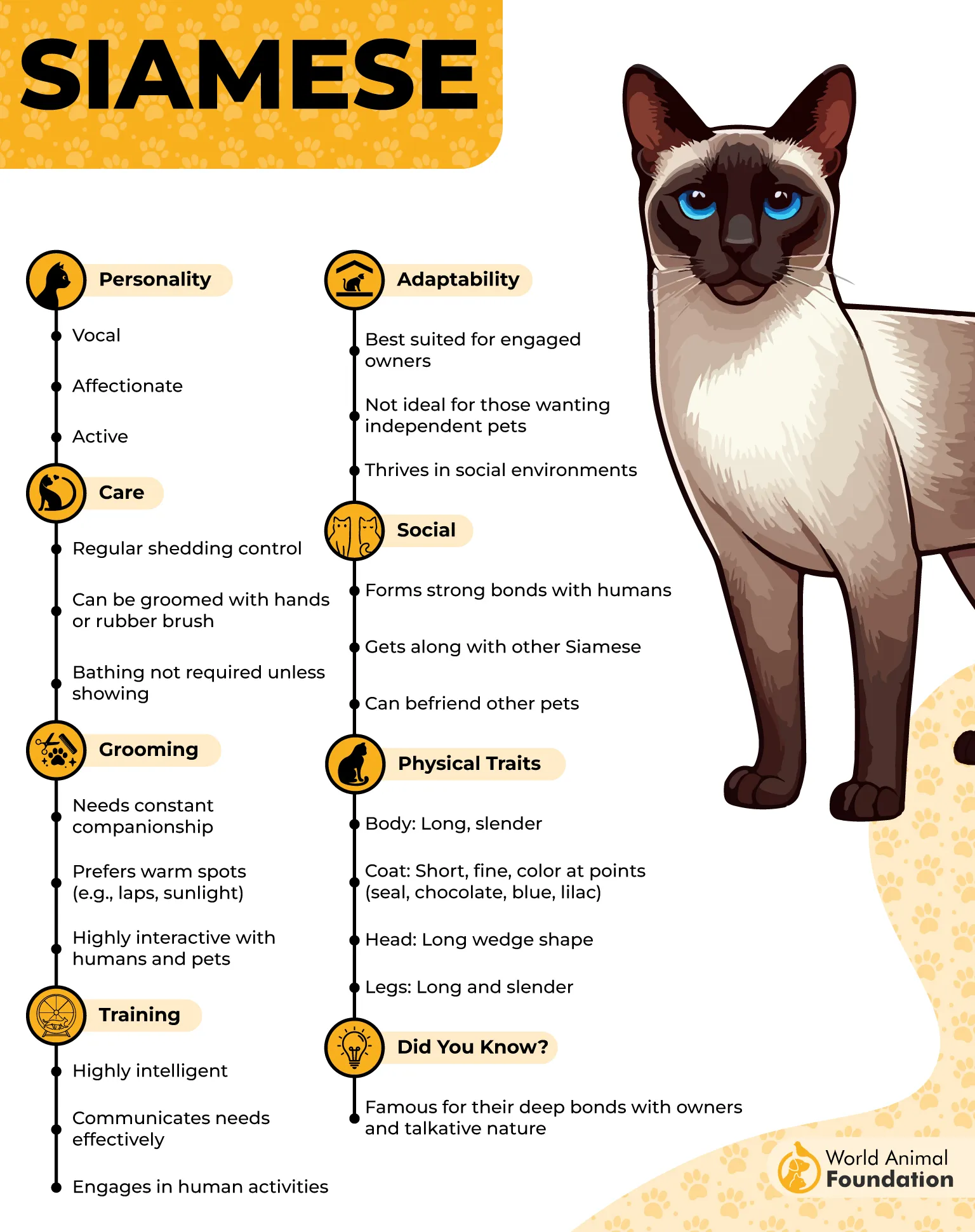
The Siamese is famous for its vivid sapphire-blue eyes, a defining feature that sets it apart from nearly every other breed. The intense color contrasts beautifully against their light coat, giving them a striking, intelligent expression that captivates cat lovers worldwide.
The genetics behind those stunning eyes are particularly fascinating. Their blue color isn’t caused by blue pigment, but by a lack of pigment in the eye’s stroma. Light scattering—specifically the Rayleigh scattering effect—causes shorter blue wavelengths to reflect, creating that luminous hue.
This eye color is directly linked to the gene responsible for the Siamese’s pointed coloration, a recessive genetic trait passed down through generations.
Fact: The Siamese’s signature blue eyes are caused by pigment absence and light scattering, not blue coloration itself.
2. Turkish Van
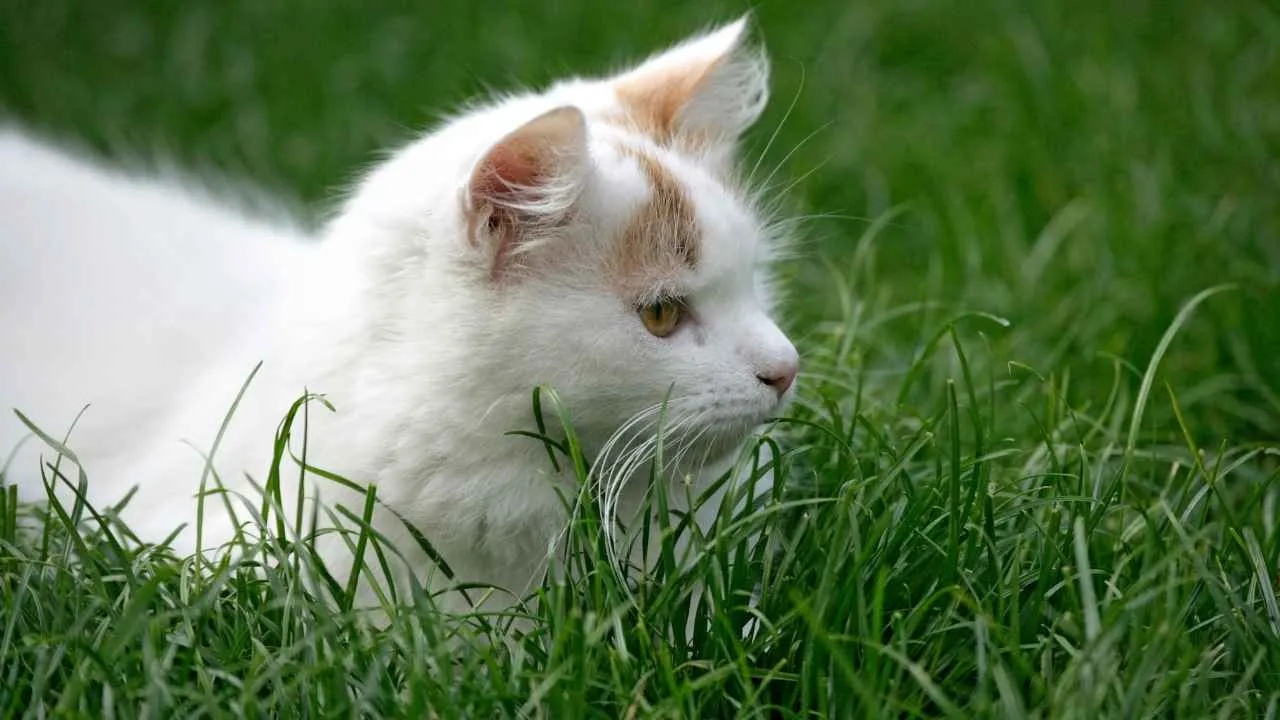
Often called the “swimming cat,” the Turkish Van is a striking and ancient breed best known for its predominantly white coat and bold, expressive eyes.
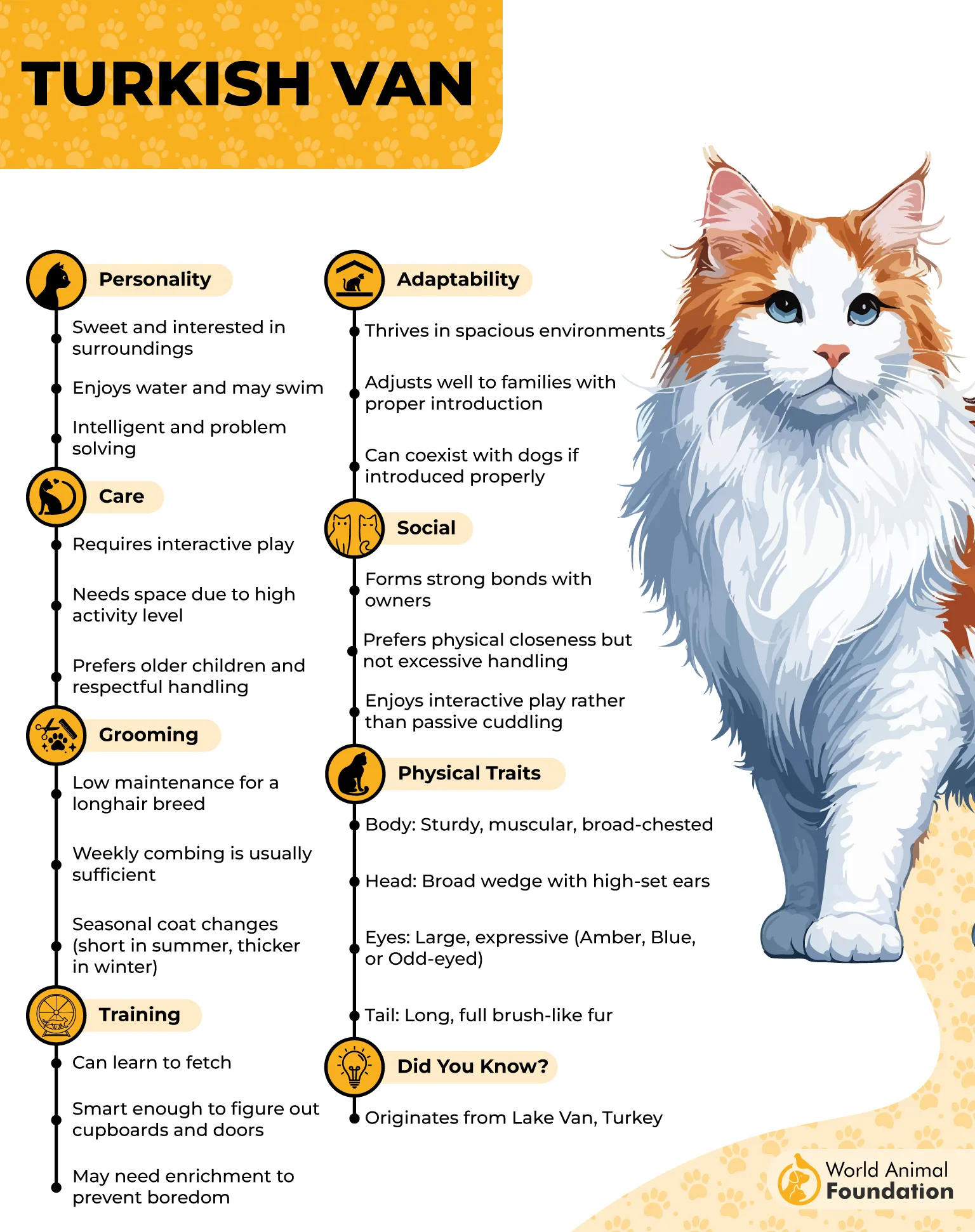
According to PetMD, Turkish Van cats are known for defying common stereotypes about felines. Originating near Lake Van in Turkey, this breed carries an unmistakable presence.
What truly sets the Turkish Van apart is its eye color. Many display heterochromia, meaning one eye is vivid blue while the other glows in amber or green. Others feature uniformly rich amber eyes, giving the breed a warm, luminous gaze that’s impossible to ignore.
Those copper and amber tones seem to shine even brighter against the Van’s white fur, creating an intense contrast that enhances their facial expression. This glowing effect is especially noticeable in natural light, where their eyes appear almost radiant.
Beyond aesthetics, their playful, adventurous personality shines through their gaze. Their curiosity—even toward water—adds to their charm.
Fact: Turkish Vans are well known for heterochromia, often having one blue eye and one amber or green eye.
3. Bengal
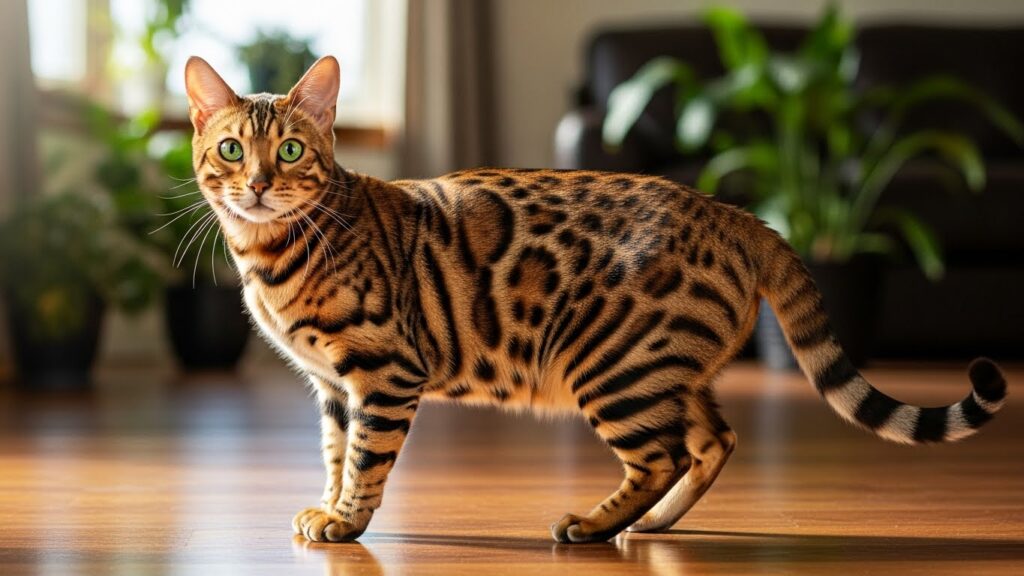
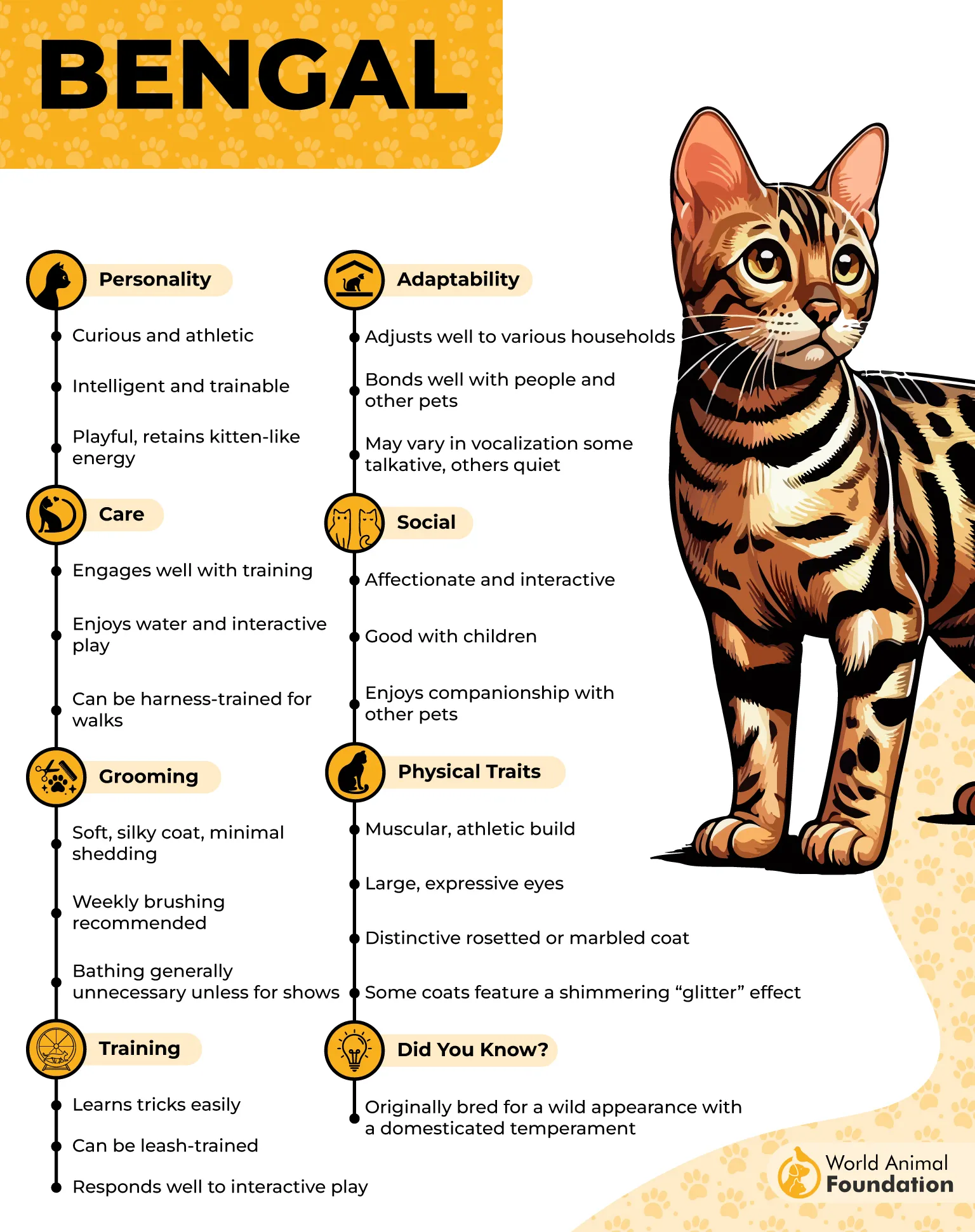
Often simply called the Bengal cat, this breed is famous for its wild and athletic build. According to WebMD, Bengal cats are recognized for their leopard-like coats and can make a great fit for families.
Though it looks exotic, the Bengal is fully domesticated, pairing dramatic markings with a confident, people-friendly personality.
Eye color is a major part of the Bengal’s allure. Most Bengals display large, oval eyes in shades of gold or green, while snow Bengals may develop striking blue eyes. These vivid hues contrast beautifully against their patterned coats, intensifying their expressive gaze.
Some Bengals can also show rarer eye tones, including aqua or hazel-like variations, depending on coat genetics and lineage. These uncommon shades add to the breed’s visual intrigue and make each cat feel truly one of a kind.
Beyond appearance, their bright eyes reflect high intelligence and curiosity. Active and adventurous, Bengals thrive in stimulating environments where their looks and personality can shine.
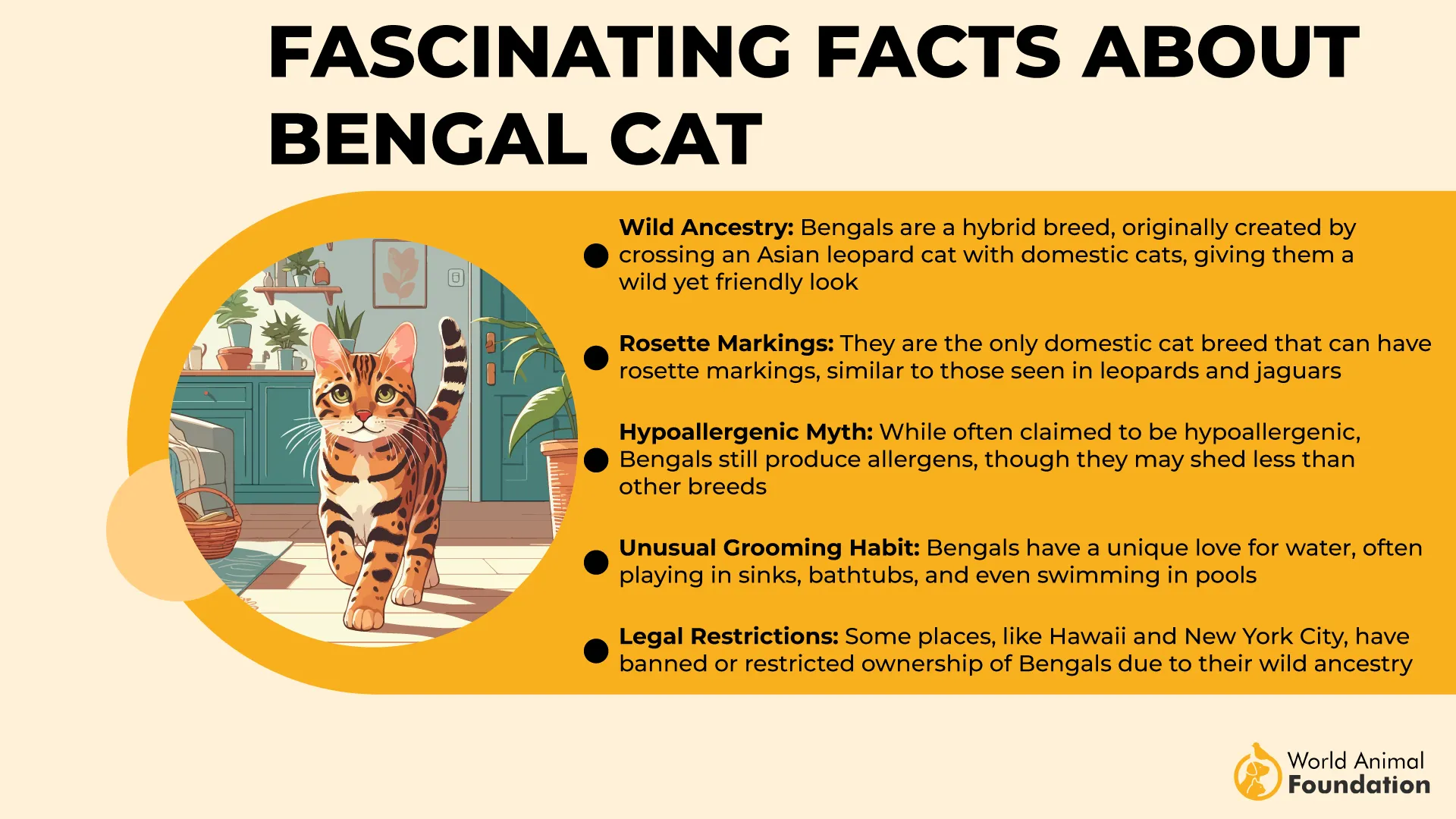
Fact: Bengal cats commonly have eye colors ranging from green and gold to blue, with snow Bengals known for piercing blue eyes.
4. Russian Blue
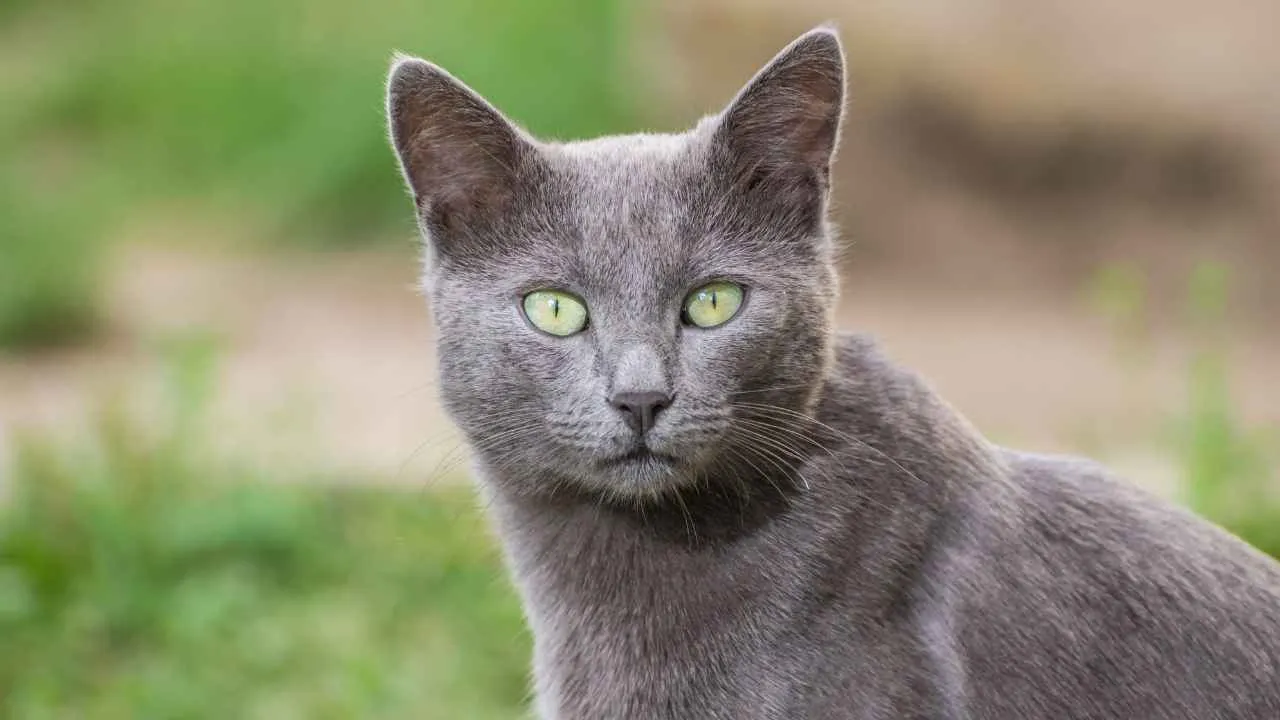
Sometimes referred to simply as the Archangel Cat, the Russian Blue is admired for its dense silvery-blue coat and refined appearance. This elegant breed is especially known for its vivid green eyes, which stand out dramatically against its shimmering fur.
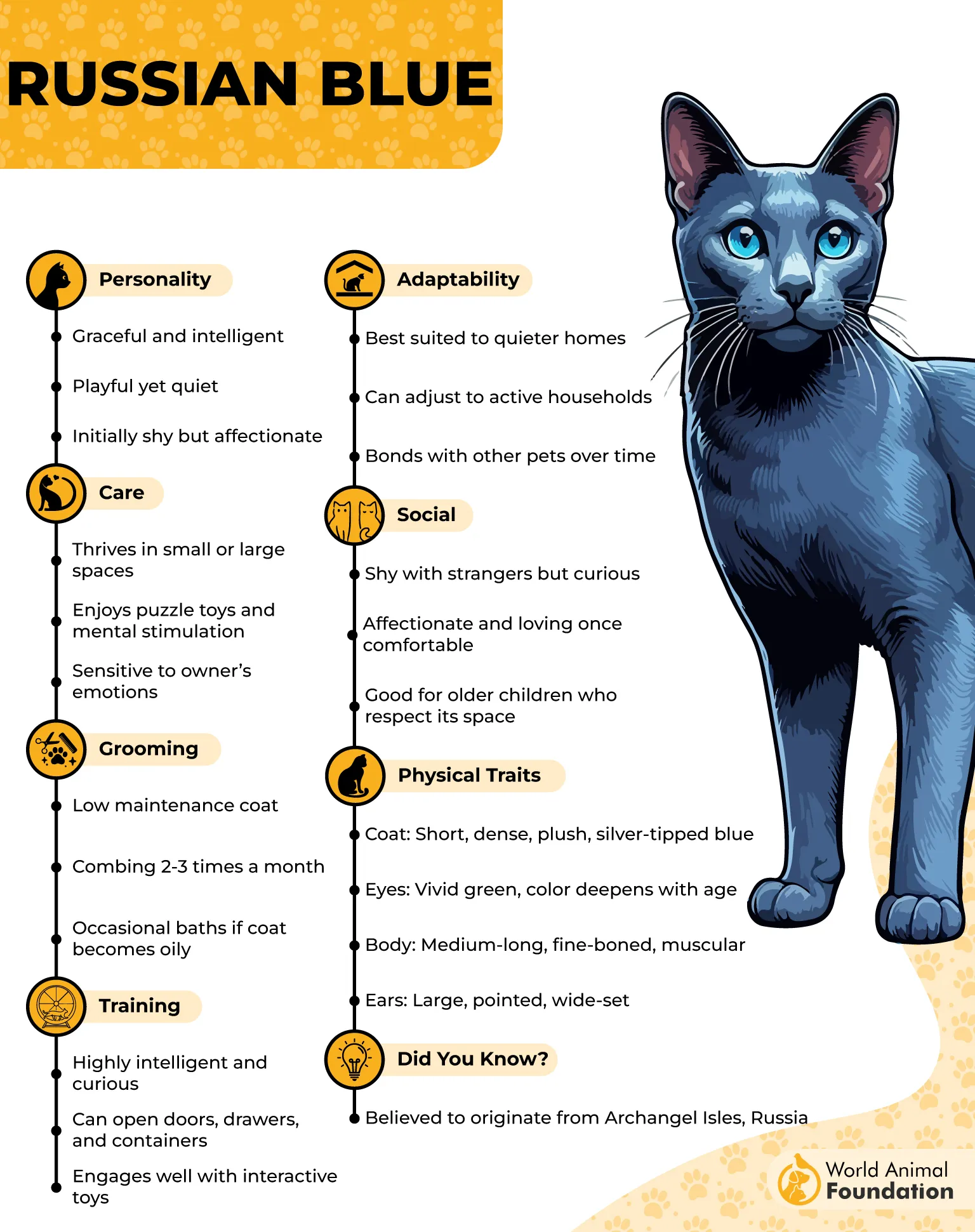
One of the most fascinating aspects of the Russian Blue’s beauty is how its eye color develops. Kittens are born with yellow eyes that gradually shift in tone as they grow, reflecting how feline eye color can change with age and genetic influence.
As the cat matures, pigment concentration increases, transforming those early yellow hues into a striking emerald green. This change typically occurs within the first few months, making the development process easy for owners to observe firsthand.
While their eyes mature, Russian Blues also grow steadily and often retain playful, kitten-like behavior longer than many breeds.
Fact: Russian Blue kittens are born with yellow eyes that usually transition to vivid green by around four months of age.
5. British Shorthair
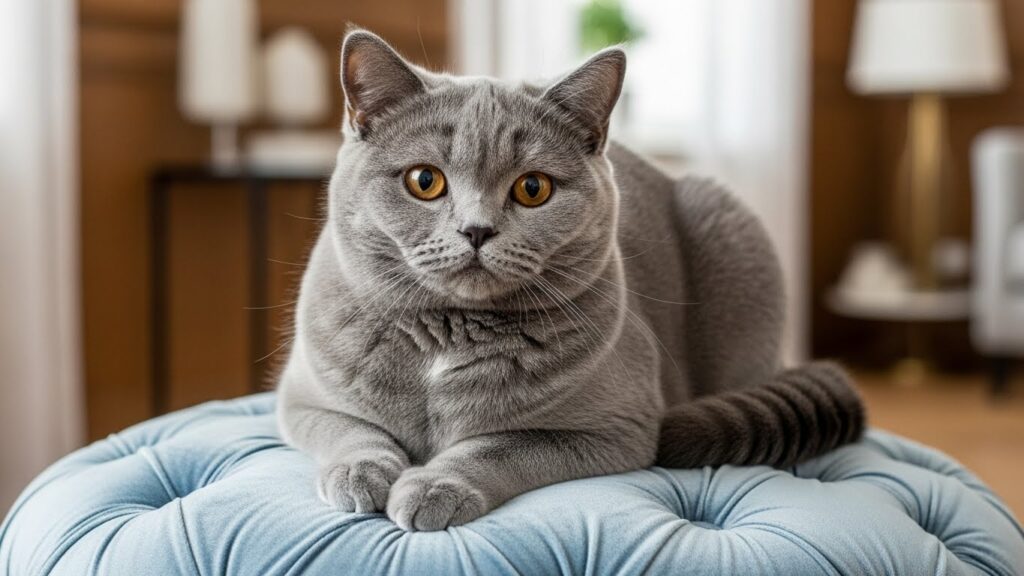
Often simply called the British Shorthair, this classic breed is known for its round face, dense plush coat, and sturdy build. Closely related in look to the American Shorthair, it carries a calm confidence that matches its iconic appearance.
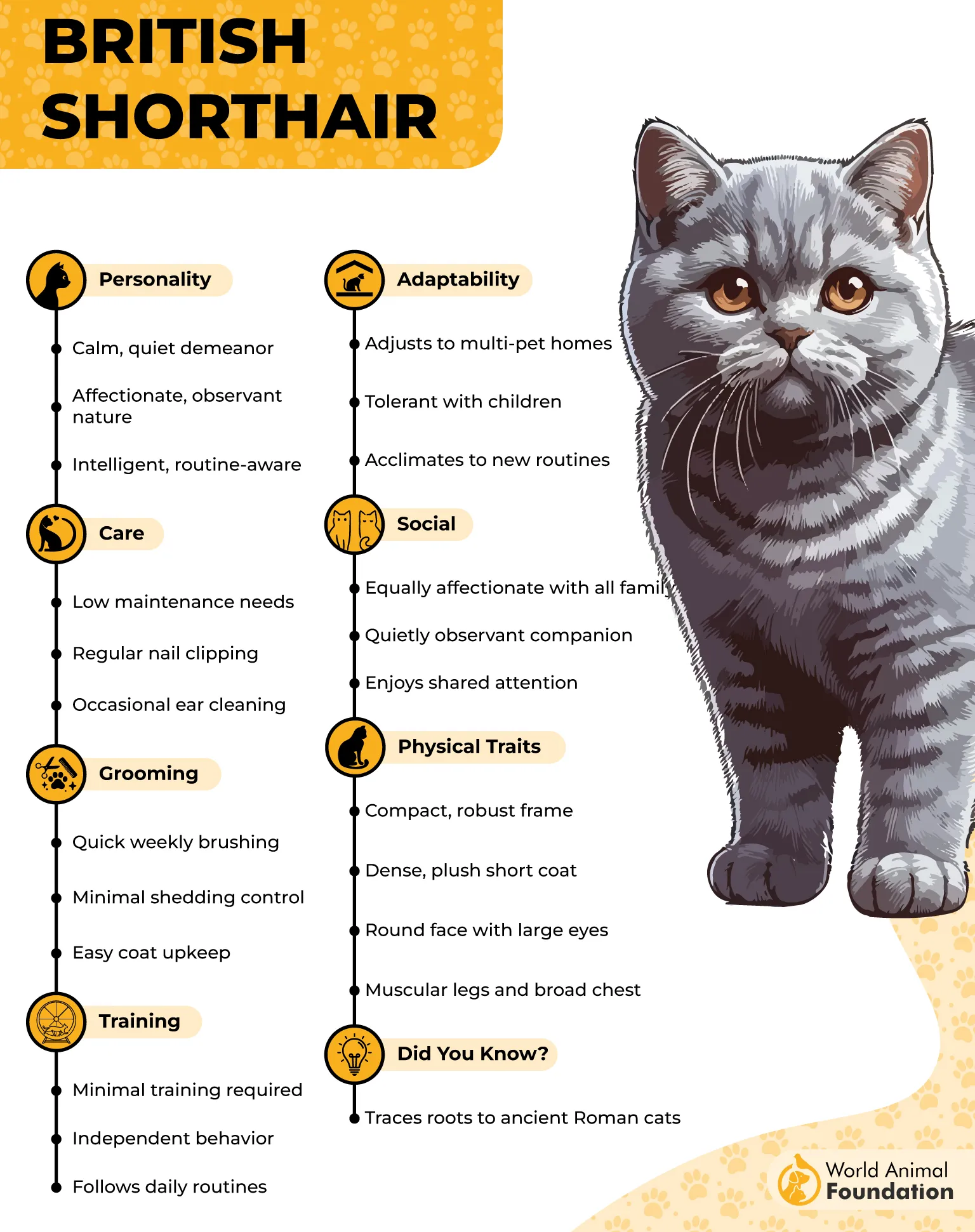
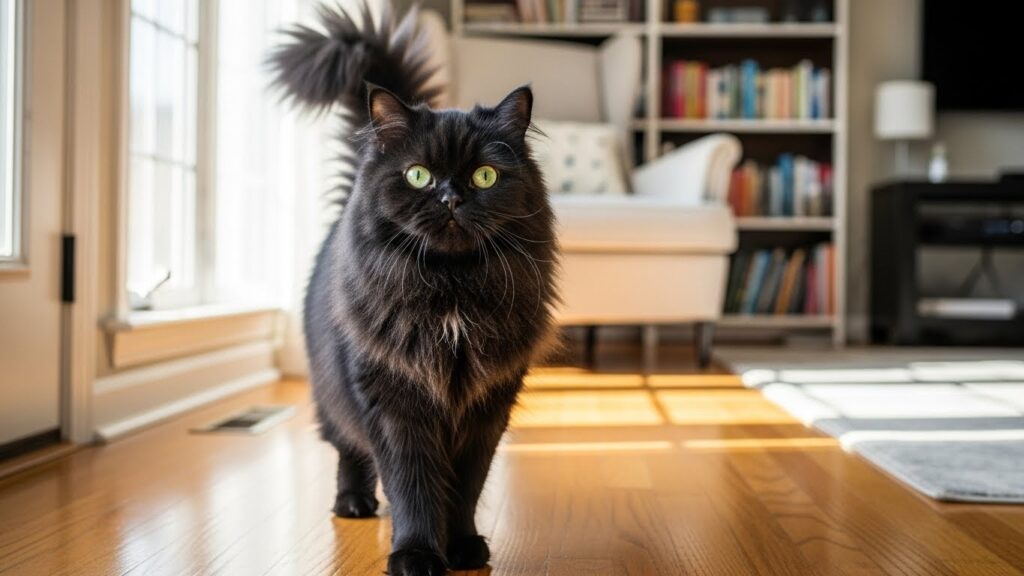
When it comes to eye color, British Shorthairs are especially admired for their deep copper eyes, though gold, blue, and green are also common. These large, round eyes enhance their teddy-bear expression and are a defining feature of the breed’s visual appeal.
Eye color can also offer subtle health clues. Sudden changes in eye clarity, color intensity, or discharge may signal underlying issues and should prompt a veterinary visit. While eye color itself isn’t usually a problem, attentive monitoring supports overall wellness.
Routine care is important, as this breed can be prone to inherited conditions that benefit from early screening and regular checkups.
Fact: British Shorthairs are best known for their plush coats and striking copper eyes, though other eye colors also occur.
6. Persian
Also known as the Doll-Face Persian or Peke-Face Persian, this iconic breed is instantly recognized by its flat face, large, round eyes, and thick, flowing coat. Persians are medium-sized cats with a calm presence and an unmistakably regal look.
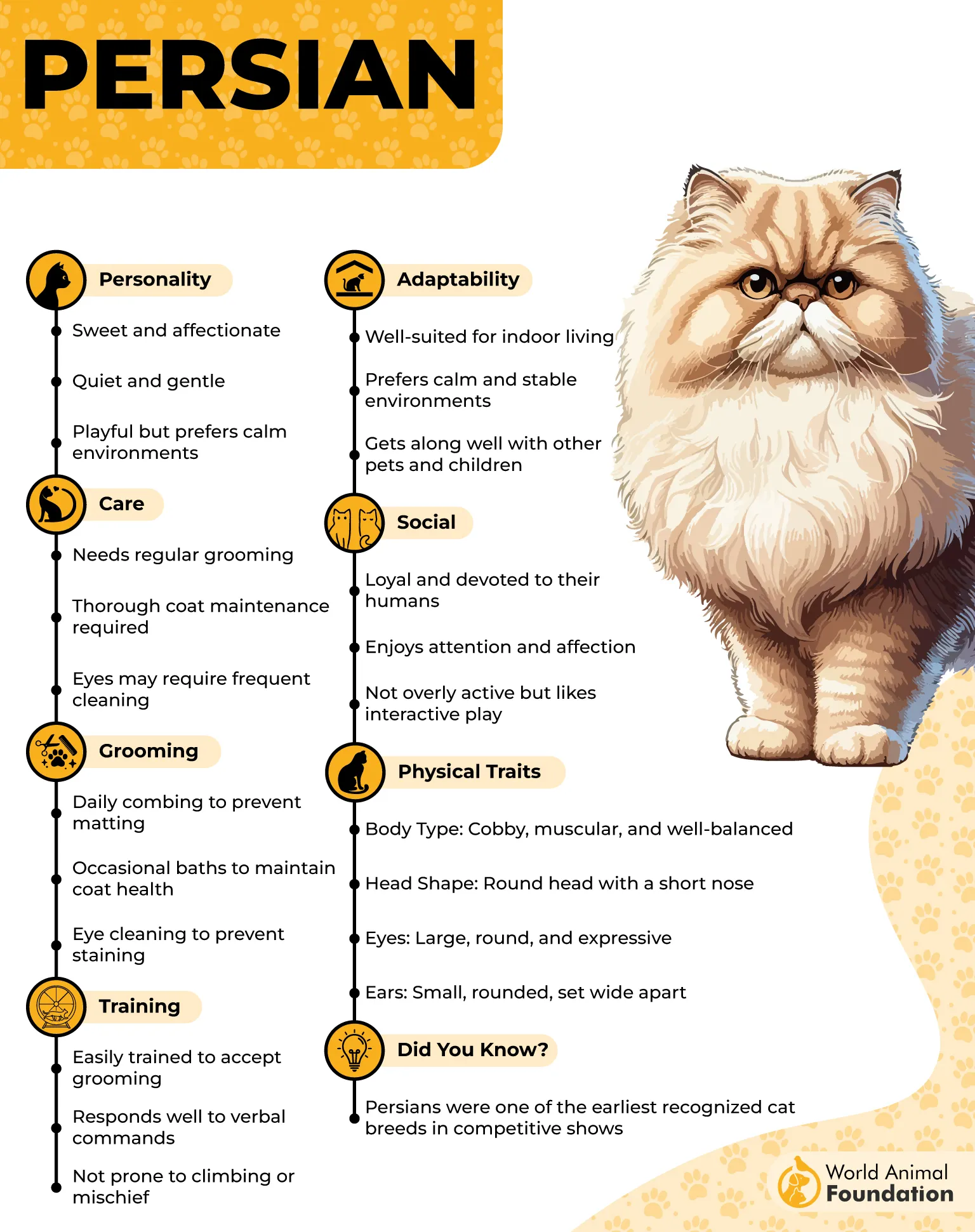
What truly sets Persians apart in this category is their eye color. Most display brilliant copper or emerald green eyes, while Himalayan Persians are famous for vivid blue shades. The contrast between their expressive eyes and plush fur makes their gaze especially striking.
If you want to photograph Persian eyes so the color pops, soft natural light is key. Position your cat near a window, avoid flash, and shoot at eye level to capture depth and clarity without glare overpowering the color.
A clean face and well-groomed coat also enhance eye photos, since long fur can distract from the eyes.
Fact: Persian cats commonly have copper, green, hazel, or blue eyes, with females weighing about 7–10 pounds and males 9–13 pounds.
7. Sphynx
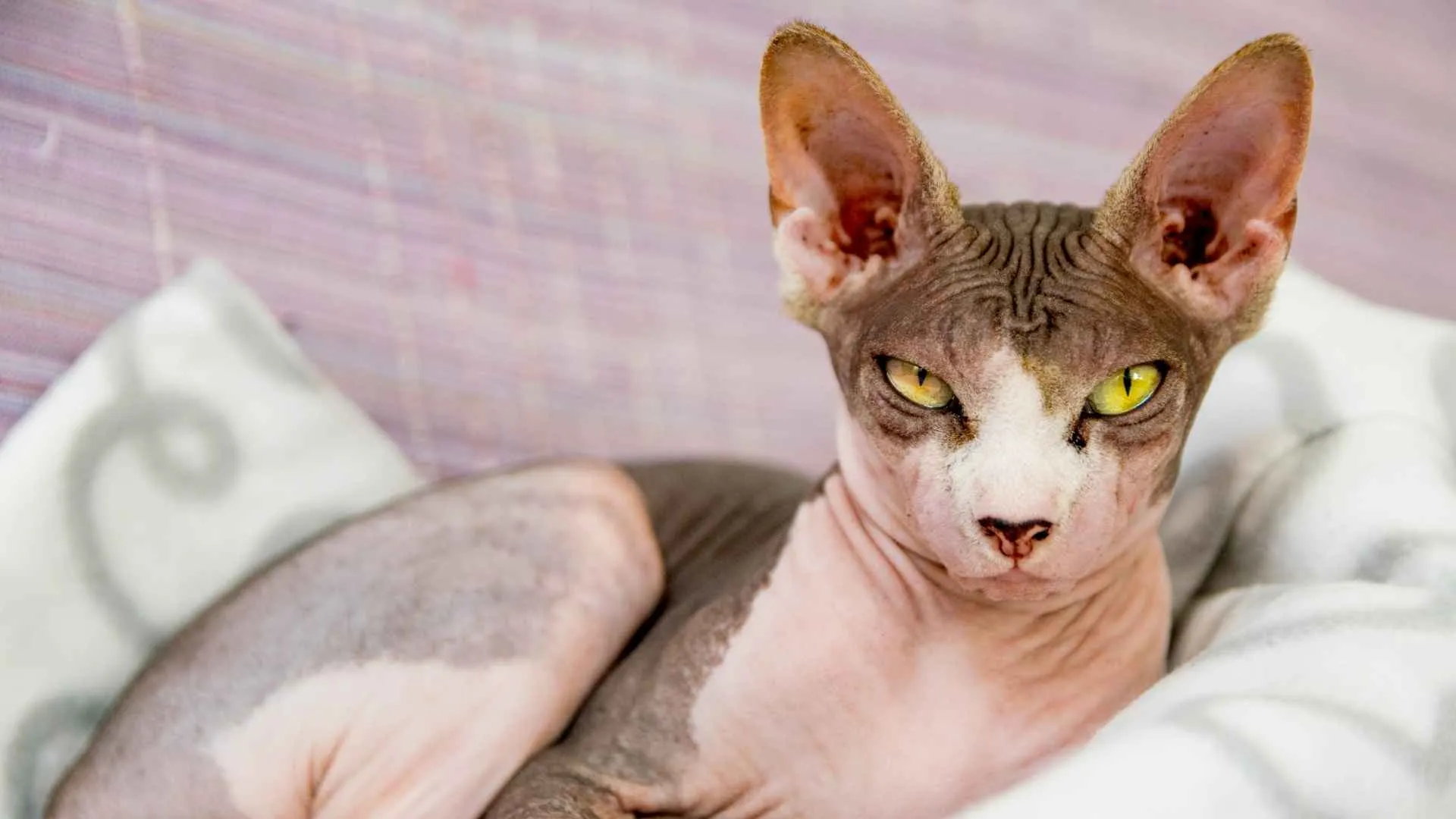
Often referred to as the Canadian Hairless, the Sphynx is instantly recognizable for its furless body, wrinkled skin, and striking facial features. With no coat to distract the eye, this breed’s expressive gaze takes center stage.
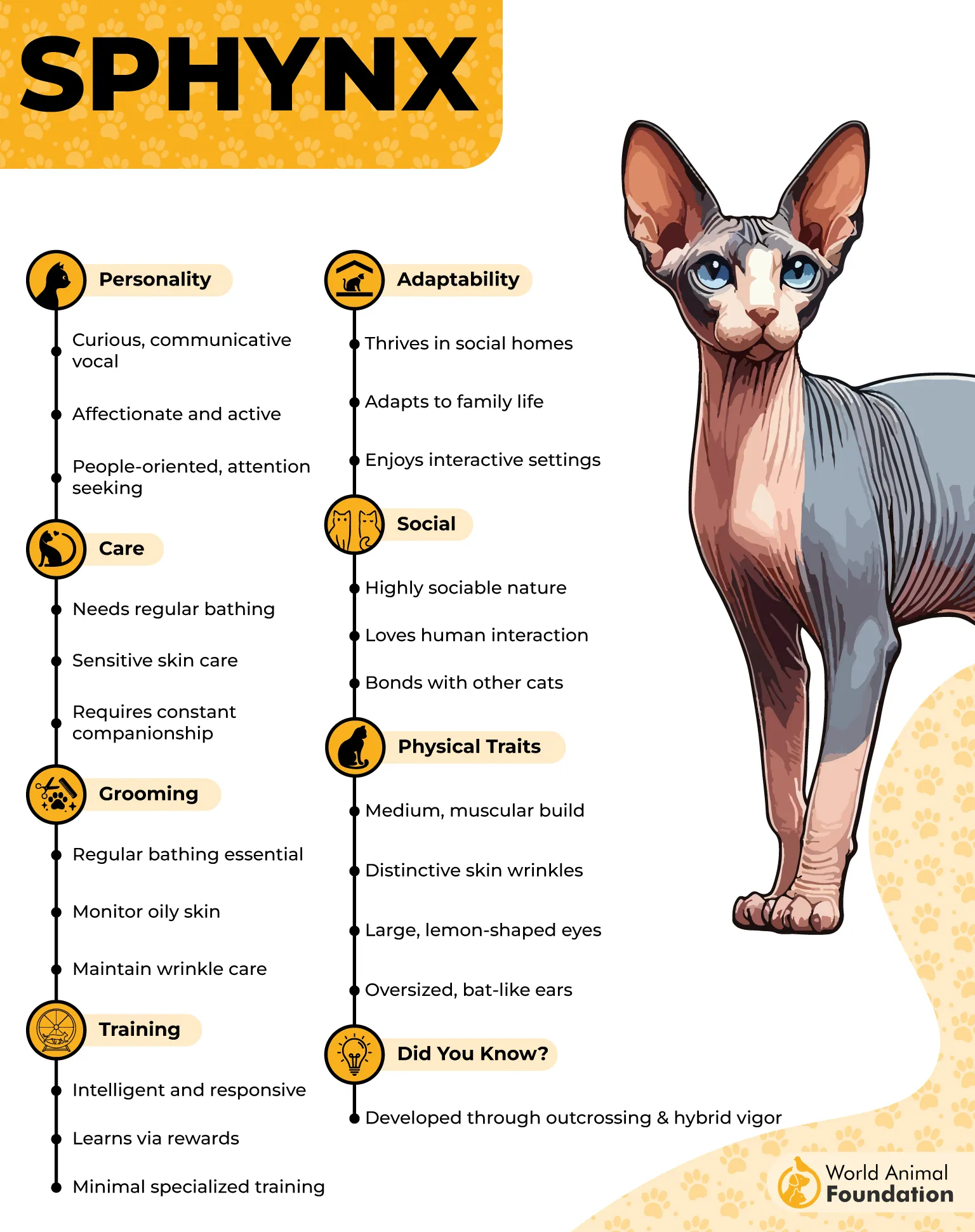
What truly elevates the Sphynx in discussions of eye color is its remarkable range. These cats may have vivid blue, green, or gold eyes, and some even display rare, odd-eyed combinations, making every blink visually captivating.
Their large, open eyes amplify emotion and curiosity, reflecting an affectionate and playful personality. The absence of fur creates an almost sculptural look, allowing eye color and facial expression to define their unique beauty.
For admirers of unconventional aesthetics, the Sphynx proves that beauty isn’t hidden—it’s boldly visible in every glance.
Fact: Sphynx cats can have blue, green, gold, or even mismatched eye colors, which stand out due to their hairless appearance.
Conclusion
Eye color adds an unforgettable layer of beauty to our feline friends, and exploring cat eye colors reveals just how diverse genetics can be.
From vivid blue eyes in cats with blue eyes, like the siamese cat, to green or yellow eyes, hazel eyes, light brown, dark brown, orange eyes, and golden eyes, each shade is influenced by genetics, coat color, and breed history.
Not all cats share the same eye traits, and some white cats or blue-eyed cats may even face unique considerations, such as the belief that blue-eyed deafness can sometimes occur.
For cat parents, understanding eye color deepens appreciation for both appearance and heritage. A pedigreed cat, like the Norwegian forest cat or a striking copper-eyed cat, may stand out among other cats, but all eyes rely on light reflecting within the eye structure. From the first pedigreed cat to modern companions, eye color remains one of the most captivating features cats offer.
